Tamasopo is a small town in the foothills of the Sierra Madre Oriental in San Luis Potosí, surrounded by rainforest, travertine pools and waterfalls. Its municipality belongs to the Huasteca, with Huastec communities in the south and Pame communities in the north.
AT A GLANCE
Best time
Go when recent rain has been light, since heavy rain can cloud the rivers and make access harder.
How long
One full day covers the main falls, and two or three days let you add more of the Huasteca.
Getting there
Fly to San Luis Potosí or Tampico, then continue by bus or car through Ciudad Valles to Tamasopo.
Why visit Tamasopo
Tamasopo sits about 370 metres above sea level in lush forest, and it is famous for waterfalls with blue and clear pools for swimming. The setting is subtropical, green and humid, and some travellers compare the main cascade to Havasu Falls in the Grand Canyon.
Unlike the busy beach resorts, this is a place to swim, walk and linger in the water.
The waterfalls around Tamasopo town
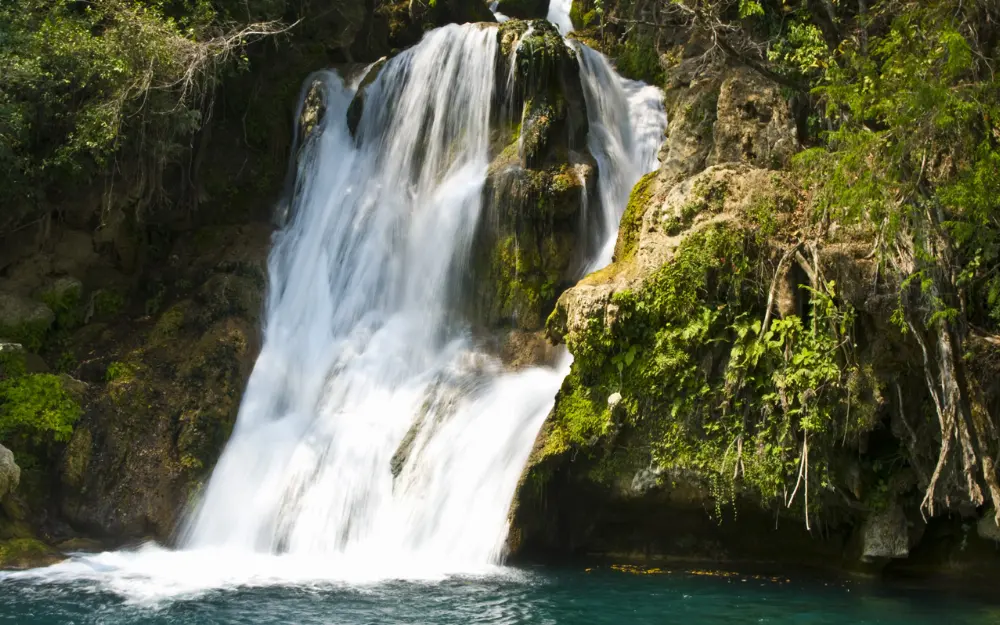
Cascada de Tamasopo
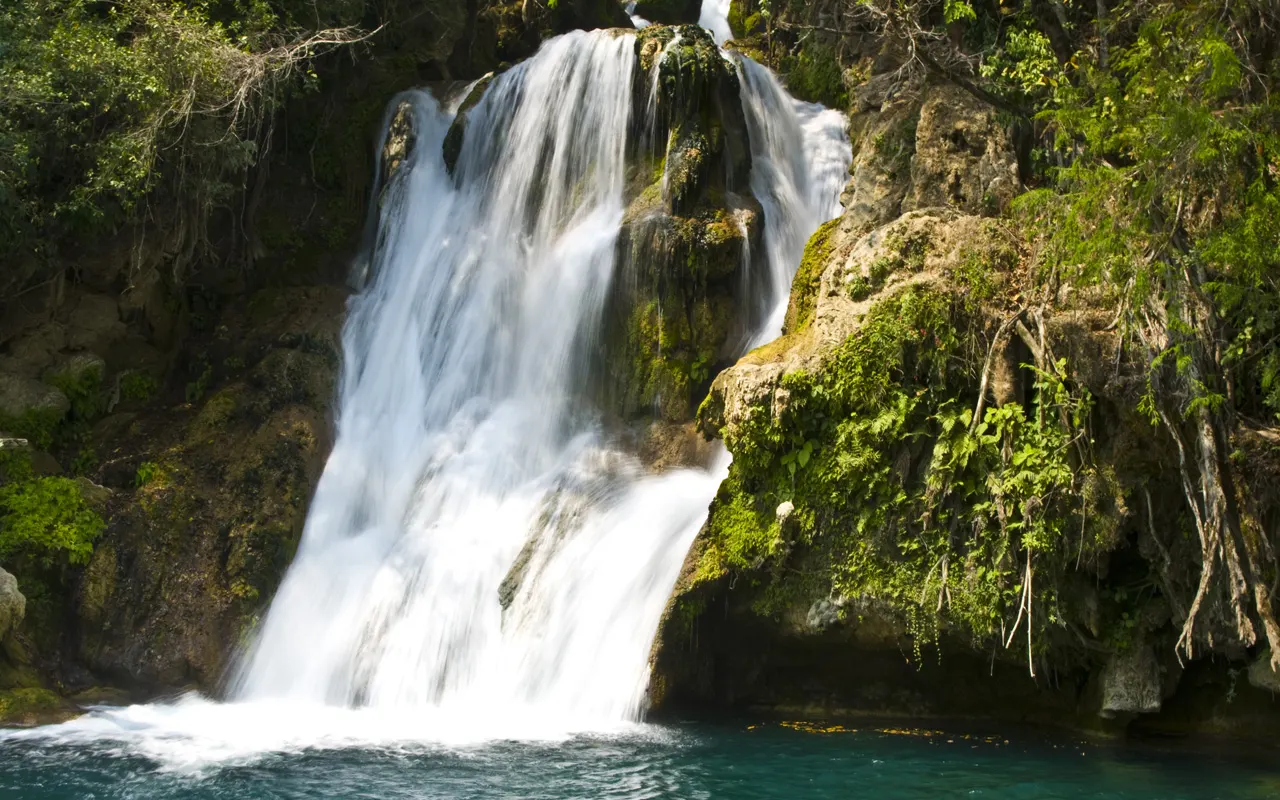
The main cascade lies a few kilometres north of the town and tumbles about 20 metres in three stages over travertine ledges into pools.
Puente de Dios
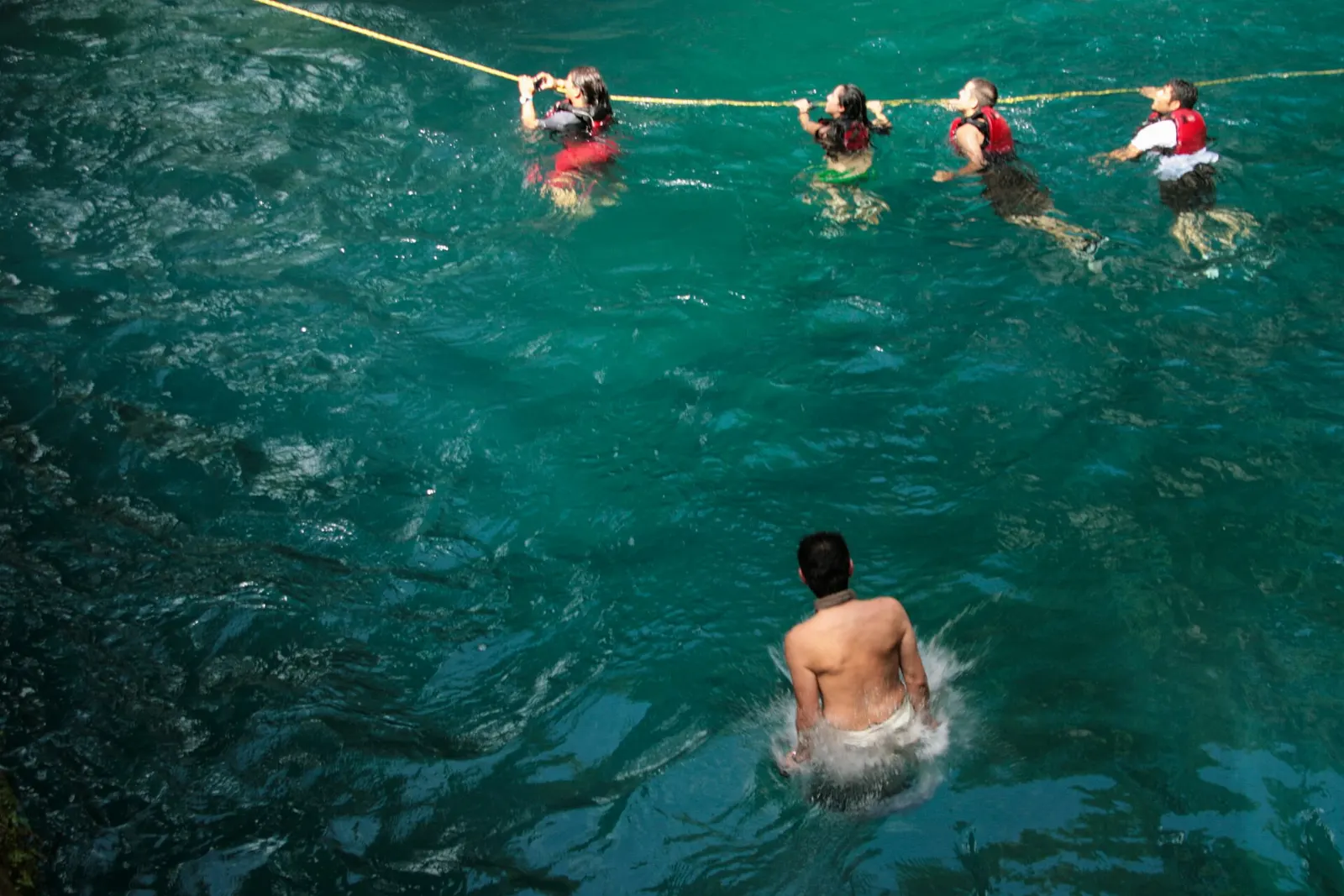
A short distance northwest of town, the Gallinas River rushes through a cavern under a natural arch and drops into a narrow gorge. Blue pools for swimming sit at the top and bottom of the cavern.
El Trampolín
Close by, El Trampolín is a smaller spot where little waterfalls feed clear, deep pools in the middle of tropical forest. It is a pleasant, shaded place to cool off after the larger falls.
Tamasopo town
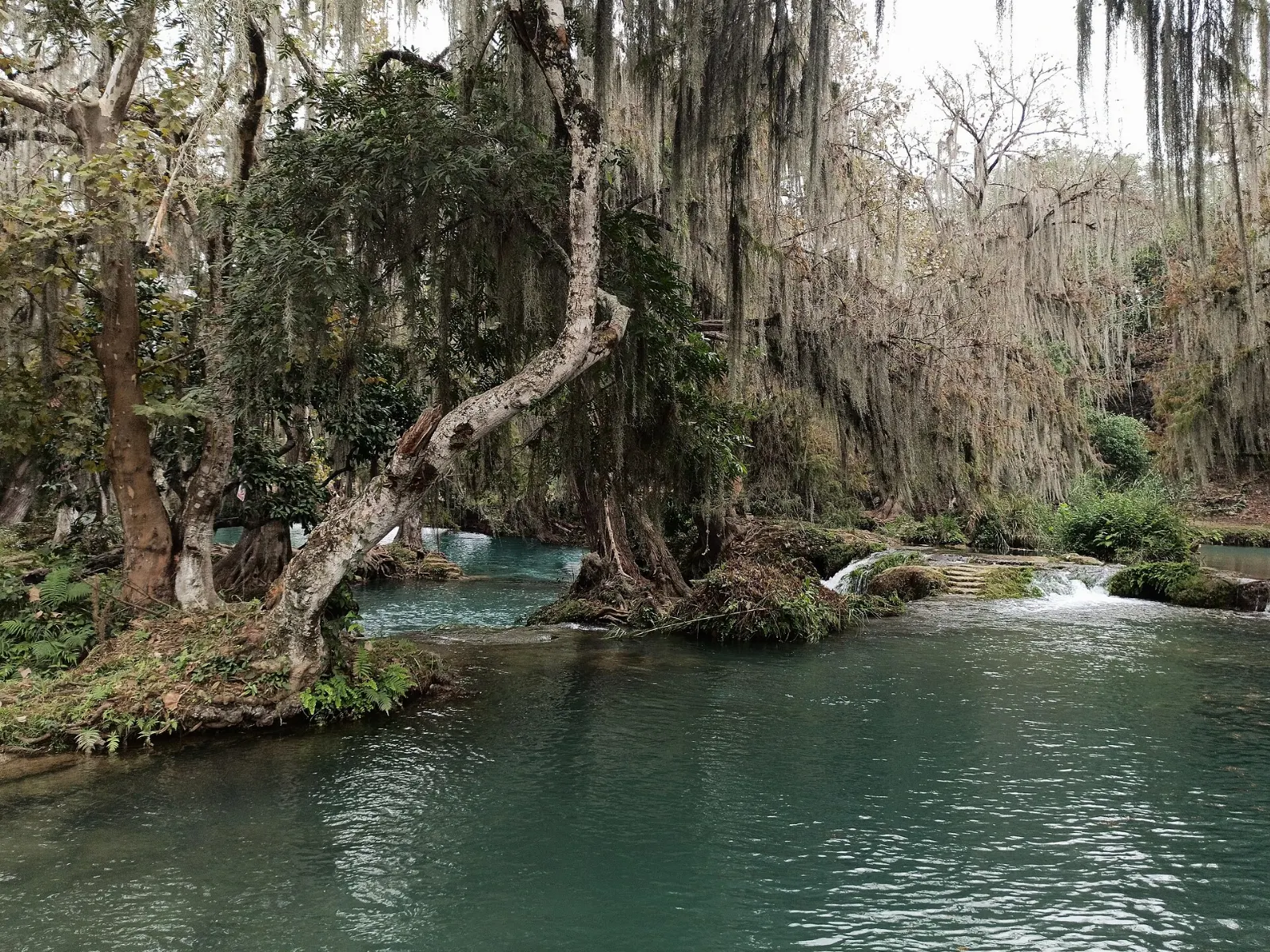
The town itself is small and quiet, with a municipality that includes Huastec and Pame communities. It works as a simple stop for meals, supplies and local advice before you head to the falls.
Espinazo del Diablo
In the Sierra Verástegui, the Espinazo del Diablo, or Devil's Backbone, is a ridge with ravines up to about 300 metres deep.
Day trips toward Ciudad Valles
Cascadas de Micos
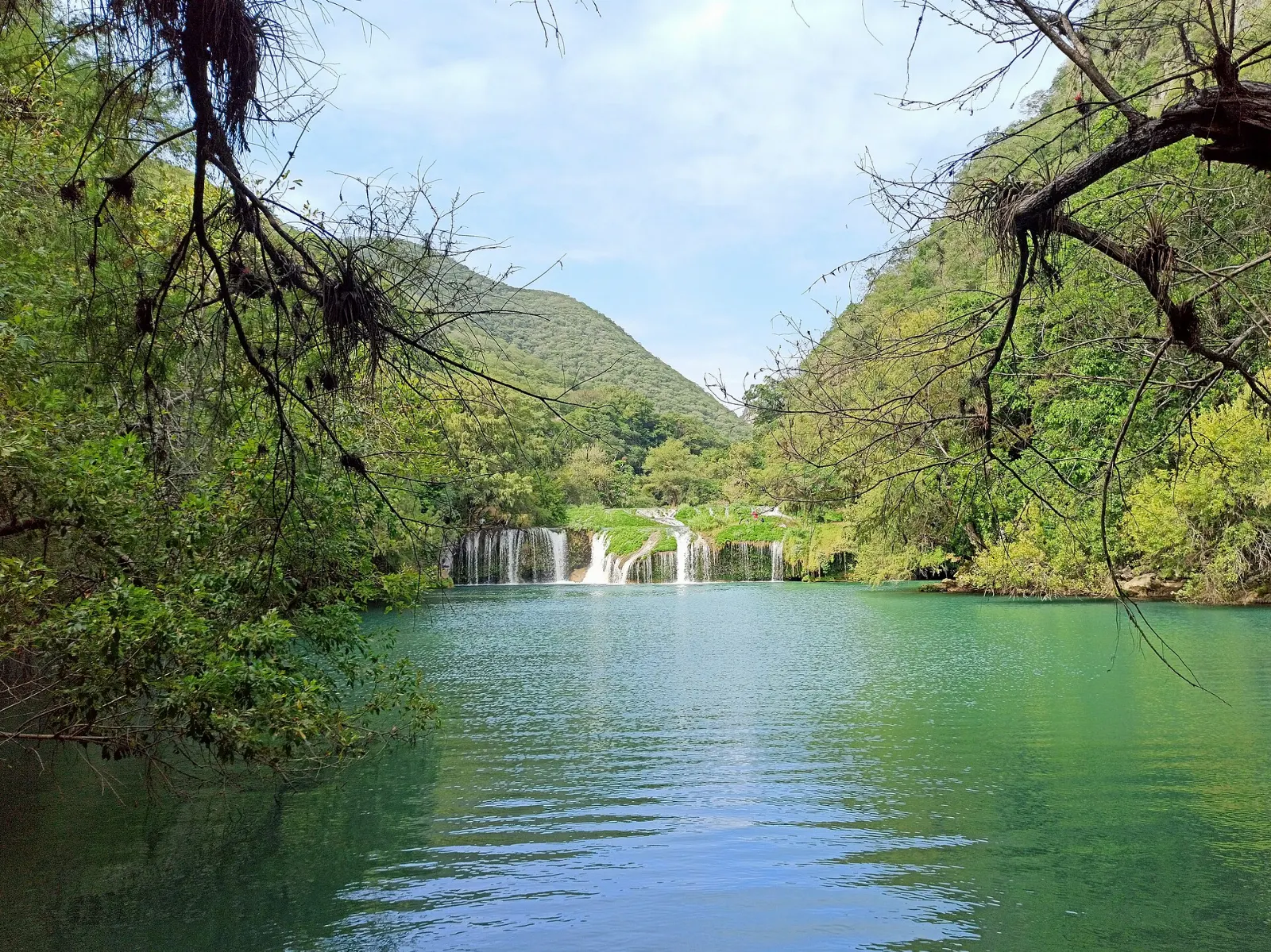
About 18 kilometres from Ciudad Valles, the Micos River drops quickly through falls in forested hills. A viewpoint overlooks the top of the falls, and rafting on the rapids is popular.
Cascada de Tamul
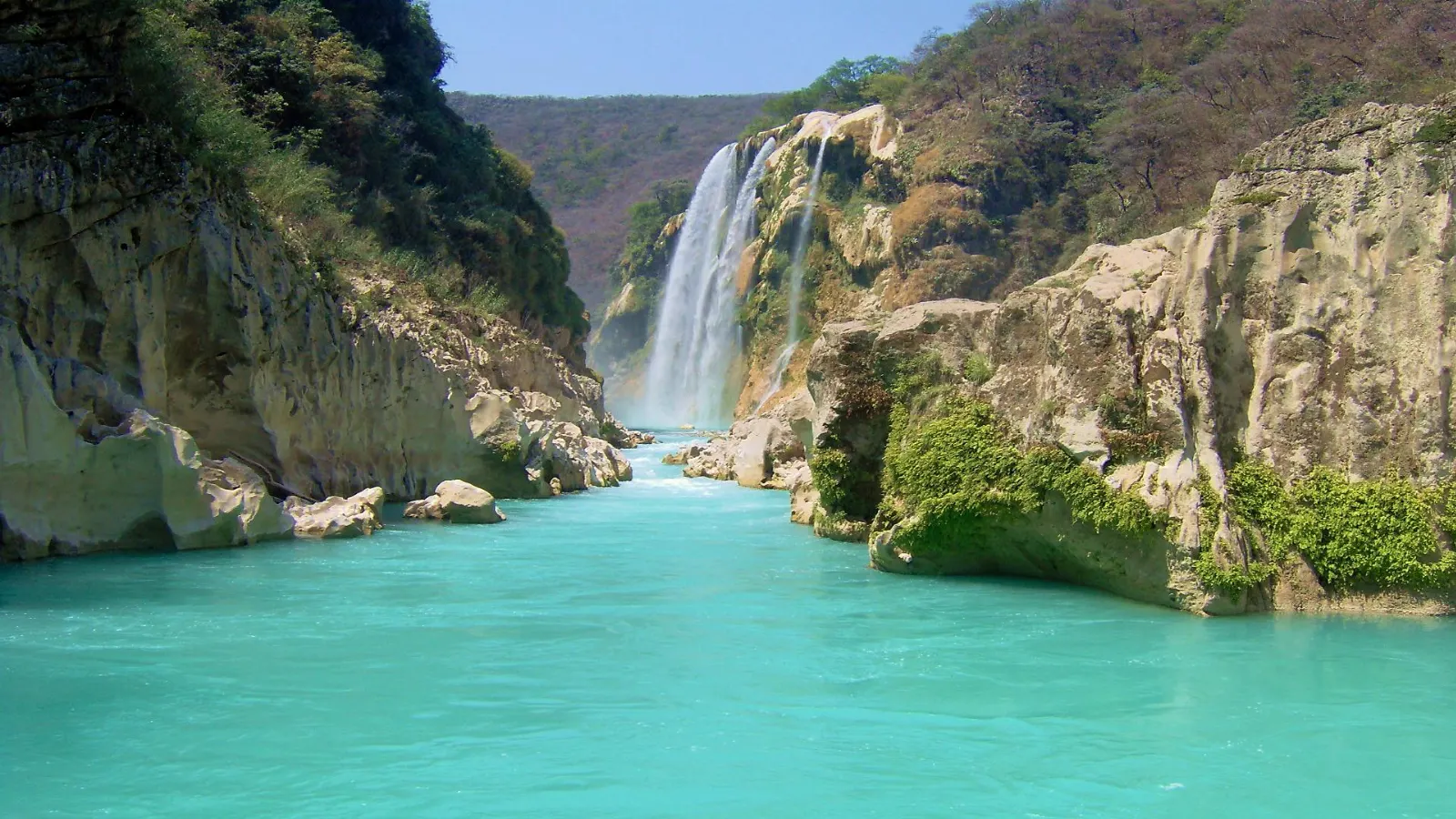
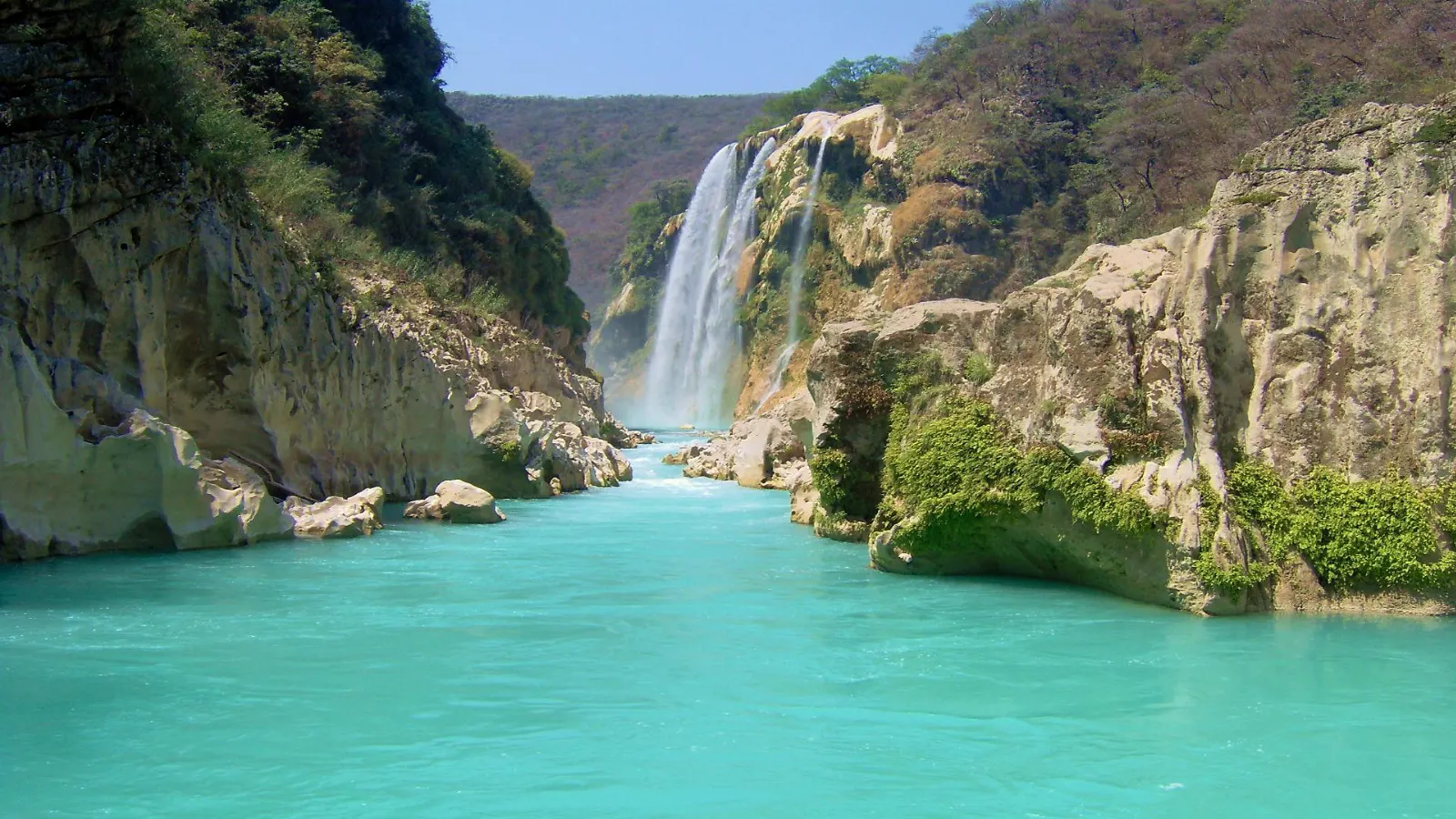
The Tamul waterfall falls about 105 metres and is the tallest in San Luis Potosí. The usual route is a boat trip of about two hours from Tanchachín.
Nacimiento del Río Huichihuayán
Water emerges from the mountainside near the village of Huichihuayán and forms pools large enough to swim in. It makes an easy extra swim on a longer day.
Tamtoc
Near Tamuín, Tamtoc was a major Huastec city, opened to visitors in 2006.
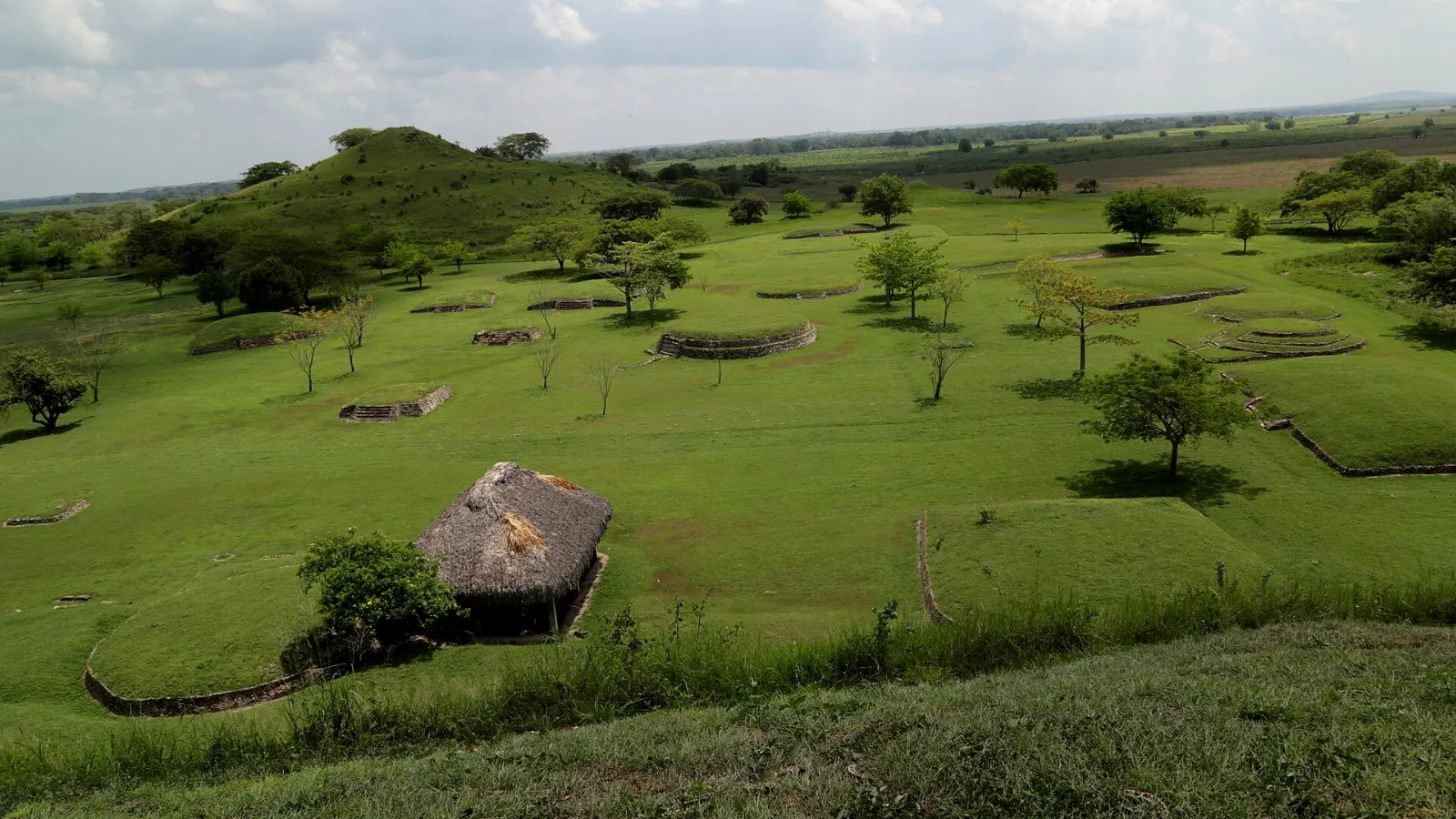
Ciudad Valles
The region's largest city lies on the old Pan-American Highway and has the best range of hotels, restaurants and long-distance buses.
Farther into the Huasteca
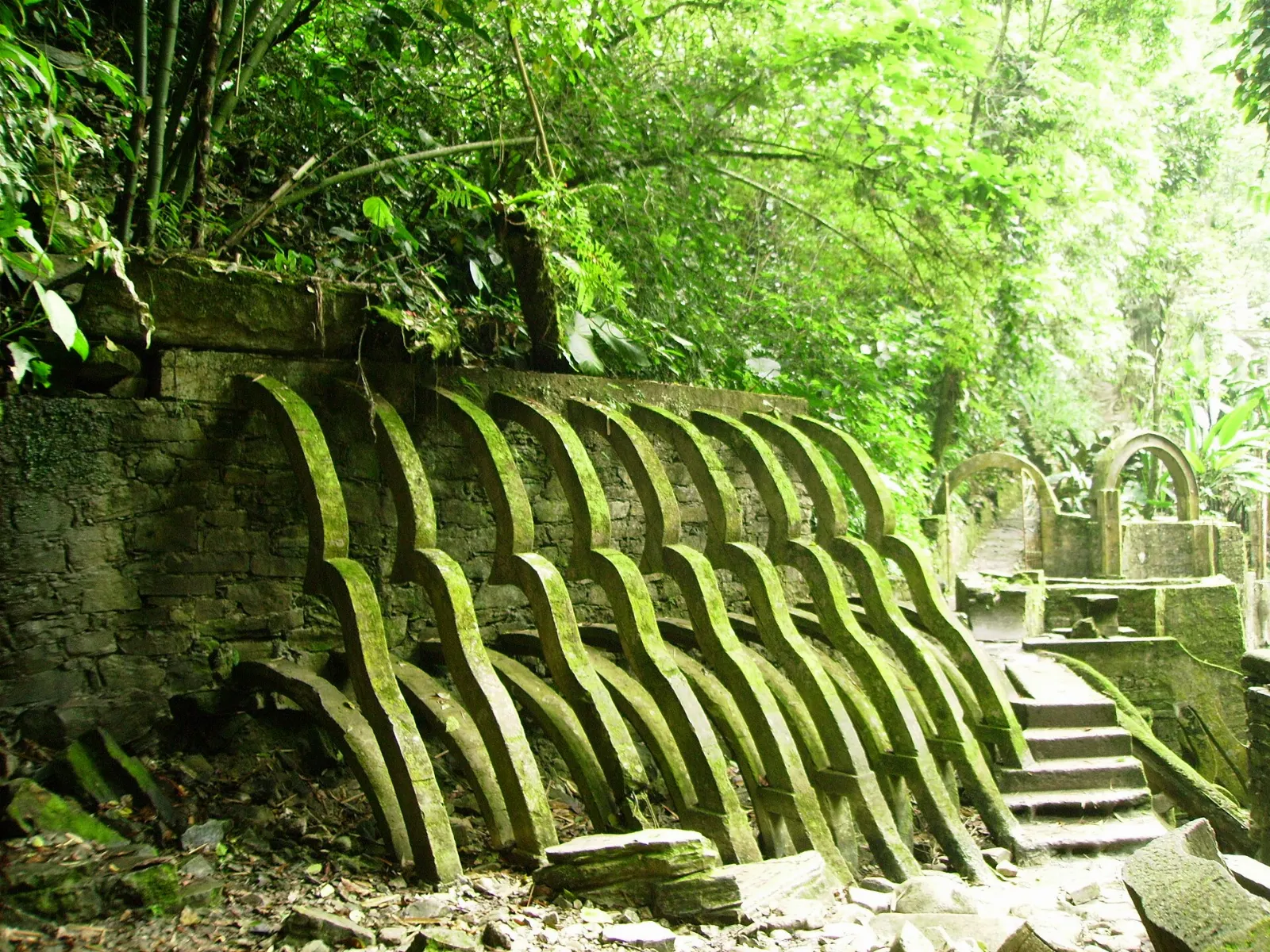
Las Pozas
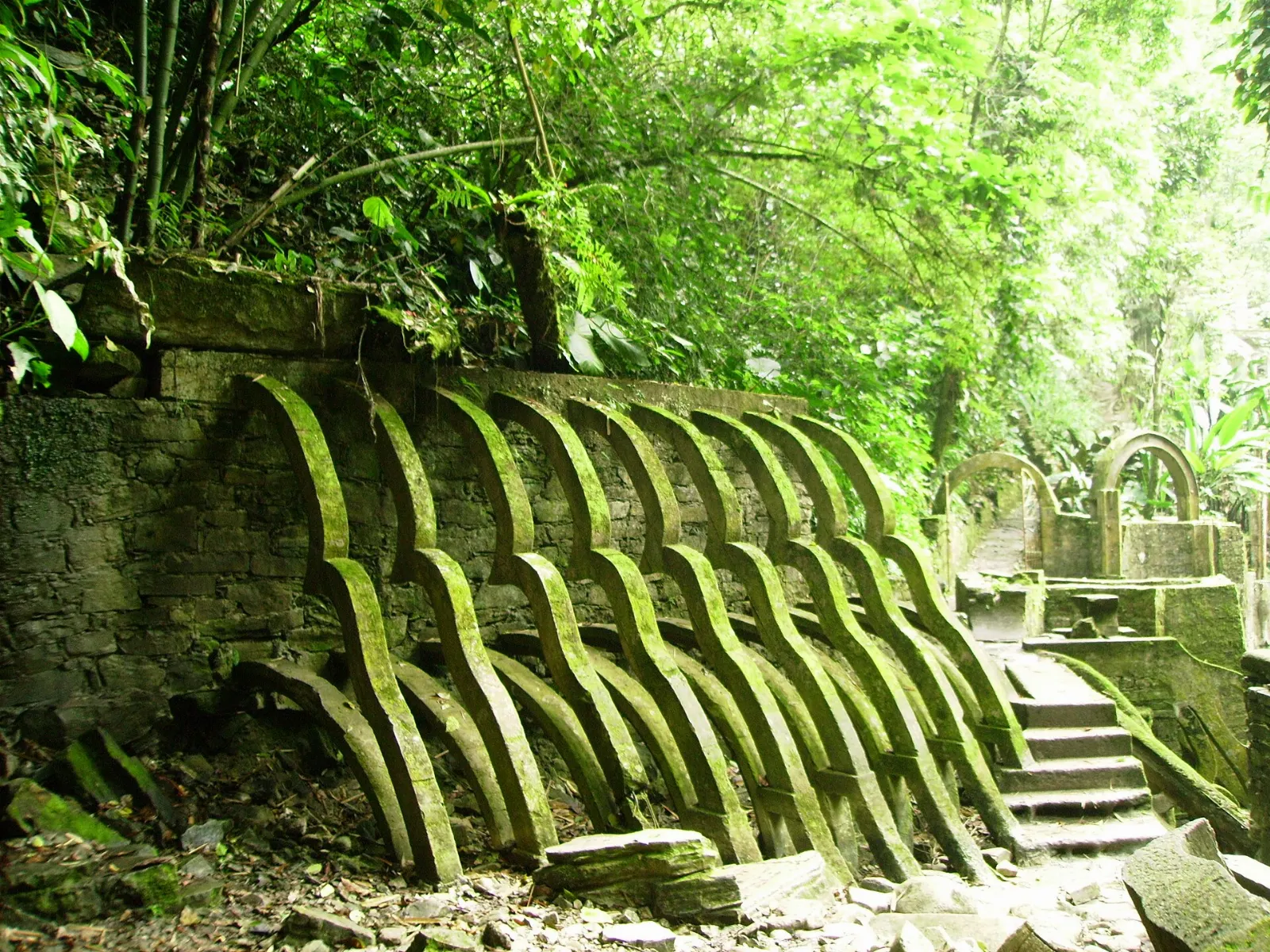
Near Xilitla, Edward James built this surreal garden of concrete arches, stairs and flower shapes beside natural pools between 1949 and 1984. It is a long drive from Tamasopo, so treat it as a separate day or an overnight stop.
Food and local flavors
The signature dish of the Huasteca is zacahuil, a giant tamale of corn dough steamed in banana leaves and traditionally made by the Huastec community. It is usually filled with pork, chicken or both, and it is meant for sharing. Enchiladas huastecas are corn tortillas dipped in chile sauce and served with a filling, a regional version of a Mexican staple. Bocoles are thick corn-dough cakes cooked on a griddle and stuffed or topped with local fillings.
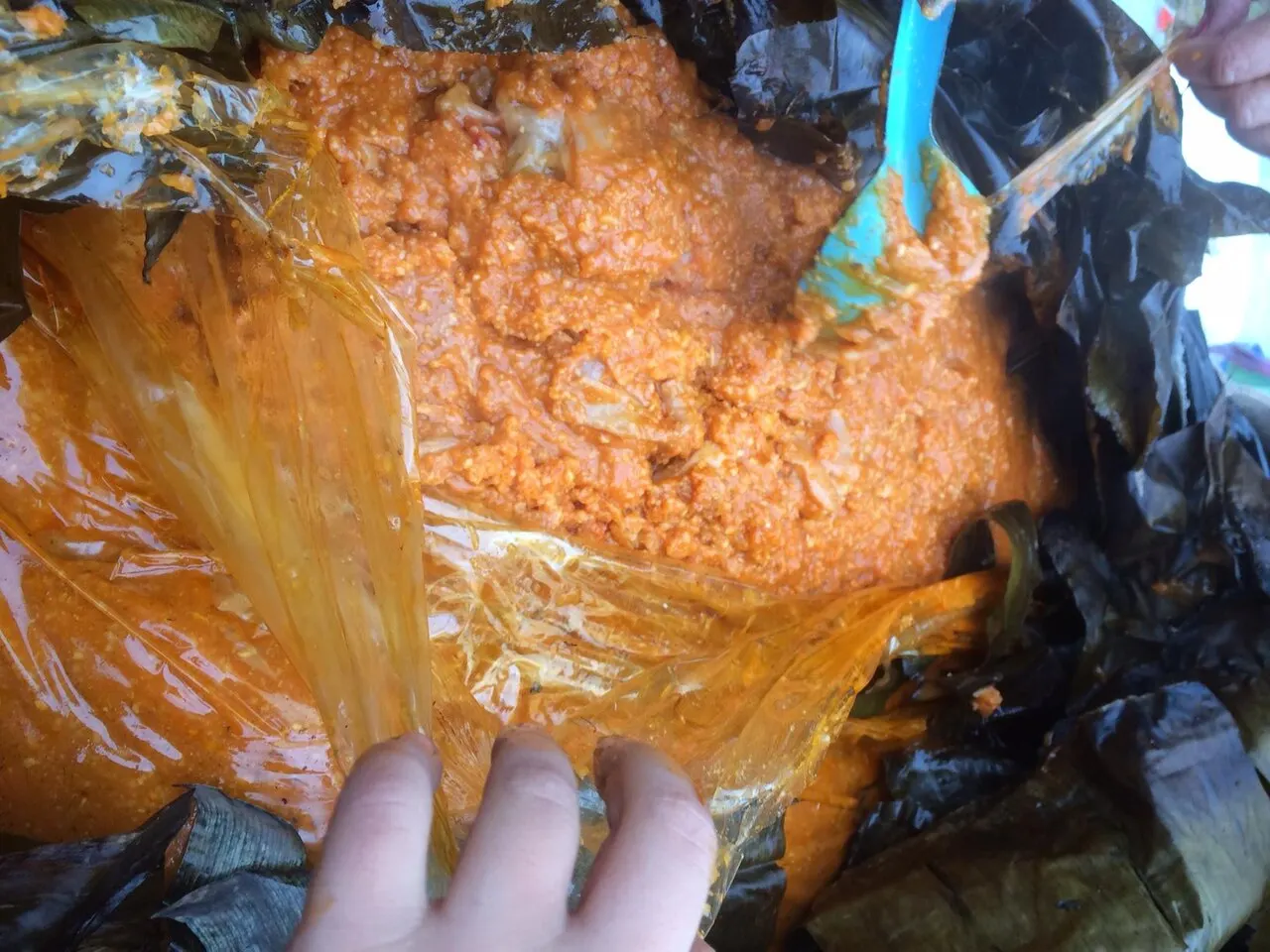
Popular dishes to try in Tamasopo


Where to stay
Choose between staying close to the falls and staying in a larger town. Tamasopo suits swimmers and early risers, because you can reach the cascade and Puente de Dios before the crowds, and the setting is quiet and rural. Ciudad Valles suits first-time visitors and anyone using buses, with the widest choice of hotels, restaurants and services and easy access to Micos, Tamtoc and Tamul.
Where to stay in Tamasopo


Best time to visit
Tamasopo has a subtropical climate, so expect warm, humid weather and heavy rain in the summer monsoon season. Rain can cloud the water and affect river access, so dry spells are best for swimming. Winter is milder, which helps on hiking days and at Tamtoc, where there is little shade. The Tamul boat trip is easiest in the low-water season from roughly July to October according to local sources, so check conditions with an operator.
Getting there and getting around
The region has no commercial airport. The nearest are San Luis Potosí and Tampico, and international visitors usually connect through Mexico City. From San Luis Potosí, first-class buses reach Ciudad Valles in about four hours, and Tampico is about three hours from Ciudad Valles. From Ciudad Valles, continue to Tamasopo by road and confirm bus or shared-taxi options locally. A rental car or private driver gives you the most freedom for the falls.
A suggested itinerary
First day
Spend the morning at Cascada de Tamasopo, swimming in the pools, then visit Puente de Dios and El Trampolín in the afternoon.
Second day
Base yourself in Ciudad Valles and visit Tamtoc in the morning and the Micos falls in the afternoon.
Third day
Take the early boat trip to the Tamul waterfall from Tanchachín, or visit the Huichihuayán springs for a gentler swim.
Fourth day
Continue south to Xilitla and spend the morning at Las Pozas before heading onward.
Practical tips
- Check your government's current travel advisory before you go.
- Wear water shoes with grip, because wet travertine and river rock can be slippery.
- Take a swimsuit, a towel, a dry bag and sun protection.
- Carry cash for entry fees, parking and snacks, as card payments are not accepted everywhere.
- Ask locals about water conditions and which pools are safe before swimming.
- Start early to enjoy the falls before the midday crowds and heat.