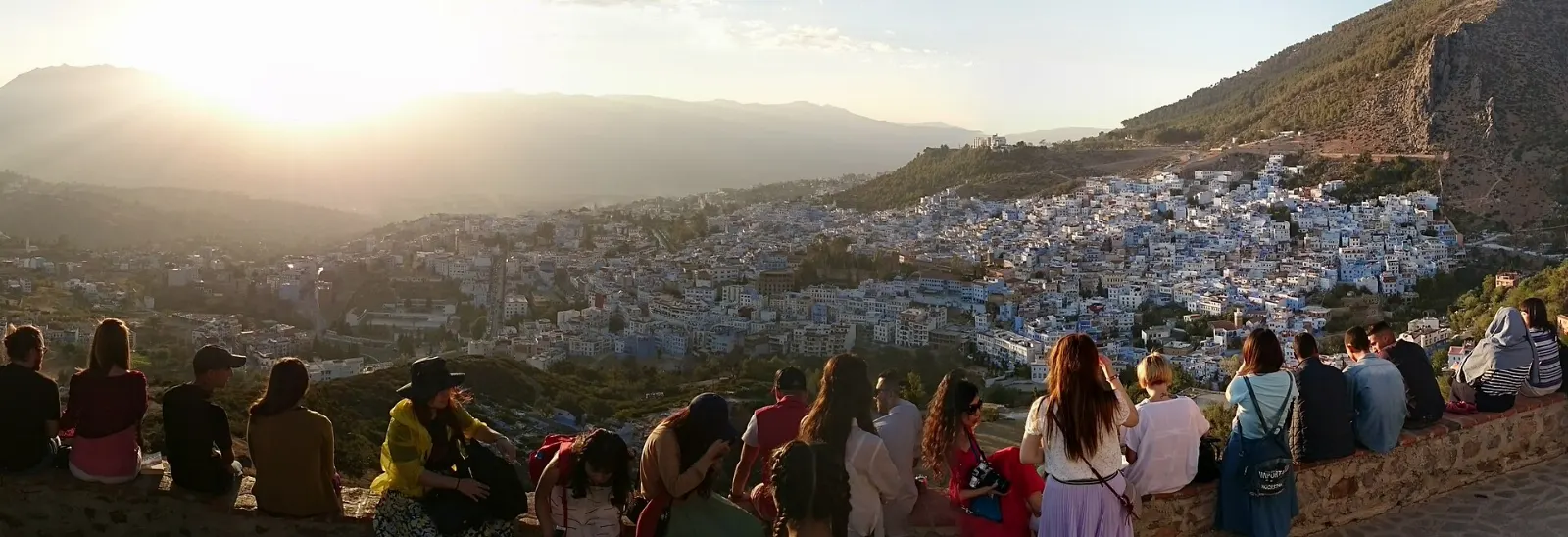
Chefchaouen, often called simply Chaouen, spills down a mountainside in Morocco's Rif range, its lanes and stairways painted in every shade of blue from pale sky to deep indigo.
AT A GLANCE
Best time
Spring, from March to May, and autumn, from September to November, for mild weather and green hills.
How long
Two to three nights: one full day in the medina and one for Akchour or a mountain hike.
Getting there
Fly into Tangier, then travel by bus, grand taxi or private car through Tetouan into the mountains.
Why visit Chefchaouen
Chefchaouen was founded in 1471 as a fortified base in the mountains, and for centuries it remained relatively isolated.
Nobody agrees on exactly why the town is painted blue. Popular explanations include Jewish traditions brought by refugees, the idea that the color keeps insects away or keeps houses cool, and more recently the simple fact that visitors love it.
Beyond the photographs, Chefchaouen offers a gentler pace than the big imperial cities. Hassle is usually lighter than in Marrakech or Fes, the mountain air is fresh, and good hiking starts right at the edge of town.
The blue medina
The lanes of the old town
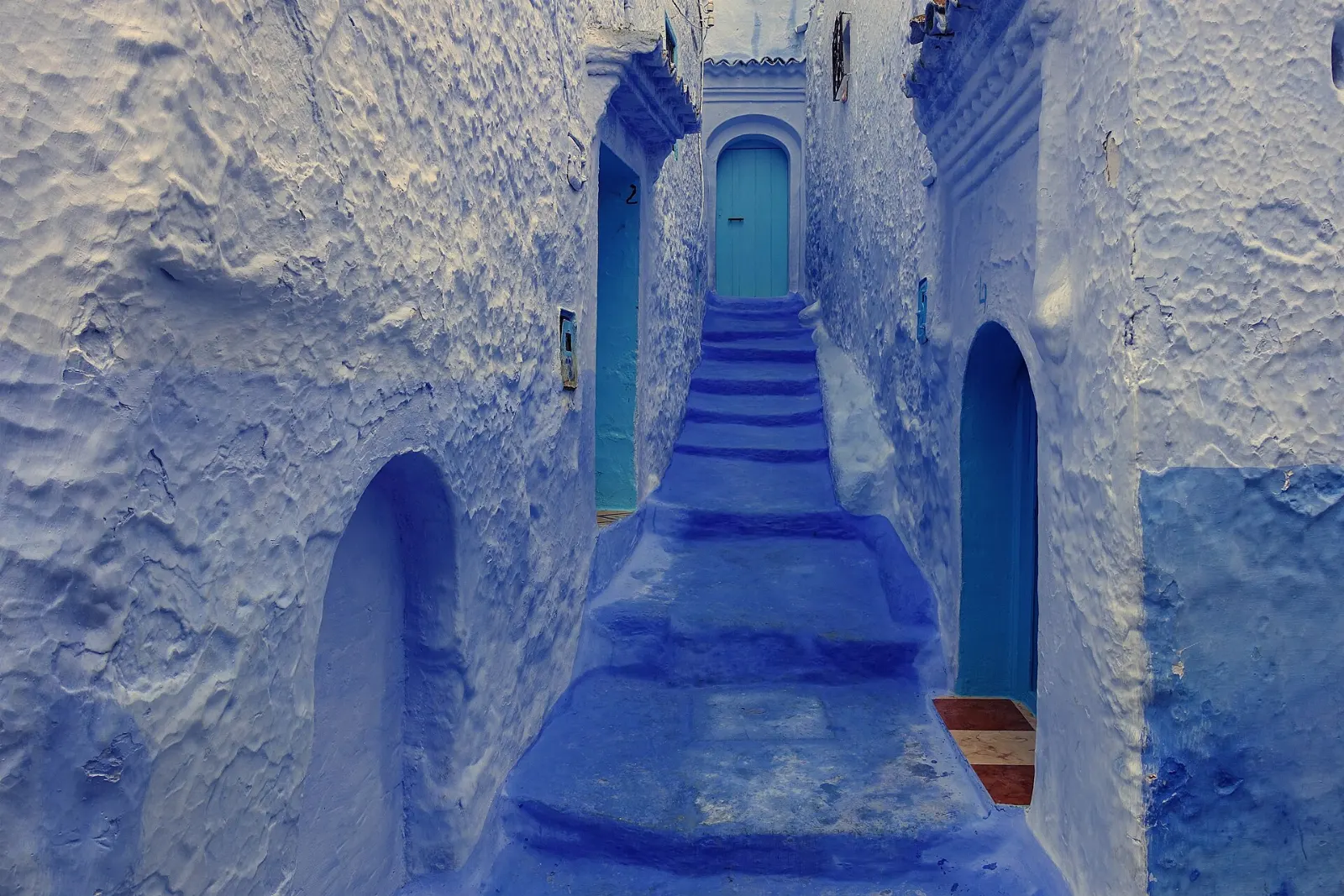
The medina is compact, but its stepped alleys twist and branch so often that getting a little lost is part of the experience.
Tip: these are people's homes. Keep your voice down, do not block doorways for photographs and always ask before photographing residents.
Outa el Hammam
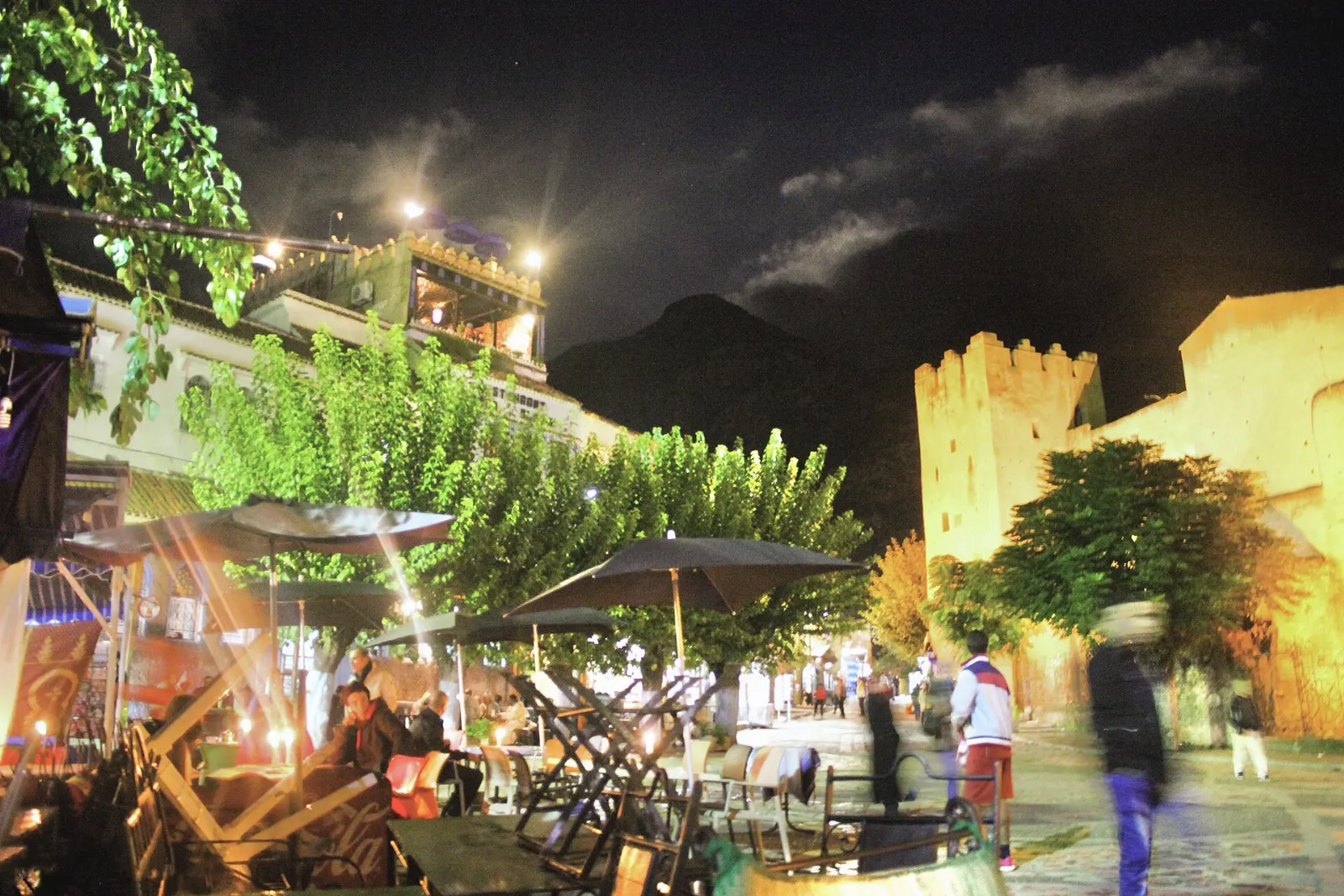
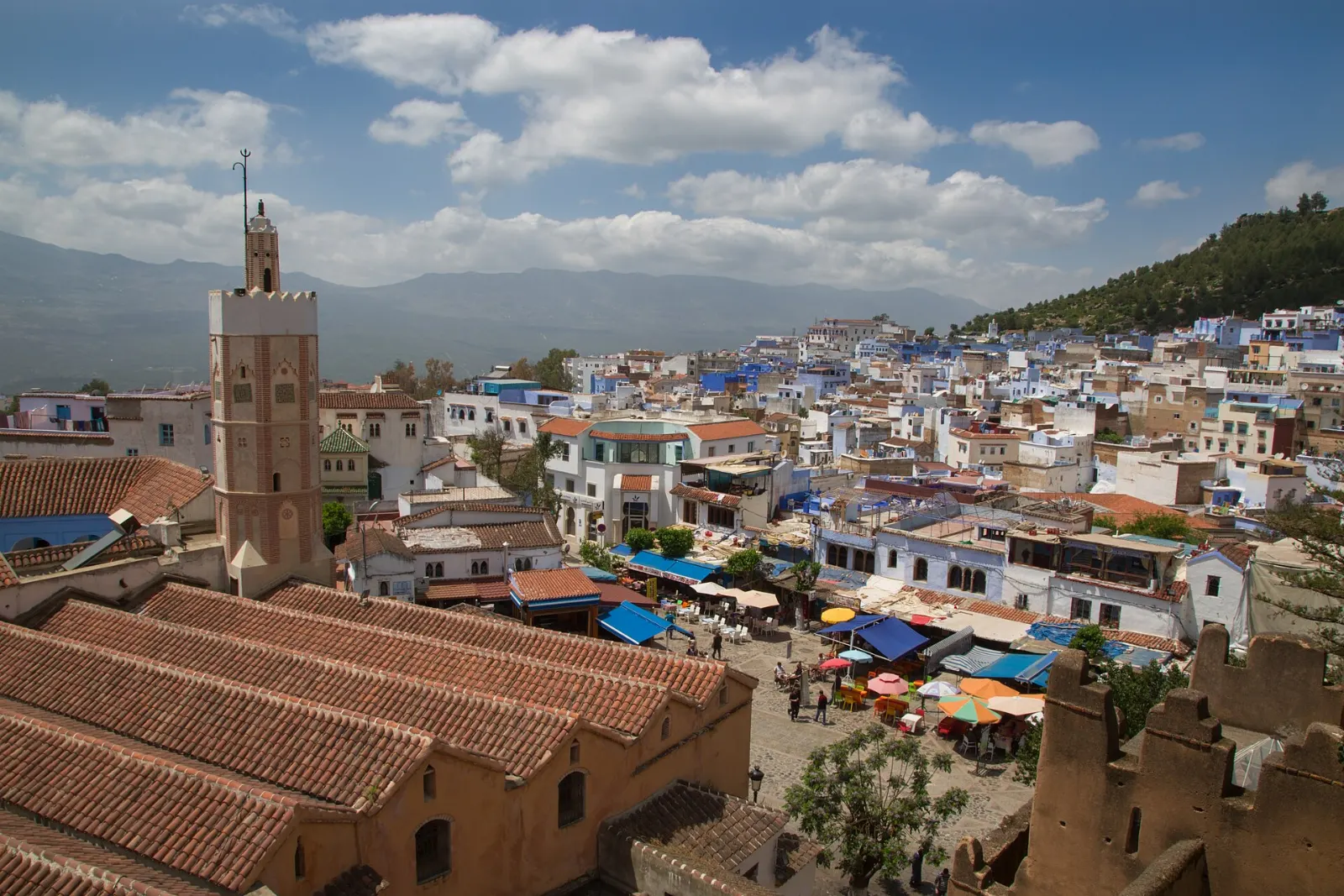
Outa el Hammam is the main square of the old town, a cobbled plaza shaded by trees and lined with cafes and restaurants. It is the natural meeting point of the medina, busy from late morning until well after dark.
The Kasbah
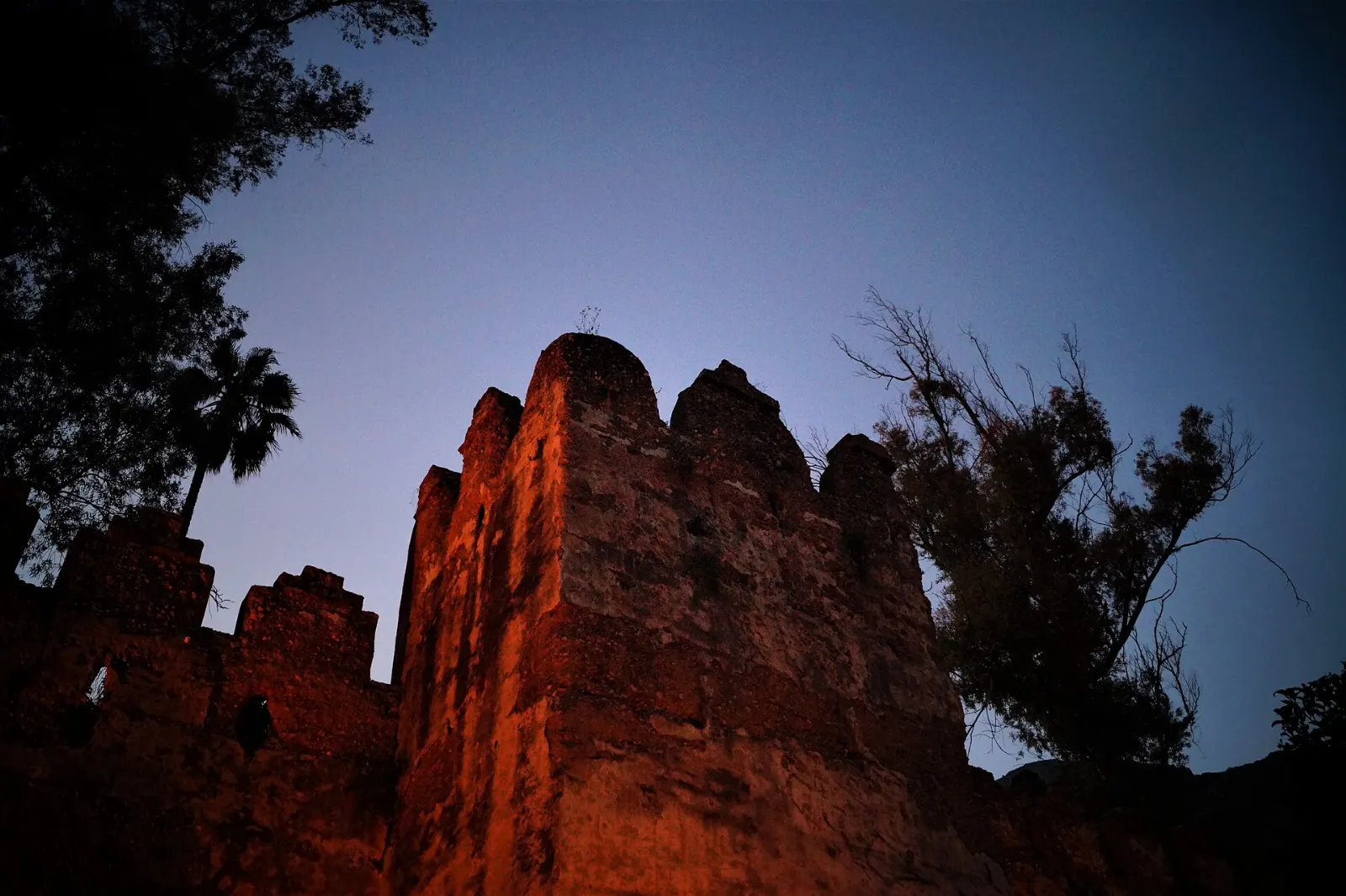
On one side of Outa el Hammam stands the Kasbah, a fortress with reddish earth walls and crenellated towers. Inside you will find a peaceful Andalusian-style garden, a small ethnographic museum with traditional clothing, weapons, instruments and old photographs of the town, and former prison cells.
The Grand Mosque
Beside the Kasbah, the Grand Mosque is notable for its unusual octagonal minaret, a feature that sets it apart from the square towers typical of Moroccan mosques.
Bab el Ain and the souks
Bab el Ain is one of the old gates into the medina and a common entry point for visitors arriving from the newer town below. Inside, small shops sell woven blankets, wool jellabas, leather goods, ceramics and argan and olive oil products.
Springs, viewpoints and the edge of town
Ras el Maa
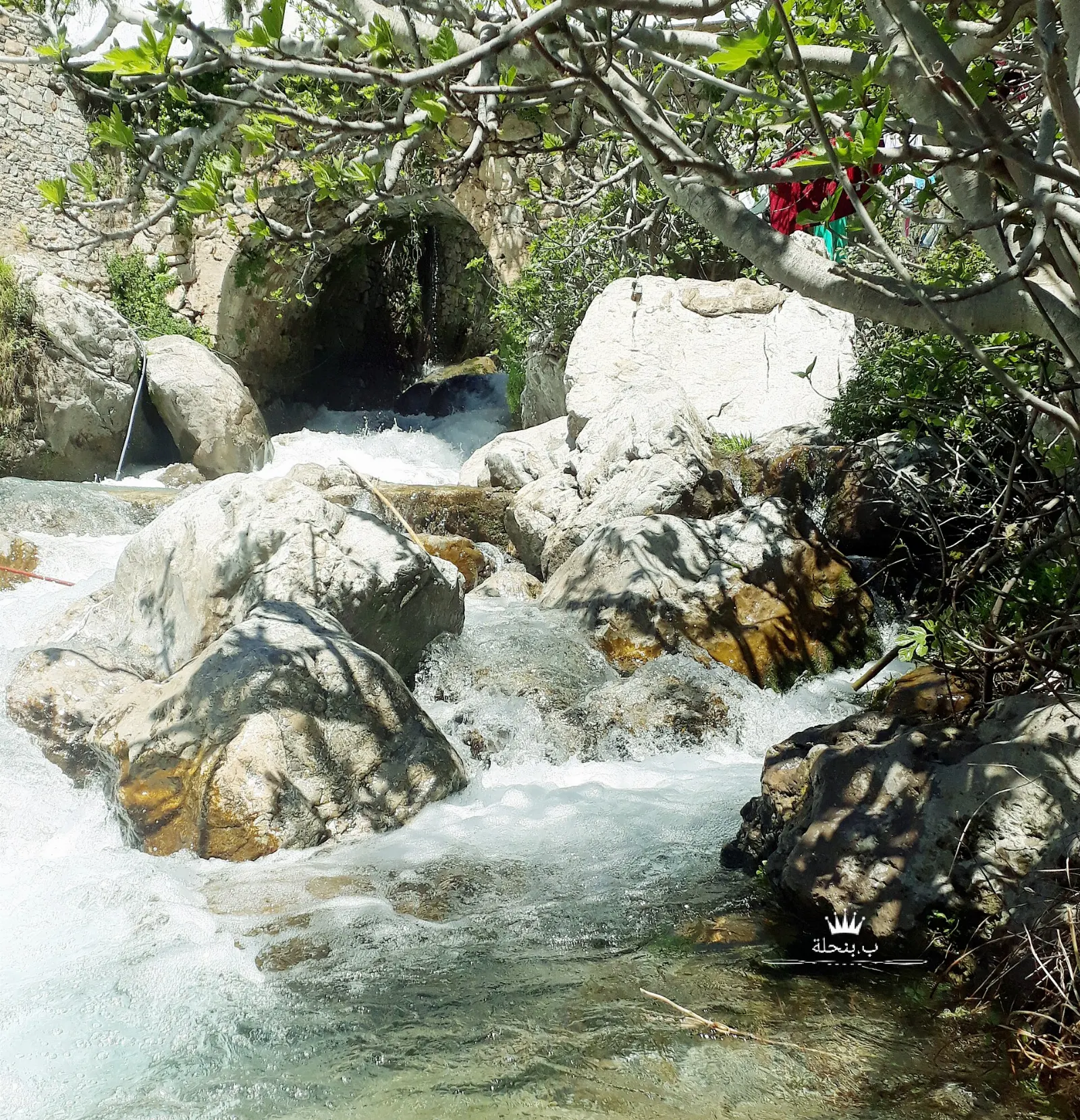
At the eastern edge of the medina, the Ras el Maa spring pours out of the mountain and runs through stone channels and small cascades. Locals gather here to cool off, and women still sometimes use the old communal wash basins along the stream.
The Spanish Mosque
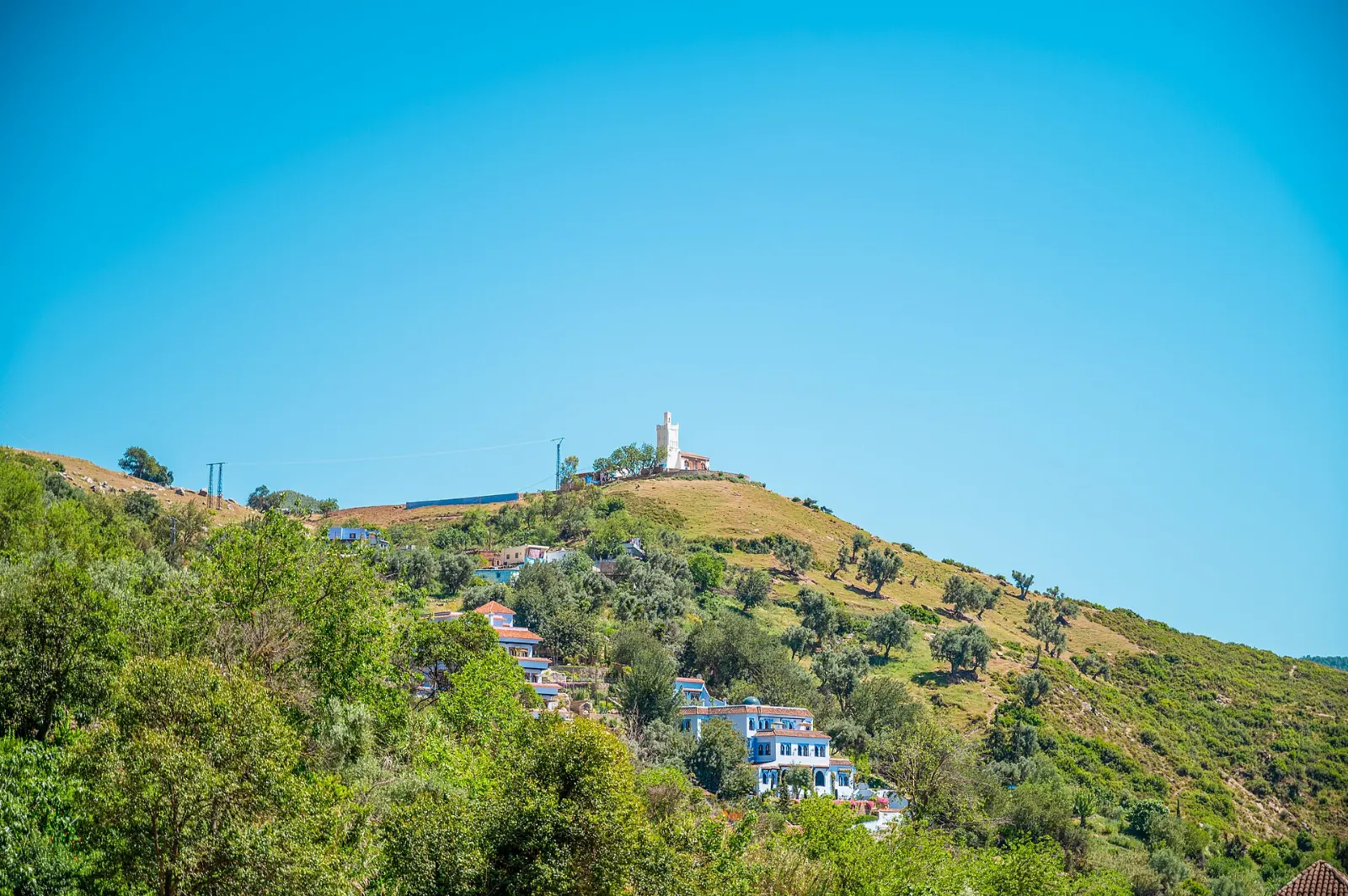
From Ras el Maa, a path crosses the stream and climbs the hillside opposite the town to the Spanish Mosque, a whitewashed building constructed during the Spanish colonial period in the 1920s and long since out of use as a place of worship.
Jebel el Kelaa
For serious walkers, the peak of Jebel el Kelaa rises steeply behind the town. A full-day hike climbs from the edge of the medina through forest and rocky slopes to the summit, with views over the Rif and, on clear days, far into the distance.
Akchour and Talassemtane National Park
Akchour waterfalls
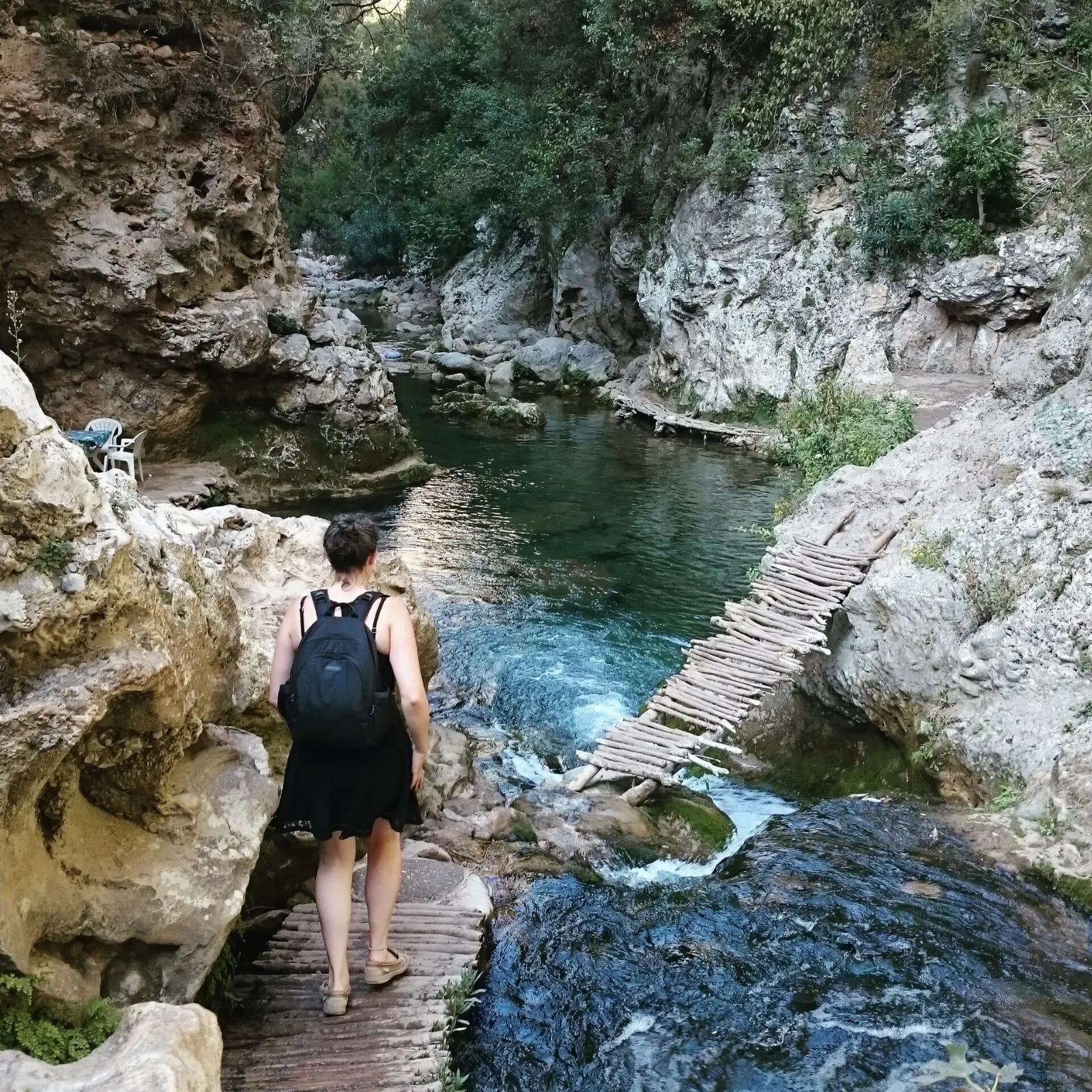
About an hour's drive east of Chefchaouen, the village of Akchour is the gateway to some of the prettiest scenery in northern Morocco. Trails follow a river upstream through a forested gorge to a series of turquoise pools and waterfalls inside Talassemtane National Park, known for its cedar and fir forests.
God's Bridge
A separate trail from Akchour leads to God's Bridge, a natural rock arch high above the river gorge. The walk is shorter than the route to the main waterfalls, though it includes steep sections. Many visitors combine both in one long day.
Food and local flavors
The Rif Mountains have their own food traditions, and Chefchaouen is one of the best places to try them.
For breakfast, look for bissara, a thick, warming soup of dried fava beans finished with olive oil, cumin and paprika, served with bread from tiny cafes in the medina.
The weekly market in the newer part of town draws farmers from the mountains with fresh produce, honey, olives and cheese, and is worth a morning visit.
Popular dishes to try in Chefchaouen


Where to stay
Inside the medina is the most atmospheric choice.
Near Ras el Maa and the upper medina is quieter and close to the walk to the Spanish Mosque and hiking trails.
The newer town below the medina has larger hotels with parking, easier vehicle access and proximity to the bus station.
Rural guesthouses in the hills near Akchour and Talassemtane offer a peaceful base for hikers who want more time in the national park.
Where to stay in Chefchaouen


Best time to visit
Spring, from March to May, brings green hillsides, wildflowers and comfortable temperatures for walking. Autumn, from September to November, is similarly pleasant, with warm days and cool evenings.
Summer is hot during the day, though the altitude keeps nights cooler than on the plains.
Check the dates of Ramadan before you travel. During the holy month, many cafes and restaurants close during daylight hours and the rhythm of the town changes, with lively evenings after sunset.
Getting there and getting around
Chefchaouen has no airport. The most convenient international gateway is Tangier Ibn Battouta Airport, roughly two and a half to three hours away by road.
CTM and other bus companies connect Chefchaouen with Tangier, Tetouan, Fes and other cities.
Within the medina, you will walk everywhere; it is hilly, with many steps, so comfortable shoes are essential.
A suggested itinerary
First day
Arrive in the afternoon and settle into your guesthouse. Wander down to Outa el Hammam for mint tea, then walk to Ras el Maa and climb to the Spanish Mosque for sunset.
Second day
Rise early to explore the bluest lanes of the upper medina before the crowds. Visit the Kasbah, its garden and museum, and climb the tower for views of the Grand Mosque.
Third day
Take a grand taxi or tour to Akchour.
Practical tips
- Always ask before photographing people, and avoid lingering in front of private doors for photos.
- Carry cash in Moroccan dirhams; card acceptance is limited in the medina, though there are ATMs in town.
- Dress modestly, covering shoulders and knees, especially near mosques and in rural villages.
- Politely decline offers of cannabis, since recreational use remains illegal in Morocco even though the plant is grown in the region.
- Agree on taxi fares and guide fees before setting off.
- Wear shoes with good grip for steep, sometimes slippery steps and trails.