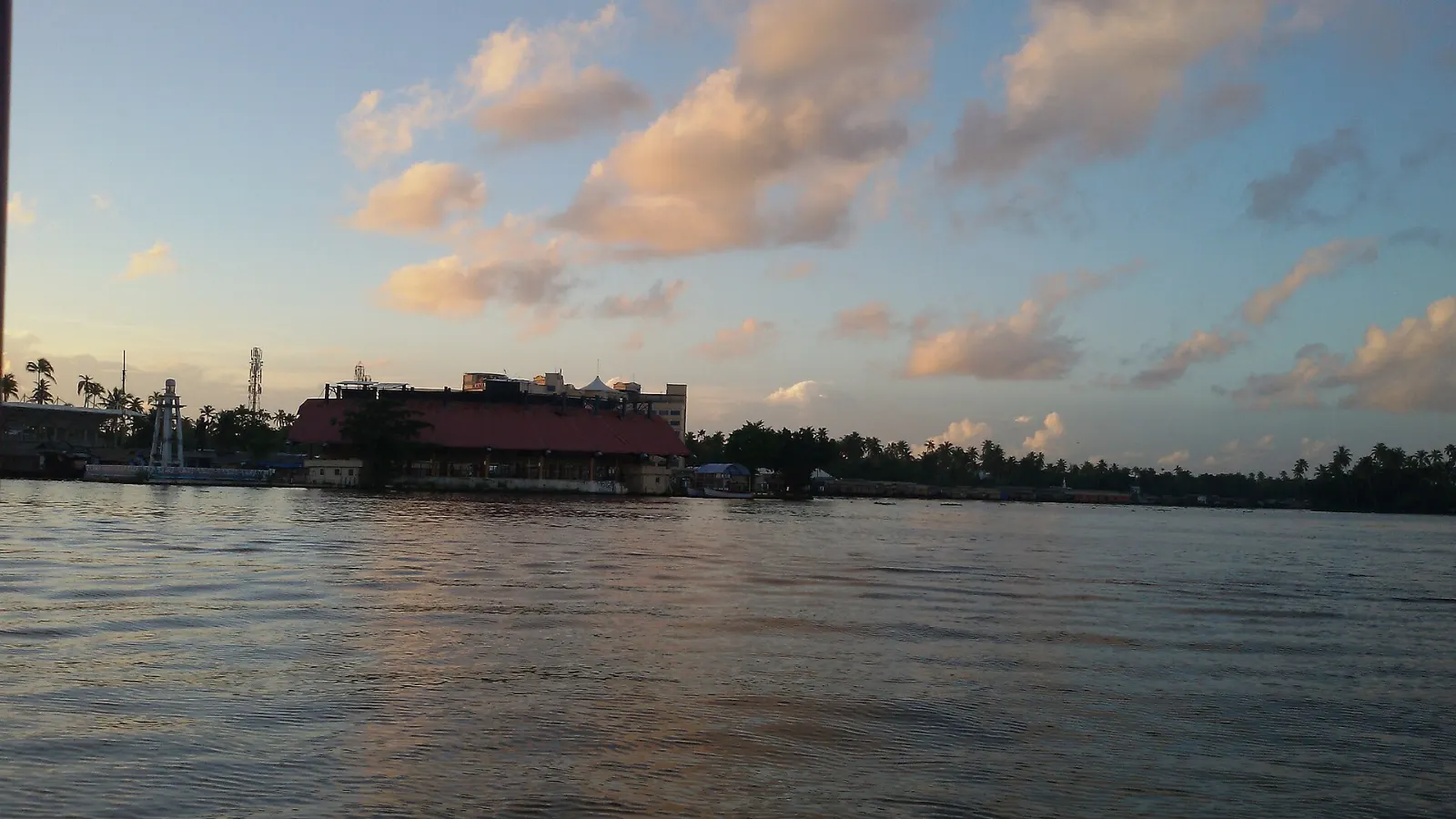
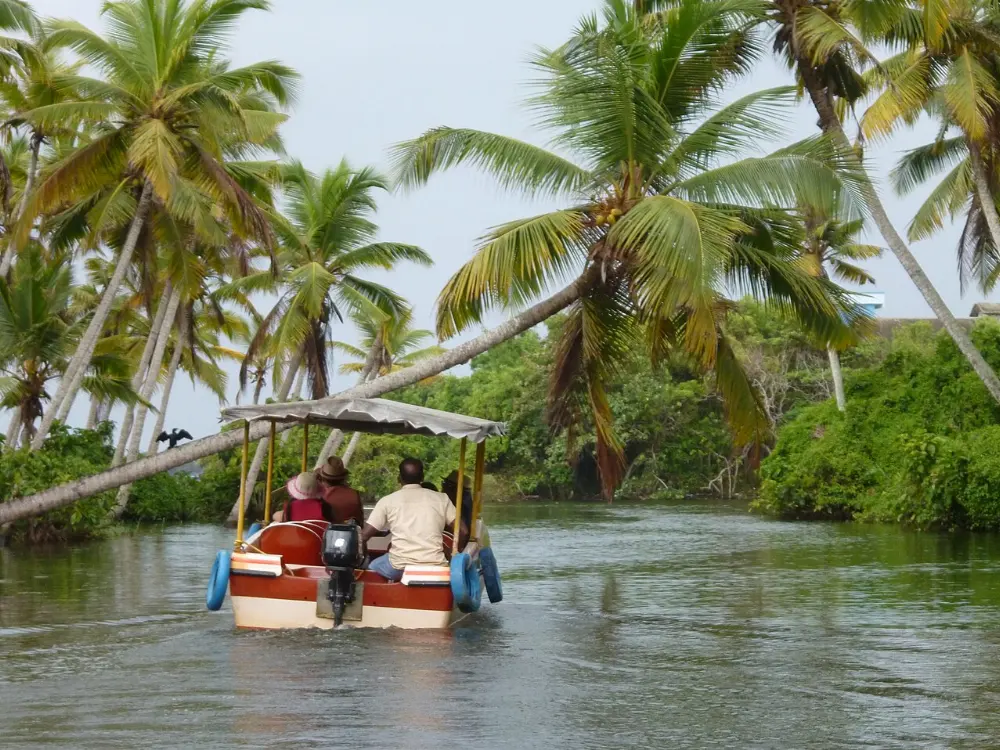
This guide explains where to go in the backwaters, from Alappuzha and Kuttanad to Kumarakom, Kollam and Munroe Island, how long to spend at each, what to eat, where to stay, when to visit and how to get around, with a sample itinerary to help you plan.
At a glance Kerala Backwaters
Best timeNovember to February, after the monsoon, when skies are clearer, humidity is lower and the water is high and green.
How longThree to four days, including one night on a houseboat, plus time in Kochi before or after.
Getting thereFly into Cochin International Airport, then drive or take the train south to Alappuzha or Kottayam.
Ad
Why visit the Kerala backwaters
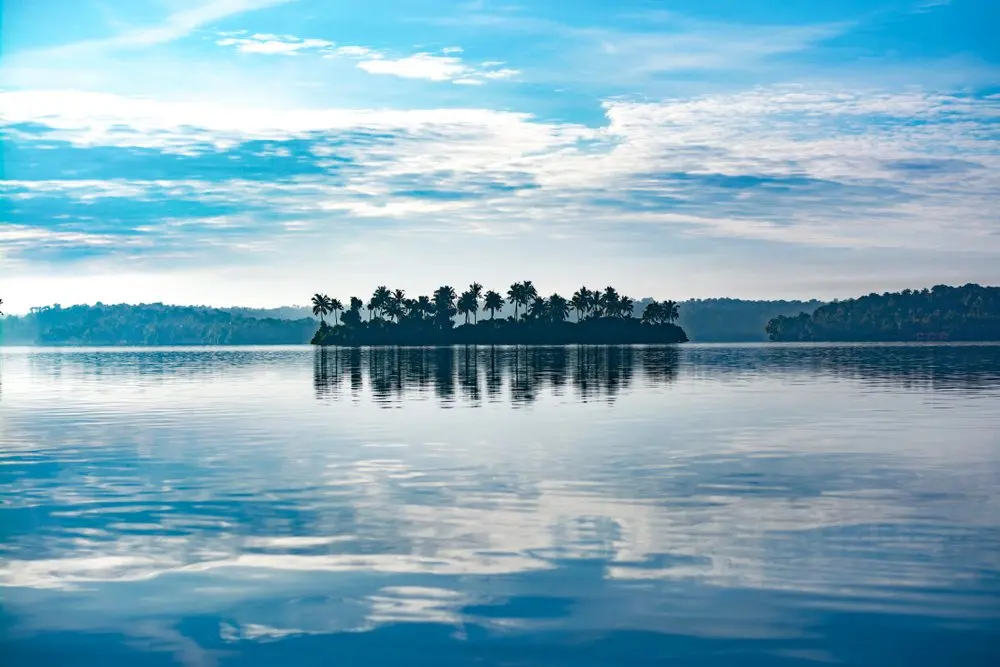
At the center of the system lies Vembanad Lake, the longest lake in India and a protected Ramsar wetland. Around it, the Kuttanad region grows rice on land that sits below sea level, protected by dikes and drained by pumps, a farming method that has fascinated scientists and visitors alike.
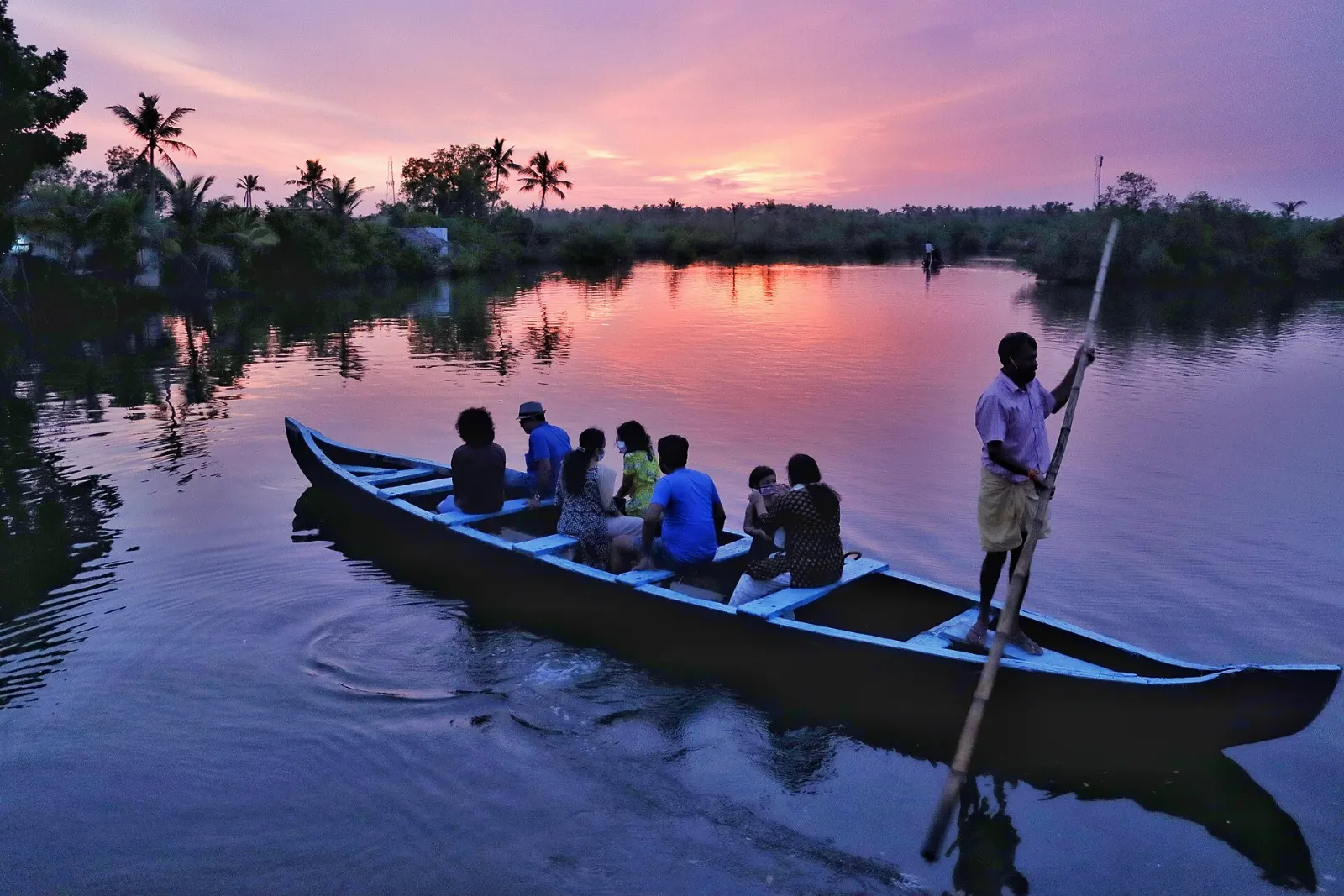
The appeal is slowness. Instead of rushing between sights, you drift past villages, eat home-style Kerala meals cooked on board and watch kingfishers and egrets along the banks.
Alappuzha and Kuttanad
Alappuzha, often still called Alleppey, is the main hub for houseboats and the easiest place to start.
Punnamada Lake and the houseboat jetties
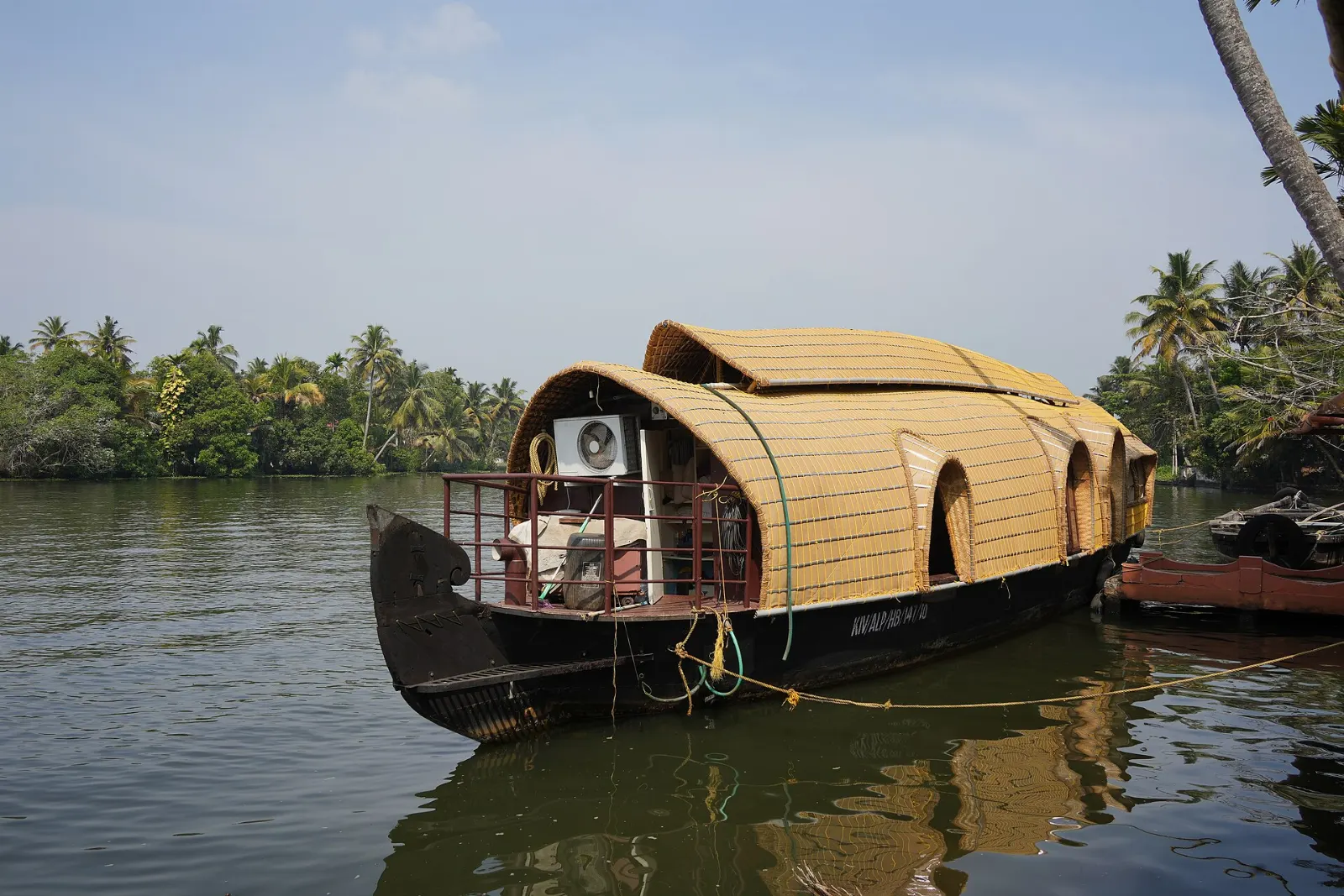
Most houseboats depart from the shores of Punnamada Lake, on the northern edge of town. These boats, called kettuvallam, are adapted from traditional rice barges, with thatched roofs, bedrooms, a deck lounge and a small kitchen.
Punnamada Lake, an arm of Vembanad Lake near Alappuzha, is the main starting point for houseboat cruises and the venue of the Nehru Trophy Boat Race. Photo: Abhigkrv, Wikimedia Commons, CC BY 4.0
Alappuzha town and beach
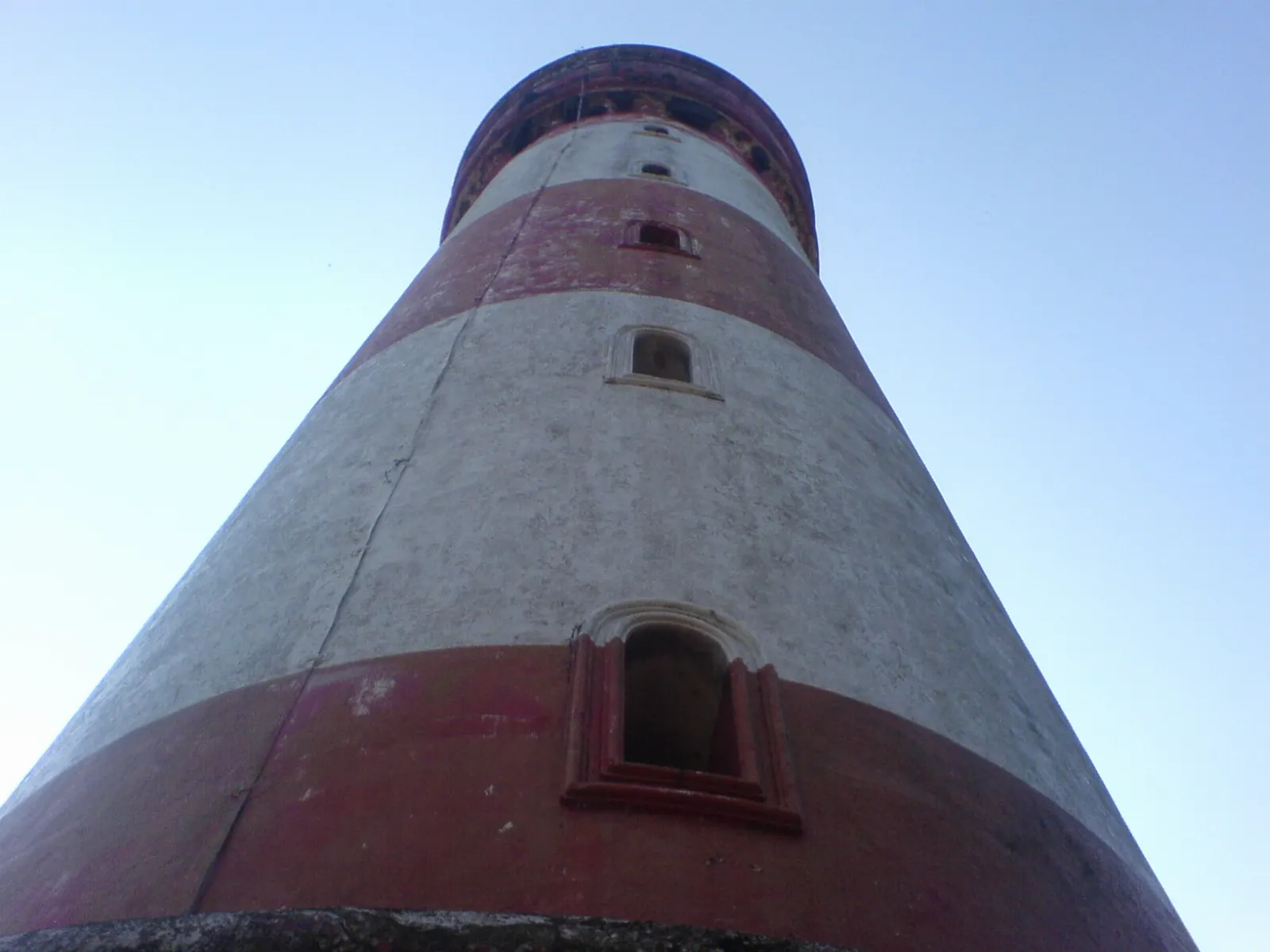
Alappuzha town is crossed by canals and has a long, sandy beach with the ruins of an old pier and a striped lighthouse you can climb for views over the coast and palm groves. The beach is better for sunset strolls than swimming, as currents can be strong.
The Alappuzha Lighthouse stands near the town's beach and historic pier. Photo: Deepak, Wikimedia Commons, Public domain
Kuttanad villages and rice fields
Kuttanad, south and east of Alappuzha, is the heart of the backwaters. Narrow canals wind between paddy fields lower than the water level, with small houses, churches and temples on the embankments.
Kuttanad is known for farming rice on land that lies below sea level, protected by dikes and canals. Photo: Gannu03, Wikimedia Commons, CC BY-SA 4.0
Champakulam
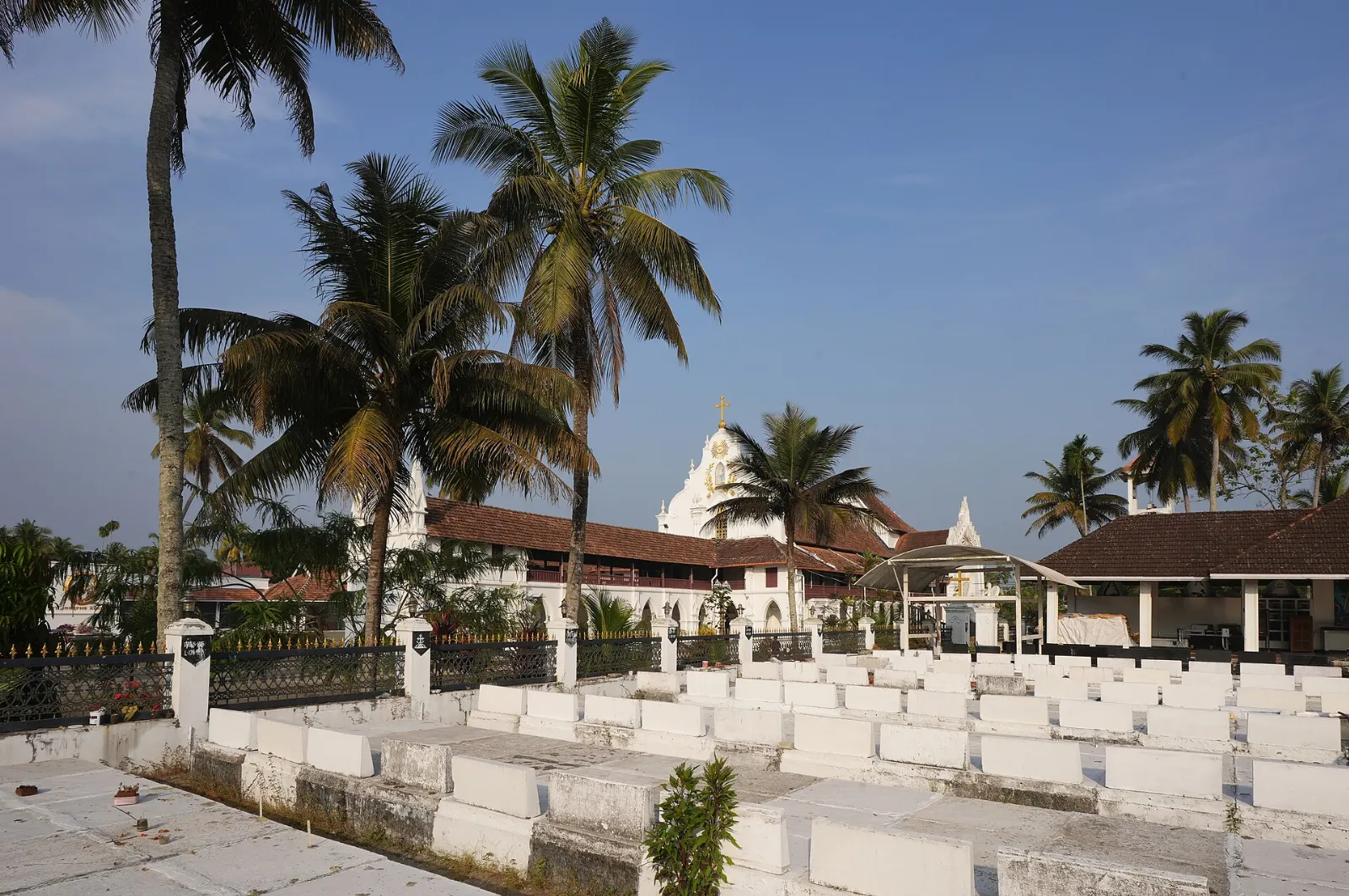
This riverside village on the Pamba River is home to St. Mary's Forane Church, one of the oldest Christian parishes in Kerala, and it hosts the Champakulam Moolam boat race, traditionally the first major race of the season in early summer. A stop here makes a good half-day canoe or ferry trip from Alappuzha.
St. Mary's Forane Church at Champakulam is one of the oldest Christian parishes in Kerala, set on the banks of the Pamba River. Photo: Ingo Mehling, Wikimedia Commons, CC BY-SA 4.0
Ad
Kumarakom and Vembanad Lake
On the eastern shore of Vembanad Lake, near Kottayam, Kumarakom is a quieter base with lakeside resorts and village life.
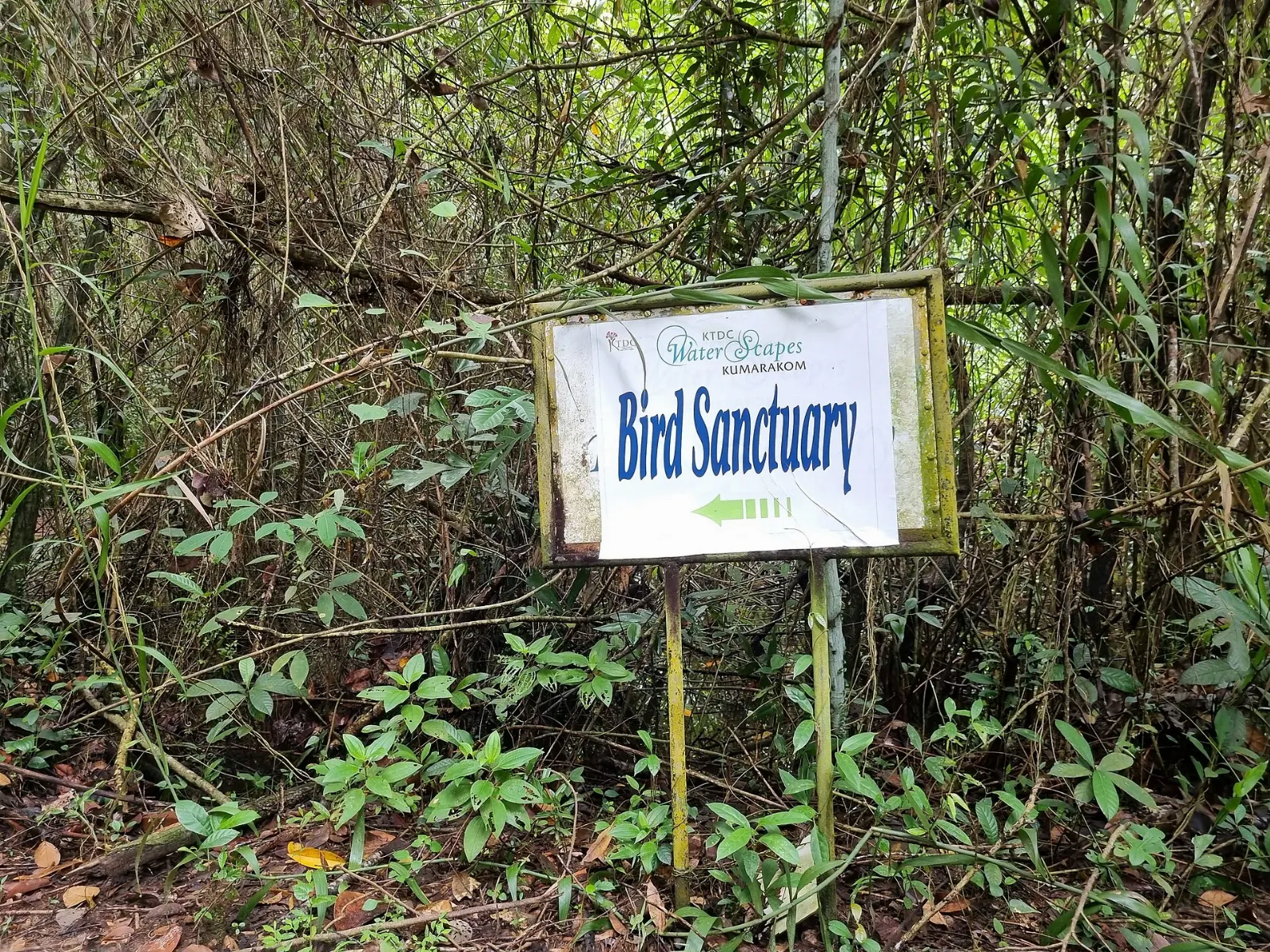
Kumarakom Bird Sanctuary
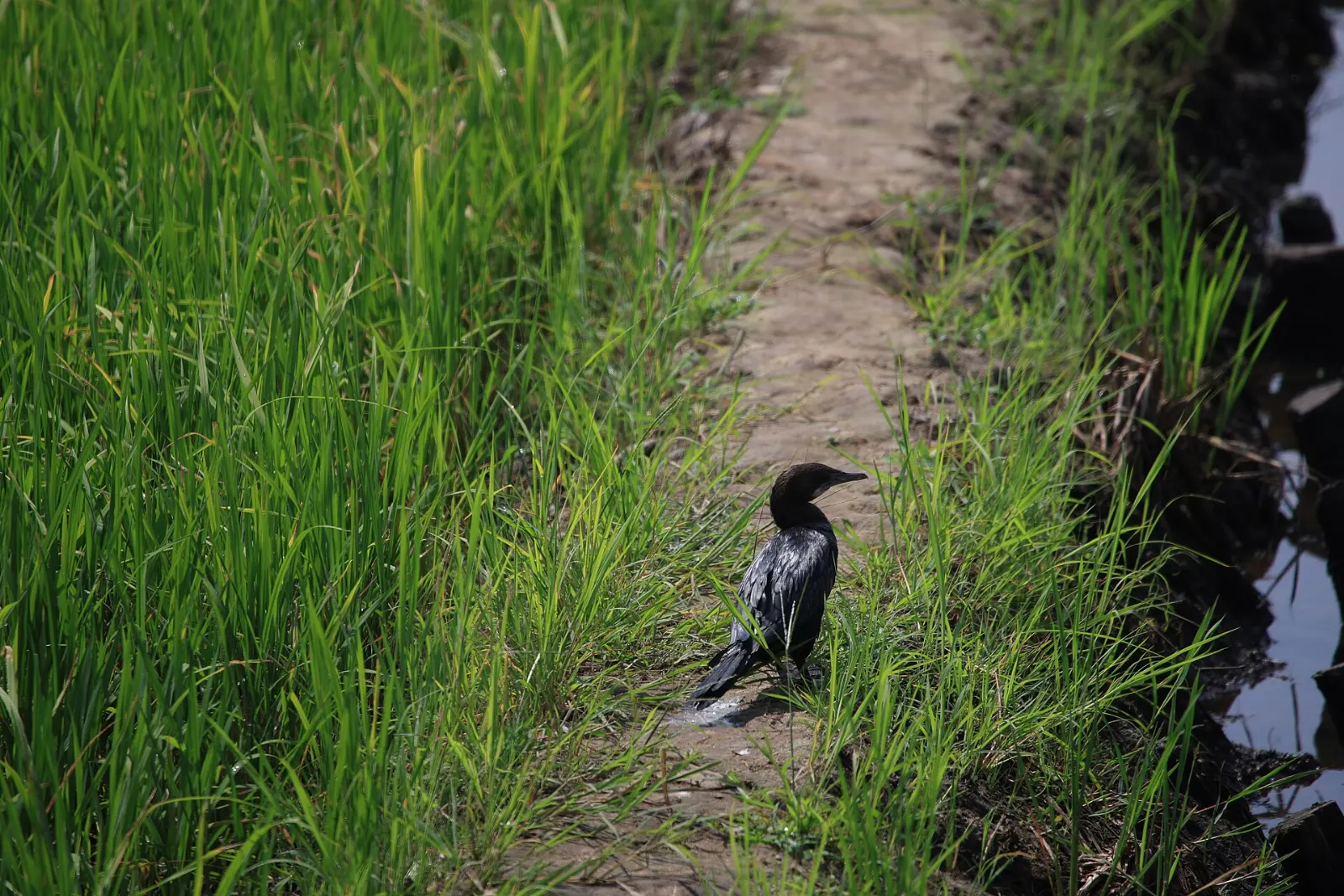
This sanctuary, set in a former rubber and coconut plantation by the lake, is laced with walking paths through mangroves and waterside woodland.
Kumarakom Bird Sanctuary on the eastern shore of Vembanad Lake attracts resident and migratory water birds. Photo: Ganesh Mohan T, Wikimedia Commons, CC BY-SA 4.0
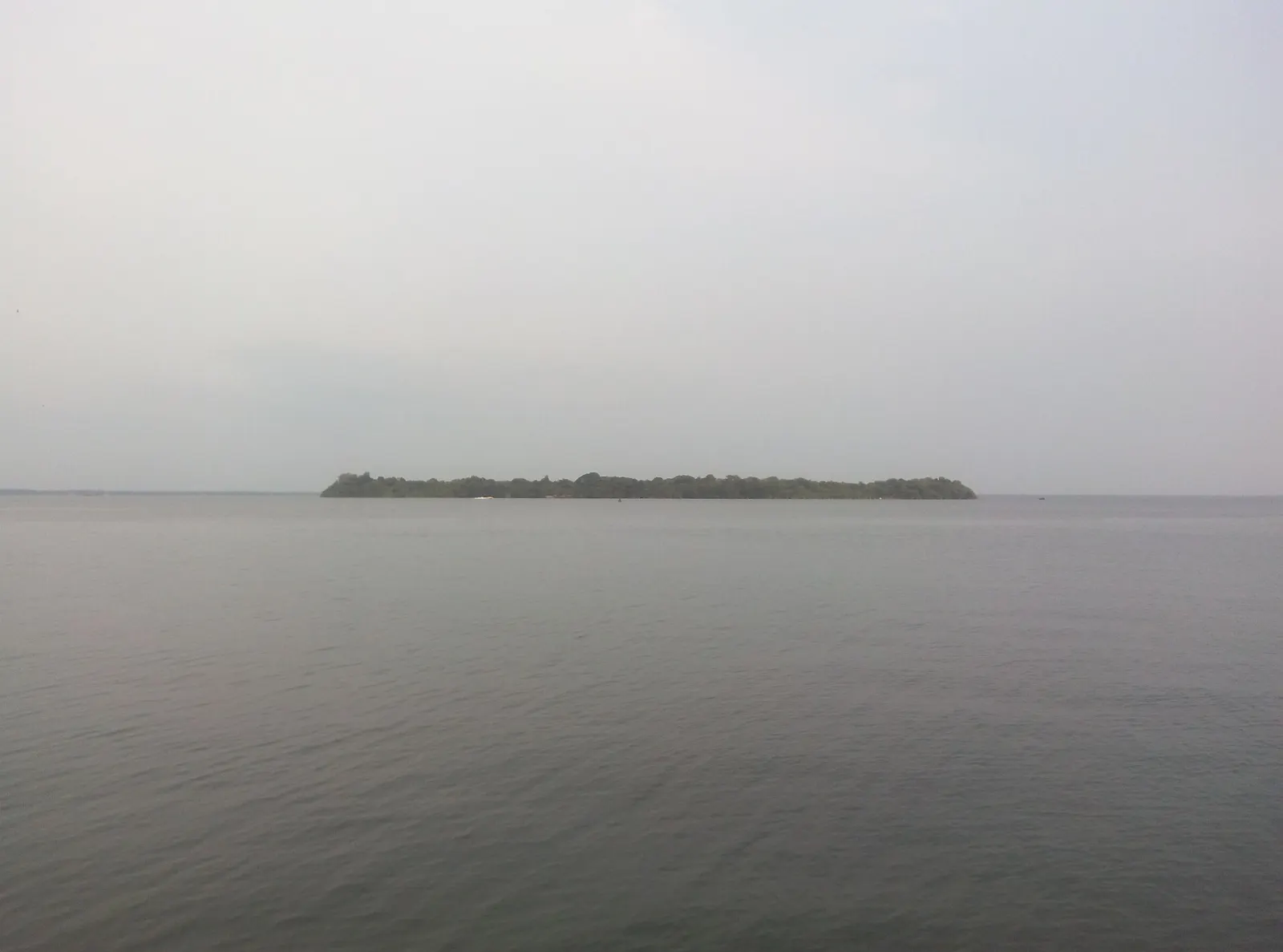
Pathiramanal Island
Pathiramanal is a small wooded island in the middle of Vembanad Lake, reachable only by boat from Kumarakom or the Muhamma side. A short trail loops through the trees, where you may see water birds roosting.
Pathiramanal is a small, wooded island in Vembanad Lake reachable only by boat. Photo: Rajkrishnan R, Wikimedia Commons, CC BY-SA 4.0
Kumarakom village experiences
Kumarakom has a strong responsible tourism program that connects visitors with local farmers, fishermen, coir makers and toddy tappers.
Kollam, Munroe Island and the coast
Ashtamudi Lake
Kollam, south of Alappuzha, sits on Ashtamudi Lake, a large lagoon with many arms that is also a protected wetland. It is less busy than Alappuzha, and houseboats and day cruises here feel quieter.
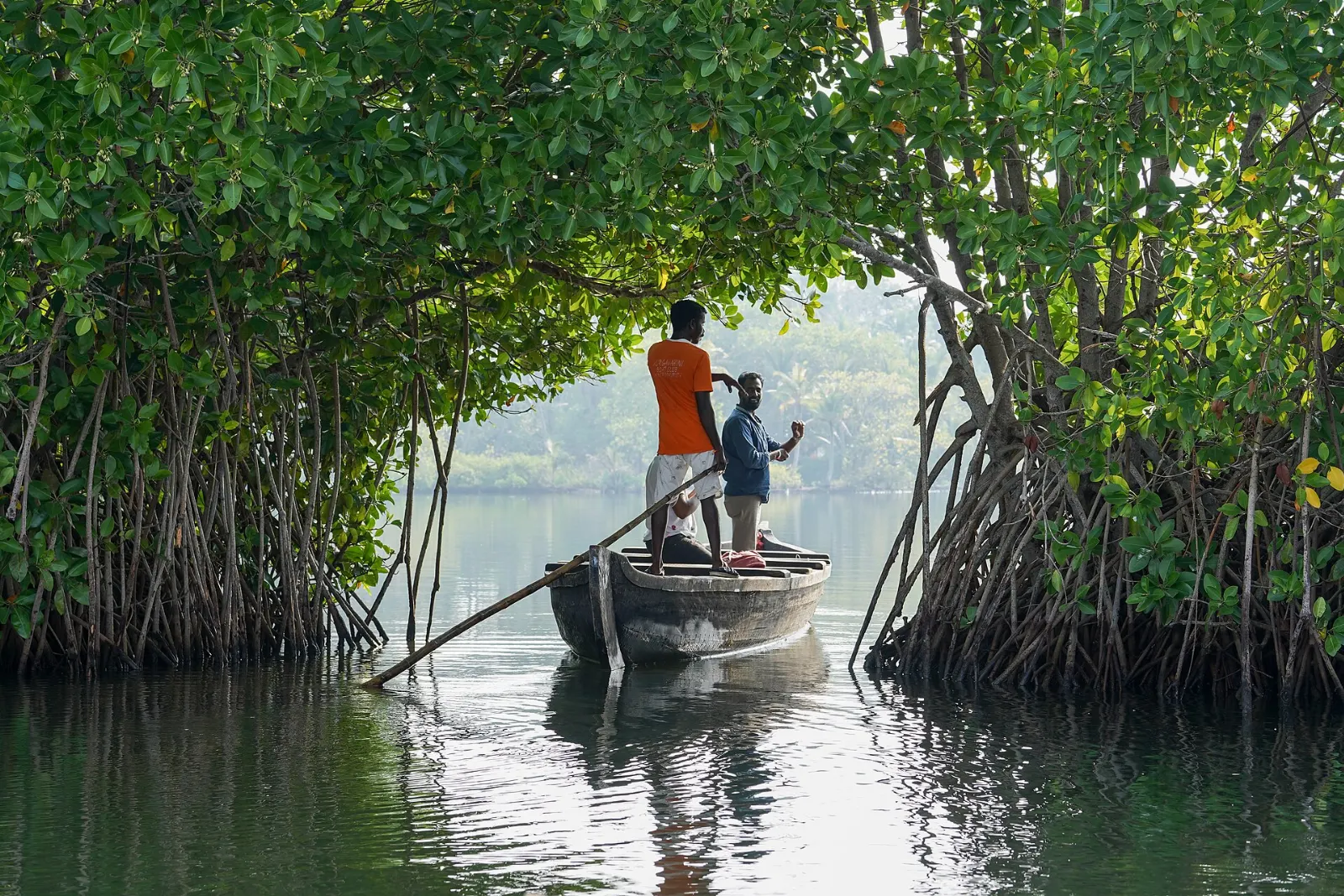
Where Ashtamudi Lake meets the Kallada River, Munroe Island is a cluster of small islets crossed by narrow canals.
Munroe Island, where Ashtamudi Lake meets the Kallada River, is laced with narrow canals best explored by canoe. Photo: Sanu N, Wikimedia Commons, CC BY-SA 4.0
Marari Beach
North of Alappuzha, near the fishing village of Mararikulam, Marari Beach is a quiet stretch of sand lined with palms and fishing boats. It pairs well with a houseboat trip if you want a few lazy days by the sea.
Fort Kochi
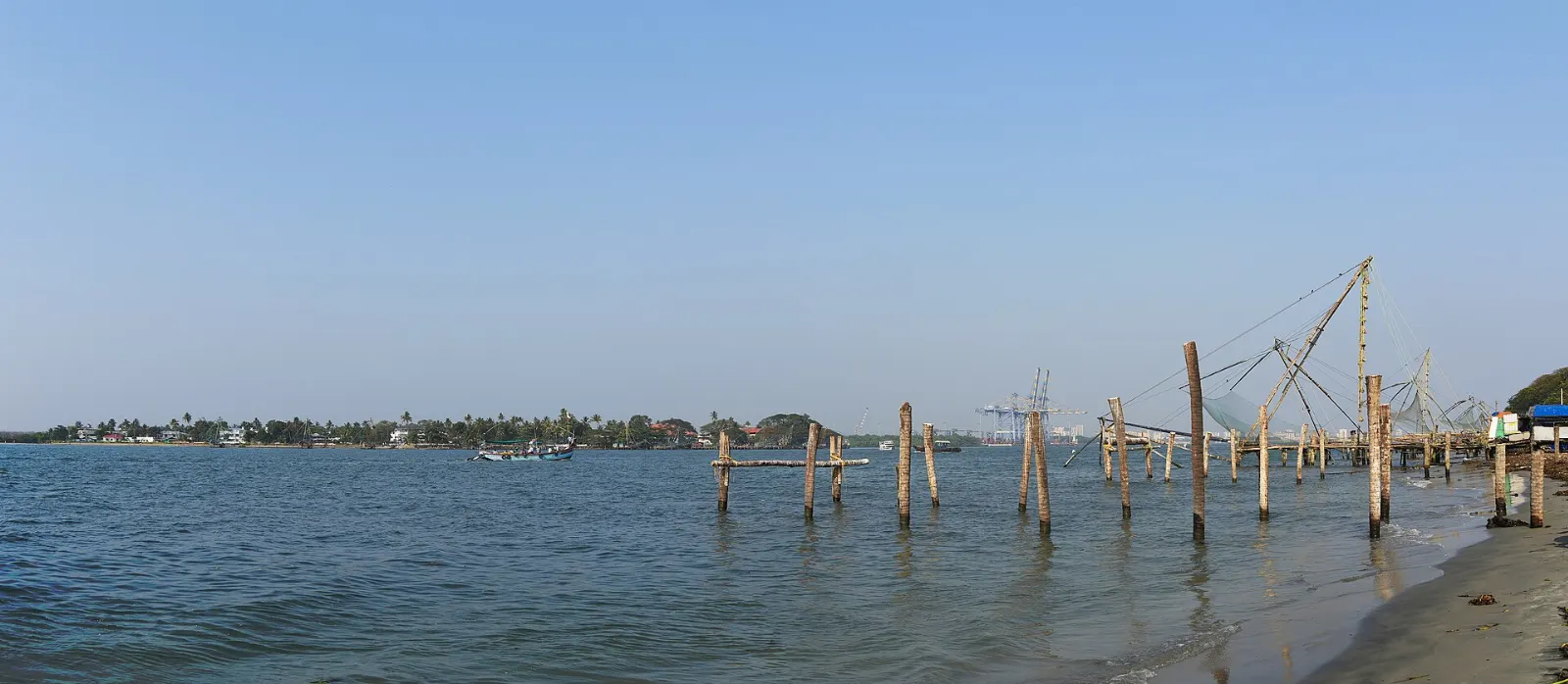
Most travelers pass through Kochi on their way to the backwaters, and it deserves at least a day.
The cantilevered Chinese fishing nets along the shore of Fort Kochi are a symbol of the port city. Photo: Ingo Mehling, Wikimedia Commons, CC BY-SA 4.0
Ad
Food and local flavors
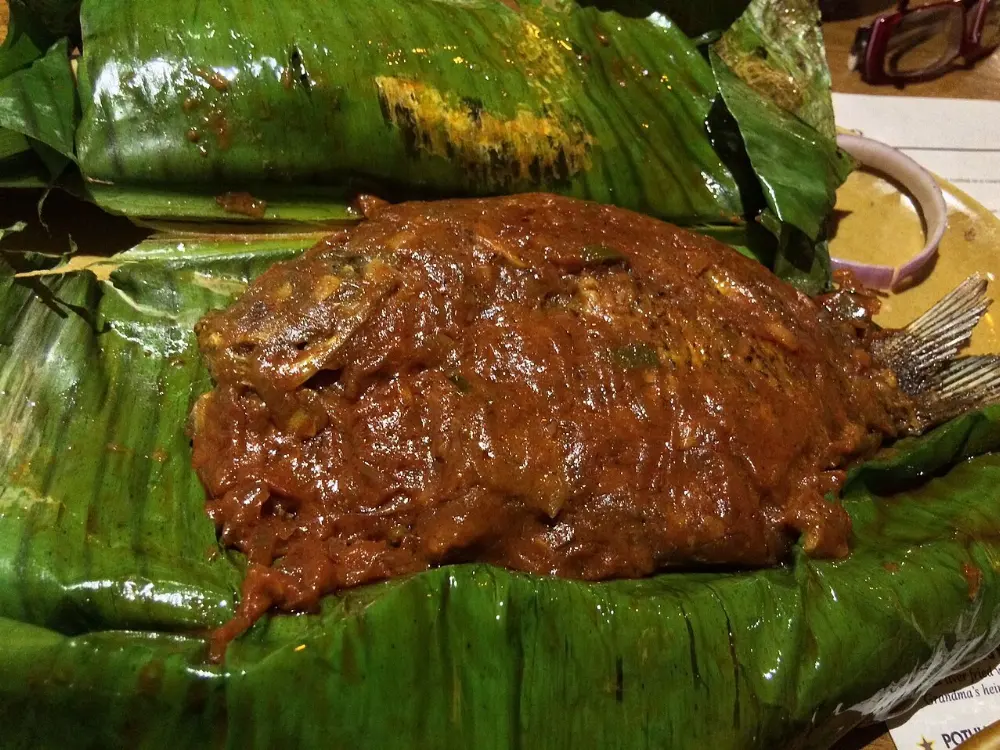
Backwater cooking leans on coconut, curry leaves, black pepper and fresh fish. The signature dish is karimeen pollichathu, pearl spot fish marinated in spices, wrapped in banana leaf and pan-roasted.
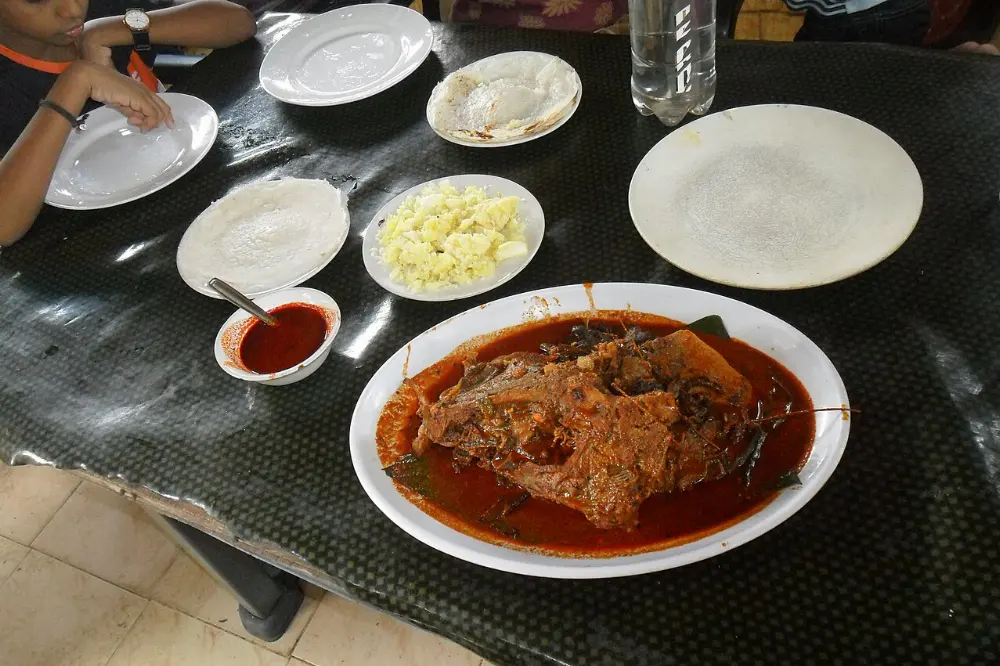
Breakfast often means appam, a lacy rice pancake, with vegetable or chicken stew, or puttu, steamed rice cylinders with chickpea curry.
Popular dishes to try in Kerala Backwaters
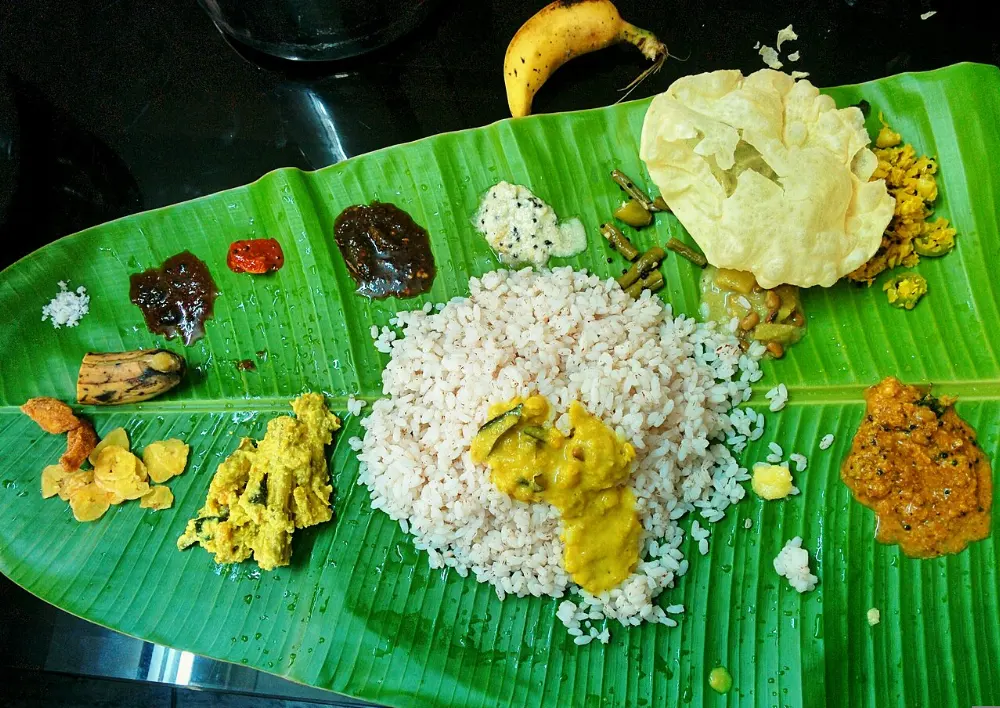
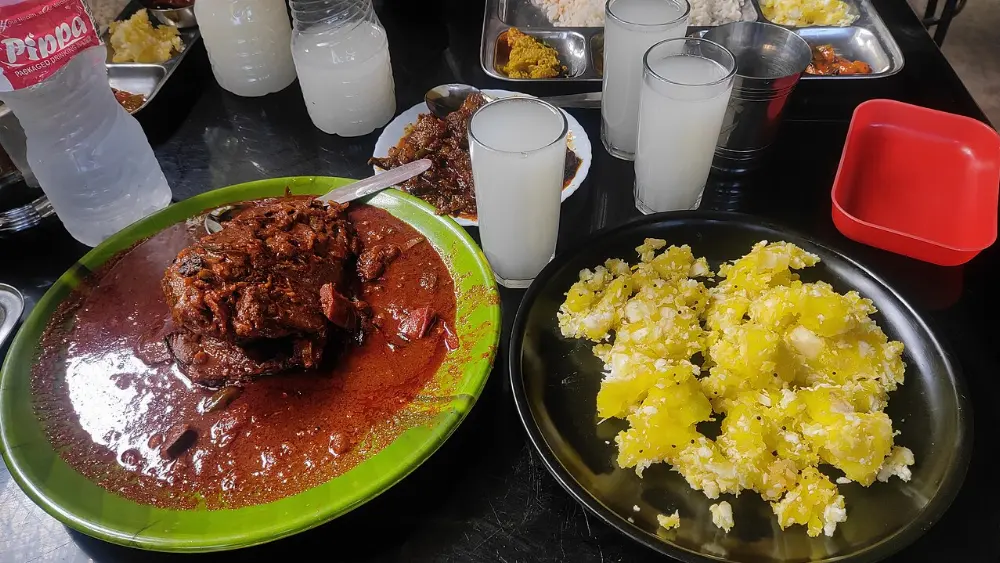
Karimeen pollichathu The signature dish is karimeen pollichathu, pearl spot fish marinated in spices, wrapped in banana leaf and pan-roasted.Photo: Anupama1002, Wikimedia Commons, CC BY-SA 4.0Appam Breakfast often means appam, a lacy rice pancake, with vegetable or chicken stew, or puttu, steamed rice cylinders with chickpea curry.Photo: BinoyCN, Wikimedia Commons, CC BY-SA 4.0Sadya During Onam, families serve the sadya, a vegetarian feast of many dishes on a banana leaf, and some restaurants offer it at lunch.Photo: Sreerajsadanand, Wikimedia Commons, CC BY-SA 4.0Toddy Traditional toddy shops sell palm toddy alongside fiery local dishes; they are a local institution, but choose busy, well-reviewed ones.Photo: Akhilan, Wikimedia Commons, CC BY-SA 4.0
Where to stay
On a houseboat is the signature choice for at least one night.
Alappuzha town has guesthouses and homestays along the canals and near the beach.
Kumarakom is known for lakeside resorts with gardens, pools and spa treatments, suiting honeymooners and travelers who want comfort and quiet.
Kuttanad and village homestays put you in the middle of rural life, often reachable only by boat.
Kollam and Munroe Island have a smaller selection of homestays and lakeside resorts, ideal for travelers heading south toward Varkala or Thiruvananthapuram.
Where to stay in Kerala Backwaters
Munroe Island Kollam and Munroe Island have a smaller selection of homestays and lakeside resorts, ideal for travelers heading south toward Varkala or Thiruvananthapuram.Photo: Mohammad Anees Qamar, Wikimedia Commons, CC BY 4.0Varkala Kollam and Munroe Island have a smaller selection of homestays and lakeside resorts, ideal for travelers heading south toward Varkala or Thiruvananthapuram.Photo: Saad Faruque from Bangalore, India, Wikimedia Commons, CC BY-SA 2.0Thiruvananthapuram Kollam and Munroe Island have a smaller selection of homestays and lakeside resorts, ideal for travelers heading south toward Varkala or Thiruvananthapuram.Photo: Arindambasu2, Wikimedia Commons, CC BY-SA 4.0
Ad
Best time to visit
November to February is the peak season, with warm days, cooler nights and lower humidity.
March to May is hot and humid, but houseboats and resorts are less crowded and often more flexible.
June to September is the southwest monsoon, with heavy rain, lush scenery and fewer tourists.
October brings the northeast monsoon's afternoon showers but also a fresh, green landscape and moderate crowds.
Getting there and getting around
By air: Cochin International Airport is the closest major airport, roughly a two-hour drive from Alappuzha depending on traffic.
By train: Alappuzha, Kottayam, Kollam and Ernakulam all have railway stations on Kerala's main lines, making trains a comfortable way to travel between backwater towns and Kochi.
By road: Prepaid taxis and app-based cabs operate from the airport, and KSRTC state buses link the main towns.
Ad
A suggested itinerary
First day
Spend a day in Kochi exploring Fort Kochi's Chinese fishing nets, St. Francis Church and Mattancherry. In the evening, watch a Kathakali performance or simply eat seafood near the waterfront.
Second day
Travel to Alappuzha in the morning and board your houseboat at Punnamada Lake around midday.
Third day
Disembark after breakfast and take a country canoe through the narrow canals of Kuttanad, stopping at Champakulam.
Fourth day
Start at dawn in Kumarakom Bird Sanctuary, then take a boat to Pathiramanal Island.
Practical tips
Book houseboats only with licensed operators, and confirm the route, meals and air-conditioning hours in writing.
Expect houseboats to stop cruising and moor by early evening; plan sightseeing for the afternoon.
Carry insect repellent and long sleeves for evenings on the water, when mosquitoes are active.
Dress modestly at churches and temples, remove shoes where asked and respect signs, as some temples restrict entry.
Carry some cash for small boats, ferries and village shops, though cards and digital payments are widely accepted in towns.
Drink bottled or filtered water and ask the houseboat crew how drinking water is provided.