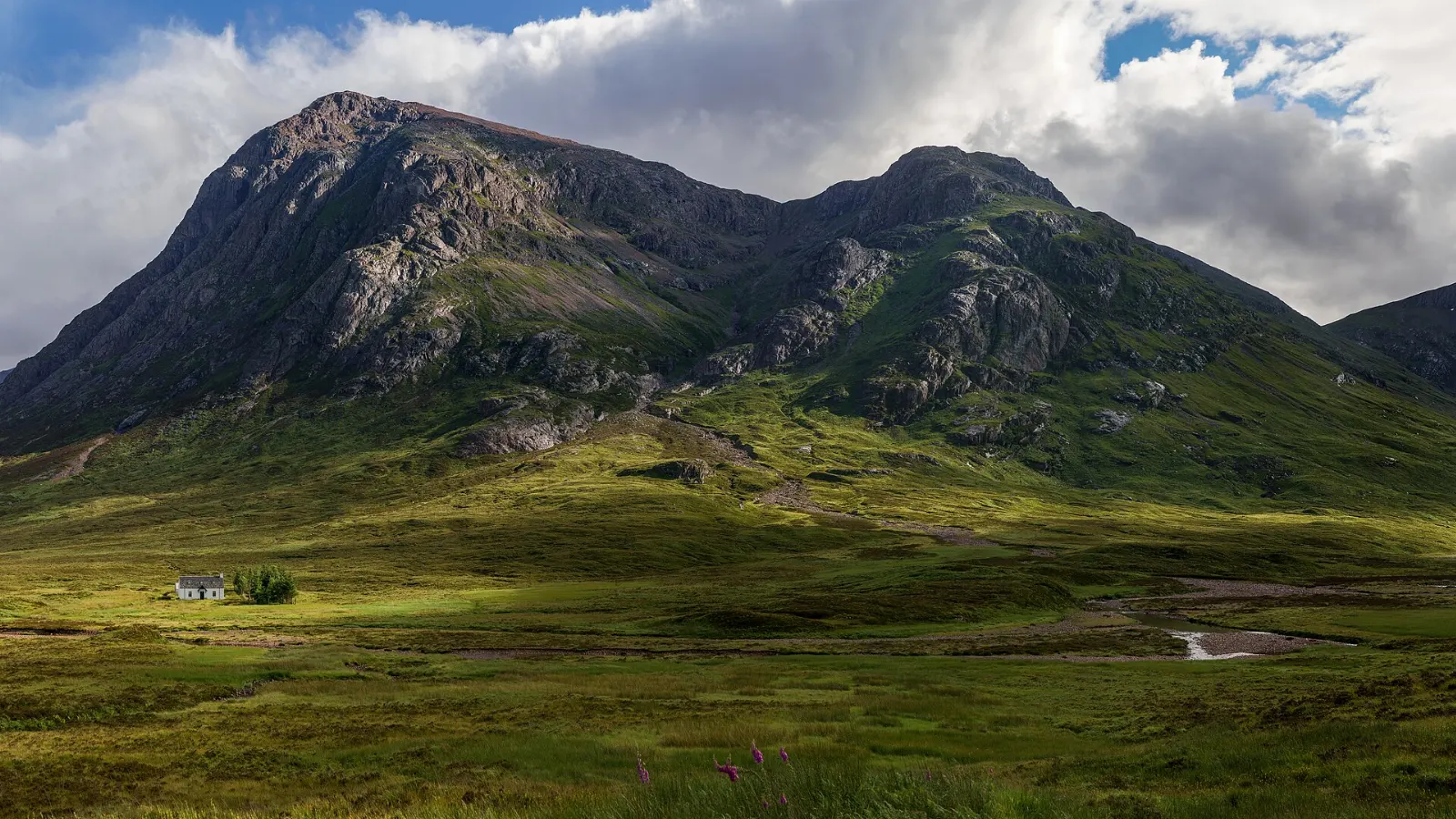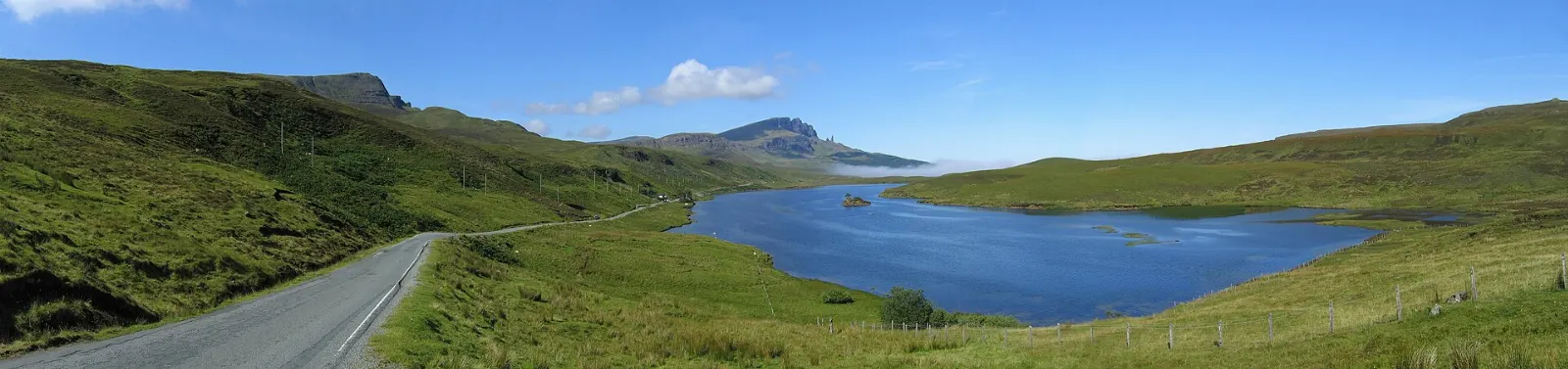
Skye is the largest island of the Inner Hebrides and one of the most dramatic landscapes in Scotland. Jagged mountains, sea cliffs, waterfalls and strange rock formations crowd onto an island you can drive across in an afternoon, and the light changes so fast that the same view can look different every hour.
AT A GLANCE
Best time
May, June and September for long days and fewer crowds and midges.
How long
Three to four days to see the main peninsulas without rushing.
Getting there
Drive over the Skye Bridge, or take the ferry from Mallaig to Armadale.
Why visit the Isle of Skye
Skye packs an extraordinary range of scenery into a small space. The Black Cuillin is the most challenging mountain range in Britain, a ridge of bare gabbro that draws climbers from around the world.
The island also has a living Gaelic culture. Road signs give Gaelic names first, the Gaelic college Sabhal Mor Ostaig is in Sleat, and Skye's history runs from Iron Age brochs to clan castles and the flight of Bonnie Prince Charlie, who escaped here with Flora MacDonald's help in 1746.
Portree and the Trotternish peninsula
The northern peninsula of Trotternish holds the island's most famous rock formations, all along a single loop road from Portree via Staffin and Uig.
Portree
Portree is the island's main town and the obvious base, with the most accommodation, restaurants, shops and the tourist information centre.
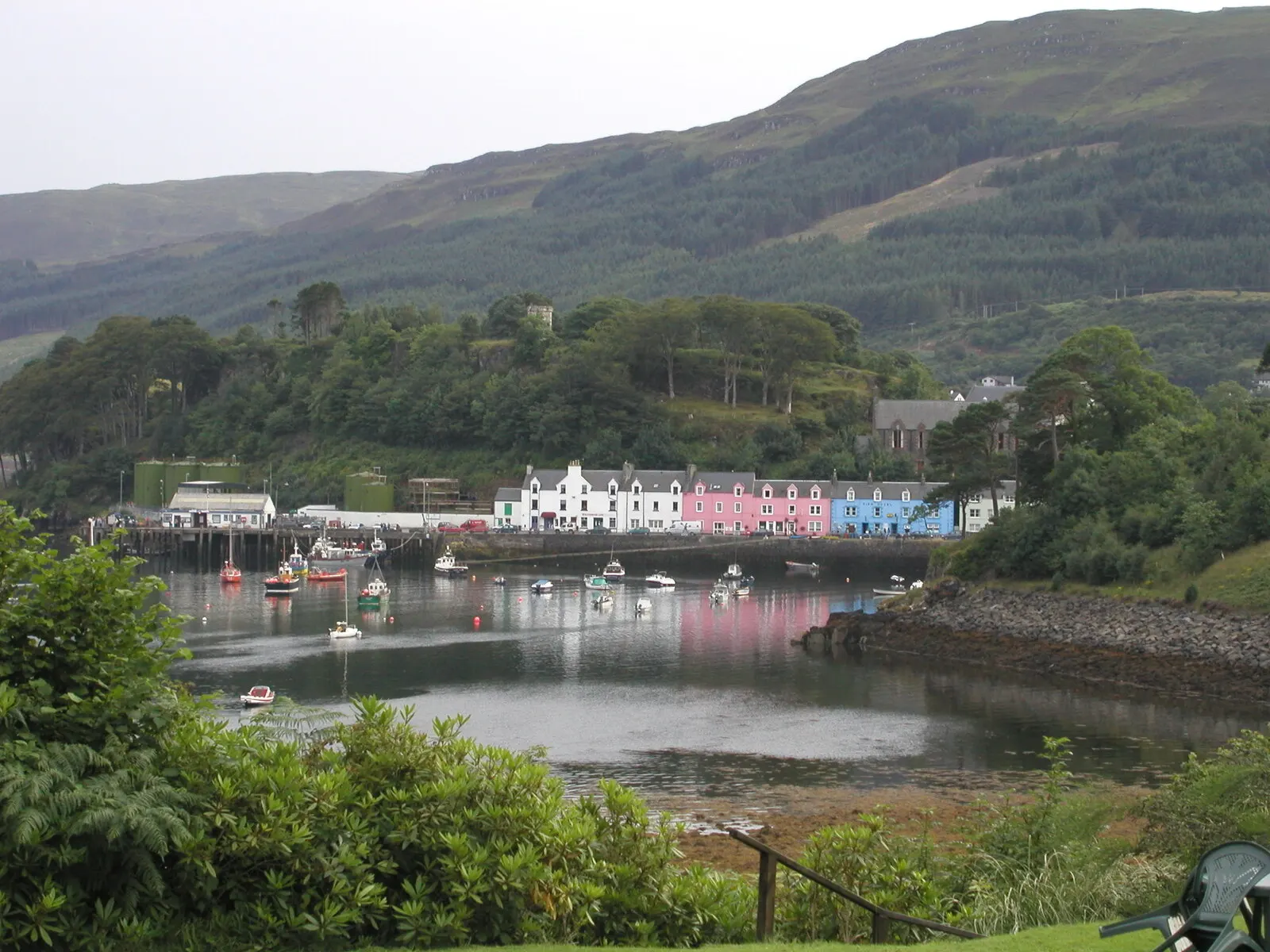
Tip: many boat trips for wildlife watching, including sea eagles and seals, leave from Portree harbour in season; book ahead in summer.
The Old Man of Storr
The Old Man of Storr is a huge rock pinnacle standing beneath the cliffs of the Storr, about twenty minutes' drive north of Portree.
Allow around two hours for the return walk, more if you continue to higher viewpoints.
The Quiraing
The Quiraing is a spectacular landslip at the northern end of the Trotternish ridge, full of towers, hidden hollows and a flat grassy plateau called the Table.
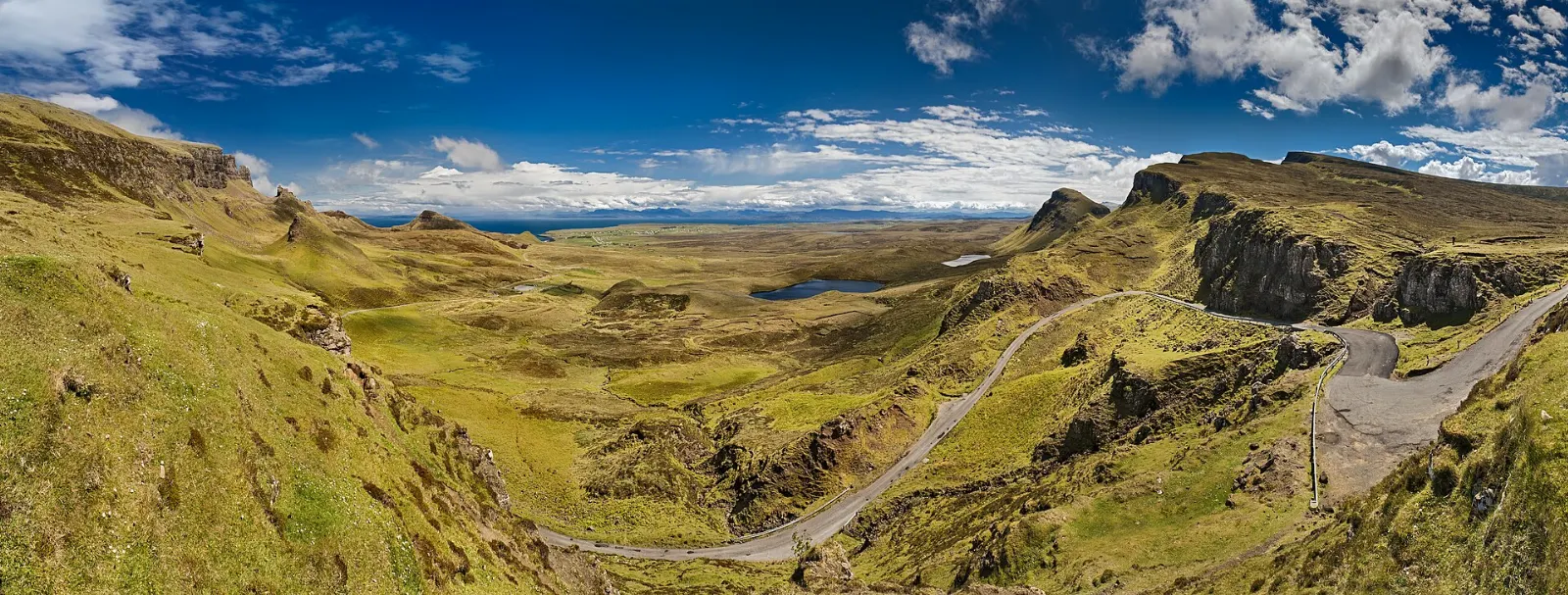
Kilt Rock and Mealt Falls
South of Staffin, a viewing platform overlooks Kilt Rock, a sea cliff of columnar basalt said to resemble the pleats of a kilt, and Mealt Falls, which drops straight off the cliff edge into the sea.

Tip: dinosaur footprints have been found on the shore near Staffin; at low tide, An Corran beach is a well-known place to look for them.
The Fairy Glen and Uig
Just inland from the ferry port of Uig, the Fairy Glen is a small, odd landscape of grassy cone-shaped knolls, ponds and a rocky outcrop known as Castle Ewen.
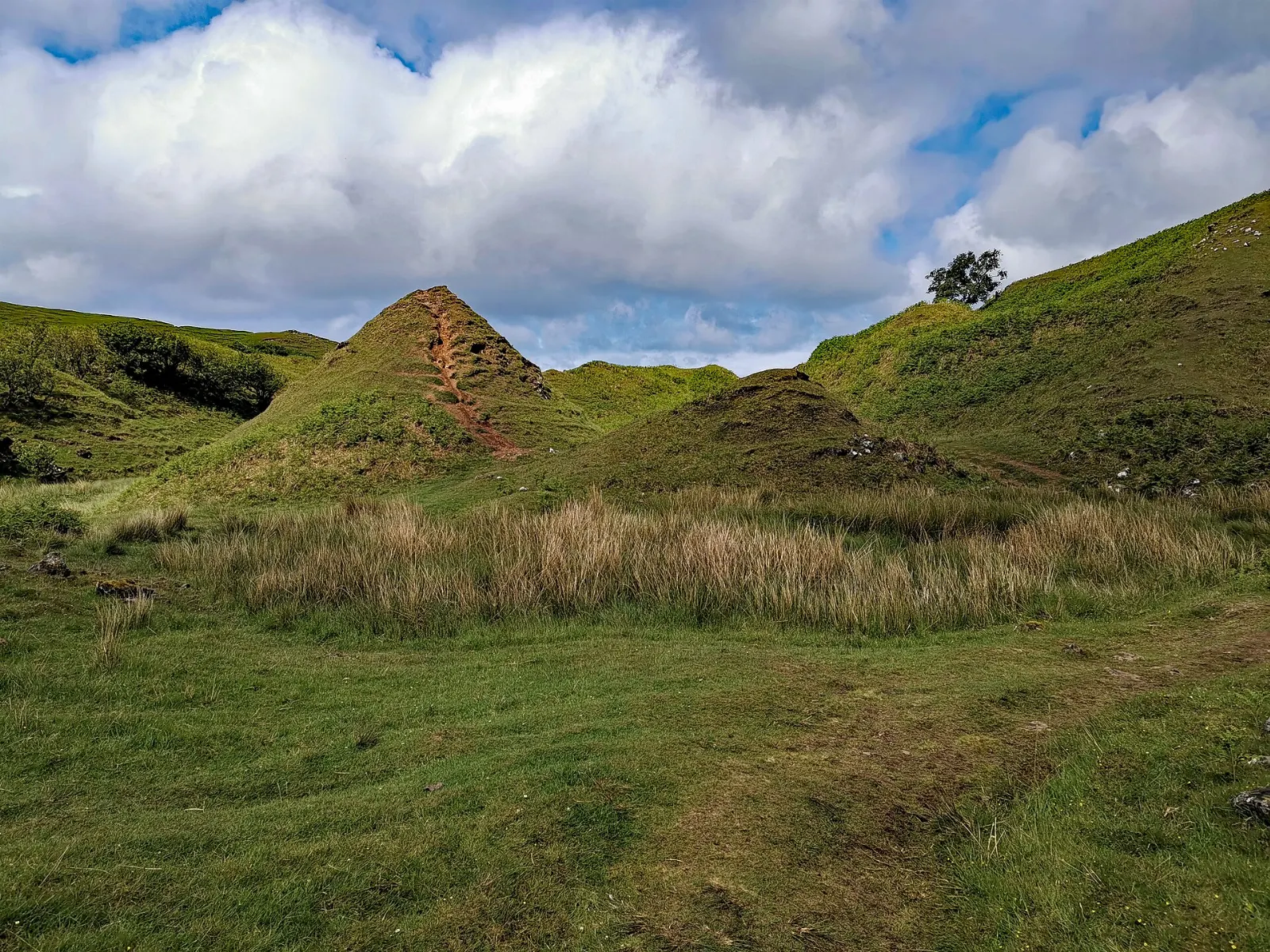
Tip: please do not move stones to build spirals or cairns, as local people have asked visitors to leave the glen as they found it.
Dunvegan and the west coast
Dunvegan Castle and Gardens
Dunvegan Castle has been the seat of the chiefs of Clan MacLeod for around eight hundred years, though much of what you see today dates from later rebuilding.
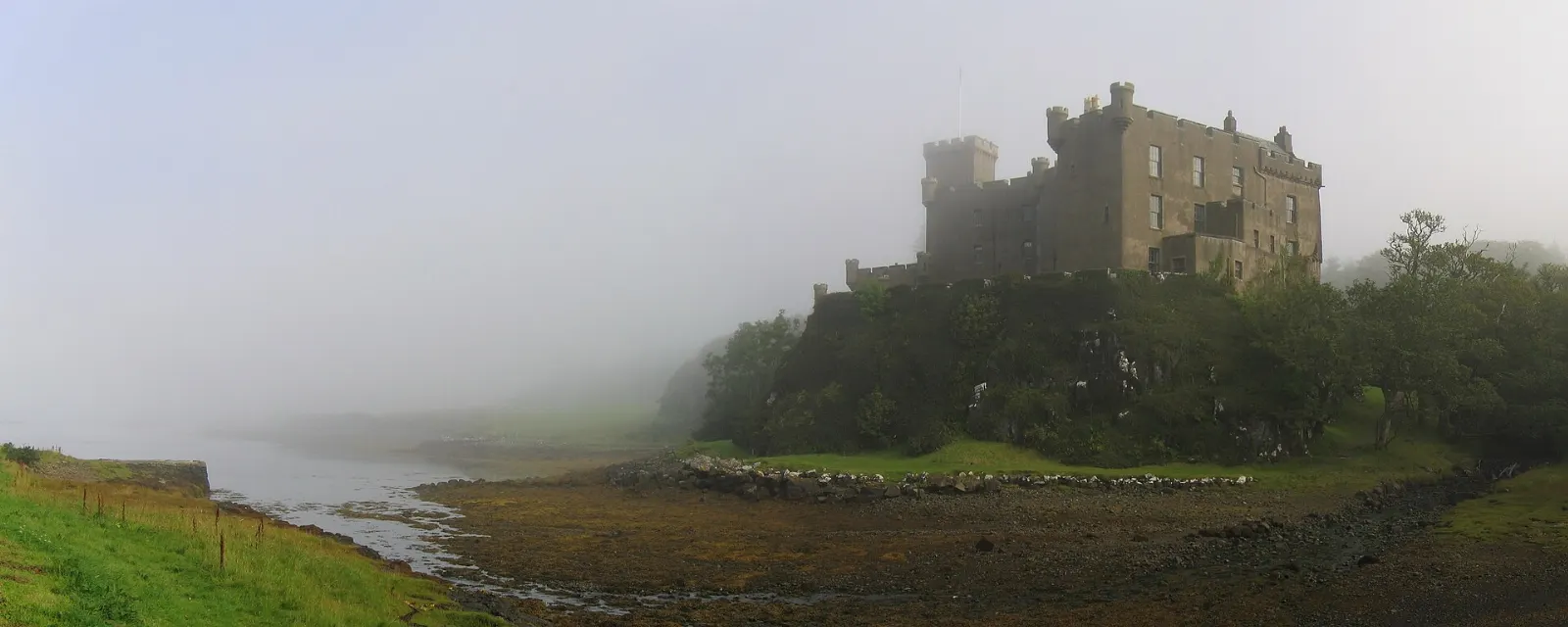
Allow two to three hours. Check the official website for current opening dates and fees, as the castle closes in winter.
Neist Point
Neist Point is the most westerly point of Skye, a narrow headland of sheer cliffs ending in a lighthouse.
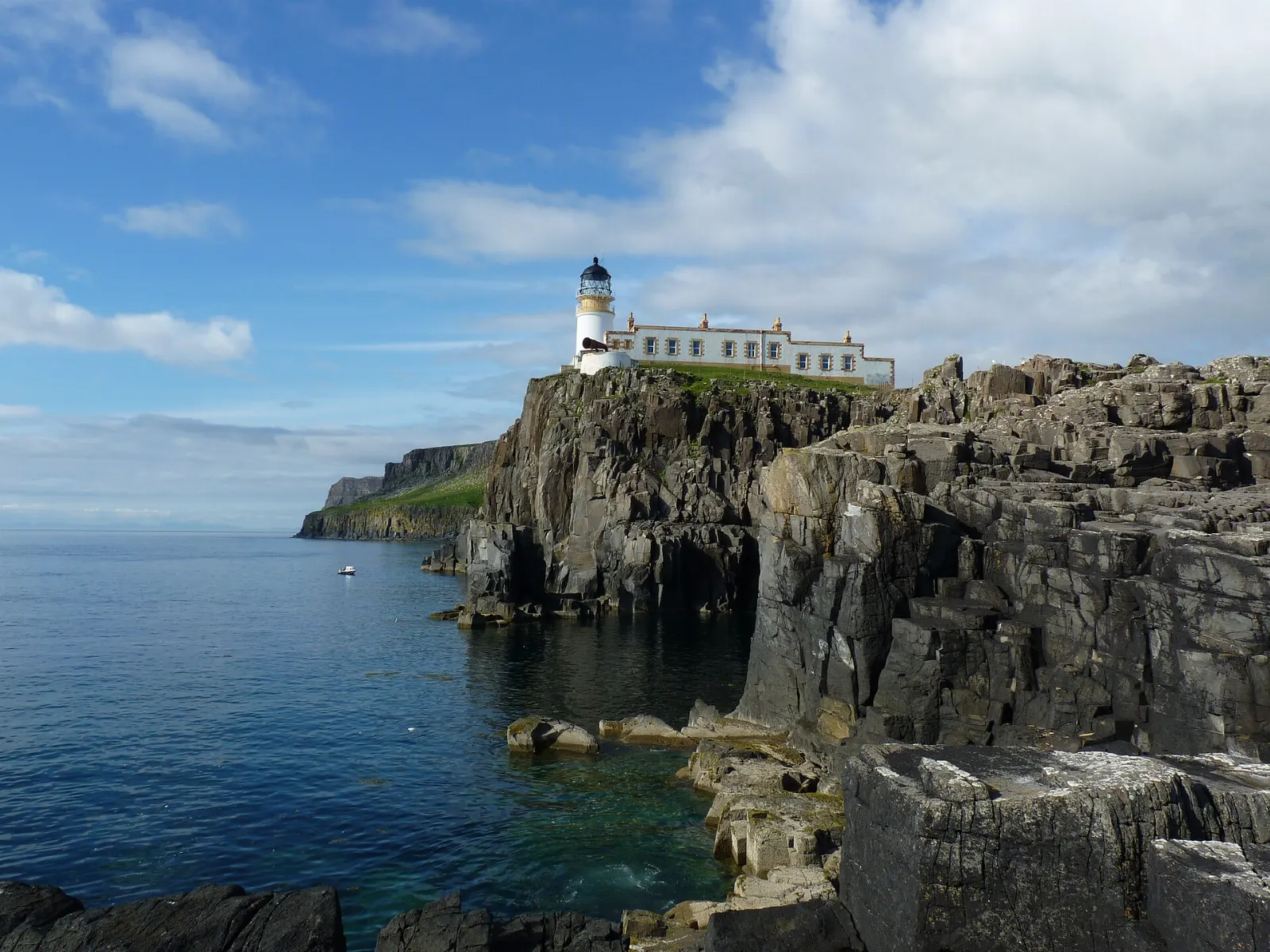
Allow one and a half to two hours. Tip: sunset here is famous, but the cliffs are unfenced, so stay well back from the edge, especially in wind.
The Cuillin, Minginish and the south
The Fairy Pools
In Glen Brittle, at the foot of the Black Cuillin, a mountain stream tumbles through a chain of clear, blue-green pools and small waterfalls known as the Fairy Pools.
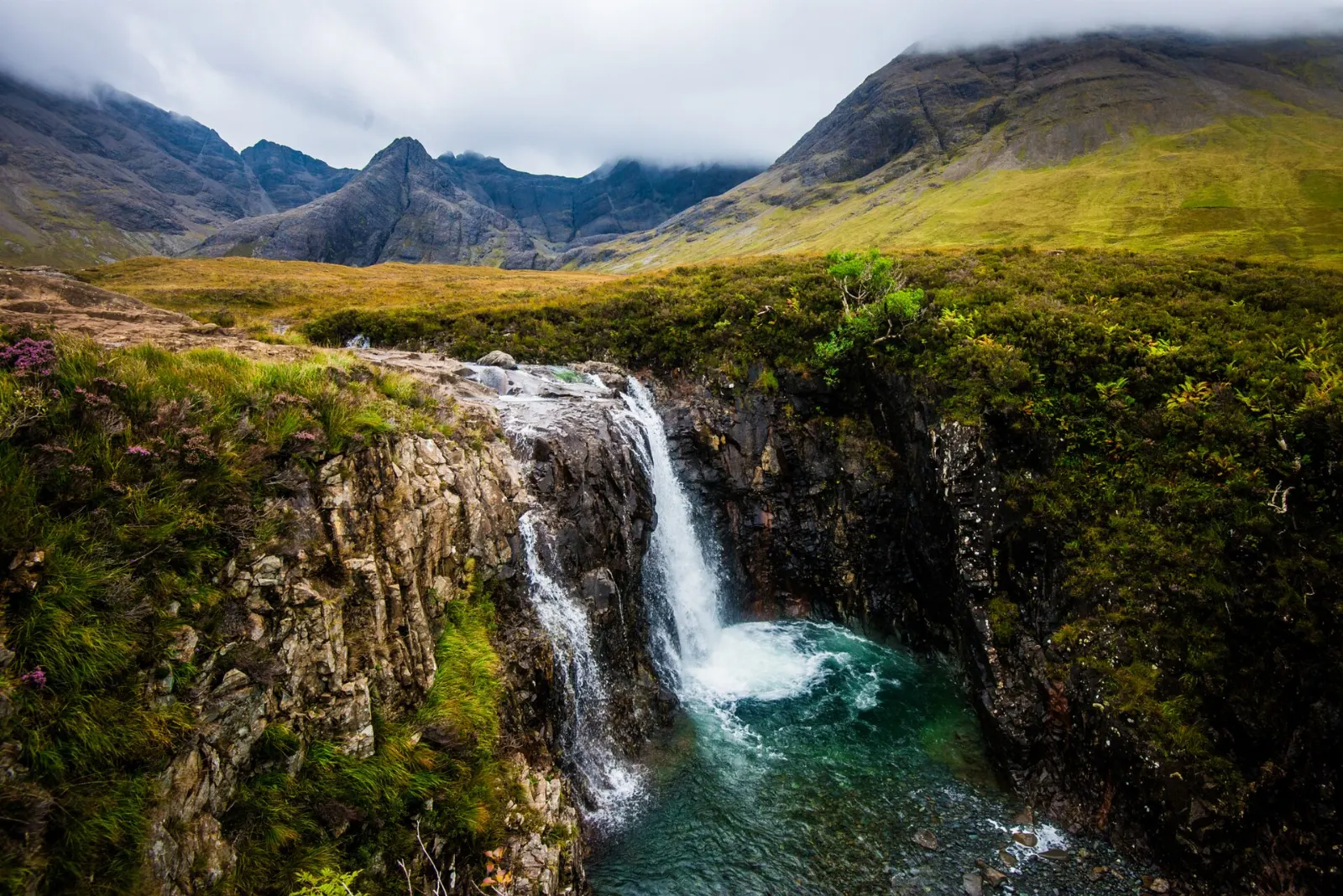
Allow one and a half to two hours.
Sligachan and the Cuillin
Sligachan is a crossroads at the head of a sea loch, with an old stone bridge set against the peaks of the Cuillin.
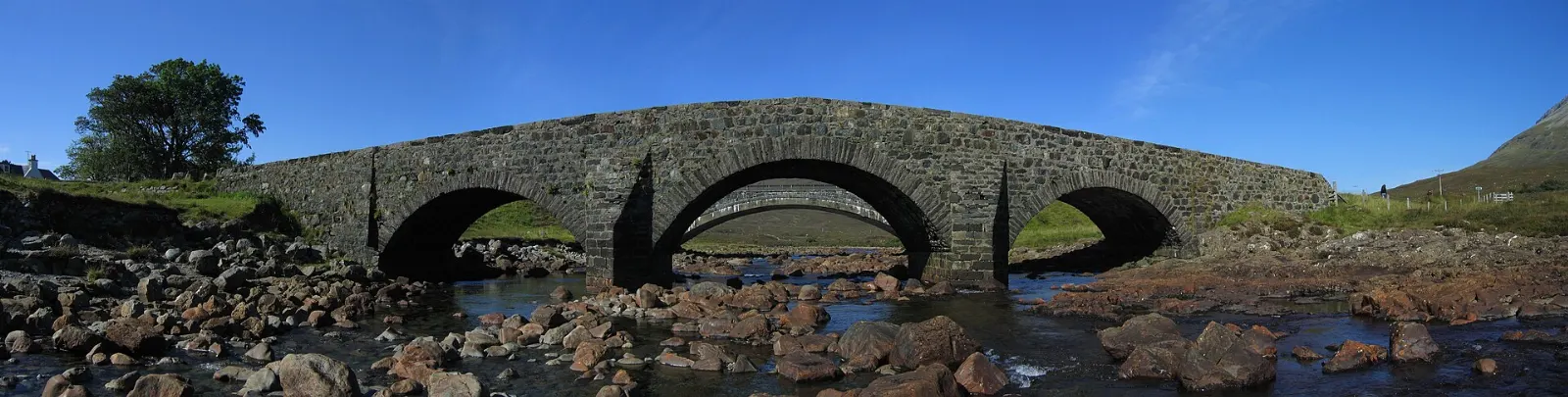
Tip: the Cuillin ridge involves scrambling and rock climbing; unless you are an experienced mountaineer, stick to valley walks or hire a qualified mountain guide.
Talisker Distillery
On the shore of Loch Harport in Carbost, Talisker Distillery produces a famously peaty, maritime single malt. Tours and tastings explain the process; allow an hour and book ahead in summer.
Elgol and Loch Coruisk
At the end of a long, winding single-track road on the Strathaird peninsula, the village of Elgol looks across Loch Scavaig to one of the finest views of the Cuillin.
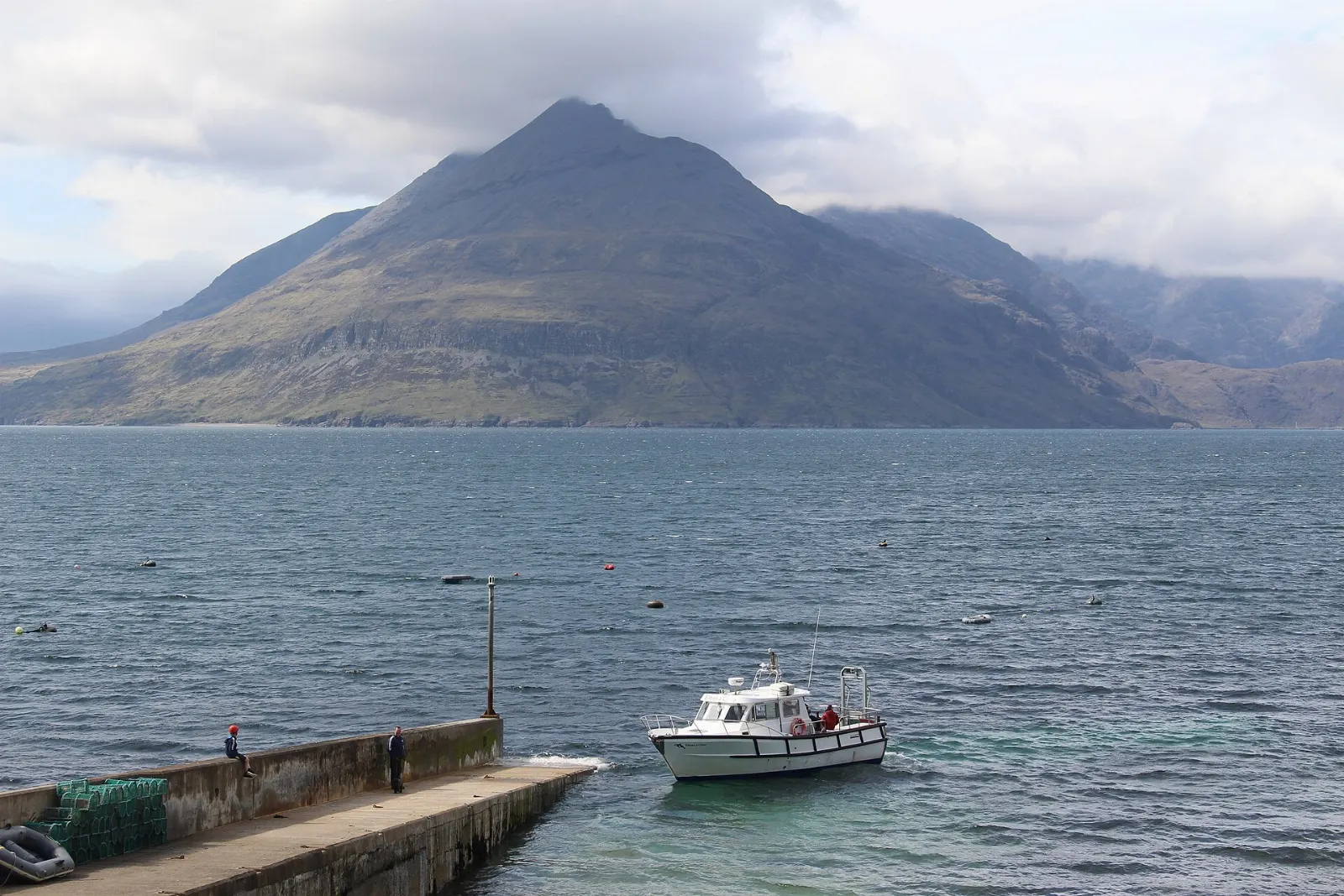
Allow half a day including the boat trip and the drive. Tip: book boat trips in advance and dress warmly; it can be cold on the water even in summer.
Armadale and Sleat
In the gentler south of the island, Armadale is where the ferry from Mallaig arrives.
 Planning a trip to Isle of Skye?Compare hotels, flights and vacation rentals for Isle of Skye on Expedia.Book now
Food and local flavors
Seafood is the star on Skye. Look for langoustines, scallops, mussels, crab and lobster landed locally, plus oysters farmed in the sea lochs and smoked salmon.
For drinks, Talisker is the island's best-known whisky, and newer distilleries have opened in recent years. The Isle of Skye Brewing Company in Uig makes local ales.
Popular dishes to try in Isle of Skye


Where to stay
Portree is the best choice for first-time visitors and those without a car, with restaurants, shops and bus connections, and it sits centrally for Trotternish and Dunvegan.
Dunvegan and Waternish appeal to those seeking quieter villages, sunsets and easy access to Neist Point.
Sleat is the gentle, green south, ideal for slower stays.
Where to stay in Isle of Skye


Best time to visit
May and June often bring the driest weather and very long daylight, with early summer flowers and nesting seabirds.
Winter is quiet and atmospheric, with snow on the Cuillin, but many cafes, attractions and boat trips close, daylight is short and storms can disrupt ferries.
Getting there and getting around
Skye has no airport; the nearest are Inverness, Glasgow and Edinburgh. By car, the A87 from Invergarry passes Eilean Donan Castle and crosses the toll-free Skye Bridge from Kyle of Lochalsh.
Once on Skye, a car is by far the easiest way to get around, though buses link Portree with Uig, the Trotternish loop and Dunvegan on limited timetables.
A suggested itinerary
First day
Cross the Skye Bridge, stopping at Eilean Donan on the way.
Second day
Start at sunrise at the Old Man of Storr, then continue around Trotternish to Kilt Rock, the Quiraing loop and the Fairy Glen, returning to Portree.
Third day
Head west to Dunvegan Castle and the Coral Beaches, then on to Neist Point for sunset.
Fourth day
Walk to the Fairy Pools early, visit Talisker Distillery in Carbost, and finish with a boat trip from Elgol to Loch Coruisk before leaving via Broadford or the Armadale ferry.
Practical tips
- Book accommodation, car hire and dinner reservations well in advance for any trip between Easter and October.
- Arrive early or late at the Storr, Quiraing and Fairy Pools to avoid full car parks; never park in passing places.
- Pack waterproof boots, a rain jacket and warm layers in every season, plus midge repellent for summer.
- Mobile signal is patchy, so download offline maps before heading to Glen Brittle, Elgol or Neist Point.
- Stay well back from cliff edges at Neist Point and Kilt Rock, especially in wind.
- Leave no trace: do not build stone stacks, and use public toilets in villages rather than the roadside.