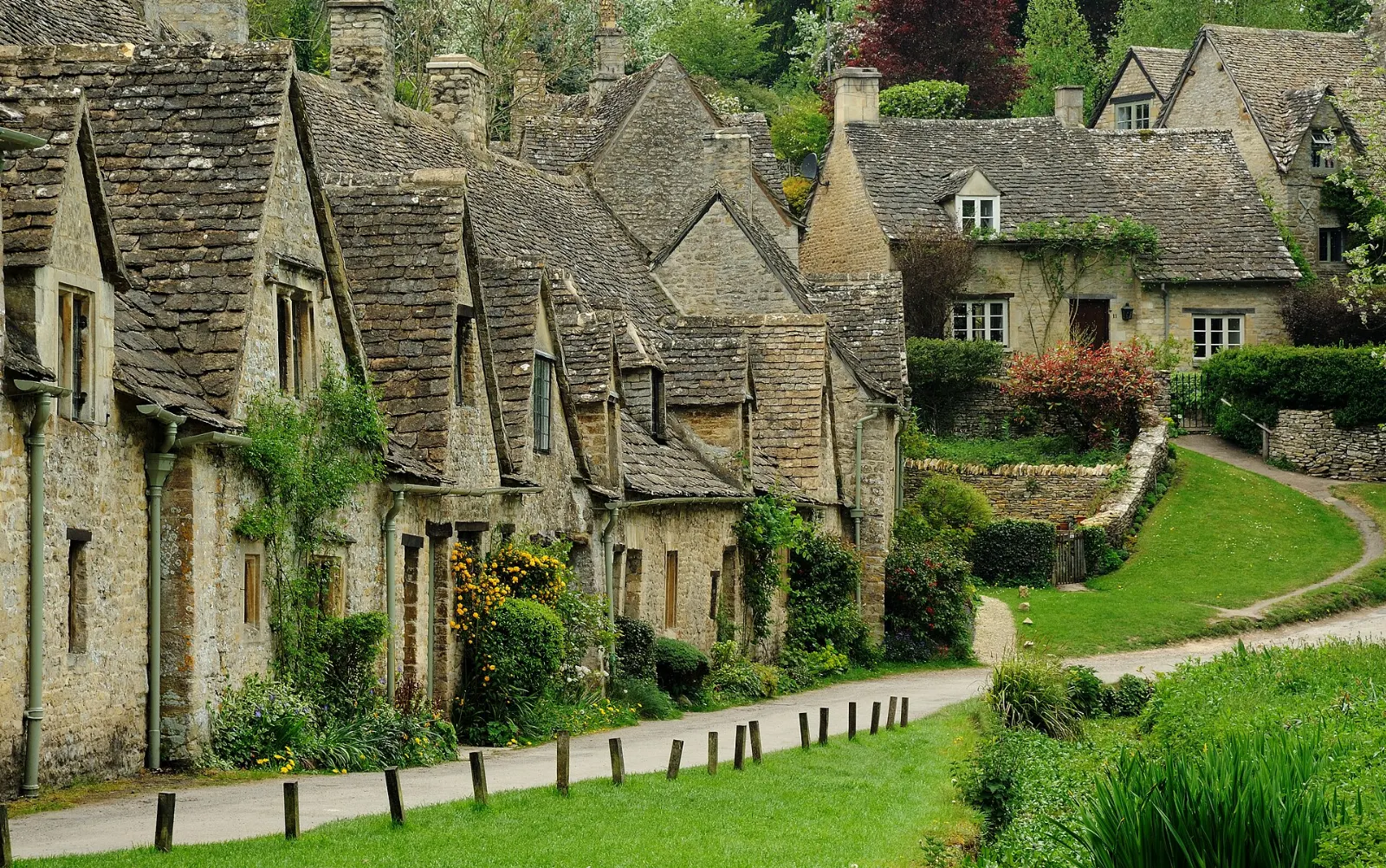
Bath is one of the most beautiful cities in England and one of the easiest to fall for. Set in the green valley of the River Avon at the southern edge of the Cotswolds, it combines Roman bathing halls built over steaming hot springs with grand Georgian crescents, terraces and squares, all built from the same warm, honey-colored stone.
AT A GLANCE
Best time
April to June and September to October; December for the Christmas market.
How long
Two full days covers the highlights, with a third for spa time and walks.
Getting there
Direct trains from London Paddington to Bath Spa take about ninety minutes.
Why visit Bath
Bath's story begins with water. Three hot springs rise in the city center, and they were sacred to the Celtic goddess Sulis long before the Romans built the settlement of Aquae Sulis around them, dedicating a temple to Sulis Minerva.
Today the city offers a rare combination: world-class Roman remains, a soaring late Gothic abbey, some of the finest Georgian architecture anywhere, and the chance to bathe in naturally hot spring water yourself. It is compact enough to explore on foot, with green hills rising on every side, and it makes an excellent base for the Cotswolds, Wells and the Somerset countryside.
The Roman Baths and the Abbey quarter
The Roman Baths
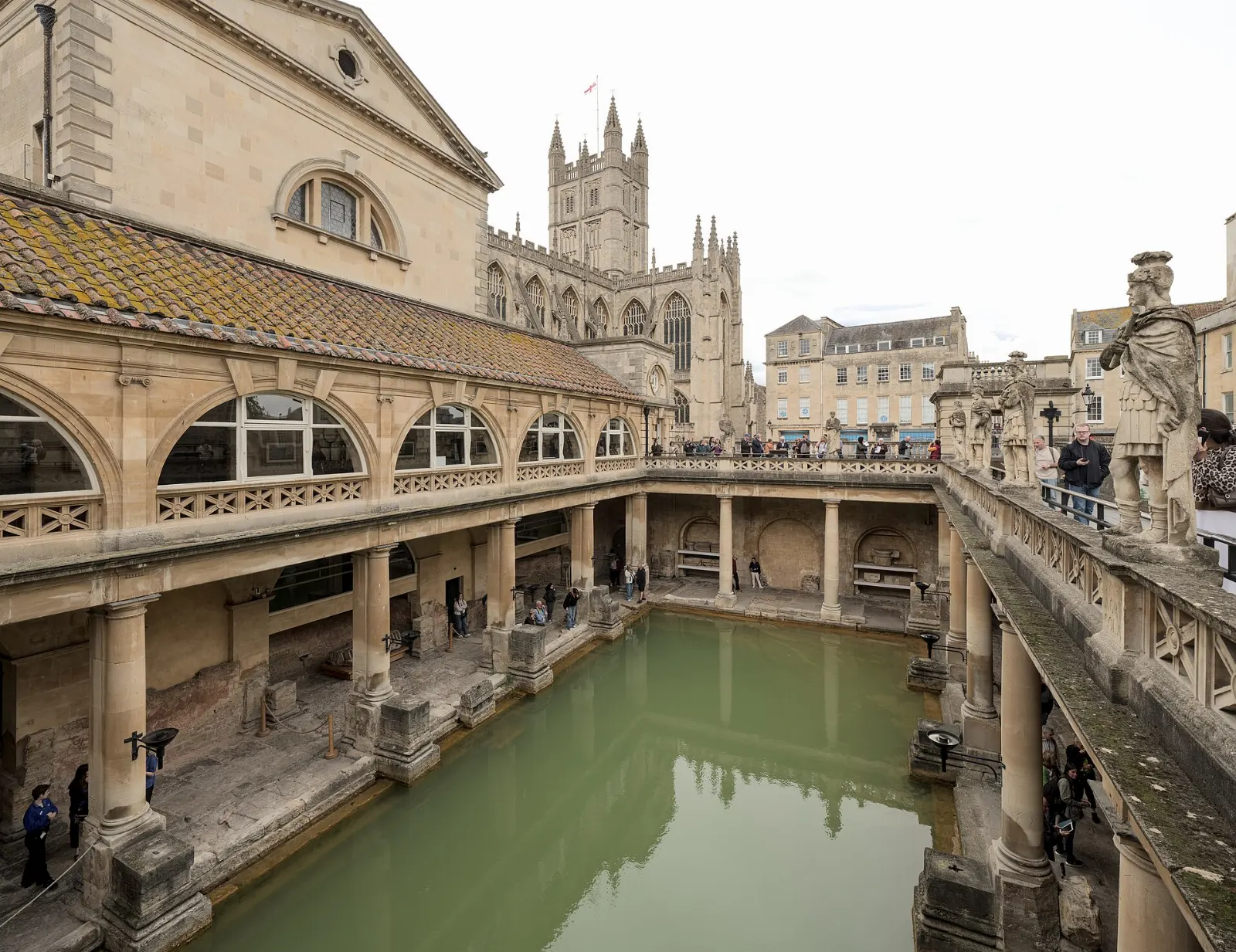
The Roman Baths are the reason most people come, and they live up to it. Below the modern street level you walk through the remains of a vast bathing complex and temple built almost two thousand years ago, rediscovered in the eighteenth and nineteenth centuries.
Bath Abbey
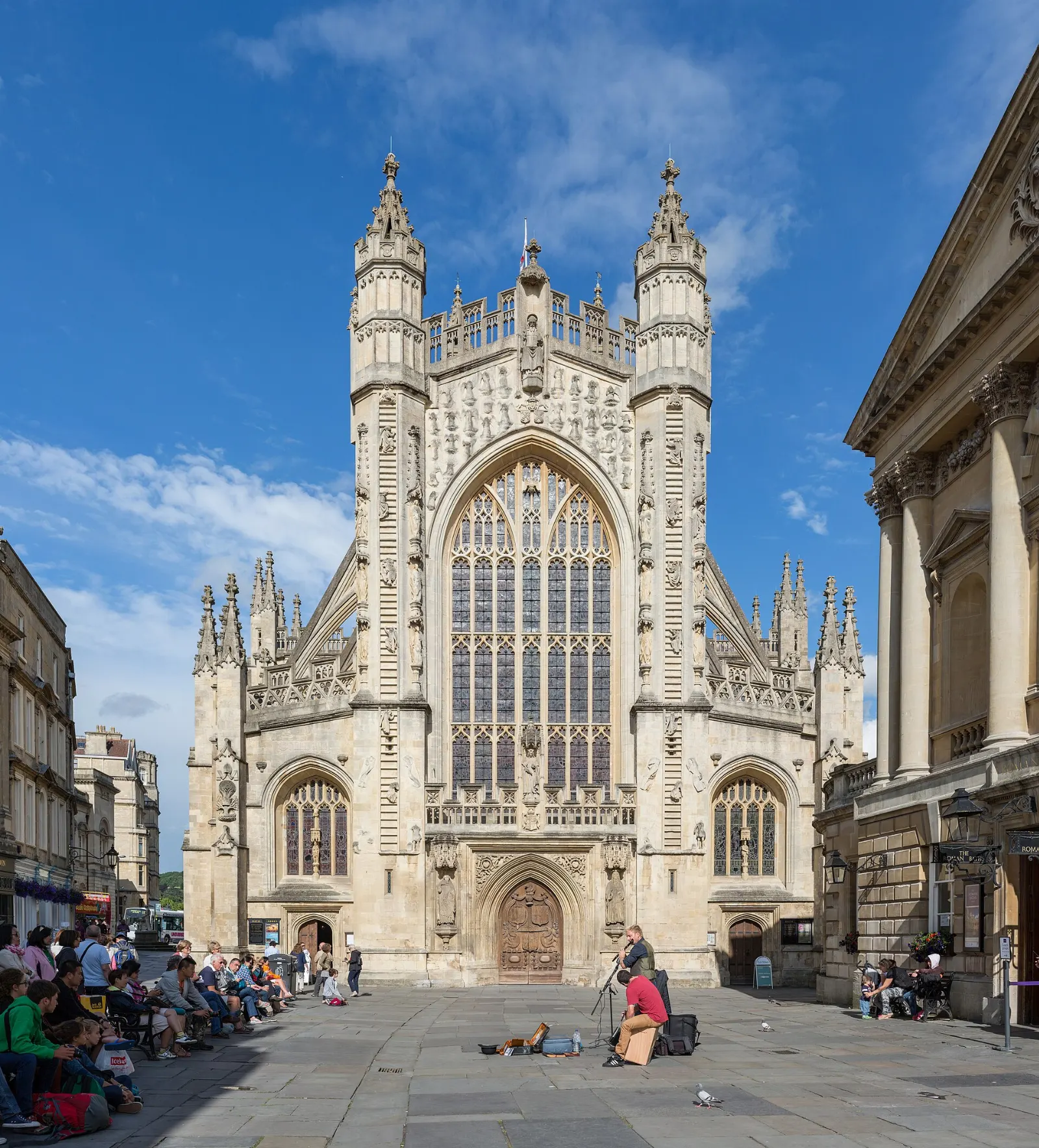
Right next to the Baths, Bath Abbey was begun in 1499 on the site of a much larger Norman cathedral and is often called the last great medieval church built in England. Its fan-vaulted ceiling and wall of stained glass flood the nave with light, and its west front is carved with angels climbing ladders to heaven, inspired by a dream of the bishop who founded it.
The Pump Room and Abbey Churchyard
Beside the Abbey, the Grand Pump Room was the social hub of Georgian Bath, where visitors gathered to take the waters and see and be seen. It remains an elegant restaurant, and a fountain lets you taste the warm mineral water.
Pulteney Bridge and Parade Gardens
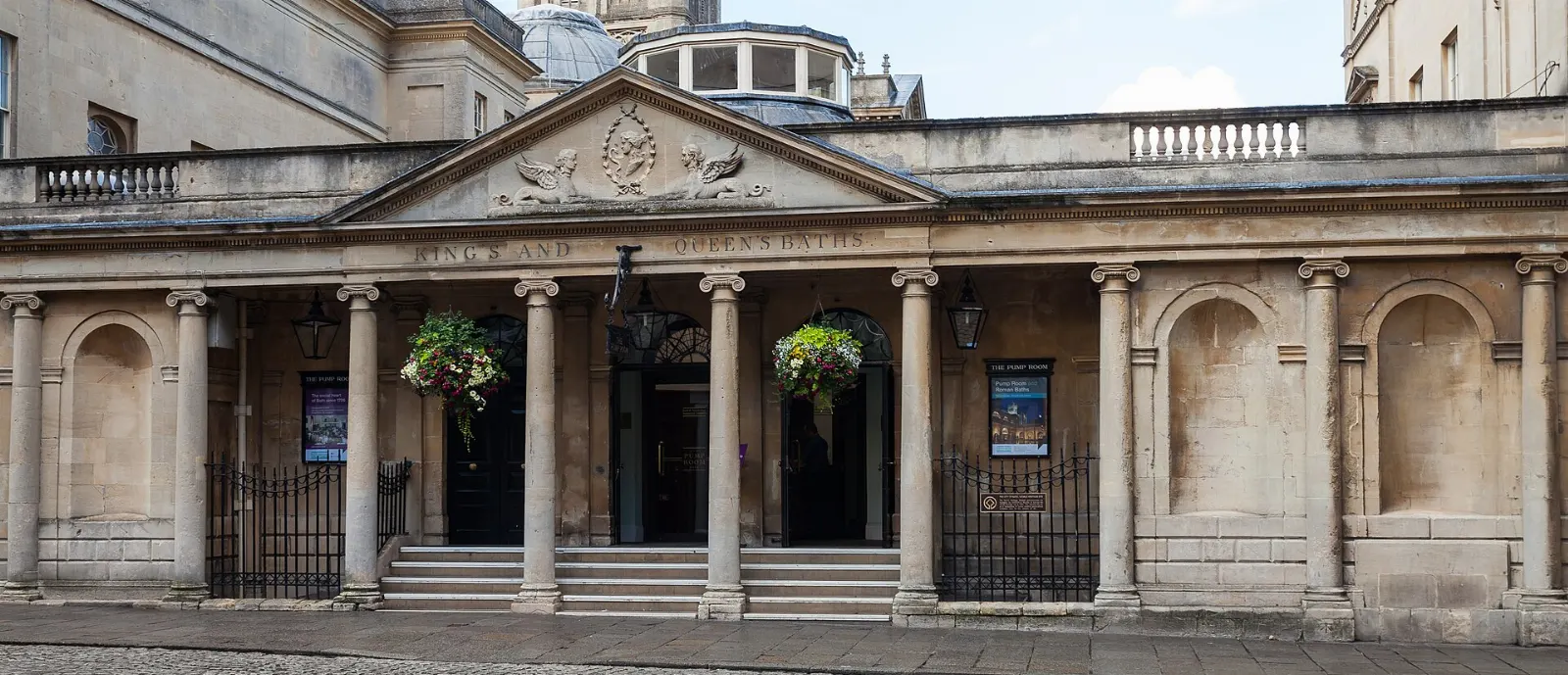
Designed by Robert Adam and completed by 1774, Pulteney Bridge is one of only four bridges in the world with shops lining both sides along its full span. The best view is from the riverside or Parade Gardens, looking toward the bridge and the horseshoe-shaped weir below it.
Georgian Bath: crescents, circles and Jane Austen
The Royal Crescent and No. 1 Royal Crescent
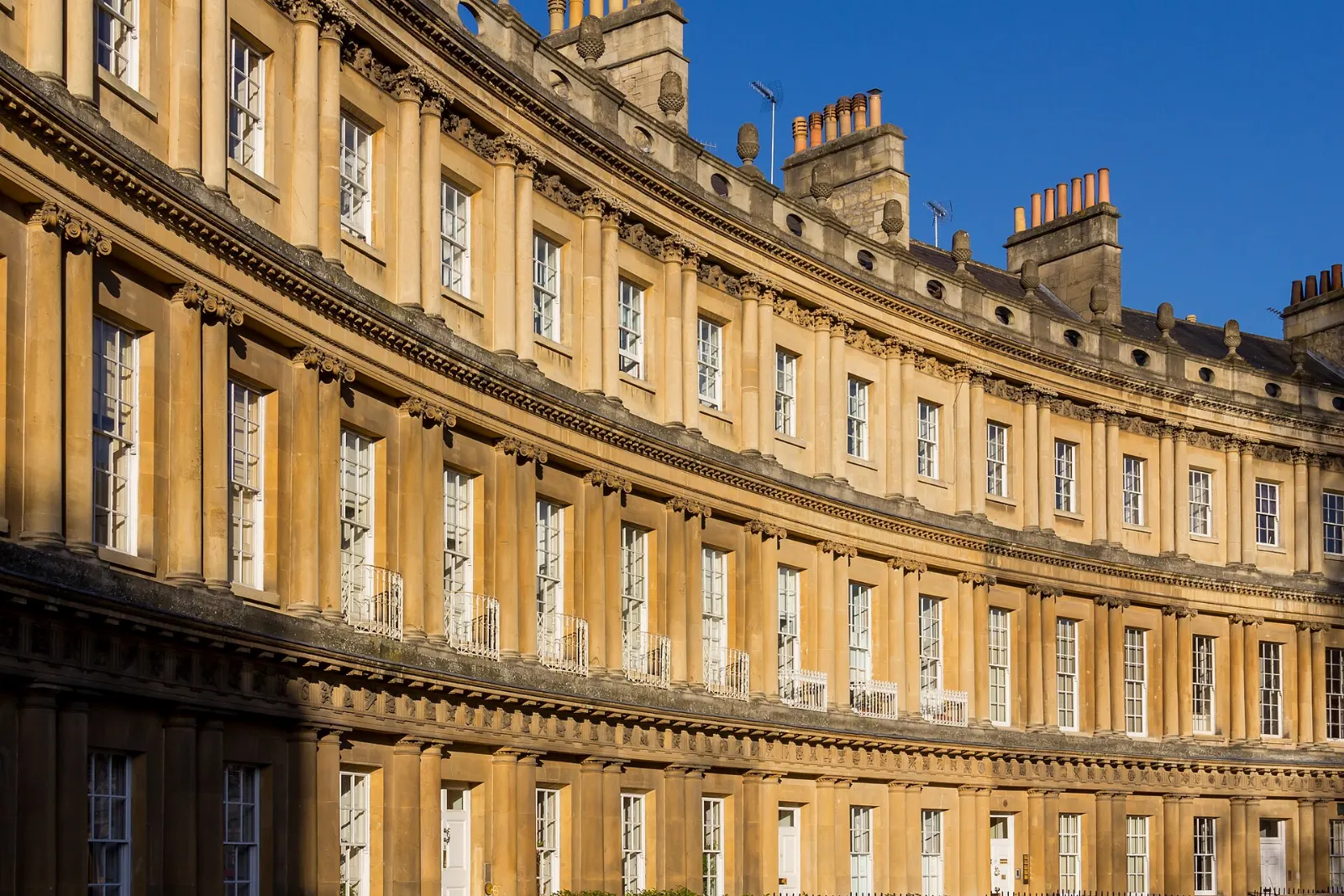
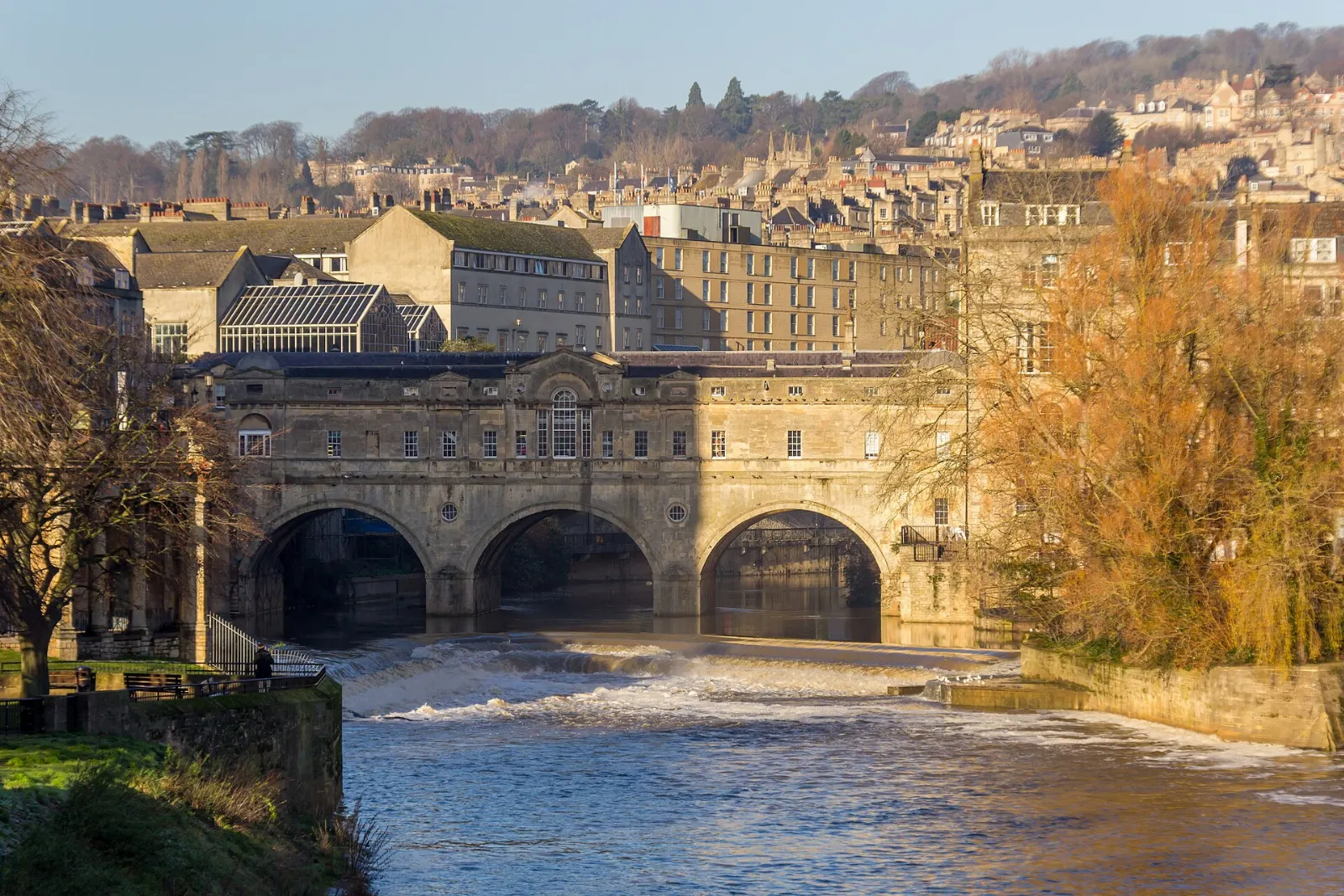
The Royal Crescent is Bath's most famous street: thirty townhouses arranged in a sweeping five-hundred-foot curve with 114 Ionic columns, built between 1767 and 1774 to designs by John Wood the Younger. It faces open parkland, a deliberate effort to bring the country into the city.
The Circus
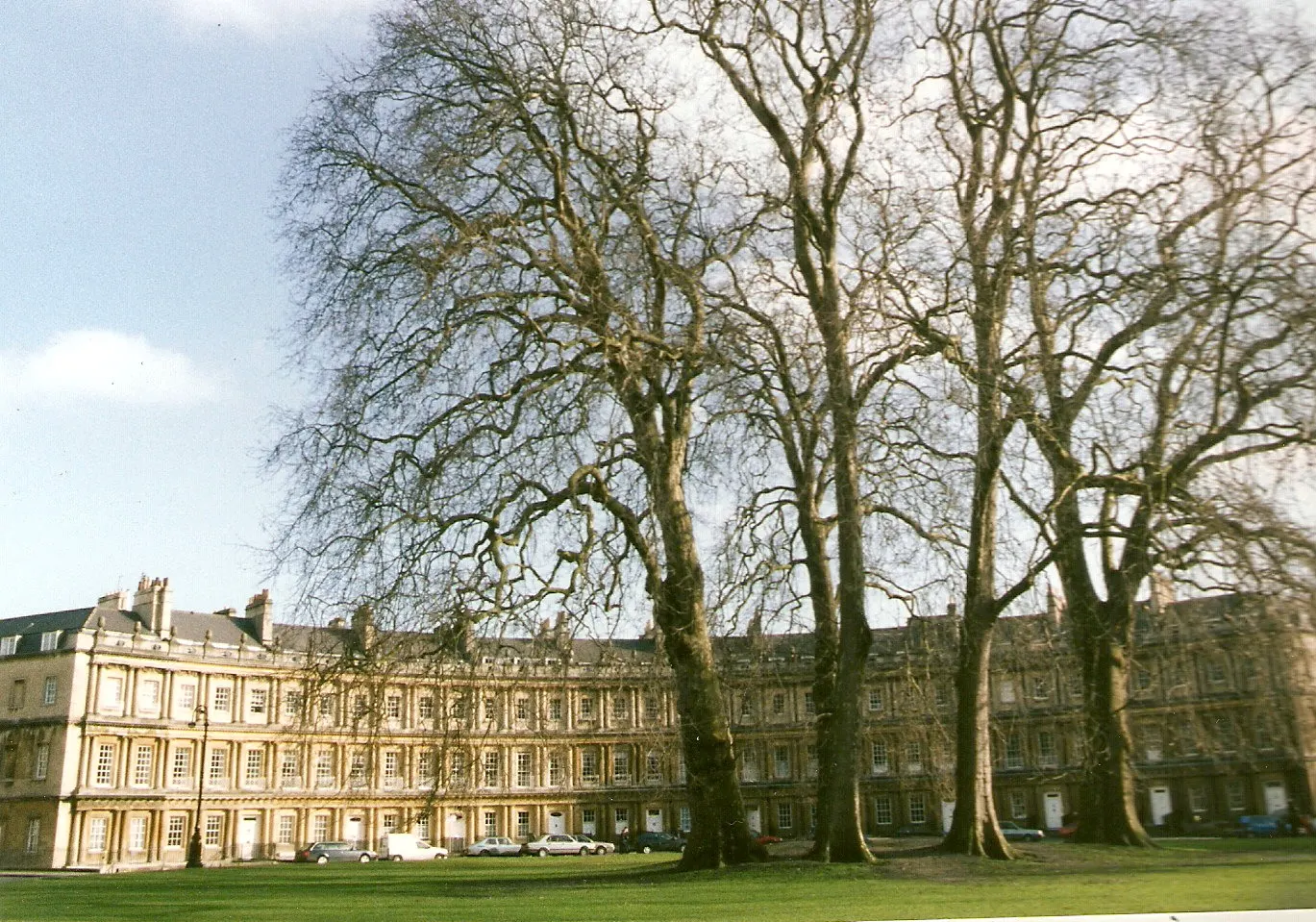
A short walk east along Brock Street, The Circus is a ring of grand townhouses designed by John Wood the Elder and built between 1754 and 1768.
Jane Austen Centre
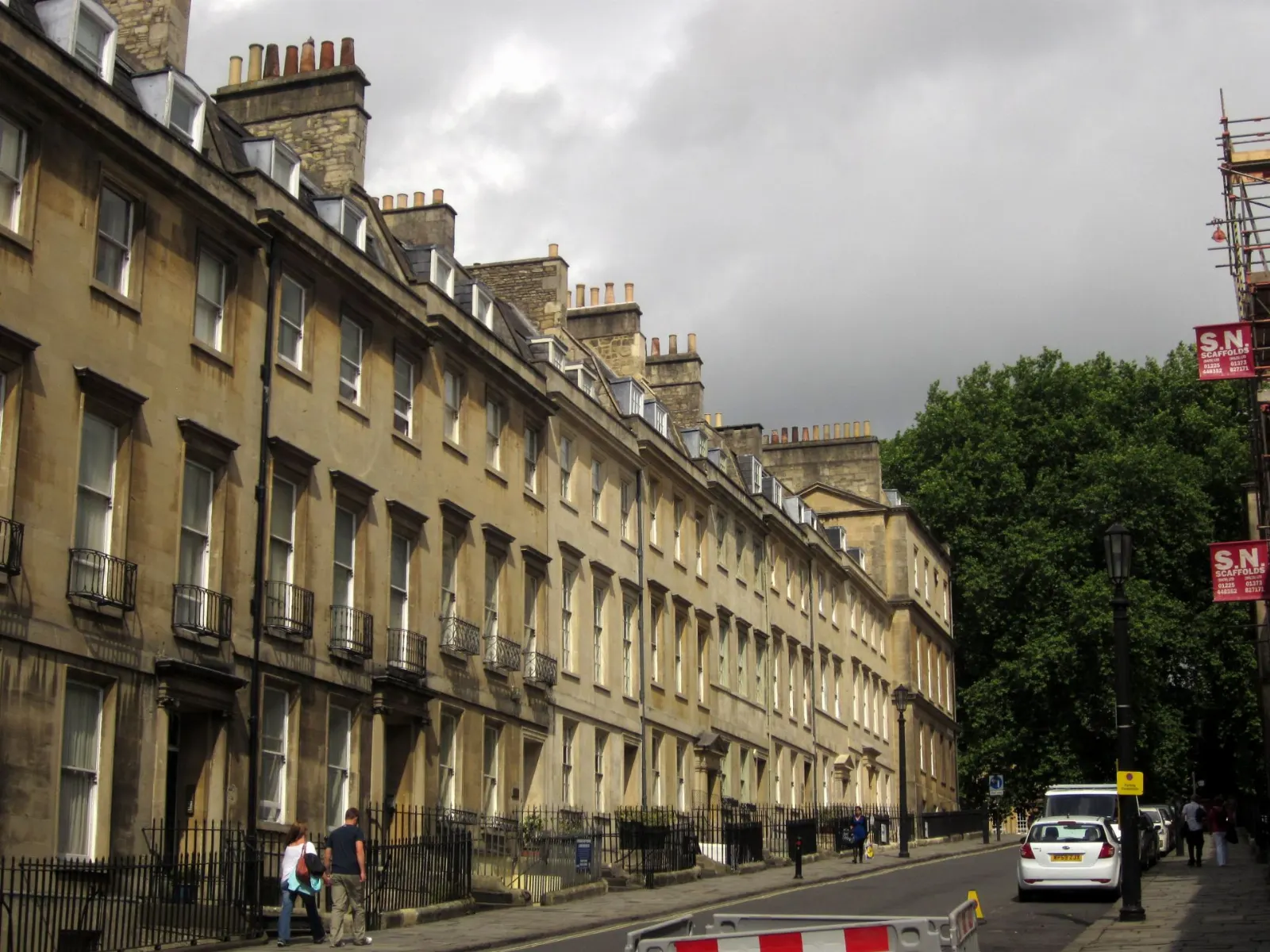
On Gay Street, which links the Circus with Queen Square, the Jane Austen Centre tells the story of the novelist's years in Bath and the city's influence on her writing, with costumed guides and Regency-style tea rooms upstairs. Allow an hour.
Holburne Museum and Sydney Gardens
Across Pulteney Bridge at the end of Great Pulteney Street, the Holburne Museum occupies a handsome Georgian building filled with fine and decorative art, including portraits by Gainsborough. Behind it, Sydney Gardens is a historic pleasure garden crossed by the Kennet and Avon Canal and the railway.
Spa waters, gardens and hills
Thermae Bath Spa
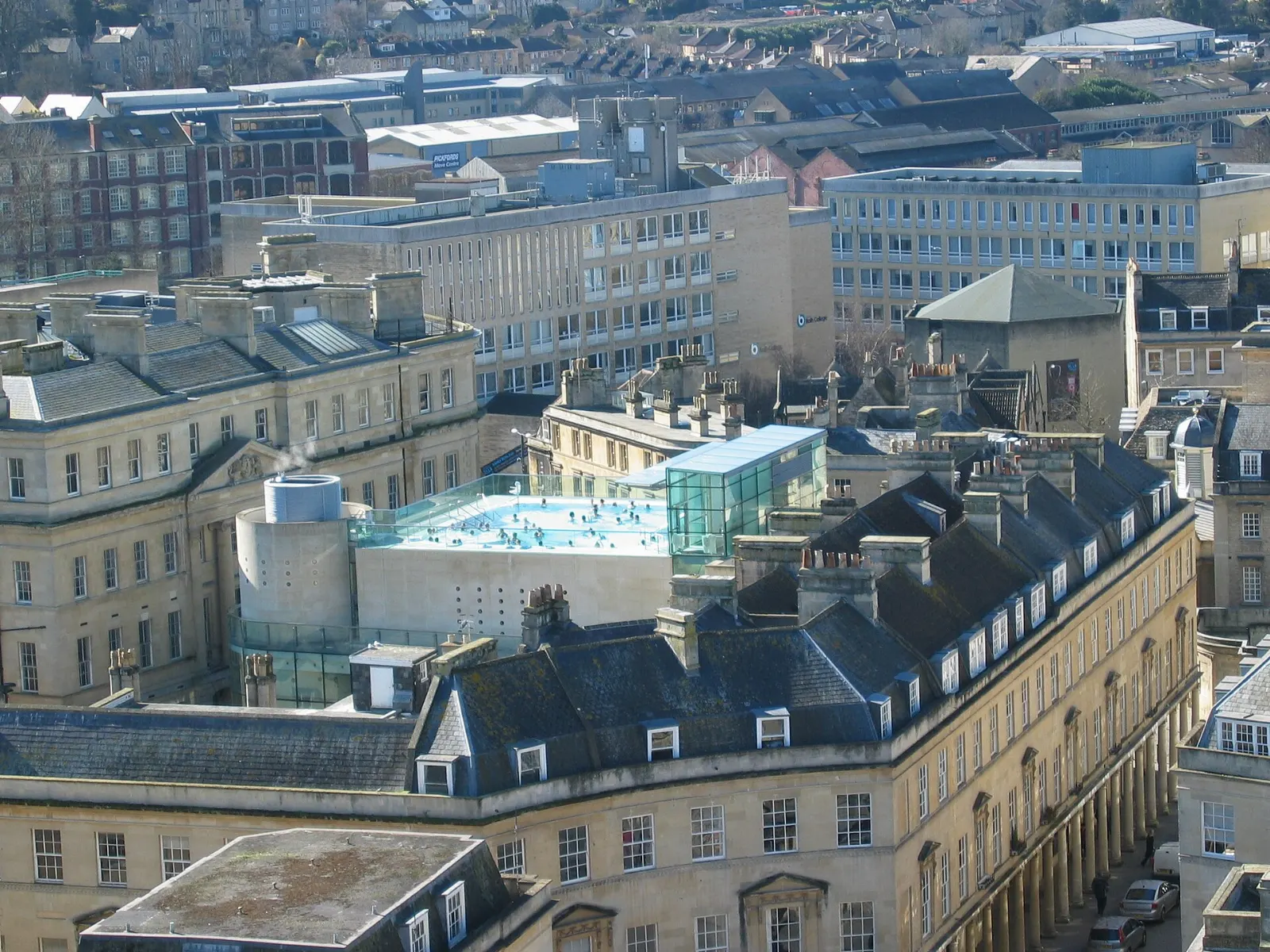
You cannot swim in the Roman Baths, but you can bathe in the same naturally hot, mineral-rich water at Thermae Bath Spa, which opened in 2006.
Prior Park Landscape Garden
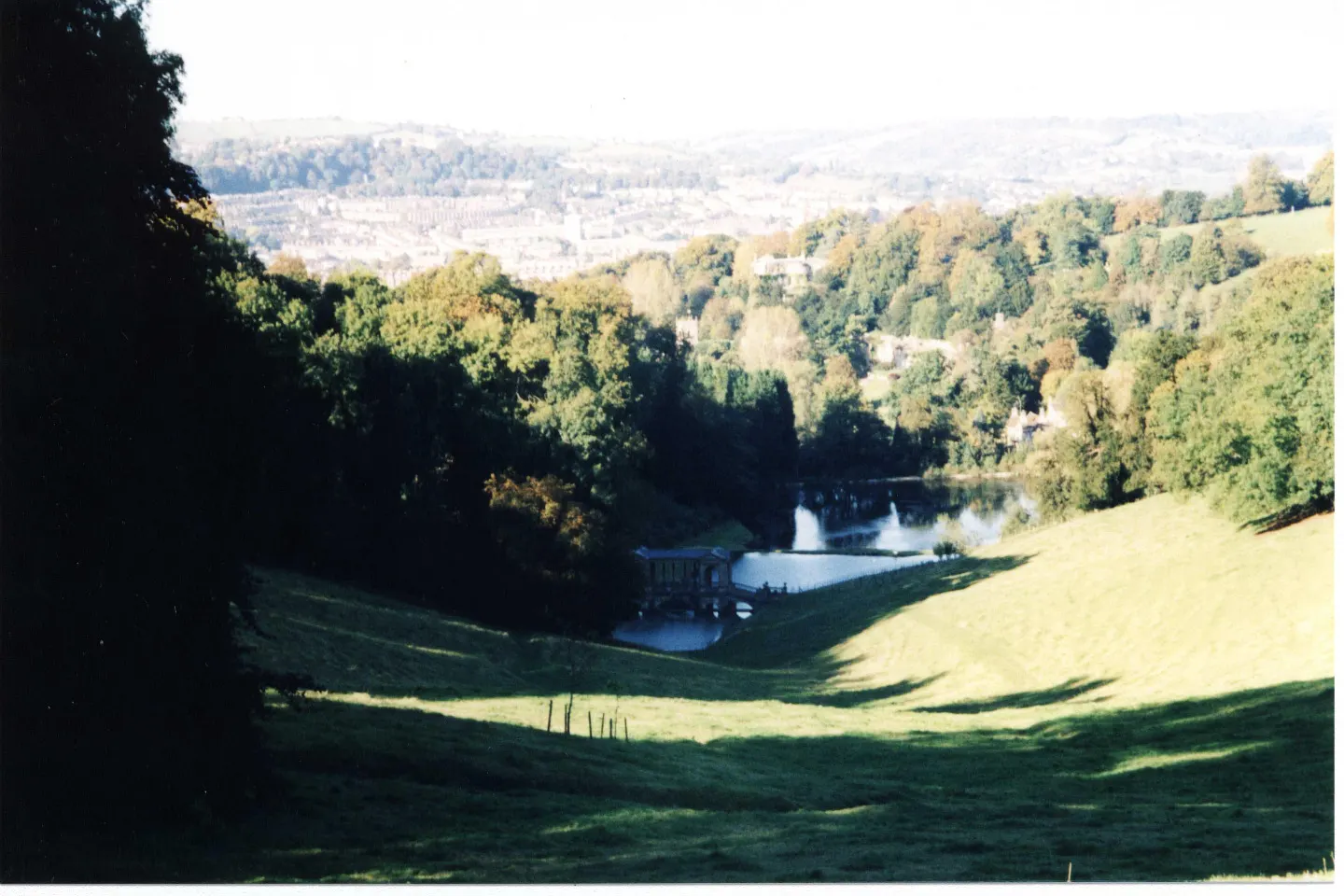
On a hillside south of the city, Prior Park was created in the eighteenth century for Ralph Allen, the businessman behind Bath stone quarrying, with input from the poet Alexander Pope and Capability Brown.
The Bath Skyline walk
For a different perspective, follow the National Trust's Bath Skyline trail, a circular route of about six miles through meadows, woods and hidden valleys on the hills east of the city, with views down onto the Georgian terraces. Allow three to four hours, or walk a shorter section.
Kennet and Avon Canal towpath
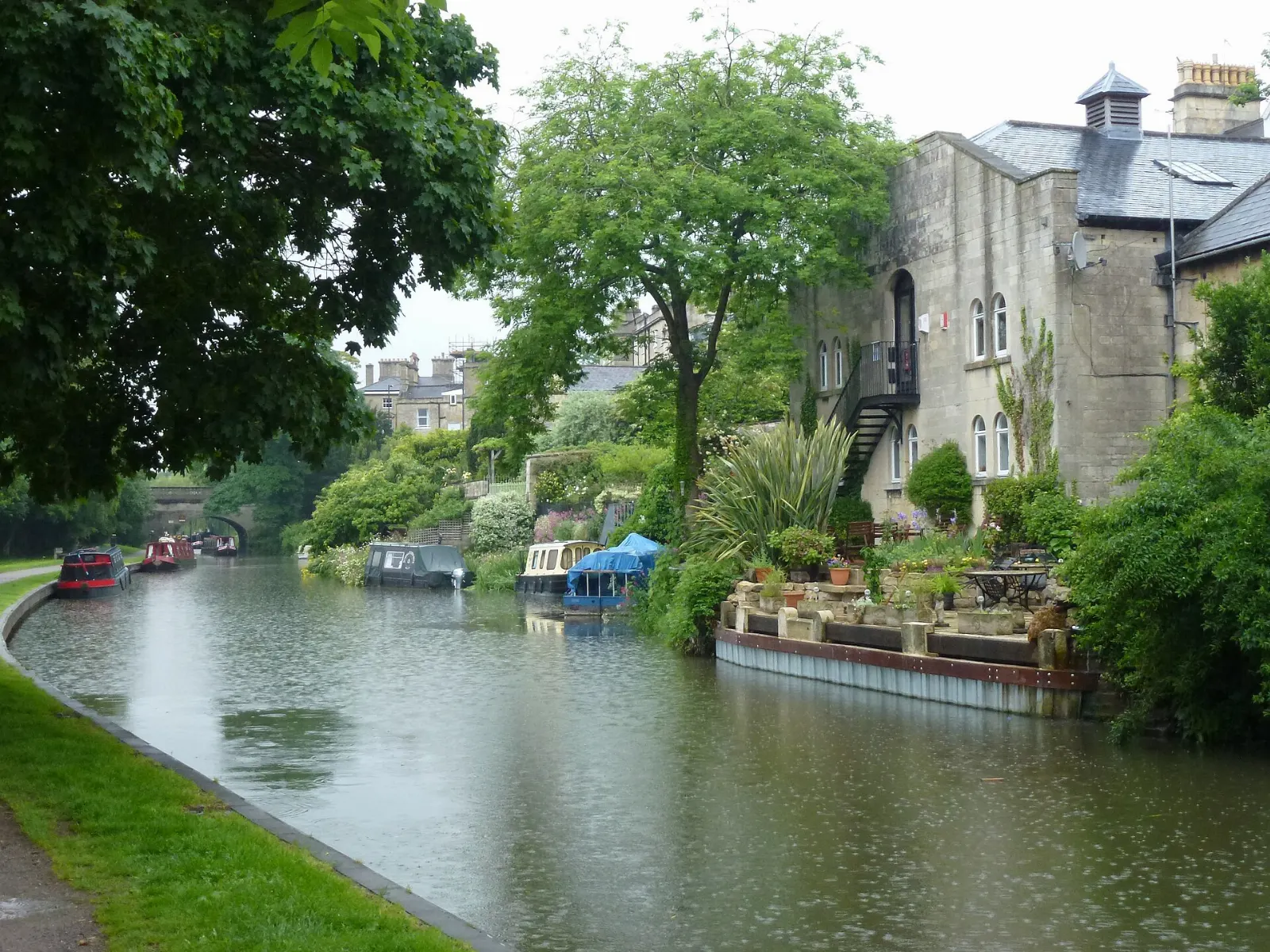
The Kennet and Avon Canal meets the River Avon in Bath via the Widcombe flight of locks. Its towpath makes an easy, flat walk or bike ride east past moored narrowboats, through Sydney Gardens and out into the countryside, with canal-side pubs along the way.
 Planning a trip to Bath?Compare hotels, flights and vacation rentals for Bath on Expedia.Book now
Food and local flavors
Bath has a strong food scene for a small city.
West Country produce fills menus: Somerset cheddar, cider and cider brandy, local lamb and pork, and fish from the nearby coast. The Saturday farmers' market at Green Park Station, a converted Victorian railway station, is excellent for local cheeses, breads and snacks.
Popular dishes to try in Bath


Where to stay
The city center around the Abbey and Roman Baths suits first-time visitors and short stays, with everything within a few minutes' walk.
The Royal Crescent and Circus area offers quieter, elegant Georgian streets for couples and those who want a classic Bath setting, about ten minutes' walk uphill from the center.
Great Pulteney Street and Bathwick, just over the river, have handsome guesthouses close to Sydney Gardens and the canal, good for travelers who like calm evenings.
Where to stay in Bath


Best time to visit
Spring, from April to June, brings flowers in Parade Gardens and Royal Victoria Park, long days and comfortable walking weather.
September and October are excellent, with mellow light on the stone, fewer crowds and the Jane Austen Festival in September.
Getting there and getting around
Bath sits about one hundred miles west of London and eleven miles from Bristol. Great Western Railway trains run frequently from London Paddington to Bath Spa station, a Brunel-designed station right in the city center, in about ninety minutes.
Driving into Bath is best avoided. The center has narrow one-way streets, heavy congestion and limited, costly parking, and a Clean Air Zone applies to some higher-emission vehicles.
A suggested itinerary
First day
Arrive at the Roman Baths for the first entry slot and spend the morning there. Visit Bath Abbey next door, climbing the tower if tours are running, then have a Sally Lunn bun or lunch nearby.
Second day
Walk up Gay Street to the Jane Austen Centre, then continue to The Circus and along Brock Street to the Royal Crescent and No. 1 Royal Crescent. Picnic in Royal Victoria Park or eat near Milsom Street.
Third day
Walk a section of the Bath Skyline trail in the morning, or follow the Kennet and Avon Canal towpath east by bike.
Practical tips
- Book Roman Baths and Thermae Bath Spa tickets online in advance, especially for weekends and school holidays.
- Leave the car at a park and ride site rather than driving into the center.
- Wear comfortable shoes; Bath is hilly and many pavements are uneven stone.
- Bring swimwear for the thermal spa, and note that minimum age rules apply there.
- Many Royal Crescent houses are private homes, so keep noise down and do not step past railings.
- Pack an umbrella year round, as showers can arrive with little warning.