Marrakech was founded in the eleventh century by the Almoravid dynasty and became one of the great imperial cities of Morocco, a trading hub at the foot of the High Atlas where caravans from the Sahara met merchants from the north.
AT A GLANCE
Best time
March to May and October to November for warm days and cool nights.
How long
Three days for the medina and gardens; add a day for the Atlas Mountains.
Getting there
Fly into Marrakech Menara Airport, or take the train from Casablanca.
Why visit Marrakech
Marrakech packs an extraordinary range of experiences into a compact area. In a single day you can bargain for a carpet in the souks, admire some of the finest Islamic architecture in North Africa, rest in a botanical garden and eat dinner at a smoking food stall under the stars.
The city also makes an ideal base for exploring southern Morocco. The snowcapped High Atlas rise less than an hour away, the stony Agafay desert lies just southwest, and the Atlantic port of Essaouira is a comfortable day trip.
The heart of the medina
Jemaa el-Fnaa
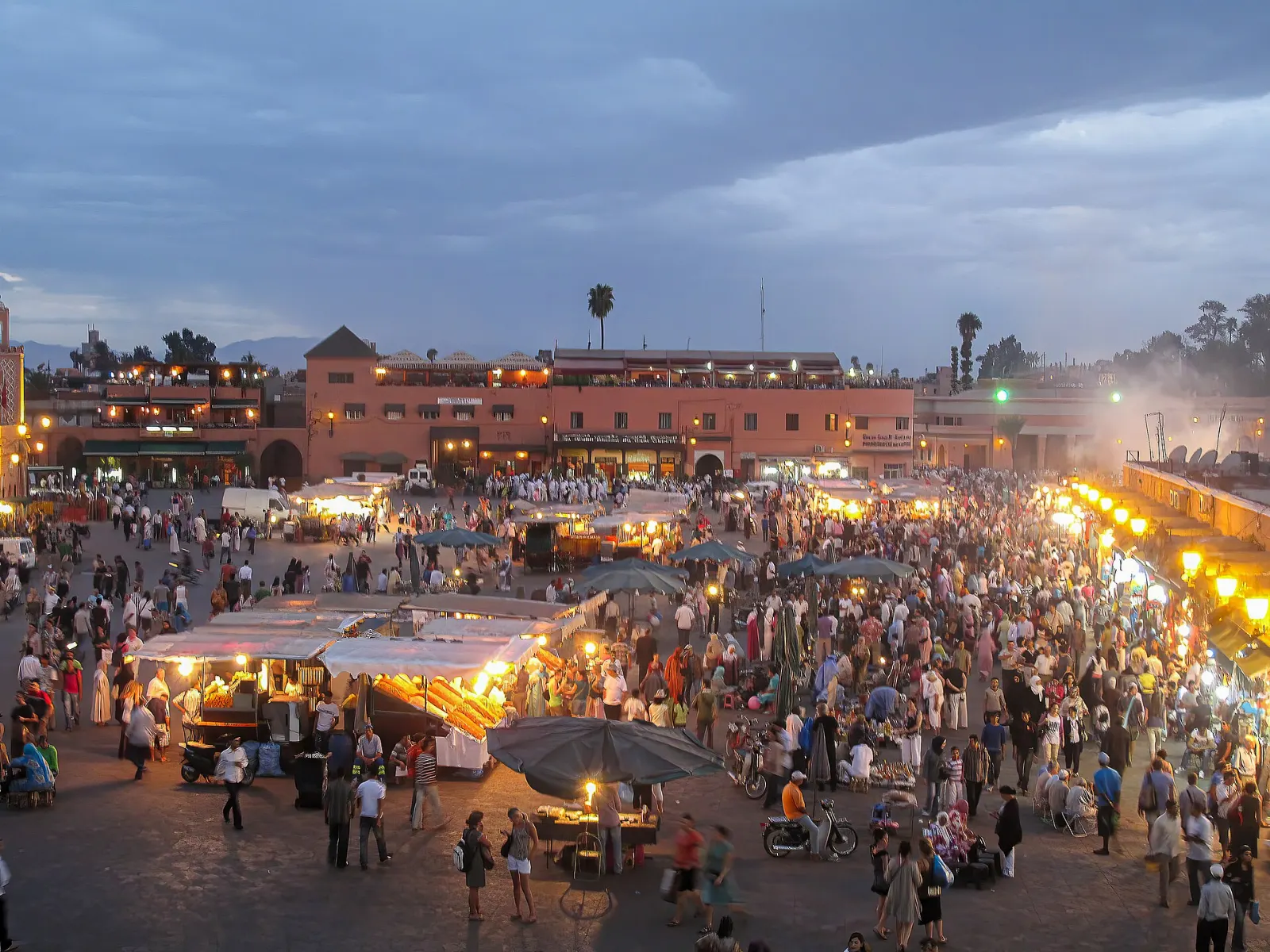
The great square of Marrakech changes character through the day. In the morning it is fairly quiet, with orange juice stalls, henna artists and snake charmers.
Koutoubia Mosque
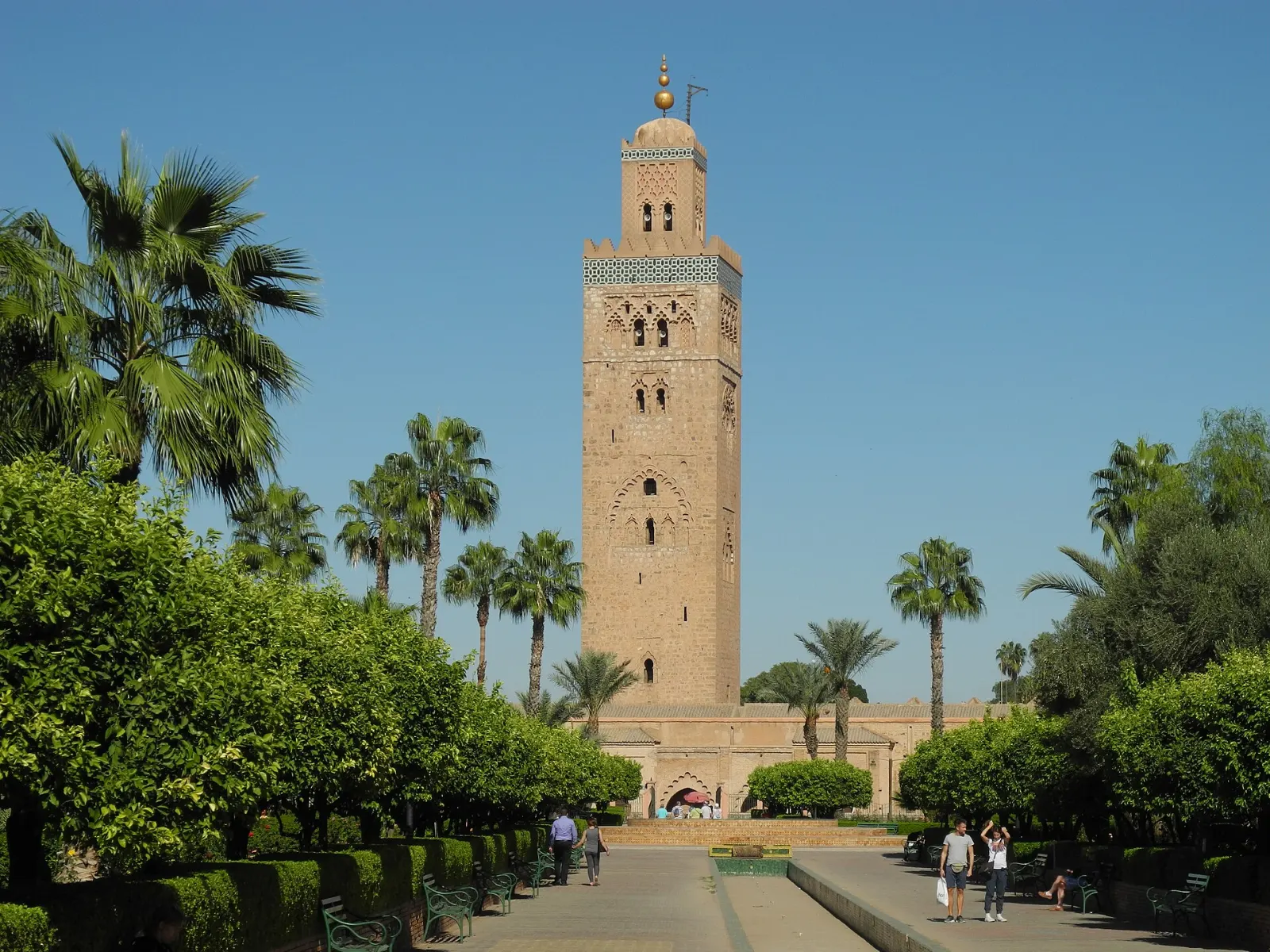
Just west of the square, the Koutoubia Mosque's minaret, completed under the Almohads in the twelfth century, is the city's landmark and was the model for later minarets in Seville and Rabat. Non-Muslims cannot enter the mosque, but you can walk around the exterior and the rose gardens beside it, which are especially lovely in the late afternoon light.
The souks
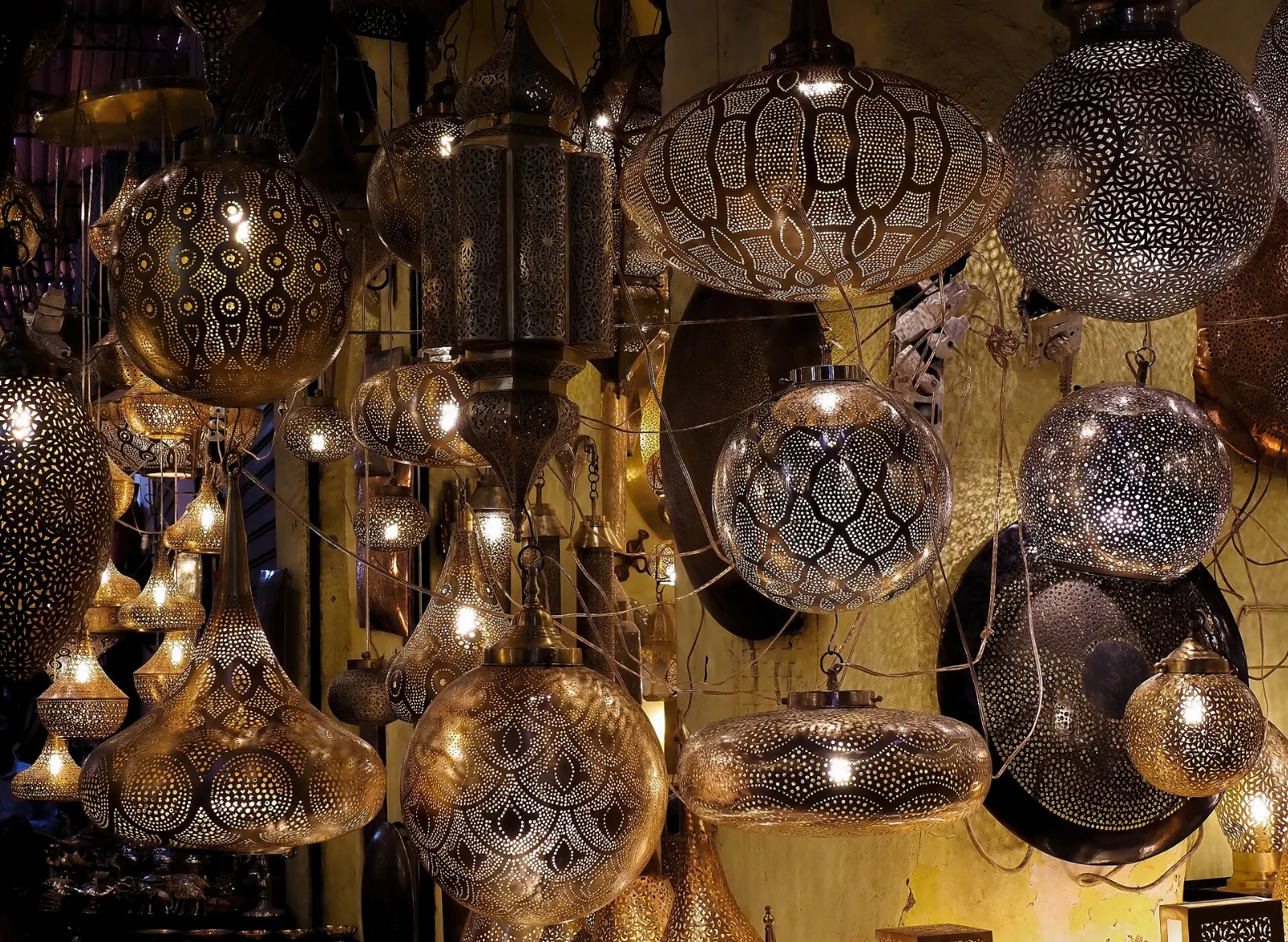
North of Jemaa el-Fnaa, a maze of covered and open lanes forms the souks, traditionally divided by trade. You will pass streets of leatherwork, lanterns and metalwork, spices, textiles, carpets, wood carving and jewelry, with artisans working in small booths.
Ben Youssef Madrasa
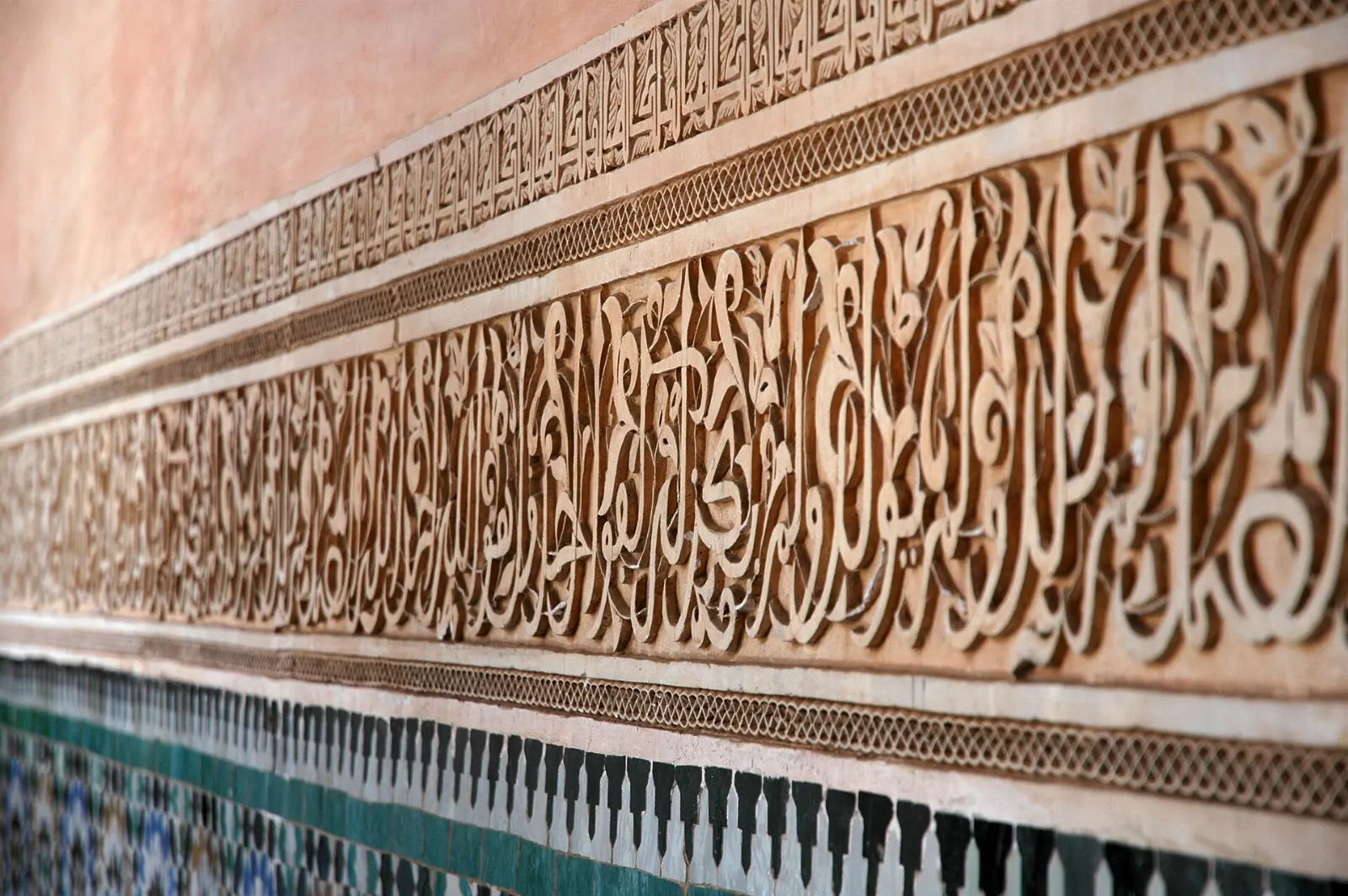
This former Quranic college, rebuilt by the Saadians in the sixteenth century and restored and reopened in 2022, is one of the most beautiful buildings in Morocco. Its central courtyard and pool are framed by carved stucco, cedar wood and zellige tiles, and upstairs you can peek into the small cells where students once lived.
Palaces, tombs and the kasbah
Bahia Palace
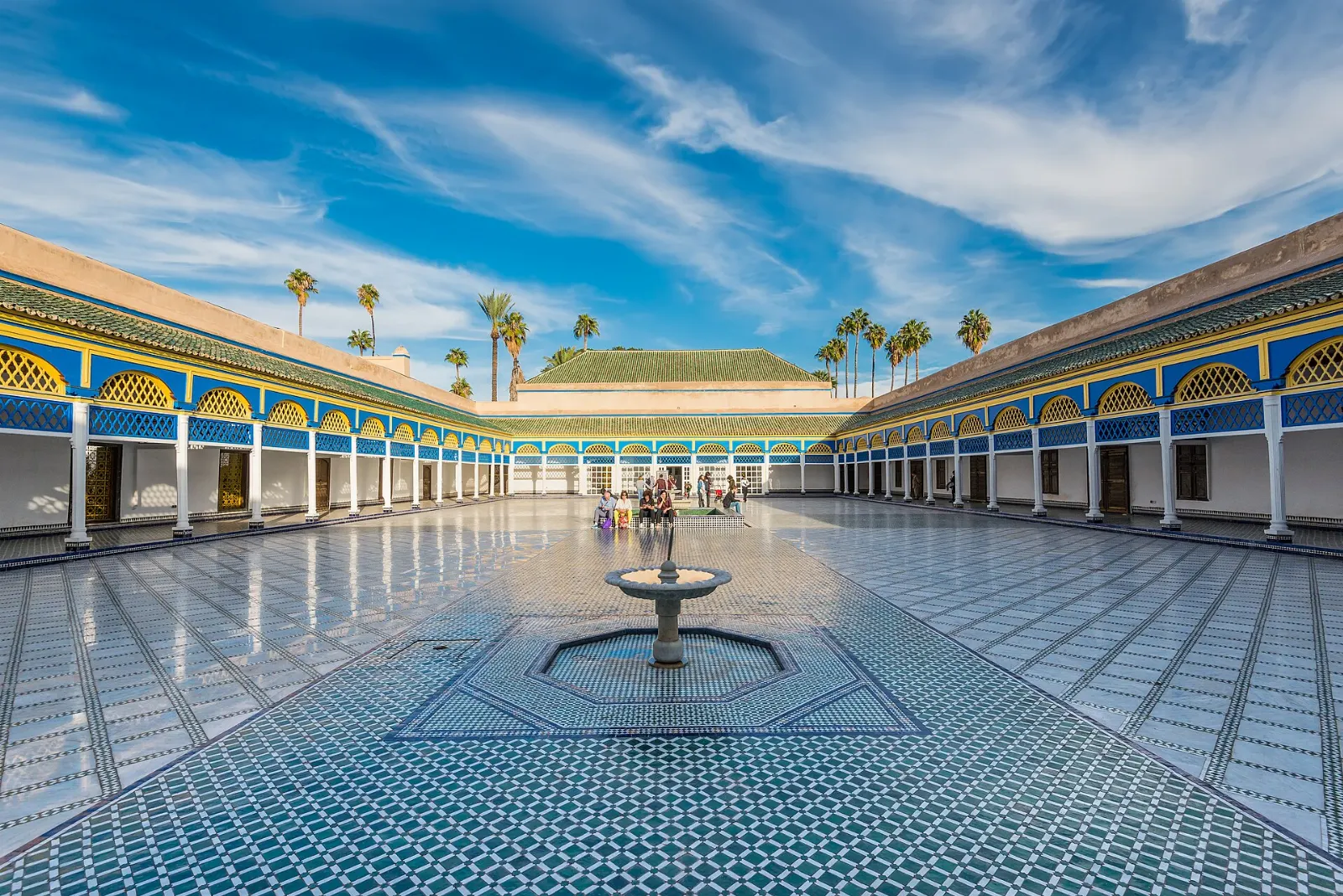
Built in the nineteenth century by the grand vizier Si Moussa and expanded by his son Ba Ahmed, the Bahia Palace is a series of courtyards, gardens and reception rooms showing off the best Moroccan craftsmanship of the era: painted cedar ceilings, marble floors, stained glass and tilework.
El Badi Palace
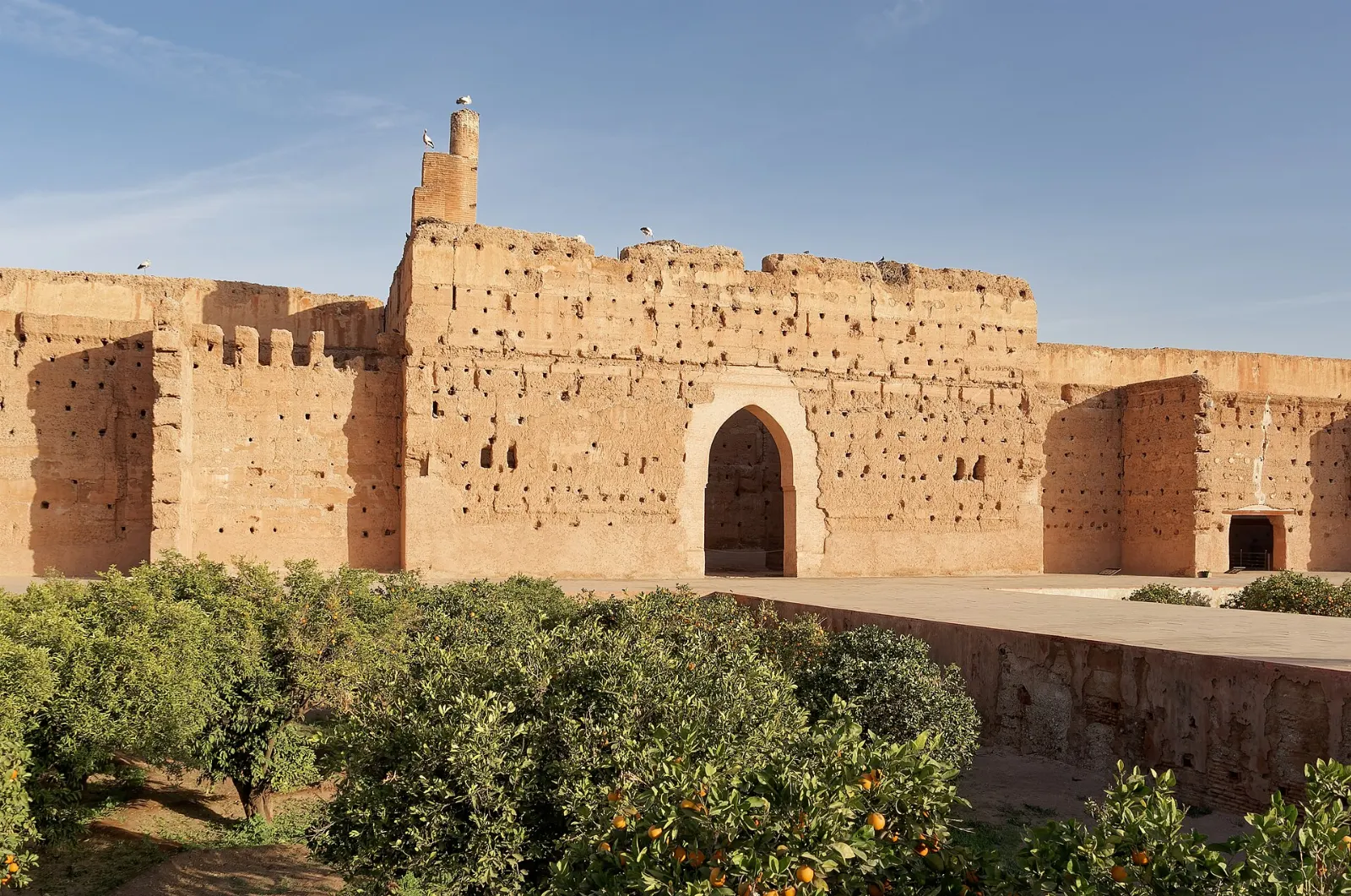
In the sixteenth century the Saadian sultan Ahmad al-Mansur built El Badi to celebrate a victory over the Portuguese.
Saadian Tombs
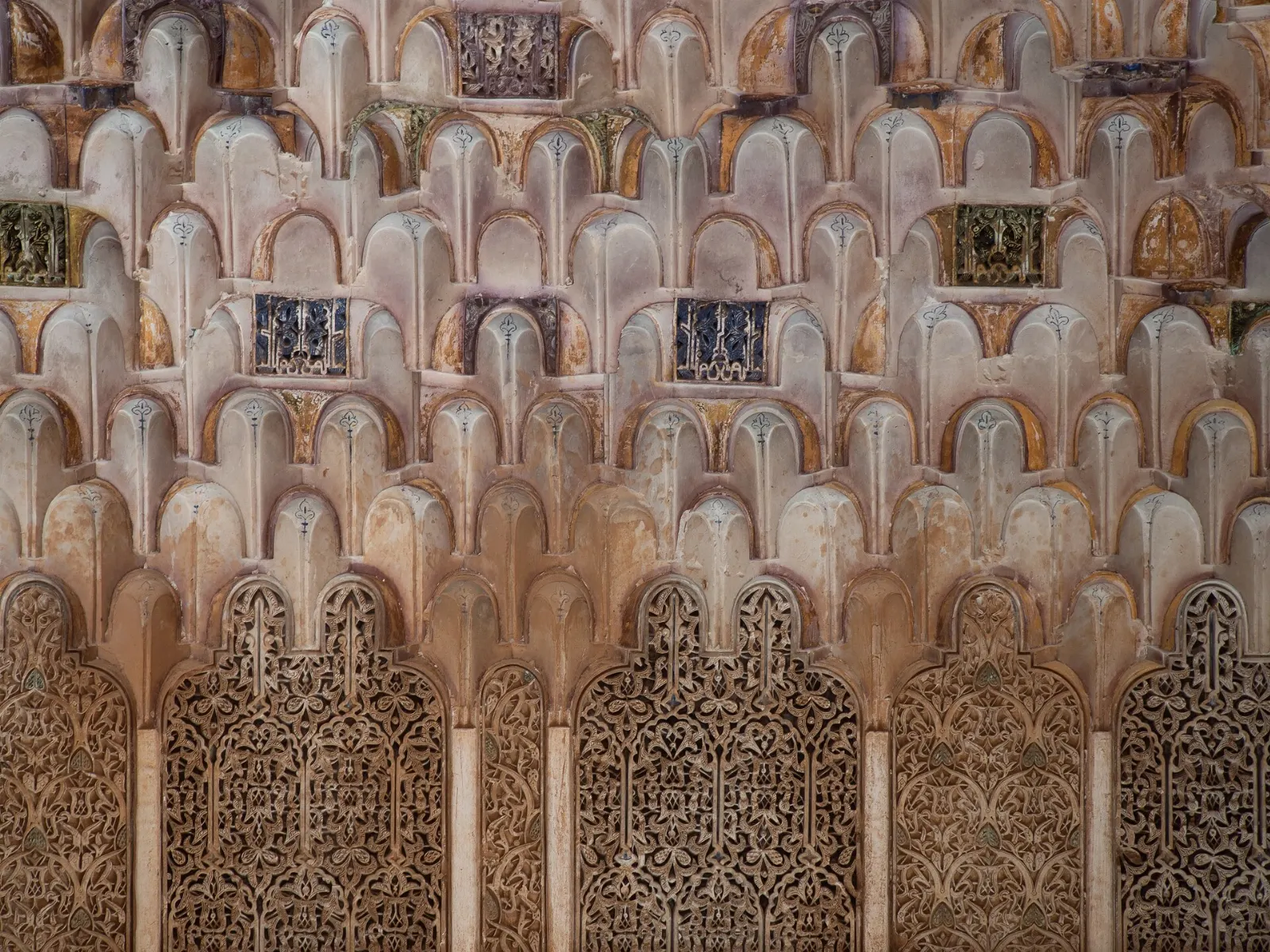
Sealed for centuries and rediscovered in 1917, the Saadian Tombs hold members of the Saadian dynasty, including Ahmad al-Mansur, in mausoleums of marble, carved stucco and cedar.
Dar Si Said Museum
Between the Bahia Palace and Jemaa el-Fnaa, the nineteenth-century mansion of Dar Si Said houses a national museum of Moroccan carpets and weaving, with rugs from the Atlas and the plains around Marrakech displayed in painted rooms around a garden courtyard.
The Mellah
The former Jewish quarter, the Mellah, lies next to El Badi.
Gardens, museums and day trips
Jardin Majorelle and the Yves Saint Laurent Museum
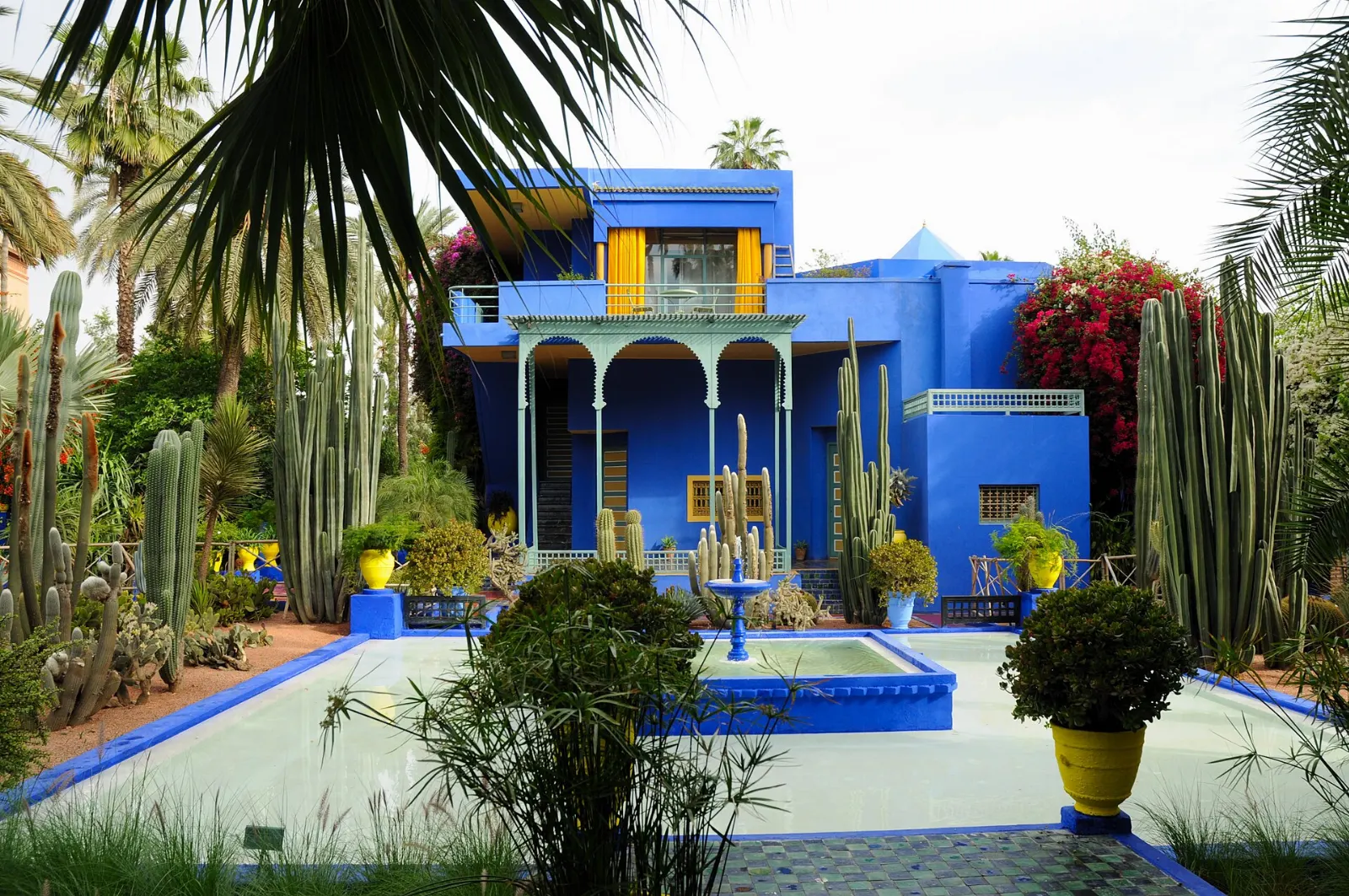
The French painter Jacques Majorelle spent decades creating this garden north of the medina, with its bamboo groves, cactus beds and villa painted in an intense cobalt blue.
Menara Gardens
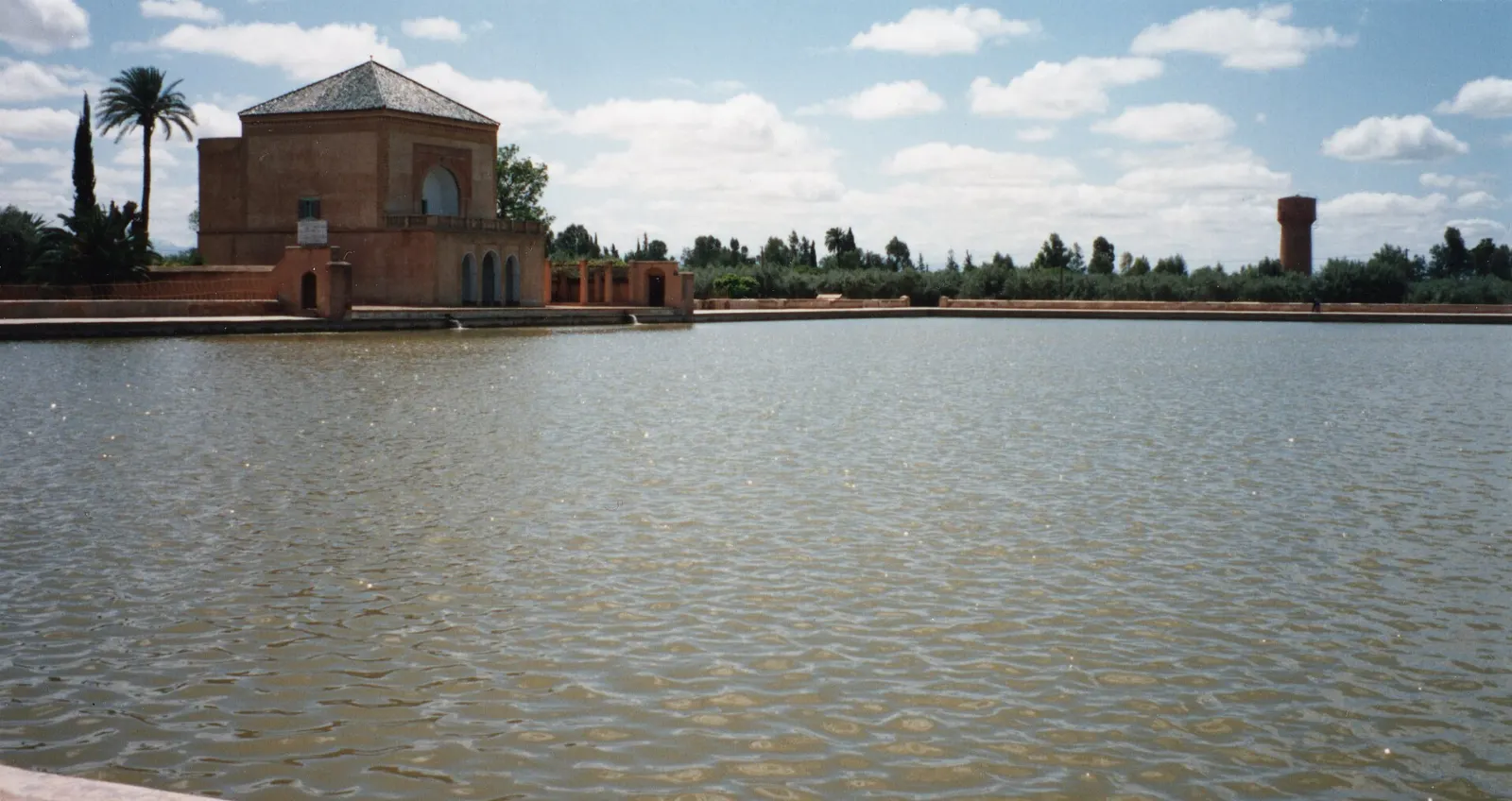
Southwest of the medina, the Menara Gardens are olive groves around a large basin with a pavilion that frames the snowy Atlas on clear winter days. The gardens are popular with local families and are best at sunset.
The High Atlas and Ourika Valley
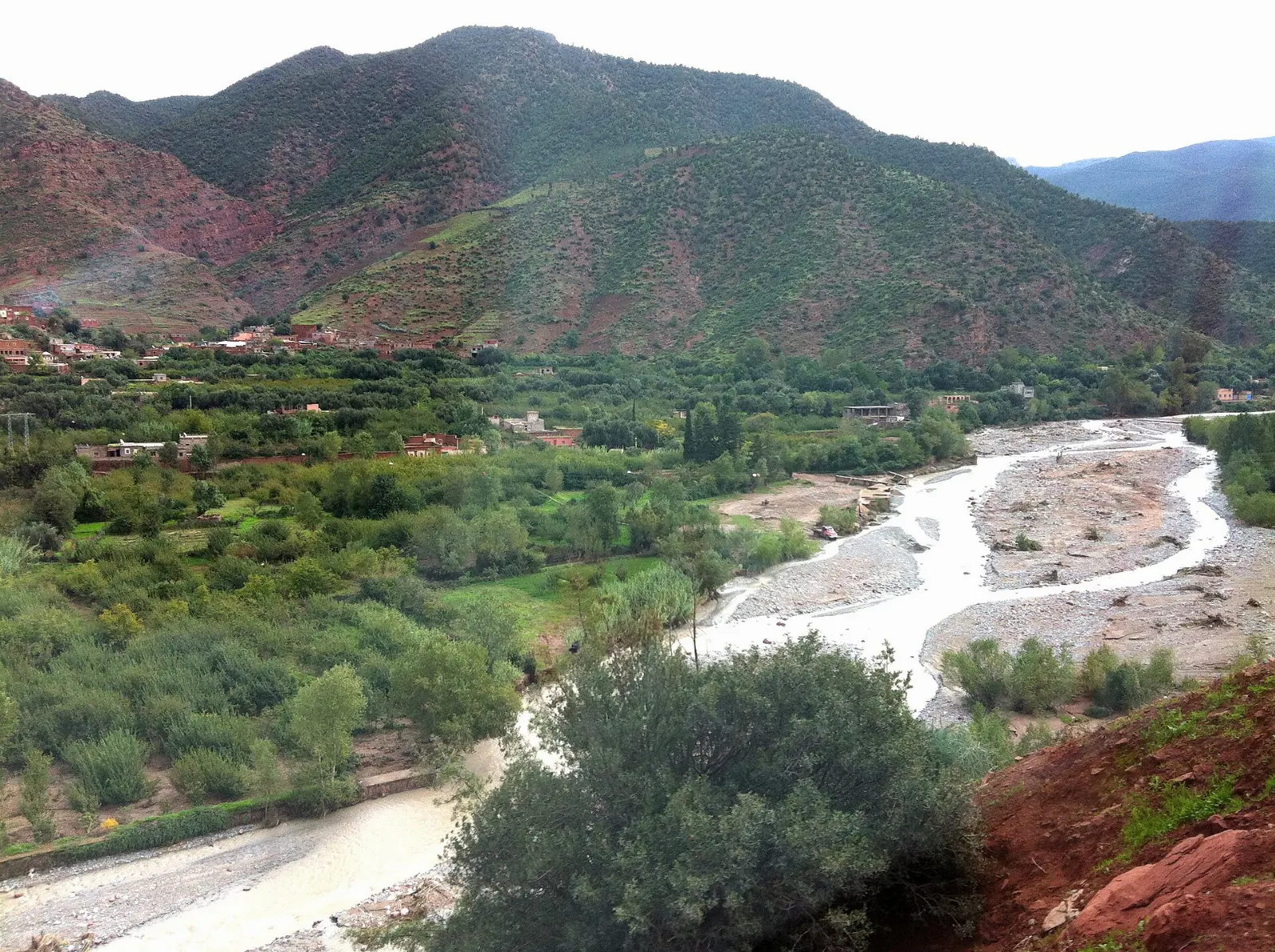
For a change from the city, take a day trip into the mountains. The Ourika Valley, about an hour from Marrakech, follows a river past Berber villages to Setti Fatma, where trails lead to a series of waterfalls.
 Planning a trip to Marrakech?Compare hotels, flights and vacation rentals for Marrakech on Expedia.Book now
Food and local flavors
Marrakech's signature dish is tanjia, beef or lamb cooked slowly with preserved lemon, garlic, cumin and saffron in a tall clay urn, traditionally buried in the embers of the hammam furnace.
Jemaa el-Fnaa's evening food stalls serve grilled meats, harira soup, fried fish and snail soup ladled from huge pots.
Popular dishes to try in Marrakech


Where to stay
The medina is the most atmospheric place to stay, in a riad, a traditional house built around an internal courtyard. Riads near Jemaa el-Fnaa or the Kasbah are close to the main sights, while those in quieter northern quarters like Mouassine and Bab Doukkala feel more residential.
Gueliz, the modern district built under the French Protectorate, has wider streets, cafes, galleries and contemporary restaurants. It suits those who want an easier base near the train station and Jardin Majorelle.
Where to stay in Marrakech


Best time to visit
Spring, from March to May, and autumn, from October to November, offer warm days and comfortable evenings, making them the best seasons for exploring on foot.
Summer is very hot, regularly reaching forty degrees Celsius, so plan for early mornings, a long midday rest and late evenings.
Getting there and getting around
Marrakech Menara Airport is a short taxi ride from the medina and has direct flights to many European cities and connections through Casablanca.
Inside the medina, walking is the only practical way to get around, and the lanes are shared with motorbikes and handcarts.
A suggested itinerary
First day
Visit the Koutoubia Mosque gardens in the morning, then walk into the souks with a guide. After lunch, visit the Ben Youssef Madrasa and Le Jardin Secret.
Second day
Start early at the Bahia Palace, then walk to El Badi Palace and the Saadian Tombs.
Third day
Head to Gueliz for Jardin Majorelle and the Yves Saint Laurent Museum as soon as they open.
Practical tips
- Book Jardin Majorelle tickets online in advance; time slots sell out.
- Check the official website for current hours and fees at palaces and museums.
- Decline offers from people who say a road is closed or offer to lead you somewhere; use official guides.
- Download an offline map, since GPS can be unreliable in the narrow lanes of the medina.
- Carry cash in Moroccan dirhams; many small shops and stalls do not take cards.
- Dress modestly, covering shoulders and knees, and be respectful near mosques.