Lisbon Portugal Trams Viewpoints Pastries and Sintra
Lisbon spreads across a cluster of steep hills on the north bank of the Tagus, just before the river widens into the Atlantic. Pale limestone buildings, tiled facades and terracotta roofs tumble down toward the water, and the light that bounces off the river gives the whole city a soft, glowing quality that photographers chase from sunrise to dusk.
By WiserMap TravelUpdated October 20269 places12 min read
This guide walks you through the places that matter most: the medieval lanes of Alfama, the rebuilt grid of the Baixa, the bohemian slopes of Chiado and Bairro Alto, the monuments of Belém and the modern riverside of Parque das Nações.
At a glance Lisbon
Best timeSpring and early autumn bring warm days, thinner crowds and comfortable walking weather.
How longThree to four days covers the city, plus one more for Sintra or Cascais.
Getting thereLisbon Airport sits inside the city and links to the center by metro.
Ad
Why visit Lisbon
Few European capitals pack so much history into such a compact, atmospheric setting. Lisbon was a Phoenician harbor, a Roman town, a Moorish stronghold and, from the fifteenth century, the launching point for the voyages that carried Portuguese sailors to India, Brazil and beyond.
Yet Lisbon is not a museum piece. Its neighborhoods have distinct personalities: Alfama with its laundry lines and fado houses, Bairro Alto with its late-night street life, Príncipe Real with its gardens and design shops, and Belém with its broad lawns by the river.
Alfama, the castle and the old city viewpoints
The oldest part of Lisbon climbs the hill east of the Baixa. Because Alfama largely survived the 1755 earthquake, it keeps a tangled medieval street plan of stairways, tiny squares and alleys that defeat even good maps.
São Jorge Castle
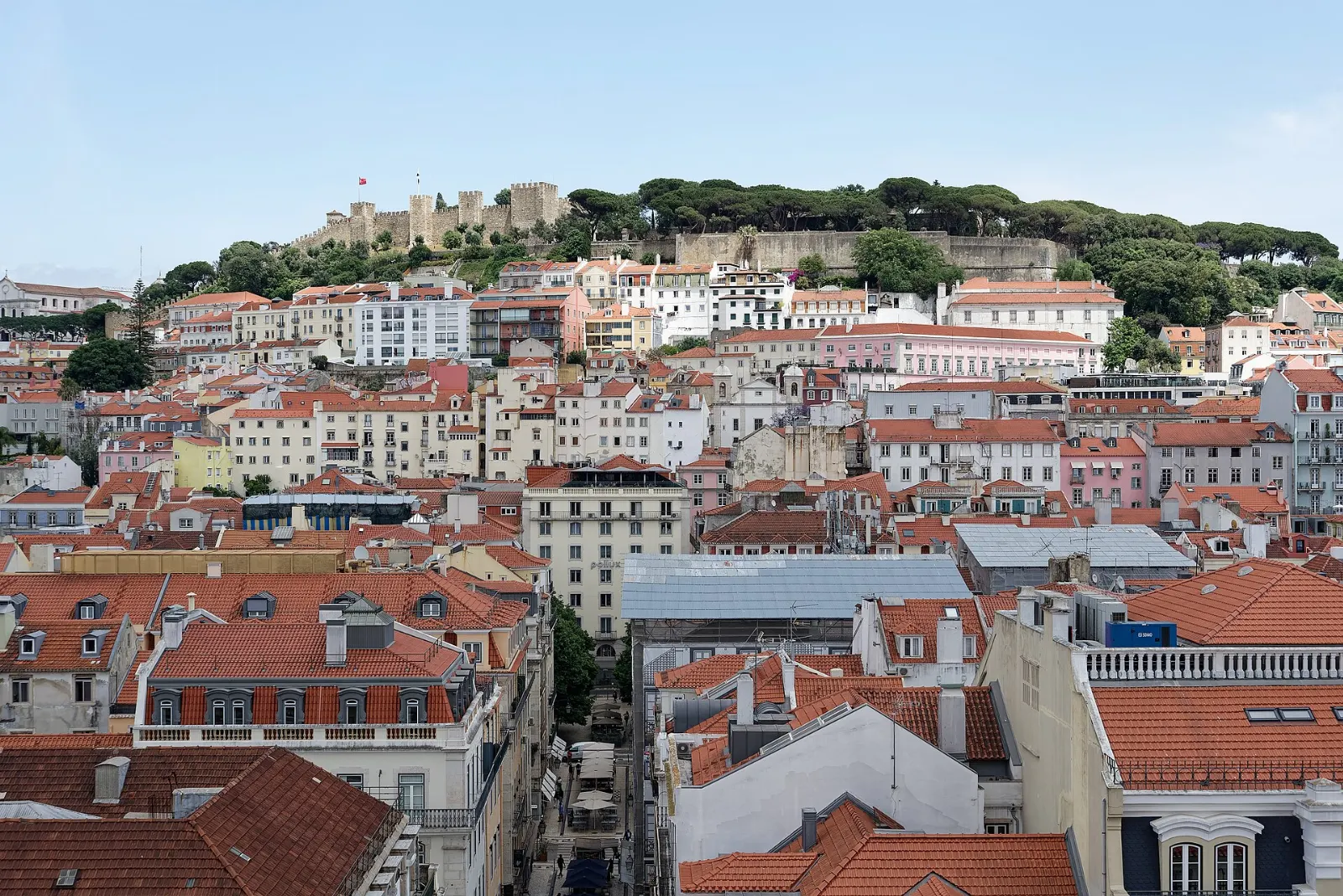
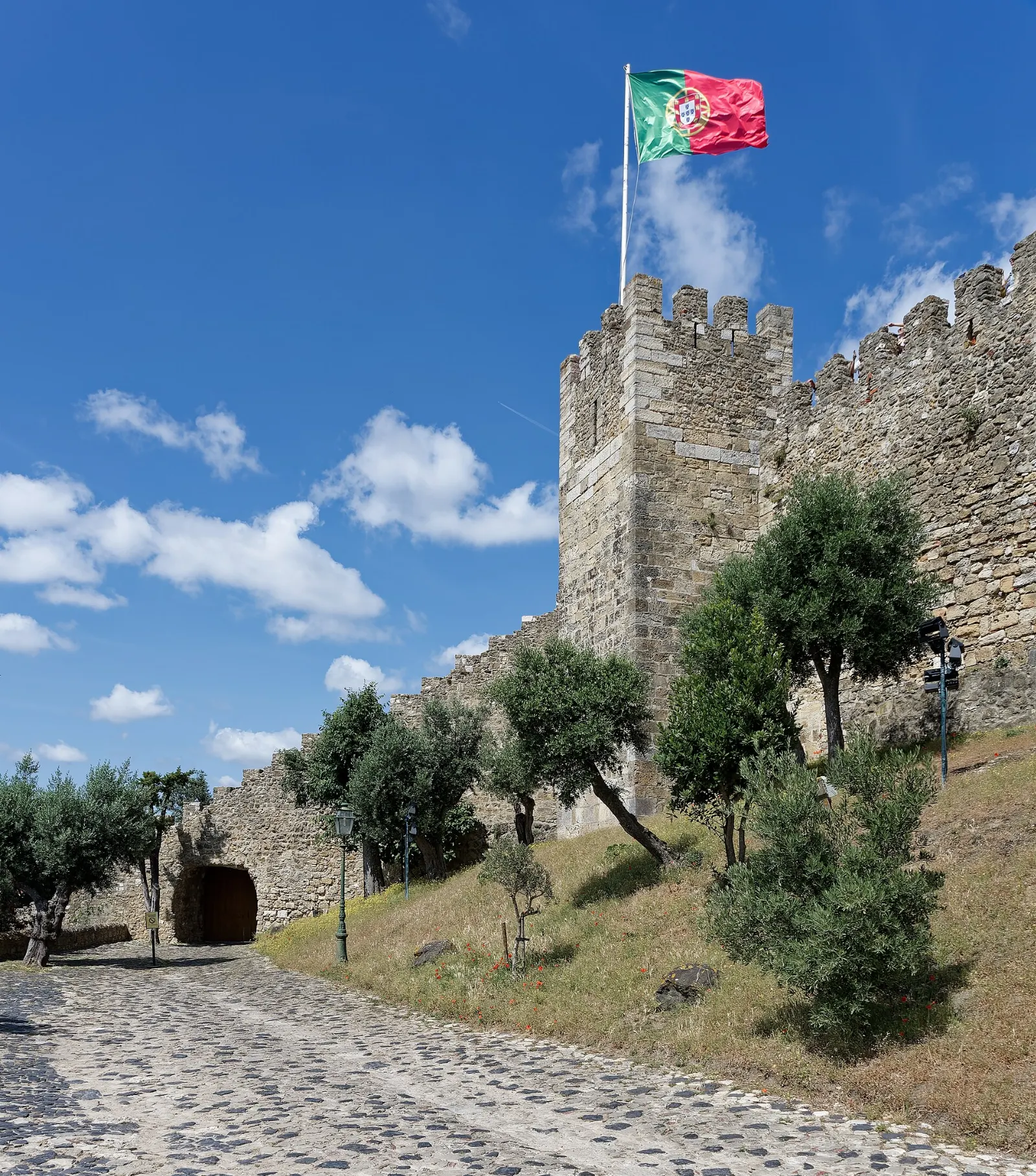
The Castelo de São Jorge occupies the city's highest historic hill. The walls and towers you see were expanded during the Moorish period and later restored, and the ramparts give some of the widest views in Lisbon, sweeping over the Baixa, the river and the April 25th Bridge.
São Jorge Castle crowns the highest hill of the old city, above Alfama and the Baixa. Photo: Jakub Hałun, Wikimedia Commons, CC BY 4.0
Alfama and the Lisbon Cathedral
Start at the Sé de Lisboa, the fortress-like Romanesque cathedral that has anchored the area since the twelfth century, then wander uphill and downhill without a fixed plan. Look for small grocery shops, tiled house fronts and family-run taverns tucked into the lanes.
Miradouro de Santa Luzia and Portas do Sol
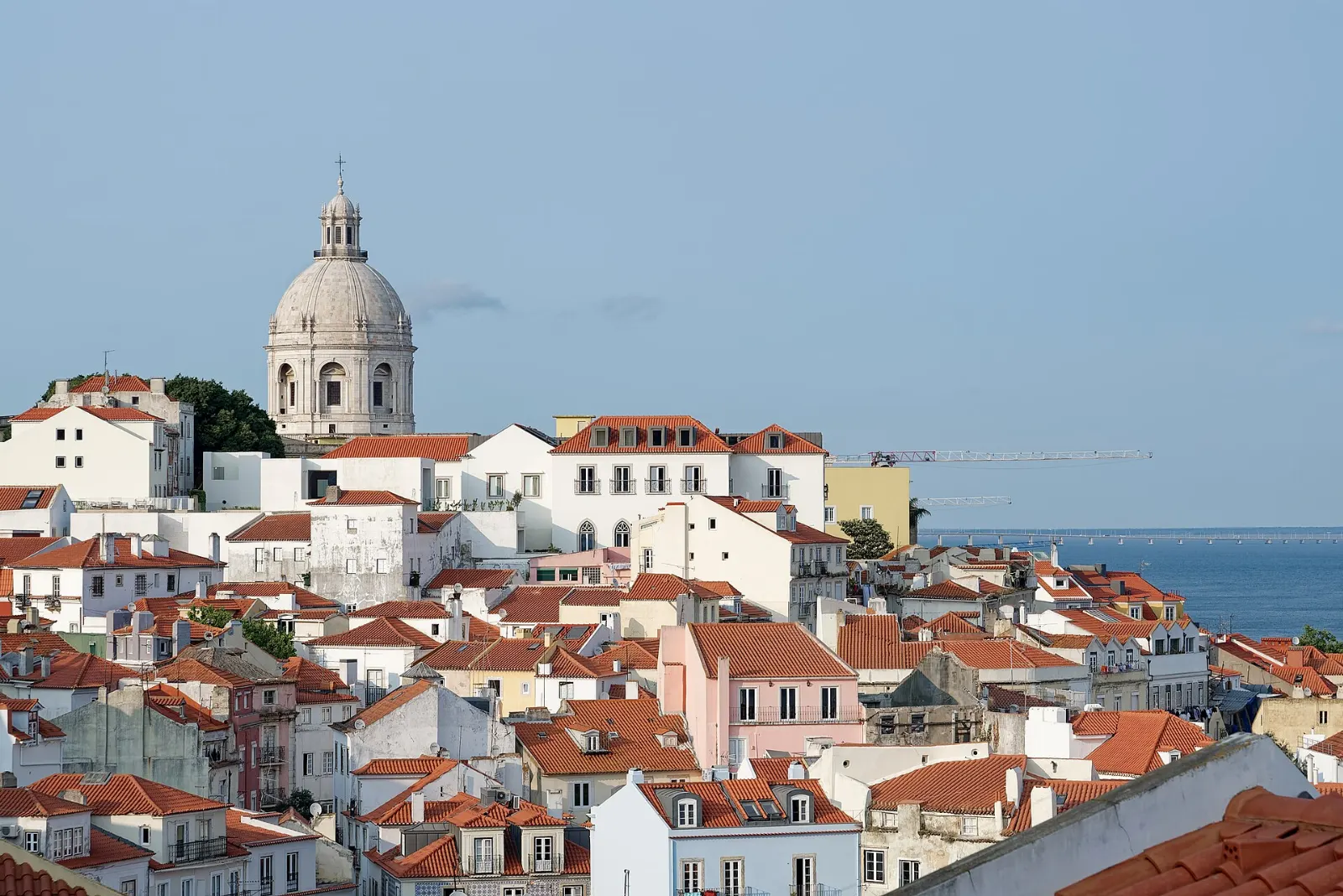
Two neighboring viewpoints sit on the slope between the cathedral and the castle. Santa Luzia has a pergola draped with bougainvillea and walls of blue-and-white azulejo tiles, while Portas do Sol opens onto a broad terrace above Alfama's rooftops and the dome of the National Pantheon.
The Santa Luzia viewpoint frames Alfama's terracotta rooftops and the Tagus beyond. Photo: Jakub Hałun, Wikimedia Commons, CC BY 4.0
Tram 28
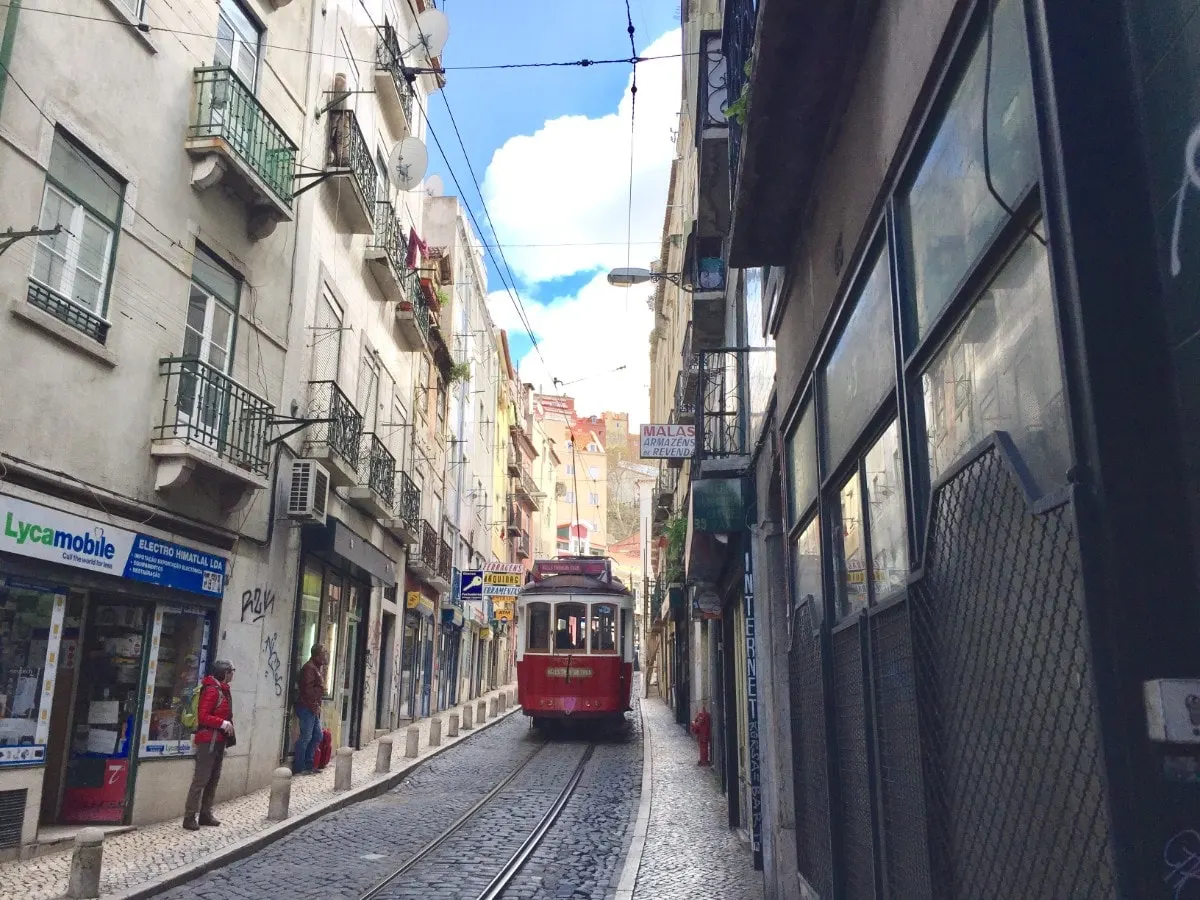
The vintage yellow trams of line 28 rattle through Graça, Alfama, the Baixa and Estrela, squeezing past houses on gradients that seem impossible. The full ride takes around an hour each way.
Line 28 runs vintage trams through some of the steepest and narrowest streets in Lisbon. Photo: Michael Meraner, Wikimedia Commons, CC BY 2.0
Ad
Baixa, Chiado and Bairro Alto
The flat grid of the Baixa links the river to the main square of Rossio, with the hills of Chiado and Bairro Alto rising to the west. This is the easiest part of Lisbon to explore on foot and the natural base for your first afternoon.
Praça do Comércio and Rua Augusta
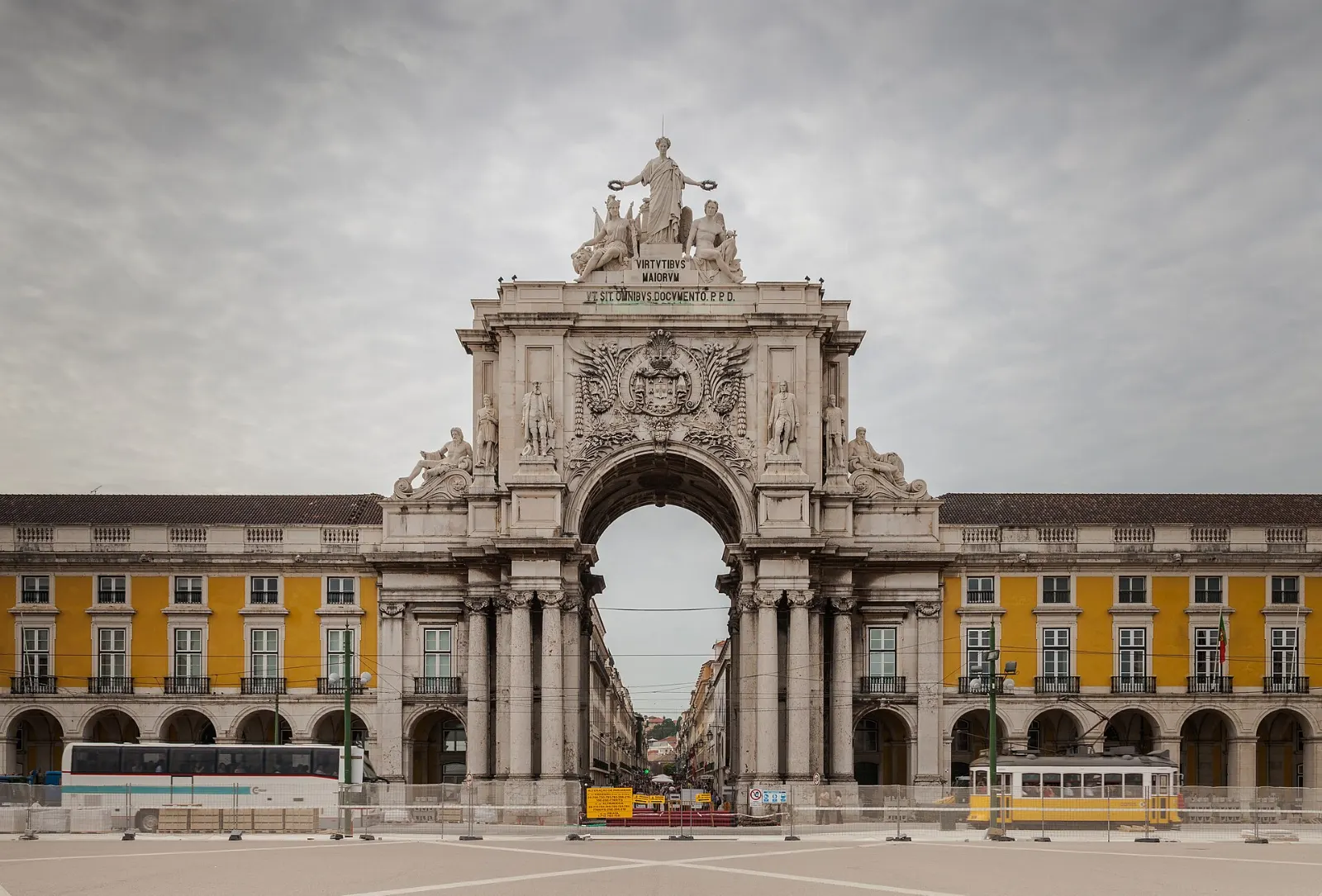
Before the earthquake, the royal palace stood on this riverside square. Today the vast arcaded Praça do Comércio, painted a warm yellow, opens straight onto the Tagus.
Santa Justa Lift and Carmo
The neo-Gothic iron Elevador de Santa Justa, opened in the early twentieth century, connects the Baixa with Largo do Carmo above. Queues for the lift can be long, so consider walking up through Chiado instead and visiting the top platform from the upper side.
The Santa Justa Lift links the flat streets of the Baixa with the Carmo area above. Photo: Jakub Hałun, Wikimedia Commons, CC BY 4.0
Chiado, Bairro Alto and the high viewpoints
Chiado is Lisbon's elegant shopping and café quarter, with historic bookshops and theaters around Rua Garrett. Just above it, Bairro Alto is quiet during the day and fills with people drinking on the street at night.
Belém, Parque das Nações and the museums
West of the center, Belém holds Lisbon's greatest monuments from the Age of Discovery. Plan most of a day here, ideally on a weekday, and remember that many museums in Portugal close on Mondays.
Jerónimos Monastery
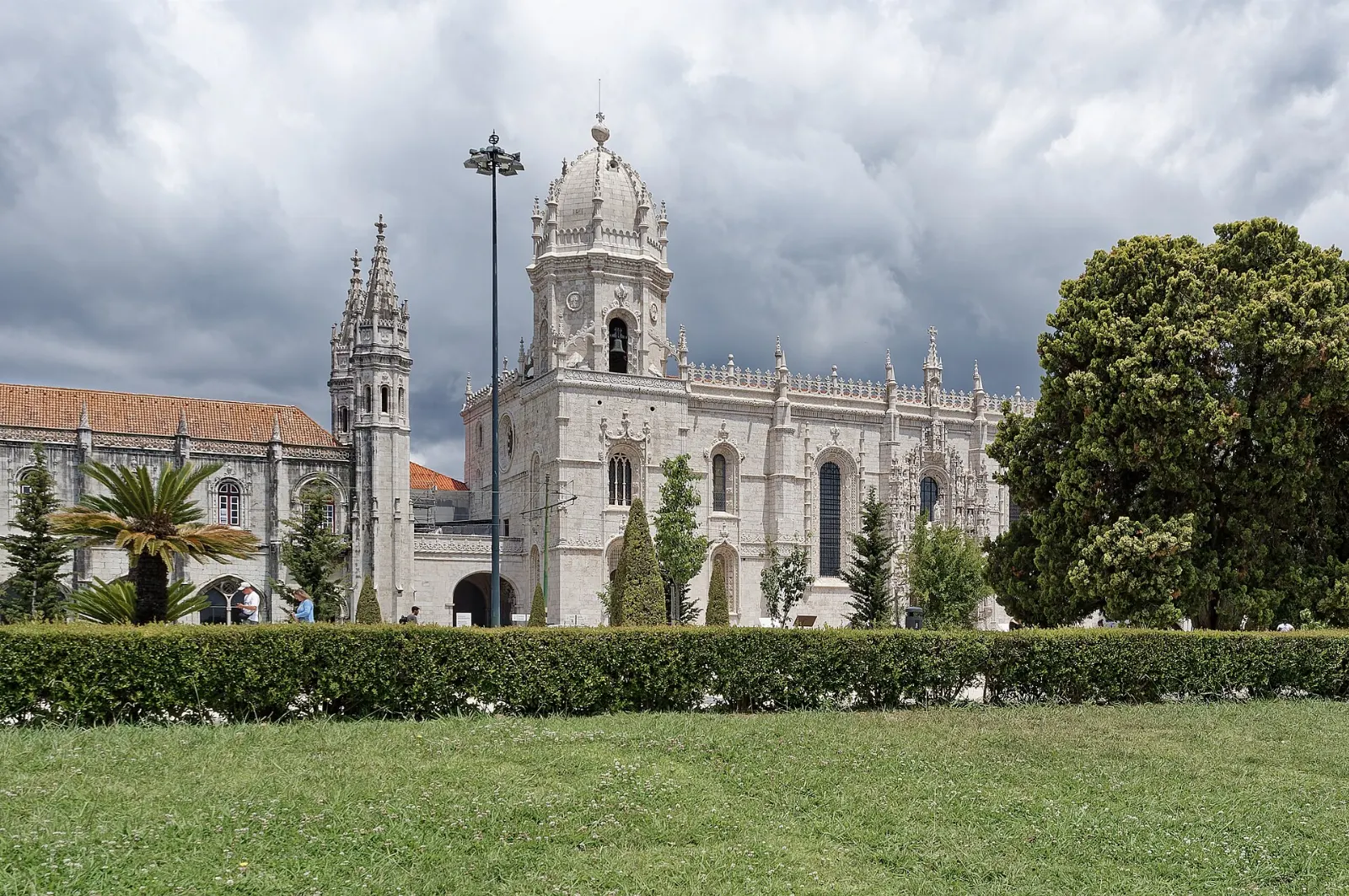
Commissioned by King Manuel I around 1501, the Mosteiro dos Jerónimos is a masterpiece of the Manueline style, with stone carved into ropes, sea creatures and exotic plants.
The Jerónimos Monastery is one of the finest examples of the Manueline style and a UNESCO World Heritage Site. Photo: Jakub Hałun, Wikimedia Commons, CC BY 4.0
Belém Tower
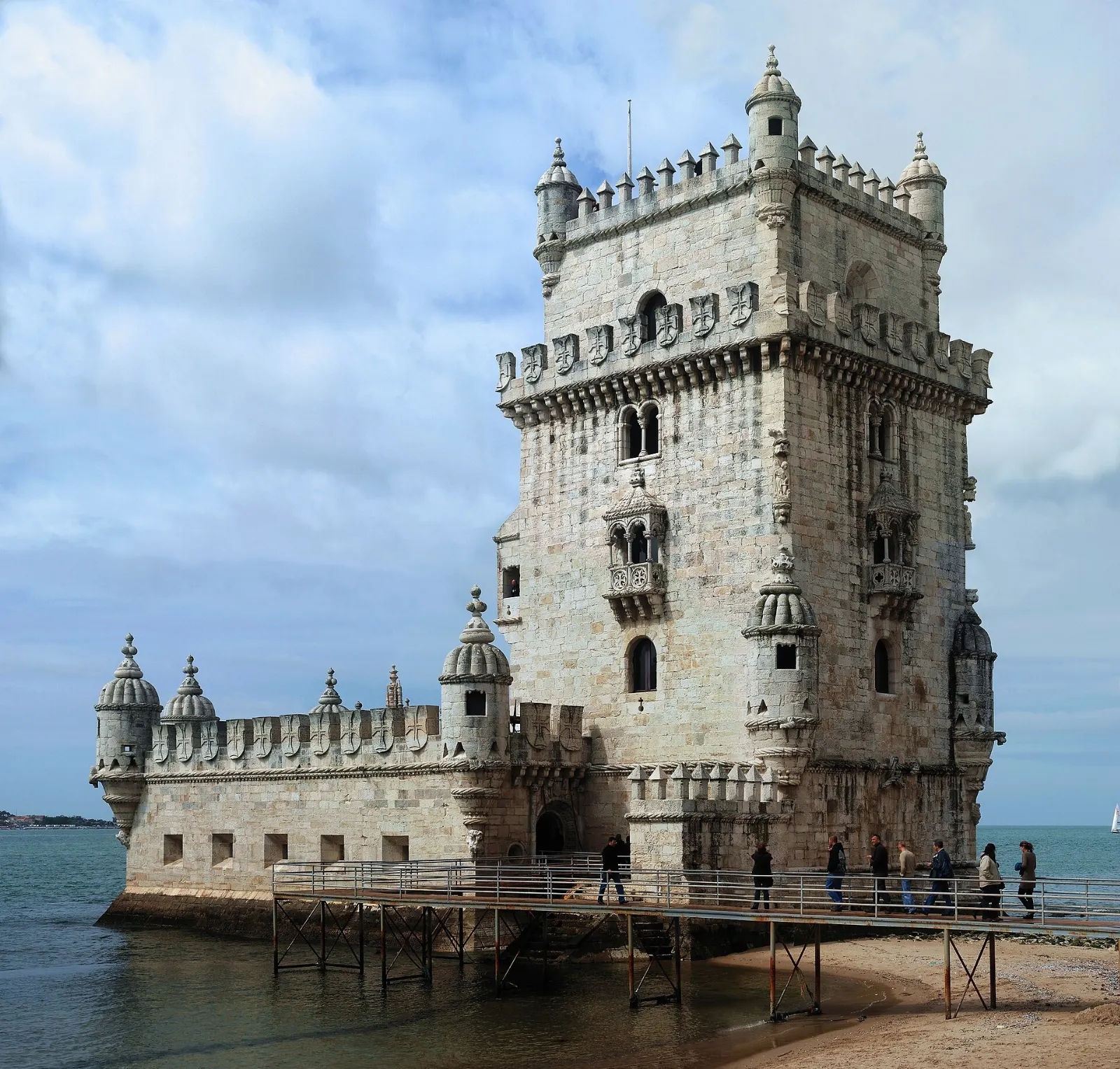
Standing at the water's edge a short walk west, the Torre de Belém was built in the early sixteenth century as a fortress guarding the river.
Belém Tower was built in the early sixteenth century to guard the river approach to Lisbon. Photo: Alvesgaspar, Wikimedia Commons, CC BY-SA 3.0
Padrão dos Descobrimentos and LX Factory
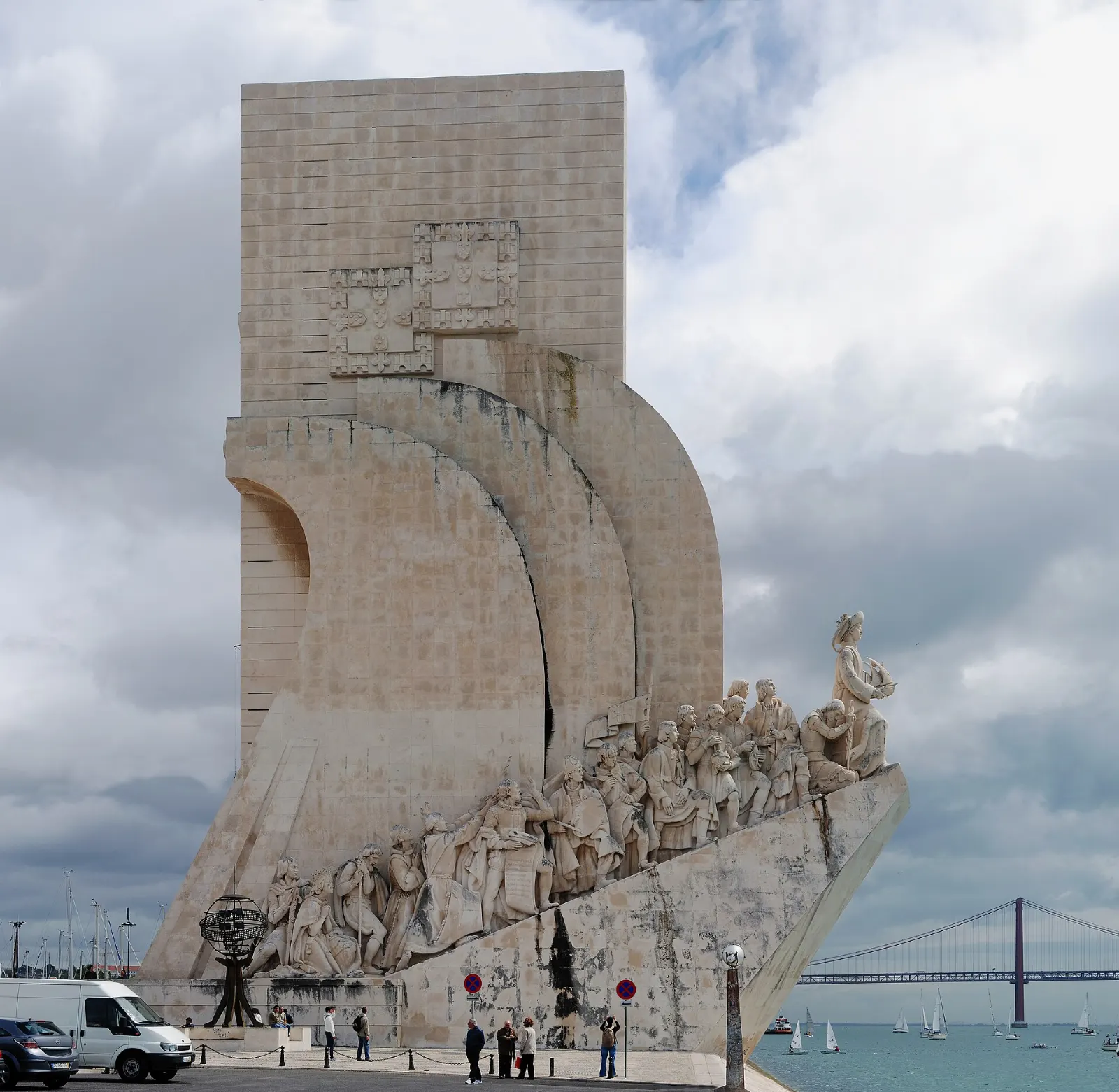
Between the monastery and the tower, the soaring Monument to the Discoveries shows Henry the Navigator leading a procession of explorers, with a large mosaic map in the pavement in front.
The Padrão dos Descobrimentos honours the navigators of Portugal's Age of Discovery. Photo: Alvesgaspar, Wikimedia Commons, CC BY-SA 3.0
Calouste Gulbenkian Museum
Back in the modern city, the Gulbenkian Museum displays an outstanding private collection that ranges from Egyptian and Islamic art to European painting and René Lalique jewelry, set in calm modernist buildings surrounded by a garden of ponds and paths.
Parque das Nações and the Oceanário
Built for Expo 98 on the eastern riverfront, Parque das Nações has wide promenades, contemporary architecture and views of the long Vasco da Gama Bridge.
Tile lovers should also find time for the National Tile Museum in a former convent east of Alfama, where centuries of Portuguese azulejos are displayed, including a long panorama of Lisbon before the earthquake.
The Oceanário de Lisboa was built for Expo 98 in what is now Parque das Nações. Photo: Jules Verne Times Two, Wikimedia Commons, CC BY-SA 4.0
Ad
Food and local flavors
Lisbon eats well and unpretentiously. The essential sweet is the pastel de nata, a crisp custard tart best eaten warm with cinnamon and powdered sugar.
Seafood dominates menus. Look for bacalhau, salt cod prepared in countless ways, including bacalhau à brás with egg and fried potatoes; grilled sardines, which are at their best in June; clams in garlic, coriander and olive oil; and arroz de marisco, a soupy seafood rice.
For variety under one roof, the Mercado da Ribeira at Cais do Sodré combines a traditional produce market with a busy food hall.
Popular dishes to try in Lisbon
Pastel de nata The essential sweet is the pastel de nata, a crisp custard tart best eaten warm with cinnamon and powdered sugar.Photo: Sonse, Wikimedia Commons, CC BY 2.0Bifana For a quick lunch, a bifana, a marinated pork sandwich, is a local favorite.Photo: Sonse, Wikimedia Commons, CC BY 2.0Grilled sardines Look for bacalhau, salt cod prepared in countless ways, including bacalhau à brás with egg and fried potatoes; grilled sardines, which are at their best in June; clams in…Photo: Yusuke Kawasaki from Tokyo, Japan, Wikimedia Commons, CC BY 2.0Bacalhau Look for bacalhau, salt cod prepared in countless ways, including bacalhau à brás with egg and fried potatoes; grilled sardines, which are at their best in June; clams in…Photo: Sharon Hahn Darlin, Wikimedia Commons, CC BY 2.0
Where to stay
The Baixa and Chiado suit first-time visitors best: they are central, relatively flat, close to metro stations and within walking distance of most sights.
Families and those who want space often prefer Belém or Parque das Nações, both with riverside parks, while Cais do Sodré puts you next to the trains for Cascais and the beaches along the coast.
Where to stay in Lisbon
Chiado Where to stayThe Baixa and Chiado suit first-time visitors best: they are central, relatively flat, close to metro stations and within walking distance of most sights.Photo: Jules Verne Times Two, Wikimedia Commons, CC BY-SA 4.0Avenida Bairro Alto is right for night owls but noisy into the early hours, so light sleepers should choose Príncipe Real or the area around Avenida da Liberdade, which has wide…Photo: Jules Verne Times Two, Wikimedia Commons, CC BY-SA 4.0Parque Families and those who want space often prefer Belém or Parque das Nações, both with riverside parks, while Cais do Sodré puts you next to the trains for Cascais and the…Photo: Jules Verne Times Two, Wikimedia Commons, CC BY-SA 4.0Lisbon old town One of the best areas to base yourself in Lisbon.Photo: Hunter Desportes, Wikimedia Commons, CC BY 2.0
Ad
Best time to visit
Spring, from March to May, and autumn, from September to October, are the sweet spots, with warm afternoons, cooler evenings and fewer visitors than midsummer.
June is festival month.
Getting there and getting around
Humberto Delgado Airport lies within the city limits, and the red metro line connects it to the center in around twenty to thirty minutes with one change.
Inside the city, the four-line metro is fast and simple, and a rechargeable transit card covers the metro, buses, trams, funiculars and the Santa Justa Lift.
For day trips, trains to Sintra leave from Rossio station, and trains to Cascais and Estoril run along the coast from Cais do Sodré.
Ad
A suggested itinerary
First day
Start at Praça do Comércio, walk up Rua Augusta to Rossio, then ride the Santa Justa Lift or climb to Carmo and Chiado.
Second day
Head out early to Belém for the Jerónimos Monastery, then a pastel de nata, the Monument to the Discoveries and Belém Tower.
Third day
Visit São Jorge Castle at opening time, ride Tram 28 toward Graça and the Senhora do Monte viewpoint, then spend the afternoon at the Gulbenkian Museum or the Oceanário in Parque das Nações.
Fourth day
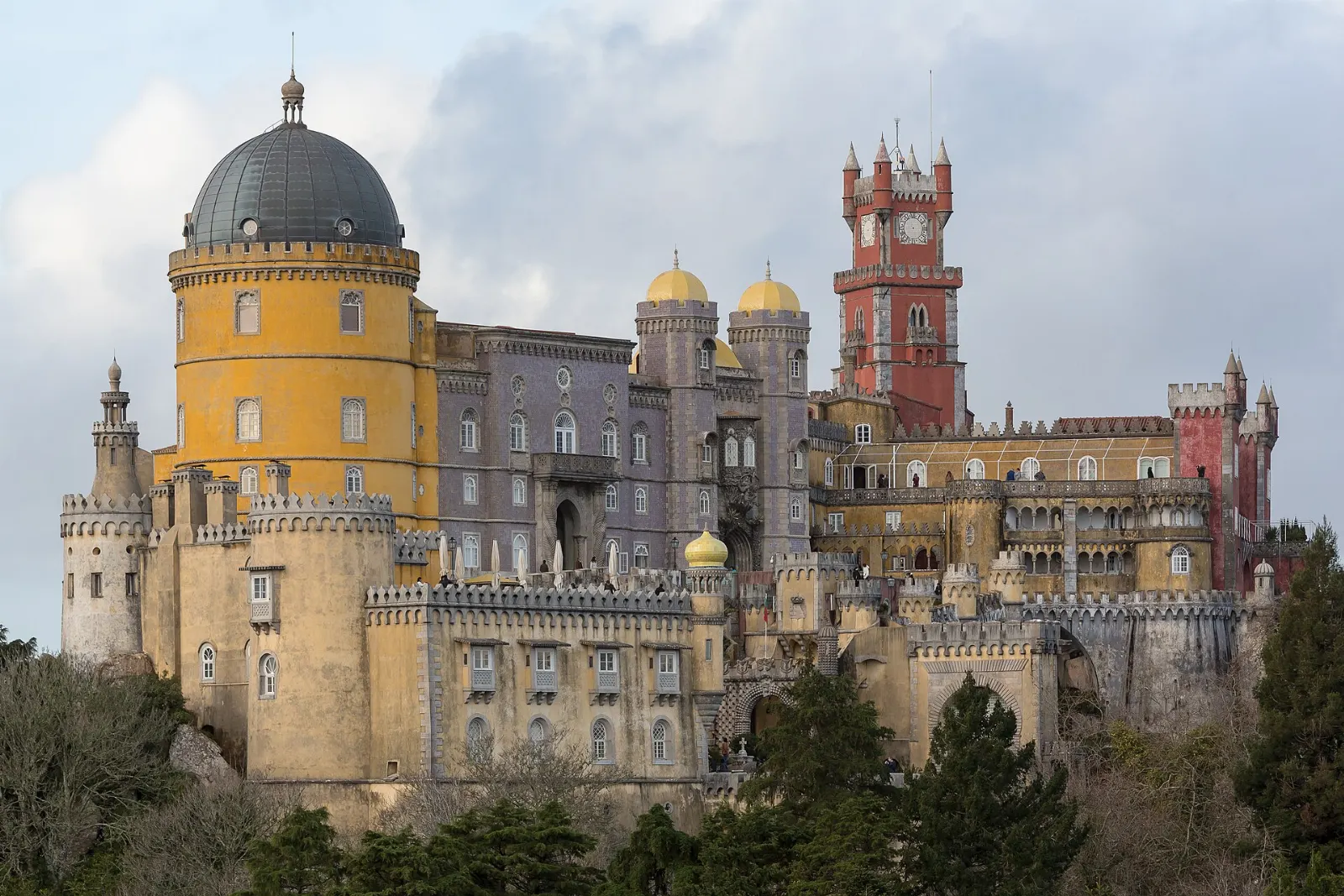
Take the train to Sintra for Pena Palace, the Moorish Castle and the gardens of the hill town, or choose Cascais for beaches and a seaside promenade.
Pena Palace sits high in the Sintra hills, part of the Cultural Landscape of Sintra World Heritage Site. Photo: CEphoto, Uwe Aranas, Wikimedia Commons, CC BY-SA 3.0
Practical tips
Book timed tickets for Jerónimos, Pena Palace and other headline sights in advance during spring and summer.
Many museums and monuments close on Mondays, so plan Belém for another day.
Wear comfortable shoes with good grip; the hills and smooth cobblestones are tiring and slippery.
Watch your belongings on Tram 28, in Rossio and at busy viewpoints, where pickpockets are active.
Lisbon's tourist pass bundles public transport with museum entry; compare it with your plans before buying.
Bread, olives and appetizers placed on the table are not free; send them back if you do not want them.