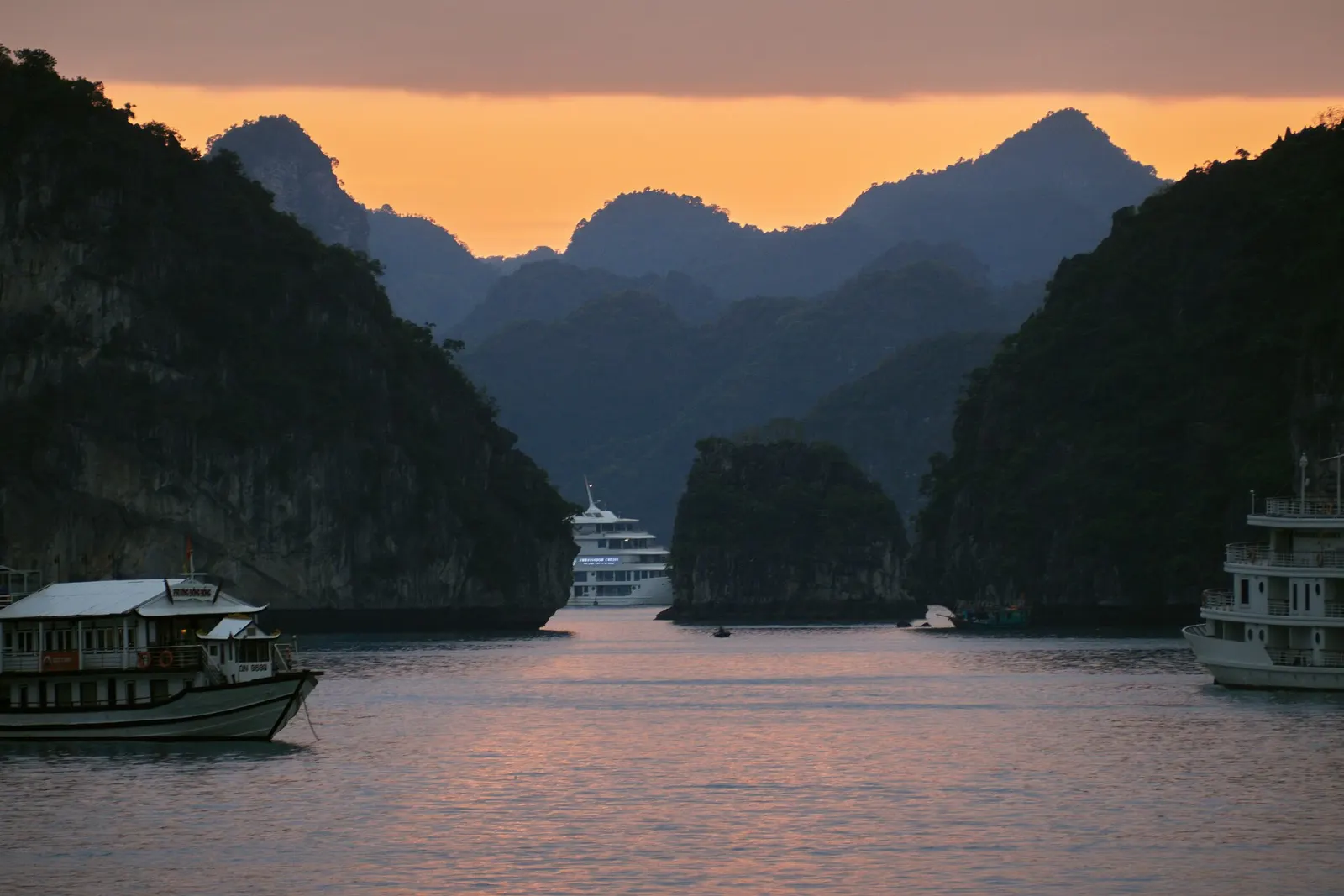
Ha Long Bay is the place most travelers picture when they think of northern Vietnam: a wide gulf of jade water broken by close to two thousand limestone towers, many topped with dense green scrub and hollowed out by caves.
AT A GLANCE
Best time
March to May and September to November for mild weather; watch for storms from June to October.
How long
One night on a cruise is the minimum; two nights lets you reach Lan Ha or Bai Tu Long Bay.
Getting there
About two and a half hours by road from Hanoi, or fly into Van Don International Airport.
Why visit Ha Long Bay
The appeal is the scale and the stillness. From the deck of a boat the islands seem to stack behind one another in fading layers of gray and green, and the scene shifts constantly as you glide between them.
The karst itself tells a long geological story. Millions of years of rain, sea level change and erosion carved the limestone into pillars, arches and enormous caves filled with stalactites.
Beyond the scenery you can kayak through sea tunnels into hidden lagoons, swim from small beaches, hike in Cat Ba National Park, and learn about the fishing communities that lived on floating houses here for generations.
The classic Ha Long Bay route: caves and islands
Most day boats and many overnight cruises leaving from Tuan Chau or the international cruise port at Bai Chay follow the central part of the bay. This is the busiest area, but it holds several of the best known sights, and a good cruise schedules them to avoid the peak crowds.
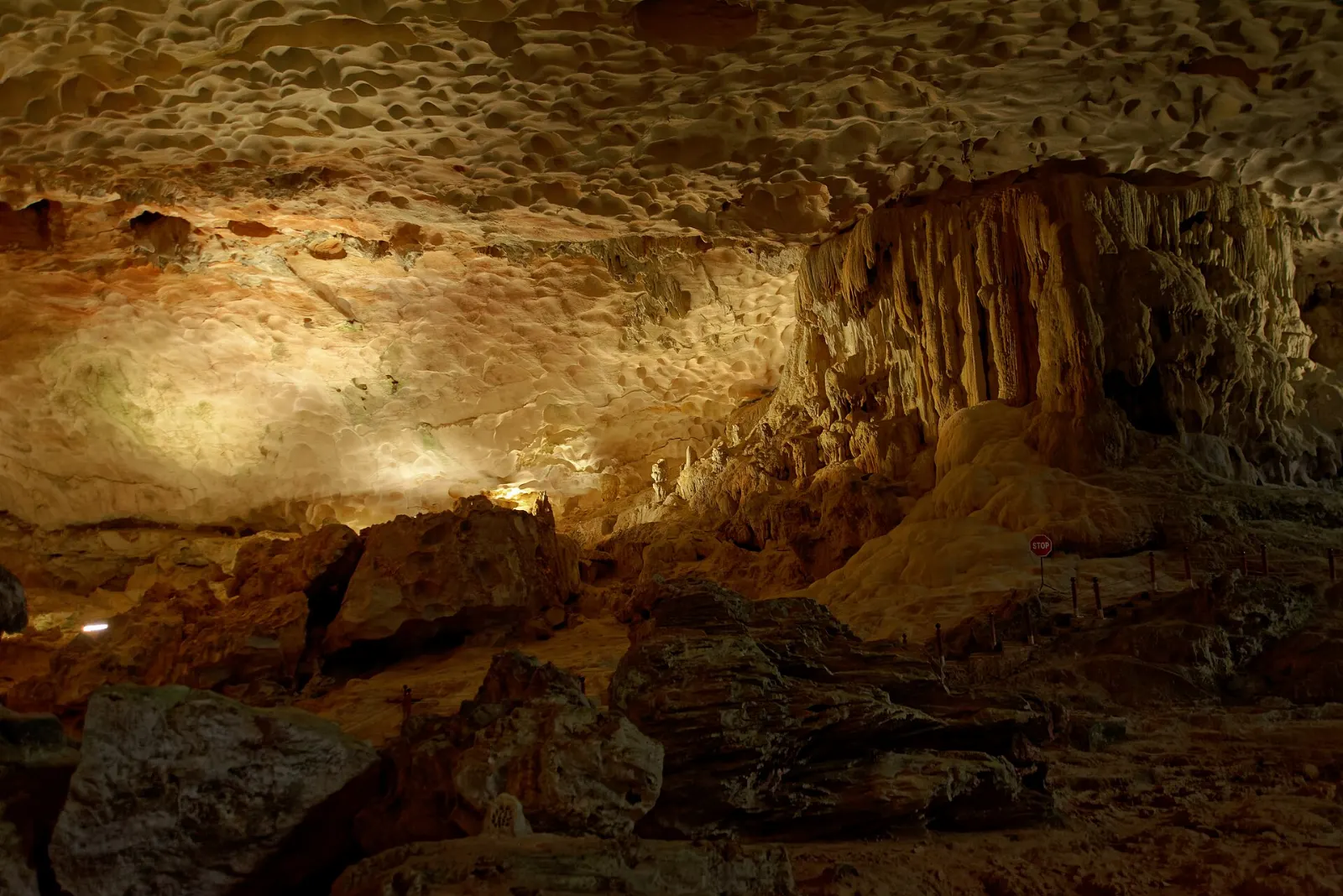
Sung Sot Cave
Sung Sot, usually translated as Surprise Cave, sits high on Bo Hon Island and is one of the largest caves you can visit in the bay.
Ti Top Island
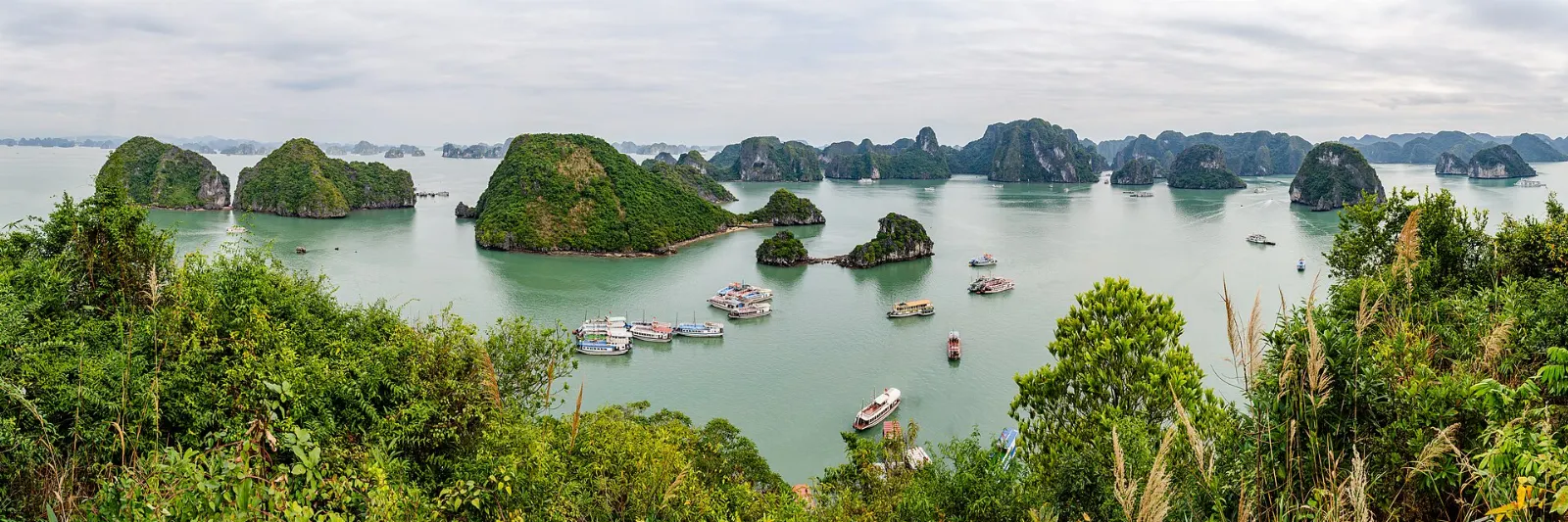
Ti Top is a small island with a crescent of sand and a steep stairway of several hundred steps leading to a lookout pavilion at the summit. From the top you get one of the most complete panoramas of the bay, with boats scattered across the water below and islands fading toward the horizon.
Hon Trong Mai, the Fighting Cock Islets
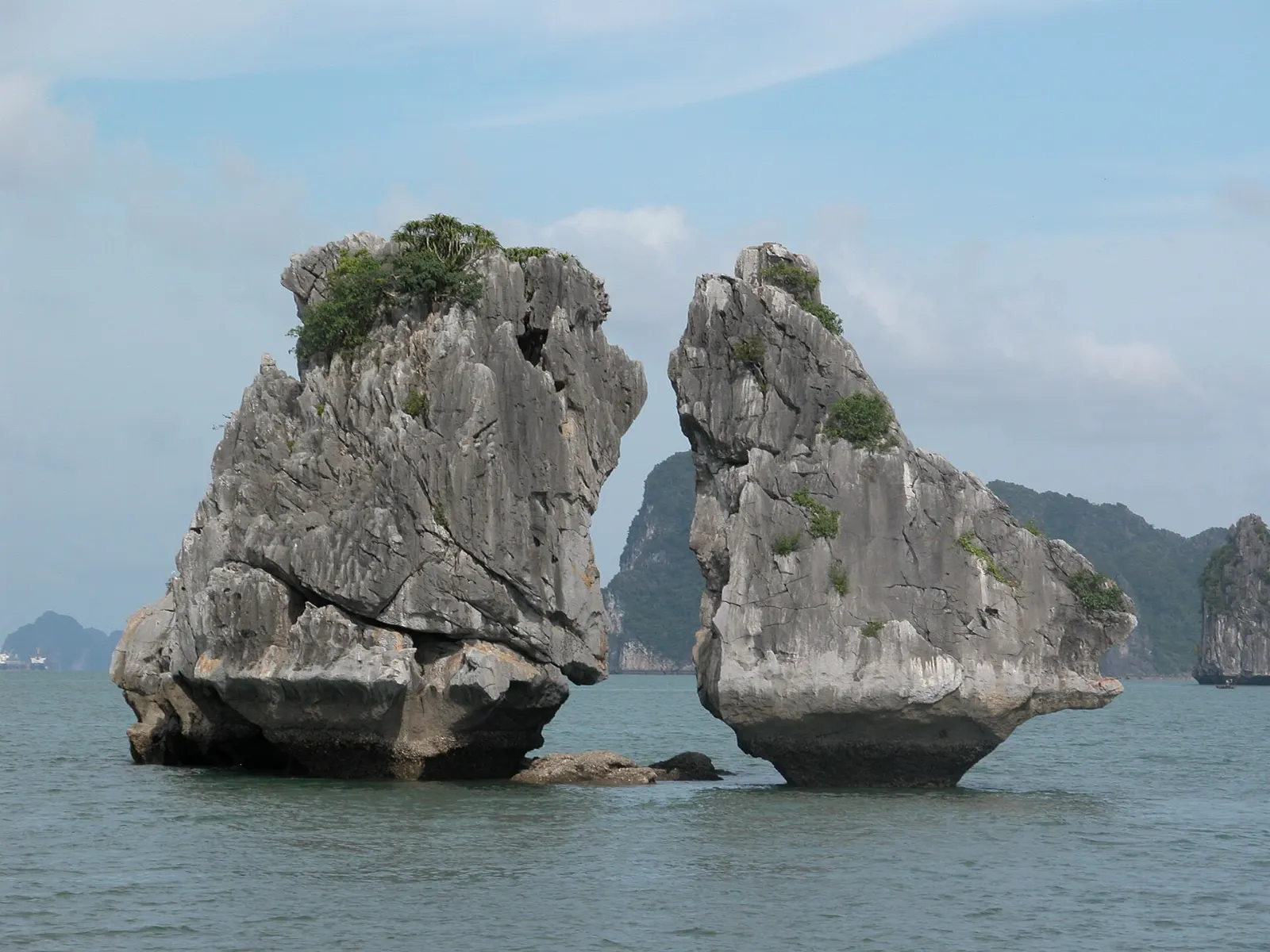
Two slender rocks rising from the water and leaning toward each other form Hon Trong Mai, often called the Fighting Cock or Kissing Rocks. They appear on postcards and on one of Vietnam's banknotes, and almost every cruise in the central bay passes close by for photographs.
Luon Cave and Thien Cung Cave
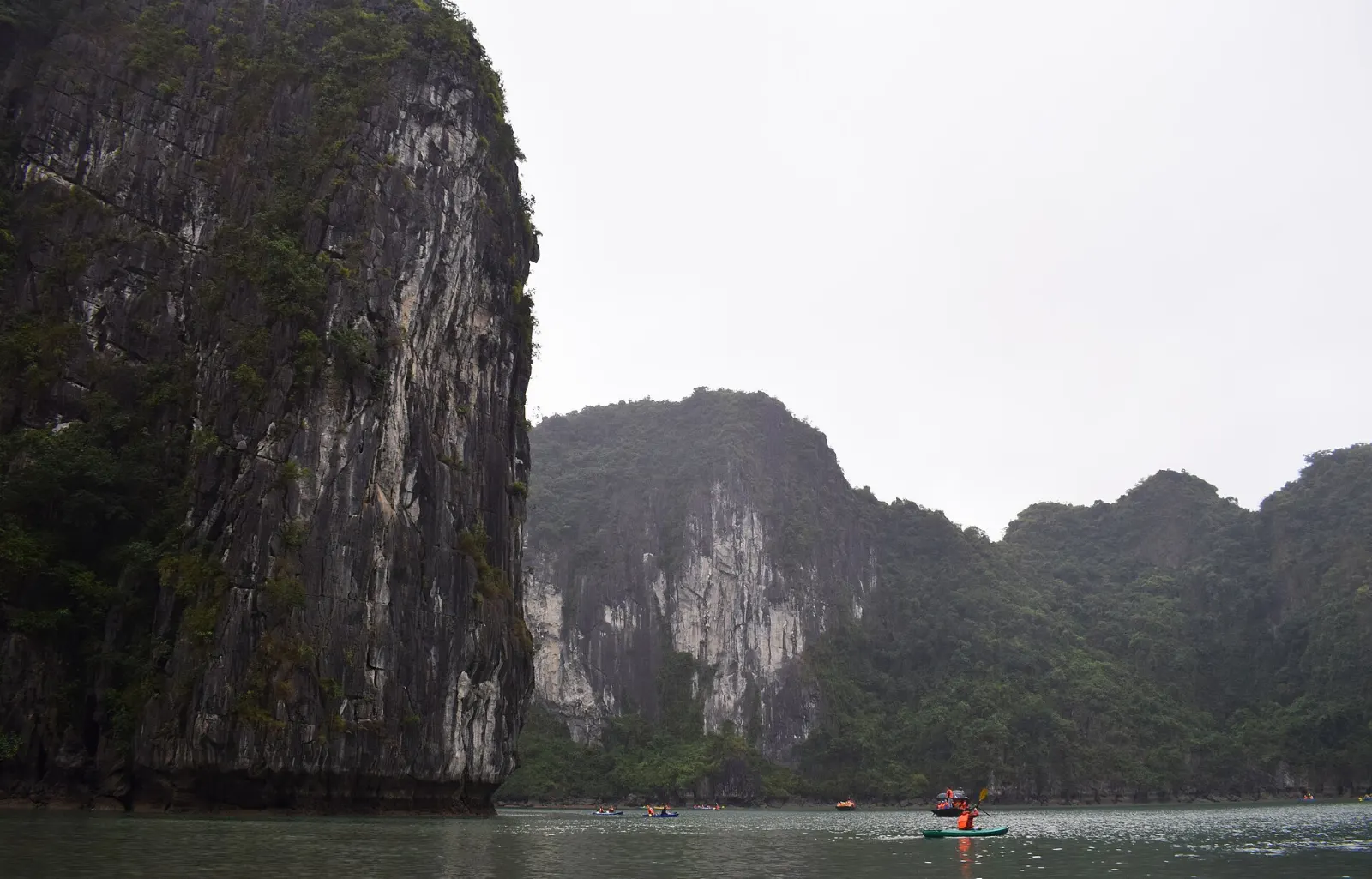
Luon Cave is a low tunnel through the base of an island that opens into a lagoon completely enclosed by cliffs. You enter by kayak or by a rowed bamboo boat, and inside the water is calm and the only sounds are birds and the occasional monkey moving in the trees.
Lan Ha Bay, Cat Ba and Bai Tu Long: the quieter bays
If you have more than one night, or if crowds put you off, consider the neighboring bays. The scenery is just as dramatic, the boat traffic is lighter, and the activities feel less scripted.
Lan Ha Bay
Lan Ha Bay lies to the south, off the eastern shore of Cat Ba Island, and is now part of the same World Heritage listing. Its islands are generally smaller and greener, with many sandy coves and shallow channels that are ideal for kayaking and swimming.
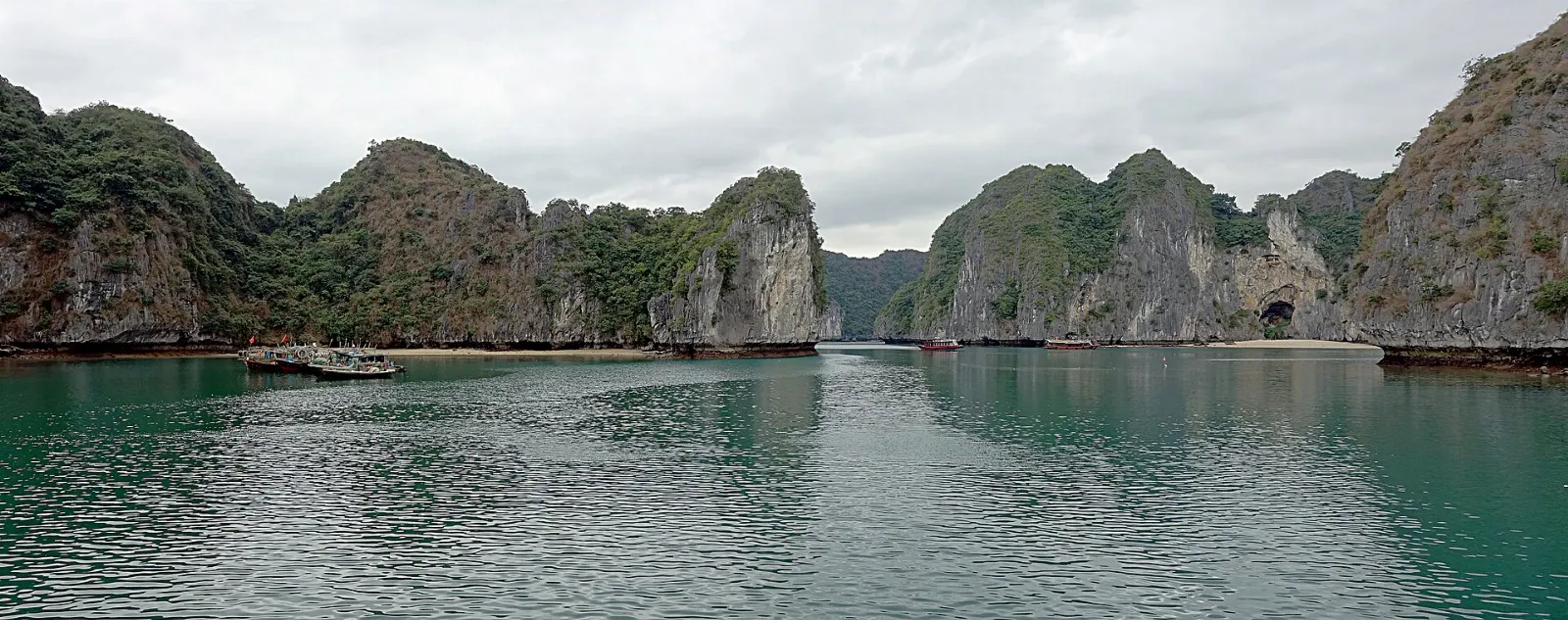
Cat Ba Island and Cat Ba National Park
Cat Ba is the largest island in the archipelago and has its own small town, beaches and a national park covering much of its interior. In the park you can hike forest trails to lookouts such as Ngu Lam Peak, and the island is home to the Cat Ba langur, one of the rarest primates in the world.
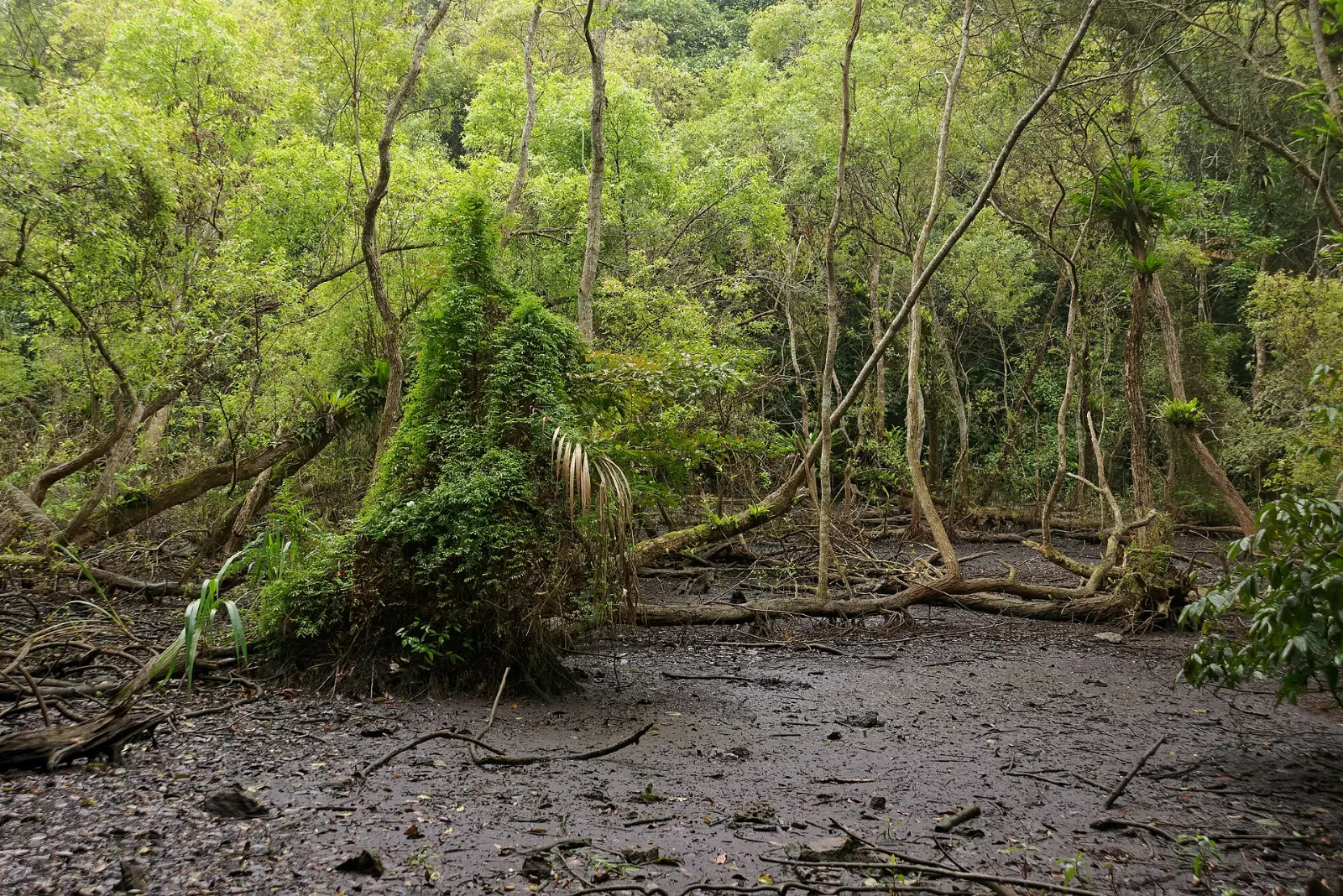
Bai Tu Long Bay
Bai Tu Long Bay extends northeast of Ha Long Bay toward Van Don and has the same limestone character with far fewer boats. Cruises here visit places such as Thien Canh Son Cave and Vung Vieng fishing village, where you can be rowed between floating homes.
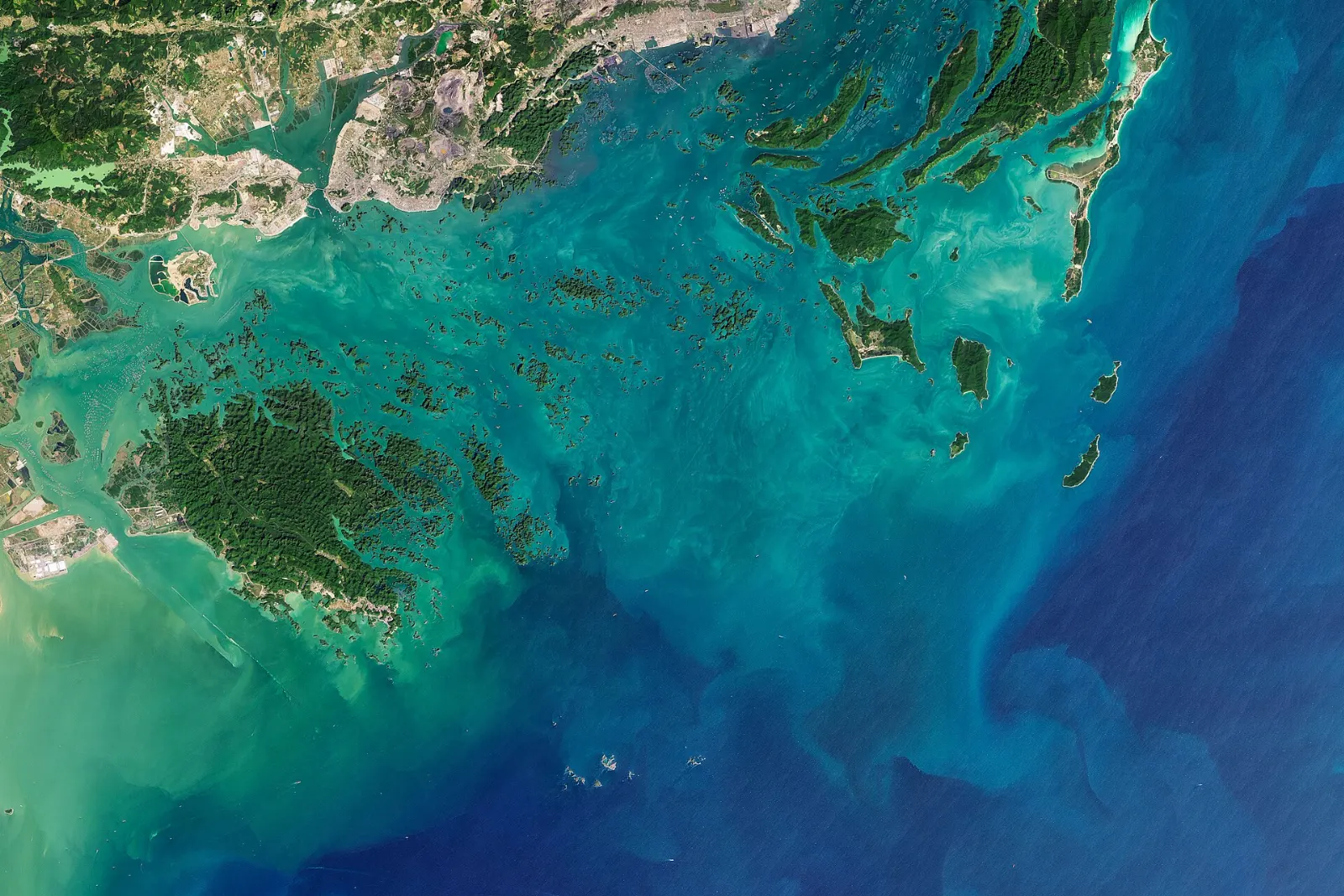
Ha Long City and the shoreline
Ha Long City wraps around the bay and is split by a narrow channel into the Bai Chay side, with most hotels and the cruise port, and the Hon Gai side, the older commercial center.
Bai Chay and the cable car
The Bai Chay waterfront has a long promenade, a beach and the Sun World Ha Long complex, where a cable car crosses the water to a hilltop with a large Ferris wheel and views back over the bay.
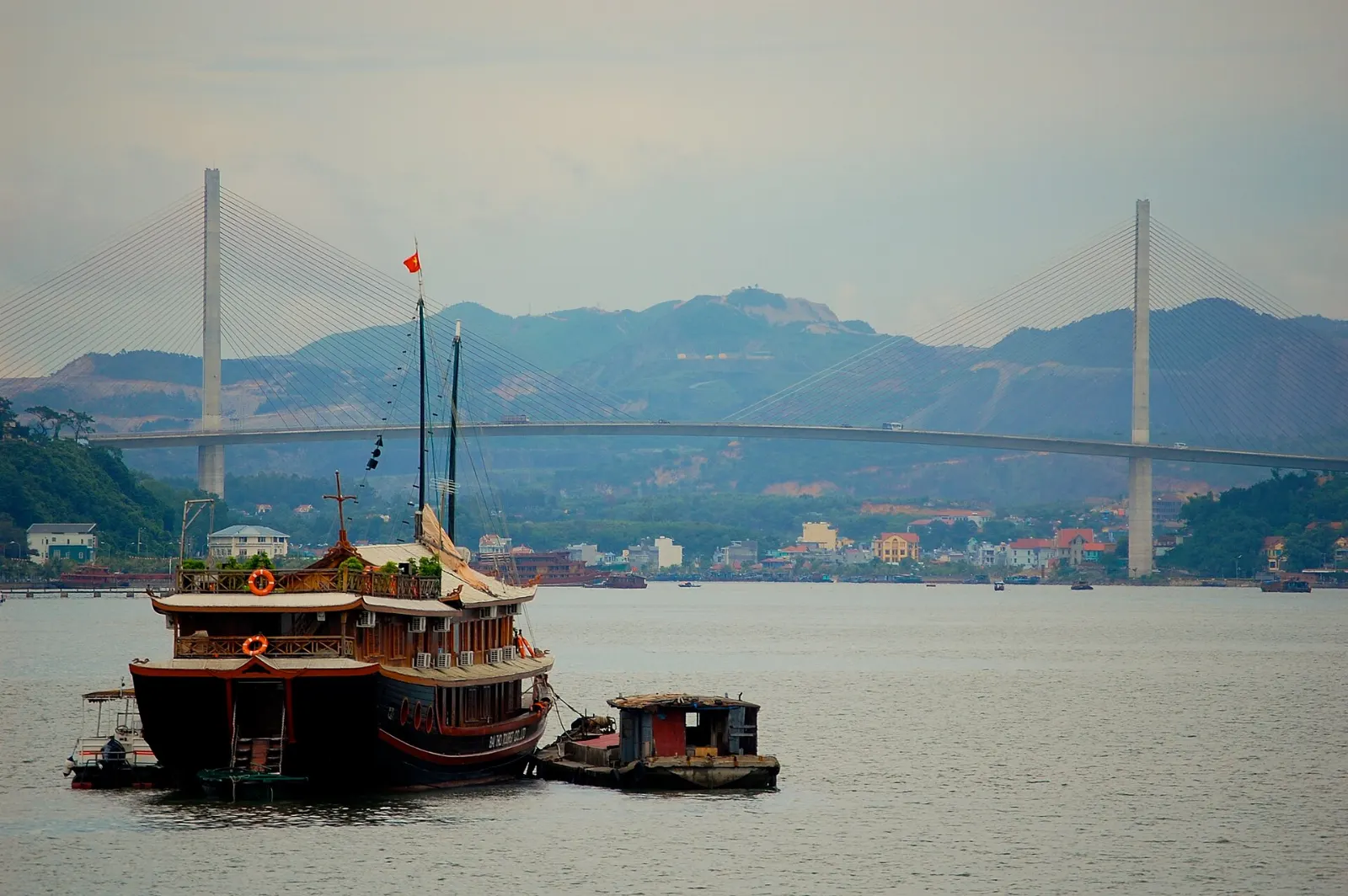
Quang Ninh Museum
On the Hon Gai side, the Quang Ninh Museum sits in a striking black glass building by the water and covers the geology of the bay, the region's coal mining history and local culture.
Cua Van floating village
Cua Van was once one of the largest floating fishing villages in the bay. Most residents were resettled on the mainland in the 2010s, but some houses remain and a small cultural center explains how families lived, fished and farmed pearls on the water.
Food and local flavors
Seafood is the reason to eat well in Ha Long. Look for squid, which appears grilled, steamed or as cha muc, a fried squid cake pounded by hand and a specialty of Quang Ninh.
Overnight cruises include meals, often a mix of Vietnamese and international dishes, and some offer cooking classes where you learn to roll fresh spring rolls on deck.
Popular dishes to try in Ha Long Bay


Where to stay
On a cruise boat. For most visitors the best place to sleep is on the water.
Bai Chay. The Bai Chay side of Ha Long City has the greatest choice of hotels, close to the cruise port, the promenade and the cable car.
Tuan Chau Island. Connected to the mainland by a causeway, Tuan Chau has resort-style accommodation near the main cruise marina, which is convenient for early departures.
Cat Ba Town. Independent travelers who want hiking, kayaking and a more backpacker atmosphere often base themselves on Cat Ba, which is the natural gateway to Lan Ha Bay.
Where to stay in Ha Long Bay


Best time to visit
Spring, from March to May, brings warm days, calmer seas and good visibility, though early spring can still be misty.
Summer, from June to August, is hot and humid and it is the busiest period for domestic tourism, but it is also the best season for swimming.
Winter, from December to February, is cool and often gray, with fog that softens the views.
Getting there and getting around
Most visitors come from Hanoi. The Hanoi to Ha Long expressway has cut the drive to around two and a half hours from the Old Quarter, depending on traffic.
Cruises depart mainly from Tuan Chau Marina and the international cruise port at Bai Chay, while many Lan Ha Bay boats leave from piers on the Hai Phong side or from Cat Ba.
On the water you need a licensed boat; you cannot hire small craft to roam the bay on your own.
A suggested itinerary
First day
Leave Hanoi early by shuttle and board your boat around midday. Have lunch as you cruise into the bay, then visit Sung Sot Cave or Luon Cave in the afternoon and paddle a kayak if conditions allow.
Second day
Join the sunrise tai chi session that many boats offer, then climb Ti Top Island before the day boats arrive and swim from its beach.
Third day
Disembark on Cat Ba and hike in Cat Ba National Park, climb to Cannon Fort for the view over Lan Ha Bay, and finish with a seafood dinner on the harbor front before heading back to Hanoi the next morning.
Practical tips
- Book cruises with established operators, read recent reviews, and confirm exactly which route, caves and activities are included.
- Check your departure pier: Tuan Chau, Bai Chay, Hai Phong and Cat Ba are far apart, and transfers are planned around the pier.
- During typhoon season keep a spare day in your plans, since the port authority can cancel all departures at short notice.
- Pack shoes with good grip for wet cave paths and island stairs, plus a swimsuit, sunscreen and a hat.
- Bring a light jacket from November to March, when evenings on deck are cool and damp.
- Carry some Vietnamese dong in cash for small purchases, tips and drinks bought from floating vendors.