WiserMap — Choose wisely. Connect locally.Choose wisely. Connect locally.Add your business
Cotswolds, England · Travel guide

Cotswolds England Honey Stone Villages and Castle Combe

The Cotswolds is not a single town but a sweep of rolling limestone hills running roughly ninety miles from near Stratford-upon-Avon down to just beyond Bath. Spread across Gloucestershire, Oxfordshire and slices of four other counties, it is a landscape of honey-colored stone villages, medieval wool churches, dry-stone walls, beech woods and sheep-dotted valleys.

By WiserMap TravelUpdated October 2026 9 places10 min read
FacebookXLinkedIn

Because the region is large and the villages small, the key to a good trip is choosing a base and grouping nearby places together.

At a glance Cotswolds
  1. Best timeLate April to June and September to October for gardens, walking and lighter crowds.
  2. How longThree to four days to see the north and south Cotswolds without rushing.
  3. Getting thereTrains from London Paddington to Moreton-in-Marsh or Kemble, then a car or local bus.

Why visit the Cotswolds

In the Middle Ages the Cotswolds grew rich on wool, and merchants poured that money into grand churches, market halls and handsome houses built from the local oolitic limestone.

Beyond the postcard views, the Cotswolds offers serious substance: some of England's finest gardens, a castle where a queen is buried, Roman mosaics, Arts and Crafts heritage in Chipping Campden and Broadway, and the Cotswold Way, a national trail of about a hundred miles along the western escarpment.

The central villages: Bibury, Bourton and the Slaughters

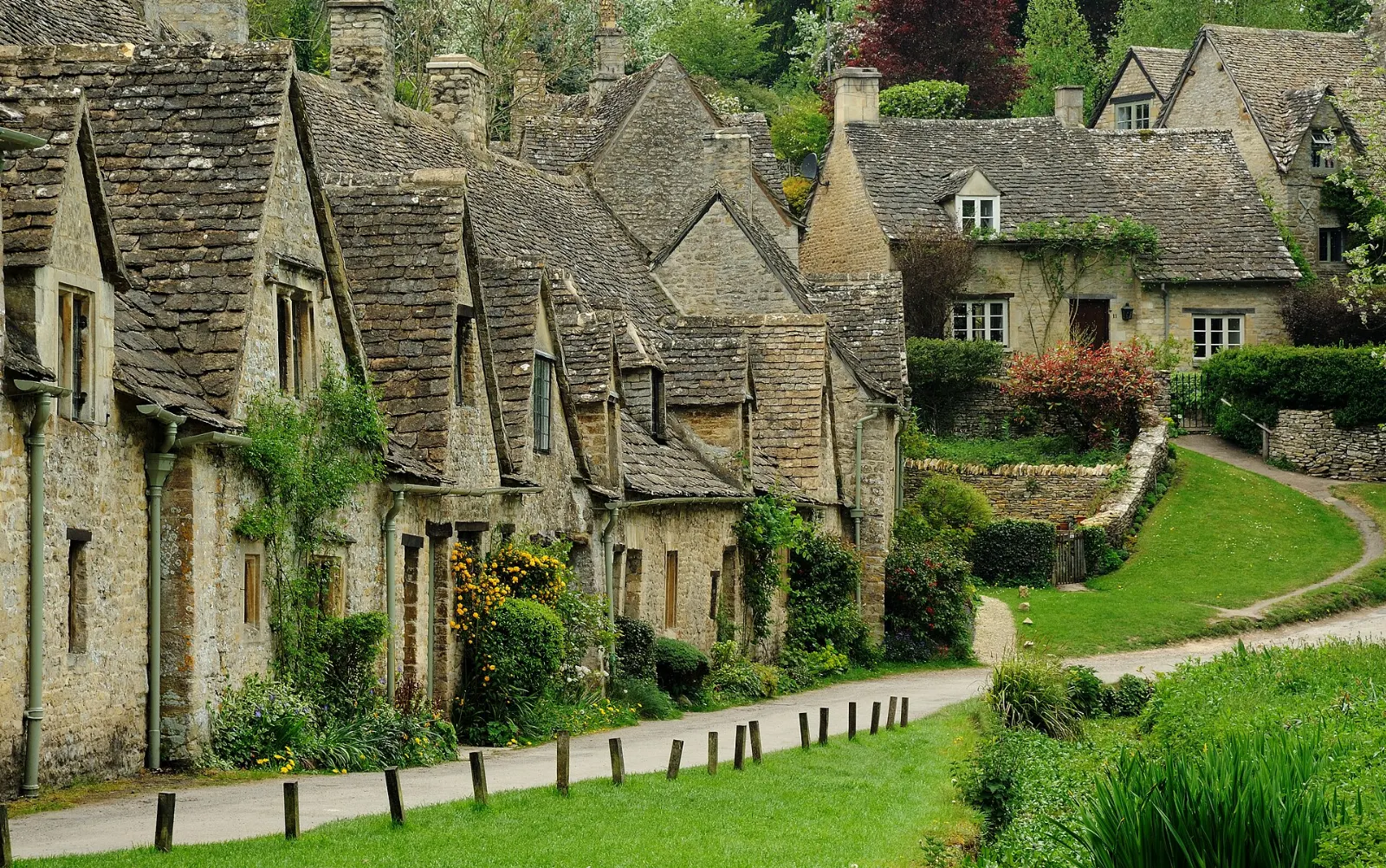
Bibury and Arlington Row

Bibury sits on the River Coln about six miles northeast of Cirencester. Its star is Arlington Row, a terrace of steep-roofed cottages built in 1380 as a monastic wool store and converted into weavers' homes in the seventeenth century.

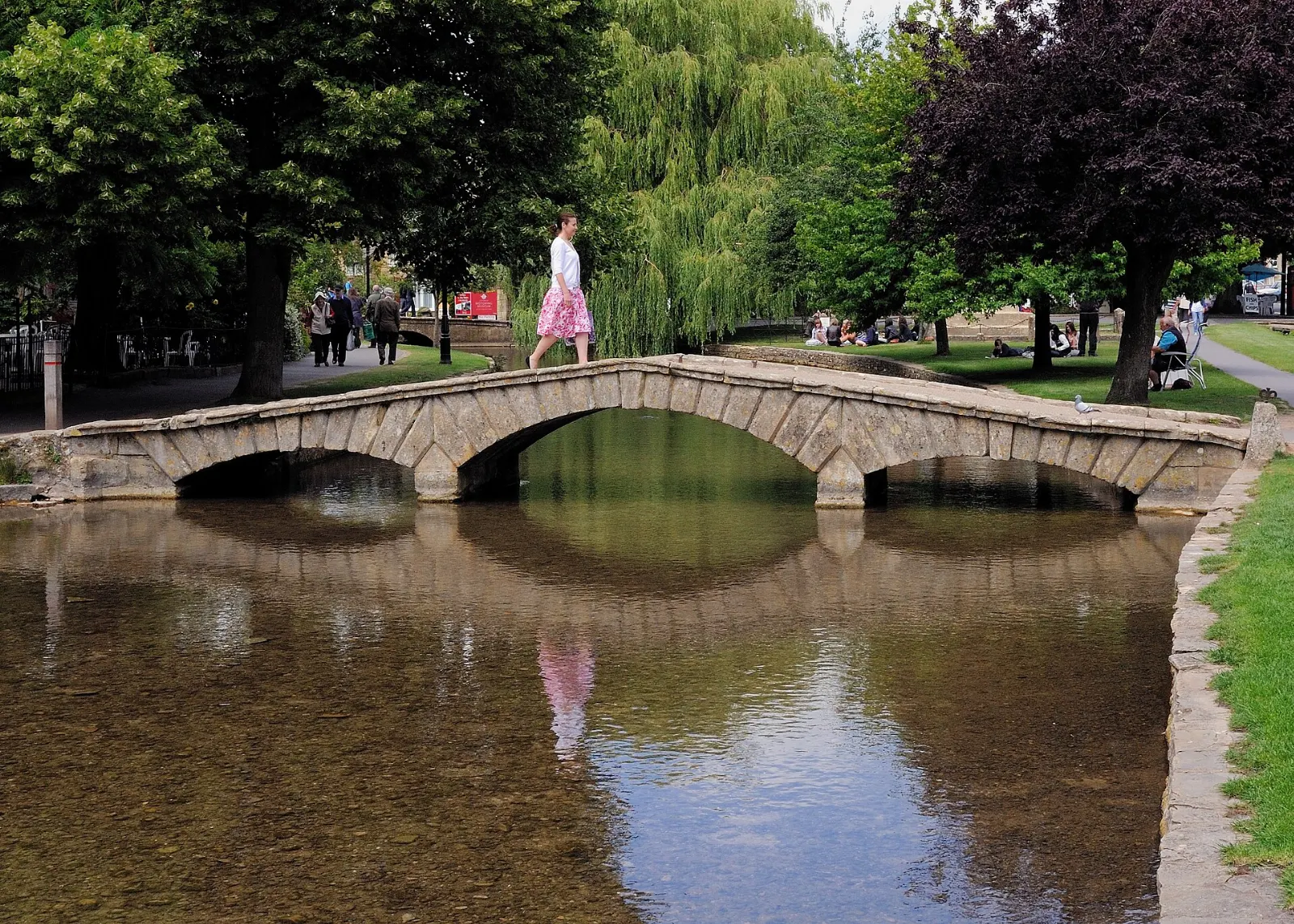
Low stone footbridges crossing the shallow River Windrush in Bourton-on-the-Water, Cotswolds, England

Bourton-on-the-Water

Bourton is the busiest village in the Cotswolds for good reason: the shallow River Windrush flows right through the center under a series of low arched stone bridges, with lawns on either bank for picnics. The Model Village recreates Bourton itself in miniature stone, and there are motor and bird attractions nearby for families.

The River Windrush runs through the center of Bourton-on-the-Water beneath a series of low stone bridges. Photo: Saffron Blaze, Wikimedia Commons, CC BY-SA 3.0
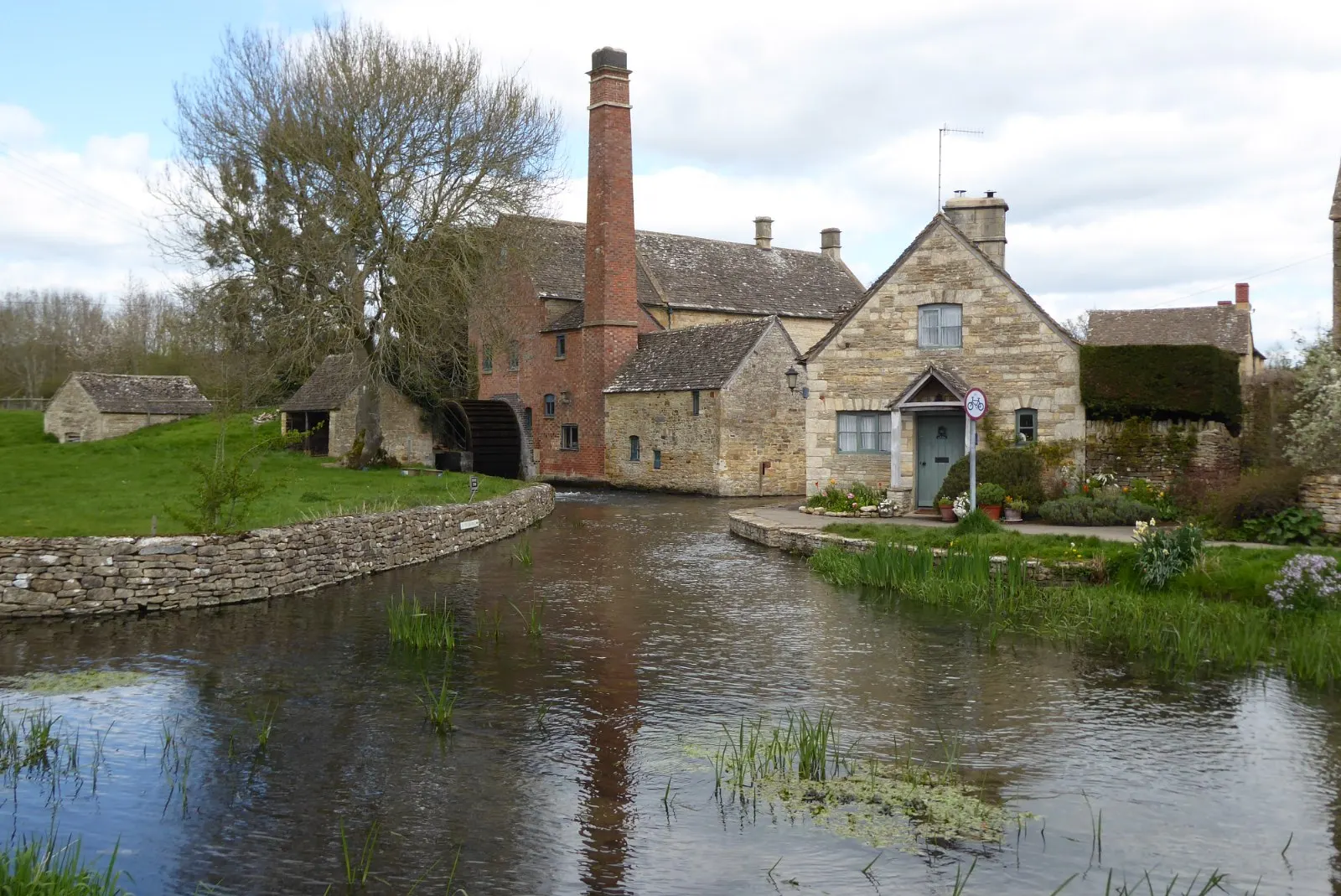
Brick water mill and stone cottages beside the River Eye in Lower Slaughter, Cotswolds, England

Lower Slaughter and Upper Slaughter

Just a mile or so from Bourton, the Slaughters are the quiet counterpoint. In Lower Slaughter the little River Eye runs past stone cottages to the Old Mill, and a level footpath follows the stream across meadows to Upper Slaughter, an even sleepier hamlet.

The Old Mill stands beside the River Eye at the western end of Lower Slaughter. Photo: Philip Halling , Wikimedia Commons, CC BY-SA 2.0

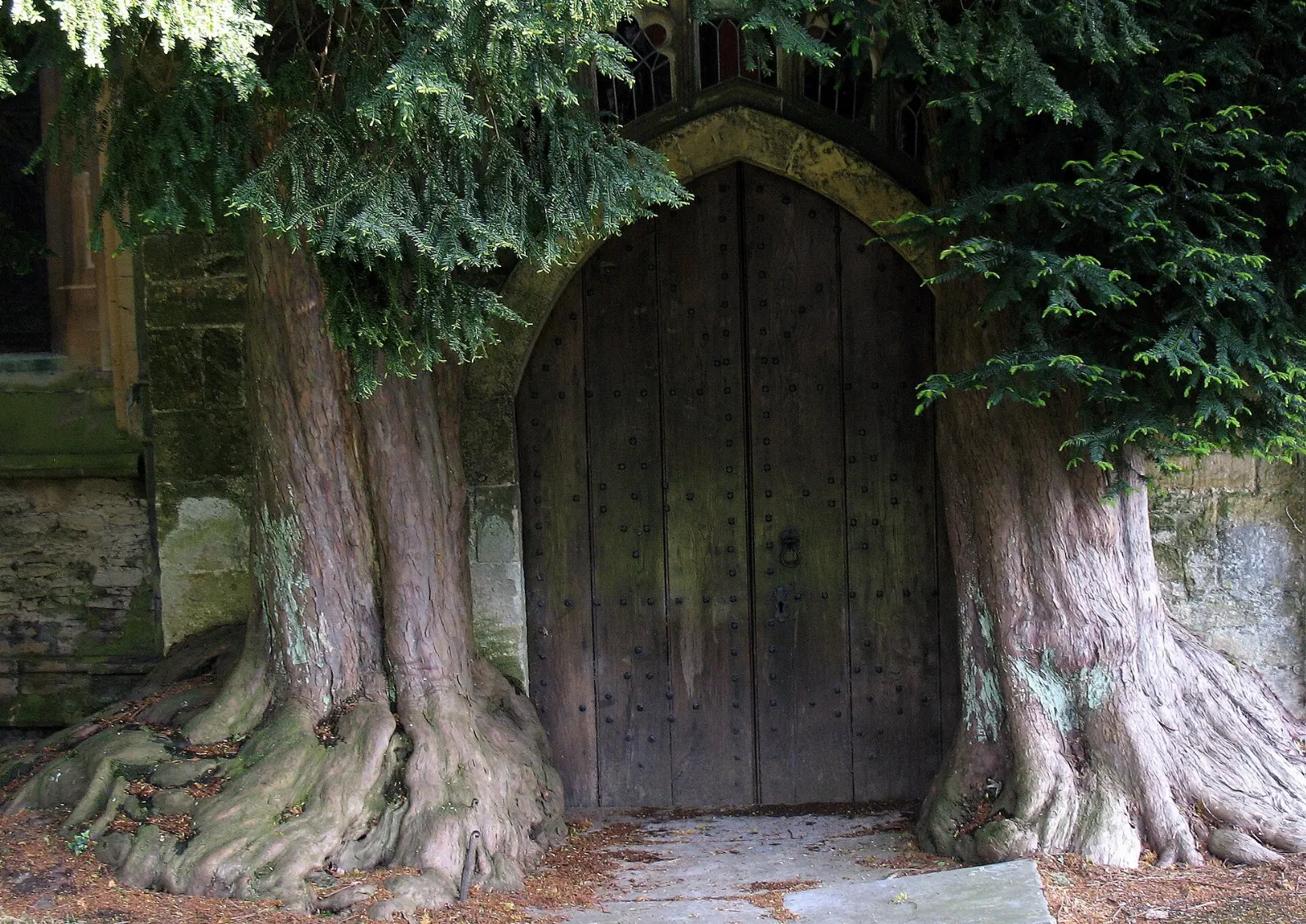
Wooden church door framed by two ancient yew trees at St Edward's Church in Stow-on-the-Wold, Cotswolds, England

Stow-on-the-Wold

Perched on a hilltop where several old roads meet, Stow-on-the-Wold is one of the highest towns in the Cotswolds and was once a major sheep market. Today its large market square is lined with antique dealers, tearooms and old inns.

The north door of St Edward's Church in Stow-on-the-Wold is flanked by two old yew trees growing into the stonework. Photo: Spencer Means from New York City, USA, Wikimedia Commons, CC BY-SA 2.0

North Cotswolds: Chipping Campden, Broadway and gardens

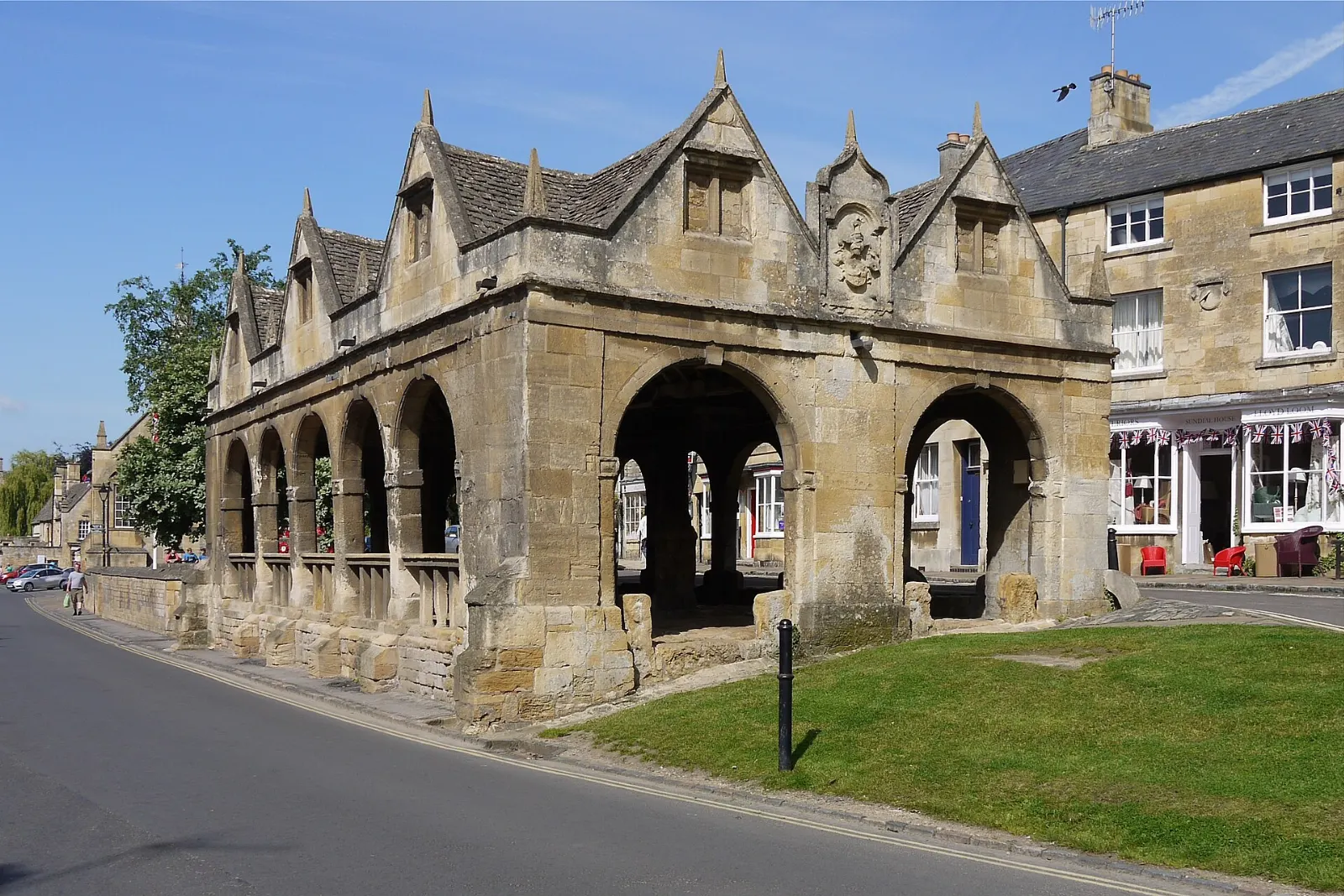
Arched seventeenth-century stone Market Hall on the High Street of Chipping Campden, Cotswolds, England

Chipping Campden

Chipping Campden has perhaps the finest High Street in the region, a gently curving terrace of buildings dating from the fourteenth to the seventeenth centuries. At its center stands the arched Market Hall, built in 1627 and now owned by the National Trust.

Chipping Campden's Market Hall was built by Sir Baptist Hicks in 1627 and now belongs to the National Trust. Photo: Mick, Wikimedia Commons, CC BY-SA 2.0

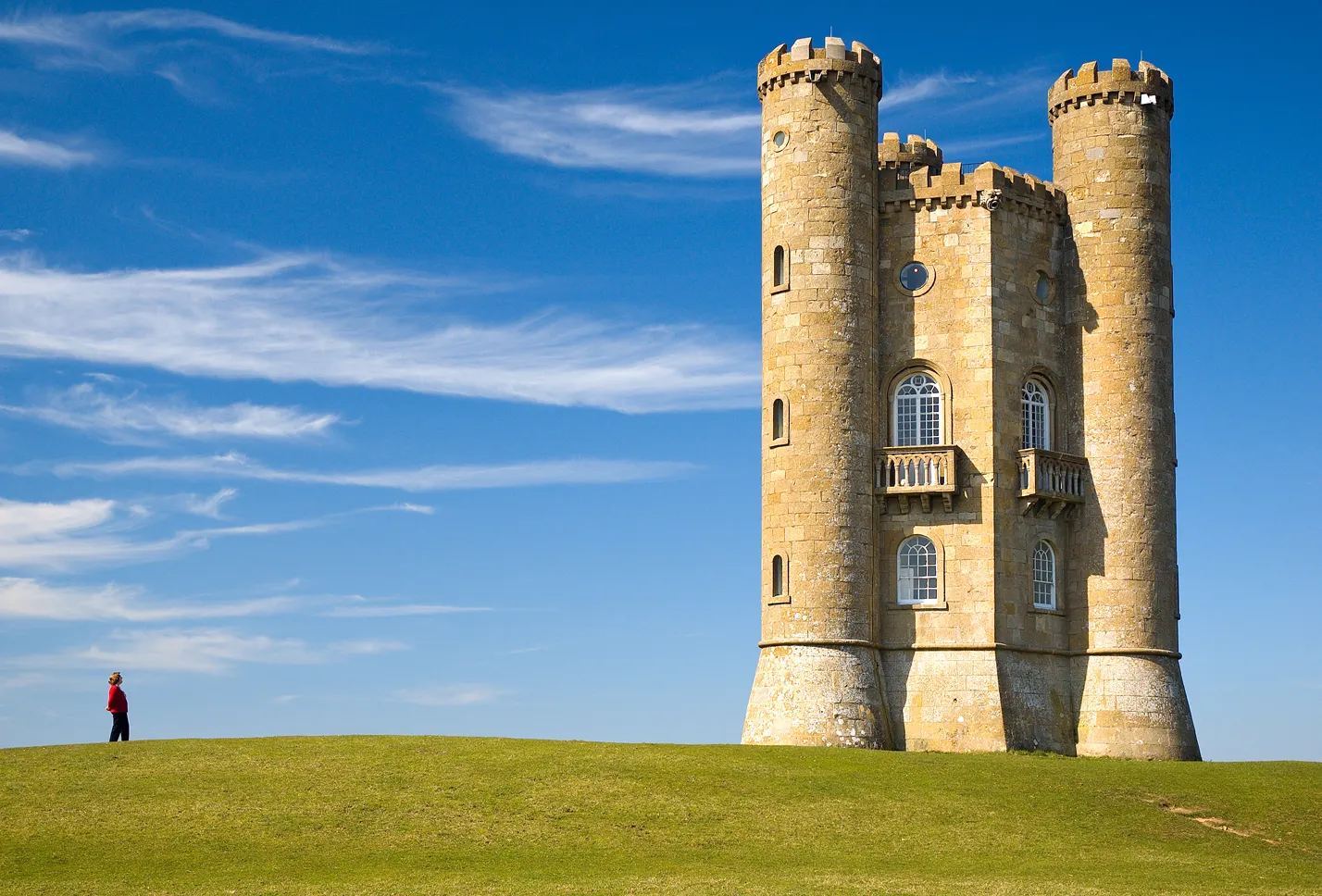
Hexagonal stone tower with turrets standing on the open summit of Broadway Hill, Cotswolds, England

Broadway and Broadway Tower

Broadway, just over the border in Worcestershire, has a broad grassy main street lined with stone shops and galleries and strong links to the Arts and Crafts movement. Above it, Broadway Tower stands on Broadway Hill, at about 1,024 feet the second-highest point of the Cotswolds.

Broadway Tower stands on Broadway Hill, the second-highest point of the Cotswolds. Photo: The author is Newton2 (cropped by Yummifruitbat), Wikimedia Commons, CC BY 2.5

Clipped hedges and colorful herbaceous borders in a garden room at Hidcote, Cotswolds, England

Hidcote Manor Garden

Near Chipping Campden, Hidcote is one of the most influential Arts and Crafts gardens in Britain. American-born Lawrence Johnston began laying it out in 1907 as a series of hedged garden rooms, each with its own character, from the Red Border to the Pillar Garden, and he gave it to the National Trust in 1948.

Hidcote Manor Garden is famous for its Arts and Crafts garden rooms laid out by Lawrence Johnston. Photo: Michael Garlick , Wikimedia Commons, CC BY-SA 2.0

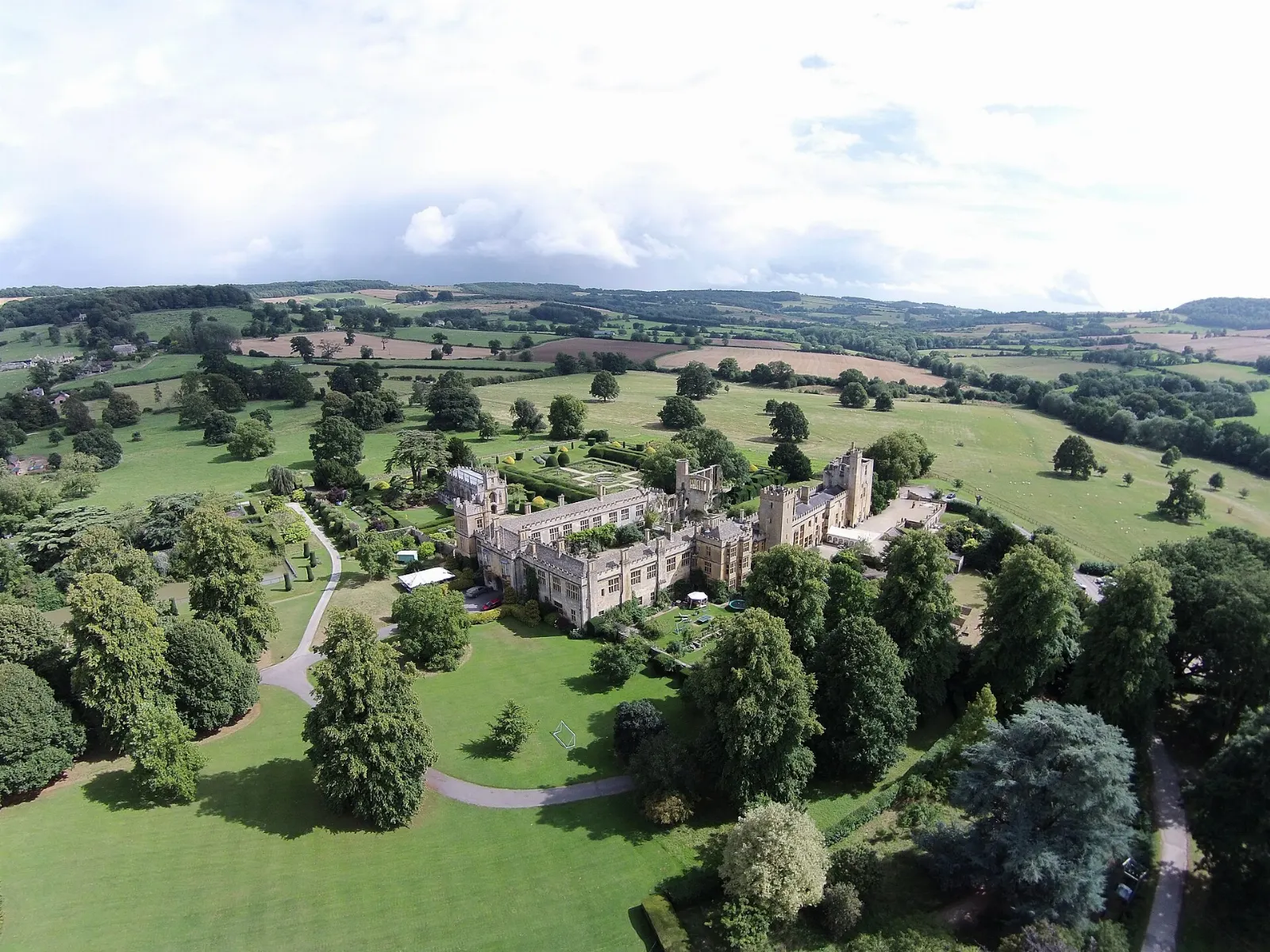
Honey-colored walls and gardens of Sudeley Castle near Winchcombe, Cotswolds, England

Sudeley Castle and Winchcombe

Outside the old market town of Winchcombe, Sudeley Castle dates from the 1440s and has royal connections running from Richard III to Elizabeth I. Catherine Parr, Henry VIII's sixth wife, lived here after the king's death and is buried in the castle church. Visitors explore exhibitions, ruins left from the Civil War siege and around ten gardens, including a celebrated rose-filled Queen's Garden.

Sudeley Castle near Winchcombe is the burial place of Catherine Parr, the sixth wife of Henry VIII. Photo: Wdejager, Wikimedia Commons, CC BY-SA 4.0

South Cotswolds: Roman sites, Cirencester and Castle Combe

Cirencester

Known as Corinium in Roman times, when it was one of the largest towns in Britain, Cirencester is the unofficial capital of the southern Cotswolds.

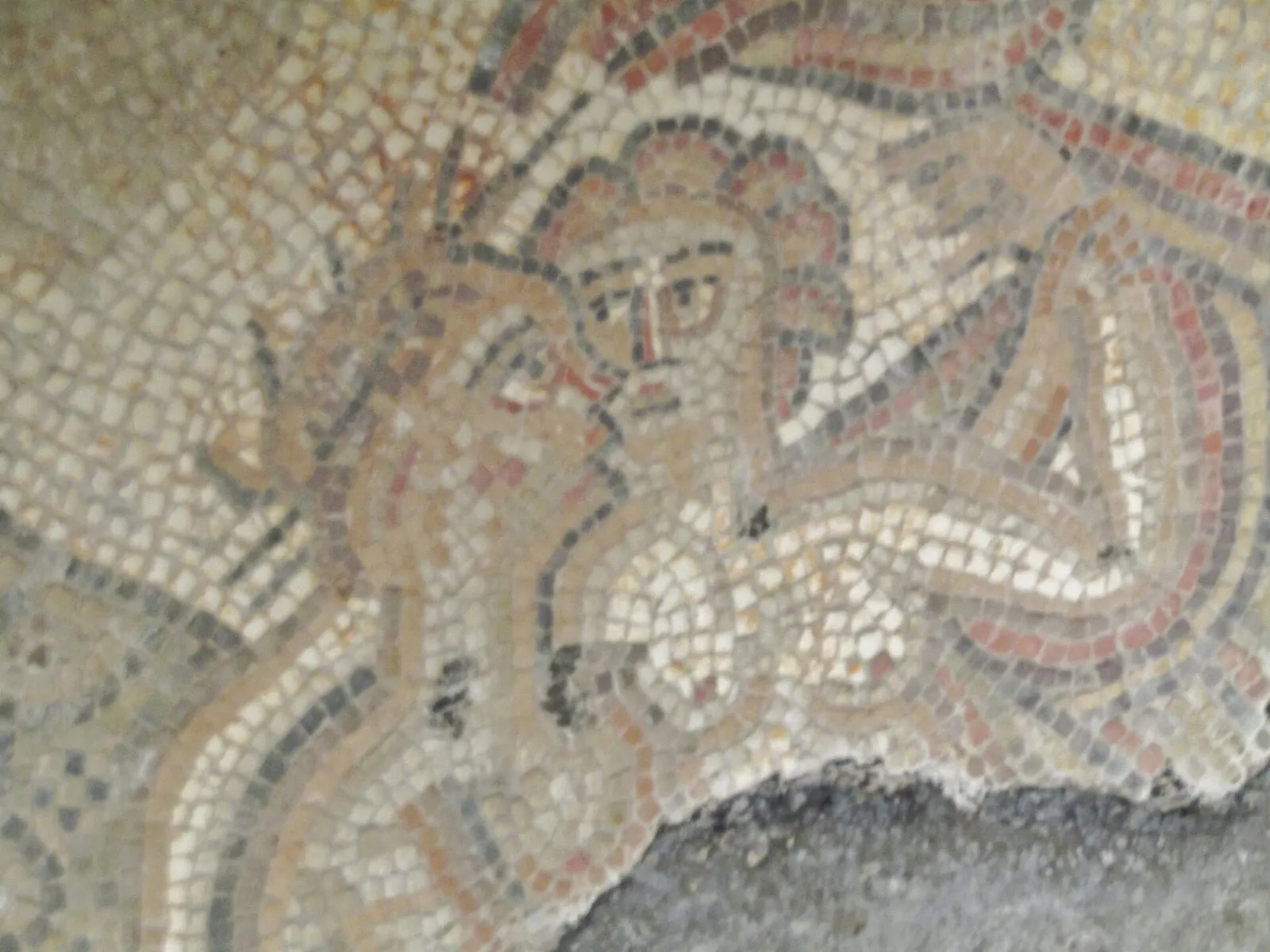
Fourth-century Roman floor mosaic preserved at Chedworth Roman Villa, Cotswolds, England

Chedworth Roman Villa

Hidden in a wooded valley near the River Coln, Chedworth is one of the largest Roman villas in Britain, run by the National Trust. A modern cover building protects fourth-century mosaics, bath suites and an underfloor heating system, and walkways let you look down on them.

Chedworth Roman Villa preserves fourth-century mosaics in a wooded valley near the River Coln. Photo: Colin Smith , Wikimedia Commons, CC BY-SA 2.0

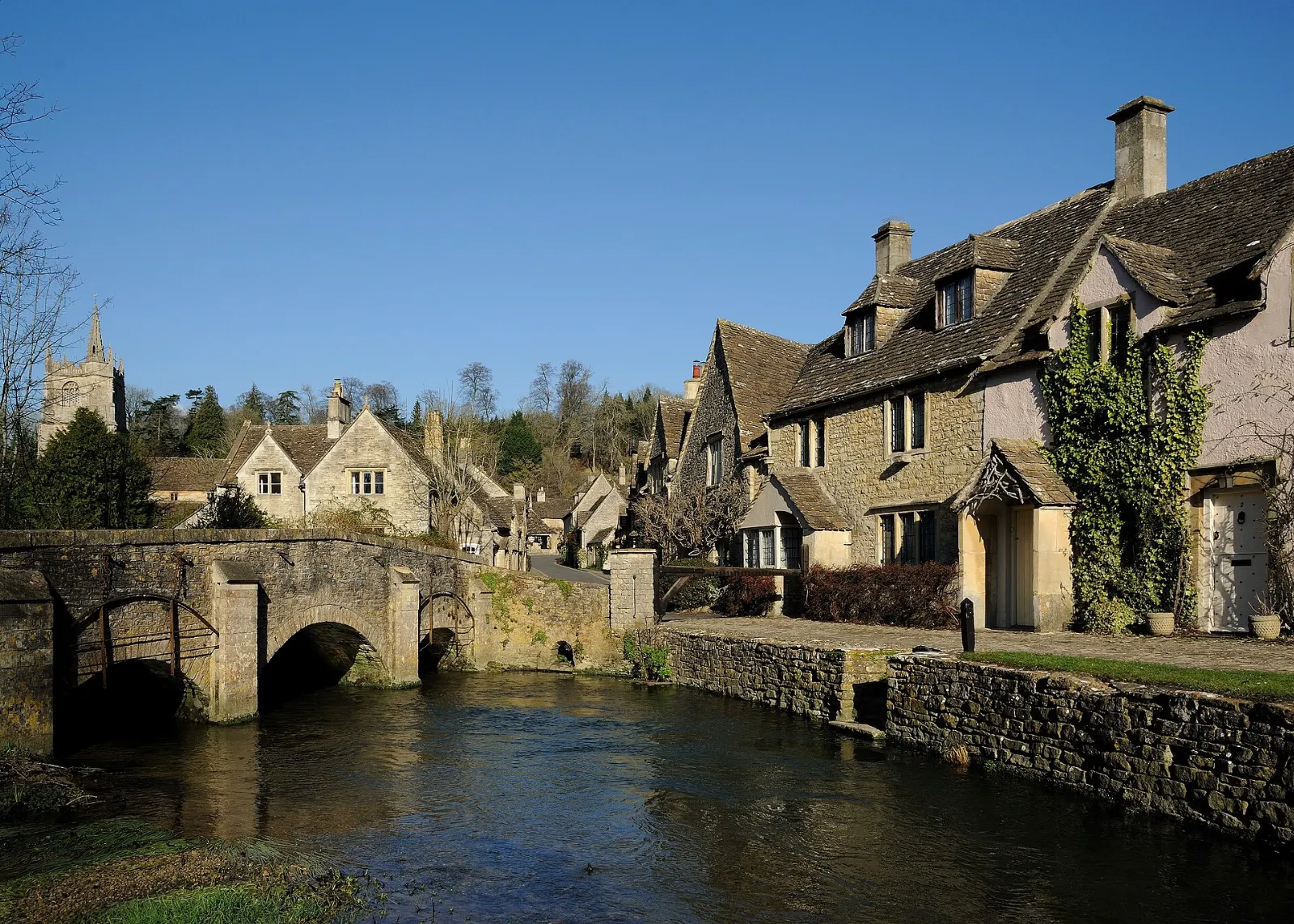
Stone cottages and a bridge over the By Brook in Castle Combe, Cotswolds, England

Castle Combe

In Wiltshire, about ten miles northeast of Bath, Castle Combe lies in the valley of the By Brook. No new houses have been built in its historic center since around 1600, and its stone cottages, medieval market cross and little bridge have made it a favorite film location.

No new houses have been built in the historic center of Castle Combe since around 1600. Photo: Saffron Blaze, Wikimedia Commons, CC BY-SA 3.0
Food and local flavors

The Cotswolds has become one of England's best food regions, built on its farms.

Village pubs are a highlight, many of them centuries old with low beams and open fires, serving Sunday roasts and local ales from long-established breweries such as Hook Norton in north Oxfordshire.

Popular dishes to try in Cotswolds

Double Gloucester in Cotswolds, England
Double Gloucester Look for Gloucester Old Spot pork, rare-breed sausages and Cotswold lamb on pub menus, along with Single and Double Gloucester cheeses, the latter famous for the annual cheese…Photo: Pedro Ribeiro Simões from Lisboa, Portugal, Wikimedia Commons, CC BY 2.0
Sunday roast in Cotswolds, England
Sunday roast Village pubs are a highlight, many of them centuries old with low beams and open fires, serving Sunday roasts and local ales from long-established breweries such as Hook Norton…Photo: Acabashi, Wikimedia Commons, CC BY-SA 4.0
Scones in Cotswolds, England
Scones Afternoon tea with scones, clotted cream and jam is practically compulsory after a village walk.Photo: Funknendai, Wikimedia Commons, CC0
Afternoon tea in Cotswolds, England
Afternoon tea Afternoon tea with scones, clotted cream and jam is practically compulsory after a village walk.Photo: Shreya13jain, Wikimedia Commons, CC BY-SA 4.0

Where to stay

Stow-on-the-Wold and Moreton-in-Marsh make the most practical bases for first-time visitors. They sit centrally, have plenty of inns and restaurants, and Moreton has a direct train line to London.

Chipping Campden and Broadway suit walkers and garden lovers exploring the north Cotswolds, with refined dining and easy access to the Cotswold Way.

Cirencester and Tetbury work well for the southern Cotswolds, Chedworth, Castle Combe and Westonbirt Arboretum, and give you a lively town with shops.

Where to stay in Cotswolds

Moreton-in-Marsh, Cotswolds, England
Moreton-in-Marsh Where to stayStow-on-the-Wold and Moreton-in-Marsh make the most practical bases for first-time visitors.Photo: Jaggery, Wikimedia Commons, CC BY-SA 2.0
Moreton, Cotswolds, England
Moreton Where to stayStow-on-the-Wold and Moreton-in-Marsh make the most practical bases for first-time visitors.Photo: Paul Harrison, Wikimedia Commons, CC BY-SA 4.0
Broadway, Cotswolds, England
Broadway Chipping Campden and Broadway suit walkers and garden lovers exploring the north Cotswolds, with refined dining and easy access to the Cotswold Way.Photo: The author is Newton2 (cropped by Yummifruitbat), Wikimedia Commons, CC BY 2.5
Cotswold Way, Cotswolds, England
Cotswold Way Chipping Campden and Broadway suit walkers and garden lovers exploring the north Cotswolds, with refined dining and easy access to the Cotswold Way.Photo: DeFacto, Wikimedia Commons, CC BY-SA 3.0

Best time to visit

Late spring, from late April to June, is a lovely time, with fresh green hills, wildflowers, lambs in the fields and gardens such as Hidcote coming into bloom.

September and October are excellent for walking, with golden beech woods, harvest food and fewer coach tours.

Getting there and getting around

London Heathrow is the main international gateway, with Birmingham and Bristol airports also convenient.

A car gives you the most freedom, since many villages have no train station and rural buses can be infrequent, especially on Sundays. Roads are narrow, often single-track with passing places, and car parks in popular villages fill by late morning.

A suggested itinerary

First day

Start early at Bibury to see Arlington Row in peace, then drive to Bourton-on-the-Water for coffee by the Windrush.

Second day

Head north to Chipping Campden and walk its High Street and wool church. Visit Hidcote Manor Garden late in the morning, then continue to Broadway for a late lunch.

Third day

Spend the morning at Sudeley Castle and its gardens, then take a short walk around Winchcombe.

Fourth day

Visit the Corinium Museum and Cirencester's church, then head southwest to Castle Combe. If you have time, continue on to Bath for the evening.

Practical tips

  • Visit the most famous villages early in the morning or late in the afternoon to avoid tour coach crowds.
  • Book accommodation and pub dinners well ahead for summer weekends and bank holidays.
  • Drive slowly on narrow lanes, pull into passing places and watch for cyclists, horses and tractors.
  • Many cottages in Bibury and Castle Combe are private homes, so keep to public paths and keep noise down.
  • Close every gate behind you on footpaths and keep dogs on leads around sheep.
  • Pack waterproof boots and a light rain jacket in every season, as field paths can be wet.
CotswoldsWISERMAP PLACECotswolds: photos, reviews & things to doSee traveler photos and reviews, or share your own →

More places to visit

All travel guides →