WiserMap — Choose wisely. Connect locally.Choose wisely. Connect locally.Add your business
Luang Prabang, Laos · Travel guide

Luang Prabang Laos Dawn Alms Round and Kuang Si Falls

Luang Prabang is a small town with an outsized reputation.

By WiserMap TravelUpdated October 2026 9 places10 min read
FacebookXLinkedIn

This guide covers the temples and viewpoints of the old town, the dawn alms round and the markets, and the waterfalls, caves and river trips in the green hills around it. You will also find practical advice on when to go, how to get there by plane, train or boat, and how to visit respectfully.

At a glance Luang Prabang
  1. Best timeNovember to February, when it is dry, sunny and cool in the mornings.
  2. How longThree to four days, longer if you want to slow down.
  3. Getting thereFly into Luang Prabang International Airport or take the Laos-China Railway from Vientiane.

Why visit Luang Prabang

Few places in Southeast Asia have kept their historic fabric as intact. The old town holds dozens of working Buddhist monasteries, many still home to novice monks who study, sweep courtyards and play football in the temple grounds.

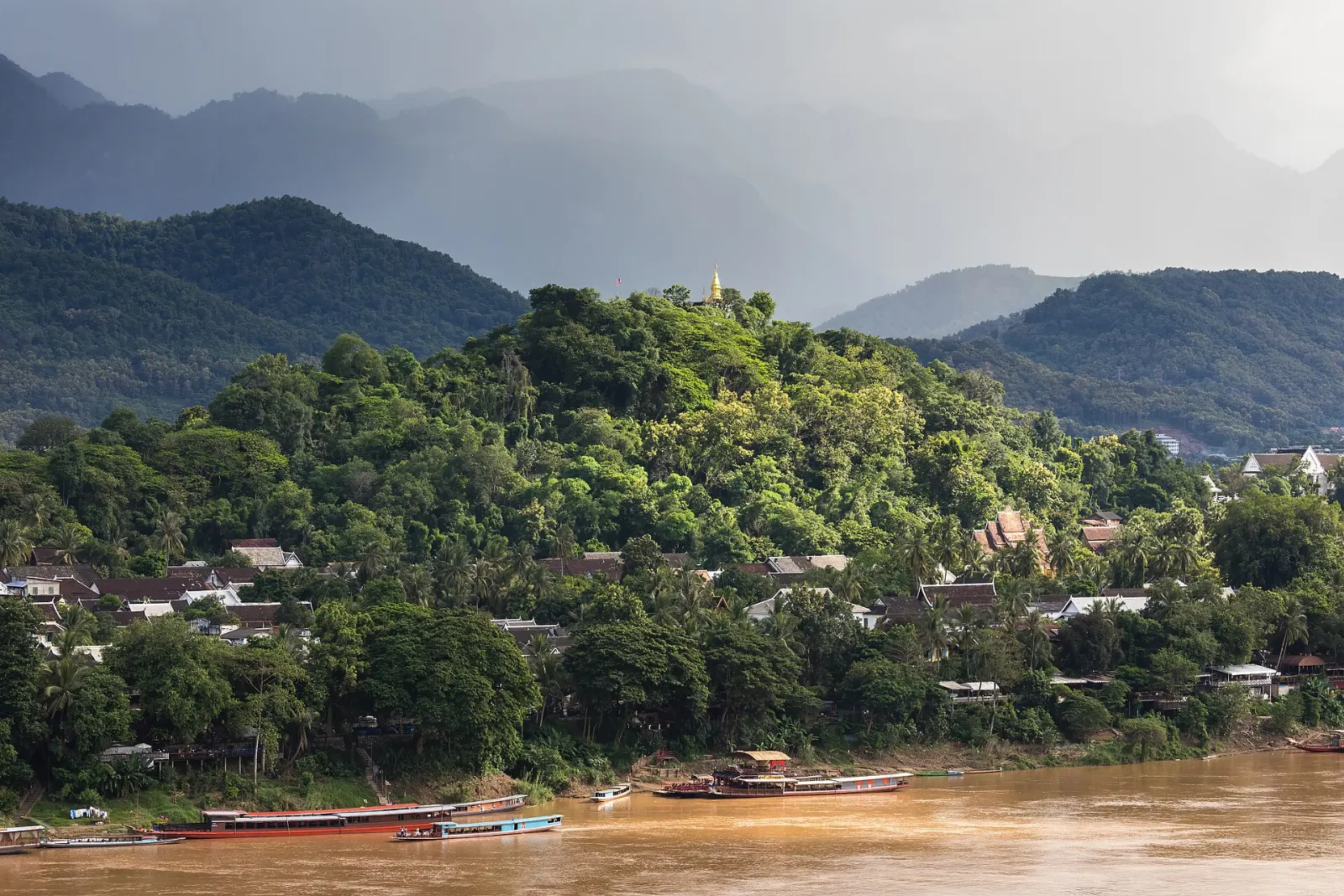
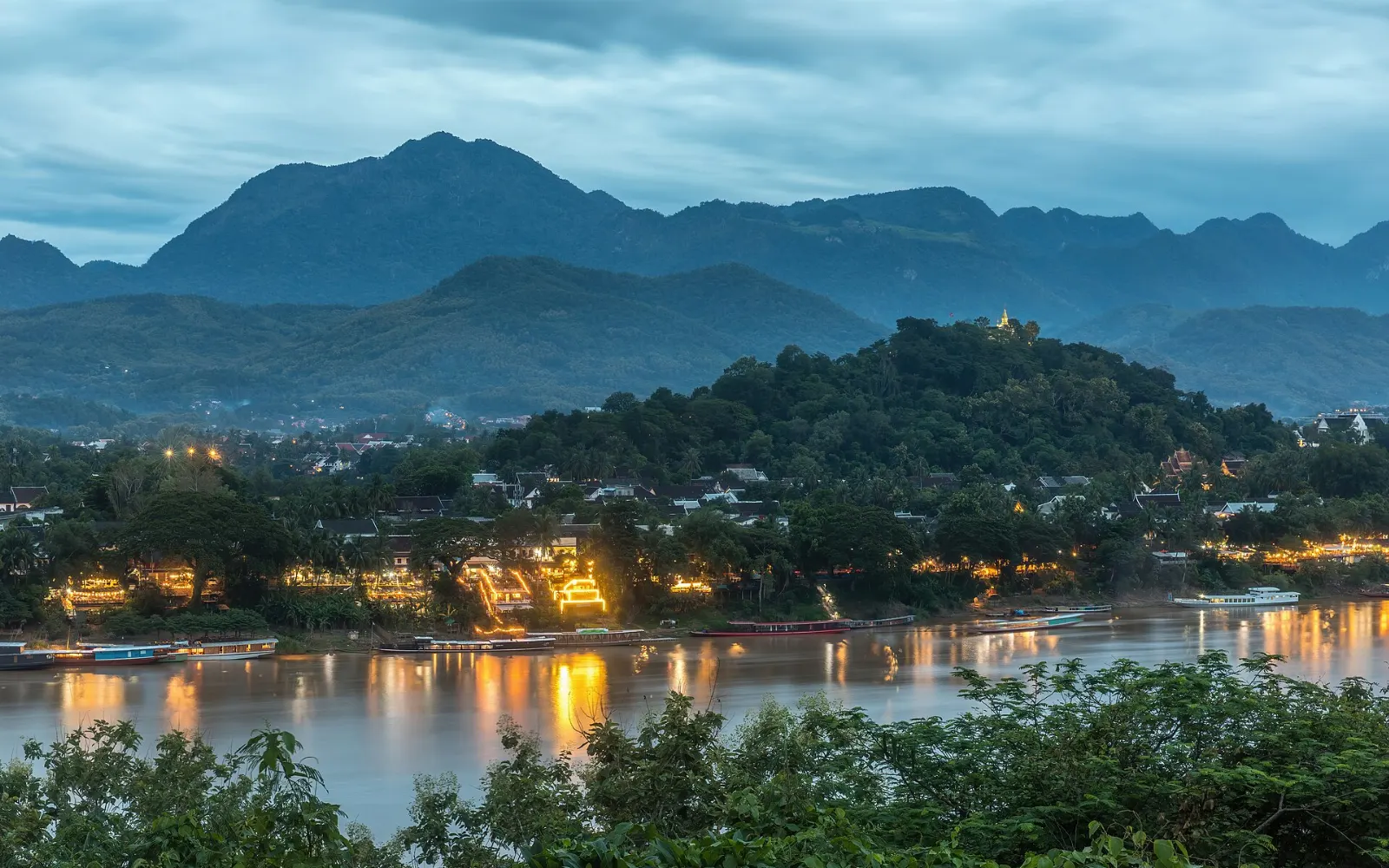
The setting adds to the appeal. Jungle-covered hills rise on every side, the Mekong slides past wide and brown, and within an hour you can be swimming under a waterfall or drifting upriver to a cave shrine.

Temples and landmarks of the old town

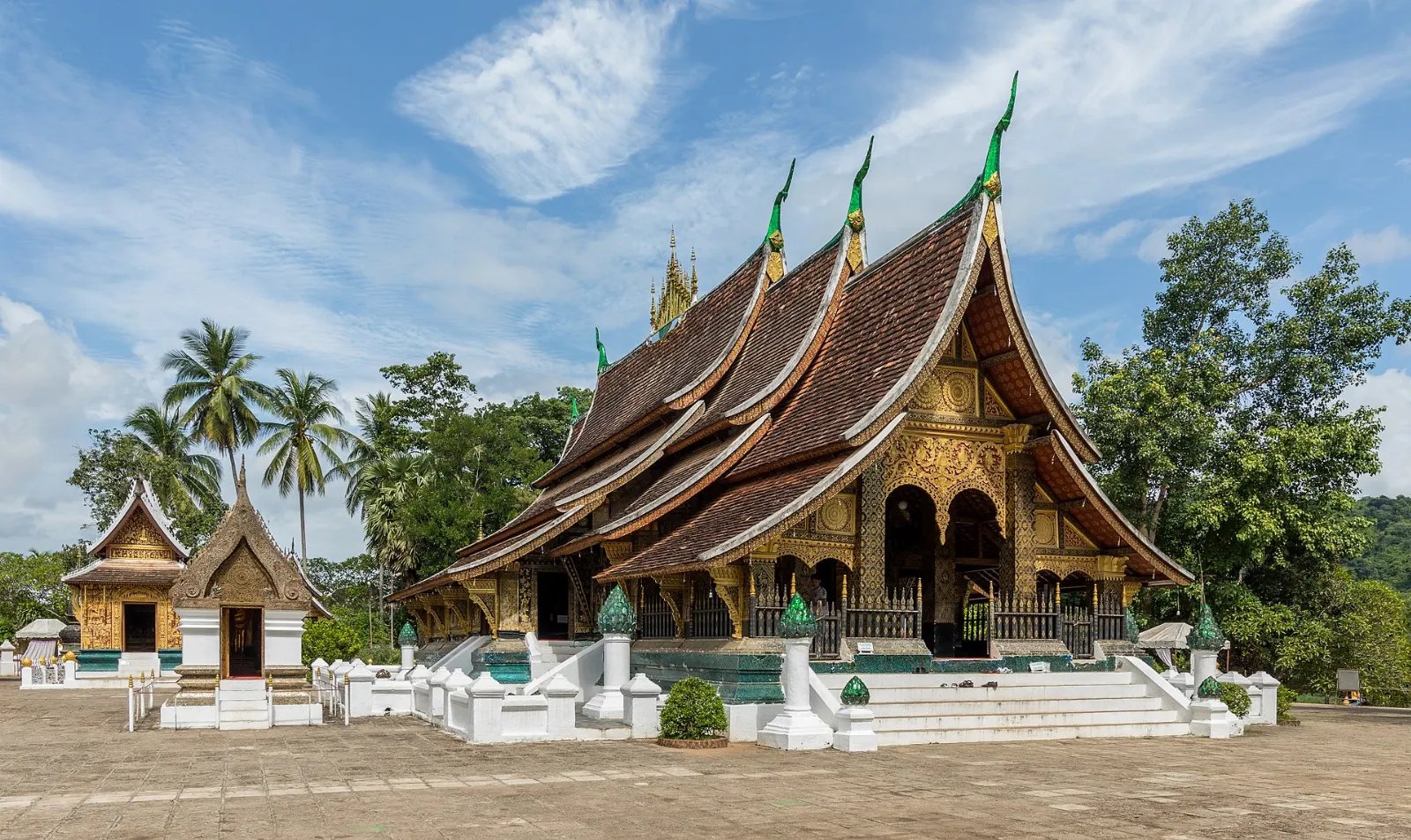
Sweeping tiered roofs of the main hall at Wat Xieng Thong, Luang Prabang, Laos

Wat Xieng Thong

At the northern tip of the peninsula, near the meeting of the two rivers, Wat Xieng Thong is the town's most important monastery, built in the mid sixteenth century under King Setthathirath.

Allow about an hour. Practical tip: come early in the morning or late in the afternoon when the light on the mosaics is soft and the tour groups have thinned out, and cover your shoulders and knees.

Wat Xieng Thong, built in the mid sixteenth century, is the most celebrated temple in Luang Prabang. Photo: Basile Morin, Wikimedia Commons, CC BY-SA 4.0
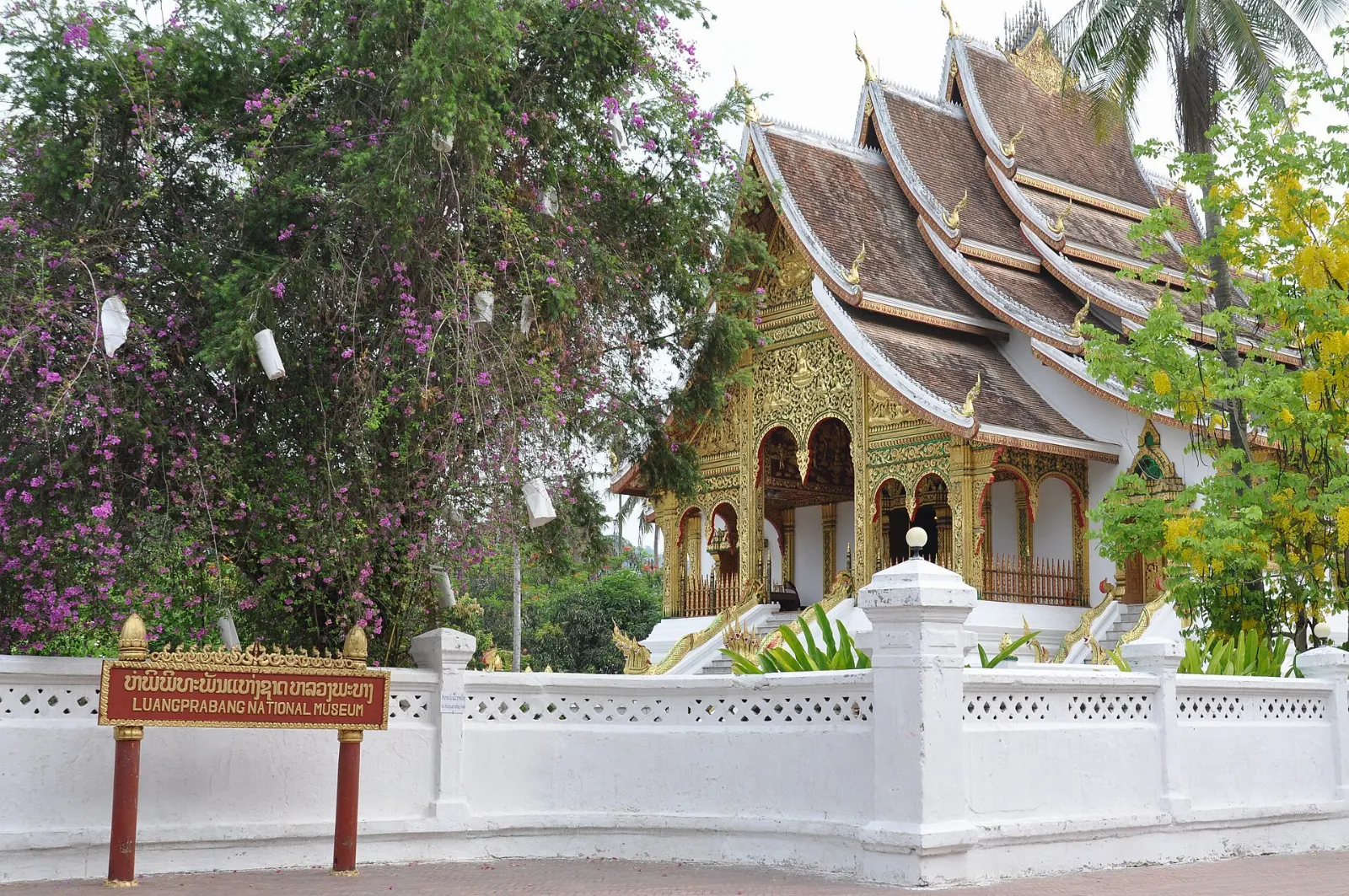
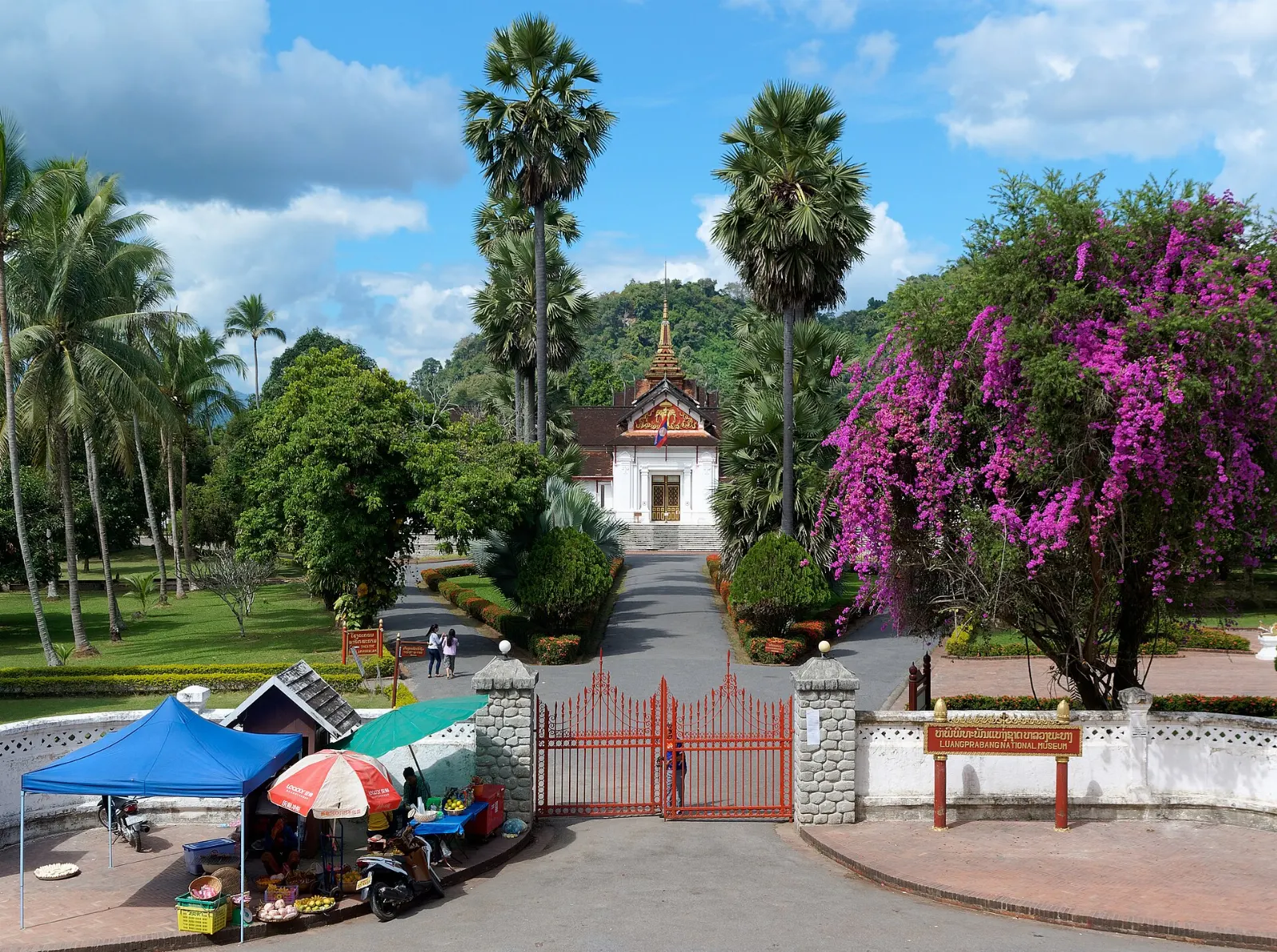
Royal Palace of Luang Prabang with the gilded Haw Pha Bang temple in the grounds, Laos

Royal Palace and National Museum

On the main street, Sisavangvong Road, the former Royal Palace was built in the early twentieth century for King Sisavang Vong and now serves as the Luang Prabang National Museum.

Allow one to two hours. Practical tip: dress modestly, leave bags in the lockers and expect photography to be forbidden inside the palace.

The former Royal Palace now houses the Luang Prabang National Museum. Photo: Jakub Hałun, Wikimedia Commons, CC BY-SA 4.0

Golden stupa of That Chomsi on the summit of Mount Phousi, Luang Prabang, Laos

Mount Phousi

Directly opposite the palace, a stairway climbs Mount Phousi, the steep hill in the middle of town.

Allow one hour. Practical tip: the summit is very crowded at sunset, so consider climbing for sunrise instead, when it is cooler and quieter.

That Chomsi, a gilded stupa, crowns the summit of Mount Phousi in the center of town. Photo: Basile Morin, Wikimedia Commons, CC BY-SA 4.0
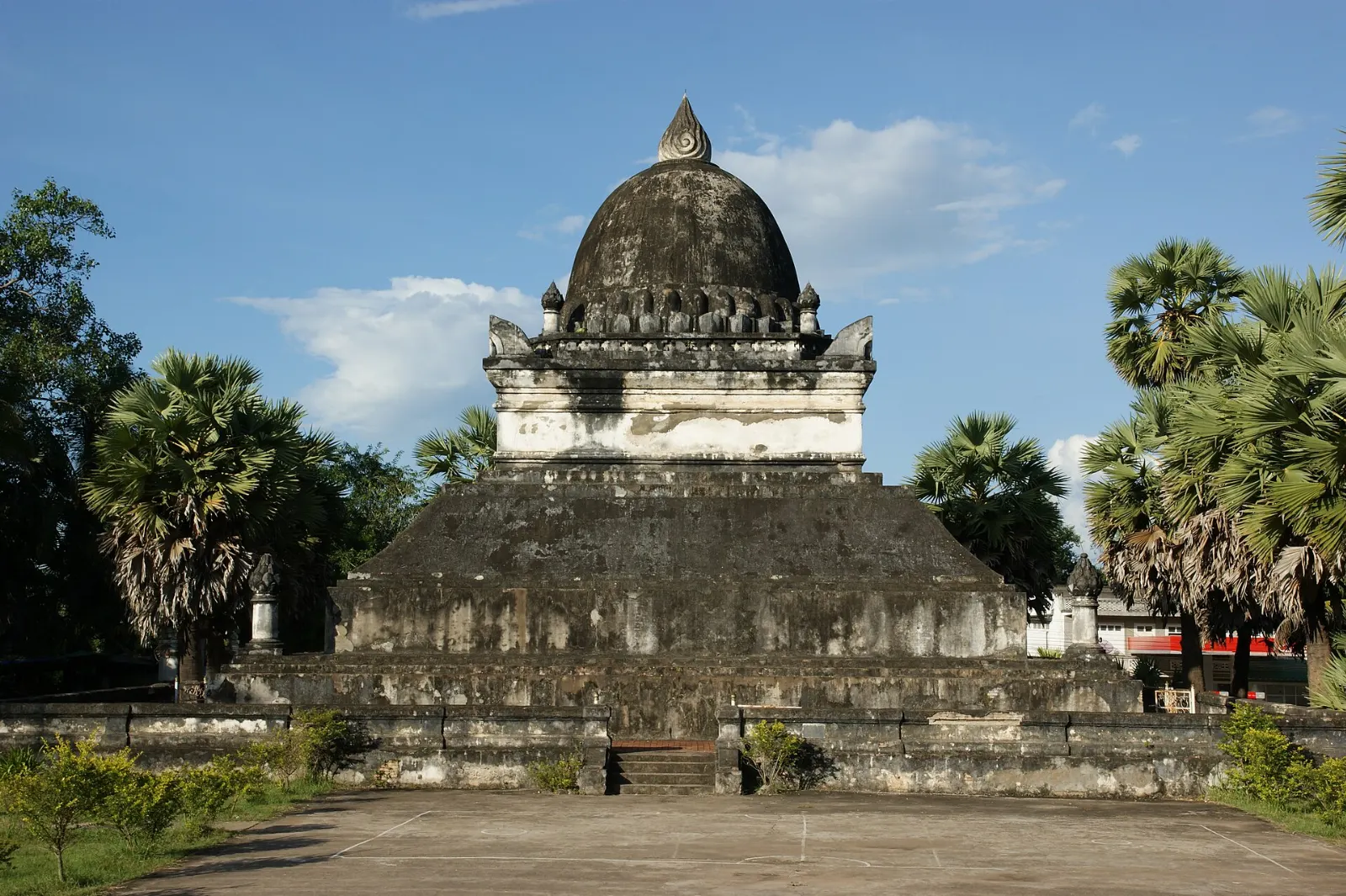
Rounded That Makmo stupa in the grounds of Wat Visounnarath, Luang Prabang, Laos

Wat Mai and Wat Visounnarath

Next to the palace, Wat Mai Suwannaphumaham has a richly gilded facade showing scenes from the Ramayana and the life of the Buddha.

Allow one hour for both. Practical tip: remove your shoes before entering any temple hall and never point your feet toward a Buddha image or a monk.

The rounded That Makmo stupa, nicknamed the watermelon stupa, stands at Wat Visounnarath. Photo: Allie Caulfield, Wikimedia Commons, CC BY 2.0

Traditional Arts and Ethnology Centre

Near the base of Mount Phousi, the Traditional Arts and Ethnology Centre is a small, thoughtful museum about the many ethnic groups of Laos, including the Hmong, Khmu and Akha.

Allow one hour. Practical tip: visit early in your trip, as it helps you understand the textiles and crafts you will see in the markets.

Rituals, markets and riverside life

Line of monks in saffron robes collecting sticky rice from kneeling residents at dawn, Luang Prabang, Laos

The morning alms round

Every morning around dawn, lines of monks and novices walk barefoot through the streets to collect offerings of sticky rice from residents kneeling on mats.

Allow an hour, starting before sunrise. Practical tip: watch from across the street, stay silent, never use flash and do not stand in the monks' path.

Monks walk the streets at dawn to receive offerings of sticky rice in the alms round known as tak bat. Photo: shankar s. from Dubai, united arab emirates, Wikimedia Commons, CC BY 2.0

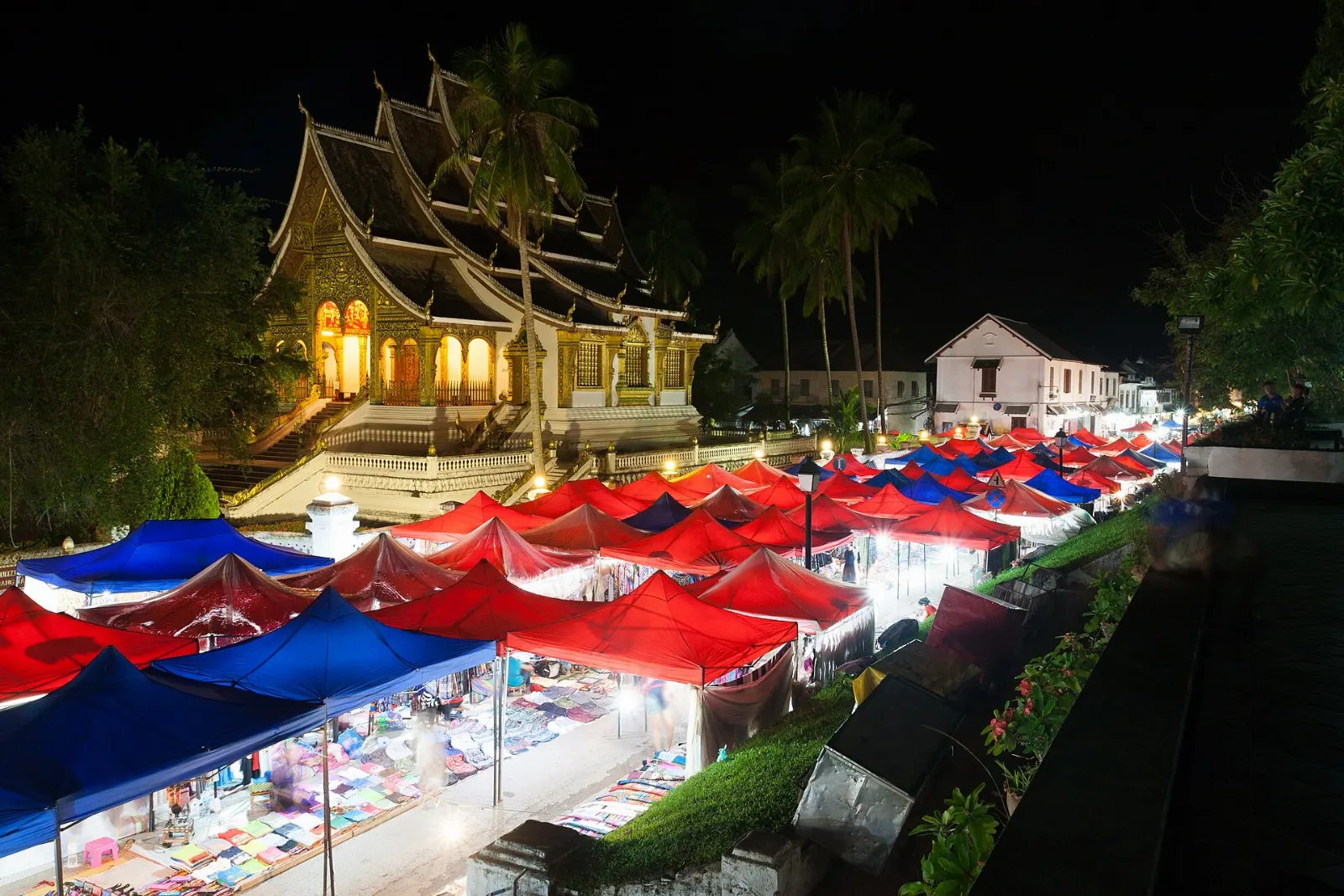
Red-roofed stalls of the Luang Prabang night market selling textiles and crafts, Laos

Night market and morning market

Each evening Sisavangvong Road closes to traffic and fills with a long row of stalls under red and blue canopies, selling handwoven silk and cotton, paper lanterns, silver jewelry, coffee and tea.

Allow one to two hours at each. Practical tip: bargaining at the night market should be gentle and good-natured, and pay in Lao kip where possible.

The night market fills Sisavangvong Road with stalls of textiles, paper lanterns and handicrafts. Photo: Ekrem Canli, Wikimedia Commons, CC BY-SA 4.0

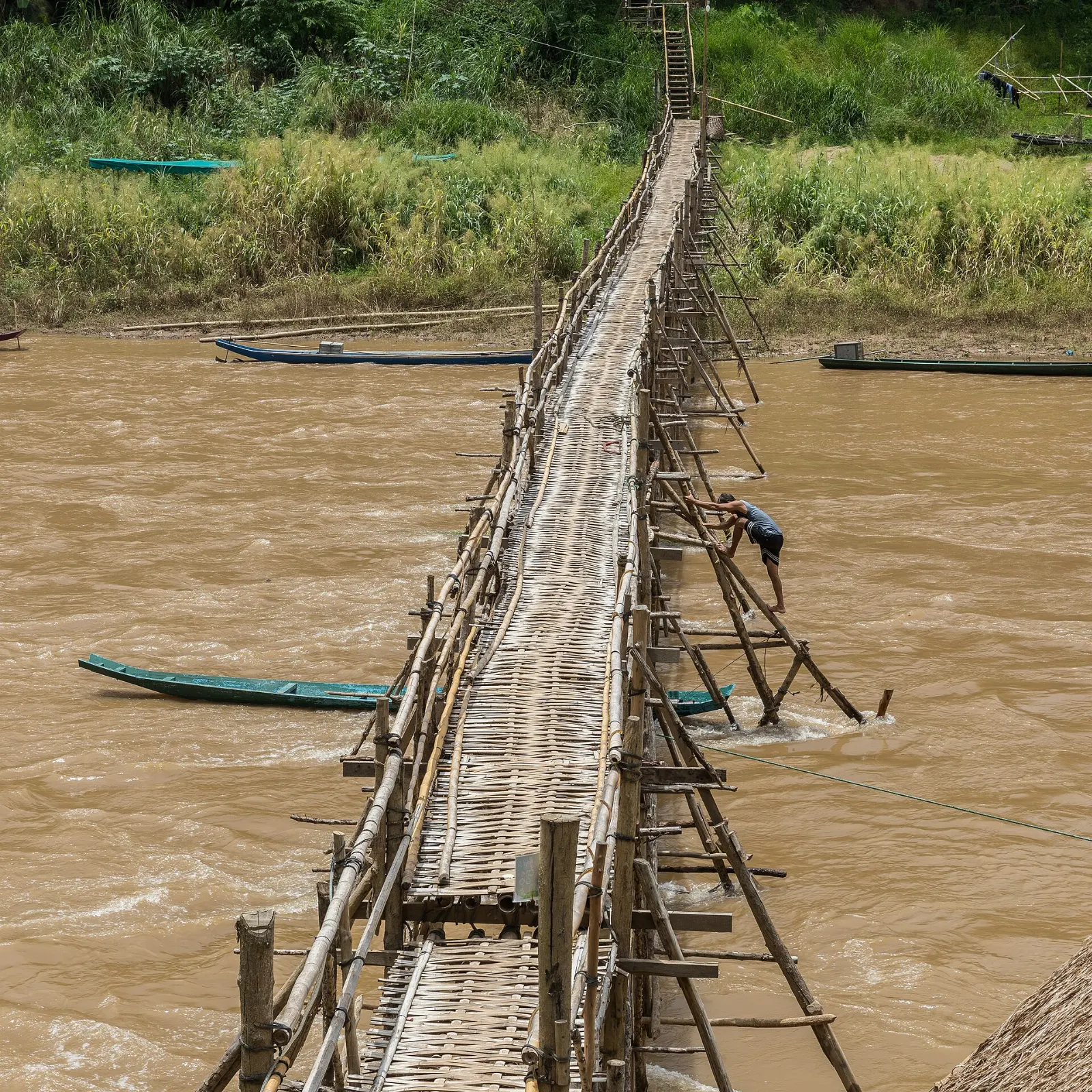
Seasonal bamboo footbridge crossing the shallow Nam Khan river, Luang Prabang, Laos

Nam Khan riverfront and the bamboo bridge

The Nam Khan side of the peninsula is quieter than the Mekong side, with cafes on stilts above the water and views across to the village of Ban Phanom.

Allow an hour or two for a riverside walk.

A bamboo footbridge is rebuilt over the Nam Khan each dry season after the rains wash it away. Photo: Basile Morin, Wikimedia Commons, CC BY-SA 4.0
Waterfalls, caves and the countryside

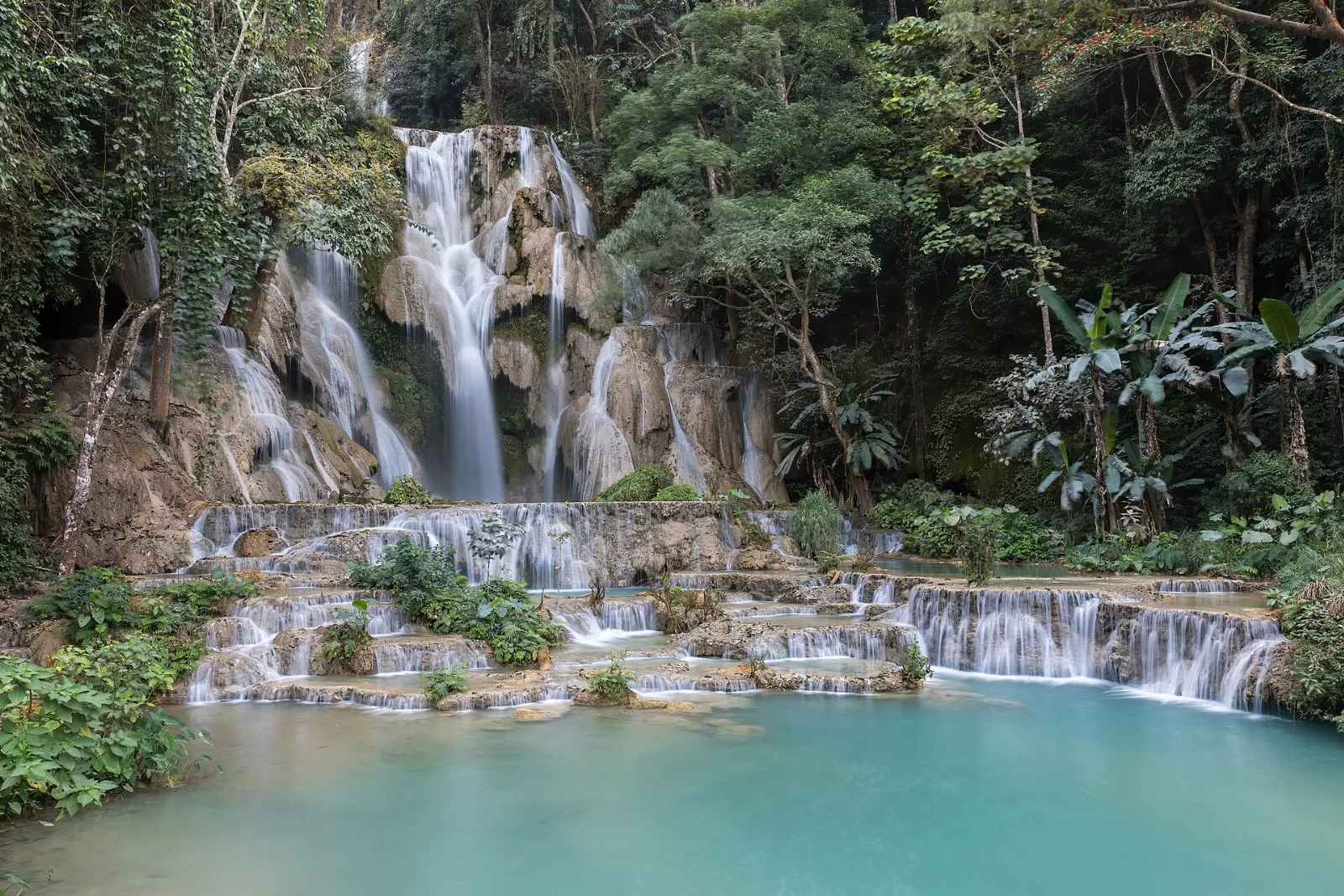
Turquoise pools and tiered limestone cascades at Kuang Si Falls, Luang Prabang, Laos

Kuang Si Falls

About thirty kilometers south of town, Kuang Si Falls drops through a series of limestone terraces into bright turquoise pools surrounded by forest.

Allow half a day including the drive.

Kuang Si Falls tumbles over limestone terraces into turquoise pools south of Luang Prabang. Photo: Basile Morin, Wikimedia Commons, CC BY-SA 4.0
Hundreds of small Buddha statues inside the Pak Ou Caves above the Mekong, Luang Prabang, Laos

Pak Ou Caves

Upriver on the Mekong, opposite the mouth of the Nam Ou river, two caves in a limestone cliff hold thousands of Buddha images, many of them small wooden figures left by pilgrims over generations.

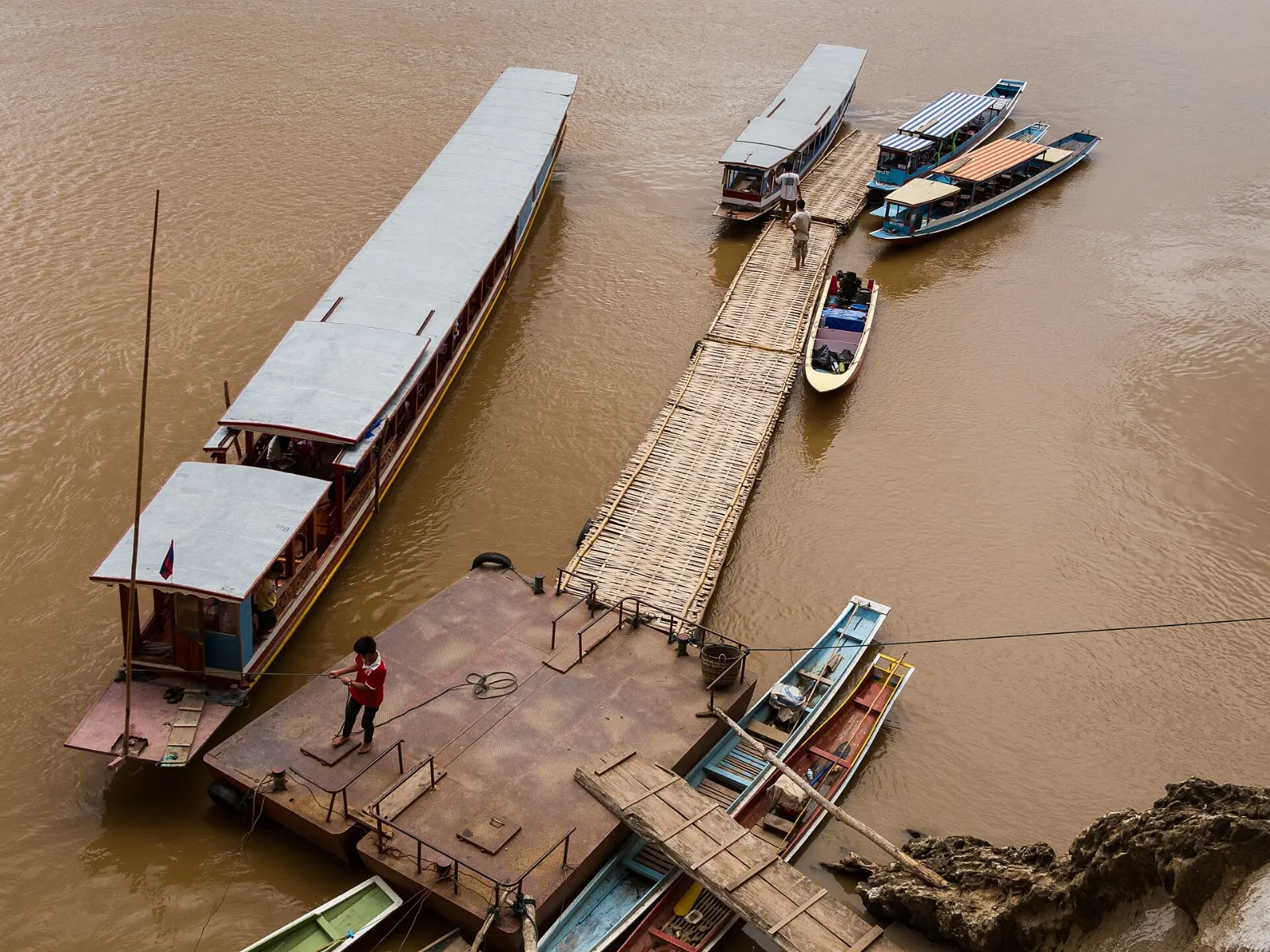
Allow half a day. Practical tip: book a boat at the landing on the Mekong side of town or through your guesthouse, and bring a headlamp for the upper cave.

The Pak Ou Caves hold thousands of Buddha images left by pilgrims over centuries. Photo: CEphoto, Uwe Aranas, Wikimedia Commons, CC BY-SA 3.0

UXO Lao Visitor Centre

Laos was heavily bombed during the Vietnam War era, and unexploded ordnance still affects rural communities. The UXO Lao Visitor Centre in town explains the history and the slow work of clearance with clear displays and short films.

Allow forty-five minutes. Practical tip: it pairs well with a walk along the Mekong in the late afternoon, and it will help you understand why hikers are told to stay on established trails in the countryside.

Food and local flavors

Luang Prabang has its own culinary tradition, shaped by the royal court and the forests and rivers around it. Sticky rice is eaten with almost every meal, rolled into a ball with your fingers and dipped into sauces.

Look also for sai oua, a herb-heavy pork sausage, larb, a minced meat or fish salad with lime and toasted rice powder, and grilled river fish stuffed with lemongrass.

Popular dishes to try in Luang Prabang

Larb in Luang Prabang, Laos
Larb Look also for sai oua, a herb-heavy pork sausage, larb, a minced meat or fish salad with lime and toasted rice powder, and grilled river fish stuffed with lemongrass.Photo: Tris_T7, Wikimedia Commons, CC BY-SA 4.0
Khao soi in Luang Prabang, Laos
Khao soi Luang Prabang's version of khao soi is a noodle soup topped with a rich minced pork and tomato sauce, a popular breakfast at street stalls.Photo: Mindmaker, Wikimedia Commons, CC BY-SA 4.0
Sticky rice in Luang Prabang, Laos
Sticky rice Sticky rice is eaten with almost every meal, rolled into a ball with your fingers and dipped into sauces.Photo: Chi King, Wikimedia Commons, CC BY 2.0

Where to stay

The old town peninsula is the best base for first-time visitors, placing you within walking distance of the temples, the alms round and the night market.

The Nam Khan riverside suits couples and travelers who want quiet evenings and river views, while still being a short walk from the center.

Where to stay in Luang Prabang

Luang Prabang peninsula, Luang Prabang, Laos
Luang Prabang peninsula One of the best areas to base yourself in Luang Prabang.Photo: Jorge Láscar from Melbourne, Australia, Wikimedia Commons, CC BY 2.0
Mount Phousi, Luang Prabang, Laos
Mount Phousi Areas south of Mount Phousi and near Ban Aphay have more budget guesthouses and backpacker options.Photo: Basile Morin, Wikimedia Commons, CC BY-SA 4.0
Mekong Luang Prabang, Luang Prabang, Laos
Mekong Luang Prabang One of the best areas to base yourself in Luang Prabang.Photo: Basile Morin, Wikimedia Commons, CC BY-SA 4.0

Best time to visit

The dry, cool season from November to February is the most comfortable time, with sunny days and chilly mornings that make the alms round and the Phousi climb pleasant. It is also the busiest season.

The rainy season runs roughly from May to October.

Getting there and getting around

Luang Prabang International Airport lies a few kilometers northeast of the old town and has flights to Vientiane and regional hubs including Bangkok and Hanoi.

In town, the old quarter is compact and best explored on foot or by bicycle, which many guesthouses lend or rent. Tuk-tuks wait on the main streets for longer trips, and you should agree on the fare before setting off.

A suggested itinerary

First day

Visit the Royal Palace and Haw Pha Bang in the morning, then walk up the peninsula past Wat Mai and the colonial shophouses to Wat Xieng Thong.

Second day

Rise before dawn to watch the alms round respectfully, then explore the morning market. Head out to Kuang Si Falls for a swim and a visit to the bear rescue center, returning in time for sunset drinks overlooking the Mekong.

Third day

Take a long-tail boat up the Mekong to the Pak Ou Caves.

Practical tips

  • Cover shoulders and knees in temples and the Royal Palace, and remove shoes before entering halls.
  • Women should not touch monks or hand items directly to them.
  • Observe the alms round from a respectful distance, in silence and without flash.
  • Carry Lao kip in cash for markets, tuk-tuks and small guesthouses; cards are not accepted everywhere.
  • Book train tickets and peak-season rooms in advance, especially around Lao New Year.
  • Pack a light sweater for cool dry-season mornings and rain gear from May to October.
Luang PrabangWISERMAP PLACELuang Prabang: photos, reviews & things to doSee traveler photos and reviews, or share your own →

More places to visit

All travel guides →