Antigua Guatemala sits in a green highland valley ringed by three volcanoes: Agua, Fuego and Acatenango. For more than two centuries it was the capital of the Spanish Kingdom of Guatemala, which reached from Chiapas to Costa Rica, and its churches, convents and palaces reflected that power.
AT A GLANCE
Best time
November to April for dry weather; Holy Week for processions.
How long
Three to four days, plus a night on Acatenango if you hike.
Getting there
About an hour by shuttle from La Aurora airport in Guatemala City.
Why visit Antigua
Antigua packs an extraordinary amount of history into a small grid of cobbled streets. In a few blocks you can see baroque facades in yellow and white plaster, roofless churches open to the sky, and courtyards filled with bougainvillea.
The city is also a living town, not a museum. Local families fill the central park on weekends, the market overflows with produce from the surrounding villages, and religious traditions remain strong, culminating in the Holy Week processions that draw visitors from around the world.
Parque Central and the heart of town
The streets follow a simple grid laid out from Parque Central. Avenues run north to south and streets run east to west, so it is easy to orient yourself by the volcano: Agua is to the south.
Parque Central and the Cathedral
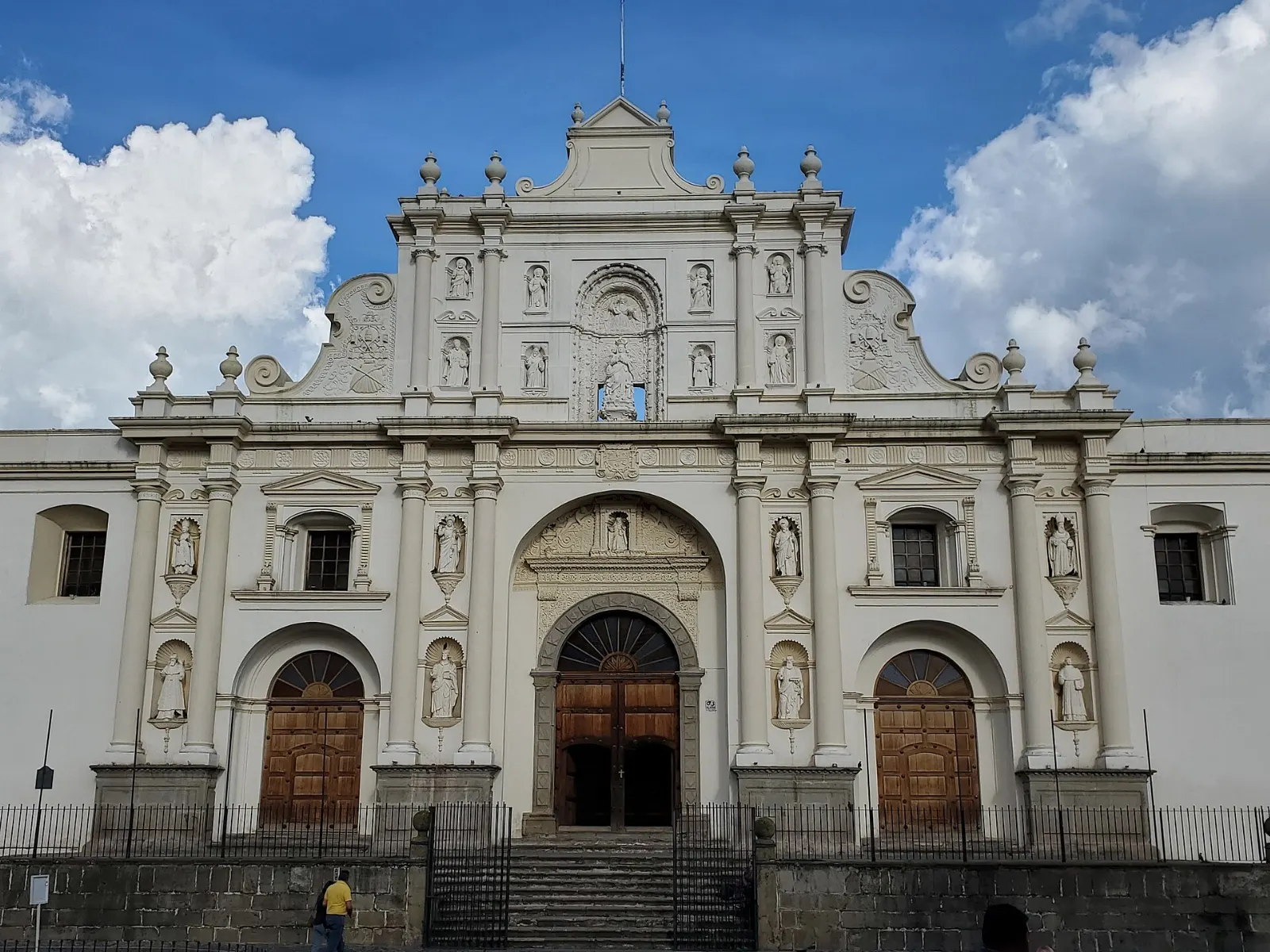
The central park, shaded by tall trees around a fountain of mermaids, is the social center of Antigua. On its east side stands the Cathedral of San José.
Palace of the Captains General
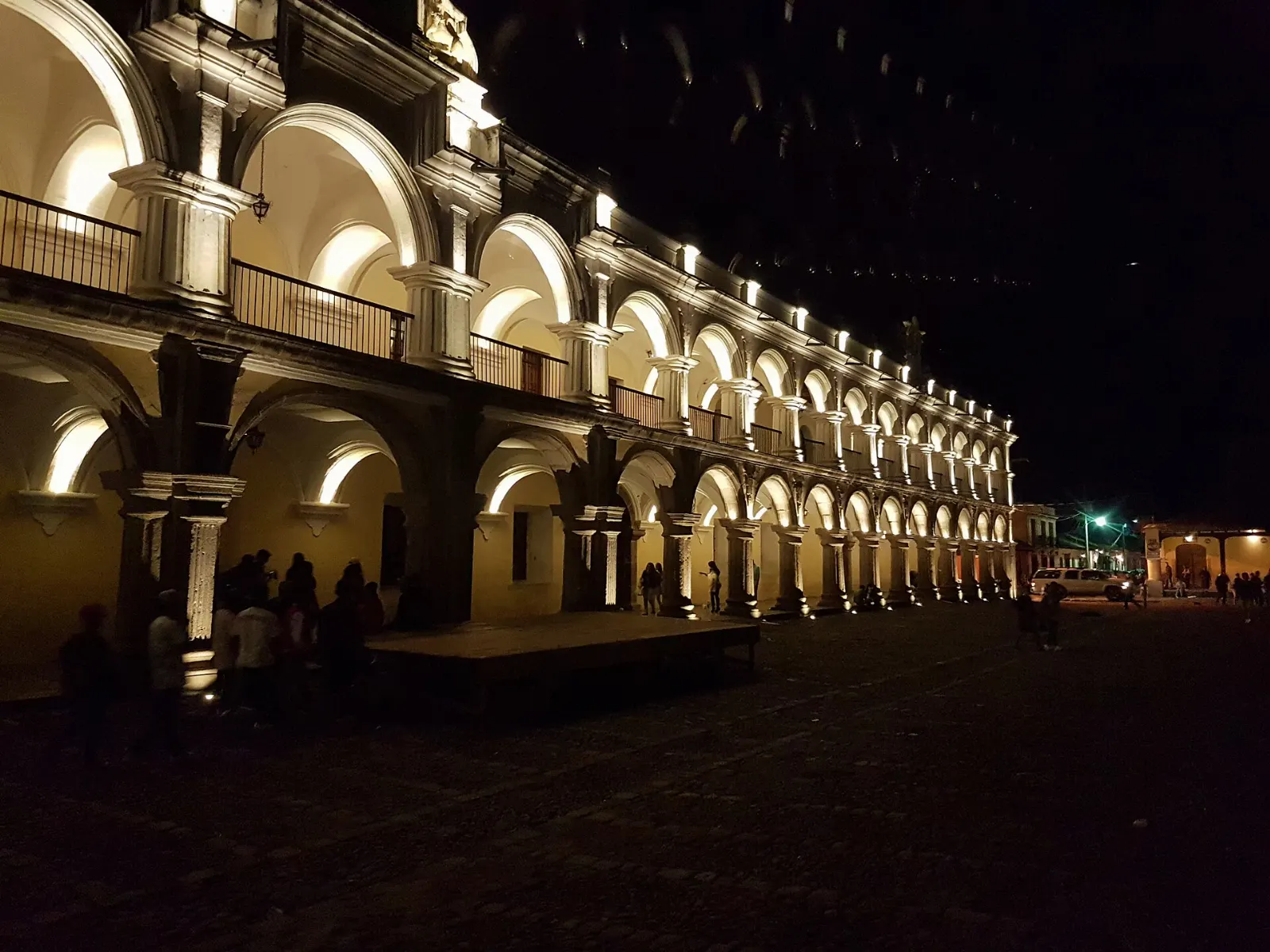
Filling the south side of the square, this long two-story arcade was the seat of Spanish colonial government for all of Central America. Restored in recent years, it now hosts exhibitions and cultural events.
Santa Catalina Arch
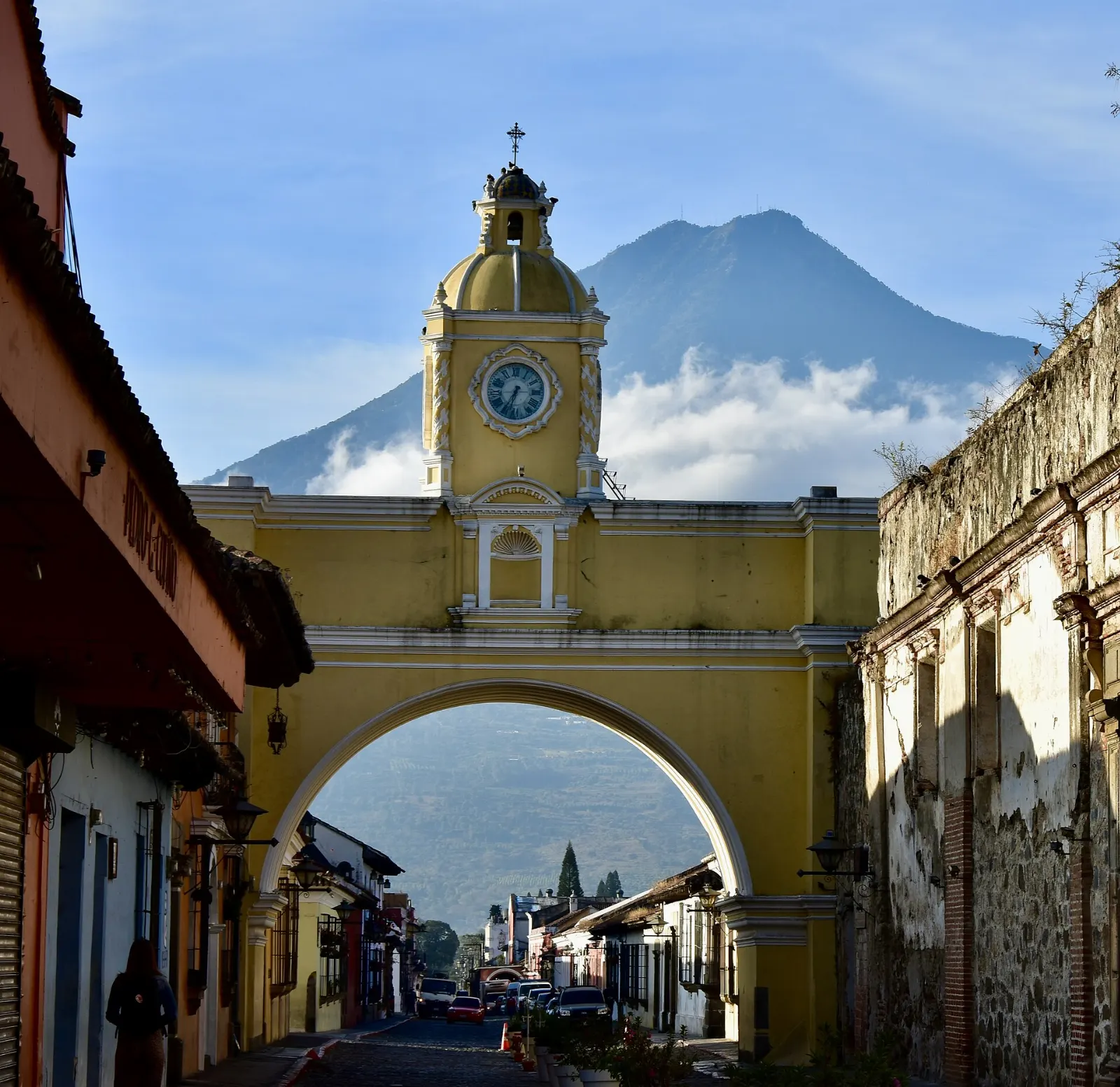
The yellow arch over Fifth Avenue North is Antigua's signature image.
Iglesia de La Merced
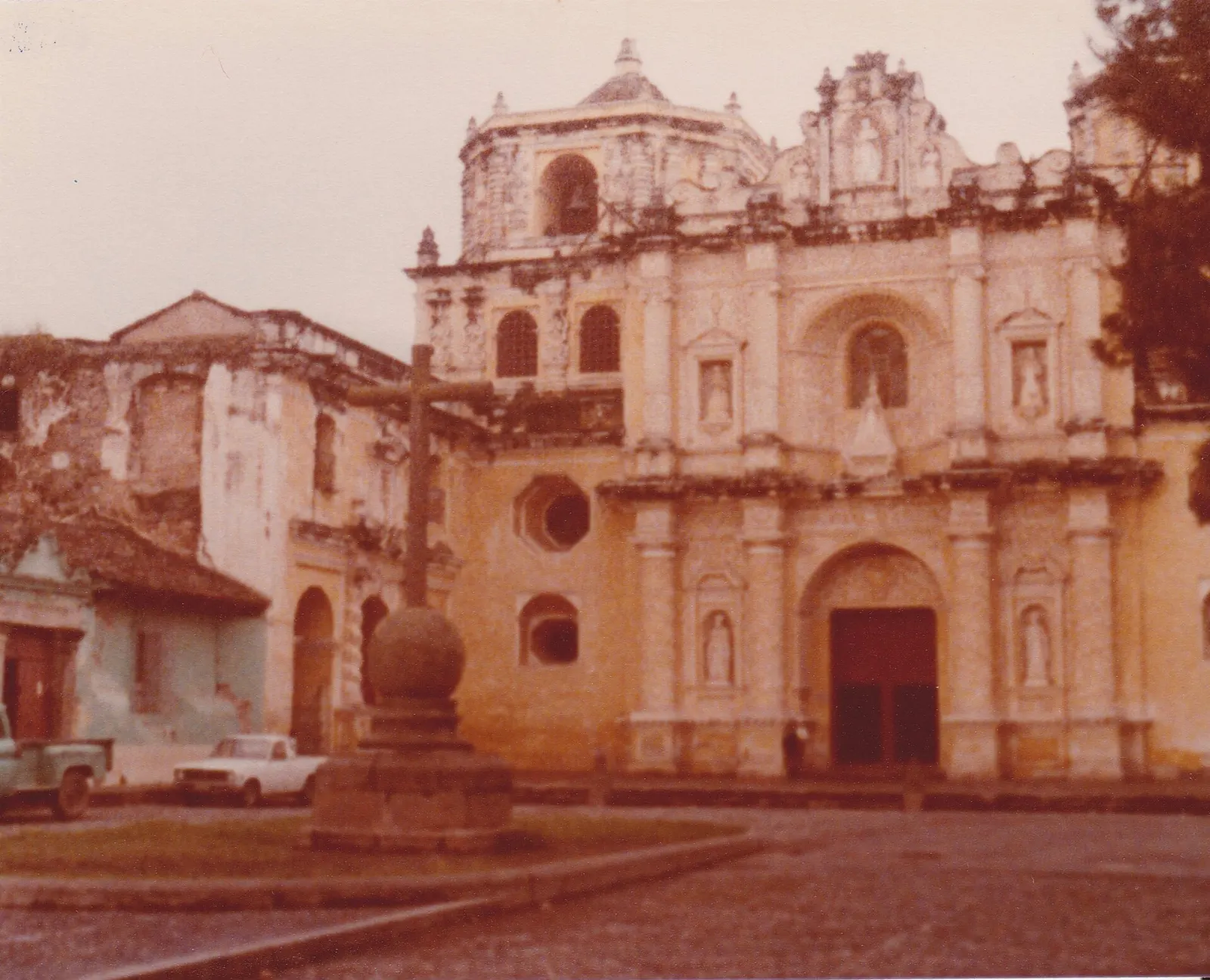
A few blocks north of the arch, La Merced has one of the most elaborate facades in Antigua, covered in white plaster ornament against bright yellow walls.
Convents, ruins and viewpoints
Antigua has dozens of colonial religious buildings in various states of ruin. Most charge an entrance fee and have limited signage, often only in Spanish, so a guide adds a great deal.
Convento de las Capuchinas
This eighteenth-century convent of Capuchin nuns is among the best preserved ruins in the city. Its highlight is a circular two-level tower of small cells around a central space, whose original purpose is still debated.

San Francisco el Grande
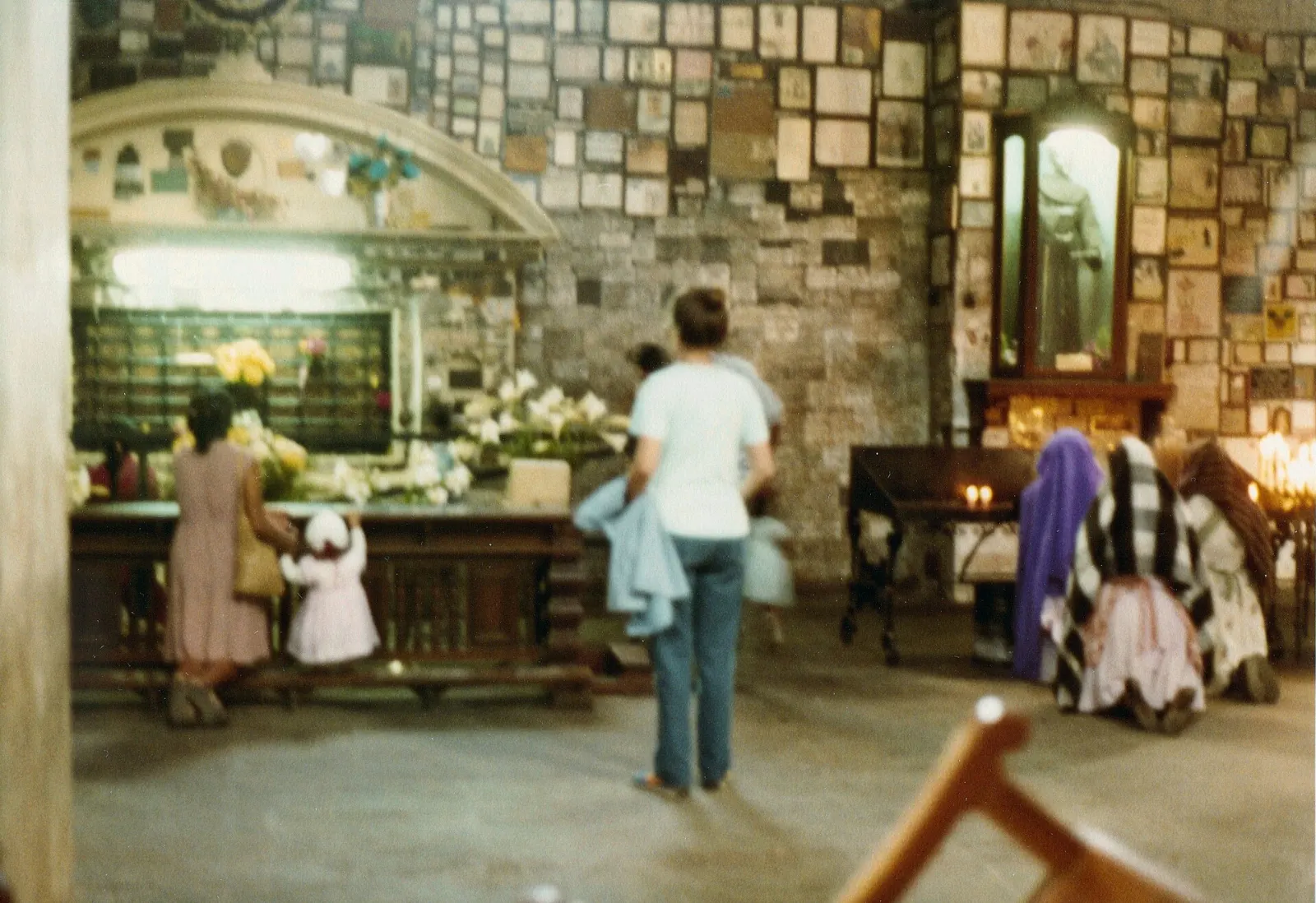
This large church on the southeast side of town holds the tomb of Saint Pedro de San José de Betancur, known as Hermano Pedro, a seventeenth-century Franciscan who cared for the poor and was canonized in 2002.
La Recolección
On the western edge of the center, the ruins of the Recollect church and monastery are some of the most dramatic in Antigua.
Cerro de la Cruz
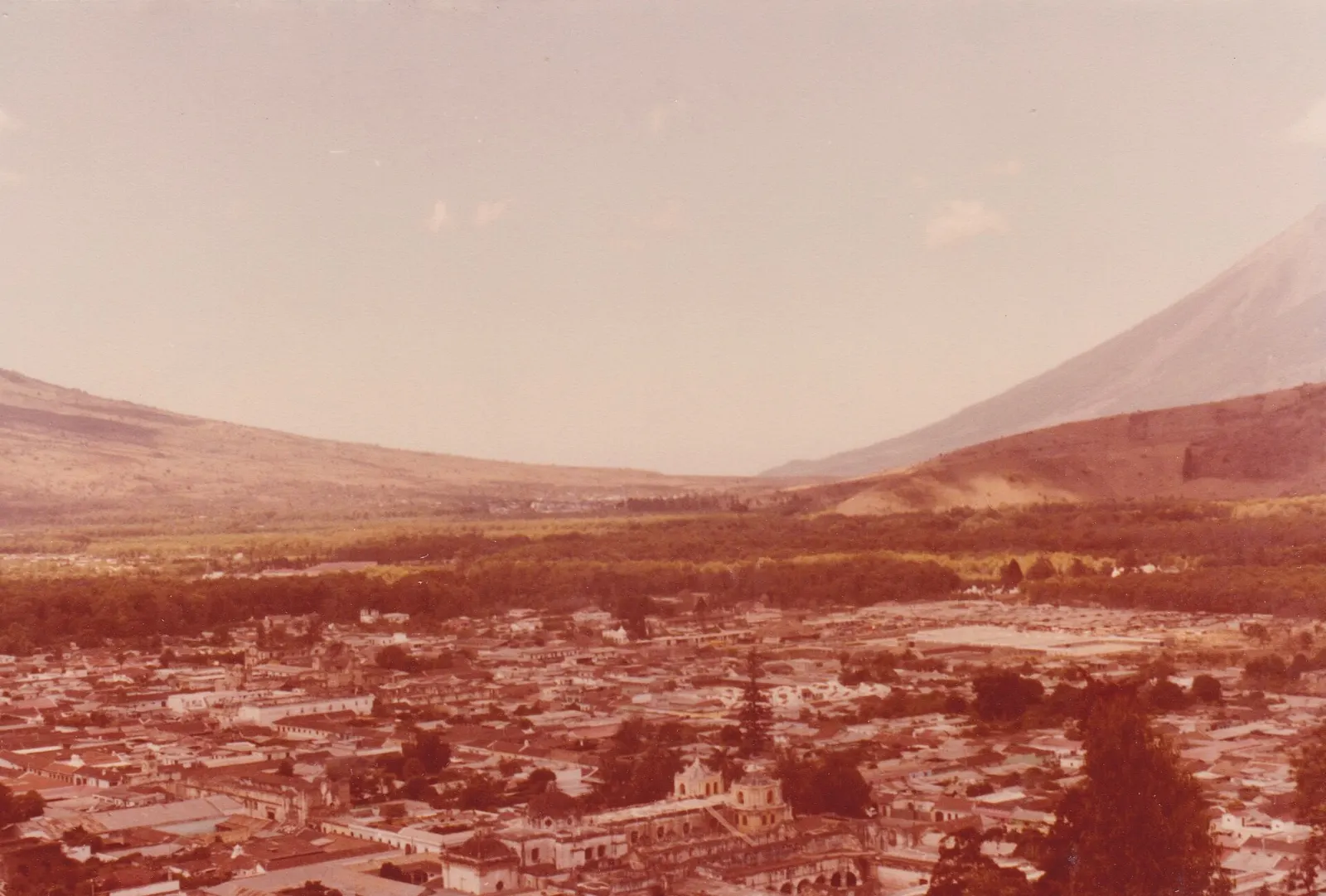
A short, steep walk from the north end of town leads up to a large stone cross on a hillside overlooking the whole city, with Volcán de Agua beyond.
Market and artisan stalls
West of the center, near the bus terminal, the municipal market is a busy, colorful maze of fruit, vegetables, flowers, spices and household goods.
Volcano hikes and day trips
Acatenango
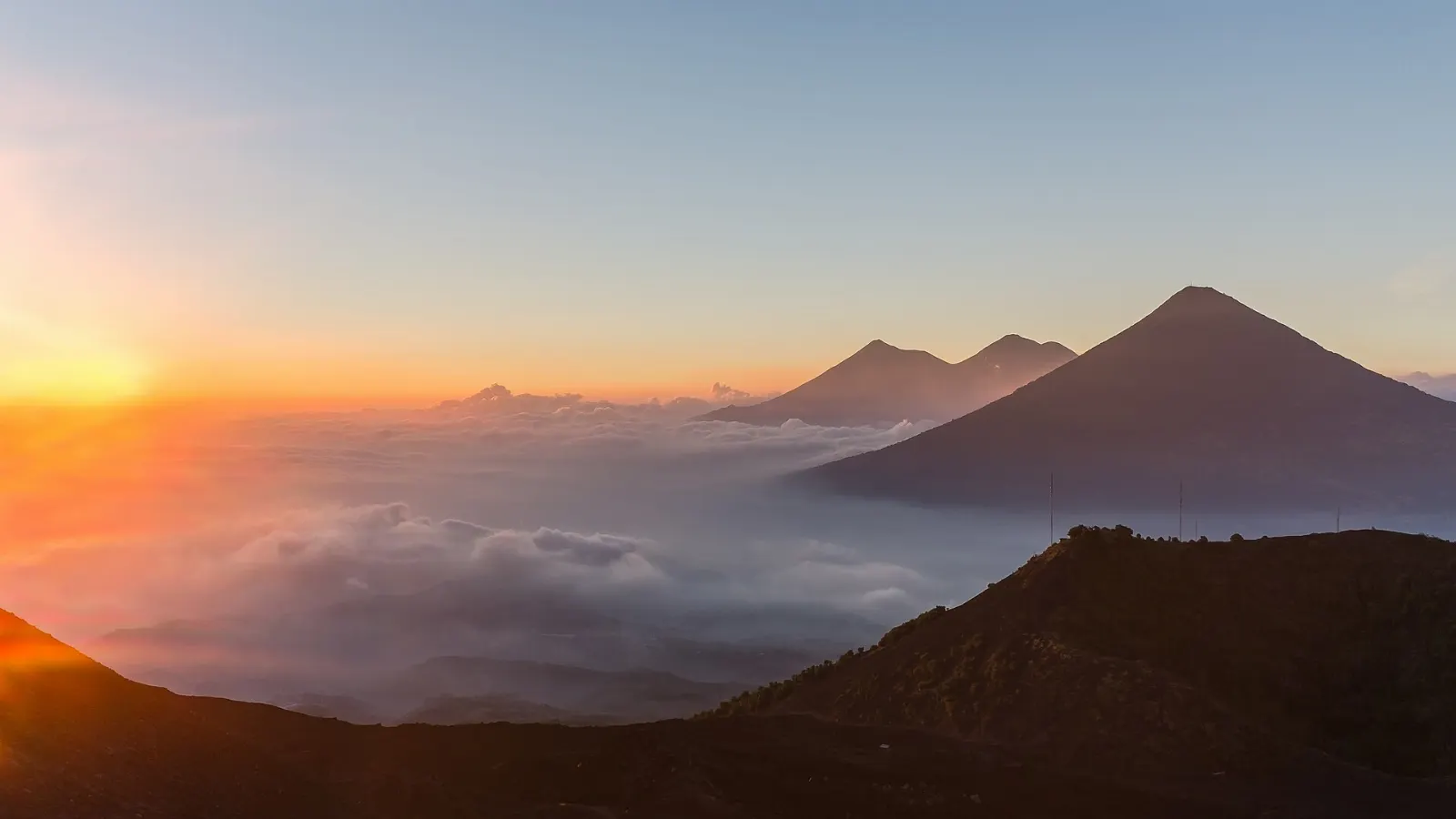
The overnight climb of Acatenango is the most memorable outdoor experience near Antigua. Groups hike up steep trails through farmland and forest to campsites high on the mountain, then watch neighboring Volcán de Fuego erupt through the night, often throwing glowing lava into the sky.
Pacaya
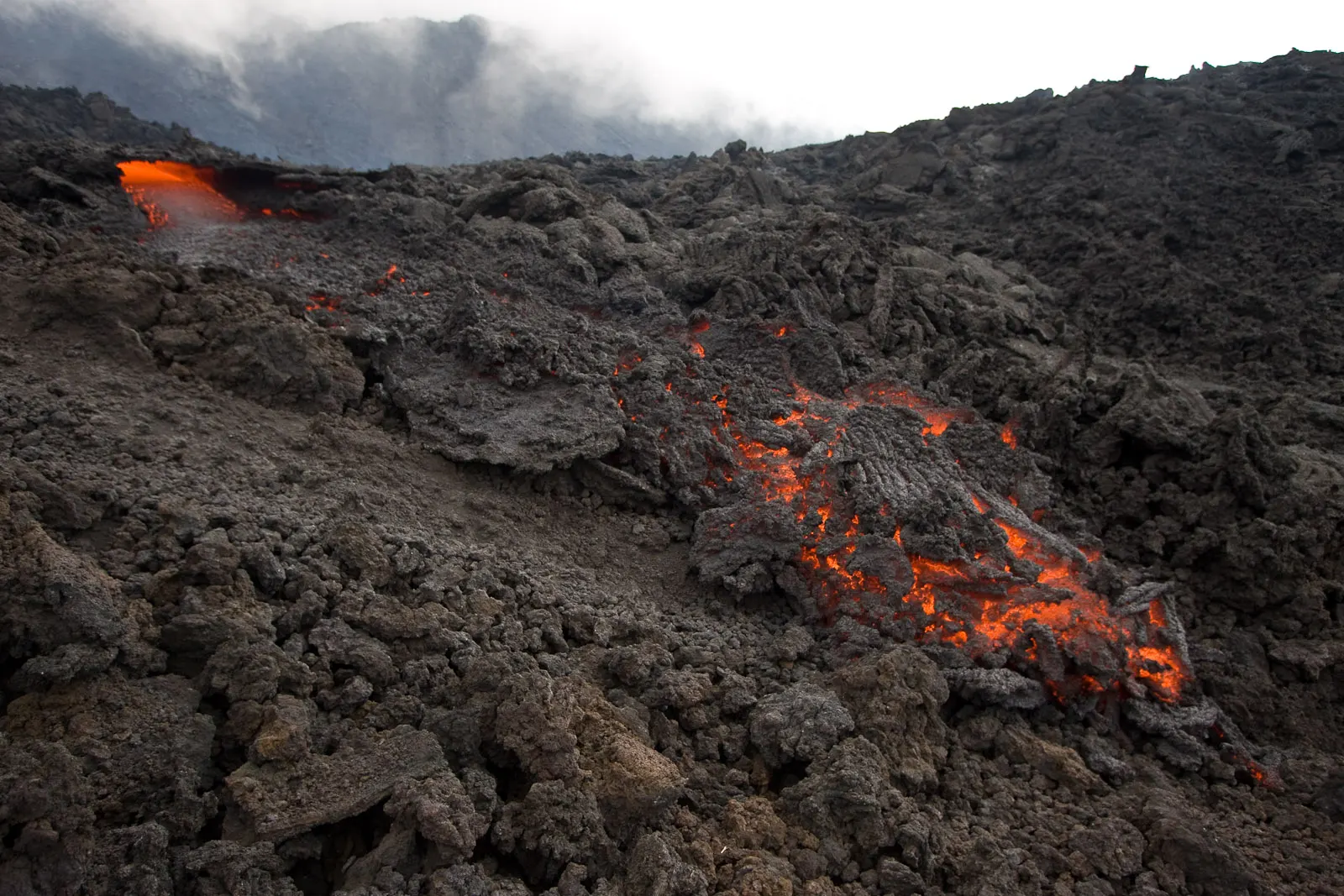
For an easier volcano, Pacaya is an active cone about an hour or more from Antigua by road. Guided half-day hikes climb through forest to lava fields where, depending on activity, you can feel warmth from the ground and see recent flows.
Villages and coffee farms
Nearby villages make easy half-day trips. Ciudad Vieja was an early site of the colonial capital, San Juan del Obispo has a historic bishop's palace and views over the valley, and San Antonio Aguas Calientes is known for backstrap loom weaving.
 Planning a trip to Antigua?Compare hotels, flights and vacation rentals for Antigua on Expedia.Book now
Food and local flavors
Guatemalan cooking blends Maya and Spanish traditions.
Antigua is famous for its coffee, grown on volcanic soils at high altitude, and many cafes roast local beans. The city also has a strong tradition of dulces típicos, traditional sweets made from coconut, milk, fig and squash, sold in candy shops especially along Calle del Arco and around the center.
Popular dishes to try in Antigua


Where to stay
The historic center, within a few blocks of Parque Central, puts you within walking distance of nearly everything.
The north side, around La Merced and the Santa Catalina Arch, is lively with cafes and restaurants and close to the trail to Cerro de la Cruz.
The south and east edges, toward San Francisco and the Calle de los Pasos, are quieter and good for longer stays and language students.
Where to stay in Antigua


Best time to visit
At about one and a half kilometres above sea level, Antigua has a mild climate year round, with warm days and cool nights.
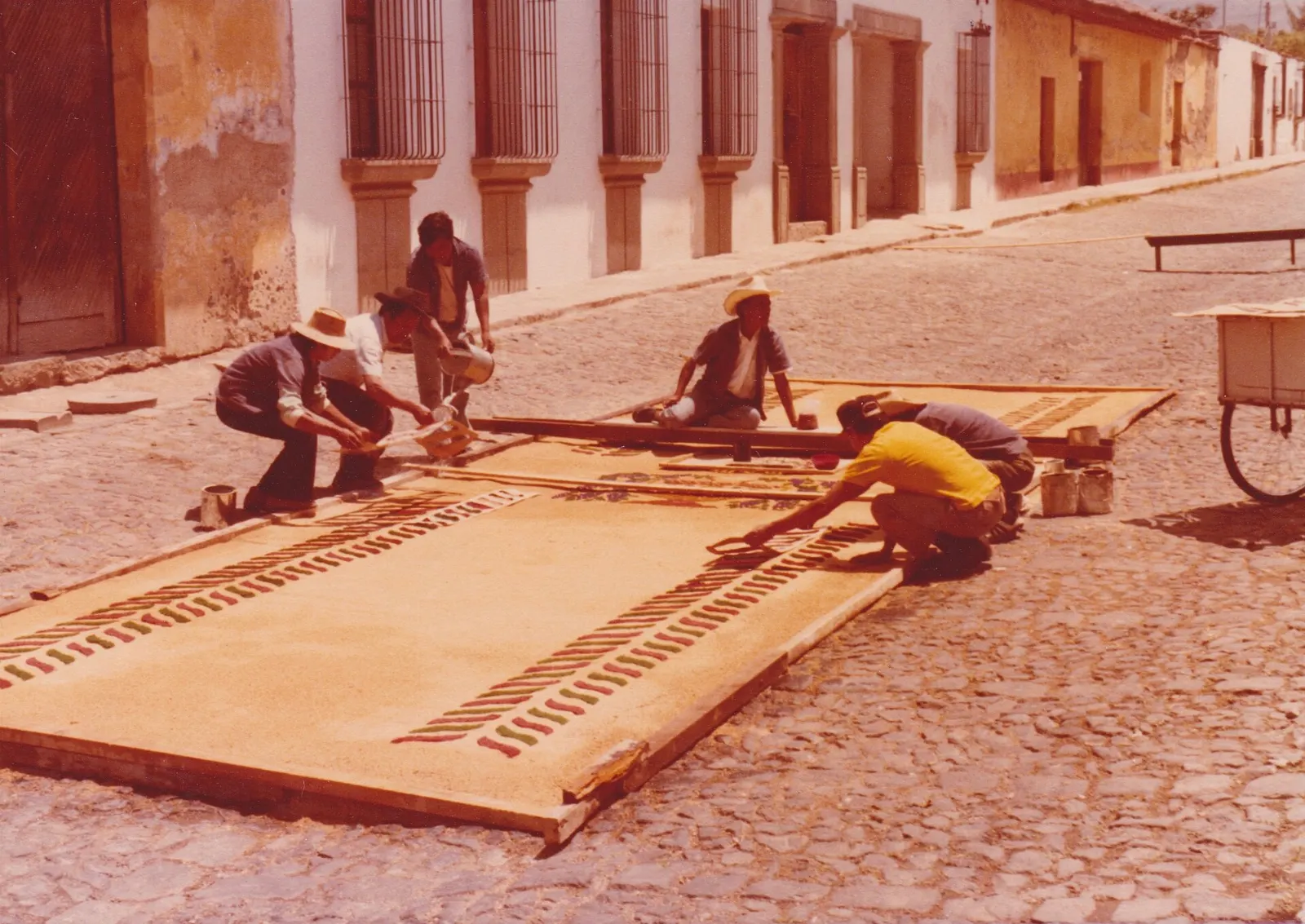
Semana Santa, Holy Week before Easter, is the biggest event of the year, with processions carrying huge wooden floats over sawdust carpets called alfombras, laid by local families. Lent processions also take place on Sundays in the weeks before.
Getting there and getting around
Antigua has no airport. International flights arrive at La Aurora International Airport in Guatemala City, about forty-five minutes to an hour away by road, depending on traffic.
The center is best explored on foot, though the cobblestones are uneven and sidewalks narrow, so wear sturdy shoes.
A suggested itinerary
First day
Start with the Santa Catalina Arch at sunrise, then walk to La Merced. Return to Parque Central for the cathedral ruins and the Palace of the Captains General.
Second day
Climb Cerro de la Cruz in the morning for the view.
Third day
Hike Pacaya for a half-day volcano experience, or set off for the overnight Acatenango trek and return the next morning. With extra time, continue to Lake Atitlán.
Practical tips
- Book volcano hikes with established, licensed operators and check current conditions before you go.
- Pack warm layers, gloves and a hat for Acatenango, and give yourself a day or two to acclimatize first.
- Wear sturdy shoes; the cobblestones and broken sidewalks are hard on ankles.
- Carry some cash in quetzales for markets, tuk-tuks and small shops, and use ATMs inside banks or malls.
- Drink bottled or filtered water and be cautious with raw salads at street stalls.
- Take taxis or tuk-tuks after dark if you are heading away from the well-lit center.