WiserMap — Choose wisely. Connect locally.Choose wisely. Connect locally.Add your business
Dolomites, Italy · Travel guide

Dolomites Italy Tre Cime Seceda and Mountain Hut Meals

The Dolomites look like no other mountains in Europe. Pale towers of rock shoot straight out of green meadows, turning pink and orange at sunset in a glow that locals call enrosadira.

By WiserMap TravelUpdated October 2026 8 places11 min read
FacebookXLinkedIn

This guide takes you through the best places to visit valley by valley, from the Tre Cime di Lavaredo and Lago di Braies in the east to Val Gardena, Seiser Alm and the Marmolada.

At a glance Dolomites
  1. Best timeLate June to September for hiking; December to March for skiing.
  2. How longFive to seven days for two bases; ten days for a fuller tour.
  3. Getting thereFly to Venice, Verona or Innsbruck, then drive or take trains and buses into the valleys.

Why visit the Dolomites

Declared a UNESCO World Heritage Site in 2009, the Dolomites stretch across South Tyrol, Trentino and the Veneto in northeastern Italy. The rock is largely dolomite, a carbonate named after the French mineralogist Déodat de Dolomieu, and much of it began as coral reefs in a tropical sea.

The culture is just as layered. South Tyrol belonged to Austria until after the First World War, so German is the majority language in many valleys and road signs are bilingual.

Tre Cime and the Puster Valley lakes

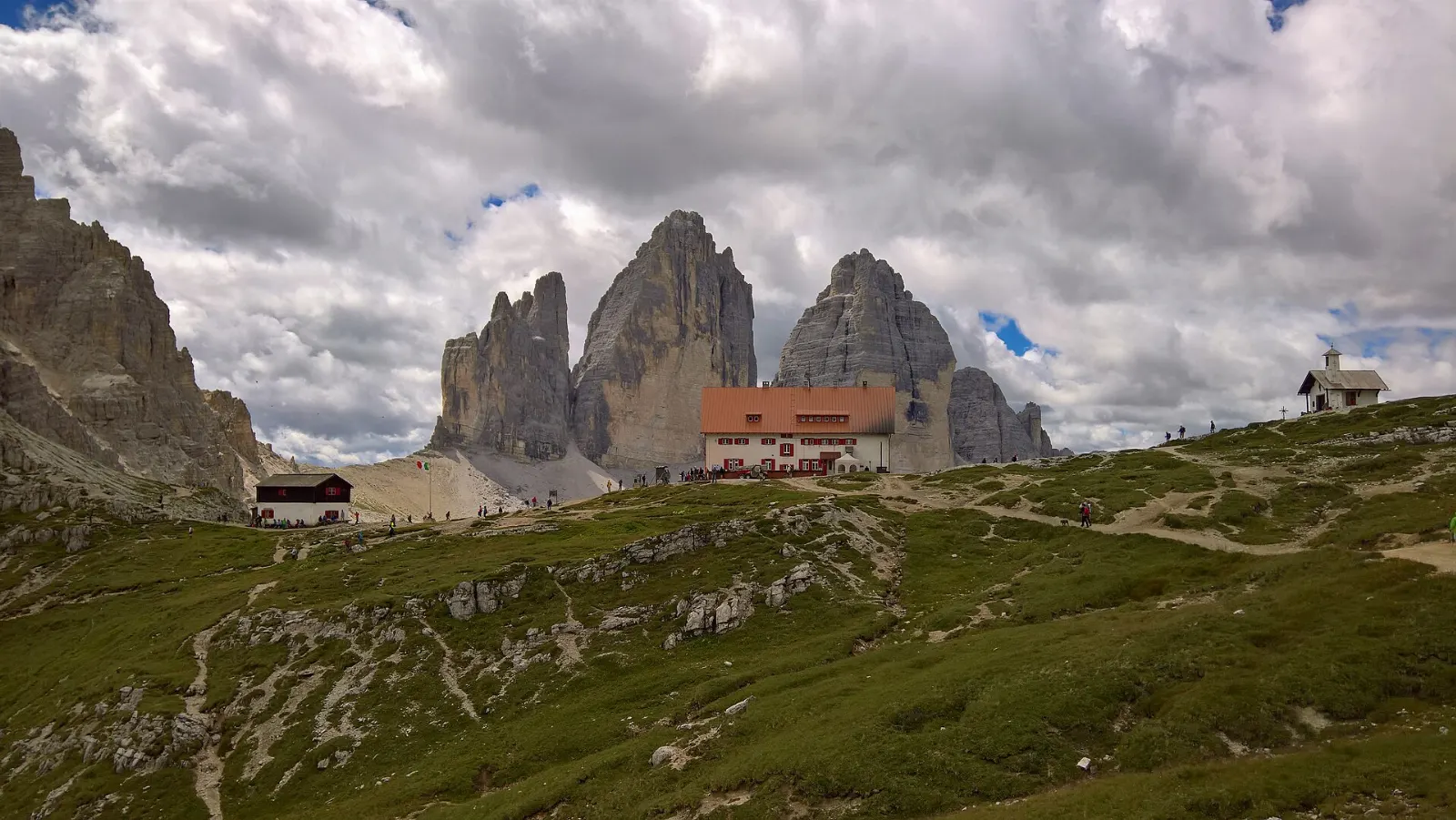
A stone mountain hut on a grassy saddle facing three rock towers, Dolomites, Italy

Tre Cime di Lavaredo

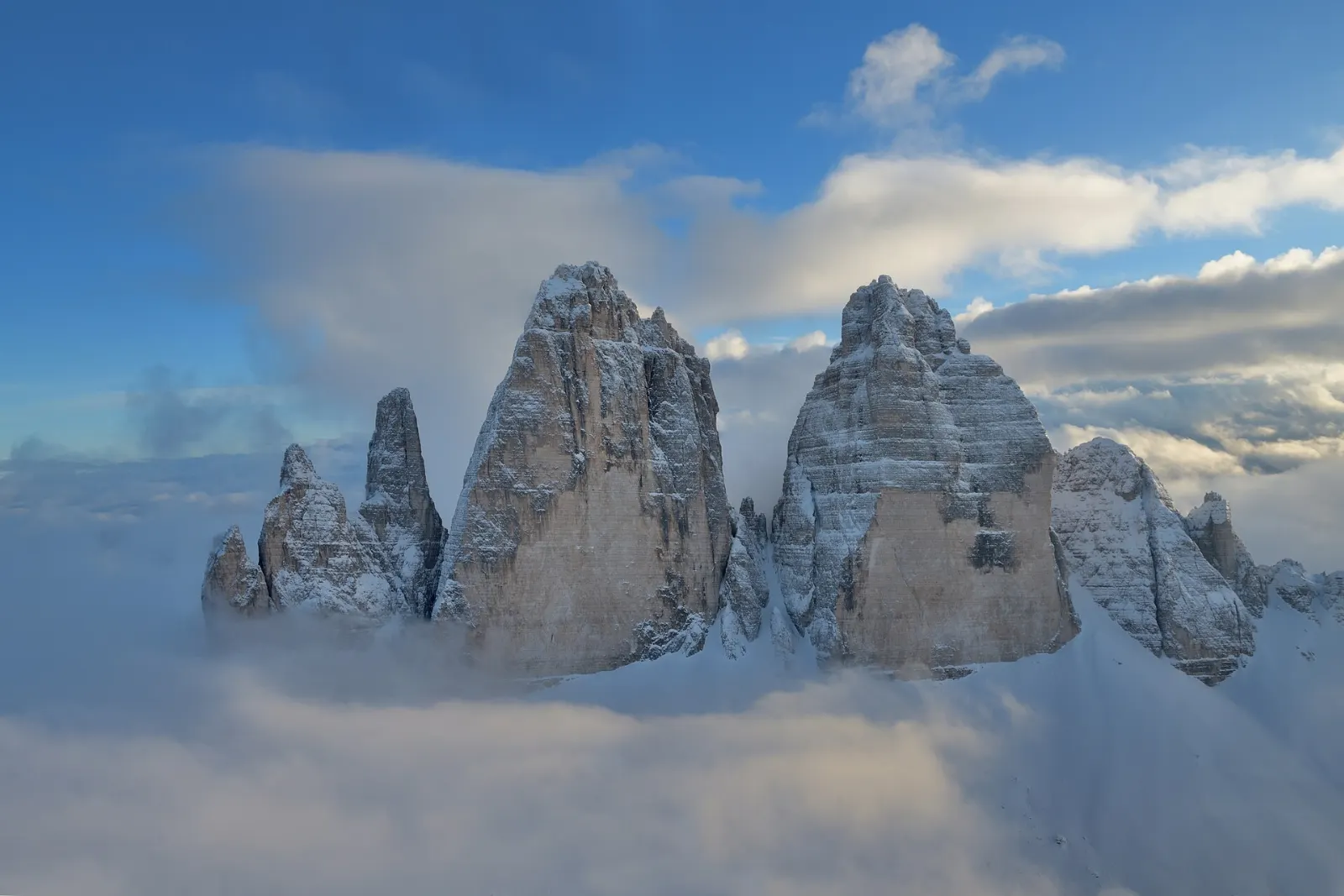
The Three Peaks, or Drei Zinnen in German, are the emblem of the Dolomites: Cima Piccola, Cima Grande and Cima Ovest, three battlement-like towers in the Sexten Dolomites.

Allow three to four hours for the loop, plus time to linger. Arrive early, because the toll road and car park fill fast in summer and access rules have been tightened in recent seasons; check the official website before you go.

Rifugio Locatelli, also called the Dreizinnenhütte, faces the north walls of the Tre Cime on the classic loop. Photo: Mirko Barsanti, Wikimedia Commons, CC BY-SA 4.0
Wooden rowing boats on an emerald lake beneath a steep limestone peak, Dolomites, Italy

Lago di Braies

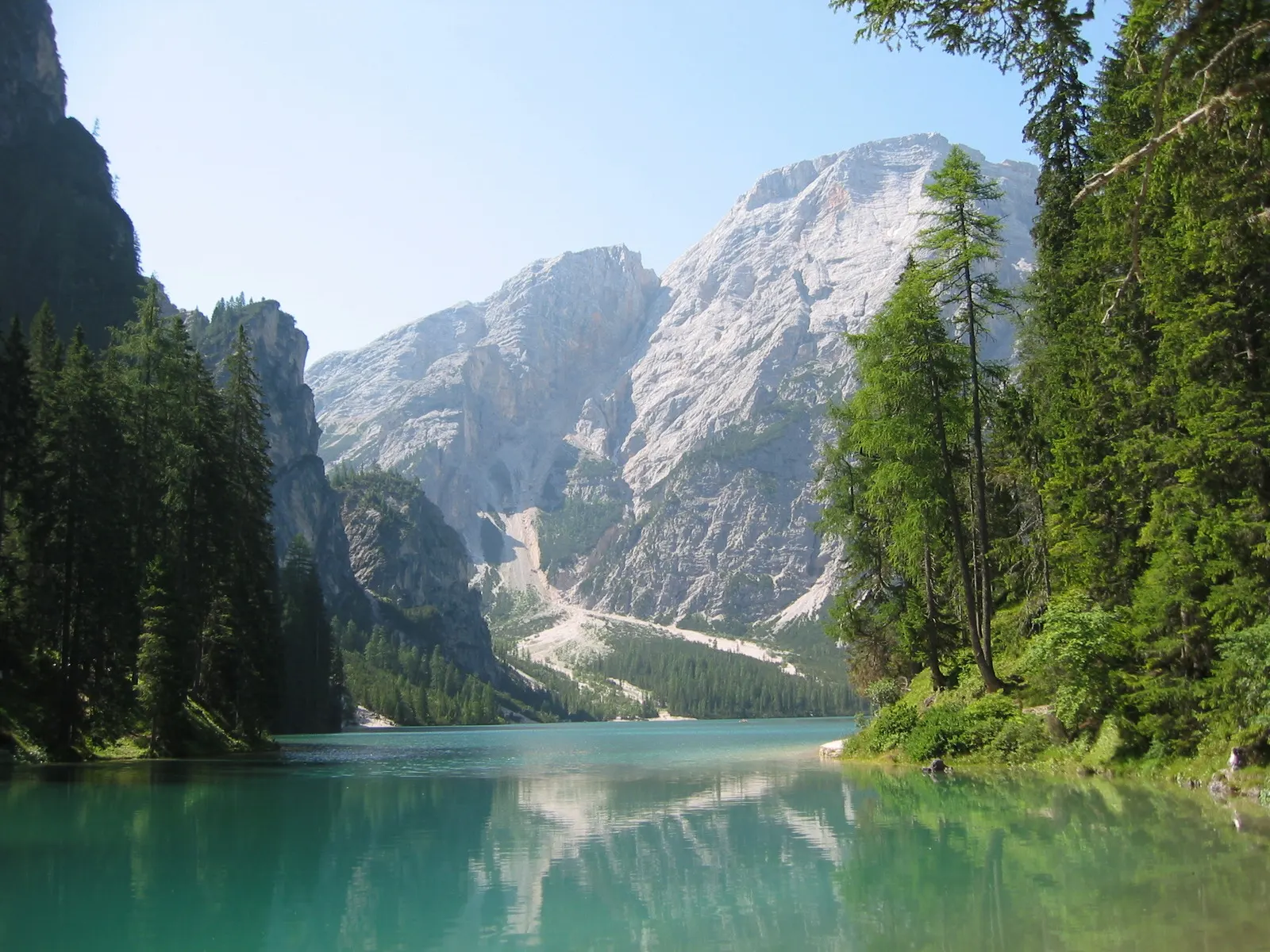
Known in German as the Pragser Wildsee, this lake sits at the foot of the Seekofel in the Fanes-Sennes-Prags nature park.

Popularity became a problem: on peak summer days thousands of visitors arrived, and vehicle access in high season has been restricted since 2023. Come by bus, or plan to arrive very early or late in the day, and check current access rules before driving up the valley.

Lago di Braies lies at the foot of the Seekofel, or Croda del Becco, in the Fanes-Sennes-Prags nature park. Photo: STirol, Wikimedia Commons, CC BY-SA 3.0

Cortina d'Ampezzo and the Ampezzo Dolomites

Cortina d'Ampezzo

Cortina is the most glamorous town in the range.

Allow half a day for the town itself. Prices and crowds peak in August and over Christmas, so book early for those periods.

A cluster of pale gray rock towers on a high grassy shoulder, Dolomites, Italy

Cinque Torri and Lagazuoi

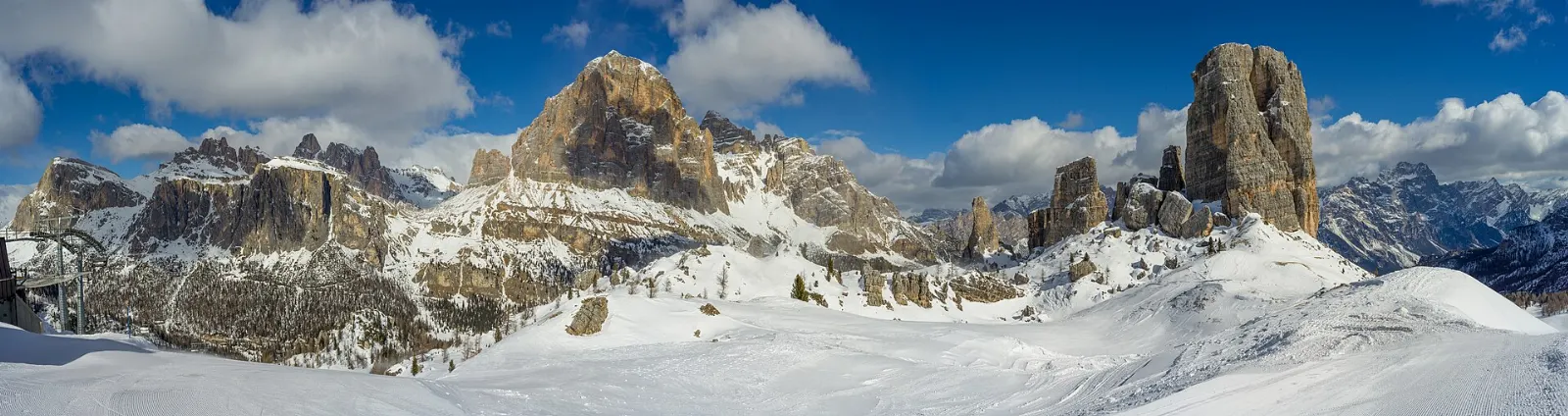
West of Cortina toward Passo Falzarego, the Cinque Torri are five rocky towers on a grassy shoulder, reached by chairlift. The area holds restored First World War trenches and positions, part of an open-air museum.

Allow a full day to combine both. The tunnel route involves steep steps and cables, so take it only in dry conditions and with proper shoes.

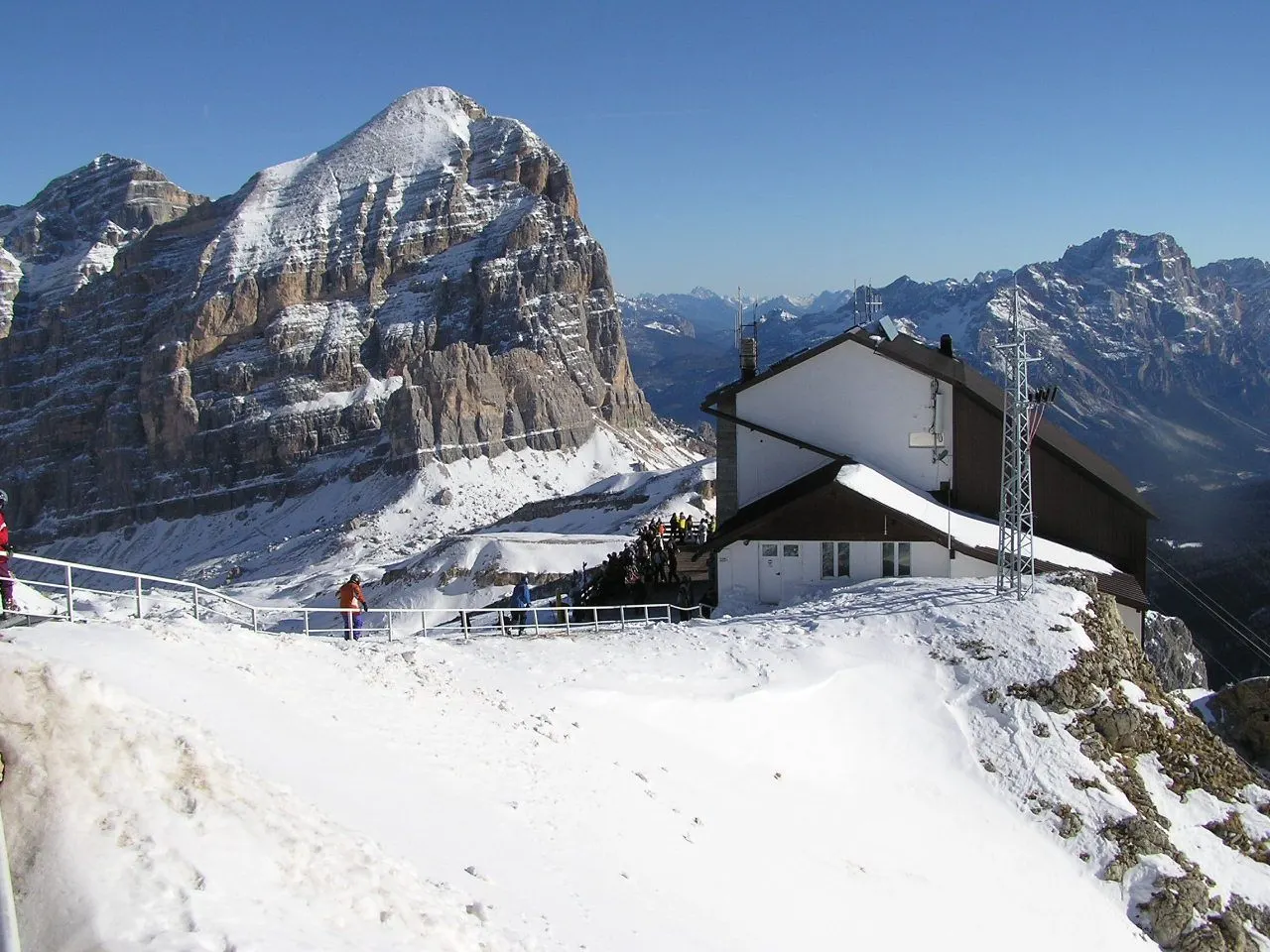
From the top of the Lagazuoi, the panorama takes in the Tofane, the Marmolada and the peaks of Alta Badia, and a refuge near the summit serves lunch with that view.

Cinque Torri, the Five Towers, rise near Cortina d'Ampezzo, with Torre Grande reaching about 2,361 meters. Photo: This Photo was taken by Wolfgang Moroder. Feel free to use my photos, but please mentio…, Wikimedia Commons, CC BY-SA 3.0

A mountain refuge perched on a high rocky summit above the clouds, Dolomites, Italy
The Lagazuoi, reached by cable car, holds First World War tunnels now preserved as an open-air museum.Photo: Guba Zoky Rabko, Wikimedia Commons, CC BY-SA 3.0

Lago di Sorapis

Hidden in a cirque beneath the Sorapiss group, this lake is famous for its milky turquoise water.

Val Gardena, Seiser Alm and Val di Funes

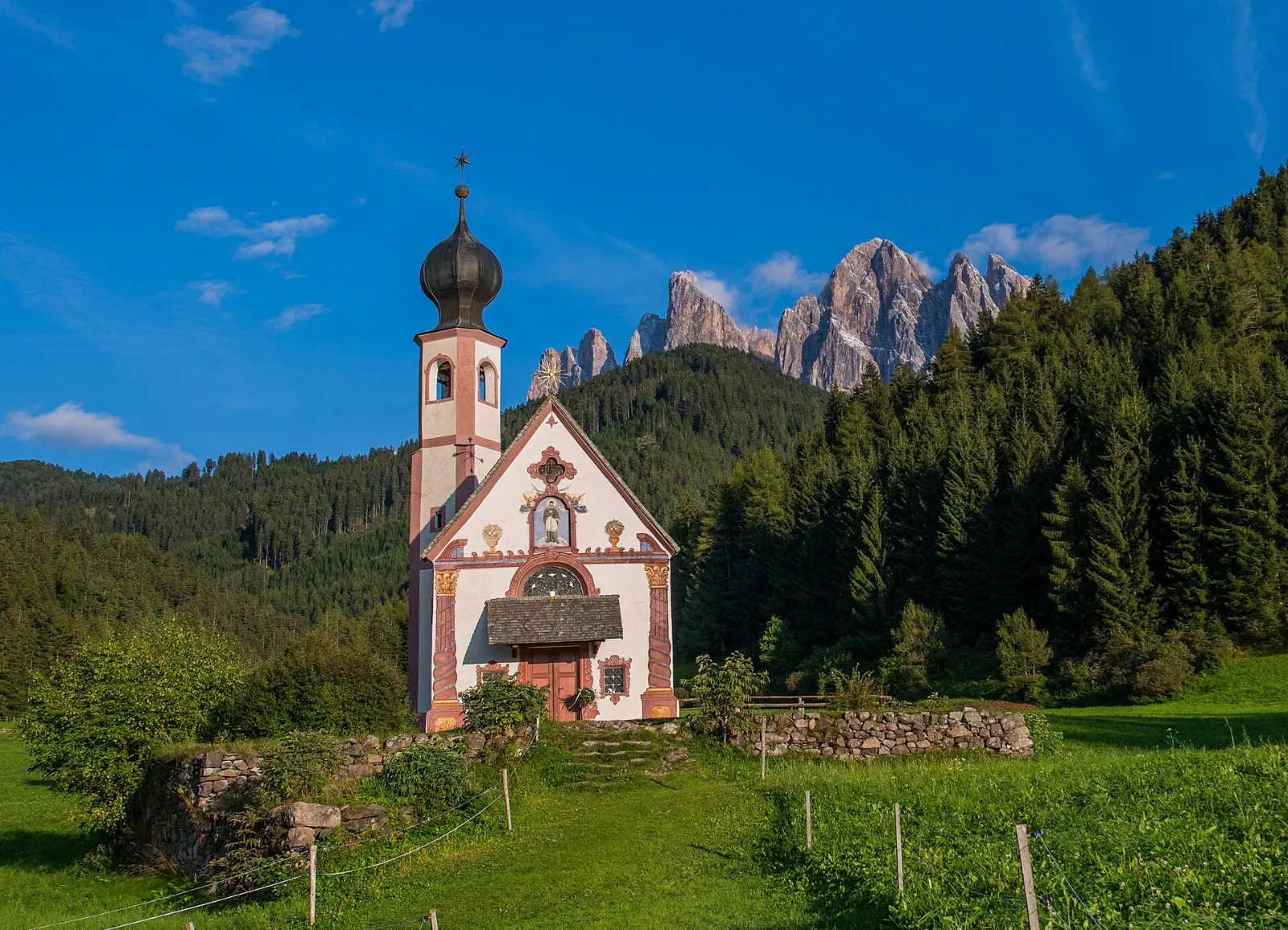
A small baroque chapel in a meadow beneath the jagged Odle peaks, Dolomites, Italy

Val di Funes

East of the Isarco valley, the Villnöss valley, known in Italian as Val di Funes, is quieter and greener than its neighbors.

Allow half a day for the viewpoints and a full day to hike. Respect private farmland around the chapel, and use the designated viewing areas and car parks.

The chapel of St. Johann in Ranui stands in the Villnöss valley, also known as Val di Funes. Photo: Feel free to use my photos, but please mention me as the author and if you want send me…, Wikimedia Commons, CC BY-SA 3.0 at

Lago di Carezza, the Marmolada and the high passes

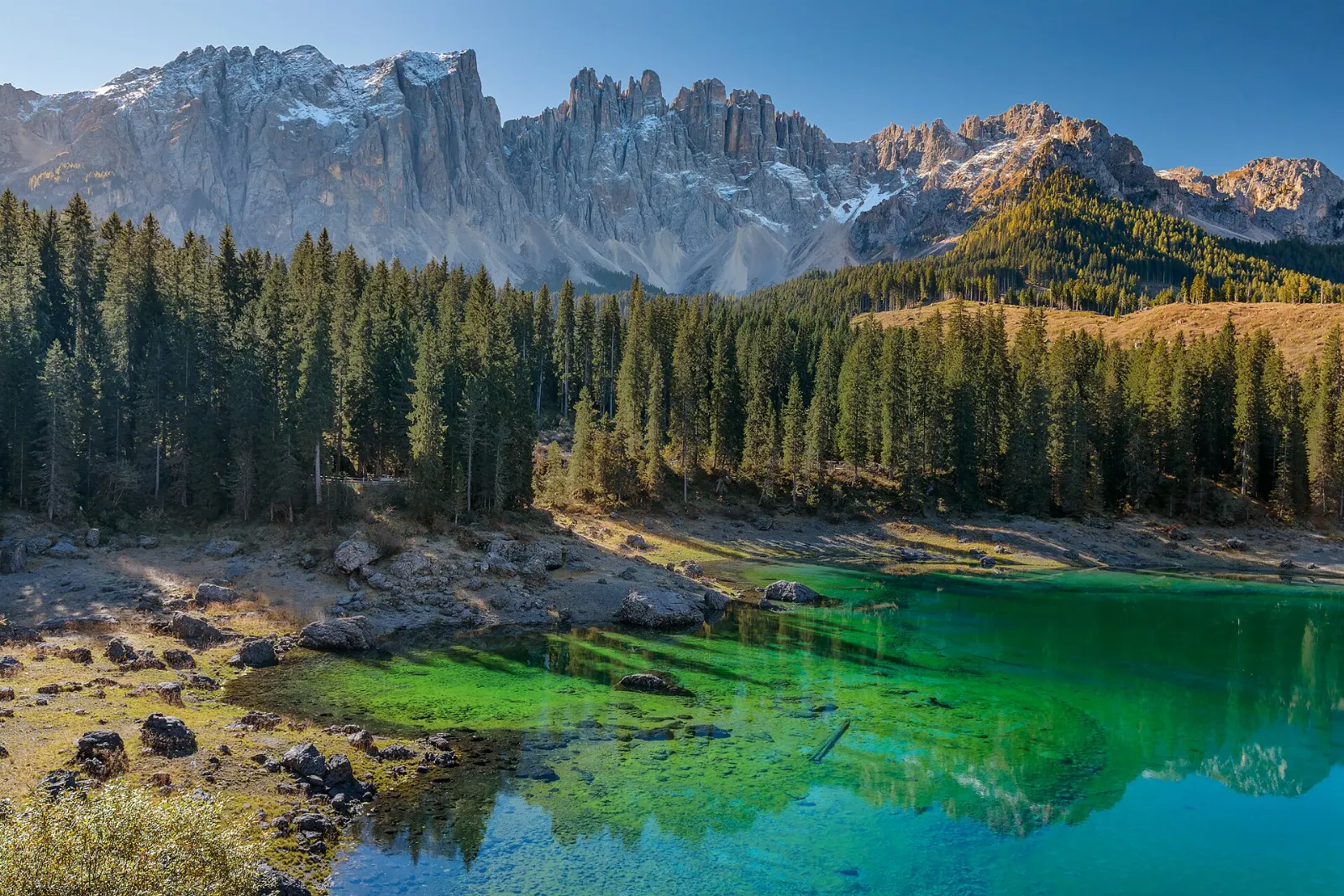
A small green lake framed by forest and the pale spires of the Latemar, Dolomites, Italy

Lago di Carezza

On the road between Bolzano and Val di Fassa, this small alpine lake, Karersee in German, reflects the spires of the Latemar and the forests around it. A short path circles the water, and the colors are strongest on calm mornings.

Lago di Carezza, or Karersee, is known for its colors and its view of the Latemar range. Photo: Ximonic (Simo Räsänen), Wikimedia Commons, CC BY-SA 4.0

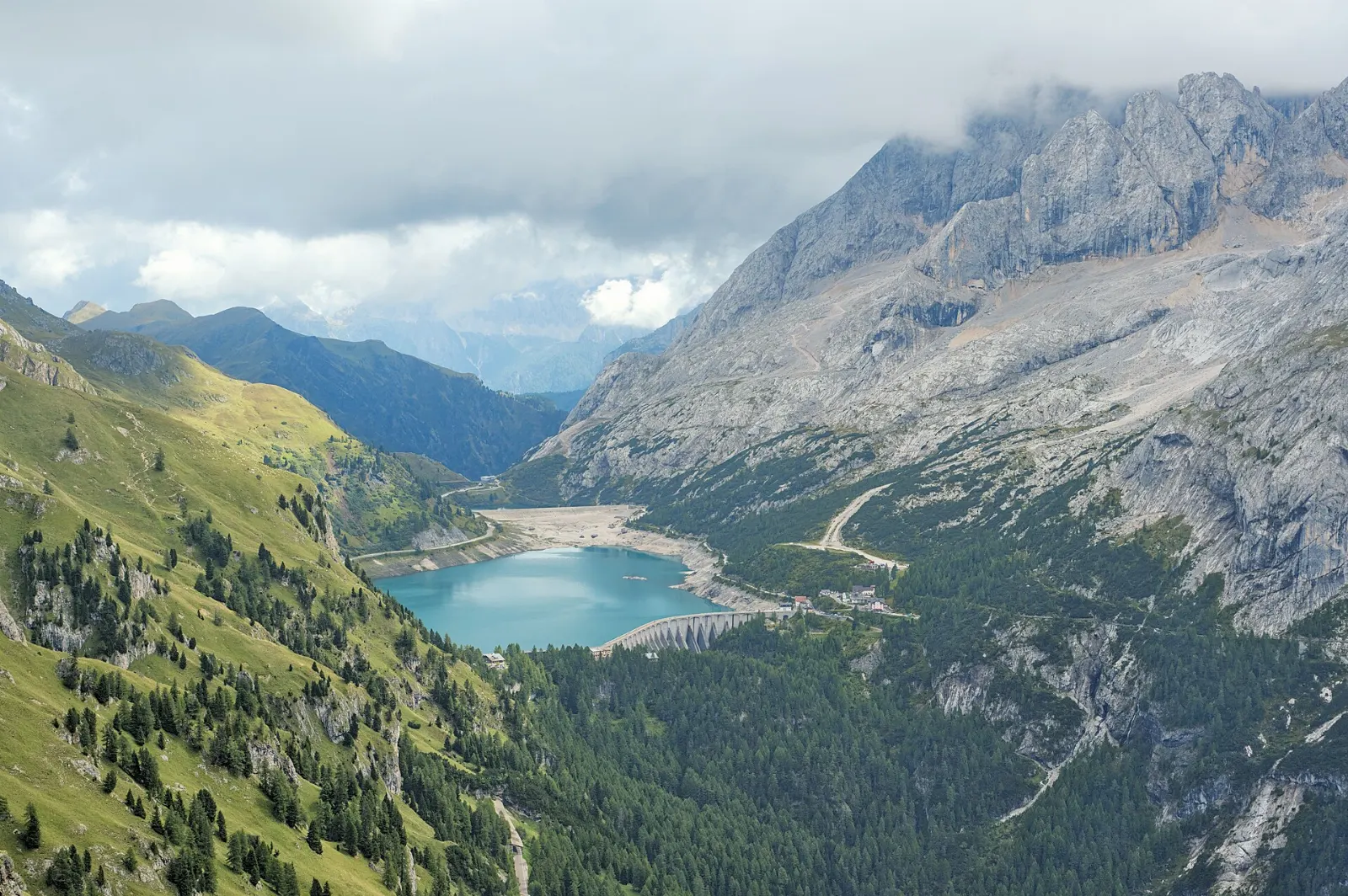
A glacier-topped mountain above a turquoise reservoir, Dolomites, Italy

Marmolada

The Marmolada, at about 3,343 meters, is the highest mountain in the Dolomites and carries the largest glacier in the range on its northern side. Known as the Queen of the Dolomites, it was part of the Austro-Hungarian front line during the First World War.

Allow half a day. Stay on marked routes, and only venture onto the glacier with a qualified mountain guide.

The Marmolada is the highest mountain in the Dolomites and carries the range's largest glacier. Photo: Dmitry Djouce, Wikimedia Commons, CC BY 4.0

Passo Giau and the Sella Pass

Driving the high passes is part of the experience.

Food and local flavors

Dolomite cooking blends Tyrolean, Ladin and Italian traditions. Look for canederli, or Knödel, bread dumplings made with speck, cheese or spinach and served in broth or with melted butter.

Mountain huts, called rifugi or Hütten, are a highlight. Many serve hearty polenta with mushrooms or goulash, barley soup and Kaiserschmarrn, a torn, caramelized pancake with fruit compote, alongside apple strudel.

Popular dishes to try in Dolomites

Speck in Dolomites, Italy
Speck Speck, a juniper-scented smoked ham, appears on almost every menu.Photo: Kritzolina, Wikimedia Commons, CC BY-SA 4.0
Strudel in Dolomites, Italy
Strudel Many serve hearty polenta with mushrooms or goulash, barley soup and Kaiserschmarrn, a torn, caramelized pancake with fruit compote, alongside apple strudel.Photo: Petar Milošević, Wikimedia Commons, CC BY-SA 4.0
Polenta in Dolomites, Italy
Polenta Many serve hearty polenta with mushrooms or goulash, barley soup and Kaiserschmarrn, a torn, caramelized pancake with fruit compote, alongside apple strudel.Photo: Andy Li, Wikimedia Commons, CC0

Where to stay

Val Gardena (Ortisei, Santa Cristina and Selva) suits first-time visitors with its lifts to Seceda and Seiser Alm, good buses and a wide choice of hotels and apartments.

Cortina d'Ampezzo suits travelers who want a lively town, shopping and access to Cinque Torri, Sorapis and the Tre Cime.

Kastelruth and Seis work well for Seiser Alm, while Bolzano and Brixen offer city life, museums and train connections for travelers without a car.

Where to stay in Dolomites

Selva, Dolomites, Italy
Selva Where to stayVal Gardena (Ortisei, Santa Cristina and Selva) suits first-time visitors with its lifts to Seceda and Seiser Alm, good buses and a wide choice of hotels and…Photo: This Photo was taken by Wolfgang Moroder. Feel free to use my photo…, Wikimedia Commons, CC BY-SA 3.0
Seceda, Dolomites, Italy
Seceda Where to stayVal Gardena (Ortisei, Santa Cristina and Selva) suits first-time visitors with its lifts to Seceda and Seiser Alm, good buses and a wide choice of hotels and…Photo: This Photo was taken by Wolfgang Moroder. Feel free to use my photo…, Wikimedia Commons, CC BY-SA 3.0
Seiser Alm, Dolomites, Italy
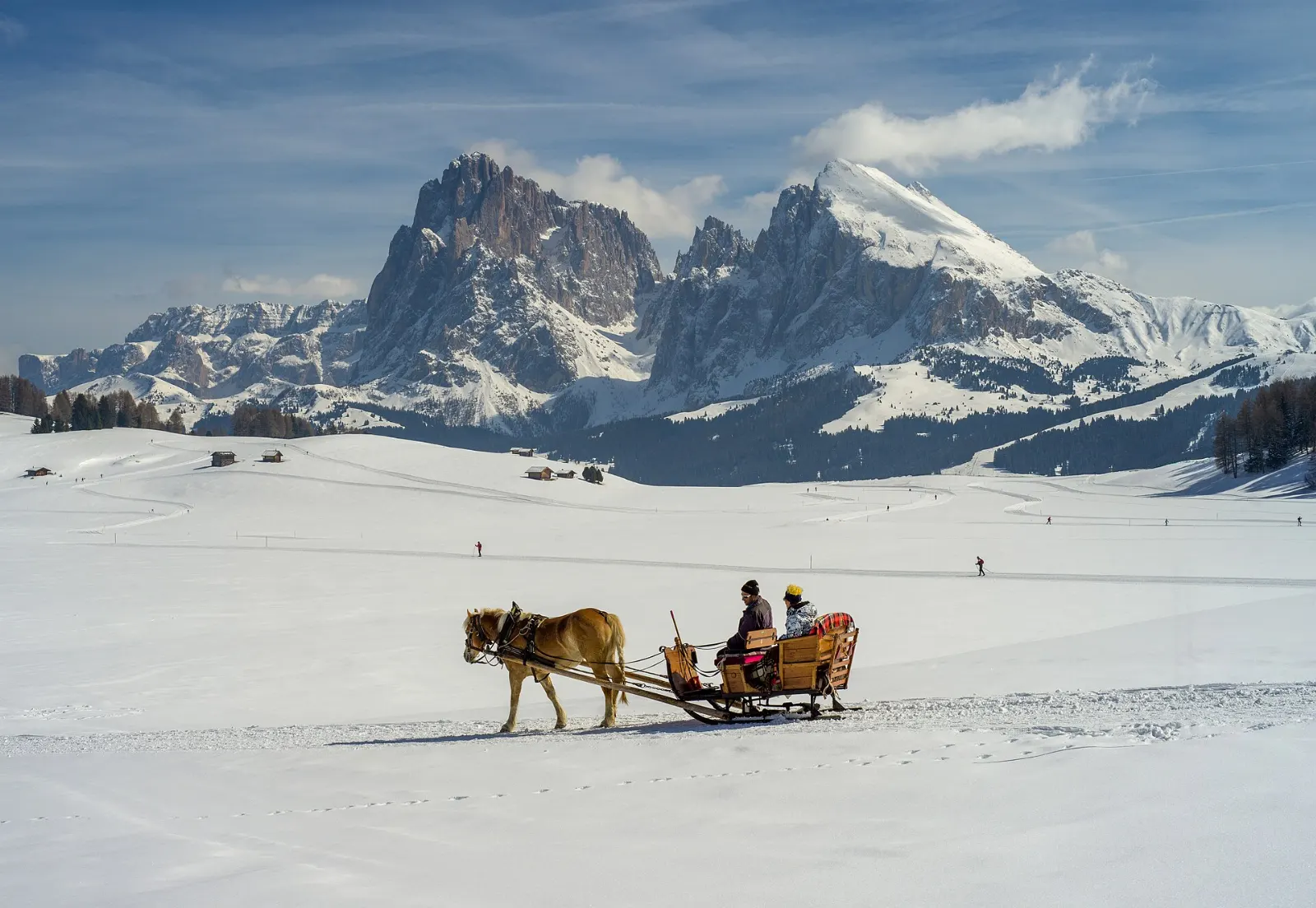
Seiser Alm Where to stayVal Gardena (Ortisei, Santa Cristina and Selva) suits first-time visitors with its lifts to Seceda and Seiser Alm, good buses and a wide choice of hotels and…Photo: This Photo was taken by Wolfgang Moroder. Feel free to use my photo…, Wikimedia Commons, CC BY-SA 3.0
Sella Pass, Dolomites, Italy
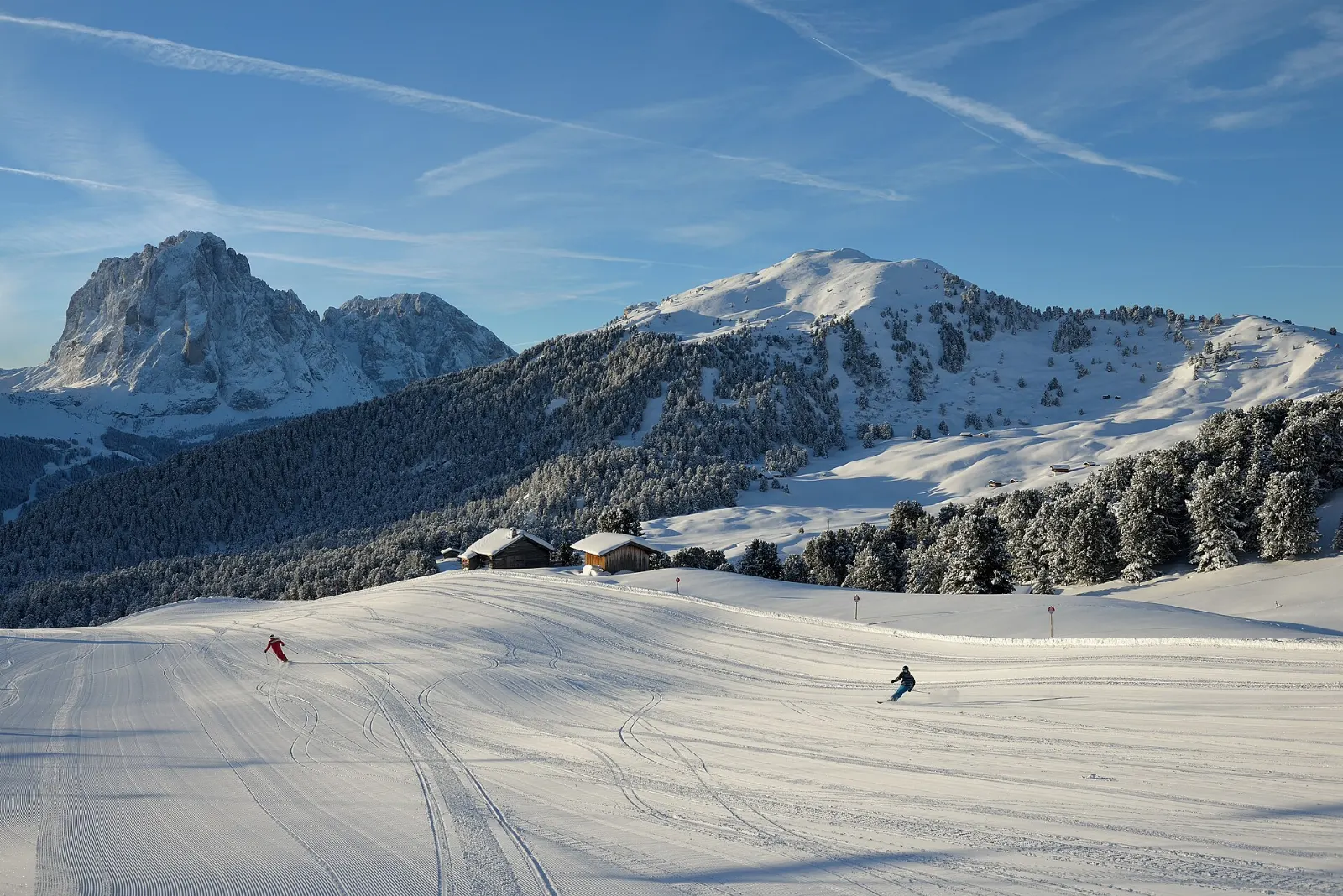
Sella Pass Alta Badia (Corvara and La Villa) is quieter and known for food and Ladin culture, with easy access to the Sella Pass and Lagazuoi.Photo: This Photo was taken by Wolfgang Moroder. Feel free to use my photo…, Wikimedia Commons, CC BY-SA 3.0

Best time to visit

The hiking season runs from about mid-June to late September, when lifts and huts are open.

Winter, from December to March, belongs to skiers. The Dolomiti Superski network links dozens of resorts, and the Sella Ronda circuit loops around the Sella group by lift and piste.

Getting there and getting around

Venice Marco Polo and Treviso airports serve Cortina and the eastern Dolomites, while Verona and Innsbruck are convenient for South Tyrol and Trentino; Munich is a longer but well-connected option.

A car gives the most freedom, but summer traffic on the passes can be heavy and parking at trailheads fills early.

A suggested itinerary

First day

Arrive in Val Gardena and ride up to Seceda in the morning.

Second day

Take the gondola to Seiser Alm and walk among the meadows toward the Sassolungo, stopping at huts along the way.

Third day

Drive to Val di Funes for the morning view of St. Johann in Ranui, then cross the Sella Pass toward Alta Badia, pausing at viewpoints along the way.

Fourth day

Continue over Passo Falzarego, ride to the Lagazuoi and walk down past the wartime tunnels, then visit the Cinque Torri before settling in Cortina.

Fifth day

Start early for the Tre Cime loop, then finish with a late-afternoon walk around Lago di Braies when the crowds thin.

Practical tips

  • Book rifugi and summer hotels months ahead, especially for July and August.
  • Check lift and hut opening dates; many close between seasons.
  • Start hikes early to avoid afternoon storms and the busiest car parks.
  • Carry cash for remote huts, though many now accept cards.
  • Pack layers, a rain jacket and sturdy boots; weather changes fast above the tree line.
  • Learn a few greetings in German and Italian, and expect Ladin in some valleys.
DolomitesWISERMAP PLACEDolomites: photos, reviews & things to doSee traveler photos and reviews, or share your own →

More places to visit

All travel guides →