WiserMap — Choose wisely. Connect locally.Choose wisely. Connect locally.Add your business
Kraków, Poland · Travel guide

Kraków Poland Market Square Wawel Hill and Kazimierz

Kraków was Poland's royal capital for centuries, and unlike many central European cities it came through the Second World War with its historic centre largely intact.

By WiserMap TravelUpdated October 2026 9 places11 min read
FacebookXLinkedIn

Kraków is also a place of memory. Its Jewish quarter, its wartime ghetto and the nearby former Nazi German camp at Auschwitz-Birkenau tell some of the most important and painful history of the twentieth century.

At a glance Kraków
  1. Best timeMay, June and September for mild weather; December for the Christmas market.
  2. How longThree to four days, including separate days for Wieliczka and Auschwitz-Birkenau.
  3. Getting thereFly into Kraków Airport at Balice or arrive by train at Kraków Główny.

Why visit Kraków

The historic centre of Kraków was among the first places added to the UNESCO World Heritage List, in 1978, and walking it feels like moving through a millennium of Polish history.

The city is also lively and young, with a large student population, cellar bars, cafes in old townhouses and a creative scene in Kazimierz and Podgórze.

The Old Town and the Royal Way

The Old Town is ringed by the Planty, a park laid out where the medieval walls once stood.

Main Market Square

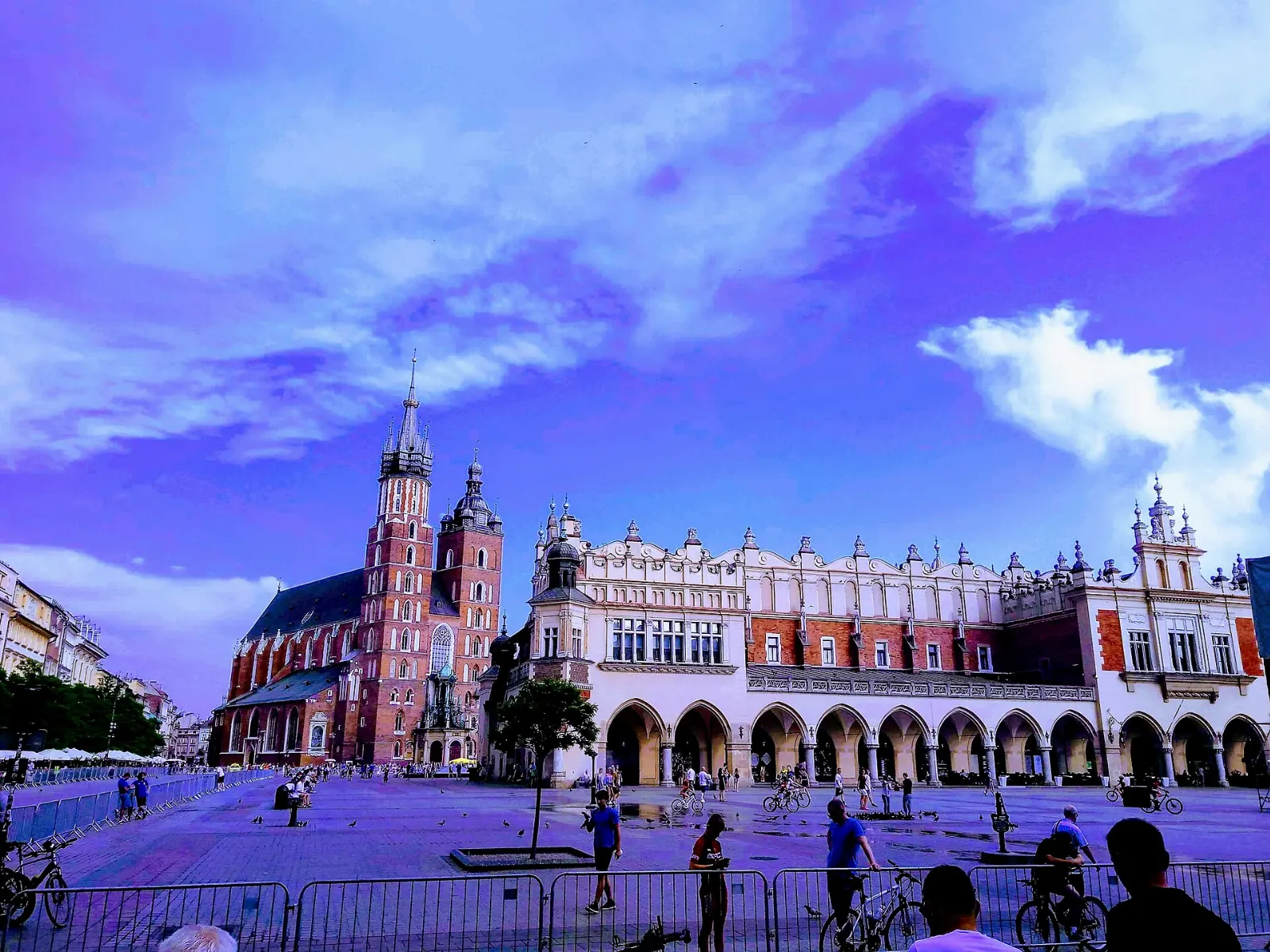
Rynek Główny is one of the largest medieval town squares in Europe. Around it stand grand townhouses, the lone Town Hall Tower and the small Church of St. Adalbert, one of the oldest buildings in the city.

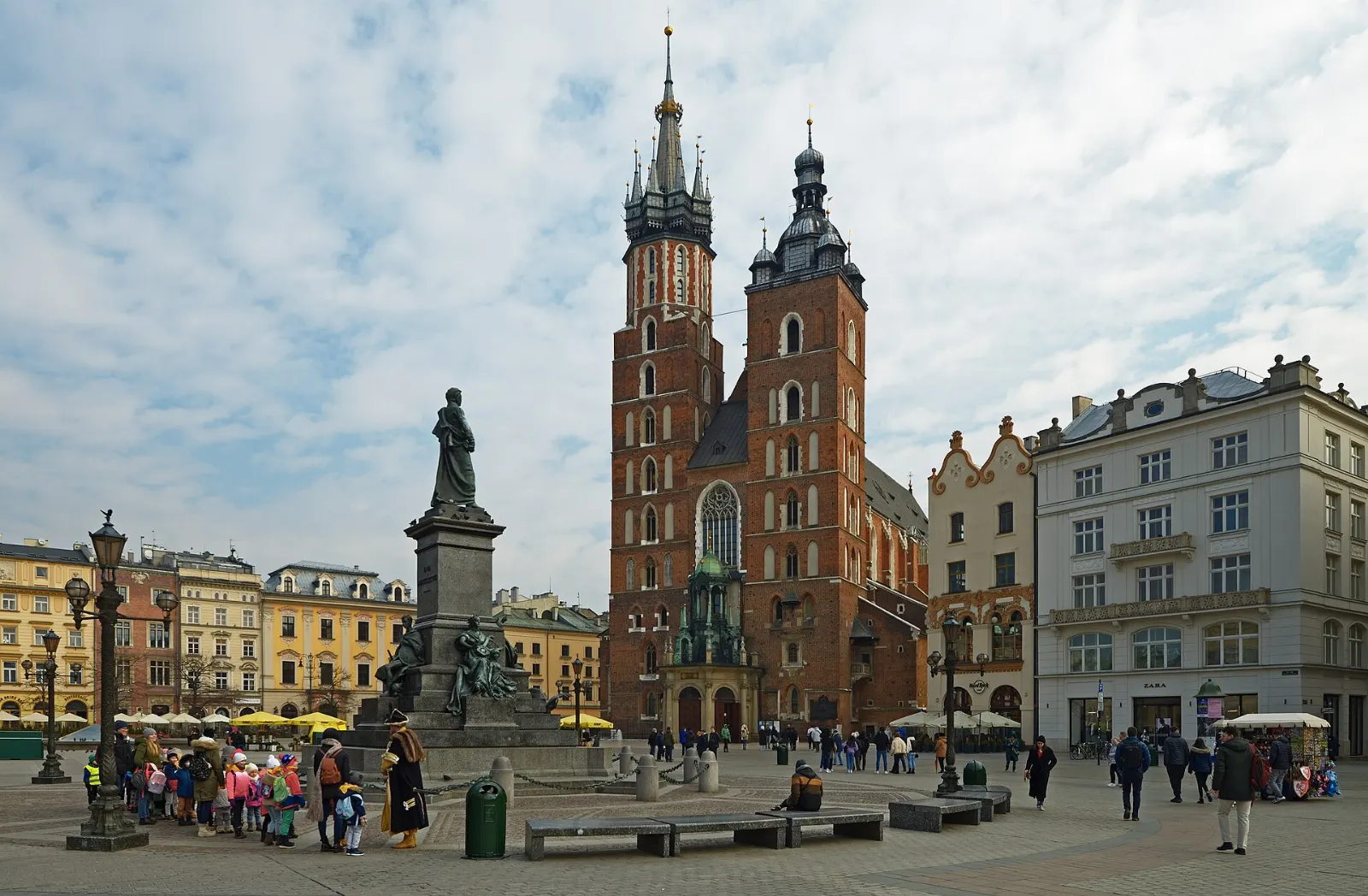
Two unequal Gothic brick towers of St. Mary's Basilica rising over the market square, Kraków, Poland

St. Mary's Basilica

The Gothic Basilica of St. Mary, with its two towers of different heights, dominates the square. Inside, the carved wooden altarpiece by Veit Stoss, completed in the late fifteenth century, is a masterpiece of late Gothic art, and the star-painted vault glows deep blue.

A trumpet signal called the hejnał is played every hour from the taller tower of St. Mary's Basilica. Photo: Ввласенко, Wikimedia Commons, CC BY-SA 3.0
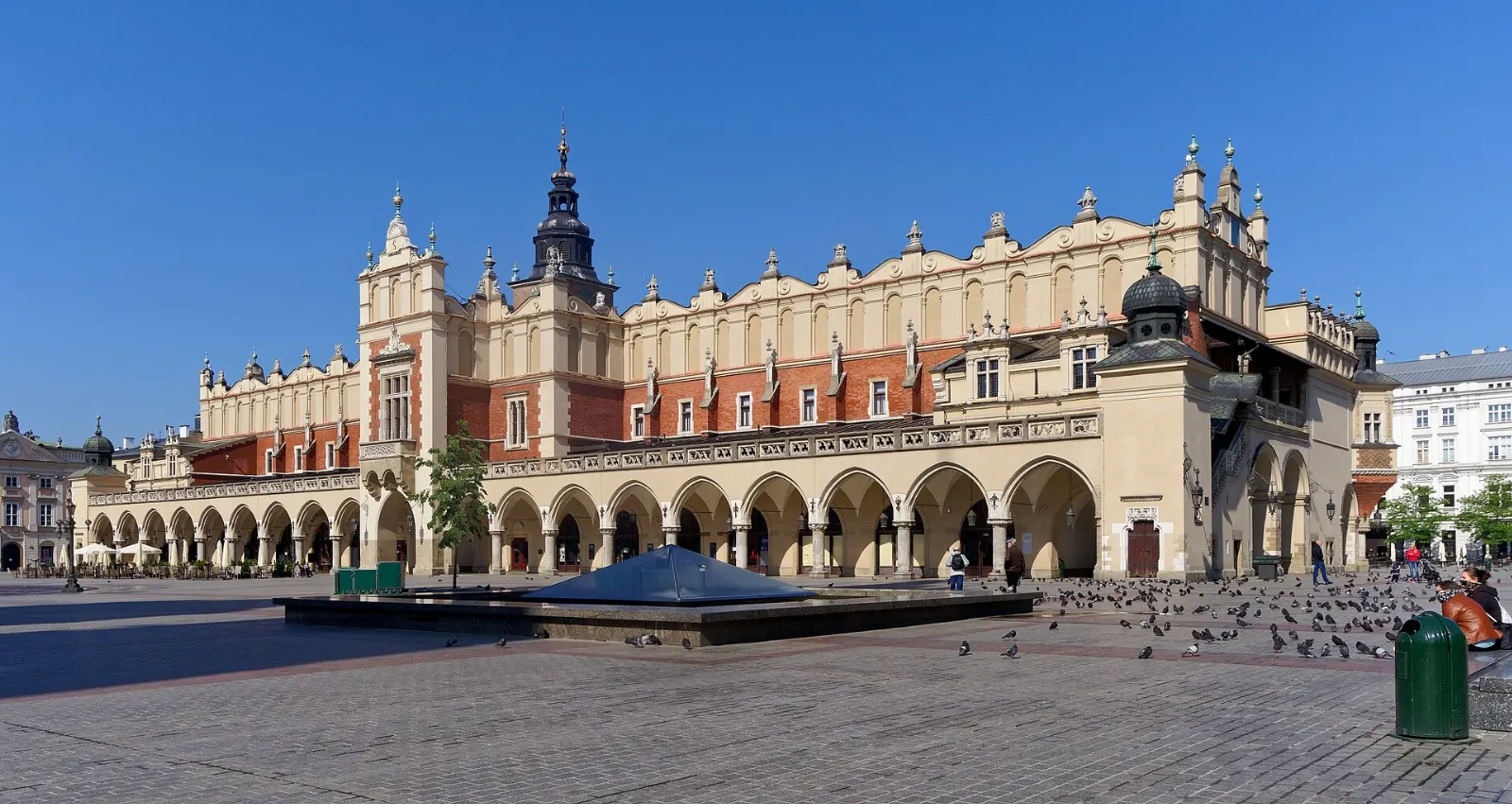
Renaissance arcades and decorative parapet of the Cloth Hall in the centre of the market square, Kraków, Poland

The Cloth Hall

Sukiennice, the long Renaissance trading hall in the centre of the square, still sells amber, wooden toys, lace and other crafts on its ground floor.

The Cloth Hall was once a centre of international trade and now holds souvenir stalls and an art gallery. Photo: Jakub Hałun, Wikimedia Commons, CC BY-SA 4.0

Czartoryski Museum

Just inside the line of the old walls, the Princes Czartoryski Museum holds one of the most famous paintings in Poland, Leonardo da Vinci's Lady with an Ermine, along with antiquities, armor and decorative arts.

Wawel Hill

The limestone hill of Wawel above the Vistula was the seat of Polish kings for over five centuries.

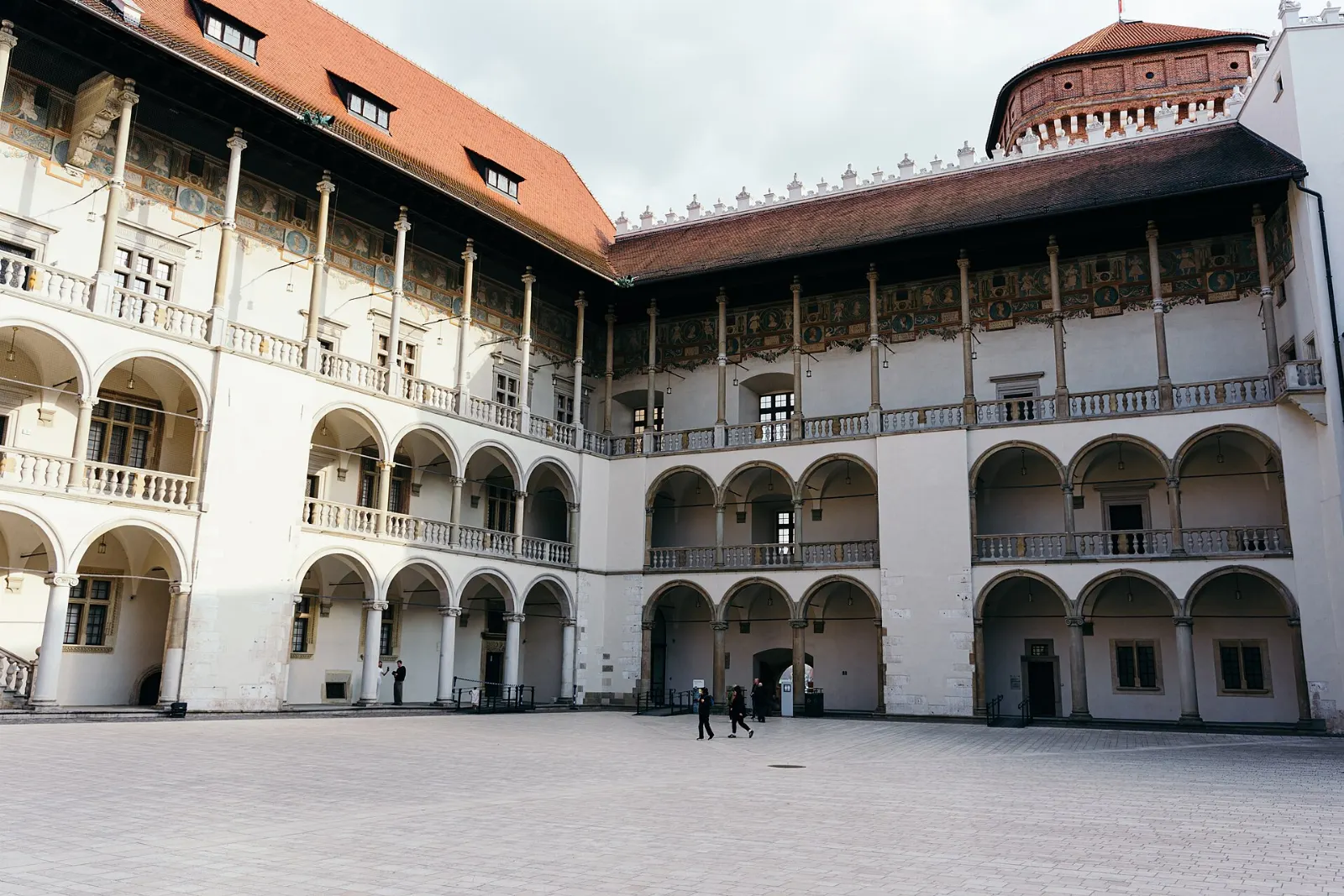
Arcaded Renaissance courtyard of Wawel Royal Castle, Kraków, Poland

Wawel Royal Castle

Built around an arcaded Renaissance courtyard, the castle holds the State Rooms and Royal Private Apartments, where the highlight is the collection of sixteenth-century Flemish tapestries commissioned by King Sigismund Augustus.

Wawel Royal Castle served as the residence of Polish kings for centuries. Photo: Lloyd Tudor, Wikimedia Commons, CC BY-SA 4.0

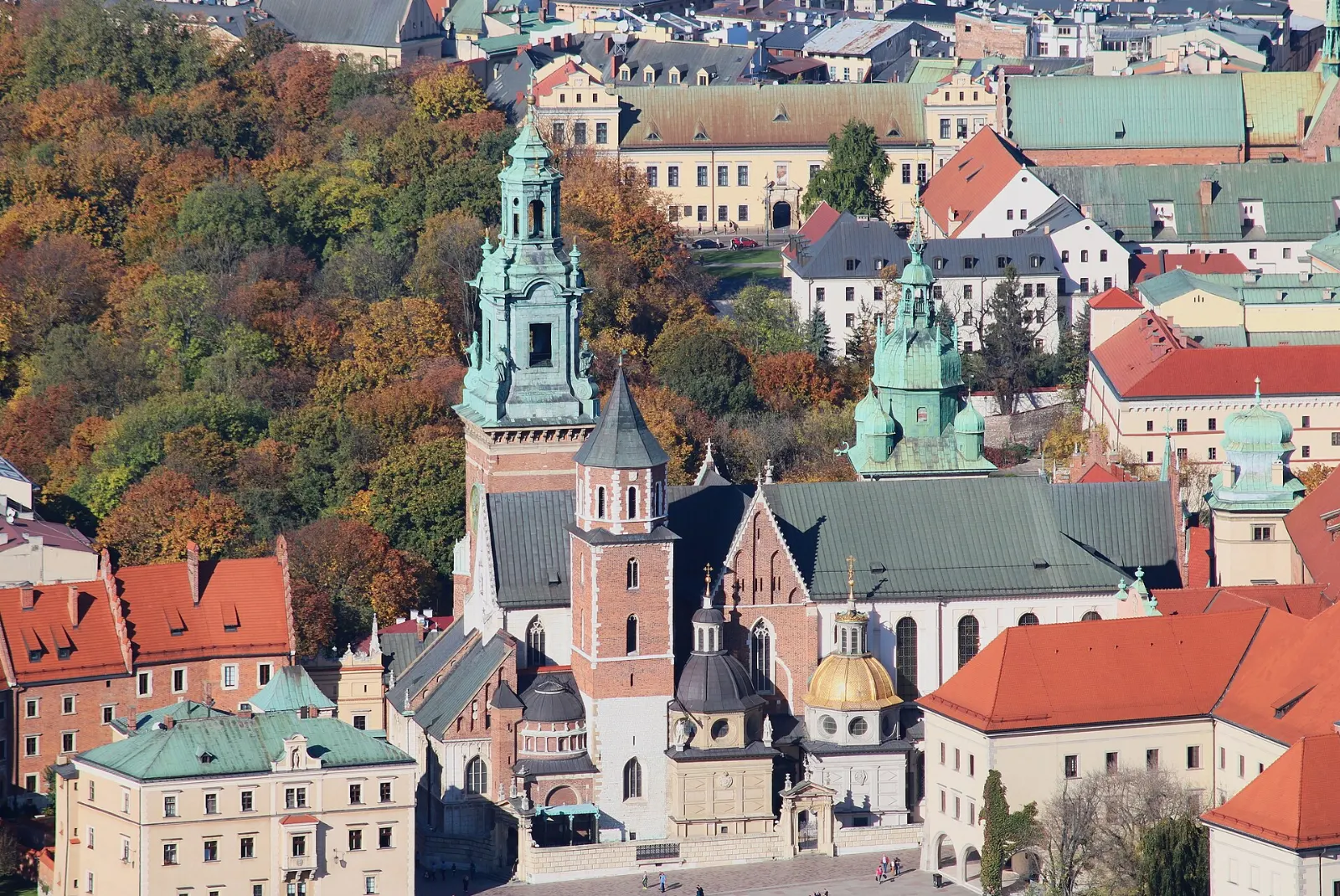
Wawel Cathedral with its gilded Sigismund Chapel dome on Wawel Hill, Kraków, Poland

Wawel Cathedral

For centuries Polish kings were crowned and buried in this cathedral, and its crypts hold royal tombs as well as national heroes and poets.

Wawel Cathedral was the coronation church of Polish monarchs and holds many royal tombs. Photo: Ingo Mehling, Wikimedia Commons, CC BY-SA 4.0

The Dragon's Den and the riverbank

Legend says a dragon lived in a cave beneath Wawel Hill. In the warmer months you can descend into the cave from the hill and emerge on the riverbank beside a metal dragon statue that breathes fire at intervals.

Kazimierz, Podgórze and wartime history

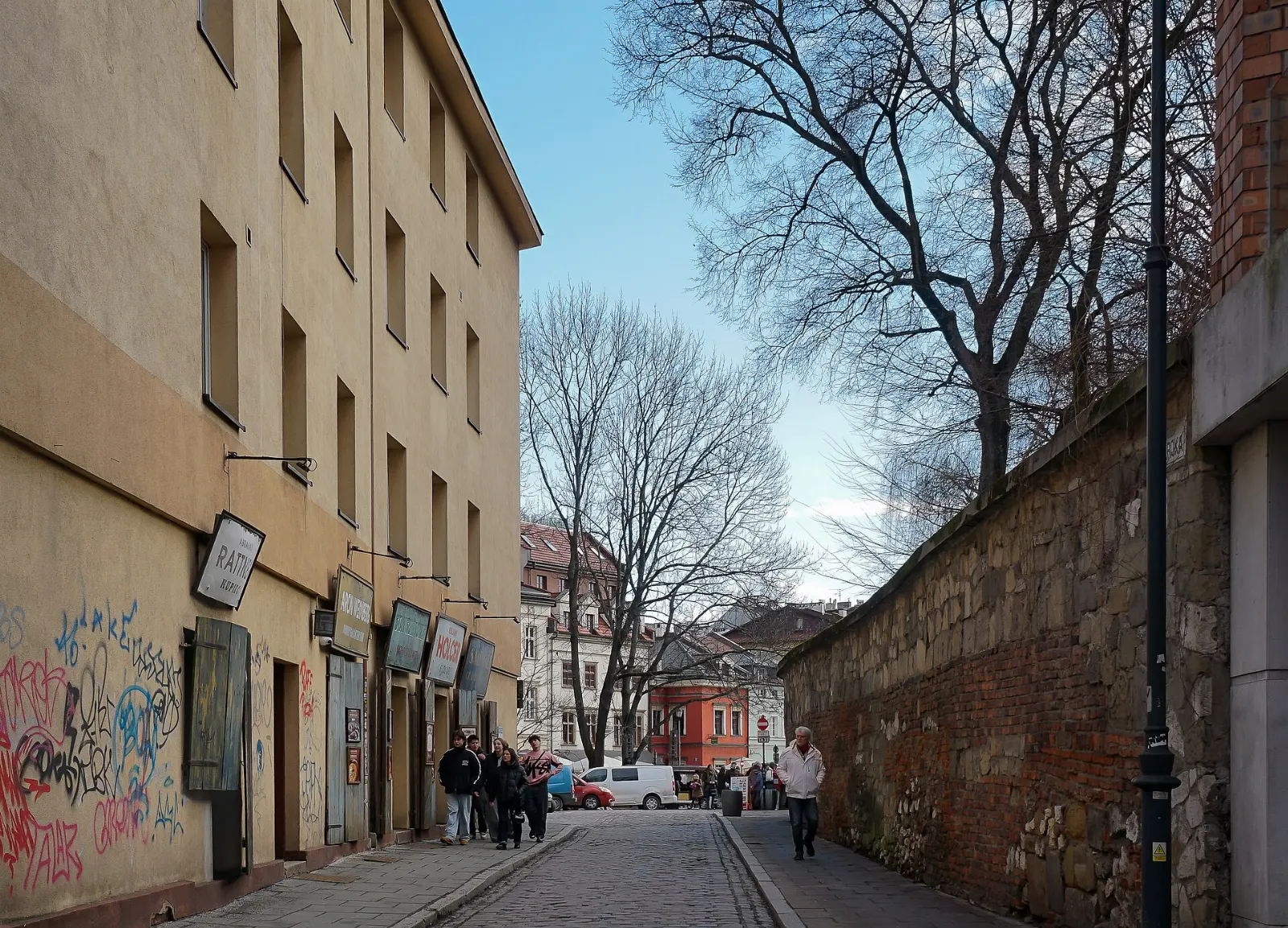
Broad cobbled Szeroka Street in Kazimierz lined with historic buildings, Kraków, Poland

Kazimierz

Founded as a separate town in the fourteenth century, Kazimierz became the centre of Jewish life in Kraków for hundreds of years. Before the war, tens of thousands of Jews lived in the city; very few survived the Holocaust.

Szeroka Street lies at the heart of Kazimierz, Kraków's historic Jewish district. Photo: Igor123121, Wikimedia Commons, CC BY-SA 4.0

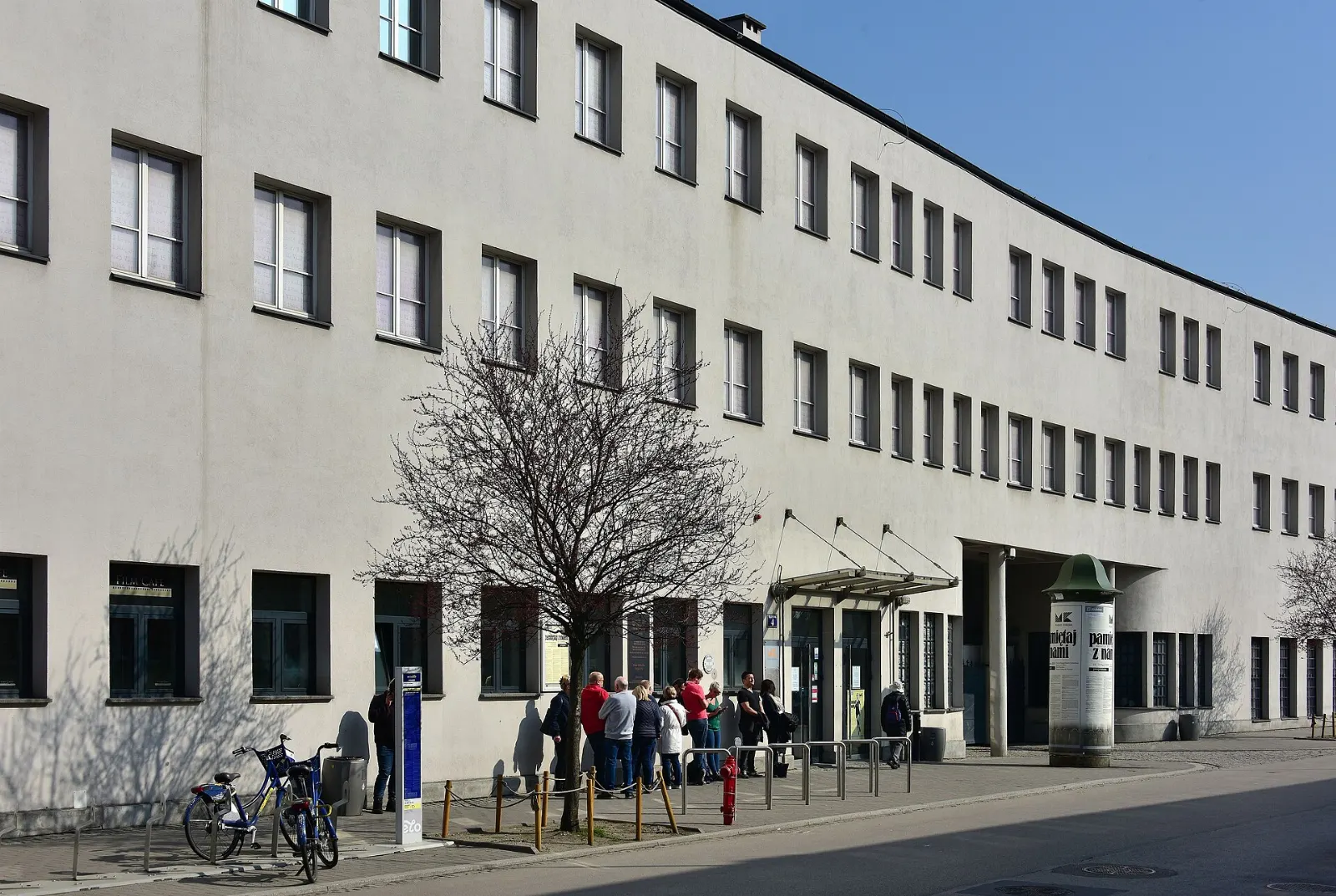
Entrance building of the former Oskar Schindler enamel factory in Podgórze, Kraków, Poland

Schindler's Factory

Across the river in Podgórze, the administrative building of Oskar Schindler's former enamel factory holds the Museum of Kraków's exhibition on the city under Nazi German occupation from 1939 to 1945. Through reconstructed streets, documents and personal stories, it covers daily life, resistance and the destruction of the Jewish community, including the workers Schindler protected.

The former Schindler factory now holds a Museum of Kraków exhibition on the city under Nazi German occupation. Photo: Adrian Grycuk, Wikimedia Commons, CC BY-SA 3.0 pl

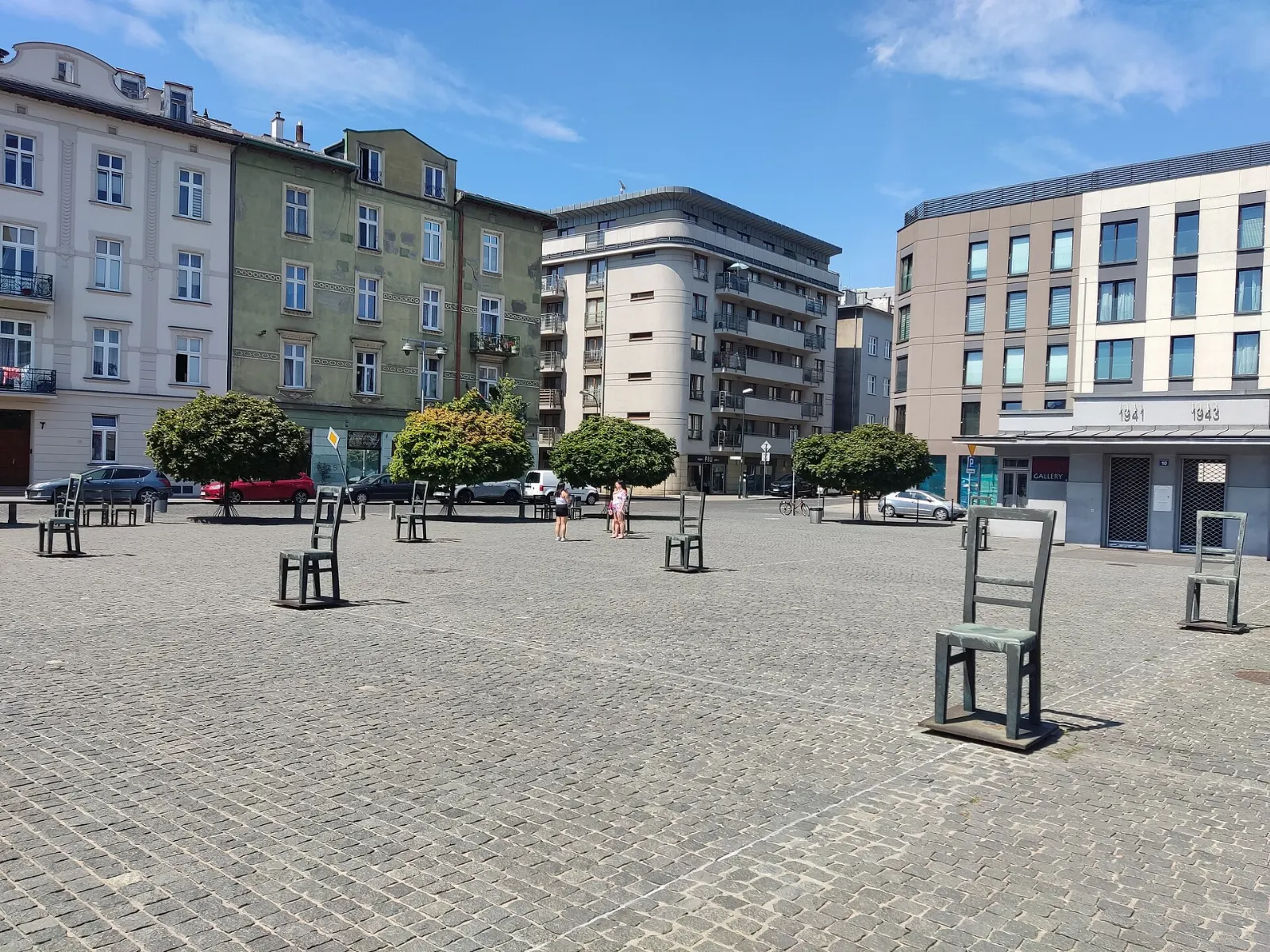
Rows of large metal chairs forming a memorial on Ghetto Heroes Square, Kraków, Poland

Ghetto Heroes Square and the Eagle Pharmacy

Between the river and the factory, Ghetto Heroes Square was the main square of the wartime Kraków Ghetto. A memorial of large empty chairs stands across it, recalling the furniture left behind when the ghetto was liquidated.

The empty chairs on Ghetto Heroes Square commemorate the Jews of the Kraków Ghetto. Photo: Stella T98, Wikimedia Commons, CC BY 4.0

Day trips from Kraków

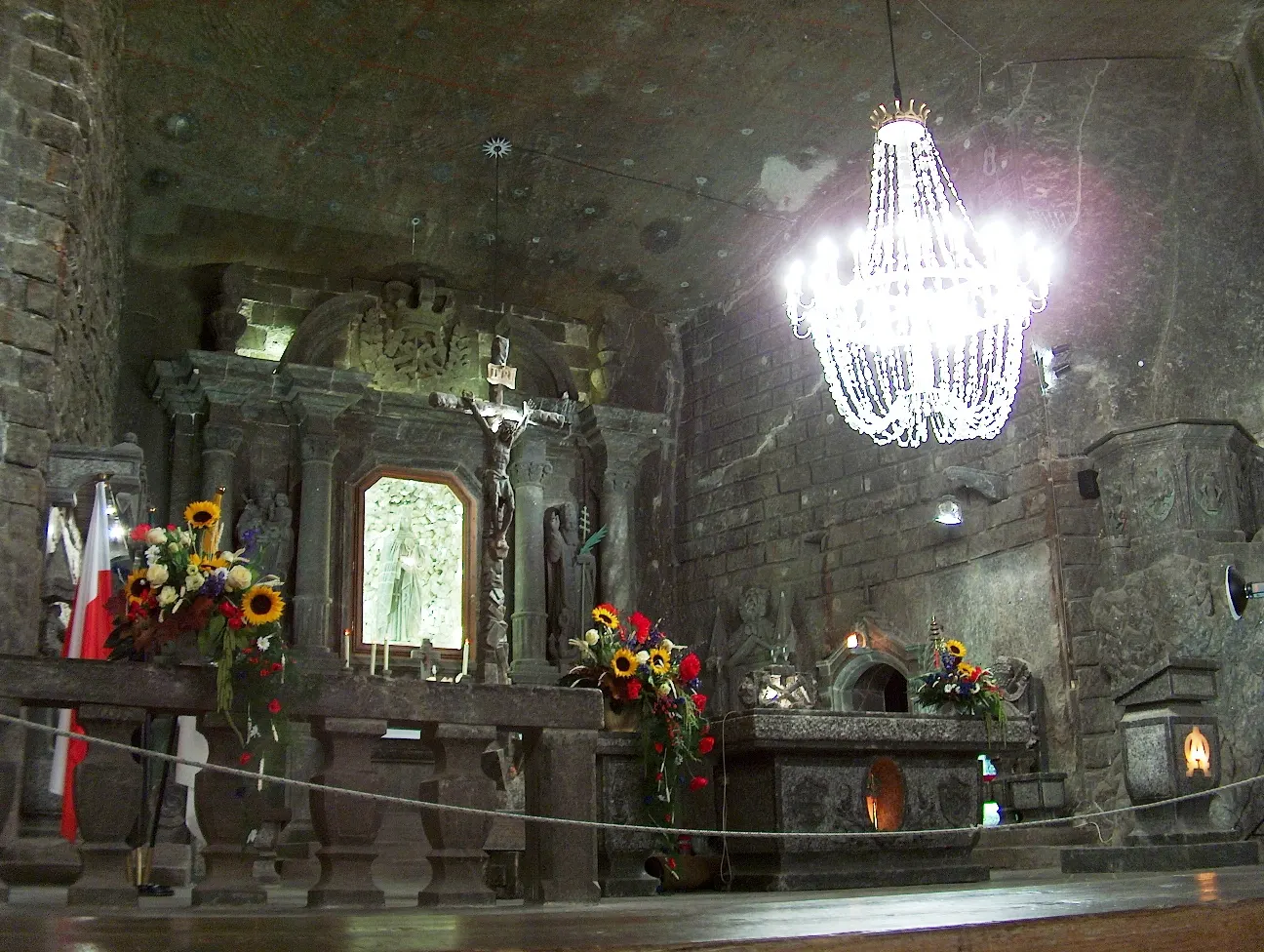
Underground Chapel of St. Kinga with chandeliers and reliefs carved from rock salt, Kraków, Poland

Wieliczka Salt Mine

About a half-hour ride southeast of the city, the Wieliczka Salt Mine was worked for centuries and became one of the first sites on the UNESCO World Heritage List. The tourist route leads down wooden staircases through chambers, underground lakes and chapels carved by miners, culminating in the vast Chapel of St. Kinga, where chandeliers and reliefs are made of salt.

The Chapel of St. Kinga in the Wieliczka Salt Mine was carved from rock salt by miners. Photo: bcs78, Wikimedia Commons, CC BY 3.0

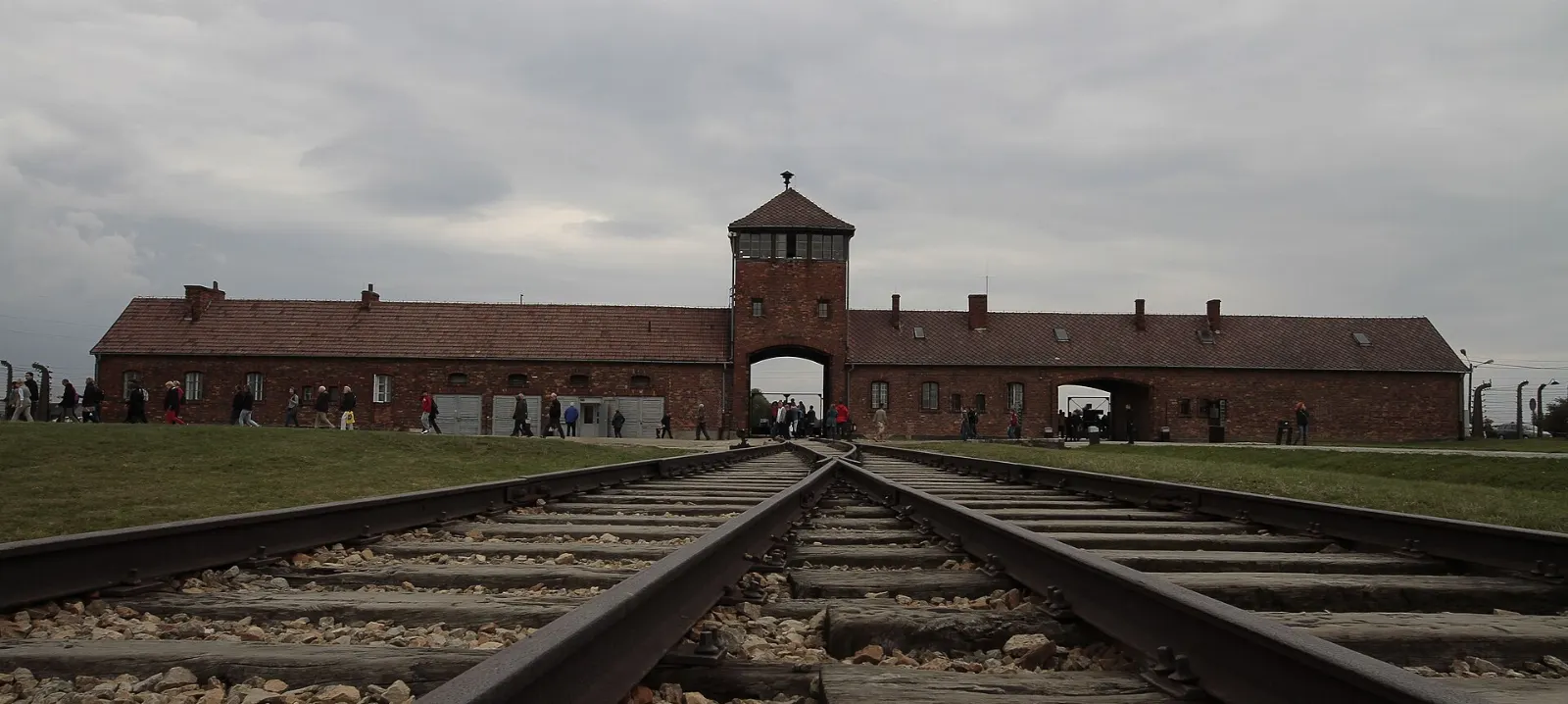
Brick entrance building and railway line at the former Auschwitz II-Birkenau camp, Kraków, Poland

Auschwitz-Birkenau Memorial and Museum

About an hour or more west of Kraków, near the town of Oświęcim, lie the preserved remains of Auschwitz, the largest Nazi German concentration and extermination camp. More than a million people were murdered here, the great majority of them Jews, along with Poles, Roma, Soviet prisoners of war and others.

Auschwitz I, the original camp, contains exhibitions in former prison blocks. Auschwitz II-Birkenau, a short shuttle ride away, shows the vast scale of the camp, with its railway ramp, barracks and the ruins of gas chambers and crematoria.

Auschwitz-Birkenau, a UNESCO World Heritage Site since 1979, is preserved as a memorial and museum. Photo: This picture has been taken by Oleg Yunakov. Contact e-mail: yunakovgmail.com. Image ca…, Wikimedia Commons, CC BY-SA 4.0

Food and local flavors

Start with the obwarzanek, a braided bread ring dusted with poppy or sesame seeds and sold from blue street carts all over the Old Town.

For a taste of everyday Poland, eat at a bar mleczny, a simple milk bar serving home-style dishes at canteen counters. Look for smoked oscypek cheese from the Tatra highlands, often grilled and served with cranberry jam at markets.

Popular dishes to try in Kraków

Obwarzanek in Kraków, Poland
Obwarzanek Food and local flavorsStart with the obwarzanek, a braided bread ring dusted with poppy or sesame seeds and sold from blue street carts all over the Old Town.Photo: Unknown authorUnknown author, Wikimedia Commons, Public domain
Pierogi in Kraków, Poland
Pierogi Pierogi come filled with potato and cheese, meat, sauerkraut and mushrooms, or sweet fruit in summer.Photo: Kritzolina, Wikimedia Commons, CC BY-SA 4.0
Zapiekanki in Kraków, Poland
Zapiekanki At Plac Nowy in Kazimierz, the round market building is famous for zapiekanki, long open-faced baguettes topped with mushrooms and cheese, served late into the night.Photo: Kpalion, Wikimedia Commons, CC BY-SA 4.0
Oscypek in Kraków, Poland
Oscypek Look for smoked oscypek cheese from the Tatra highlands, often grilled and served with cranberry jam at markets.Photo: Kgbo, Wikimedia Commons, CC BY-SA 4.0

Where to stay in Kraków

The Old Town puts you within steps of the Main Market Square and Wawel, ideal for first-time visitors and short stays, though streets near the square can be noisy late at night.

Podgórze, across the river, is quieter and more residential, convenient for Schindler's Factory and riverside walks.

Where to stay in Kraków

Main Market Square, Kraków, Poland
Main Market Square Where to stay in KrakówThe Old Town puts you within steps of the Main Market Square and Wawel, ideal for first-time visitors and short stays, though streets near the square can…Photo: Igor123121, Wikimedia Commons, CC BY 4.0
Wawel, Kraków, Poland
Wawel Where to stay in KrakówThe Old Town puts you within steps of the Main Market Square and Wawel, ideal for first-time visitors and short stays, though streets near the square can…Photo: Lestat (Jan Mehlich), Wikimedia Commons, CC BY-SA 3.0
Kraków Główny, Kraków, Poland
Kraków Główny The area around Kraków Główny station is practical for early trains and airport connections, and districts west of the Planty near the National Museum offer calmer streets for…Photo: Igor123121, Wikimedia Commons, CC BY 4.0
Planty, Kraków, Poland
Planty The area around Kraków Główny station is practical for early trains and airport connections, and districts west of the Planty near the National Museum offer calmer streets for…Photo: Pudelek (Marcin Szala), Wikimedia Commons, CC BY-SA 3.0

Best time to visit Kraków

Late spring and early autumn are the most pleasant seasons, with mild temperatures and long days for walking.

Winters are cold, and snow is common.

Getting there and getting around

Kraków John Paul II International Airport is in Balice, west of the centre, with flights across Europe. A frequent train links the airport to Kraków Główny, the main station beside the Old Town, and buses and taxis are also available.

The Old Town is mostly pedestrianized and best seen on foot.

A suggested itinerary

First day

Walk the Royal Way from St. Florian's Gate to the Main Market Square, visit St. Mary's Basilica to hear the hejnał, browse the Cloth Hall and explore the Rynek Underground.

Second day

Spend the morning in Kazimierz at the Old Synagogue, Remuh Synagogue and cemetery.

Third day

Dedicate the day to the Auschwitz-Birkenau Memorial and Museum with a booked visit. Keep the evening quiet and reflective.

Fourth day

Visit the Wieliczka Salt Mine in the morning.

Practical tips

  • Book Auschwitz-Birkenau entry passes on the official museum website as early as possible, especially from spring to autumn.
  • Reserve timed tickets for Schindler's Factory, the Rynek Underground, Wawel exhibitions and Wieliczka in advance.
  • Poland uses the złoty, not the euro; cards are widely accepted, but carry a little cash for markets and street food.
  • Dress modestly for churches and synagogues, and observe requests for silence at memorial sites.
  • Wear comfortable shoes for cobbles and the many steps at Wieliczka, Wawel and the cathedral tower.
  • Use licensed taxis or ride-hailing apps rather than unmarked cars at stations.
KrakówWISERMAP PLACEKraków: photos, reviews & things to doSee traveler photos and reviews, or share your own →

More places to visit

All travel guides →