WiserMap — Choose wisely. Connect locally.Choose wisely. Connect locally.Add your business
Dubrovnik, Croatia · Travel guide

Dubrovnik Croatia City Walls Lokrum Cavtat and Ston

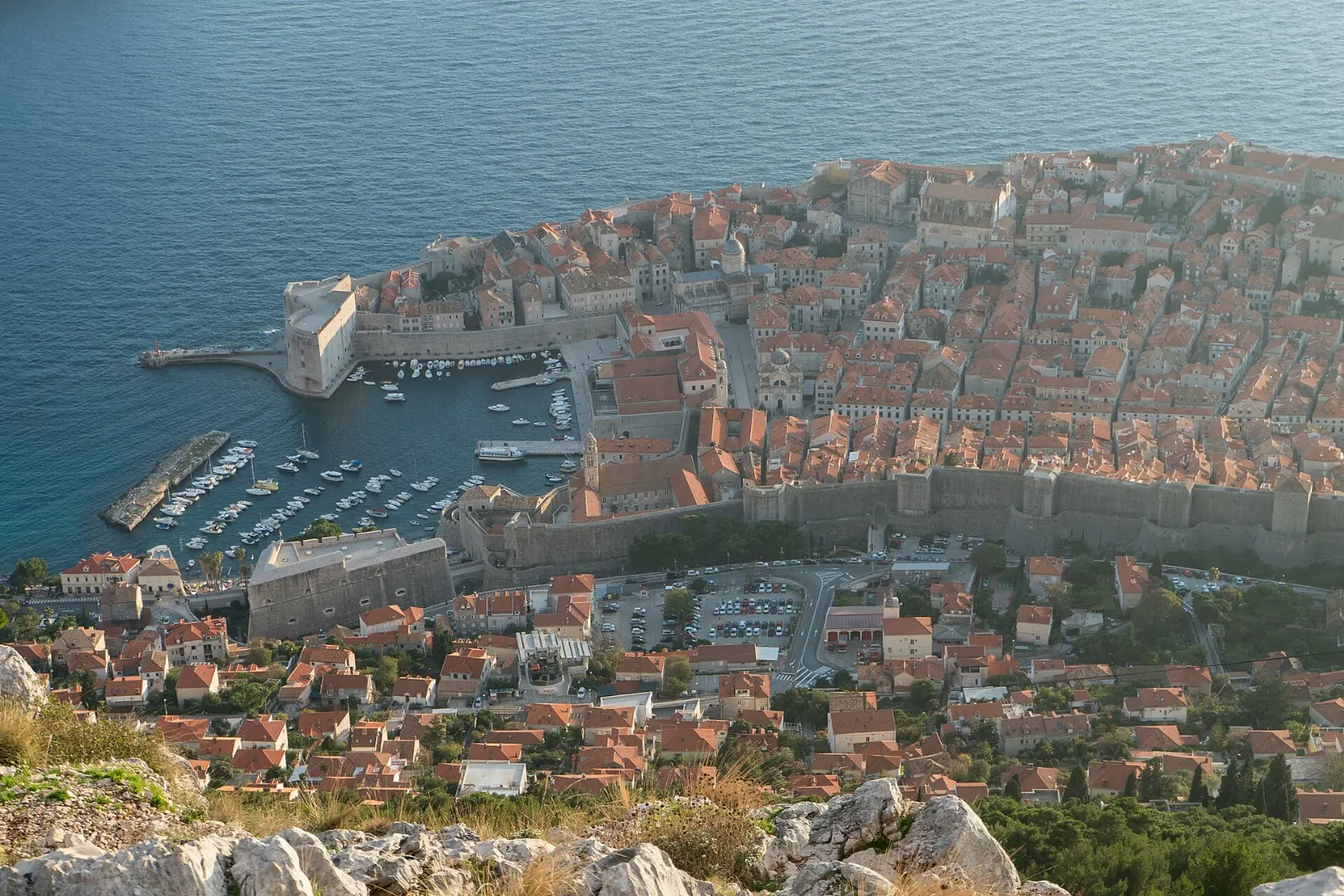
Dubrovnik is one of the most complete walled cities in Europe. Its old town sits on a rocky promontory in the far south of Croatia, ringed by massive stone walls and filled with Baroque churches, Renaissance palaces and polished limestone streets.

By WiserMap TravelUpdated October 2026 9 places10 min read
FacebookXLinkedIn

This guide covers the best places to visit in Dubrovnik, from a walk along the city walls to sunset views from Mount Srd, a swim off Lokrum island and day trips to Cavtat and Ston.

At a glance Dubrovnik
  1. Best timeMay, June, September and October for warm seas and fewer crowds.
  2. How longThree days for the city; four or five with day trips.
  3. Getting thereFly into Dubrovnik Airport, about twenty kilometers south, or arrive by bus or ferry.

Why visit Dubrovnik

Few cities preserve their history as visibly as Dubrovnik.

The city also carries more recent memories. Dubrovnik was heavily shelled during the Croatian War of Independence in 1991 and 1992, and although nearly everything has been carefully restored, you can still spot newer roof tiles and occasional shrapnel scars.

Beyond the monuments, Dubrovnik offers clear Adriatic water, island hopping, excellent seafood and wine from the nearby Peljesac peninsula. It is busy in summer, but with a little planning you can enjoy its streets at their most atmospheric, early in the morning and late in the evening.

The City Walls and the old town

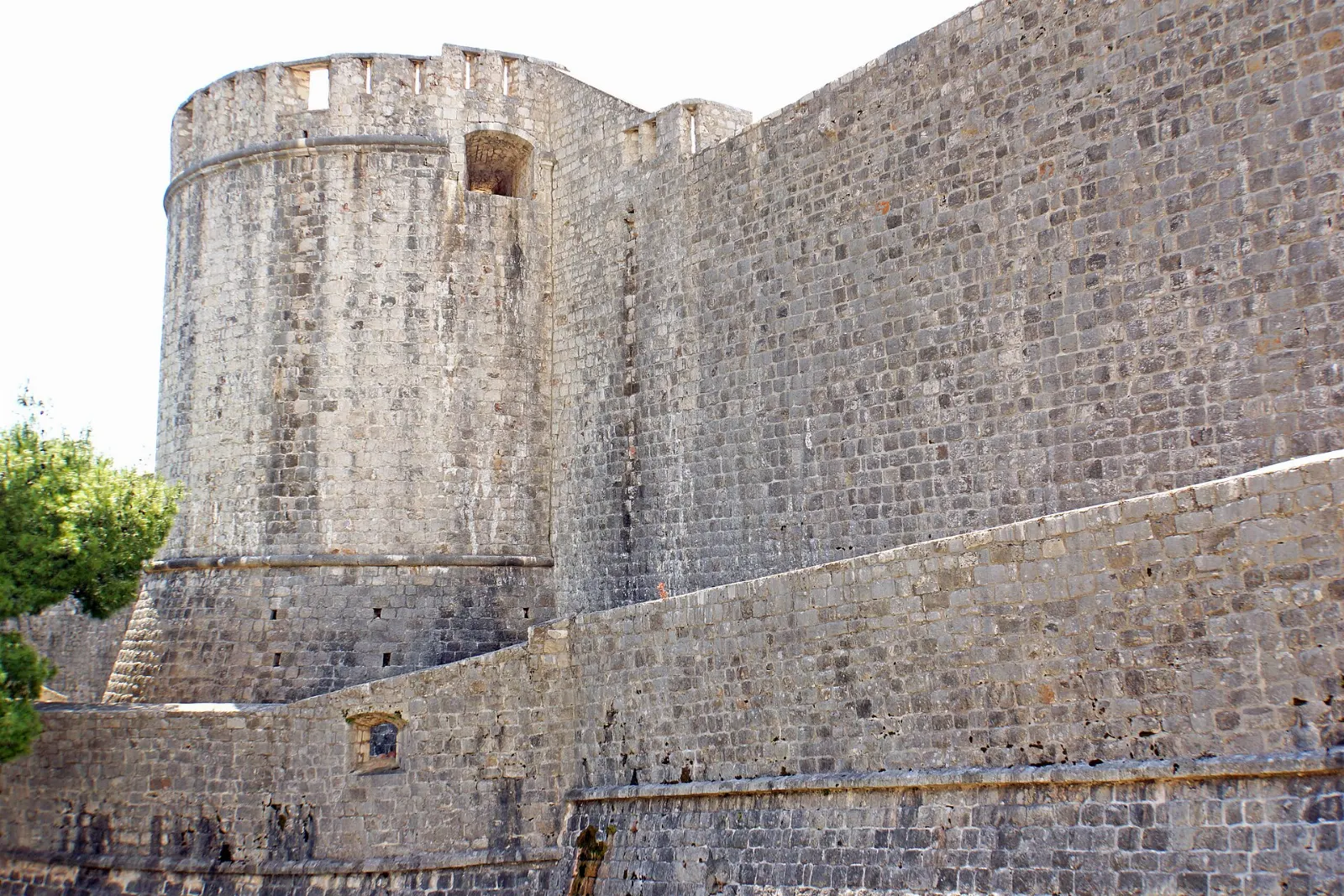
A round stone tower rising above massive city walls and orange rooftops, Dubrovnik, Croatia

City Walls

Walking the walls is the essential Dubrovnik experience. The circuit is about one point nine kilometers, with sweeping views over terracotta roofs, church domes and the sea. Highlights include the round Minceta Tower, the highest point of the walls, and the bastions above the old port.

The round Minceta Tower is the highest point of Dubrovnik's city walls. Photo: Dennis G. Jarvis, Wikimedia Commons, CC BY-SA 2.0
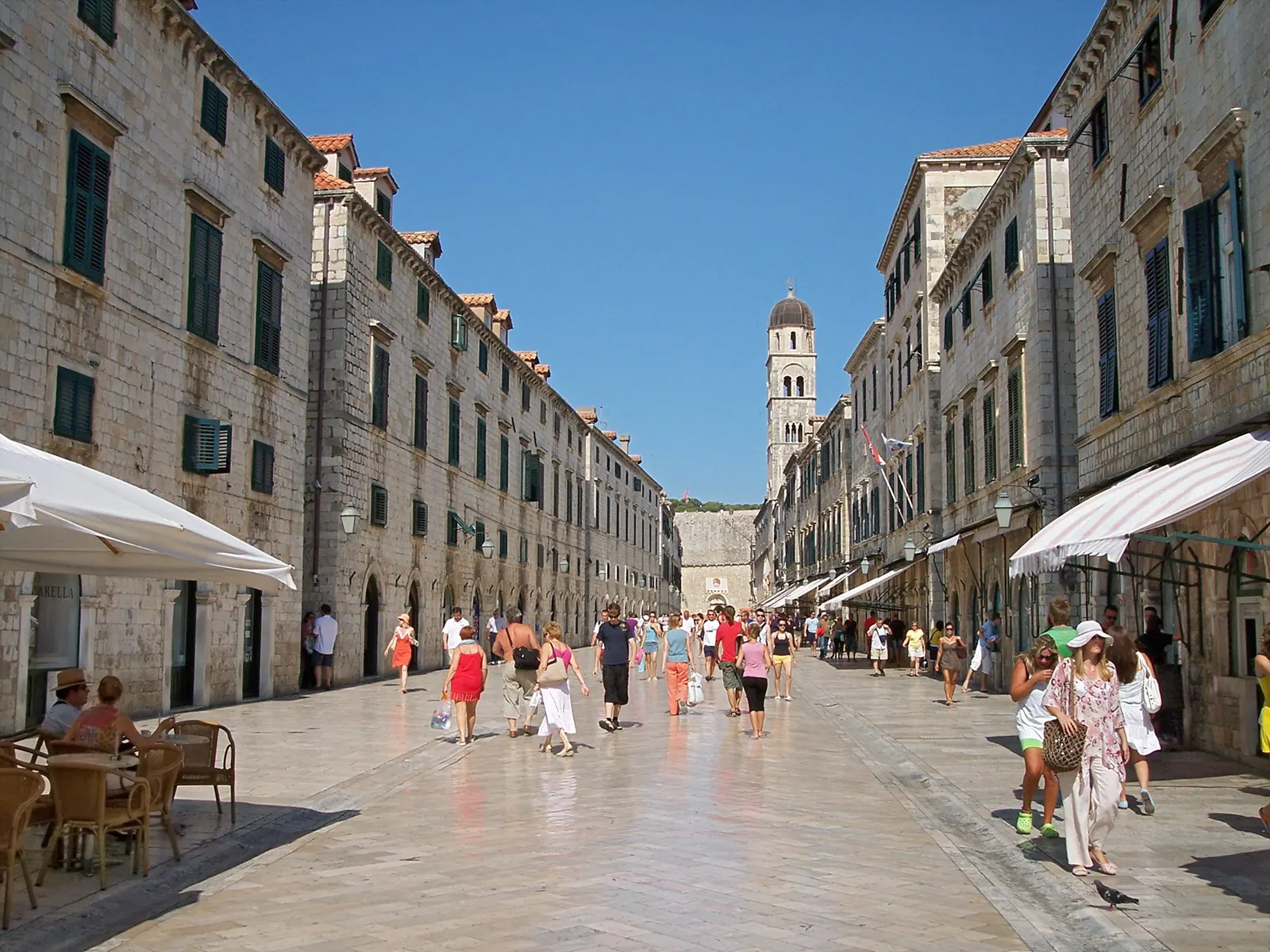
A wide, polished limestone street lined with stone buildings, Dubrovnik, Croatia

Stradun and the Pile Gate

Enter the old town through the Pile Gate, with its drawbridge and statue of St. Blaise, the city's patron saint, and you arrive on the Stradun, the main street polished smooth by centuries of footsteps. At its western end stands Onofrio's Great Fountain, built in the fifteenth century as part of the city's water system.

The Stradun is the main limestone-paved street running through Dubrovnik's old town. Photo: László Szalai (Beyond silence), Wikimedia Commons, Public domain

A stone palace with an arcaded loggia of carved columns, Dubrovnik, Croatia

Rector's Palace and Sponza Palace

The Rector's Palace was the seat of the republic's government, where the elected rector lived during his one-month term. Its arcaded loggia with carved capitals blends Gothic and Renaissance styles, and inside the Cultural History Museum displays furniture, portraits and coins.

The Rector's Palace was the seat of government of the Republic of Ragusa. Photo: Bernard Gagnon, Wikimedia Commons, CC BY-SA 4.0

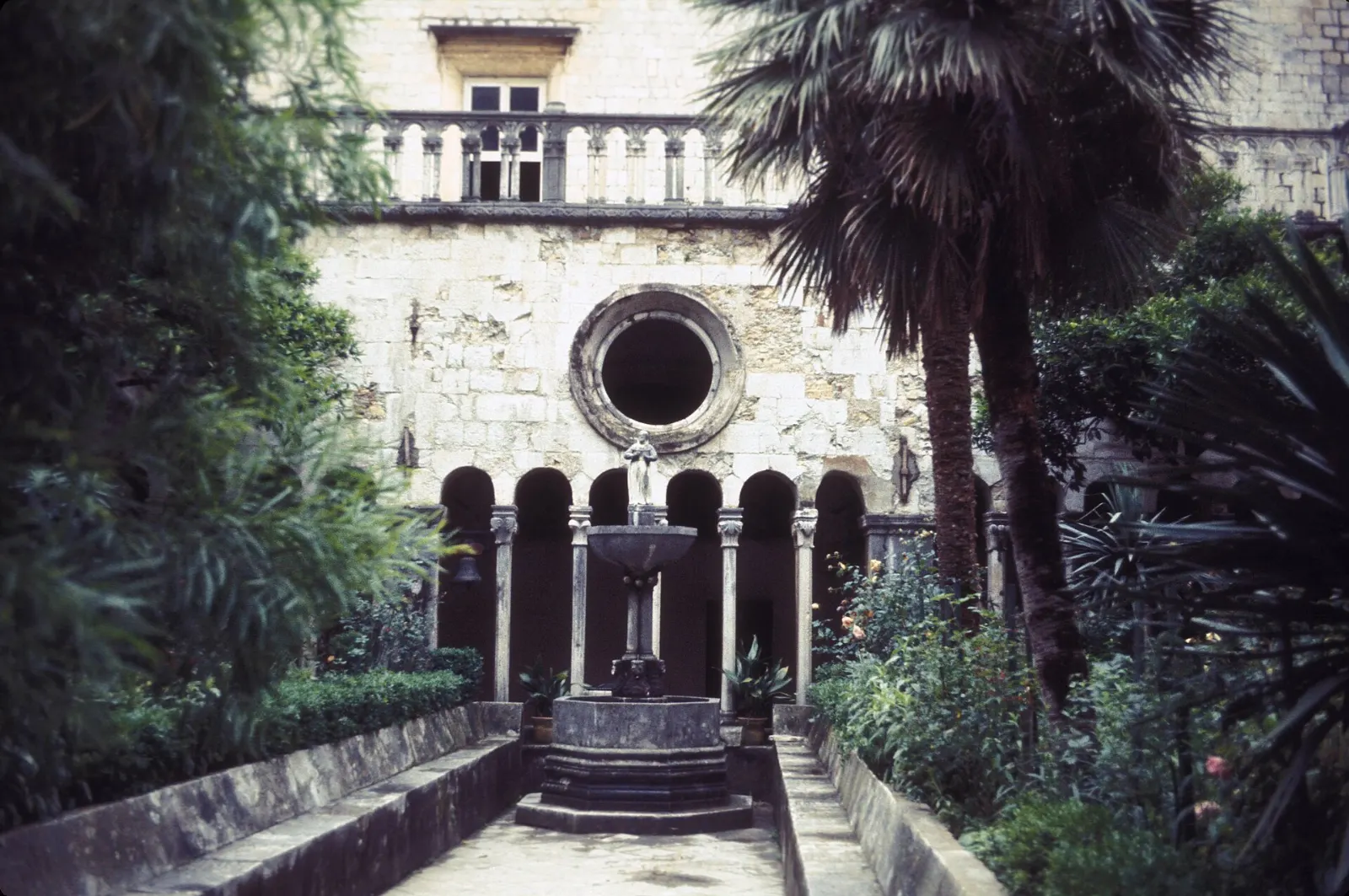
A Romanesque cloister with twin columns surrounding a garden, Dubrovnik, Croatia

Franciscan Monastery and Cathedral

Just inside the Pile Gate, the Franciscan Monastery has a peaceful Romanesque cloister and one of the oldest pharmacies in Europe, operating since the early fourteenth century. Across town, the Baroque Cathedral of the Assumption holds a treasury with relics of St. Blaise and works by Titian's workshop. Allow an hour for both.

The Franciscan Monastery cloister sits just inside the Pile Gate. Photo: JERRYE AND ROY KLOTZ MD, Wikimedia Commons, CC BY-SA 3.0

Fortresses and views above the city

A fortress on a high sea cliff outside the walls of Dubrovnik, Croatia

Fort Lovrijenac

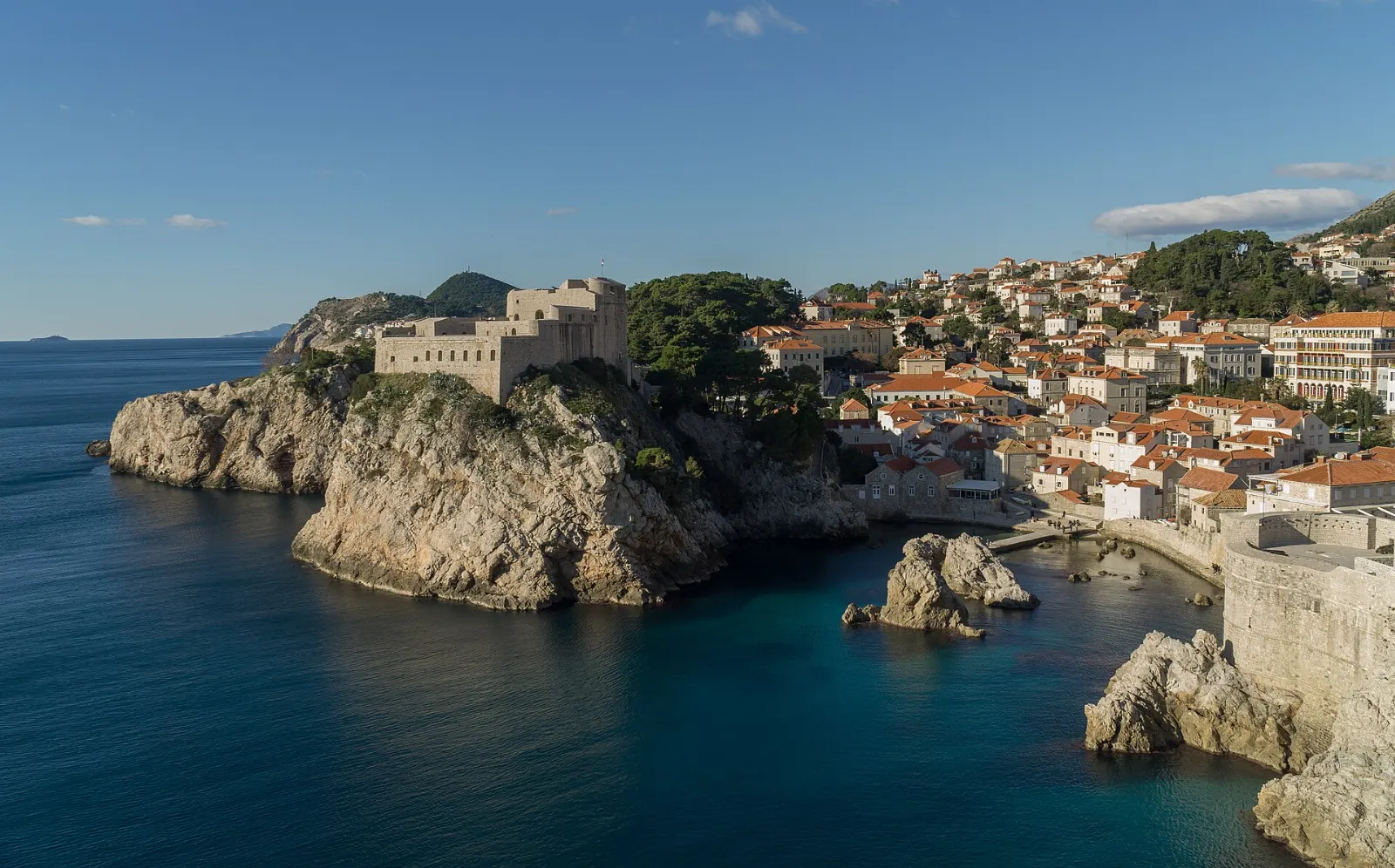
Standing on a sheer rock about forty meters above the sea just west of the walls, Fort Lovrijenac guarded the city's western approach. Its massive seaward walls contrast with thinner walls facing the city, designed so that it could not be easily turned against Dubrovnik.

Fort Lovrijenac stands on a rock forty meters above the sea just west of the old town. Photo: Sumitsurai, Wikimedia Commons, CC BY-SA 4.0

A cable car cabin rising above Dubrovnik with the sea and islands behind, Croatia

Mount Srd and the cable car

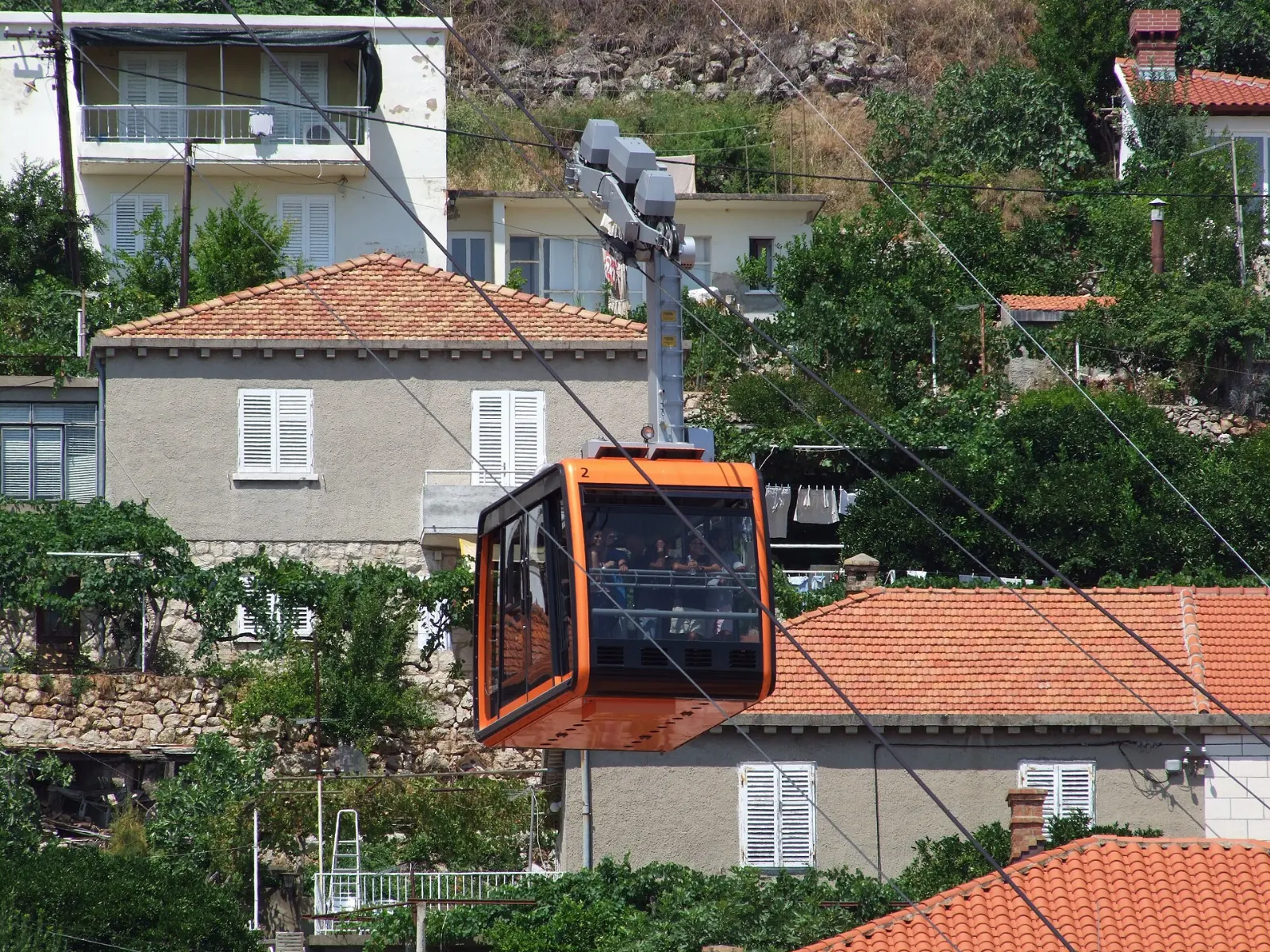
The cable car climbs from just above the old town to the summit of Mount Srd in a few minutes, revealing the whole walled city, Lokrum and the Elafiti Islands. At the top, Fort Imperial, built during the Napoleonic period, houses a museum about the defense of Dubrovnik during the Homeland War.

The cable car climbs from just above the old town to the top of Mount Srd. Photo: Andrzej Harassek, Wikimedia Commons, CC BY-SA 3.0

Islands, beaches and day trips

A wooded island with a rocky shoreline across from Dubrovnik's old port, Croatia

Lokrum

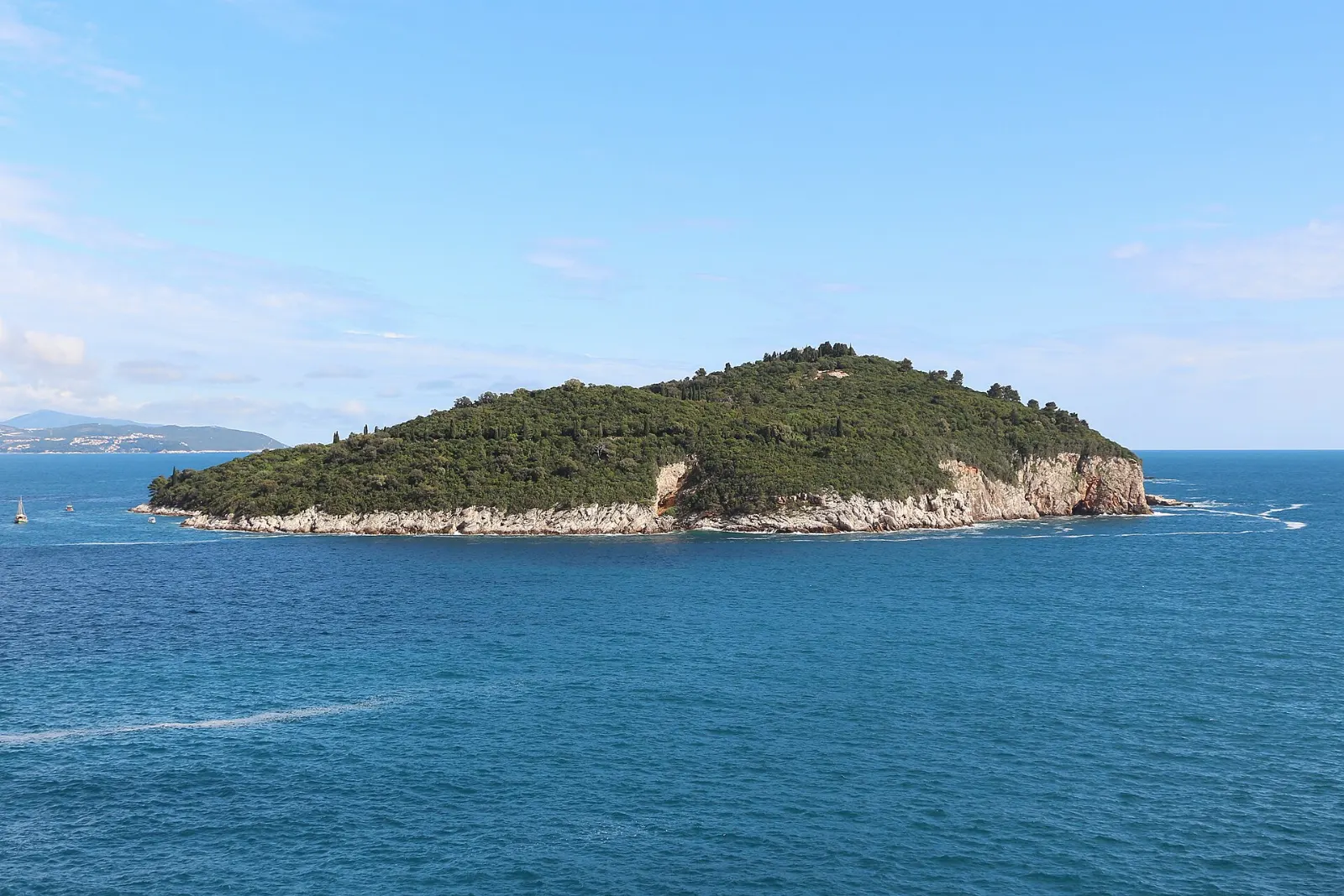
A short boat ride from the old port, Lokrum is a forested nature reserve with a ruined Benedictine monastery, a botanical garden, a hilltop fort and peacocks descended from birds brought by Archduke Maximilian in the nineteenth century.

Lokrum is a forested nature reserve a short boat ride from Dubrovnik's old harbor. Photo: Bernard Gagnon, Wikimedia Commons, CC BY-SA 4.0

Banje Beach and swimming spots

Just east of the Ploce Gate, Banje is the closest pebble beach to the old town, with views of the walls and Lokrum.

A small harbor town with palm trees and boats along a promenade, Dubrovnik, Croatia

Cavtat

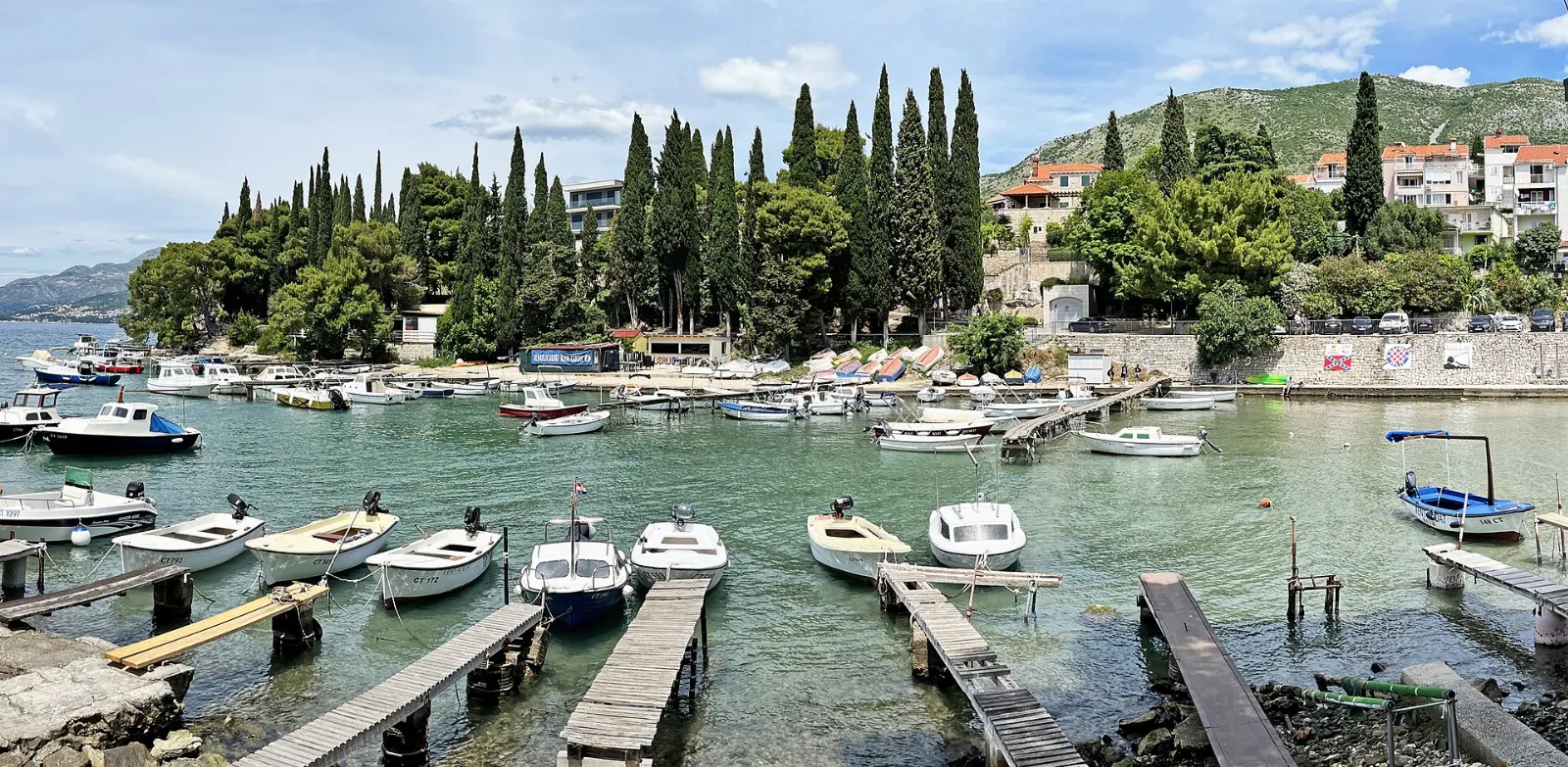
Southeast of Dubrovnik, Cavtat is a relaxed harbor town built on the site of ancient Epidaurum, the settlement whose refugees are said to have helped found Dubrovnik. Stroll the palm-lined promenade, walk the coastal paths around the peninsula and visit the Racic family mausoleum by sculptor Ivan Mestrovic in the cemetery above town.

Cavtat is a seaside town south of Dubrovnik on the site of ancient Epidaurum. Photo: Tiia Monto, Wikimedia Commons, CC BY 4.0

Long medieval defensive walls climbing over a hillside above a small town, Dubrovnik, Croatia

Ston and the Peljesac peninsula

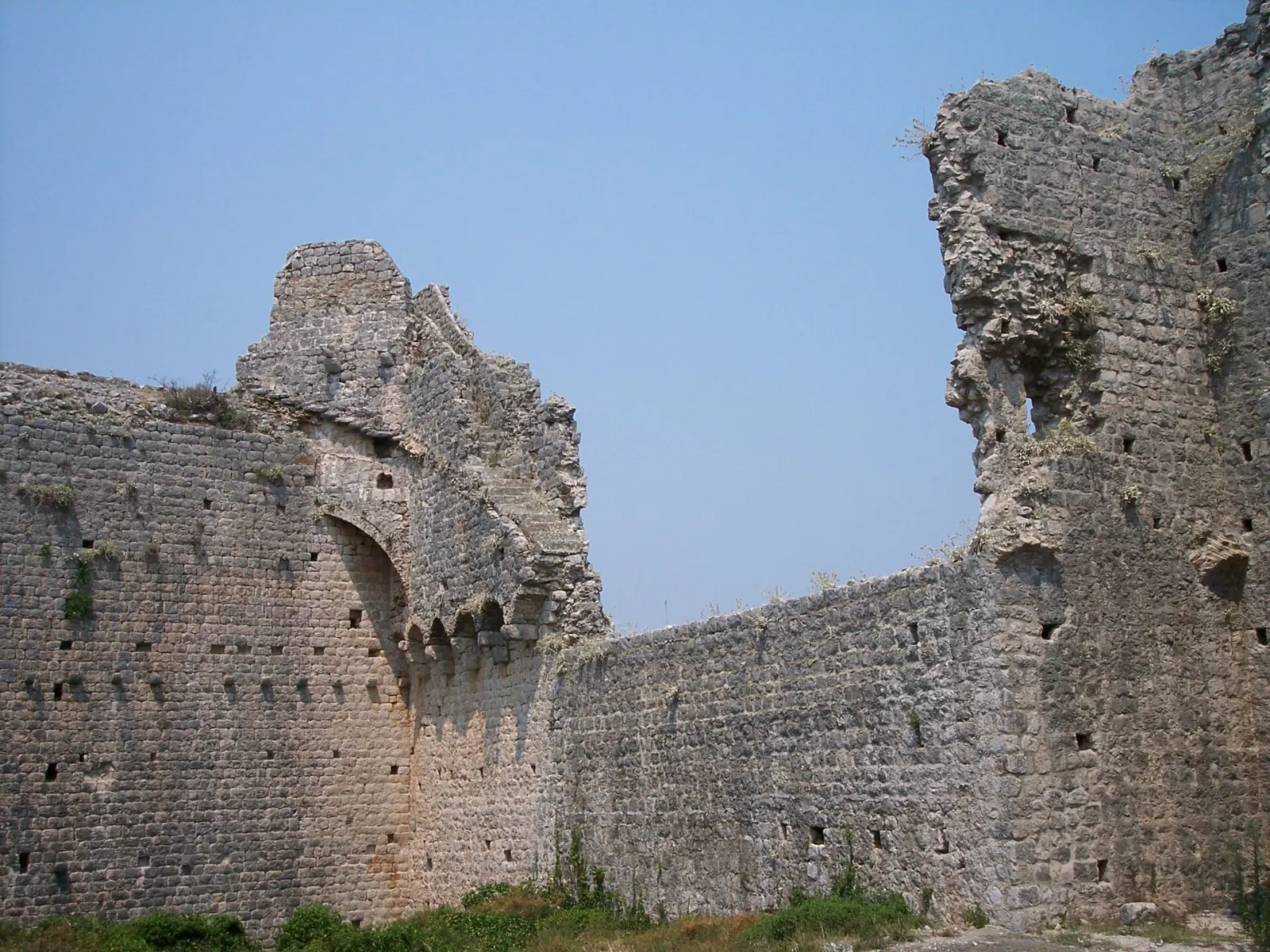
About an hour northwest of the city, Ston is famous for its long medieval walls, built by the Republic of Ragusa to protect salt pans that are still worked today. You can walk sections of the walls between Ston and Mali Ston, then eat oysters and mussels farmed in the bay.

The Walls of Ston were built by the Republic of Ragusa to protect the valuable salt pans of Ston. Photo: László Szalai (Beyond silence), Wikimedia Commons, Public domain

Food and local flavors

Dubrovnik's cooking is Dalmatian at heart: fresh fish grilled with olive oil and garlic, black risotto colored with cuttlefish ink, octopus salad and seafood buzara cooked with wine and herbs.

For dessert, try rozata, a Dubrovnik custard similar to creme caramel flavored with a rose liqueur, and candied orange peel sold by local producers.

Popular dishes to try in Dubrovnik

Black risotto in Dubrovnik, Croatia
Black risotto Food and local flavorsDubrovnik's cooking is Dalmatian at heart: fresh fish grilled with olive oil and garlic, black risotto colored with cuttlefish ink, octopus salad and…Photo: Sumit Surai, Wikimedia Commons, CC BY-SA 4.0
Oysters in Dubrovnik, Croatia
Oysters Oysters from Mali Ston Bay are a regional pride, and cured ham and sheep's cheese often start a meal.Photo: Kishlay singh, Wikimedia Commons, CC BY-SA 4.0
Rožata in Dubrovnik, Croatia
Rožata For dessert, try rozata, a Dubrovnik custard similar to creme caramel flavored with a rose liqueur, and candied orange peel sold by local producers.Photo: Bonč, Wikimedia Commons, Public domain
Peka in Dubrovnik, Croatia
Peka Meat and seafood baked slowly under an iron bell, known as peka, is worth ordering in advance at traditional konobas.Photo: Boris Kuhar, Wikimedia Commons, Public domain

Where to stay

Staying inside the old town puts you steps from the sights and lets you enjoy the streets after day-trippers leave, but rooms are small, often up many steps, and cars cannot enter. It suits couples and short stays.

Lapad and Babin Kuk, on the peninsula to the west, have more space, beaches, waterfront promenades and larger resort-style properties, with frequent buses to the Pile Gate. They suit families and longer stays.

Where to stay in Dubrovnik

Banje Beach, Dubrovnik, Croatia
Banje Beach Ploce, just east of the walls, offers sea views, quick access to Banje Beach and a short walk to the old town.Photo: Martin Falbisoner, Wikimedia Commons, CC BY-SA 4.0
Babin Kuk, Dubrovnik, Croatia
Babin Kuk Lapad and Babin Kuk, on the peninsula to the west, have more space, beaches, waterfront promenades and larger resort-style properties, with frequent buses to the Pile Gate.Photo: Zblace, Wikimedia Commons, CC BY-SA 4.0
Pile Gate, Dubrovnik, Croatia
Pile Gate Lapad and Babin Kuk, on the peninsula to the west, have more space, beaches, waterfront promenades and larger resort-style properties, with frequent buses to the Pile Gate.Photo: Bernard Gagnon, Wikimedia Commons, CC BY-SA 4.0
Dubrovnik old town, Dubrovnik, Croatia
Dubrovnik old town One of the best areas to base yourself in Dubrovnik.Photo: Diego Delso, Wikimedia Commons, CC BY-SA 3.0

Best time to visit

May, June, September and early October offer warm weather, a swimmable sea and manageable crowds.

Winter is quiet and mild, though rainy, with many seasonal businesses closed. On February 3, the Feast of St. Blaise fills the old town with processions and celebrations honoring the city's patron, a tradition recognized by UNESCO.

Getting there and getting around

Dubrovnik Airport lies about twenty kilometers south of the city, with year-round flights to Zagreb and many seasonal routes across Europe. Airport shuttle buses run to the old town area and the main bus station, and taxis and ride-hailing services are available.

Ferries and catamarans link Gruz port with islands such as Korcula, Mljet and the Elafiti Islands.

A suggested itinerary

First day

Walk the City Walls at opening time, then stroll the Stradun and visit the Franciscan Monastery and Rector's Palace.

Second day

Take a morning boat to Lokrum for swimming and exploring, then return for an evening in the old town, with dinner in a quiet side street or in Lapad.

Third day

Make a day trip to Ston for its walls and oysters, or take a boat to Cavtat and walk the coastal paths.

Practical tips

  • Check the official website for current hours and tickets for the walls, museums and cable car.
  • Consider the Dubrovnik Pass, which covers the walls, several museums and city buses.
  • Visit major sights early or late to avoid cruise crowds and midday heat.
  • Wear comfortable shoes with good grip, as limestone streets can be slippery.
  • Carry rolling suitcases rather than dragging them through the old town, as residents have asked.
  • Do not sit on church steps to eat or walk around the old town in swimwear; local rules can bring fines.
DubrovnikWISERMAP PLACEDubrovnik: photos, reviews & things to doSee traveler photos and reviews, or share your own →

More places to visit

All travel guides →