Agra sits on a bend of the Yamuna River in Uttar Pradesh, and for about a century it was the beating heart of the Mughal Empire.
AT A GLANCE
Best time
October to March, when days are warm and dry; early mornings are best at every monument.
How long
Two days covers the city; a third lets you add Fatehpur Sikri without rushing.
Getting there
Express trains from Delhi take under two hours; the Yamuna Expressway links the two cities by road.
Why visit Agra
The Taj Mahal alone justifies the journey. Built by Shah Jahan as a mausoleum for his wife Mumtaz Mahal, who died in 1631, it took around two decades and thousands of artisans to complete, and it was inscribed as a World Heritage Site in 1983.
Yet Agra is more than a single building. The city traces the arc of Mughal architecture from the red sandstone strength of Akbar's fort to the refined marble of his grandson's era. Within a day's reach you can compare the tombs of three generations of the imperial family, walk through a capital that was abandoned within a few decades of being built, and watch the Taj from gardens across the river.
The Taj Mahal and the riverfront
Taj Mahal
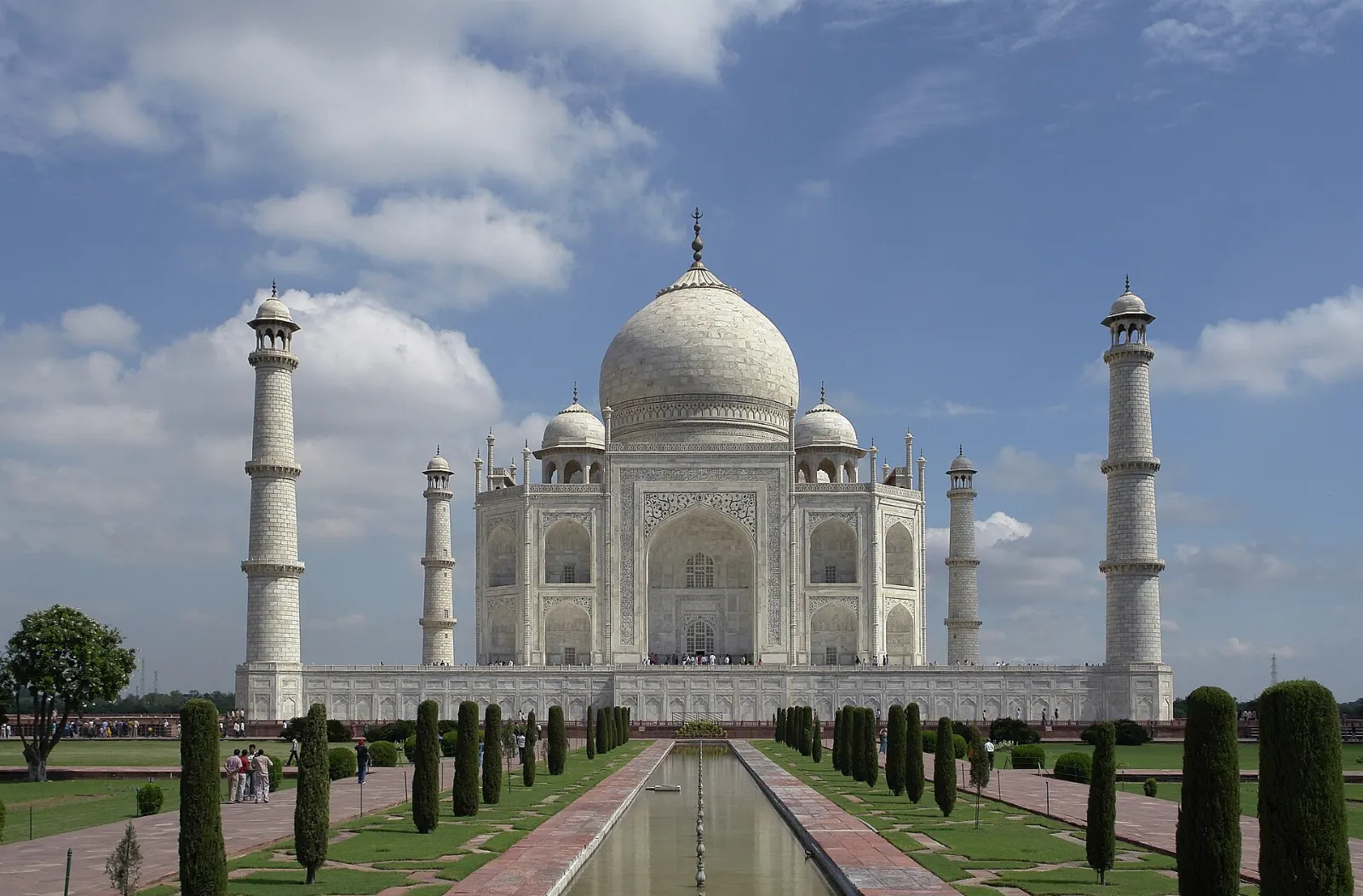
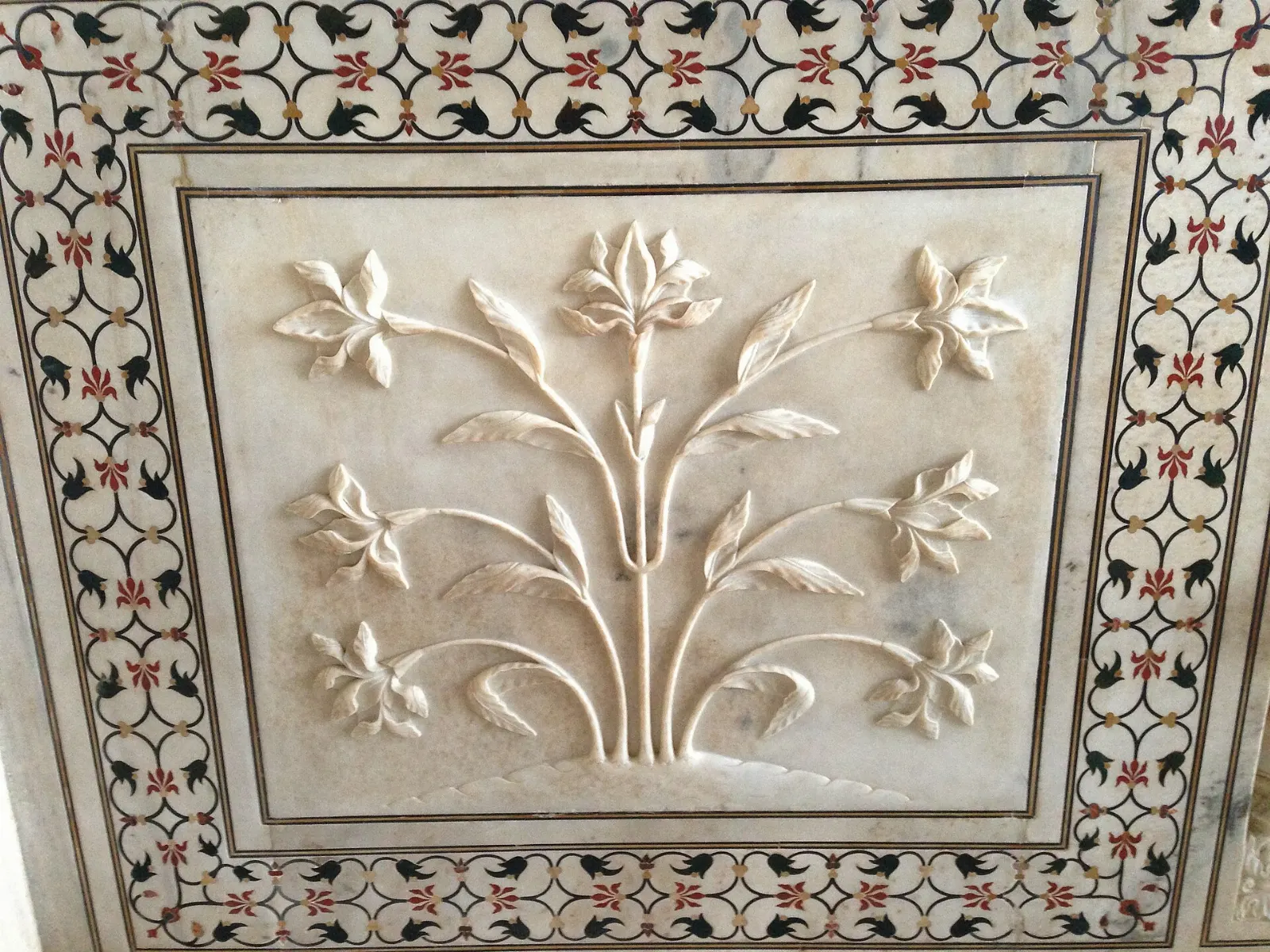
The mausoleum stands at the end of a formal charbagh garden divided by water channels, raised on a marble plinth with a minaret at each corner and flanked by a red sandstone mosque and its mirror-image guesthouse. Inside the main chamber, a delicate marble screen surrounds the cenotaphs of Mumtaz Mahal and Shah Jahan; the actual graves lie in a crypt below.
Allow three hours. The Taj Mahal is closed to general visitors every Friday, when the mosque is used for prayers.
Mehtab Bagh
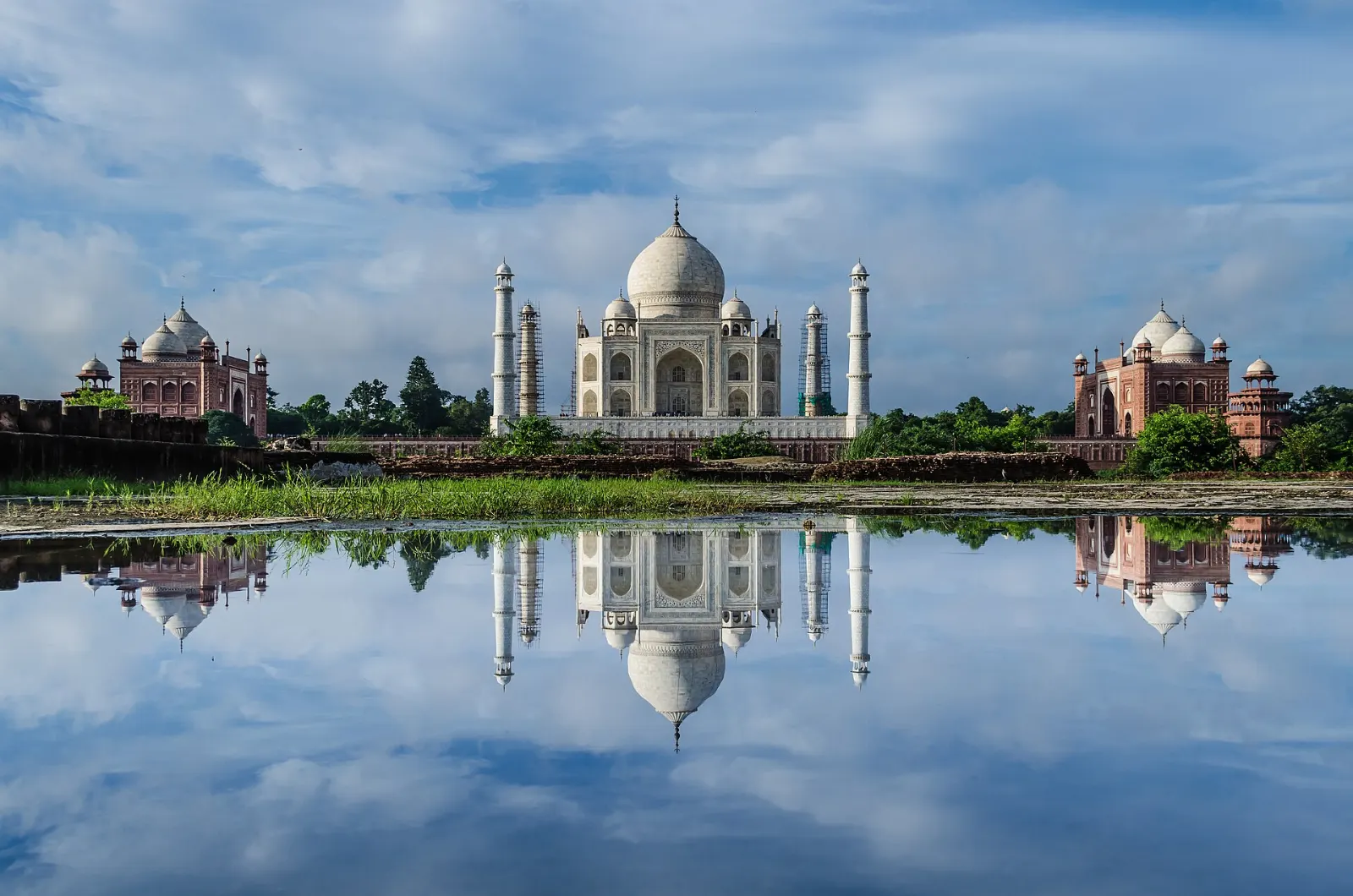
Directly across the Yamuna from the Taj Mahal, Mehtab Bagh, the Moonlight Garden, is a restored Mughal garden aligned with the mausoleum. It offers a classic, uncrowded view of the Taj reflected in the river and is particularly beautiful at sunset.
Tomb of Itimad-ud-Daulah
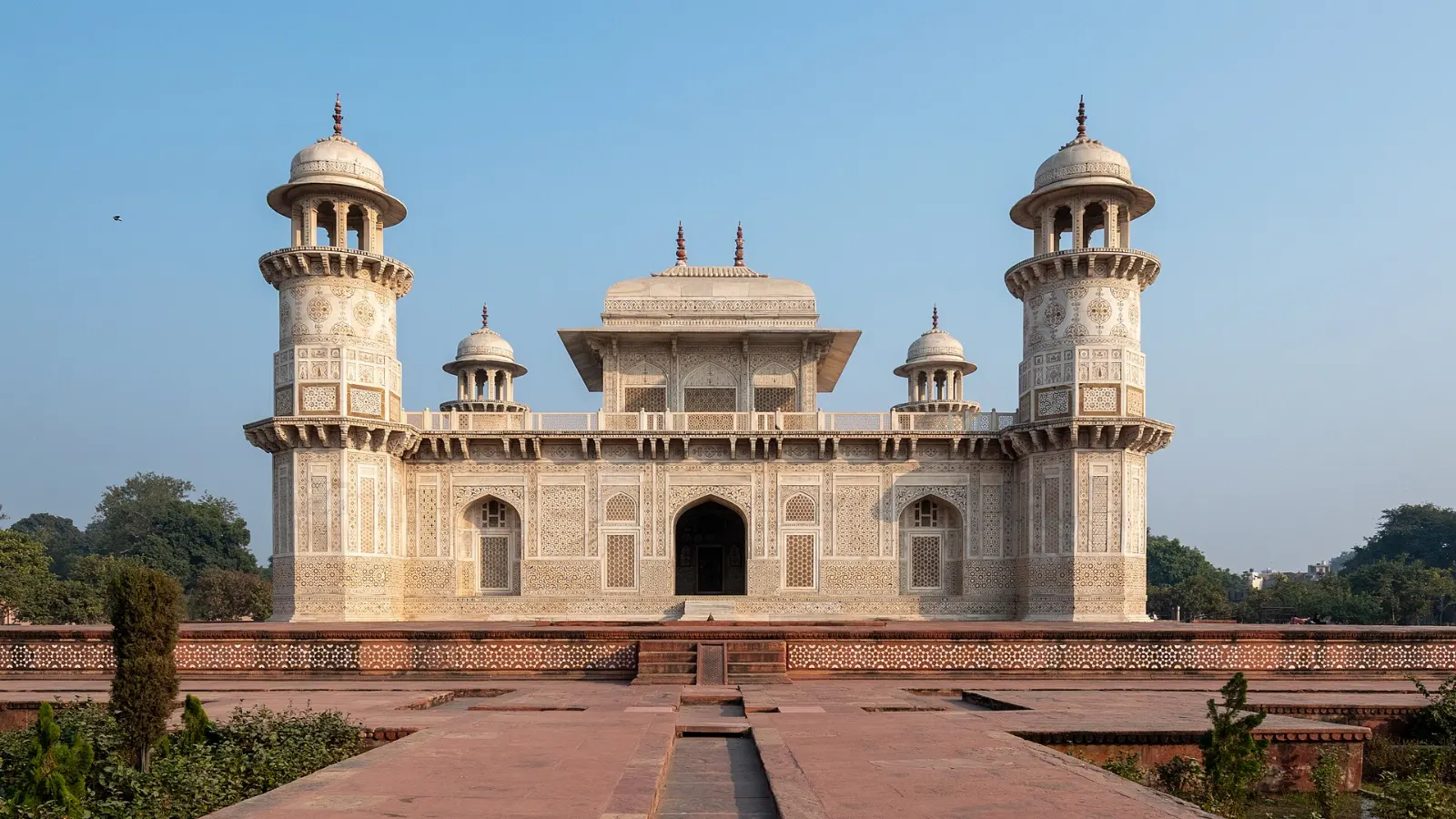
On the east bank of the Yamuna, this small tomb was built between 1622 and 1628 by the empress Nur Jahan for her father, Mirza Ghiyas Beg, who held the title Itimad-ud-Daulah, or pillar of the state.
Chini ka Rauza
A short distance north of Itimad-ud-Daulah, this weathered tomb of Afzal Khan Shirazi, a scholar and minister at Shah Jahan's court, is notable for the remains of glazed tile work on its facade, a Persian technique rarely seen in Agra. It takes only twenty minutes and is easy to combine with the Baby Taj.
Agra Fort, Akbar's tomb and the old city
Agra Fort
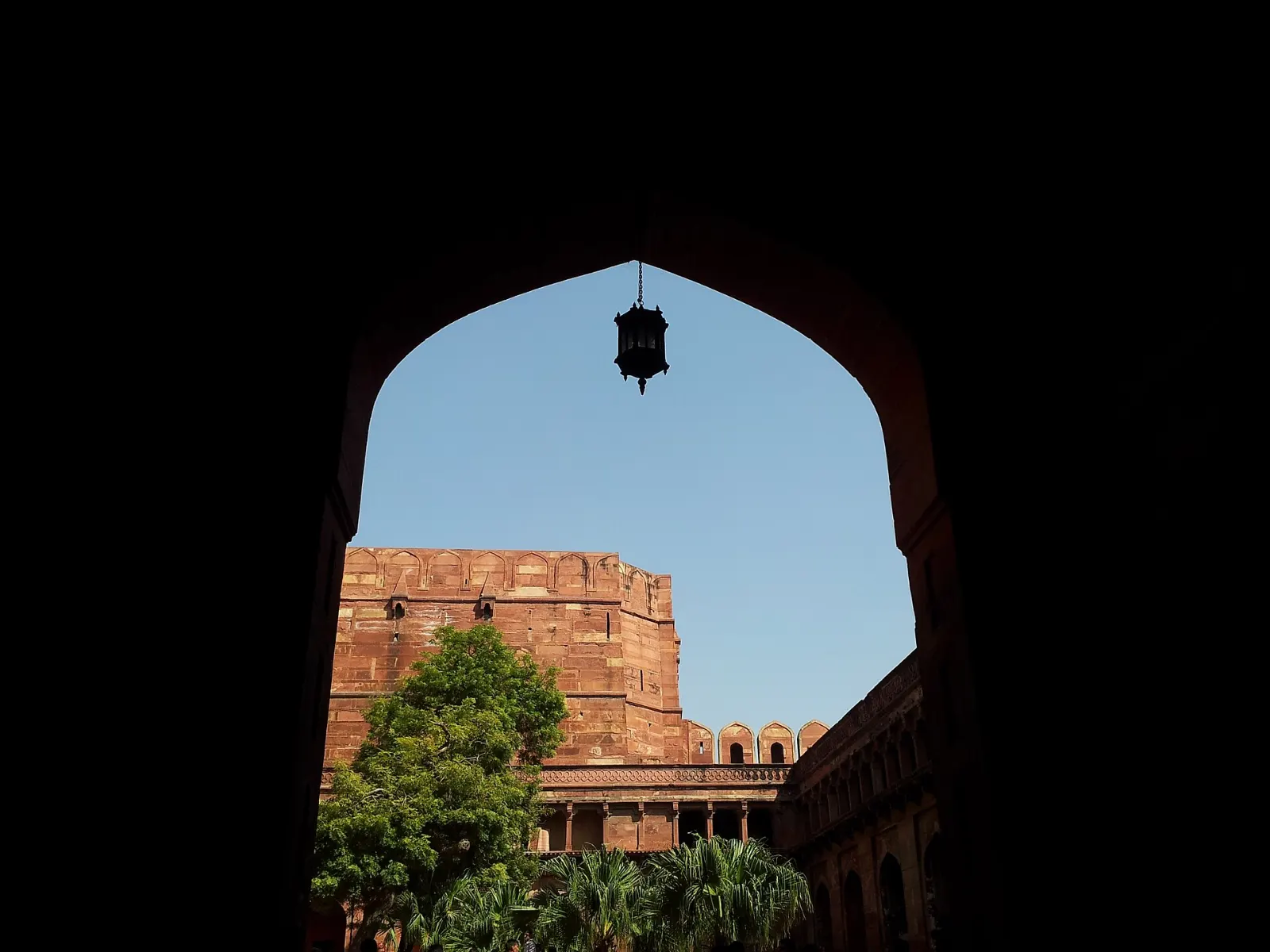
About two and a half kilometers upriver from the Taj, Agra Fort is a massive walled complex of red sandstone begun by Akbar in the 1560s and later reshaped by Jahangir and Shah Jahan.
Akbar's Tomb at Sikandra
On the northwestern edge of the city, the tomb of Akbar is set in a large walled garden where blackbuck and peacocks roam. Its monumental southern gateway, decorated with inlaid geometric designs and topped by four white marble minarets, is worth the trip by itself.
Kinari Bazaar and the Jama Masjid
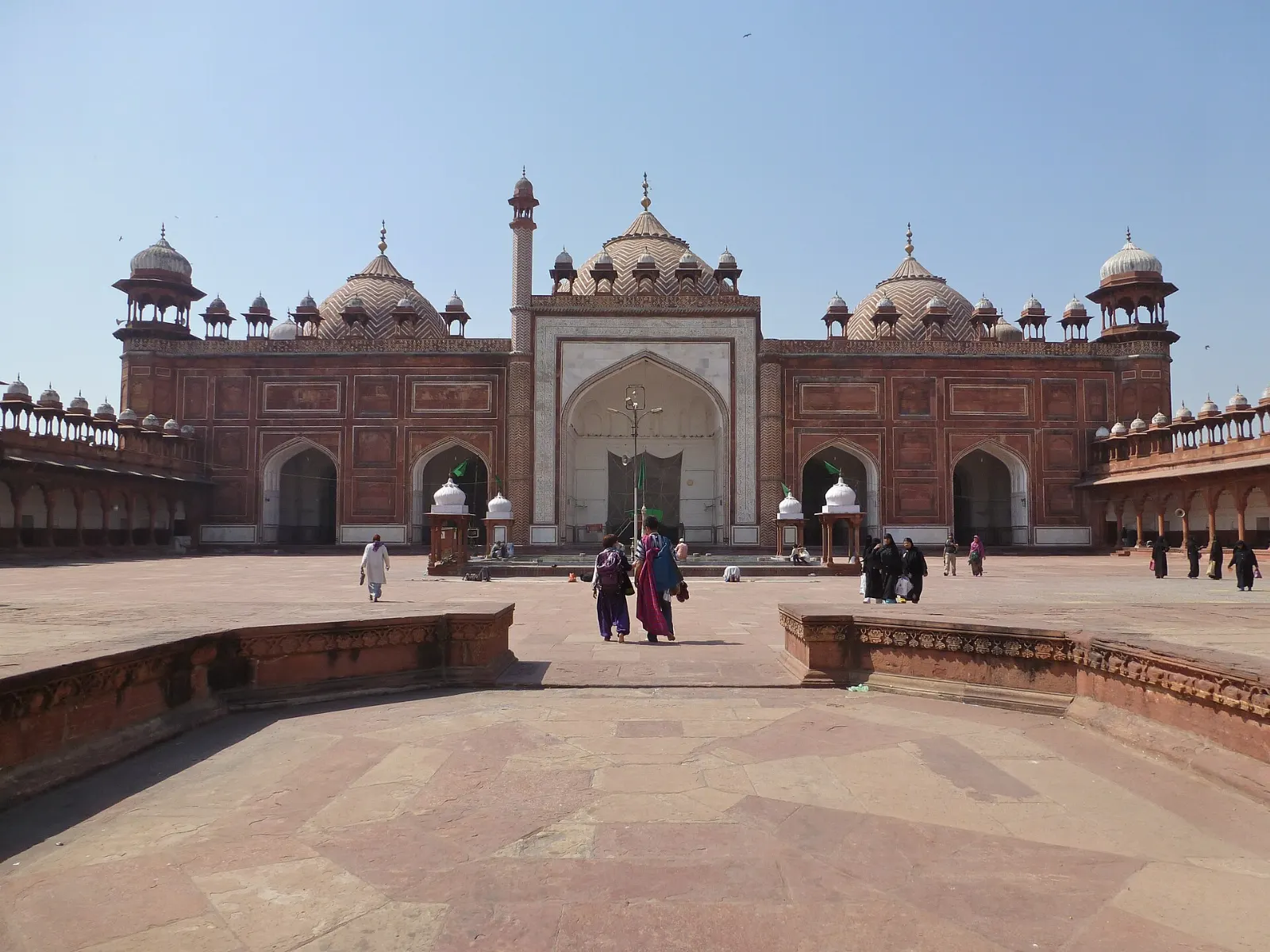
Just west of Agra Fort, the Jama Masjid built in 1648 by Shah Jahan's daughter Jahanara Begum marks the edge of the old city. Behind it, the lanes of Kinari Bazaar and its neighboring markets are packed with shops selling wedding trimmings, spices, sweets, textiles and silver.
Day trip to Fatehpur Sikri
Fatehpur Sikri
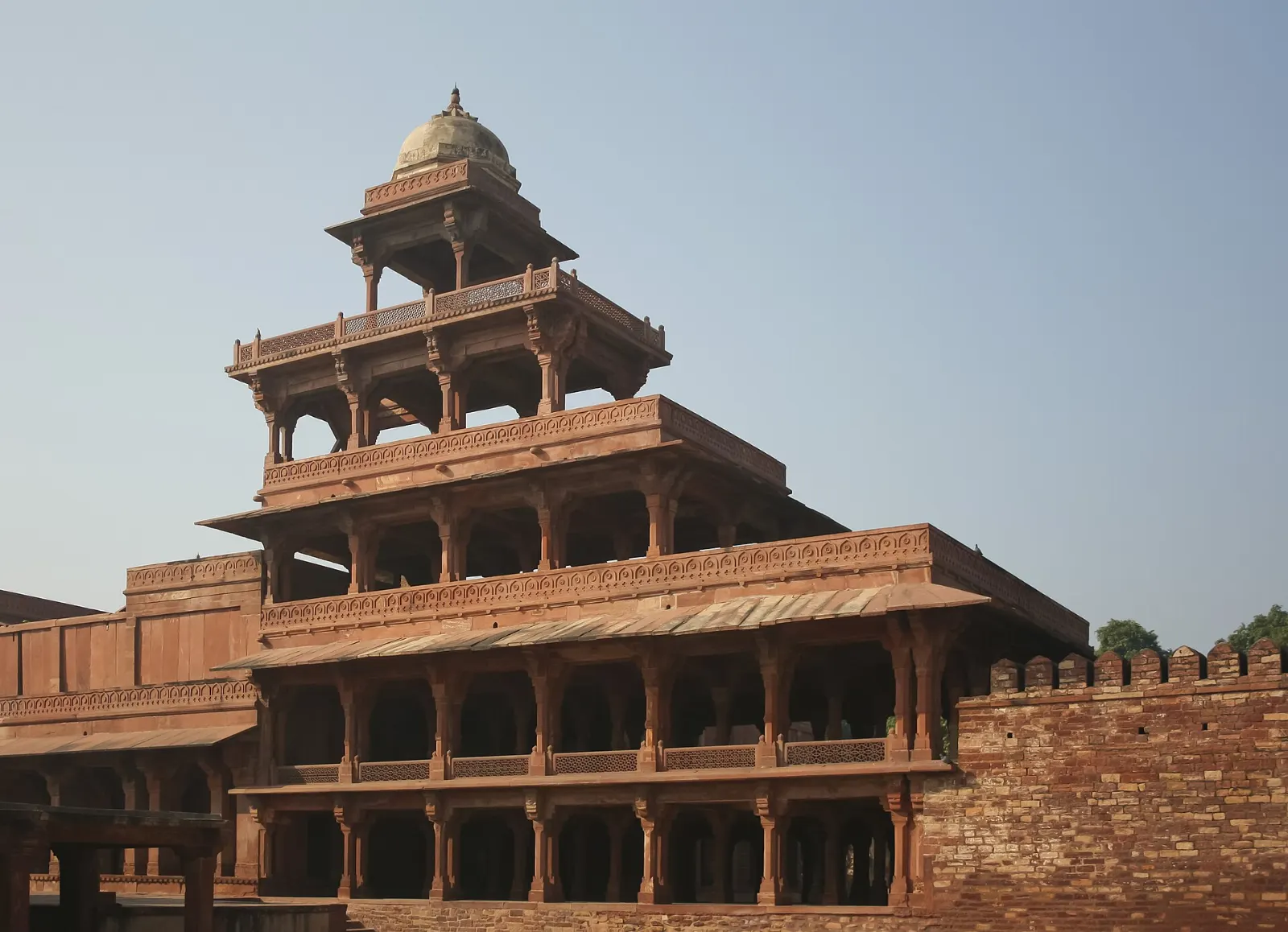
About forty kilometers west of Agra, Fatehpur Sikri was built by Akbar in the 1570s as his new capital in honor of the Sufi saint Salim Chishti, who had foretold the birth of his son.
Jama Masjid and Buland Darwaza
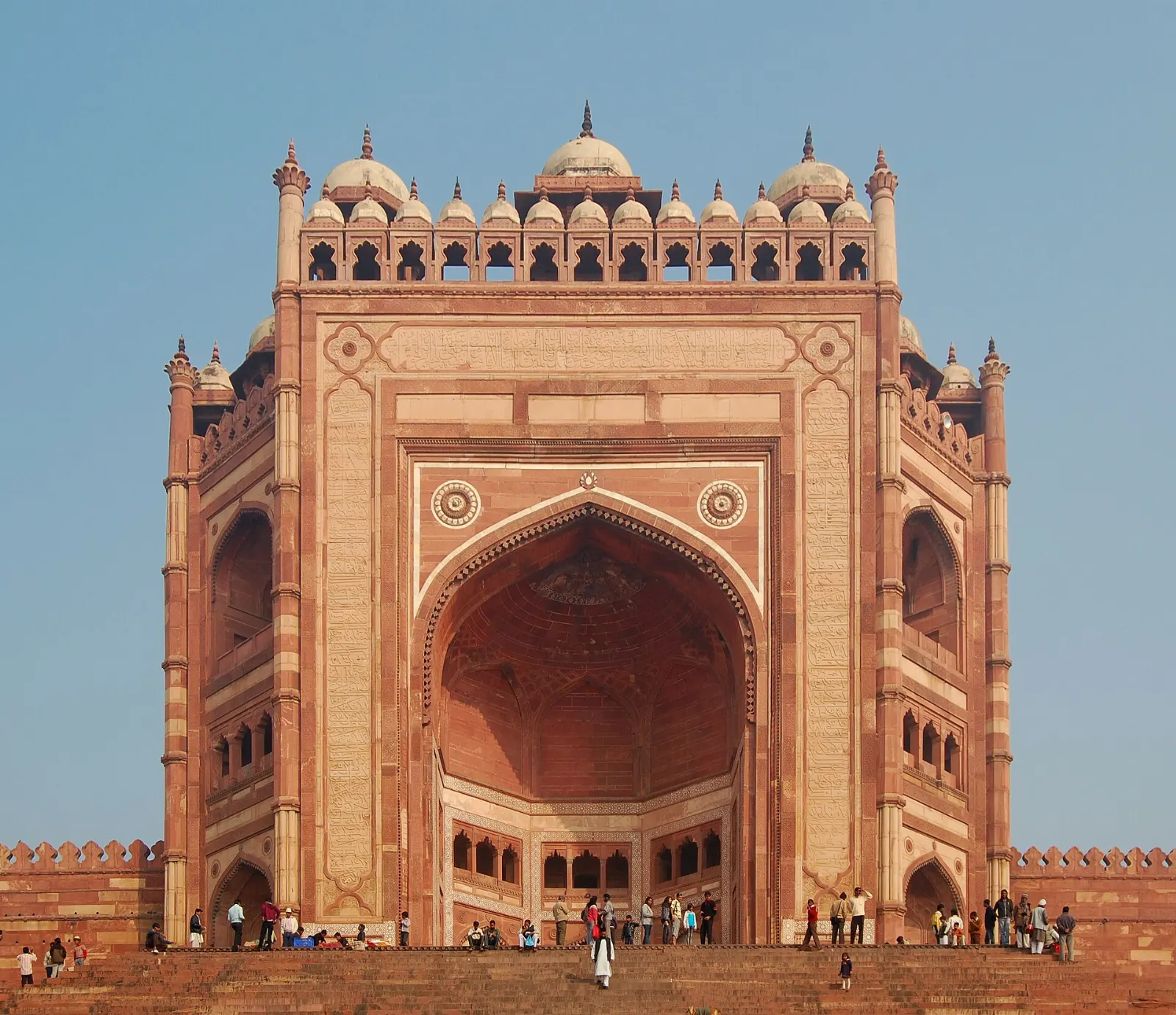
Next to the palaces, the great mosque of Fatehpur Sikri is entered through the Buland Darwaza, a towering victory gate added after Akbar's campaigns in Gujarat, and climbing its steps gives you a wide view over the surrounding plain.
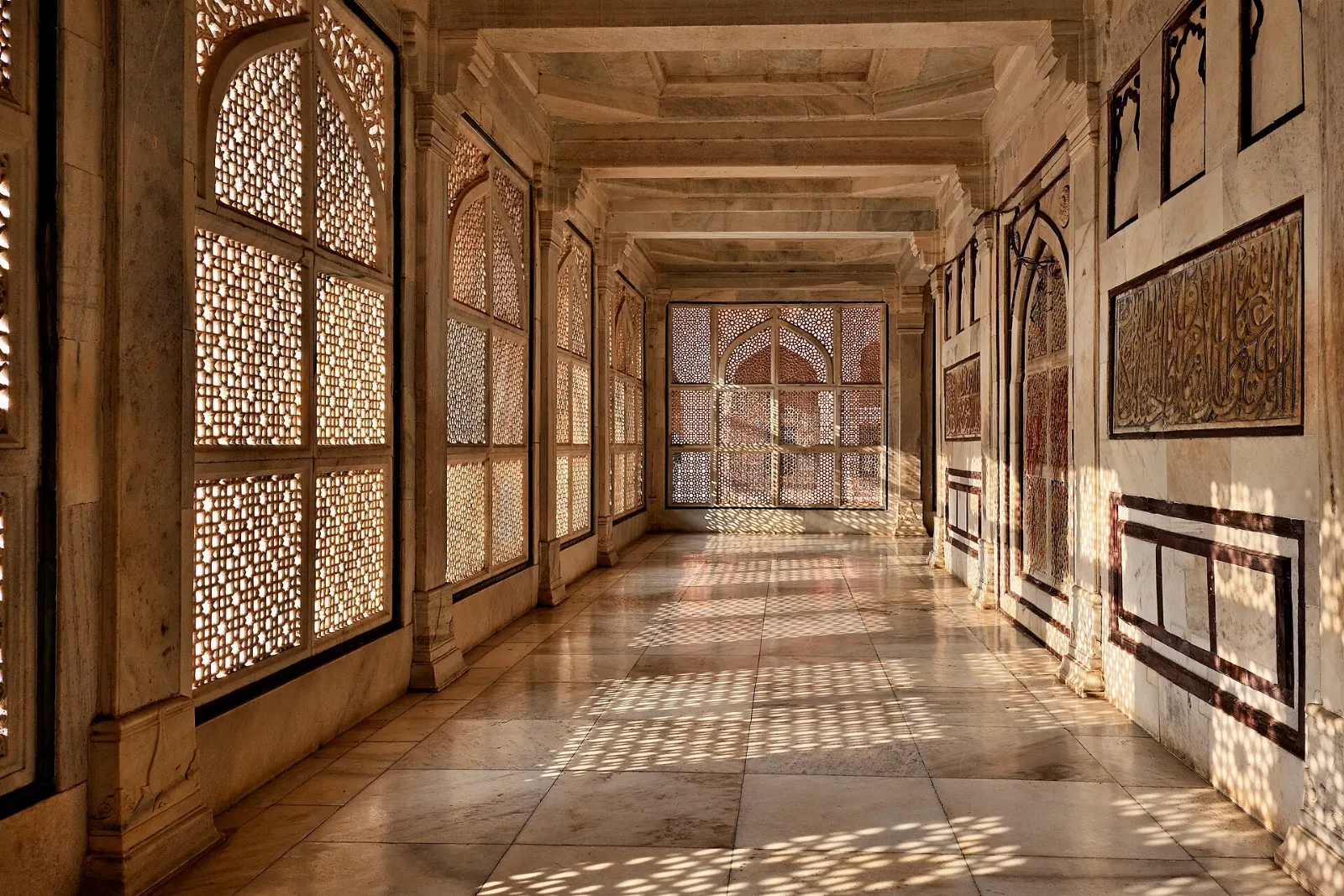
Inside the courtyard, the white marble tomb of Salim Chishti, enclosed by delicate stone lattice screens, draws pilgrims who tie threads on the screens while making a wish.
 Planning a trip to Agra?Compare hotels, flights and vacation rentals for Agra on Expedia.Book now
Food and local flavors
Agra's kitchens draw heavily on Mughlai traditions. Look for rich curries such as mutton korma and nihari, slow-cooked biryani, kebabs from charcoal grills, and creamy dal makhani.
Agra's signature sweet is petha, a translucent candy made from ash gourd, sold in dozens of flavors from plain and saffron to rose and coconut. The stretch around Noorie Darwaza and Sadar Bazaar is lined with petha shops, and boxes make easy gifts.
Popular dishes to try in Agra


Where to stay
Taj Ganj and the area around the East Gate put you within walking distance of the Taj Mahal, ideal if you want to be inside at sunrise. Taj Ganj itself has budget guesthouses with rooftop views of the dome, while the roads around the East Gate, including Fatehabad Road, hold the larger, more polished hotels.
Wherever you stay, check that your hotel is within easy reach of the gate you plan to use, since vehicles must stop short of the Taj complex.
Where to stay in Agra


Best time to visit
October to March is the main season, with warm, dry days and cool nights. December and January bring dense morning fog that can veil the Taj Mahal until late morning and delay trains, so leave flexibility in your plans.
The Taj Mahotsav, a cultural festival of crafts, music, dance and food, is usually held in February at Shilpgram near the Taj's East Gate.
Getting there and getting around
By train: Agra Cantt is the main railway station, and fast trains such as the Gatimaan Express and Vande Bharat services connect it with Delhi in roughly two hours, making a day trip feasible. Book through Indian Railways' official IRCTC site well in advance.
By air: Agra's own airport has limited domestic flights, so most international travelers fly into Delhi. Around town: Ride-hailing apps, prepaid taxis, auto rickshaws and cycle rickshaws are all available.
A suggested itinerary
First day
Enter the Taj Mahal at sunrise and spend the morning there.
Second day
Drive out to Fatehpur Sikri early to beat the heat and crowds, spending the morning among the palaces and at the Buland Darwaza.
Third day
Visit Akbar's Tomb at Sikandra in the morning, shop for petha and marble inlay work in Sadar Bazaar, and if your dates align with the full moon, book night viewing of the Taj Mahal.
Practical tips
- Remember that the Taj Mahal is closed to general visitors on Fridays.
- Book monument tickets online through the official Archaeological Survey of India site and arrive at opening time.
- Travel light to the Taj; food, tripods, drones, large bags and many electronic items are not allowed through security.
- Use only licensed guides with official identification, and politely decline touts who approach outside gates and stations.
- Be wary of shopping detours; reputable marble inlay workshops never pressure you to buy.
- Dress modestly at mosques and tombs, and carry a scarf to cover your head when required.