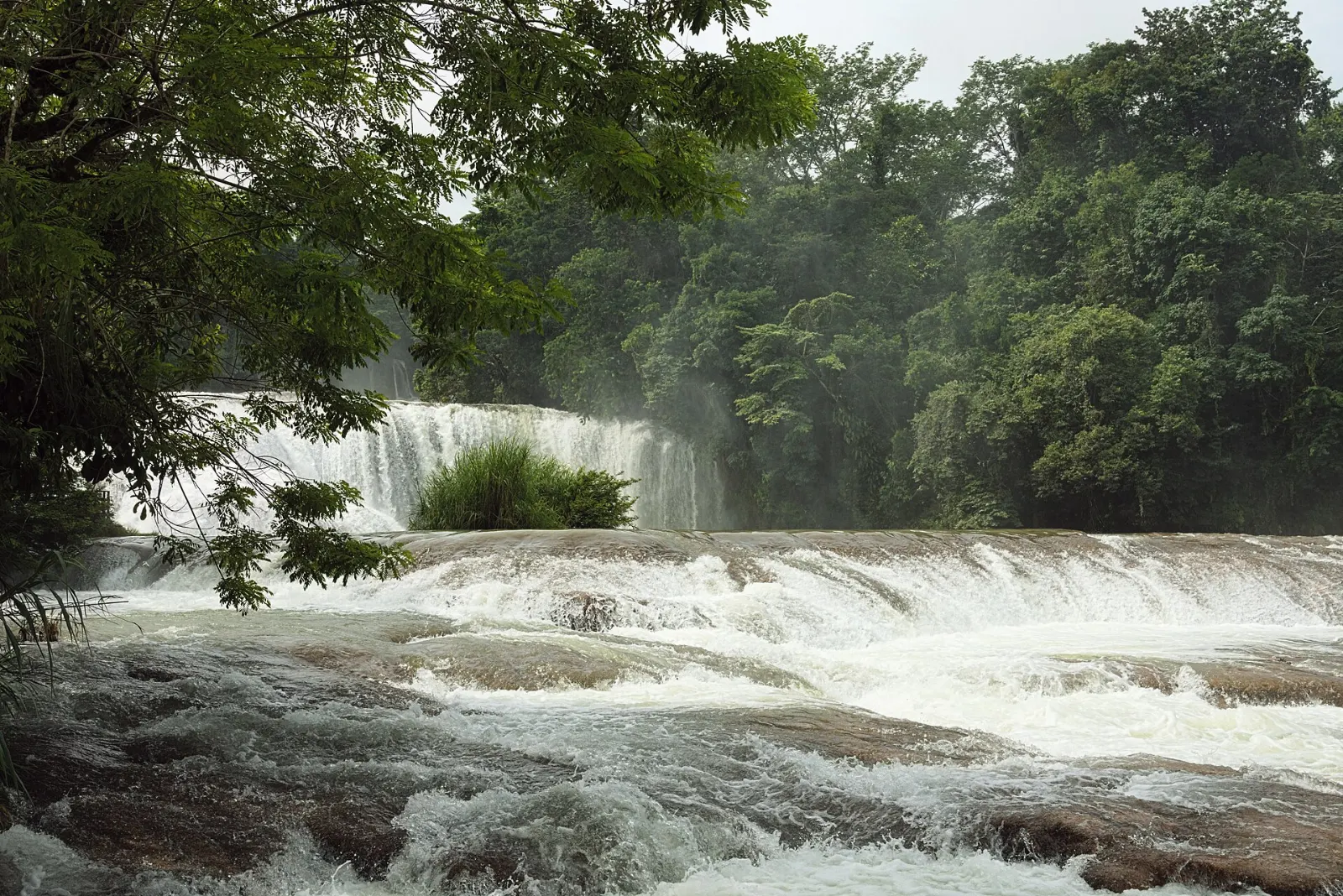
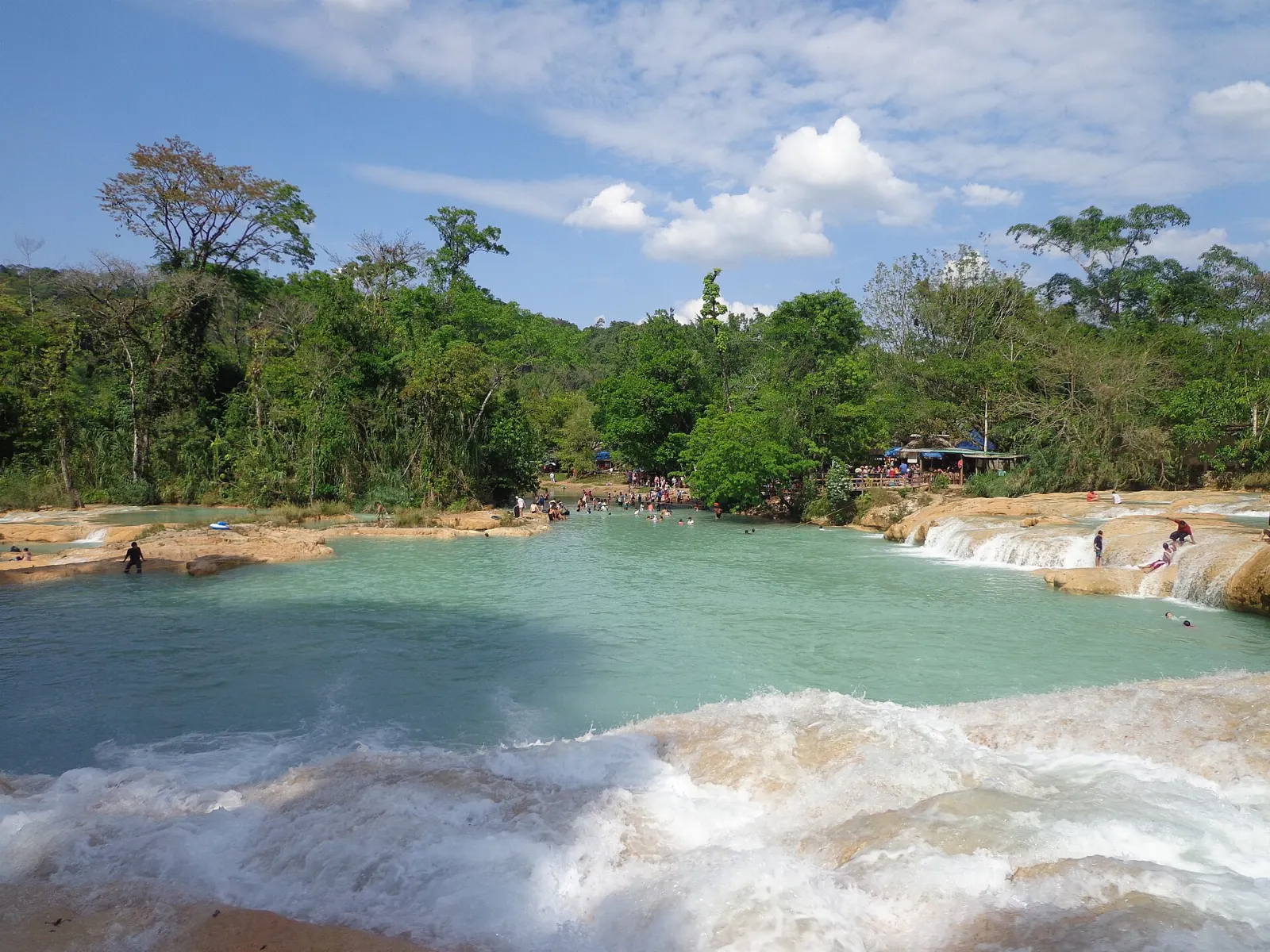
The Cascadas de Agua Azul are a long series of waterfalls on the Xanil River in the jungle of Chiapas. Their water is rich in calcium carbonate, which gives the pools their milky turquoise color and coats rocks in limestone.
AT A GLANCE
Best time
The drier months from November to April give the clearest water and easier access.
How long
Half a day covers the cascades, and a full day adds Misol-Ha.
Getting there
Take a combi, tour or drive from Palenque along Highway 199.
Why visit the Agua Azul Cascades
The falls lie in the municipality of Tumbalá near Mexican Federal Highway 199. The river drops through many cataracts one after another, and in places it splits into two streams with small islands in between.
The area was designated a flora and fauna protection area in 2000 and covers about 25.8 square kilometres. After the 2017 Chiapas earthquake opened a crack and briefly reduced the flow, residents reportedly restored the falls, which is a reminder of how much the site matters to local communities.
At the falls
The entrance and the vendor path
A footpath runs beside the river with many vendor stalls selling snacks, drinks and crafts. This is the busiest part of the site, and it is also where you will pay any entrance fees.
The lower cascades
The first set of terraces is easy to reach from the path and gives you a close look at the flowing water.
The islands and double streams
Look for the places where the river splits around small islands and falls in two streams. The channels carve patterns in the limestone and make good photo spots, especially in the morning.
Swimming areas
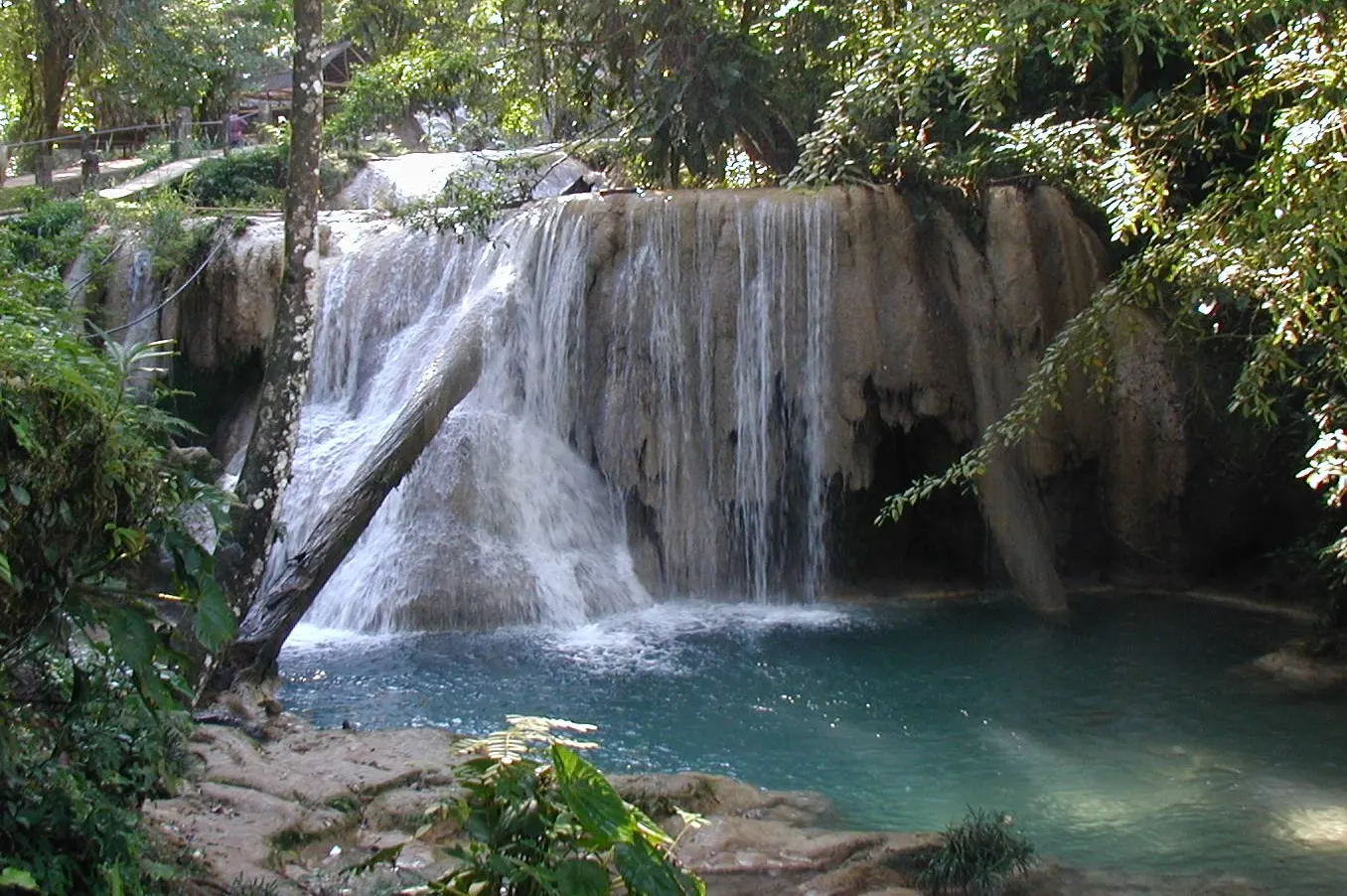
Some calm pools are used for swimming, and others have strong currents above the cascades. Follow local signs and ask staff which areas are safe on the day you visit.
Limestone formations
Because the water carries so many minerals, rocks and fallen trees become coated in thick limestone shells. Look at the logs and stones along the edges to see the deposits in progress.
Upstream viewpoints
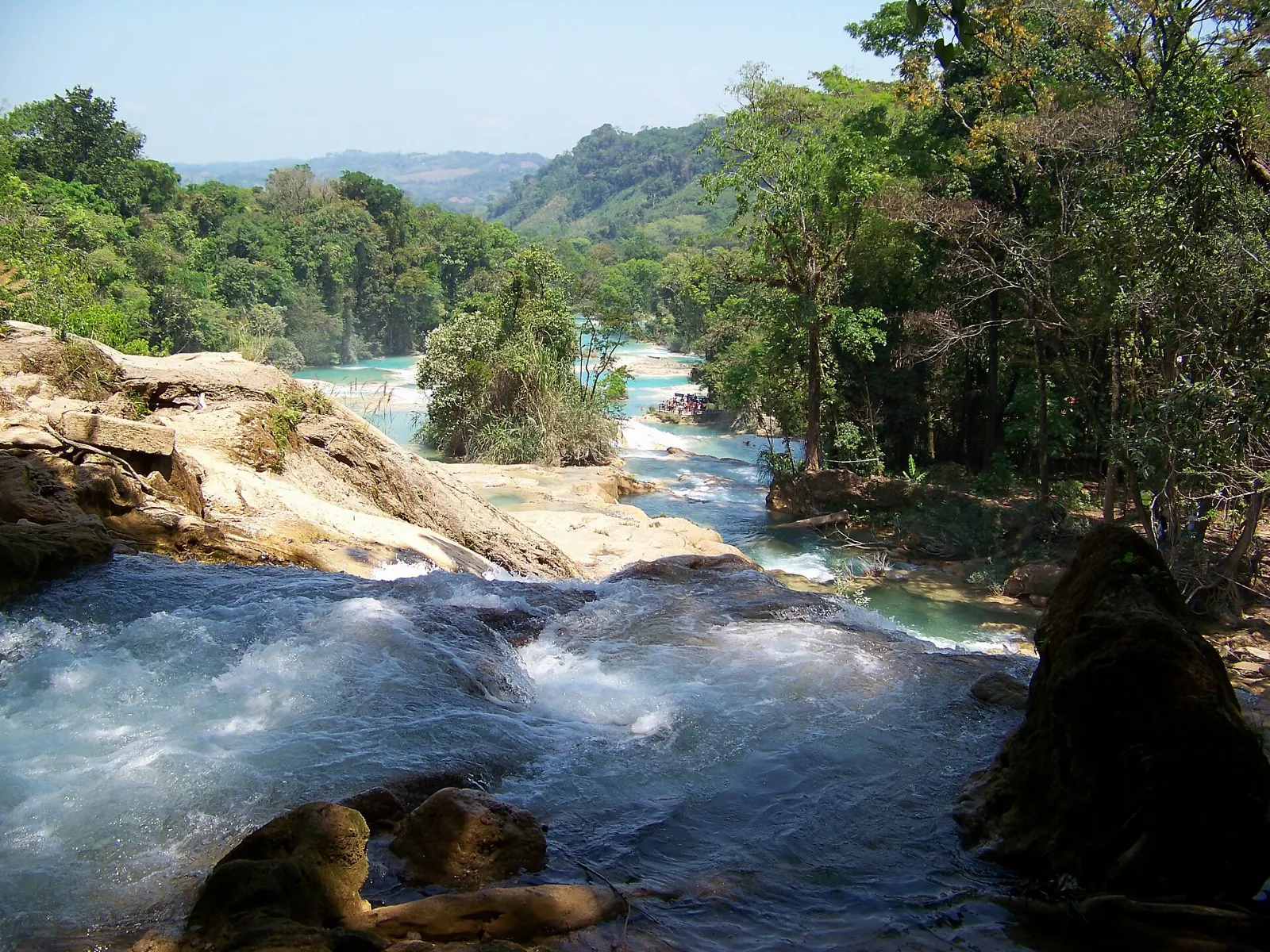
A climb along the path brings you to higher viewpoints that show the sequence of cataracts from above. It takes extra effort on hot days, so carry water and take your time.
Misol-Ha and Palenque
Misol-Ha
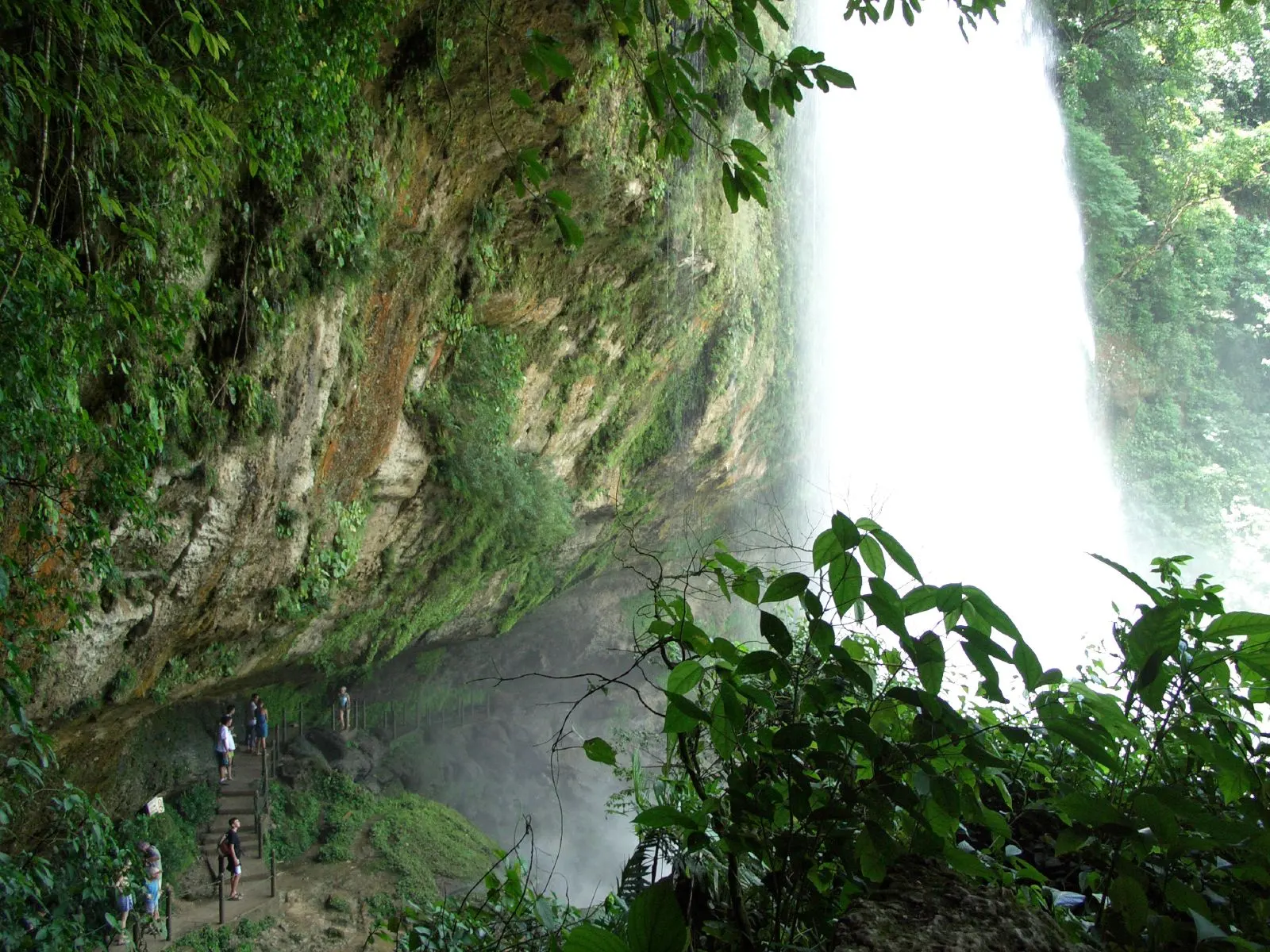
This waterfall drops from a cliff into a round jungle pool and is one of the best known stops near Palenque.
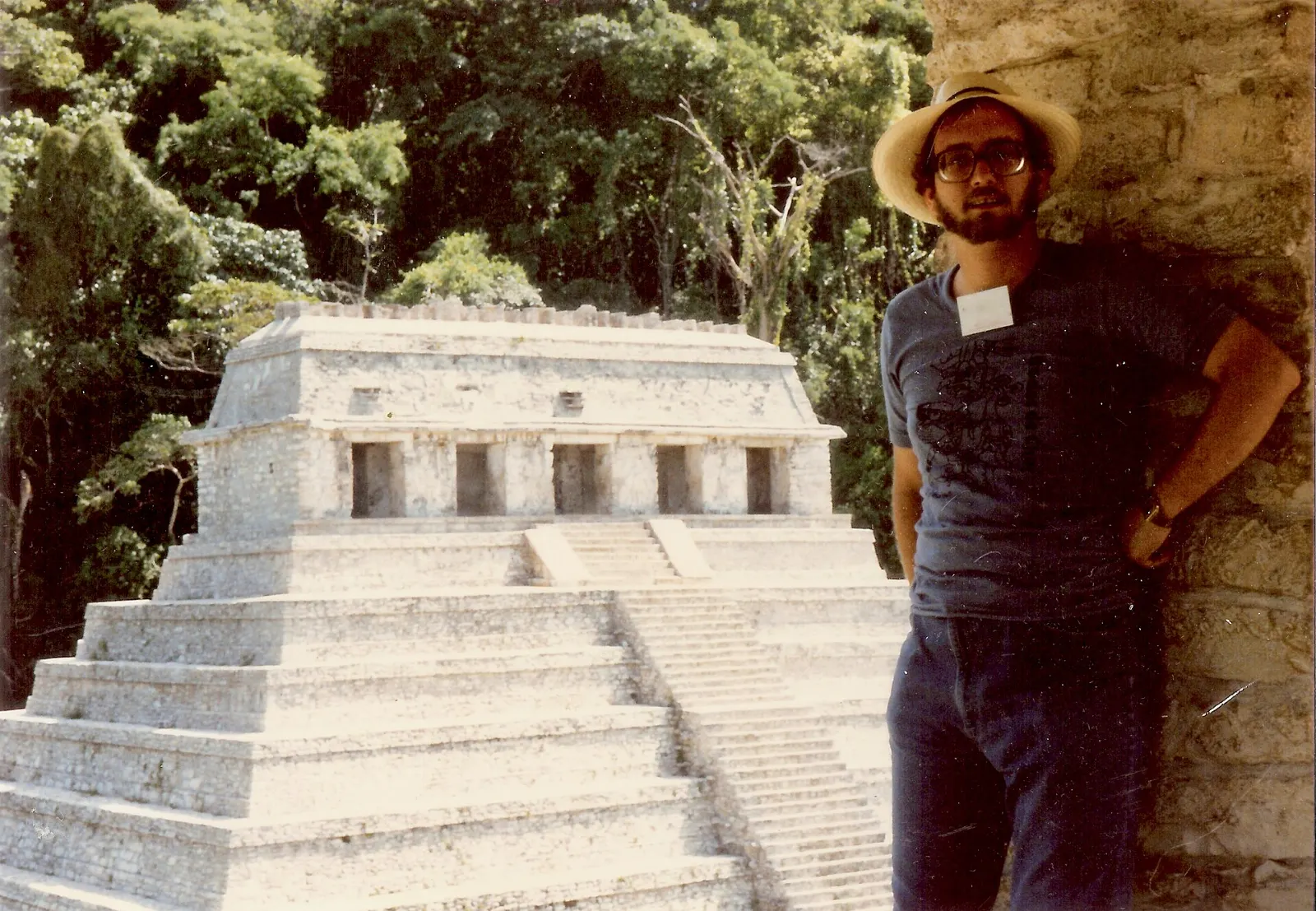
Palenque archaeological site
The Maya city of Palenque lies about an hour from the falls and sits within a national park. Many travelers visit the ruins in the morning and the waterfalls in the afternoon.
Palenque National Park
The park protects tropical forest with a wide range of wildlife, including bats, birds and reptiles. Early walks in the jungle give a sense of the landscape that surrounds both the ruins and the falls.
 Planning a trip to Agua Azul Cascades?Compare hotels, flights and vacation rentals for Agua Azul Cascades on Expedia.Book now
Planning around the water
Agua Azul is a place where timing matters. Many tours give about two and a half hours at the cascades, which is plenty for walking the whole length, while Misol-Ha needs much less time.
The surrounding forest holds a surprising range of wildlife. Palenque National Park has catalogued more than 1,500 species, including about 300 bird species, many kinds of bats and two species of crocodile in its rivers and marshes.
Because the falls are a protected area, treat them gently. Take your trash with you, stay on marked paths and avoid standing on mineral crusts, which form slowly. Arrive with realistic expectations, since the color depends on weather, and enjoy the terraces whether the water is deep turquoise or paler.
Food and local flavors
Simple food stalls near the falls sell snacks and cold drinks, and larger meals are easier to find in Palenque. Look for pozol, a refreshing fermented corn drink eaten and drunk across Chiapas, Tabasco and Campeche, usually served cold. Tamales de chipilín, made with a local leafy herb, are a regional favorite and appear at markets and breakfast stalls. Crisp tostadas topped with local ingredients make a light lunch.
Popular dishes to try in Agua Azul Cascades


Where to stay
Palenque is the most convenient base, with a wide choice of guesthouses, hotels and jungle lodges and easy access to the ruins, Misol-Ha and the falls. It suits travelers who want day trips by combi or tour and a choice of restaurants.
Ocosingo lies to the south along the same highway and works as a quieter stop for travelers heading toward the highlands. San Cristóbal de las Casas is farther along the road and suits those who want a colonial city with plenty of cafés.
Where to stay in Agua Azul Cascades


Best time to visit
The rainy season in Chiapas runs from May to October, while the drier season runs from November to April. Rain can change the color and level of the water, and at times it can make the pools cloudier or limit swimming.
Weekends and holidays bring crowds from nearby towns, so weekdays and early mornings are calmer. Heat and humidity are high year round, so bring light clothing and sun protection.
Getting there and getting around
Agua Azul lies about 69 kilometres from Palenque along Federal Highway 199. The easiest route is a tour or a shared ride from Palenque, and many tours combine Misol-Ha and Agua Azul in one trip, usually leaving around midday and returning in the evening.
Public combis serve Misol-Ha, and some shuttles between Palenque and San Cristóbal de las Casas stop at both falls on the shorter route of about 190 kilometres. ADO buses on the longer route take about 450 kilometres via Villahermosa and Tuxtla Gutiérrez.
A suggested itinerary
First morning
Visit the ruins at Palenque early, before the heat builds, and have a relaxed lunch in town.
First afternoon
Join a tour or ride to Misol-Ha for a short stop, then continue to Agua Azul for a long walk along the cascades and a swim where it is safe.
Second day
Continue toward Ocosingo or San Cristóbal de las Casas with a shuttle that stops at the falls, or spend the morning in the jungle park before leaving.
Practical tips
- Bring water shoes, a swimsuit and a towel for the pools.
- Carry small bills for entrance fees, vendors and parking.
- There is no cell service at the falls, so download maps and arrange your return ride in advance.
- Use sunscreen and insect repellent, and wear a hat for the walk.
- Check on local conditions before swimming, as currents can be strong above the cascades.