WiserMap — Choose wisely. Connect locally.Choose wisely. Connect locally.Add your business
Yaxchilán, Chiapas · Travel guide

Yaxchilan Mexico Riverboat to a Maya City and Bonampak

Yaxchilán is a Maya city on a bend of the Usumacinta River in the Lacandon Jungle of Chiapas, and no road reaches its gate. You travel to the riverside town of Frontera Corozal, then ride a narrow boat for about half an hour through the forest.

By WiserMap TravelUpdated October 2026 7 places9 min read
FacebookXLinkedIn
At a glance Yaxchilán
  1. Best timePick a day with a dry forecast and arrive early to beat the heat.
  2. How longAllow a full day from Frontera Corozal, or two days from Palenque.
  3. Getting thereReach Frontera Corozal from Palenque by road, then take a boat to the ruins.

Why visit Yaxchilán

At its height, Yaxchilán was one of the largest and most powerful Maya city-states in the region. Its kings ruled for centuries, beginning with Yopaat B'alam I, who is thought to have taken the throne in 359 CE, and the city rivaled Piedras Negras, Palenque and at times Tikal.

Today the site is prized for its sculpture. The doorways of its main buildings carry carved lintels that record the dynasty's rituals and wars, and Yaxchilán has more intact lintels than any other Maya site.

The best places to visit on the way

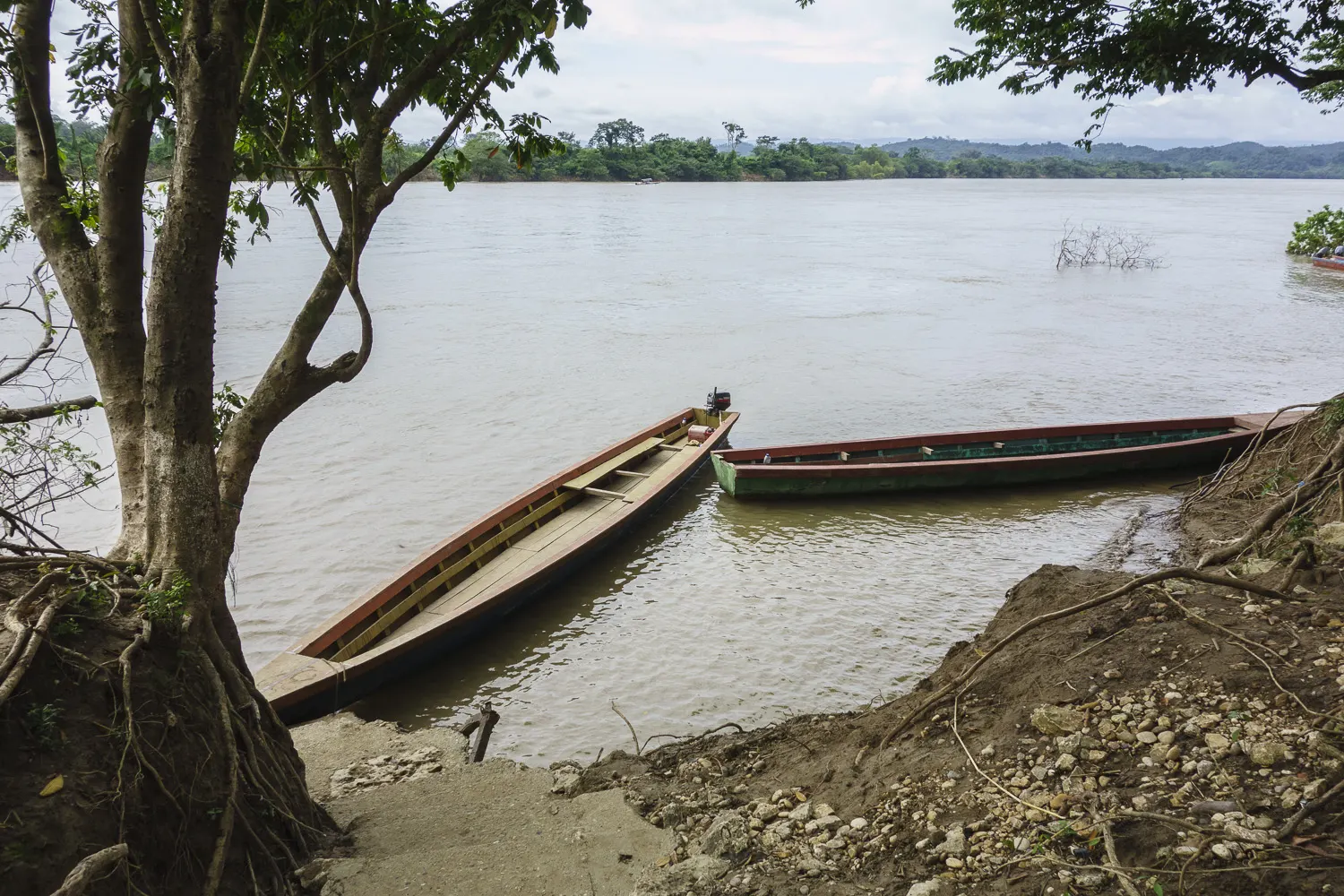
Narrow river boats waiting at the landing in Frontera Corozal, Yaxchilán, Chiapas

Frontera Corozal

This mostly Ch'ol community on the Usumacinta was founded in the 1970s and is the only practical gateway to Yaxchilán. It has a small regional museum centered on two stelae found at nearby Dos Caobas, a dock where boats called lanchas wait for passengers, and simple lodging.

Frontera Corozal is the river town where boats leave for Yaxchilán. Photo: Martin Haeusler, Wikimedia Commons, CC BY-SA 3.0
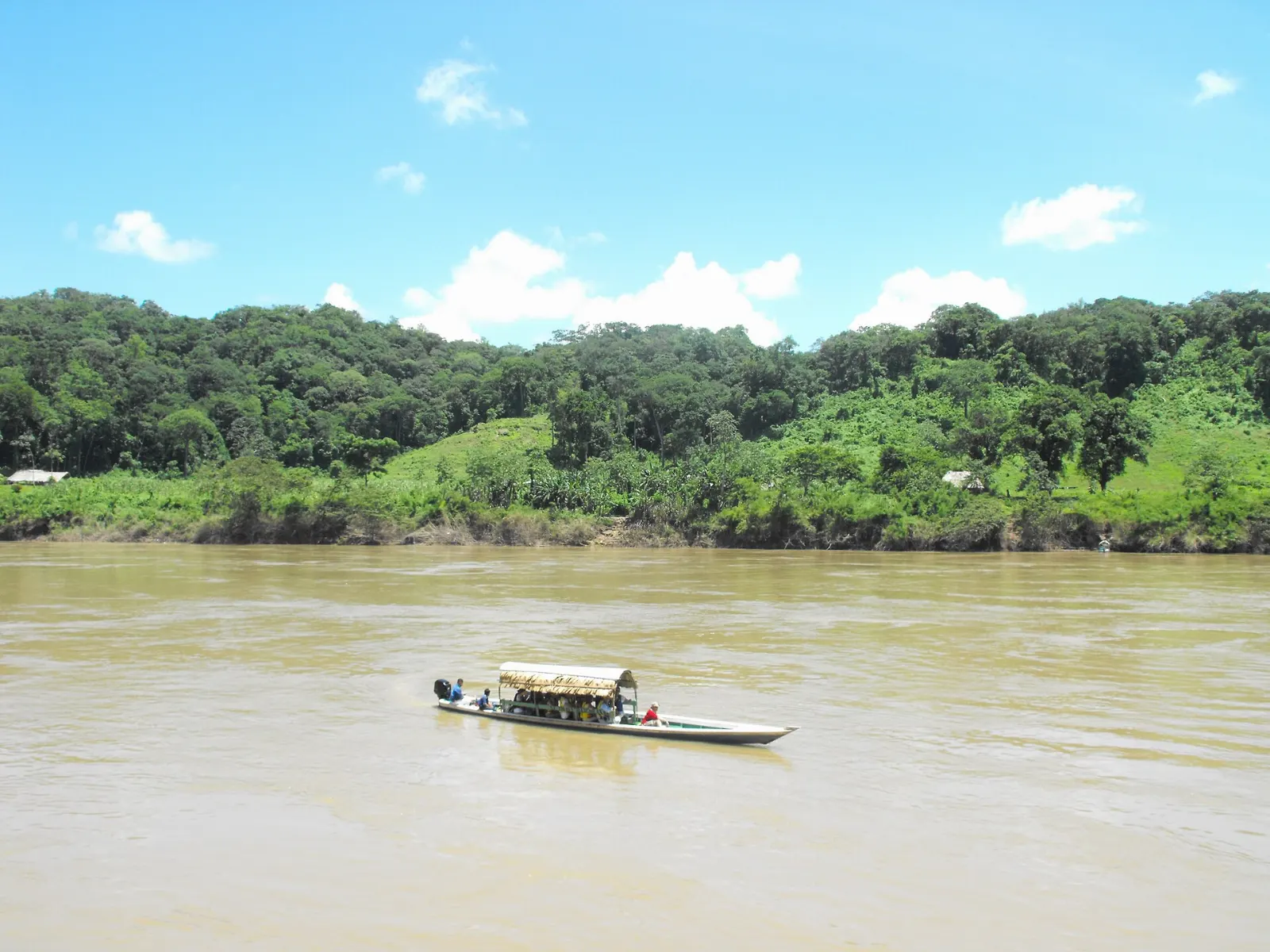
A boat crossing the broad Usumacinta River between Mexico and Guatemala, Yaxchilán, Chiapas

The Usumacinta River crossing

The boat trip to the ruins takes about half an hour and is one of the highlights of the day. The river is wide and fairly shallow in places, and the local boatmen know the channels well.

The Usumacinta forms part of the border between Mexico and Guatemala. Photo: diego_cue, Wikimedia Commons, CC BY-SA 3.0

The best places to visit inside the ruins

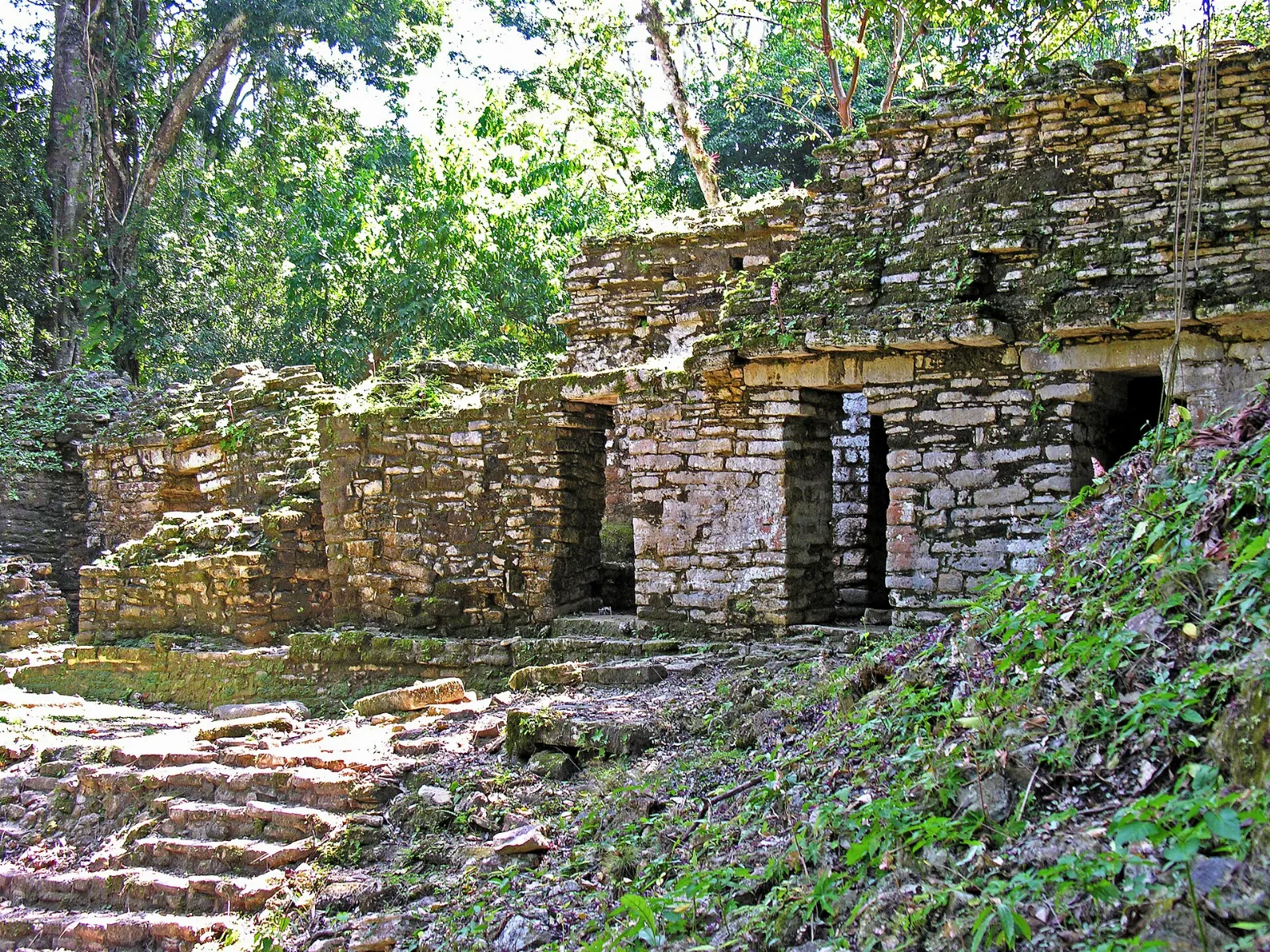
Stone buildings of the Great Acropolis above the Usumacinta River, Yaxchilán, Chiapas

The Great Acropolis

The largest of the site's three acropolises runs parallel to the river. Scholars believe it was a royal palace or the residence of the city's elite.

The Great Acropolis is the largest of the three acropolises at Yaxchilán. Photo: Dennis G. Jarvis, Wikimedia Commons, CC BY-SA 2.0

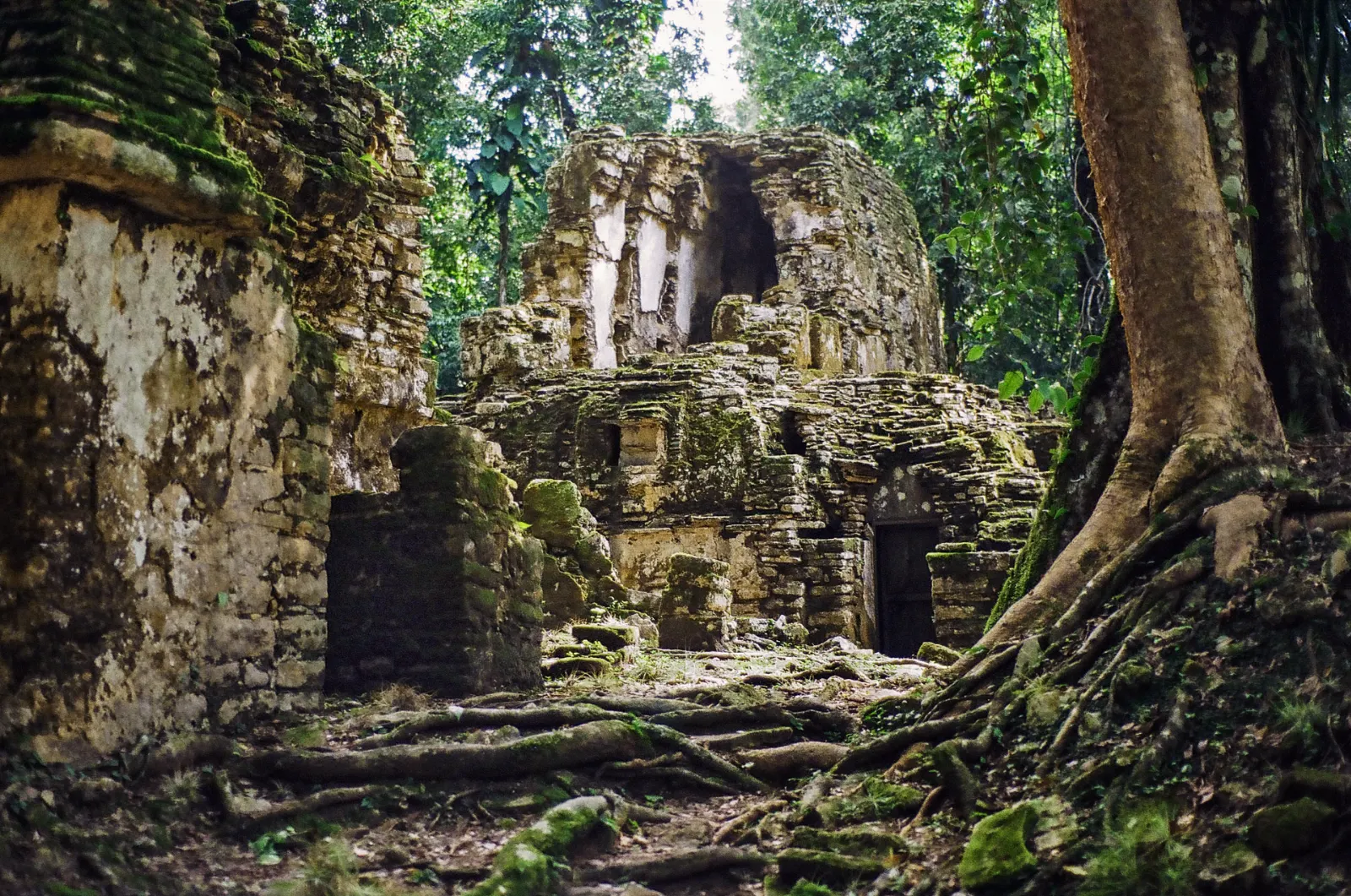
A temple at Yaxchilán with doorways and a perforated roof comb, Chiapas

Structure 6 and the Main Plaza

Near the Main Plaza, Structure 6 is in a good state of preservation. It has six doorways, three facing the plaza and three facing the river, and part of its perforated roof comb survives.

Structure 6 has six doorways and keeps part of its roof comb. Photo: Adrien Jaccard, Wikimedia Commons, CC BY-SA 4.0

Structure 44

A series of lintels here portrays a king's military adventures and victories, and its hieroglyphic texts are among the best examples of how Yaxchilán told its own history. Look closely at the details of dress and weapons.

Structure 42

The central lintel shows the ruler Bird Jaguar IV, while lintels beside it portray his captains and priests.

The Labyrinth

Beneath Structure 19, a series of underground corridors leads to small basement rooms. One passage remains sealed and unexplored.

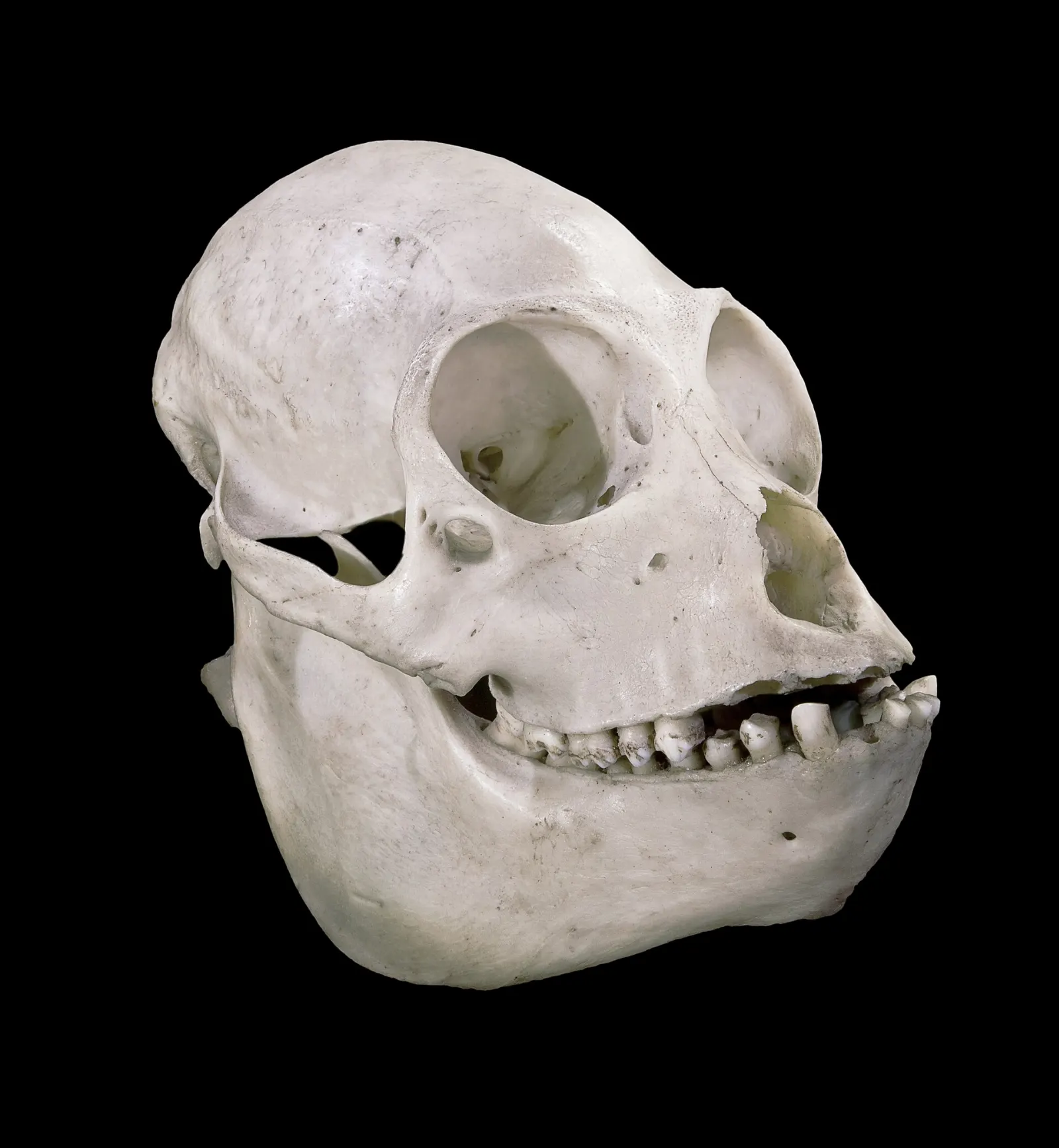
A howler monkey resting in a tree in the Lacandon Jungle, Yaxchilán, Chiapas

The stone piling and the wildlife trail

A stone piling in the river is thought to have been the base for a dock or a bridge. Along the paths, howler monkeys and spider monkeys are often seen, and you will almost certainly hear the howlers.

Howler and spider monkeys are often seen or heard around Yaxchilán. Photo: Didier Descouens, Wikimedia Commons, CC BY-SA 4.0

The best places to visit nearby

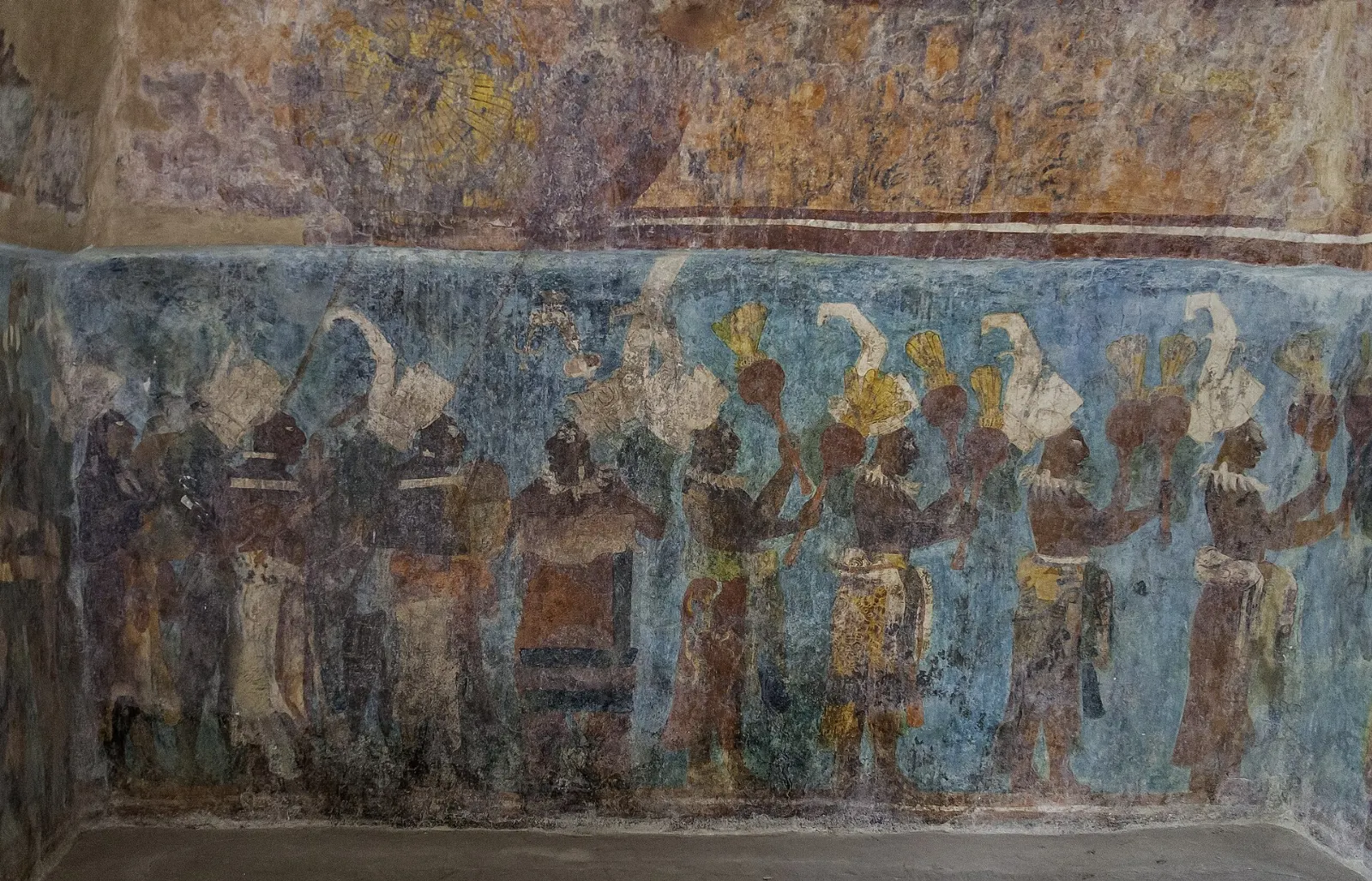
Painted murals inside the Temple of the Murals at Bonampak, Yaxchilán, Chiapas

Bonampak

Bonampak was once a dependency of Yaxchilán and is known for the murals inside the Temple of the Murals, Structure 1. They are among the best-preserved Maya murals and depict a battle and its victorious outcome.

The Bonampak murals are among the best-preserved Maya murals. Photo: Ricardo David Sánchez, Wikimedia Commons, CC BY-SA 3.0

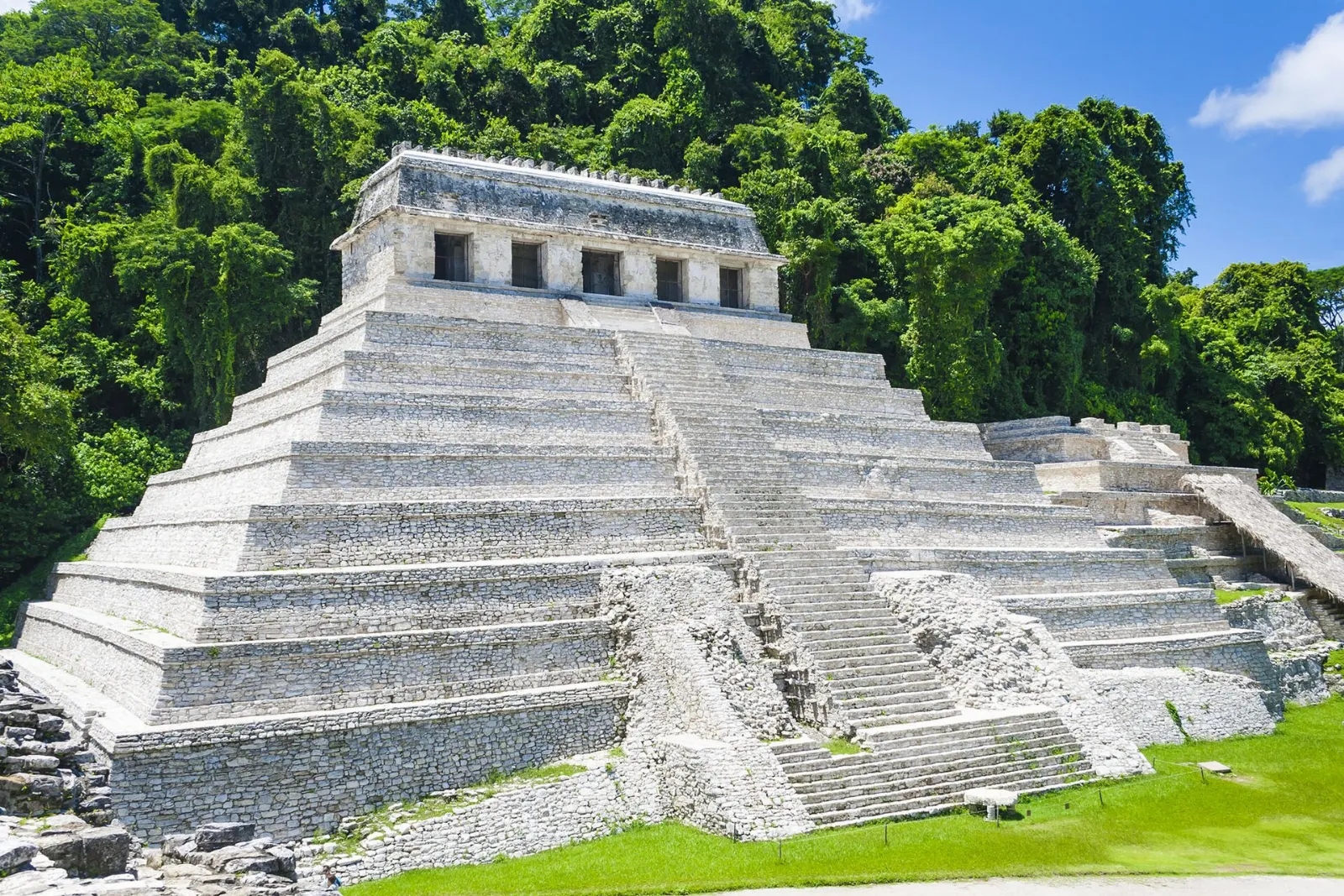
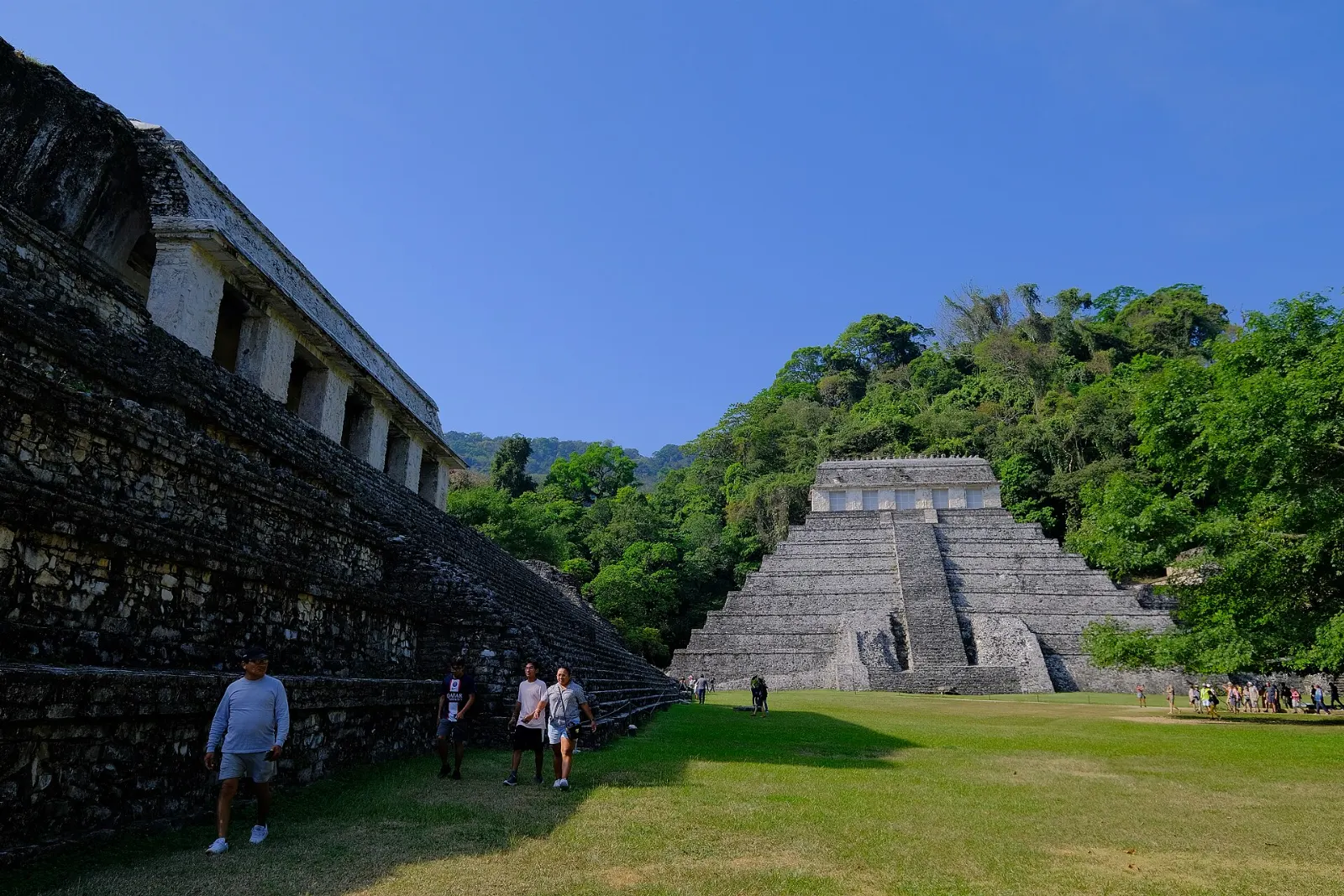
The stepped Temple of the Inscriptions at Palenque rising above the jungle, Yaxchilán, Chiapas

Palenque

Palenque is a UNESCO World Heritage site with exquisite carving and architecture, including the Temple of the Inscriptions, where the tomb of Pakal was found, the Temples of the Cross and the Palace. The ruins take a full day to see well, and the waterfalls at Misol-Ha and Agua Azul are better on a separate day.

The Temple of the Inscriptions at Palenque is the pyramid where the tomb of Pakal was found. Photo: Jan Harenburg, Wikimedia Commons, CC BY 4.0

Food and local flavors

There is no food inside the archaeological zone, so eat in Frontera Corozal, where hotels have restaurants, a couple of open-air places serve traditional Mexican dishes and street vendors set up near the river. Across Chiapas, tamales are the most prominent dish, and tamales de chipilín use an herb found in few other parts of Mexico. Pozol, a drink of fermented corn dough, often mixed with cacao, is a refreshing way to cool down.

Popular dishes to try in Yaxchilán

Tamales de chipilín in Yaxchilán, Chiapas
Tamales de chipilín Across Chiapas, tamales are the most prominent dish, and tamales de chipilín use an herb found in few other parts of Mexico.Photo: Nsaum75, Wikimedia Commons, CC BY-SA 3.0
Pozol in Yaxchilán, Chiapas
Pozol Pozol, a drink of fermented corn dough, often mixed with cacao, is a refreshing way to cool down.Photo: Alejandra Mendoza Santillan, Wikimedia Commons, CC BY-SA 4.0
Tasajo in Yaxchilán, Chiapas
Tasajo Tasajo, grilled strips of beef, is a classic with sauces, and Ocosingo cheese, a white cheese from the municipality where the ruins stand, is another regional product.Photo: WeltKonnte, Wikimedia Commons, CC BY-SA 4.0
Ocosingo cheese in Yaxchilán, Chiapas
Ocosingo cheese Tasajo, grilled strips of beef, is a classic with sauces, and Ocosingo cheese, a white cheese from the municipality where the ruins stand, is another regional product.Photo: AlejandroLinaresGarcia, Wikimedia Commons, CC BY-SA 4.0

Where to stay

Frontera Corozal has only a few places to sleep, from basic inns near the boat landing to rustic cabins with mosquito netting.

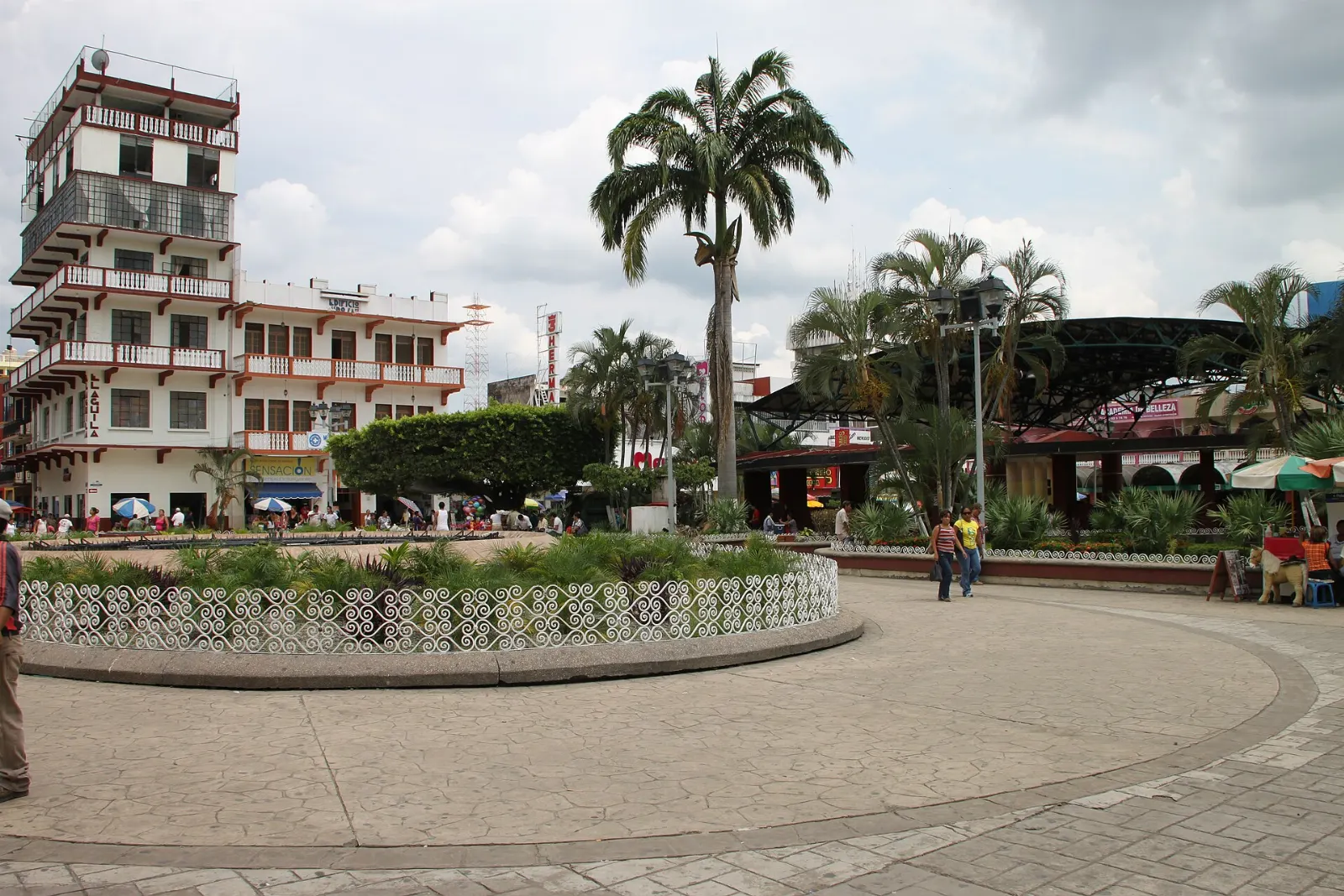
Palenque is the main gateway, with a wide range of lodging, restaurants and transport links.

El Panchán, a jungle compound on the road to the Palenque ruins, offers cabins and camping close to the forest.

Lacanjá Chansayab has jungle camps about 40 minutes from Frontera Corozal and is a convenient base for Bonampak. It suits visitors who want to sleep in the forest and see Bonampak first thing.

Where to stay in Yaxchilán

Frontera Corozal, Yaxchilán, Chiapas
Frontera Corozal Where to stayFrontera Corozal has only a few places to sleep, from basic inns near the boat landing to rustic cabins with mosquito netting.Photo: BlackNose, Wikimedia Commons, CC BY 3.0
Palenque, Yaxchilán, Chiapas
Palenque Palenque is the main gateway, with a wide range of lodging, restaurants and transport links.Photo: Comisión Mexicana de Filmaciones from México D. F., México, Wikimedia Commons, CC BY-SA 2.0
El Panchán, Yaxchilán, Chiapas
El Panchán El Panchán, a jungle compound on the road to the Palenque ruins, offers cabins and camping close to the forest.Photo: Éclusette, Wikimedia Commons, CC BY 3.0
Lacanjá Chansayab, Yaxchilán, Chiapas
Lacanjá Chansayab Lacanjá Chansayab has jungle camps about 40 minutes from Frontera Corozal and is a convenient base for Bonampak.Photo: jimmex, Wikimedia Commons, CC0

Best time to visit

Yaxchilán sits in tropical rainforest, so expect heat, humidity and sudden downpours at any time. Around Palenque, heavy rain is most common in the summer months, so plan the stair climbing for the morning. Go early, because day tours from Palenque tend to arrive around the middle of the morning and the ticket office can close in the early afternoon. Frontera Corozal celebrates its Festival of Corn in August.

Getting there and getting around

The site cannot be reached by road. Most travelers base themselves in Palenque, which has an ADO bus station and is the terminus for the Tren Maya.

In Frontera Corozal you hire a boat from the riverfront to Yaxchilán, a ride of about half an hour. If you are alone, wait at the ticket office near the parking lot and ask other groups whether you can share a boat.

There are no ATMs in Frontera Corozal, so bring enough cash. The town is compact, and mototaxis are an easy way to get around.

A suggested itinerary

First day

Spend the day at Palenque, starting at the Temple of the Inscriptions before the heat builds.

Second day

Travel to Frontera Corozal, visit the museum and watch the sun go down over the Usumacinta.

Third day

Catch an early boat to Yaxchilán, explore the acropolises, lintels and the Labyrinth, and return to town by early afternoon.

Fourth day

Continue to Lacanjá Chansayab and Bonampak to see the murals, then head back toward Palenque.

Practical tips

  • Check your government's current travel advisory before you go.
  • Wear closed shoes with good grip, because stone steps and trails can be slippery after rain, and sandals are not recommended.
  • Bring insect repellent, a hat, sunglasses and plenty of water, as there are no shops at the site.
  • Carry cash for the boat, admission and meals, since cards are rarely accepted outside a few hotels.
  • Follow the instructions of site staff, stay on marked trails and do not leave trash behind.
  • Download maps in advance, because mobile signal is poor along the river and absent at the ruins.
YaxchilánWISERMAP PLACEYaxchilán: photos, reviews & things to doSee traveler photos and reviews, or share your own →

More places to visit

All travel guides →