Petra is the ancient city of the Nabataeans, a trading people who grew rich on the caravan routes carrying incense, spices and textiles across Arabia.
AT A GLANCE
Best time
March to May and September to November, for mild days and long walks.
How long
Two full days inside the site, plus a half day for Little Petra.
Getting there
About three hours by road from Amman and two from Aqaba; stay in Wadi Musa.
Why visit Petra
No photograph prepares you for the scale and color of Petra. The rock itself shifts from salmon pink to deep red, purple and gold within a single cliff, and the facades rise to the height of modern apartment blocks.
Petra is also a place of walking. Every path, whether the gentle valley floor or the steep stairways to the high places, reveals a different side of the city, along with sweeping views over the Sharah Mountains and the desert toward Wadi Araba.
Finally, Petra connects easily with the rest of southern Jordan. Wadi Rum, the Dana Biosphere Reserve and the Red Sea at Aqaba are all within a few hours, making it the natural center of a longer trip.
The Siq and the Treasury
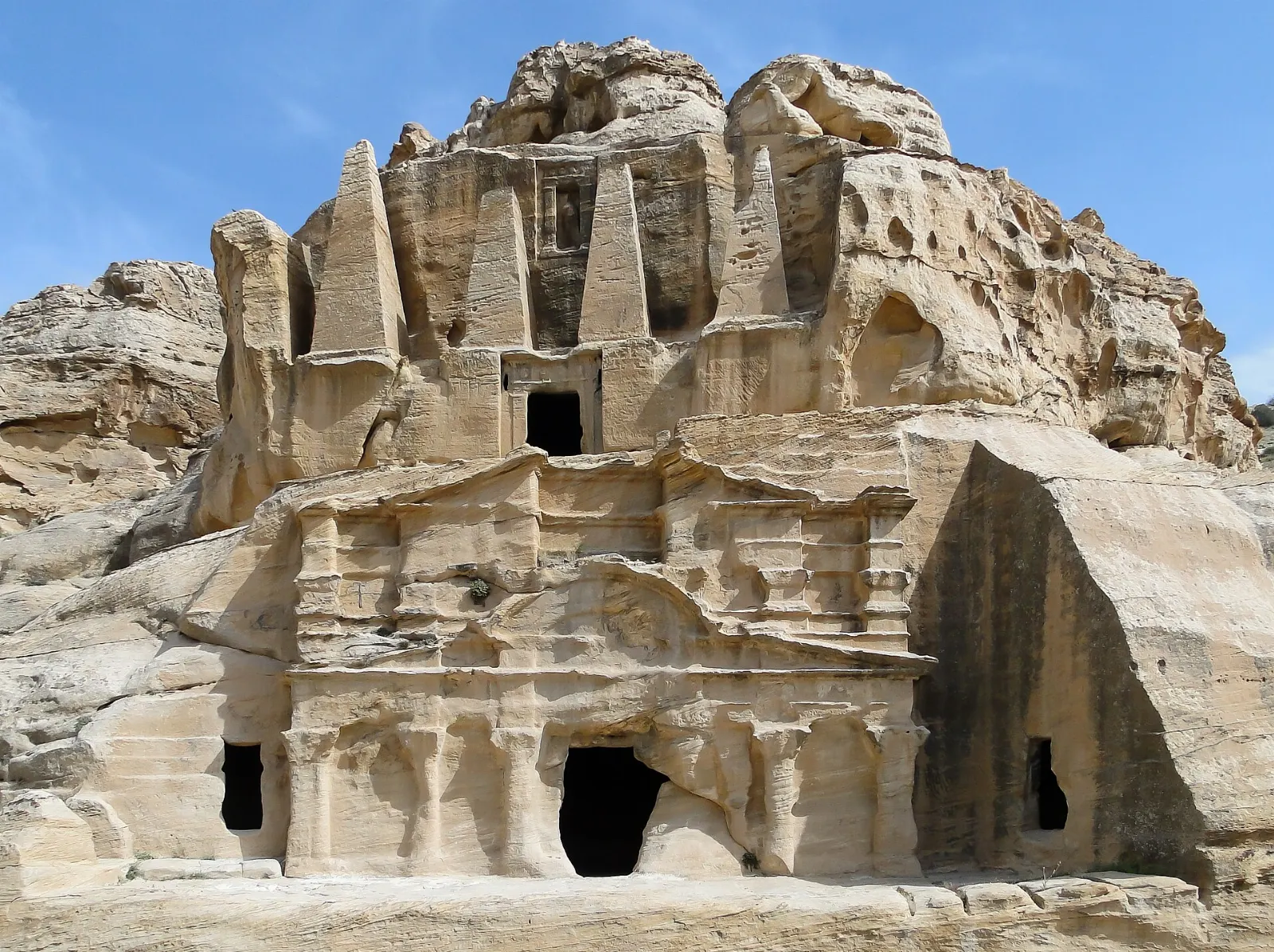
Bab as-Siq and the Obelisk Tomb
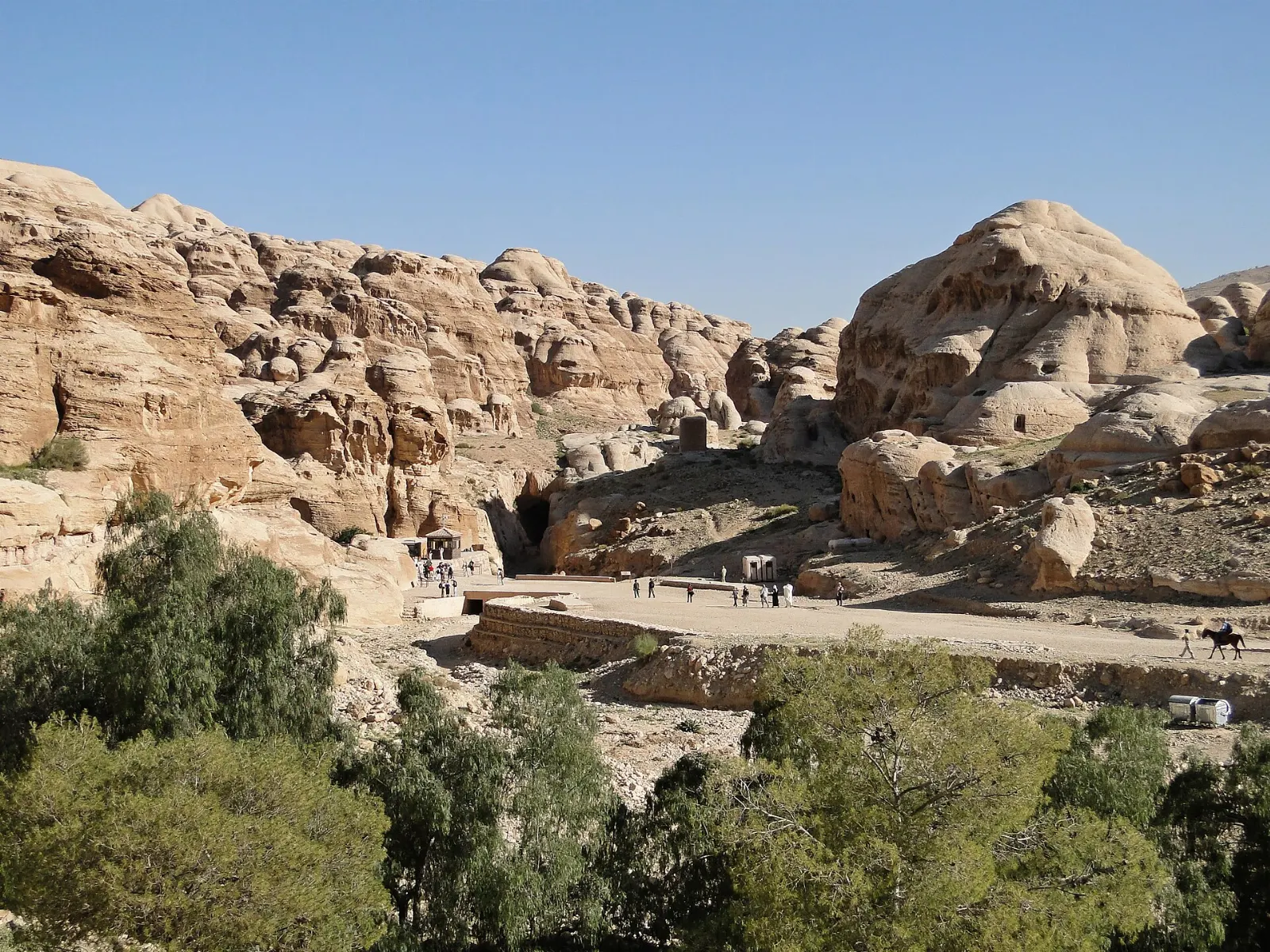
From the visitor center, a wide path called Bab as-Siq leads gently downhill toward the gorge.
The Siq
The Siq is the dramatic main entrance to Petra, a narrow, winding gorge about 1.2 kilometers long, with walls up to around eighty meters high.
Practical tip: walk the Siq first thing in the morning, right after the gates open, when it is quiet and cool. Horse-drawn carriages also use the route, so stay alert.
Al-Khazneh, the Treasury
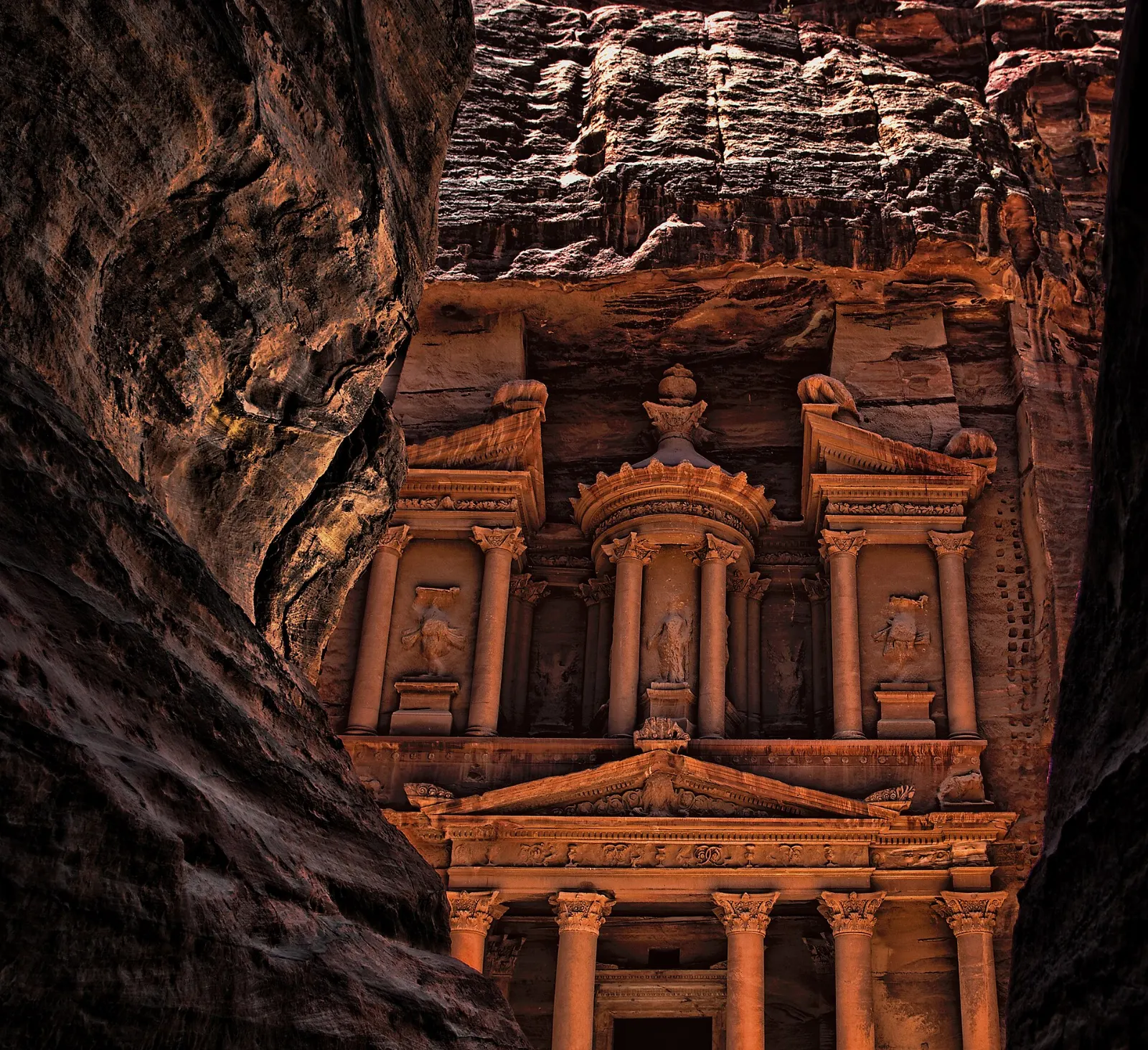
At the end of the Siq, the walls part to reveal Al-Khazneh, the Treasury, Petra's most famous monument. Its ornate two-story facade, almost forty meters tall, combines Hellenistic columns, statues and an urn at the top that legend once claimed held treasure.
The heart of the ancient city
Street of Facades and the Theater
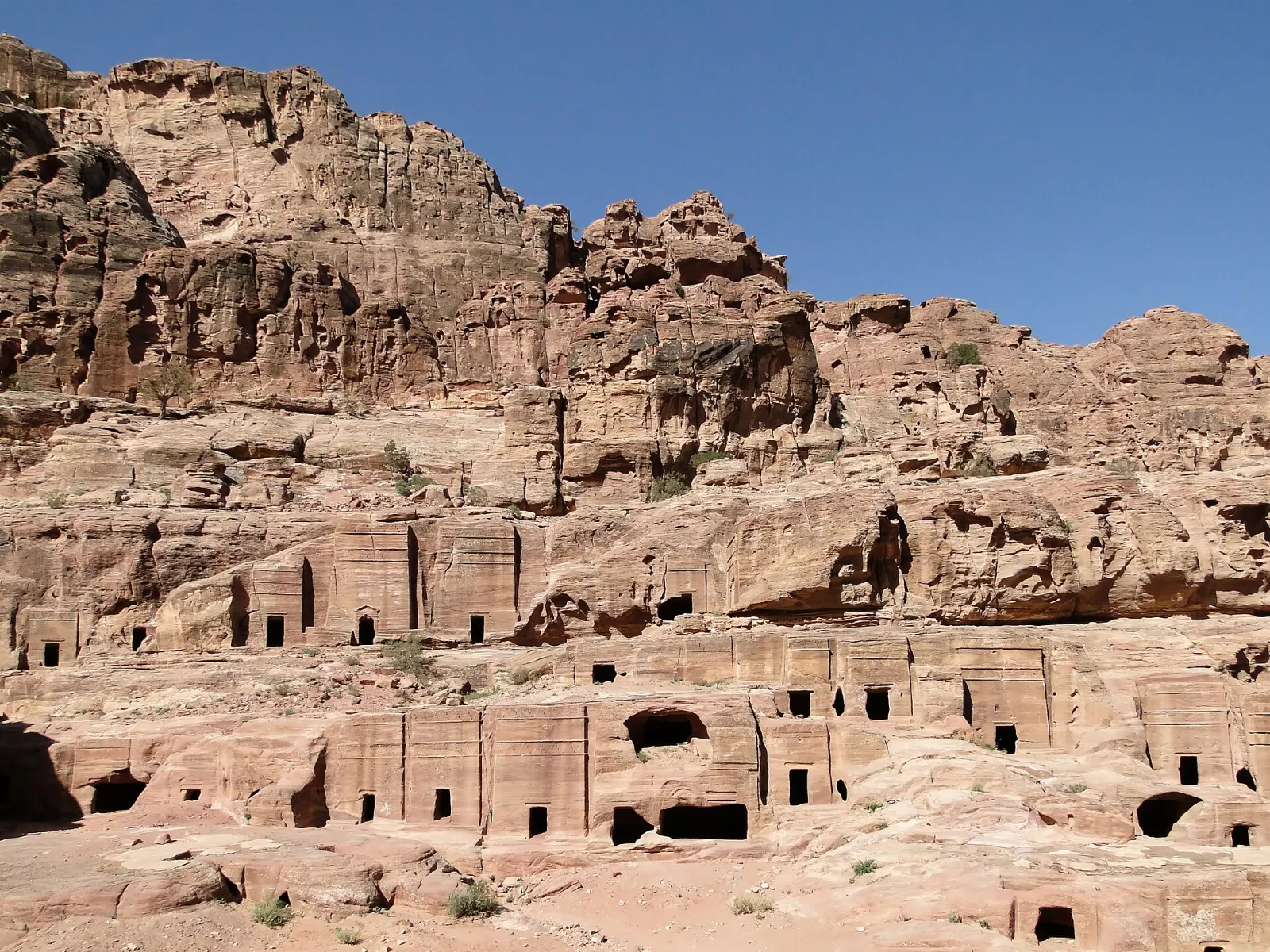
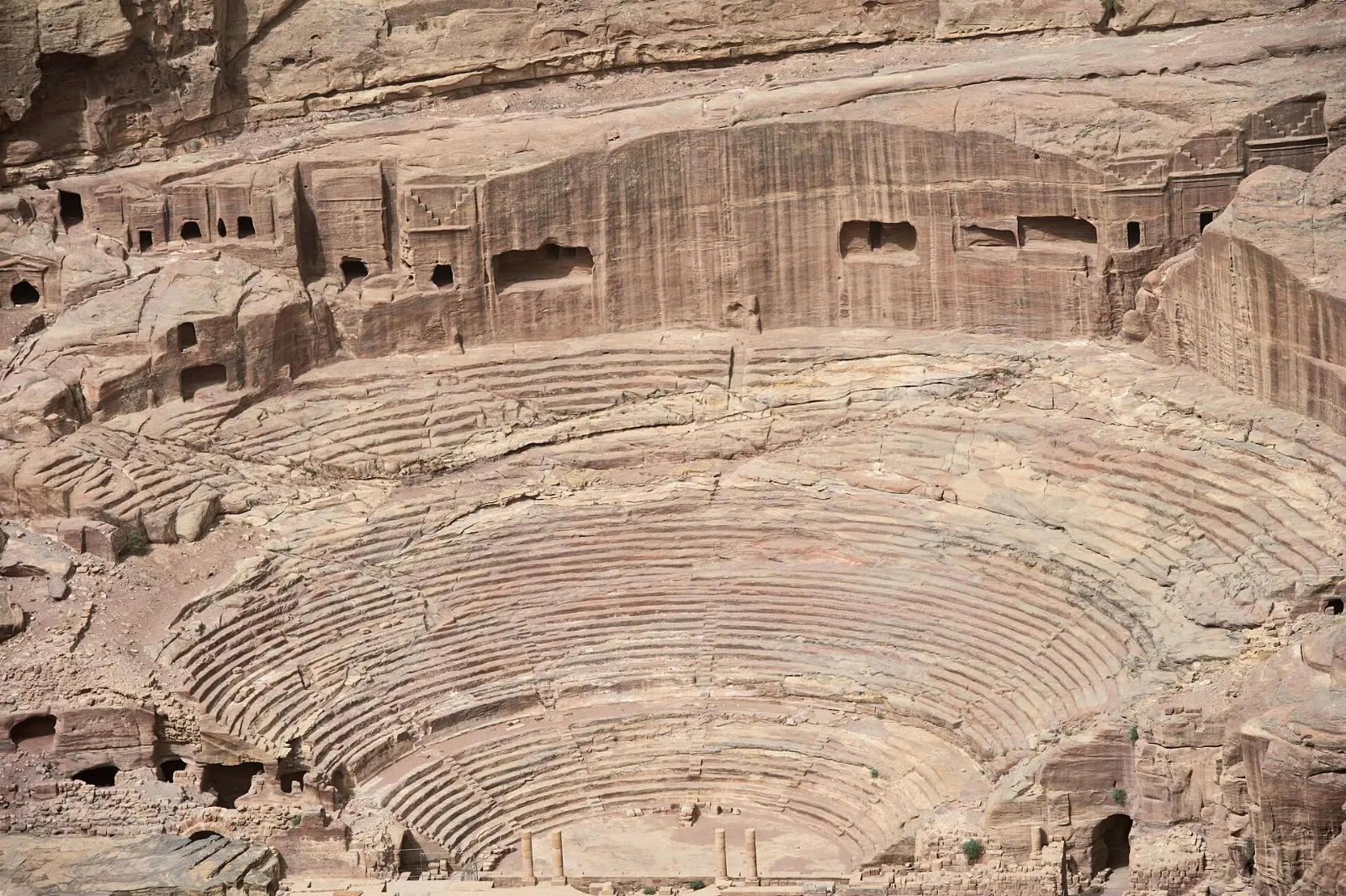
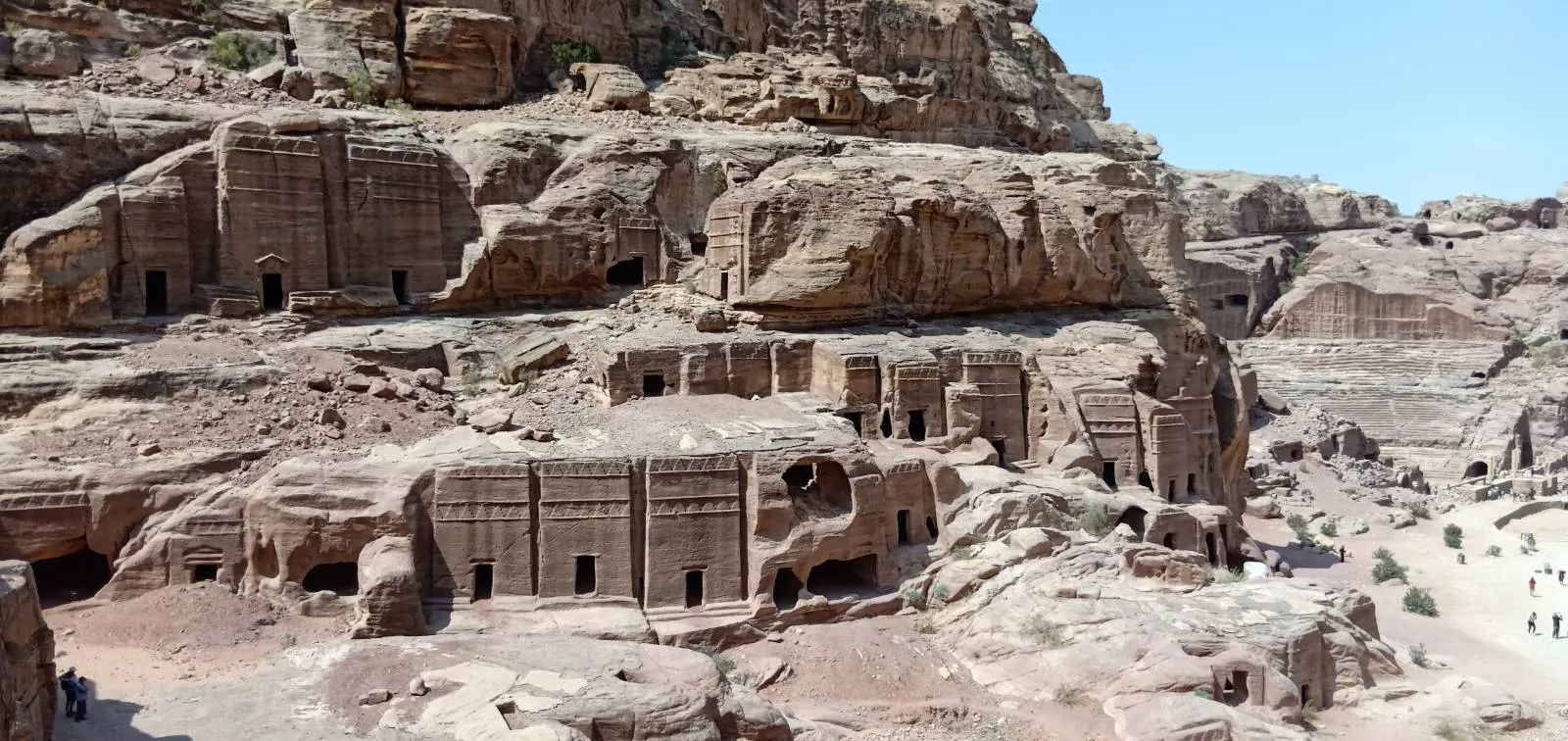
Beyond the Treasury, the valley widens into the Outer Siq and the Street of Facades, a long row of tombs whose tops are carved with distinctive stepped designs.
The Royal Tombs
On the face of Jabal al-Khubtha rise the Royal Tombs, four huge facades: the Urn Tomb, with its vaulted terrace, the Silk Tomb with its swirling bands of colored stone, the Corinthian Tomb and the multi-story Palace Tomb.
Practical tip: the Royal Tombs catch warm afternoon light, so visit them in the late day.
Colonnaded Street, Great Temple and Qasr al-Bint
The Colonnaded Street was the city's main avenue, lined with shops and public buildings.
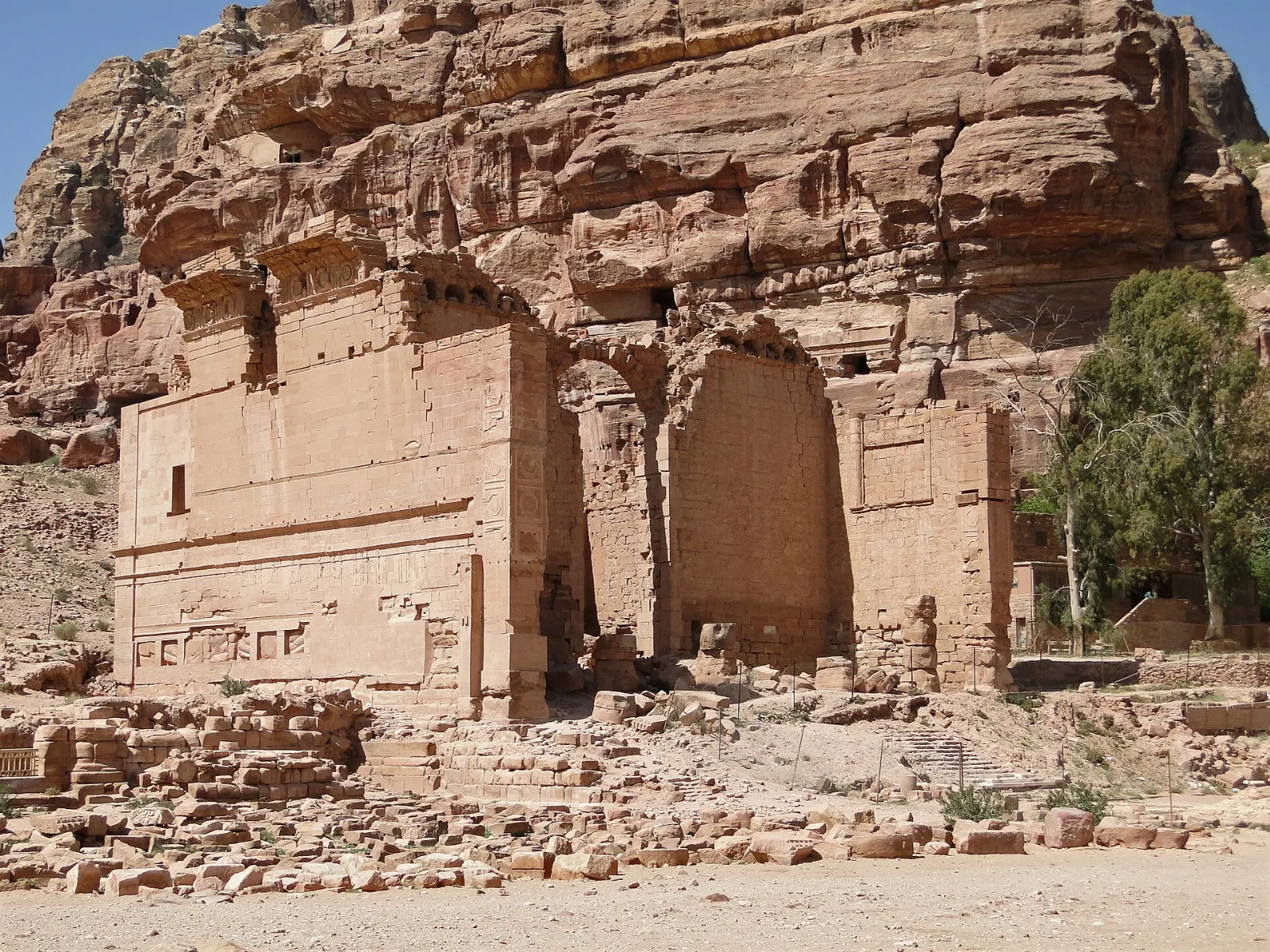
Practical tip: restaurants and rest stops cluster near Qasr al-Bint, making it a good lunch break before climbing to the Monastery.
High places and hiking trails
The Monastery, Ad Deir
From Qasr al-Bint, a trail of roughly eight hundred rock-cut steps climbs through a canyon to the Monastery, or Ad Deir.
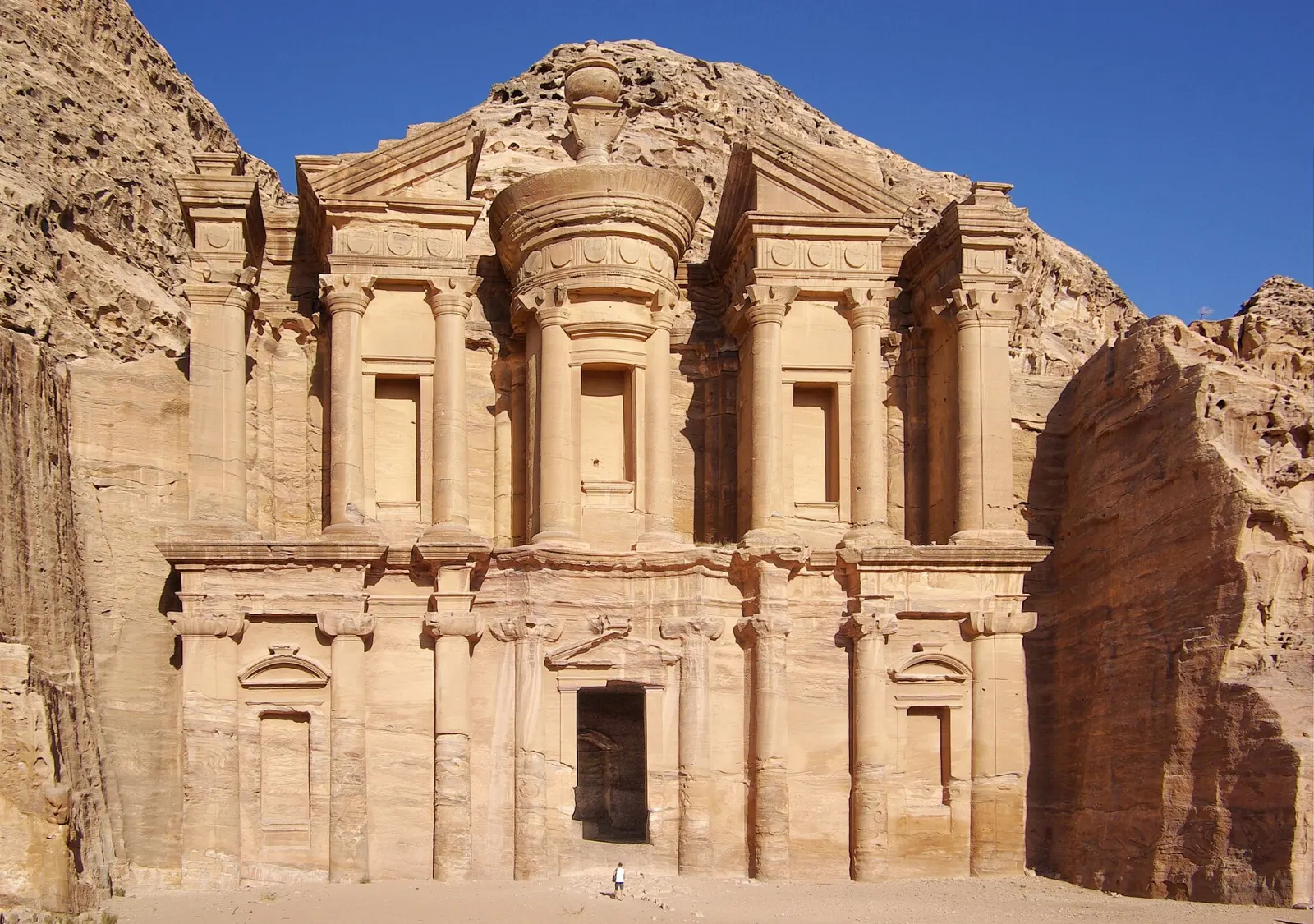
Practical tip: start the climb in the afternoon, when much of the stairway is in shade and the Monastery's facade is lit by the sun.
High Place of Sacrifice
Near the theater, a staircase climbs Jabal al-Madbah to the High Place of Sacrifice, a ceremonial platform with an altar and views down over the city.
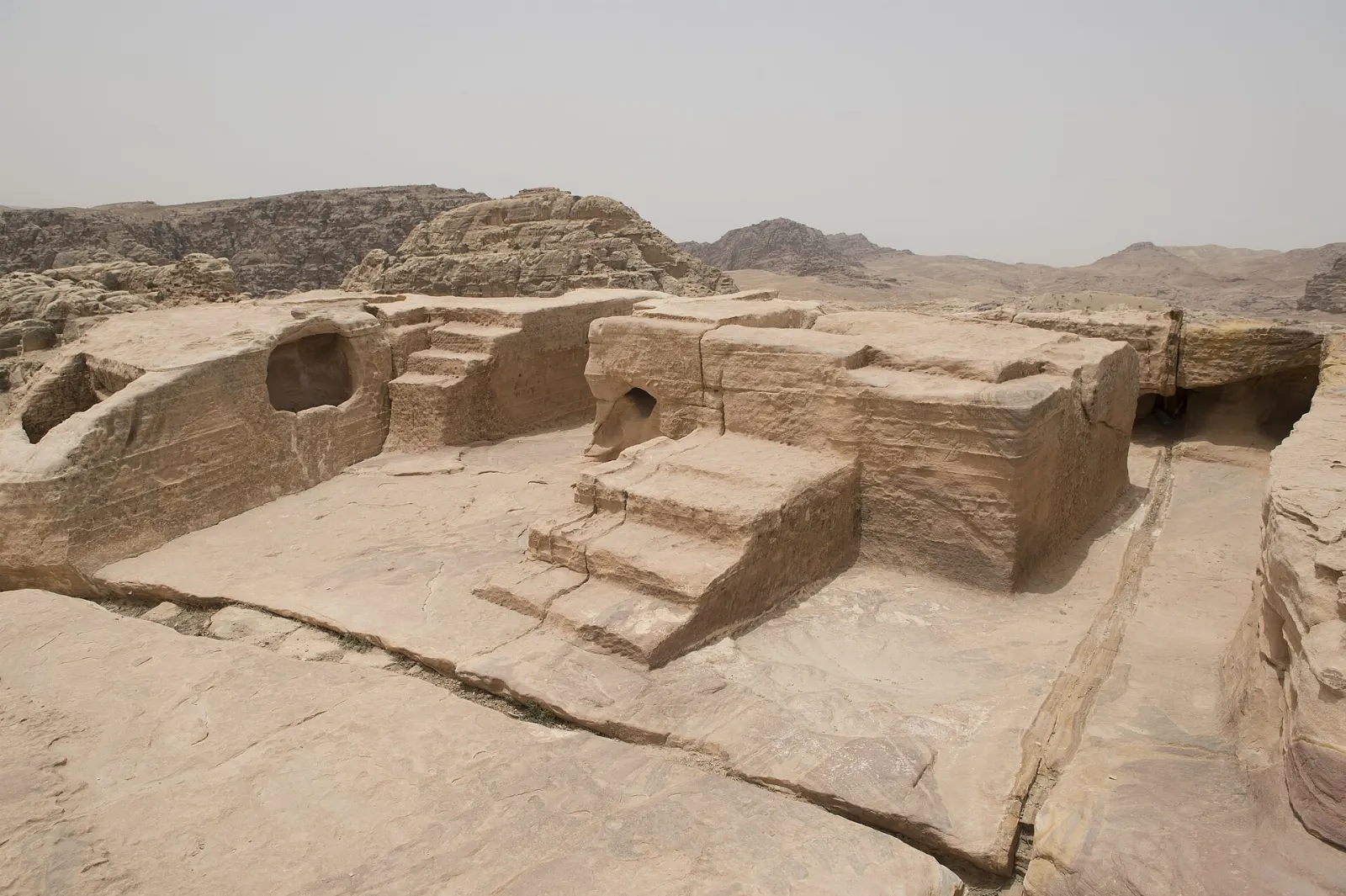
Al-Khubtha Trail
This steep trail starts near the Royal Tombs and climbs to a viewpoint high above the Treasury, giving you the famous view straight down onto the facade.
Little Petra
About fifteen minutes' drive north of Wadi Musa, Little Petra, or Siq al-Barid, is a small canyon of carved facades, cisterns and stairs, believed to have been a suburb used by trading caravans.
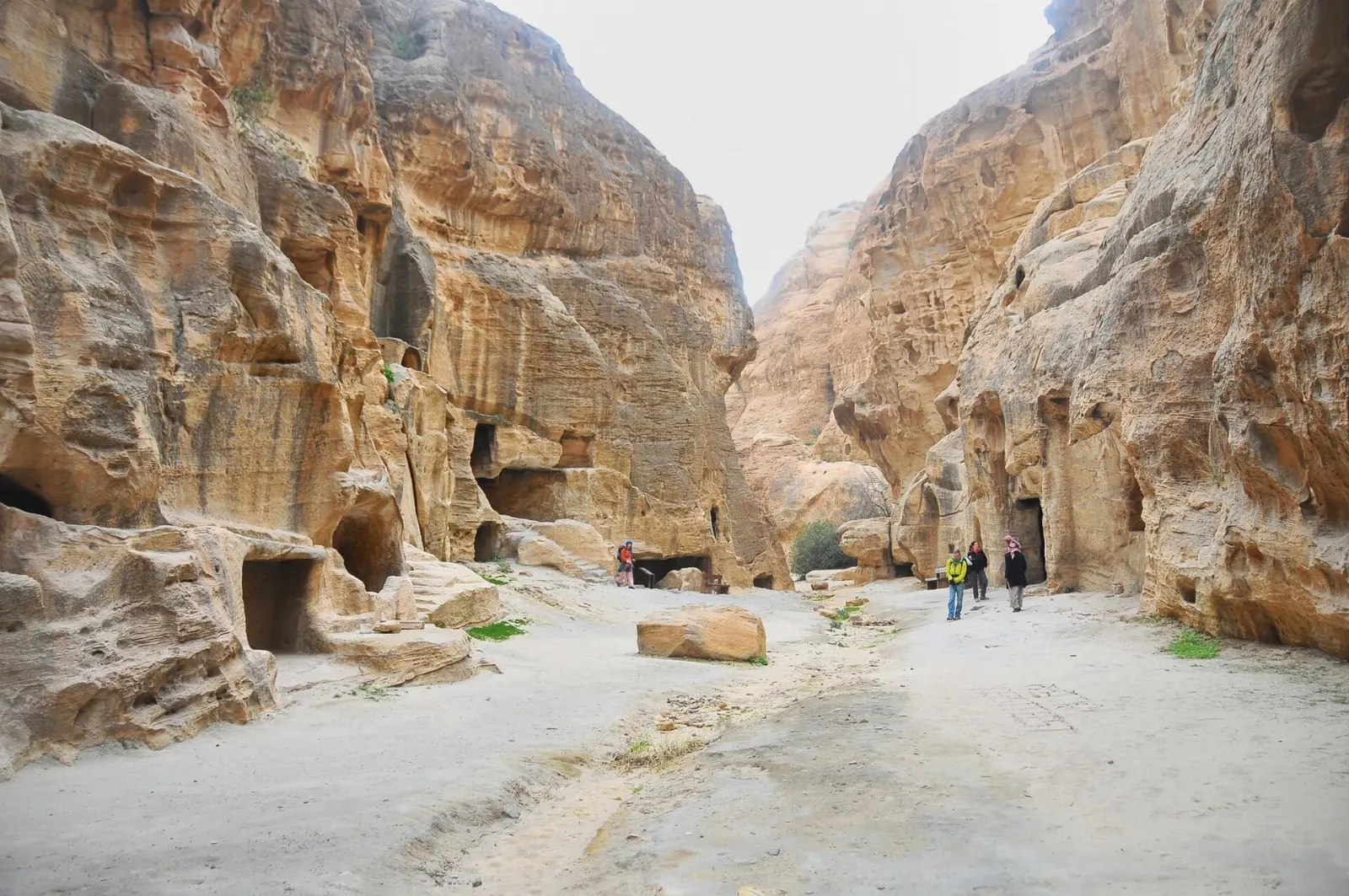
Practical tip: Little Petra is free to enter and much quieter than the main site.
 Planning a trip to Petra?Compare hotels, flights and vacation rentals for Petra on Expedia.Book now
Food and local flavors
Jordanian food is generous, hearty and made for sharing.
Start meals with mezze such as hummus, mutabbal, tabbouleh and falafel, and try galayet bandora, a simple skillet of tomatoes, garlic and chili. For dessert, look for knafeh, a warm cheese pastry soaked in syrup.
Inside the archaeological park, food options are limited to a few restaurants and simple cafes, so many visitors pack a lunch.
Popular dishes to try in Petra


Where to stay
Lower Wadi Musa, near the visitor center, is the best choice for most people.
Central Wadi Musa, around the main roundabout and the spring of Ain Musa, has budget hotels, guesthouses, shops and local restaurants.
Taybeh and the hills above Wadi Musa offer quieter stays with sweeping views over the mountains, best for travelers with a car.
Bedouin camps near Little Petra provide tents or cabins, communal meals and starry skies, suiting those who want a more rural experience.
Where to stay in Petra


Best time to visit
Spring, from March to May, and autumn, from September to November, are the best times to visit.
Summer is hot and dry, and long climbs to the Monastery or the High Place of Sacrifice demand an early start and plenty of water.
Getting there and getting around
Most visitors fly into Queen Alia International Airport near Amman.
Inside the park, you walk. The main route from the visitor center to Qasr al-Bint is roughly four kilometers one way, and with side trails you can easily cover fifteen kilometers in a day.
Tickets are sold at the visitor center for one, two or three days, and a multi-day ticket is strongly recommended.
A suggested itinerary
First day
Enter at opening time and walk the Siq to the Treasury while it is quiet.
Second day
Hike up to the High Place of Sacrifice early and descend through Wadi Farasa. In the afternoon, take the Al-Khubtha Trail for the view down onto the Treasury, or explore the quieter side valleys at your own pace.
Third day
Spend the morning at Little Petra, then visit the Petra Museum near the visitor center before driving on to Wadi Rum or Aqaba.
Practical tips
- Buy a multi-day ticket or a Jordan Pass; one day is not enough for the main trails.
- Wear broken-in hiking shoes with good grip; sandstone steps can be slippery and sandy.
- Carry at least two liters of water, sun protection and snacks, and refill where you can.
- Dress modestly, covering shoulders and knees, which also protects you from sun.
- Hire a licensed guide at the visitor center for history, or for routes such as Wadi Farasa and the Back Trail.
- Ask before photographing local people, and politely decline persistent offers if not interested.