WiserMap — Choose wisely. Connect locally.Choose wisely. Connect locally.Add your business
Bali, Indonesia · Travel guide

Bali Indonesia Rice Terraces Sea Temples and Volcanoes

Bali is a small island with a big personality. Part of Indonesia, it is the only province where most people follow Balinese Hinduism, and you feel it everywhere: in the temple gates at the end of every lane, the woven palm-leaf offerings placed on doorsteps each morning and the processions of people in white and gold heading to ceremonies.

By WiserMap TravelUpdated October 2026 9 places11 min read
FacebookXLinkedIn

This guide is organized by region, so you can see how Ubud and the central highlands, the temples of the east and the beaches and cliffs of the south fit together.

At a glance Bali
  1. Best timeApril to October, the dry season, with May, June and September a little quieter.
  2. How longSeven to ten days to combine Ubud, the highlands and the coast.
  3. Getting thereFly into Ngurah Rai International Airport in the south of the island.

Why visit Bali

Bali packs an extraordinary range into a compact space. In a single day you can watch a traditional dance in a palace courtyard, walk through rice fields shaped by a thousand-year-old irrigation system, and end with a sunset over the Indian Ocean.

The island also suits many kinds of trips. Surfers come for the reef breaks of the Bukit Peninsula, divers for the coral and wrecks of the east coast, hikers for the volcano trails, and families for the calm beaches of Sanur and Nusa Dua.

Ubud and the central rice country

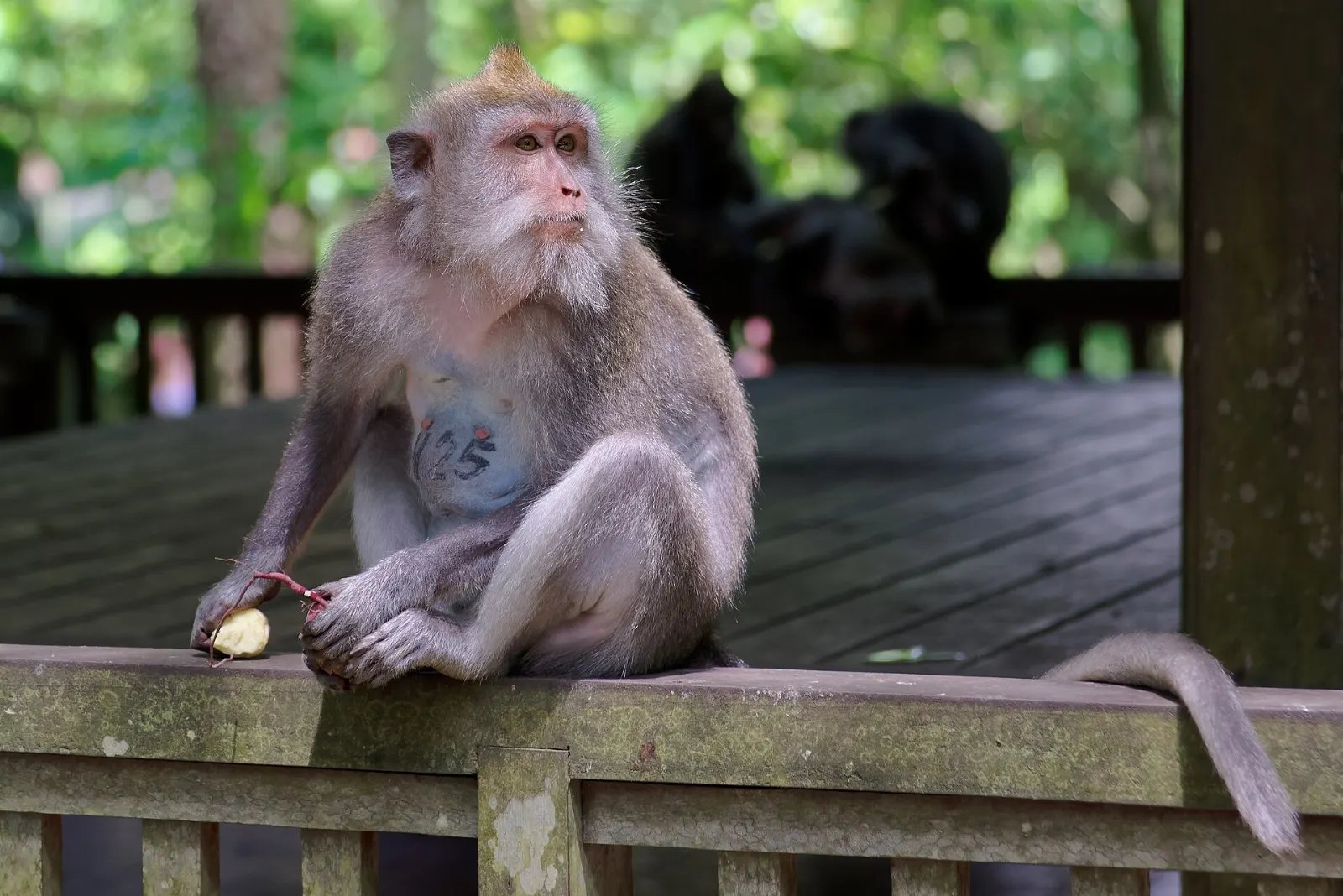
Long-tailed macaques on mossy stone statues in the Ubud Monkey Forest, Bali, Indonesia

Ubud town and the Sacred Monkey Forest

Ubud, in the foothills north of the airport, has long been Bali's cultural heart, home to painters, wood carvers, dancers and musicians.

Allow a full day for the town and an hour or two for the forest.

The Sacred Monkey Forest Sanctuary in Ubud is home to long-tailed macaques and old temples. Photo: Jakub Hałun, Wikimedia Commons, CC BY-SA 4.0
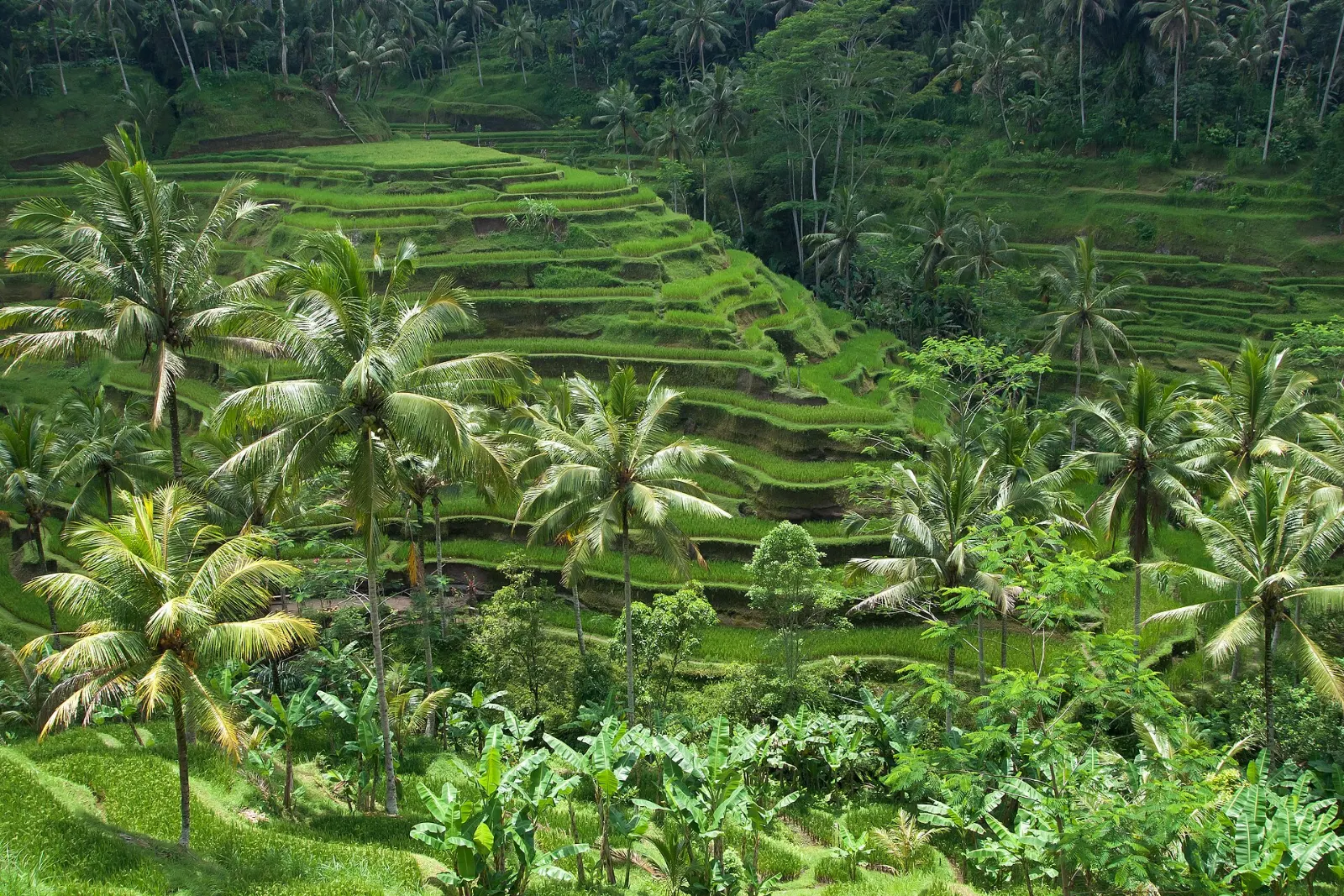
Green stepped rice terraces with palm trees in the Tegallalang valley, Bali, Indonesia

Tegallalang rice terraces

North of Ubud, the Tegallalang rice terraces step down both sides of a palm-filled valley. The terraces are watered by subak, the cooperative irrigation system that Balinese farmers have managed through water temples for centuries.

Allow one to two hours. Practical tip: arrive soon after sunrise to beat the heat and the crowds, and expect farmers to ask for small donations at points along the paths, which help maintain the fields.

The Tegallalang rice terraces north of Ubud are watered by Bali's traditional subak irrigation. Photo: Vyacheslav Argenberg, Wikimedia Commons, CC BY 4.0

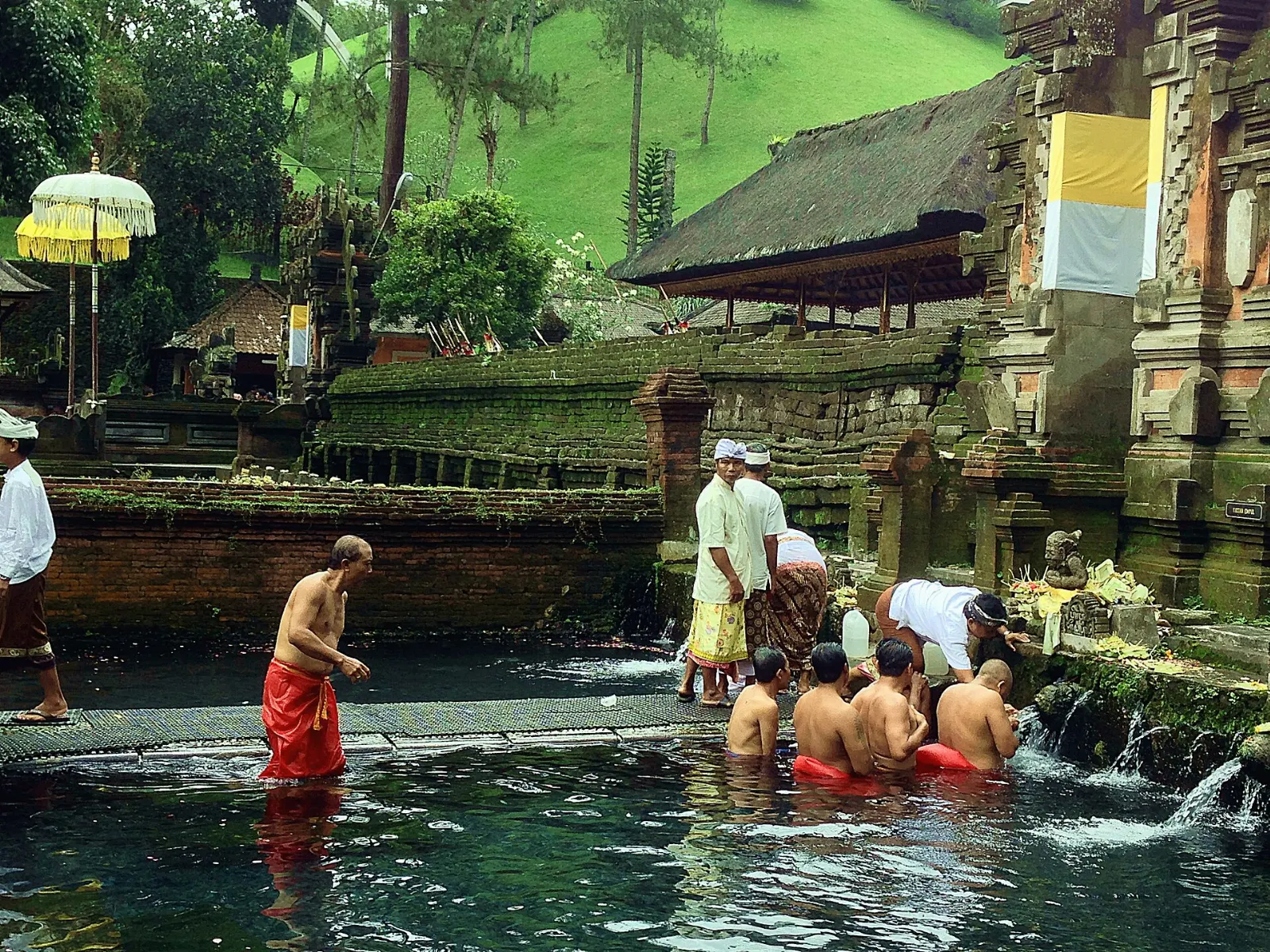
Worshippers bathing under spouts in the spring-fed purification pool at Tirta Empul, Bali, Indonesia

Tirta Empul

Near Tampaksiring, northeast of Ubud, Tirta Empul is a temple built around a sacred spring.

Allow one to two hours. Practical tip: you will need to wear a sarong and sash, usually provided at the entrance, and a separate cloth for entering the water.

Pilgrims bathe under the spring-fed spouts of Tirta Empul in a purification ritual. Photo: Saranabhi, Wikimedia Commons, CC BY-SA 3.0

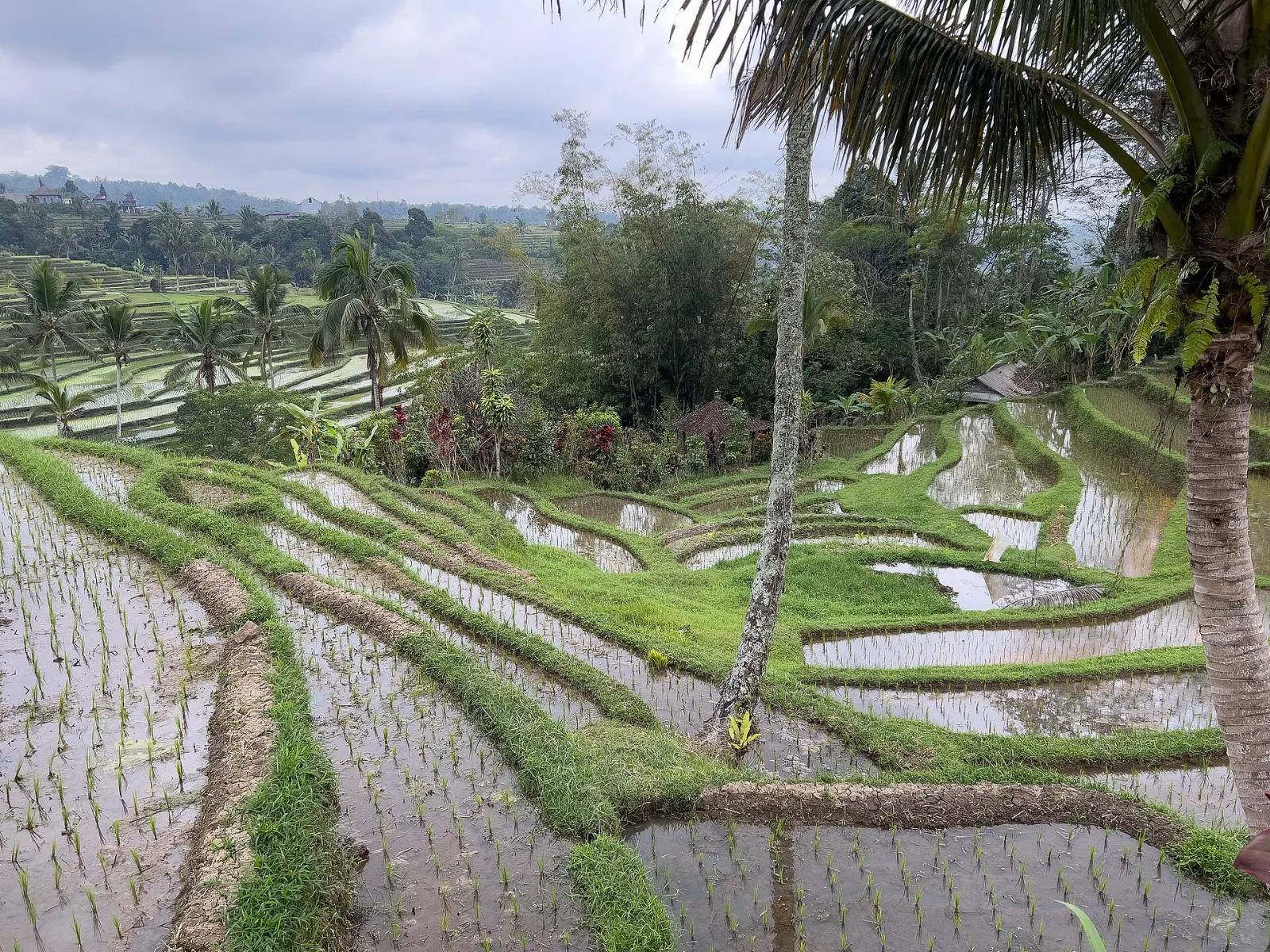
Wide sweep of rice terraces at Jatiluwih below Mount Batukaru, Bali, Indonesia

Jatiluwih rice terraces

West of Ubud in the Tabanan regency, beneath the slopes of Mount Batukaru, Jatiluwih has the most extensive rice terraces on the island. The area is part of the Cultural Landscape of Bali Province, inscribed by UNESCO in 2012 for its subak system.

Allow half a day including the drive. Practical tip: combine Jatiluwih with Pura Ulun Danu Beratan and the highlands in one day, and bring a light layer, as it can be cool and misty.

Jatiluwih's terraces are part of the subak cultural landscape listed by UNESCO. Photo: Stefan Fussan, Wikimedia Commons, CC BY-SA 3.0

Highlands, volcanoes and the sacred east

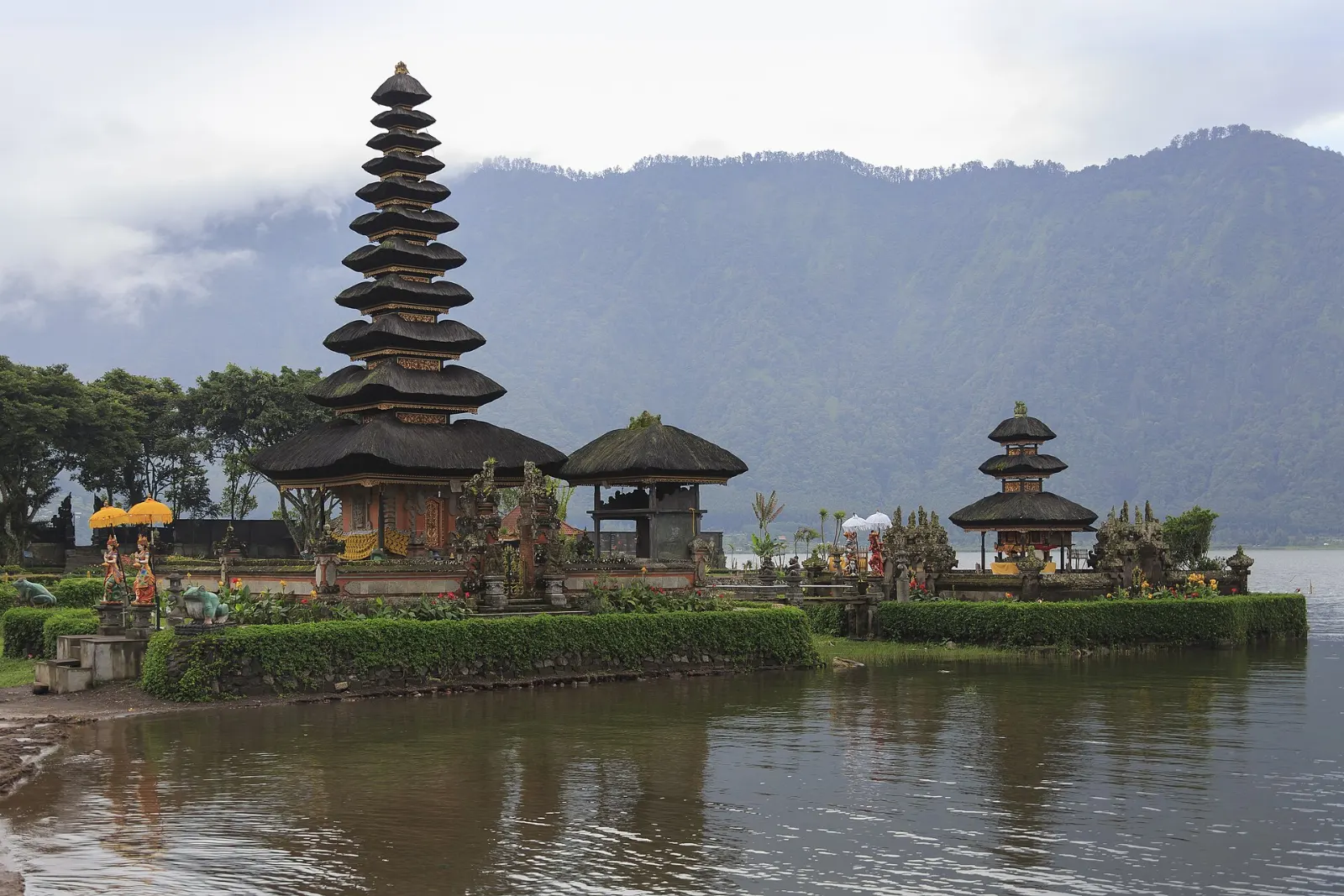
Tiered shrine of Pura Ulun Danu Beratan standing on the shore of Lake Beratan, Bali, Indonesia

Pura Ulun Danu Beratan

In the cool highlands near Bedugul, Pura Ulun Danu Beratan is a water temple on the shore of Lake Beratan, dedicated to the goddess of the lake.

Allow one to two hours. Practical tip: go in the morning, when the lake is often calm and before afternoon clouds roll in, and stop at the fruit and vegetable market in Candikuning on the way.

Pura Ulun Danu Beratan is a water temple on Lake Beratan in Bali's cool central highlands. Photo: CEphoto, Uwe Aranas, Wikimedia Commons, CC BY-SA 3.0

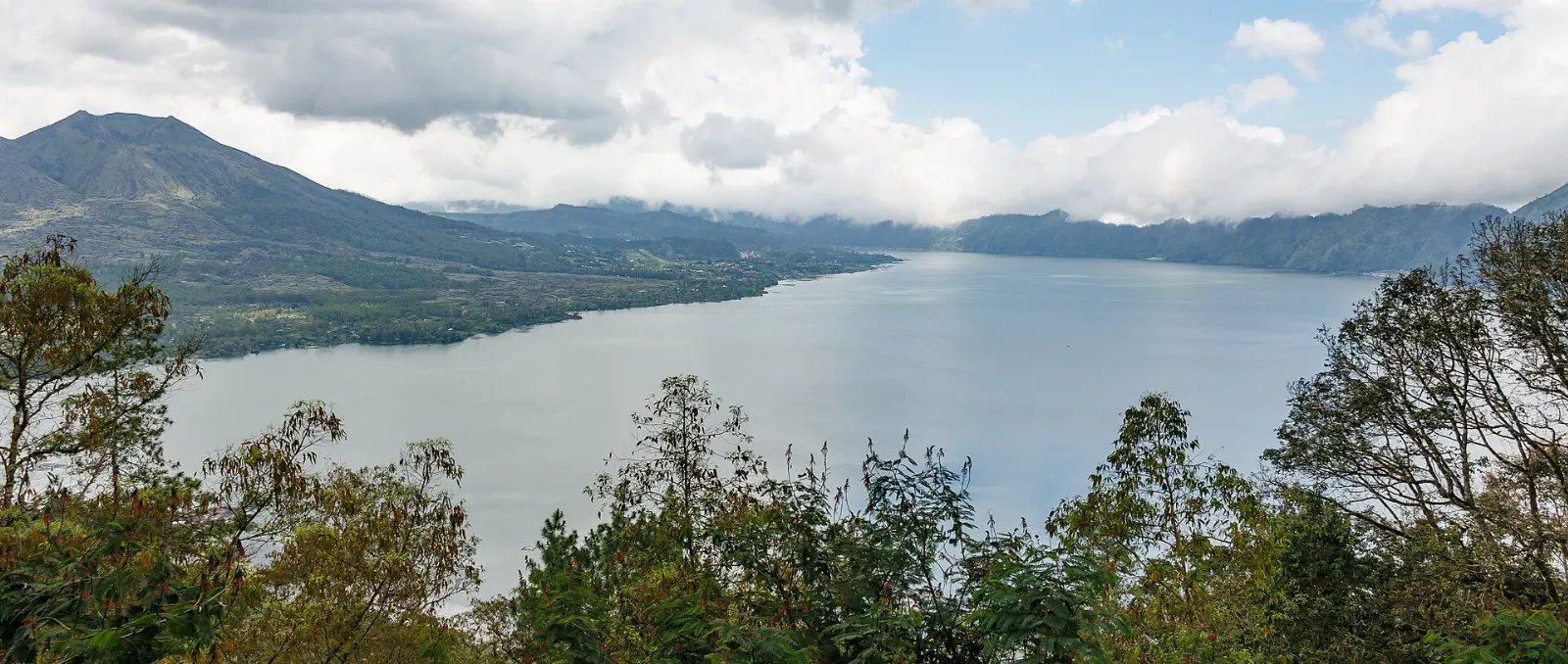
Mount Batur volcano and its crater lake at sunrise from the caldera rim, Bali, Indonesia

Mount Batur

Mount Batur is an active volcano within a wide caldera in the Kintamani area, with a crescent-shaped lake at its foot. A pre-dawn hike to the summit is one of Bali's most popular adventures.

Allow most of a day, including an early pickup. Practical tip: hike with a licensed local guide, wear sturdy shoes and a warm jacket, and check current conditions, as access can be restricted when volcanic activity increases.

Mount Batur is an active volcano inside a large caldera in northeast Bali. Photo: CEphoto, Uwe Aranas, Wikimedia Commons, CC BY-SA 3.0

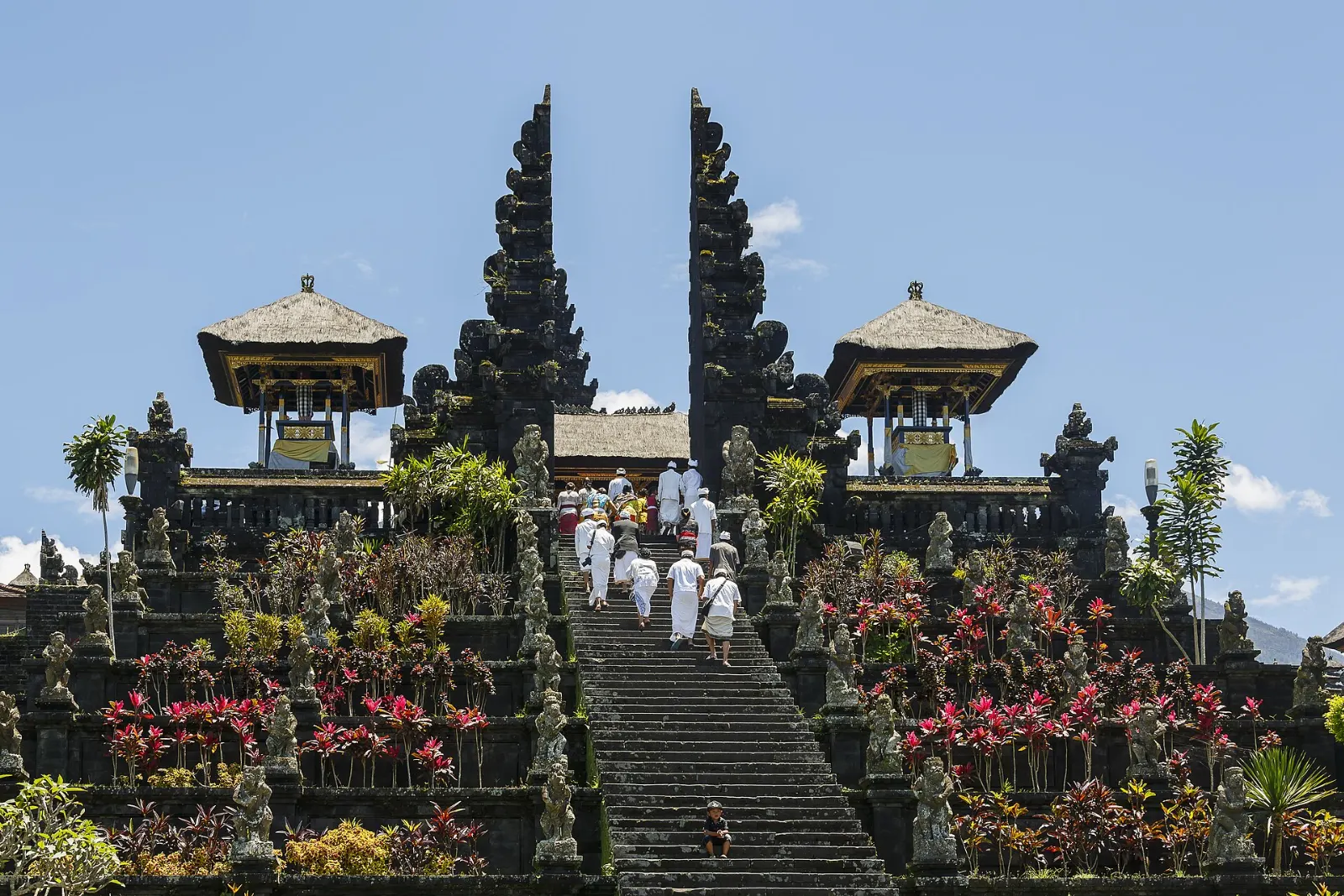
Terraced shrines and split gates of Pura Besakih on the slopes of Mount Agung, Bali, Indonesia

Pura Besakih

On the southwestern slopes of Mount Agung, Bali's highest and most sacred volcano, Pura Besakih is the island's mother temple, a complex of more than twenty temples climbing the mountainside.

Allow two to three hours. Practical tip: wear a sarong and sash, and use the official visitor services at the entrance.

Pura Besakih is the largest and holiest temple complex in Bali. Photo: CEphoto, Uwe Aranas, Wikimedia Commons, CC BY-SA 3.0

Sidemen, Amed and Lempuyang

Beyond Besakih, the Sidemen valley offers rice fields, weaving workshops and quiet guesthouses with views of Mount Agung.

Allow at least two nights if you want to explore the east properly.

The south coast and the islands

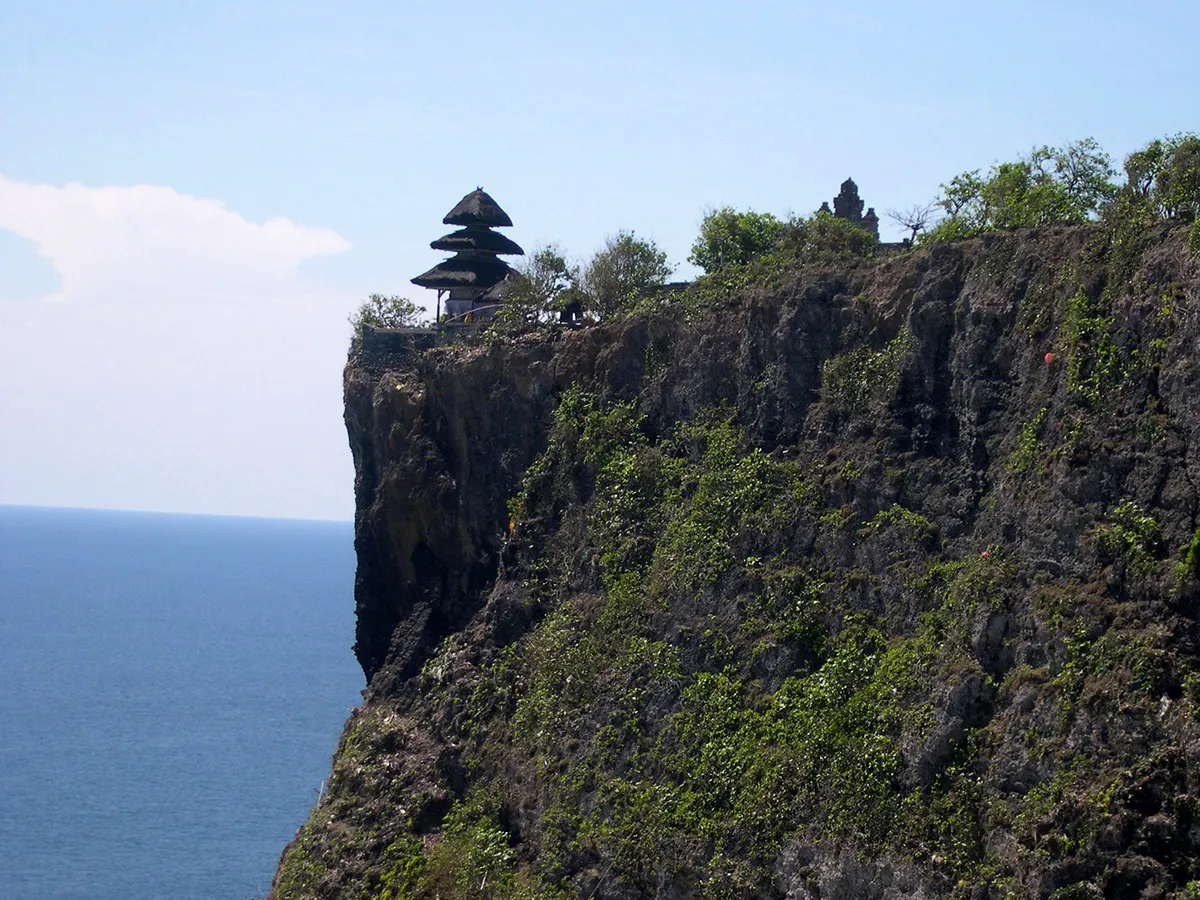
Pura Luhur Uluwatu perched on a high limestone cliff above the Indian Ocean, Bali, Indonesia

Uluwatu Temple

At the southwest tip of the Bukit Peninsula, Pura Luhur Uluwatu clings to a cliff high above crashing waves. It is one of Bali's important sea temples, and paths along the clifftop give sweeping ocean views.

Allow two to three hours, including the dance. Practical tip: the monkeys here are notorious for snatching glasses, hats and phones, so secure everything.

Pura Luhur Uluwatu stands on a sheer cliff at the southwest tip of the Bukit Peninsula. Photo: Ken Eckert, Wikimedia Commons, CC BY-SA 4.0

Tanah Lot

On the southwest coast, beyond Canggu, Tanah Lot is a temple perched on a rock island that is cut off by the sea at high tide.

Allow one and a half to two hours. Practical tip: check tide times, as access to the base depends on low tide, and arrive in the late afternoon to find a good viewpoint along the cliffs before sunset.

Beaches of the south

The south has several distinct beach areas. Seminyak and Canggu are known for surf, sunset bars and cafes.

Allow as much time as you like. Practical tip: rip currents are common on the west coast, so swim between the flags where lifeguards are present.

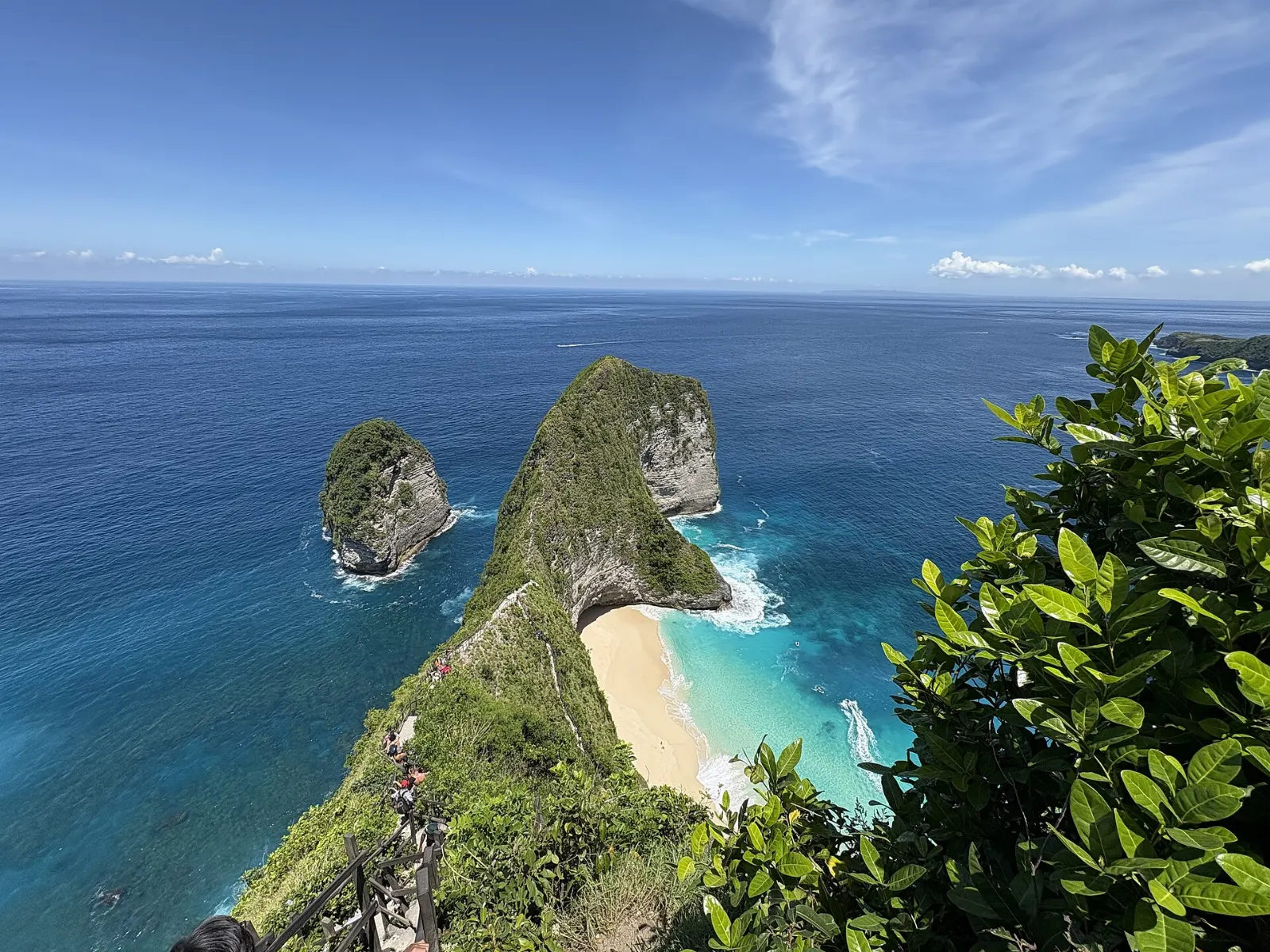
Headland shaped like a dinosaur above the white sand of Kelingking Beach, Bali, Indonesia

Nusa Penida

Southeast of Bali across the Badung Strait, Nusa Penida is a rugged island of limestone cliffs and turquoise coves.

Allow a full day, or better, one or two nights. Practical tip: fast boats run from Sanur; roads on the island are rough and narrow, so hire a local driver rather than riding a scooter.

Kelingking Beach on Nusa Penida sits below a dramatic limestone headland. Photo: Chainwit., Wikimedia Commons, CC BY 4.0

Food and local flavors

Balinese food is built on a spice paste called base genep, which blends shallots, garlic, galangal, turmeric, chilies and other aromatics.

For an everyday meal, try nasi campur, rice with small portions of vegetables, meats, peanuts and sambal, or nasi jinggo, a small packet of rice and toppings sold at night. Look for sambal matah, a fresh relish of raw shallots, lemongrass and chili.

Popular dishes to try in Bali

Babi guling in Bali, Indonesia
Babi guling The best-known dish is babi guling, a suckling pig stuffed with spices and roasted on a spit, served with crackling, rice, lawar and soup.Photo: Mutante, Wikimedia Commons, CC BY-SA 3.0
Nasi campur in Bali, Indonesia
Nasi campur For an everyday meal, try nasi campur, rice with small portions of vegetables, meats, peanuts and sambal, or nasi jinggo, a small packet of rice and toppings sold at night.Photo: Vyacheslav Argenberg, Wikimedia Commons, CC BY 4.0
Bebek betutu in Bali, Indonesia
Bebek betutu Bebek betutu and ayam betutu are duck or chicken rubbed with spices, wrapped in leaves and cooked slowly until tender.Photo: Gunawan Kartapranata, Wikimedia Commons, CC BY-SA 4.0
Sate lilit in Bali, Indonesia
Sate lilit Sate lilit, made from minced fish or meat wrapped around lemongrass stalks, is a local twist on satay.Photo: Gunawan Kartapranata, Wikimedia Commons, CC BY-SA 4.0

Where to stay

Ubud suits travelers interested in culture, crafts, wellness and rice-field walks, and makes an ideal base for central Bali.

Seminyak and Canggu suit those who want beaches, surf, nightlife and cafes.

For a slower pace, consider a few nights in Sidemen or Amed in the east, or Munduk in the highlands.

Where to stay in Bali

Canggu, Bali, Indonesia
Canggu Seminyak and Canggu suit those who want beaches, surf, nightlife and cafes.Photo: User:(WT-shared) Burmesedays, Wikimedia Commons, CC BY-SA 4.0
Nusa Penida, Bali, Indonesia
Nusa Penida Sanur is relaxed and good for families and for boats to Nusa Penida.Photo: Imadedana, Wikimedia Commons, CC BY-SA 4.0
Jimbaran, Bali, Indonesia
Jimbaran Nusa Dua and Jimbaran suit travelers wanting calm beaches and resort comforts close to the airport.Photo: Akmaie Ajam, Wikimedia Commons, CC BY-SA 4.0
Bukit Peninsula, Bali, Indonesia
Bukit Peninsula Uluwatu and the Bukit Peninsula draw surfers and those who like clifftop views.Photo: Vyacheslav Argenberg, Wikimedia Commons, CC BY 4.0

Best time to visit

Bali is warm all year. The dry season, from roughly April to October, brings sunnier days, lower humidity and the best conditions for volcano hikes and diving.

The wet season, from about November to March, brings heavy afternoon showers and high humidity, but also lush landscapes and fewer visitors.

Getting there and getting around

Ngurah Rai International Airport, also called Denpasar airport, is in the south of the island between Kuta and Jimbaran, with flights from across Asia, Australia and the Middle East.

Public transport is limited, so most visitors hire a private car with a driver for day trips, which is affordable and removes the stress of navigating busy, narrow roads.

A suggested itinerary

First and second days

Base yourself in Ubud. Walk the Campuhan Ridge at sunrise, visit the Sacred Monkey Forest and the Ubud Art Market, and watch a dance performance at the palace in the evening.

Third and fourth days

Hike Mount Batur for sunrise on the third day and rest in the afternoon. On the fourth day, drive west to Jatiluwih and Pura Ulun Danu Beratan in the highlands.

Fifth and sixth days

Head east to Pura Besakih and the Sidemen valley, then spend a night in Amed to snorkel or dive at Tulamben.

Final days

Move to the south coast.

Practical tips

  • Wear a sarong and sash at all temples, and cover your shoulders.
  • Do not step on the small offerings, called canang sari, on pavements and doorsteps.
  • Pay the Bali tourist levy online before arrival and keep the confirmation.
  • Drink bottled or filtered water and be cautious with ice and raw food in small stalls.
  • Keep your distance from monkeys and stray dogs, and seek medical advice after any bite or scratch.
  • Hire a driver for long day trips rather than riding a scooter in heavy traffic.
  • Swim between lifeguard flags; rip currents are common on the west coast.
BaliWISERMAP PLACEBali: photos, reviews & things to doSee traveler photos and reviews, or share your own →

More places to visit

All travel guides →