Cairo and Giza Egypt Pyramids Sphinx and Egyptian Museum
Cairo is a city of extremes: the last surviving wonder of the ancient world on its western edge, a medieval core packed with minarets and markets, and a modern megacity of more than twenty million people pulsing along the Nile.
By WiserMap TravelUpdated October 20269 places10 min read
This guide covers the best places to visit in Cairo and Giza, from the pyramid plateau and Sphinx to the Grand Egyptian Museum, the treasures of the Egyptian Museum, Islamic Cairo, the Citadel, Coptic Cairo and the older pyramids at Saqqara.
At a glance Cairo and Giza
Best timeOctober to April, when days are warm and sunny rather than scorching.
How longFour days covers Giza, the museums, Islamic and Coptic Cairo and Saqqara.
Getting thereFly into Cairo International Airport, or Sphinx International Airport for quick access to Giza.
Ad
Why visit Cairo and Giza
Few places hold so much history in one urban area. The pyramids of Giza and the necropolis of Saqqara mark the burial grounds of ancient Memphis, Egypt's first great capital.
The city's museums now rank among the best in the world. The Grand Egyptian Museum displays the entire Tutankhamun collection together for the first time, the National Museum of Egyptian Civilization houses the royal mummies, and the historic Egyptian Museum on Tahrir Square remains a treasure house of ancient art.
Beyond the monuments, Cairo is simply alive. Evenings stretch late, cafes fill with conversation and the smell of shisha, and street food is cheap, filling and delicious.
Giza and the pyramids
The Giza plateau sits on the western edge of the city, where the urban sprawl meets the Sahara. Plan a full day here, combining the pyramids with the new museum next door.
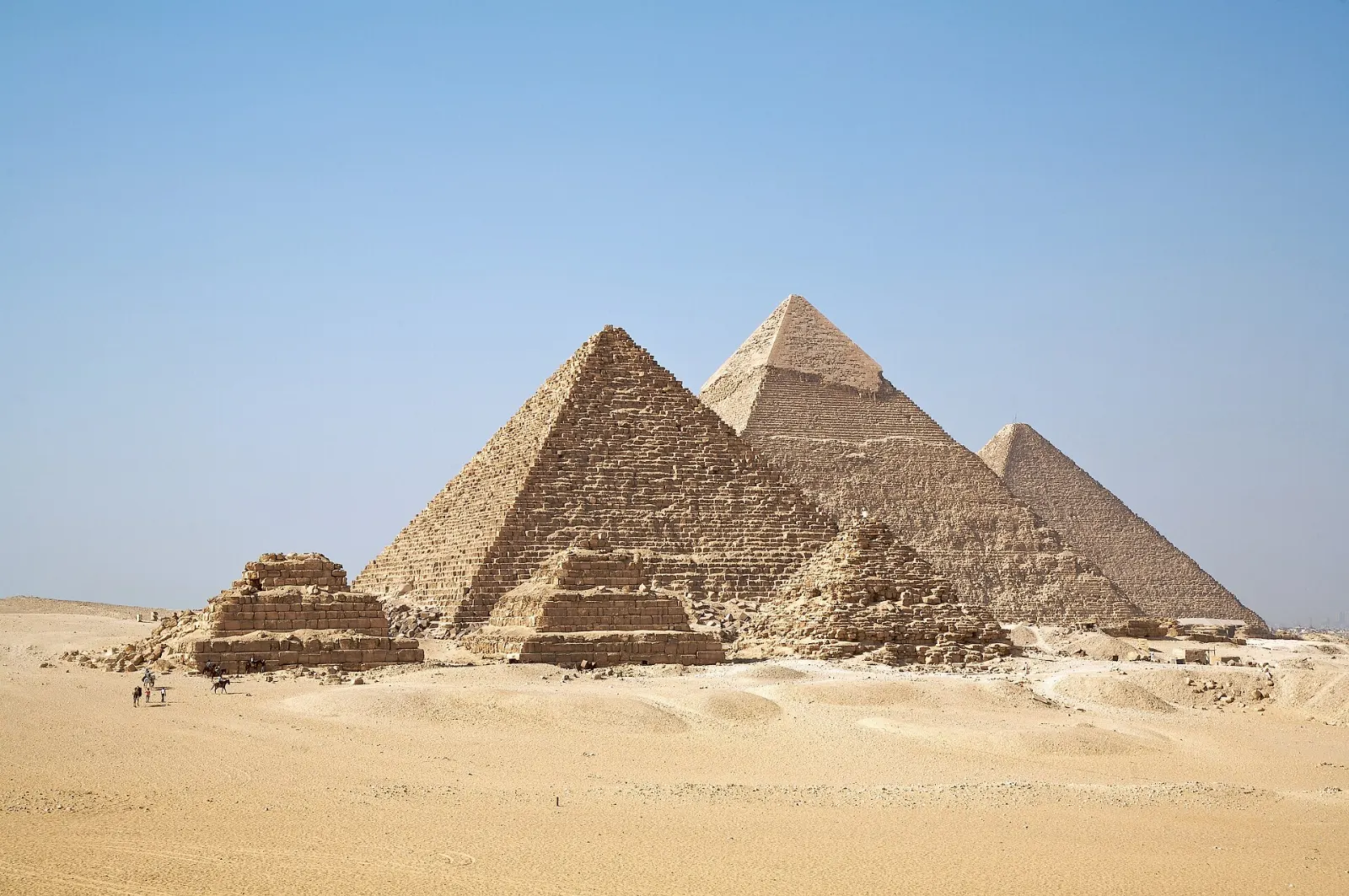
The Pyramids of Giza
The Great Pyramid of Khufu is the largest of the three main pyramids and the only one of the Seven Wonders of the Ancient World still standing.
The Great Sphinx and Valley Temple
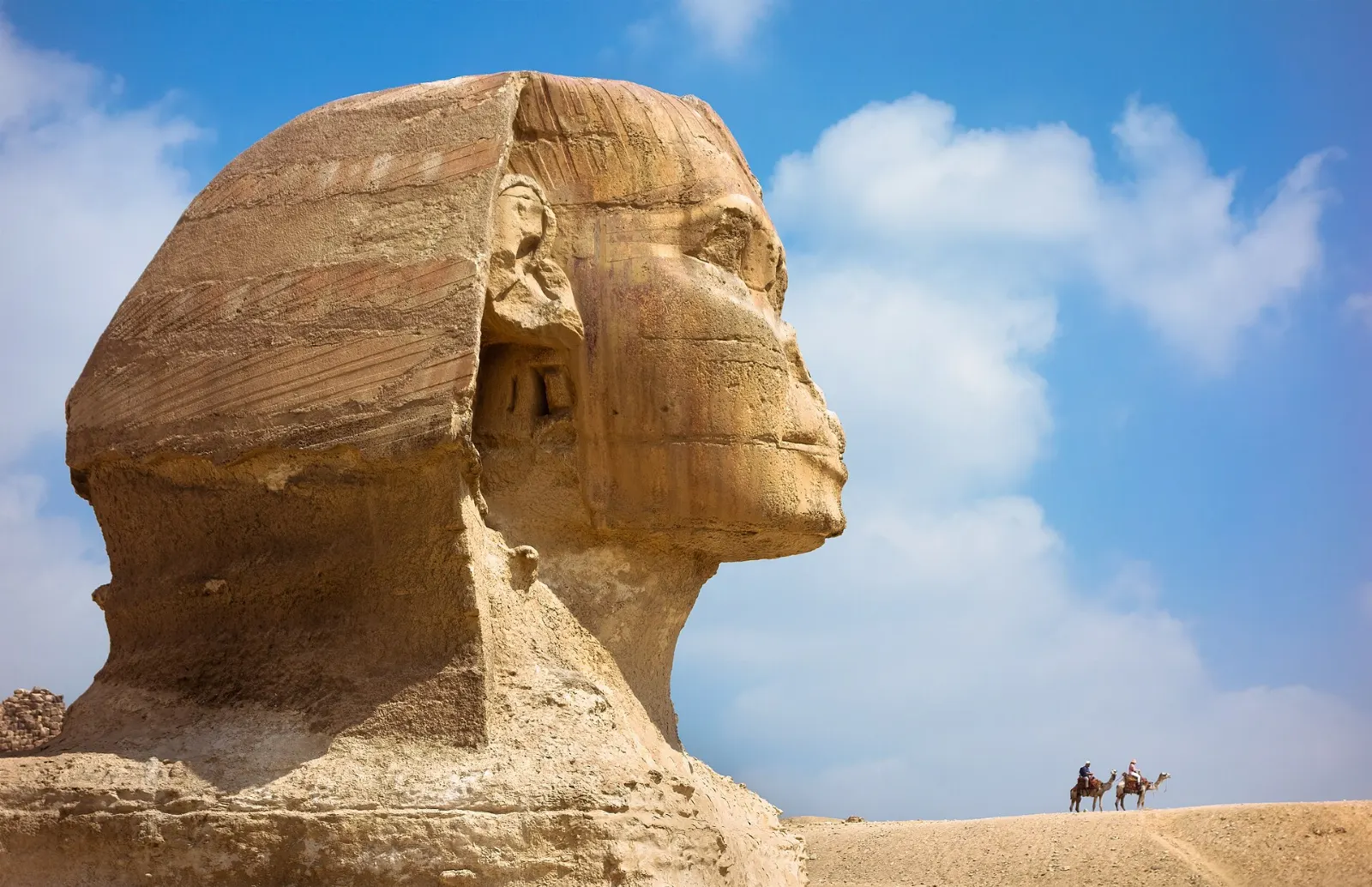
Carved from the living rock of the plateau, the Sphinx has the body of a lion and the head of a king, generally believed to be Khafre. You view it from a terrace beside the Valley Temple of Khafre, whose massive granite blocks and alabaster floor are remarkable in their own right.
The Great Sphinx was carved from the bedrock of the Giza plateau and is generally associated with the pharaoh Khafre. Photo: Petar Milošević, Wikimedia Commons, CC BY-SA 4.0
Grand Egyptian Museum
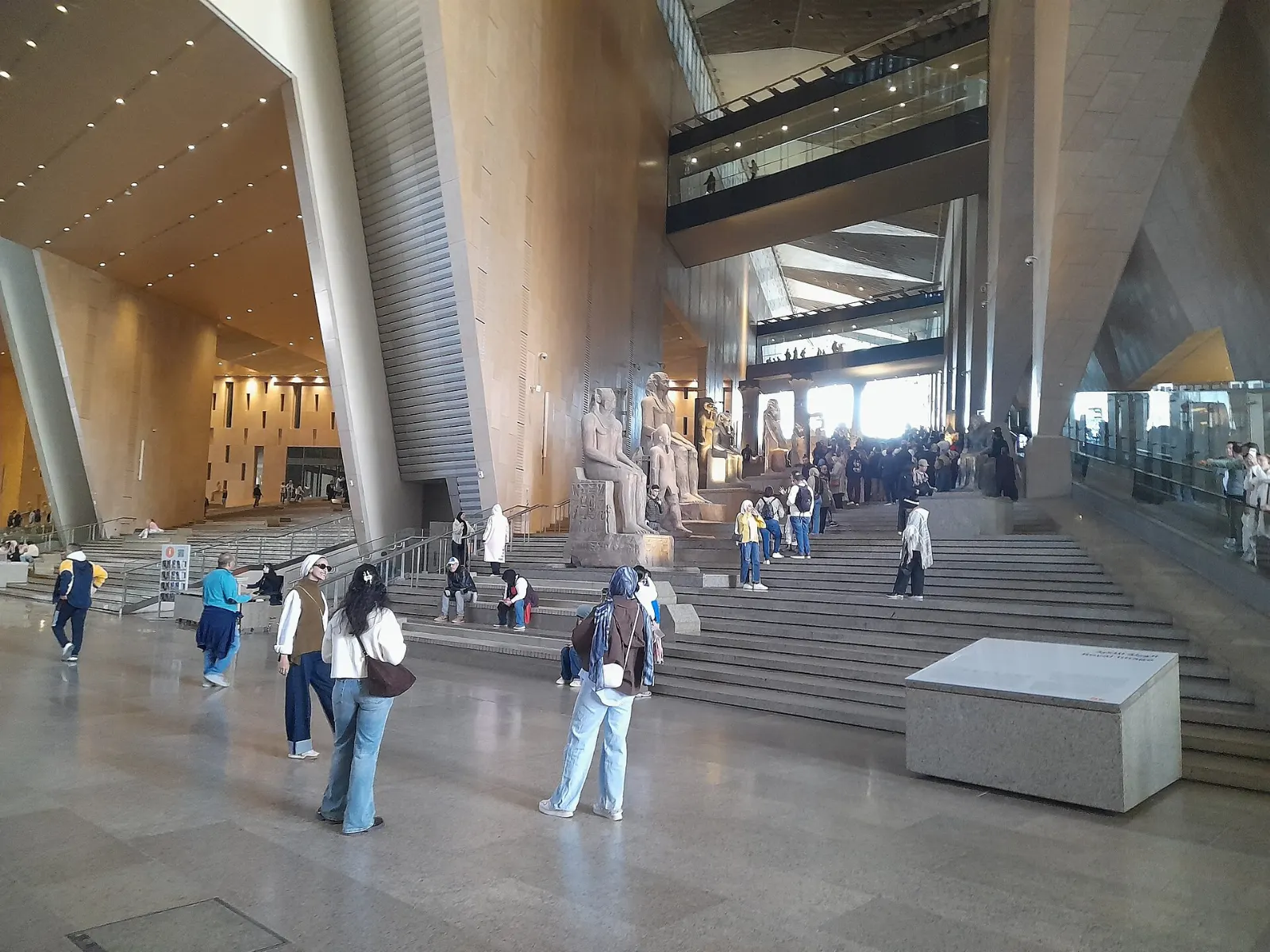
About two kilometers from the pyramids, the Grand Egyptian Museum is the largest museum in the world devoted to a single civilization. A colossal statue of Ramesses II greets you in the atrium, the Grand Staircase is lined with royal statues, and the Tutankhamun galleries display the young king's gold mask, chariots, jewelry and furniture.
The Grand Egyptian Museum stands near the Giza plateau and houses the complete Tutankhamun collection. Photo: Amr F.Nagy, Wikimedia Commons, Public domain
Saqqara and Dahshur
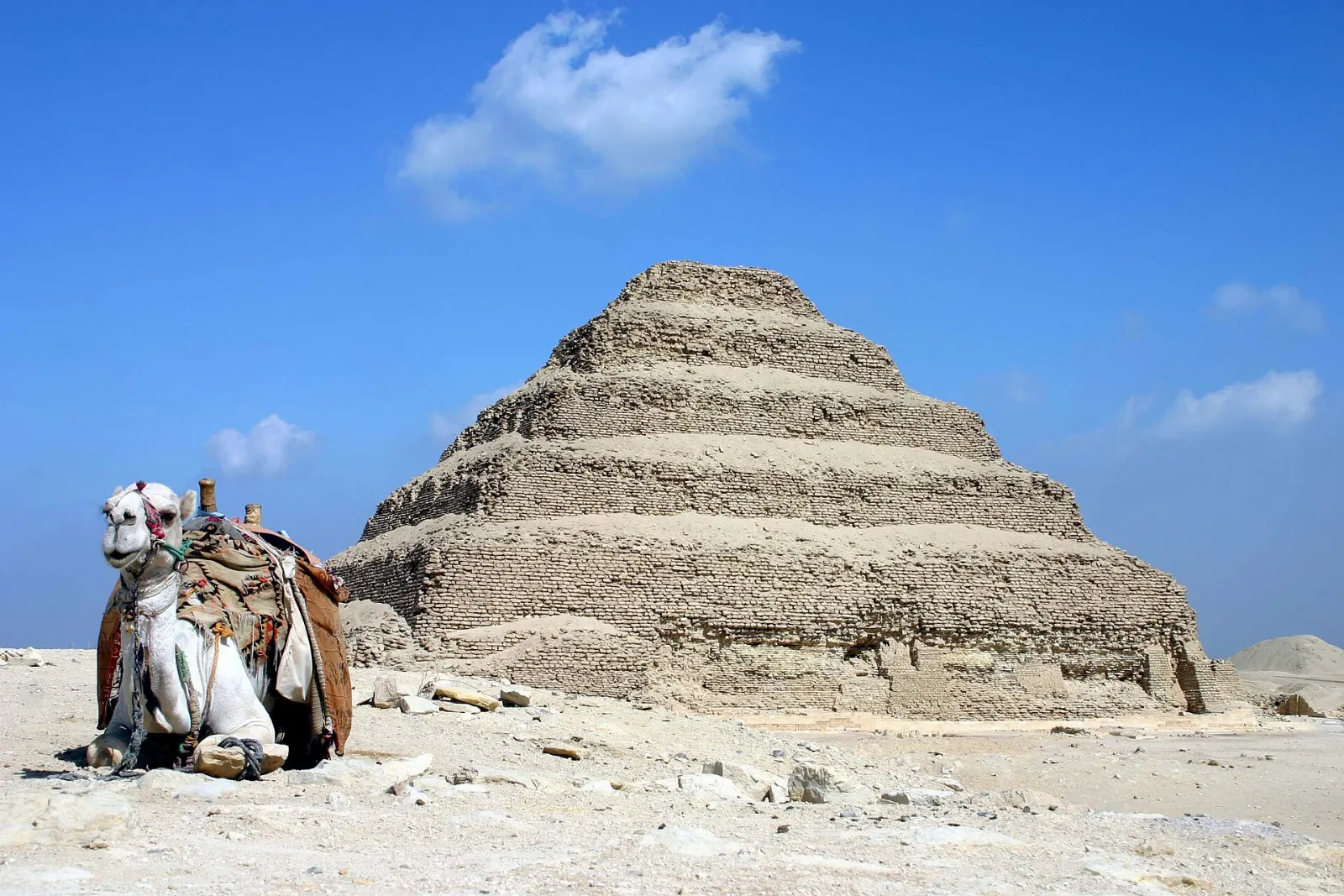
South of Giza, Saqqara was the burial ground of Memphis for thousands of years. Its centerpiece is the Step Pyramid of Djoser, the earliest large stone pyramid, surrounded by tombs with brightly painted reliefs of daily life.
The Step Pyramid of Djoser at Saqqara is considered the oldest monumental stone building in Egypt. Photo: Charles J. Sharp, Wikimedia Commons, CC BY-SA 3.0
Ad
Museums of downtown and old Cairo
The Egyptian Museum on Tahrir Square
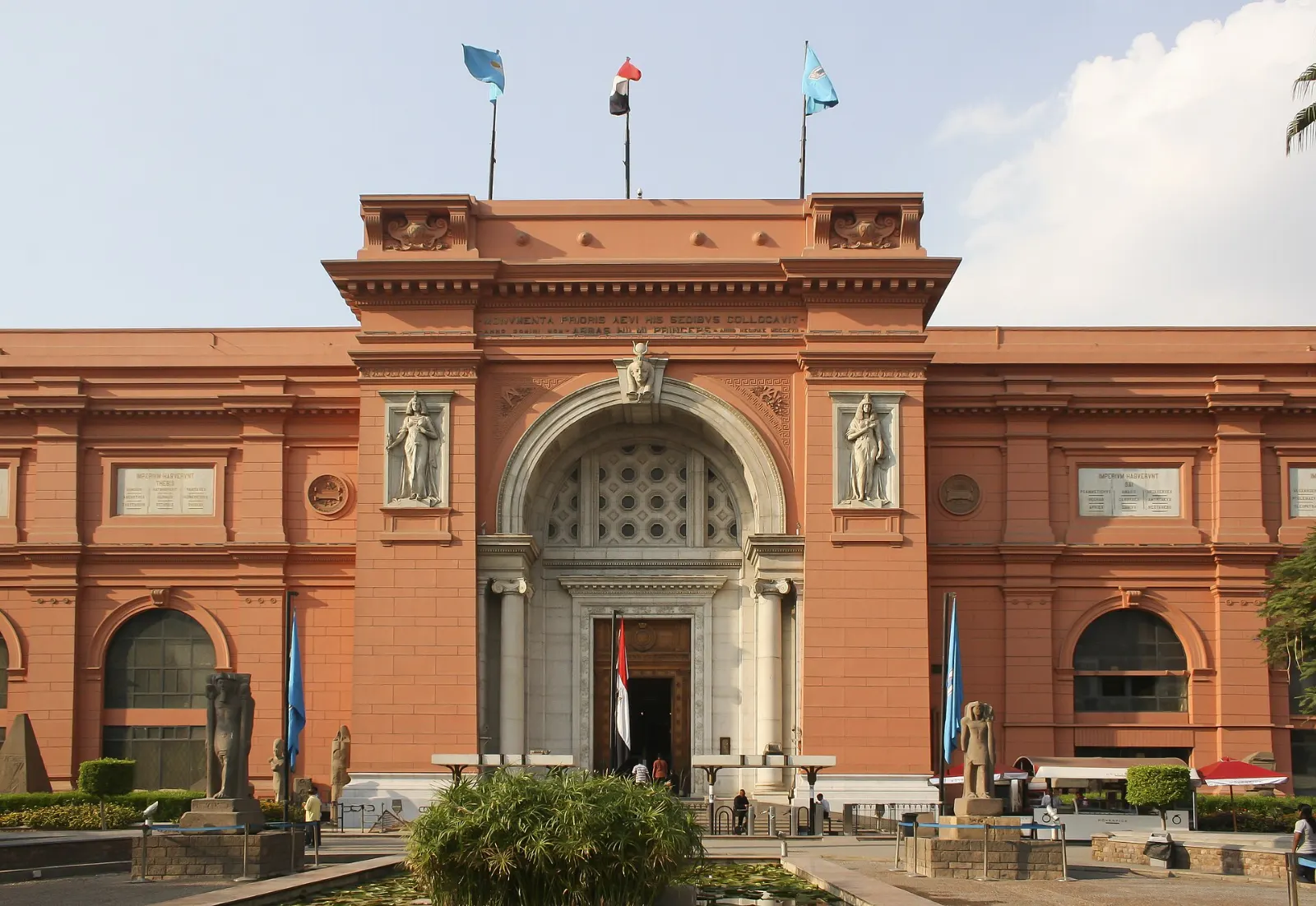
Opened in 1902, this museum still holds tens of thousands of objects, from Old Kingdom statues and painted coffins to the treasures of Yuya and Tjuya and the remarkable art of the Amarna period.
The Egyptian Museum on Tahrir Square opened in 1902 and still holds one of the world's great collections of ancient art. Photo: Diego Delso, Wikimedia Commons, CC BY-SA 3.0
National Museum of Egyptian Civilization
In the Fustat district of old Cairo, this museum traces Egyptian history from prehistory to the present. Its highlight is the Royal Mummies Hall, where the mummies of famous pharaohs and queens, including Ramesses II and Hatshepsut, are displayed in a quiet, dimly lit gallery.
Islamic Cairo and the Citadel
The historic heart of the city grew up around the Fatimid city founded in the tenth century, and its lanes hold mosques, madrasas, gates and caravanserais from many dynasties.
Al-Muizz Street
This long, partly pedestrianized street runs from Bab al-Futuh in the north toward Bab Zuweila in the south, lined with landmarks such as the Qalawun complex, the Mosque of al-Hakim and the Bayt al-Suhaymi house.
Al-Muizz Street runs through the heart of historic Cairo, lined with mosques, madrasas and mausoleums from many centuries. Photo: Mohamed Hozyen Ahmed, Wikimedia Commons, CC BY-SA 4.0
Khan el-Khalili and Al-Azhar
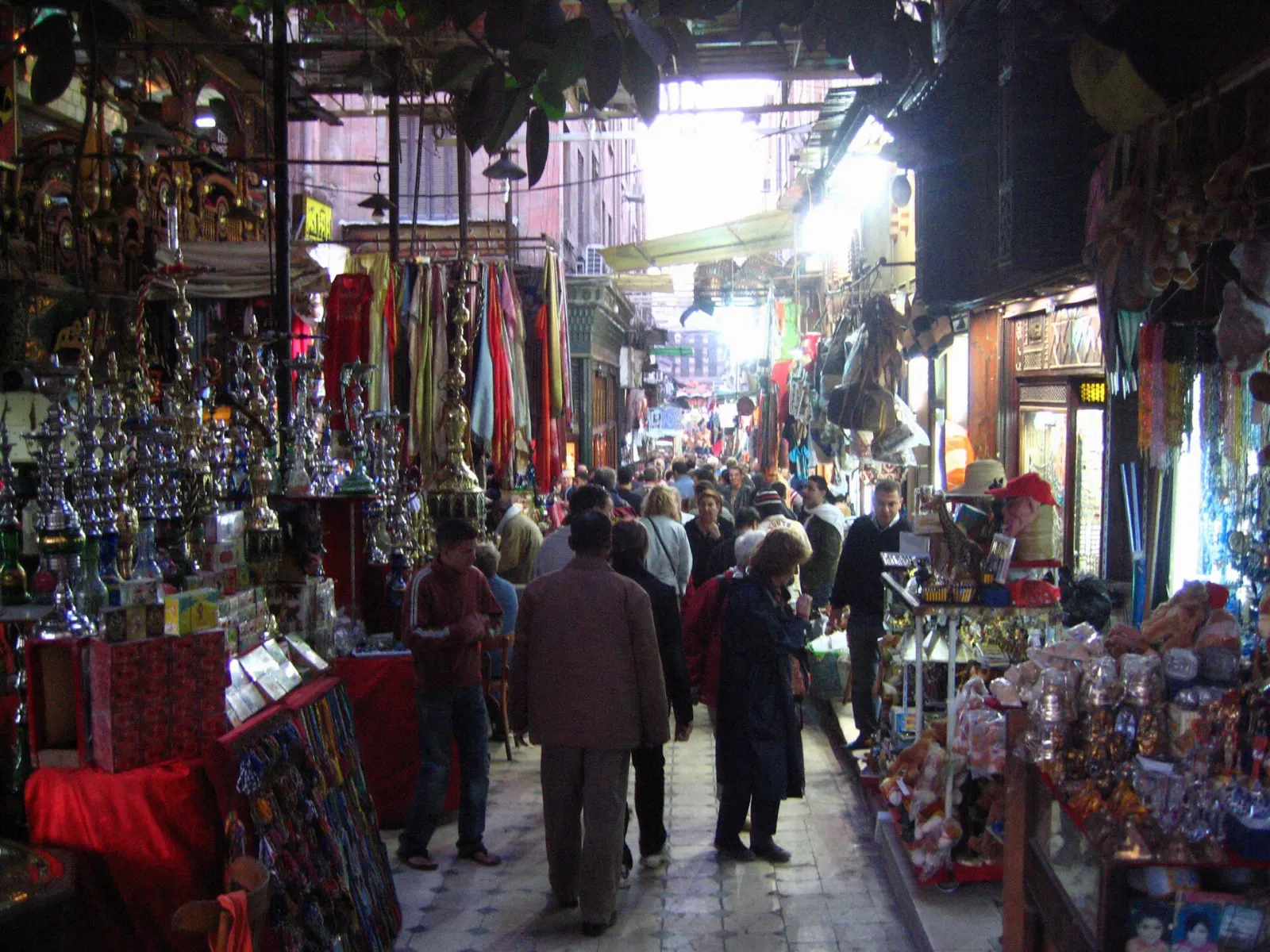
Khan el-Khalili is a sprawling bazaar where narrow lanes are packed with lanterns, spices, perfume bottles, brass and textiles. Across the road, Al-Azhar Mosque, founded in the tenth century, is one of the oldest centers of learning in the Islamic world.
Khan el-Khalili has been a center of trade in Cairo since the medieval Mamluk era. Photo: V Manninen from Funland, Wikimedia Commons, CC BY 2.0
Citadel of Saladin
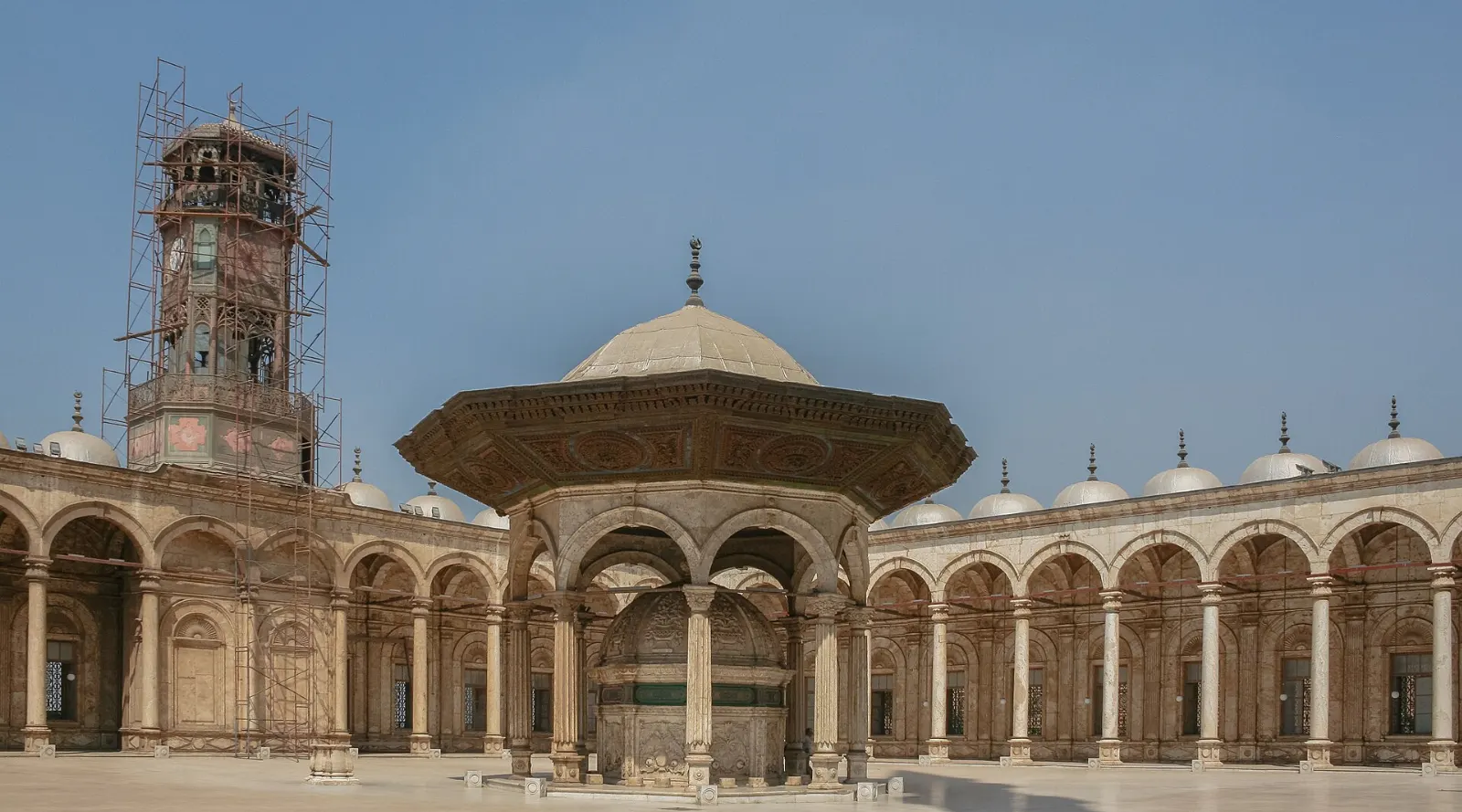
Built by Saladin in the twelfth century on a spur of the Mokattam Hills, the Citadel was the seat of Egypt's rulers for centuries.
The Mosque of Muhammad Ali, completed in the nineteenth century, crowns the Citadel of Saladin. Photo: Diego Delso, Wikimedia Commons, CC BY-SA 3.0
Sultan Hassan, Al-Rifai and Ibn Tulun
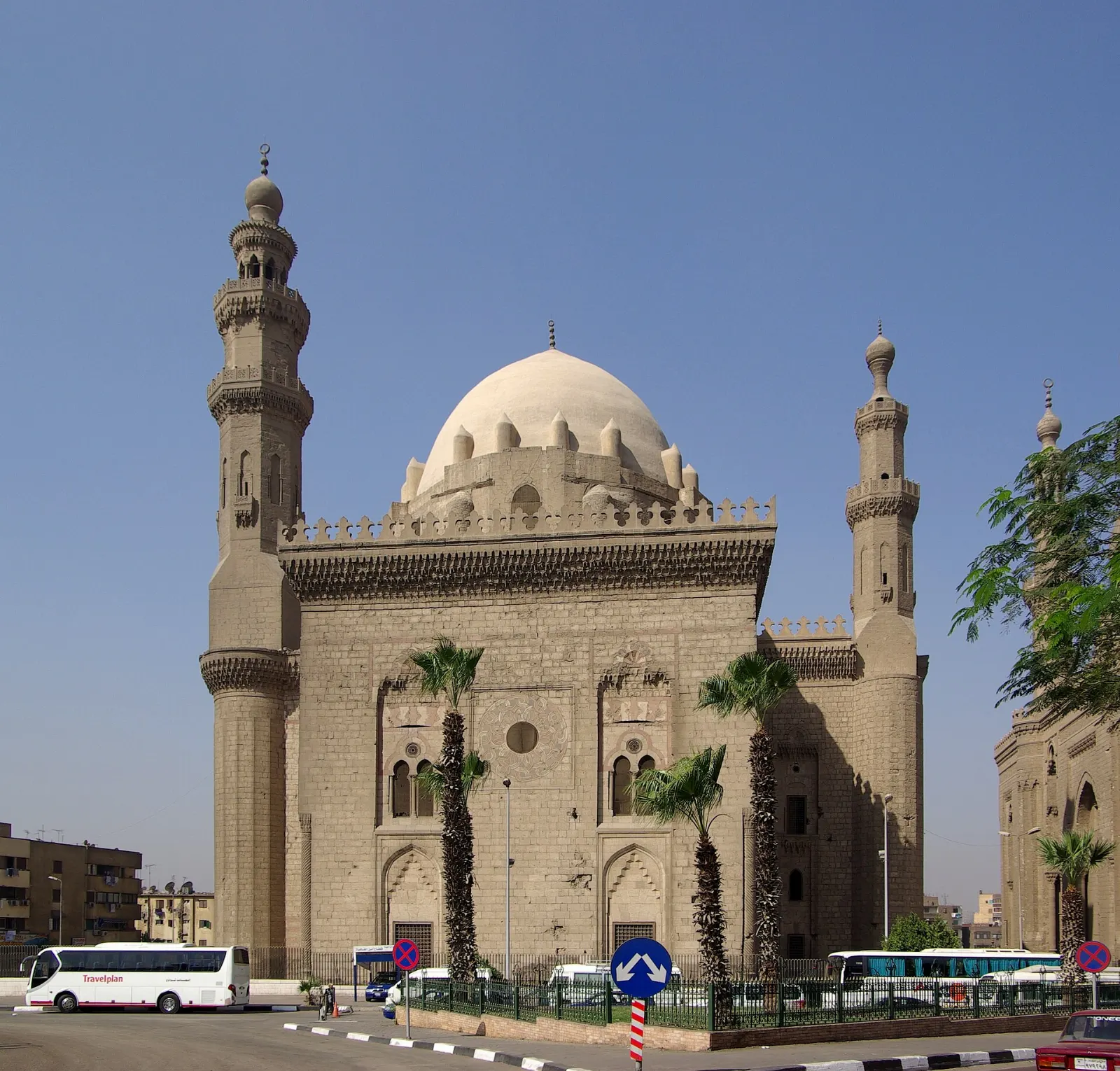
Below the Citadel stand two giants: the fourteenth-century Mosque-Madrasa of Sultan Hassan, with its soaring entrance portal and vast courtyard, and the early twentieth-century Al-Rifai Mosque, where members of Egypt's royal family and the last Shah of Iran are buried.
The fourteenth-century Mosque-Madrasa of Sultan Hassan is one of the largest Mamluk monuments in Cairo. Photo: Berthold Werner, Wikimedia Commons, CC BY 3.0
Al-Azhar Park
Built on a former rubbish mound, Al-Azhar Park is a large landscaped green space with fountains, gardens and views over the domes and minarets of the old city. It is a peaceful place for sunset and a cold drink after a day of sightseeing.
Ad
Coptic Cairo and the Nile
Coptic Cairo
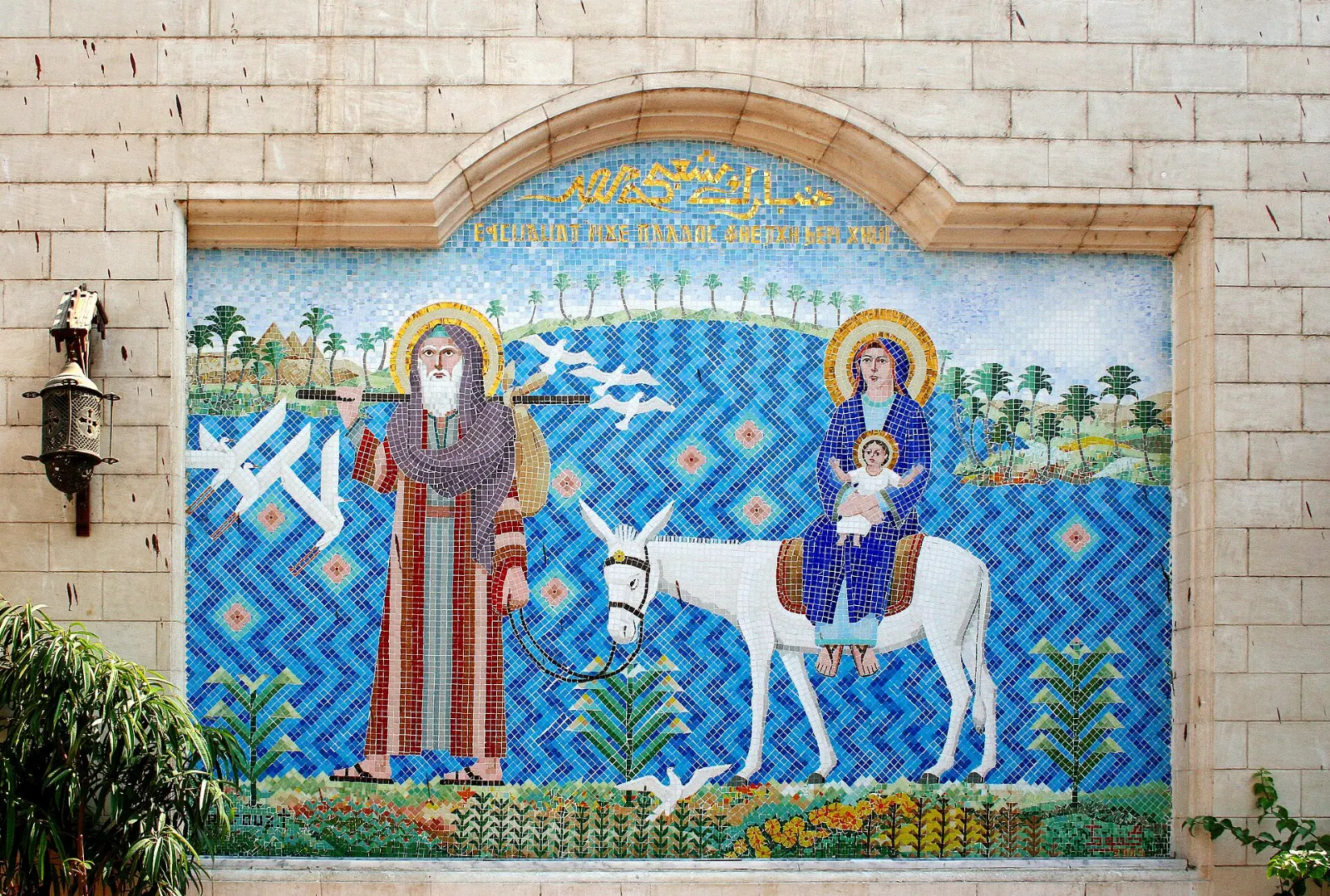
Built around the remains of the Roman fortress of Babylon, this compact district holds the Hanging Church, perched above a fortress gatehouse, the Church of Saints Sergius and Bacchus, traditionally linked to the Holy Family's flight into Egypt, and the Ben Ezra Synagogue.
The Hanging Church is built above a gatehouse of the Roman fortress of Babylon in Coptic Cairo. Photo: Diego Delso, Wikimedia Commons, CC BY-SA 3.0
The Nile and Zamalek
A felucca ride on the Nile at sunset is one of the simplest pleasures in Cairo, with traditional sailboats departing from landings along the Corniche.
Food and local flavors
Cairo's national dish is koshari, a hearty mix of rice, lentils, pasta and chickpeas topped with tomato sauce, vinegar, garlic and crispy fried onions.
For dessert, try om ali, a warm bread pudding with nuts and cream, or basbousa, a semolina cake soaked in syrup.
Popular dishes to try in Cairo and Giza
Koshari Food and local flavorsCairo's national dish is koshari, a hearty mix of rice, lentils, pasta and chickpeas topped with tomato sauce, vinegar, garlic and crispy fried onions.Photo: Basma, Wikimedia Commons, CC BY-SA 4.0Ful medames Breakfast means ful medames, slow-cooked fava beans, and ta'ameya, the Egyptian falafel made from fava beans rather than chickpeas, tucked into baladi bread.Photo: Habib M'henni, Wikimedia Commons, CC BY-SA 3.0
Ad
Where to stay
Downtown Cairo, around Tahrir Square, puts you close to the Egyptian Museum, metro lines and street food, and suits budget travelers and those who enjoy a lively atmosphere.
Staying in Giza near the pyramids makes sense if your priority is the plateau and the Grand Egyptian Museum, and many rooms there have pyramid views from rooftops.
Where to stay in Cairo and Giza
Tahrir Square Where to stayDowntown Cairo, around Tahrir Square, puts you close to the Egyptian Museum, metro lines and street food, and suits budget travelers and those who enjoy a lively…Photo: Jorge Láscar from Melbourne, Australia, Wikimedia Commons, CC BY 2.0Egyptian Museum Where to stayDowntown Cairo, around Tahrir Square, puts you close to the Egyptian Museum, metro lines and street food, and suits budget travelers and those who enjoy a lively…Photo: Ovedc, Wikimedia Commons, CC BY-SA 4.0Nile Garden City, along the Nile just south of downtown, is quiet and close to river views.Photo: Faris knight, Wikimedia Commons, CC BY-SA 4.0Giza Staying in Giza near the pyramids makes sense if your priority is the plateau and the Grand Egyptian Museum, and many rooms there have pyramid views from rooftops.Photo: Ricardo Liberato, Wikimedia Commons, CC BY-SA 2.0
Best time to visit
The best weather is from October through April, when days are warm and sunny and evenings are cool.
Summer, from June to September, is very hot, often well above thirty-five degrees Celsius, though it is also quieter.
Ad
Getting there and getting around
Cairo International Airport, northeast of the city, is Egypt's main gateway with flights from around the world.
Traffic in Cairo is heavy, so allow plenty of time between sights. Ride-hailing apps such as Uber and Careem are widely used, inexpensive and avoid the need to negotiate fares.
A suggested itinerary
First day
Arrive at the Giza plateau at opening time, explore the pyramids and the panoramic viewpoint, and finish at the Sphinx.
Second day
Visit the Egyptian Museum on Tahrir Square in the morning, then take a taxi to the Citadel.
Third day
Explore Coptic Cairo in the morning, then visit the Royal Mummies Hall at the National Museum of Egyptian Civilization.
Fourth day
Hire a driver for a day trip to Saqqara, Dahshur and Memphis.
Ad
Practical tips
Book Grand Egyptian Museum tickets online ahead of time, especially in peak season.
Carry small Egyptian pound notes for tips, known locally as baksheesh, and restroom attendants.
Dress modestly, covering shoulders and knees; women should carry a scarf for mosques.
Firmly but politely decline unsolicited offers of guiding, rides or souvenirs at major sites.
Agree on prices for animal rides, feluccas and taxis before you start.
Use ride-hailing apps to avoid fare disputes and to track your route.