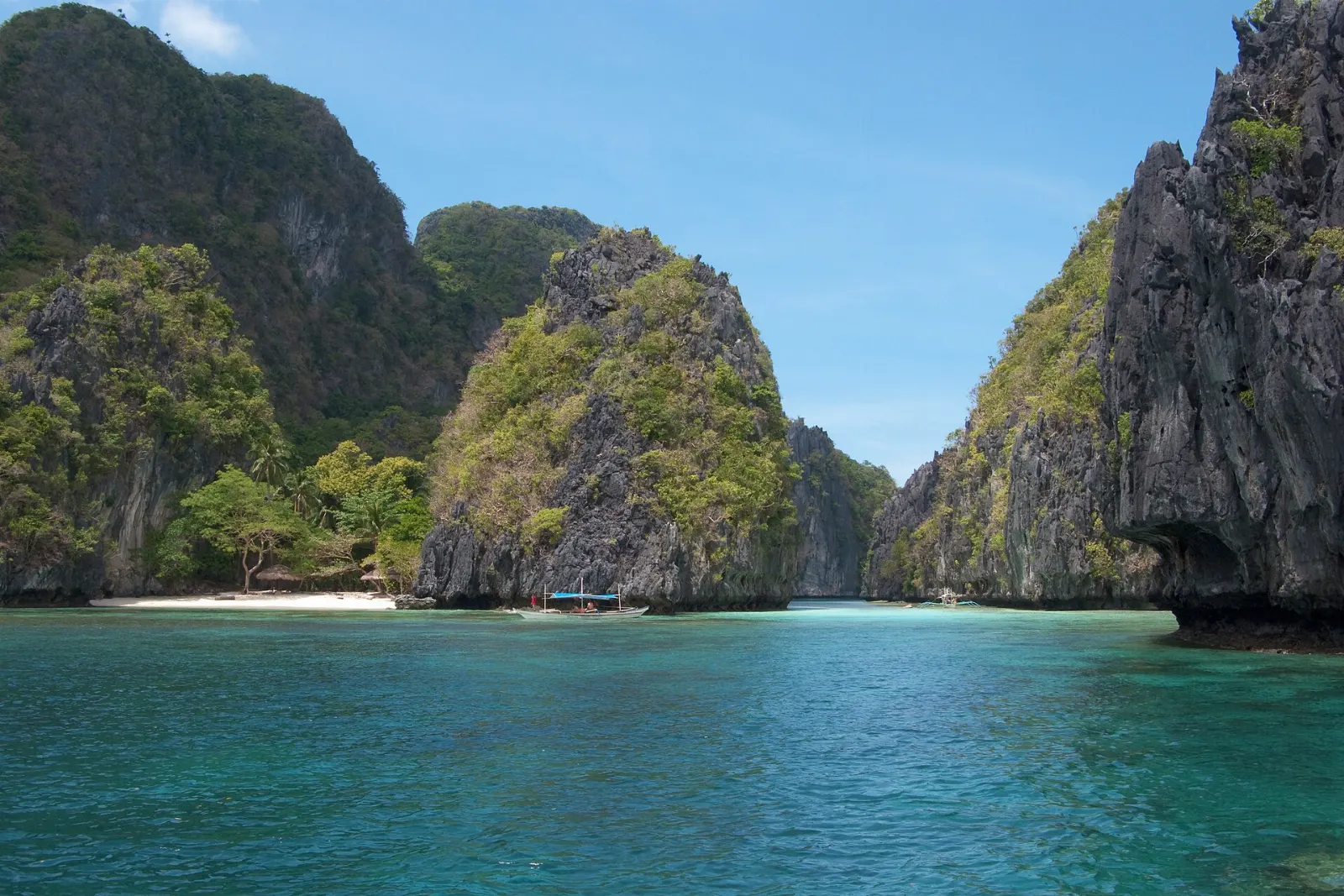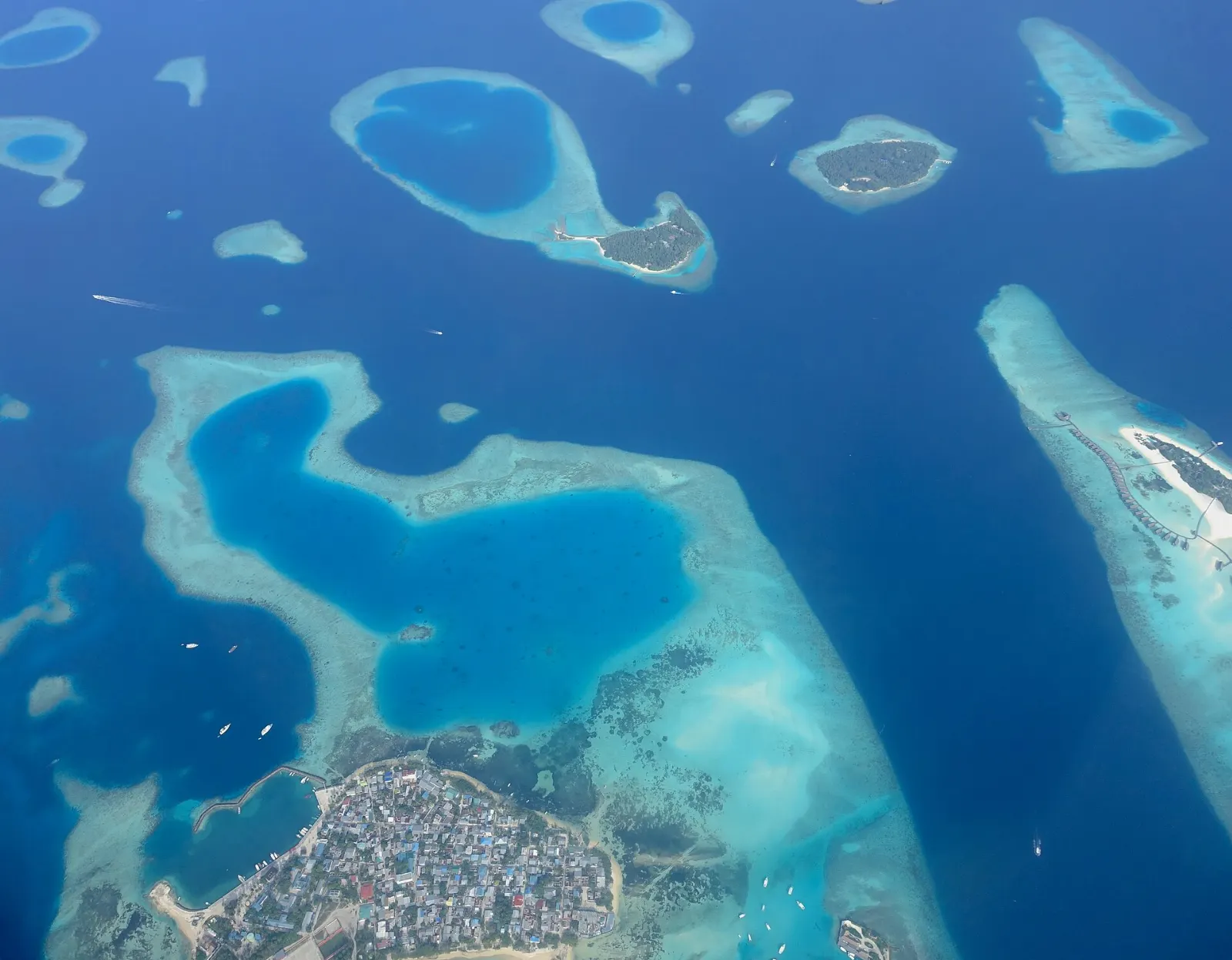
The Maldives is a chain of coral atolls scattered across the equatorial Indian Ocean, southwest of Sri Lanka and India. Its roughly twelve hundred islands are tiny and low-lying, but they sit among some of the richest reefs in the world, where manta rays, whale sharks, turtles and reef sharks are part of everyday life on the water.
AT A GLANCE
Best time
December to April for calm, dry weather; May to November for mantas and lower demand.
How long
A week allows one or two islands; ten days or more lets you combine atolls.
Getting there
Fly into Velana International Airport near Malé, then continue by boat, seaplane or domestic flight.
Why visit the Maldives
The obvious draw is the water. Each atoll is a ring of reefs and islands enclosing a lagoon, and the channels between them funnel nutrient-rich currents that attract large marine life.
There is more to the country than the view from a villa. The Maldives has its own language, Dhivehi, a history as a sultanate on Indian Ocean trade routes, and a distinctive island culture shaped by fishing and the sea. Staying on a local island, eating in a teashop and watching the tuna boats come in gives a fuller picture.
Malé and its neighbors
Malé is one of the most densely built capitals in the world, a small island almost entirely covered by colorful buildings, mosques and narrow streets busy with motorbikes.
Hukuru Miskiy and the Islamic Centre
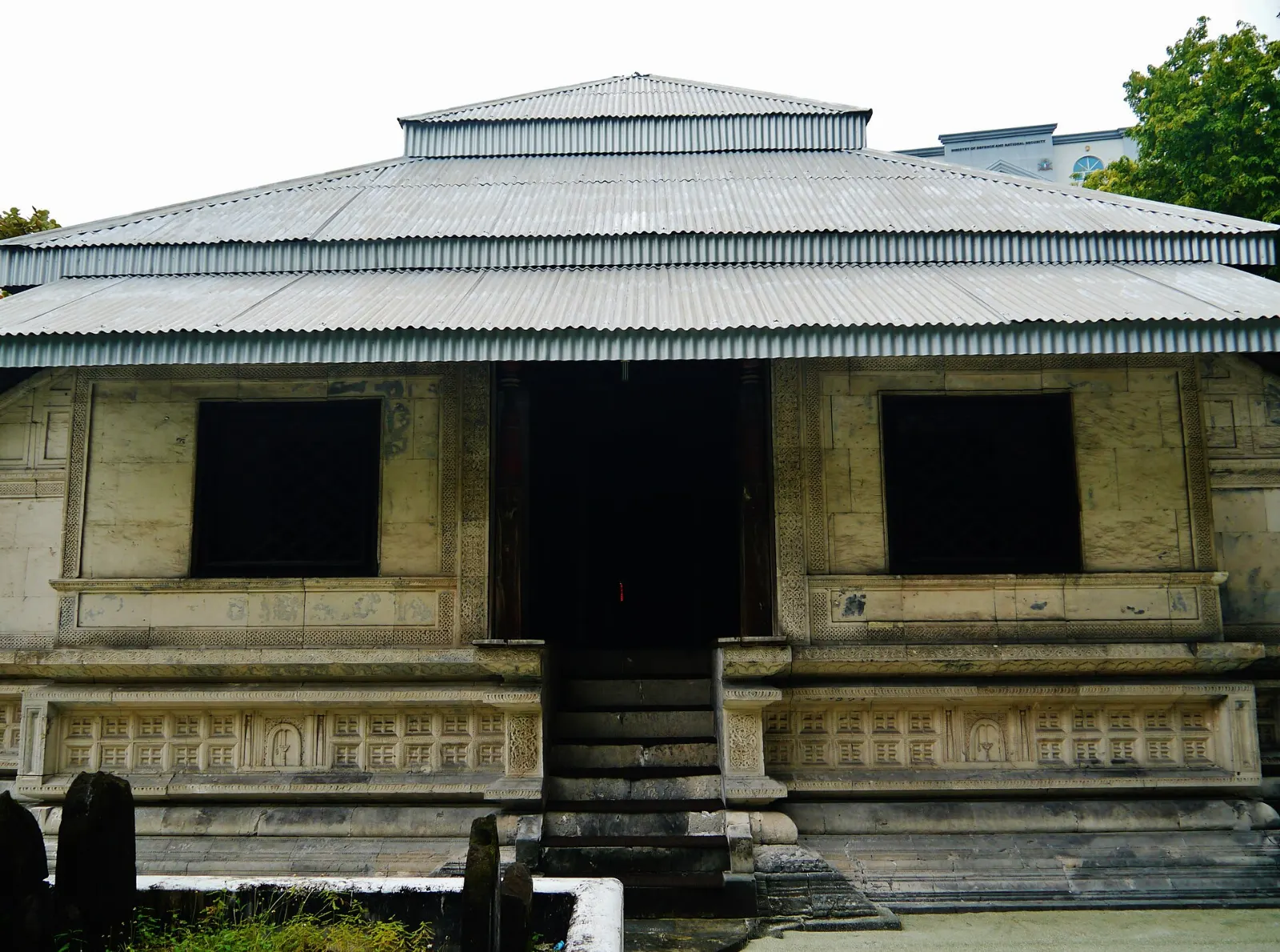
The Old Friday Mosque, Hukuru Miskiy, was built in the seventeenth century from blocks of coral stone that were carved and fitted together, and its interior is decorated with lacquerwork and wood carving.
Malé fish and produce markets
On the northern waterfront, the fish market comes alive in the afternoon when fishing boats unload skipjack and yellowfin tuna, which are cleaned and cut on tiled tables.

Close by, Sultan Park and the National Museum show royal artifacts and pre-Islamic coral carvings, while Republic Square on the waterfront is a good place to watch daily life. Check the museum's current hours before you go.
Hulhumalé
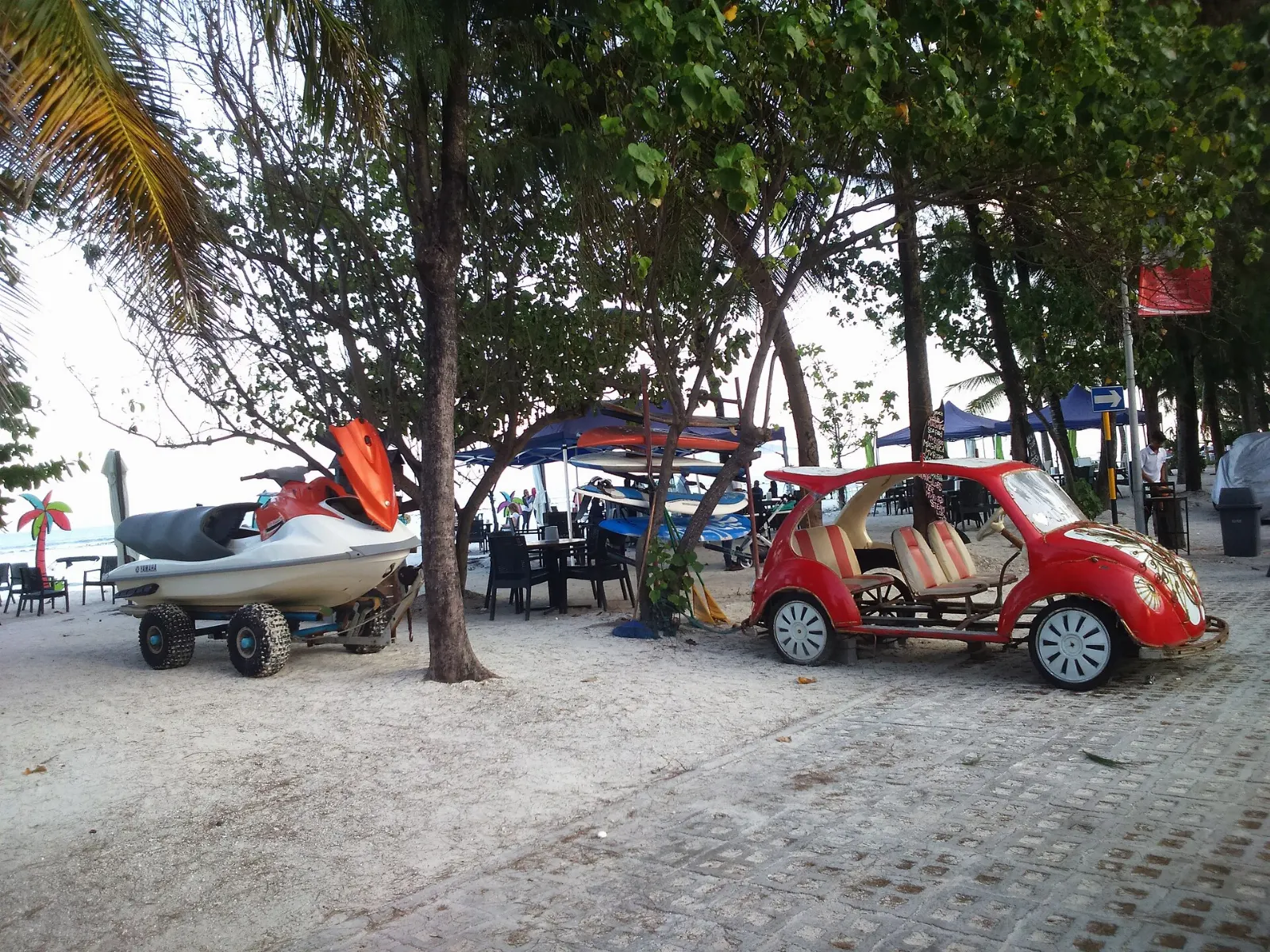
Just north of the airport, Hulhumalé is a reclaimed island built to ease crowding in Malé.
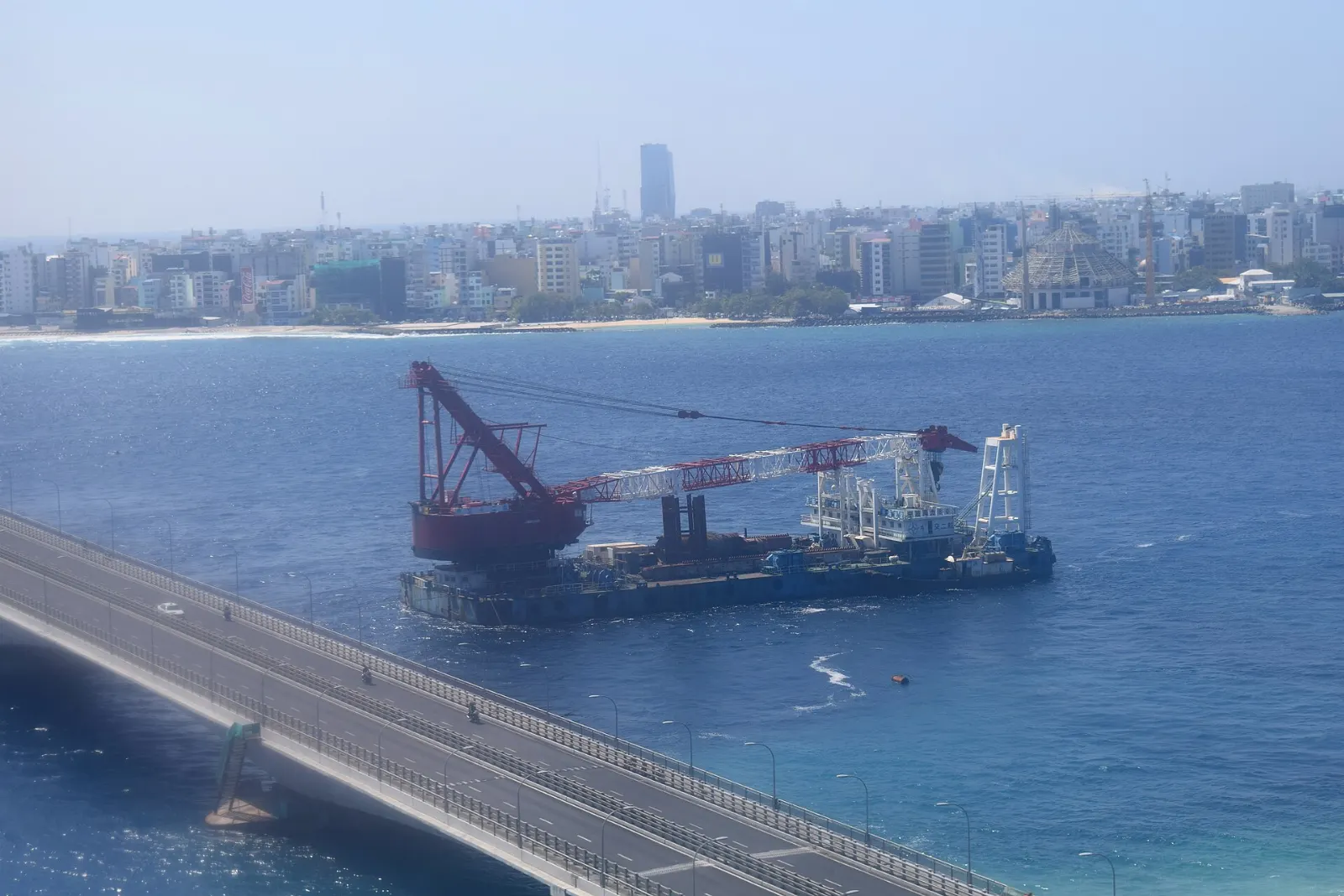
Hulhumalé's beach is at its best in the late afternoon, when families gather on the sand and the planes landing at the airport add to the scene.
Local islands and the central atolls
Maafushi
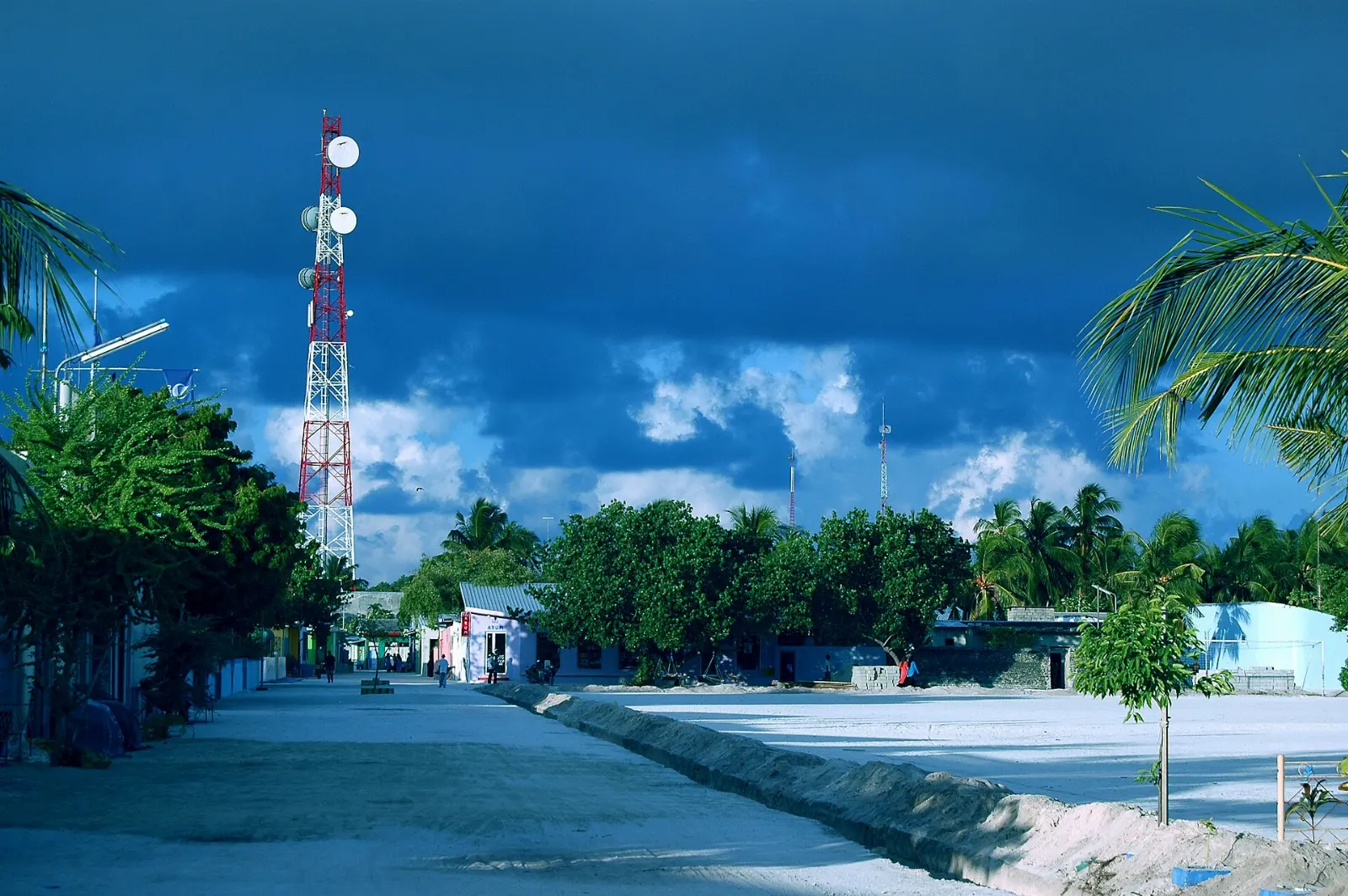
In South Malé Atoll, Maafushi was one of the first local islands to open to guesthouse tourism, and it now has dozens of small guesthouses, dive centers and excursion operators.
Thoddoo
In Alif Alif Atoll, Thoddoo is known for its farms, which grow watermelons, papayas and other fruit, and for an archaeological site linked to the Buddhist period before the Maldives converted to Islam in the twelfth century. Its beaches and house reef are good for snorkeling.
Banana Reef and North Malé Atoll
Close to the airport, North Malé Atoll has many of the country's oldest resorts and classic dive sites. Banana Reef, a protected marine area, was one of the first dive sites to become famous in the Maldives, with caves, overhangs and abundant fish.
Hanifaru Bay, Baa Atoll
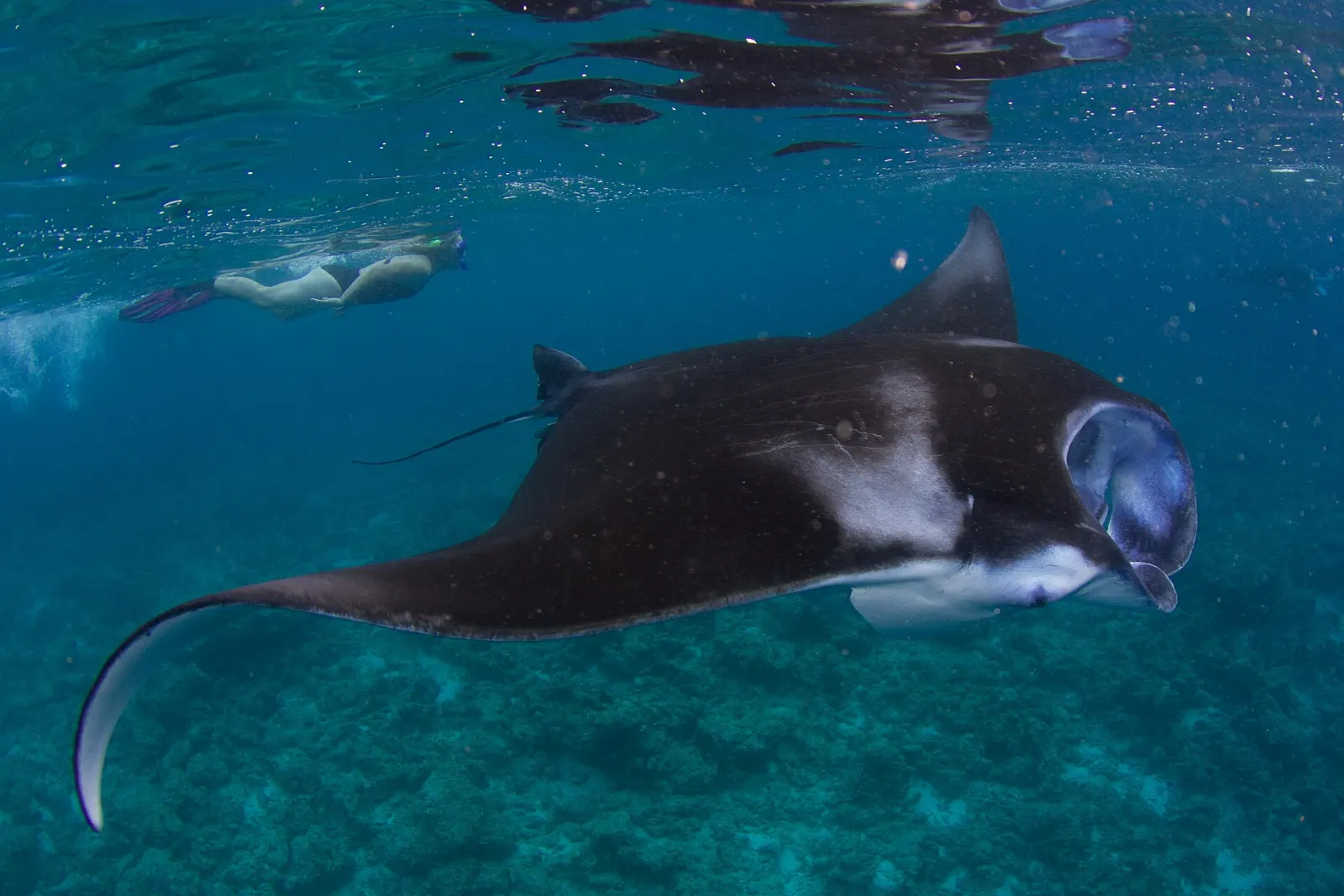
Baa Atoll is a UNESCO Biosphere Reserve, and its most famous site is Hanifaru Bay, a small reef inlet where plankton gathers during the southwest monsoon and draws large numbers of feeding manta rays and sometimes whale sharks.
South Ari Atoll
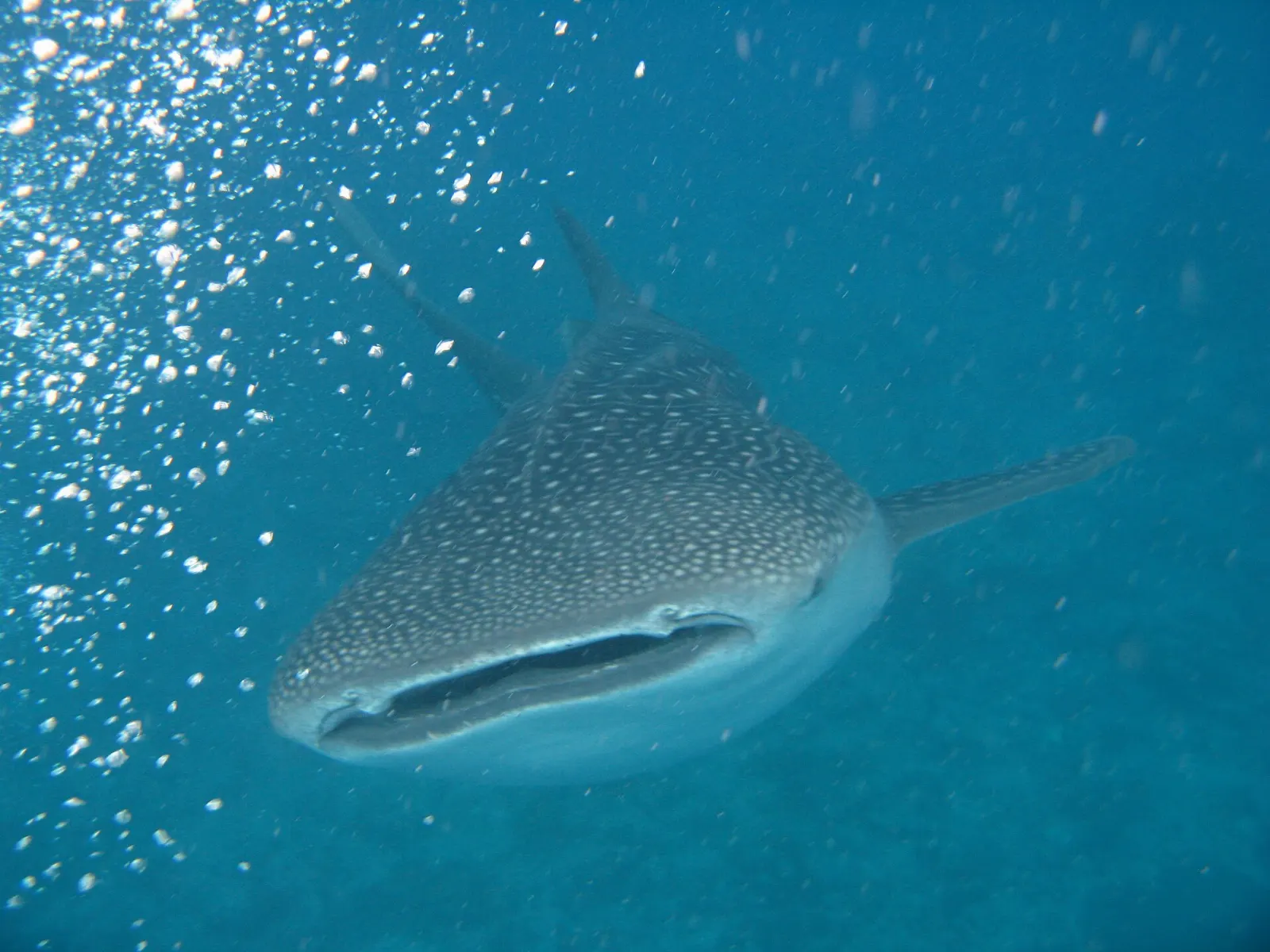
The outer reef of South Ari Atoll, near islands such as Dhigurah and Maamigili, is one of the few places in the world where whale sharks can be seen year-round.
The deep south
Fuvahmulah
Fuvahmulah is unusual: a single island forming its own atoll, without a surrounding lagoon, so deep water reaches close to shore. It has become famous among divers for regular encounters with tiger sharks, along with thresher sharks, hammerheads and oceanic manta rays in certain seasons.
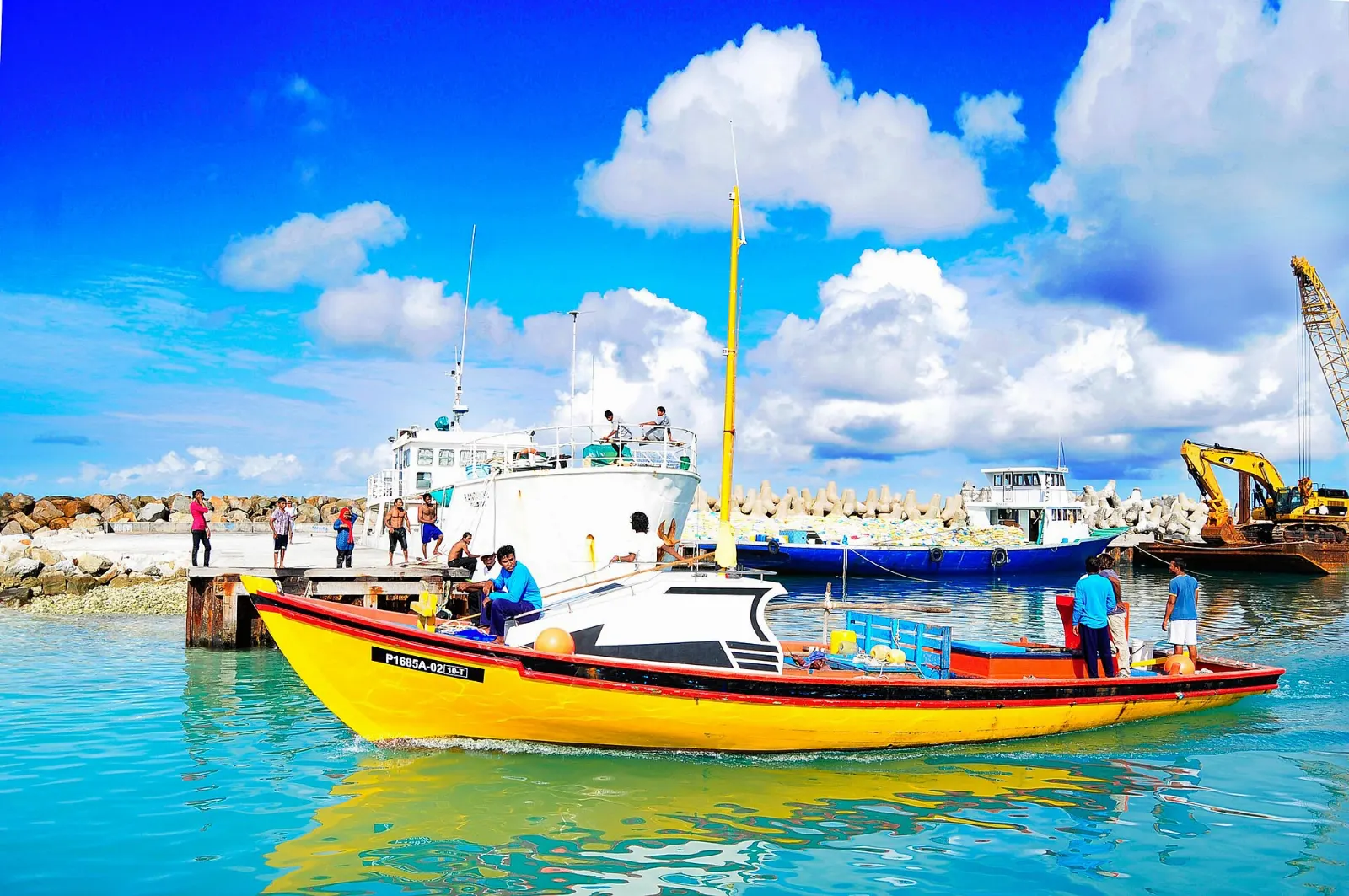
Addu Atoll
The southernmost atoll, just south of the equator, Addu has several islands linked by causeways and a road, so you can cycle or drive between them. Gan was a British Royal Air Force base until the 1970s, and traces of that era remain in old buildings and a memorial.
Food and local flavors
Maldivian food revolves around tuna, coconut, chili and starches such as rice and roshi, a thin flatbread. The classic breakfast is mas huni, a mixture of shredded smoked tuna, grated coconut, onion, chili and lime eaten with roshi and sweet tea.
Teashops, called hotaa, serve hedhikaa, small savory snacks such as gulha, fried dough balls filled with tuna and coconut, and masroshi, flatbread stuffed with spiced tuna.
Popular dishes to try in Maldives


Where to stay
Resort islands: Each resort occupies its own island, with villas over the water or on the beach, restaurants, a spa and usually a dive center and house reef.
Local islands with guesthouses: Islands such as Maafushi, Thoddoo, Dhigurah, Fulidhoo and others in Vaavu, Ari and Baa atolls offer guesthouses run by Maldivian families.
Liveaboards: Dive and snorkel boats cruise between atolls for a week or more.
Hulhumalé: Guesthouses and city hotels here suit a first or last night near the airport, especially with late arrivals or early departures.
Where to stay in Maldives


Best time to visit
The Maldives is warm all year, with water temperatures that rarely drop below the high twenties Celsius.
The southwest monsoon, from about May to November, is wetter and windier, with periods of rain and rough seas, though there are often long sunny spells.
The holy month of Ramadan follows the Islamic lunar calendar and shifts each year. During it, local islands are quieter by day and many cafes close until sunset, while resorts operate as usual.
Getting there and getting around
Velana International Airport sits on Hulhulé island next to Malé and is served by direct flights from the Middle East, South Asia, Europe and East Asia.
Seaplanes fly only in daylight, so late international arrivals may require a night near the airport. Public ferries connect many local islands with Malé and are slow but inexpensive, with limited schedules and sometimes no service on Fridays.
A suggested itinerary
First and second days
Arrive and spend your first night in Hulhumalé.
Third and fourth days
Join a snorkeling trip to sandbanks and reefs, and consider a dive at a nearby channel. Spend an evening at a local teashop trying hedhikaa.
Fifth to seventh days
Transfer to Dhigurah in South Ari Atoll for whale shark excursions and beach time, or, between May and November, fly to Baa Atoll for a snorkel at Hanifaru Bay.
Practical tips
- Do not bring alcohol, pork products or religious idols into the country, as customs regulations prohibit them.
- On local islands cover shoulders and knees away from designated swimwear beaches, and keep public displays of affection low-key.
- Book transfers together with your accommodation, since seaplanes do not fly after dark and boat times are limited.
- Use reef-safe sunscreen and never stand on or touch coral, turtles or other marine life.
- Carry some local currency for teashops, ferries and small shops, as card acceptance varies on local islands.
- Check that dive operators are licensed and follow protected area rules at sites such as Hanifaru Bay.