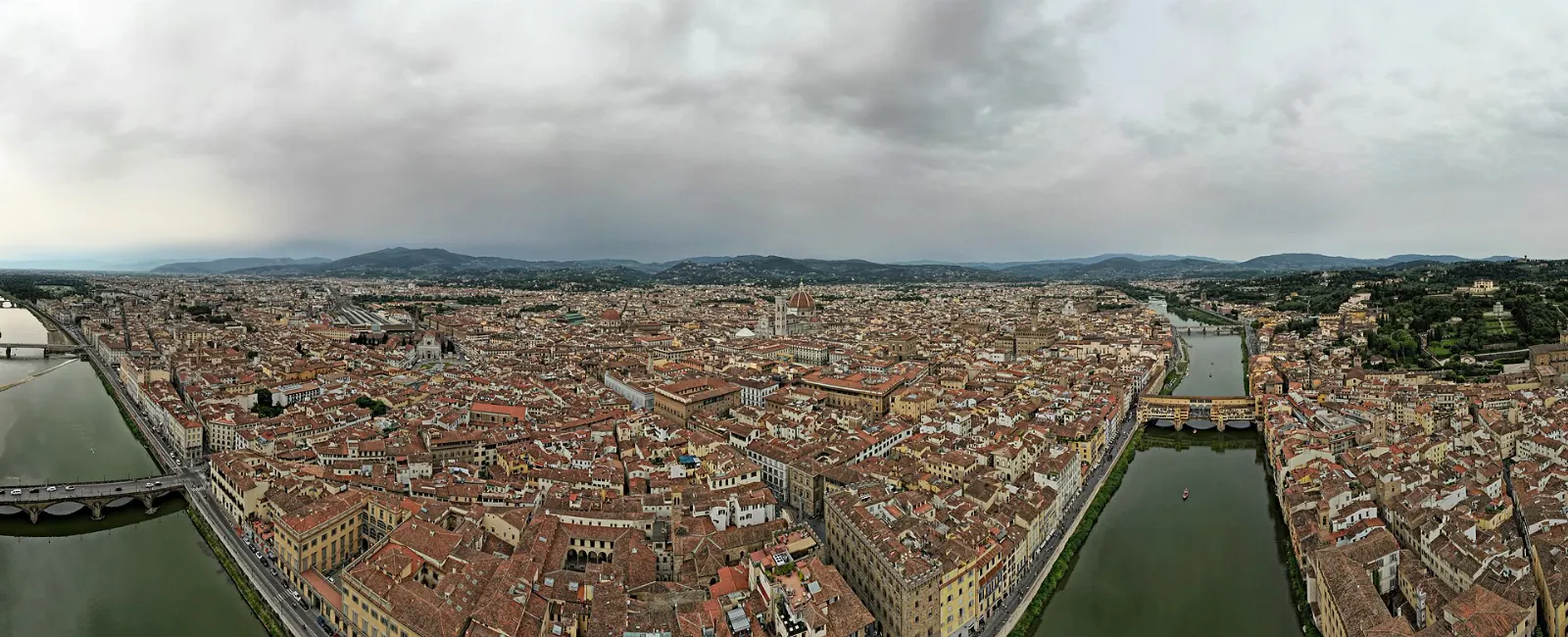
Florence packs an extraordinary amount into a compact, walkable center.
AT A GLANCE
Best time
April to early June and mid-September to October.
How long
Three days for the main sights; four or five with a Tuscan day trip.
Getting there
Fly into Florence or Pisa, or take a high-speed train to Santa Maria Novella.
Why visit Florence
Under the Medici family and the merchants and bankers around them, fifteenth-century Florence paid for an outpouring of art and architecture that shaped Europe. Brunelleschi engineered the cathedral dome, Donatello and Michelangelo carved sculpture that still feels startling, and painters from Giotto to Botticelli filled churches and palaces.
The city is also simply pleasant to be in. The center is mostly closed to general traffic, the Arno catches golden light at sunset, and the hills of Fiesole and Chianti are close by.
The cathedral quarter and Piazza della Signoria
Florence Cathedral and Brunelleschi's dome
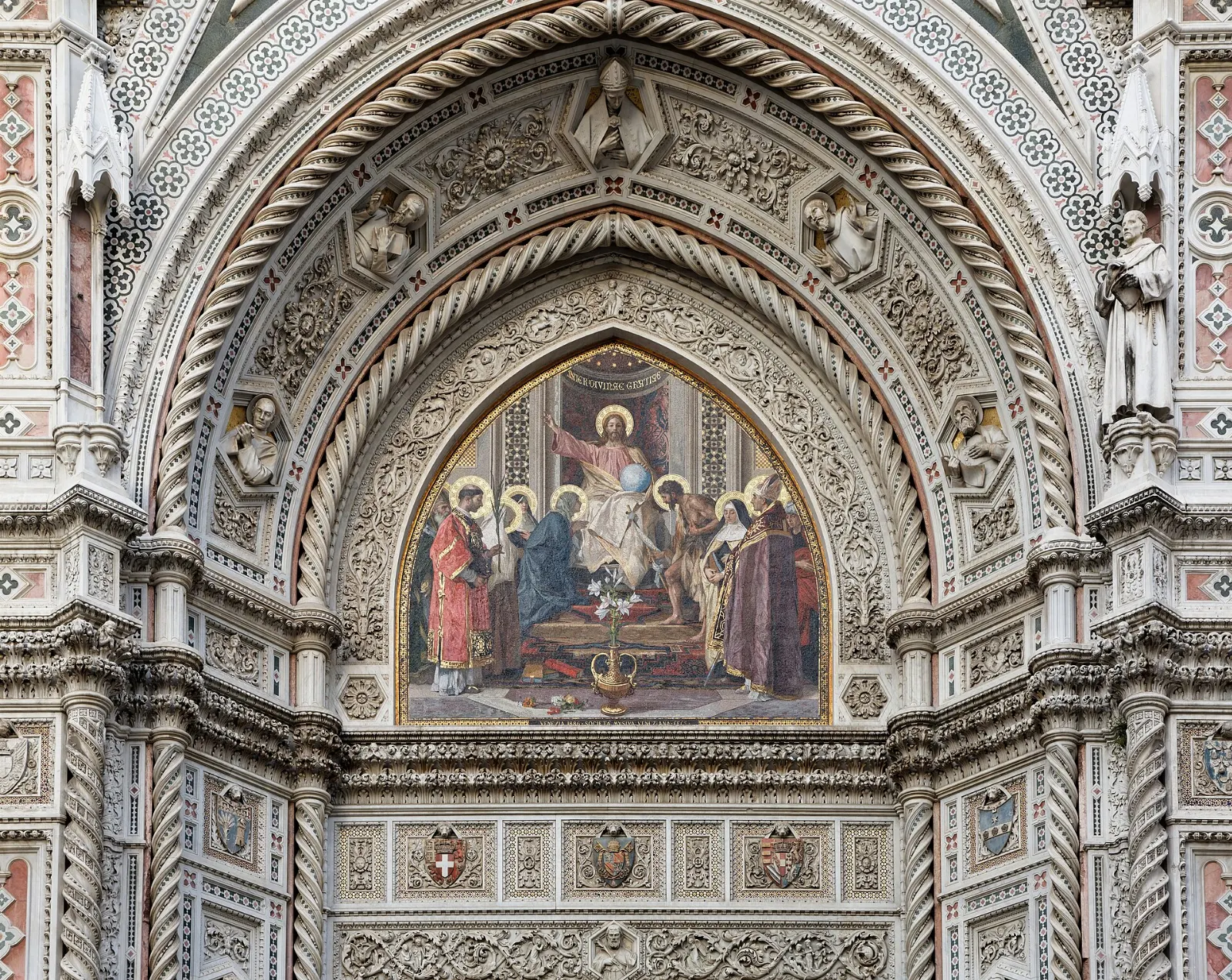
The Cathedral of Santa Maria del Fiore, known simply as the Duomo, is the center of Florence in every sense. Its patterned marble facade is a nineteenth-century completion, but the dome, finished in the 1430s, was a feat of engineering that no one had attempted at that scale since antiquity. Entry to the cathedral itself is free, though lines can be long.
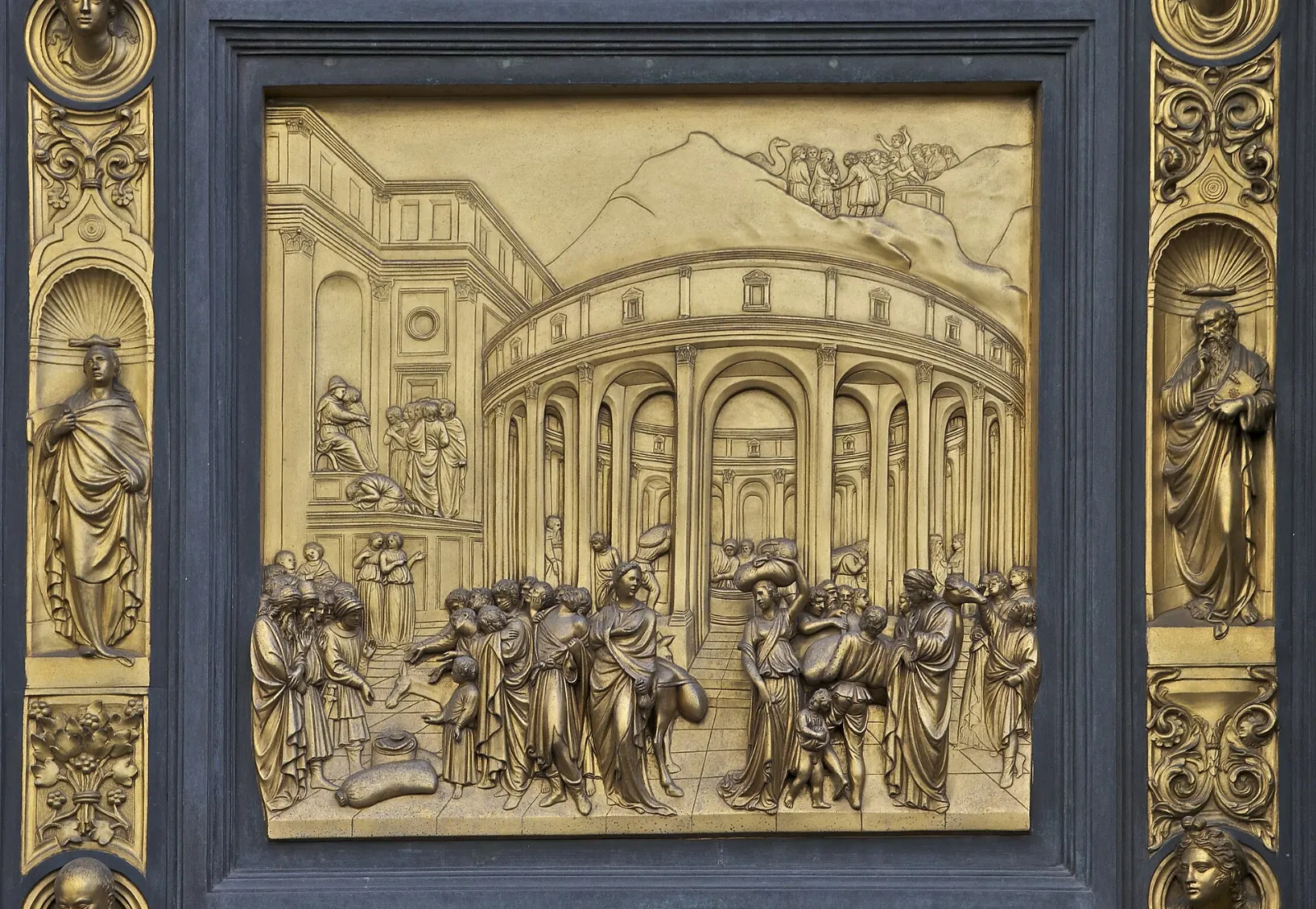
Giotto's Campanile, the Baptistery and the Museo dell'Opera
Next to the cathedral, Giotto's bell tower offers a climb of more than 400 steps with no reservation slot needed and a direct view of the dome itself, which many people prefer. Opposite, the octagonal Baptistery of San Giovanni has a glittering mosaic ceiling.
Piazza della Signoria and Palazzo Vecchio
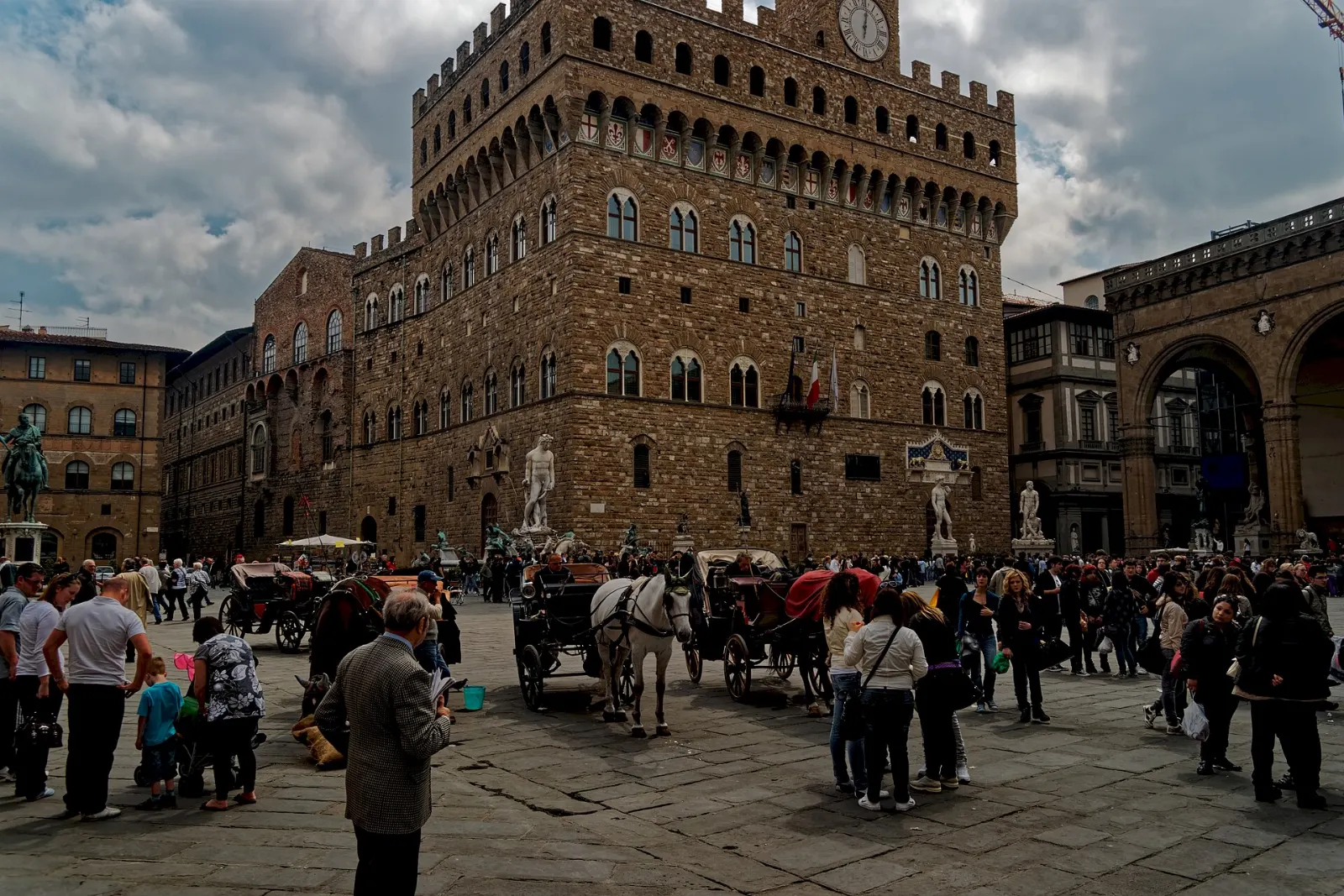
A short walk south, Piazza della Signoria was the civic heart of the Florentine republic. Palazzo Vecchio, the fortress-like town hall with its slender tower, still houses city offices, but its vast Hall of the Five Hundred and the painted apartments are open to visitors, and the tower climb gives a fine close view of the dome.
The Uffizi Gallery
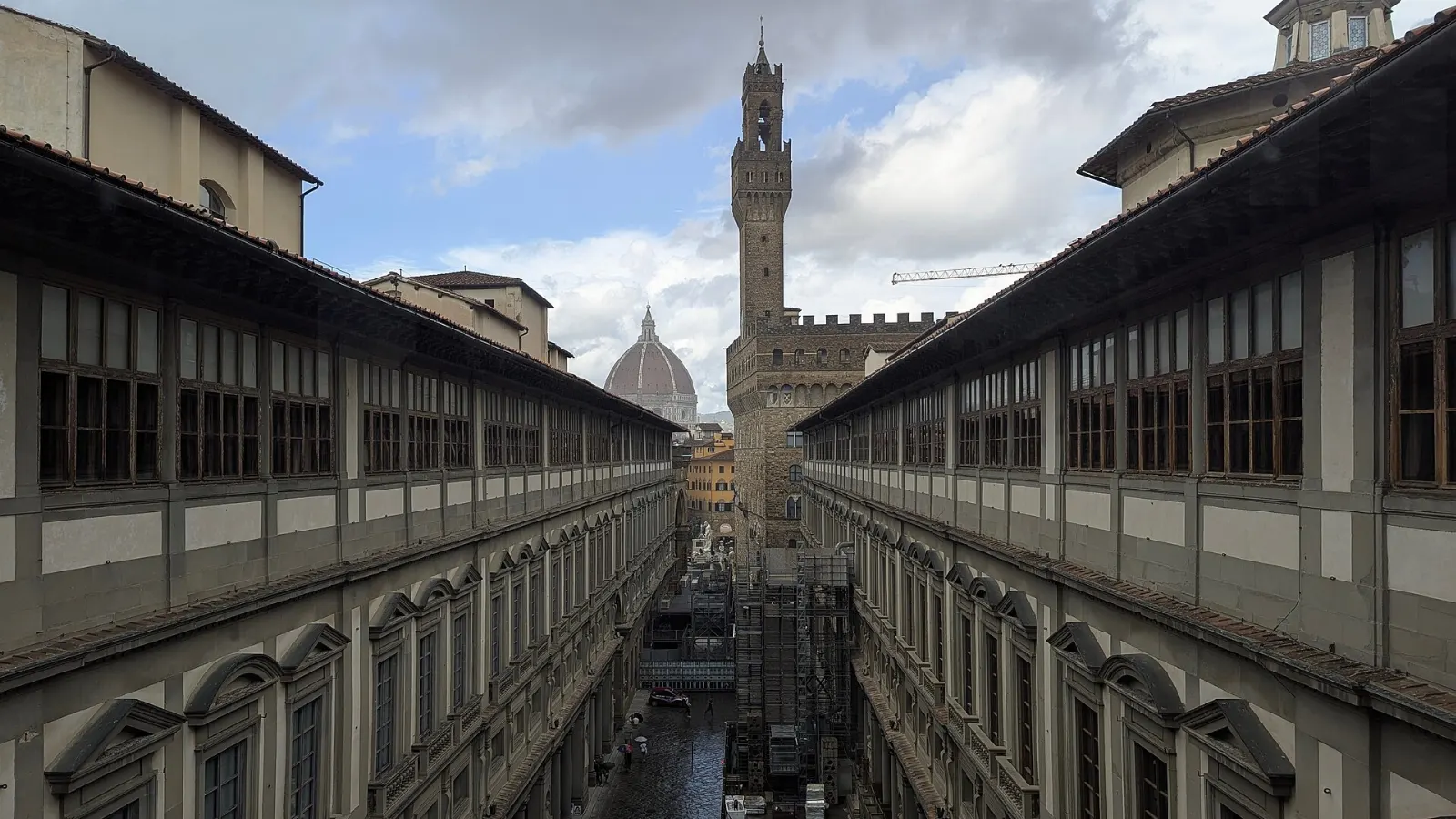
The Uffizi holds one of the world's great collections of Italian painting, arranged roughly in chronological order so you can trace the Renaissance from Giotto through Botticelli's Birth of Venus and Primavera to Leonardo, Michelangelo, Raphael and Titian. Book a timed ticket in advance, plan at least three hours and start early, as the Botticelli rooms are busiest by late morning.
San Lorenzo, the Accademia and Santa Croce
Galleria dell'Accademia
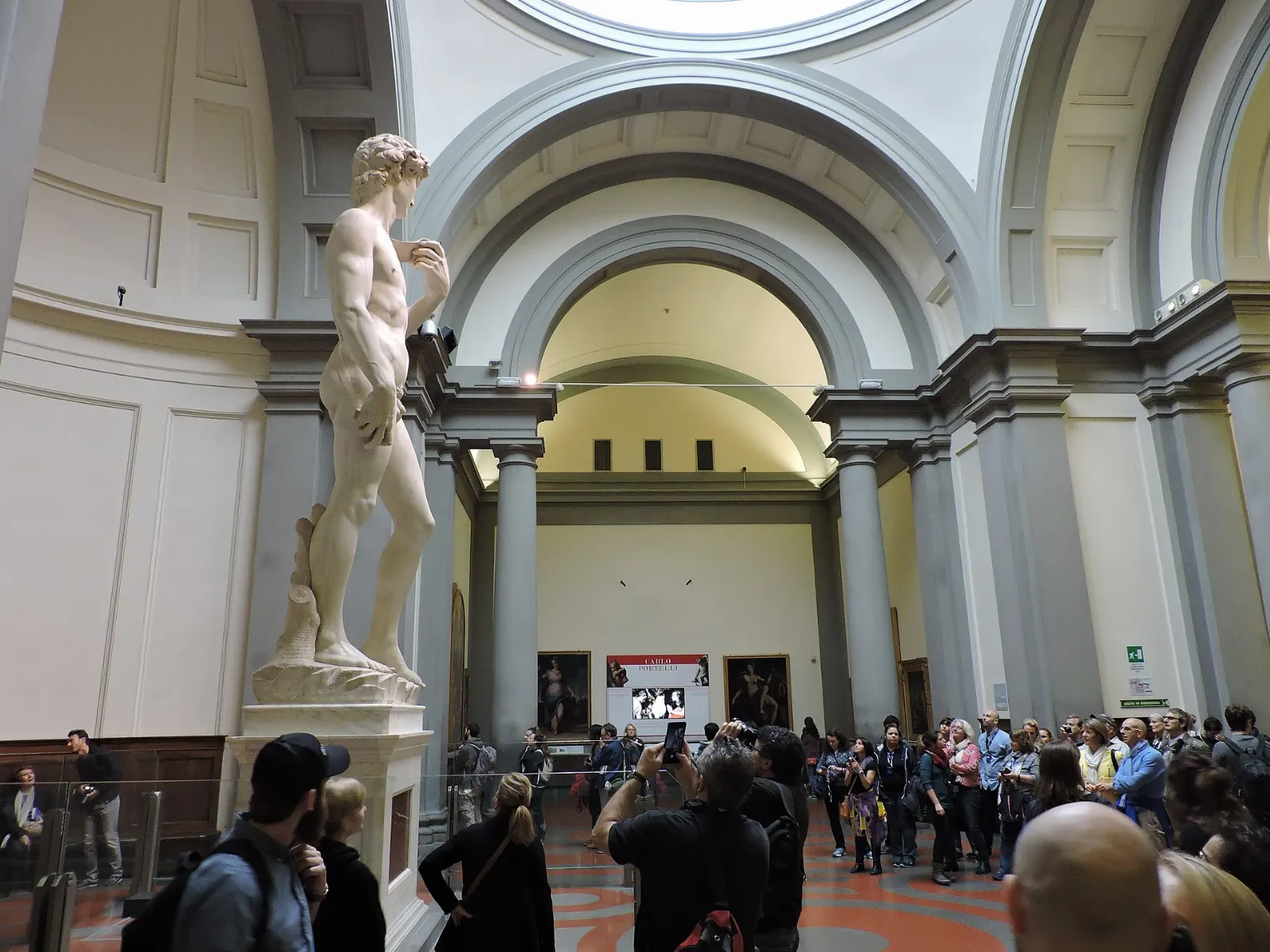
Michelangelo's David, carved between 1501 and 1504 and moved indoors in the nineteenth century, stands under a skylit tribune at the Galleria dell'Accademia. Seeing it in person, about five meters tall including its base, is far more powerful than any photograph.
San Lorenzo, the Medici Chapels and the Mercato Centrale
The Basilica of San Lorenzo was the Medici family's parish church, and behind it the Medici Chapels hold the family's tombs, including the New Sacristy designed by Michelangelo with his allegorical figures of Dawn, Dusk, Night and Day. Around the church, the San Lorenzo street market sells leather goods, though quality varies, so inspect carefully.
Basilica of Santa Croce
The great Franciscan church of Santa Croce, east of the center, is the resting place of Michelangelo, Galileo, Machiavelli and the composer Rossini, with a memorial to Dante. Its chapels hold frescoes by Giotto, and the adjoining Pazzi Chapel is a model of Brunelleschi's calm, proportioned architecture.
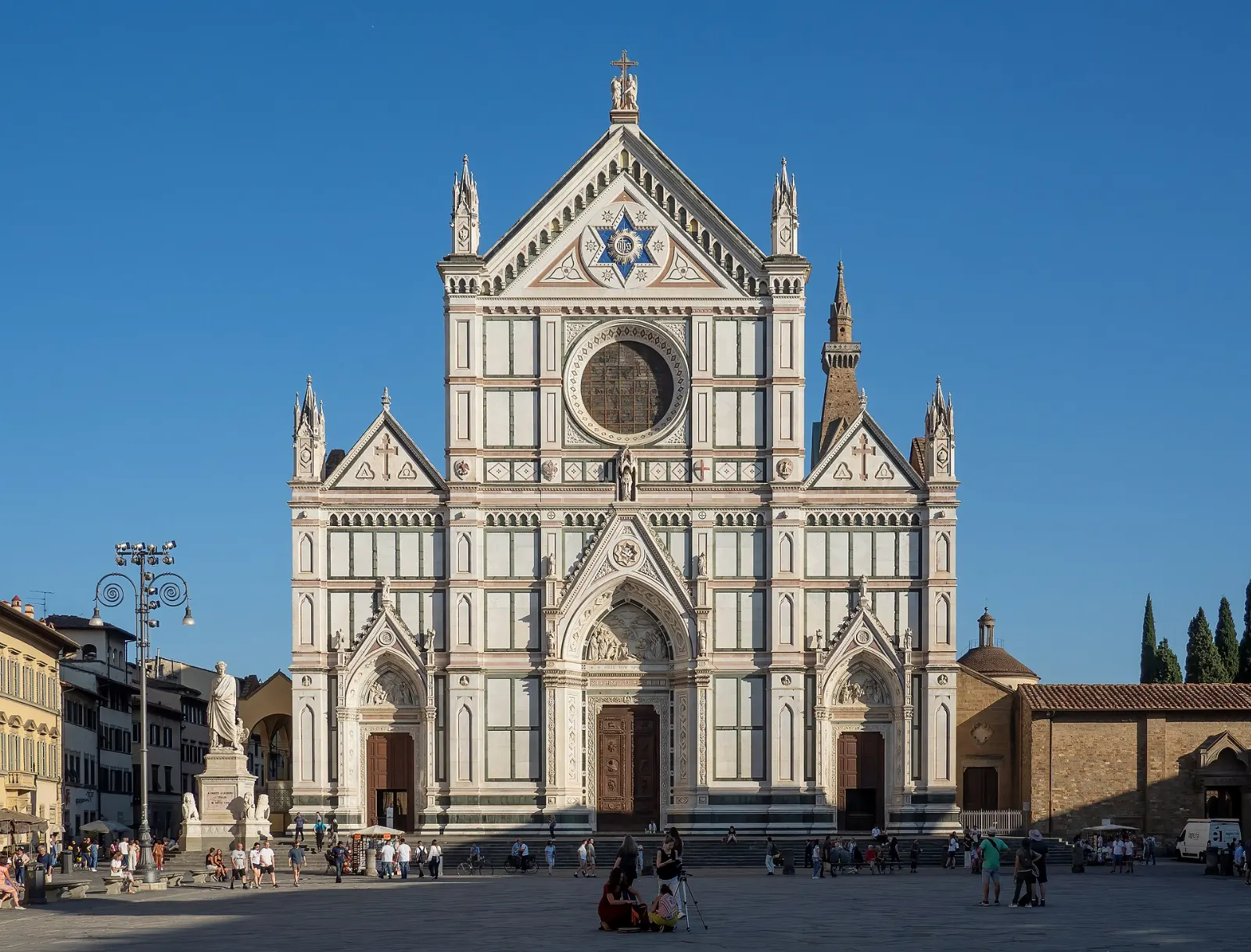
Across the Arno: the Oltrarno and the hills
Ponte Vecchio
The Ponte Vecchio, the only medieval bridge in Florence that survived the Second World War, is lined with small shops that have sold gold and jewelry since the late sixteenth century, when the Medici evicted the butchers.
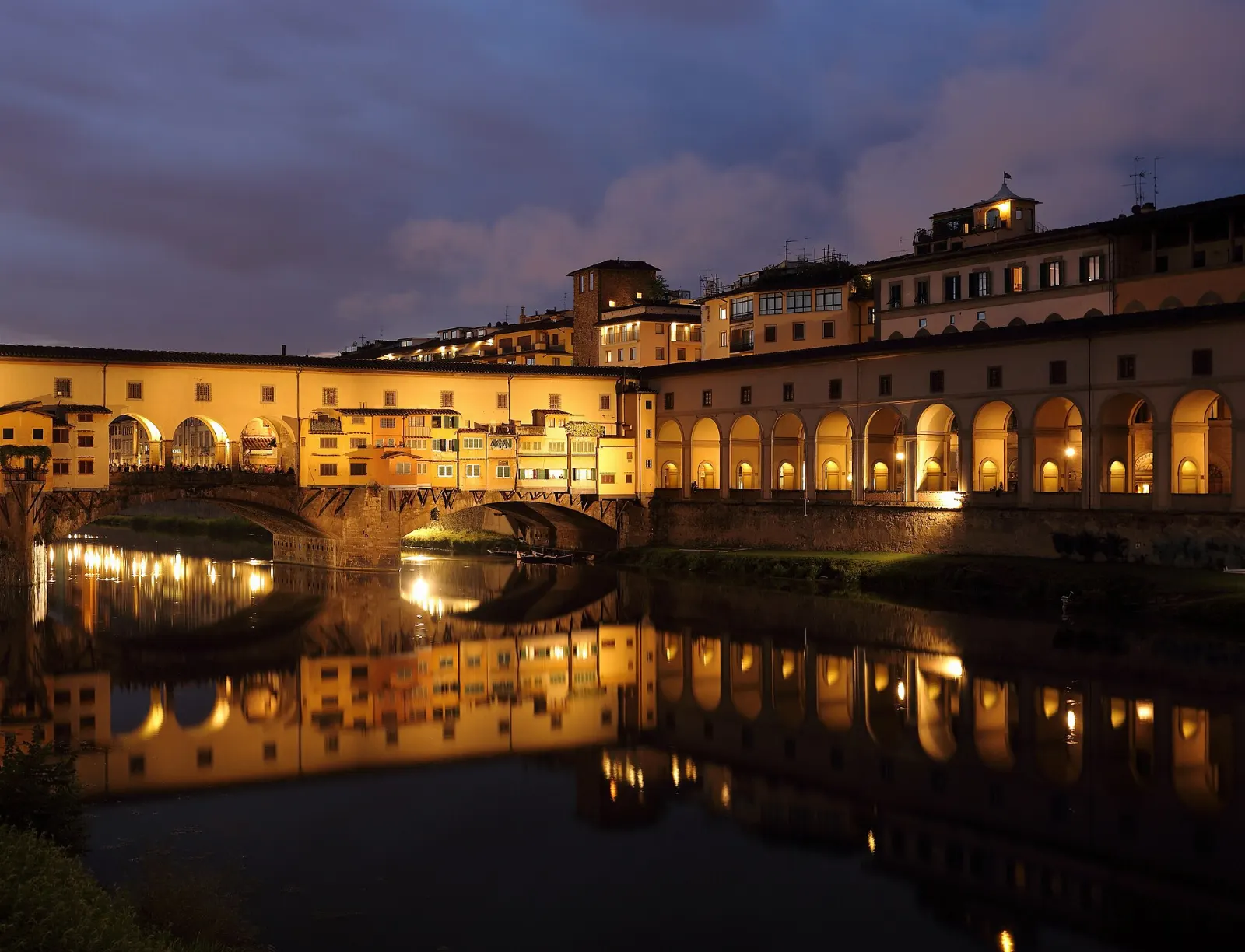
Palazzo Pitti and the Boboli Gardens
Across the river, the enormous Palazzo Pitti became the main Medici residence and now holds several museums, including the Palatine Gallery, packed with paintings by Raphael and Titian hung in richly decorated rooms. Behind it, the Boboli Gardens climb the hillside in terraces, with fountains, grottoes and statues, and views back over the city.
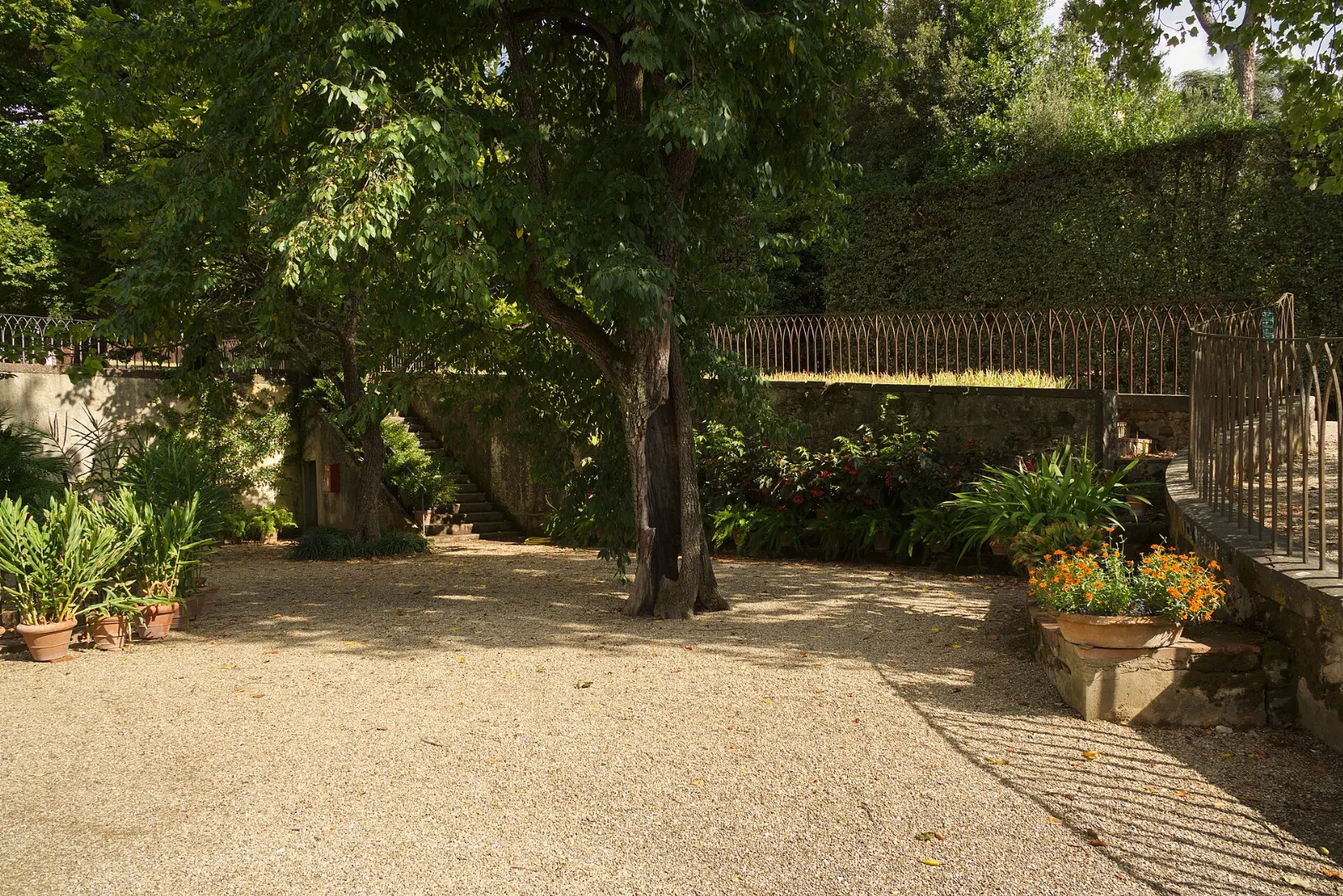
Santo Spirito and the artisan streets
The Oltrarno, meaning beyond the Arno, is the most local-feeling part of the center. Piazza Santo Spirito, in front of Brunelleschi's austere church, fills with a morning market and an evening crowd at its bars.
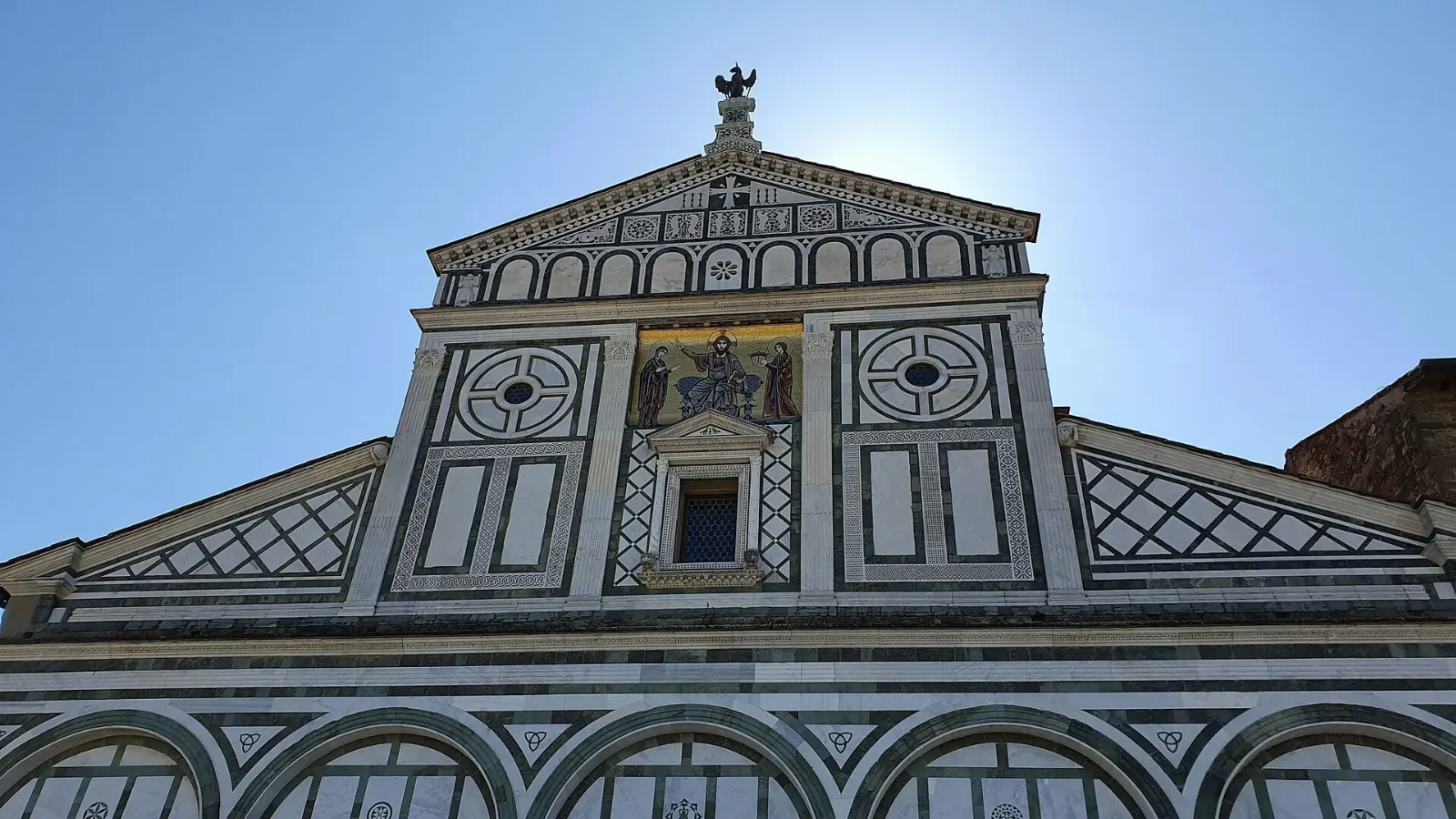
Piazzale Michelangelo and San Miniato al Monte
For the classic panorama of Florence, climb from the river to Piazzale Michelangelo, a broad terrace with a bronze copy of David and a view across the dome, Palazzo Vecchio and the hills.
 Planning a trip to Florence?Compare hotels, flights and vacation rentals for Florence on Expedia.Book now
Food and local flavors
Tuscan cooking is rooted in peasant tradition and seasonal ingredients. The signature dish is bistecca alla fiorentina, a thick T-bone steak grilled over coals, served rare and usually priced by weight for sharing.
For street food, try lampredotto, a slow-cooked tripe sandwich sold from carts around the city, and schiacciata, a flat oily bread filled with cured meats and cheese.
Popular dishes to try in Florence


Where to stay
Around the Duomo and Piazza della Signoria puts you within easy walking distance of almost everything.
Santa Maria Novella, near the main train station, is practical for day trips and late arrivals.
The Oltrarno, around Santo Spirito and San Frediano, suits travelers who want artisan streets, neighborhood bars and a quieter base across the river.
Fiesole and the hills offer cooler air and views, ideal for longer summer stays if you do not mind taking a bus into town.
Where to stay in Florence


Best time to visit
Spring, from April to early June, brings mild weather, flowering gardens and long days, though Easter and the Italian school trip season can make museums very busy.
Summer is hot and crowded, with July and August often uncomfortably warm in the city's stone streets.
Mid-September through October is a favorite: warm days, the grape harvest in Chianti and slightly thinner crowds.
Getting there and getting around
Florence Airport, also called Peretola or Amerigo Vespucci, is small and close to the city, linked to the center by a tram line that ends near Santa Maria Novella station.
The historic center is best explored on foot; almost every major sight is within a twenty-minute walk of the Duomo.
A suggested itinerary
First day
Start early with your reserved dome climb, then see the cathedral, Baptistery and Museo dell'Opera.
Second day
Visit the Accademia at opening time to see David, then the Medici Chapels at San Lorenzo.
Third day
Cross into the Oltrarno for Palazzo Pitti and the Boboli Gardens. Lunch near Santo Spirito, browse the artisan workshops, then climb to Piazzale Michelangelo and San Miniato al Monte for the evening view over the city.
Practical tips
- Reserve timed entry for the dome, the Uffizi, the Accademia and the Vasari Corridor well ahead, especially from spring to autumn.
- Many state museums close one day a week, often Monday; check the official websites for current hours and fees.
- Cover shoulders and knees in churches, and respect services in progress.
- Do not drive into the ZTL; cameras record every vehicle entering.
- Florence enforces rules against eating on the steps and pavements in some central streets, so find a bench or a cafe.
- Accommodation charges a city tourist tax per person per night, usually paid on arrival.