Amalfi Coast Italy Positano Ravello and Path of the Gods
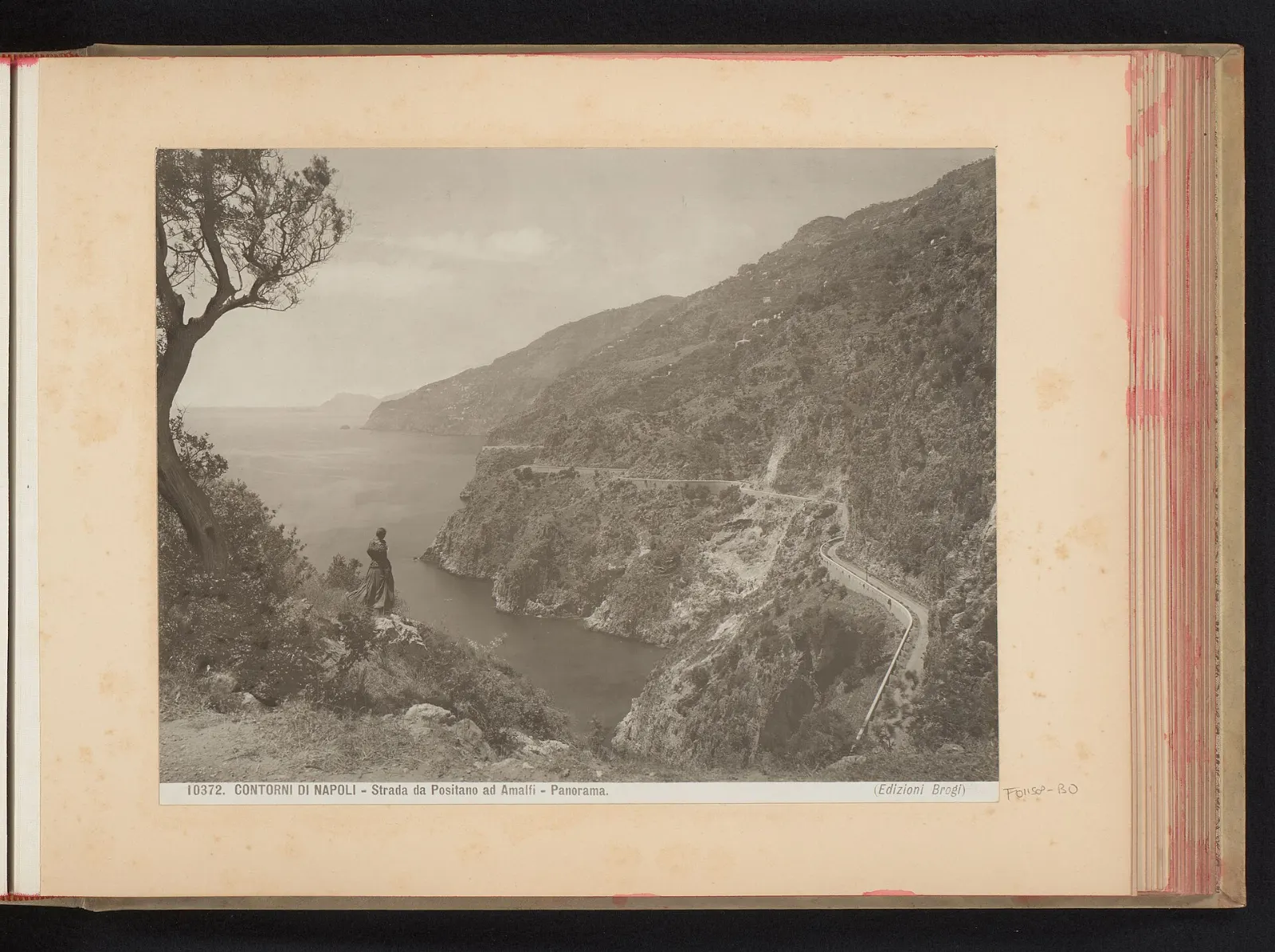
The Amalfi Coast is a short stretch of southern Italian shoreline on the Sorrento Peninsula, where the Lattari Mountains drop almost straight into the Tyrrhenian Sea.
By WiserMap TravelUpdated October 20268 places11 min read
This guide walks you through the places that deserve your time, from the beaches of Positano to the gardens of Ravello and the high mountain trail known as the Path of the Gods. You will also find advice on bases, transport, food and crowds.
At a glance Amalfi Coast
Best timeMay, June, September and early October for warm sea, running ferries and lighter crowds.
How longFour to five nights lets you see Positano, Amalfi, Ravello and a hike without rushing.
Getting thereFly into Naples, then take a ferry, bus or private transfer; trains reach Salerno.
Ad
Why visit the Amalfi Coast
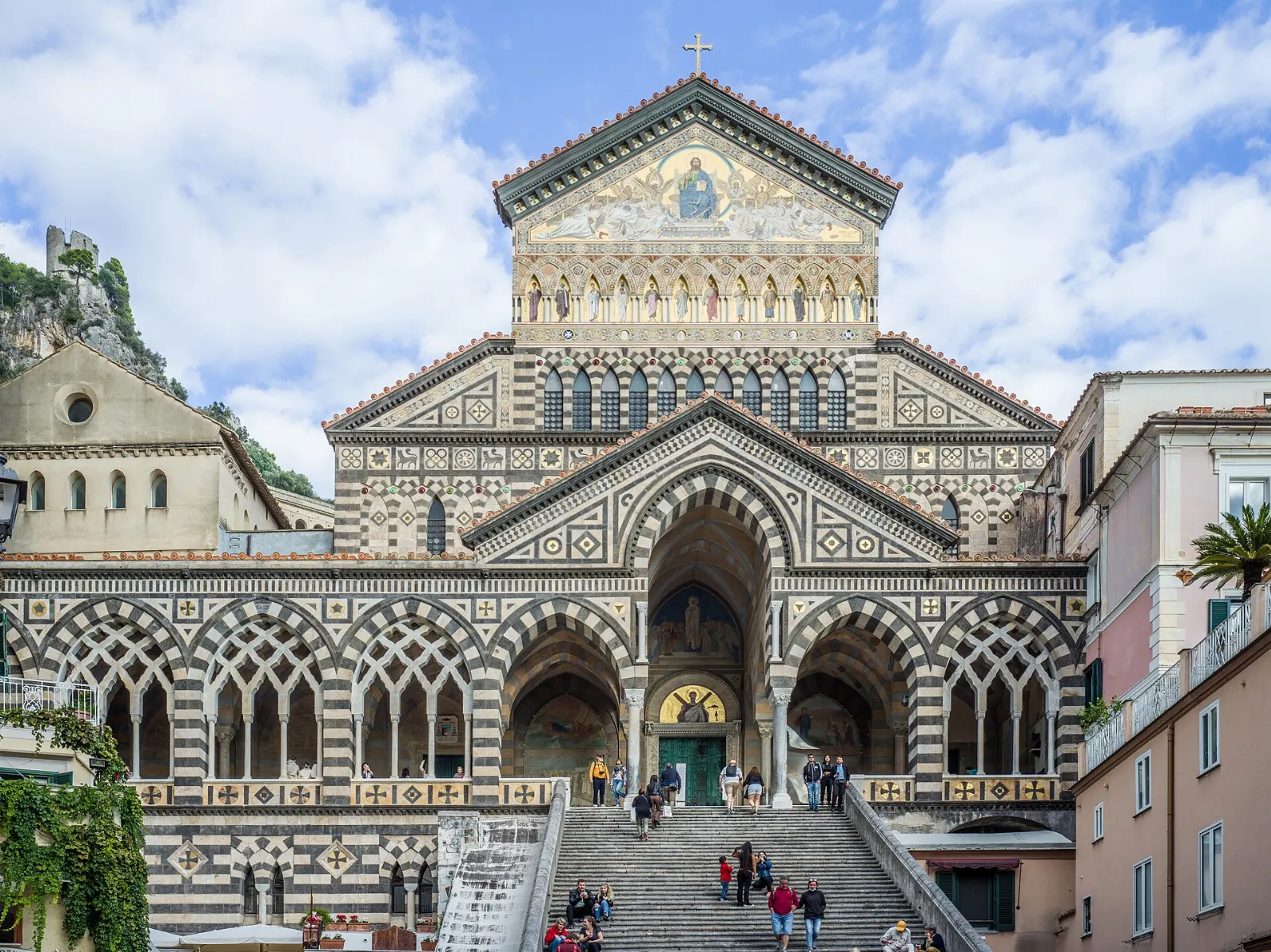
Few places combine scenery and history this tightly. In the Middle Ages, Amalfi was the capital of a powerful maritime republic that traded across the Mediterranean with Byzantium and the Arab world, and you can still read that past in the striped Arab-Norman arches of its cathedral and cloister.
The landscape is the other draw. Towns spill down ravines toward small pebble beaches, and every bend of the road opens a new view of cliffs, watchtowers and sea.
The coast is also compact, so you can base yourself in one town and explore the rest on day trips, and it pairs easily with Naples, Pompeii or Capri.
Positano and the western coast
Positano
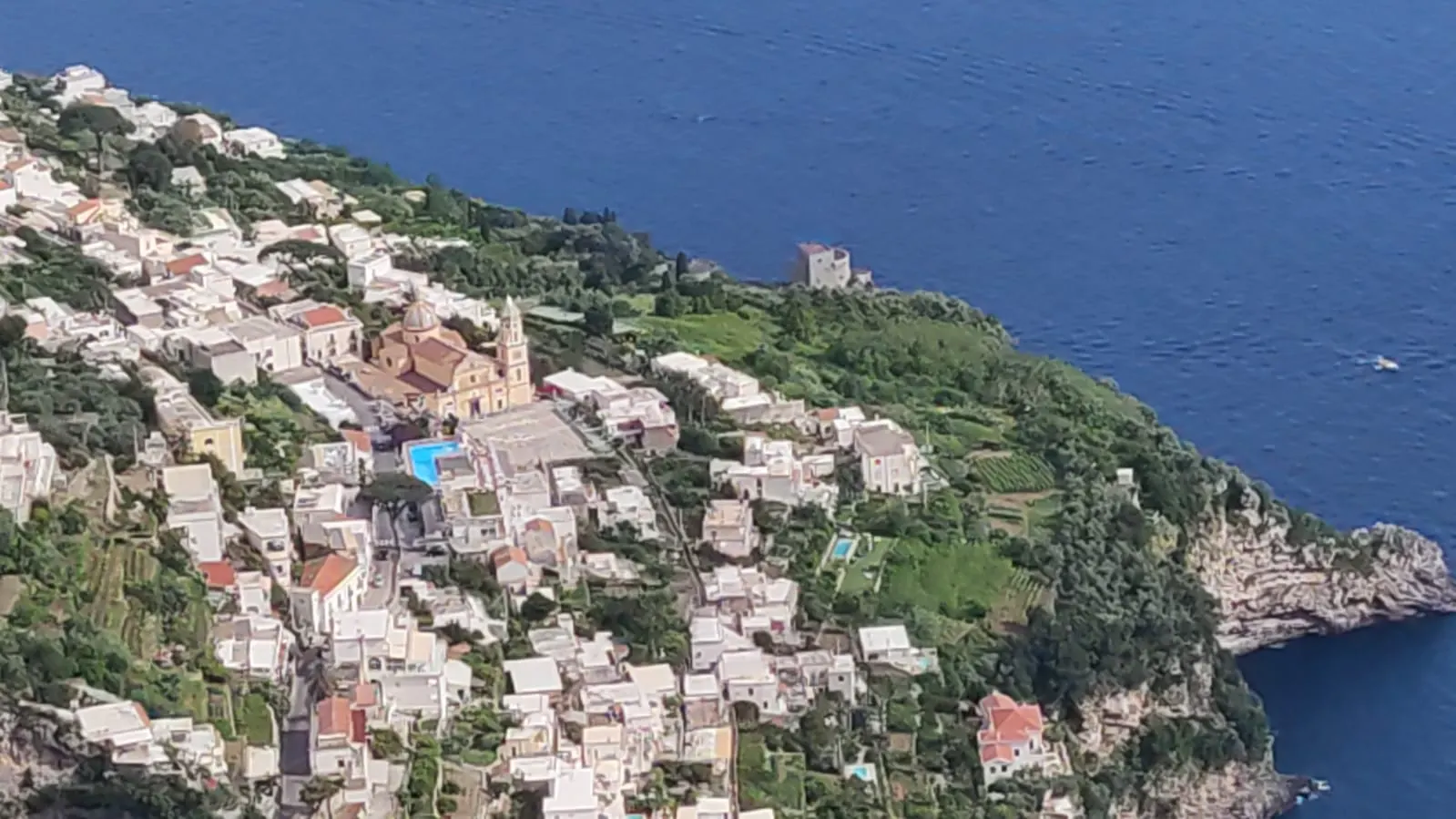
Positano is the town most people picture when they think of the Amalfi Coast: pastel houses stacked up a steep hillside, a dark-sand beach lined with umbrellas and a maze of stairways connecting it all.
Allow half a day if you are visiting from another town, or a full day if you want beach time.
The majolica-tiled dome of Santa Maria Assunta rises above Spiaggia Grande, Positano's main beach. Photo: Mihael Grmek, Wikimedia Commons, CC BY-SA 4.0
Fornillo Beach
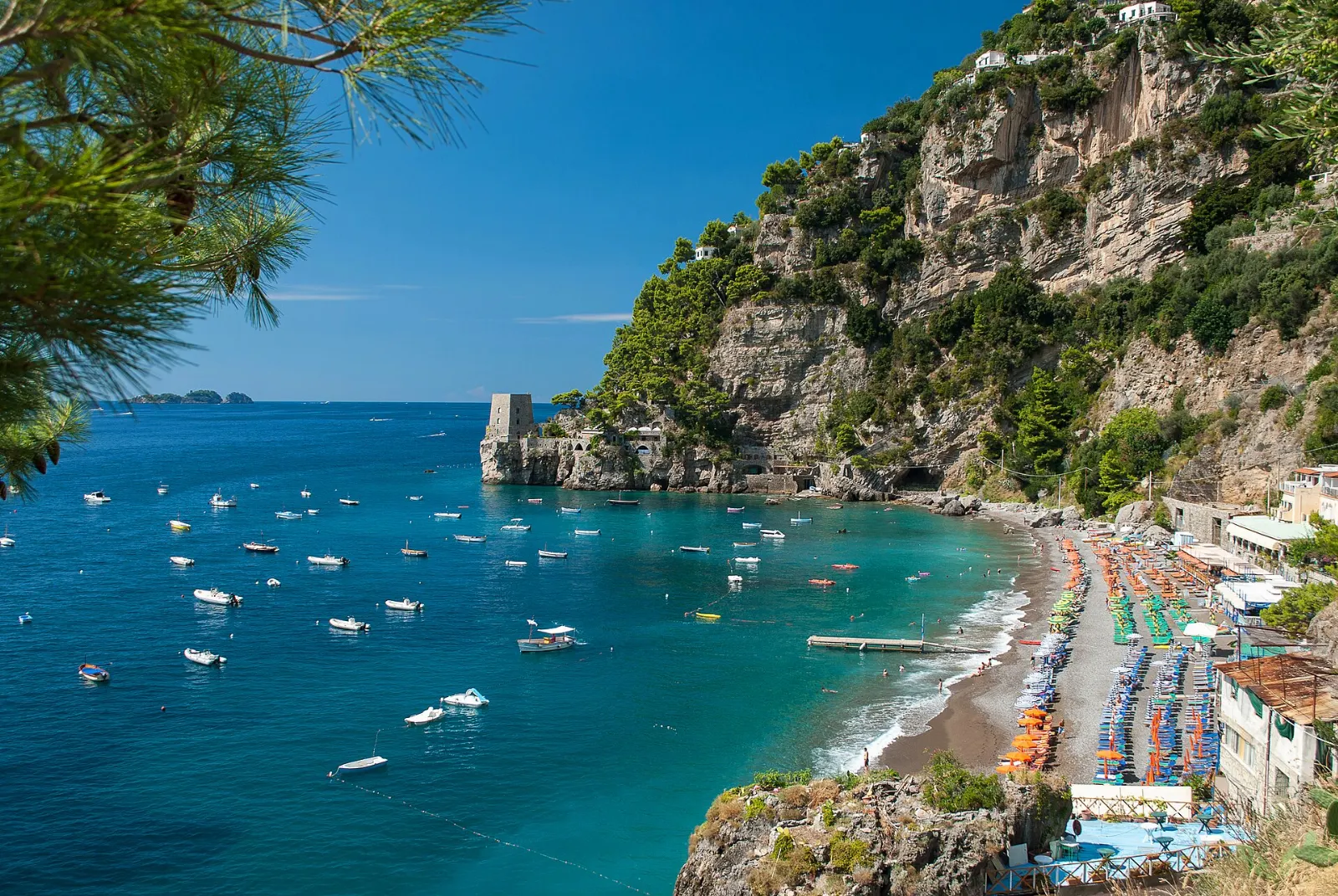
If Spiaggia Grande feels crowded, follow the cliffside footpath west past the Torre Trasita watchtower to Fornillo, a smaller and calmer beach backed by a few family-run beach clubs. The walk takes about ten minutes and is part of the appeal, with views back toward the town.
Nocelle and the Path of the Gods
High above Positano, the hamlet of Nocelle marks the eastern end of the Sentiero degli Dei, or Path of the Gods. Most walkers start in Bomerano, a village in the municipality of Agerola reached by bus, and walk west to Nocelle, which keeps the route mostly level or downhill.
Bring water, sun protection and shoes with good grip, and start early in summer because much of the path is exposed. Check the official Agerola or regional tourism website for the latest trail conditions and any access rules before you go.
The Path of the Gods runs along the mountainside between Bomerano and Nocelle. Photo: Gaerea, Wikimedia Commons, CC BY-SA 4.0
Praiano and the Furore fjord
Between Positano and Amalfi, Praiano is a quieter, more spread-out town known for sunset views toward Positano and the Church of San Gennaro with its tiled dome.
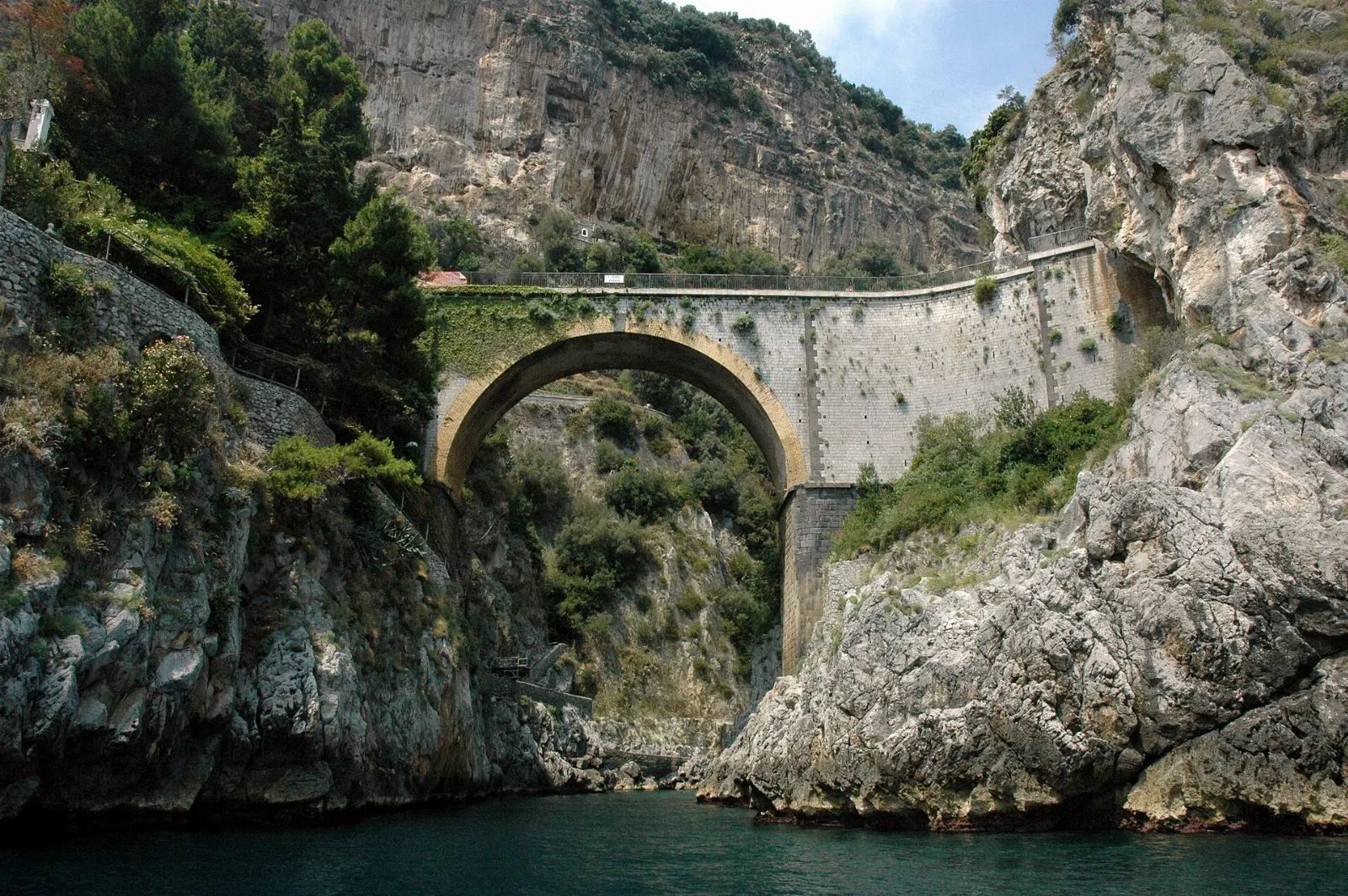
The coastal road crosses the Fiordo di Furore on a high arched bridge above a tiny beach. Photo: DimiTalen, Wikimedia Commons, CC0
Ad
Amalfi town and Atrani
Amalfi Cathedral
The Duomo di Sant'Andrea dominates Amalfi's main square from the top of a wide staircase. Its striped facade and bronze doors, cast in Constantinople in the eleventh century, reflect the republic's eastern trade links.
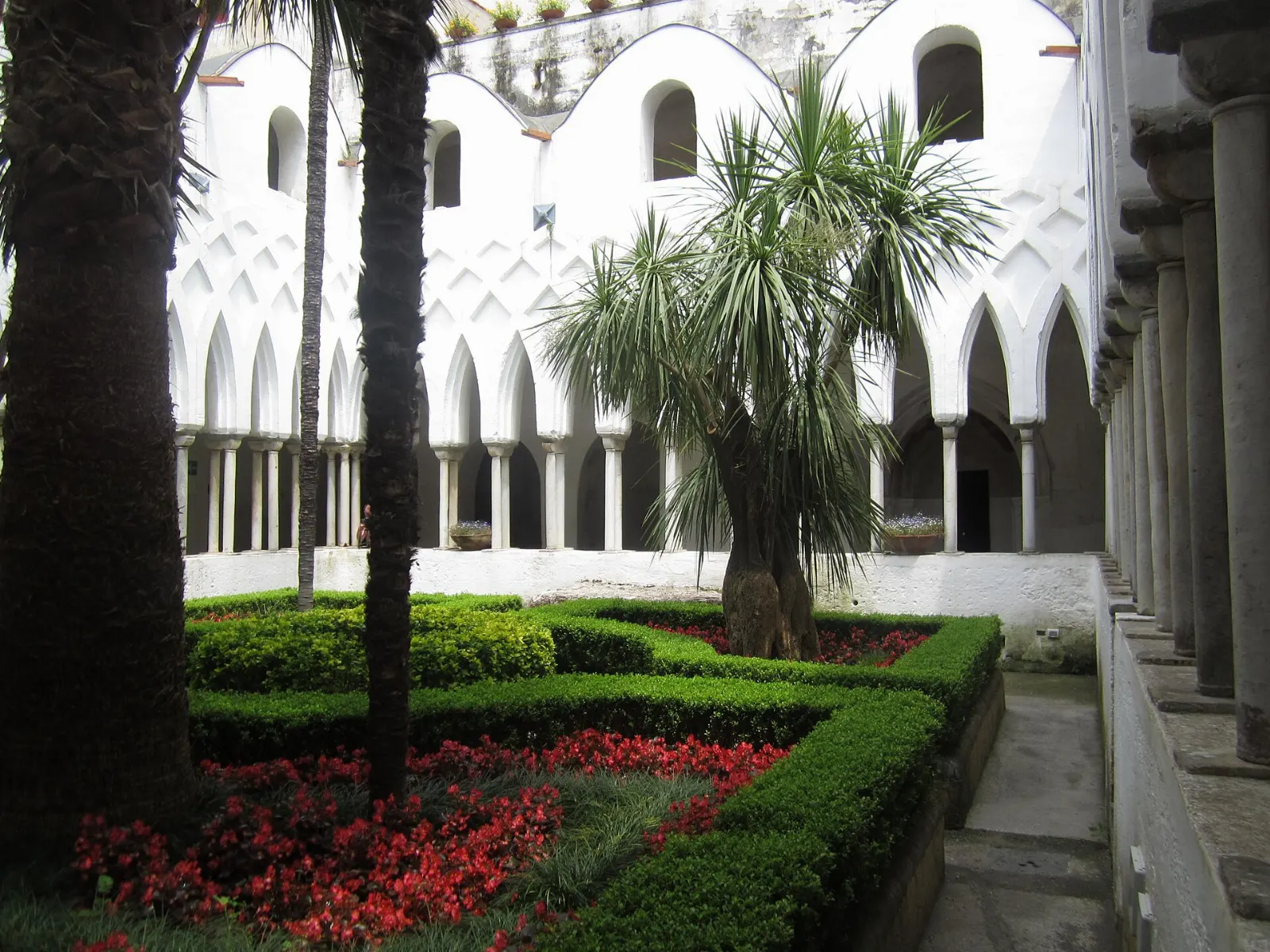
Entered through the cathedral complex, the Chiostro del Paradiso was built in the 1260s as a cemetery for Amalfi's noble families. Its slender, interlaced white arches show a clear Arab influence and frame a small garden of palms.
The Cloister of Paradise was built in the thirteenth century as a burial ground for Amalfi's leading citizens. Photo: Luca Aless, Wikimedia Commons, CC BY-SA 3.0
Paper Museum and the Valle delle Ferriere
Amalfi was one of the first places in Europe to produce paper, and the Museo della Carta, set in a medieval paper mill, shows how the town's handmade bambagina paper was made using water power from the stream that runs through the valley. Allow about forty-five minutes for a guided visit.
Atrani
Atrani is just a few minutes' walk east of Amalfi through a pedestrian tunnel or along the coast road, yet it feels like a different world. The village sits in a tight ravine around a small square, Piazza Umberto I, with a beach below and the Church of San Salvatore de Birecto, where the doges of Amalfi were once crowned.
Ravello sits on a ridge about 350 meters above the sea, and its gardens offer the coast's most famous views. Villa Rufolo, built by a wealthy merchant family in the thirteenth century, combines a Moorish-style courtyard, a tall entrance tower and terraced flower gardens overlooking the bay.
Villa Rufolo's terraced gardens look down over Minori and the Gulf of Salerno. Photo: Rigorius, Wikimedia Commons, CC BY-SA 4.0
Villa Cimbrone
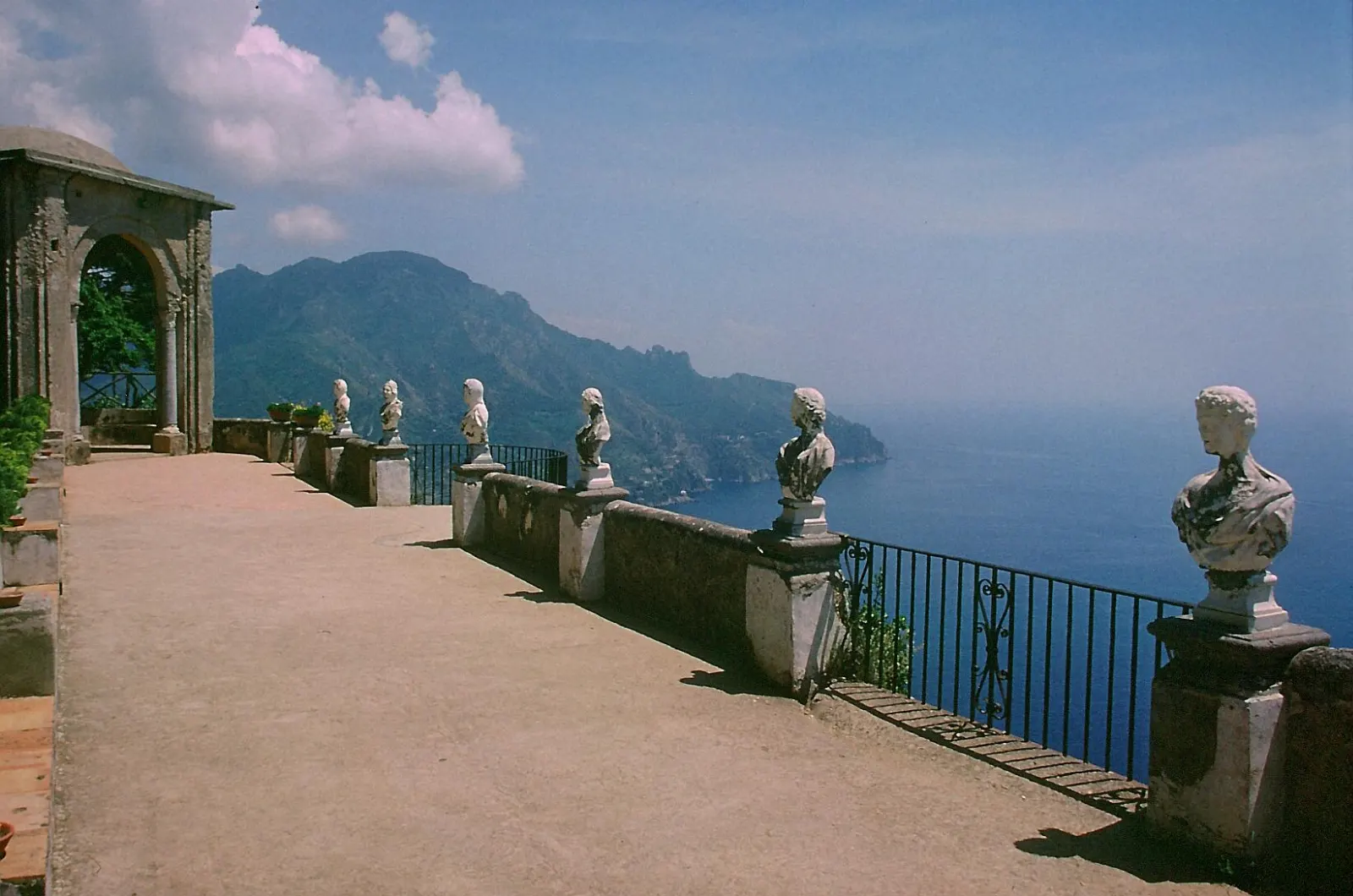
A ten to fifteen minute walk from Ravello's main square, Villa Cimbrone was transformed in the early twentieth century by an English aristocrat, Lord Grimthorpe.
The Terrace of Infinity at Villa Cimbrone is lined with eighteenth-century style marble busts. Photo: Wa at German Wikipedia, Wikimedia Commons, Public domain
Minori and Maiori
Below Ravello, Minori has the remains of a first-century Roman villa with fragments of frescoes and mosaics, a reminder that wealthy Romans also vacationed here. Next door, Maiori has the longest sandy beach on the coast and a more local, everyday feel.
Cetara and Vietri sul Mare
Toward Salerno, Cetara is a working fishing village famous for its anchovies and tuna, while Vietri sul Mare is the center of the coast's ceramic tradition.
Ad
Food and local flavors
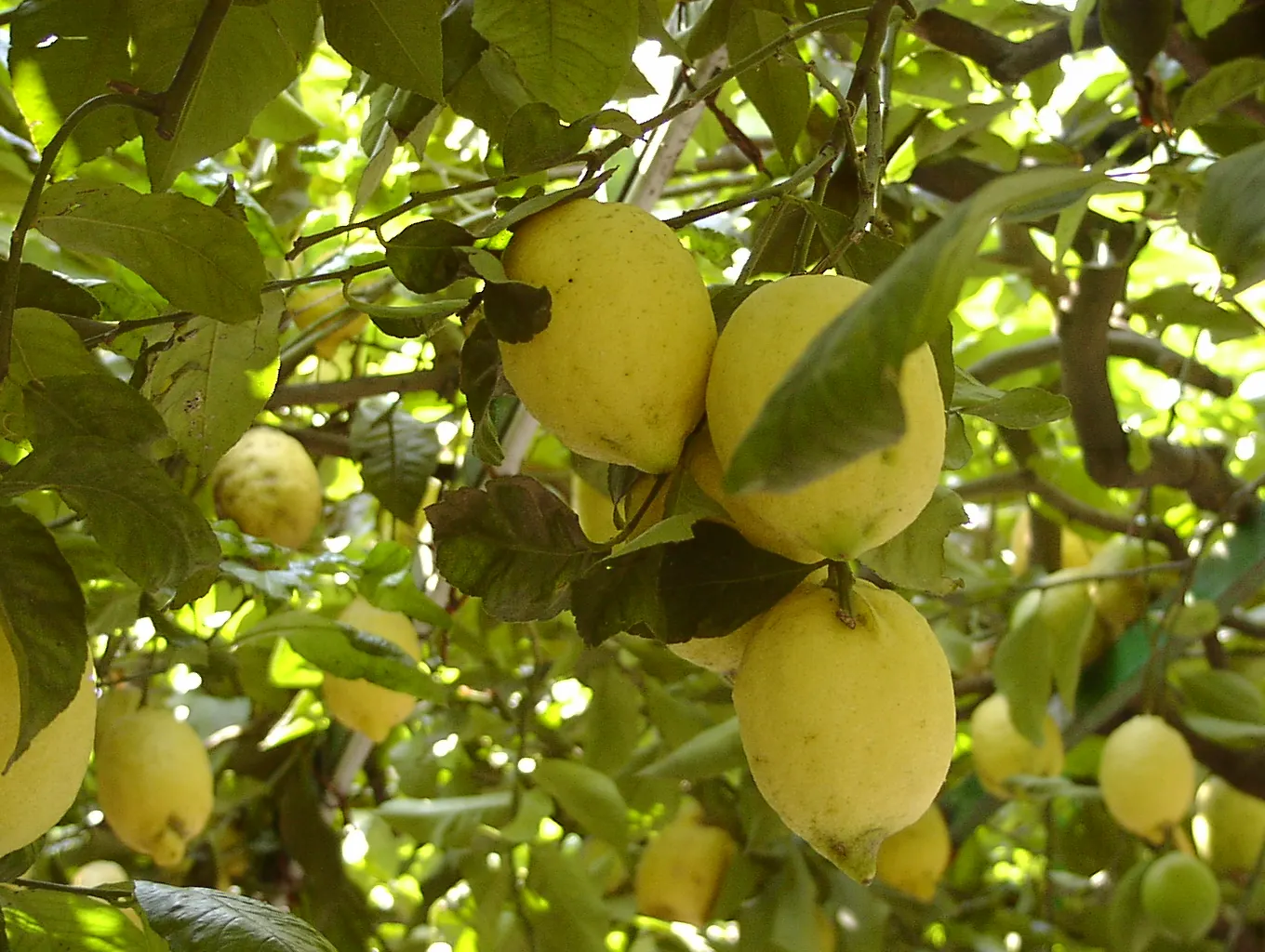
Lemons are everywhere on the Amalfi Coast. The local Sfusato Amalfitano is large, fragrant and thick-skinned, grown under chestnut-pole pergolas on steep terraces.
The Sfusato Amalfitano lemon is grown on terraced groves protected by chestnut-pole pergolas.Photo: Unknown author, Wikimedia Commons, CC BY-SA 3.0
For pasta, try scialatielli, a thick, short ribbon pasta from this region, often served ai frutti di mare with mussels, clams and shrimp.
Agerola, on the plateau above the coast, is known for its fior di latte mozzarella and provolone, and local trattorias there serve hearty mountain dishes after a hike.
Popular dishes to try in Amalfi Coast
Limoncello You will taste it in limoncello, served cold after dinner, and in the delizia al limone, a dome-shaped sponge cake filled and covered with lemon cream.Photo: Bill and Kathy, Wikimedia Commons, CC BY 2.0Sfogliatella Sfogliatella Santa Rosa, a shell-shaped pastry filled with ricotta and topped with cream and sour cherries, was first created in a convent in Conca dei Marini.Photo: Paul Stein, Wikimedia Commons, CC BY-SA 2.0Delizia al limone You will taste it in limoncello, served cold after dinner, and in the delizia al limone, a dome-shaped sponge cake filled and covered with lemon cream.Photo: dags 1974, Wikimedia Commons, CC BY 2.0Scialatielli The Sfusato Amalfitano lemon is grown on terraced groves protected by chestnut-pole pergolas.Photo: Unknown author, Wikimedia Commons, CC BY-SA 3.0For pasta, try scialatielli,…Photo: Catia Giaccherini, Wikimedia Commons, CC BY-SA 3.0
Where to stay
Positano suits travelers who want the classic look, boutique shopping and lively evenings. Expect lots of stairs and some of the highest rates on the coast.
Amalfi town is the most practical base.
Ravello appeals to couples and those who prefer quiet evenings, gardens and concerts.
Atrani, Minori and Maiori work well for families and budget-conscious travelers. Maiori's beach is the easiest for children, while Atrani puts you within walking distance of Amalfi.
Praiano is a good middle ground between Positano and Amalfi, with sunset views and a calmer pace, though you will rely on the bus.
Where to stay in Amalfi Coast
Amalfi Amalfi town is the most practical base.Photo: Paolo Costa Baldi, Wikimedia Commons, CC BY 3.0Maiori Atrani, Minori and Maiori work well for families and budget-conscious travelers.Photo: Giuseppe Milo, Wikimedia Commons, CC BY 3.0Positano Where to stayPositano suits travelers who want the classic look, boutique shopping and lively evenings.Photo: Bernard Gagnon, Wikimedia Commons, CC BY 4.0Salerno If you want to save money and do not mind longer travel, Sorrento or Salerno make workable bases with good ferry links.Photo: Daniel Ventura, Wikimedia Commons, CC BY-SA 3.0
Ad
Best time to visit
Late spring and early autumn are the sweet spot.
July and August are hot, busy and expensive. Beaches fill up, the coast road is often jammed and Positano's lanes can be shoulder to shoulder.
From November to March, many hotels and restaurants close, ferry service is reduced or suspended and the weather brings rain and rough seas, though walkers who like a quiet, local atmosphere can still enjoy it.
Getting there and getting around
Most international travelers fly into Naples International Airport. From there, you can take a bus or train toward Sorrento or Salerno and continue by ferry or bus, or book a private transfer straight to your hotel.
On the coast, ferries are the most pleasant way to travel between Salerno, Amalfi, Positano and Sorrento from spring through autumn, and some routes continue to Capri.
Driving is possible but stressful. The road is narrow and winding, parking is scarce and costly, and in recent years local authorities have applied alternating license plate restrictions on peak days, allowing vehicles with odd or even final digits on alternating dates.
Ad
A suggested itinerary
First day
Arrive in Amalfi and settle in. Visit the cathedral and Cloister of Paradise in the late afternoon, then walk through the tunnel to Atrani for an aperitivo in its little square and dinner back in Amalfi.
Second day
Take an early bus to Ravello. Tour Villa Rufolo, wander to Villa Cimbrone for the Terrace of Infinity, and have lunch in town.
Third day
Catch a morning bus to Bomerano and hike the Path of the Gods to Nocelle.
Fourth day
Choose a slower day. Walk the Valle delle Ferriere in the morning and visit the Paper Museum, or take a ferry to Cetara for lunch with colatura di alici and continue to Vietri sul Mare to browse ceramics.
Practical tips
Book summer accommodation many months ahead, especially in Positano and Ravello.
Pack light and choose a soft bag; many hotels are reached by stairs and porters are not always available.
Buy bus tickets before boarding and expect standing room only in July and August.
Check ferry timetables daily, since rough seas can cancel sailings without much warning.
Wear proper walking shoes for hikes and stairways, and carry water on the Path of the Gods.
Cover shoulders and knees when entering churches, including the Amalfi Cathedral.
Carry some cash for small cafes, beach clubs and bus tickets, though cards are widely accepted.