WiserMap — Choose wisely. Connect locally.Choose wisely. Connect locally.Add your business
Chiang Mai, Thailand · Travel guide

Chiang Mai Thailand Temples Khao Soi and Doi Suthep

Chiang Mai is the cultural capital of northern Thailand, a relaxed city of moats, temples and mountain views that feels a world away from the intensity of Bangkok.

By WiserMap TravelUpdated October 2026 8 places11 min read
FacebookXLinkedIn

This guide covers the best places to visit in Chiang Mai, from the Old City temples to the mountain shrine on Doi Suthep, the weekend walking street markets and a trip up Thailand's highest peak.

At a glance Chiang Mai
  1. Best timeNovember to early February, when skies are clear and nights are cool.
  2. How longFour days for the city and Doi Suthep; a week to add Doi Inthanon and the countryside.
  3. Getting thereFly into Chiang Mai International Airport, close to the Old City, or take the overnight train from Bangkok.

Why visit Chiang Mai

Chiang Mai blends city comforts with a slower pace. Lanna culture, with its own architecture, script, cuisine and festivals, is everywhere: in the teak temple halls with sweeping layered roofs, in curry noodles found nowhere else in the country, and in a calendar of celebrations that culminates each November in the Yi Peng festival of lights.

The city is also a base for nature and crafts. Within an hour you can reach jungle waterfalls, hill tribe villages, ethical elephant sanctuaries and Doi Inthanon, the highest mountain in Thailand.

Temples of the Old City

The Old City is a square about a mile and a half on each side, enclosed by a moat and remnants of brick walls. Its quiet lanes are best explored on foot or by bicycle.

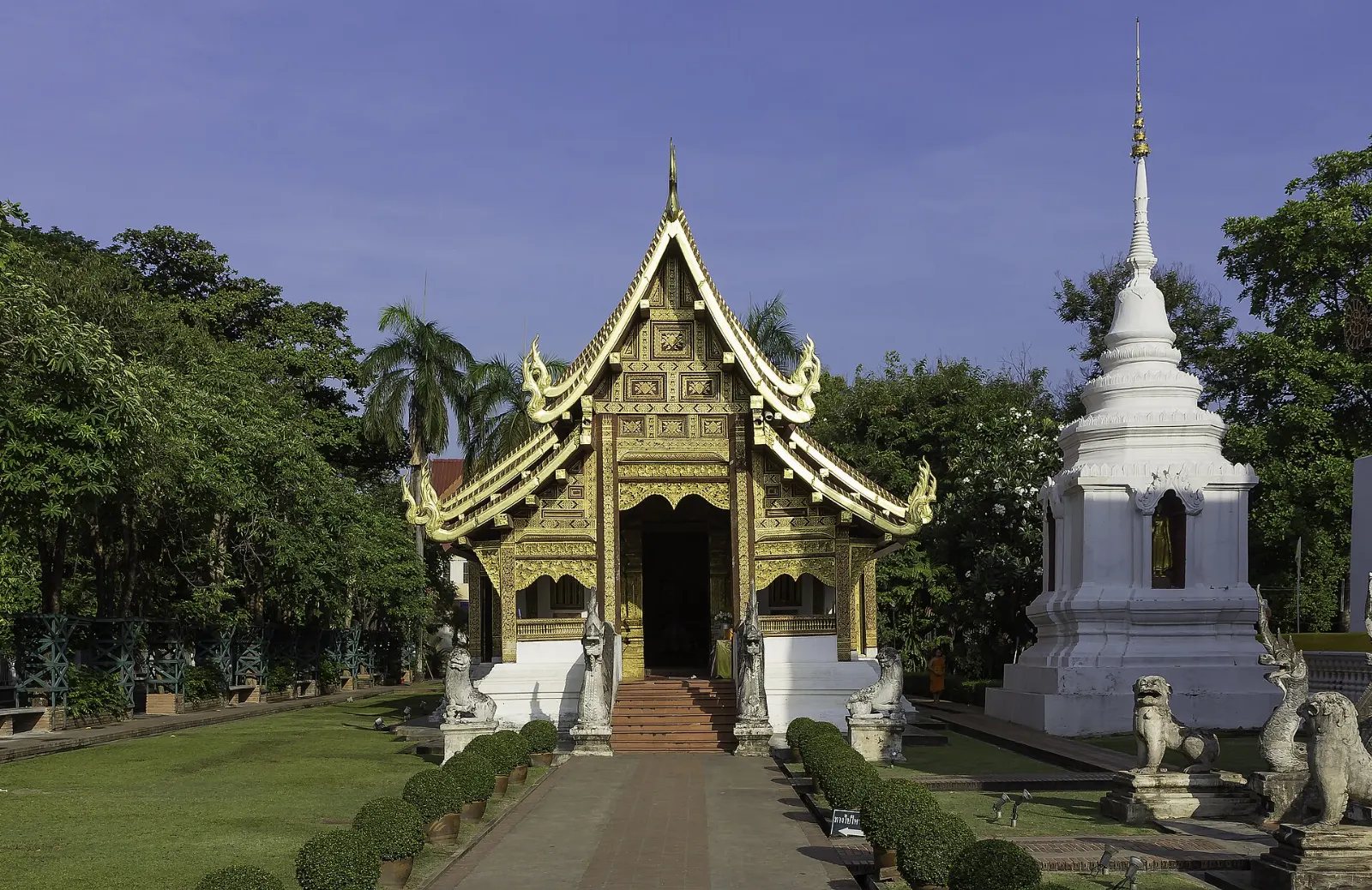
The Lanna-style viharn of Wat Phra Singh with its layered roofs and gilded gables, Chiang Mai, Thailand

Wat Phra Singh

At the western end of Ratchadamnoen Road, Wat Phra Singh is one of the most important temples in the city.

Wat Phra Singh houses the Phra Buddha Sihing image in the small Viharn Lai Kham. Photo: Stefan Fussan, Wikimedia Commons, CC BY-SA 3.0

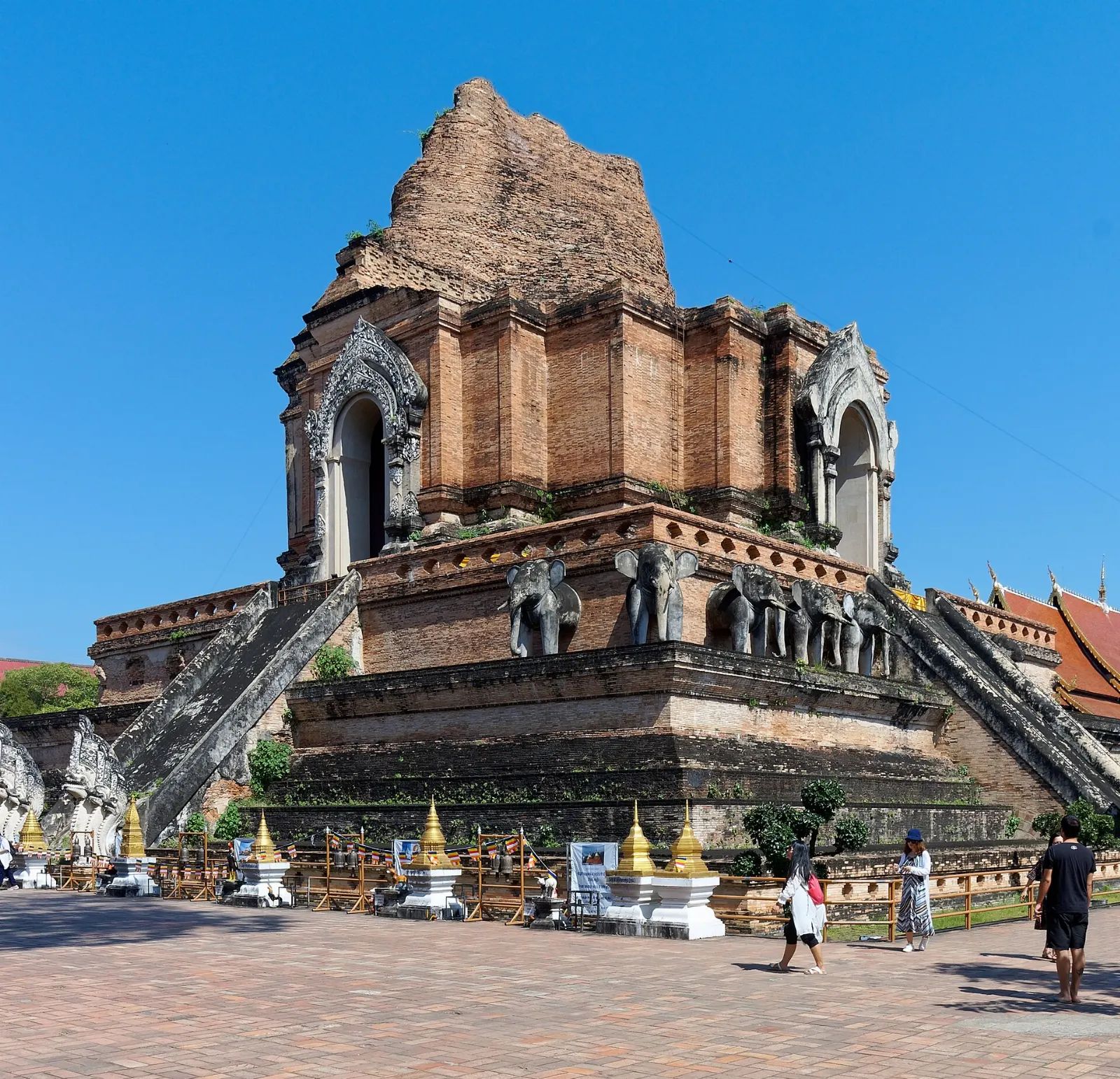
The massive ruined brick chedi of Wat Chedi Luang with naga staircases, Chiang Mai, Thailand

Wat Chedi Luang

Near the center of the Old City, Wat Chedi Luang is dominated by an enormous brick chedi built in the fourteenth and fifteenth centuries and partly toppled, according to most accounts, by an earthquake in the sixteenth century.

The great chedi of Wat Chedi Luang was partly destroyed in the sixteenth century and still dominates the Old City. Photo: Jakub Hałun, Wikimedia Commons, CC BY-SA 4.0

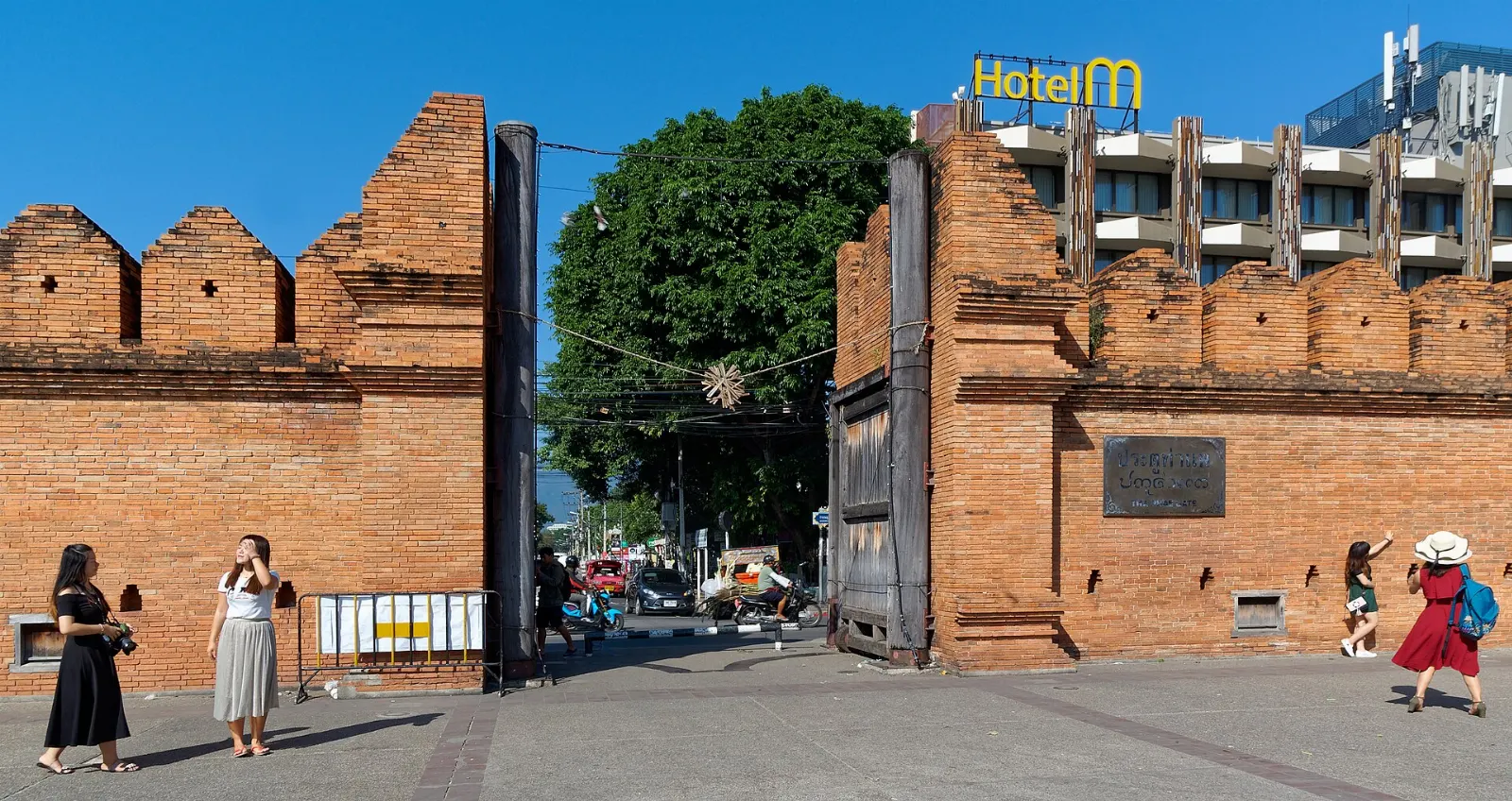
The brick walls of Tha Phae Gate on the eastern side of the Old City, Chiang Mai, Thailand

Tha Phae Gate and the city walls

Tha Phae Gate, on the eastern side of the Old City, is the best known of the restored gates and a busy meeting point, with pigeons, street performers and occasional festivals in the square in front. From here Tha Phae Road leads east toward the river and the market districts.

Tha Phae Gate is the best known of the restored gates in Chiang Mai's old city wall. Photo: Jakub Hałun, Wikimedia Commons, CC BY-SA 4.0

Doi Suthep and the forest temples

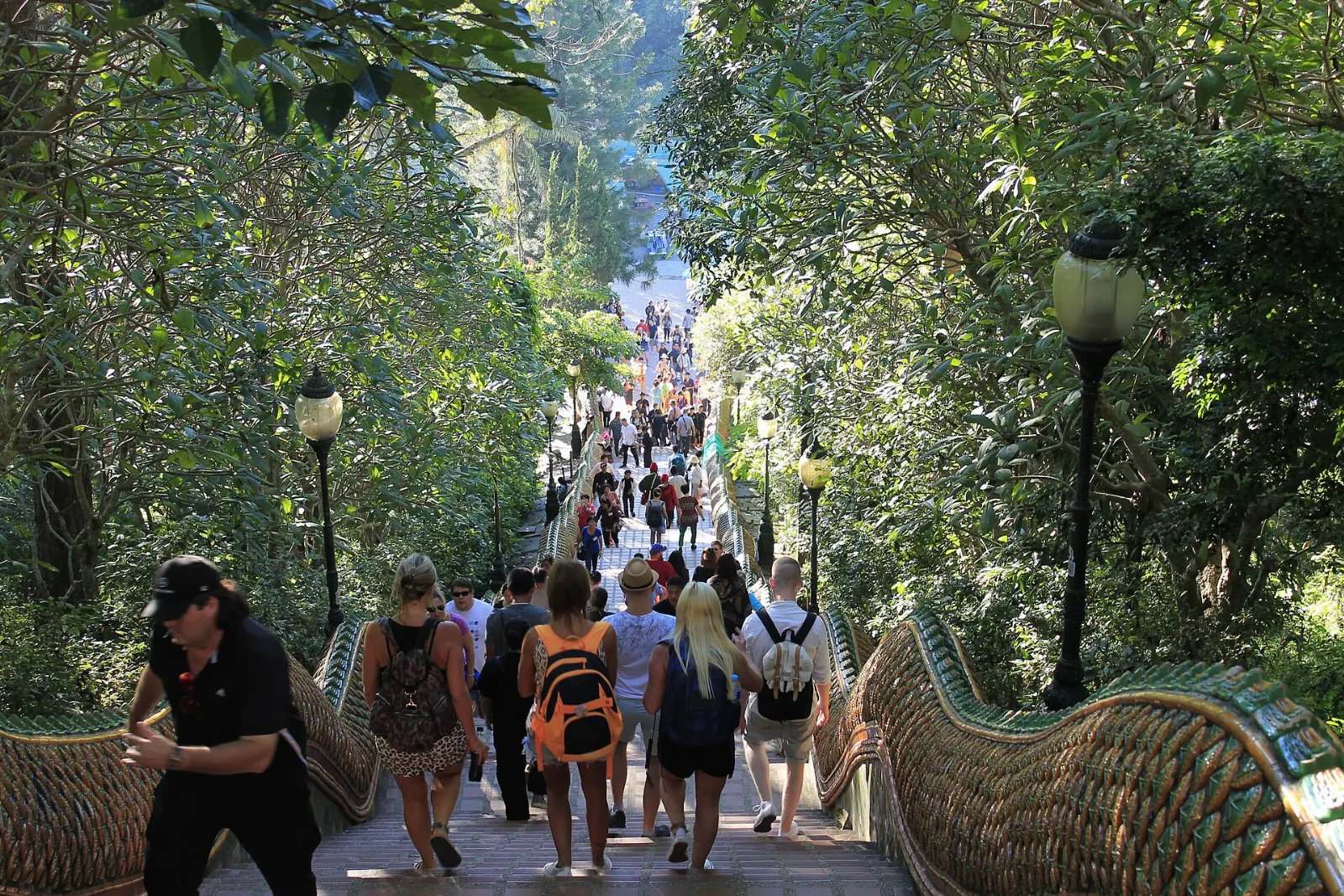
The long staircase to Wat Phra That Doi Suthep lined with serpent balustrades, Chiang Mai, Thailand

Wat Phra That Doi Suthep

Perched on the slopes of Doi Suthep, about fifteen kilometers west of the city, this temple is the most sacred site in northern Thailand. According to legend, a white elephant carrying a relic of the Buddha climbed the mountain and stopped here, and the golden chedi was built to enshrine it.

Above the temple, the road continues to Bhubing Palace, the royal winter residence, whose gardens are open to visitors when the royal family is not in residence, and to the Hmong village of Doi Pui.

A long staircase flanked by naga serpents climbs to the temple on Doi Suthep. Photo: Sgroey, Wikimedia Commons, CC BY-SA 4.0

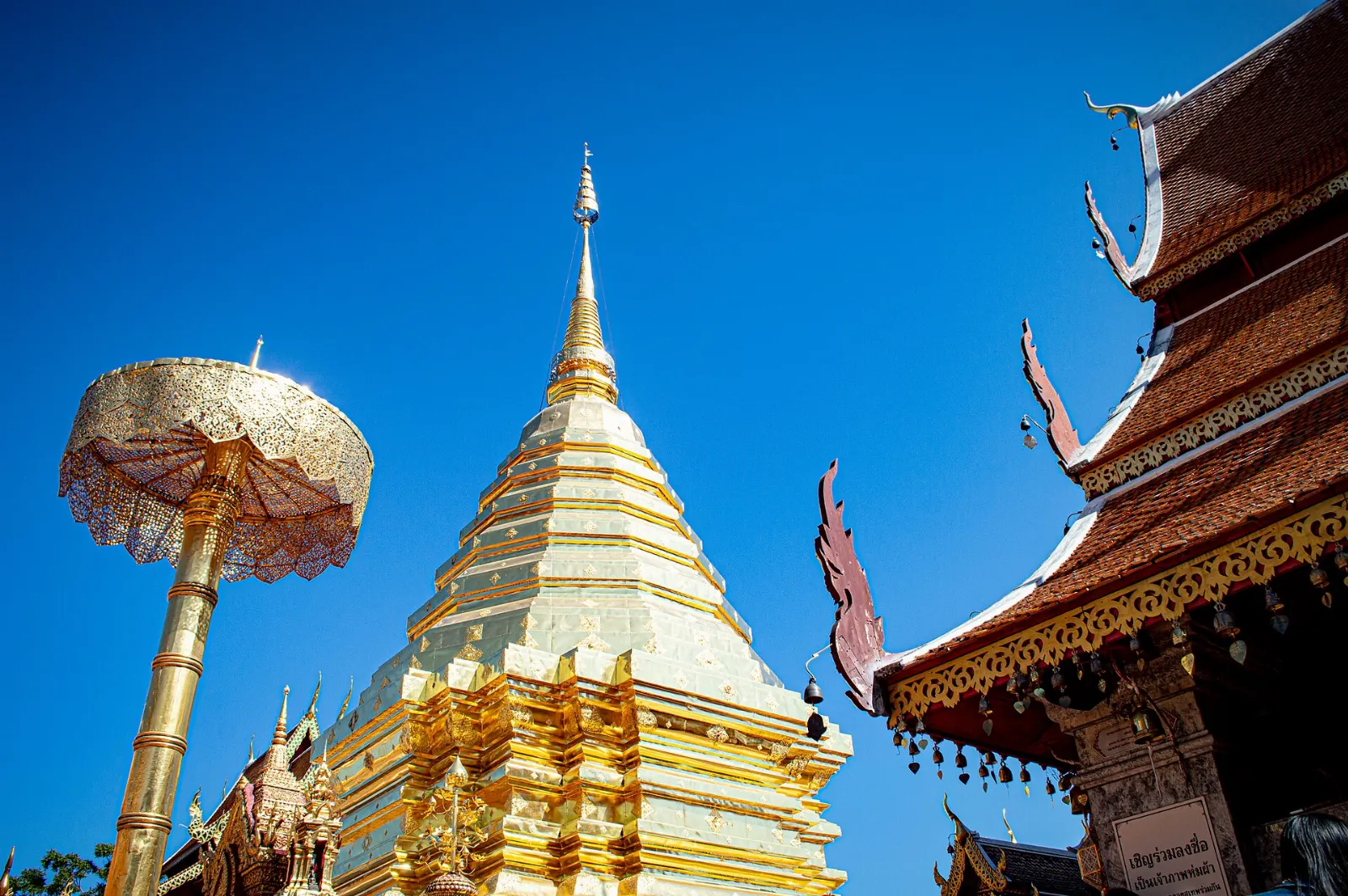
Brick tunnels with Buddha images in niches at Wat Umong forest temple, Chiang Mai, Thailand

Wat Umong

Hidden in a forest at the foot of Doi Suthep, Wat Umong was founded in the late thirteenth century and is known for its brick tunnels, built so monks could meditate in cool, quiet surroundings.

Wat Umong is known for brick tunnels built into a hillside for meditation. Photo: Chainwit., Wikimedia Commons, CC BY 4.0

Rows of white memorial chedis at Wat Suan Dok with Doi Suthep behind, Chiang Mai, Thailand

Wat Suan Dok

Just west of the Old City, Wat Suan Dok is known for its cluster of whitewashed chedis that hold the ashes of Chiang Mai's royal family, with Doi Suthep rising behind. Its large open-sided assembly hall houses a bronze Buddha image.

The white chedis at Wat Suan Dok hold the ashes of members of Chiang Mai's royal family. Photo: Ritthichai Siangdee, Wikimedia Commons, CC BY-SA 4.0

Markets and neighborhoods

Crowds walking between craft stalls on Ratchadamnoen Road during the Sunday Walking Street market, Chiang Mai, Thailand

Sunday Walking Street

Every Sunday afternoon and evening, Ratchadamnoen Road from Tha Phae Gate to Wat Phra Singh closes to traffic and fills with stalls selling handicrafts, textiles, carved soap, art and street food. Temple courtyards along the route turn into food courts.

The Sunday Walking Street market fills Ratchadamnoen Road in the Old City every Sunday evening. Photo: Takeaway, Wikimedia Commons, CC BY-SA 4.0
Saturday Walking Street on Wua Lai Road

South of the Old City, Wua Lai Road is the traditional silversmithing street, and on Saturday evenings it becomes a walking market similar to the Sunday one but a little calmer.

Warorot Market and the Night Bazaar

Warorot Market, known locally as Kad Luang, is the city's main market, near the Ping River. Its floors hold dried goods, northern sausages, chili pastes, fabrics and household items, and the surrounding streets form a small Chinatown.

Nimmanhaemin

West of the Old City near Chiang Mai University, Nimmanhaemin Road and its numbered side lanes, called soi, are the city's trendy district, packed with coffee shops roasting northern Thai beans, galleries, boutiques and bars. Allow an afternoon or evening.

Day trips from Chiang Mai

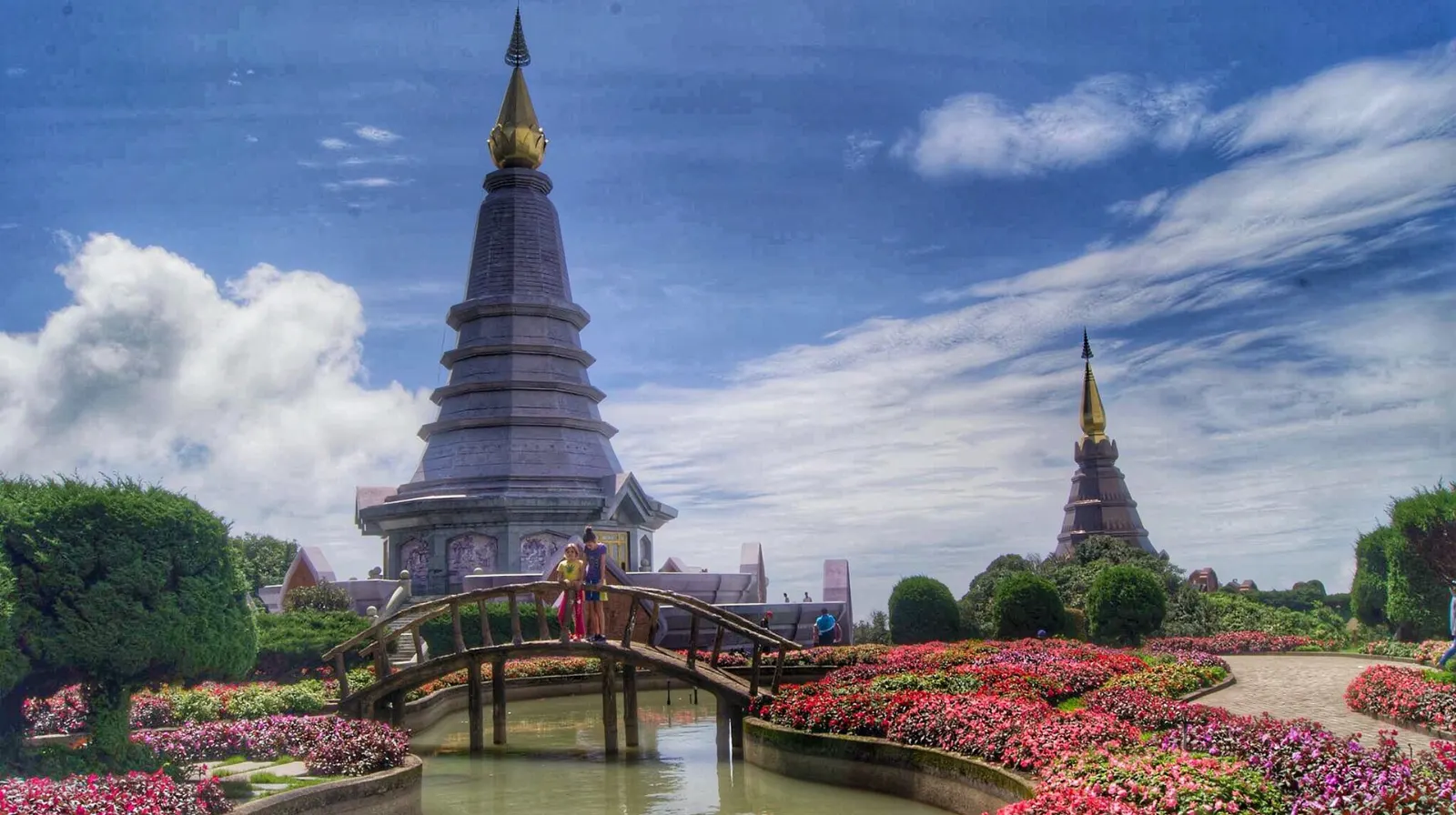
The twin royal chedis on Doi Inthanon surrounded by flower gardens and mountain mist, Chiang Mai, Thailand

Doi Inthanon National Park

About two hours southwest of the city, Doi Inthanon is the highest mountain in Thailand. The park holds cloud forest, waterfalls such as Wachirathan and Mae Ya, the Kew Mae Pan nature trail and the twin royal chedis near the summit, surrounded by flower gardens. Allow a full day.

The twin royal chedis on Doi Inthanon were built to honor King Bhumibol and Queen Sirikit. Photo: ElliotJW, Wikimedia Commons, CC BY-SA 4.0
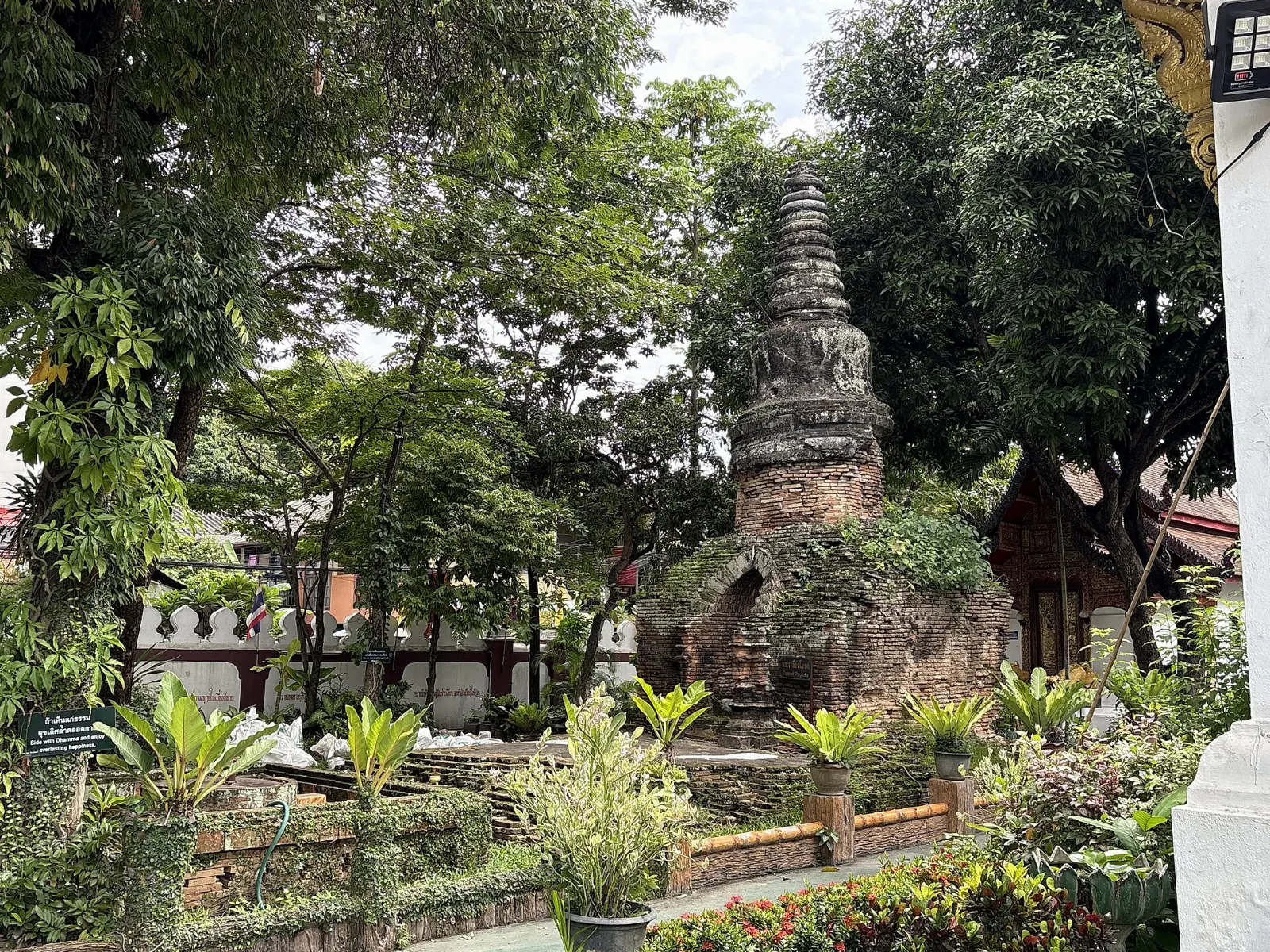
Elephant sanctuaries and craft villages

Many elephant camps operate around Chiang Mai. If you want to see elephants, choose a sanctuary that does not offer riding or performances and lets the animals roam, feed and bathe naturally. East of the city, the road to San Kamphaeng passes workshops making silk, lacquerware, silver and the painted paper umbrellas of Bo Sang.

Food and local flavors

Northern Thai food is earthier and less sweet than the cooking of central Thailand, often eaten with sticky rice rolled into balls by hand.

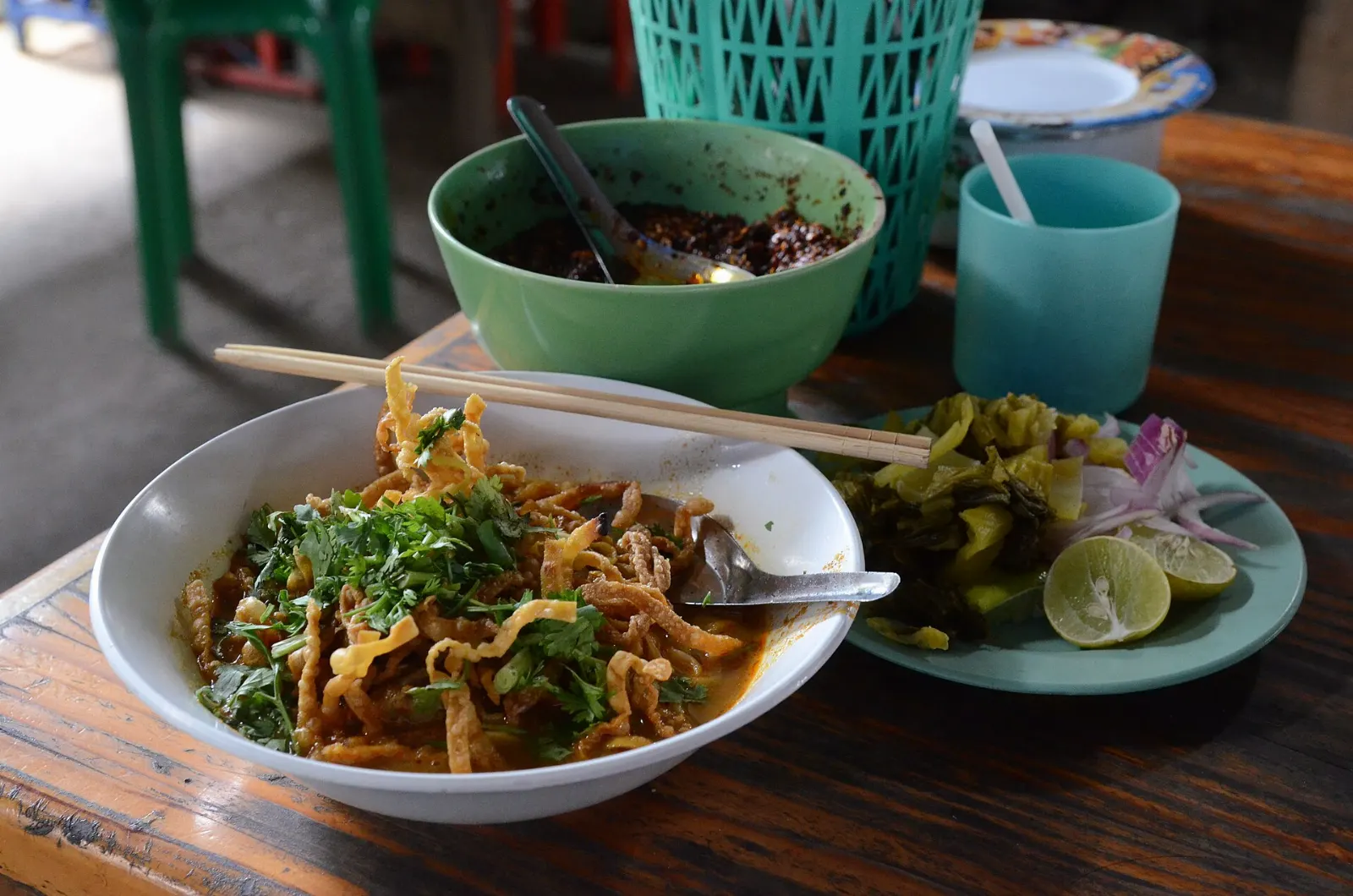
A bowl of khao soi curry noodle soup topped with crispy fried noodles, Chiang Mai, Thailand
Khao soi, a coconut curry noodle soup topped with crispy noodles, is the signature dish of Chiang Mai.Photo: Takeaway, Wikimedia Commons, CC BY-SA 3.0

The Sunday and Saturday walking streets, Warorot Market and the night market at Chang Phueak Gate, on the north side of the Old City, are good places to graze. For a traditional experience, try a khantoke dinner, where several northern dishes are served on a low pedestal tray, often with dance performances.

Popular dishes to try in Chiang Mai

Khao soi in Chiang Mai, Thailand
Khao soi The signature dish is khao soi, egg noodles in a rich coconut curry broth with chicken or beef, topped with crispy fried noodles and served with pickled mustard greens,…Photo: Takeaway, Wikimedia Commons, CC BY-SA 3.0
Sai ua in Chiang Mai, Thailand
Sai ua Look also for sai ua, a herb-packed grilled pork sausage; nam prik noom, a smoky green chili dip with pork cracklings and vegetables; gaeng hang lay, a Burmese-influenced pork…Photo: Takeaway, Wikimedia Commons, CC BY-SA 3.0
Khantoke in Chiang Mai, Thailand
Khantoke For a traditional experience, try a khantoke dinner, where several northern dishes are served on a low pedestal tray, often with dance performances.Photo: Shesmax, Wikimedia Commons, CC BY-SA 4.0
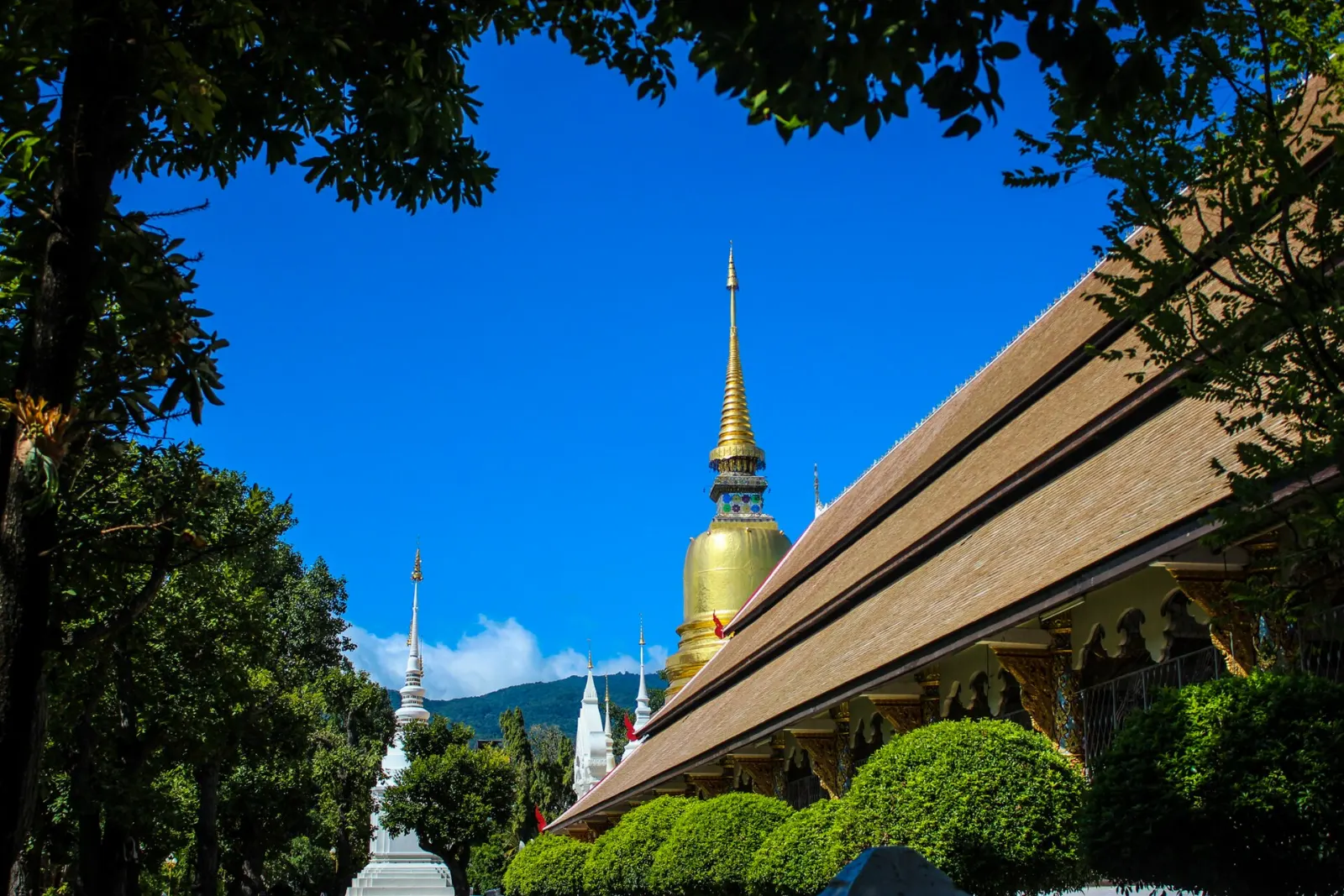
Where to stay

The Old City puts you within walking distance of the main temples and the Sunday market, with plenty of guesthouses and boutique stays, which suits first-time visitors. The Night Bazaar and riverside area, east of the walls, holds larger hotels and riverside properties, convenient for shopping and evening dining.

Where to stay in Chiang Mai

Old City, Chiang Mai, Thailand
Old City Where to stayThe Old City puts you within walking distance of the main temples and the Sunday market, with plenty of guesthouses and boutique stays, which suits first-time…Photo: CEphoto, Uwe Aranas, Wikimedia Commons, CC BY-SA 3.0
Mae Rim, Chiang Mai, Thailand
Mae Rim Those seeking calm can find resorts in the rice fields and hills of Mae Rim and along the Mae Ping, though you will need transport into town.Photo: Maxim Cruiser, Wikimedia Commons, CC BY 3.0
Mae Ping, Chiang Mai, Thailand
Mae Ping Those seeking calm can find resorts in the rice fields and hills of Mae Rim and along the Mae Ping, though you will need transport into town.Photo: CEphoto, Uwe Aranas, Wikimedia Commons, CC BY-SA 4.0
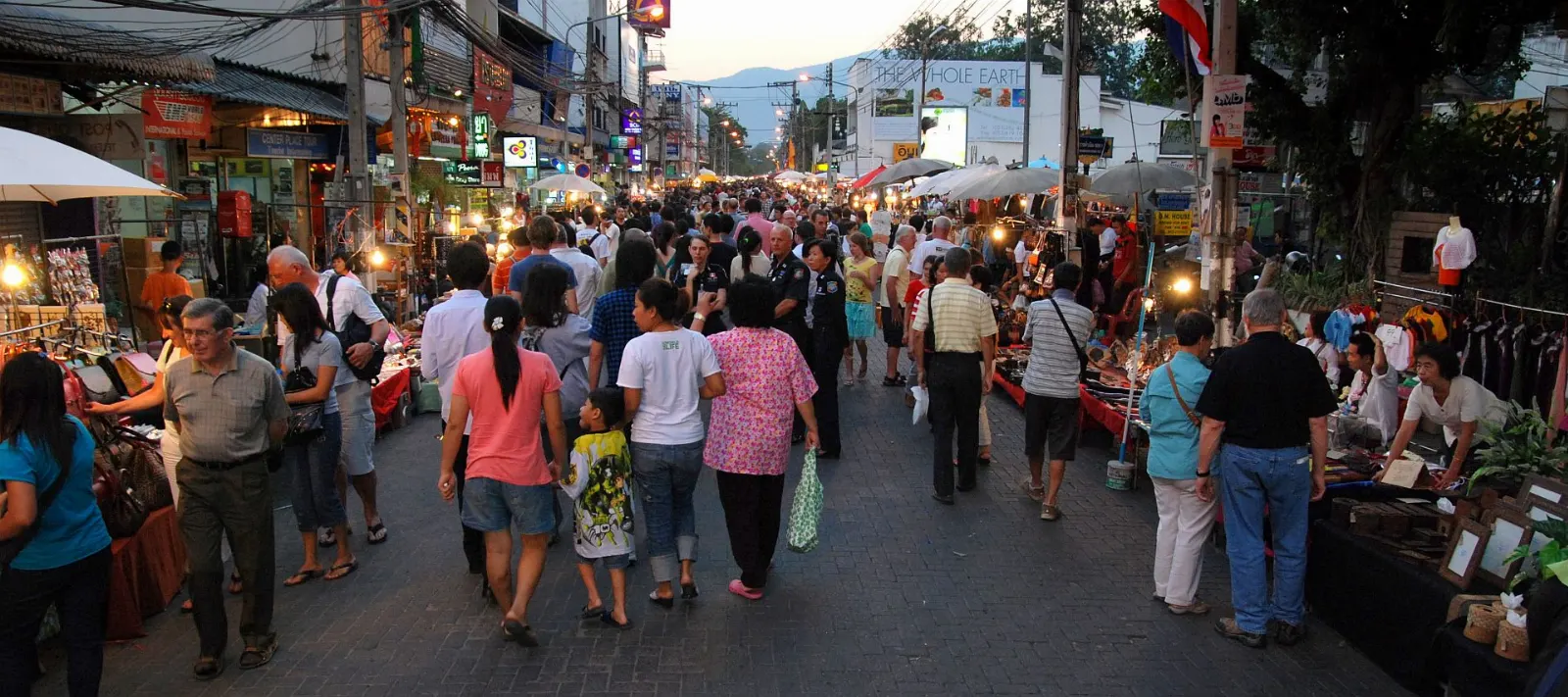
Chiang Mai old town, Chiang Mai, Thailand
Chiang Mai old town One of the best areas to base yourself in Chiang Mai.Photo: Bjørn Erik Pedersen, Wikimedia Commons, CC BY-SA 3.0

Best time to visit Chiang Mai

The cool, dry season from November to early February is the most pleasant, with sunny days and cool nights and mornings, especially in the mountains.

From about late February to April, agricultural burning and forest fires often bring heavy smoke and poor air quality to the north, sometimes among the worst in the world; travelers with respiratory conditions may prefer to avoid this period.

Getting there and getting around

Chiang Mai International Airport is only a few kilometers southwest of the Old City, with frequent flights from Bangkok and some international routes; a taxi or ride-hailing car into town takes about fifteen minutes.

The red songthaews, shared pickup trucks known as rot daeng, are the classic way to get around; flag one down, tell the driver your destination and agree on the fare.

A suggested itinerary

First day

Explore the Old City on foot, starting with Wat Phra Singh, then Wat Chedi Luang and its monk chat.

Second day

Head up Doi Suthep early to see the temple before the crowds, then continue to Bhubing Palace or the Hmong village.

Third day

Take a morning cooking class that begins with a market tour, then visit the craft workshops of Bo Sang and San Kamphaeng in the afternoon.

Fourth day

Spend a full day in Doi Inthanon National Park, visiting the waterfalls, the twin royal chedis and the summit area, or choose an ethical elephant sanctuary instead.

Practical tips

  • Cover shoulders and knees at temples, remove your shoes before entering halls, and observe signs restricting women from some sacred areas.
  • Check air quality before booking a trip between February and April, and pack a well-fitting mask if you travel then.
  • Agree on songthaew fares before you get in, or use a ride-hailing app.
  • Only ride a scooter if you hold the right license and wear a helmet; insurance may not cover you otherwise.
  • Choose elephant experiences that do not involve riding, performances or chains.
  • Carry small notes for markets, songthaews and temple donations, as many stalls are cash only.
Chiang MaiWISERMAP PLACEChiang Mai: photos, reviews & things to doSee traveler photos and reviews, or share your own →

More places to visit

All travel guides →