Samarkand Uzbekistan Registan Shah-i-Zinda and Plov
Few cities carry their name the way Samarkand does. For more than two thousand years it sat on the trade routes linking China, Persia and the Mediterranean, and in the late 14th century Timur, known in the West as Tamerlane, made it the capital of an empire and filled it with tiled domes, soaring portals and vast courtyards.
By WiserMap TravelUpdated October 20269 places10 min read
This guide walks you through the places that make a visit worthwhile, from the Registan and the mausoleum lane of Shah-i-Zinda to the dusty mound of the ancient city, the bazaar where locals buy their bread, and a day trip to Timur's birthplace.
At a glance Samarkand
Best timeApril to early June and September to October, when days are warm rather than scorching.
How longTwo full days for the main monuments, three or four with Shahrisabz and slower evenings.
Getting thereHigh-speed Afrosiyob trains from Tashkent and Bukhara, or flights into Samarkand airport.
Ad
Why visit Samarkand
Samarkand is one of the rare places where the grand architecture of the Silk Road survives at full scale. The historic city is inscribed by UNESCO, and its monuments are not scattered ruins but complete ensembles you can walk into: madrasah courtyards ringed with student cells, a mausoleum with a gilded interior, a necropolis where every doorway is wrapped in glazed tile.
The city also rewards curiosity beyond its postcards. The mound of Afrosiab holds the remains of the settlement that Alexander the Great captured in 329 BC and that Genghis Khan destroyed in 1220.
The Registan and Timur's mausoleum
The southern cluster of sights sits within an easy walk of each other, linked by park paths and wide boulevards. Start here, because it sets the scale for everything else.
Registan
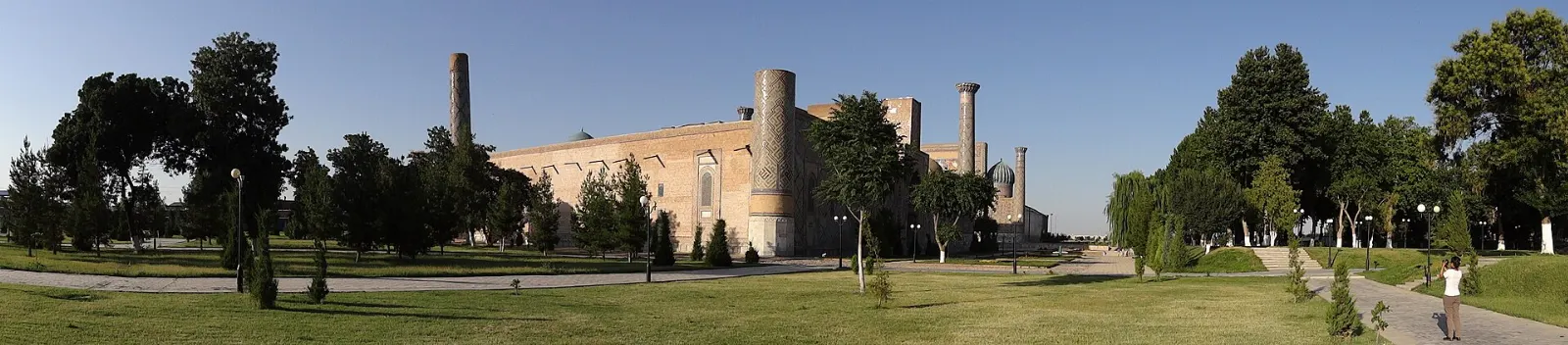
The Registan was the city's main square from Timurid times, and today three madrasahs face it on three sides. The Ulugh Beg Madrasah on the west, completed in 1420, is the oldest.
Allow two to three hours to explore the interiors properly, then come back after dark when the facades are lit and the square fills with families.
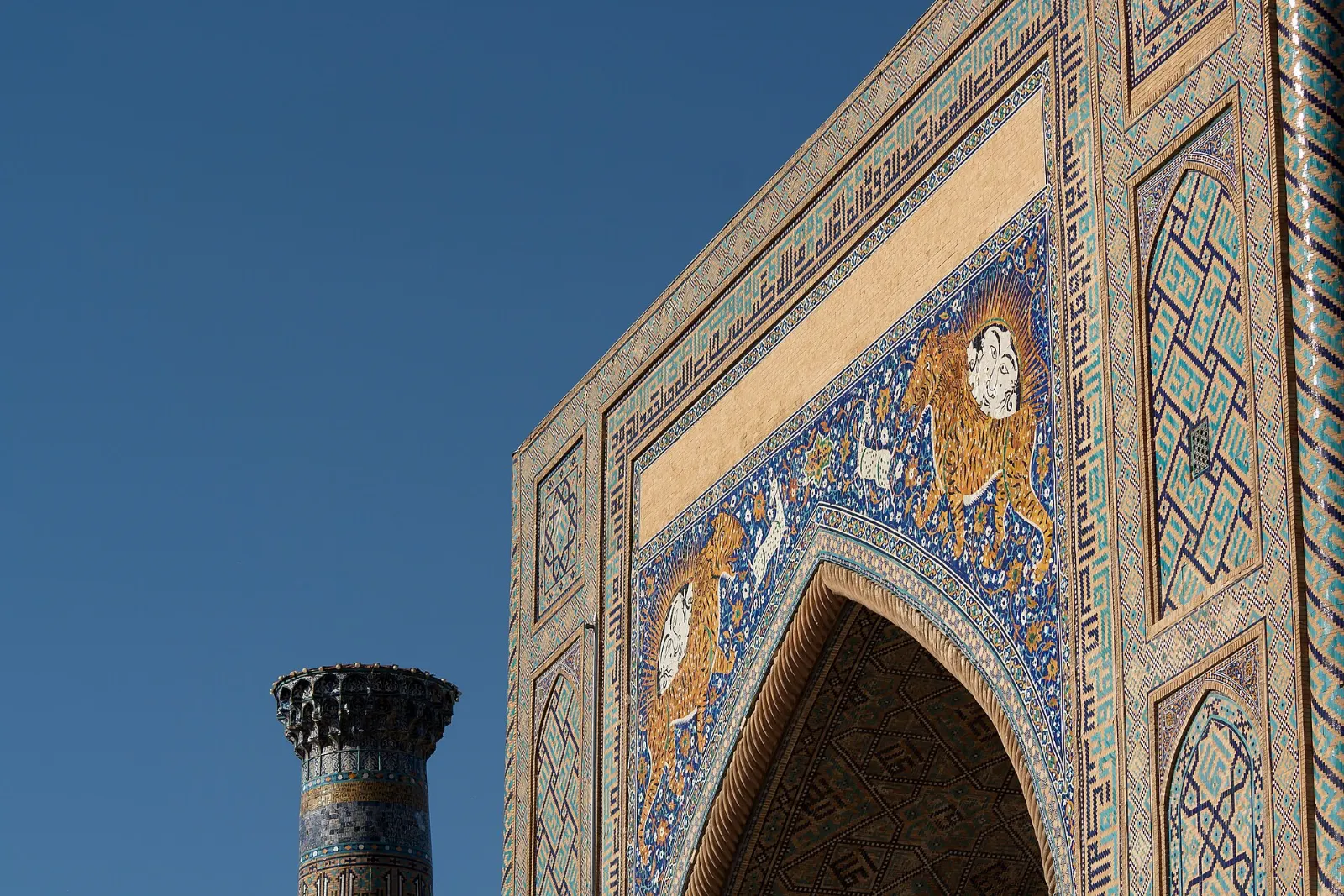
The portal of the Sher-Dor Madrasah shows striped tigers and sun faces, an unusual choice of figurative decoration. Photo: Ekrem Canli, Wikimedia Commons, CC BY-SA 3.0
Gur-e-Amir
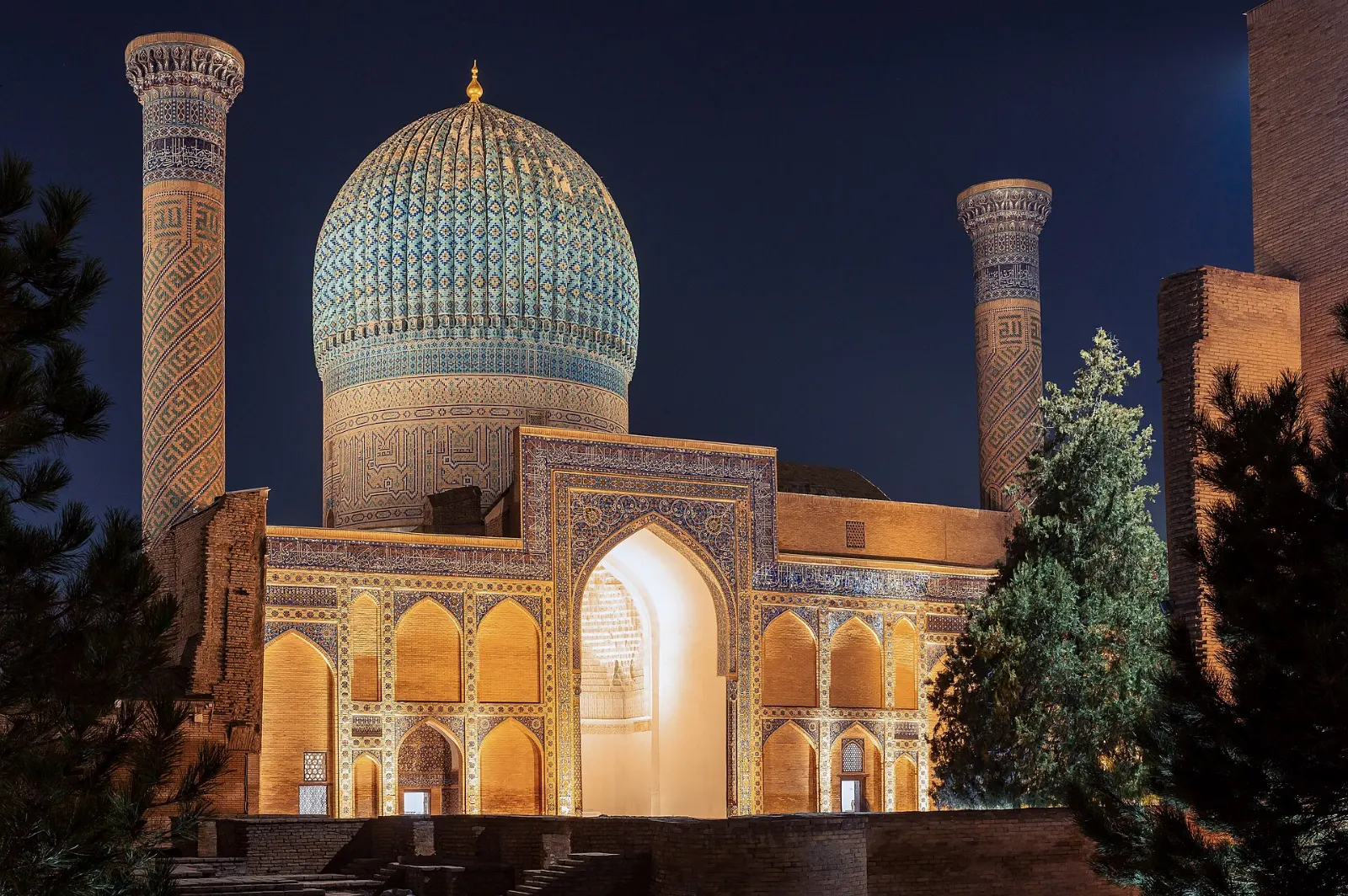
A short walk southwest of the Registan, Gur-e-Amir is the mausoleum where Timur was buried in 1405. It was originally intended for his grandson Muhammad Sultan, and it later became the family crypt of the dynasty, including Ulugh Beg.
Plan on about an hour. Visit in late afternoon, then stay for the evening lighting, which is particularly fine here.
Gur-e-Amir became the burial place of Timur and several of his descendants, including Ulugh Beg. Photo: Arina Pan, Wikimedia Commons, CC BY-SA 4.0
Ad
Bibi-Khanym, the bazaar and Shah-i-Zinda
From the Registan, a pedestrian street lined with souvenir shops and cafes leads northeast to the second cluster of sights. The walk takes around twenty minutes and is pleasant at any time of day.
Bibi-Khanym Mosque
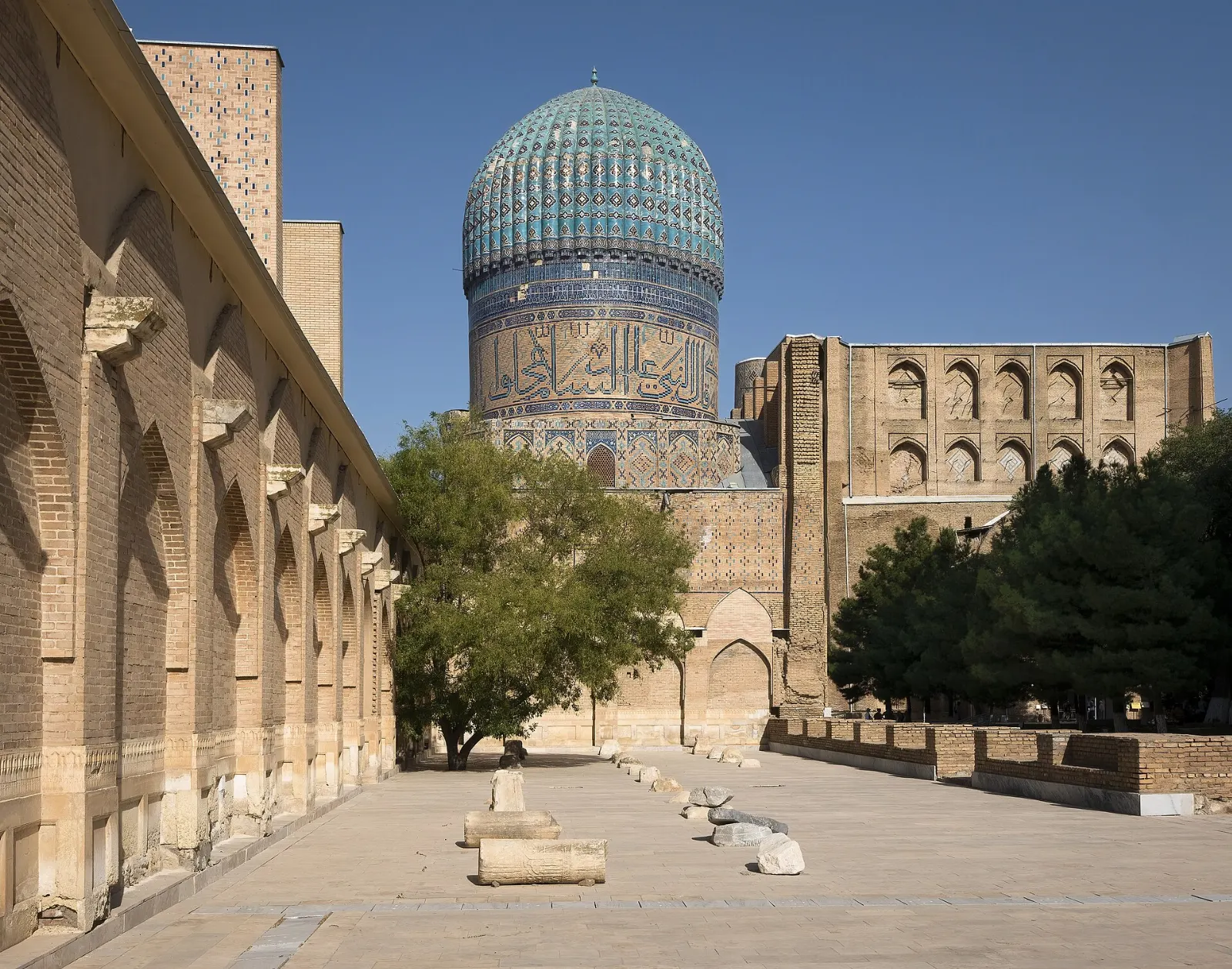
Timur ordered this enormous congregational mosque after his campaign in India, using captured wealth and craftsmen brought from across his empire.
Allow forty-five minutes to an hour. Much of the exterior can be appreciated from the street, so if you are short on time, you can view it from outside and spend longer elsewhere.
The Bibi-Khanym Mosque was raised after Timur's Indian campaign of 1398 and partly rebuilt from the 1970s. Photo: Petar Milošević, Wikimedia Commons, CC BY-SA 4.0
Siyob Bazaar
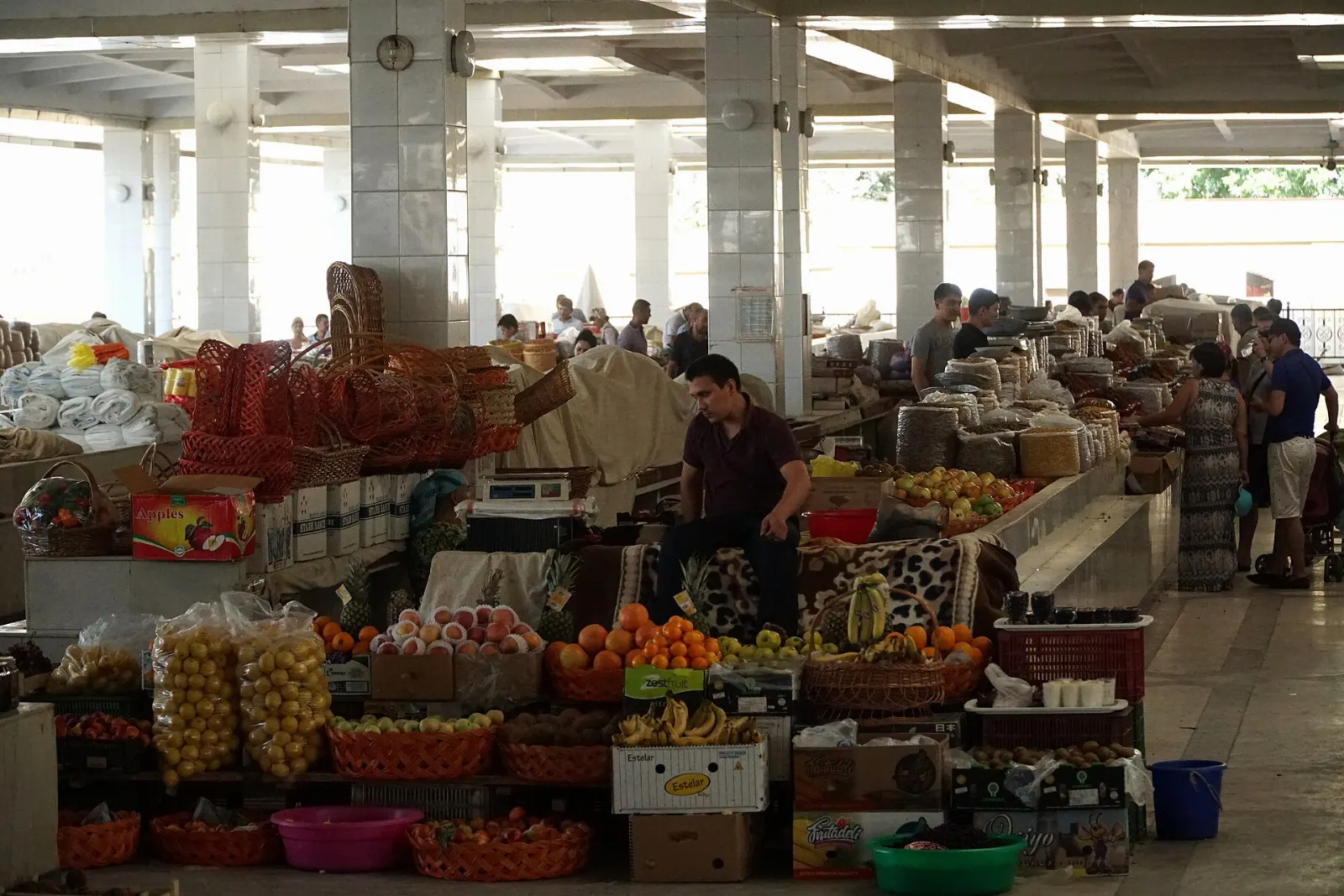
Right beside the mosque, Siyob Bazaar is where Samarkand shops.
Give it an hour, ideally in the morning when it is busiest and freshest. Bargaining is expected, vendors often offer tastes, and the bazaar is generally closed on Mondays, so plan accordingly.
Siyob Bazaar, beside the Bibi-Khanym Mosque, is the city's largest and best known market. Photo: Adam Harangozó, Wikimedia Commons, CC BY-SA 4.0
Shah-i-Zinda
A short walk north of the bazaar, past the Hazrat Khizr Mosque on its hilltop, a flight of stairs climbs into Shah-i-Zinda, a narrow street of mausoleums built mostly in the 14th and 15th centuries for Timur's relatives, generals and clergy.
Allow one to two hours.
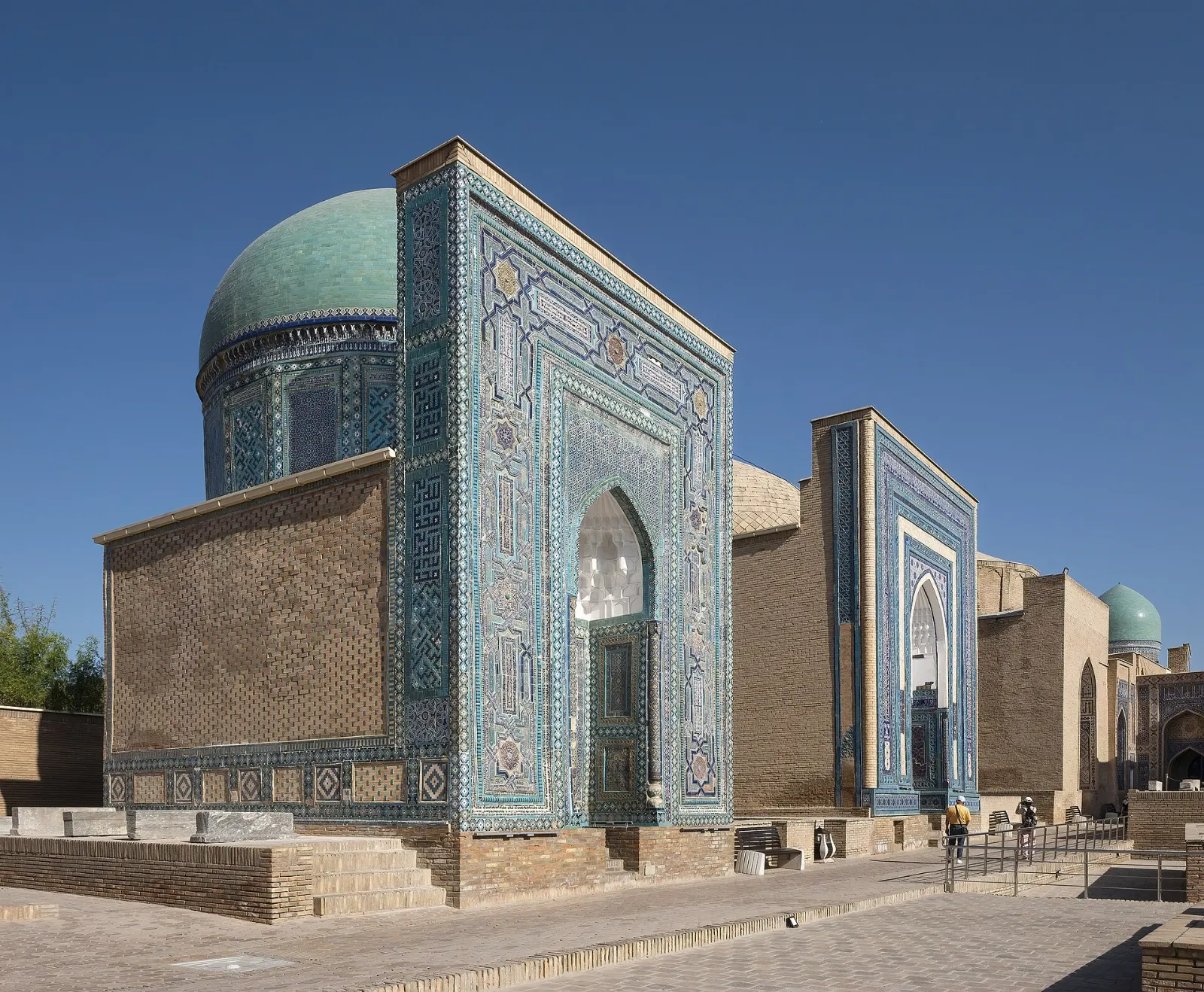
The Shah-i-Zinda necropolis holds more than twenty buildings, most of them from the 14th and 15th centuries. Photo: Petar Milošević, Wikimedia Commons, CC BY-SA 4.0
Ancient Samarkand, the observatory and day trips
North and east of Shah-i-Zinda, the city gives way to the grassy hills of the old settlement.
Afrosiab Museum
Afrosiab is the site of pre-Mongol Samarkand, a mound of earthen walls and excavation trenches inhabited for well over a thousand years.
Allow about an hour for the museum and a short walk on the mound for the view back toward the city.
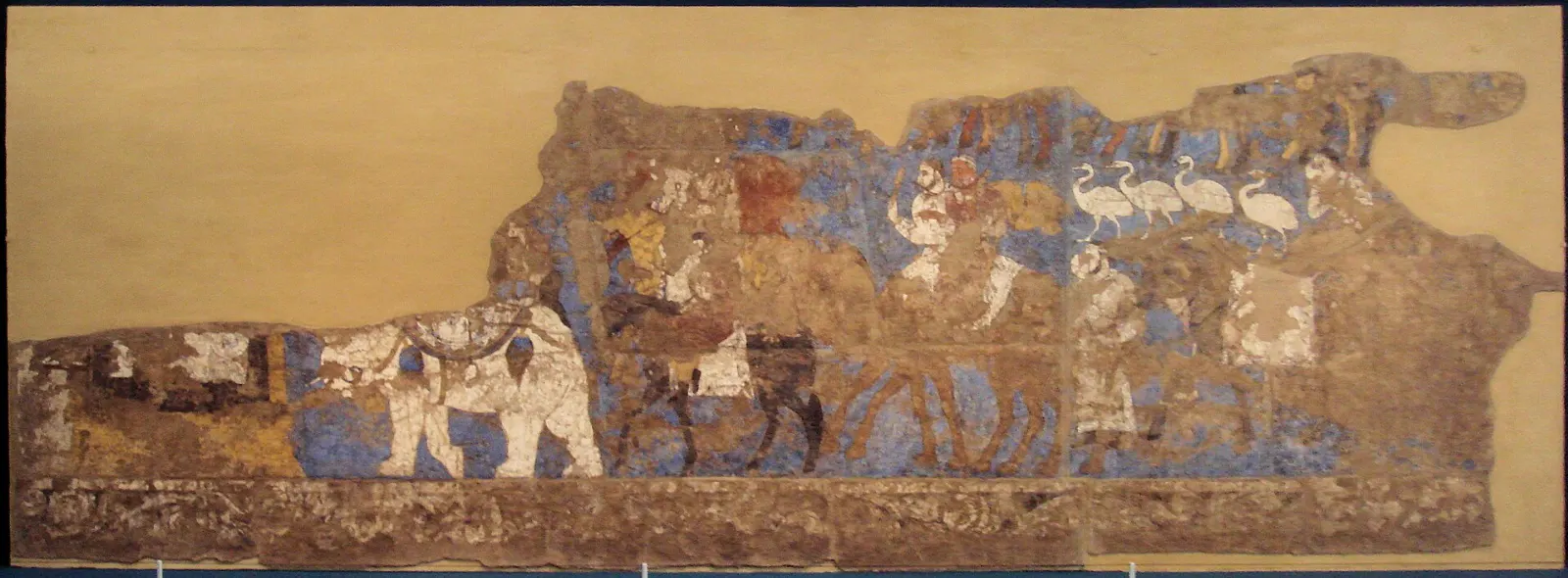
The Afrosiab Museum displays Sogdian wall paintings recovered from the ancient city mound. Photo: ALFGRN, Wikimedia Commons, CC BY-SA 2.0
Ulugh Beg Observatory
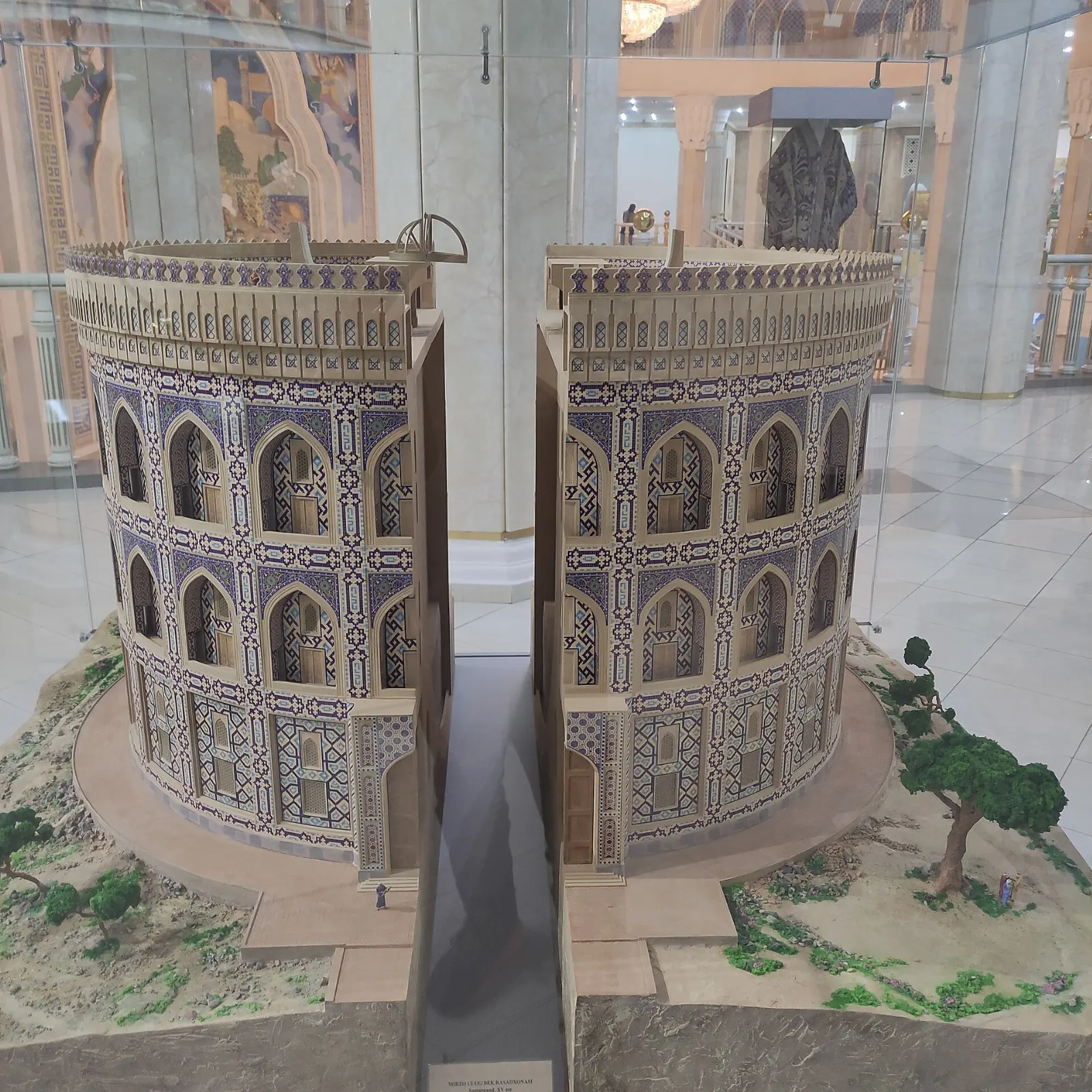
Ulugh Beg, who governed Samarkand for decades in the early 15th century, built an observatory here in the 1420s.
Plan on forty-five minutes to an hour. It is a short taxi ride beyond Afrosiab, so combine the two in one outing.
Only the underground arc of Ulugh Beg's great sextant survives; it was rediscovered in 1908. Photo: Abdullayev uz, Wikimedia Commons, CC BY-SA 4.0
Khoja Daniyar Shrine
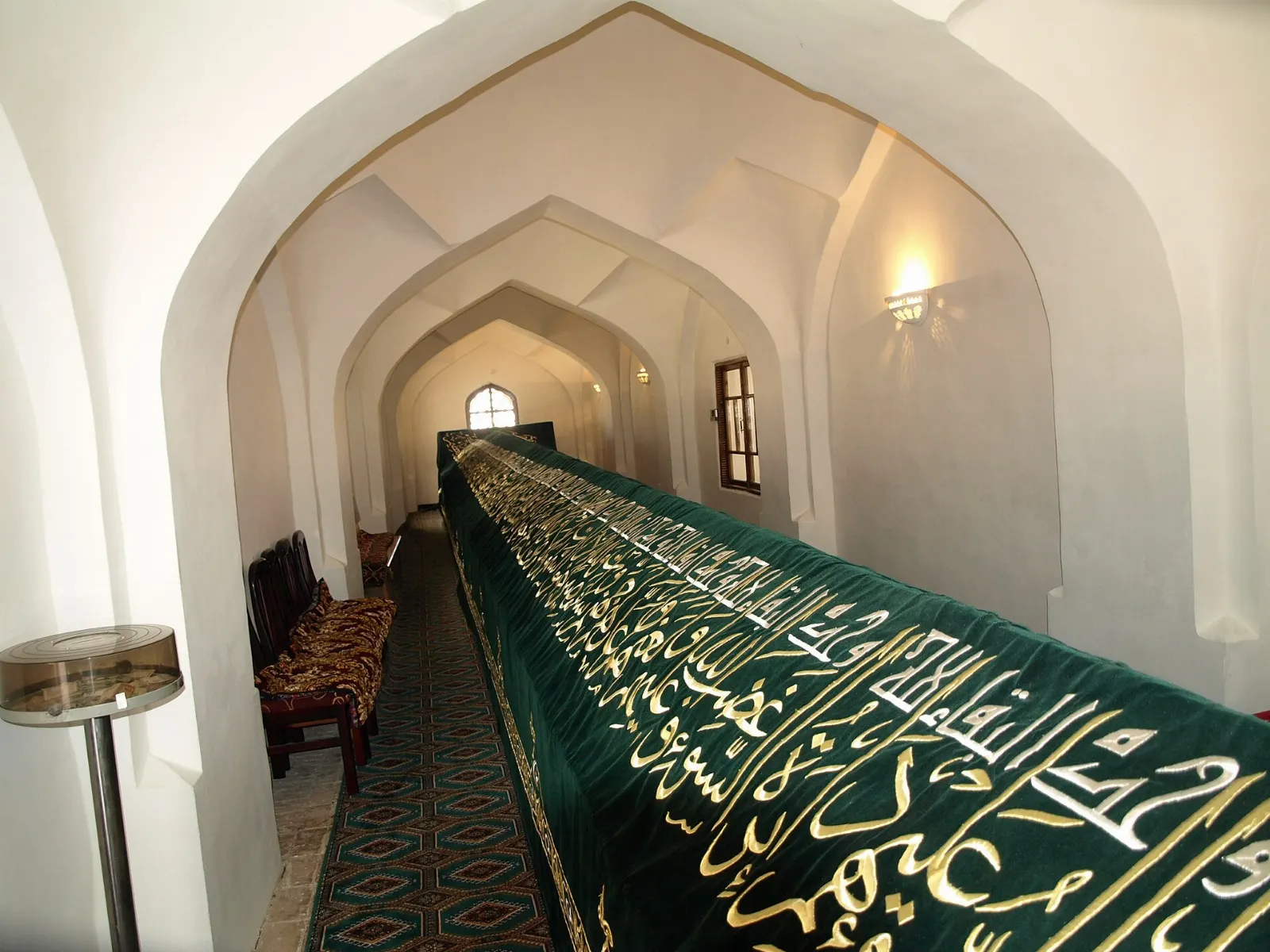
On a hillside above a small stream on the edge of Afrosiab, an unusually long tomb inside a low domed building is venerated as the resting place of the prophet Daniel.
Allow forty-five minutes. Dress as you would for a mosque, and take a moment on the terrace, which looks over a quiet green valley a world away from the busy centre.
The Khoja Daniyar shrine draws pilgrims who associate it with the prophet Daniel. Photo: Vaurien, Wikimedia Commons, CC BY-SA 3.0 de
Eternal City
East of the centre, beside a rowing canal, the Eternal City complex opened in 2022 as a reconstructed old town of craft shops, cafes and performance spaces.
Spend an evening of two or three hours here if you want a lively, family-friendly scene after the monuments close.
Shahrisabz
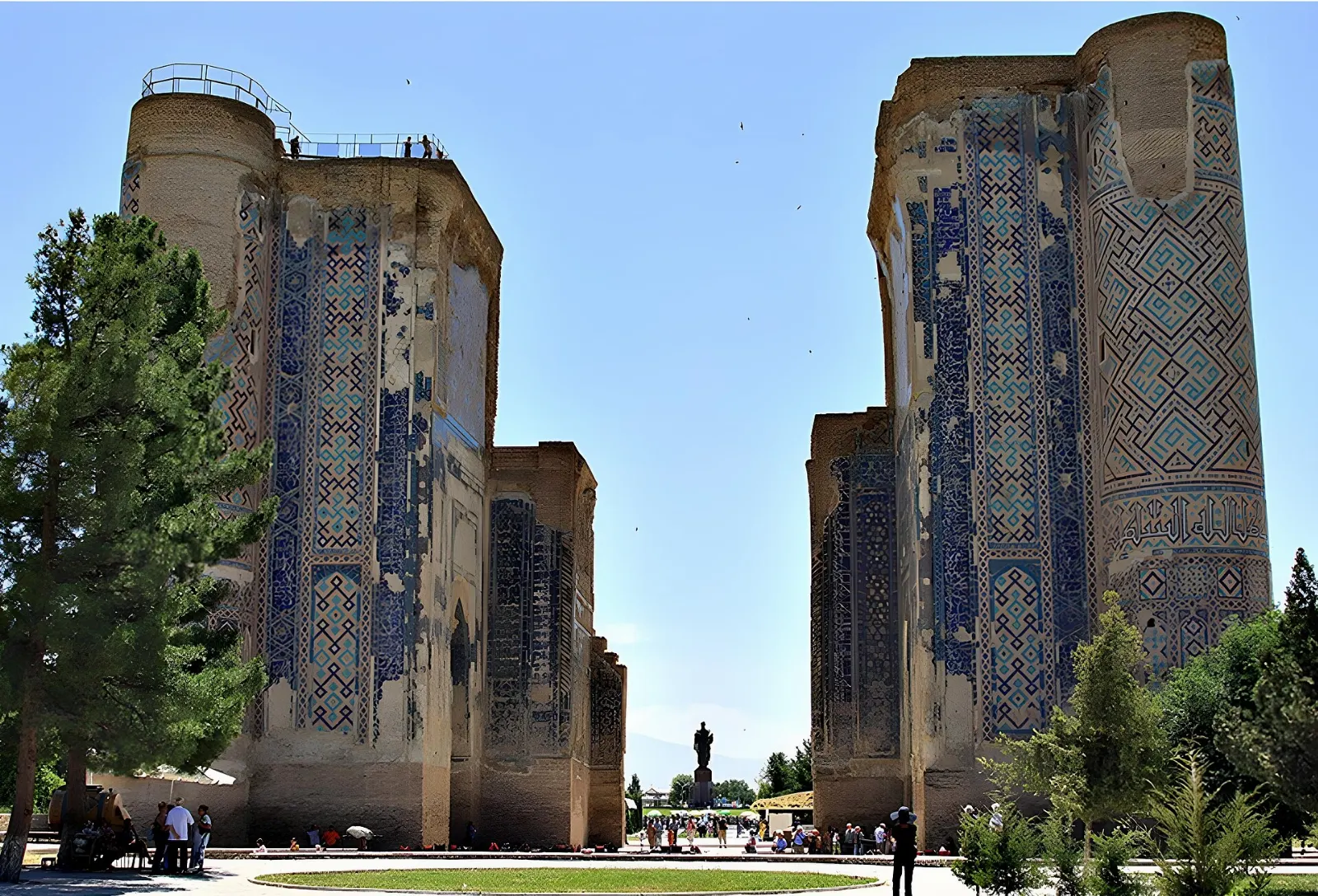
Timur was born near Shahrisabz, south of Samarkand over the Takhtakaracha Pass, and the town's historic centre is also a UNESCO World Heritage Site.
Make it a full day trip by private driver or shared taxi.
The surviving portal of Timur's Ak-Saray Palace stands in the historic centre of Shahrisabz, his home town. Photo: Hassan Gangu, Wikimedia Commons, CC0
Ad
Food and local flavors
Plov is the defining dish of Uzbekistan, and Samarkand cooks are proud of their own version, in which rice, yellow carrots and chunks of lamb or beef are layered in a giant cauldron rather than stirred together.
For snacking, Siyob Bazaar is unbeatable, with dried fruit, nuts, halva and seasonal melons and grapes in late summer.
Popular dishes to try in Samarkand
Plov It is traditionally a lunchtime dish, so look for plov centres around midday and go early, because popular cauldrons often run out.Photo: Rudolph.A.Furtado, Wikimedia Commons, CC0Samsa A local favorite worth trying in Samarkand.Photo: Akhemen, Wikimedia Commons, CC BY-SA 4.0Non bread A local favorite worth trying in Samarkand.Photo: Rudolph.A.Furtado, Wikimedia Commons, CC0Shashlik You will also find somsa, flaky pastries filled with meat and onion and baked against the oven wall, smoky shashlik skewers, hand-pulled lagman noodles, and manti dumplings.Photo: Rudolph.A.Furtado, Wikimedia Commons, CC0
Where to stay
Around the Registan and Gur-e-Amir. The lanes south and west of the Registan are full of family-run guesthouses, many arranged around courtyards.
The Russian-era centre. Built after 1868, the area around University Boulevard has shady avenues, parks and larger hotels, and it is still only a short walk from Gur-e-Amir.
Near the railway station. Modern hotels close to the station are practical if you arrive late or leave on an early train, though you will need a taxi or tram to reach the sights.
Where to stay in Samarkand
Registan Where to stayAround the Registan and Gur-e-Amir.Photo: Stomac, Wikimedia Commons, CC BY-SA 2.0 frBibi-Khanym Mosque One of the best areas to base yourself in Samarkand.Photo: Petar Milošević, Wikimedia Commons, CC BY-SA 4.0Shah-i-Zinda One of the best areas to base yourself in Samarkand.Photo: Petar Milošević, Wikimedia Commons, CC BY-SA 4.0Siab Bazaar One of the best areas to base yourself in Samarkand.Photo: Yoshi Canopus, Wikimedia Commons, CC BY-SA 3.0
Ad
Best time to visit
Spring, from April to early June, and autumn, from September to October, are the most comfortable seasons, with warm days, cool evenings and good light for photography.
Summer is long, dry and hot, with afternoons that are often well above 35 degrees Celsius.
Navruz, the Persian new year around 21 March, is celebrated with music, special dishes such as sumalak and festivities across the city.
Getting there and getting around
By train. Most visitors arrive by rail.
By air. Samarkand International Airport, rebuilt in 2021, sits just north of the city and receives flights from Russia, Turkey, the Gulf and a few regional cities, as well as limited domestic services.
By road. Shared taxis and buses connect Samarkand with Tashkent, Bukhara and Shahrisabz.
Getting around. The main sights fall into two walkable clusters, linked by a pedestrian street.
Ad
A suggested itinerary
First day
Start early at Shah-i-Zinda before the crowds, then walk down to Siyob Bazaar for bread and dried fruit.
Second day
Take a taxi to the Afrosiab Museum, the Ulugh Beg Observatory and the Khoja Daniyar Shrine in one morning loop.
Third day
Head over the mountains to Shahrisabz for the Ak-Saray Palace portal and the Kok Gumbaz Mosque, returning in time for a final evening view of the Registan.
Practical tips
Check current entry rules before you travel: many nationalities can now visit Uzbekistan visa-free or with an e-visa, but terms vary.
Foreign visitors must be registered where they stay. Hotels and guesthouses handle this, so keep the registration slips they give you.
Book train tickets early, especially the Afrosiyob, and carry your passport, which is checked when you board.
Cover shoulders and knees at mosques and shrines, remove shoes where asked, and ask before photographing people.
Carry some cash in Uzbek som for bazaars, taxis and small cafes, although cards are accepted more widely than in the past.
Bargain politely in markets and courtyard shops, and compare a few stalls before buying suzani or carpets.