WiserMap — Choose wisely. Connect locally.Choose wisely. Connect locally.Add your business
Kuala Lumpur, Malaysia · Travel guide

Kuala Lumpur Malaysia Petronas Towers and Batu Caves

Kuala Lumpur grew from a muddy tin-mining settlement at the meeting of two rivers into a capital of gleaming towers, and the city still carries both sides of that story.

By WiserMap TravelUpdated October 2026 9 places11 min read
FacebookXLinkedIn

This guide covers the places that deserve your time, grouped by neighborhood so you can plan efficient days in a hot, humid city, along with what to eat, where to stay, when to come and how to use the excellent rail network to get around.

At a glance Kuala Lumpur
  1. Best timeHot all year; June to August and January to February tend to be a little drier.
  2. How longThree to four days covers the city center, Batu Caves and the best food streets.
  3. Getting thereFly into Kuala Lumpur International Airport and take the KLIA Ekspres train to KL Sentral.

Why visit Kuala Lumpur

KL, as almost everyone calls it, is one of Southeast Asia's most approachable big cities.

Its biggest draw is diversity. In a single afternoon you can visit a Hindu temple, a Taoist shrine and a mosque, then eat your way through Malay, Chinese, Indian and Nyonya dishes.

Kuala Lumpur is also greener than its skyline suggests. A protected rainforest survives in the middle of the city, large gardens surround the old colonial district, and limestone hills with sacred caves lie just north of the center.

KLCC and the Golden Triangle

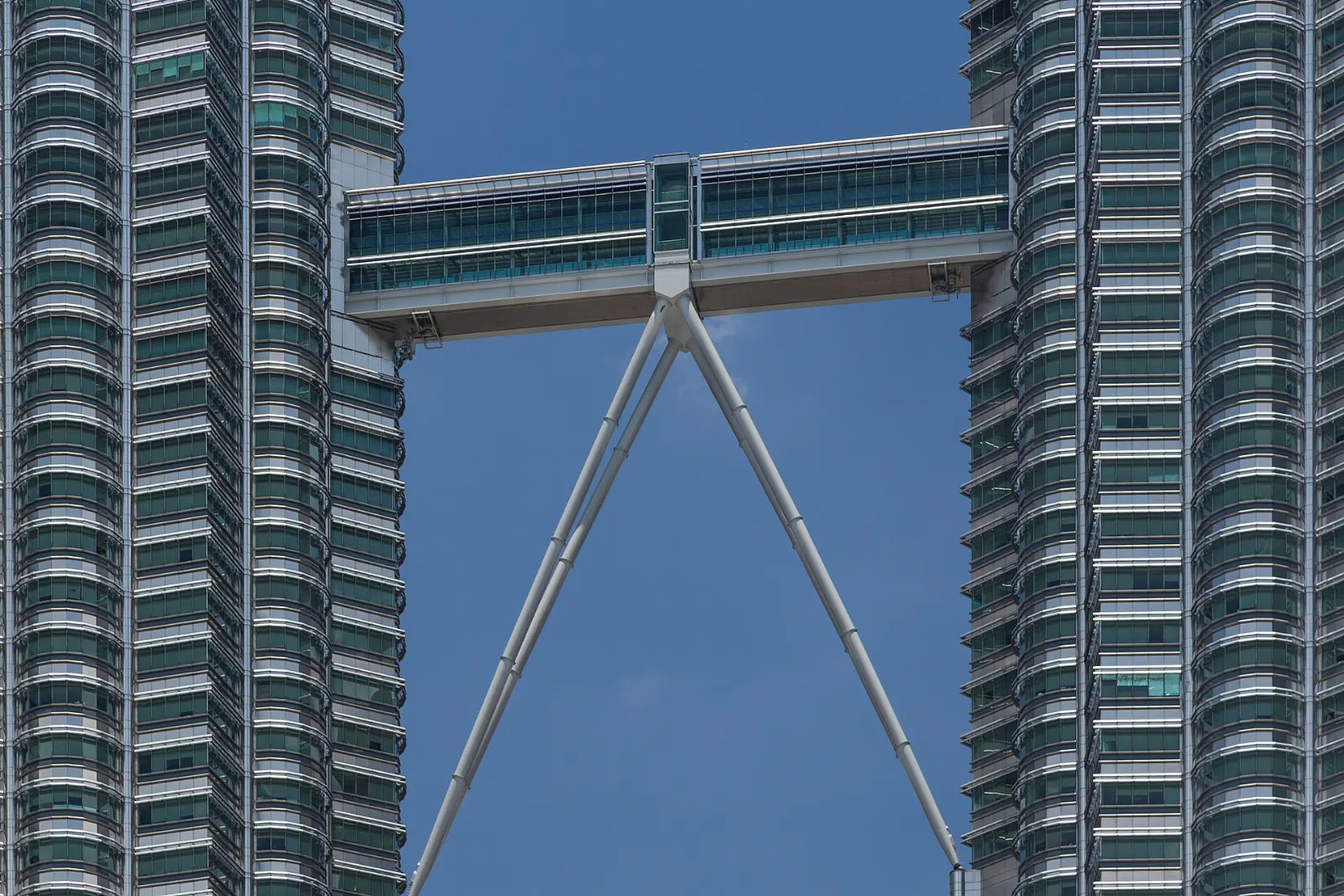
The double-decker skybridge linking the two Petronas Towers high above the ground, Kuala Lumpur, Malaysia

Petronas Twin Towers and KLCC Park

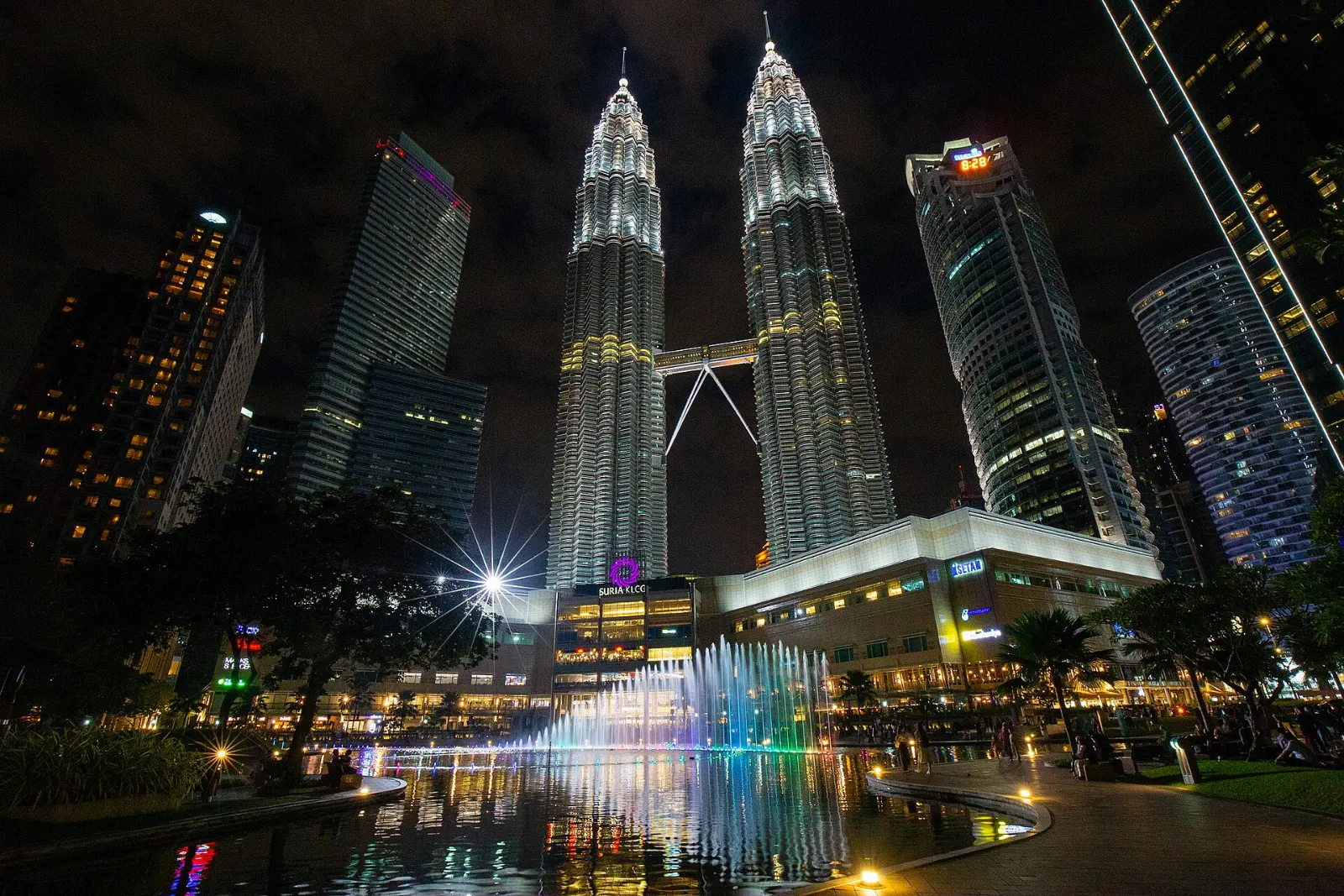
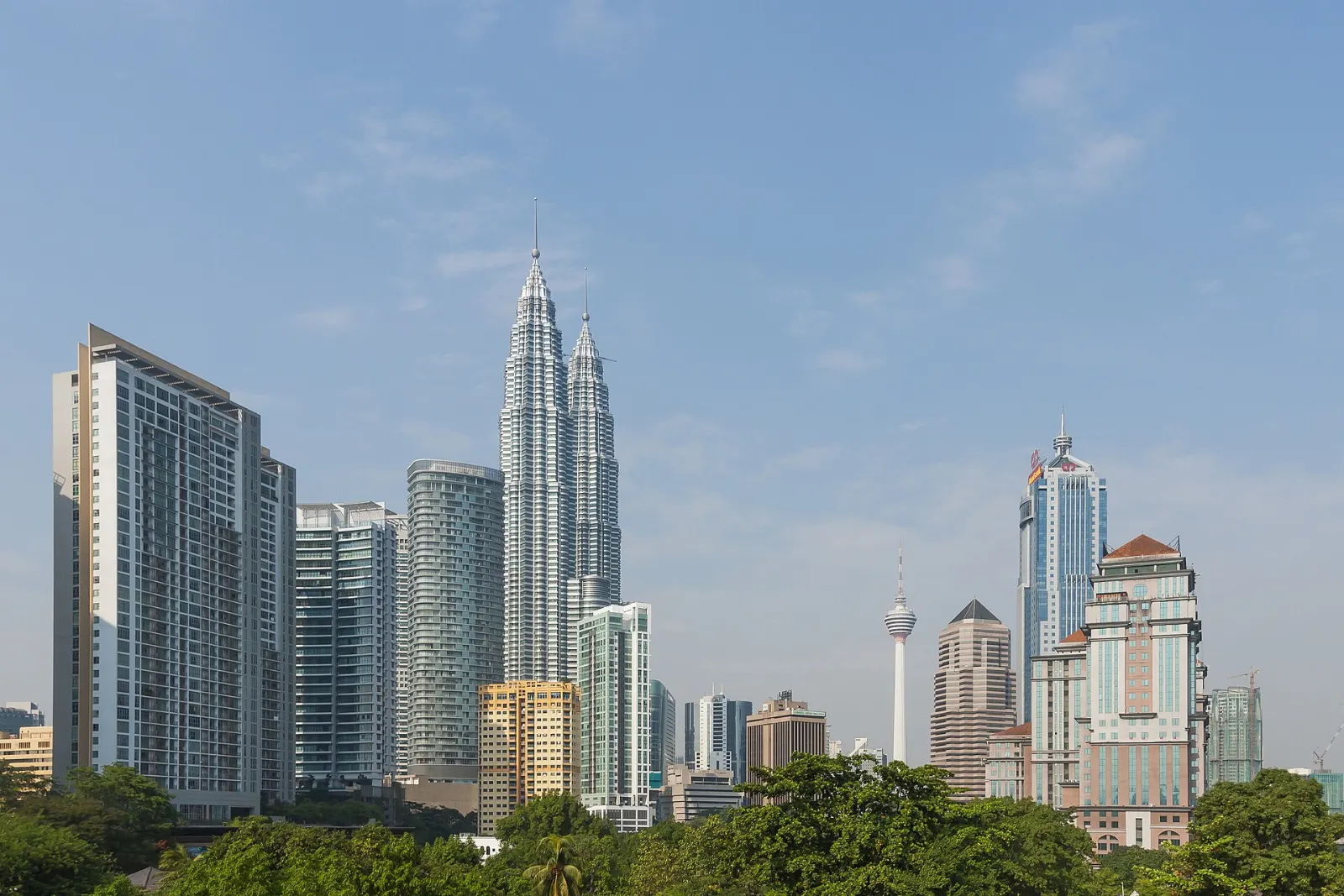
The Petronas Twin Towers, designed by architect César Pelli and completed in the late 1990s, are the defining image of Kuala Lumpur. Their steel and glass facades are based on Islamic geometric patterns, and they remain the tallest twin towers in the world.

Even without going up, the towers are worth seeing from KLCC Park at their base, a landscaped park with a jogging track, a children's water play area and a lake with an evening fountain show.

A double-decker skybridge connects the two Petronas towers at their forty-first and forty-second floors. Photo: Marcin Konsek, Wikimedia Commons, CC BY-SA 4.0
The slender KL Tower with its pod-shaped top rising above forest in central Kuala Lumpur, Malaysia

Menara Kuala Lumpur and KL Forest Eco Park

Menara Kuala Lumpur, the KL Tower, rises from Bukit Nanas, a forested hill a short walk from the Petronas Towers. Its observation deck and open-air sky deck give one of the best views of the Petronas Towers themselves.

Menara Kuala Lumpur stands on Bukit Nanas, a hill whose forest reserve surrounds the tower's base. Photo: CEphoto, Uwe Aranas, Wikimedia Commons, CC BY-SA 3.0

Bukit Bintang

Bukit Bintang is the city's shopping and entertainment district, packed with malls, massage parlors, rooftop bars and food courts. Covered walkways link it to KLCC, making the walk possible even in the rain.

The old city, Chinatown and the gardens

The copper-domed Sultan Abdul Samad Building and clock tower facing Merdeka Square, Kuala Lumpur, Malaysia

Merdeka Square

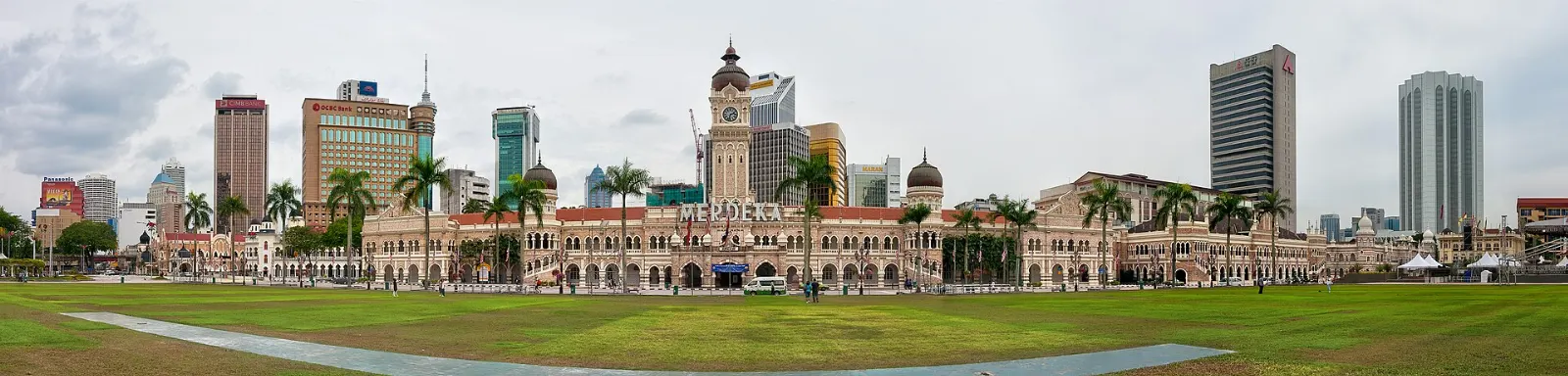
Merdeka Square, a large field once used for cricket, is where the Union Jack was lowered and the Malayan flag raised at midnight on 31 August 1957. Today it is surrounded by colonial buildings, including the Sultan Abdul Samad Building with its copper domes and clock tower, built in a style that blends Moorish and British influences.

Allow an hour, and add the Kuala Lumpur City Gallery nearby, which has a detailed scale model of the city and exhibits on its history.

The Sultan Abdul Samad Building, completed in 1897, faces Merdeka Square, where Malayan independence was celebrated in 1957. Photo: This photo was taken by Anton Zelenov. Please credit this with : Photo : Anton Zelenov …, Wikimedia Commons, CC BY-SA 3.0

The onion domes and red-and-white arches of Masjid Jamek at a river confluence, Kuala Lumpur, Malaysia

Masjid Jamek

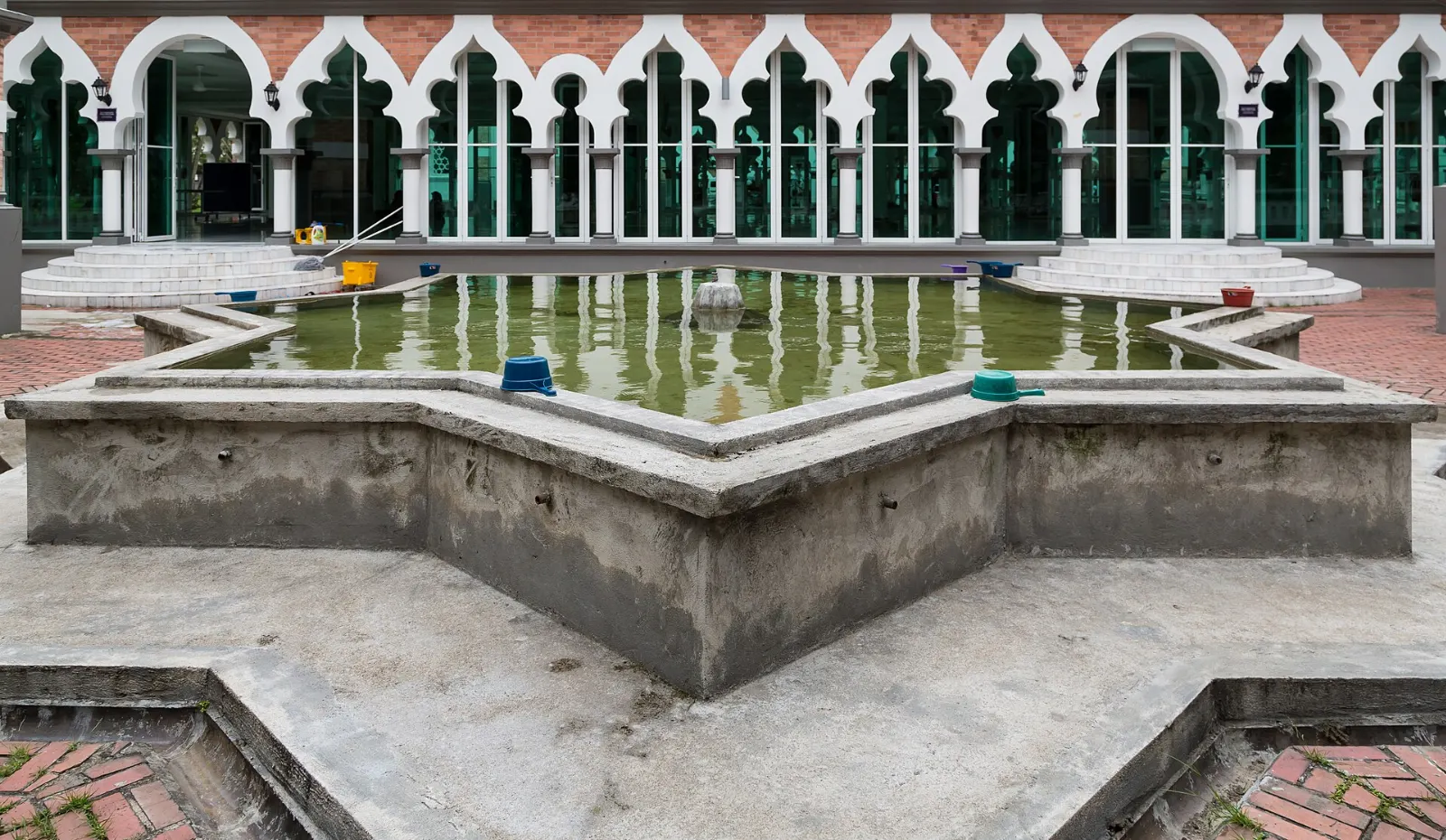
Masjid Jamek, completed in 1909, sits at the confluence of the Klang and Gombak rivers, the muddy meeting point that gave Kuala Lumpur its name. Its red brick and white stone design, with onion domes and slender minarets, makes it one of the most photogenic buildings in the city.

Masjid Jamek stands at the confluence of the Klang and Gombak rivers, where Kuala Lumpur began. Photo: CEphoto, Uwe Aranas, Wikimedia Commons, CC BY-SA 3.0

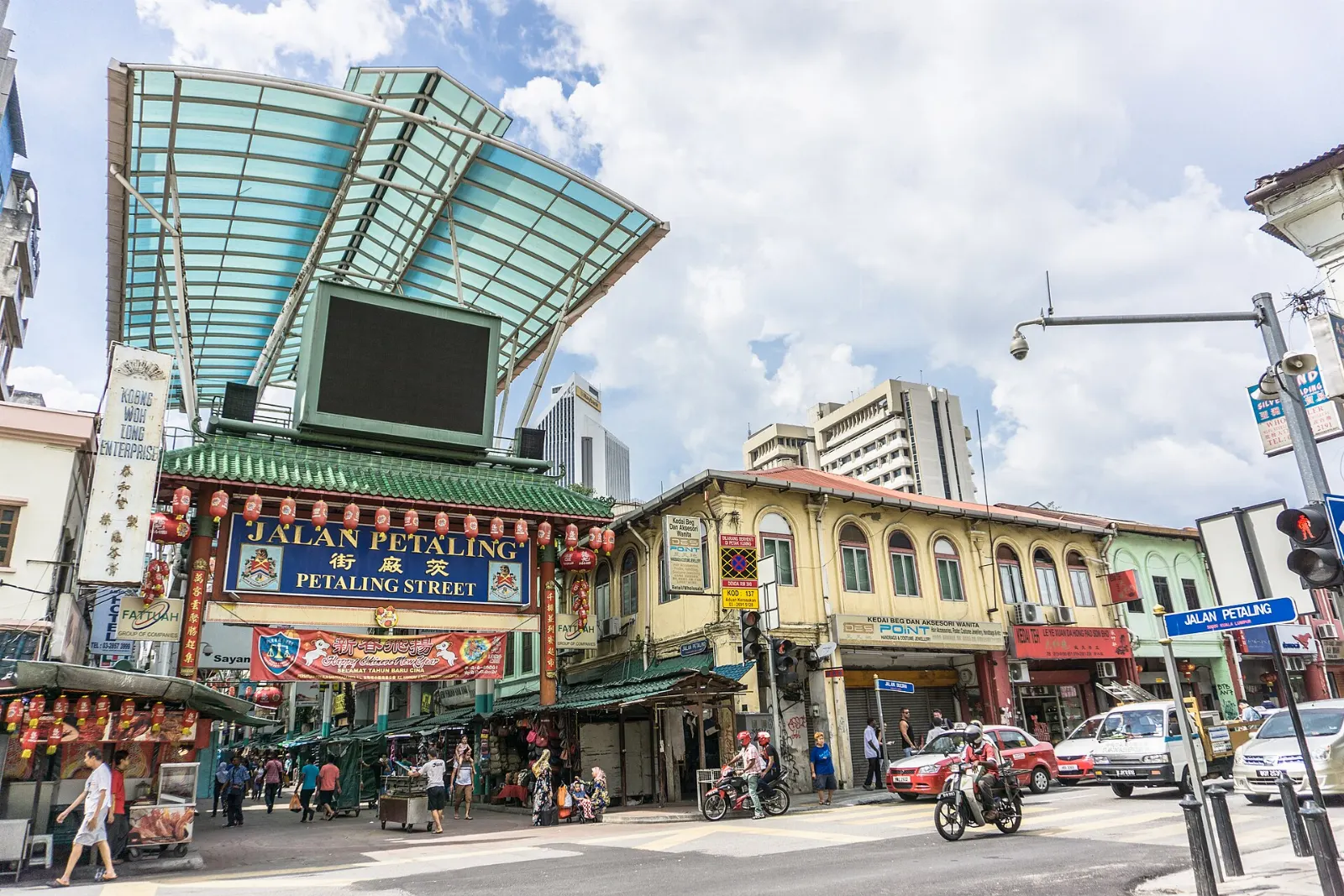
Red lanterns and market stalls under a covered roof on Petaling Street, Kuala Lumpur, Malaysia

Petaling Street and Kwai Chai Hong

Petaling Street is the main market lane of Chinatown, covered by a green roof and lined with stalls selling clothing, souvenirs and snacks. It is busiest in the evening. Duck into the side streets for older shophouses, herbal medicine shops and kopitiams, traditional coffee shops.

Petaling Street is the main market street of Kuala Lumpur's Chinatown. Photo: IQRemix, Wikimedia Commons, CC BY-SA 2.0

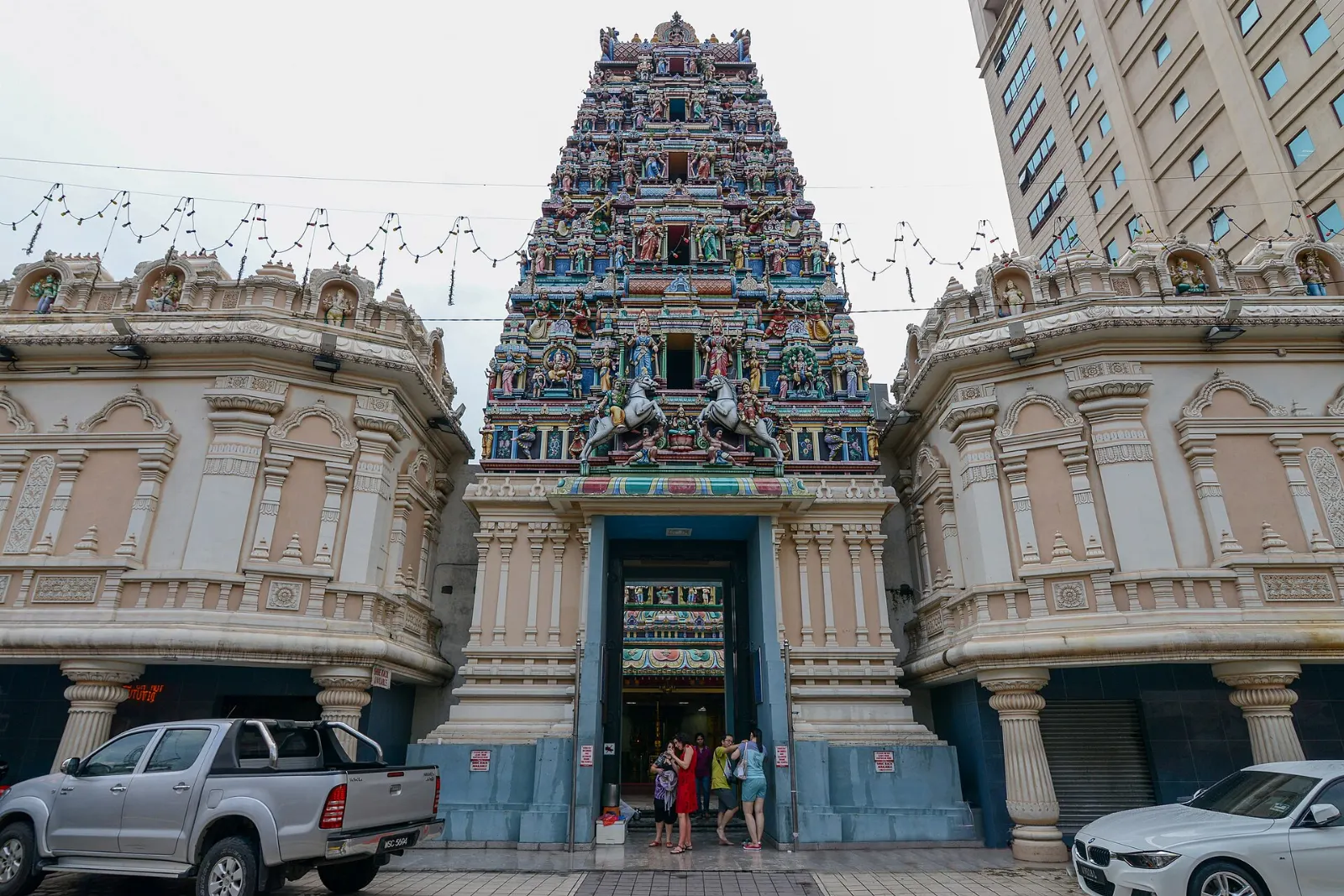
The colorful sculpted gopuram tower at the entrance of the Sri Mahamariamman Temple, Kuala Lumpur, Malaysia

Sri Mahamariamman Temple

Founded in 1873 by Tamil immigrants, Sri Mahamariamman Temple on Jalan Tun H.S. Lee is the oldest functioning Hindu temple in Kuala Lumpur. Its gopuram, the entrance tower, is covered with sculpted and brightly painted deities.

Sri Mahamariamman Temple, founded in 1873, is the oldest functioning Hindu temple in Kuala Lumpur. Photo: Jorge Láscar, Wikimedia Commons, CC BY 2.0

The star-shaped folded roof and tall minaret of the National Mosque of Malaysia, Kuala Lumpur, Malaysia

Masjid Negara and the Islamic Arts Museum

Masjid Negara, the National Mosque, opened in 1965 with a striking folded concrete roof often likened to an open umbrella. Non-Muslim visitors are welcome outside prayer times and are lent robes to cover up.

Masjid Negara, the National Mosque, opened in 1965 with a roof shaped like a partly opened umbrella. Photo: CEphoto, Uwe Aranas, Wikimedia Commons, CC BY-SA 3.0

Perdana Botanical Gardens

Behind the museum, the Perdana Botanical Gardens, also known as the Lake Gardens, form the city's largest green space. Footpaths wind around a lake, and nearby attractions include the KL Bird Park, a large walk-through aviary.

Caves, temples and beyond the center

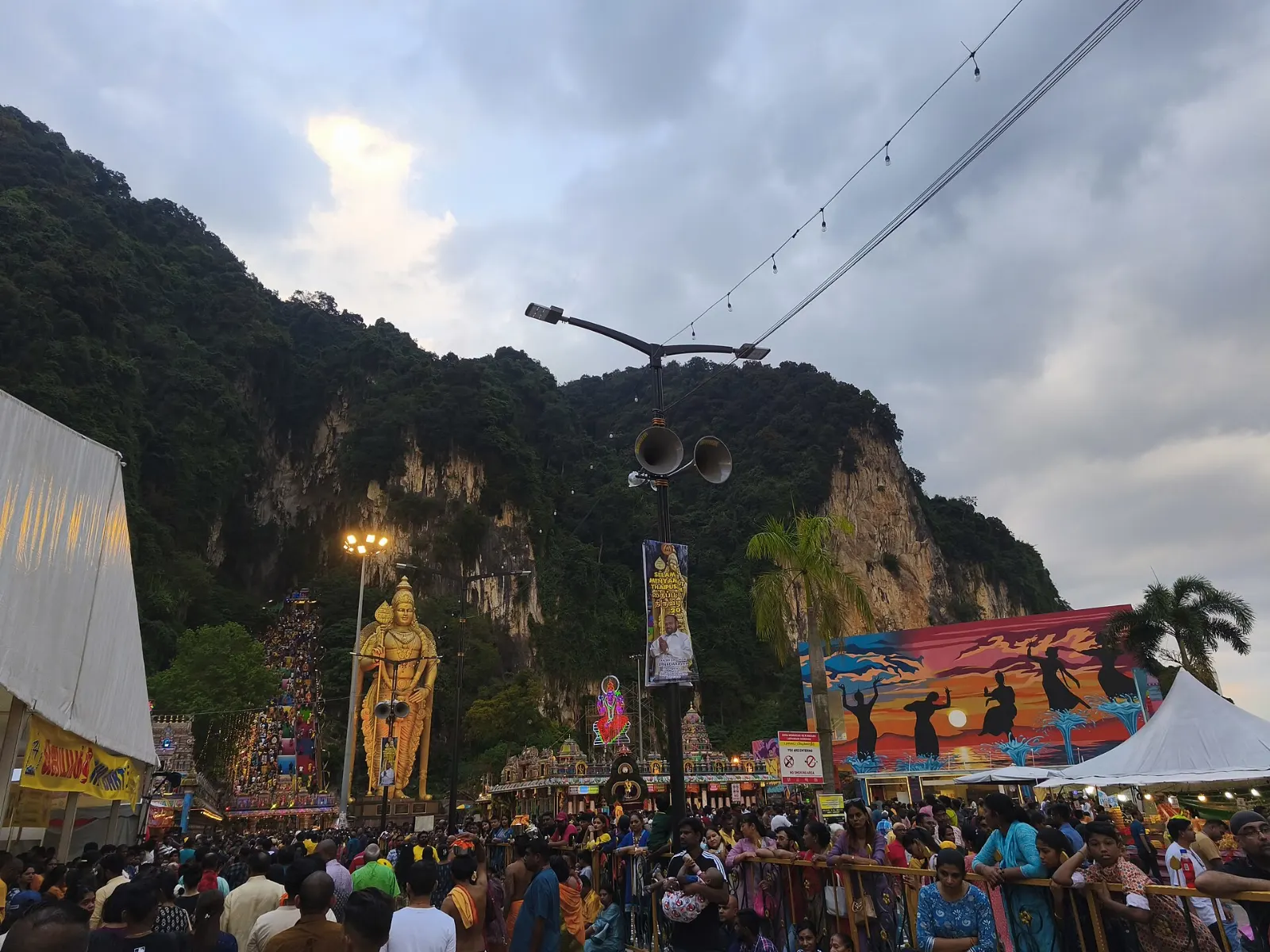
A giant golden Murugan statue beside rainbow-painted stairs leading into Batu Caves, Kuala Lumpur, Malaysia

Batu Caves

Batu Caves, about 13 kilometers north of the center, is a limestone hill with a series of caves and cave temples. A giant golden statue of Lord Murugan stands at the base of a steep flight of 272 steps, painted in rainbow colors, that leads up to Temple Cave, a vast chamber with shrines and an opening in the roof.

Arrive early to avoid heat and crowds, and allow two to three hours. Cover your knees and shoulders; sarongs can be rented at the entrance.

The golden statue of Lord Murugan stands at the foot of the stairs to Temple Cave at Batu Caves. Photo: *angys*, Wikimedia Commons, CC BY-SA 4.0

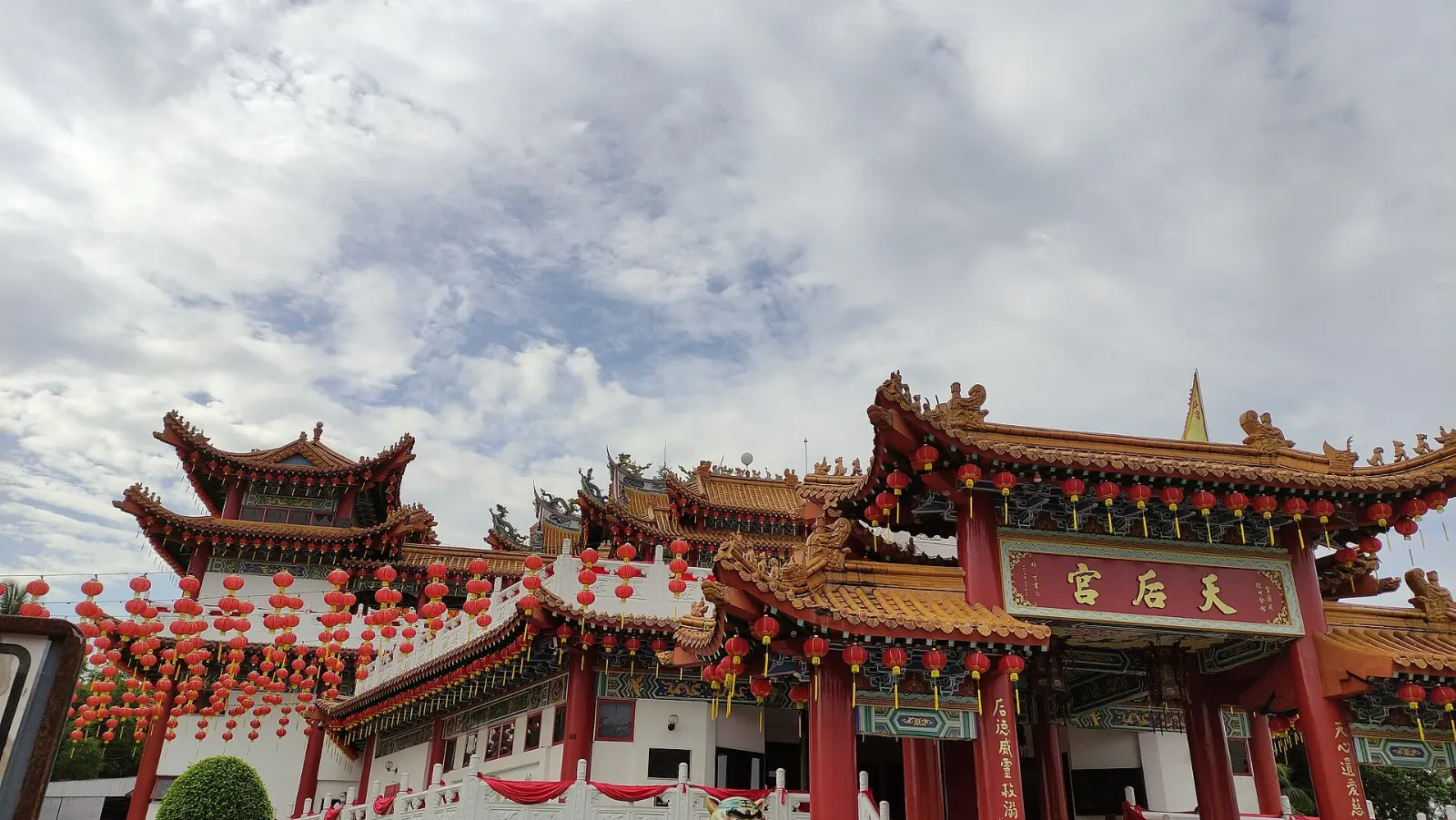
The multi-tiered red and gold roofs of Thean Hou Temple decorated with lanterns, Kuala Lumpur, Malaysia

Thean Hou Temple

Thean Hou Temple, on Robson Heights south of the center, is one of the largest Chinese temples in Southeast Asia. It is dedicated to Mazu, the goddess of the sea, and its tiered red roofs, carved pillars and rows of lanterns are beautiful, particularly around Chinese New Year.

Thean Hou Temple is a large Chinese temple dedicated to the sea goddess Mazu, set on a hill south of the city center. Photo: Sam Hidayat, Wikimedia Commons, CC BY-SA 4.0

Kampung Baru and Merdeka 118

Kampung Baru is a traditional Malay neighborhood close to the city center, with wooden houses on stilts set against the backdrop of the Petronas Towers. It is a fascinating contrast and a great place for Malay food, especially in the evening and during Ramadan, when stalls sell dishes for breaking the fast.

Food and local flavors

Food is one of the main reasons to visit Kuala Lumpur.

Jalan Alor in Bukit Bintang is the city's most famous food street, where restaurants and stalls set out plastic tables each evening serving grilled chicken wings, satay, char kway teow, Hokkien mee and fresh fruit.

Nyonya cuisine, the blend of Chinese and Malay cooking associated with Peranakan communities, appears in dishes such as laksa and kuih, colorful bite-sized cakes.

Popular dishes to try in Kuala Lumpur

Nasi lemak in Kuala Lumpur, Malaysia
Nasi lemak Start with nasi lemak, Malaysia's unofficial national dish: rice cooked in coconut milk, served with spicy sambal, fried anchovies, peanuts, egg and cucumber, often with fried…Photo: Bahnfrend, Wikimedia Commons, CC BY-SA 4.0
Satay in Kuala Lumpur, Malaysia
Satay Jalan Alor in Bukit Bintang is the city's most famous food street, where restaurants and stalls set out plastic tables each evening serving grilled chicken wings, satay, char…Photo: John Walker from Chicago, IL, USA, Wikimedia Commons, CC BY 2.0
Roti canai in Kuala Lumpur, Malaysia
Roti canai Roti canai, a flaky flatbread served with curry, is the classic breakfast at mamak stalls, the round-the-clock Indian Muslim eateries found all over the city.Photo: Sunnya343, Wikimedia Commons, CC BY-SA 4.0
Char kway teow in Kuala Lumpur, Malaysia
Char kway teow Jalan Alor in Bukit Bintang is the city's most famous food street, where restaurants and stalls set out plastic tables each evening serving grilled chicken wings, satay, char…Photo: Pavithran, Wikimedia Commons, CC BY-SA 3.0

Where to stay

Bukit Bintang is the most popular base for first-time visitors, with plenty of accommodation in every style, malls, nightlife and street food on your doorstep, and Monorail and MRT stations close by.

KLCC is more upscale and polished, with views of the Petronas Towers, the park on your doorstep and good transport links.

Chinatown and the old city around Merdeka Square have characterful guesthouses in restored shophouses, suiting budget and independent travelers who like heritage and street food.

Where to stay in Kuala Lumpur

Petronas Towers, Kuala Lumpur, Malaysia
Petronas Towers KLCC is more upscale and polished, with views of the Petronas Towers, the park on your doorstep and good transport links.Photo: James Kerwin from Tbilisi, Wikimedia Commons, CC BY 2.0
Merdeka Square, Kuala Lumpur, Malaysia
Merdeka Square Chinatown and the old city around Merdeka Square have characterful guesthouses in restored shophouses, suiting budget and independent travelers who like heritage and street food.Photo: Marcin Konsek, Wikimedia Commons, CC BY-SA 4.0
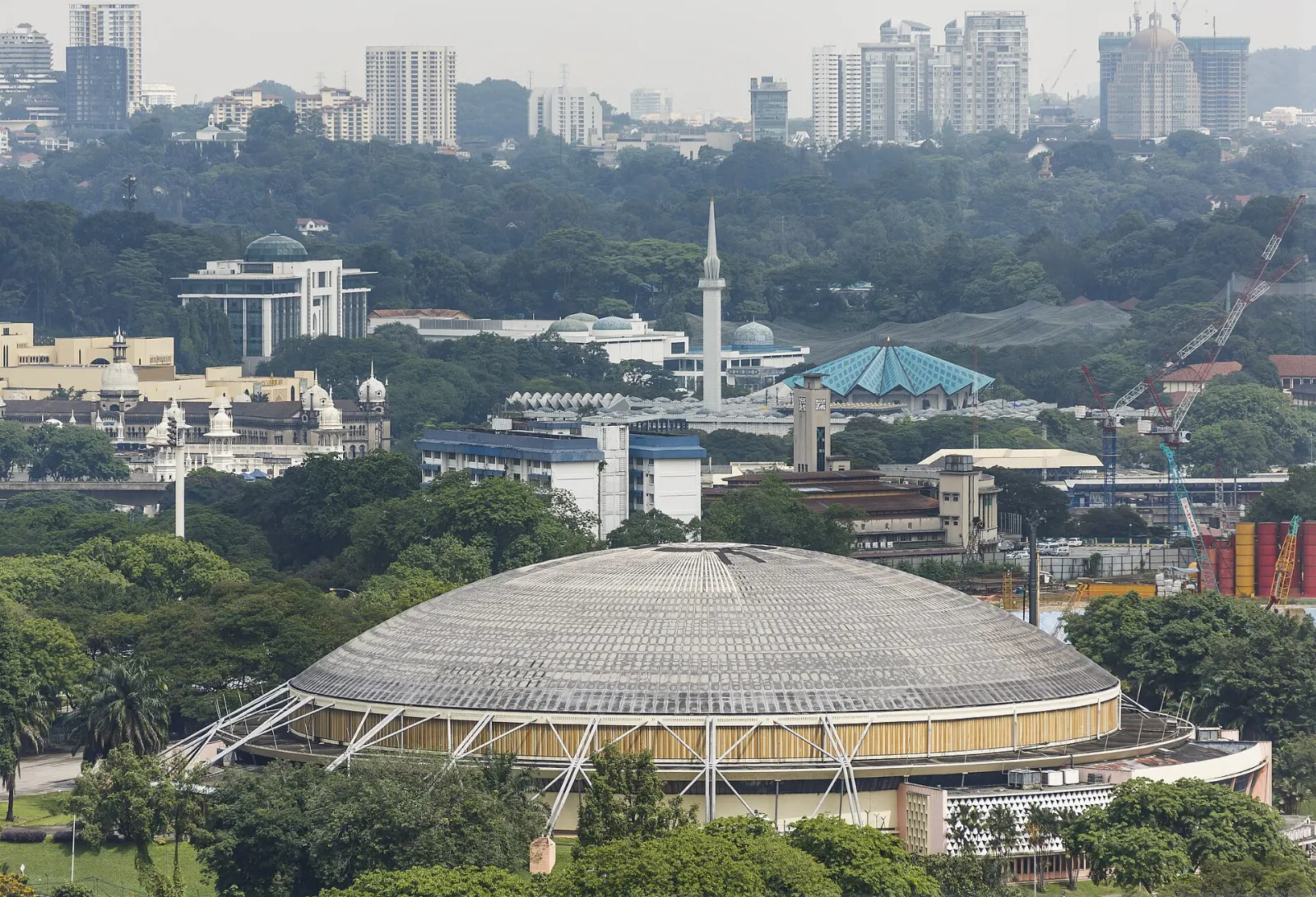
Brickfields, Kuala Lumpur, Malaysia
Brickfields KL Sentral and Brickfields suit travelers with early trains or flights, since the airport express leaves from here.Photo: CEphoto, Uwe Aranas, Wikimedia Commons, CC BY-SA 3.0
Kuala Lumpur old town, Kuala Lumpur, Malaysia
Kuala Lumpur old town One of the best areas to base yourself in Kuala Lumpur.Photo: User:Two hundred percent., Wikimedia Commons, CC BY-SA 3.0

Best time to visit

Kuala Lumpur is hot and humid all year, with daytime temperatures usually in the low thirties Celsius. Rain falls in every month, most often as heavy afternoon or evening thunderstorms.

Festivals are a good reason to time your trip. Chinese New Year brings lanterns and lion dances, especially in Chinatown and at Thean Hou Temple. Thaipusam draws vast crowds to Batu Caves.

Getting there and getting around

Kuala Lumpur International Airport, with two terminals, lies about 50 kilometers south of the city.

Within the city, the LRT, MRT, Monorail and KTM Komuter trains cover most sights, and a Touch 'n Go card or a contactless bank card makes payment easy on many lines. KTM Komuter trains run directly to Batu Caves station.

A suggested itinerary

First day

Start early with Batu Caves before the heat, then return to the city for lunch.

Second day

Visit Masjid Negara and the Islamic Arts Museum in the morning, then stroll the Perdana Botanical Gardens and the KL Bird Park.

Third day

Walk the canopy trails at KL Forest Eco Park and go up Menara Kuala Lumpur, then visit the Petronas Towers in the afternoon.

Fourth day

Visit Thean Hou Temple in the morning, then spend the afternoon in the cafes of Bangsar or take a day trip by train or bus to Melaka.

Practical tips

  • Book Petronas Towers tickets online in advance and check the official website for current hours and fees.
  • Dress modestly for temples and mosques, covering shoulders and knees, and remove shoes where asked.
  • Carry an umbrella; sudden afternoon downpours are common in every season.
  • Use ride-hailing apps instead of hailing taxis on the street to avoid fare disputes.
  • Keep cash in small notes for street food and markets, though malls accept cards.
  • Watch your belongings in crowded markets and on busy trains.
Kuala LumpurWISERMAP PLACEKuala Lumpur: photos, reviews & things to doSee traveler photos and reviews, or share your own →

More places to visit

All travel guides →