Rome Italy Colosseum Vatican Trastevere and Trevi Fountain
Rome is a city where you can stand in a piazza and see nearly two thousand years of history at once: an ancient column, a medieval bell tower, a Renaissance palace and a Baroque fountain, with locals drinking espresso at the bar on the corner.
By WiserMap TravelUpdated October 20269 places10 min read
It is also busy, sprawling and full of small rules that change from year to year, from timed tickets at the Colosseum to the new paid access at the Trevi Fountain.
At a glance Rome
Best timeApril to early June and late September to October for pleasant weather and long days.
How longThree to four days for the highlights; a week to slow down and explore further.
Getting thereFly into Fiumicino or Ciampino, or arrive by high-speed train at Roma Termini.
Ad
Why visit Rome
Few cities can match Rome's sheer density of masterpieces. Within walking distance of each other you will find the Colosseum and the Forum, where much of Western political history was shaped; the Pantheon, a nearly perfect ancient temple still in use as a church; and the Vatican, home to Michelangelo's Sistine Chapel ceiling and the largest church in Christendom.
Rome is also a joyful place simply to be. Its cuisine is direct and satisfying, built around a handful of pasta dishes that Romans argue about with passion.
Ancient Rome: the Colosseum and the Forum
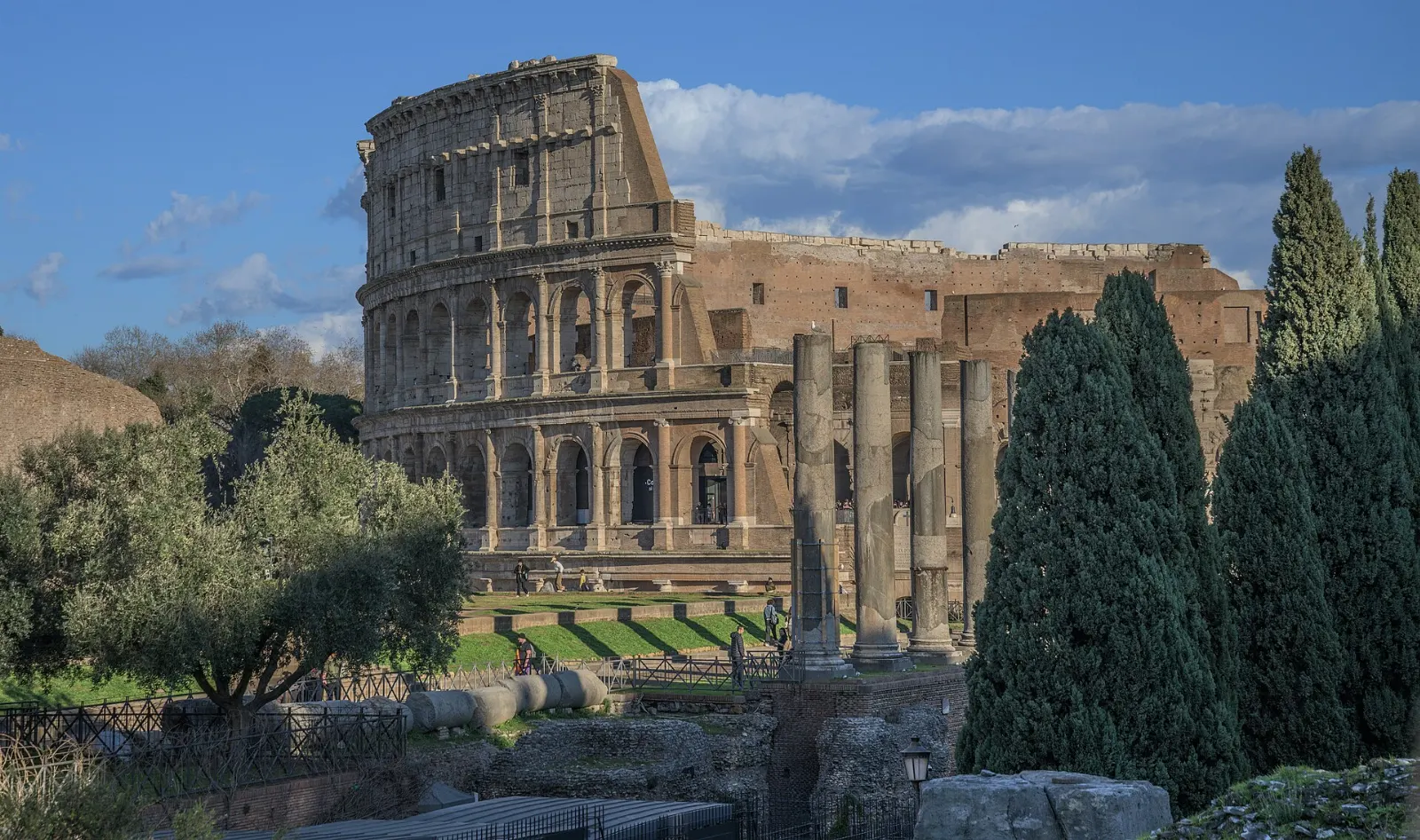
The Colosseum
Completed in AD 80 under Emperor Titus, the Flavian Amphitheater could hold tens of thousands of spectators for gladiator fights and public spectacles.
Practical tip: entry is by timed ticket, and the standard ticket also covers the Roman Forum and Palatine Hill. Buy only from the official archaeological park website or authorized sellers, book well ahead in spring and summer, and check the official website for current hours and fees.
The Roman Forum and Palatine Hill
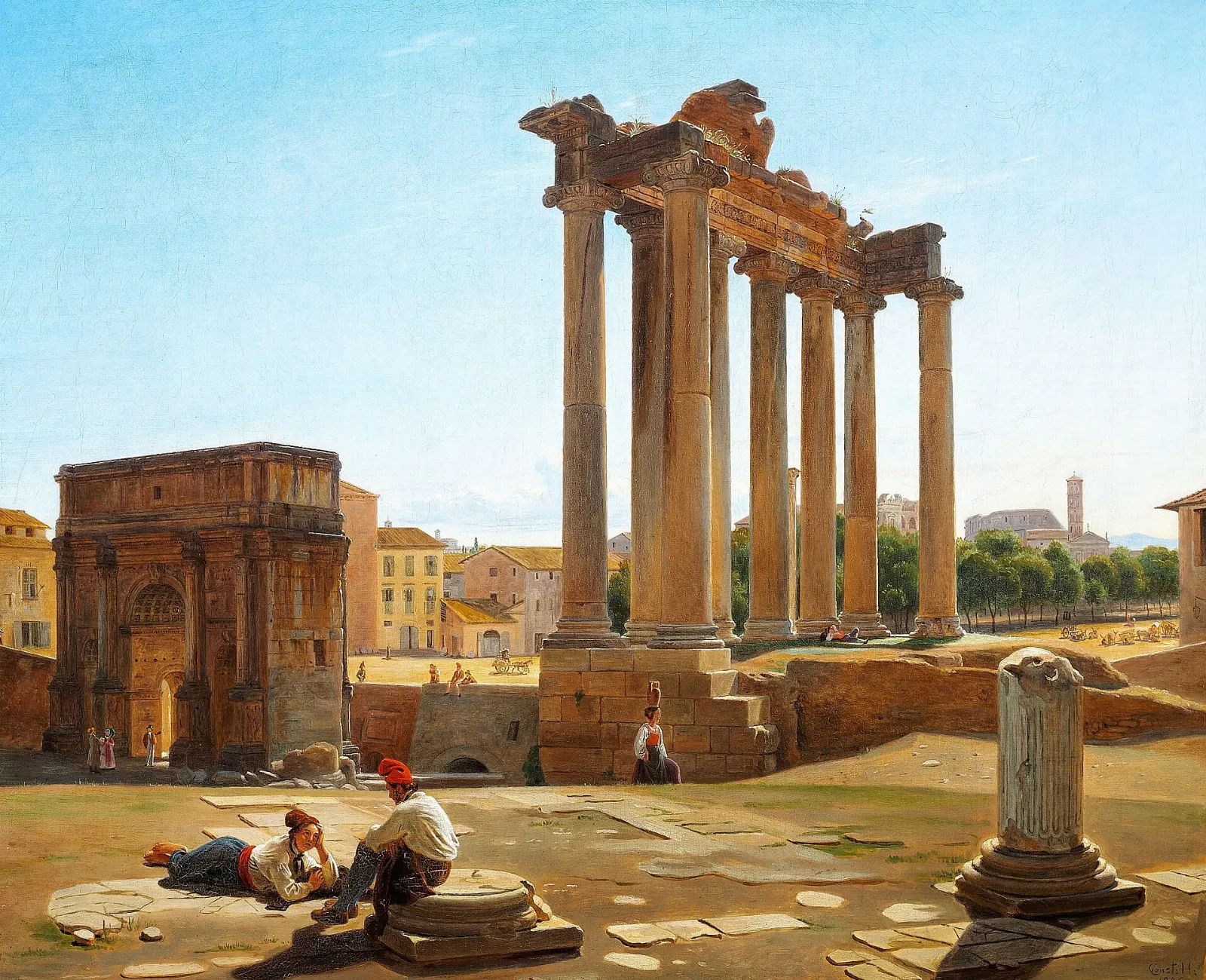
Beside the Colosseum, the Forum was the center of public life in ancient Rome, a valley of temples, basilicas and triumphal arches. Walk the Via Sacra past the Arch of Titus, the Temple of Vesta and the Curia, where the Senate met.
The Roman Forum was the political and religious center of the ancient city. Photo: Constantin Hansen, Wikimedia Commons, Public domain
Capitoline Hill
Michelangelo designed the elegant Piazza del Campidoglio at the top of the Capitoline Hill, flanked by the Capitoline Museums, among the oldest public museums in the world. Inside you will find the bronze Capitoline Wolf and the original equestrian statue of Marcus Aurelius.
Ad
The historic center: piazzas and fountains
The Pantheon
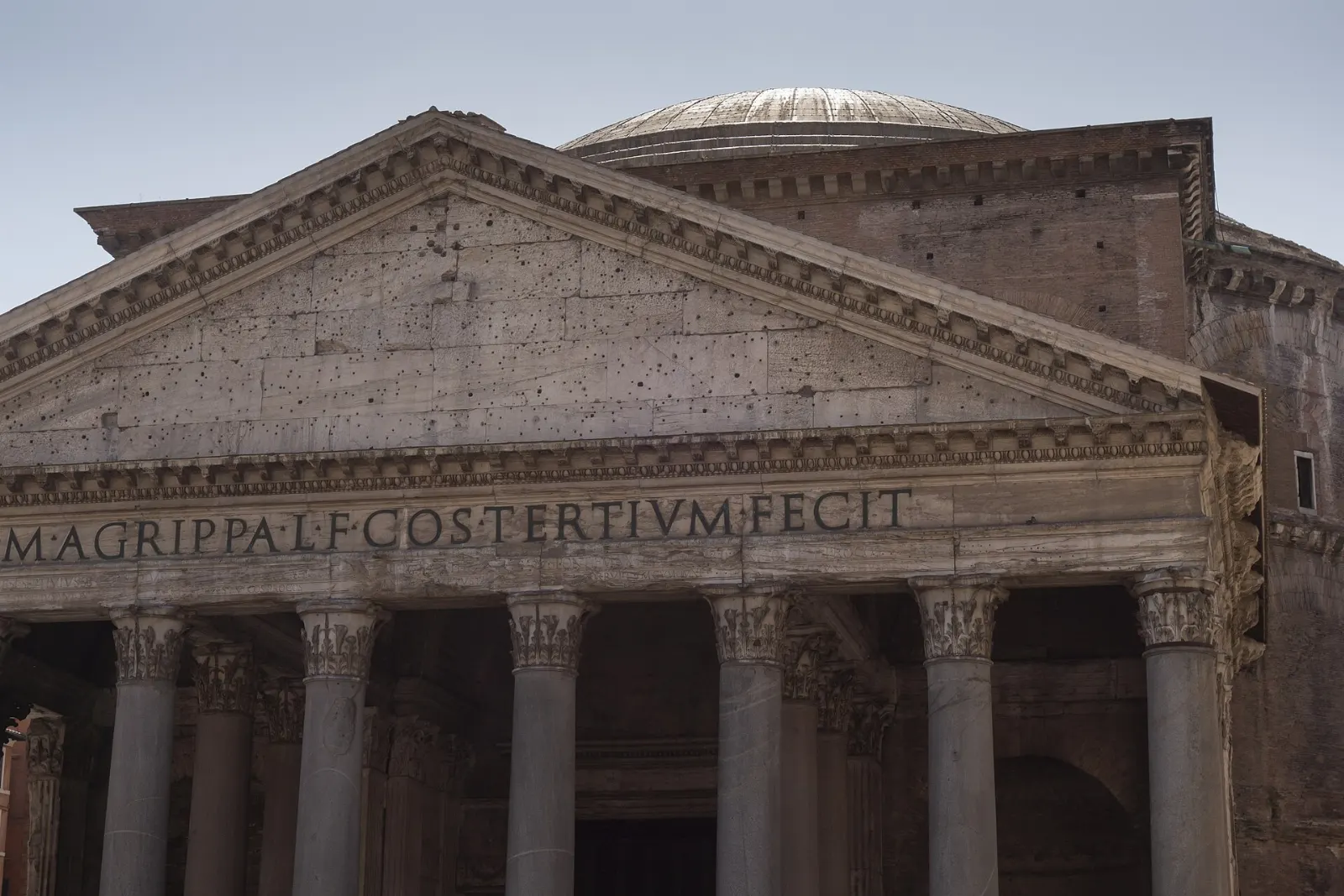
Rebuilt under Emperor Hadrian in the second century AD, the Pantheon is the best-preserved building from ancient Rome. Its vast unreinforced concrete dome, with an open oculus at the top, still astonishes engineers, and when it rains you can watch the drops fall to the marble floor below.
The Pantheon's concrete dome has remained intact for nearly two thousand years. Photo: Nicholas Hartmann, Wikimedia Commons, CC BY-SA 4.0
Piazza Navona
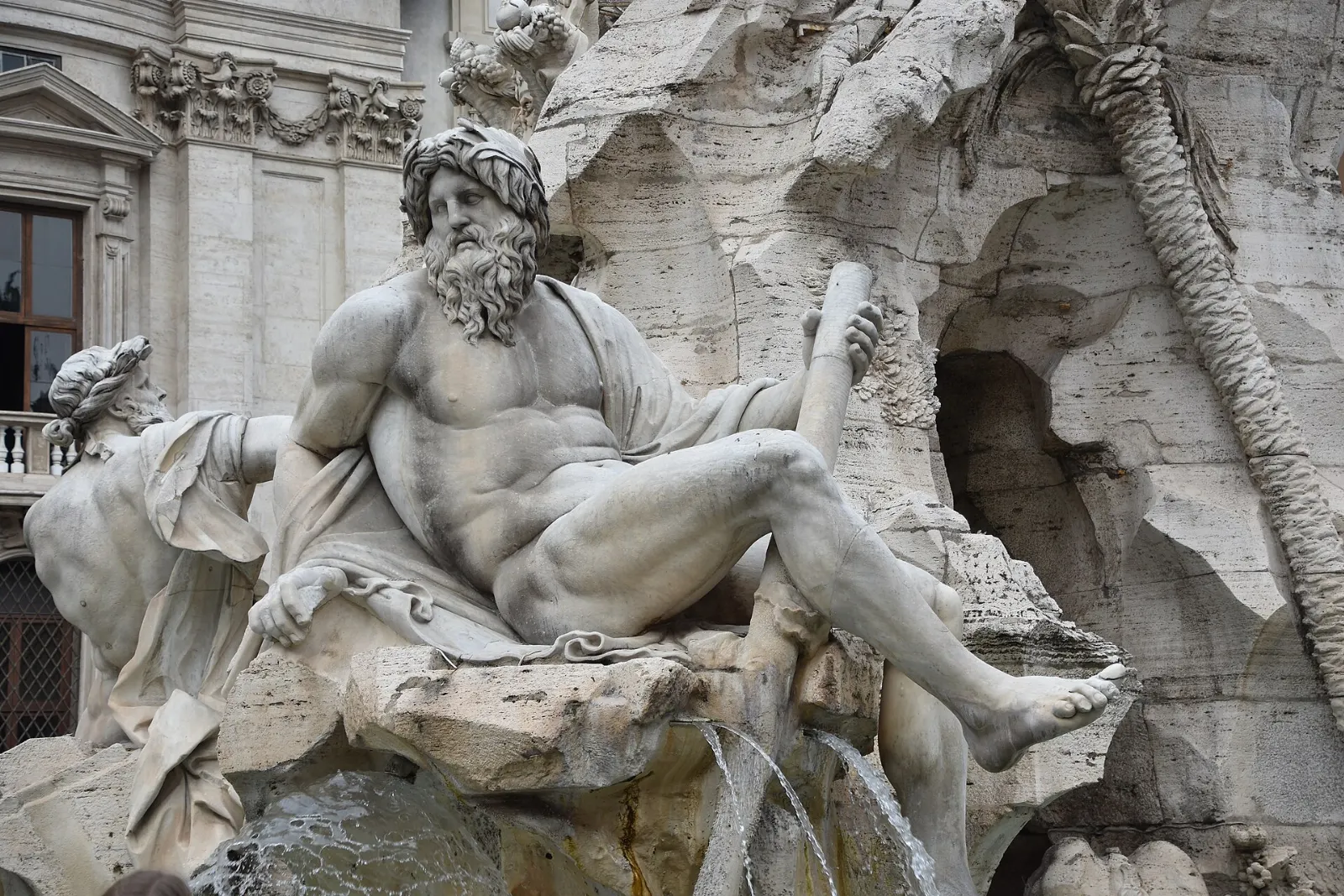
This long oval piazza follows the outline of the ancient Stadium of Domitian. At its center, Bernini's Fountain of the Four Rivers represents the Nile, Ganges, Danube and Río de la Plata, facing Borromini's church of Sant'Agnese in Agone.
Bernini's Fountain of the Four Rivers stands in the center of Piazza Navona. Photo: Timothy A. Gonsalves, Wikimedia Commons, CC BY-SA 4.0
The Trevi Fountain
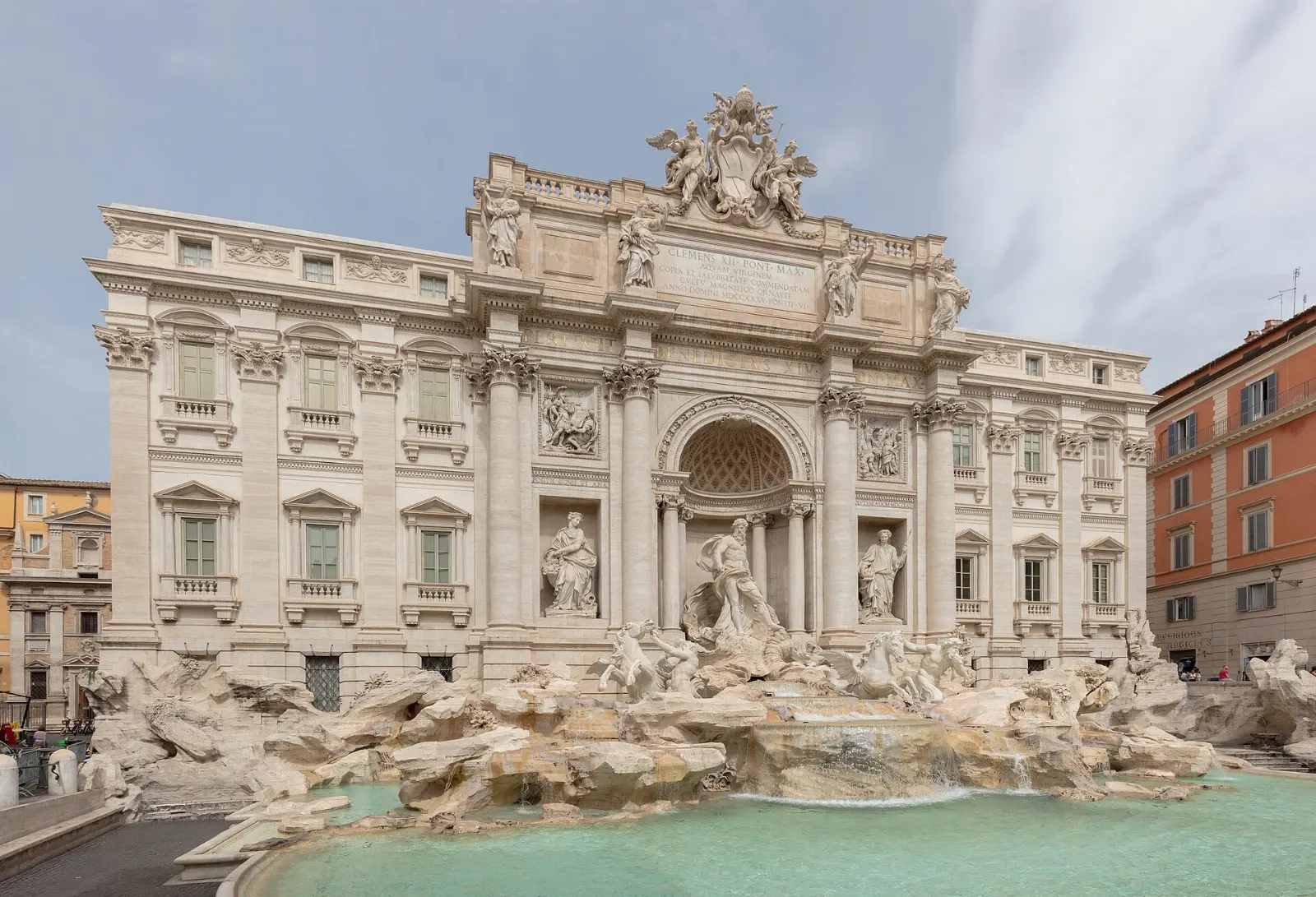
Rome's most famous fountain, completed in 1762, fills an entire facade with Baroque sculpture, rushing water and the figure of Oceanus. Tradition says that tossing a coin over your shoulder into the basin guarantees a return to Rome.
The Trevi Fountain was completed in 1762 to a design by Nicola Salvi. Photo: Diego Delso, Wikimedia Commons, CC BY-SA 4.0
The Spanish Steps
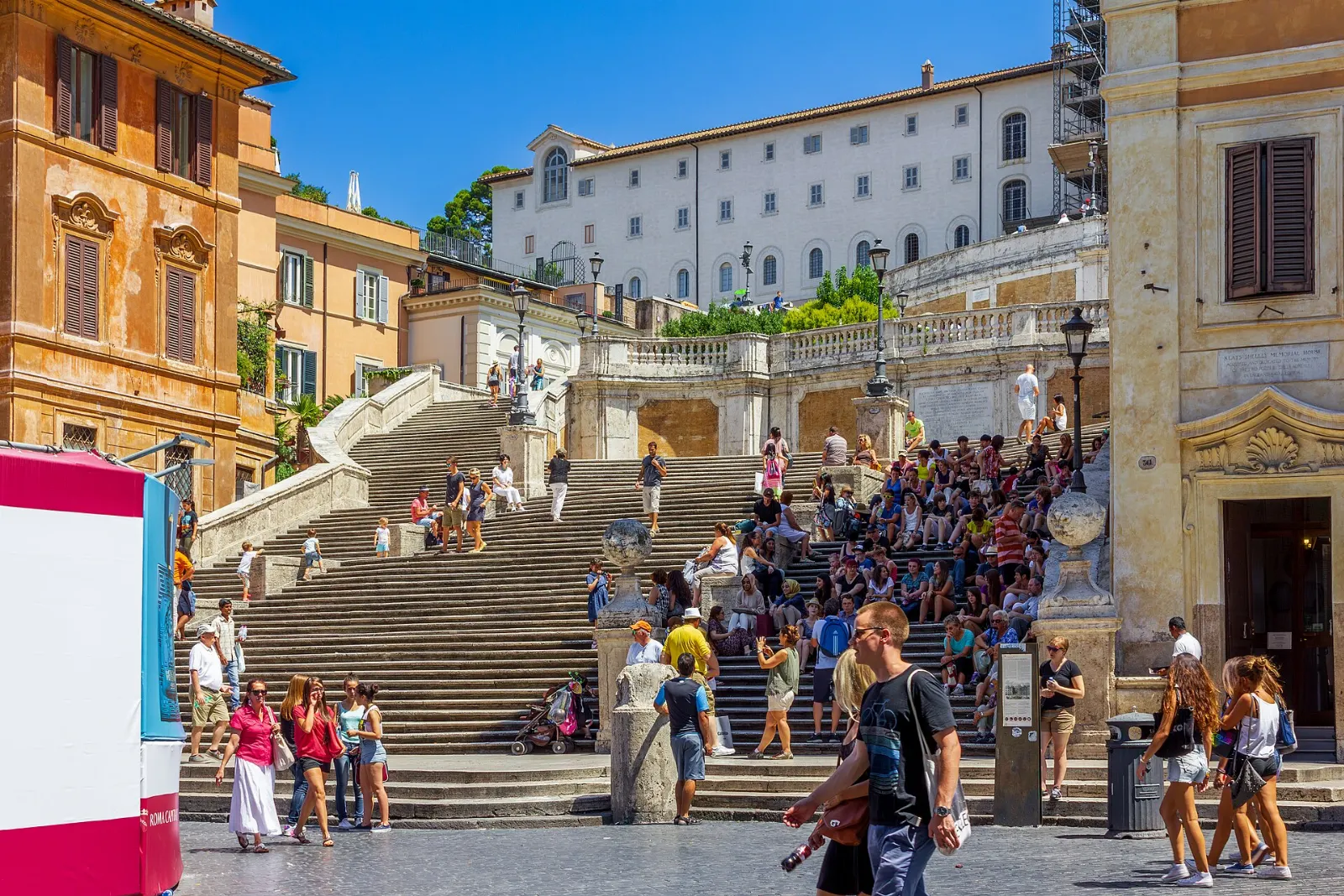
Built in the 1720s, the sweeping staircase rises from Piazza di Spagna, with its boat-shaped Barcaccia fountain, to the twin-towered church of Trinità dei Monti. The streets below, especially Via dei Condotti, are lined with luxury fashion houses. Allow twenty minutes, or longer if you shop.
The Spanish Steps lead from Piazza di Spagna up to the church of Trinità dei Monti. Photo: Perituss, Wikimedia Commons, CC0
The Vatican and the Tiber
The Vatican Museums and the Sistine Chapel
The papal collections are among the richest in the world: classical sculpture such as the Laocoön, the Gallery of Maps, the Raphael Rooms with the School of Athens and, at the end of the route, the Sistine Chapel, where Michelangelo painted both the ceiling and the Last Judgment.
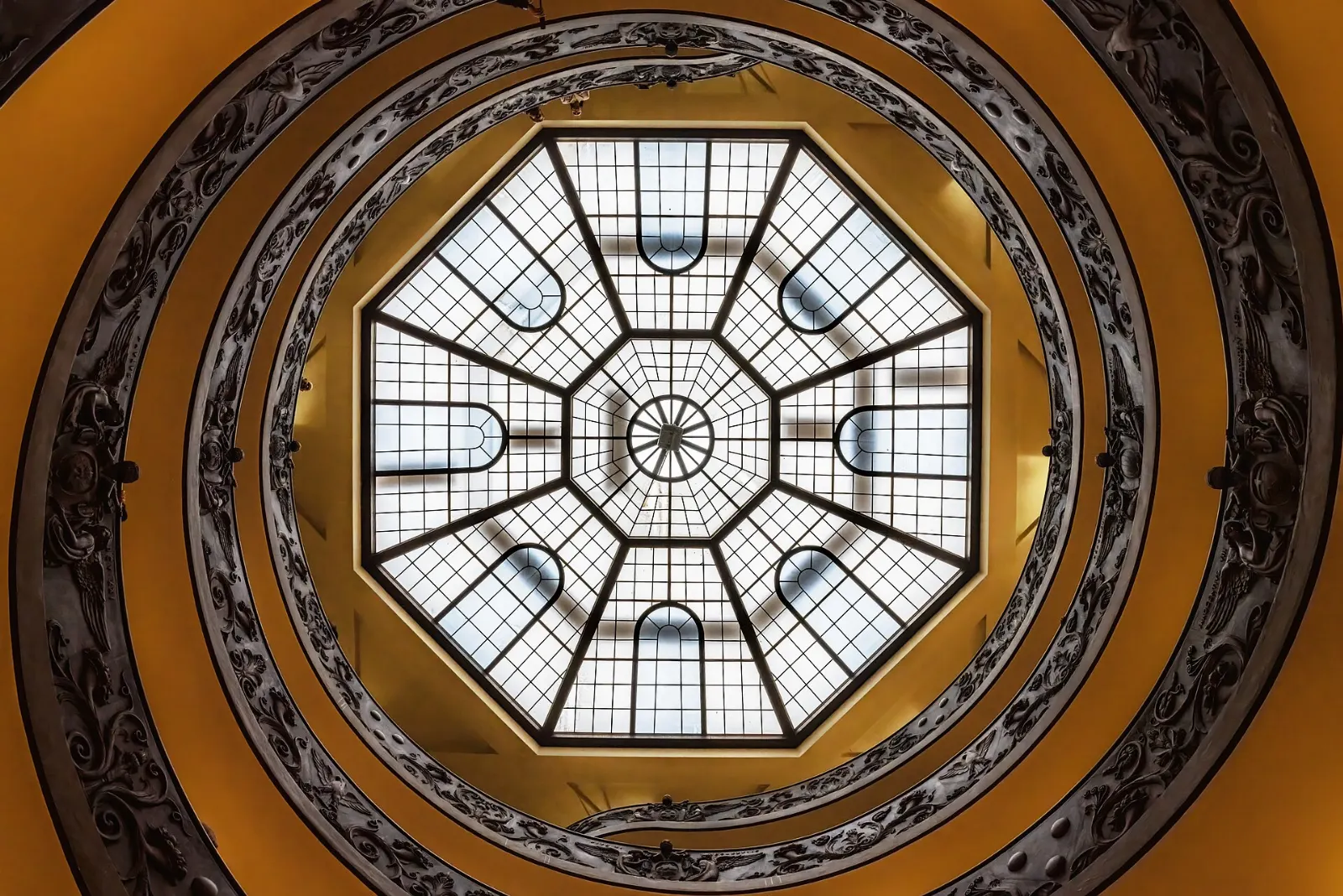
The spiral staircase near the exit of the Vatican Museums is one of the most photographed spots in the complex. Photo: Wilfredor, Wikimedia Commons, CC0
St Peter's Basilica
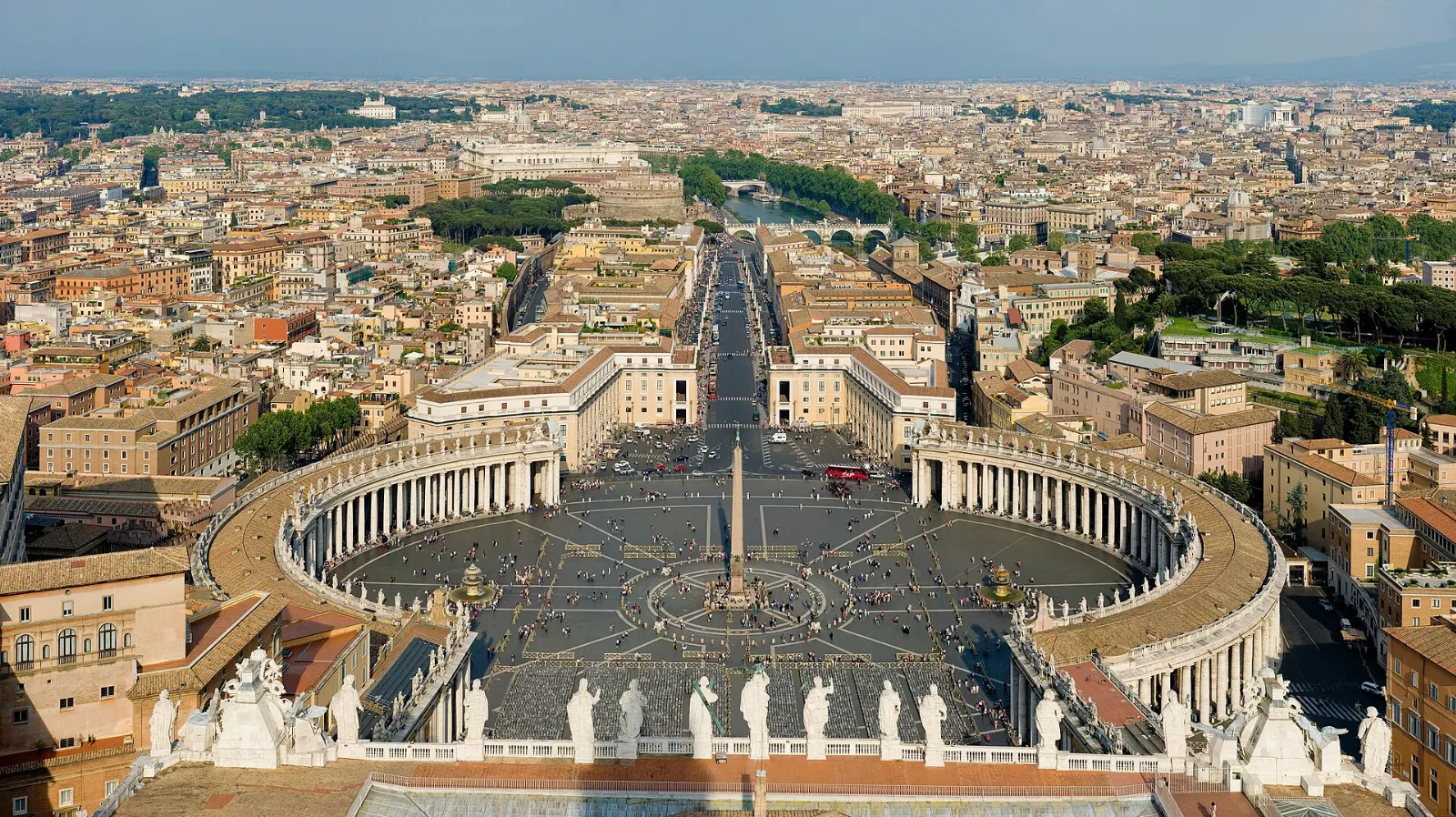
Built over the traditional burial place of Saint Peter, the basilica is vast and overwhelming. Inside are Michelangelo's Pietà, Bernini's bronze baldachin over the papal altar and the grand dome, which you can climb for a superb view over St Peter's Square and the city.
Bernini's colonnades embrace St Peter's Square in front of the basilica. Photo: Diliff, Wikimedia Commons, CC BY-SA 3.0
Castel Sant'Angelo
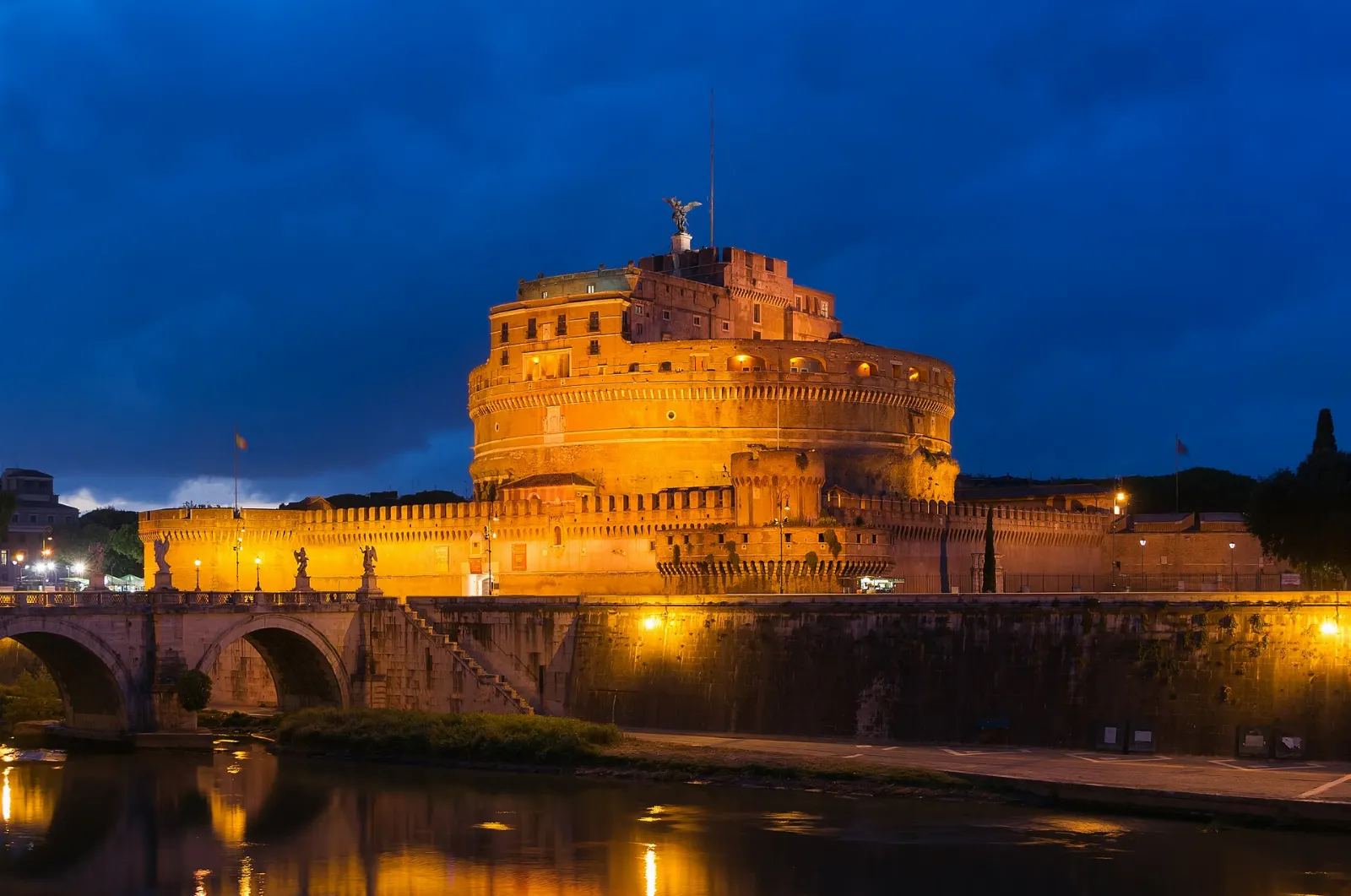
Originally built as Emperor Hadrian's mausoleum, this massive cylinder beside the Tiber later became a papal fortress, connected to the Vatican by an elevated corridor.
Castel Sant'Angelo began as the mausoleum of Emperor Hadrian. Photo: Jebulon, Wikimedia Commons, CC0
Ad
Trastevere, the Borghese and beyond
Trastevere
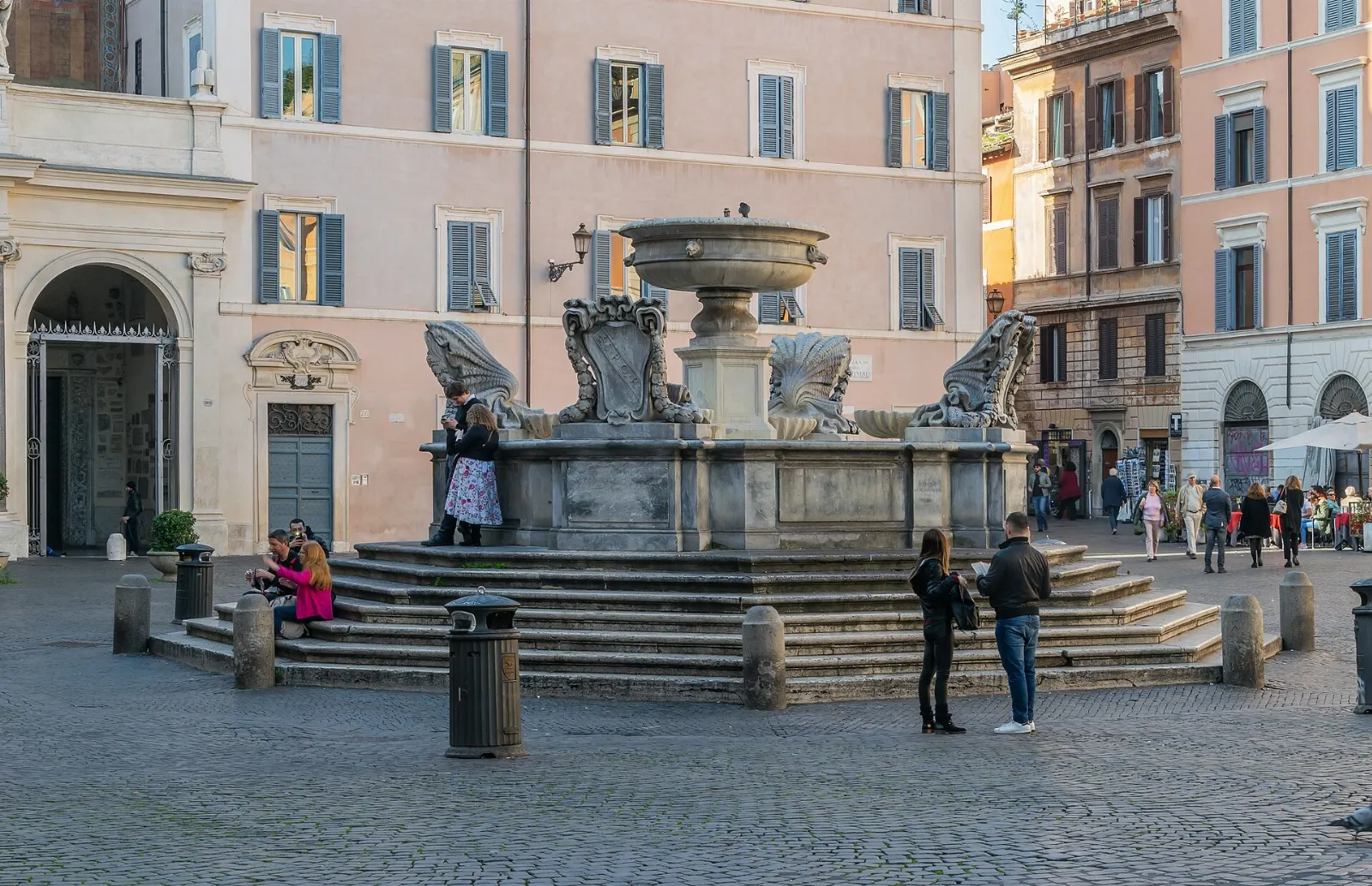
Across the river, Trastevere is a lively neighborhood of ochre houses, cobbled lanes and ivy-covered walls. Its heart is the piazza of Santa Maria in Trastevere, one of the oldest churches in Rome, with glittering medieval mosaics on its facade and apse.
Santa Maria in Trastevere is famous for its medieval mosaics. Photo: Krzysztof Golik, Wikimedia Commons, CC BY-SA 4.0
The Borghese Gallery and Villa Borghese
Set in a large landscaped park, the Borghese Gallery holds an outstanding collection of Bernini sculptures, including Apollo and Daphne and the Rape of Proserpina, along with paintings by Caravaggio, Raphael and Titian. Allow two hours for the gallery and extra time for the gardens.
Food and local flavors
Roman cooking is built on a few simple ingredients: pecorino romano cheese, guanciale (cured pork cheek), black pepper and good pasta.
For a snack, look for supplì, fried rice balls with a mozzarella center, and pizza al taglio, rectangular pizza sold by weight. Roman-style pizza in pizzerias is thin and crisp.
Markets are a good window into local life. Testaccio Market is a favorite with Romans for street food and produce, while Campo de' Fiori hosts a morning market in the historic center.
Popular dishes to try in Rome
Carbonara The four classic pastas are cacio e pepe, with cheese and pepper; gricia, with guanciale and pecorino; amatriciana, which adds tomato; and carbonara, made with egg yolk rather…Photo: Trishhhh, Wikimedia Commons, CC BY 2.0Cacio e pepe The four classic pastas are cacio e pepe, with cheese and pepper; gricia, with guanciale and pecorino; amatriciana, which adds tomato; and carbonara, made with egg yolk rather…Photo: Schellack, Wikimedia Commons, CC BY-SA 4.0Supplì For a snack, look for supplì, fried rice balls with a mozzarella center, and pizza al taglio, rectangular pizza sold by weight.Photo: Nicholas Gemini, Wikimedia Commons, CC BY-SA 4.0Pizza al taglio For a snack, look for supplì, fried rice balls with a mozzarella center, and pizza al taglio, rectangular pizza sold by weight.Photo: JIP, Wikimedia Commons, CC BY-SA 4.0
Ad
Where to stay
Centro Storico. The area around the Pantheon and Piazza Navona puts you within walking distance of most sights.
Monti. Just north of the Colosseum, Monti has a village feel, with independent shops, wine bars and quick metro access.
Trastevere. Atmospheric and full of restaurants, ideal for food lovers and those who enjoy a lively evening scene.
Prati. Near the Vatican, Prati is calmer, with wide streets, good restaurants and metro access.
Testaccio. A working-class neighborhood with superb food, suited to travelers who want local character over postcard views.
Where to stay in Rome
Pantheon The area around the Pantheon and Piazza Navona puts you within walking distance of most sights.Photo: Rabax63, Wikimedia Commons, CC BY-SA 4.0Piazza Navona The area around the Pantheon and Piazza Navona puts you within walking distance of most sights.Photo: Myrabella, Wikimedia Commons, CC BY-SA 3.0Colosseum Just north of the Colosseum, Monti has a village feel, with independent shops, wine bars and quick metro access.Photo: Diliff, Wikimedia Commons, CC BY-SA 2.5Rome old town One of the best areas to base yourself in Rome.Photo: CivArmy, Wikimedia Commons, CC BY-SA 4.0
Best time to visit
Spring, from April to early June, brings warm days, blooming terraces and artichoke season, but also Easter crowds and many school groups.
Summer is hot, often very hot in July and August, and the main sights are crowded.
Late September and October are excellent, with warm weather, softer light and fewer crowds.
Ad
Getting there and getting around
By air. Rome's main airport is Fiumicino, also called Leonardo da Vinci, west of the city.
By train. High-speed trains connect Roma Termini and Roma Tiburtina with Florence, Naples, Milan and Venice, making Rome an easy stop on a wider Italy trip.
Getting around. The historic center is compact and best explored on foot.
Driving. Avoid driving in Rome. Much of the center is a limited traffic zone, cameras record unauthorized vehicles and fines are sent to rental companies.
A suggested itinerary
First day
Start early at the Colosseum, then explore the Roman Forum and Palatine Hill.
Second day
Reach the Vatican Museums for the first entry, finish in the Sistine Chapel and continue to St Peter's Basilica and the dome.
Third day
Visit the Trevi Fountain at opening time, then walk to the Spanish Steps and up to the Pincio.
Fourth day
Shop and snack at Testaccio Market, explore the Aventine Hill and its orange garden, then wander the Jewish Ghetto and Campo de' Fiori before a final evening stroll through the lit-up piazzas.
Ad
Practical tips
Book timed tickets ahead for the Colosseum, Vatican Museums, Borghese Gallery and Trevi Fountain basin.
Cover shoulders and knees for St Peter's and other churches; carry a light scarf.
Watch for pickpockets on crowded buses, the metro and around major sights.
Refill a water bottle at the free public drinking fountains around the city.
Do not sit or eat on the Spanish Steps or wade into fountains; fines are enforced.
Expect a cover charge on restaurant bills and table service fees at cafés.