Easter Island, known to its people as Rapa Nui, sits alone in the southeastern Pacific, more than three thousand kilometers west of mainland Chile.
AT A GLANCE
Best time
December to March for warm weather and the Tapati festival; April and November for fewer visitors.
How long
Four to five days lets you see the major sites without rushing.
Getting there
Fly from Santiago to Mataveri International Airport in about five hours.
Why visit Easter Island
Nowhere else can you stand beneath moai in the landscape where they were carved, moved and raised. The island's archaeology is everywhere: ceremonial platforms called ahu along the coast, the quarry where the statues were cut, a cliff-top village tied to the Birdman cult, house foundations, caves and petroglyphs.
The island also rewards travelers who slow down. You can hike to the highest point for views of open ocean in every direction, swim at a palm-fringed beach, dive in clear water and watch traditional dance performances in Hanga Roa.
Hanga Roa and the southwest
Nearly all of the island's residents live in Hanga Roa, the only town, on the southwest coast. Several important sites lie within walking or short driving distance.
Tahai Ceremonial Complex
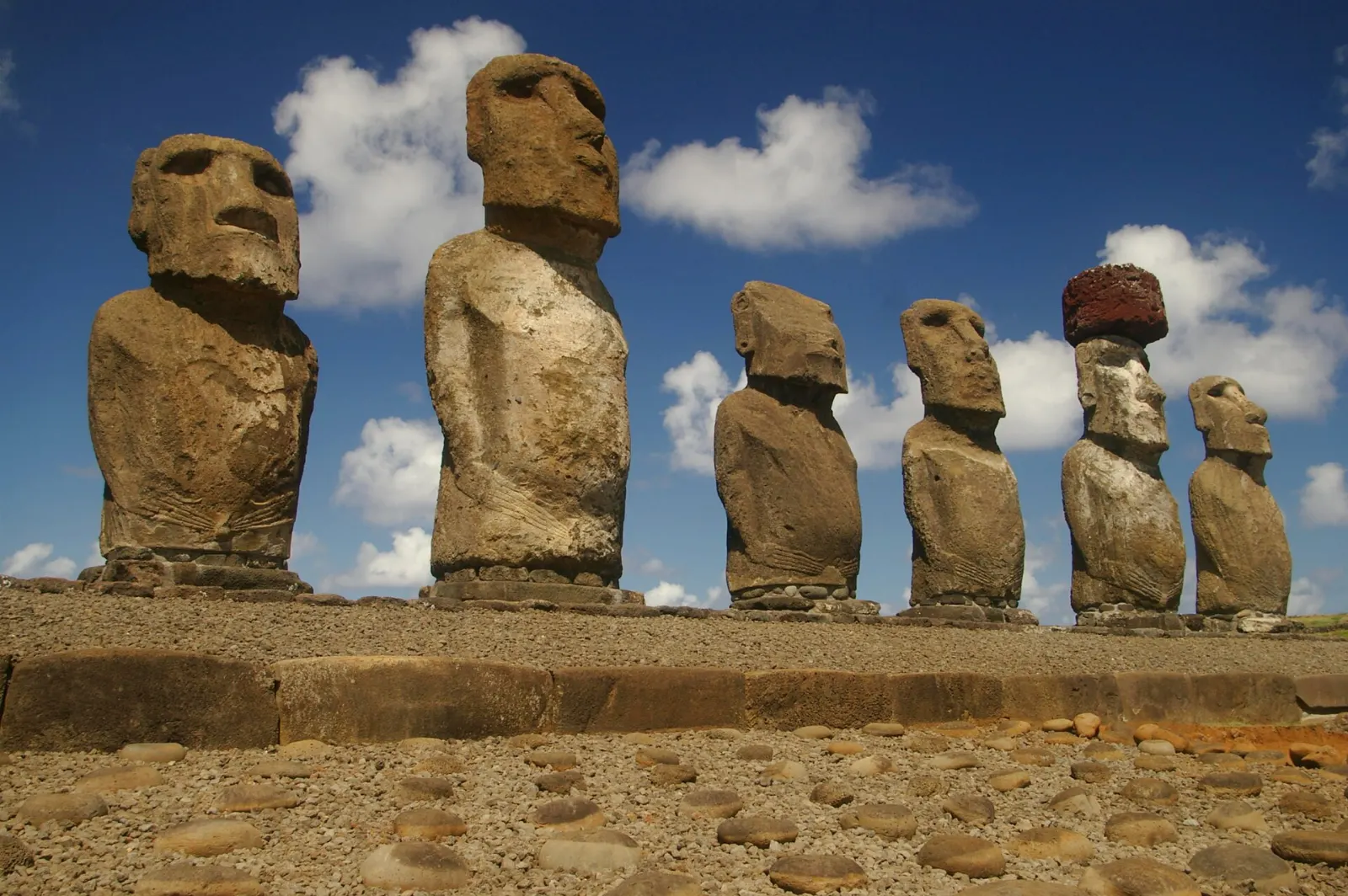
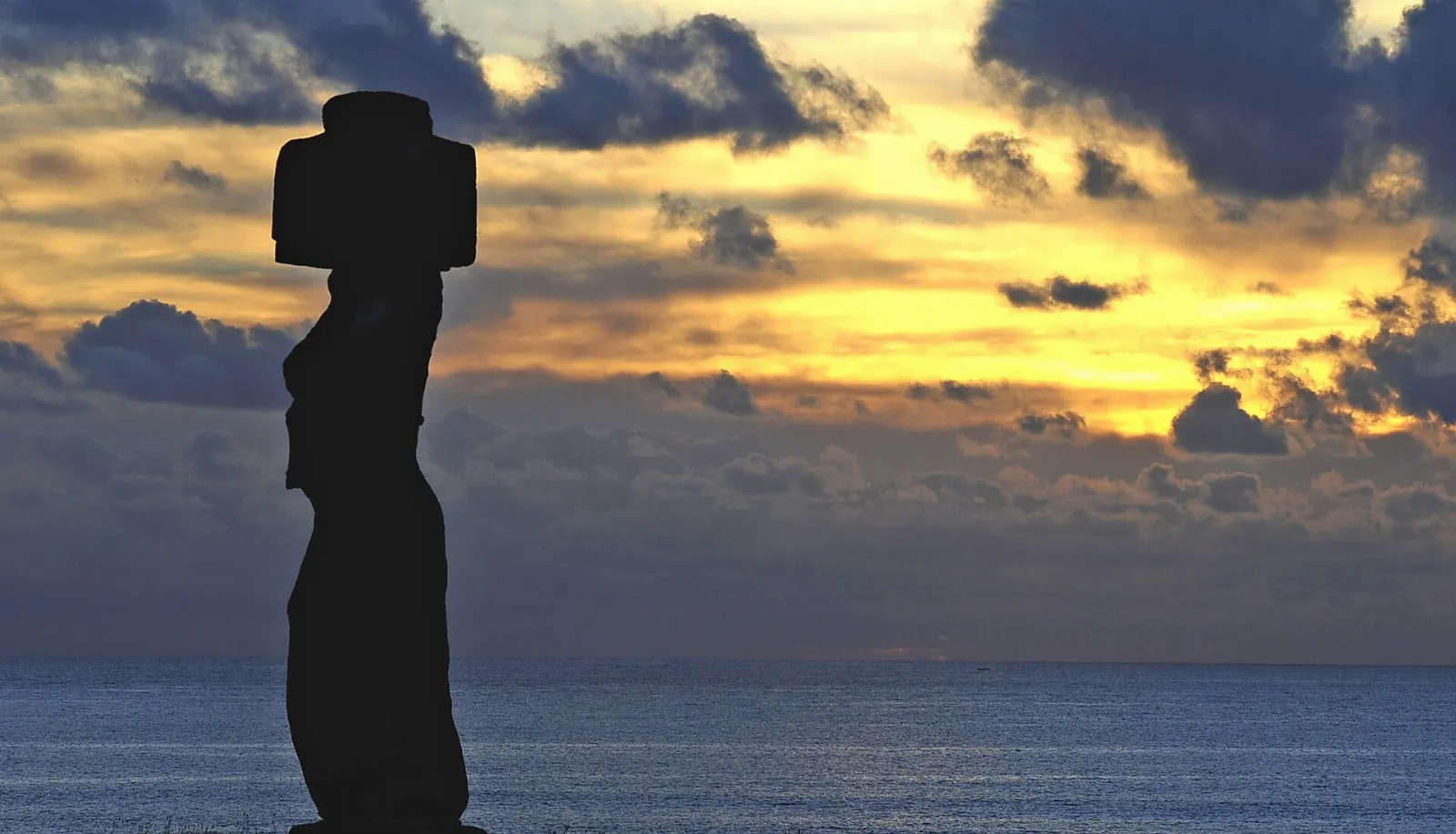
Just north of the town center, Tahai holds three restored ahu, including Ahu Ko Te Riku, whose moai wears a red topknot and inlaid eyes that show how the statues may once have looked.
Museo Antropologico Padre Sebastian Englert
Near Tahai, this anthropological museum gives essential background on Rapa Nui history, from settlement and moai building to the Birdman era and the devastating nineteenth century. Exhibits include artifacts, a rare female moai and examples of the rongorongo script.
Rano Kau and Orongo
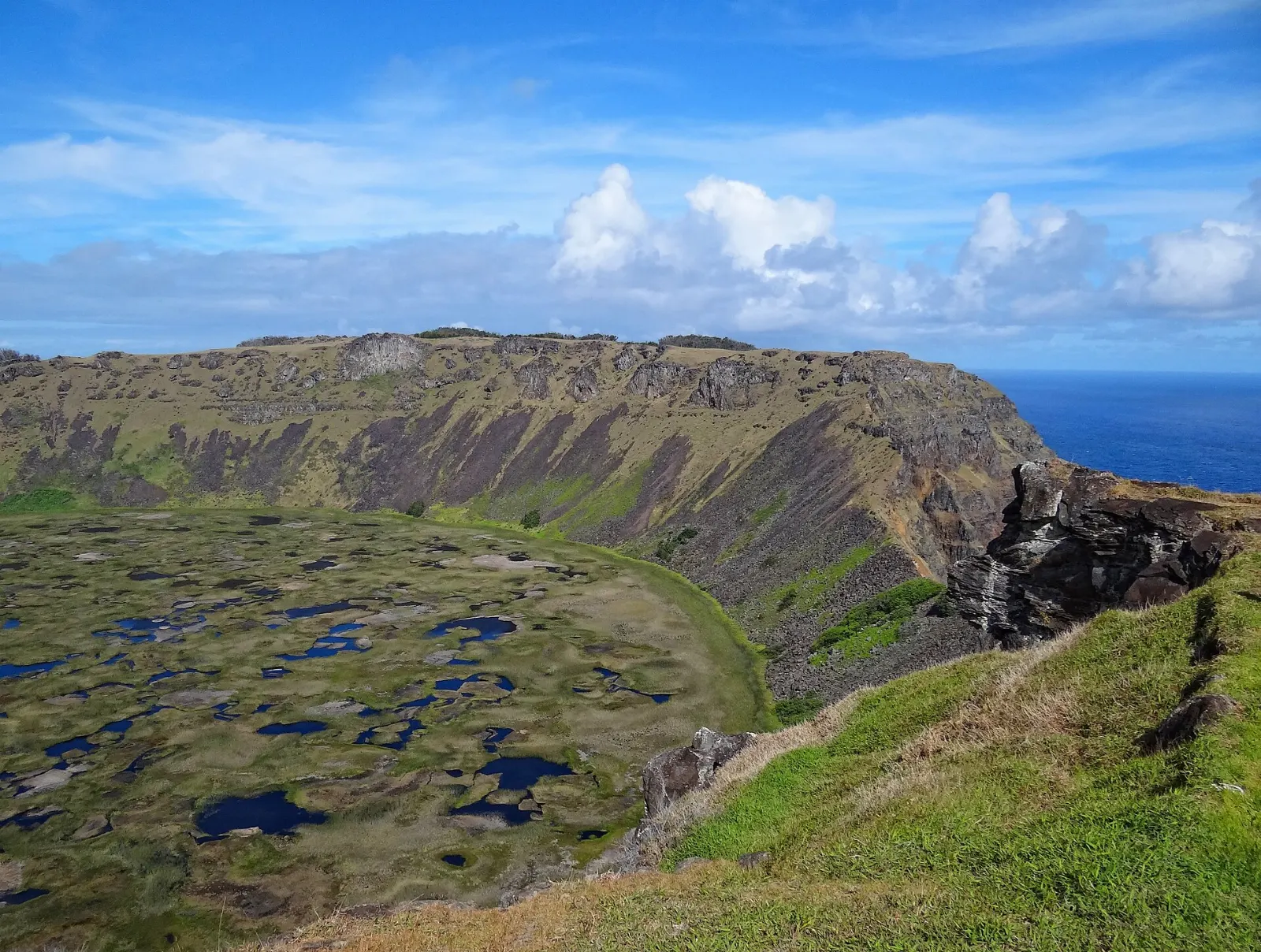
At the southwest tip, the extinct volcano Rano Kau holds a vast crater lake covered with reeds.
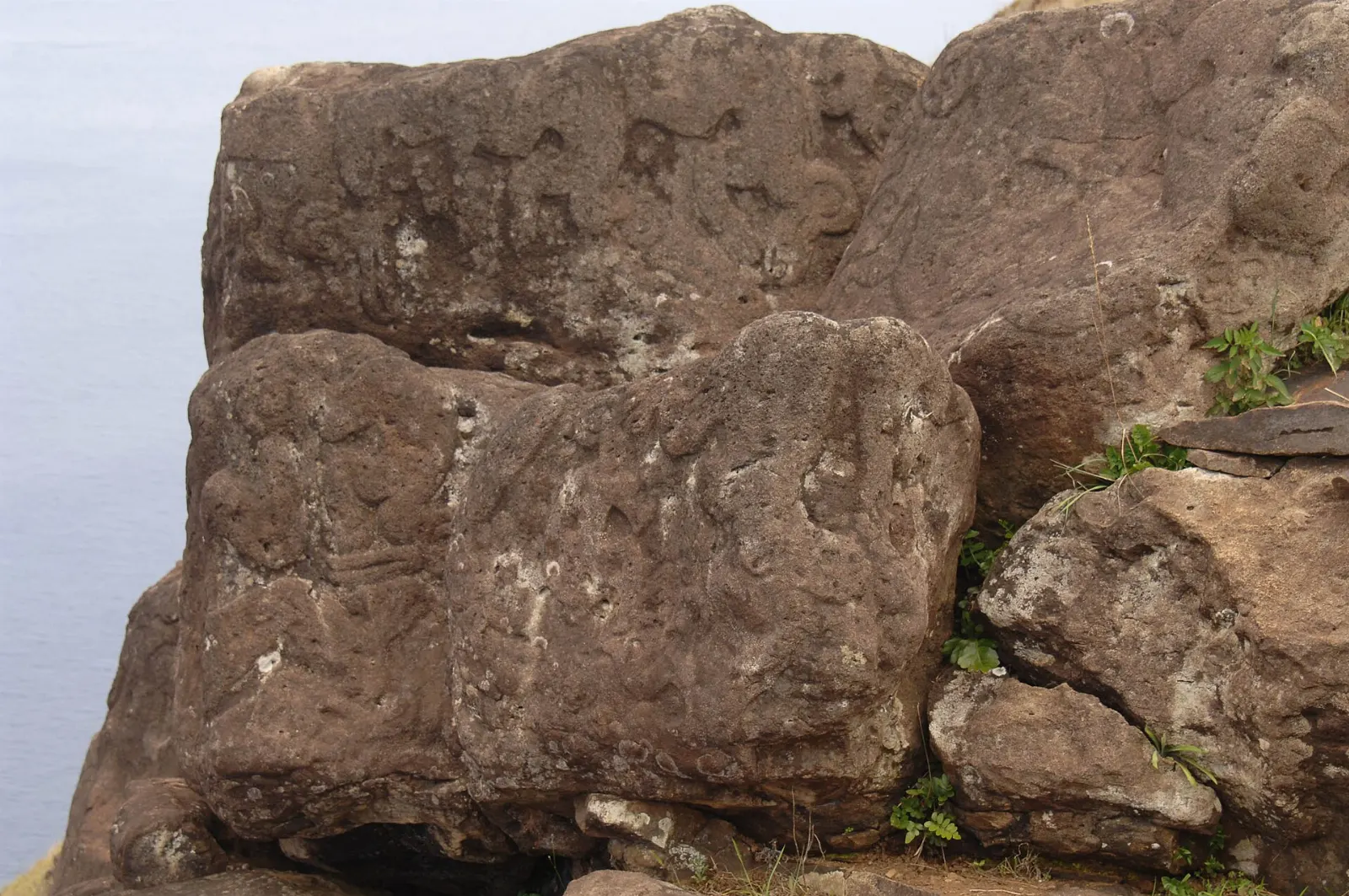
The petroglyphs at Orongo show the Birdman figure, a human body with a bird's head, carved again and again into the basalt.
Ahu Vinapu
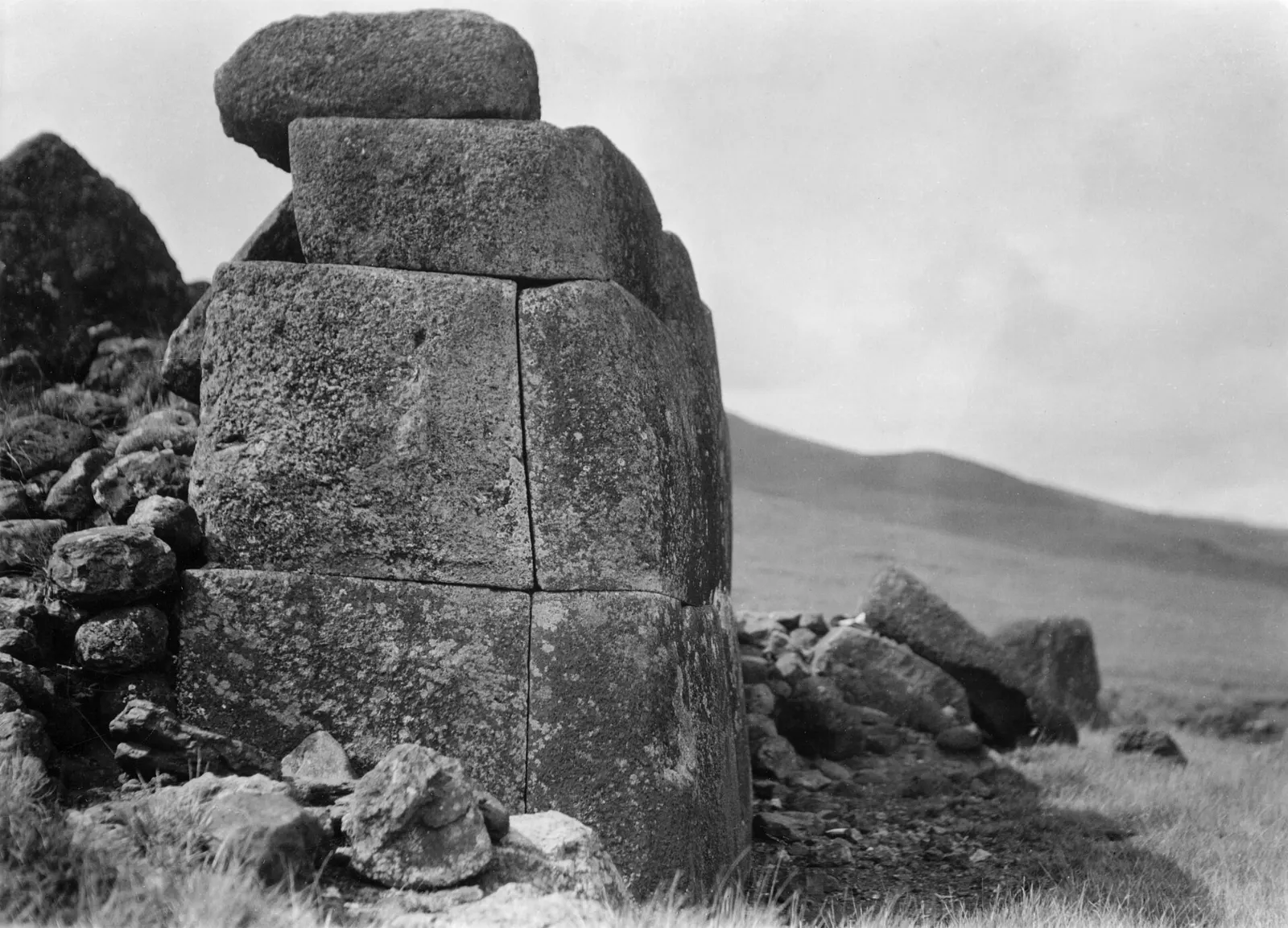
Southeast of the airport, Vinapu is famous for a platform wall of precisely fitted basalt blocks, a style that has invited comparisons with stonework elsewhere in the Pacific and South America. The moai here lie toppled.
The south coast and the moai quarry
The road along the south coast passes a string of ahu with fallen moai, many left where they were toppled during conflicts in the past. It ends at the island's two most spectacular sites.
Rano Raraku
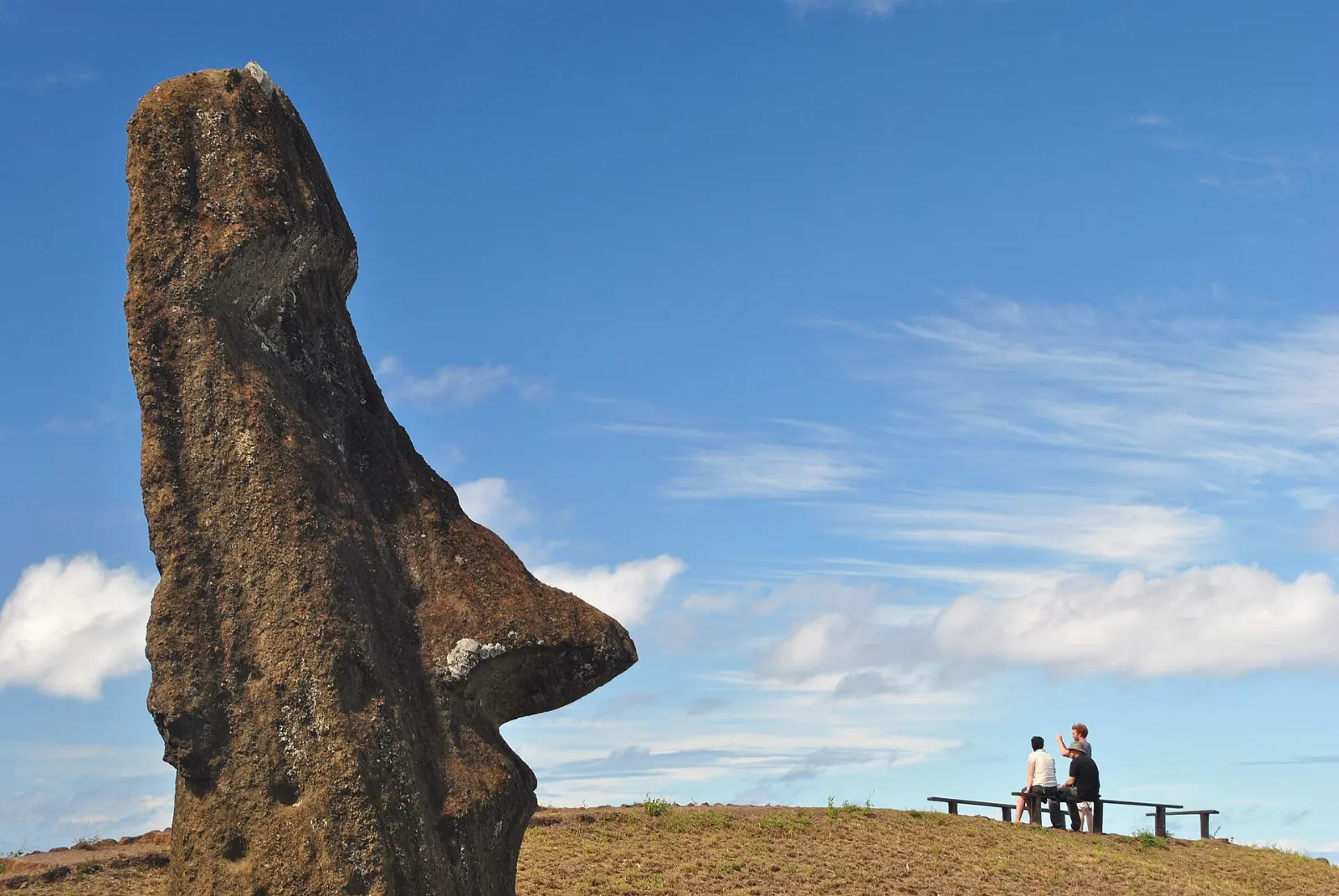
Almost all moai were carved from the volcanic tuff of Rano Raraku. Walking its slopes, you pass dozens of statues buried up to their shoulders, giant heads gazing over the plain, and unfinished figures still attached to the rock face, including one estimated at around twenty meters long.
Ahu Tongariki
Below Rano Raraku stands the island's largest ahu, with fifteen moai in a line facing inland. A tsunami in 1960 scattered the statues, and a restoration project in the 1990s re-erected them.
Poike and Papa Vaka
The eastern Poike peninsula is the oldest part of the island, a grassy plateau with few visitors. Along the north coast nearby, Papa Vaka has large rock carvings of canoes, fish and other marine figures.
The north coast and interior
Anakena and Ahu Nau Nau
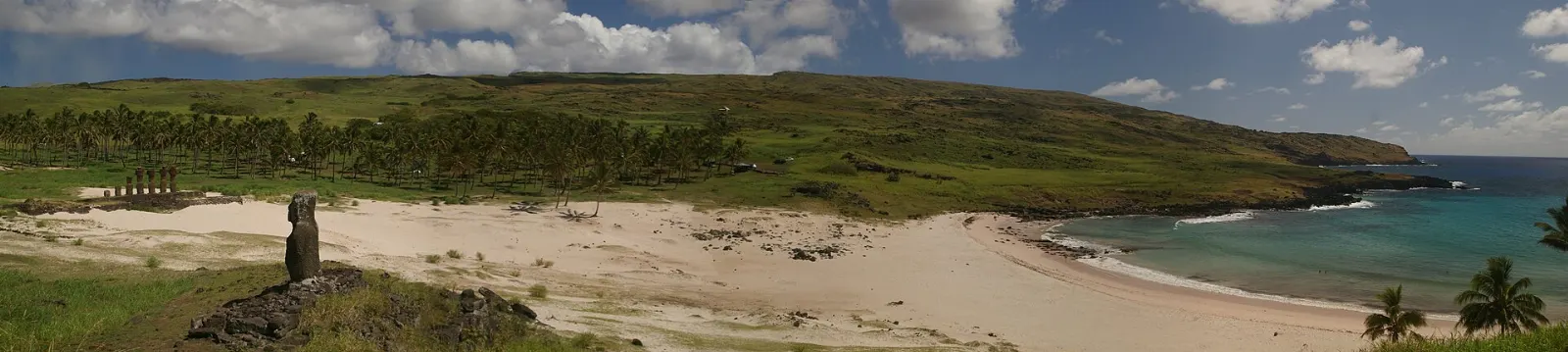
Anakena is the island's main sandy beach, with coconut palms, calm water on good days and two ahu beside the sand. Ahu Nau Nau has several moai with red topknots, and their backs are carved with detailed designs that were protected for centuries by the sand.
Te Pito Kura
On the north coast, this site has a large, smooth, rounded stone said to concentrate mana, and nearby lies Paro, the largest moai ever erected on an ahu, now face down. Allow about twenty minutes.
Ahu Akivi
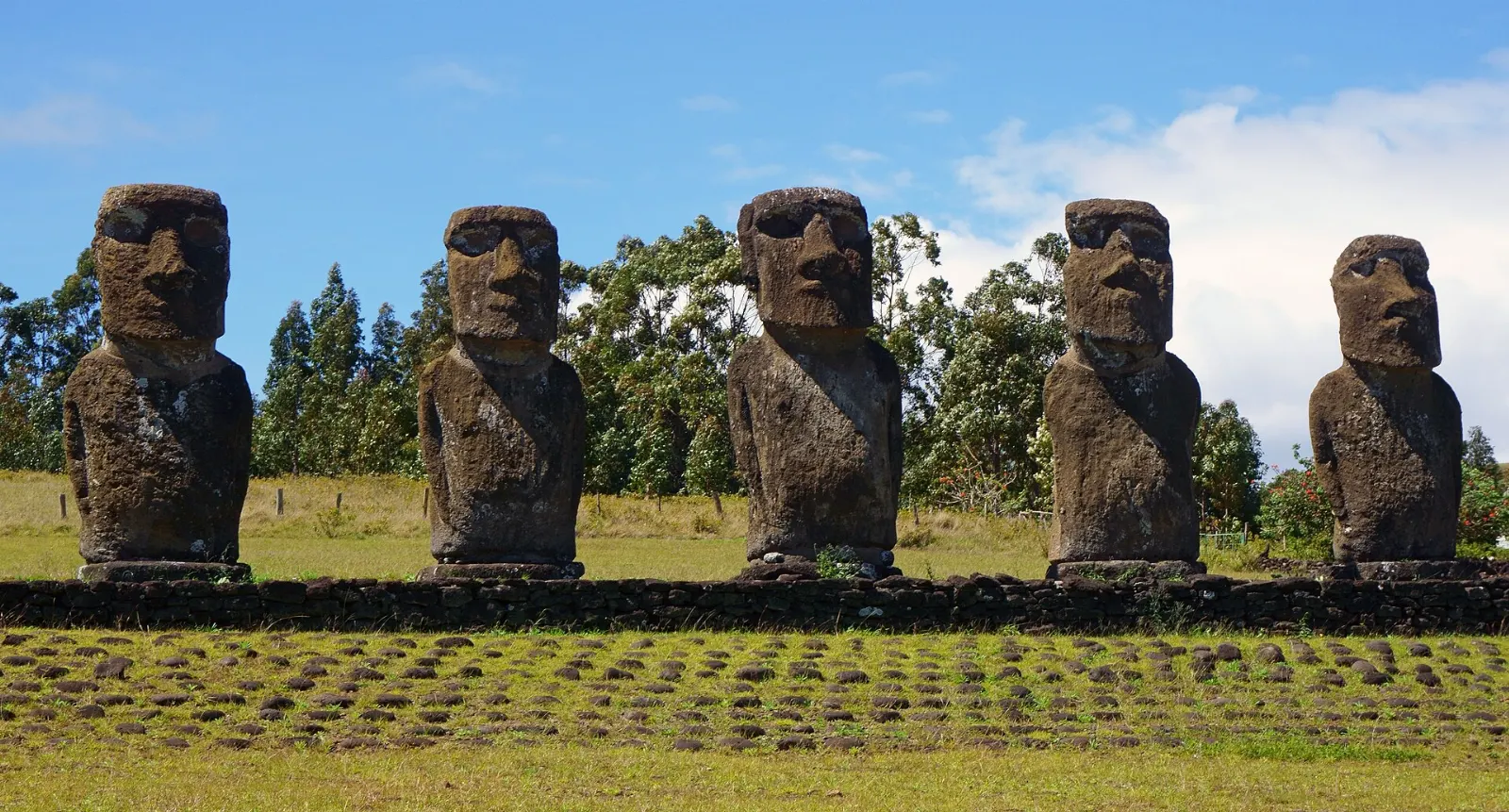
Inland on the lower slopes of Maunga Terevaka, Ahu Akivi has seven moai that, unusually, look toward the ocean. Local tradition links them to seven explorers sent ahead by Hotu Matu'a. Allow about thirty minutes.
Puna Pau and the caves
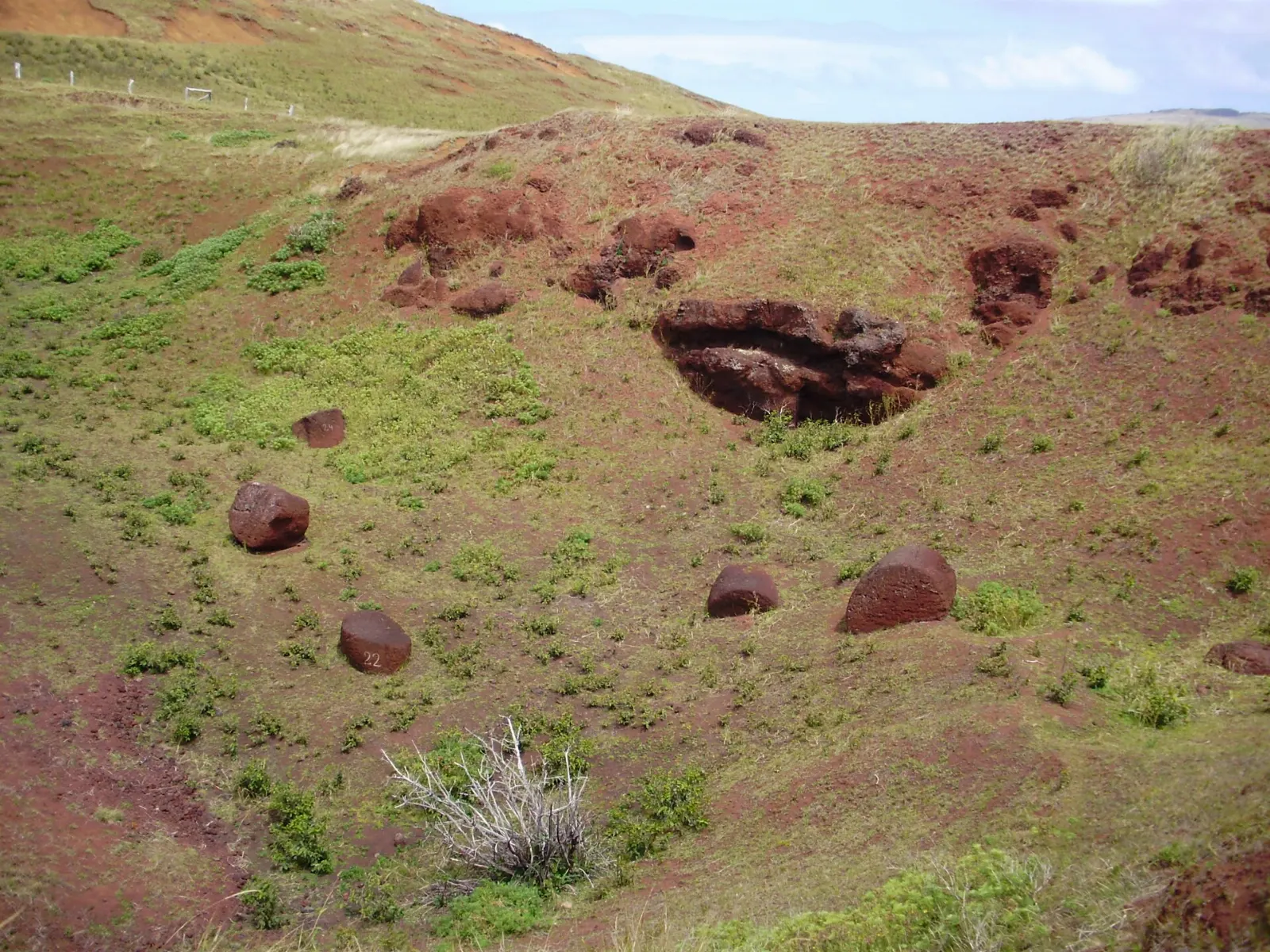
Puna Pau is the small quarry of red scoria where the pukao, the cylindrical topknots placed on some moai, were carved. Several unfinished pukao still lie nearby.
Food and local flavors
Seafood is the backbone of island cooking. Fresh tuna appears everywhere, in ceviche, grilled steaks and empanadas, which are a favorite quick meal.
Most restaurants, cafes and small markets are along the main streets of Atamu Tekena and Policarpo Toro and around the harbor in Hanga Roa.
Popular dishes to try in Easter Island


Where to stay
All accommodation is in or near Hanga Roa. Central Hanga Roa suits travelers without a car, with restaurants, shops and the harbor on foot. The Tahai side of town suits those who want sunset walks and the museum nearby.
Where to stay in Easter Island


Best time to visit
The island has a mild subtropical climate year-round, with constant trade winds and high humidity. The warmest, busiest months are December through March, when the sea is best for swimming and diving.
Winter, from June to August, is cooler, wetter and windier, with fewer visitors.
Getting there and getting around
LATAM operates flights from Santiago to Mataveri International Airport, which sits on the edge of Hanga Roa; the flight takes about five hours.
To visit most archaeological sites, you need a Rapa Nui National Park ticket, sold online and through official outlets, valid for a set number of consecutive days.
A suggested itinerary
First day
Settle into Hanga Roa, visit the anthropological museum, walk along the harbor and watch sunset at Tahai.
Second day
Spend the morning at Rano Kau and Orongo, then visit Ahu Vinapu.
Third day
Rise early for sunrise at Ahu Tongariki, then explore Rano Raraku in depth.
Fourth day
Visit Ahu Akivi, Puna Pau and Ana Te Pahu, then hike Maunga Terevaka or book a snorkeling or diving trip from the harbor.
Practical tips
- Book flights and lodging early, especially for the Tapati festival and the Chilean summer holidays.
- Buy your national park ticket before you go and carry it every day, along with your passport.
- Never touch the moai, climb on an ahu or walk on platforms; these are sacred sites and penalties are serious.
- Arrange a registered guide in advance, since guides are required at park sites.
- Carry Chilean pesos; ATMs are few and card machines can be unreliable.
- Pack sunscreen, a windproof layer and rain gear, as the sun is strong and showers pass quickly.