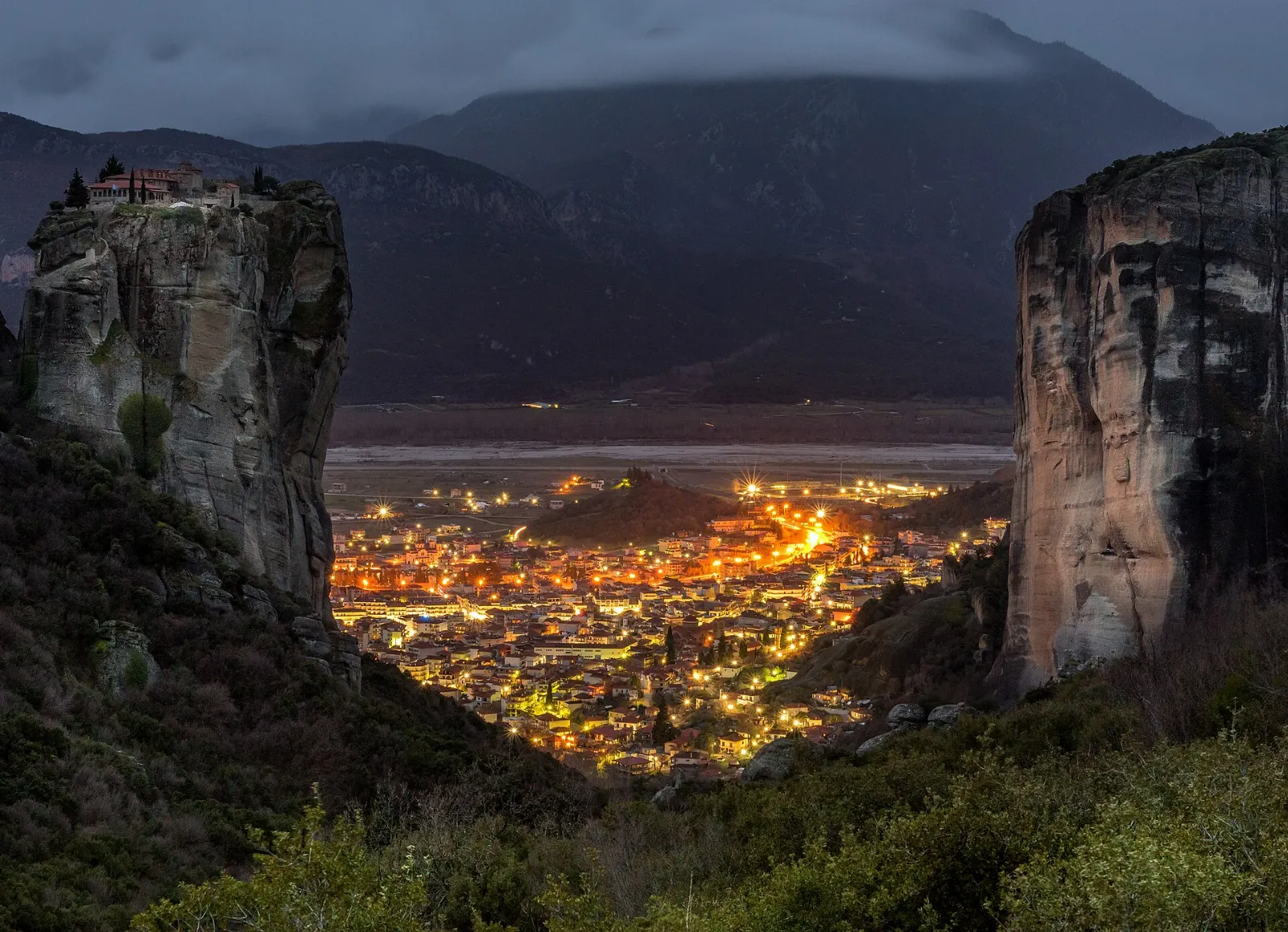
Few places in Europe look as improbable as Meteora. Above the town of Kalambaka in northwestern Thessaly, smooth gray towers of rock rise straight out of the plain, and on their summits sit Orthodox monasteries that monks first reached by ladders, ropes and nets.
AT A GLANCE
Best time
April to June and September to October for mild weather and lighter crowds.
How long
One full day for the main monasteries; two days to see all six and hike.
Getting there
About four hours by car from Athens; trains and buses run to Kalambaka.
Why visit Meteora
The name Meteora means suspended in the air, and that is exactly how the monasteries appear, especially when morning mist fills the valley. The rocks themselves are the remains of an ancient river delta, cemented sandstone and conglomerate that weathering has split into pillars.
Most were later abandoned, but the six that survive are living religious houses filled with frescoes, carved wooden iconostases and treasuries of manuscripts and icons.
Meteora is also a fine outdoor destination. Old footpaths link the villages to the monasteries, rock climbers come for hundreds of bolted routes, and in 2024 the area was named a UNESCO Global Geopark in recognition of its geology.
Great Meteoron, Varlaam and the western monasteries
A single winding road loops up from Kastraki past most of the monasteries and back down to Kalambaka. The western group, closest to Kastraki, includes the largest monasteries and the best museums.
Great Meteoron
The Monastery of the Great Meteoron, or Transfiguration, crowns the highest of the inhabited rocks. It was founded in the fourteenth century by St. Athanasios the Meteorite, a monk from Mount Athos, and grew rich on imperial and royal donations.
Varlaam
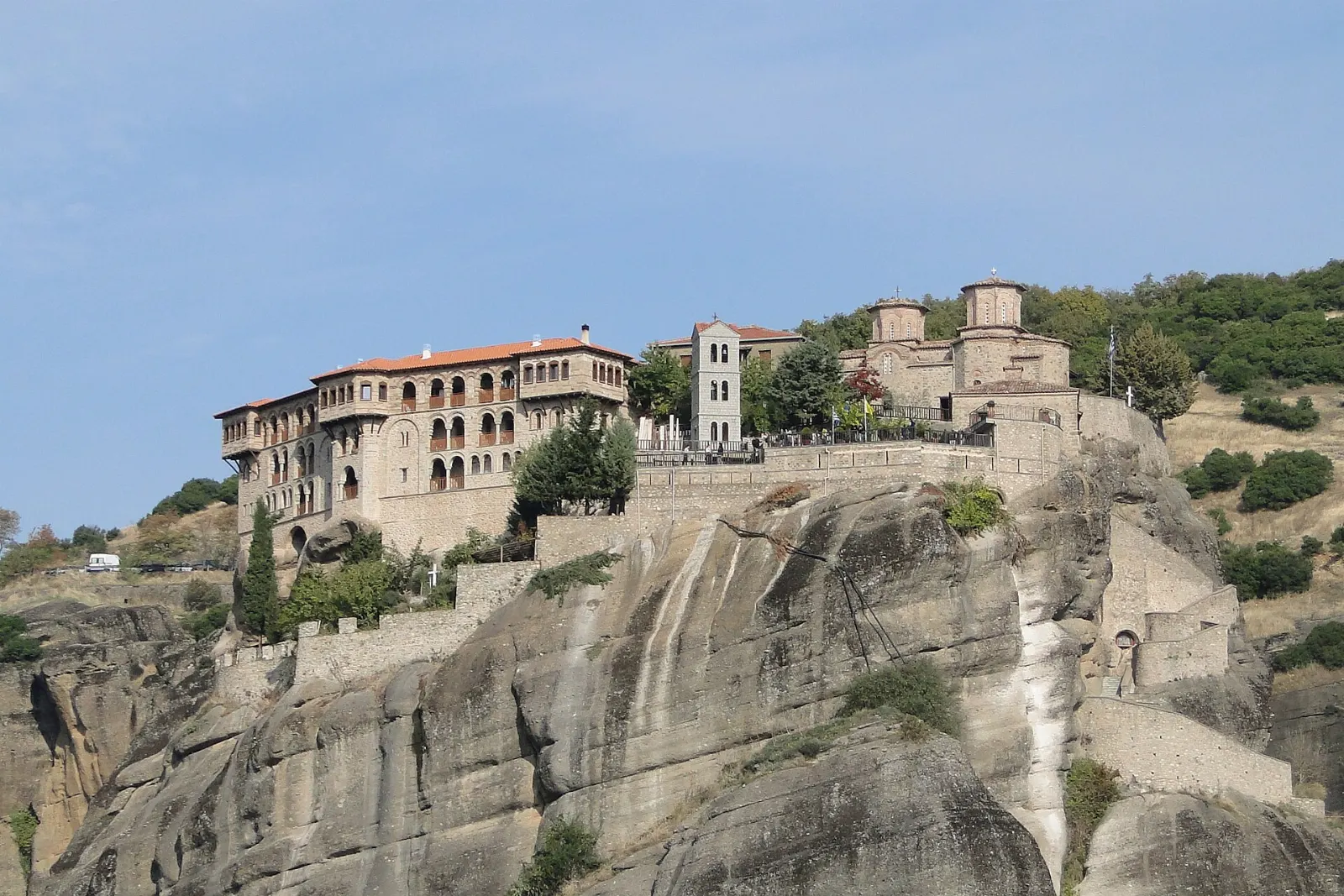
Just a short walk from Great Meteoron, Varlaam is the second-largest monastery. It takes its name from a hermit who climbed the rock in the fourteenth century; the present buildings date from the sixteenth century, when two brothers from Ioannina rebuilt the complex.
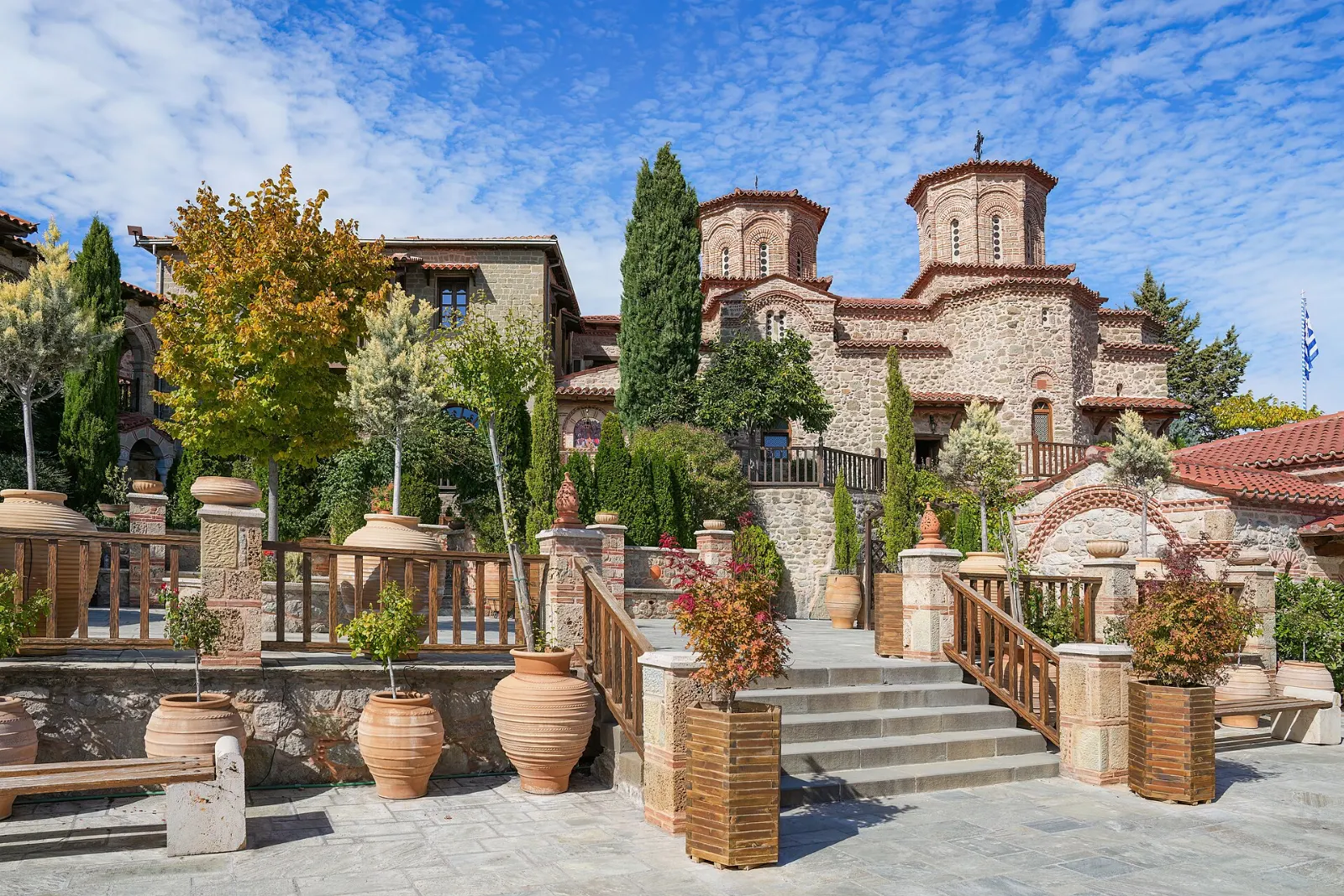
St. Nikolaos Anapafsas
The smallest of the working monasteries stands on a slender rock near the road from Kastraki. Space was so tight that the builders stacked it on several levels. Its chapel holds frescoes by the Cretan painter Theophanes the Cretan from the sixteenth century, including a celebrated scene of Adam naming the animals.
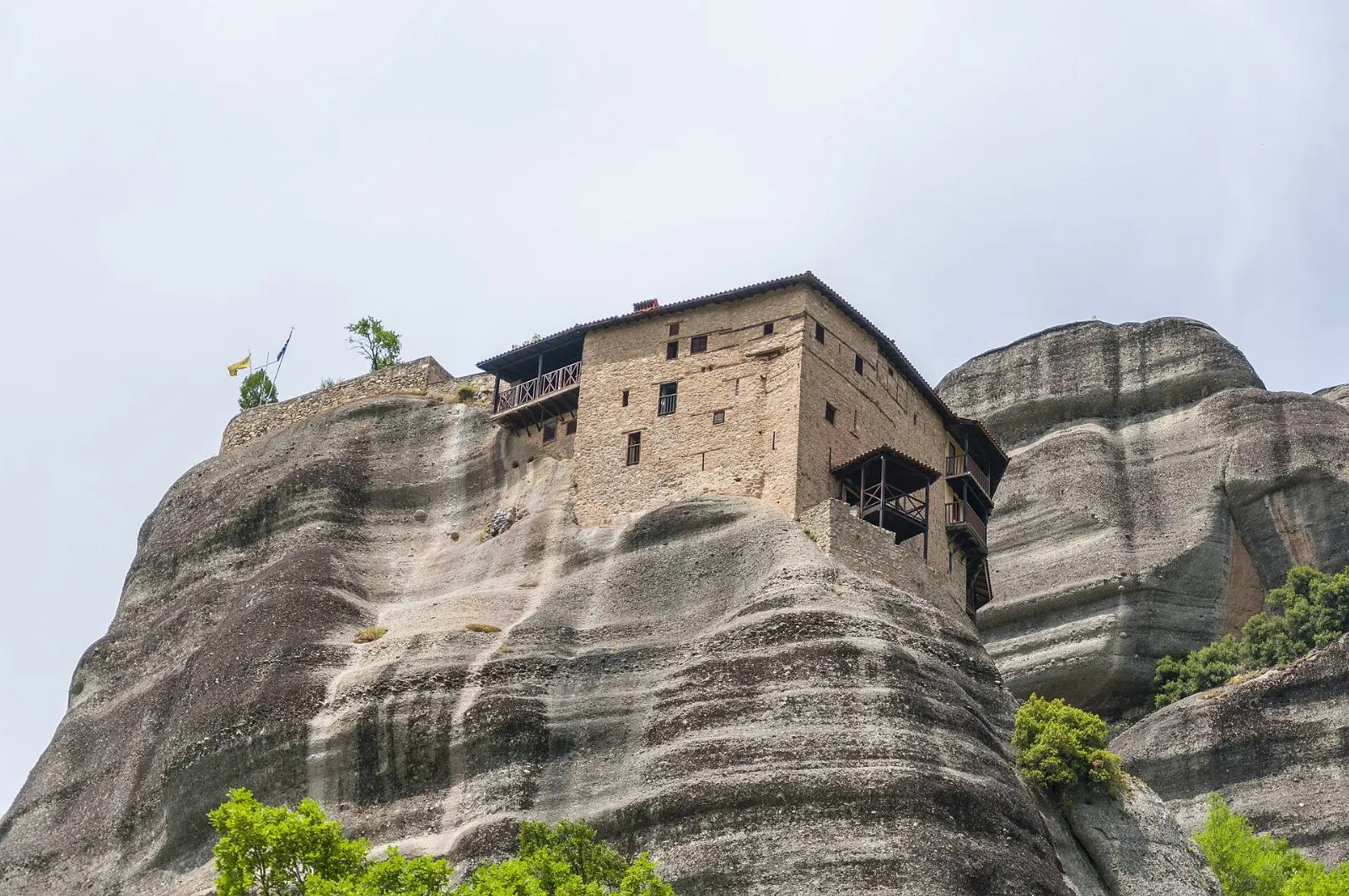
Roussanou
Roussanou, dedicated to St. Barbara, covers every inch of the top of its rock, and its walls seem to grow straight out of the cliff. It is now a convent, and the nuns keep it immaculate. A bridge and stairway lead to the entrance from the road above.
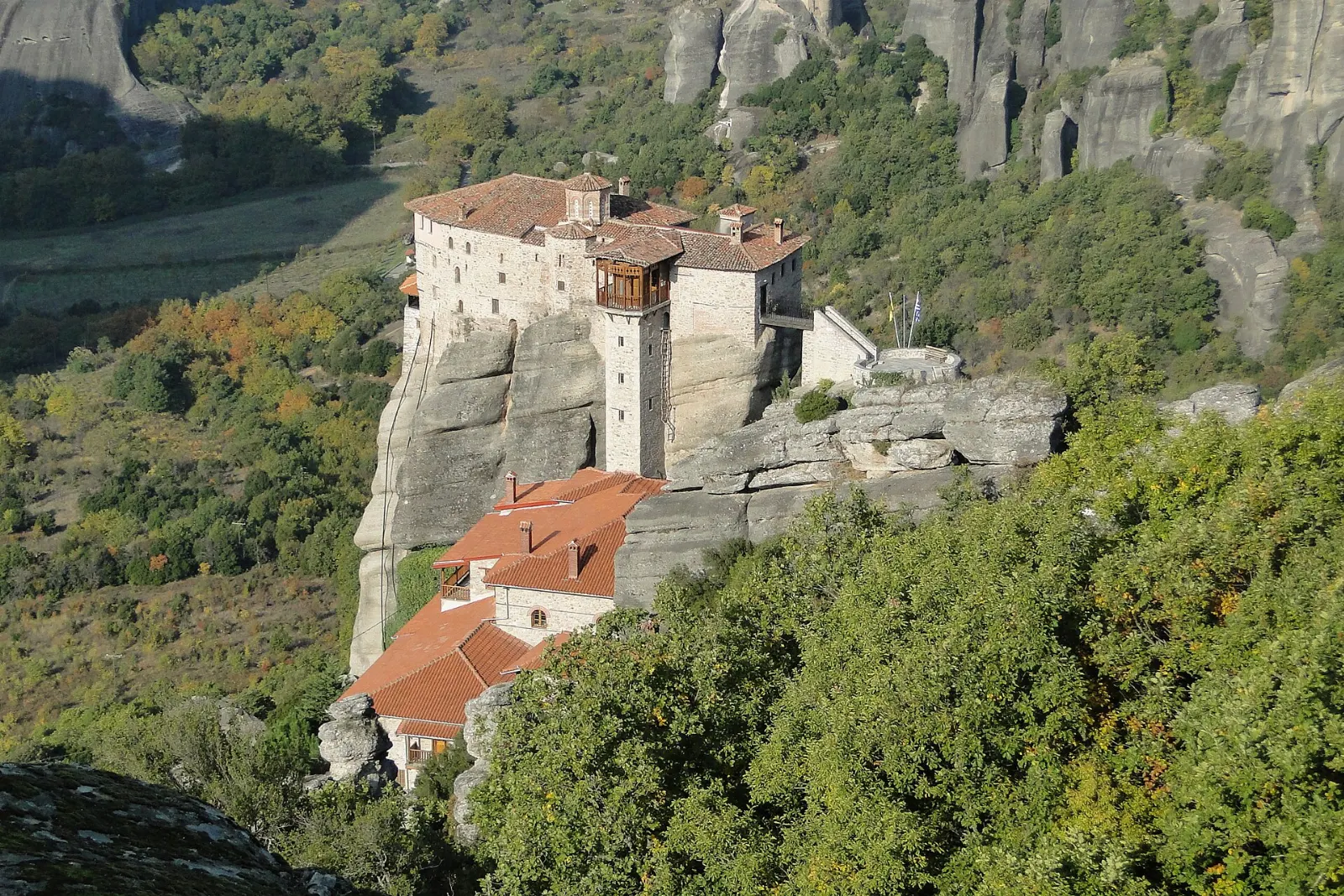
Holy Trinity, St. Stephen and the eastern viewpoints
Holy Trinity
The Monastery of the Holy Trinity perches on a sheer pinnacle that feels almost unreachable. Its dramatic setting appeared in the 1981 James Bond film For Your Eyes Only. From the road you descend into a gully and then climb around a hundred and forty steps cut into the rock to reach the gate.
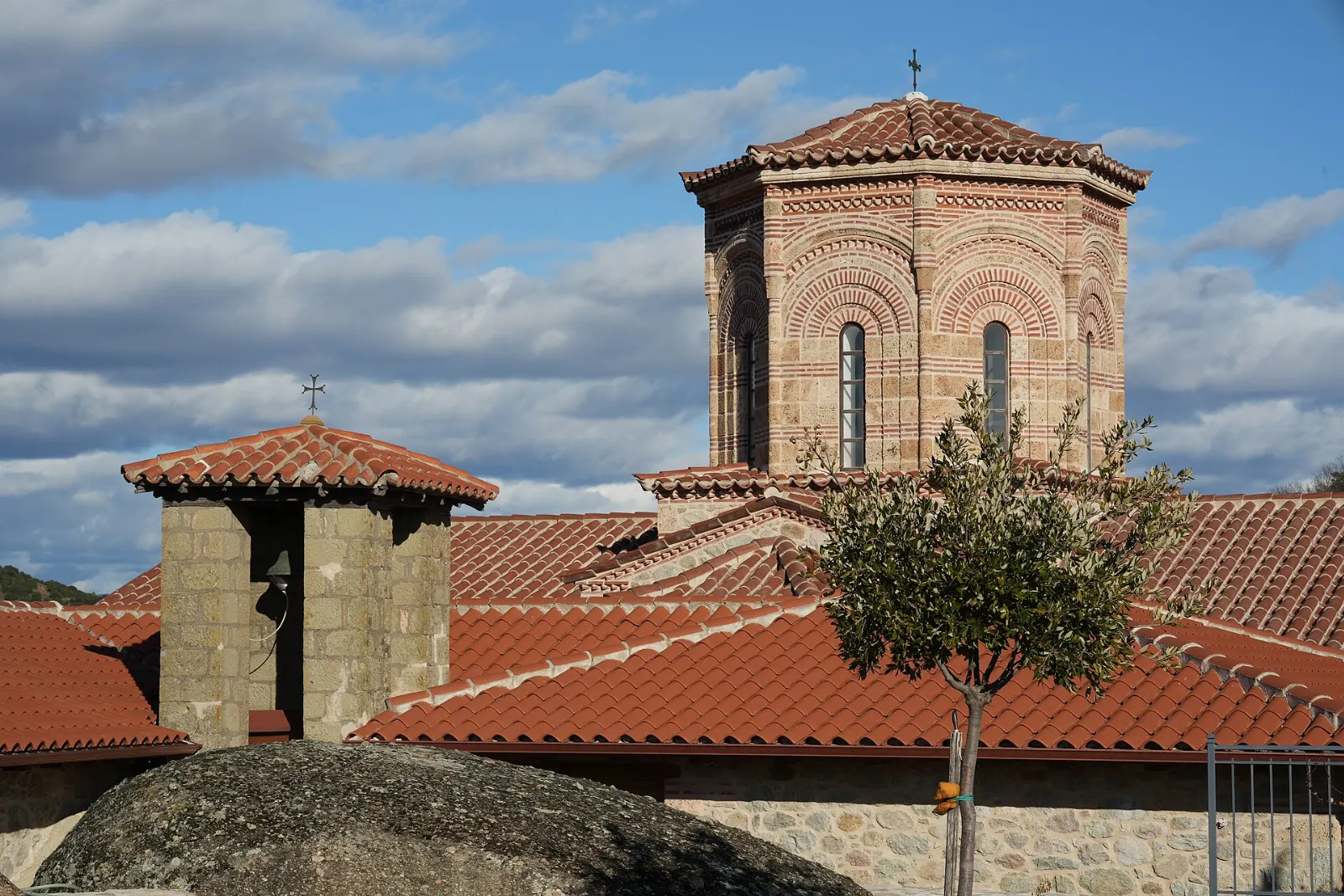
St. Stephen
At the eastern end of the road, St. Stephen's is the easiest monastery to visit, since you simply cross a short bridge from the parking area with no long staircase. Once a monastery for men, it is now a convent.
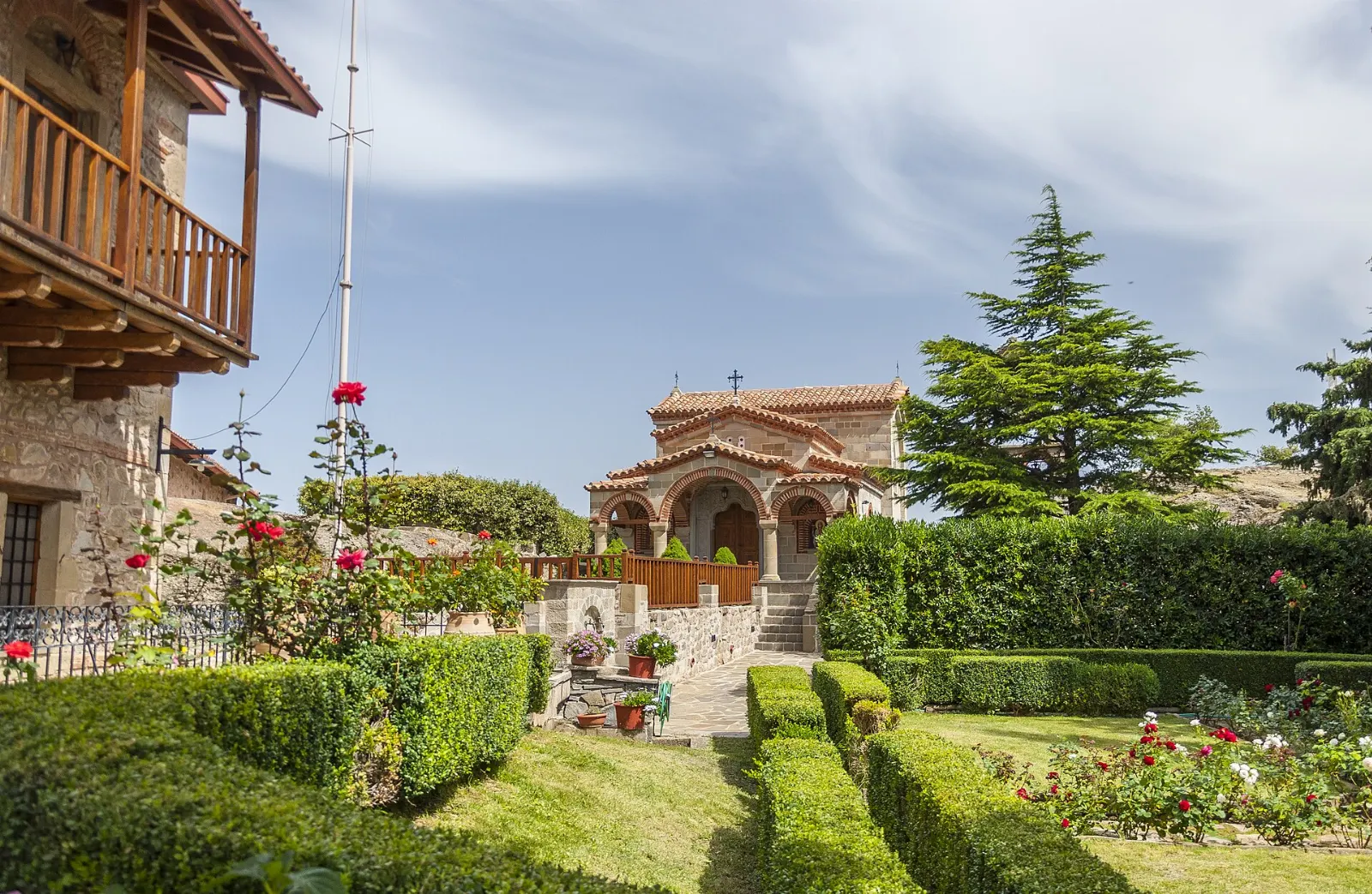
Sunset viewpoints along the ridge
Between Holy Trinity and St. Stephen, several roadside pull-offs and short paths lead onto open rock terraces facing west and south over Kalambaka and the Pineios valley. They are the most popular places to watch sunset, when the cliffs turn gold and the monastery lights come on.
Kastraki, Kalambaka and beyond the rocks
Kastraki
Kastraki is a small village built right against the base of the rocks, with stone houses, tavernas and guesthouses looking up at the pillars. From here old footpaths lead up toward the monasteries, and a short walk takes you to the base of Adrachti, a needle-like spire that rock climbers prize.
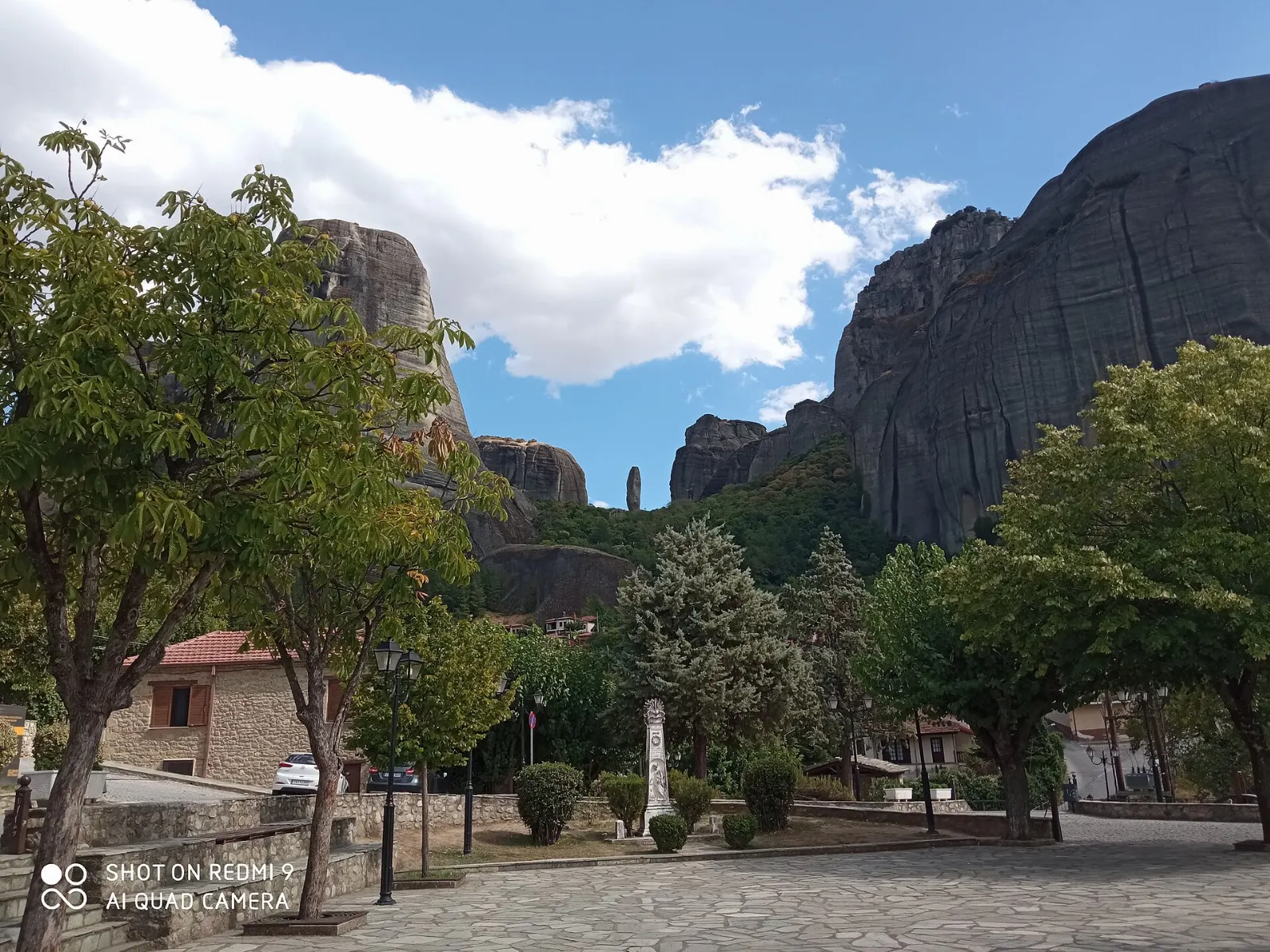
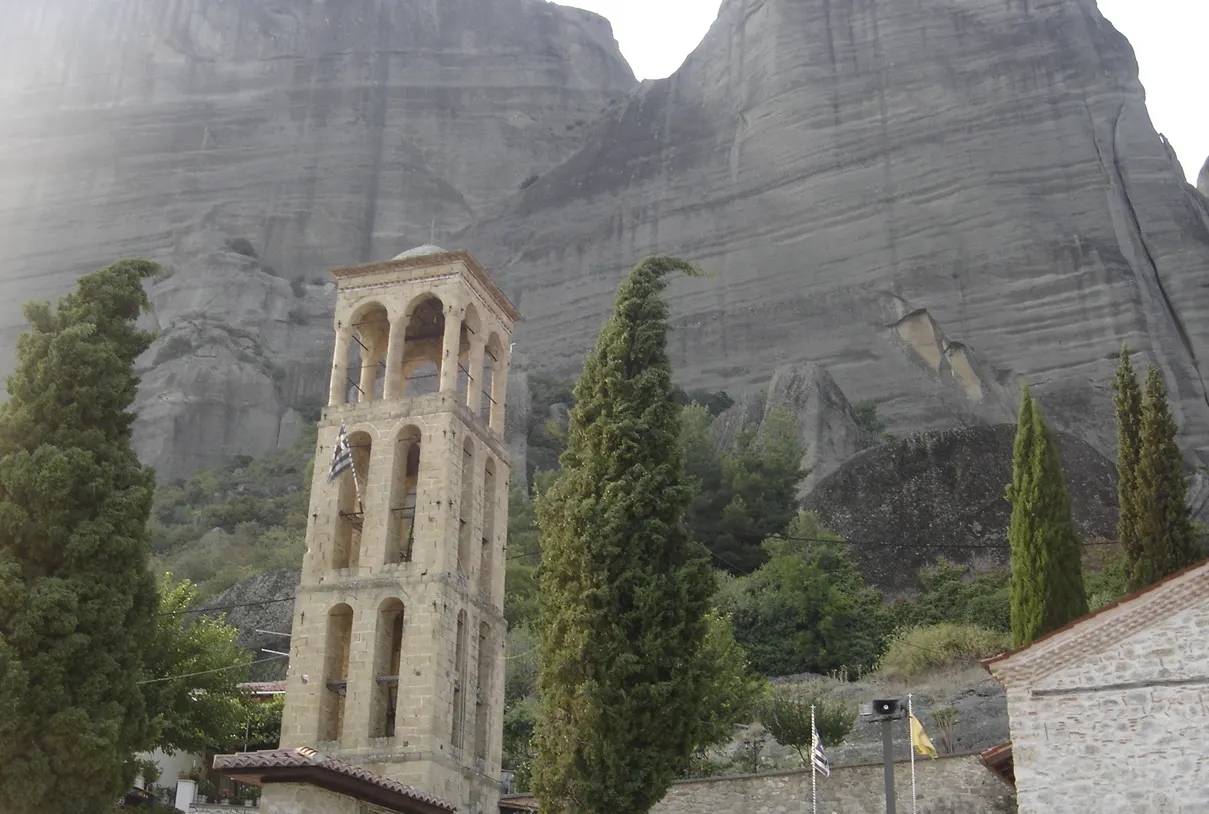
Kalambaka and the Church of the Dormition
Kalambaka, the busy market town at the foot of Meteora, is where most trains, buses and services arrive. Its most important monument is the Byzantine Church of the Dormition of the Virgin, dating to the late eleventh or early twelfth century and built over an earlier church; it contains fine frescoes and a rare marble pulpit in the center of the nave.
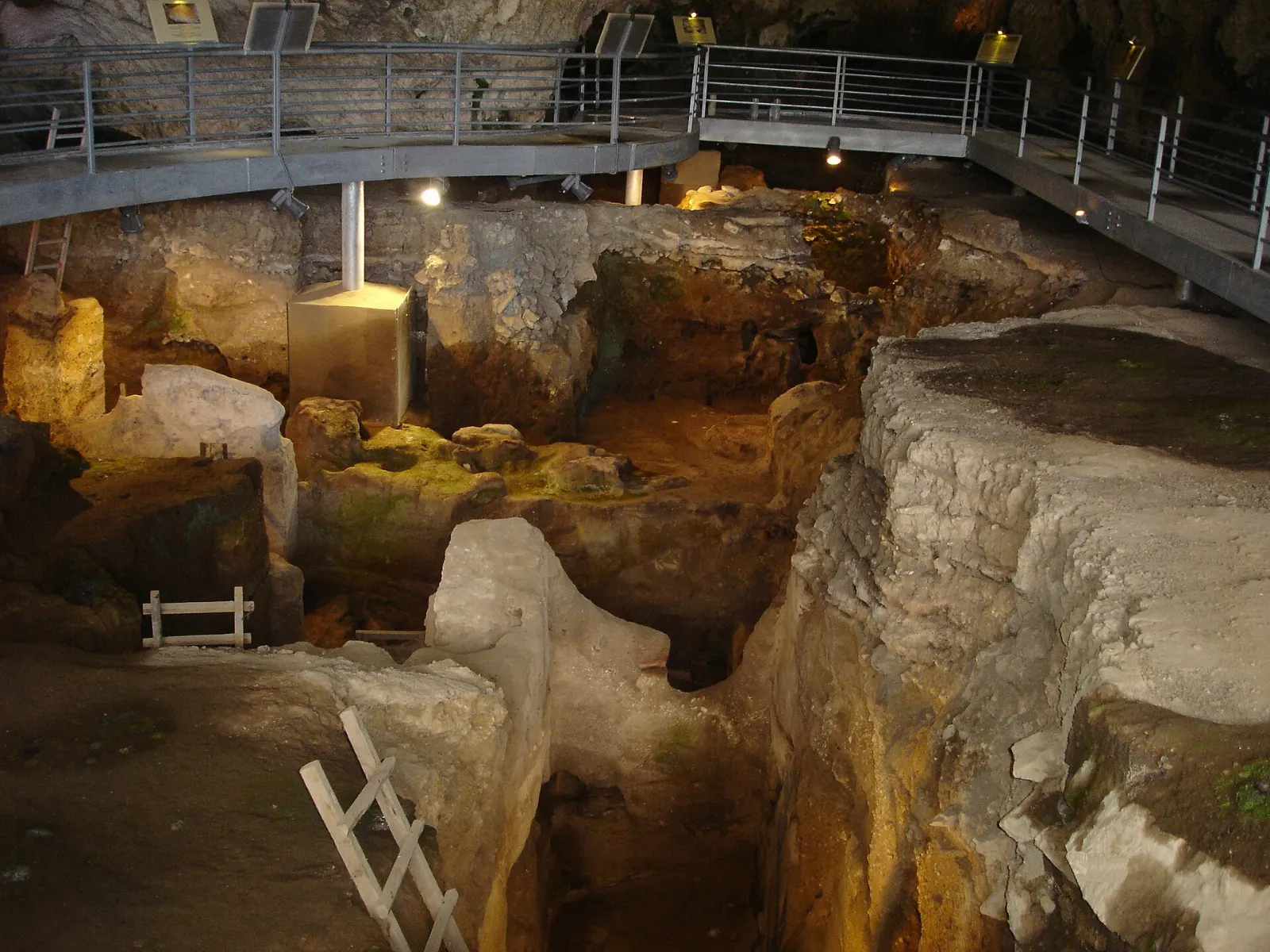
Theopetra Cave
A few kilometers south of Kalambaka, Theopetra Cave is one of the most important prehistoric sites in Greece, with evidence of human presence stretching back at least fifty thousand years through the Paleolithic, Mesolithic and Neolithic periods. A small museum in Theopetra village explains the finds.
 Planning a trip to Meteora?Compare hotels, flights and vacation rentals for Meteora on Expedia.Book now
Food and local flavors
Thessaly is farming and herding country, and the tavernas of Kalambaka and Kastraki serve generous, rustic cooking. Look for slow-roasted lamb and goat, grilled pork, spit-roasted kontosouvli and homemade sausages, along with hand-rolled pies filled with greens, cheese or leeks.
Meals often begin with a carafe of tsipouro, the clear grape spirit of central and northern Greece, served with small plates of olives, peppers, pickled vegetables and grilled meats.
Popular dishes to try in Meteora


Where to stay
Kalambaka is the most practical base for most travelers. It has the train and bus connections, supermarkets, a wide range of guesthouses and hotels and many rooms with direct views of the rocks.
Kastraki, about two kilometers away, is smaller and quieter, with family-run guesthouses tucked under the cliffs and easy walking access to the trails. It suits hikers, climbers and couples who want evenings with fewer people.
Where to stay in Meteora


Best time to visit
Spring is a lovely season, with wildflowers, green valleys and comfortable temperatures for climbing the monastery stairs.
Summer brings long days and the biggest crowds, and afternoons can be very hot on the exposed stairways, so start early and save hikes for morning or evening. Autumn is excellent, with warm days, clear light and fewer coach tours after September.
Getting there and getting around
The nearest major airports are Athens and Thessaloniki, with Volos a smaller seasonal option about two hours away by car. Driving from Athens takes roughly four hours on good highways.
Once there, a car gives the most freedom, and there are parking areas beside each monastery. A local bus runs from Kalambaka through Kastraki to the monasteries a few times a day, and taxis and guided minibus tours are easy to arrange in town.
A suggested itinerary
First day
Arrive at the Great Meteoron at opening time, then walk over to Varlaam.
Second day
Hike from Kalambaka up the old stone path to Holy Trinity in the cool of the morning, continue to St. Stephen, and return by road or taxi.
Third day
Drive to Theopetra Cave and its museum, then continue to Trikala for a stroll through the old quarter and a long mezedes lunch before moving on.
Practical tips
- Dress modestly: men need trousers covering the knees, and women need a skirt below the knee and covered shoulders; wraps are usually available at the entrance.
- Check the weekly closing days and current hours on the official website, since each monastery keeps its own schedule.
- Carry cash for entrance fees, which are paid separately at each monastery.
- Photography is not allowed inside the churches; respect signs and keep voices low.
- Start early to avoid tour groups, especially at Great Meteoron and Varlaam.
- Wear sturdy shoes for the steep, uneven stairways and trails.
- Bring water and sun protection in summer, as there is little shade on the rocks.