In the northwest corner of County Clare, the Atlantic meets a landscape unlike anywhere else in Ireland.
AT A GLANCE
Best time
May and June for wildflowers and long days; September for calmer roads.
How long
Two to three days to see the cliffs, Doolin and the main Burren sites.
Getting there
Fly into Shannon Airport, or drive or take the bus from Galway; a car is best for the inland Burren.
Why visit the Cliffs of Moher and the Burren
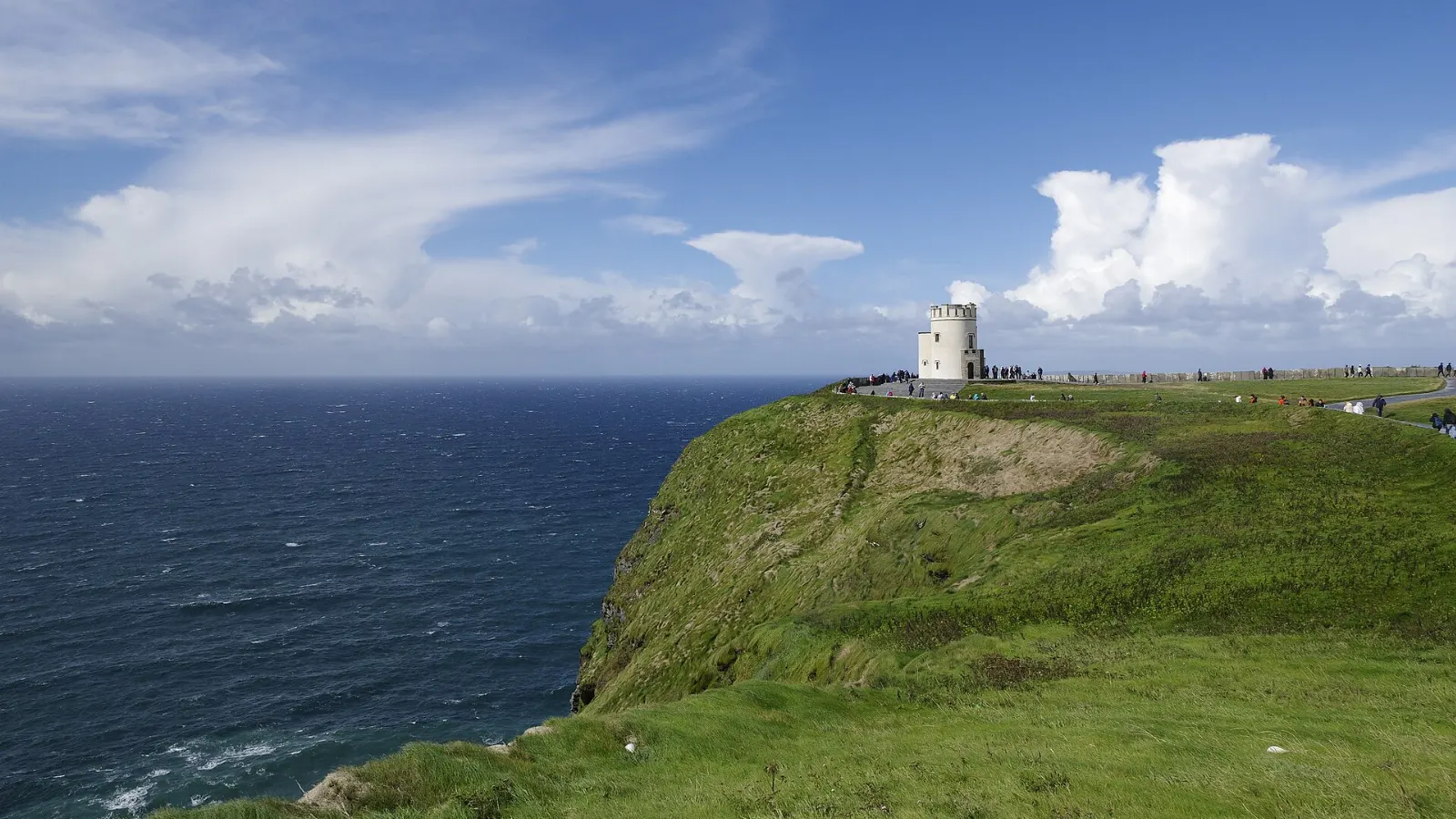
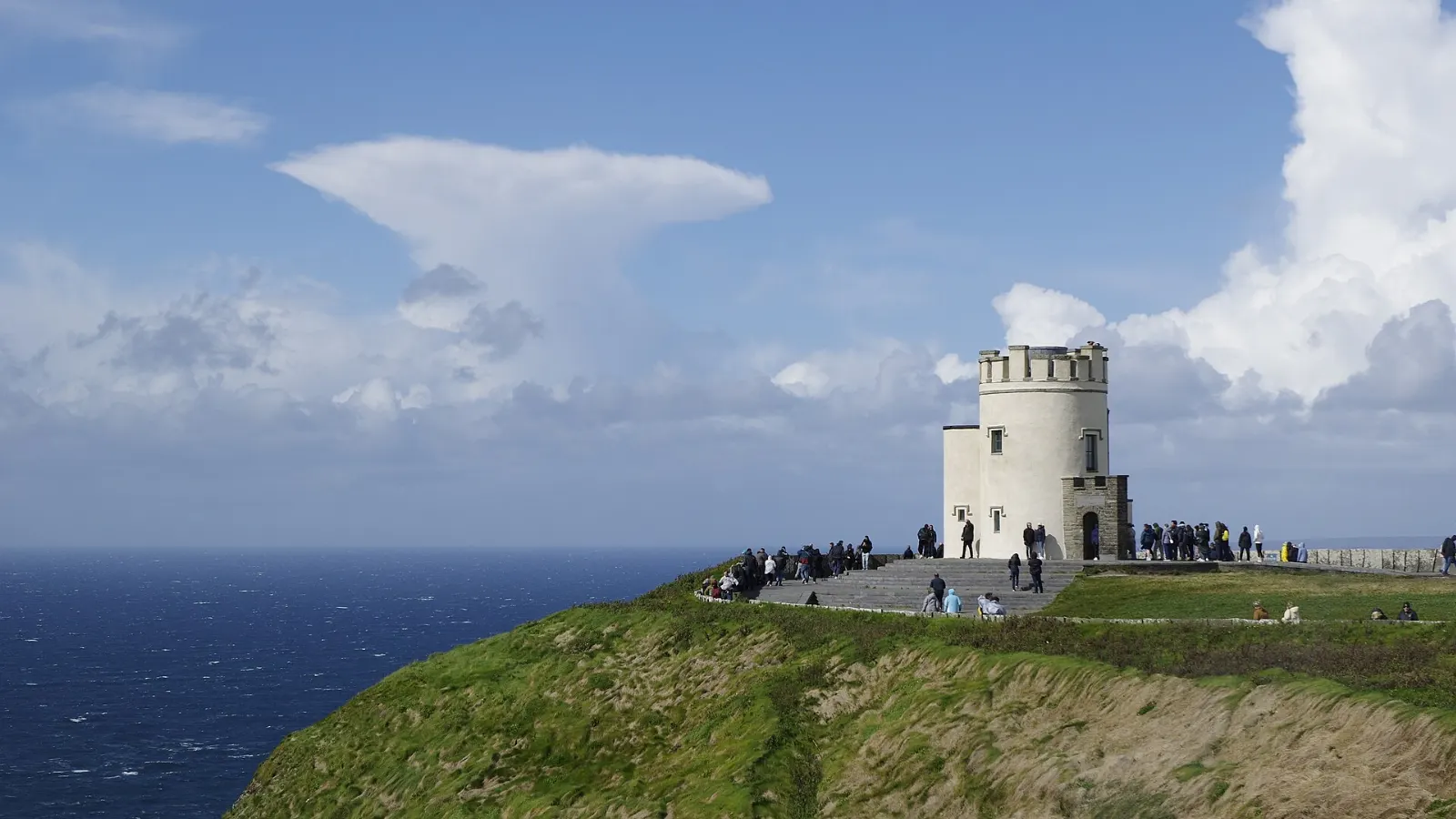
The cliffs are among the most visited natural sights in Ireland, and for good reason. They stretch for about 14 km between Hag's Head and the area south of Doolin, reaching their highest point of 214 metres just north of O'Brien's Tower.
The Burren is quieter but just as memorable. Its name comes from the Irish for a rocky place, and the limestone, laid down some 325 million years ago, was scoured clean by glaciers. Water drains underground through caves, so the surface looks bare, yet the cracks shelter an extraordinary mix of plants, with Arctic-alpine and Mediterranean species growing side by side.
The Cliffs of Moher and the coast
Cliffs of Moher Visitor Experience and O'Brien's Tower
Most visitors arrive at the official visitor centre, built into the hillside so it barely interrupts the view. From there, paved paths lead north and south along the cliff edge behind a low stone wall.
Hag's Head and the Cliffs of Moher Coastal Walk
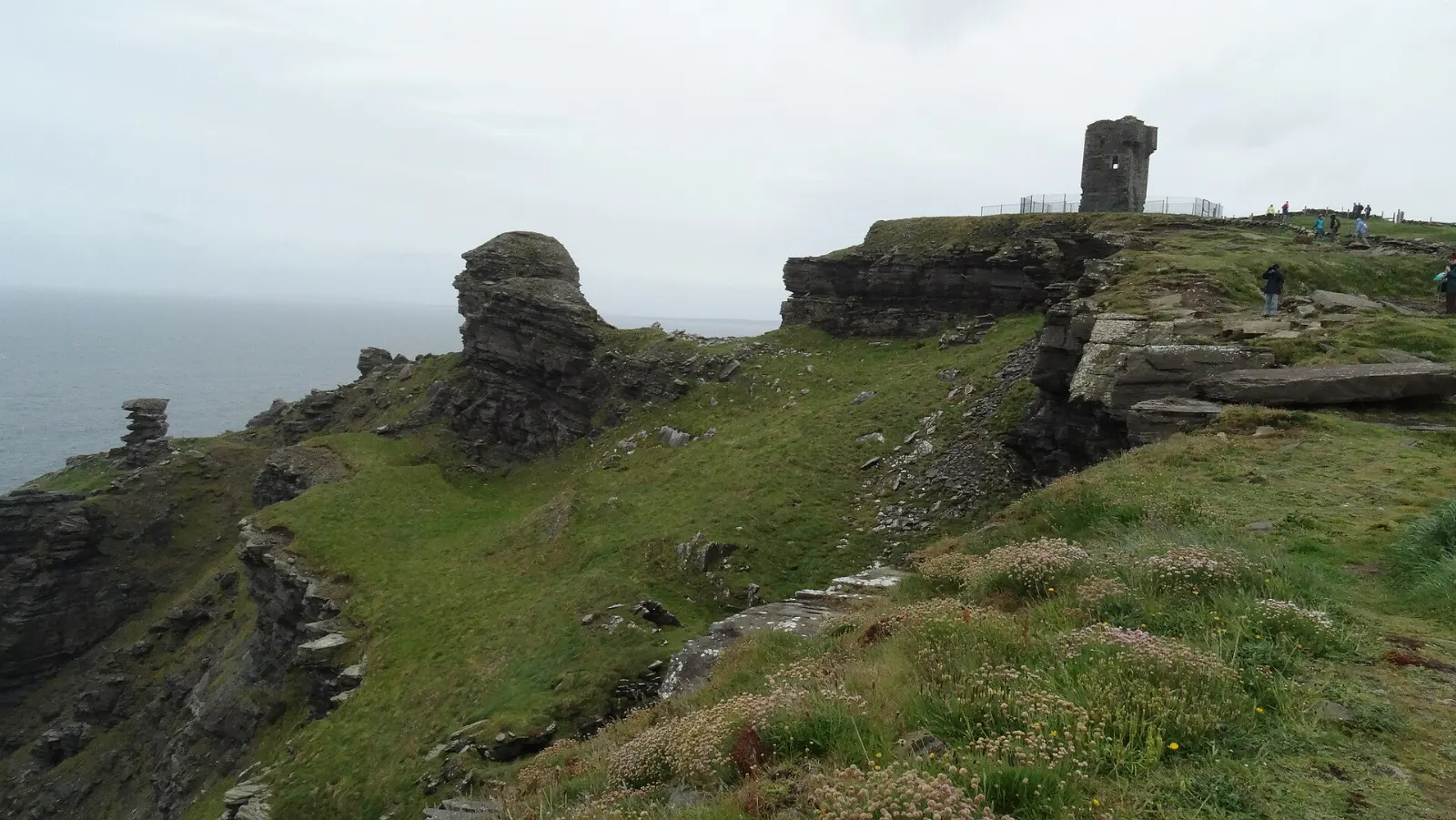
For a quieter approach, walk the Cliffs of Moher Coastal Walk, which runs for about 18 km between Liscannor and Doolin. The southern section from Liscannor climbs to Hag's Head, the southern tip of the cliffs, where a ruined Napoleonic-era signal tower stands on the site of the old promontory fort that gave Moher its name.
Doolin
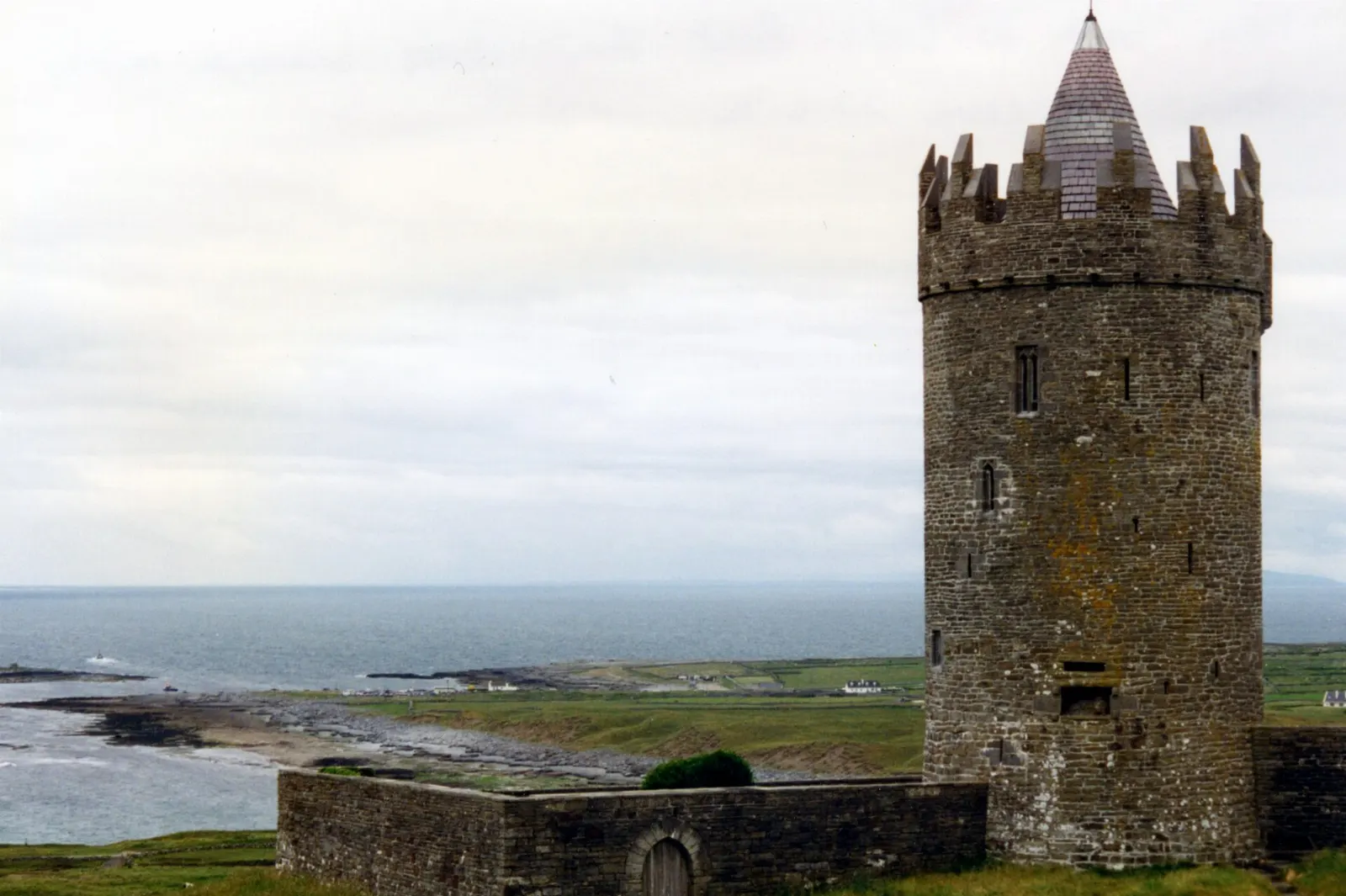
Doolin is less a village than a scattering of small communities along the coast north of the cliffs, and it has long been known for traditional Irish music, with sessions in its pubs most evenings in summer. Above the village stands Doonagore Castle, a restored round tower house that is privately owned but makes a fine sight from the road.
Doolin Cave
Just north of Doolin, this show cave is visited for one remarkable feature: a free-hanging stalactite more than seven metres long, one of the longest known in Europe. The guided tour descends by steps into the chamber and lasts under an hour, and there is a farm nature trail above ground. Allow about one and a half hours.
The Burren: limestone, tombs and forts
Burren National Park and Mullaghmore
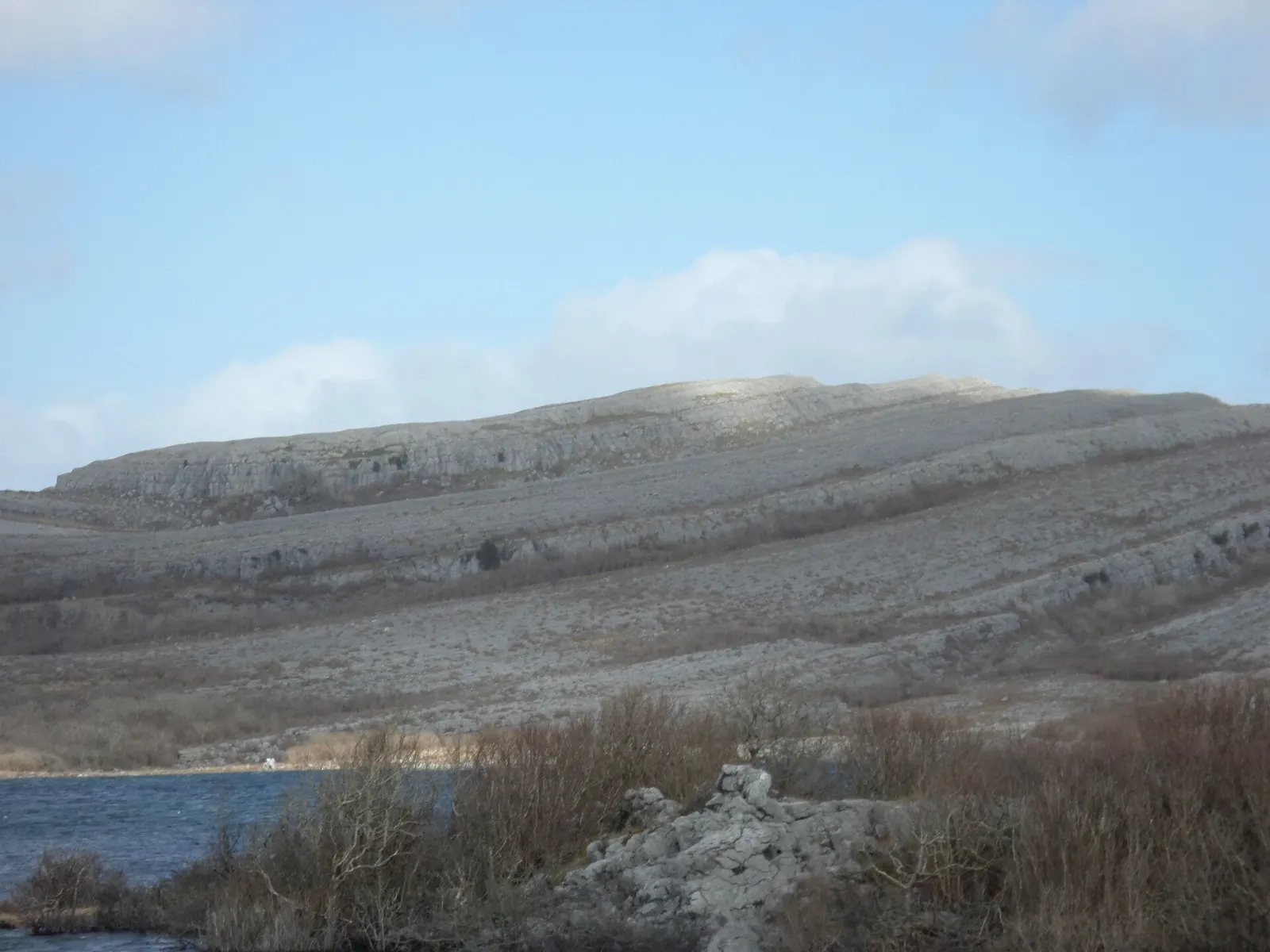
Burren National Park covers a section of the southeastern Burren around Mullaghmore, a hill of folded limestone terraces that looks almost sculpted.
Poulnabrone Dolmen
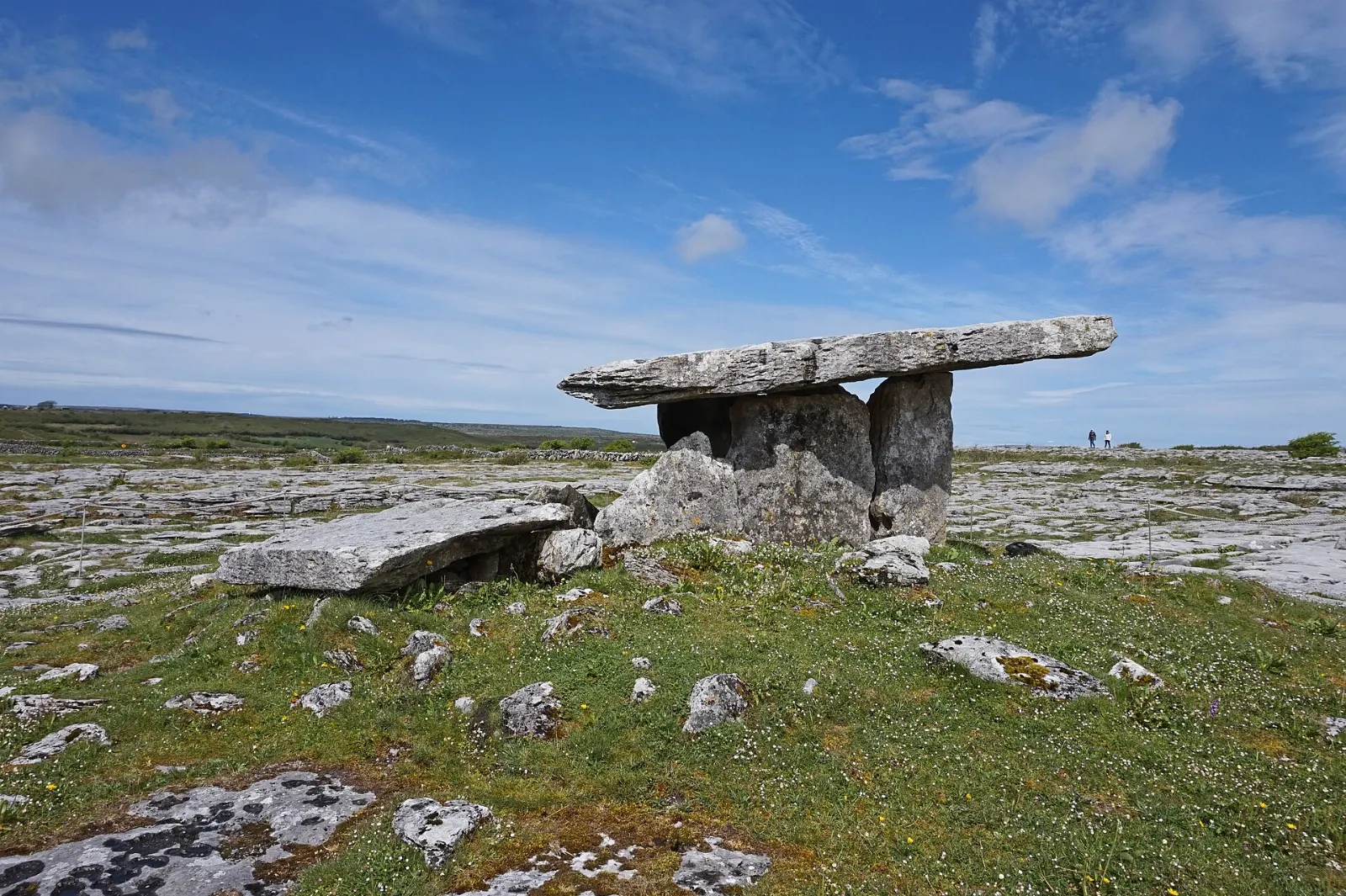
South of Ballyvaughan, Poulnabrone is the most famous monument in the Burren: a portal tomb with a thin capstone balanced on upright stones, set in open limestone pavement. Excavations found the remains of more than thirty people buried here in the Neolithic period, over five thousand years ago.
Caherconnell Stone Fort
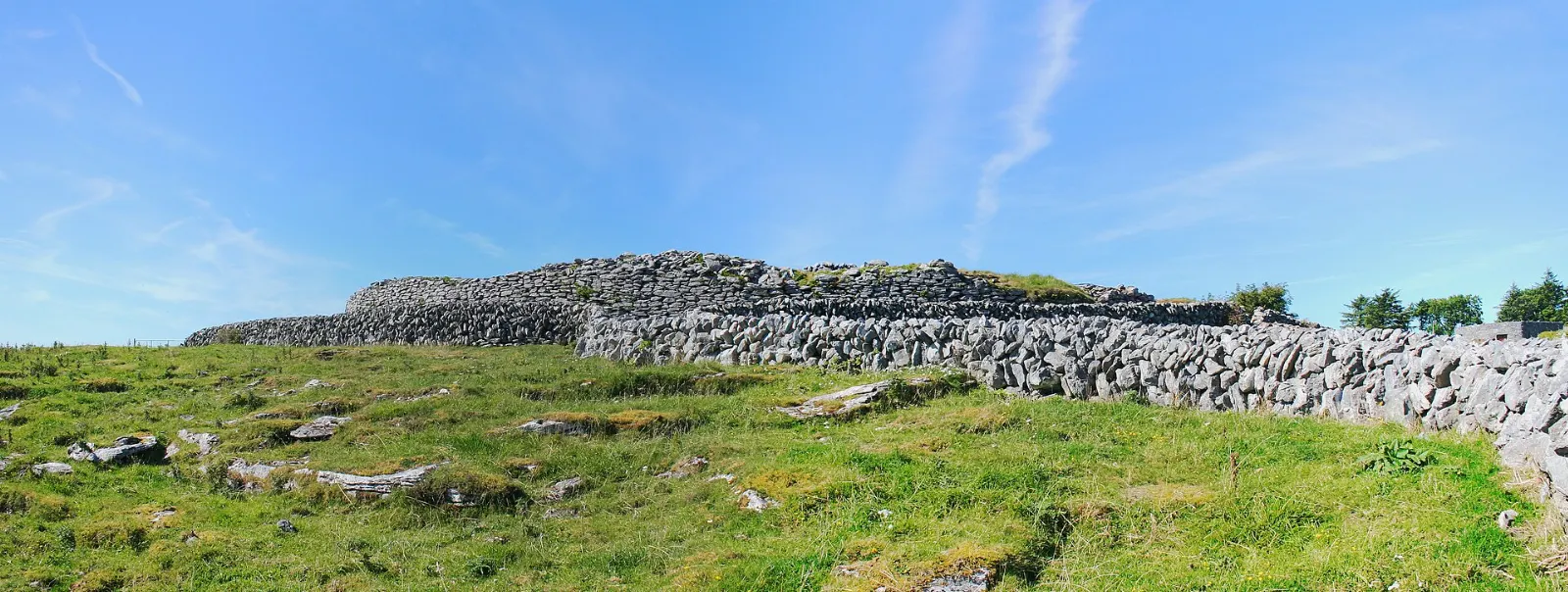
A short drive south of Poulnabrone, Caherconnell is a well-preserved ring fort of drystone limestone walls that was occupied in the early medieval period. A small visitor centre explains the archaeology, and sheepdog demonstrations are held on the farm in season.
Kilfenora
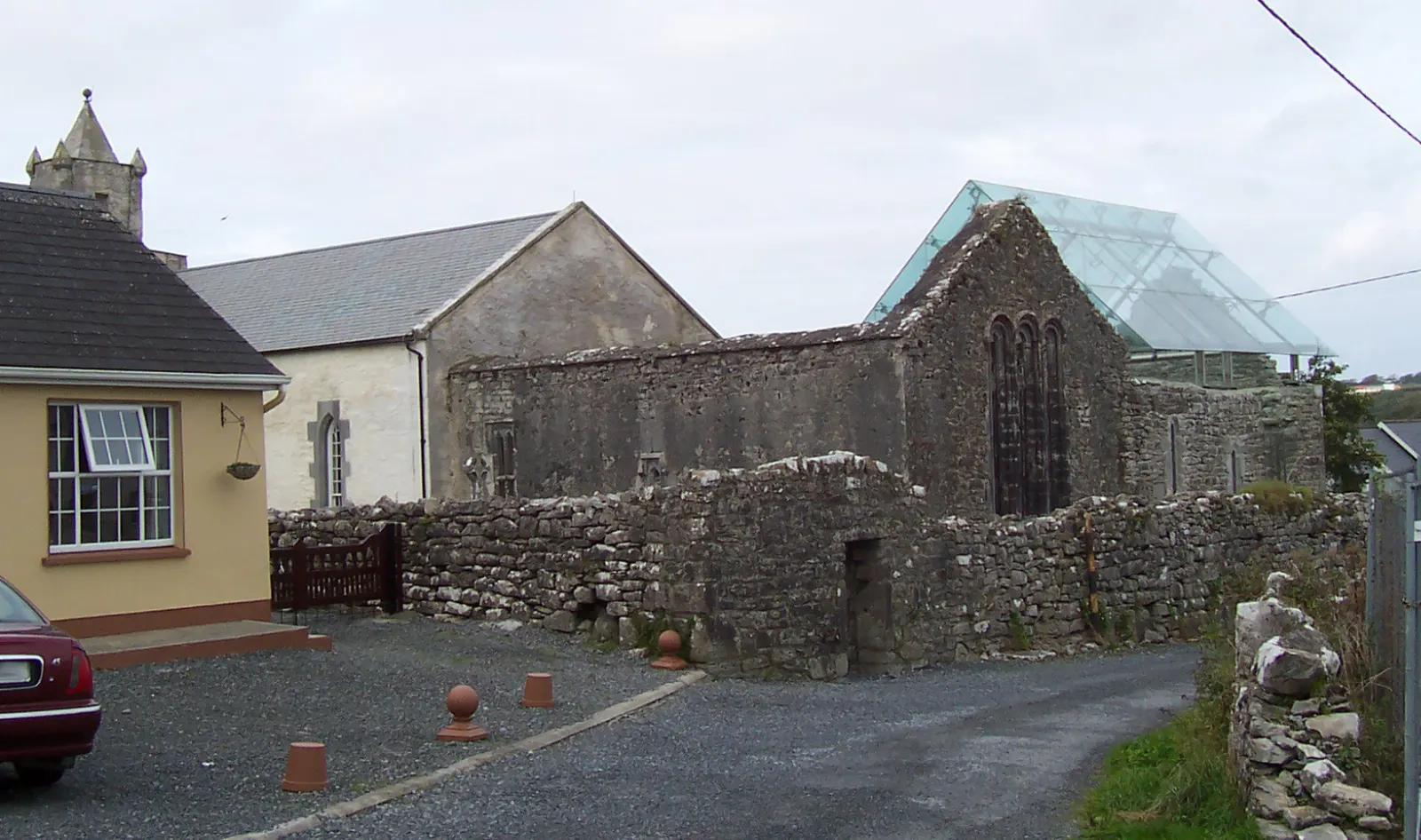
The small village of Kilfenora sits at the southern edge of the limestone and is home to a tiny cathedral built around the end of the twelfth century, with a ruined chancel and several carved high crosses, some protected under a glass roof.
 Planning a trip to Cliffs of Moher and the Burren?Compare hotels, flights and vacation rentals for Cliffs of Moher and the Burren on Expedia.Book now
The North Burren and Galway Bay
Aillwee Cave
South of Ballyvaughan, Aillwee is the most developed show cave in the region, with a guided tour through passages, past an underground waterfall and the bones of brown bears, which once lived in Ireland.
Corcomroe Abbey
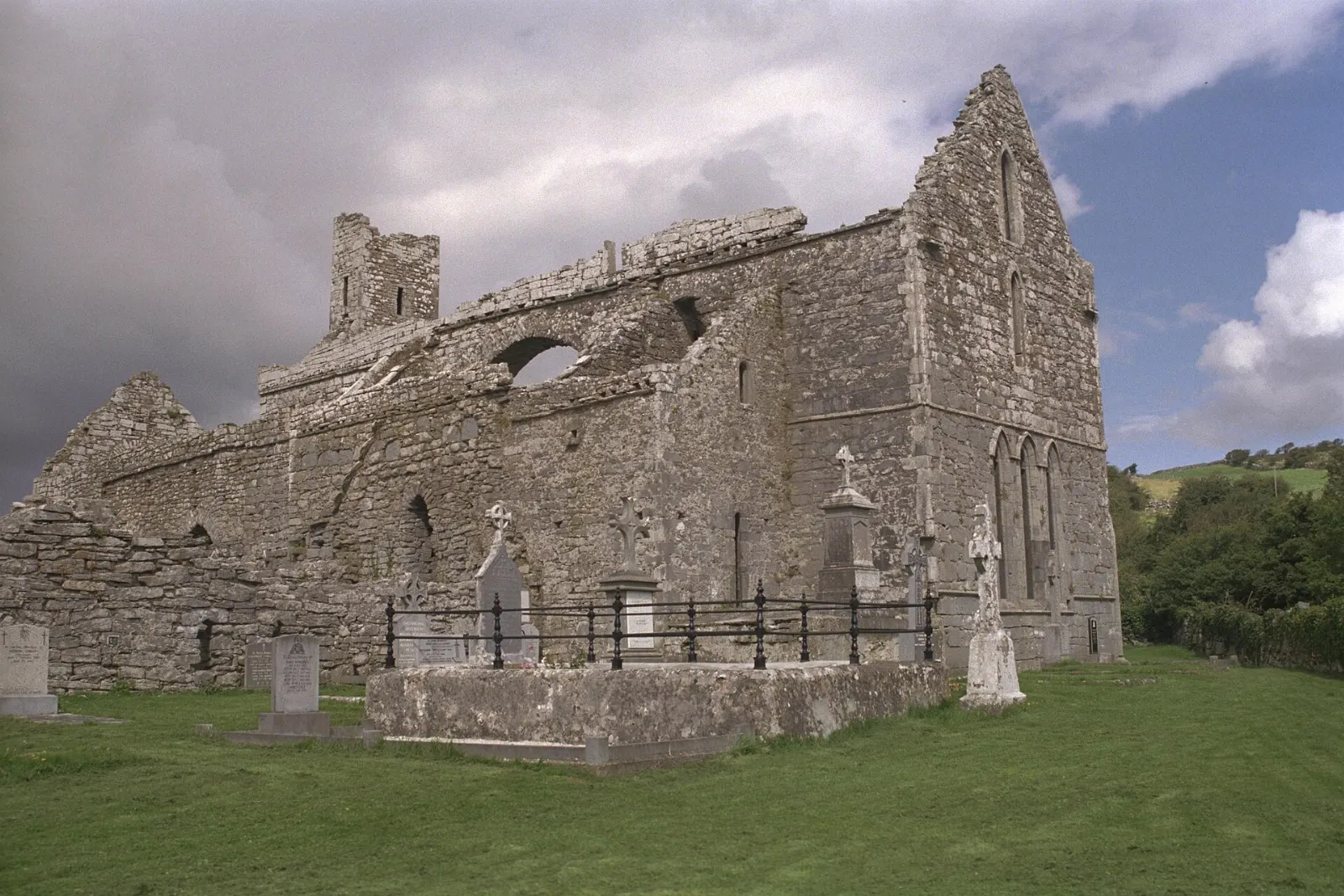
In a peaceful valley east of Ballyvaughan, Corcomroe Abbey is the roofless ruin of a Cistercian monastery founded in the early thirteenth century.
Black Head and the Fanore Coast
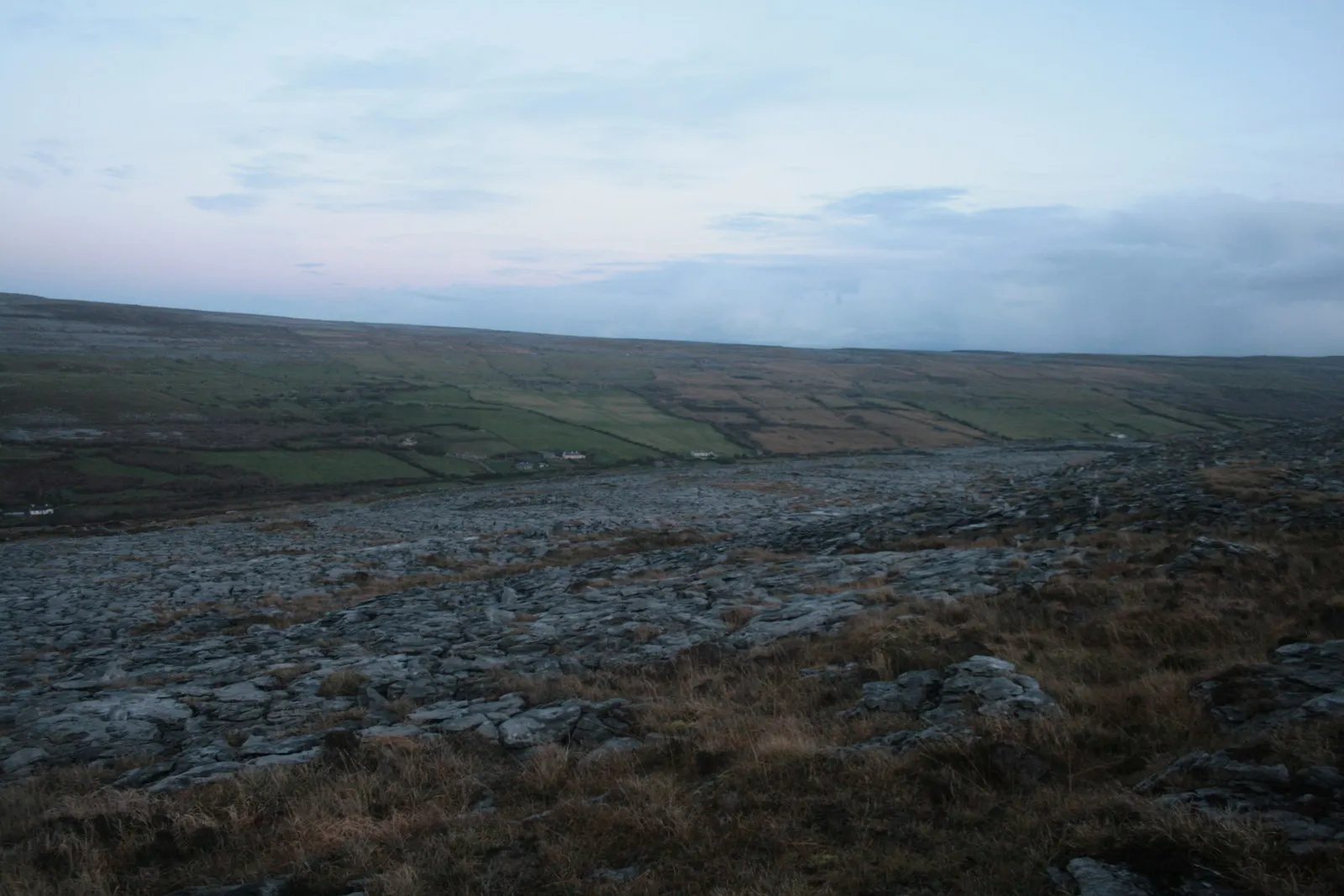
The coast road from Ballyvaughan around Black Head to Fanore is one of the most striking drives in Clare, with bare limestone terraces sweeping down to the sea and views across Galway Bay.
Food and local flavors
The Burren has a strong local food movement, and the Burren Food Trail links farms, smokehouses and cafés across the region.
Doolin and Ballyvaughan have the widest choice of pubs and cafés, while Lahinch and Ennistymon to the south offer more options, including bakeries and seafood places.
Popular dishes to try in Cliffs of Moher and the Burren


Where to stay
Doolin is the most popular base, ideal if you want to walk to the cliffs, catch an Aran Islands ferry and enjoy traditional music at night; it has guesthouses, hostels and self-catering cottages. Lisdoonvarna, a former spa town a few kilometres inland, offers more rooms and is central for both coast and limestone.
Kilfenora is small and quiet but central. To the south, the surf town of Lahinch has a long sandy beach and lively summer atmosphere, while neighbouring Ennistymon is a characterful market town with cascades on the River Inagh.
Where to stay in Cliffs of Moher and the Burren


Best time to visit
May and June are the most rewarding months. Days are long, the Burren's wildflowers are at their best, including spring gentians and orchids, and the cliffs are busy with nesting seabirds.
Winter is mild but wet and windy, with short days. The cliffs can be dramatic in storms, but paths may close and ferries stop running.
Getting there and getting around
Shannon Airport, near Ennis, is the closest international airport and about an hour's drive from the cliffs. Galway, with rail and bus links to Dublin, lies to the north.
To explore the inland Burren, however, you really need your own transport, as buses are scarce away from the coast.
A suggested itinerary
First day
Walk the coastal path from Liscannor to Hag's Head and on to the Cliffs of Moher Visitor Experience, then continue to O'Brien's Tower.
Second day
Visit Doolin Cave in the morning, then drive inland through Lisdoonvarna to Kilfenora for the cathedral and high crosses.
Third day
Start at Aillwee Cave or Corcomroe Abbey, then walk a trail in Burren National Park around Mullaghmore.
Practical tips
- Book the Cliffs of Moher Visitor Experience online and check the official website for current hours and fees.
- Stay well back from cliff edges, as gusts can be sudden and the ground can be unstable.
- Bring waterproofs and windproof layers in every season.
- Wear sturdy footwear on the limestone, which is sharp, uneven and slippery when wet.
- Do not move stones, build cairns or pick wildflowers; the Burren's habitats are protected.
- Carry some cash, as card payments are not accepted everywhere and ATMs are few.