WiserMap — Choose wisely. Connect locally.Choose wisely. Connect locally.Add your business
Fez, Morocco · Travel guide

Fez Morocco Medina Madrasas Tanneries and Riads

Fez is the oldest of Morocco's imperial cities, founded at the end of the eighth century by the Idrisid dynasty and for long periods the country's capital and its center of religion and learning.

By WiserMap TravelUpdated October 2026 9 places10 min read
FacebookXLinkedIn

Walking through it feels like stepping into a working medieval city. Coppersmiths hammer trays, weavers work wooden looms, donkeys carry gas bottles and sacks of grain, and the call to prayer echoes from dozens of minarets at once.

At a glance Fez
  1. Best timeMarch to May and September to November for mild weather.
  2. How longTwo full days for the medina, three or four with day trips to Meknes and Volubilis.
  3. Getting thereFly into Fes-Saiss Airport or take the train from Casablanca, Rabat or Tangier.

Why visit Fez

If Marrakech is Morocco's showpiece, Fez is its soul. The city was home to scholars, mystics and master craftsmen for over a thousand years, and that heritage is still visible everywhere: in the madrasas covered in carved cedar and tile, in the shrines that draw pilgrims, and in the craft workshops where techniques are passed from parent to child.

Fez also feels less geared to tourism than some Moroccan cities. Daily life fills the medina, and you share the lanes with students, shoppers and porters.

Fes el-Bali: gates, madrasas and mosques

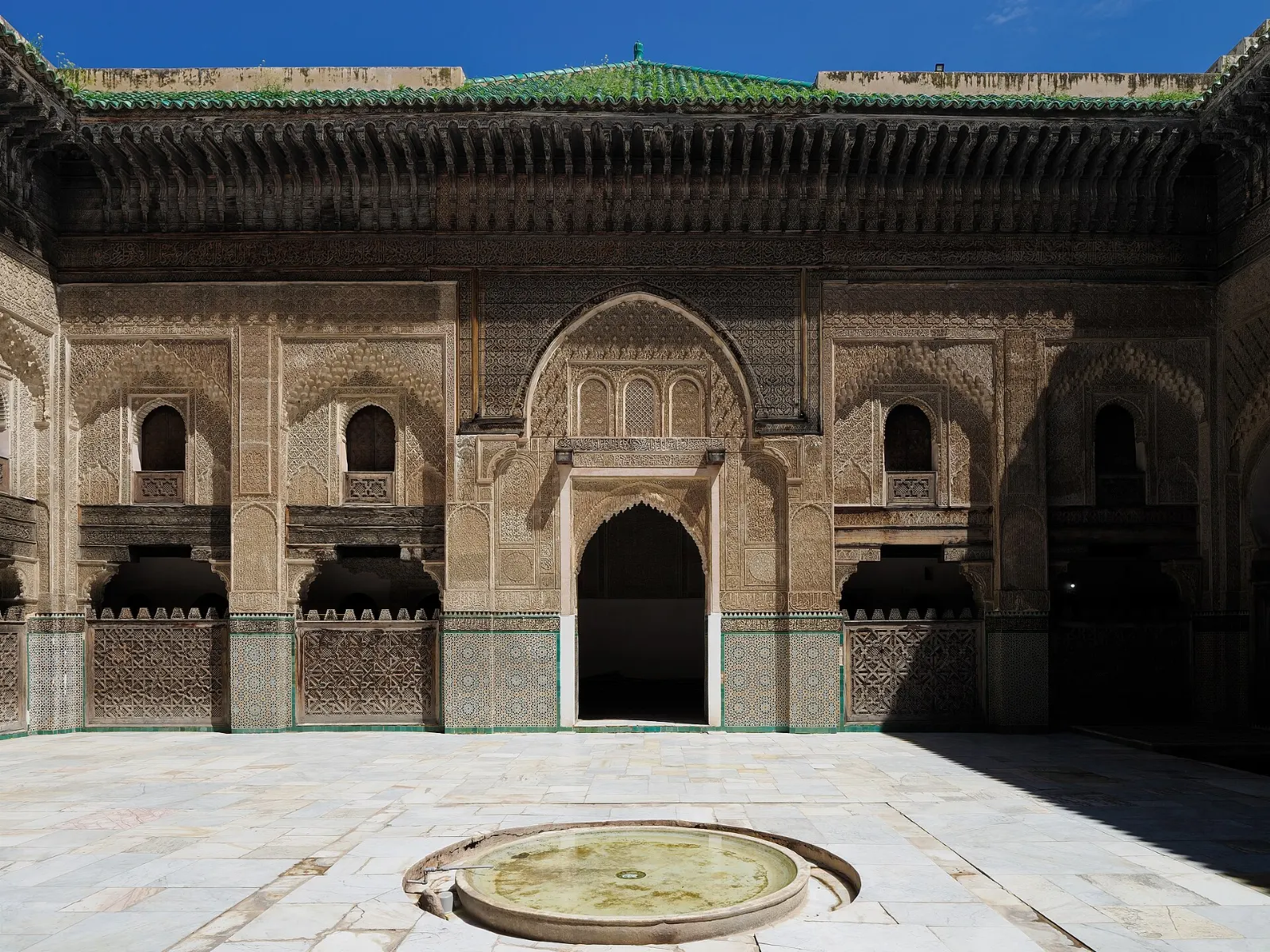
Carved stucco and cedar around the marble courtyard of the Bou Inania Madrasa, Fez, Morocco

Bou Inania Madrasa

A few steps from Bab Bou Jeloud, the Bou Inania Madrasa was built in the 1350s by the Marinid sultan Abu Inan Faris and is one of the few religious buildings in Fez open to non-Muslims.

The Bou Inania Madrasa was built in the fourteenth century by the Marinid sultan Abu Inan Faris. Photo: Petar Milošević, Wikimedia Commons, CC BY-SA 4.0

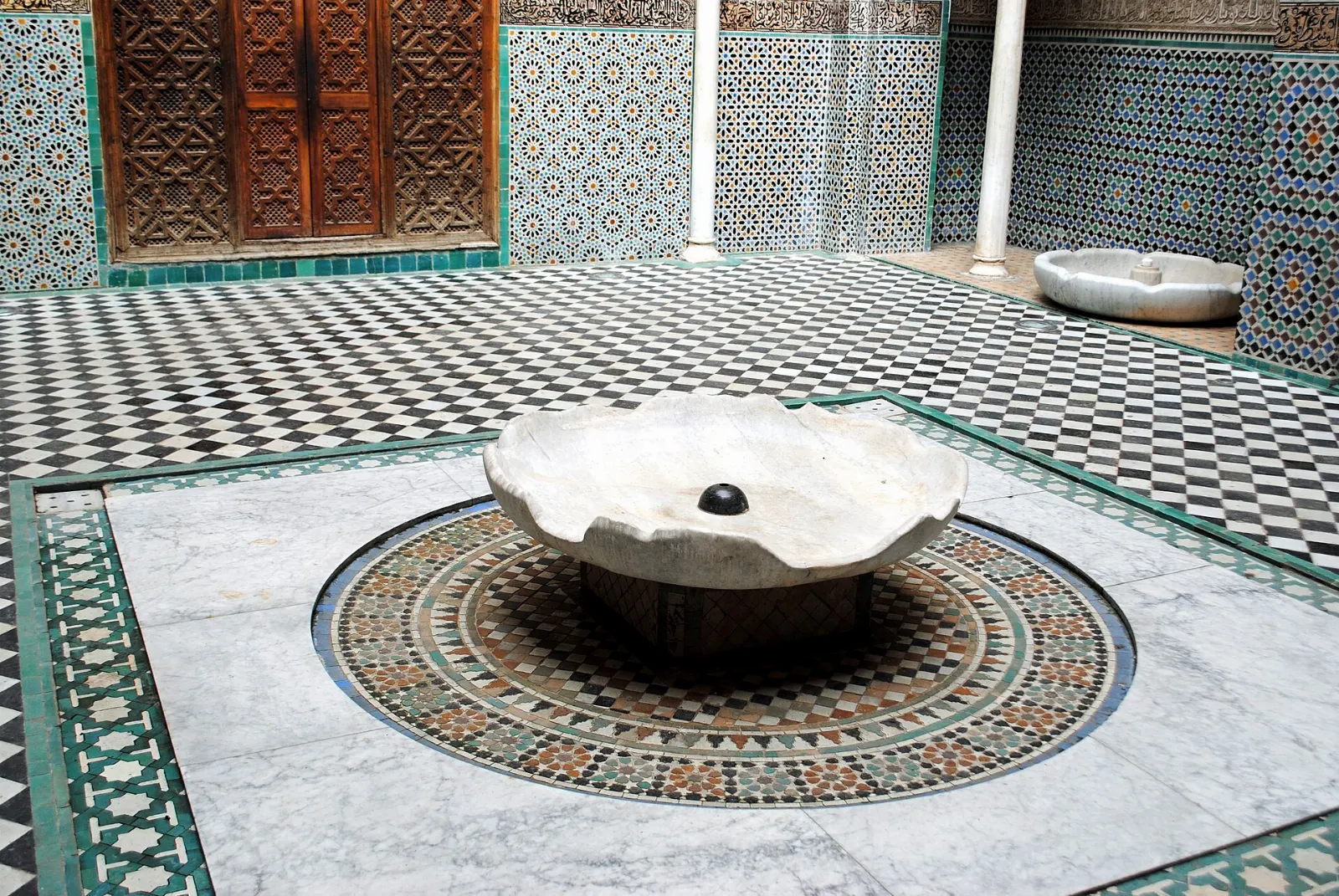
Intricate zellige tiles and carved stucco in the courtyard of the Al-Attarine Madrasa, Fez, Morocco

Al-Attarine Madrasa

Deeper in the medina, near the spice market from which it takes its name, the Al-Attarine Madrasa was built in the 1320s.

The Al-Attarine Madrasa, built in the 1320s, is known for its fine zellige tilework and carved stucco. Photo: just_a_cheeseburger, Wikimedia Commons, CC BY 2.0

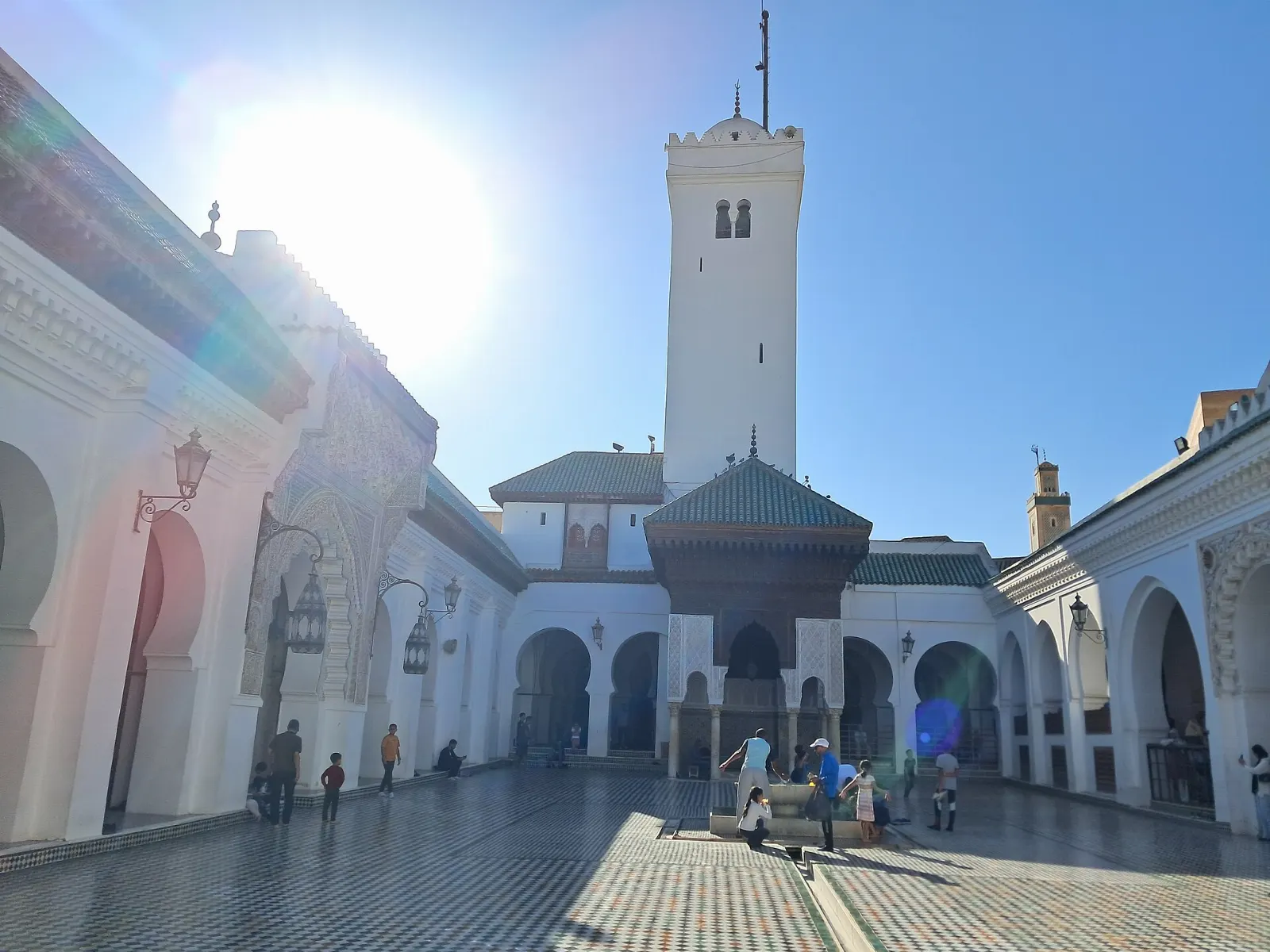
The green tiled roofs and courtyard of the Al-Qarawiyyin Mosque in Fez, Morocco

Al-Qarawiyyin Mosque and University

Founded in 859 by Fatima al-Fihri, a woman from Kairouan, Al-Qarawiyyin grew into one of the world's oldest continuously operating places of learning. Non-Muslims cannot enter the mosque, but you can glimpse its large courtyard and fountains through the doors.

Al-Qarawiyyin, founded in 859 by Fatima al-Fihri, is among the oldest continuously operating places of learning in the world. Photo: Ideophagous, Wikimedia Commons, CC BY-SA 4.0

Zawiya of Moulay Idris II

The shrine of Moulay Idris II, who founded Fez as a city in the early ninth century, is one of the most important religious sites in Morocco. Non-Muslims may not enter, but the decorated entrances, the candle sellers and the stream of pilgrims make it worth a stop.

Crafts, tanneries and museums

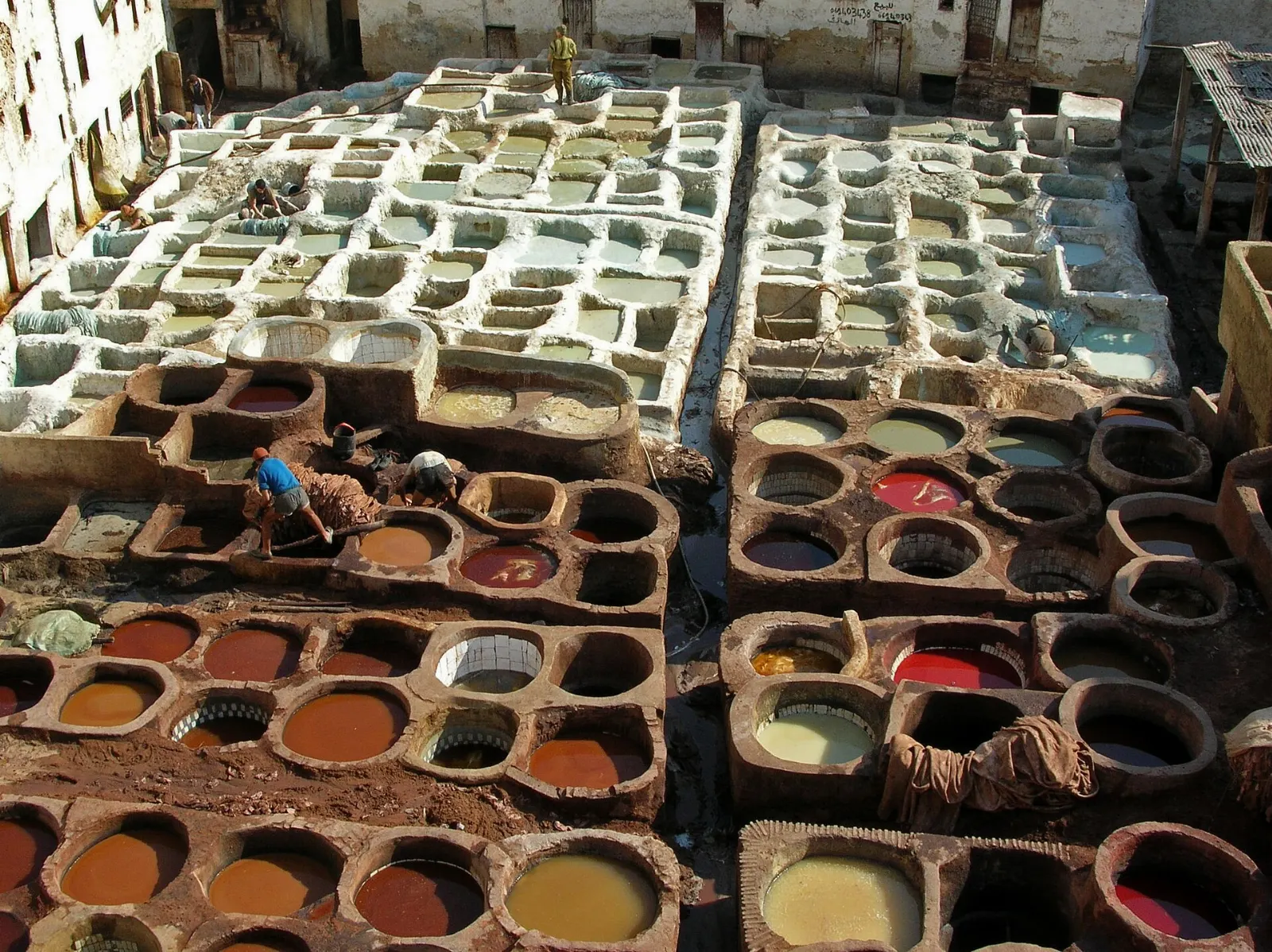
Round stone vats filled with dyes at the Chouara Tannery, Fez, Morocco

Chouara Tannery

The Chouara Tannery, the largest of the city's tanneries, has been processing hides for centuries.

The Chouara Tannery still processes hides in stone vats much as it has for centuries. Photo: Bernard Gagnon, Wikimedia Commons, CC BY-SA 3.0

Place Seffarine and the craft souks

Close to the Al-Qarawiyyin, Place Seffarine is a small square ringed with coppersmiths hammering cauldrons and trays, a scene that has changed little in centuries. From here, lanes lead to souks of dyers, weavers, slipper makers and woodworkers.

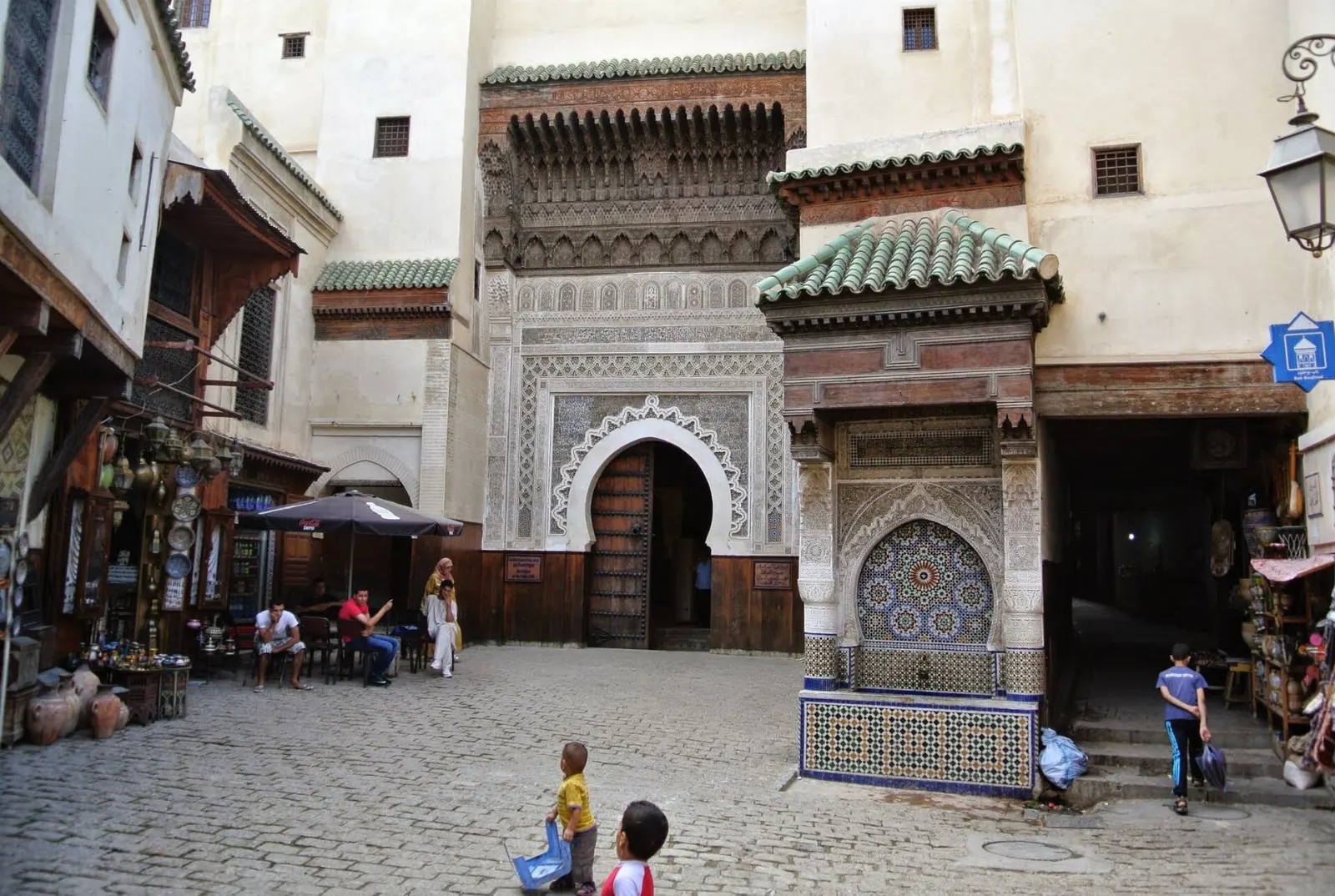
The tiled Nejjarine fountain beside the entrance to the Nejjarine Museum, Fez, Morocco

Nejjarine Museum of Wooden Arts and Crafts

The beautifully restored Nejjarine funduq, an eighteenth-century inn for traveling merchants, now houses a museum of wooden crafts, from doors and ceiling panels to tools and musical instruments. The rooftop cafe offers views over the medina.

The Nejjarine fountain stands beside an eighteenth-century funduq that now houses a museum of wooden arts. Photo: Ben Bender, Wikimedia Commons, CC BY-SA 3.0

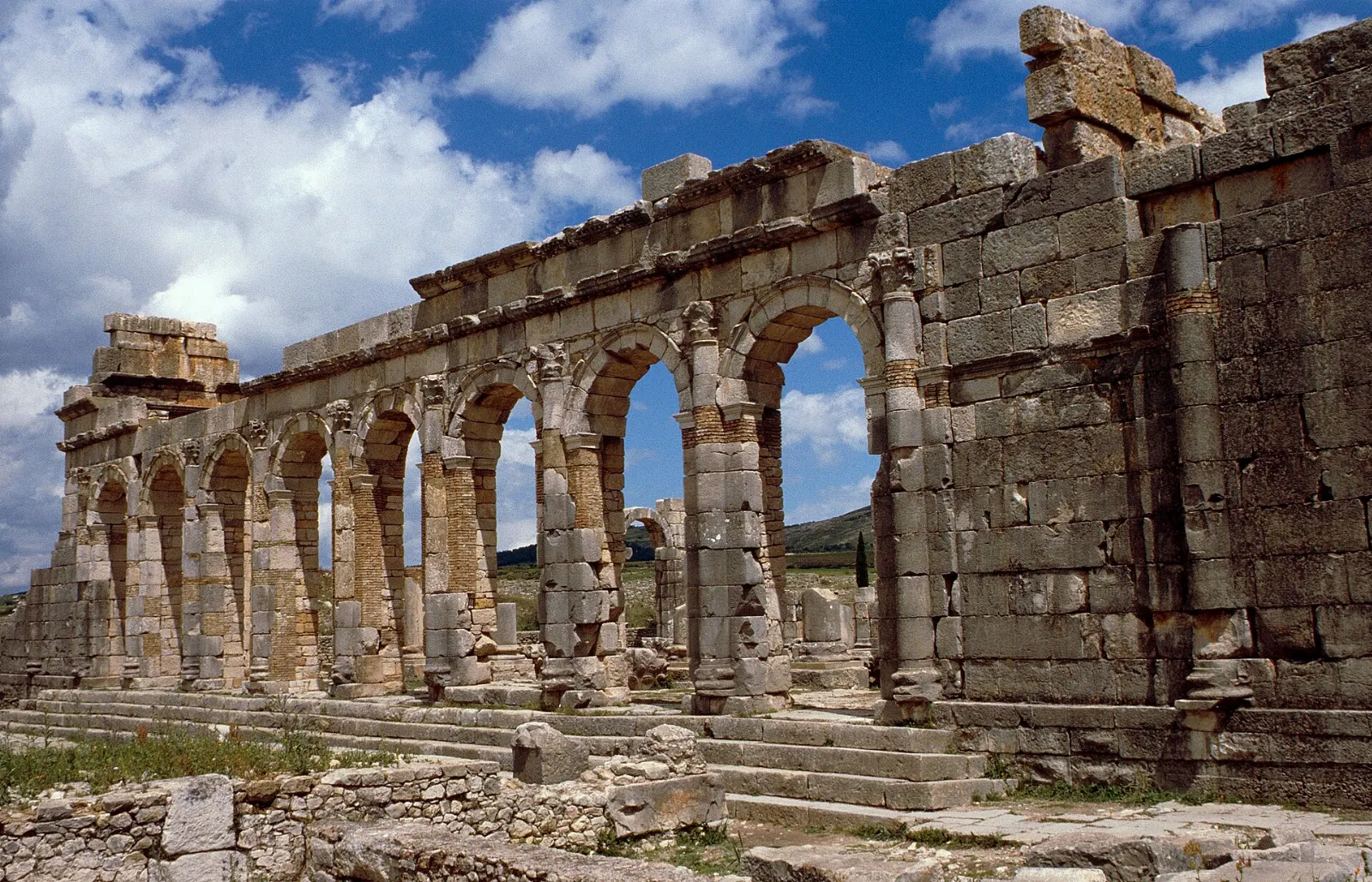
Roman columns and arches standing in the ruins of Volubilis, Fez, Morocco

Dar Batha

Just outside Bab Bou Jeloud, Dar Batha is a nineteenth-century palace with an Andalusian-style garden. It reopened in 2025 after restoration as a museum of Islamic arts, with ceramics, woodwork, metalwork, manuscripts and textiles from across the region.

Volubilis, a Roman-era city near Meknes, is a popular day trip from Fez. Photo: Chrisi1964, Wikimedia Commons, CC BY-SA 4.0

Fes el-Jdid and the city viewpoints

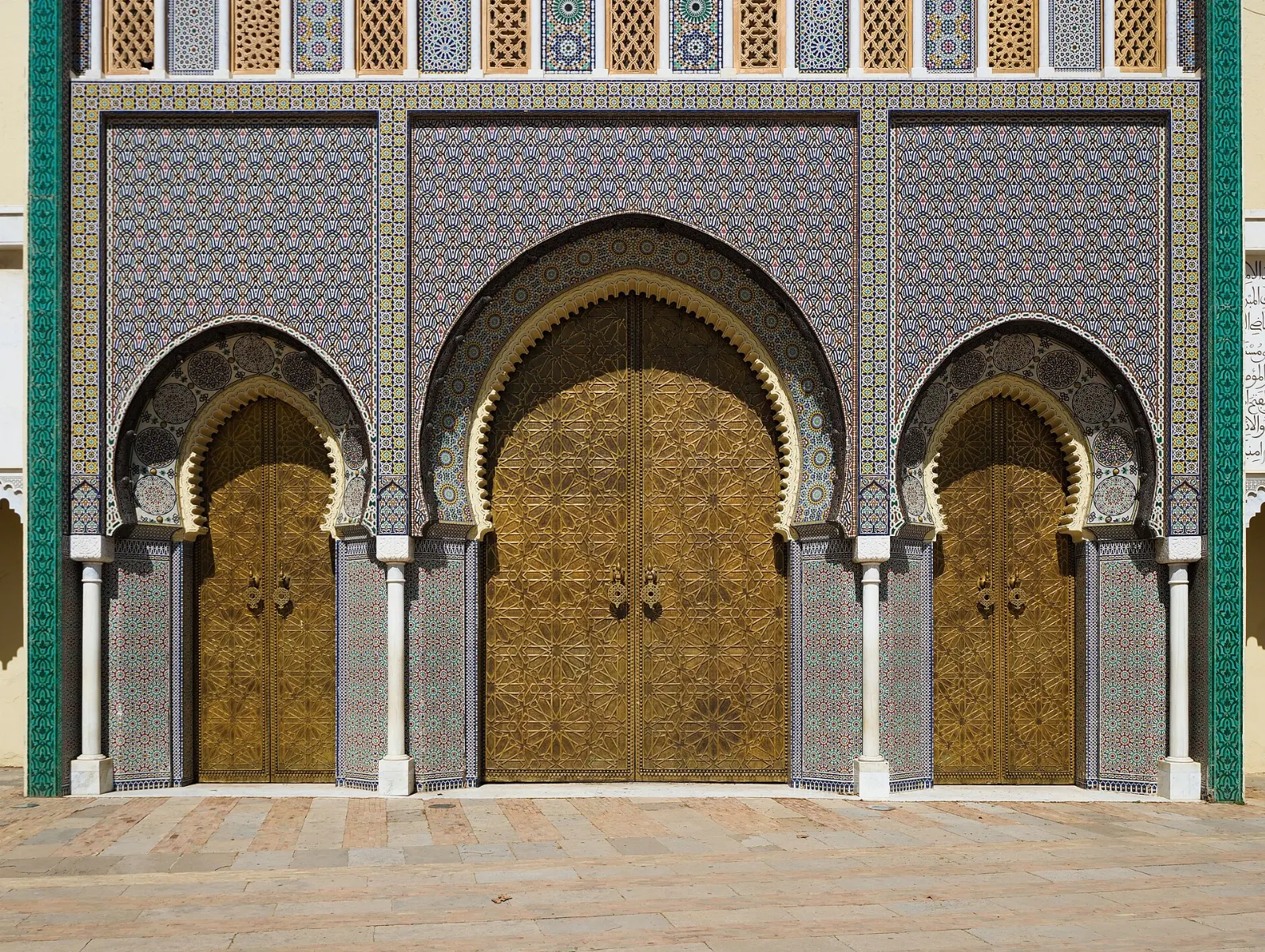
Gleaming brass doors and tiled arches of the Royal Palace gates in Fez, Morocco

The Royal Palace gates

Fes el-Jdid, the new Fez, was founded by the Marinids in the thirteenth century as a royal and administrative district.

The brass doors of the Royal Palace in Fes el-Jdid are framed by zellige tiles and carved cedar. Photo: Petar Milošević, Wikimedia Commons, CC BY-SA 4.0

The Mellah

Next to the palace, the Mellah was the city's Jewish quarter, distinctive for its houses with wooden balconies facing the street. You can visit the restored Ibn Danan Synagogue and the Jewish cemetery, with its rows of whitewashed tombs on the hillside.

Jnan Sbil Gardens

Between Fes el-Jdid and Fes el-Bali, the Jnan Sbil Gardens are a restored historic park with palms, fountains, bamboo and a pond, where local families come to relax. Allow forty-five minutes for a peaceful walk.

Merenid Tombs and Borj Nord

On the hill north of the medina, the ruined Merenid Tombs offer the best panoramic views over Fes el-Bali, with its thousands of rooftops, minarets and satellite dishes.

Food and local flavors

Fassi cuisine is often regarded as the most refined in Morocco. Its signature dish is pastilla, a flaky pastry pie traditionally filled with pigeon or chicken, almonds, eggs and spices and dusted with cinnamon and powdered sugar.

Around Bab Bou Jeloud and along Talaa Kebira, stalls sell kefta and grilled brochettes, harira soup, msemen and sfenj, light doughnuts fried to order.

Popular dishes to try in Fez

Pastilla in Fez, Morocco
Pastilla Cooking classes in riads are a good way to learn how to make tagines and pastilla yourself.Photo: Mounir Neddi, Wikimedia Commons, CC BY-SA 4.0
Bissara in Fez, Morocco
Bissara For breakfast, try bissara, a thick soup of dried fava beans or split peas with olive oil and cumin, served from steaming pots in tiny canteens.Photo: Abdeaitali, Wikimedia Commons, CC BY-SA 4.0
Harira in Fez, Morocco
Harira Around Bab Bou Jeloud and along Talaa Kebira, stalls sell kefta and grilled brochettes, harira soup, msemen and sfenj, light doughnuts fried to order.Photo: HaJunkiyada, Wikimedia Commons, CC BY-SA 4.0
Msemen in Fez, Morocco
Msemen Around Bab Bou Jeloud and along Talaa Kebira, stalls sell kefta and grilled brochettes, harira soup, msemen and sfenj, light doughnuts fried to order.Photo: Mounir Neddi, Wikimedia Commons, CC BY-SA 4.0

Where to stay

The medina, Fes el-Bali, is full of riads and dars, traditional houses built around a courtyard, many with rooftop terraces.

The Ville Nouvelle, the modern district built under the French Protectorate, has wide avenues, modern hotels, cafes and the train station. It suits travelers who prefer easy access by car and a quieter evening, and it is a short taxi ride from the medina gates.

Where to stay in Fez

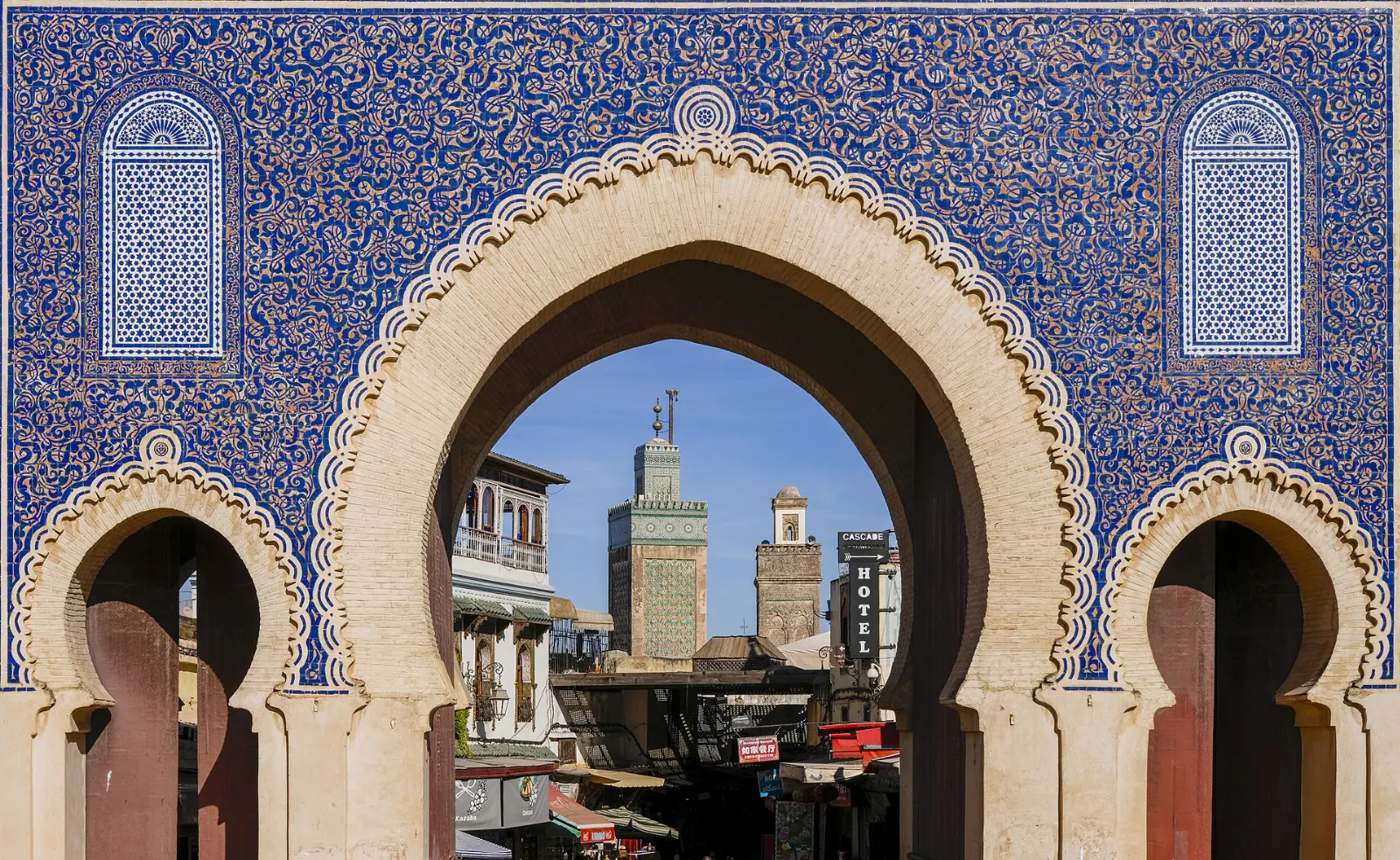
Bab Bou Jeloud, Fez, Morocco
Bab Bou Jeloud Areas close to Bab Bou Jeloud are easiest to find and reach by taxi, while stays deeper in the medina offer more atmosphere but require more navigation.Photo: This Photo was taken by Timothy A. Gonsalves. Feel free to use my p…, Wikimedia Commons, CC BY-SA 4.0
Fes el Bali, Fez, Morocco
Fes el Bali Where to stayThe medina, Fes el-Bali, is full of riads and dars, traditional houses built around a courtyard, many with rooftop terraces.Photo: Feranza, Wikimedia Commons, CC BY-SA 4.0
Fes Jdid, Fez, Morocco
Fes Jdid One of the best areas to base yourself in Fez.Photo: R Prazeres, Wikimedia Commons, CC BY-SA 4.0
Ville Nouvelle Fes, Fez, Morocco
Ville Nouvelle Fes One of the best areas to base yourself in Fez.Photo: Adam Jones, Ph.D., Wikimedia Commons, CC BY-SA 3.0

Best time to visit

Spring, from March to May, and autumn, from September to November, offer comfortable temperatures for long walks through the medina.

Getting there and getting around

Fes-Saiss Airport, south of the city, has flights to European cities and to Casablanca, and the taxi ride to the medina takes around half an hour.

Within the medina, walking is the only option. Red petit taxis carry up to three passengers within the city and should use the meter.

A suggested itinerary

First day

Enter through Bab Bou Jeloud with a licensed guide.

Second day

Visit the Nejjarine Museum and Place Seffarine in the morning, then browse the craft souks on your own. In the afternoon, head to Dar Batha and Jnan Sbil Gardens.

The Andalusian-style garden courtyard of the Dar Batha museum, Fez, Morocco

Third day

Explore Fes el-Jdid, the Royal Palace gates and the Mellah in the morning. Or hire a driver for a day trip to the Roman ruins of Volubilis, the hilltop town of Moulay Idriss and the imperial city of Meknes.

Dar Batha, a nineteenth-century palace, reopened in 2025 as a museum of Islamic arts. Photo: R Prazeres, Wikimedia Commons, CC BY-SA 4.0

Practical tips

  • Hire an official guide through your riad or the tourist office, at least for your first visit to the medina.
  • Ignore people who tell you a street is closed or offer to show you the way; they expect payment or a commission.
  • Download an offline map, but expect it to lose accuracy in the narrow lanes.
  • Check the official website for current hours and fees at museums and madrasas, which may close for prayer.
  • Dress modestly, covering shoulders and knees, and stay out of mosques and shrines unless you are Muslim.
  • When you hear "balak", step aside; it means a donkey or cart is coming through.
FezWISERMAP PLACEFez: photos, reviews & things to doSee traveler photos and reviews, or share your own →

More places to visit

All travel guides →