This guide walks you through the ghats, the temples of the old city, the Buddhist site of Sarnath and the quieter corners on the far side of the river.
At a glance Varanasi
Best timeOctober to March, when days are mild and dry. Dev Deepawali in November is the highlight.
How longThree full days covers the ghats, the old city and Sarnath at a calm pace.
Getting thereFly into Lal Bahadur Shastri International Airport or take an express train from Delhi or Kolkata.
Ad
Why visit Varanasi
Few places let you watch so much of life and death happen in public. Hindus believe that dying in Varanasi, or being cremated on its ghats, can bring liberation from the cycle of rebirth, so families travel from across India to bring their dead here.
The city is also a center of learning and craft. Banaras Hindu University is one of the largest residential universities in Asia, the city has a strong tradition of Hindustani classical music, and its weavers produce the famous Banarasi silk saris with gold and silver brocade.
Varanasi can be intense: crowded lanes, persistent touts, cows and motorbikes sharing the same narrow alleys.
The ghats and the river
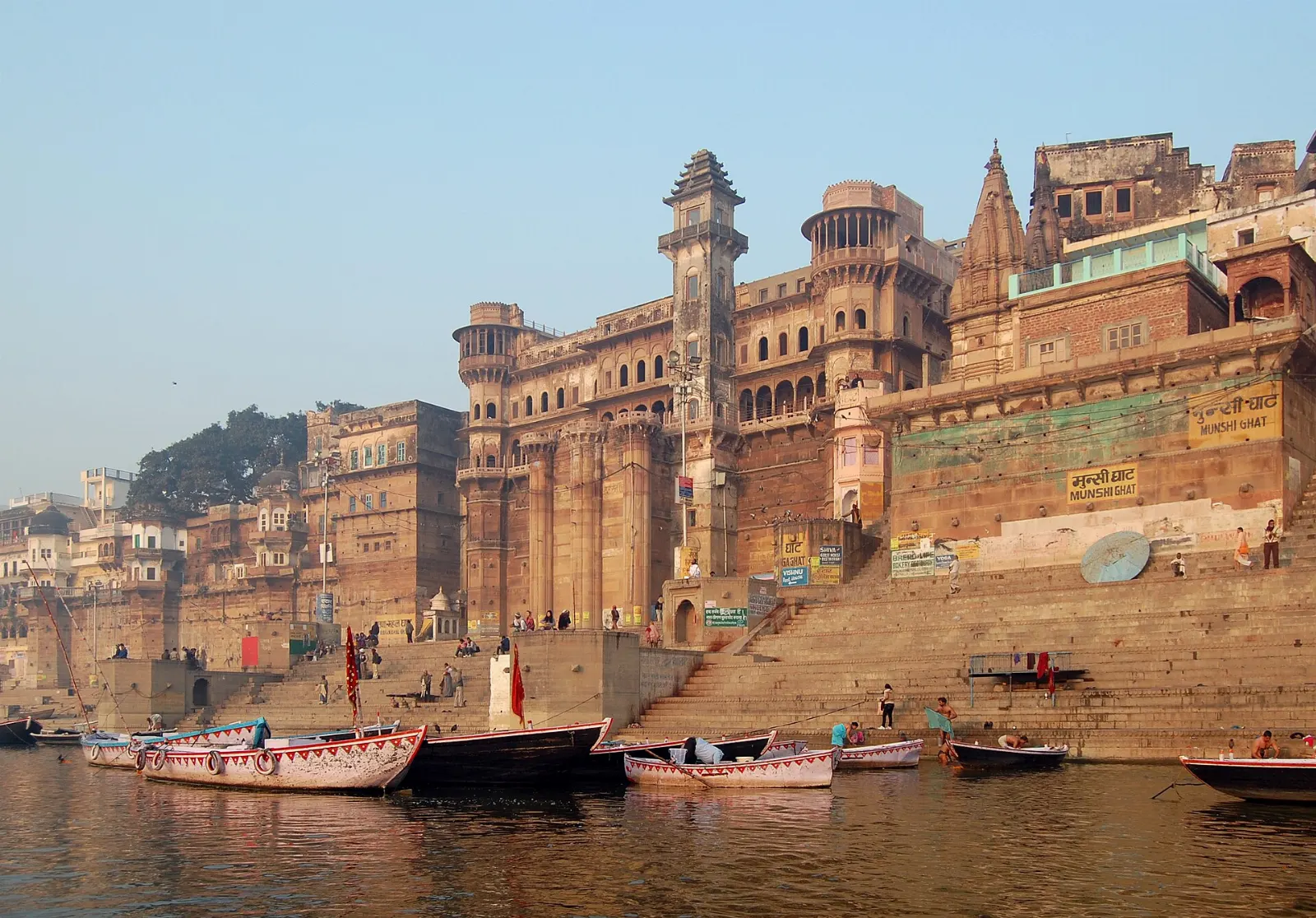
The ghats stretch roughly from Assi in the south to Raj Ghat in the north. You can walk most of the central stretch along the steps when the river is at normal levels, and a boat ride at sunrise or sunset gives you the classic view of the whole waterfront.
Dashashwamedh Ghat
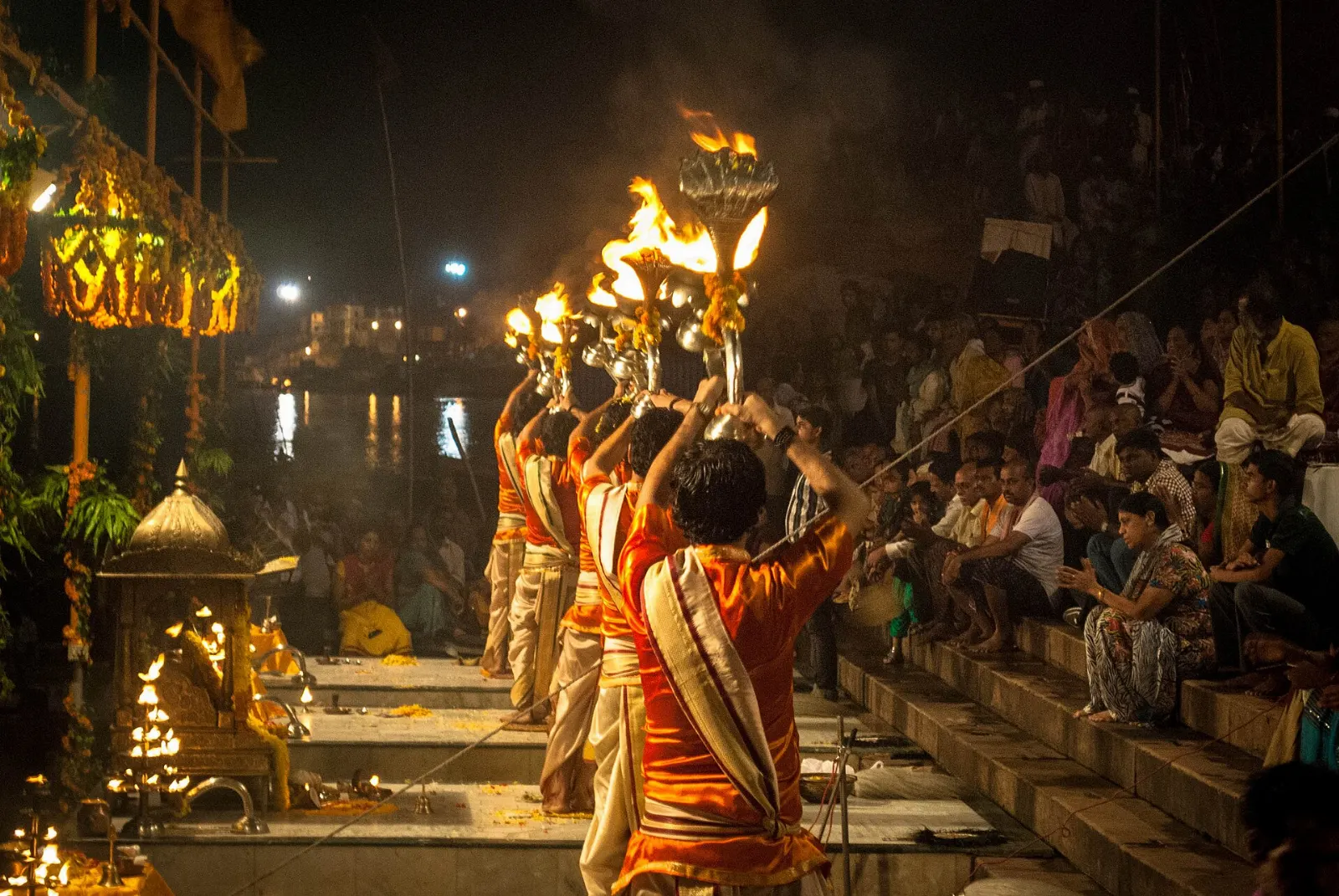
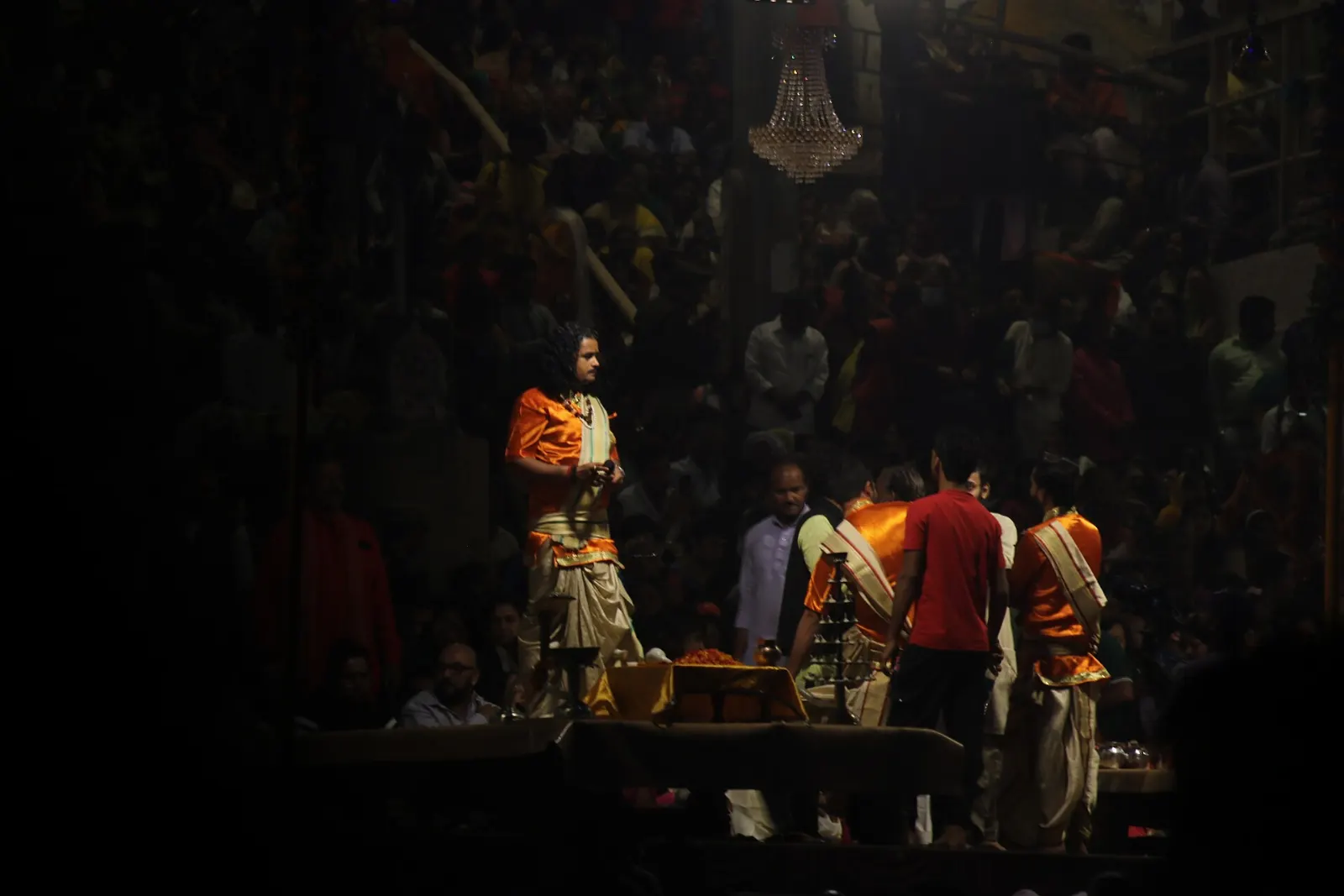
This is the busiest and most central ghat, close to the Godowlia crossing, and the setting for the nightly Ganga Aarti.
The evening Ganga Aarti at Dashashwamedh Ghat is performed by a row of priests with multi-tiered brass lamps. Photo: Sujay25, Wikimedia Commons, CC BY-SA 4.0
Manikarnika Ghat
The main cremation ghat sits a short walk north of Dashashwamedh. Bodies wrapped in cloth are carried through the lanes on bamboo stretchers, dipped in the river and placed on pyres stacked with wood that is piled high on the steps around the ghat.
Manikarnika Ghat is the principal cremation ghat of Varanasi, where fires burn day and night. Photo: Dudva, Wikimedia Commons, CC0
Assi Ghat
At the southern end of the riverfront, Assi Ghat is wider and more relaxed than the central ghats. At dawn it hosts Subah-e-Banaras, a morning programme of aarti, Vedic chanting, classical music and yoga that begins before sunrise.
Assi Ghat marks the southern end of the main riverfront and hosts a dawn programme of prayer and music. Photo: Akshay8090, Wikimedia Commons, CC BY-SA 4.0
A walk along the central ghats
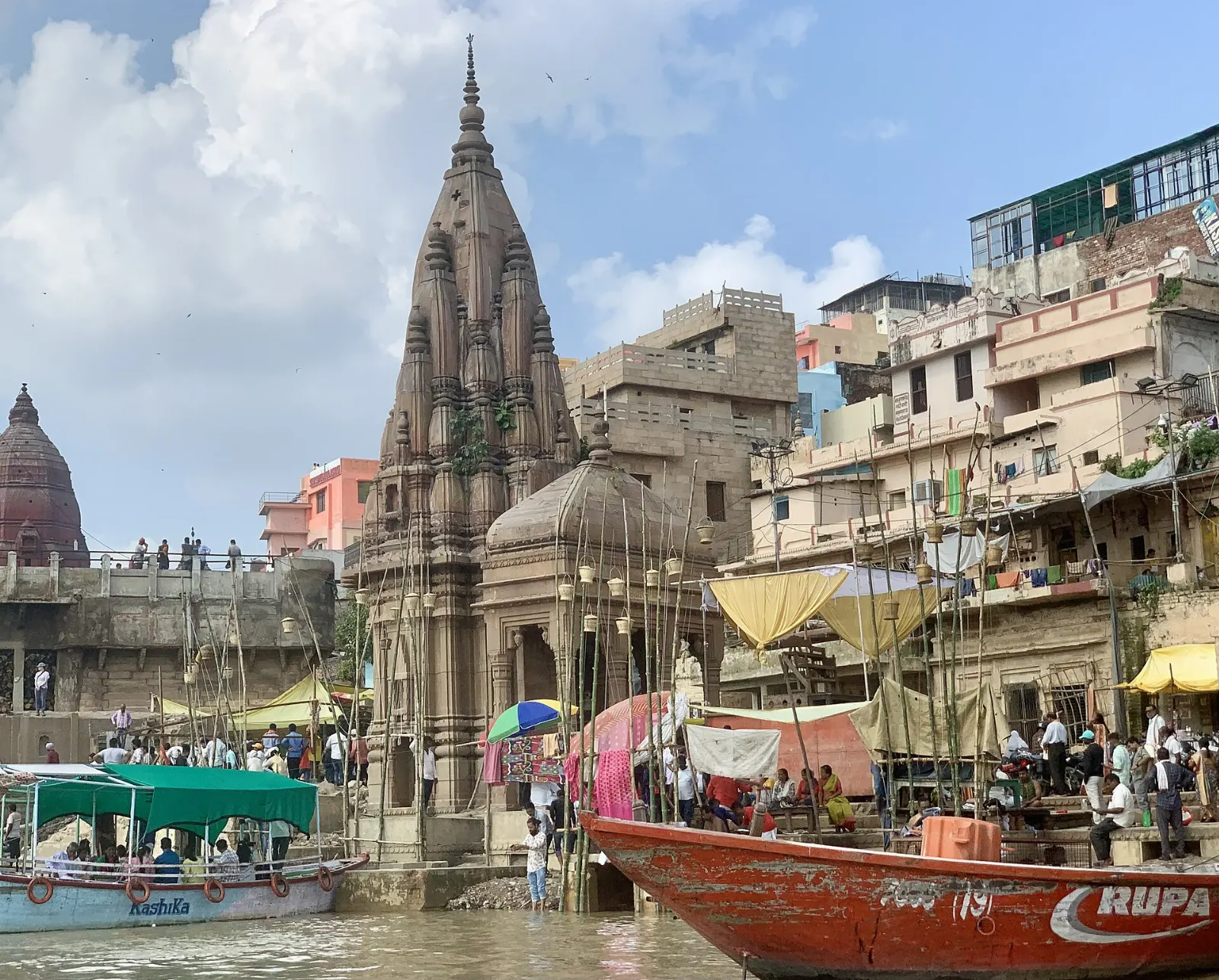
Between Assi and Manikarnika you pass dozens of ghats with their own character. Look for the painted facades near Kedar Ghat, the sandstone palace above Darbhanga Ghat, the fortified walls of Chet Singh Ghat, and the leaning, half-submerged Shiva temple at Scindia Ghat.
Ad
Temples, lanes and the university
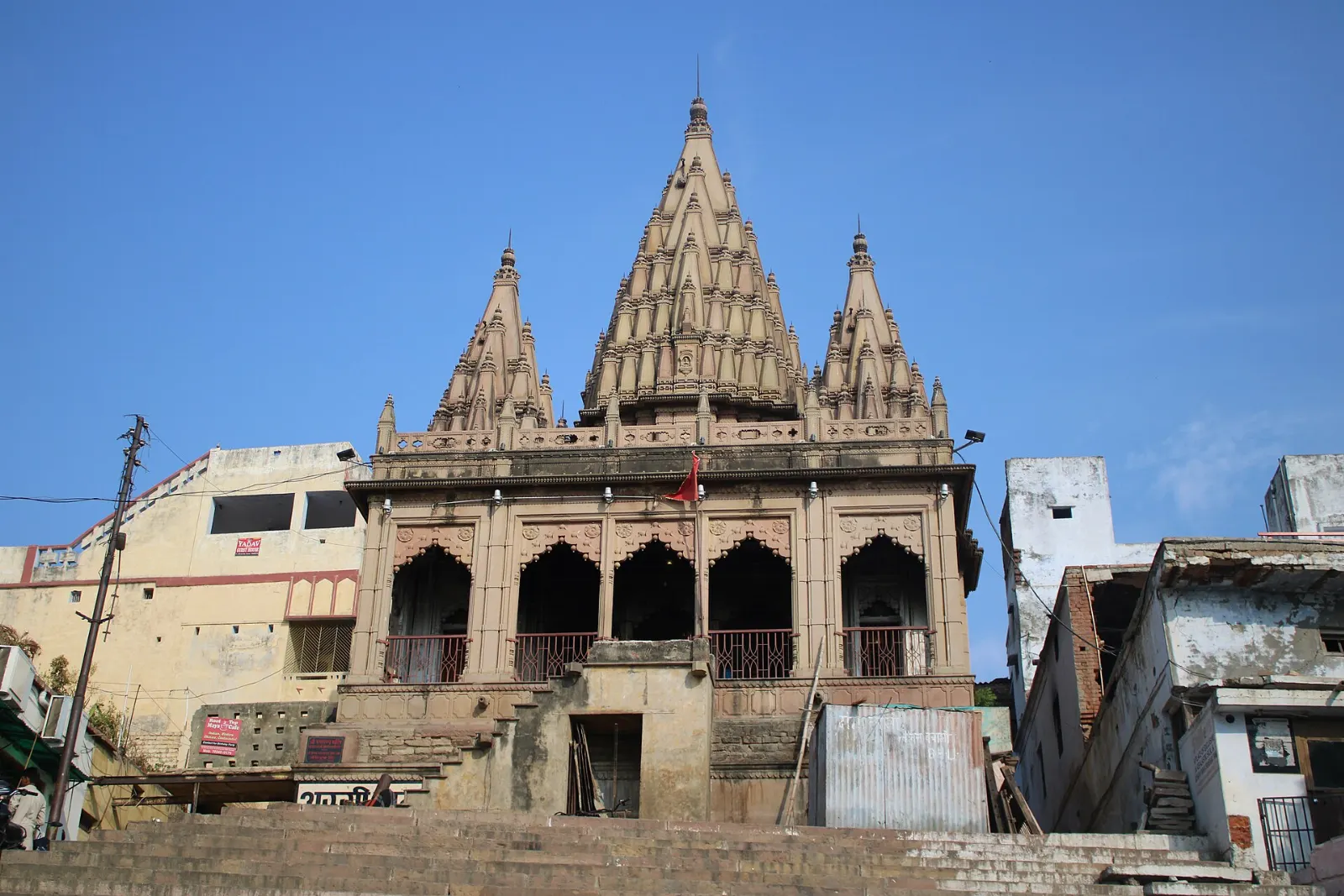
Behind the ghats lies a maze of lanes called galis, packed with small shrines, sweet shops and family houses. Getting lost is part of the experience, but keep a map app handy because many lanes look alike.
Kashi Vishwanath Temple
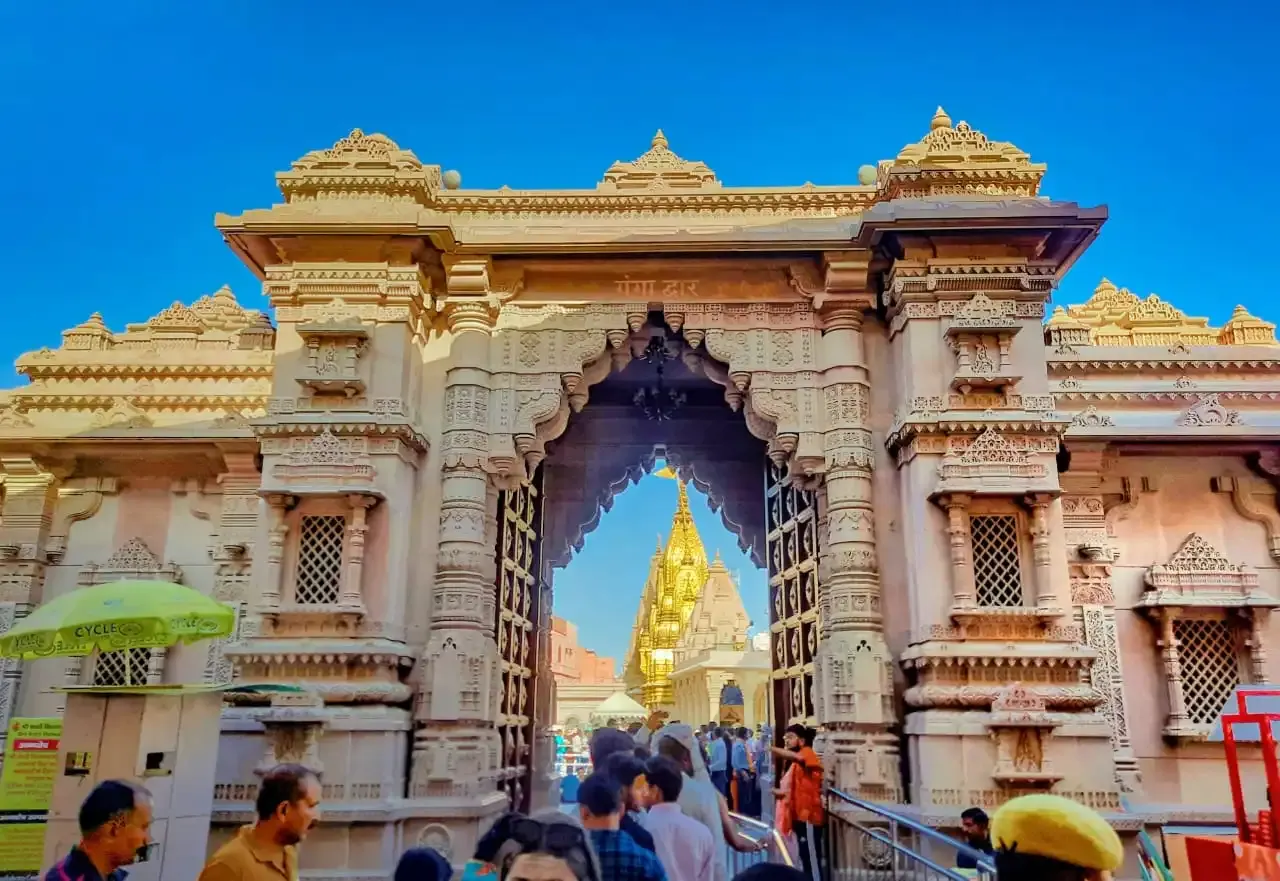
Dedicated to Shiva as the Lord of the Universe, this temple houses one of the twelve jyotirlingas and is the spiritual heart of the city. Its spire is covered in gold plating.
Associated with the poet-saint Tulsidas, this tree-shaded temple to Hanuman is one of the most loved in Varanasi and is busiest on Tuesdays and Saturdays. Expect security checks at the gate and resident monkeys in the courtyard.
Durga Temple and Tulsi Manas Mandir
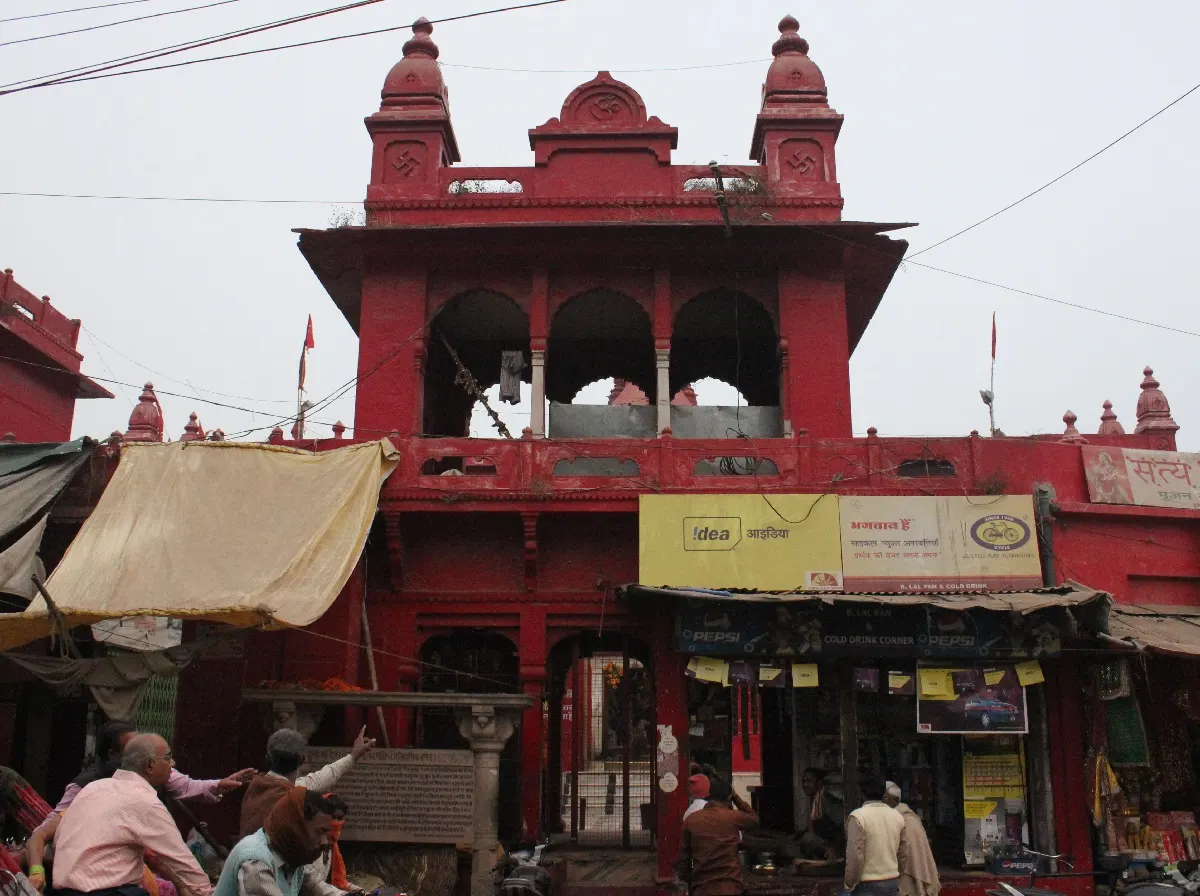
The Durga Temple, built in the eighteenth century and painted a striking red ochre, stands beside a stepped tank called Durga Kund.
The Durga Temple, painted a deep red, stands beside a square tank known as Durga Kund. Photo: AKS.9955, Wikimedia Commons, CC BY-SA 4.0
Banaras Hindu University
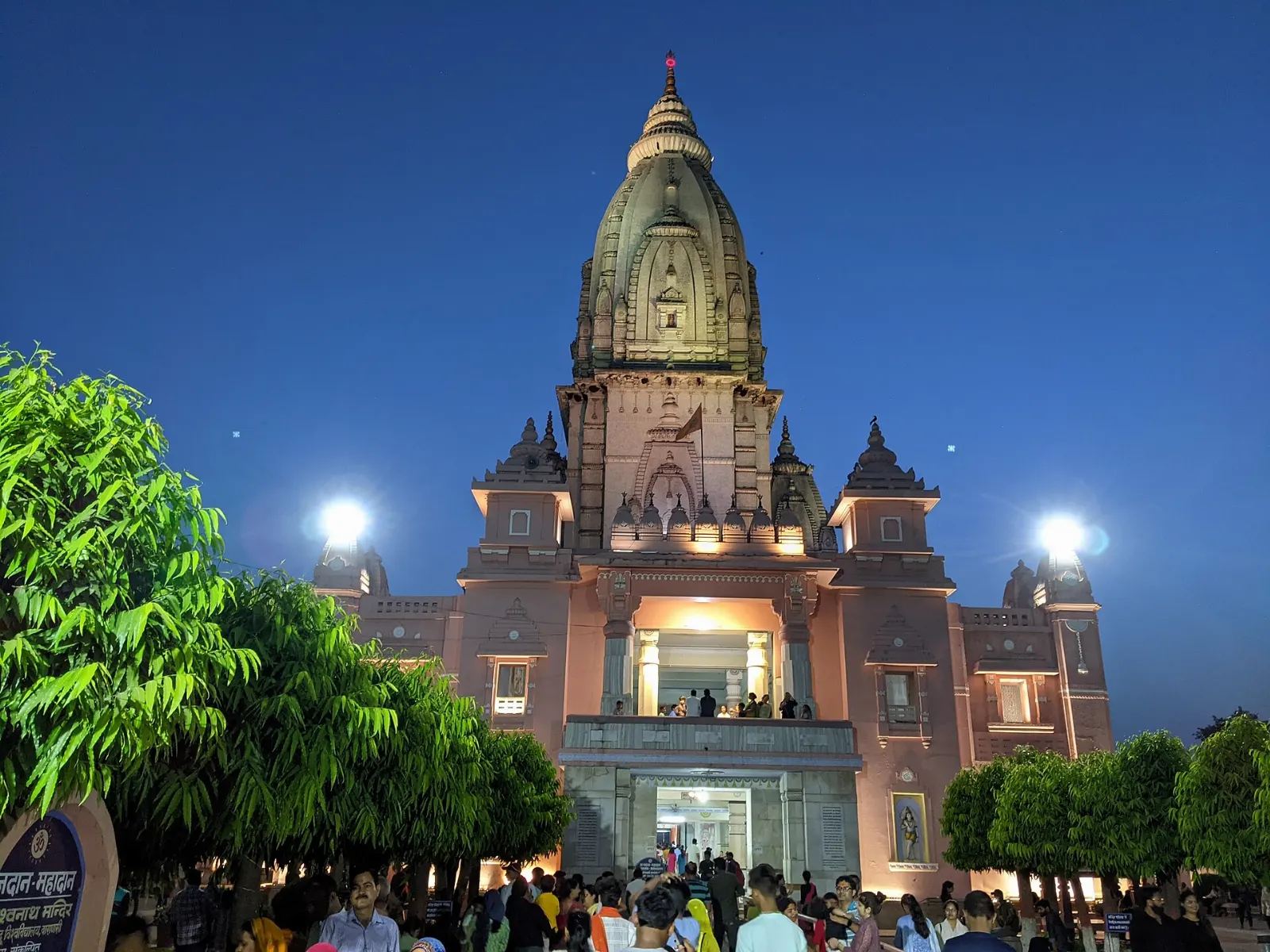
Founded in 1916 by Madan Mohan Malaviya, the leafy BHU campus in the south of the city is a welcome break from the crowds. The New Vishwanath Temple at its center has a tall marble spire and is open to people of all faiths.
The New Vishwanath Temple sits at the heart of the Banaras Hindu University campus. Photo: Heliophilous, Wikimedia Commons, CC BY-SA 4.0
Sarnath and the far bank
Sarnath
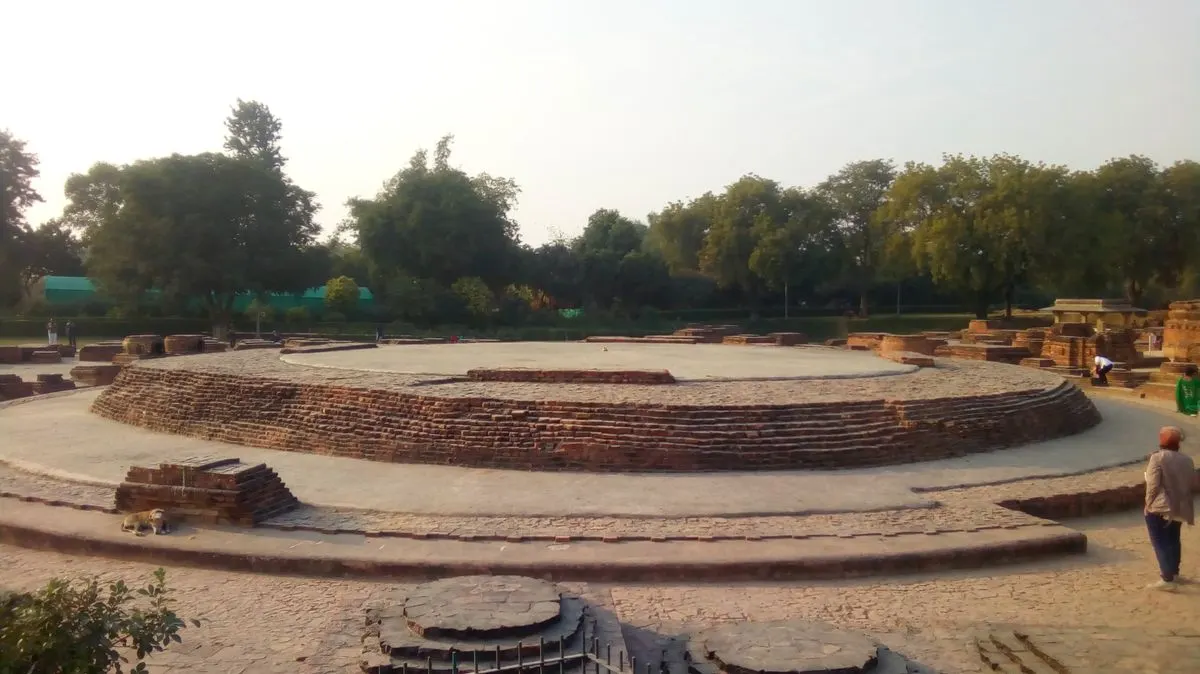
About ten kilometers northeast of central Varanasi, Sarnath is where the Buddha is believed to have delivered his first sermon after enlightenment. The deer park ruins include monastery foundations, the stump of an Ashokan pillar and the massive Dhamek Stupa.
The Dhamek Stupa at Sarnath marks the area where the Buddha is believed to have given his first sermon. Photo: SpeakingArch, Wikimedia Commons, CC BY-SA 4.0
Ramnagar Fort
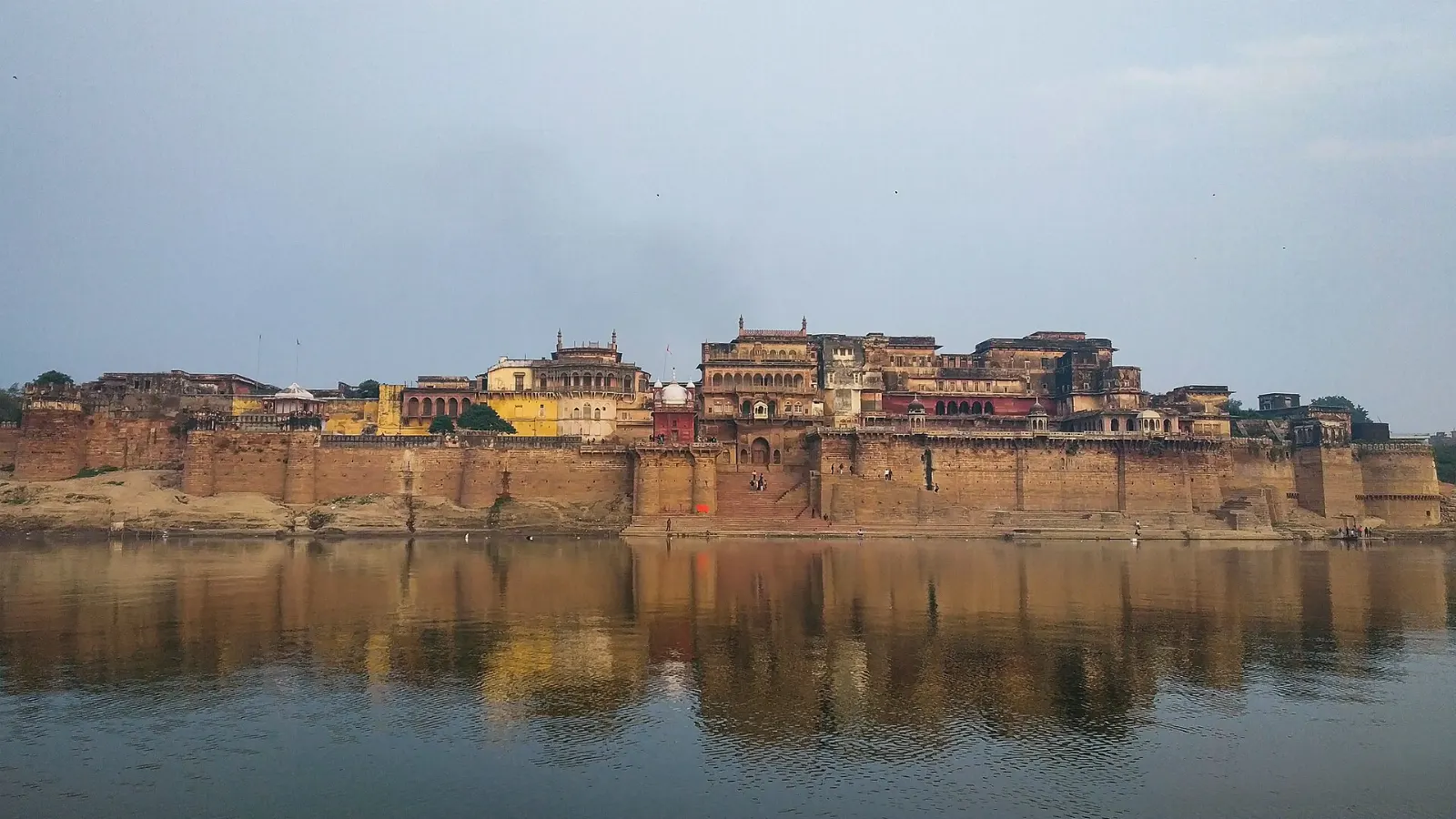
Across the river to the south, this sandstone fort was built in the eighteenth century by Raja Balwant Singh and remains associated with the former royal family of Banaras. Part of it is a museum with vintage cars, palanquins, weapons, costumes and an astronomical clock.
Ramnagar Fort, built in the eighteenth century, stands on the eastern bank of the Ganges opposite the city. Photo: Paramanu Sarkar, Wikimedia Commons, CC BY-SA 4.0
Ad
Food and local flavors
Varanasi is largely vegetarian, especially near the temples and ghats, and its street food is some of the best in North India. Breakfast means kachori sabzi, deep-fried pastries served with a spicy potato curry, followed by hot jalebi.
In winter look for malaiyo, a light, saffron-tinged milk foam that is left out overnight to catch the dew and sold only in the early morning.
Popular dishes to try in Varanasi
Kachori The lanes around Godowlia and the Chowk area, including Kachori Gali, are the best places to graze, while the Lanka area near BHU has student-friendly snack stalls and sweet shops.Photo: Rajeeb Dutta, Wikimedia Commons, CC BY-SA 3.0Malaiyo In winter look for malaiyo, a light, saffron-tinged milk foam that is left out overnight to catch the dew and sold only in the early morning.Photo: Rinchin1, Wikimedia Commons, CC BY-SA 4.0Banarasi paan Finish with a Banarasi paan, a betel leaf parcel that is famous across India.Photo: Biswarup Ganguly, Wikimedia Commons, CC BY 3.0Lassi Thick lassi served in clay cups called kulhads, and thandai flavored with nuts and spices, are classic drinks, especially around Holi.Photo: Patrick Barry from san francisco, ca, usa, Wikimedia Commons, CC BY-SA 2.0
Where to stay
On the ghats and in the old city: Staying in a heritage house or guesthouse above the river puts you minutes from the dawn rituals and the evening aarti, often with rooftop views.
Assi and Shivala: The southern ghats are calmer, with cafes, yoga and music classes, and easy access to BHU.
Cantonment: The Cantonment area near Varanasi Junction station has larger hotels, wider roads and easier car access.
Sarnath: A handful of guesthouses and monastery guest rooms make Sarnath a peaceful option for travelers focused on Buddhist sites.
Where to stay in Varanasi
Shivala Assi and Shivala: The southern ghats are calmer, with cafes, yoga and music classes, and easy access to BHU.Photo: Antoine Taveneaux, Wikimedia Commons, CC BY-SA 3.0Varanasi old town One of the best areas to base yourself in Varanasi.Photo: Matt Zimmerman, Wikimedia Commons, CC BY 2.0Varanasi skyline One of the best areas to base yourself in Varanasi.Photo: Vyacheslav Argenberg, Wikimedia Commons, CC BY 4.0
Ad
Best time to visit
October to March is the most comfortable season, with dry weather and pleasant days.
April to June is very hot, with temperatures often climbing above 40°C, and sightseeing is best kept to early morning and evening.
Festivals are a major draw. Dev Deepawali, held on the full moon of Kartik about two weeks after Diwali in October or November, sees the ghats lit with countless clay lamps.
During Dev Deepawali the ghats of Varanasi are lit with rows of small clay oil lamps.Photo: Goutam1962, Wikimedia Commons, CC BY-SA 4.0
Getting there and getting around
Lal Bahadur Shastri International Airport at Babatpur lies northwest of the city and has direct flights from Delhi, Mumbai, Bengaluru, Kolkata and other Indian cities.
By rail, Varanasi Junction, also called Varanasi Cantt, is the main station, with Banaras station serving some services and Pandit Deen Dayal Upadhyaya Junction across the river handling many long-distance trains.
In town, auto rickshaws, electric rickshaws and cycle rickshaws handle most trips, and app-based cabs operate across the city.
Ad
A suggested itinerary
First day
Start before sunrise with a boat ride from Dashashwamedh or Assi to watch the city wake up along the ghats. Have a kachori sabzi breakfast in the lanes near Godowlia, then visit Kashi Vishwanath Temple and walk down through the corridor to the river.
Second day
Attend Subah-e-Banaras at Assi Ghat, then walk north along the ghats past Chet Singh, Darbhanga and Scindia ghats.
Third day
Head out early to Sarnath for the Dhamek Stupa, the Mulagandha Kuti Vihara and the Archaeological Museum. Return for a late lunch, then take a boat across to Ramnagar Fort in the late afternoon.
Practical tips
Dress modestly, covering shoulders and knees, especially at temples and on the ghats, and remove shoes before entering shrines.
Never photograph cremations at Manikarnika or Harishchandra ghats, and ask before photographing sadhus or pilgrims.
Leave your phone at your hotel or in a locker before visiting Kashi Vishwanath, as electronic devices are not allowed inside.
Politely refuse uninvited guides, boat touts and offers of silk shop tours, which often carry commissions.
Carry small change for boat rides, rickshaws, offerings and snacks, as many small vendors prefer cash or UPI payments.
Drink only bottled or filtered water and avoid bathing in or drinking from the river.
Watch your step on the ghats, where stone steps can be slippery and are shared with cows and dogs.