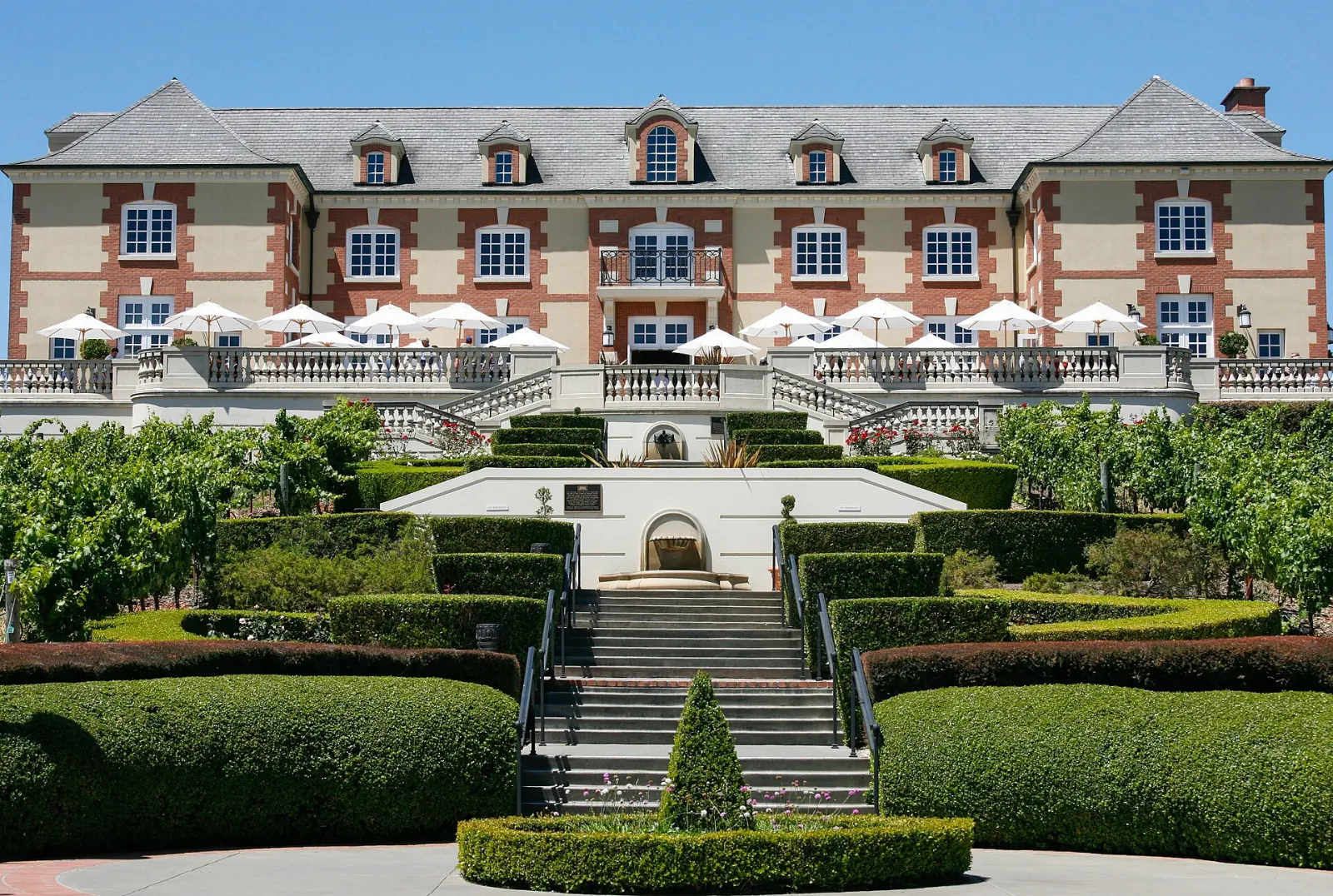
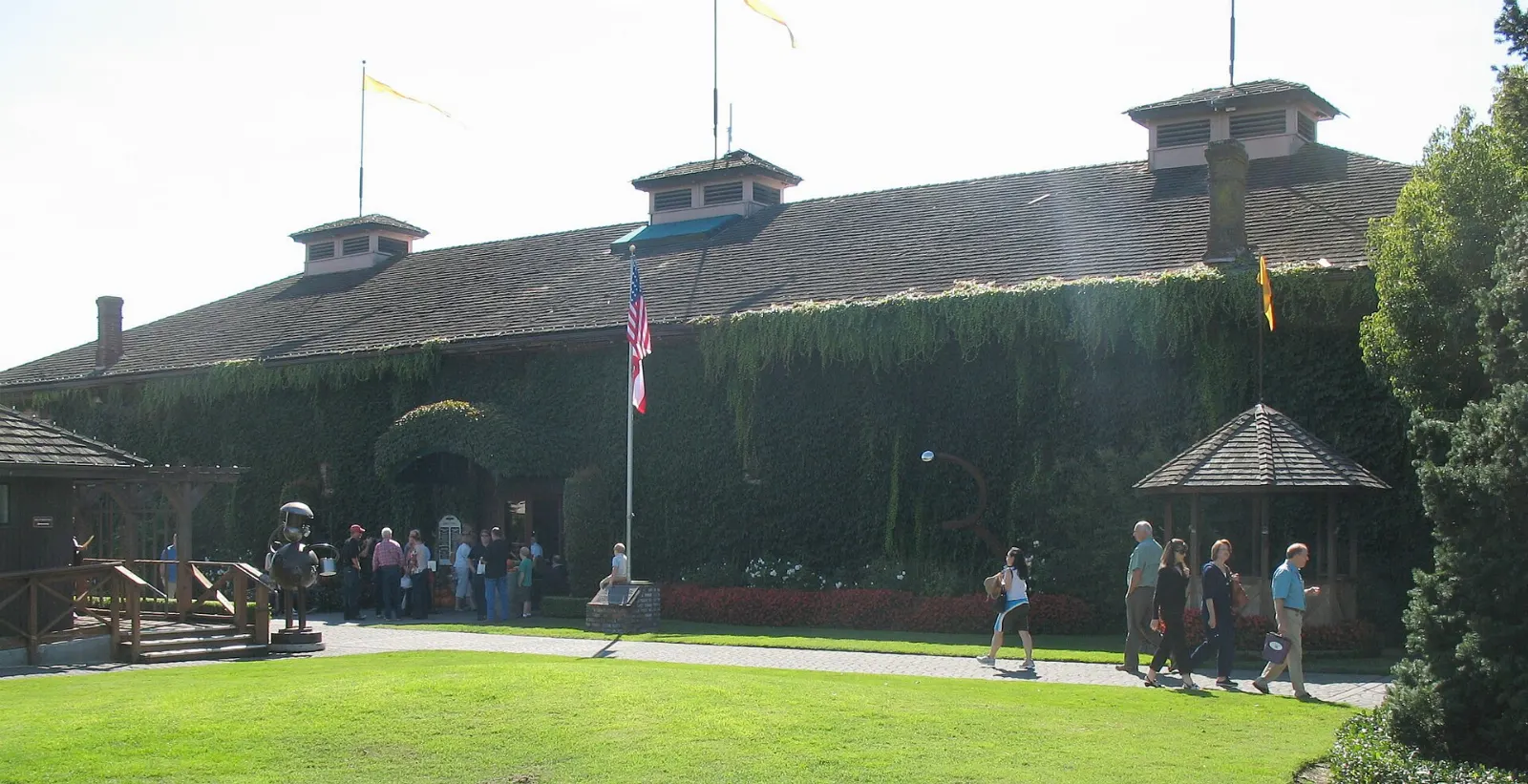
Napa Valley California Wine Trip from Carneros to Calistoga
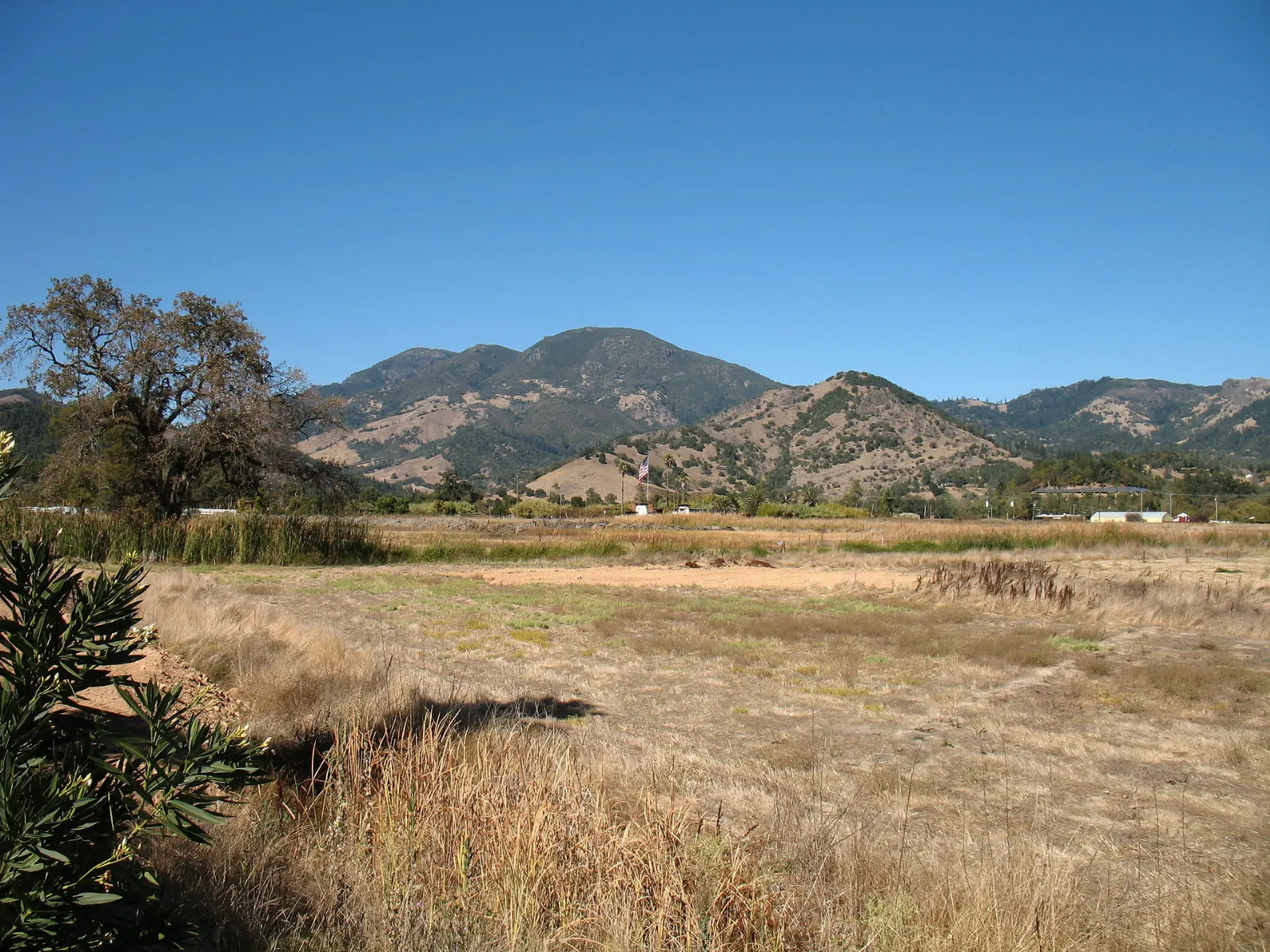
Napa Valley is a narrow strip of farmland about thirty miles long, wedged between the Mayacamas Mountains on the west and the Vaca Range on the east. In that small space you will find hundreds of wineries, a string of distinct small towns and some of the most celebrated cooking in the country.
By WiserMap TravelUpdated October 20269 places11 min read
The trick to enjoying Napa is to treat it as a set of neighborhoods rather than one long tasting room. The city of Napa anchors the south end, Carneros cools things off near the bay, Yountville and Oakville sit in the middle, and St. Helena and Calistoga close out the north with stone wineries, hot springs and volcanic landscapes.
At a glance Napa Valley
Best timeLate August to October for harvest color and energy; March to May for green hills and lighter crowds.
How longTwo to three days covers the main towns; four days lets you add hikes, spas and slower meals.
Getting thereDrive about one to one and a half hours from San Francisco or Oakland airports, or fly into Sonoma County or Sacramento.
Ad
Why visit Napa Valley
Wine is the obvious draw, and the range is wider than many first-time visitors expect. The cool, foggy south grows Chardonnay and Pinot Noir for still and sparkling wines, while the warmer middle and north are famous for Cabernet Sauvignon grown on gravelly benchland and mountain slopes.
The valley also rewards people who are not there only for wine. Yountville and St. Helena have serious food cultures, from bakeries to cooking schools.
Finally, Napa is compact. You can eat breakfast at a riverside market in the city of Napa, taste in Oakville at midday and soak in Calistoga by evening, all within roughly forty minutes of driving end to end when traffic cooperates.
The city of Napa and Carneros
Oxbow Public Market and the riverfront
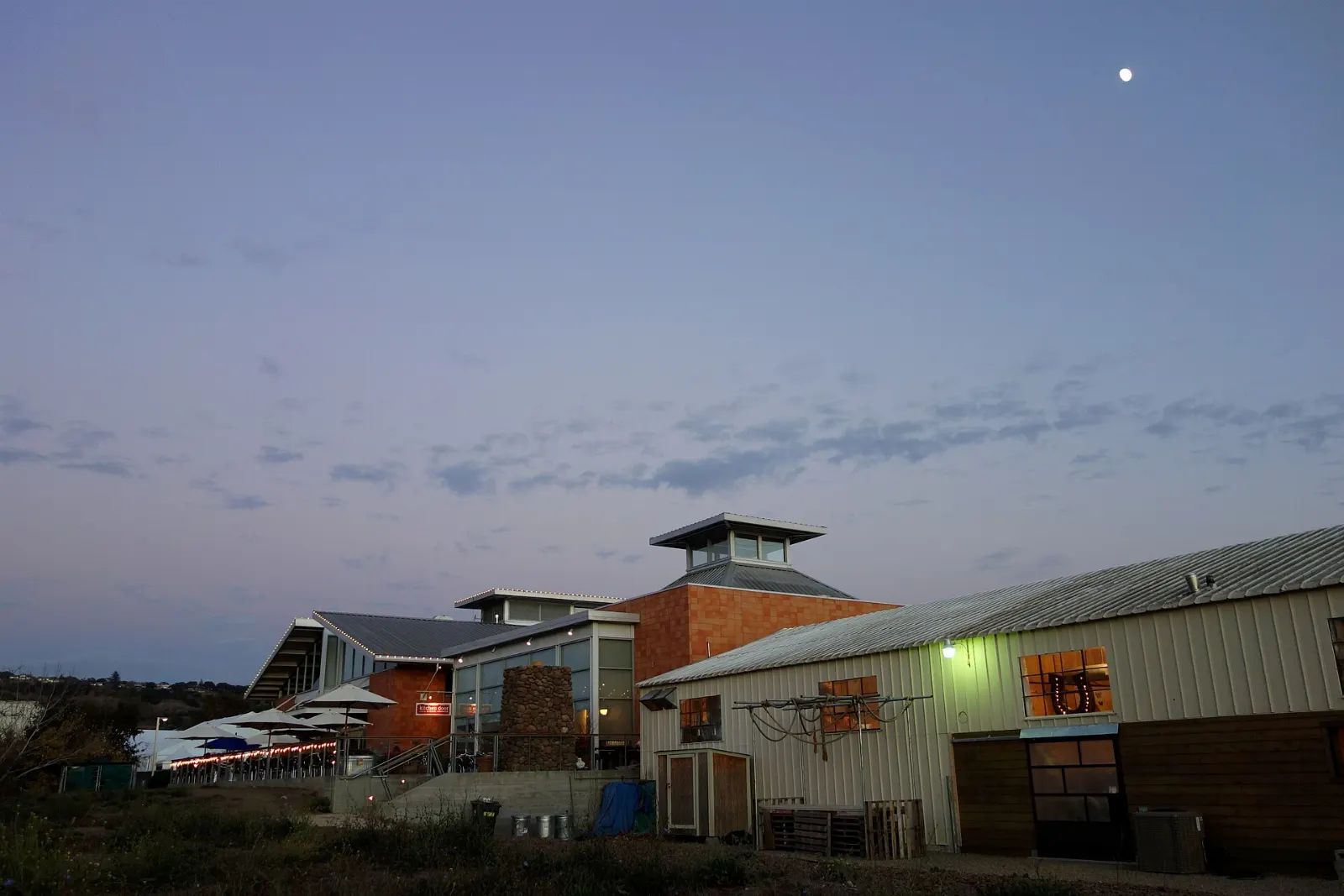
Start in downtown Napa, which has grown from a quiet county seat into a lively base with tasting rooms, galleries and restaurants along the Napa River. Oxbow Public Market is the hub: a long market hall filled with food stalls, a spice shop, bakeries, oyster counters, coffee roasters and local cheese and charcuterie.
Oxbow Public Market gathers food stalls, bakeries and local producers beside the Napa River. Photo: Daderot, Wikimedia Commons, CC0
Napa Valley Wine Train
The Napa Valley Wine Train runs vintage Pullman cars on a round trip between the city of Napa and St. Helena, serving multi-course meals as the vineyards roll past. Some packages include stops at wineries along the way. It is a relaxing way to see the length of the valley without anyone needing to drive.
Los Carneros
Los Carneros stretches across the southern end of both Napa and Sonoma counties, where breezes and fog from San Pablo Bay keep temperatures low. Rolling hills here are planted to Chardonnay and Pinot Noir, and several wineries specialize in sparkling wine.
Yountville is a small, walkable town known far beyond California for its restaurants, including The French Laundry, which has operated here since the 1970s and remains one of the country's most famous dining rooms. Even if a reservation there is not in your plans, you can enjoy the town's bakeries, cafes, public art and boutiques along Washington Street.
Yountville packs restaurants, bakeries and galleries into a walkable mile-long main street. Photo: Sanfranman59, Wikimedia Commons, CC BY-SA 3.0
Robert Mondavi Winery and Oakville
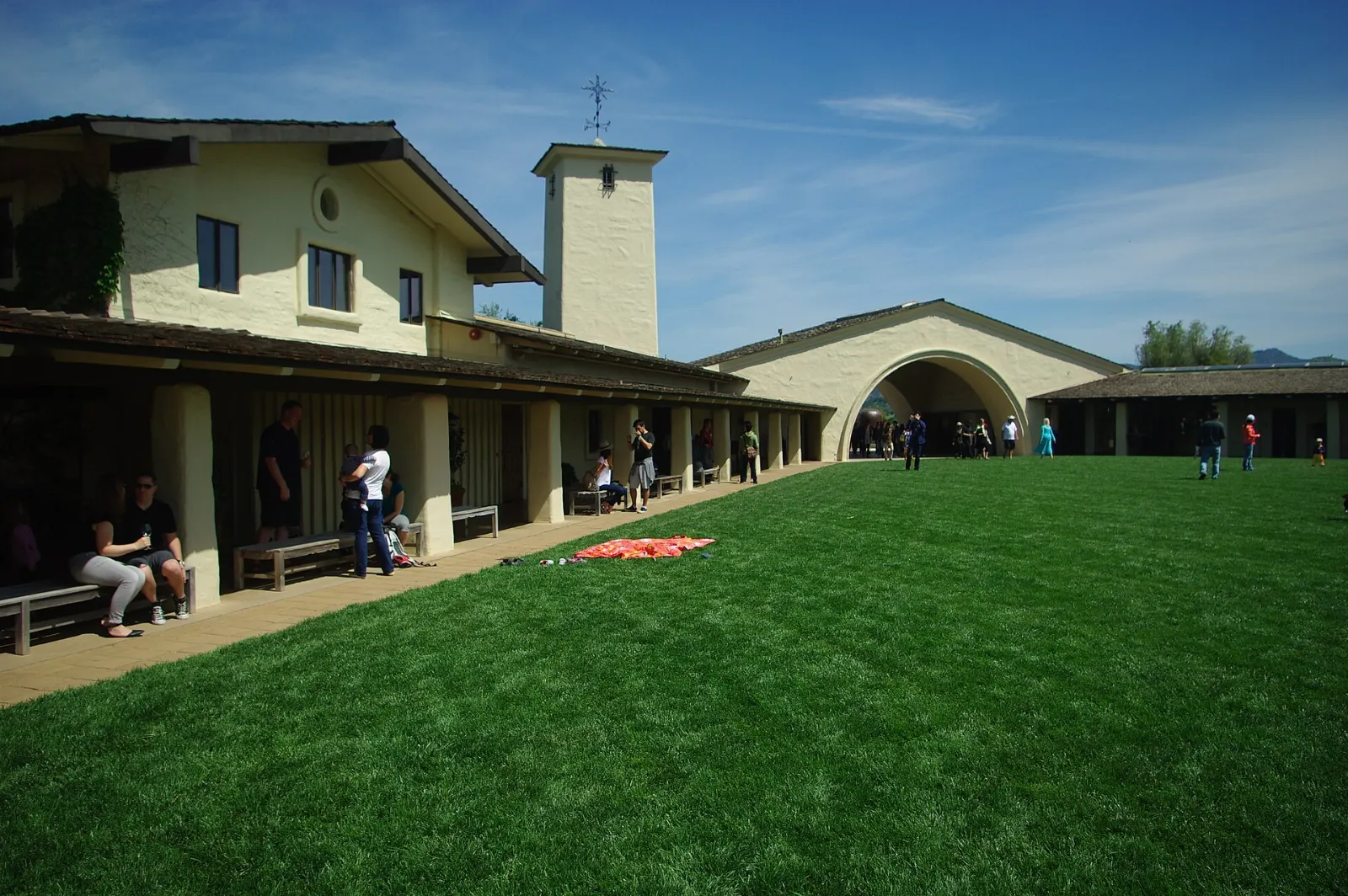
Oakville sits at the heart of Cabernet country, with famous vineyards on both sides of Highway 29. Robert Mondavi Winery, opened in 1966 with its Mission-style arch and tower, is a landmark in the history of California wine.
Robert Mondavi Winery opened in Oakville in 1966 and was the first major winery built in the valley after Prohibition. Photo: daita saru, Wikimedia Commons, CC BY 2.0
Stags Leap District and the Silverado Trail
The Silverado Trail runs parallel to Highway 29 along the eastern side of the valley. It is usually quieter, with gentle curves, vineyard views and a series of small family wineries.
St. Helena, Calistoga and the northern hills
St. Helena Main Street and Beringer
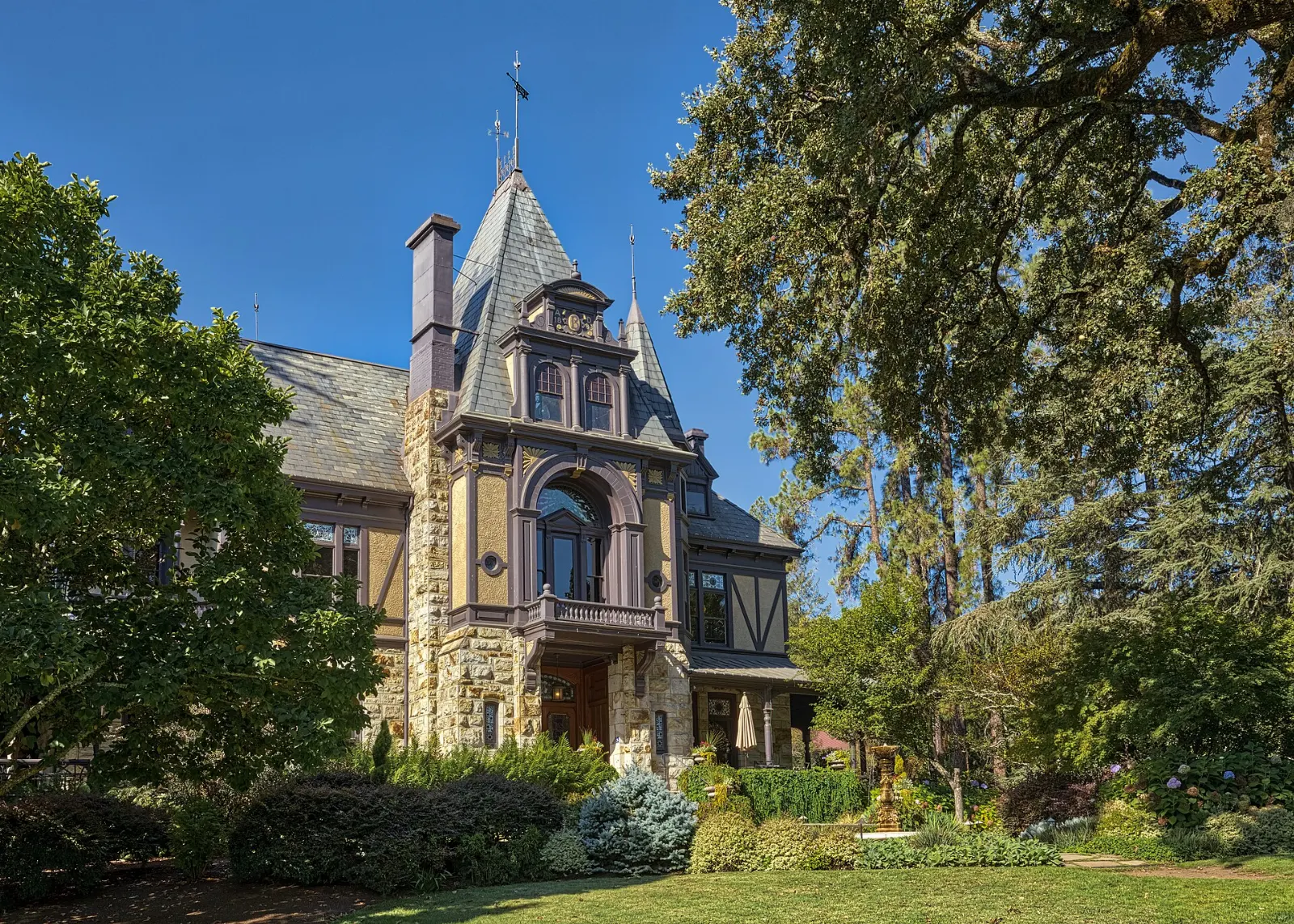
St. Helena's Main Street is lined with stone buildings, kitchen shops, bookstores and tasting rooms, and it is the most charming town center in the valley. Just north of downtown, Beringer Vineyards is often described as the oldest continuously operating winery in Napa Valley, founded in 1876.
The Rhine House at Beringer was built in the 1880s by one of the winery's founding brothers. Photo: Frank Schulenburg, Wikimedia Commons, CC BY-SA 4.0
Culinary Institute of America at Greystone
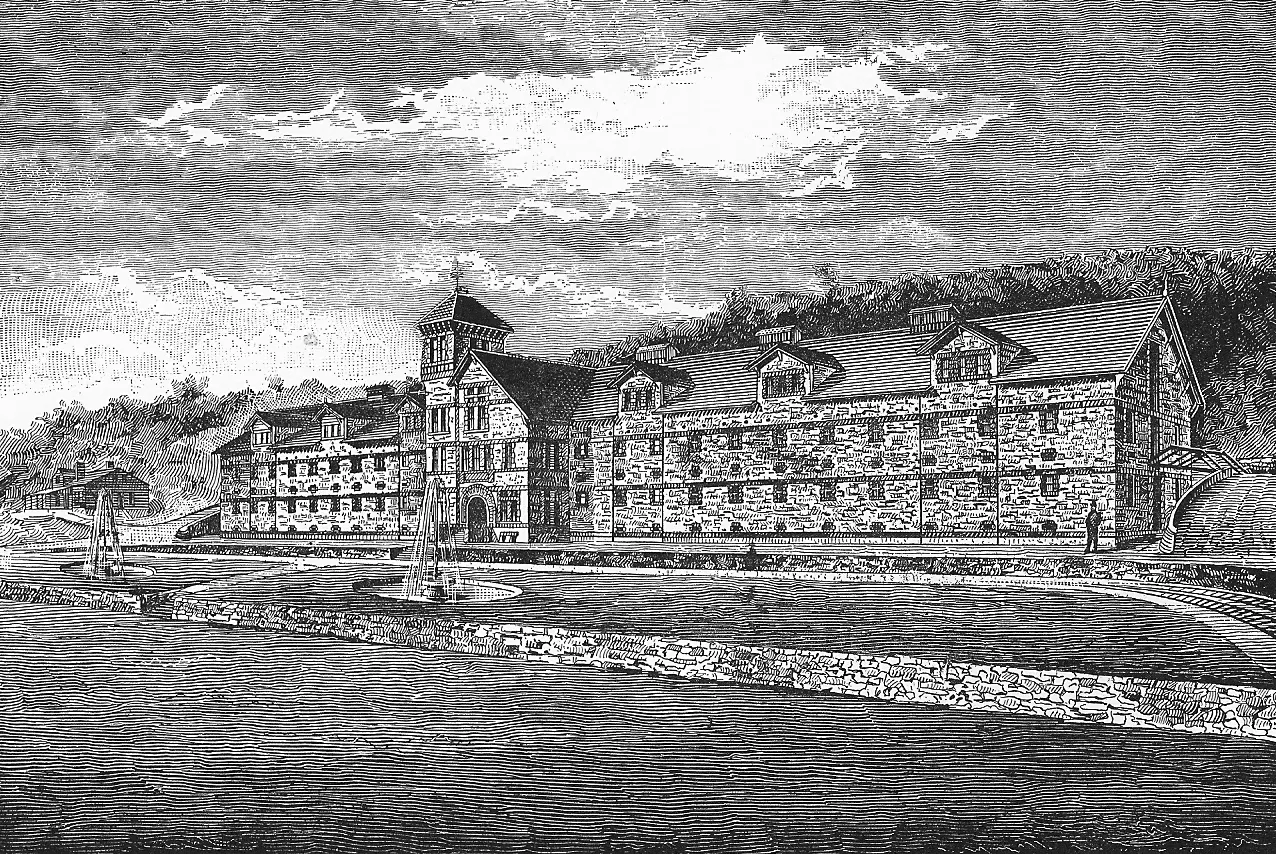
On the northern edge of St. Helena, the stone fortress of Greystone Cellars was completed in 1889 as a wine cellar and now houses the Napa Valley campus of the Culinary Institute of America. Visitors can browse the shop, see the historic building and, depending on the season, join cooking demonstrations or eat at the campus restaurant run with students.
Greystone Cellars, completed in 1889, now houses the Culinary Institute of America's Napa Valley campus. Photo: Unknown photographer, Wikimedia Commons, Public domain
Bale Grist Mill and Bothe-Napa Valley State Park
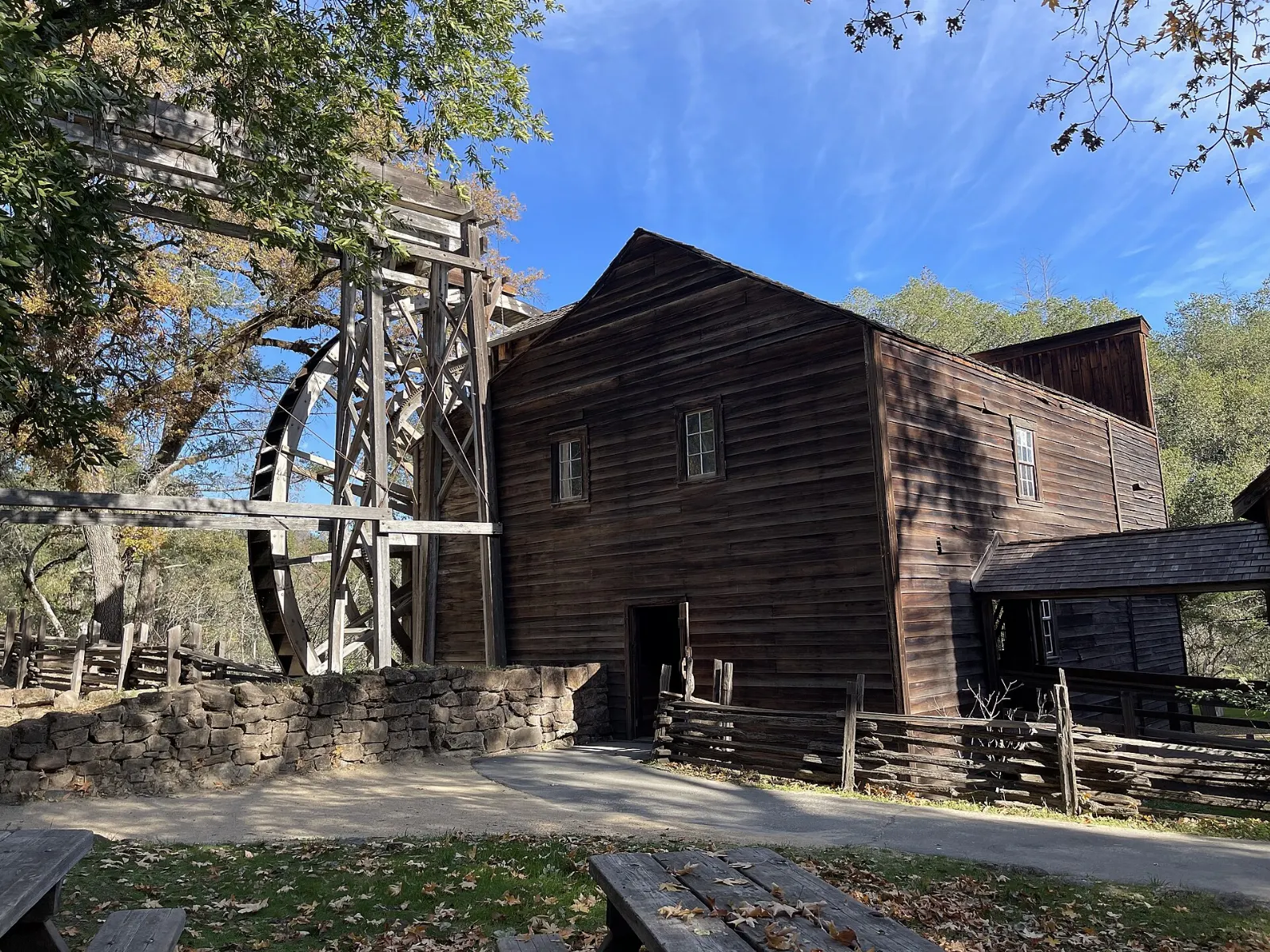
Between St. Helena and Calistoga, Bale Grist Mill State Historic Park preserves an 1846 mill with a towering water wheel that once ground grain for settlers across the region. A short trail connects it with Bothe-Napa Valley State Park, where shaded paths climb through redwoods, Douglas fir and oak.
The Bale Grist Mill dates from 1846 and still turns its large overshot water wheel on demonstration days. Photo: Missvain, Wikimedia Commons, CC BY 4.0
Castello di Amorosa
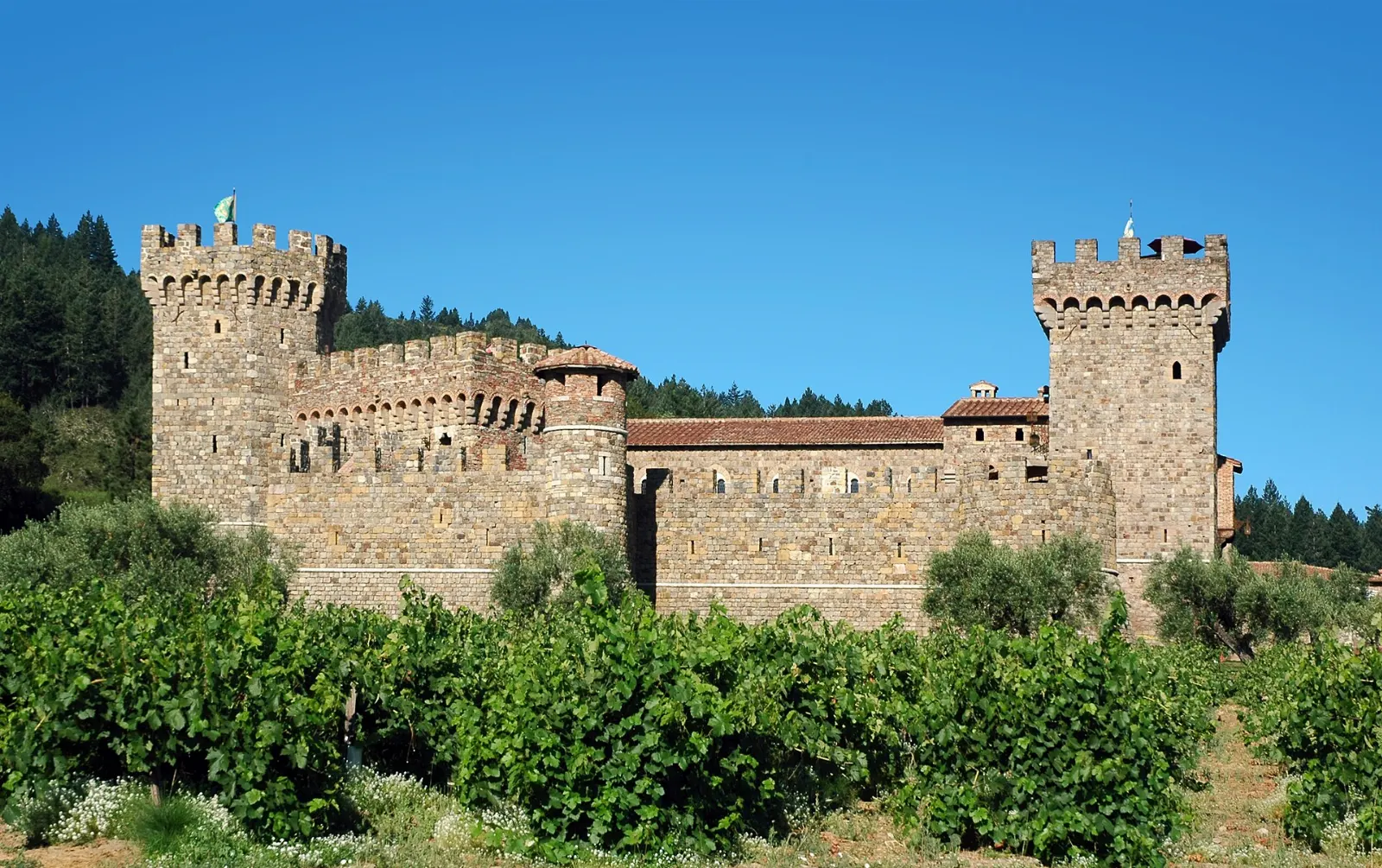
Just south of Calistoga, Castello di Amorosa is a winery built to look like a medieval Tuscan castle, with towers, a drawbridge, a moat, frescoed halls and more than a hundred rooms including deep cellars. It is unabashedly theatrical and especially popular with first-time visitors and families.
Castello di Amorosa is a winery built in the style of a medieval Tuscan castle, complete with a drawbridge and moat. Photo: DimiTalen, Wikimedia Commons, CC BY-SA 3.0
Calistoga and the Old Faithful Geyser of California
Calistoga, at the valley's northern tip, has a relaxed, small-town feel and a long spa tradition based on hot mineral springs and volcanic ash mud baths. Lincoln Avenue, the main street, is lined with cafes and tasting rooms.
The Old Faithful Geyser of California erupts from a geothermal vent just north of Calistoga. Photo: Wwoods, Wikimedia Commons, CC BY-SA 3.0
Ad
Food and local flavors
Napa's food scene is built on the same farms that supply its kitchens.
For casual eating, Oxbow Public Market is the best one-stop sampler. Gott's Roadside, which began in a classic roadside stand in St. Helena, is a long-running favorite for burgers, fish tacos and milkshakes on a sunny patio.
At the high end, Yountville and St. Helena host restaurants that draw diners from around the world, and many require reservations weeks or months ahead. If fine dining is a priority, plan your trip around those bookings.
Popular dishes to try in Napa Valley
Wine Otherwise, the best approach is to pack a picnic of bread, cheese and fruit and look for wineries that welcome picnickers, since only a limited number of properties are…Photo: A.Savin, Wikimedia Commons, CC BY-SA 3.0Oysters Local olive oil, artisan cheeses from Sonoma and Marin, Dungeness crab in the cooler months and fresh oysters from Tomales Bay show up often.Photo: Kishlay singh, Wikimedia Commons, CC BY-SA 4.0Olive oil Local olive oil, artisan cheeses from Sonoma and Marin, Dungeness crab in the cooler months and fresh oysters from Tomales Bay show up often.Photo: Chenspec, Wikimedia Commons, CC BY-SA 4.0
Where to stay
The city of Napa is the most practical base for most travelers.
Yountville is ideal if food is the focus. It is small enough to walk everywhere and close to Oakville and the Stags Leap District.
Calistoga offers a more laid-back feel, with spa resorts, inns built around hot springs and easy access to state parks. It suits travelers who want to combine wine with soaking and hiking.
Where to stay in Napa Valley
Carneros It has the widest range of lodging, walkable dining downtown, easy access to Carneros and the freeways, and usually lower rates than the towns up valley.Photo: DimiTalen, Wikimedia Commons, CC BY-SA 3.0Oakville It is small enough to walk everywhere and close to Oakville and the Stags Leap District.Photo: Craig Camp, Wikimedia Commons, CC BY-SA 3.0Stags Leap District It is small enough to walk everywhere and close to Oakville and the Stags Leap District.Photo: Kduck94558, Wikimedia Commons, CC BY-SA 4.0
Ad
Best time to visit
Harvest, which usually runs from late August through October, is the most exciting and busiest season.
Late winter and early spring bring the mustard season, when wild mustard paints the vineyard rows bright yellow, roughly from January into March.
Summer is reliably sunny and warm, often hot in Calistoga and St. Helena, while the south stays cooler.
Getting there and getting around
San Francisco International and Oakland International airports are the main gateways, each typically one to one and a half hours away by car depending on traffic.
Inside the valley, two main roads run north to south: Highway 29, which passes through Napa, Yountville, Oakville, Rutherford, St. Helena and Calistoga, and the quieter Silverado Trail on the east side.
Cycling is another fine way to explore. The Napa Valley Vine Trail offers a paved, car-free path linking the city of Napa with Yountville, with more sections being added.
Ad
A suggested itinerary
First day
Begin with breakfast at Oxbow Public Market and a walk along the Napa River. Drive to Carneros for a sparkling wine tasting on a hilltop terrace, then visit the di Rosa Center for Contemporary Art.
Second day
Head to Yountville for coffee and pastries, then taste in Oakville with a reservation at Robert Mondavi Winery. Take the Silverado Trail through the Stags Leap District for an afternoon tasting at a smaller family winery.
Third day
Explore St. Helena's Main Street, tour the Rhine House at Beringer and visit the Culinary Institute of America at Greystone.
Practical tips
Book winery visits in advance. Most tasting rooms now work by appointment, and popular estates fill up weeks ahead in harvest season.
Limit yourself to two or three tastings a day. You will taste more carefully and avoid rushing between appointments.
Arrange a sober driver, a tour or a private car. Highway patrols are common, and the roads are busy with visitors.
Check tasting fees, hours and policies on each winery's official website, as they change often.
Eat a real breakfast and carry water and snacks between stops.
Dress in layers. Mornings can be foggy and cool even when afternoons are hot.
Many wineries limit children and pets, so confirm the policy before you bring either.
Ad
Find local businesses in Napa on WiserMap
Looking for a bakery for breakfast, a bike shop, a driver for your tasting day or a spa in town?