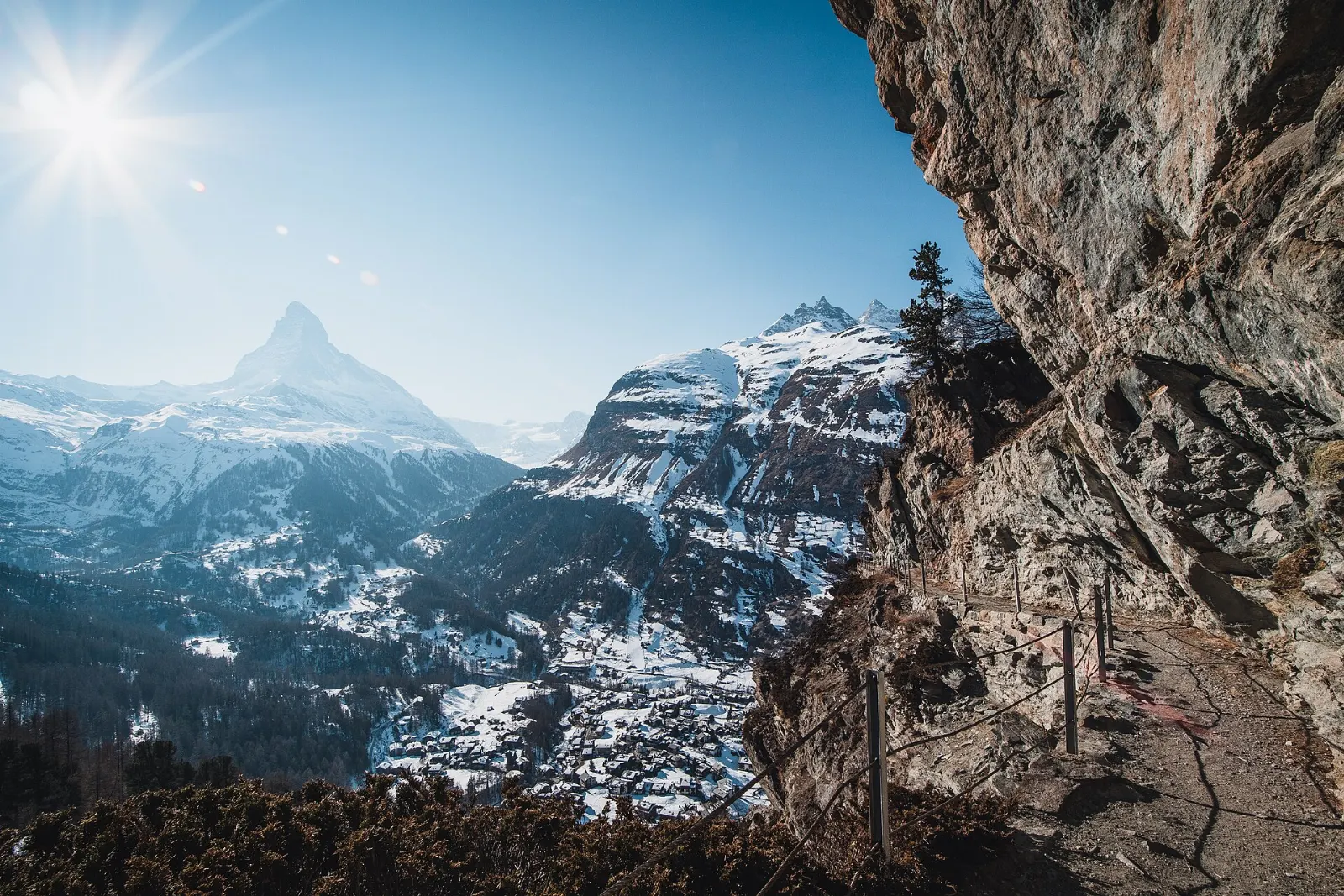
Zermatt sits at the head of the Mattertal valley in the canton of Valais, at the foot of the Matterhorn, the mountain that has come to stand for the Alps themselves.
AT A GLANCE
Best time
July to September for hiking; December to April for skiing.
How long
Three to four days covers the main viewpoints with spare days for weather.
Getting there
Train via Visp, or drive to Täsch and take the shuttle train.
Why visit Zermatt
The Matterhorn alone is reason enough. At 4,478 metres, its four steep faces rise straight above the village, and the north and east faces glow orange at sunrise on clear mornings.
Zermatt also has one of the largest lift networks in the Alps, so you can reach high glacier country without technical climbing. In summer, hundreds of kilometres of marked trails connect mountain lakes, hamlets and huts. In winter, the ski area links across the border with Breuil-Cervinia in Italy, and some glacier runs stay open even in summer.
Zermatt village and its history
Bahnhofstrasse and the Kirchbrücke
Bahnhofstrasse runs from the station through the heart of the village, lined with hotels, outdoor shops and cafés.
Hinterdorf
Just off the main street, the Hinterdorf quarter preserves Zermatt's farming past. Dark larch-wood barns, stables and granaries stand on wooden stilts topped with flat stone slabs, a design that kept rodents out of the stored grain.
St. Mauritius Church and the Mountaineers' Cemetery
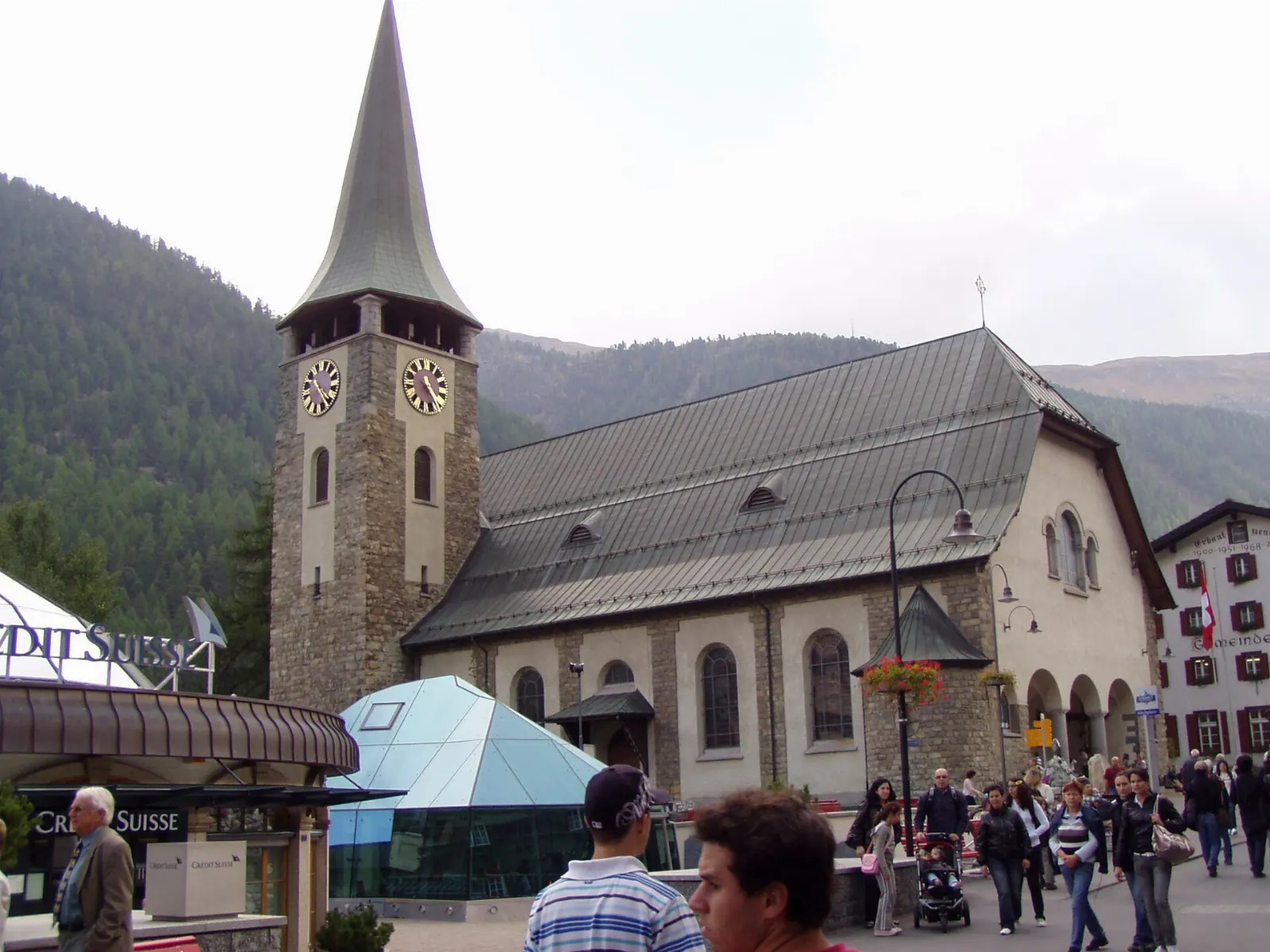
The parish church of St. Mauritius marks the center of the village. Beside it, the Mountaineers' Cemetery holds graves and memorials to climbers who died on the Matterhorn and surrounding peaks, including members of the 1865 first-ascent party.
Matterhorn Museum
Built partly underground near the church, the Matterhorn Museum recreates an old mountain village with houses, a chapel and a hotel interior, and tells the story of the first ascent and the growth of tourism.
Gorner Gorge
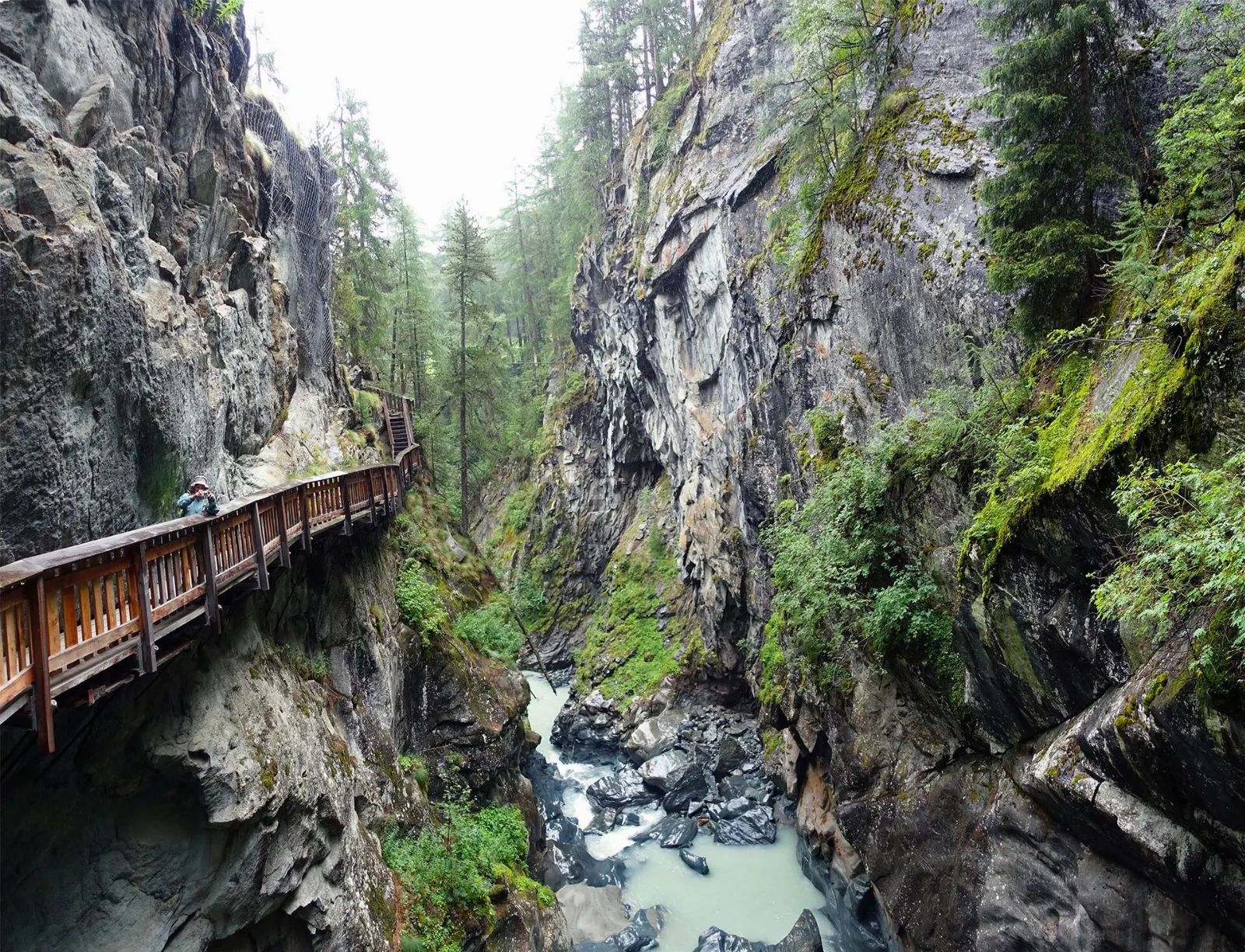
A short walk south of the village, the Gorner gorge is a narrow cleft cut by meltwater from the Gorner Glacier. Wooden walkways and stairs fixed to the rock walls lead you above the rushing green water.
Mountain viewpoints and lake trails
Gornergrat
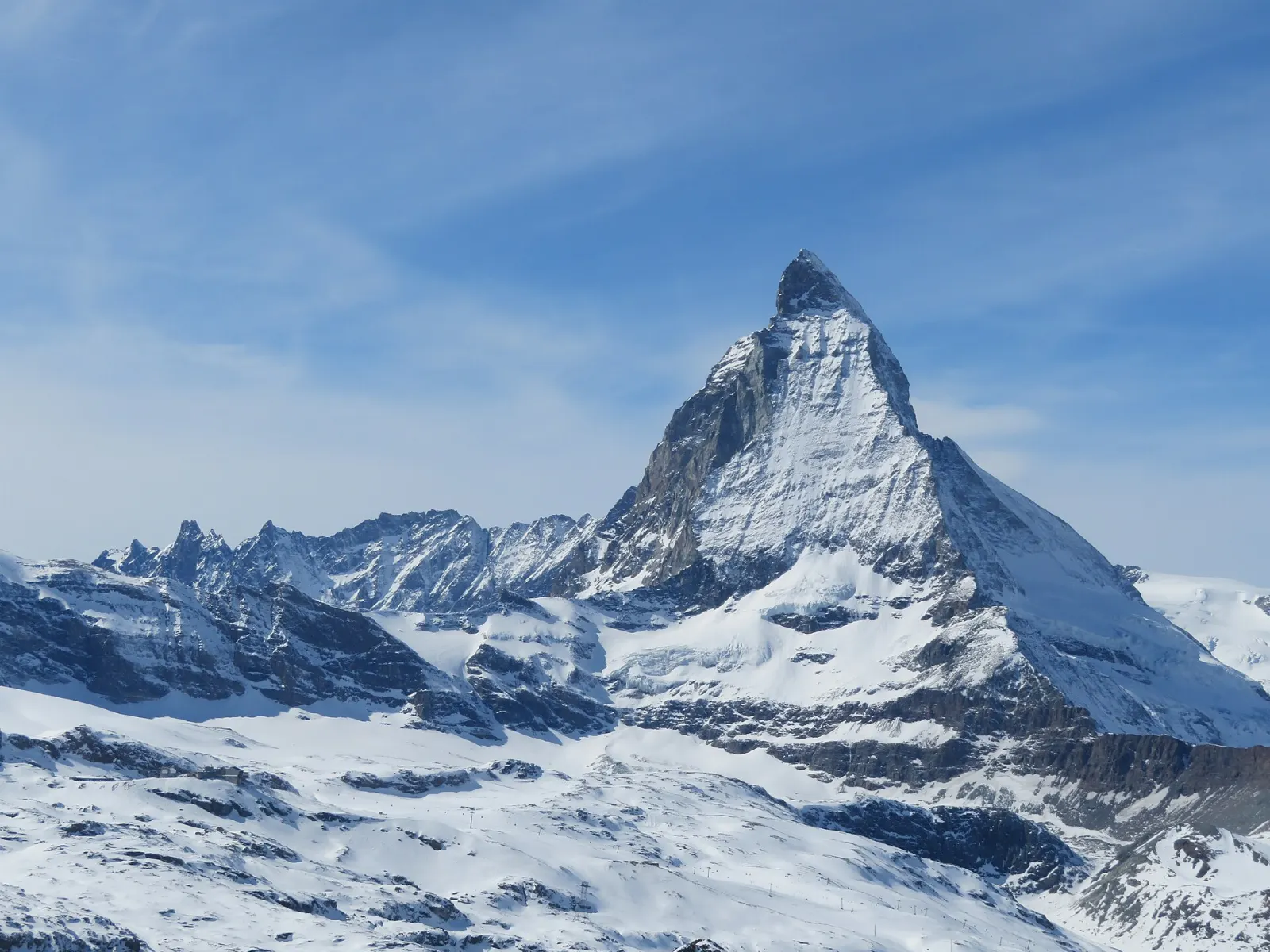
The Gornergrat rack railway, opened in 1898, climbs from a station opposite the main railway station to a ridge at just over 3,000 metres, the highest open-air railway in Europe. From the top you look across the vast Gorner Glacier to Monte Rosa, the Liskamm and the Matterhorn, with 29 peaks above 4,000 metres in sight.
Riffelsee
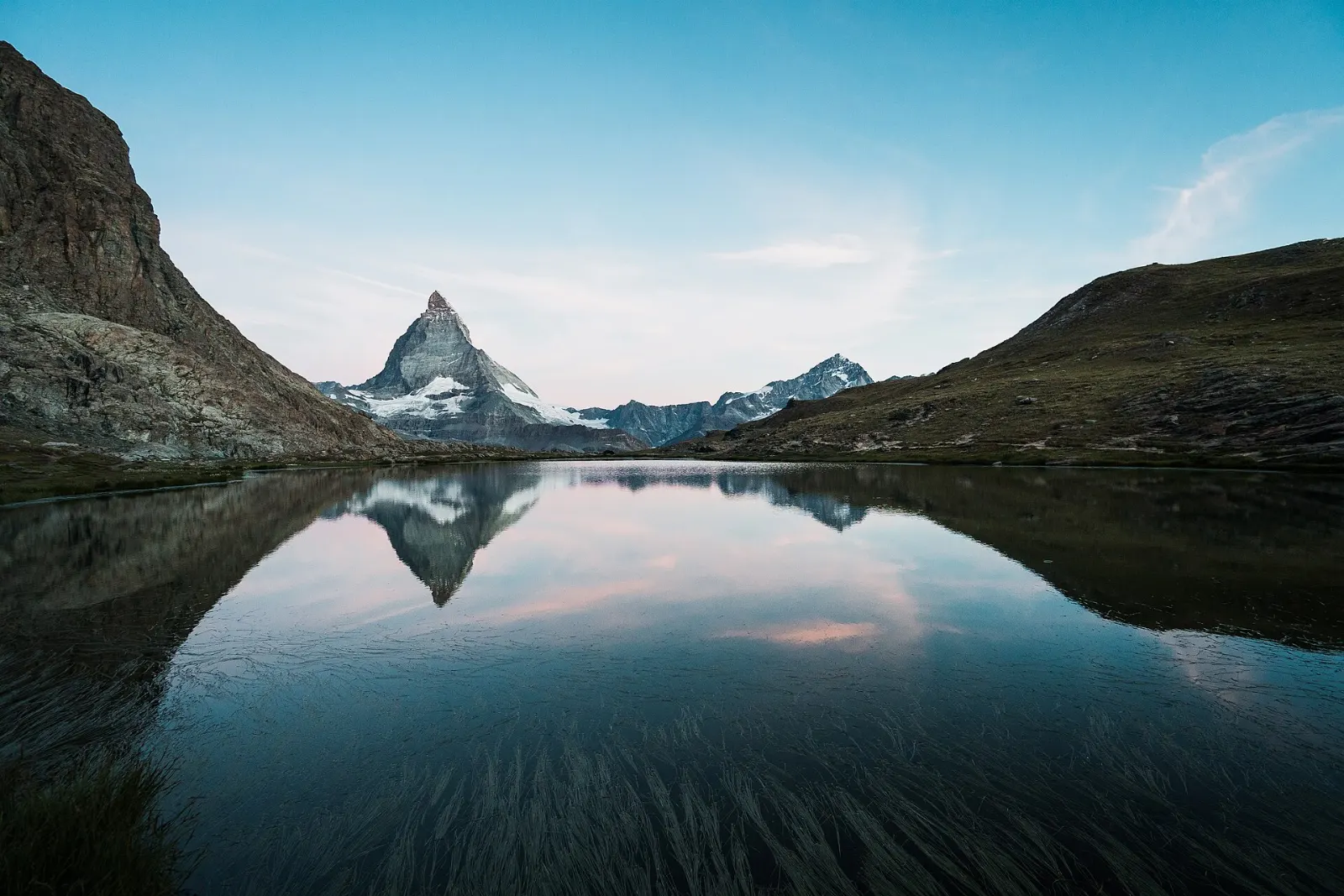
Get off the Gornergrat train at Rotenboden and walk a few minutes down to Riffelsee, a small lake below the Riffelhorn. On still mornings it holds a near-perfect reflection of the Matterhorn.
Sunnegga and the Five Lakes Walk
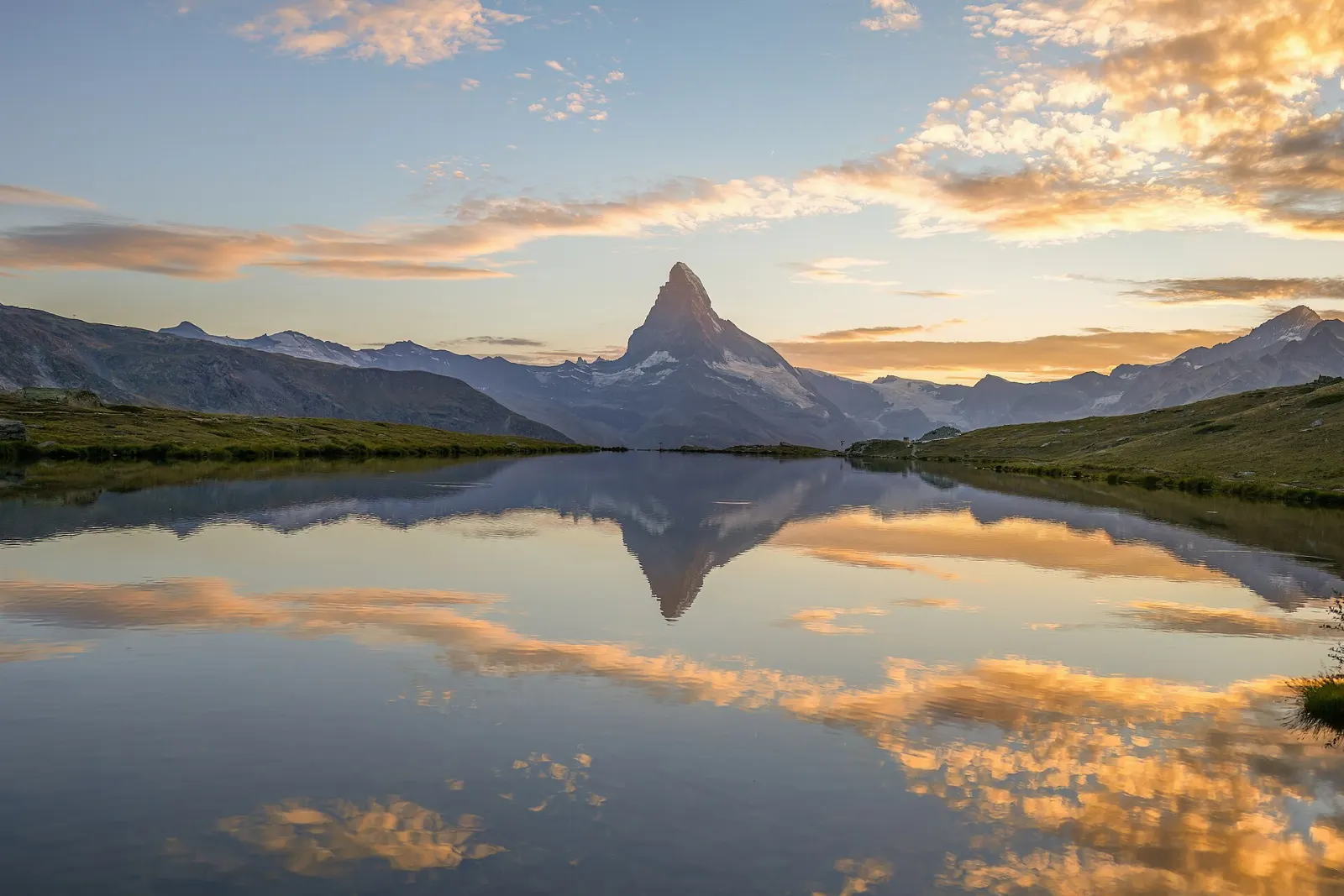
An underground funicular climbs from the village to Sunnegga, a sunny terrace with a family-friendly lake, Leisee, a short walk below. Continue by gondola to Blauherd to start the Five Lakes Walk, a marked trail linking Stellisee, Grindjisee, Grünsee, Moosjisee and Leisee.
Rothorn
Above Blauherd, a cable car continues to the Rothorn at over 3,000 metres, a quieter summit with a wide panorama that includes the Matterhorn from a different angle and the Weisshorn to the north. It is a fine spot for lunch on a clear day.
Matterhorn Glacier Paradise
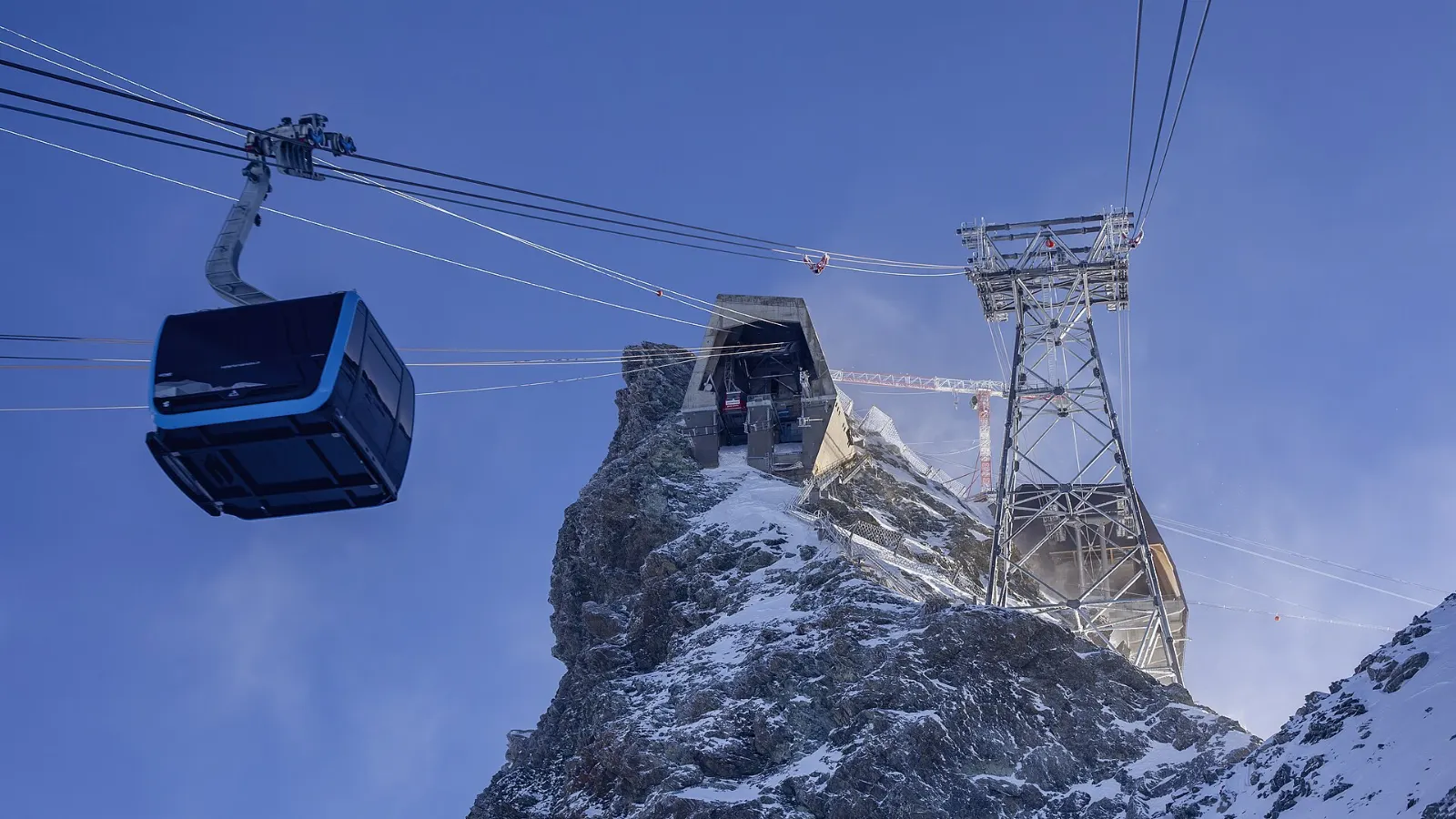
A chain of lifts via Furi and Trockener Steg reaches the Klein Matterhorn at 3,883 metres, the highest point in Europe you can reach by cable car. A viewing platform looks over glaciers toward Mont Blanc on clear days, and an ice palace inside the glacier shows crevasses and ice sculptures.
Schwarzsee
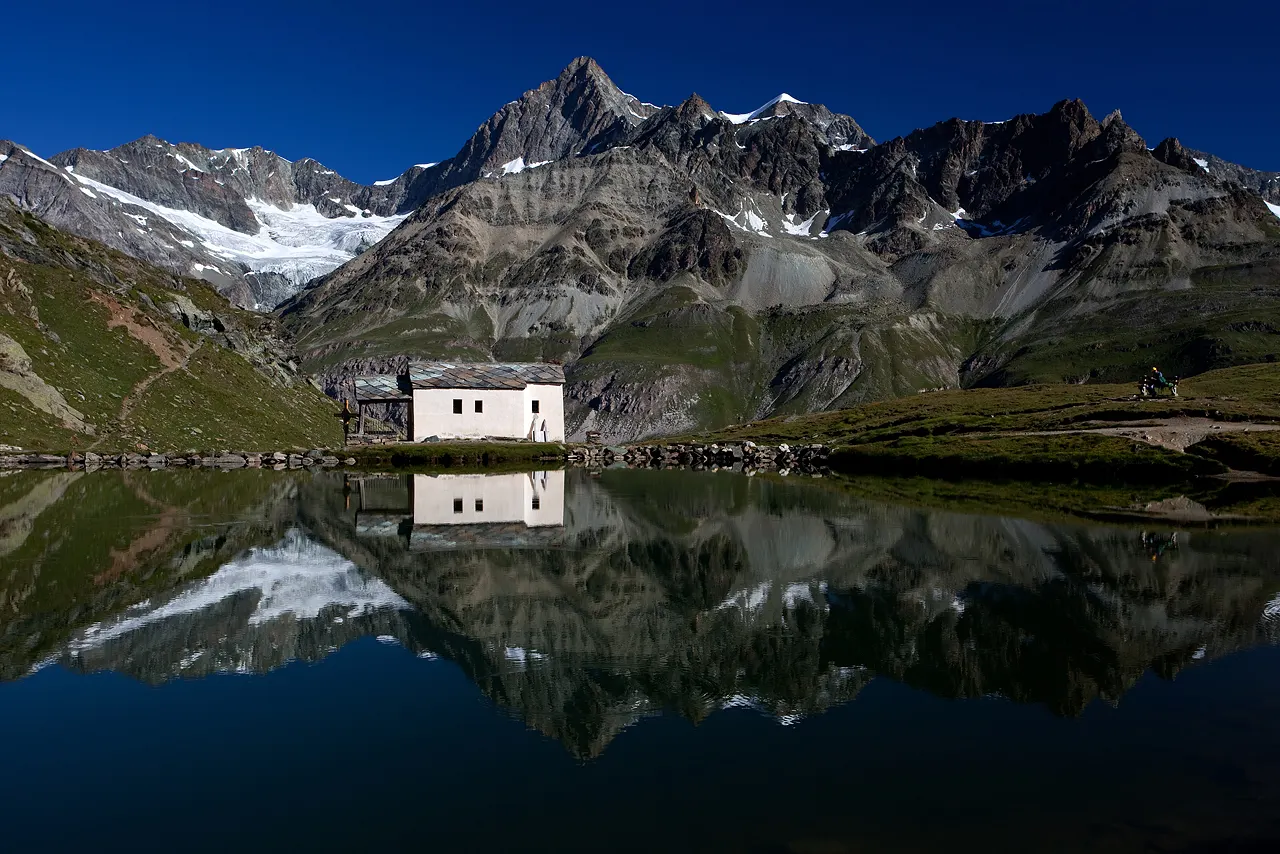
Schwarzsee is a small dark lake at about 2,580 metres on the shoulder of the Matterhorn, reached by gondola via Furi. A tiny chapel stands by the shore, and the Hörnli ridge, the normal climbing route, rises right above you.
Findeln and Zmutt hamlets
Two old hamlets above the village show how Zermatt families once lived through the summer grazing season. Findeln sits on a sunny slope below Sunnegga, a cluster of weathered larch chalets and barns with a small chapel and some of the most popular terrace restaurants in the area.
 Planning a trip to Zermatt?Compare hotels, flights and vacation rentals for Zermatt on Expedia.Book now
Food and local flavors
Valais is the home of raclette, the dish of melted cheese scraped onto potatoes with pickled onions and gherkins, and you will find it in village restaurants and mountain huts alike.
Valais is also Switzerland's biggest wine region. Look for whites such as Fendant and Petite Arvine and reds such as Cornalin and Humagne Rouge.
Popular dishes to try in Zermatt


Where to stay
Staying near the station and along Bahnhofstrasse puts you in the middle of the restaurants and shops and close to the Gornergrat railway, which suits first-time and short-stay visitors.
Hillside areas such as Wiestistrasse often have the best Matterhorn views from balconies, but involve some uphill walking. For more space at a lower cost, consider Täsch down the valley, which has its own shuttle train to Zermatt and works well for travelers with a car.
Where to stay in Zermatt


Best time to visit
July to September is the main hiking season, when high trails are usually clear of snow, lakes are thawed and wildflowers fill the meadows.
Winter, from late November to April, brings one of the longest ski seasons in the Alps, with cross-border runs into Italy.
Getting there and getting around
Most visitors arrive by train. Frequent services run up the valley from Visp, which connects to mainline trains from Zurich, Bern, Geneva and Milan.
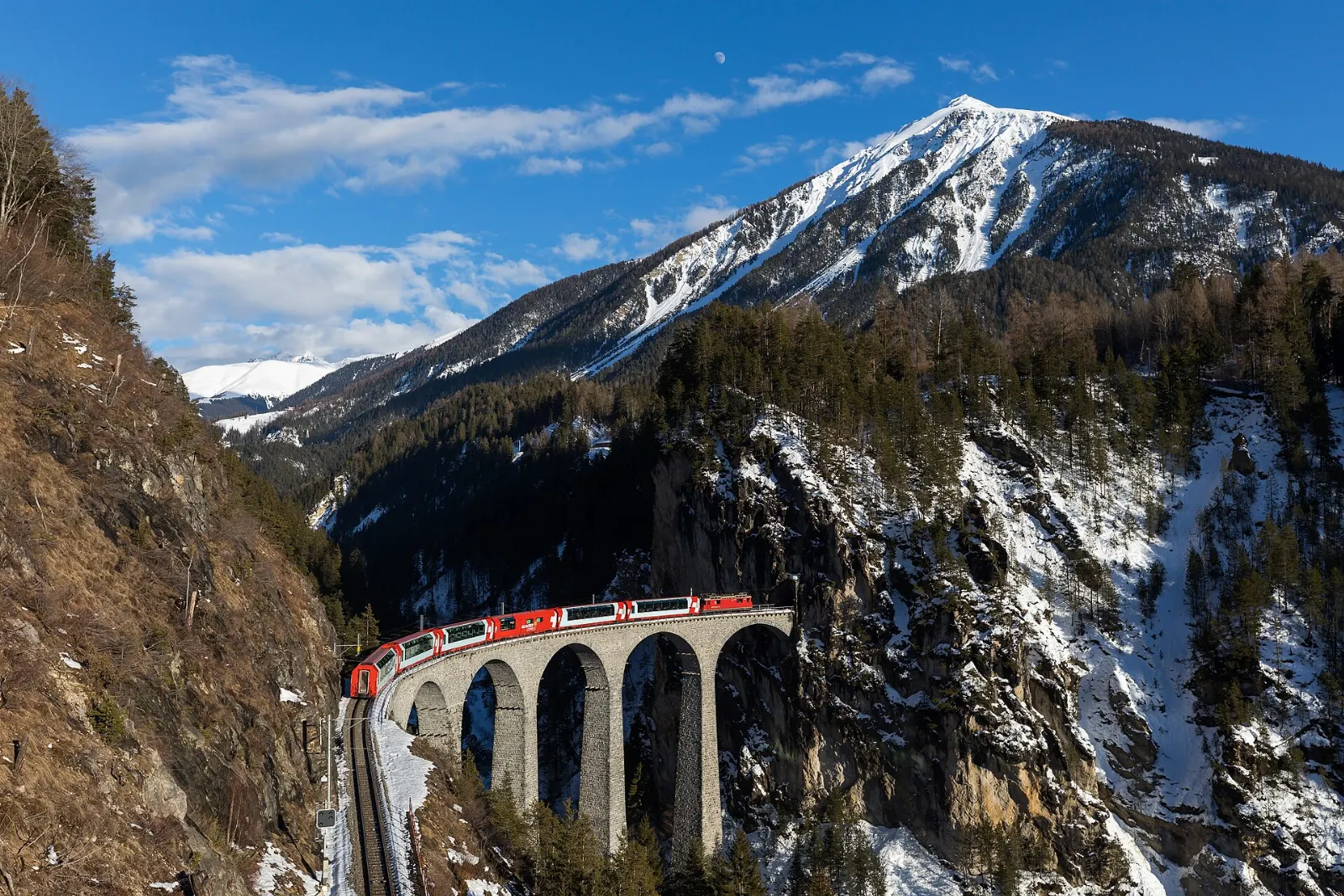
Private cars cannot drive into Zermatt. If you come by car, park at the Matterhorn Terminal in Täsch and ride the shuttle train, which runs about every twenty minutes, or book an electric taxi transfer.
A suggested itinerary
First day
Arrive, settle in and walk Bahnhofstrasse to the Kirchbrücke and the Mountaineers' Cemetery.
Second day
Take an early Gornergrat train, enjoy the summit panorama, then walk down past Riffelsee to Riffelberg or Riffelalp before riding back to the village.
Third day
Ride the funicular to Sunnegga and the gondola to Blauherd for the Five Lakes Walk, with lunch at a mountain restaurant in Findeln on the way down.
Fourth day
Go high to Matterhorn Glacier Paradise in the morning, then stop at Schwarzsee on the way down and finish with an afternoon visit to the Gorner gorge.
Practical tips
- Check the live webcams each morning and go up to the viewpoint with the clearest sky first.
- Book summer and ski-season rooms early; Zermatt is small and fills fast.
- Above 3,000 metres, walk slowly, drink water and come down if you feel dizzy or develop a headache.
- Pack warm layers, gloves and sunglasses for high stations, even in August.
- Carry a passport or ID card if you plan to cross into Italy by lift or on skis.
- Watch for silent electric taxis on narrow lanes; they can come up behind you quickly.