This guide covers the places that are most rewarding for a first visit, grouped so you can plan days without crisscrossing the island.
At a glance Phuket
Best timeNovember to April, the dry season, for calm seas and sunny days; December to February is peak.
How longFive to seven days lets you mix beaches, the old town and two island day trips.
Getting therePhuket International Airport in the north of the island has direct flights from Bangkok and across Asia.
Ad
Why visit Phuket
Phuket sits in the Andaman Sea off Thailand's southwest coast, connected to the mainland by the Sarasin Bridge.
The island also has a distinctive culture. Tin mining brought waves of Hokkien Chinese settlers in the nineteenth century, and their influence blended with Thai, Malay and European traditions to create the Peranakan, or Baba, heritage you can still see in Phuket Town's architecture, festivals and food.
Finally, Phuket is a superb base for exploring the wider Andaman coast. Limestone towers rise from the sea in Phang Nga Bay, the Phi Phi Islands lie a boat ride to the southeast, and in the dry season the Similan Islands offer some of the best diving and snorkeling in Thailand.
Phuket Town, temples and viewpoints
The island's cultural sights are concentrated in and around Phuket Town on the east side, along with the hills that separate it from the beaches.
Phuket Old Town
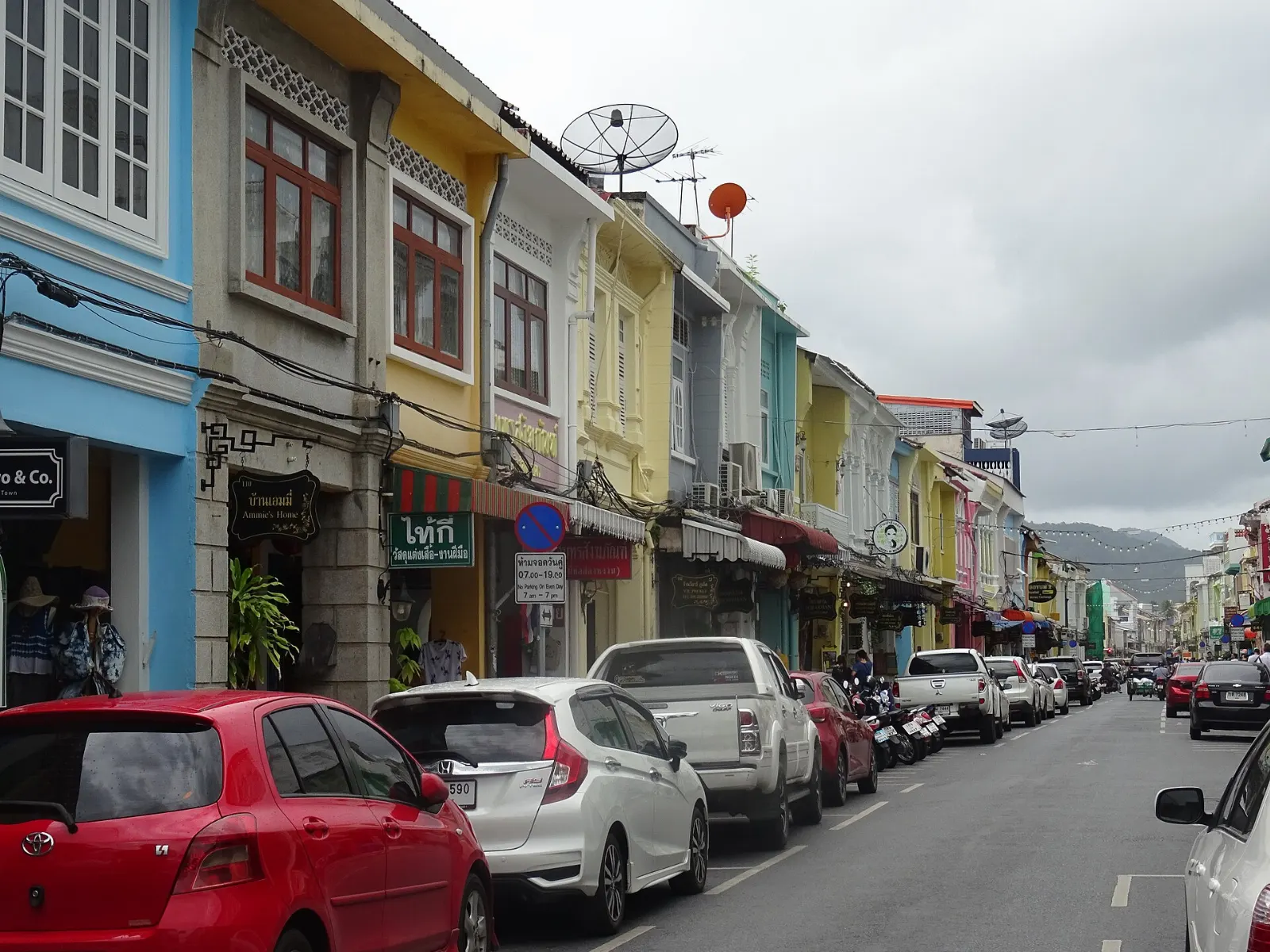
The historic core of Phuket Town is a grid of streets lined with restored Sino-Portuguese shophouses, built when tin wealth flowed through the island. Walk along Thalang Road, Dibuk Road, Krabi Road and the tiny, colorful Soi Romanee, and look for ornate mansions, Chinese shrines, cafes in old shophouses and street art on side walls.
Phuket Old Town's Sino-Portuguese shophouses date largely from the tin mining boom of the late nineteenth and early twentieth centuries. Photo: Christophe95, Wikimedia Commons, CC BY-SA 4.0
Wat Chalong
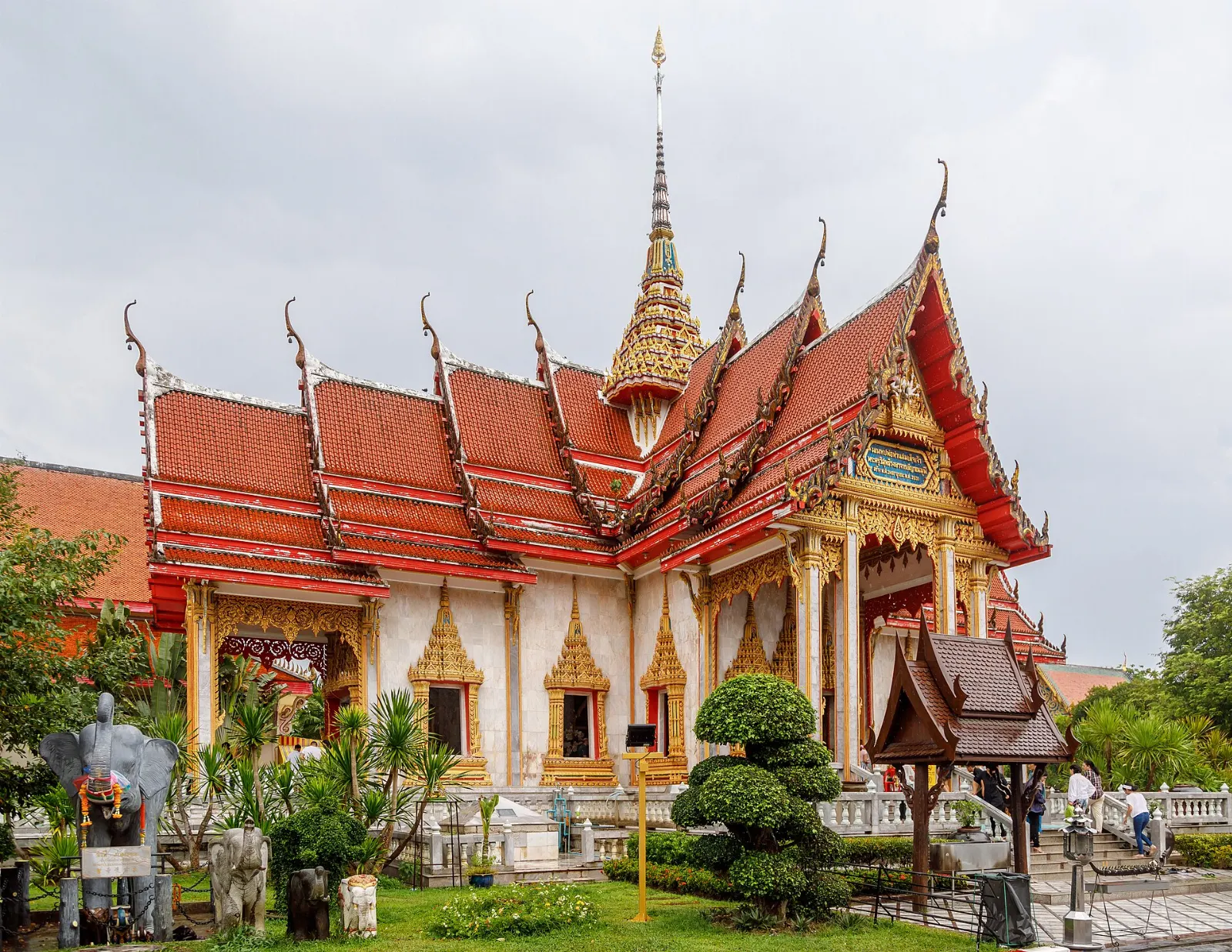
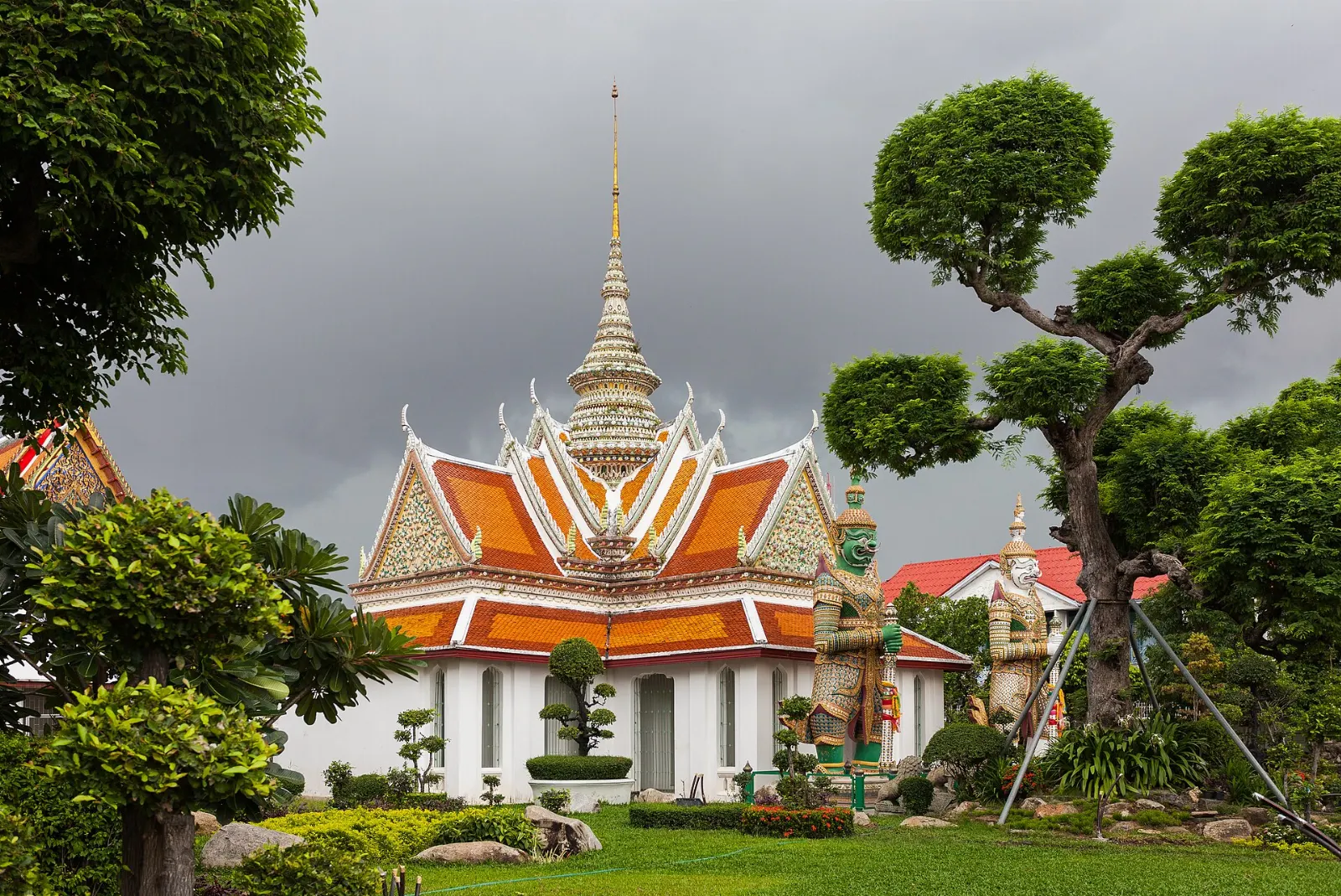
Wat Chalong, officially Wat Chaiyathararam, is Phuket's most important Buddhist temple. Locals come to honor two revered monks, Luang Pho Chaem and Luang Pho Chuang, who are remembered for helping islanders during an uprising of Chinese miners in 1876.
Wat Chalong, formally Wat Chaiyathararam, is the largest and most visited Buddhist temple in Phuket. Photo: CEphoto, Uwe Aranas, Wikimedia Commons, CC BY-SA 4.0
The Big Buddha
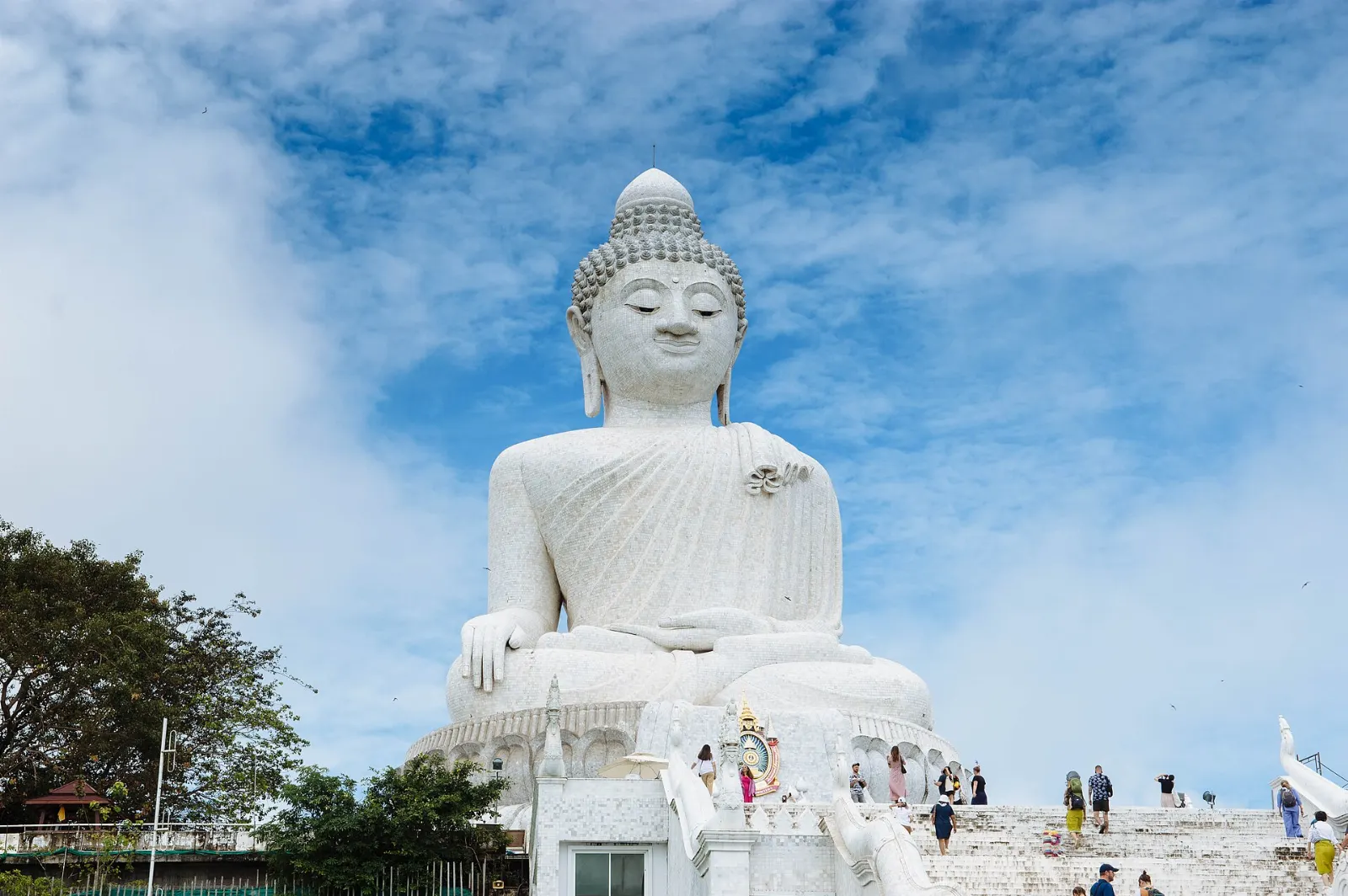
On top of Nakkerd Hill, between Chalong and Kata, sits the Big Buddha, a seated figure around forty-five meters tall clad in white Burmese jade marble. It is visible from much of southern Phuket, and the platform at its base gives wide views over Chalong Bay, Kata and Karon.
The Big Buddha sits on Nakkerd Hill between Chalong and Kata and is clad in white Burmese jade marble. Photo: Subhrajyoti07, Wikimedia Commons, CC BY-SA 4.0
Khao Rang viewpoint
For a view over Phuket Town itself, drive or take a taxi up Khao Rang, the forested hill just northwest of the old town. A viewing platform looks across the rooftops to Chalong Bay and the islands beyond, and there are restaurants with terraces near the top.
Ad
Beaches and the southern coast
Choosing the right beach area shapes your whole stay. The west coast beaches face the open Andaman Sea and are the most beautiful, while the east coast is mostly mangroves and piers.
Patong Beach
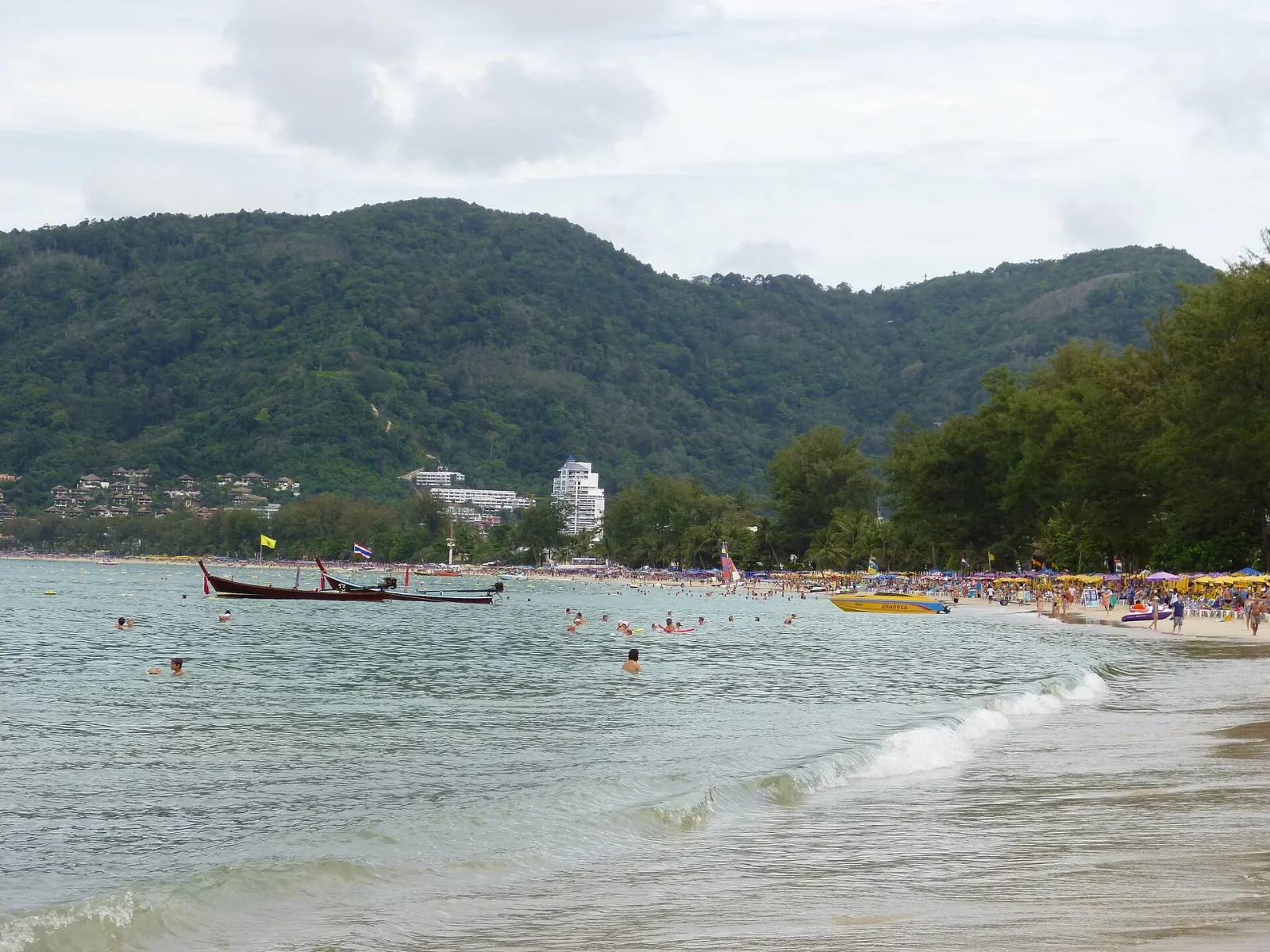
Patong is Phuket's busiest and most developed beach, a long crescent of sand backed by hotels, shopping malls, restaurants and the neon-lit Bangla Road nightlife strip. The beach itself is wide and offers water sports, but it can be crowded.
Patong Beach is the busiest resort area in Phuket, on a wide bay on the island's west coast. Photo: Arnaud-Victor Monteux, Wikimedia Commons, CC BY-SA 4.0
Kata and Karon
South of Patong, Karon is a long, open beach with soft sand, while neighboring Kata and Kata Noi are smaller bays with clear water and good snorkeling around Ko Pu island off Kata.
Promthep Cape
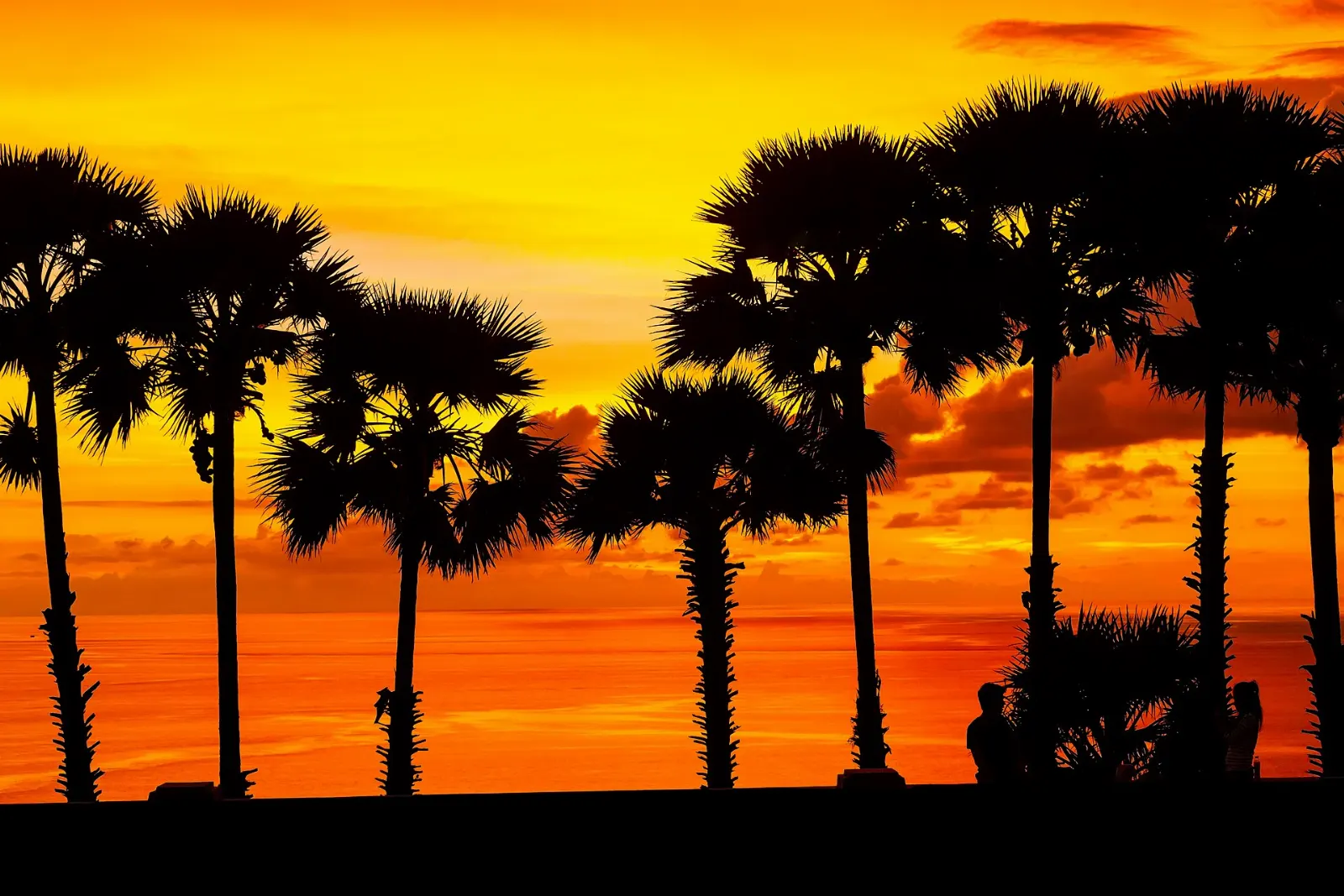
Promthep Cape, called Laem Phromthep in Thai, is the rocky headland at the island's southern tip and its most famous sunset spot. A shrine filled with elephant figurines, a small lighthouse and a walking path down the ridge toward the sea make it more than just a viewpoint.
Promthep Cape marks the southern tip of Phuket island and is its most popular sunset viewpoint. Photo: Phuket@photographer.net, Wikimedia Commons, CC BY 2.0
Nai Harn and Rawai
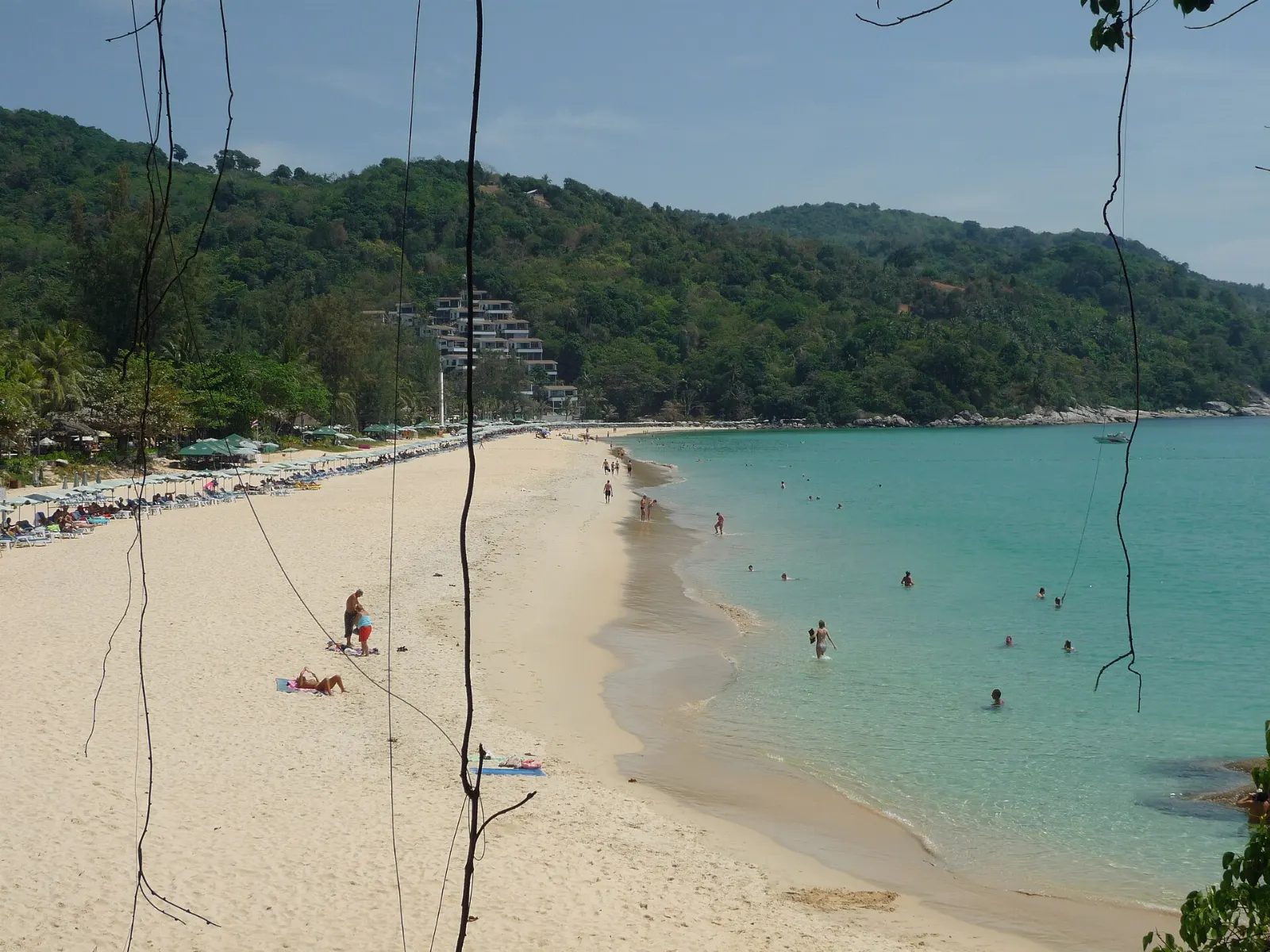
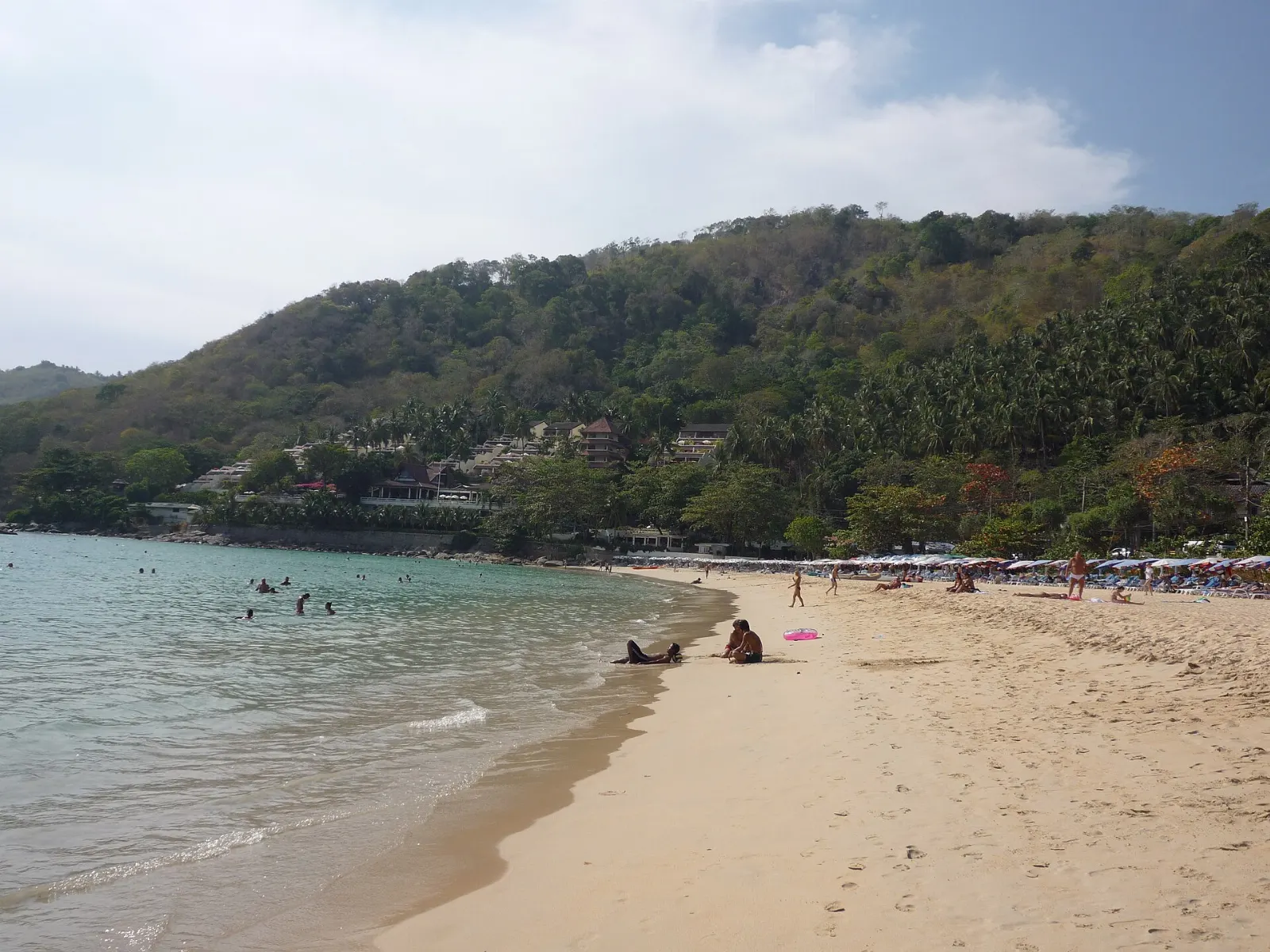
Just north of the cape, Nai Harn Beach is a sheltered bay with good swimming in the dry season, and a freshwater lake behind it with a loop path that locals use for jogging and cycling.
Nai Harn Beach lies near the southern tip of Phuket, just north of Promthep Cape. Photo: ADwarf, Wikimedia Commons, Public domain
Island and bay day trips
Some of the most memorable scenery near Phuket is offshore, so build at least one or two boat trips into your plans. Book with a reputable operator that provides life jackets and checks the weather.
Phang Nga Bay
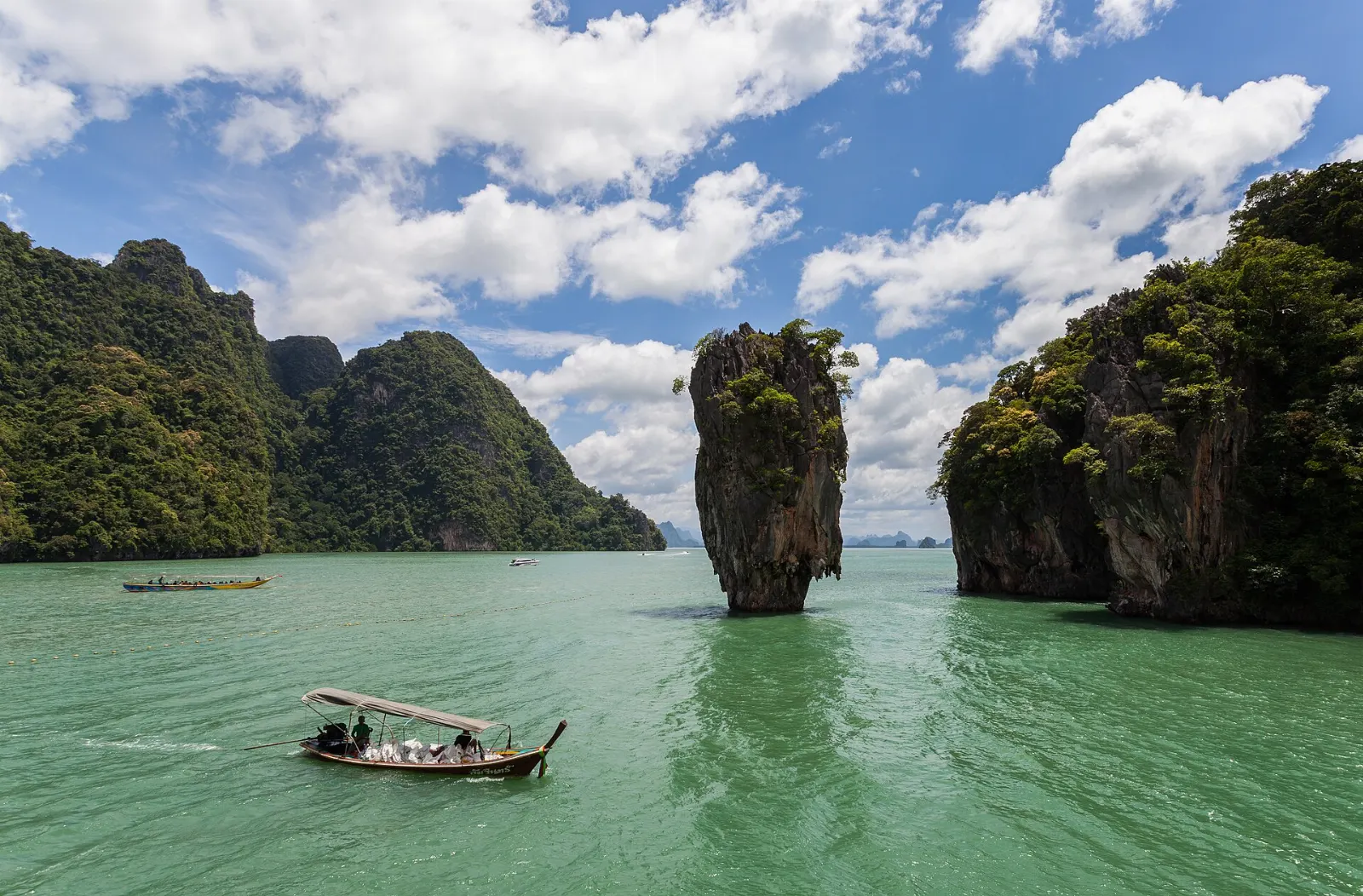
Northeast of Phuket, Ao Phang Nga National Park protects a bay studded with more than a hundred limestone islands rising straight out of emerald water. The classic trip combines sea canoeing into hidden lagoons, called hongs, inside collapsed caves, a visit to Koh Panyee, a Muslim fishing village built on stilts, and a stop at Khao Phing Kan, better known as James Bond Island after it appeared in The Man with the Golden Gun.
Ko Tapu, beside Khao Phing Kan in Phang Nga Bay, appeared in the 1974 James Bond film The Man with the Golden Gun. Photo: Diego Delso, Wikimedia Commons, CC BY-SA 3.0
Phi Phi Islands and Maya Bay
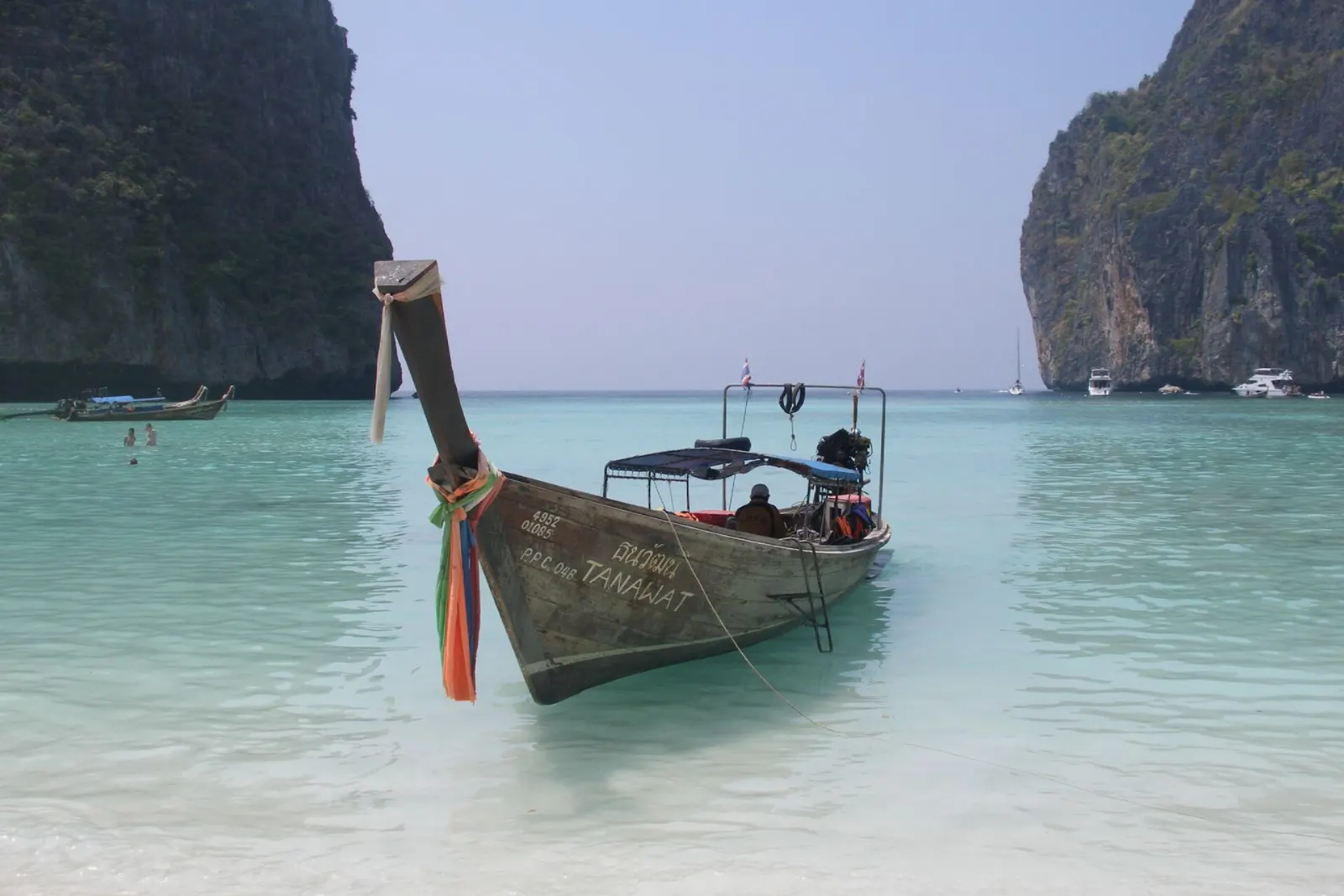
The Phi Phi Islands, technically part of Krabi province, are reachable by ferry or speedboat from Phuket. Koh Phi Phi Don has the main village and beaches, while uninhabited Koh Phi Phi Leh holds Maya Bay, made famous by the film The Beach.
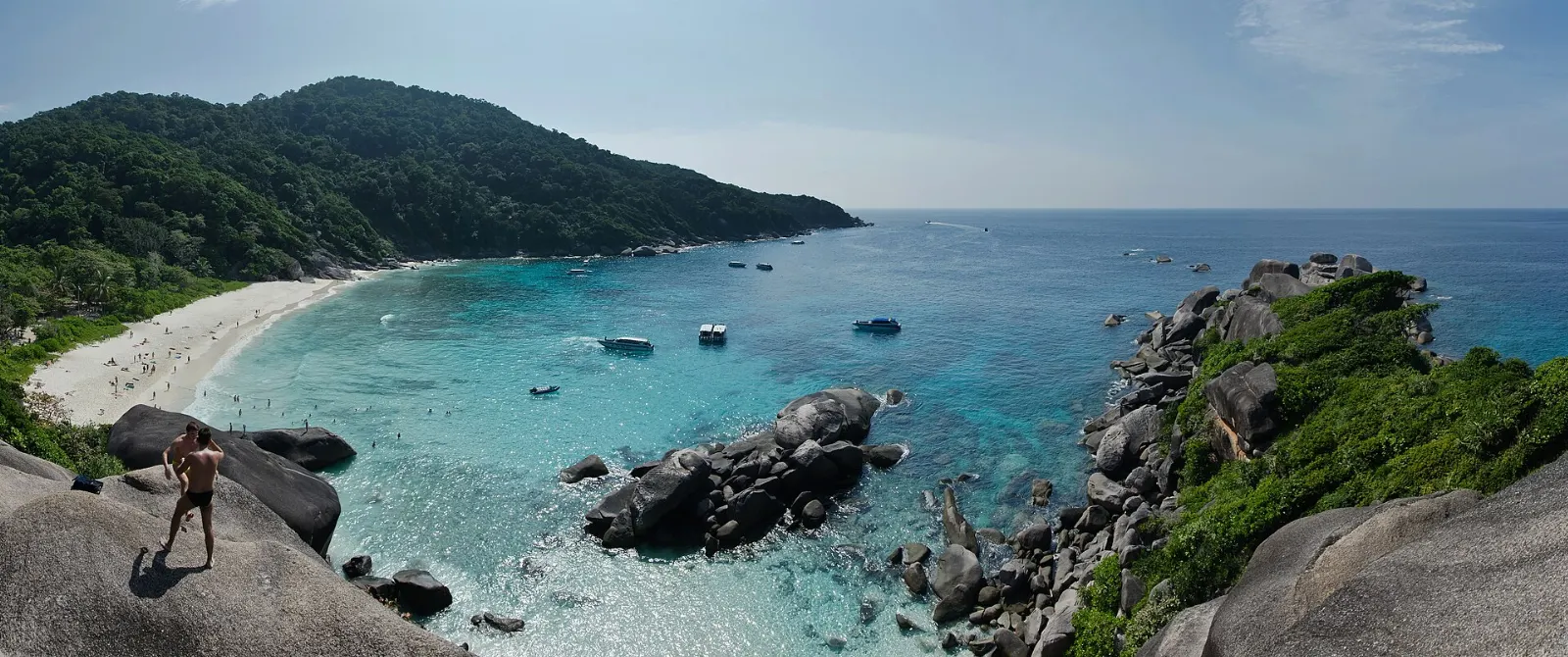
The Similan Islands, protected as Mu Ko Similan National Park, lie in the Andaman Sea north of Phuket and are famous for granite boulders, white beaches and exceptional underwater visibility. The park is open only during the dry season, usually from mid-October to mid-May, and daily visitor numbers are capped.
The Similan Islands form a marine national park in the Andaman Sea north of Phuket. Photo: Mathias Krumbholz, Wikimedia Commons, CC BY-SA 3.0
Ad
Food and local flavors
Phuket's food reflects its Hokkien Chinese, Thai and Malay roots, and it is one of the best reasons to spend time in Phuket Town.
Look for moo hong, pork belly braised slowly with black pepper and garlic until it falls apart, and oh tao, a sticky omelet of oysters or small shellfish with taro.
For atmosphere, head to the Sunday Lard Yai walking street on Thalang Road, the weekend market at Naka, or Banzaan Fresh Market in Patong, where you can buy seafood downstairs and have it cooked upstairs.
Popular dishes to try in Phuket
Mee hokkien Mee hokkien, yellow noodles stir-fried with seafood, pork and greens, is the island's signature noodle dish.Photo: LN9267, Wikimedia Commons, CC BY-SA 4.0Moo hong Look for moo hong, pork belly braised slowly with black pepper and garlic until it falls apart, and oh tao, a sticky omelet of oysters or small shellfish with taro.Photo: ::::=UT=::::, Wikimedia Commons, CC BY-SA 3.0
Where to stay
Patong suits travelers who want nightlife, shopping and a huge choice of restaurants on the doorstep, but it is noisy and crowded. Kata and Karon are the best all-round choice for most visitors, with good beaches, plenty of dining and a calmer atmosphere that suits families and couples.
Kamala and Surin, north of Patong, are quieter and more upscale, popular with couples looking for a peaceful beach. Nai Harn and Rawai in the south suit longer stays and travelers who prefer a local feel.
Where to stay in Phuket
Karon Kata and Karon are the best all-round choice for most visitors, with good beaches, plenty of dining and a calmer atmosphere that suits families and couples.Photo: Roma Neus, Wikimedia Commons, CC BY 3.0Surin Kamala and Surin, north of Patong, are quieter and more upscale, popular with couples looking for a peaceful beach.Photo: Diego Delso, Wikimedia Commons, CC BY-SA 3.0Patong Where to stayPatong suits travelers who want nightlife, shopping and a huge choice of restaurants on the doorstep, but it is noisy and crowded.Photo: Arnaud-Victor Monteux, Wikimedia Commons, CC BY-SA 4.0Rawai Nai Harn and Rawai in the south suit longer stays and travelers who prefer a local feel.Photo: ADwarf, Wikimedia Commons, Public domain
Ad
Best time to visit
The dry season, roughly November to April, is the best time for beaches and boat trips. December to February brings the most comfortable weather, calm seas and the biggest crowds, especially around Christmas, New Year and Chinese New Year, so book early.
The southwest monsoon arrives around May and lasts until October. Expect heavy showers, often in the afternoon, rough seas on the west coast and frequent red flags on beaches because of strong rip currents.
Getting there and getting around
Phuket International Airport is in the north of the island, with frequent flights from Bangkok and direct international routes from across Asia and beyond. Allow about an hour to reach Patong, Kata or Karon by road, more in heavy traffic.
Getting around takes planning, because Phuket has limited public transport.
Ad
A suggested itinerary
First day
Settle into your beach area and spend the afternoon on the sand at Kata or Karon.
Second day
Visit the Big Buddha early, then Wat Chalong.
Third day
Take a full-day trip to Phang Nga Bay for sea canoeing, Koh Panyee and James Bond Island.
Fourth day
Join a boat trip to the Phi Phi Islands, or in the dry season, the Similan Islands.
Practical tips
Respect beach flags: red means no swimming, and rip currents are dangerous during the monsoon months.
Cover shoulders and knees and remove shoes at temples, and never point your feet at a Buddha image.
Use a ride-hailing app or agree on a fare before getting into a tuk-tuk or taxi.
Only ride a scooter if you hold a valid motorcycle license and travel insurance that covers it, and always wear a helmet.
Choose boat operators with good reviews and life jackets, and expect weather-related cancellations from May to October.
National parks such as Phang Nga Bay, Phi Phi and the Similans charge entrance fees; check current fees and bring cash.