Seville is the capital of Andalusia and the city that, for many travelers, sums up southern Spain: orange trees lining the streets, whitewashed lanes, tiled courtyards, the sound of flamenco guitar drifting from a bar in Triana and an evening tapas crawl that ends long after midnight.
AT A GLANCE
Best time
March to May and late September to November, when it is warm but not scorching.
How long
Three days for the city, four or five with day trips to Córdoba or Itálica.
Getting there
Fly into Seville airport or take the high-speed train from Madrid to Santa Justa station in about two and a half hours.
Why visit Seville
Three of Seville's monuments, the cathedral, the Real Alcázar and the General Archive of the Indies, are listed together as a UNESCO World Heritage Site, and they would justify the trip on their own. But Seville is also a city to be lived in rather than ticked off.
The city is also the heartland of Andalusian traditions. It is closely tied to flamenco, it stages the most famous Holy Week processions in Spain and it hosts the exuberant April Fair.
The cathedral, the Alcázar and Santa Cruz
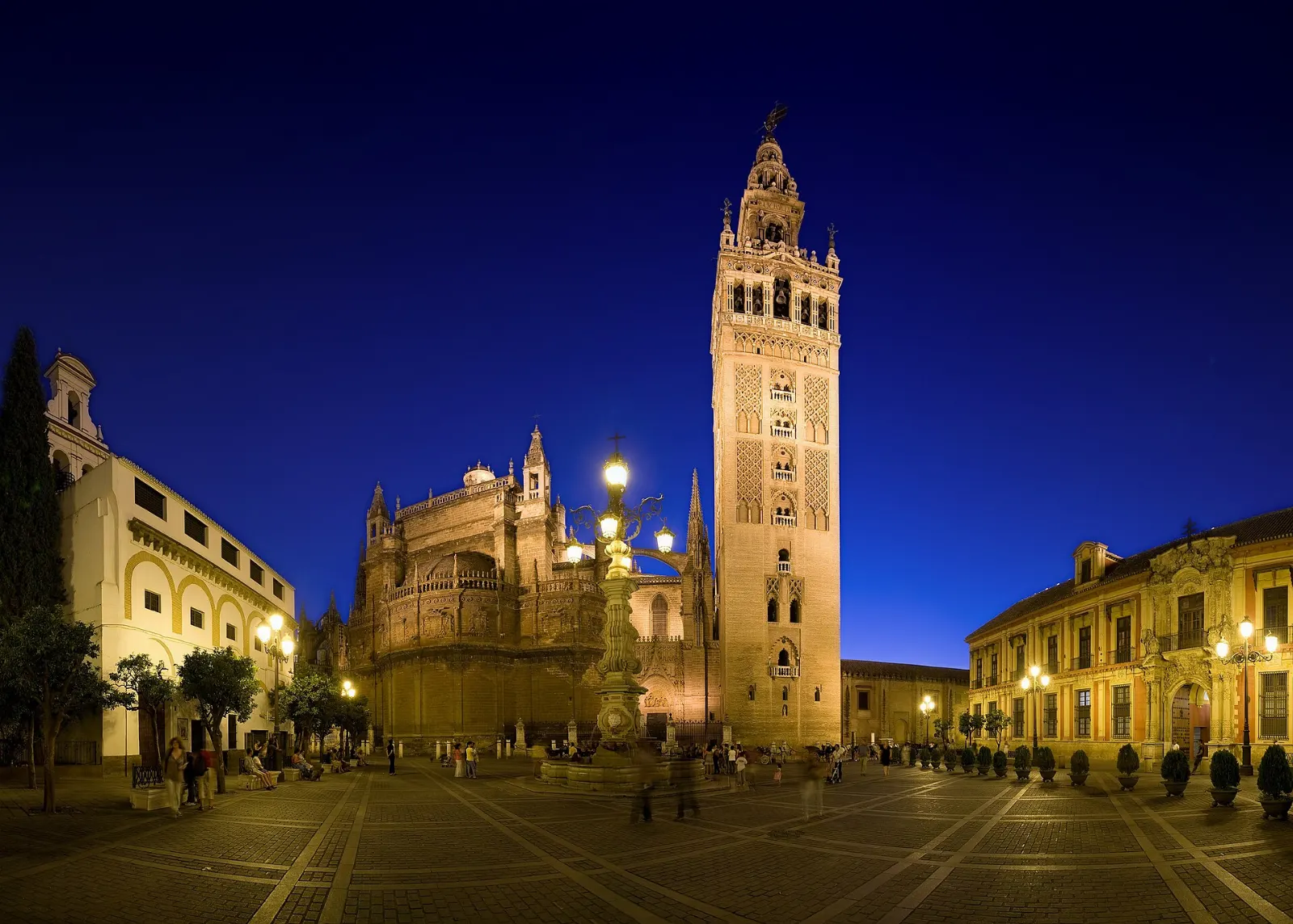
Seville Cathedral and the Giralda
Built on the site of the city's great mosque after the Christian conquest of 1248, Seville Cathedral is one of the largest Gothic cathedrals in the world. Inside, look for the monumental gilded altarpiece of the main chapel and the tomb of Christopher Columbus, carried by four figures representing the kingdoms of Spain.
Real Alcázar
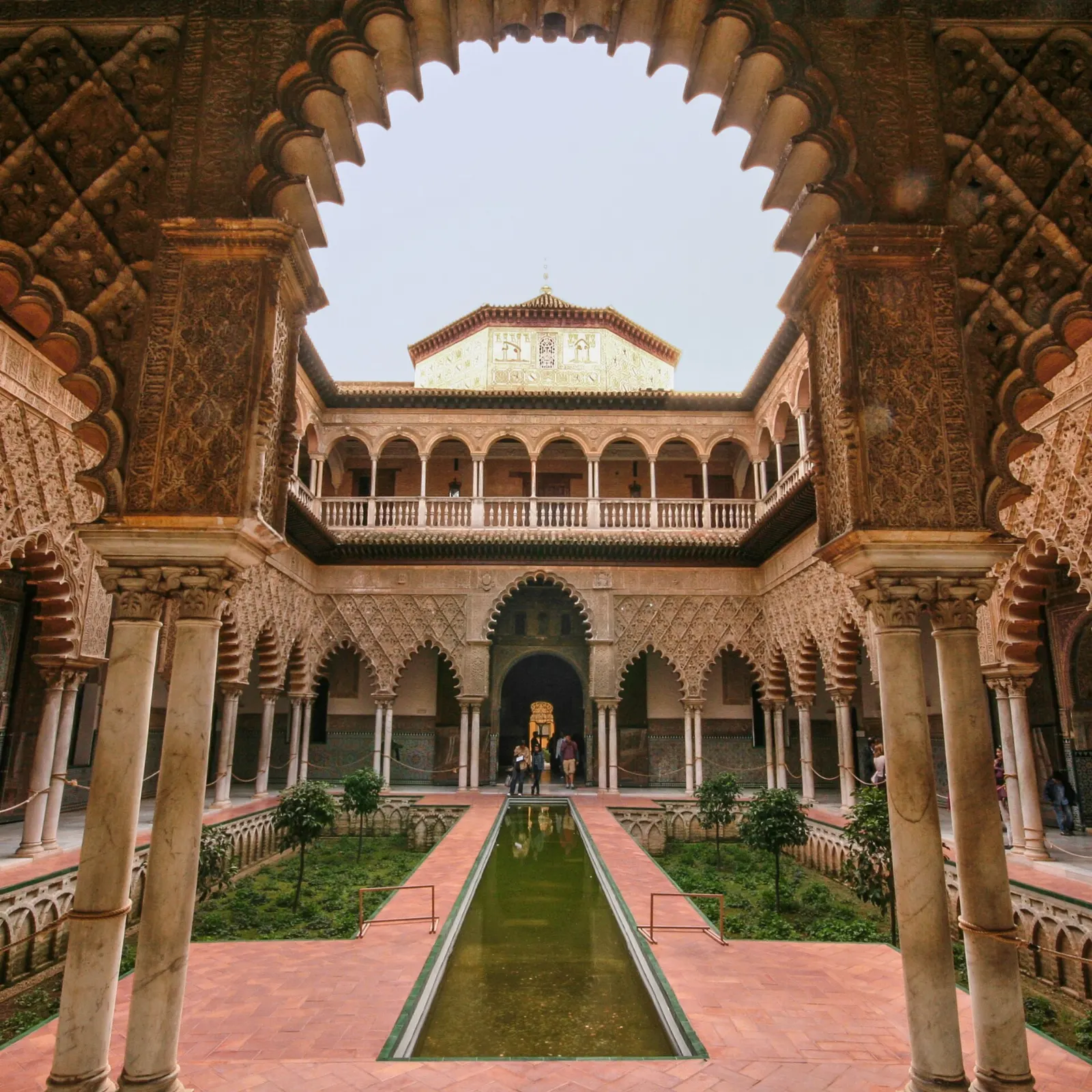
Across the Plaza del Triunfo, the Real Alcázar is a royal palace still used by the Spanish royal family when in Seville, making it one of the oldest palaces in Europe still in use. Its highlight is the Palace of Peter I, built in the fourteenth century by Muslim craftsmen in the Mudéjar style, with the Patio de las Doncellas and the gilded dome of the Hall of the Ambassadors.
Barrio de Santa Cruz
The former Jewish quarter is a maze of narrow lanes, small squares and whitewashed houses beside the Alcázar walls. Find the Callejón del Agua along the old walls, the Plaza de Santa Cruz and the Plaza de Doña Elvira with its tiled benches.
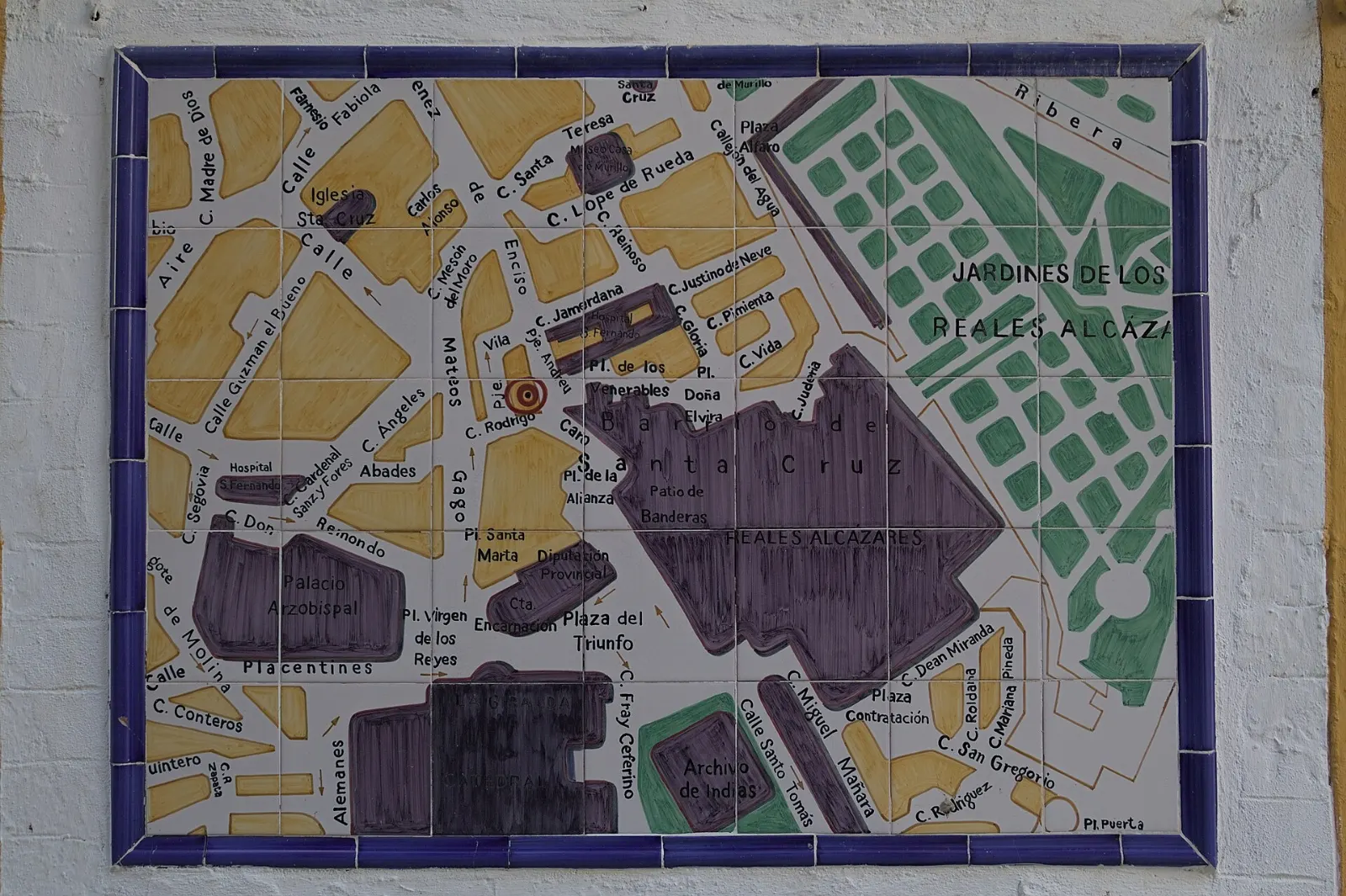
General Archive of the Indies
Between the cathedral and the Alcázar, this sober Renaissance building was a merchants' exchange before becoming the central archive of Spain's empire in the Americas and Asia. Exhibitions display a small selection of documents, maps and drawings.
Plaza de España and the riverside
Plaza de España and María Luisa Park
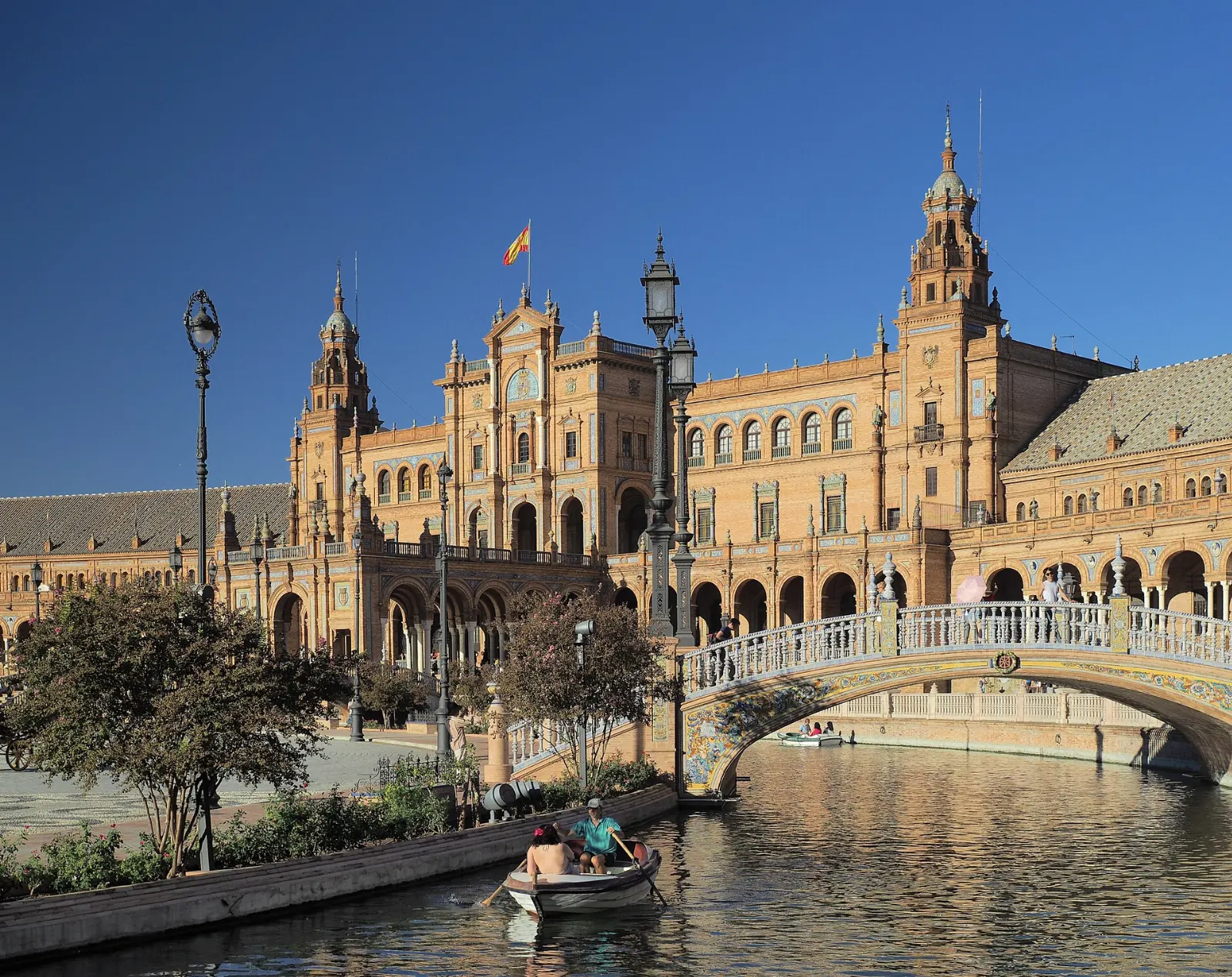
Designed by architect Aníbal González for the 1929 Ibero-American Exposition, the Plaza de España is a vast semicircle of brick arcades and towers wrapped around a canal crossed by tiled bridges. Along its walls, alcoves decorated with painted tiles represent the provinces of Spain.
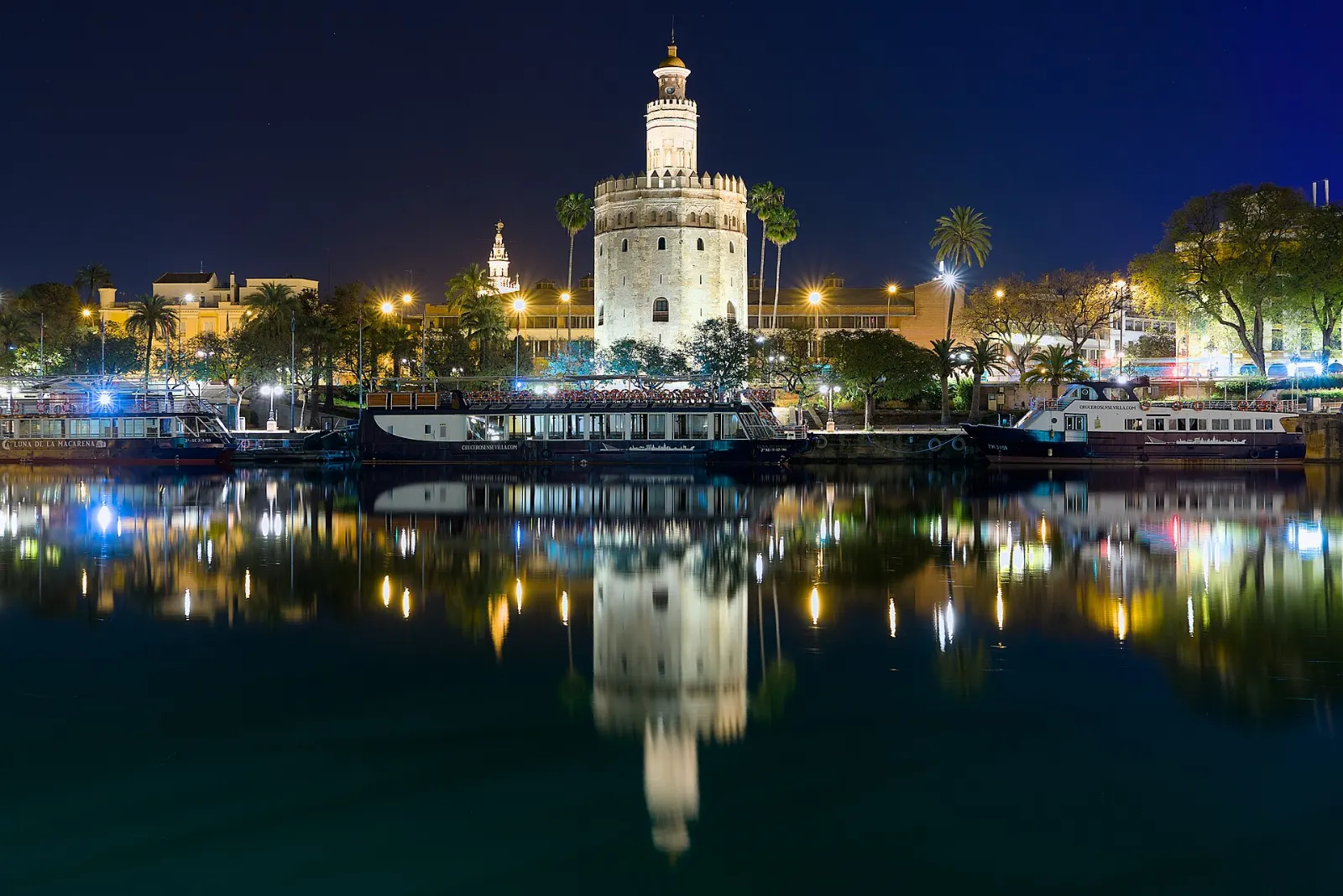
Torre del Oro
This twelve-sided watchtower was built by the Almohads in the early thirteenth century to control access to the port on the Guadalquivir. It now holds a small naval museum, and its upper terrace looks out over the river.
Real Maestranza bullring
A short walk upriver, the elegant white-and-ochre Plaza de Toros de la Real Maestranza is one of the oldest bullrings in Spain. Even if bullfighting does not appeal, guided tours take you into the arena and a museum on the history of the Real Maestranza de Caballería.
Triana
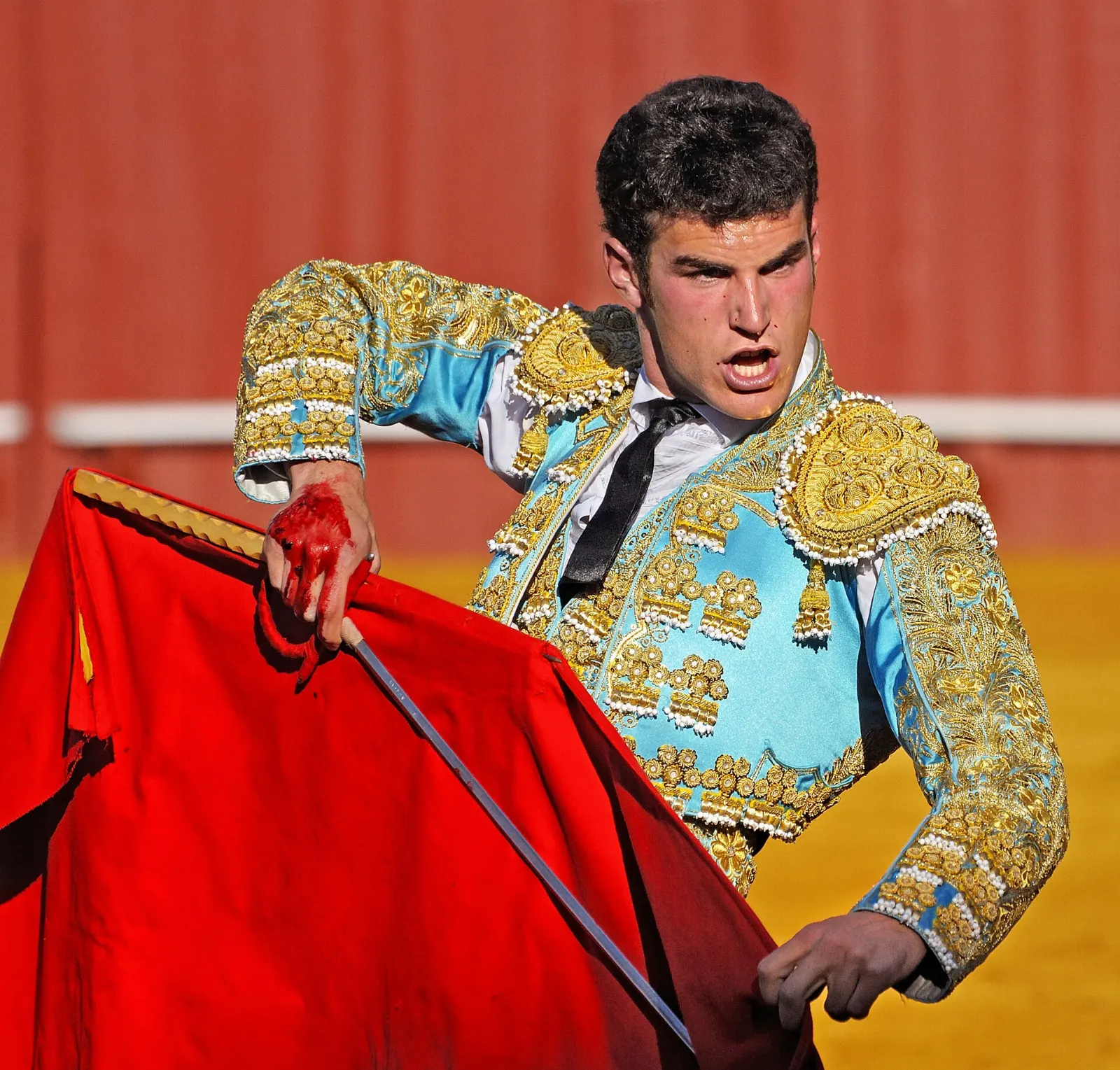
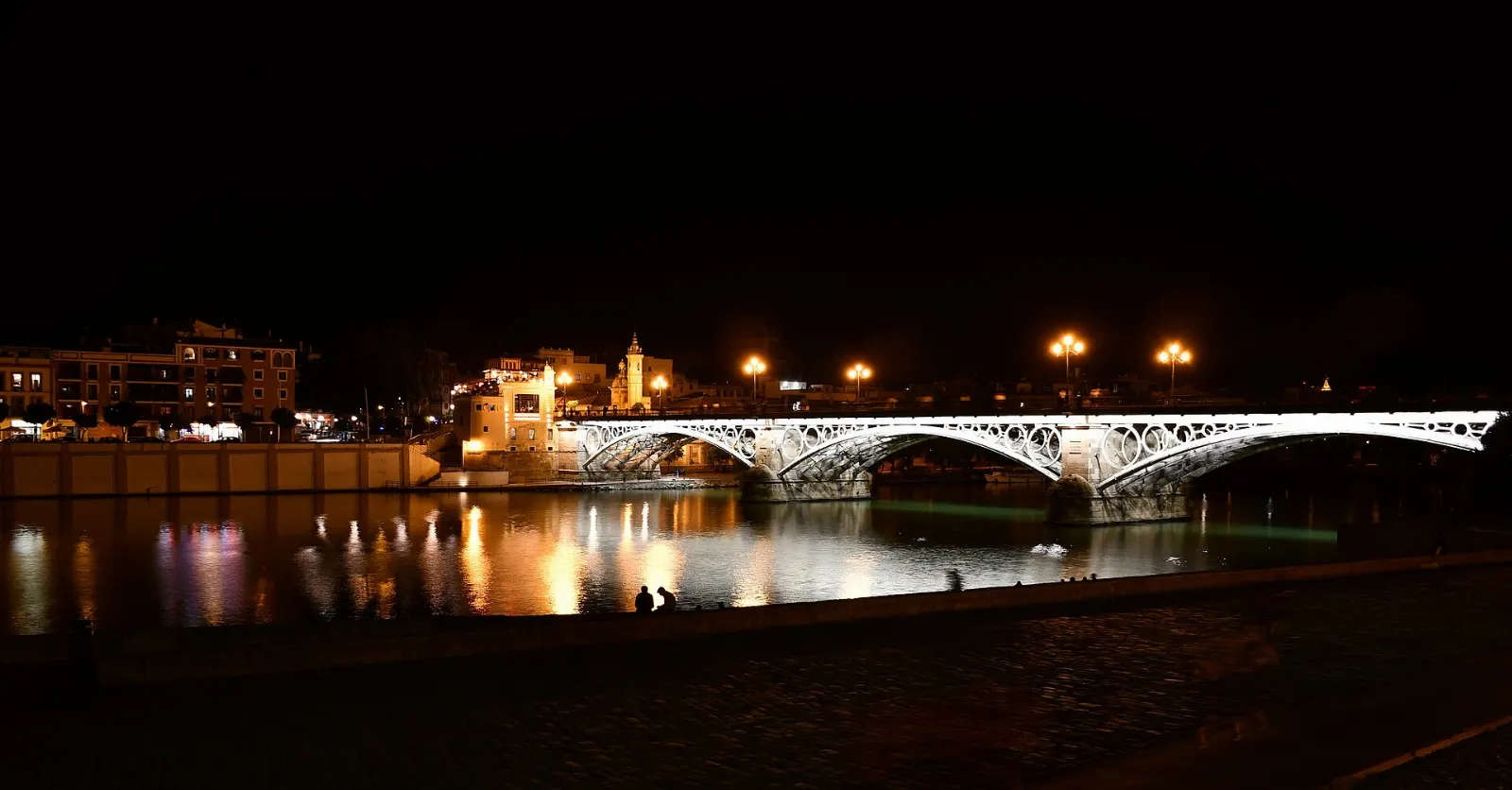
Cross the iron Isabel II bridge, known to everyone as the Triana bridge, to reach the neighborhood that gave the world many flamenco artists, bullfighters and sailors.
The northern old town
Metropol Parasol
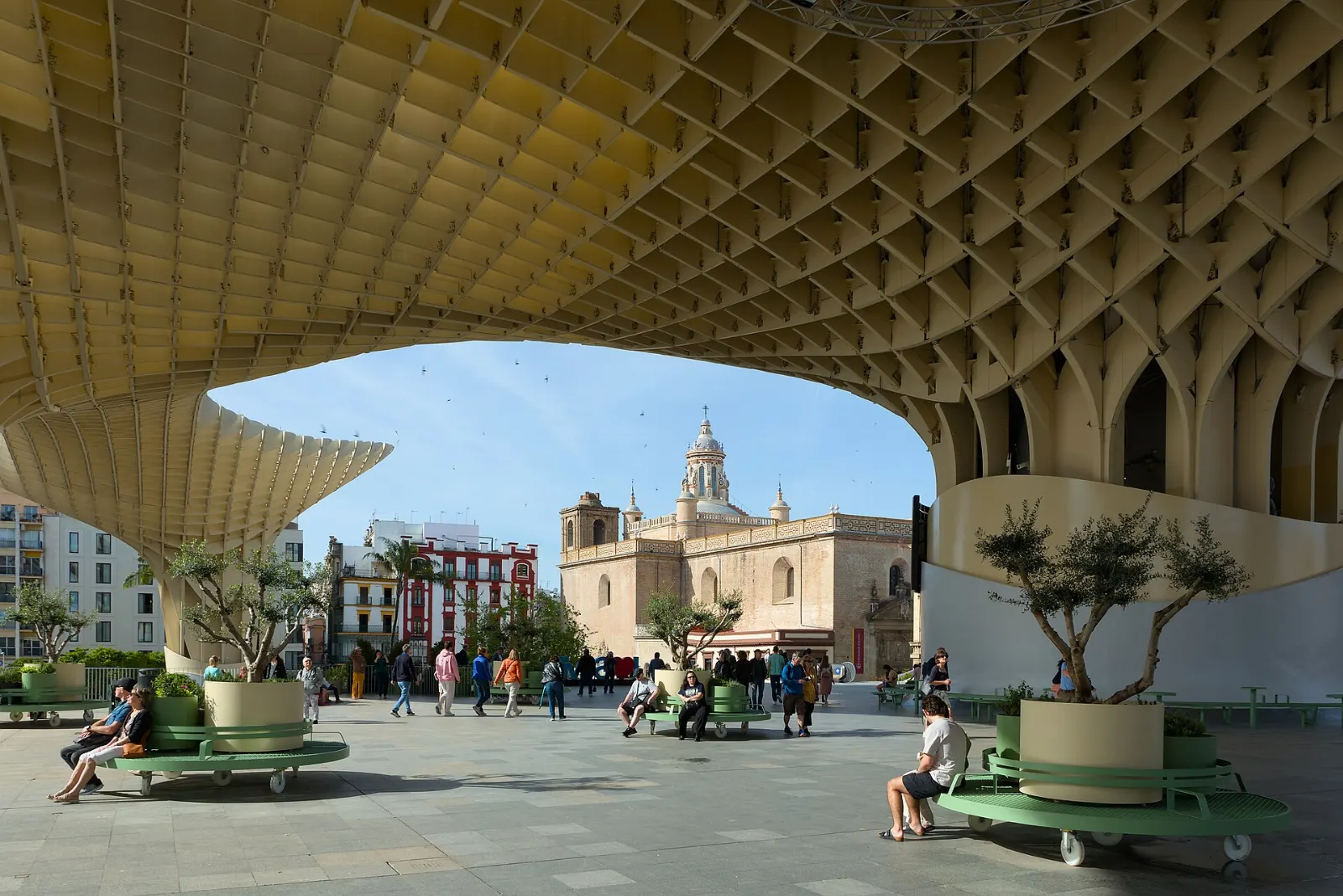
Rising above the Plaza de la Encarnación, the Metropol Parasol, nicknamed Las Setas (the mushrooms), is a huge timber canopy opened in 2011.
Casa de Pilatos
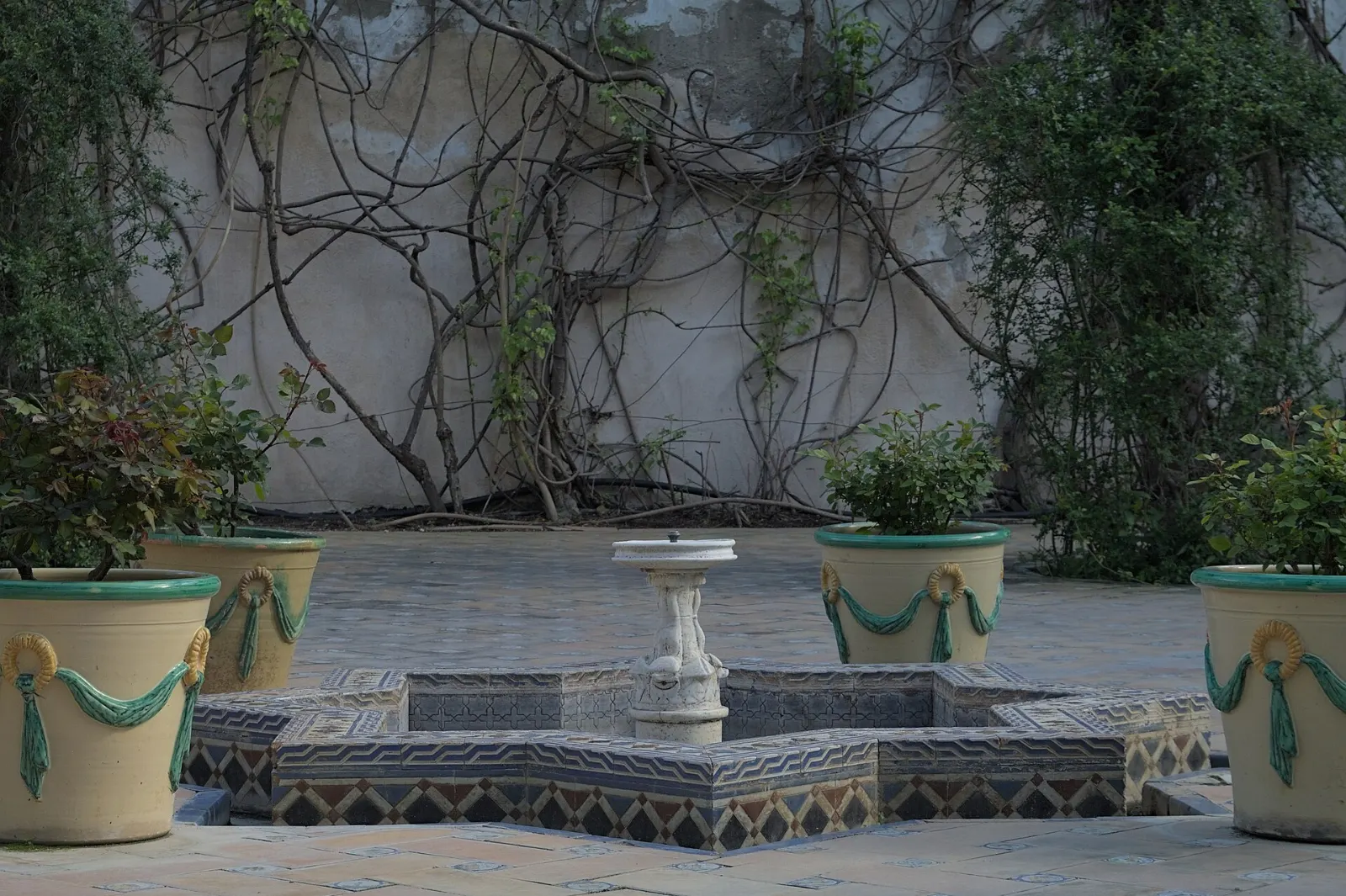
This sixteenth-century Andalusian palace blends Mudéjar, Gothic and Renaissance styles, with superb tilework, carved plaster and a courtyard of classical statues. It is one of the finest noble houses in Seville and still belongs to the family of the Dukes of Medinaceli.
Alameda de Hércules and Calle Feria
The long tree-lined Alameda de Hércules, with Roman columns at its southern end, is the hub of a lively, bohemian neighborhood of cafés and bars.
 Planning a trip to Seville?Compare hotels, flights and vacation rentals for Seville on Expedia.Book now
Food and local flavors
Seville is a tapas city. Order a few plates at a time and move on to the next bar.
The streets around the cathedral, Calle Mateos Gago and the Barrio de Santa Cruz are convenient but busy; locals tend to head to the area around the Alameda de Hércules, the Arenal district near the bullring and Triana, especially along Calle San Jacinto and Calle Betis. The Mercado de Triana and the Mercado de la Encarnación under the Metropol Parasol are good for fresh produce.
Popular dishes to try in Seville


Where to stay
Santa Cruz and the area around the cathedral put you steps from the main monuments, ideal for a short first visit, though rooms can be small and the lanes crowded by day.
The Alameda de Hércules and the northern old town suit travelers who want a younger, more local atmosphere with plenty of nightlife. Triana, across the river, offers a neighborhood feel, flamenco and riverside views, a short walk from the center.
Where to stay in Seville


Best time to visit
Spring is Seville's finest season. From March the orange blossom, or azahar, perfumes the city.
Summer is very hot: July and August regularly bring temperatures above forty degrees Celsius, and many locals leave. If you visit then, sightsee early, rest in the afternoon and go out in the evening.
Getting there and getting around
Seville's San Pablo airport lies northeast of the city, with an airport bus to the center.
The historic center is compact and best explored on foot; many streets are narrow or closed to traffic. A tram line runs through the center past the cathedral, a single metro line links some outer districts, and buses fill the gaps.
A suggested itinerary
First day
Visit the Real Alcázar at your booked morning slot, then explore the Barrio de Santa Cruz.
Second day
Spend the morning at the Plaza de España and María Luisa Park, then walk along the river past the Torre del Oro and the Maestranza.
Third day
Visit the Casa de Pilatos, then walk north to the Metropol Parasol.
Fourth day
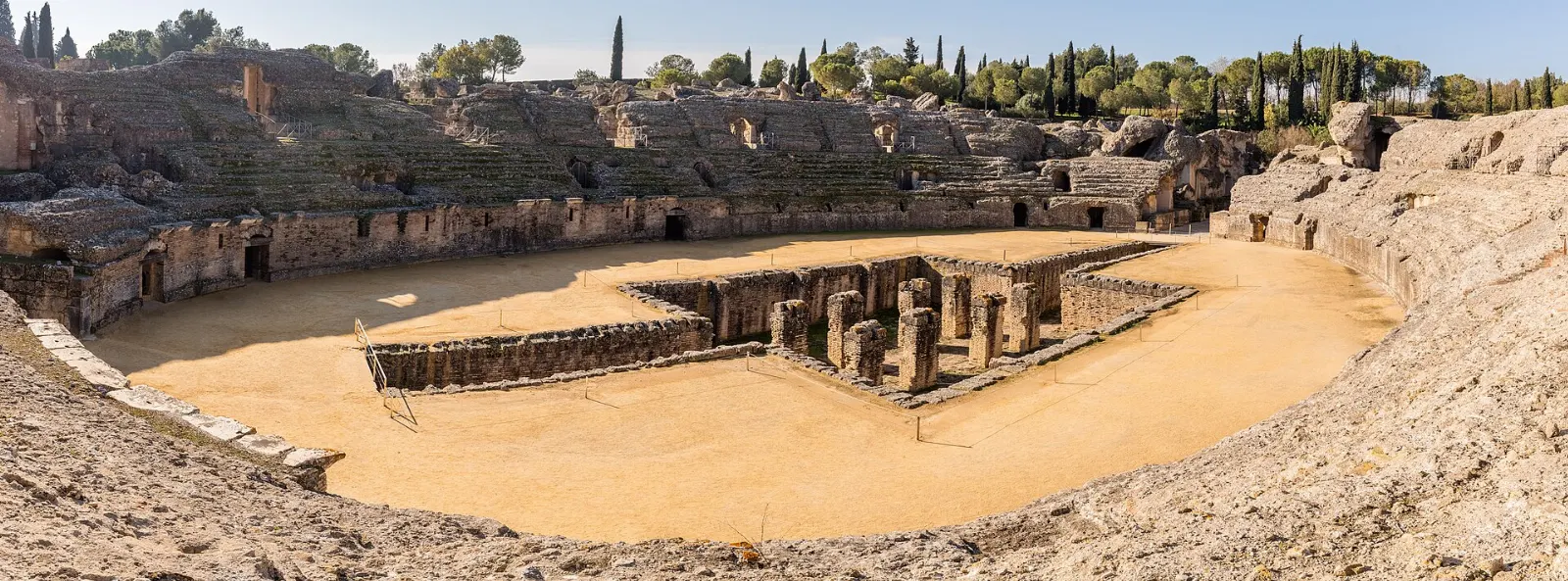
Take a morning trip to Itálica or a high-speed train to Córdoba to see the Mosque-Cathedral.
Practical tips
- Book the Real Alcázar and the cathedral online in advance, and check the official websites for current hours and fees.
- In summer, sightsee early, rest through the afternoon and carry water and sun protection.
- Cover shoulders and knees in churches.
- For flamenco, choose a dedicated venue or a small peña rather than a dinner show with loud chatter.
- Eat at local hours: lunch from about two, dinner from nine.