WiserMap — Choose wisely. Connect locally.Choose wisely. Connect locally.Add your business
Puebla · Travel guide

Puebla Mexico Mole Poblano Talavera and Cholula Pyramid

Puebla is a colonial city in a valley ringed by volcanoes, about 110 kilometres southeast of Mexico City. Its historic center was declared a UNESCO World Heritage Site in 1987, and its streets are lined with Baroque churches, tiled facades and gray stone mansions. It is also one of Mexico's great food cities, famous for mole poblano and chiles en nogada.

By WiserMap TravelUpdated October 2026 9 places9 min read
FacebookXLinkedIn
At a glance Puebla
  1. Best timeSpring or autumn, with the Cinco de Mayo events in May and chile season in late summer.
  2. How longAllow two to three days, plus a day for Cholula and nearby villages.
  3. Getting thereTake a bus of about two hours from Mexico City, or fly into Puebla or Mexico City airports.

Why visit Puebla

Founded in 1531 as Puebla de los Ángeles, the city was laid out in a grid around a central plaza and was the first major settlement in central Mexico not built on top of an existing Indigenous city.

Today the historic center holds thousands of cataloged buildings, many faced in gray cantera stone, red brick and colourful Talavera tile.

The historic center

Central plaza of Puebla with trees and the cathedral behind

Zócalo and cathedral

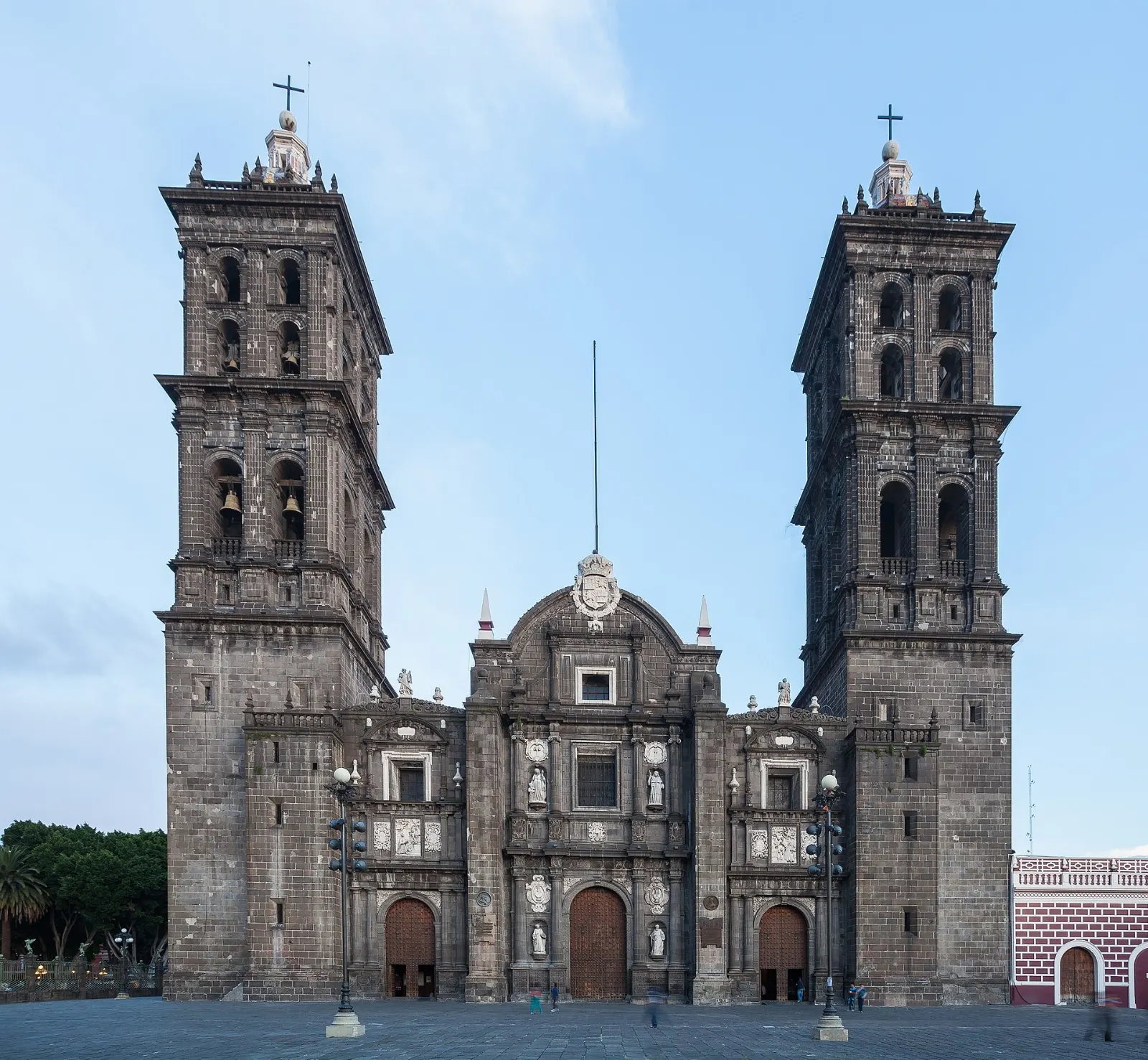
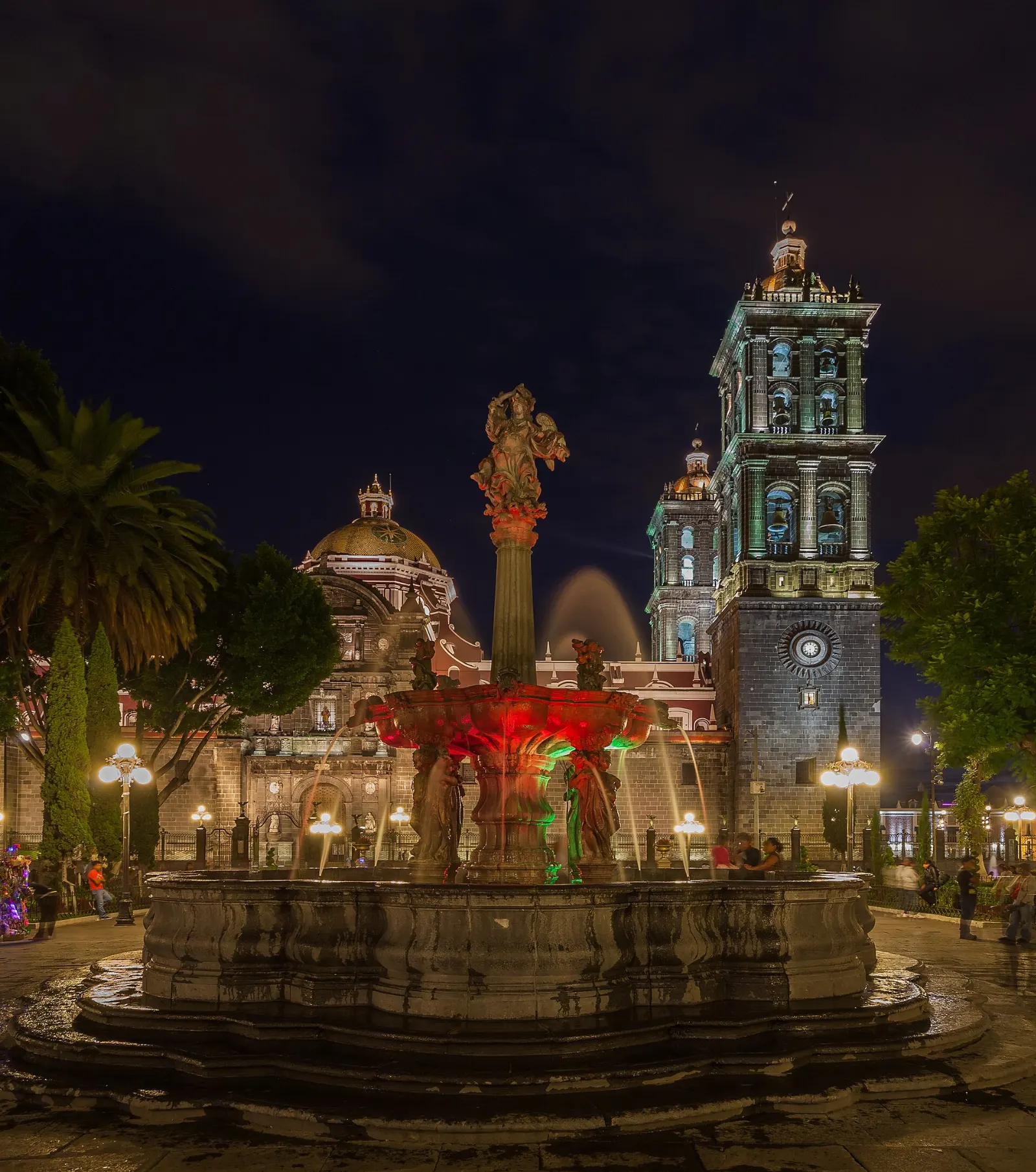
Start at the Zócalo, the shaded main plaza ringed by arcades, cafes and restaurants. On one side stands the cathedral, built between 1575 and 1640, with two of the tallest church towers in Mexico.

The Zócalo is the main plaza at the center of the planned colonial city. Photo: Diego Delso, Wikimedia Commons, CC BY-SA 3.0
Gilded interior of the Rosary Chapel in Puebla

Capilla del Rosario

Inside the Templo de Santo Domingo, this small chapel is one of the most opulent in Mexico. Gold leaf covers the altar, walls and dome, and Talavera tilework and sculpture complete the effect.

The Rosary Chapel covers its walls and dome in gold and Talavera tile. Photo: Luis Alvaz, Wikimedia Commons, CC BY-SA 4.0

Wooden shelves and rare books in the Biblioteca Palafoxiana, Puebla

Biblioteca Palafoxiana

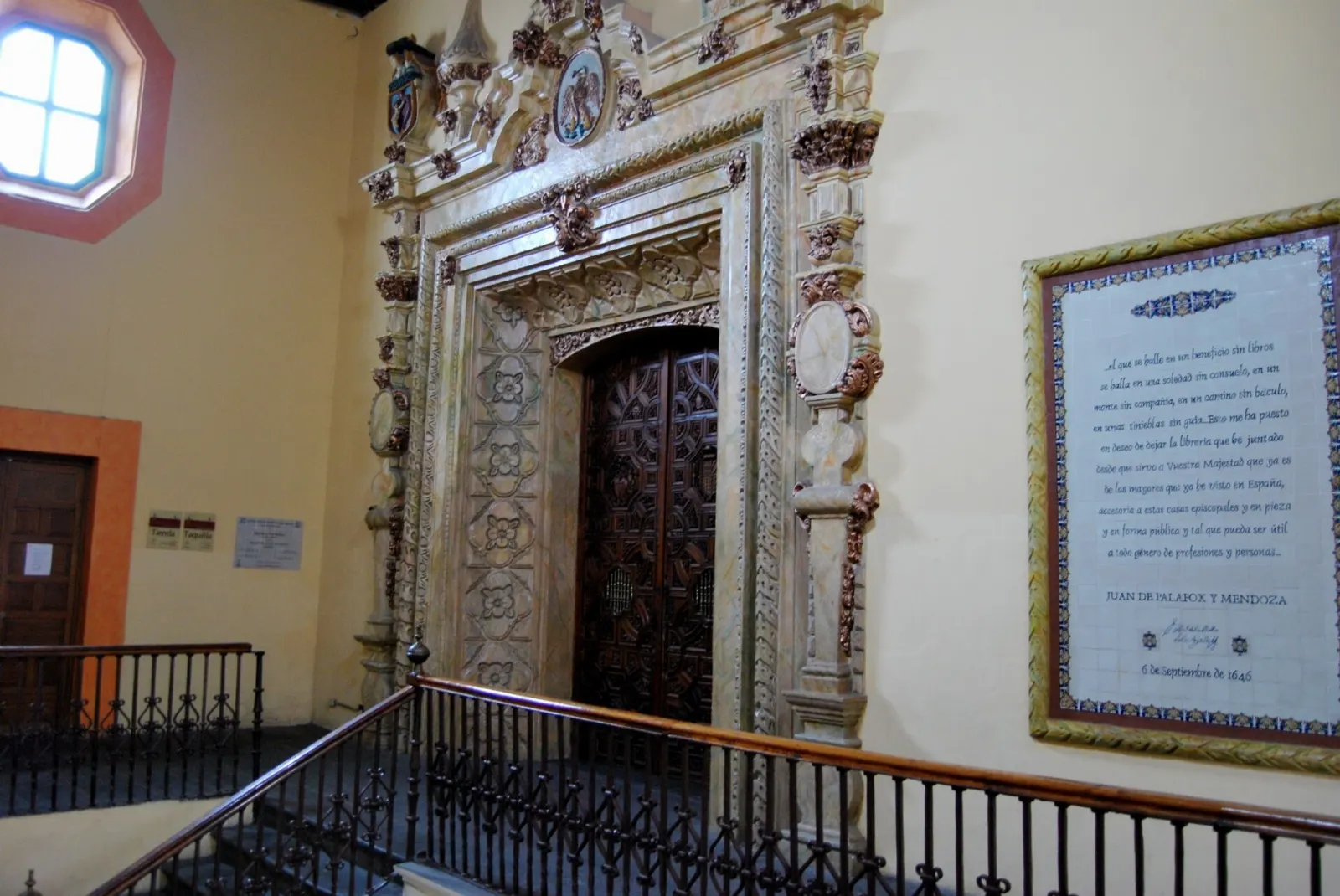
Founded in 1646, this library is recognised as the first public library in the Americas, and its collection holds more than 45,000 books and manuscripts. It is listed on UNESCO's Memory of the World Register.

Founded in 1646, the Biblioteca Palafoxiana is the oldest public library in the Americas. Photo: Miguel Angel Alvarez Bernardo, Wikimedia Commons, CC BY-SA 2.0

Courtyard of the Museo Amparo in the historic center, Puebla

Museo Amparo

The museum occupies two colonial buildings from the 17th and 18th centuries, one of which began as a hospital in 1534. Its permanent collection traces Mexico's history from the pre-Hispanic period onward.

The Museo Amparo occupies two colonial buildings in the historic center. Photo: Luis Alvaz, Wikimedia Commons, CC BY-SA 4.0

Antique stalls on a weekend morning in the Los Sapos district, Puebla

Los Sapos and El Parián

Los Sapos is an art district where painters keep studios, and on weekends a flea market sets up with handicrafts and antiques.

Los Sapos is an art district known for galleries and a weekend flea market. Photo: Gusvel, Wikimedia Commons, CC BY-SA 4.0

Forts, murals and volcano views

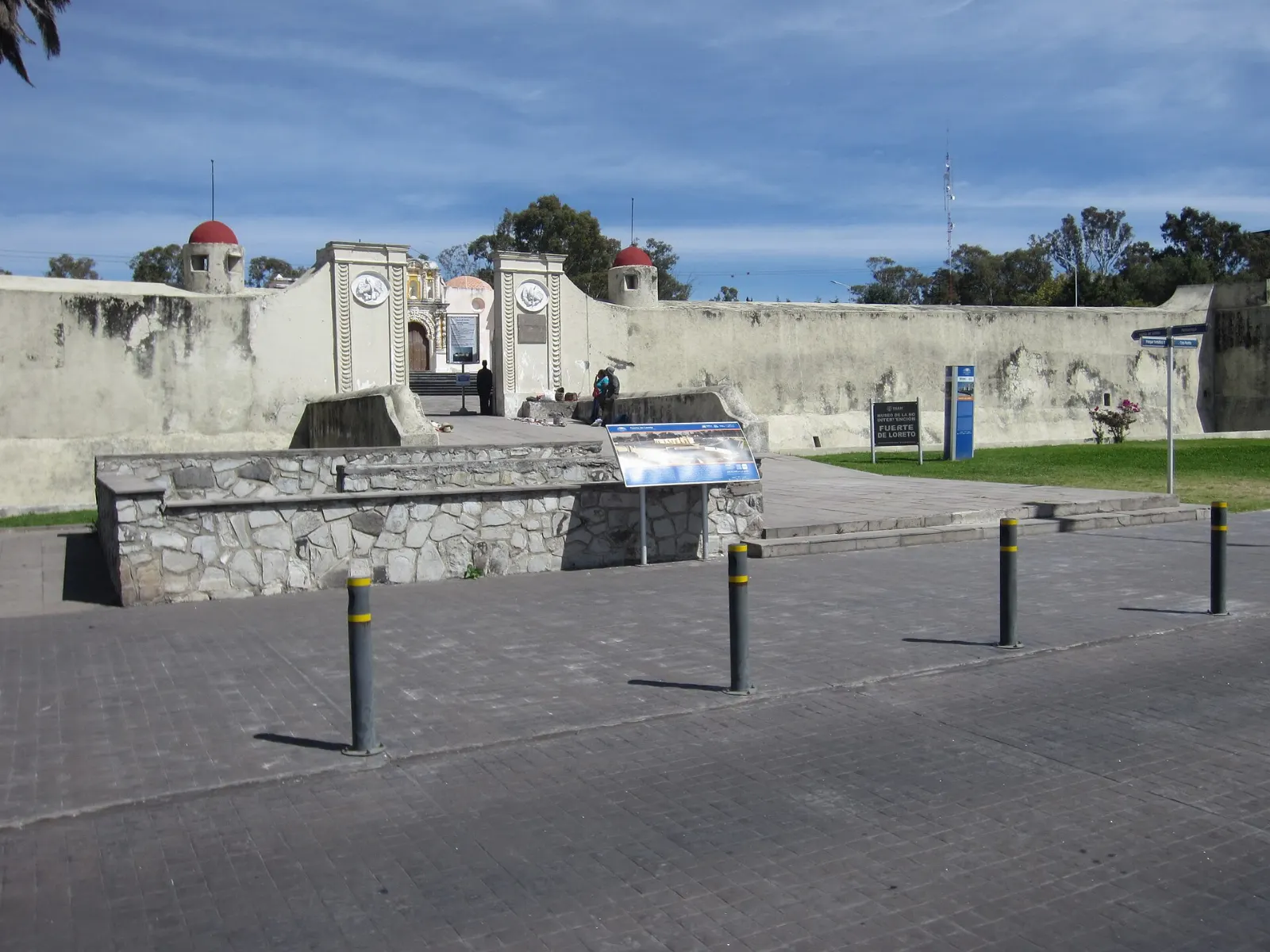
The Fuerte de Loreto on the hill above Puebla

Los Fuertes

The forts of Loreto and Guadalupe sit atop Cerro de Guadalupe, where General Ignacio Zaragoza's troops defeated a French force on 5 May 1862.

The forts of Loreto and Guadalupe were the setting of the Battle of Puebla in 1862. Photo: Another Believer, Wikimedia Commons, CC BY-SA 4.0

Pasaje Histórico and the mural district

Historic tunnels lead toward the forts, and the route surfaces briefly in a neighbourhood covered with murals by artists from around the world. It makes an interesting walk on the way down from the hill.

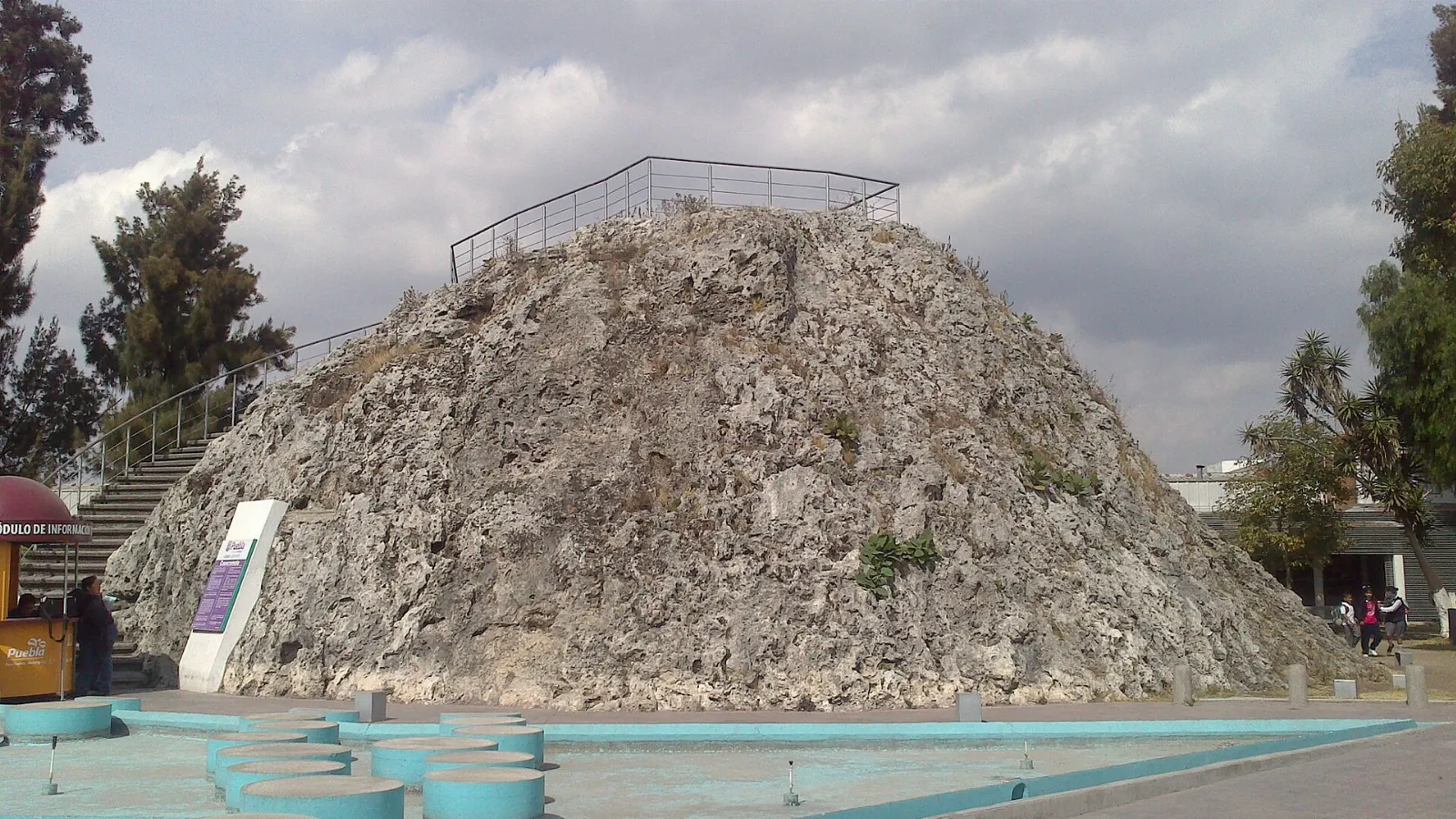
The sinter cone of Cuexcomate with its spiral staircase, Puebla

Cuexcomate

Cuexcomate is an inactive geyser in the La Libertad district, often called the smallest volcano in the world, although it is a sinter cone. A metal spiral staircase lets you descend into the crater.

Cuexcomate is an inactive geyser often mistaken for the smallest volcano in the world. Photo: Poromiami, Wikimedia Commons, CC BY-SA 4.0

Cholula and nearby villages

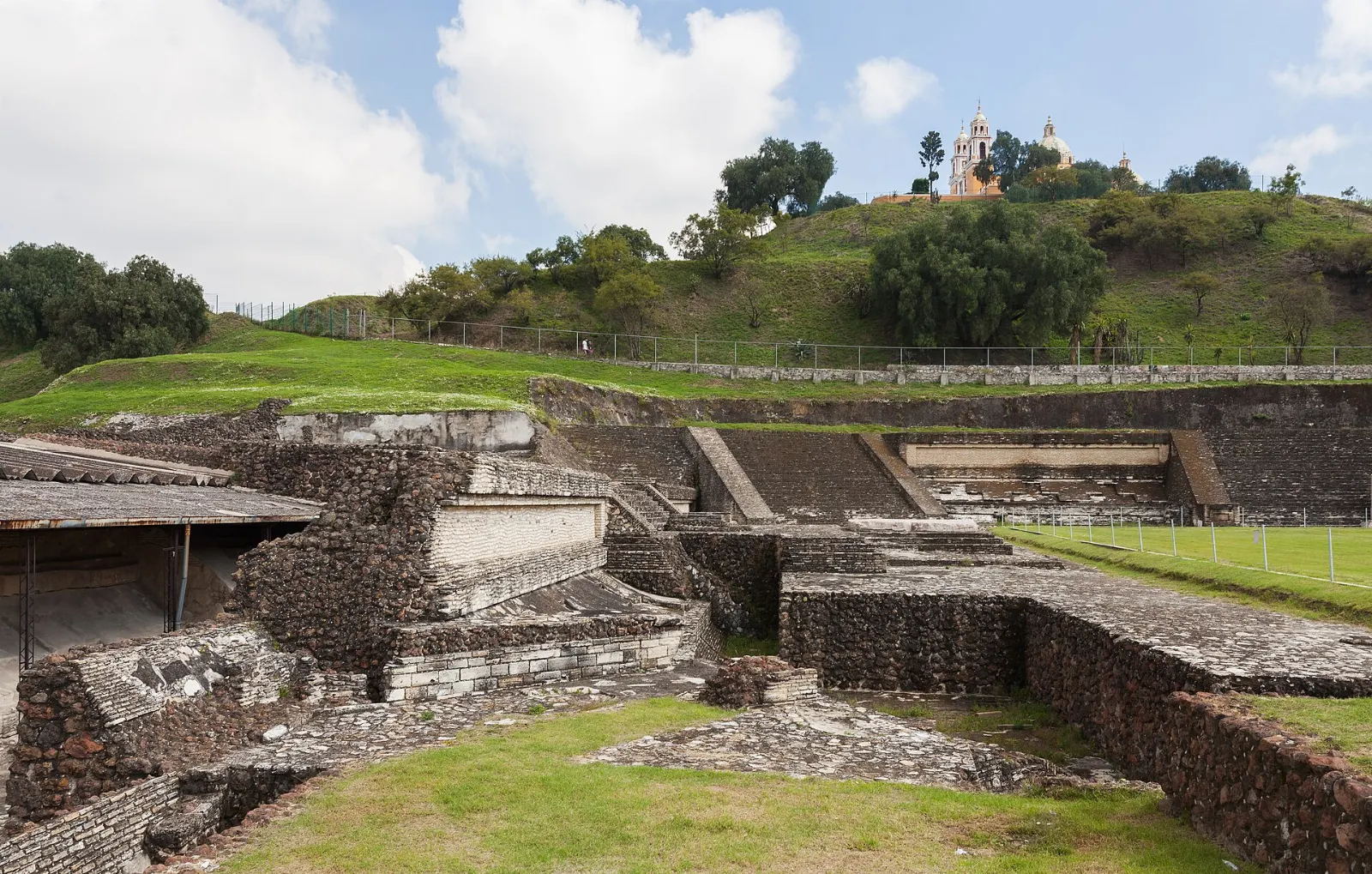
The Great Pyramid of Cholula with a church on top, Puebla

Cholula

Just 10 kilometres west, Cholula holds the Great Pyramid, the largest pyramid in the world by volume, with the church of Nuestra Señora de los Remedios on top.

The Great Pyramid of Cholula is the largest pyramid in the world by volume. Photo: Diego Delso, Wikimedia Commons, CC BY-SA 3.0
Richly decorated Baroque facade of Santa María Tonantzintla, Puebla

Santa María Tonantzintla and San Francisco Acatepec

These two village churches were decorated in the late 17th and early 18th centuries in an extremely lavish Baroque style, with Indigenous elements blended into the plasterwork.

Santa María Tonantzintla is known for a lavish Baroque interior with Indigenous touches. Photo: Pedro Hernandez, Wikimedia Commons, CC BY-SA 2.0

Atlixco

About 30 kilometres from Puebla, Atlixco is known for ornamental plants and cut flowers. Its Huey Atlixcáyotl festival, a modern take on an old Indigenous celebration, takes place on the last Sunday of September.

Food and local flavors

Puebla's cuisine is a reason to visit. Mole poblano, a rich sauce of chiles, spices and nuts, is the city's signature dish and is often served over turkey or chicken.

For a casual meal, try a cemita poblana, a sandwich on a sesame roll with avocado, meat, Oaxaca cheese and the herb pápalo. Rompope, an egg liqueur, is believed to have been created in Puebla's convents. Browse the stalls beside Cuexcomate for prepared food, and visit Mercado El Parián for sweets and souvenirs.

Popular dishes to try in Puebla

Mole poblano in Puebla
Mole poblano Mole poblano, a rich sauce of chiles, spices and nuts, is the city's signature dish and is often served over turkey or chicken.Photo: jay galvin, Wikimedia Commons, CC BY 2.0
Chiles en nogada in Puebla
Chiles en nogada Chiles en nogada, poblano chiles stuffed with fruited picadillo and covered in a walnut sauce and pomegranate seeds, are made in August and the first half of September.Photo: Petrvs III, Wikimedia Commons, CC BY-SA 4.0
Cemita poblana in Puebla
Cemita poblana For a casual meal, try a cemita poblana, a sandwich on a sesame roll with avocado, meat, Oaxaca cheese and the herb pápalo.Photo: Isaacvp, Wikimedia Commons, CC BY-SA 4.0
Rompope in Puebla
Rompope Rompope, an egg liqueur, is believed to have been created in Puebla's convents.Photo: AlejandroLinaresGarcia, Wikimedia Commons, CC BY-SA 4.0

Where to stay

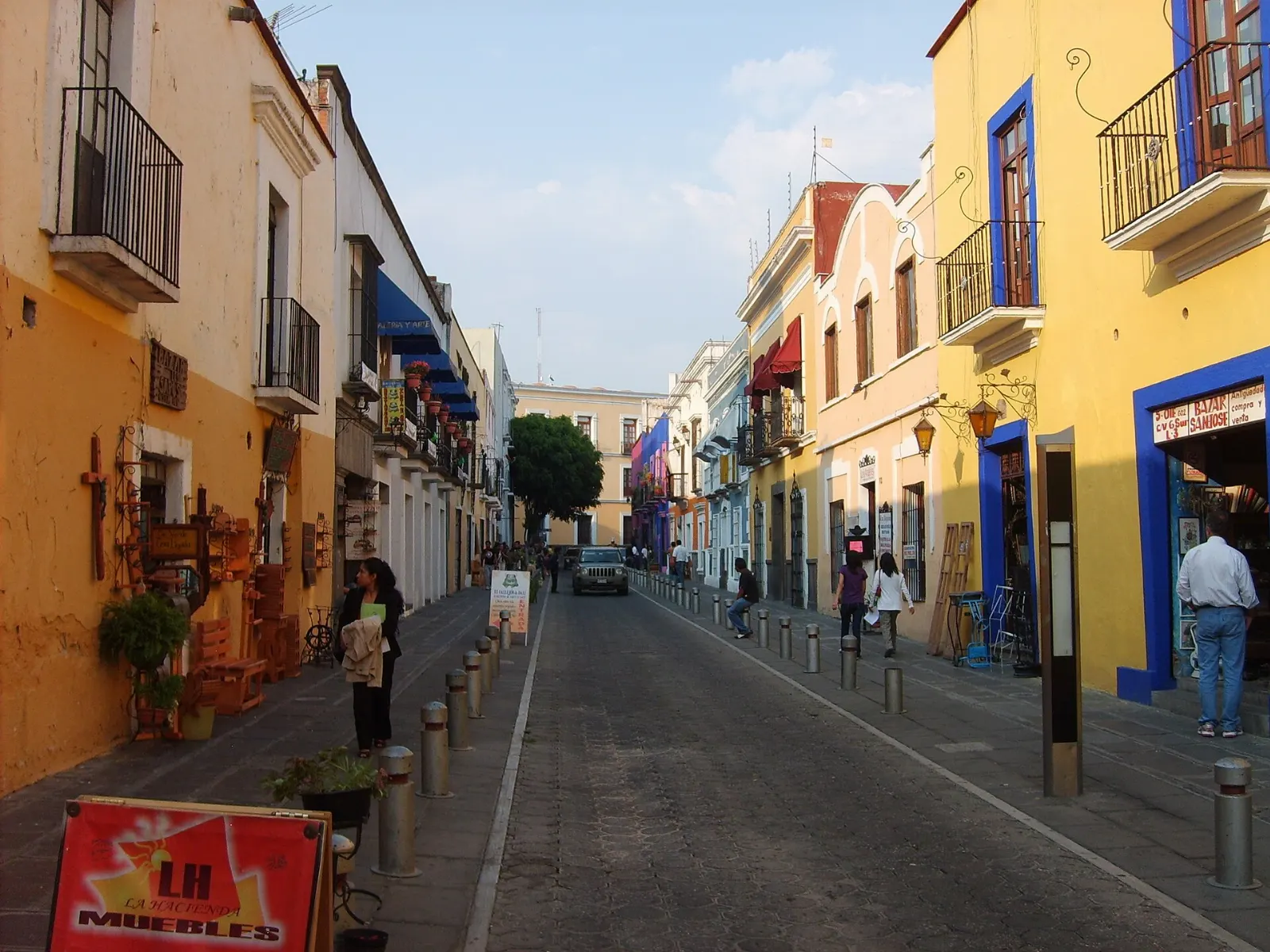
The Centro Histórico is the natural base for most visitors.

Los Sapos is a short walk from the Zócalo and suits travellers who enjoy galleries, antique shops and a creative atmosphere. It works well for weekend stays when the flea market opens, though weekend evenings can be busy.

Cholula, west of the city, suits those who prefer a university-town feel, nightlife and quick access to the pyramid. San Andrés Cholula is more residential, and San Pedro Cholula has the main plaza.

Where to stay in Puebla

Centro Histórico, Puebla
Centro Histórico Where to stayThe Centro Histórico is the natural base for most visitors.Photo: Luis Alvaz, Wikimedia Commons, CC BY-SA 4.0
Los Sapos, Puebla
Los Sapos Los Sapos is a short walk from the Zócalo and suits travellers who enjoy galleries, antique shops and a creative atmosphere.Photo: MX, Wikimedia Commons, CC BY-SA 4.0
Cholula, Puebla
Cholula Cholula, west of the city, suits those who prefer a university-town feel, nightlife and quick access to the pyramid.Photo: Diego Delso, Wikimedia Commons, CC BY-SA 3.0
Puebla old town, Puebla
Puebla old town One of the best areas to base yourself in Puebla.Photo: Ovedc, Wikimedia Commons, CC BY-SA 4.0

Best time to visit

Puebla sits at a comfortable altitude, with cool nights in winter that can drop to around 5 degrees Celsius. Summer brings afternoon showers, while spring and autumn tend to be pleasant for walking.

May is the month for the Battle of Puebla commemorations, with a carnival near the forts. Early September brings the festival of the Virgin of the Remedies in Cholula, and the last Sunday of September is the Huey Atlixcáyotl in Atlixco.

Getting there and getting around

Buses are the simplest way to arrive from Mexico City. Services run roughly every half hour from the TAPO terminal and from Benito Juárez airport to Puebla's main CAPU terminal, with a journey of about two hours depending on traffic.

The historic center is walkable, and the heart of it is only a few blocks from the Zócalo. City buses run from early morning to evening, and Uber, Cabify and DiDi operate in Puebla. Taxis usually do not have meters, so agree on the fare before you get in.

A suggested itinerary

First day

Explore the Zócalo and cathedral, then visit the Capilla del Rosario and the Biblioteca Palafoxiana.

Second day

Climb to the forts and walk down through the mural district. After lunch visit Cuexcomate and finish with a cemita poblana or mole poblano for dinner.

Third day

Go to Cholula for the pyramid and the church on top, then continue to Tonantzintla and Acatepec.

Practical tips

  • Start sightseeing early, because the best churches and chapels fill up by late morning.
  • Wear comfortable shoes for the cobbled streets of the historic center.
  • Dress modestly and keep voices low inside churches and chapels.
  • Check museum days and schedules before you go, as many close on one weekday.
  • Try chiles en nogada between August and mid-September, when they are made fresh.
  • Buy Talavera from workshops or El Parián and ask which pieces are authentic.
PueblaWISERMAP PLACEPuebla: photos, reviews & things to doSee traveler photos and reviews, or share your own →

More places to visit

All travel guides →