Madeira Portugal Levada Walks and Cabo Girão Cliffs
Madeira rises steeply out of the Atlantic Ocean far off the coast of Africa, a volcanic island of sheer cliffs, forested ravines and mountain peaks that often float above the clouds. Its mild climate earned it the nickname of the island of eternal spring, and its slopes are covered in terraces of bananas and vines, flowering gardens and the ancient laurel forest.
By WiserMap TravelUpdated October 20267 places11 min read
Madeira is best known for walking. Hundreds of kilometers of levadas, narrow irrigation channels with paths beside them, wind across the island, alongside mountain trails that link its highest summits.
At a glance Madeira
Best timeApril to October for the driest weather; mild enough to visit all year.
How longFive days to a week to combine Funchal with walks and a drive around the island.
Getting thereFlights land at Madeira Airport near Santa Cruz, about half an hour from Funchal.
Ad
Why visit Madeira
Portuguese navigators settled Madeira in the fifteenth century, and the island became wealthy first from sugar and then from its famous fortified wine. To water crops on the dry southern slopes, settlers built the levadas, carrying water from the rainy north across cliffs and through tunnels.
Much of the island's interior is protected as a natural park, and the Laurisilva of Madeira, the largest surviving area of the laurel forest that once covered much of southern Europe, is a UNESCO World Heritage Site. Yet you do not need to be a serious hiker to enjoy it.
Funchal and the south coast
Most visitors base themselves in or near Funchal, which makes an easy starting point for the island's south coast.
Funchal old town and the cathedral
The Zona Velha, Funchal's old quarter, is a grid of cobbled streets near the waterfront. Along Rua de Santa Maria, local artists have painted the doors of houses and shops, turning the lane into an open-air gallery, and the area fills with restaurants in the evening.
Mercado dos Lavradores
Funchal's main market occupies an Art Deco building decorated with tile panels.
The Mercado dos Lavradores has been Funchal's main market for fruit, flowers and fish since the 1940s. Photo: H. Zell, Wikimedia Commons, CC BY-SA 3.0
Monte, its gardens and the toboggans
A cable car climbs from the Funchal seafront to the hillside parish of Monte. Here the Monte Palace Tropical Garden spreads over terraced slopes with lakes, koi, tile panels, Asian-style gateways and plants from around the world, and the white Church of Our Lady of Monte overlooks the bay.
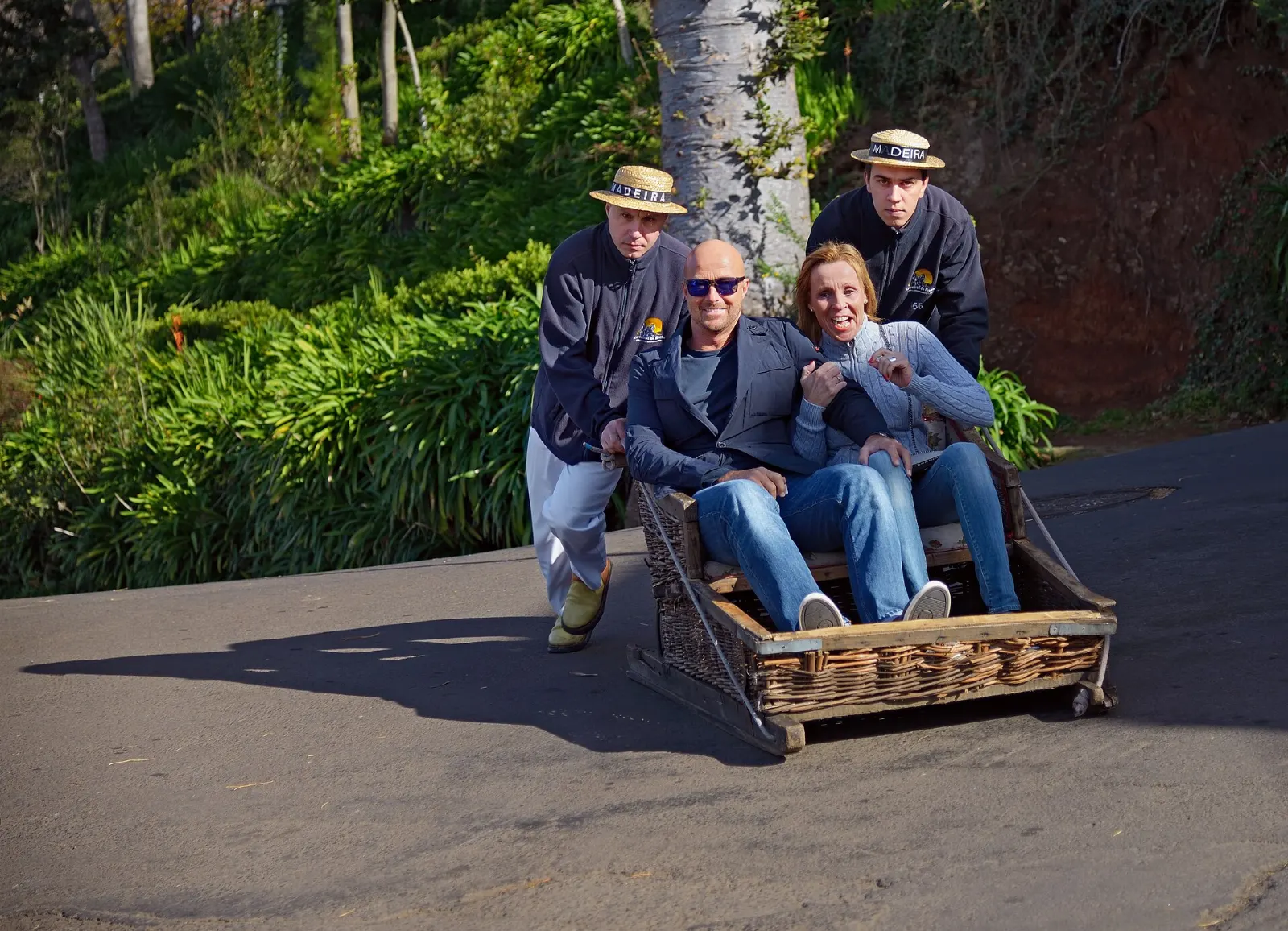
The toboggan run dates back to the nineteenth century, when it served as a fast way for residents to travel downhill to the city.
The Monte Palace Tropical Garden spreads across a hillside above Funchal. Photo: H. Zell, Wikimedia Commons, CC BY-SA 3.0
Wicker toboggans steered by carreiros have carried passengers down from Monte since the nineteenth century.Photo: Ввласенко, Wikimedia Commons, CC BY-SA 3.0
Cabo Girão and Câmara de Lobos
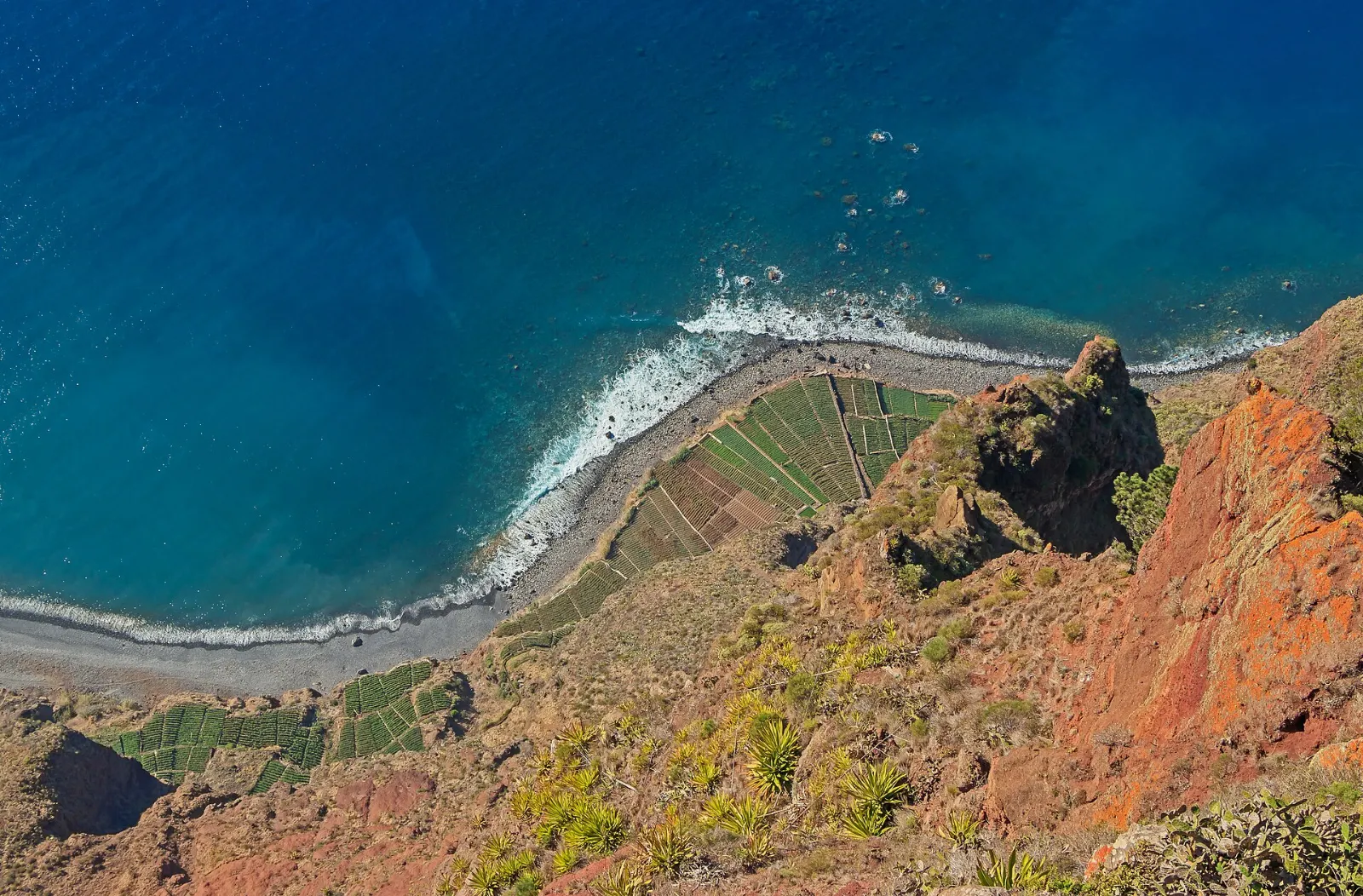
West of Funchal, Cabo Girão is one of the highest sea cliffs in Europe, and a glass-floored skywalk lets you look straight down hundreds of meters to tiny fields and the ocean below. Allow forty-five minutes, and arrive early to avoid tour coaches.
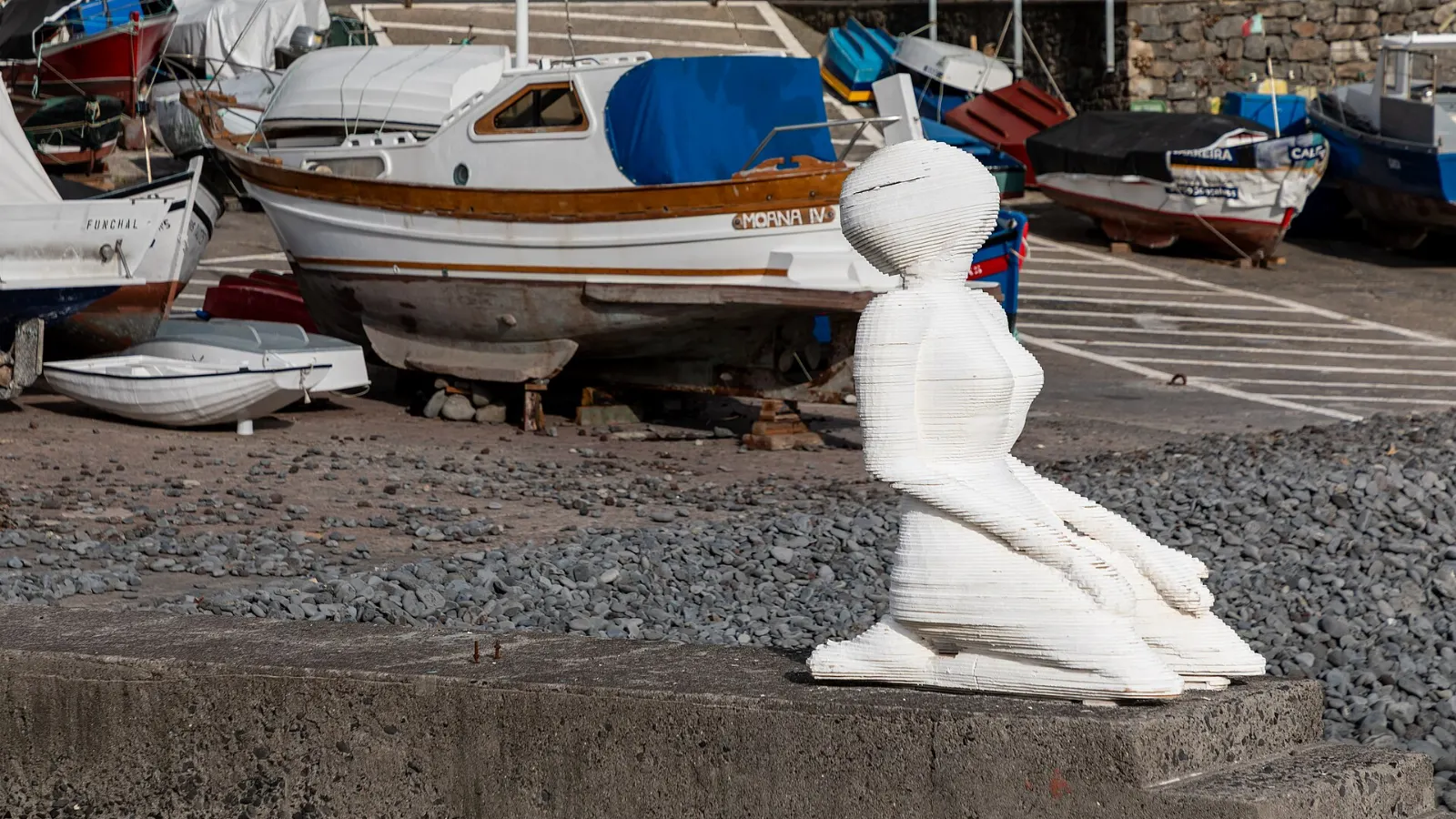
The harbor at Câmara de Lobos is especially pretty in the late afternoon, when fishermen tend their boats and the light warms the cliffs.
The skywalk at Cabo Girão sits on one of the highest sea cliffs in Europe. Photo: H. Zell, Wikimedia Commons, CC BY-SA 3.0
Câmara de Lobos is a fishing town west of Funchal known for its colorful boats.Photo: Dietmar Rabich, Wikimedia Commons, CC BY-SA 4.0
Ad
The mountains and the levada walks
Madeira's mountain heart is only a short drive from Funchal, but conditions there can be very different from the coast: colder, windier and often in or above cloud.
Pico do Arieiro and Pico Ruivo
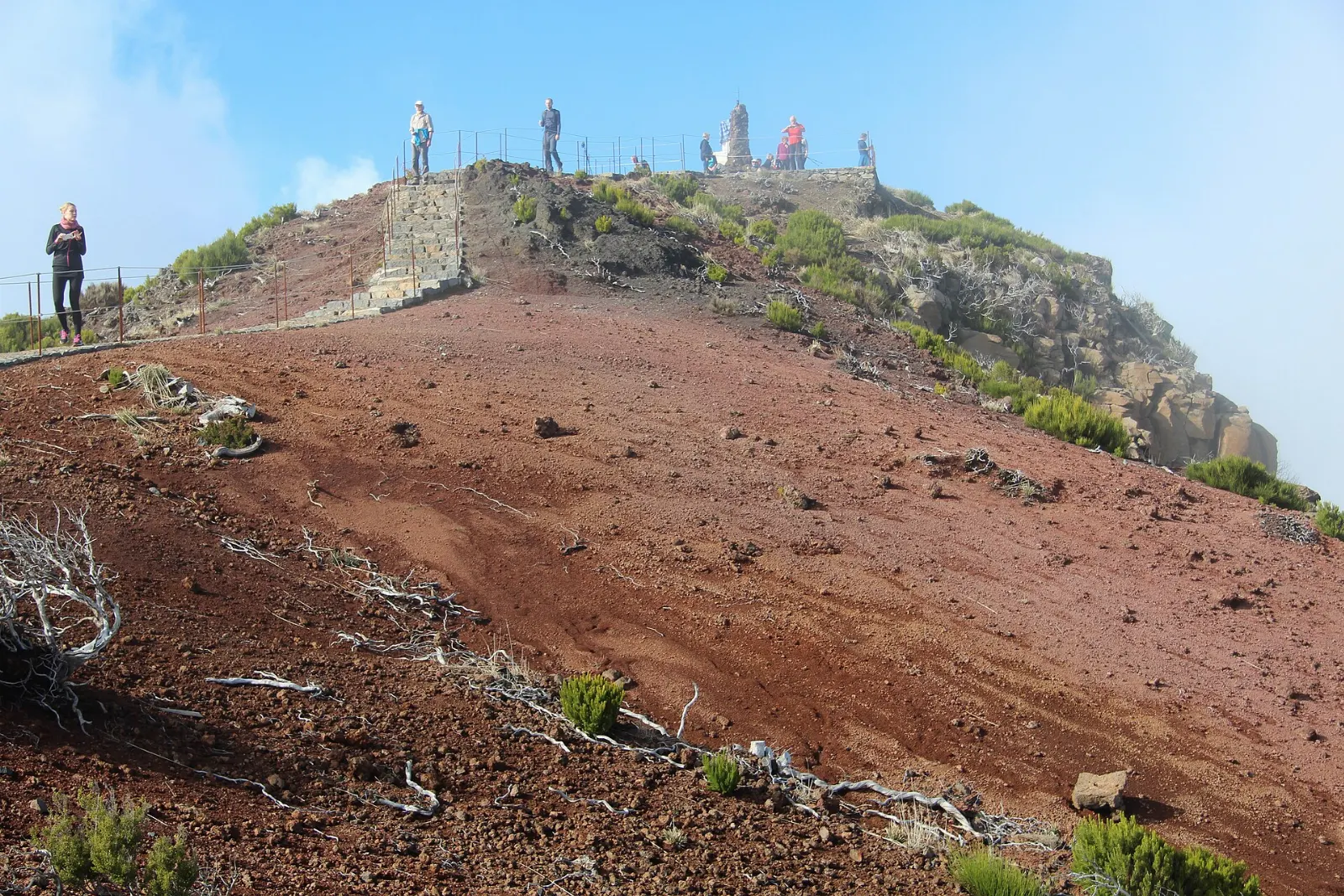
A road climbs to the summit of Pico do Arieiro, where the view across knife-edge ridges to the surrounding peaks is unforgettable, especially at sunrise above a sea of clouds.
Pico Ruivo is the highest point on the island of Madeira. Photo: GerritR, Wikimedia Commons, CC BY-SA 4.0
Levada das 25 Fontes and Rabaçal
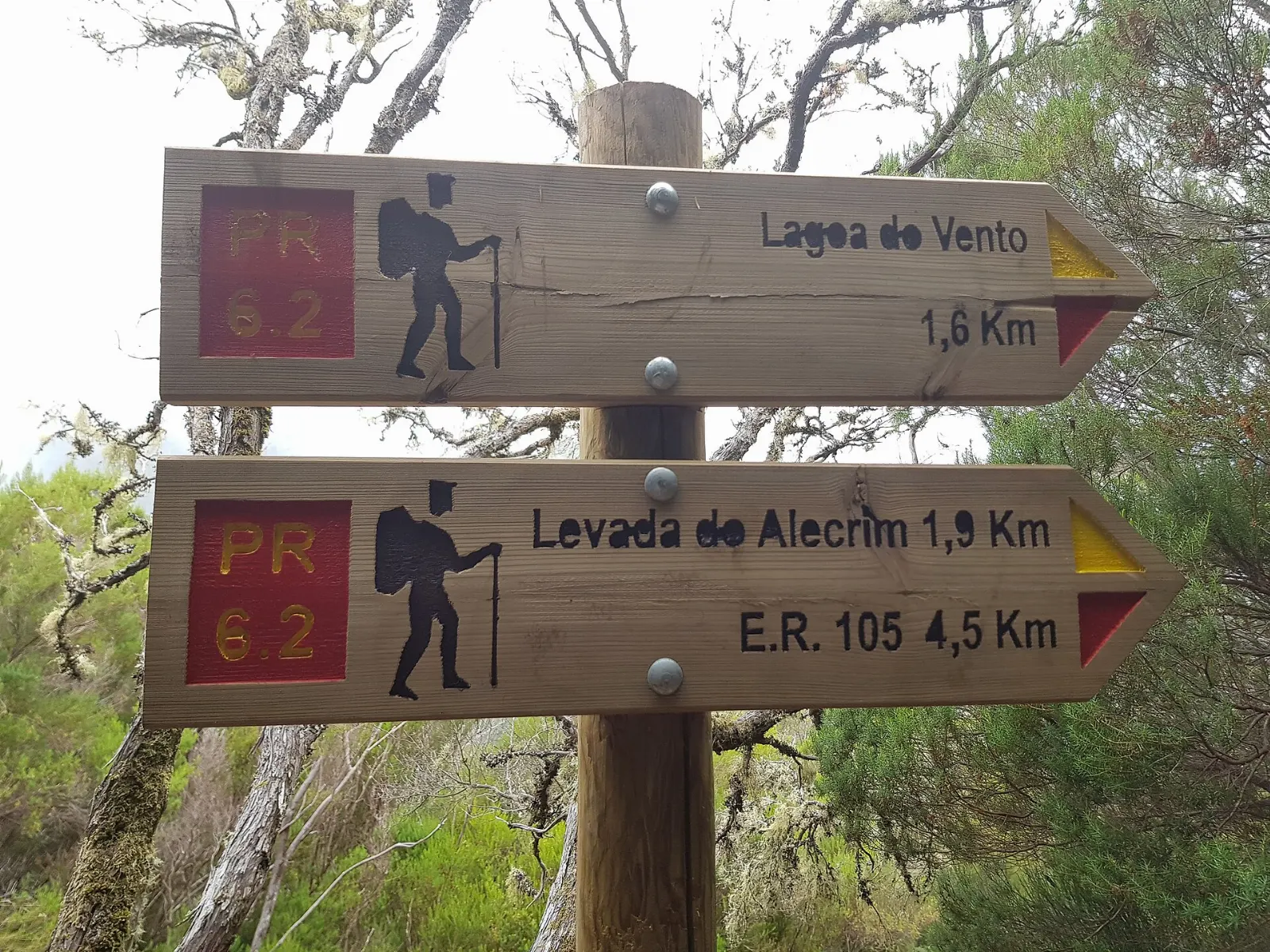
In the western highlands, the Rabaçal area is the starting point for one of the island's most popular walks, which follows a levada through laurel forest to a pool fed by many thin waterfalls. A side route leads to the Risco waterfall.
The Levada das 25 Fontes walk ends at a pool fed by many small cascades. Photo: Rockysantos, Wikimedia Commons, CC0
Levada do Caldeirão Verde
Starting from the forest park at Queimadas near Santana, this walk follows a levada through dense laurel forest, past tunnels and drop-offs, to a tall waterfall in a green amphitheater of rock. Allow five to six hours round trip.
Fanal
On a high plateau in the northwest, the Fanal forest is famous for its gnarled, ancient laurel trees, which take on an eerie, fairy-tale character when fog drifts through. It is a short walk from the road, ideal for photographers.
The north coast and the eastern tip
Porto Moniz and Seixal
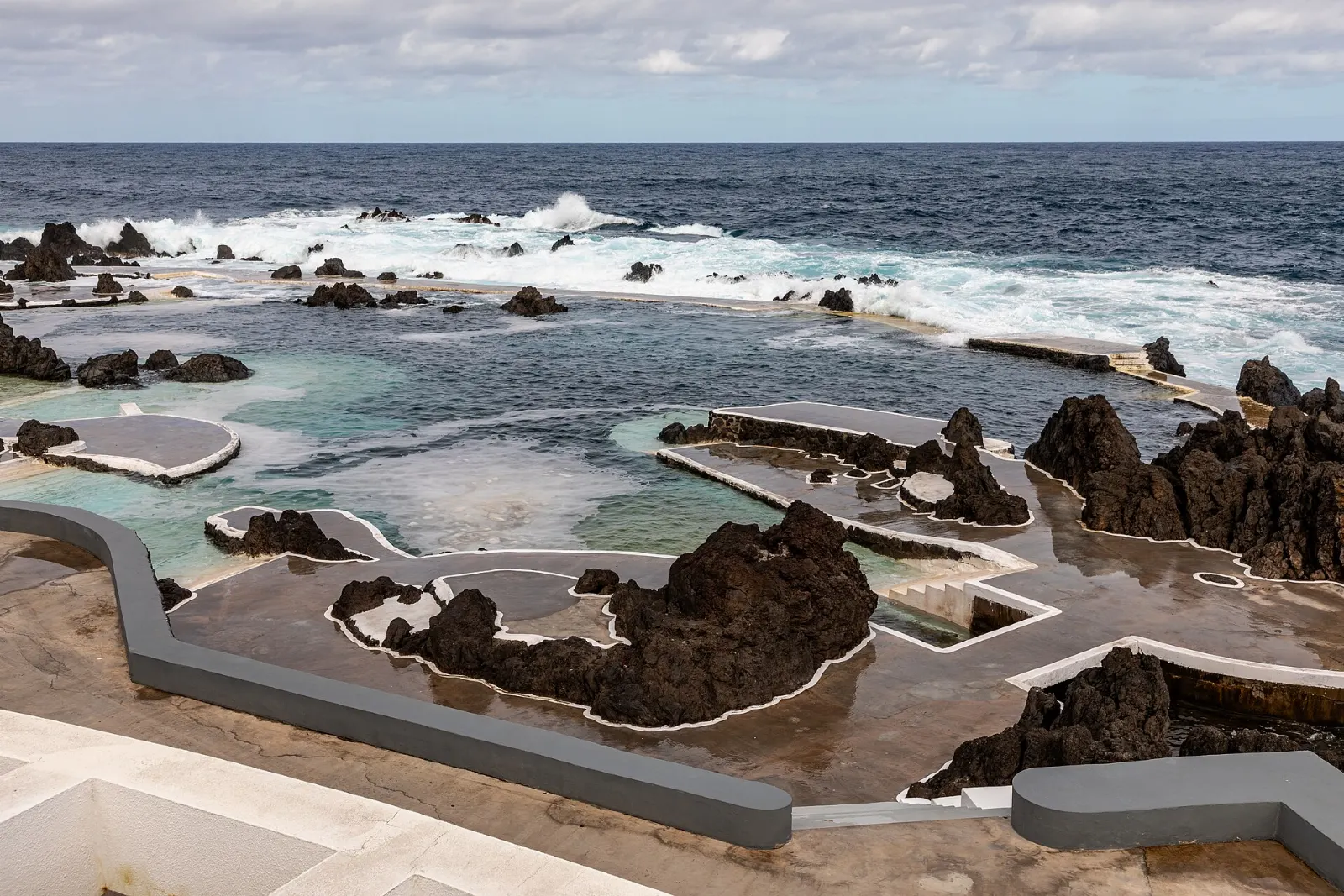
At the island's northwestern corner, Porto Moniz is known for natural swimming pools formed among black volcanic rock, where seawater is refreshed by the waves crashing over the barrier.
The natural pools of Porto Moniz fill with seawater among volcanic rock formations. Photo: Dietmar Rabich, Wikimedia Commons, CC BY-SA 4.0
Santana
On the green north coast, the town of Santana is known for its traditional triangular houses with steep thatched roofs and brightly painted fronts. A few are preserved in the center and open to visitors.
Ponta de São Lourenço
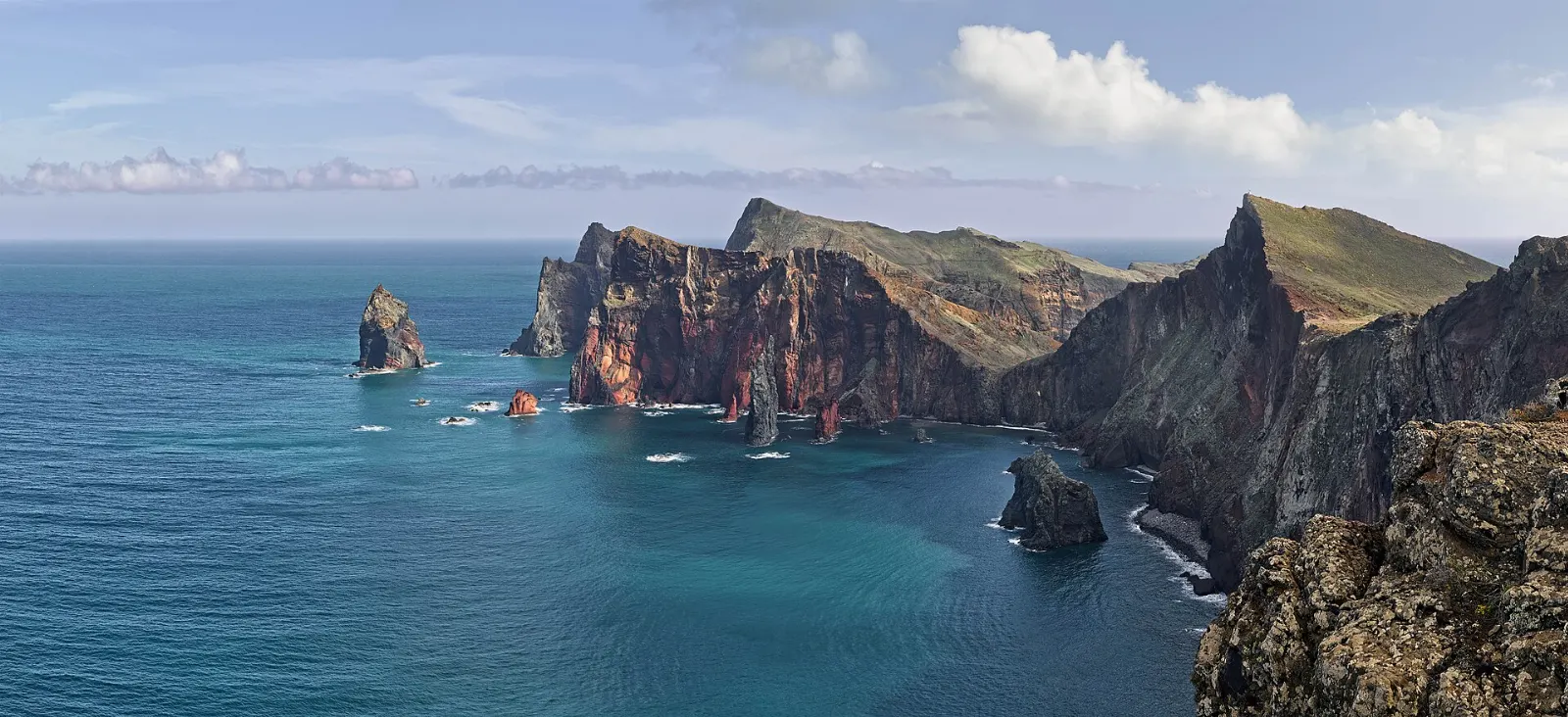
Madeira's eastern tip is a dry, windswept peninsula of red, ochre and black volcanic rock, utterly different from the lush interior.
If you have extra time, take the ferry from Funchal to the neighboring island of Porto Santo, which has a long golden sandy beach that Madeira itself lacks.
Ponta de São Lourenço is a dry, windswept peninsula at Madeira's eastern tip. Photo: Richard Bartz, Wikimedia Commons, CC BY-SA 3.0
Ad
Food and local flavors
Madeira's cooking draws on both the sea and the mountains. The classic dish is espetada, chunks of beef rubbed with garlic, salt and bay leaf and grilled on skewers, sometimes traditionally made with bay laurel branches and hung from a hook at the table.
Bolo do caco, a round flatbread cooked on a stone slab and spread with garlic butter, accompanies almost everything. Milho frito, cubes of fried cornmeal, is a common side.
To drink, poncha is a potent mix of sugarcane spirit, honey and lemon or other fruit juice.
Popular dishes to try in Madeira
Espetada The classic dish is espetada, chunks of beef rubbed with garlic, salt and bay leaf and grilled on skewers, sometimes traditionally made with bay laurel branches and hung from a…Photo: Adriao, Wikimedia Commons, CC BY-SA 3.0Bolo do caco Bolo do caco, a round flatbread cooked on a stone slab and spread with garlic butter, accompanies almost everything.Photo: Ana Cake Design, Wikimedia Commons, CC BY-SA 4.0Madeira wine Madeira wine, fortified and aged in a way that makes it remarkably long-lived, ranges from dry Sercial and Verdelho to rich Bual and Malmsey; several historic wine lodges in…Photo: Dietmar Rabich, Wikimedia Commons, CC BY-SA 4.0
Where to stay
Funchal is the most practical base for most travelers, with the widest choice of lodging, restaurants and bus connections.
Calheta and Ponta do Sol, on the sunny southwest coast, are quieter and suit couples and remote workers. Santana and the north coast are best for walkers who want to be close to the trails and do not mind cloudier weather.
Where to stay in Madeira
Funchal Old Town One of the best areas to base yourself in Madeira.Photo: PESP/ Wikimedia, Wikimedia Commons, CC BY-SA 4.0Ponta do Sol Calheta and Ponta do Sol, on the sunny southwest coast, are quieter and suit couples and remote workers.Photo: Paul Mannix, Wikimedia Commons, CC BY 2.0Caniço Machico and Caniço, near the airport, are convenient for the east and for short stays.Photo: Asurnipal, Wikimedia Commons, CC BY-SA 4.0Calheta Madeira One of the best areas to base yourself in Madeira.Photo: Ximonic (Simo Räsänen), Wikimedia Commons, CC BY-SA 4.0
Ad
Best time to visit
Madeira's climate is mild year-round, with coastal temperatures rarely very hot or cold. Summer, from June to September, is the driest and warmest season, ideal for swimming and mountain walks, though it is also busier.
Festivals add color. The Flower Festival in spring fills Funchal with floral carpets and parades, Carnival brings costumed processions, and the Wine Festival around late summer celebrates the grape harvest.
Getting there and getting around
Cristiano Ronaldo Madeira International Airport lies near Santa Cruz on the east coast, about half an hour from Funchal by car, shuttle bus or taxi. Its runway is partly built on pillars over the sea, and strong winds sometimes delay or divert flights, so build flexibility into tight connections.
Renting a car gives you the most freedom, and a network of expressways and tunnels makes crossing the island far quicker than it once was.
Ad
A suggested itinerary
First day
Explore Funchal: the Mercado dos Lavradores in the morning, the cathedral and the painted doors of the Zona Velha, then the cable car to Monte, the Monte Palace Tropical Garden and a toboggan ride down.
Second day
Drive up to Pico do Arieiro for sunrise, then walk to Pico Ruivo from Achada do Teixeira.
Third day
Head west via Cabo Girão to Rabaçal for the Levada das 25 Fontes walk, then drive through the Fanal forest to Porto Moniz for a swim and Seixal for sunset.
Fourth day
Hike Ponta de São Lourenço in the morning, then relax in Machico or Funchal, finishing with dinner in Câmara de Lobos.
Fifth day
Walk the Levada do Caldeirão Verde, join a whale and dolphin watching trip from Funchal, or take the ferry to Porto Santo for a beach day.
Practical tips
Check trail status and pay any required walking fees on the regional government's official website before each hike.
Pack layers and a waterproof jacket; mountain weather can change from sun to cold mist within minutes.
Carry a headlamp for levada tunnels and wear boots with good grip on wet paths.
Start popular walks early to avoid crowds and to find parking at trailheads.
Allow extra time for driving; distances look short but mountain roads are slow.
Leave flexibility around flights, since wind can disrupt arrivals and departures.