The town itself has grown into a relaxed, friendly base with riverside cafes, markets, museums and excellent Khmer food, and the great Tonle Sap lake lies just to the south. This guide covers the temples and places that deserve your time, plus advice on passes, timing, transport, food and where to stay.
At a glance Siem Reap and Angkor
Best timeNovember to February for cooler, dry weather; the green season brings fewer crowds.
How longThree full days with a multi-day Angkor Pass covers the main temples at a comfortable pace.
Getting thereFly into Siem Reap Angkor International Airport, about an hour and a quarter east of town.
Ad
Why visit Siem Reap and Angkor
At its height the Khmer Empire ruled much of mainland Southeast Asia, and Angkor was its royal and religious heart, supported by an elaborate network of reservoirs and canals. The stone temples you see today were built to honor Hindu gods and later the Buddha, and the shift between the two faiths is written into the carvings.
What makes Angkor so rewarding is the variety. Some temples are grand and restored, others half swallowed by the jungle, and a few lie far out in the countryside among rice fields and villages.
Angkor Wat
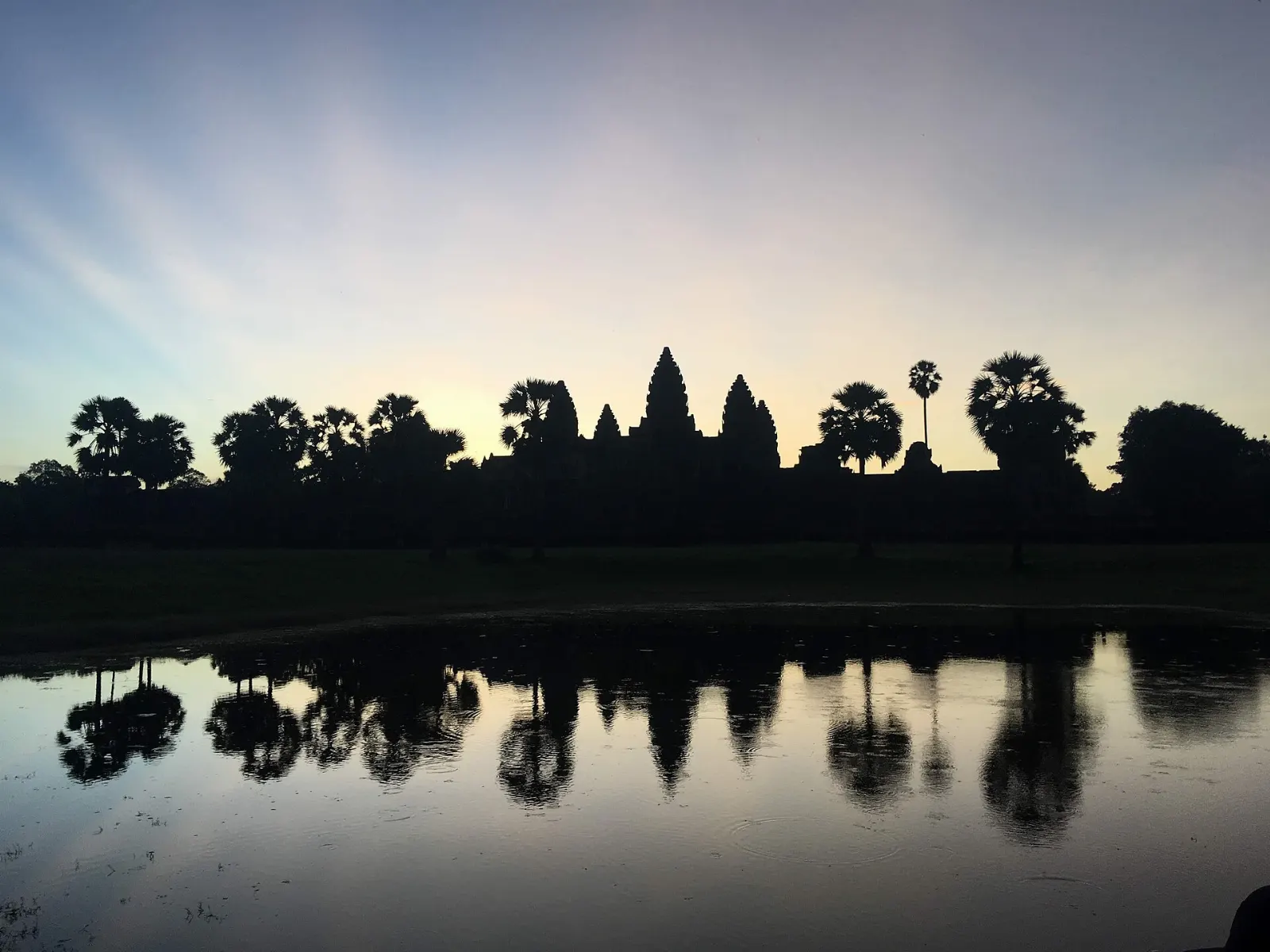
The temple and its sunrise
Angkor Wat was built in the first half of the twelfth century under King Suryavarman II and dedicated to the Hindu god Vishnu. Surrounded by a wide moat and approached along a long stone causeway, the temple rises in tiers to five central towers shaped like lotus buds, representing Mount Meru, home of the gods.
The galleries and the Bakan
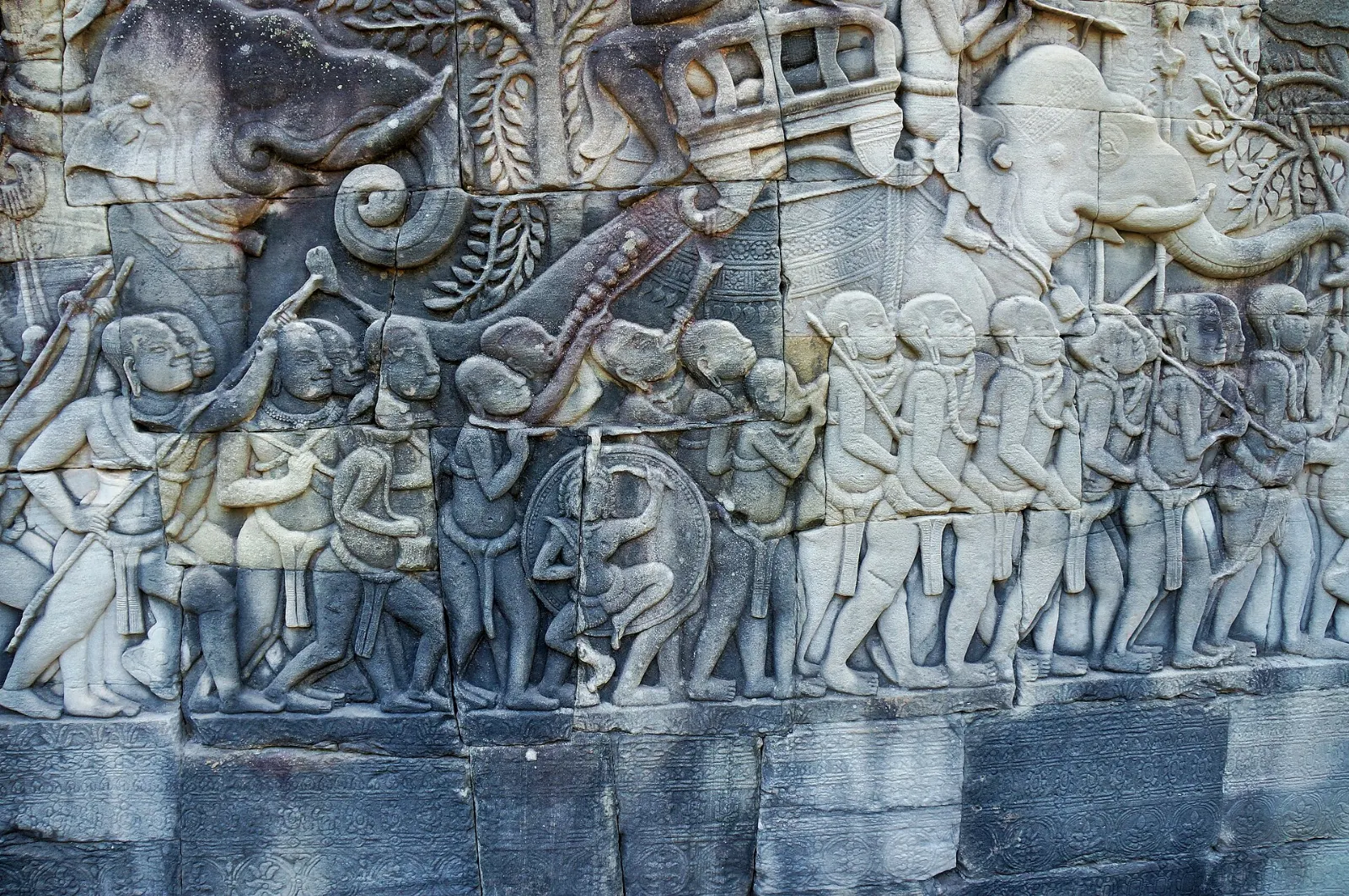
The outer galleries of Angkor Wat are lined with bas-reliefs that run for hundreds of meters, depicting epic battles from the Mahabharata and Ramayana, a royal procession of Suryavarman II, scenes of heaven and hell and the famous Churning of the Ocean of Milk, in which gods and demons pull on a giant serpent to create the elixir of immortality.
The galleries of Angkor Wat hold some of the longest continuous bas-reliefs anywhere. Photo: Pierre André Leclercq, Wikimedia Commons, CC BY-SA 4.0
Ad
Angkor Thom and the Bayon
Angkor Thom was the last great capital of the Khmer Empire, built mainly under King Jayavarman VII in the late twelfth and early thirteenth centuries. Its walls enclose a square about three kilometers on each side, with five monumental gates and, at its center, the Bayon.
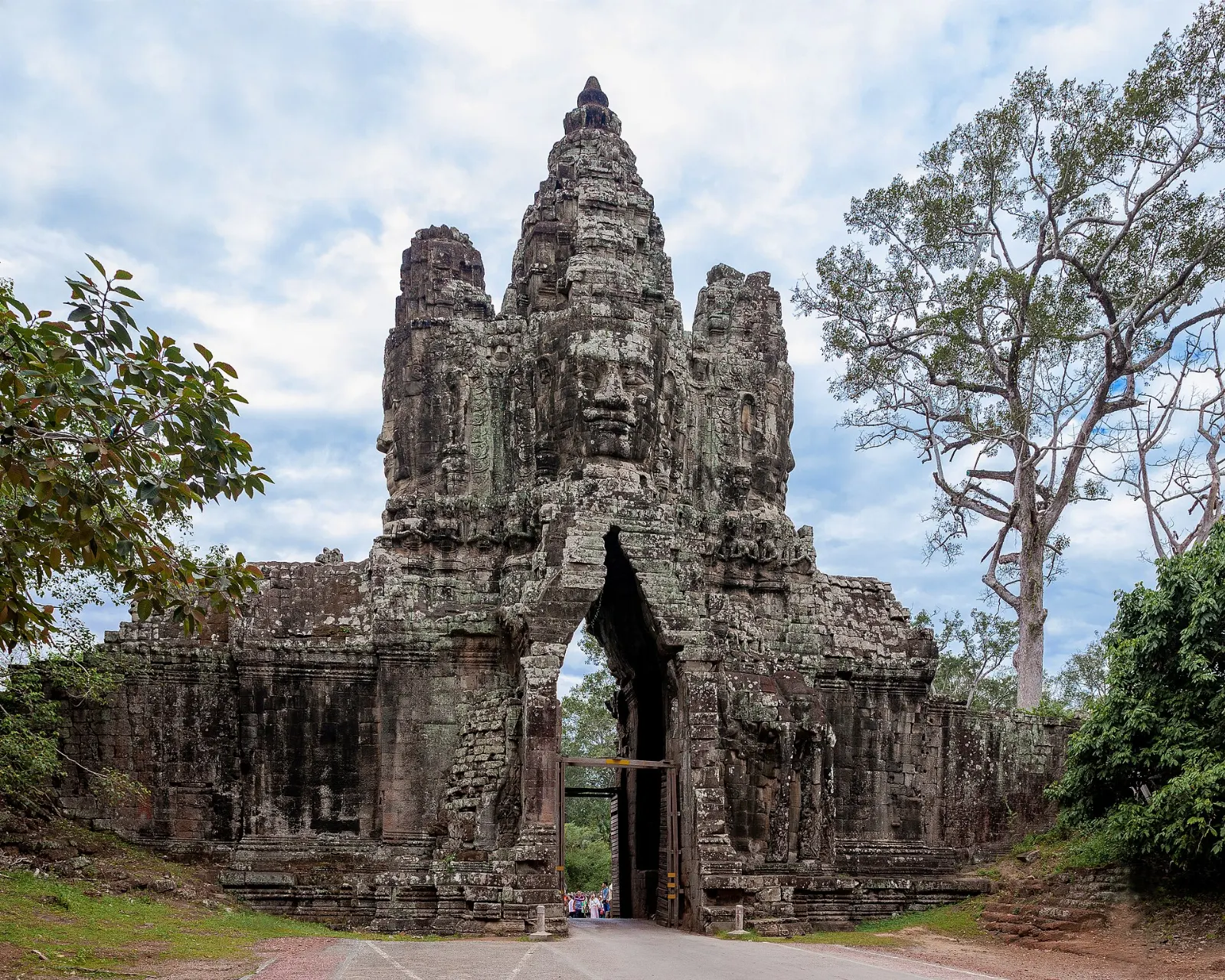
South Gate
Most visitors enter through the South Gate, crossing a causeway over the moat lined on one side with gods and on the other with demons, each row holding the body of a giant serpent. The gate tower above is carved with large faces looking out in four directions.
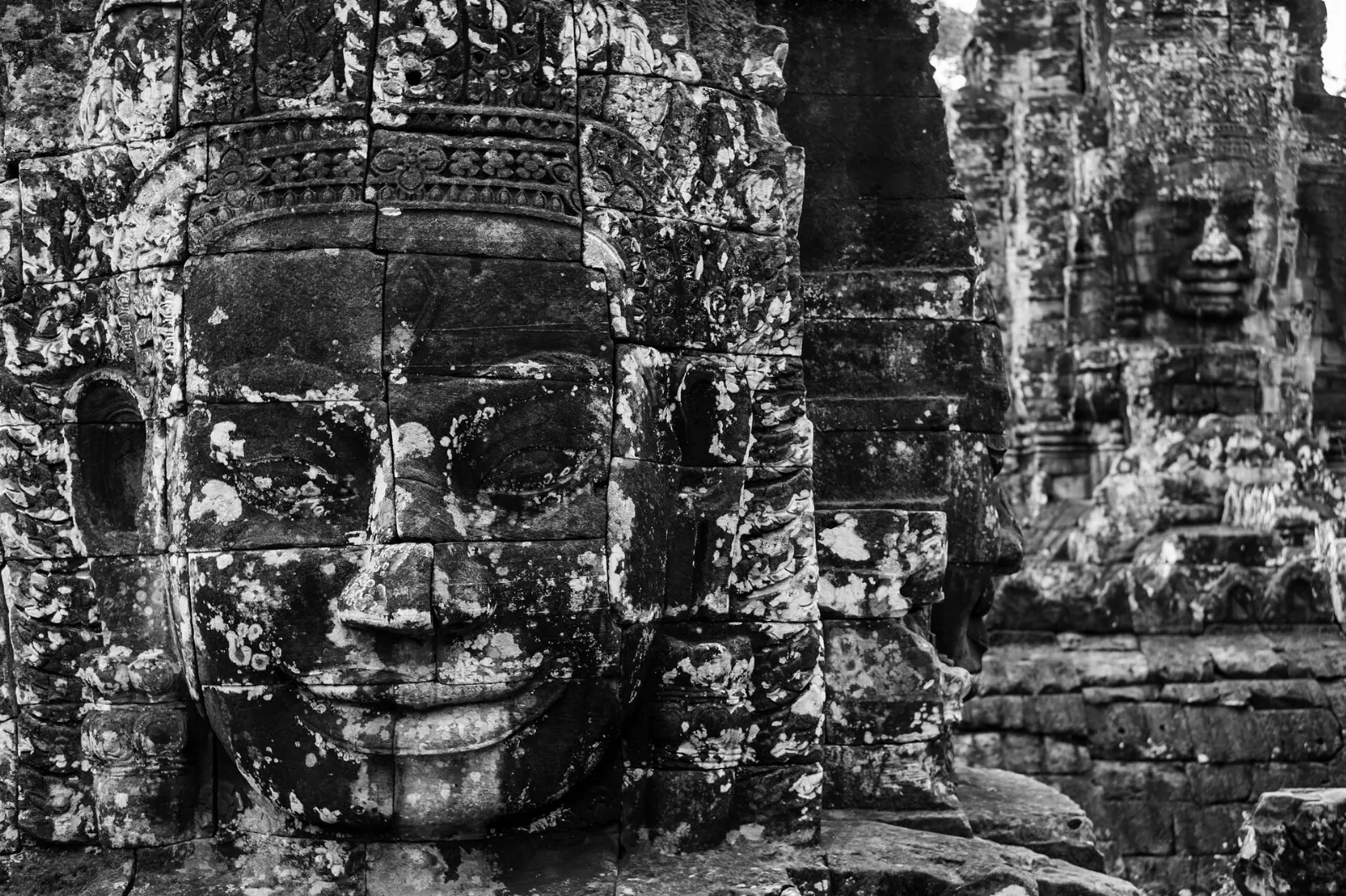
The Bayon is one of the most memorable temples at Angkor, a crowded cluster of towers carved with large, calm faces, many thought to represent Jayavarman VII as a bodhisattva or Buddhist deity.
The towers of the Bayon are carved with large serene faces on several sides. Photo: Pedro Figueiredo, Wikimedia Commons, CC BY-SA 3.0
Baphuon and the royal terraces
Just north of the Bayon, the Baphuon is an eleventh century temple mountain whose western side was later built into a huge reclining Buddha. It was taken apart for restoration and painstakingly reassembled over decades.
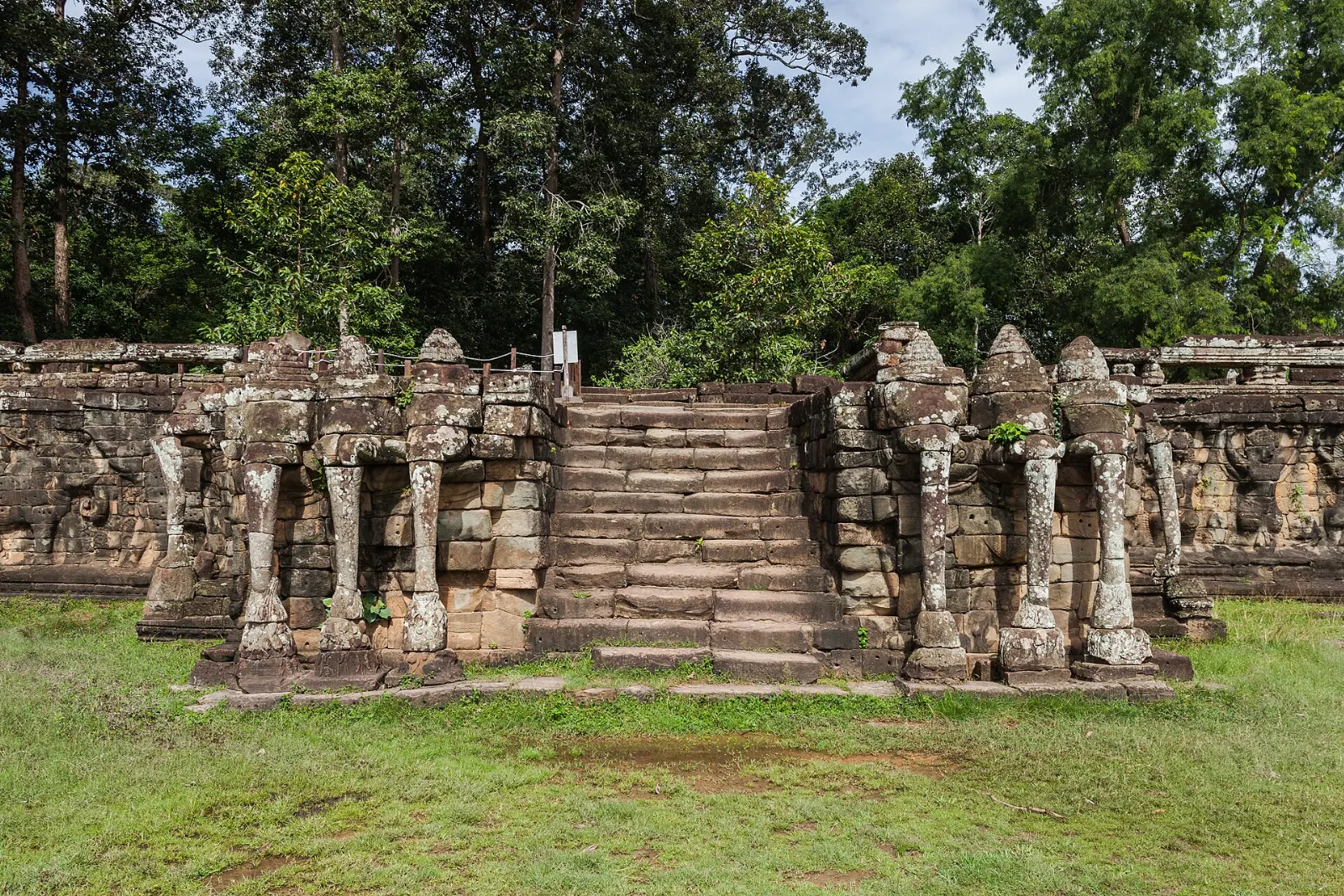
The Terrace of the Elephants was a royal viewing platform in the heart of Angkor Thom. Photo: Diego Delso, Wikimedia Commons, CC BY-SA 3.0
Jungle temples and the outer circuit
Ta Prohm
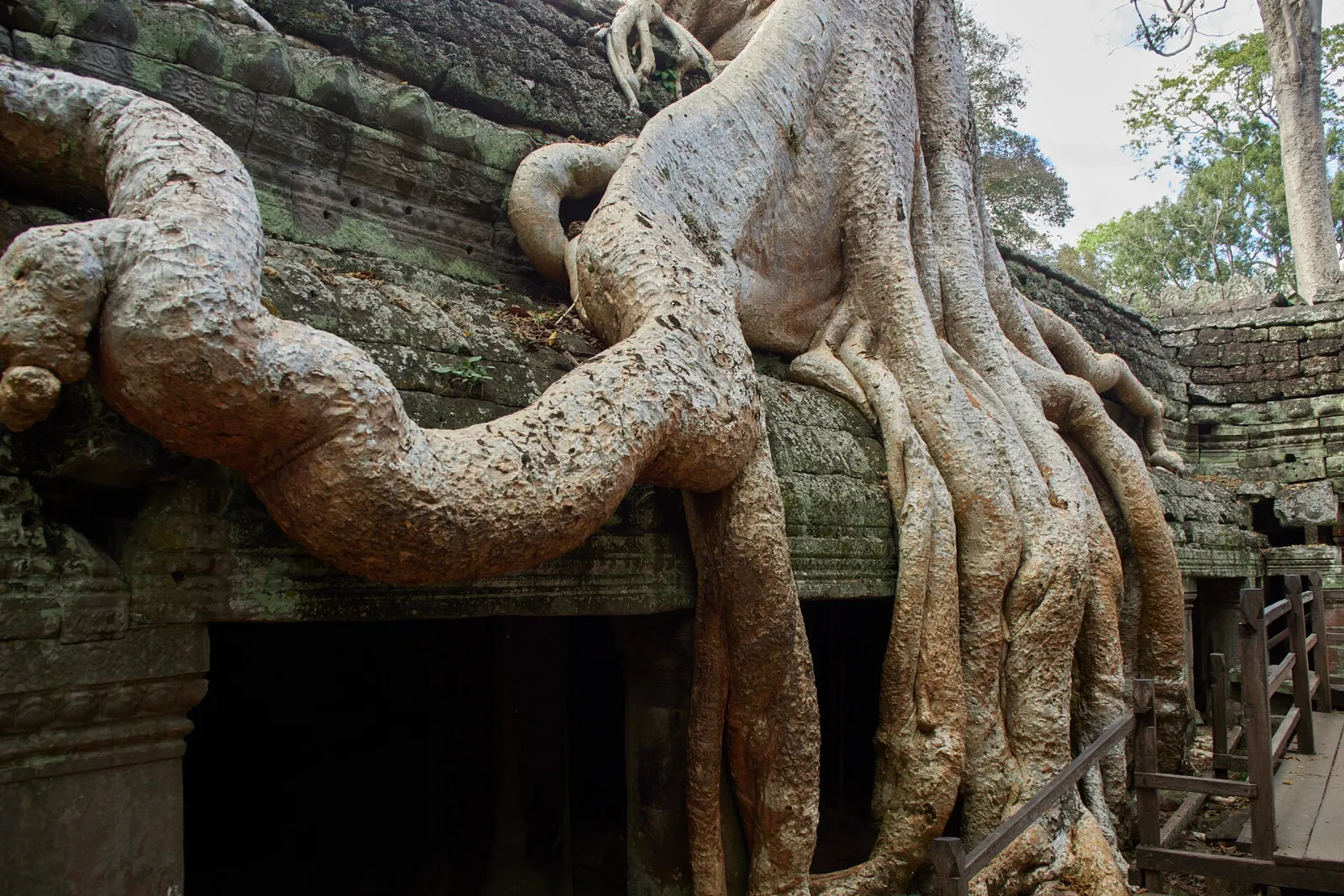
Ta Prohm was founded by Jayavarman VII in the late twelfth century as a Buddhist monastery, and it has been deliberately left partly in the grip of the forest. Huge silk-cotton and strangler fig trees rise from the walls, their roots pouring over doorways and courtyards, and many visitors recognize it from the film Lara Croft: Tomb Raider. Wooden walkways guide you through the most delicate areas.
At Ta Prohm, silk-cotton and strangler fig trees have grown through the temple ruins. Photo: lumoplank, Wikimedia Commons, CC0
Preah Khan and Neak Pean
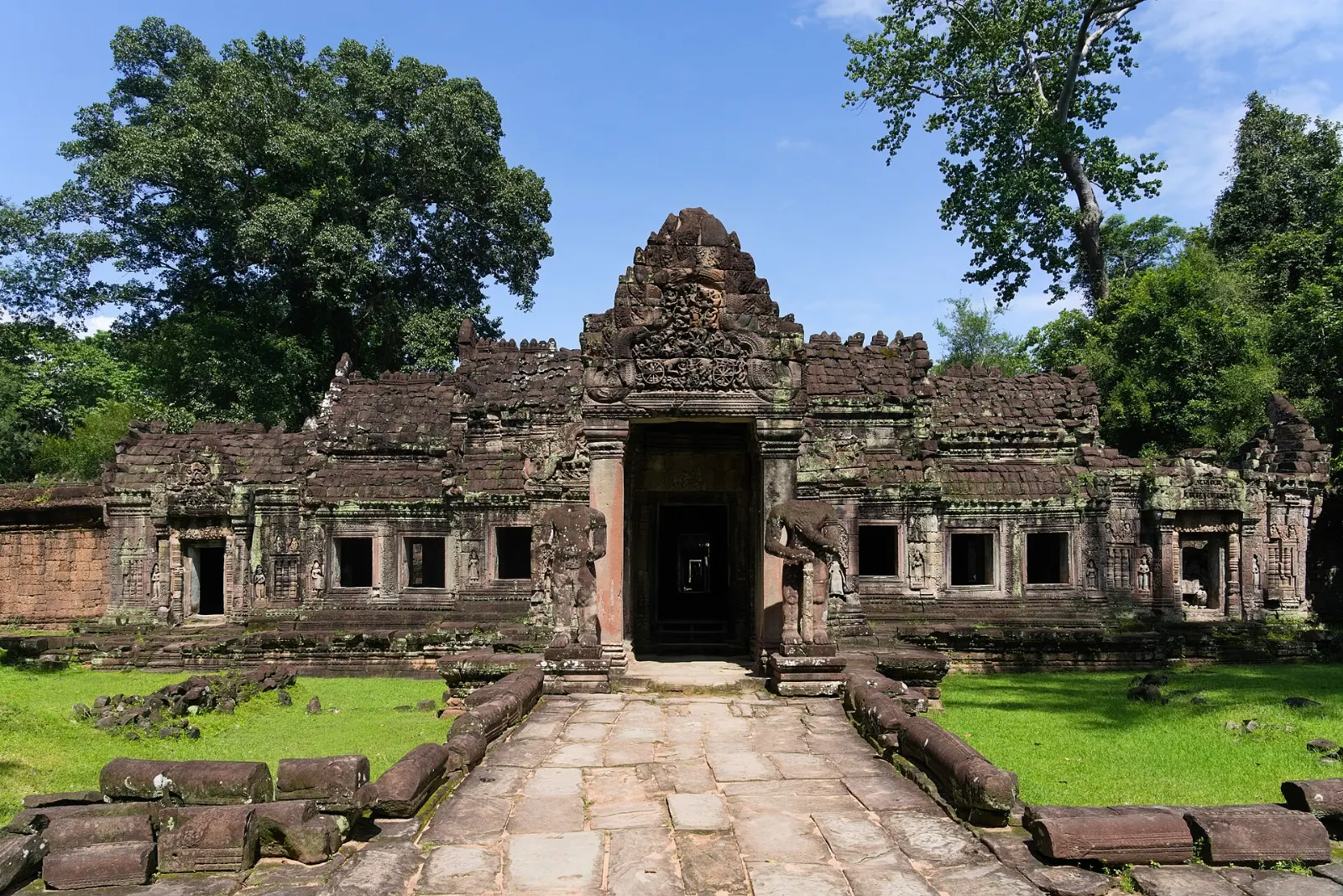
Preah Khan, also built by Jayavarman VII, was a large temple and monastic complex dedicated to his father. Its long axis of corridors, doorways and collapsed galleries, partly overgrown, is quieter than Ta Prohm and just as atmospheric. Allow about an hour and a half.
Preah Khan was built in the late twelfth century by King Jayavarman VII. Photo: Satdeep Gill, Wikimedia Commons, CC BY-SA 4.0
Banteay Srei and Kbal Spean
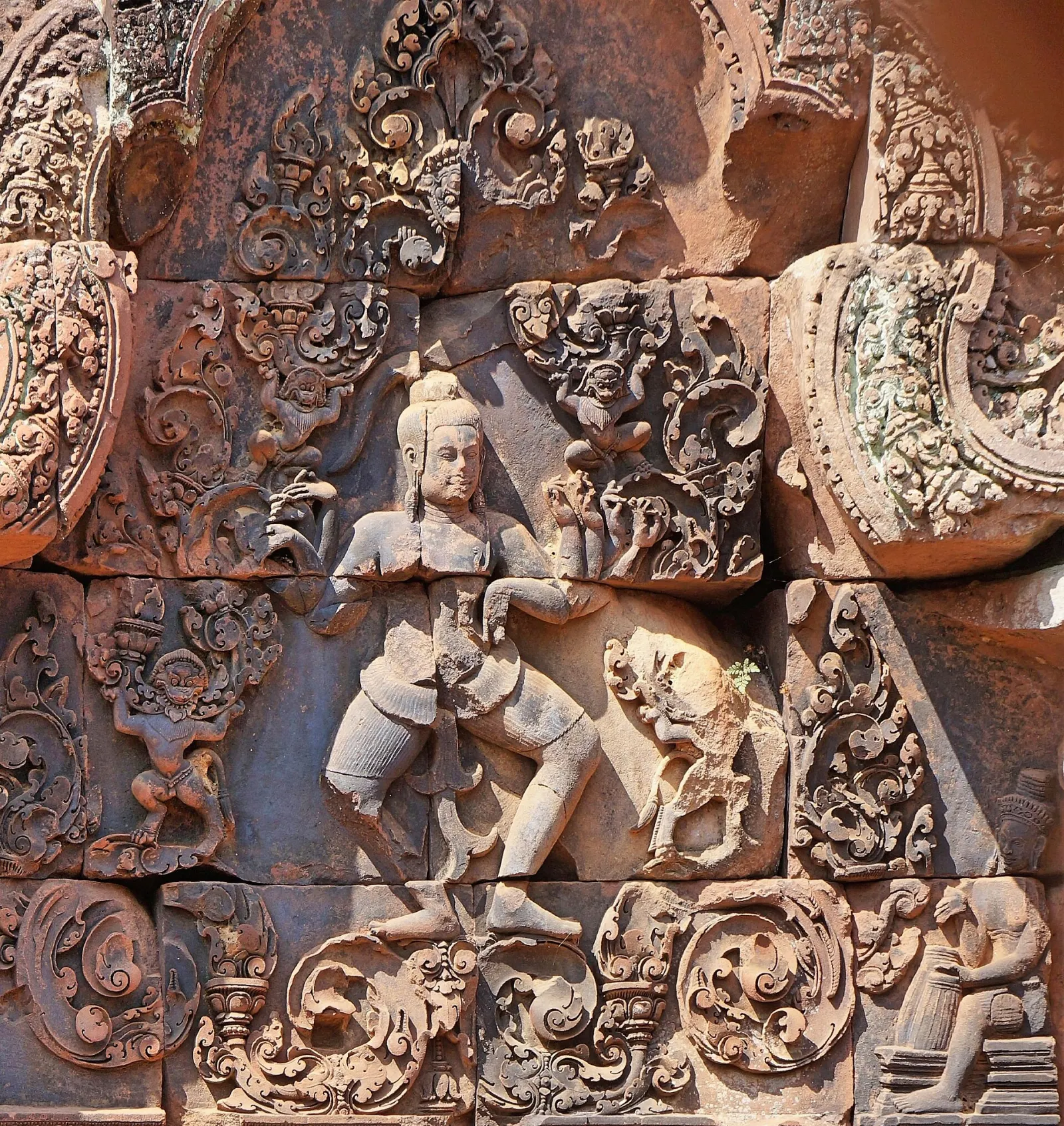
Around an hour by tuk-tuk north of Siem Reap, Banteay Srei is a small tenth century temple built of pink sandstone and covered in some of the finest carving in Khmer art, from guardian figures to scenes from Hindu epics. It takes about an hour to see.
Banteay Srei is known for exceptionally fine carving in pink sandstone. Photo: Pierre André Leclercq, Wikimedia Commons, CC BY-SA 4.0
Roluos Group and the sunset temples
About thirteen kilometers southeast of Siem Reap, the Roluos Group includes Preah Ko, Bakong and Lolei, among the earliest temples of the Angkor period, from the late ninth century. They are peaceful and rarely crowded; allow two hours.
Ad
Siem Reap town and the Tonle Sap
Tonle Sap and Kompong Phluk
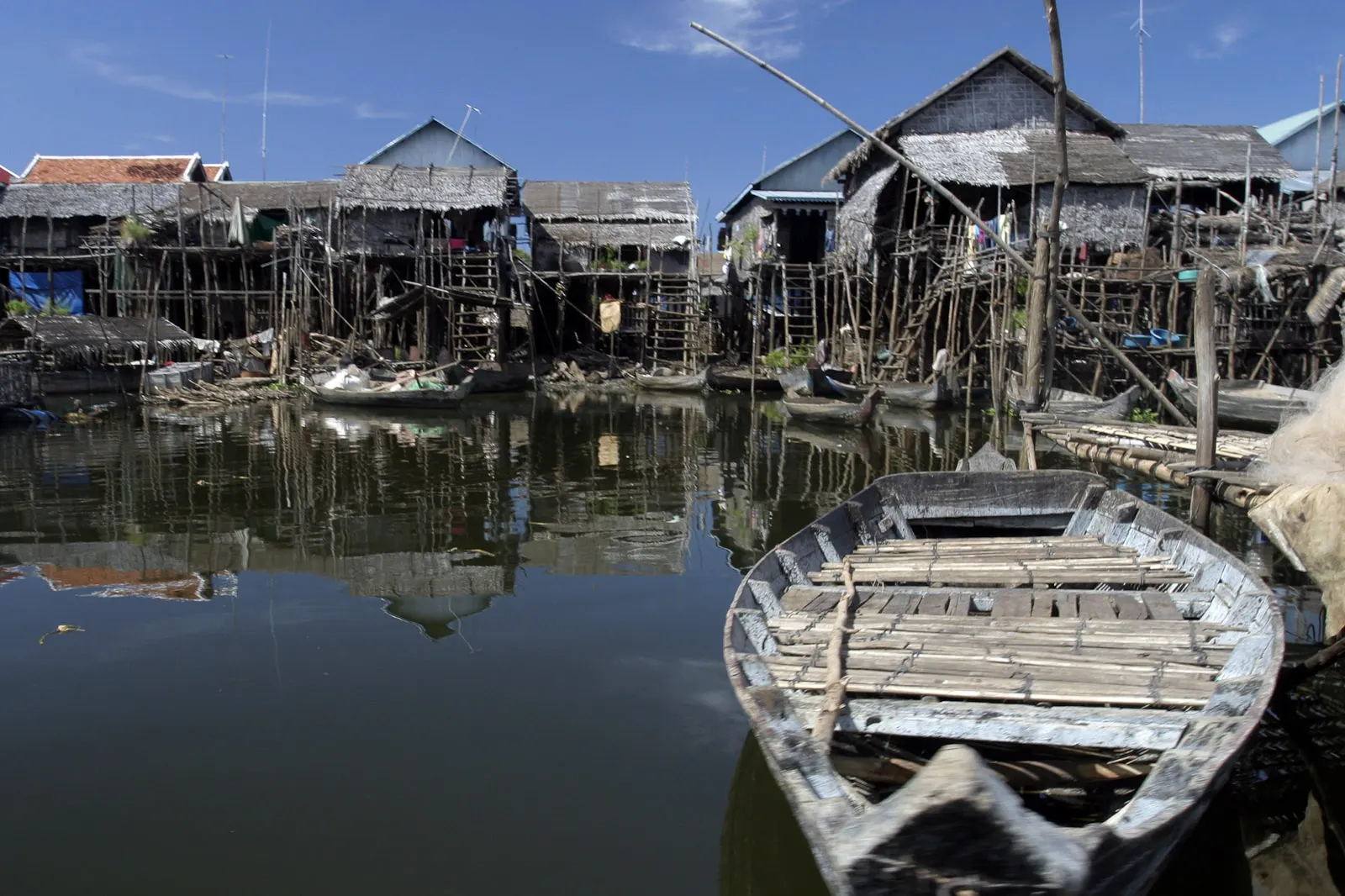
The Tonle Sap is the largest freshwater lake in Southeast Asia, and it swells dramatically in the wet season when the Mekong forces water back up the Tonle Sap River. Communities around its edges live in tall stilt houses or floating homes and depend on fishing.
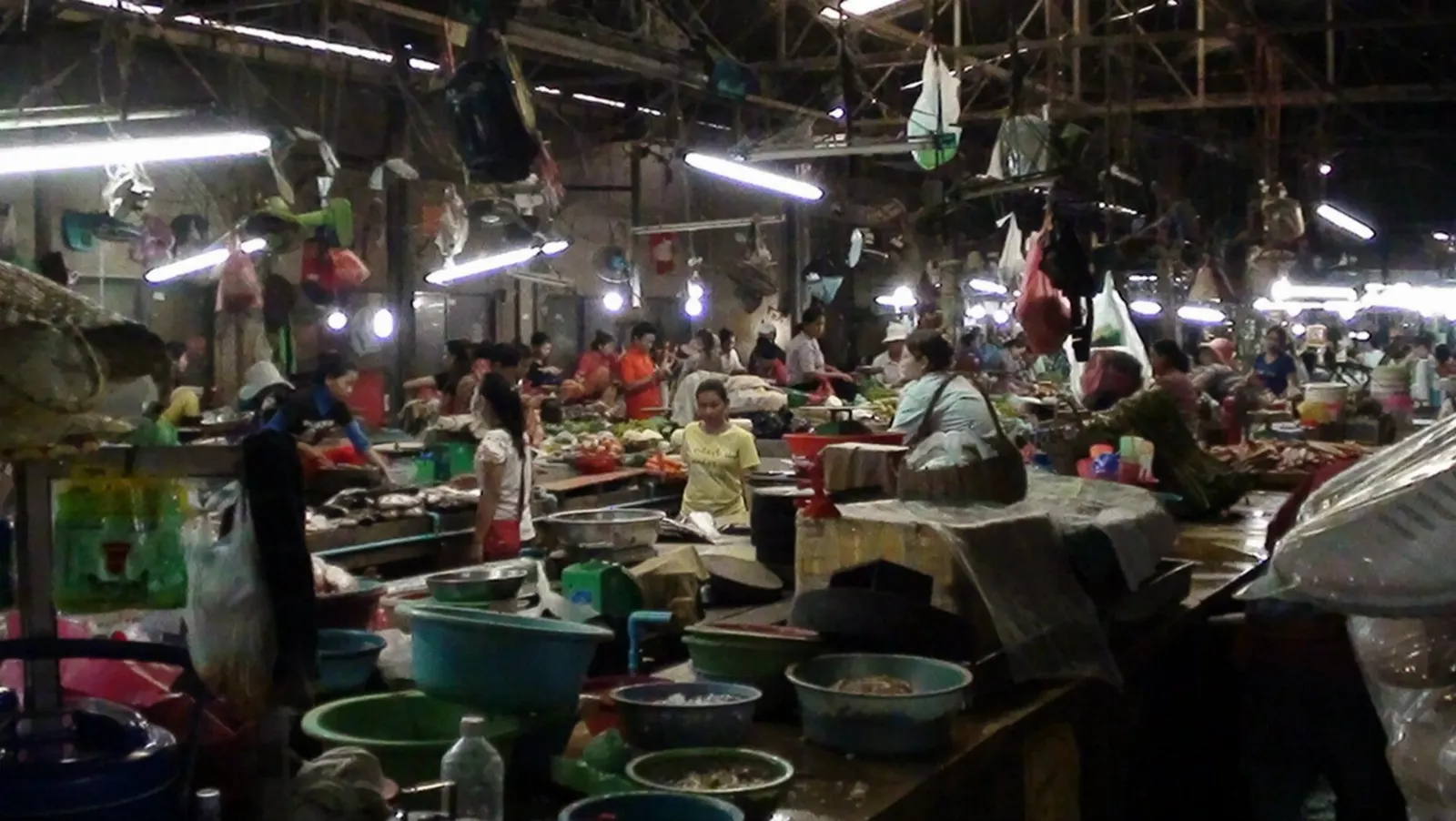
The Old Market, Psar Chaa, near the Siem Reap River, mixes stalls of produce and dried fish with silk, carvings and souvenirs. A morning browse takes about an hour; bargain politely and with a smile.
The Old Market, Psar Chaa, sits near the Siem Reap River in the center of town. Photo: Peazapata, Wikimedia Commons, CC BY-SA 4.0
Angkor National Museum
On the road toward the temples, the Angkor National Museum gives useful background on Khmer history, religion and architecture, including a gallery of a thousand Buddha images. Allow about two hours, ideally before your first temple day or during the midday heat.
Food and local flavors
Khmer food is fragrant rather than fiery, built on kroeung, a paste of lemongrass, galangal, turmeric and kaffir lime. Fish amok, a curry of fish steamed in banana leaves with coconut milk, is the dish most visitors try first.
For breakfast, look for num banh chok, fresh rice noodles with a green fish curry and raw vegetables, sold by street vendors, and kuy teav, a pork noodle soup.
Popular dishes to try in Siem Reap and Angkor
Fish amok Fish amok, a curry of fish steamed in banana leaves with coconut milk, is the dish most visitors try first.Photo: Stefan Fussan, Wikimedia Commons, CC BY-SA 3.0Lok lak Beef lok lak, stir-fried cubes of beef served with a lime and black pepper dipping sauce, is another favorite.Photo: Turaids, Wikimedia Commons, CC BY-SA 4.0Num banh chok For breakfast, look for num banh chok, fresh rice noodles with a green fish curry and raw vegetables, sold by street vendors, and kuy teav, a pork noodle soup.Photo: Stefan Fussan, Wikimedia Commons, CC BY-SA 3.0Kuy teav For breakfast, look for num banh chok, fresh rice noodles with a green fish curry and raw vegetables, sold by street vendors, and kuy teav, a pork noodle soup.Photo: DragonSamYU, Wikimedia Commons, CC BY-SA 4.0
Ad
Where to stay
Around the Old Market and Pub Street. Convenient for first time visitors who want restaurants and nightlife on the doorstep, though it can be noisy late at night.
Along the Siem Reap River. Leafy, calmer streets on both banks of the river are within walking distance of the market area and suit couples and families.
Wat Bo and the east bank. A residential area with guesthouses, boutique stays and cafes around the Wat Bo pagoda, popular with travelers who want a local feel.
The cool, dry season from November to February is the most comfortable time to explore, with lower humidity and clear mornings, and it is also the busiest.
The wet season runs roughly from May or June to October.
Ad
Getting there and getting around
Siem Reap Angkor International Airport opened in 2023 and replaced the old airport near town. It lies about forty five kilometers east of the center, roughly an hour and a quarter by road, and is served by direct flights from several Asian hubs.
To enter the temples you need an Angkor Pass, available as a one-day pass or as multi-day passes that can be used on non-consecutive days within a set period.
The classic way to tour the park is by tuk-tuk with a driver hired for the day, which is cheap, shaded and lets you hop between temples.
A suggested itinerary
First day
See sunrise at Angkor Wat, then explore its galleries and the Bakan while the crowds thin.
Second day
Start early at Ta Prohm, then continue along the Grand Circuit to Preah Khan, Neak Pean and Ta Som. Spend the afternoon at the Angkor National Museum or relaxing by a pool, and enjoy dinner and the night markets near Pub Street.
Third day
Drive north to Banteay Srei and walk the trail at Kbal Spean, stopping at roadside stalls selling palm sugar on the way back.
Ad
Practical tips
Buy your Angkor Pass online in advance or at the official ticket office only, never from touts.
Dress with shoulders and knees covered at all temples; this is strictly enforced at the Bakan.
Start each temple day at dawn and rest through the hottest hours of early afternoon.
Carry plenty of water, sunscreen, a hat and insect repellent, and wear shoes with good grip for steep steps.
US dollars are widely used alongside Cambodian riel, and small notes are handy for tuk-tuks and markets.
Do not climb on fragile structures or touch carvings, and stay behind ropes in restricted areas.