WiserMap — Choose wisely. Connect locally.Choose wisely. Connect locally.Add your business
Jeju Island, South Korea · Travel guide

Jeju Island South Korea Hallasan and Seongsan Sunrise Peak

Jeju Island, off the southern tip of the Korean Peninsula, is a volcanic island built around a single great mountain, Hallasan, and dotted with hundreds of smaller volcanic cones called oreum.

By WiserMap TravelUpdated October 2026 8 places10 min read
FacebookXLinkedIn

For Koreans, Jeju has long been the favorite domestic getaway, and it is increasingly popular with international travelers.

At a glance Jeju Island
  1. Best timeApril to early June and September to November for mild weather, flowers and clear hiking days.
  2. How longThree to four days for the main sights; five or more to hike Hallasan and walk the Olle Trail.
  3. Getting thereFly into Jeju International Airport from Seoul, Busan or abroad, or take a ferry from the southern mainland.

Why visit Jeju Island

Jeju's volcanic landscapes are protected at the highest level. In 2007, Hallasan, Seongsan Ilchulbong and the Geomunoreum lava tube system were inscribed together on the UNESCO World Heritage list as Jeju Volcanic Island and Lava Tubes, the first natural World Heritage Site in Korea.

The island also has a distinct culture. Its dialect, stone grandfather statues known as dol hareubang, thatched farmhouses and food set it apart from the mainland. The haenyeo, women divers who harvest shellfish and seaweed from the sea without breathing equipment, are recognized by UNESCO as intangible cultural heritage, and you can still see them working along the coast.

The volcanic east

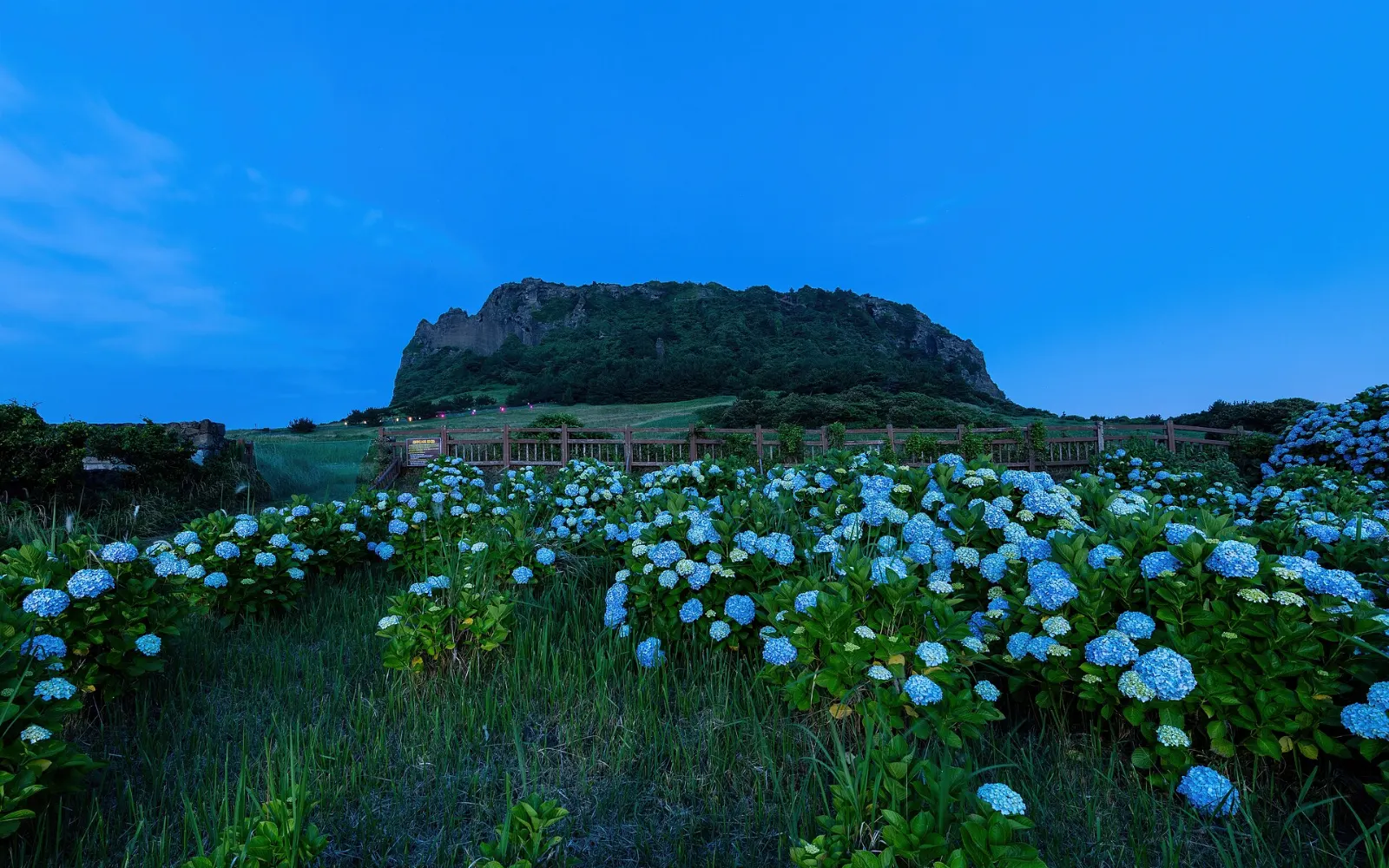
Seongsan Ilchulbong

Rising straight out of the sea on Jeju's eastern tip, Seongsan Ilchulbong, or Sunrise Peak, is a tuff cone formed by an underwater eruption.

Udo

A short ferry ride from Seongsan Port, Udo is a small island of farm fields, stone walls, peanut ice cream shops and beaches, including a beach of pale coralline algae fragments.

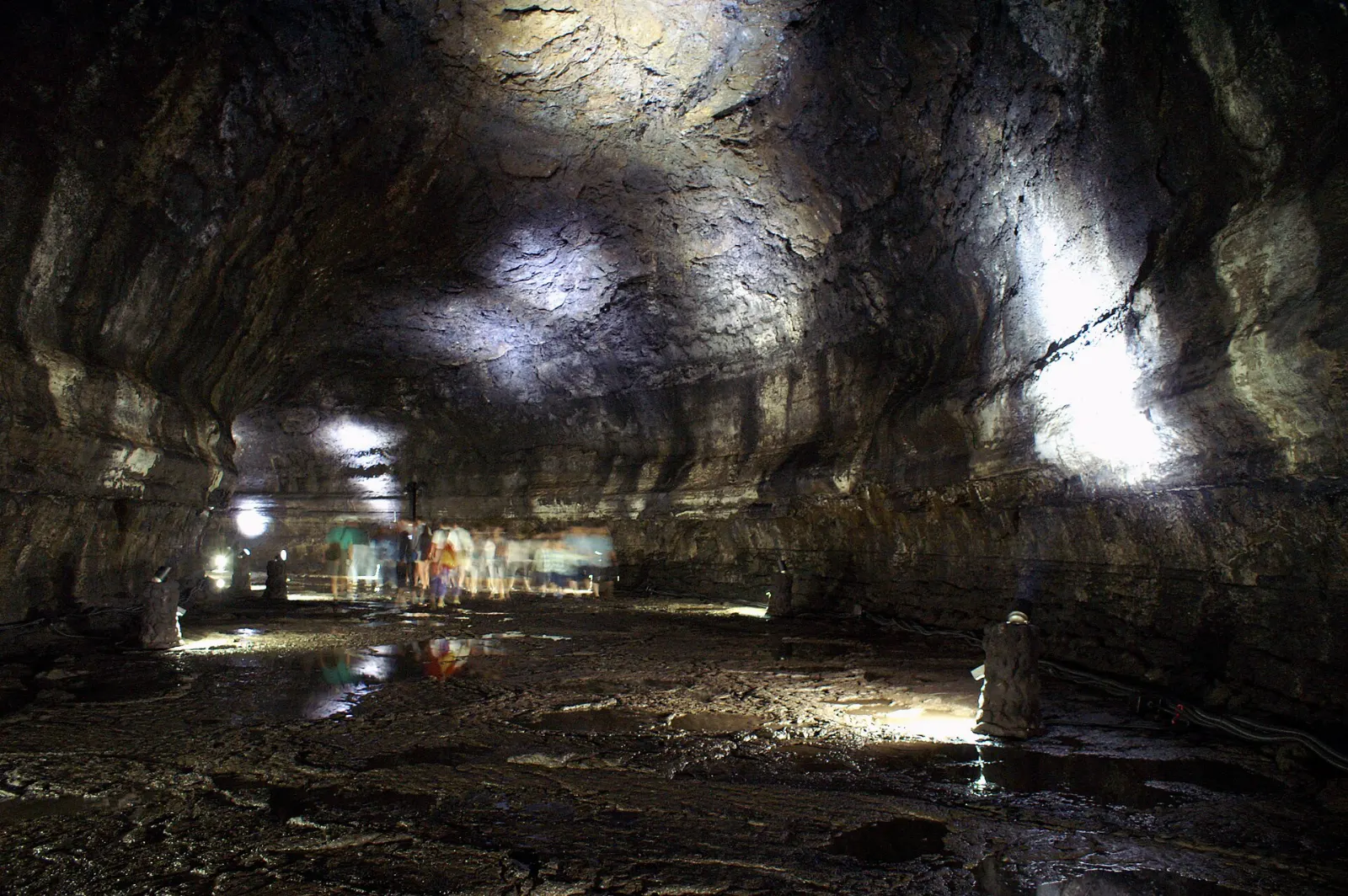
The wide, dark interior of the Manjanggul lava tube with lit walkway, Jeju Island, South Korea

Manjanggul lava tube

Manjanggul is one of the finest lava tubes in the world and part of the UNESCO-listed Geomunoreum system.

Manjanggul is part of the Geomunoreum lava tube system listed by UNESCO. Photo: Olga Lipunova, Wikimedia Commons, CC BY-SA 3.0

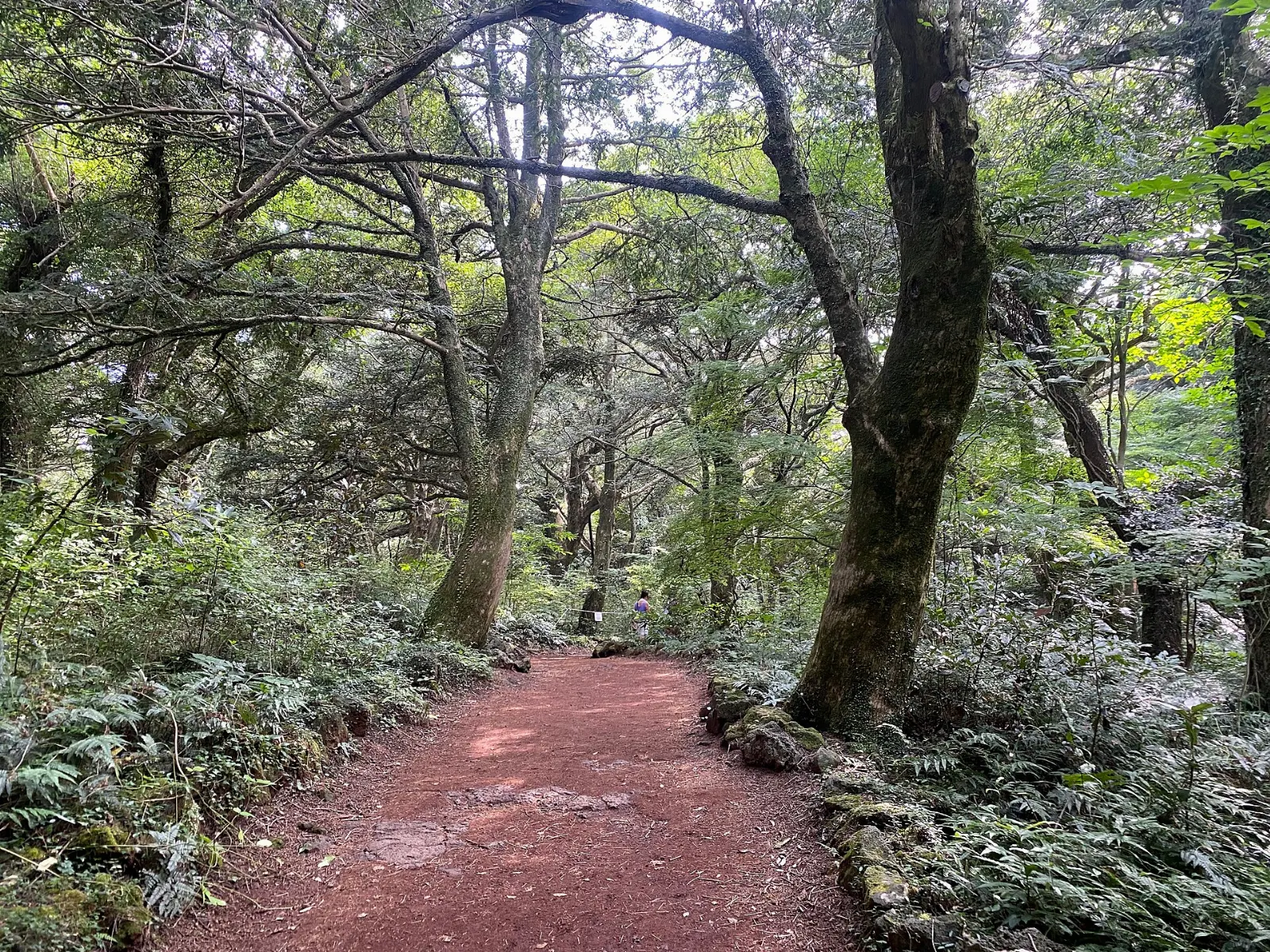
A path through the old nutmeg yew trees of Bijarim Forest, Jeju Island, South Korea

Bijarim Forest

Inland, Bijarim is an old forest of Japanese nutmeg yew trees, some of them centuries old, with shaded, mostly flat trails that make a quiet break from the coast. Allow about an hour, and go after rain, when the moss and ferns look their best.

Bijarim is a dense forest of Japanese nutmeg yew trees in northeastern Jeju. Photo: Sgroey, Wikimedia Commons, CC BY-SA 4.0

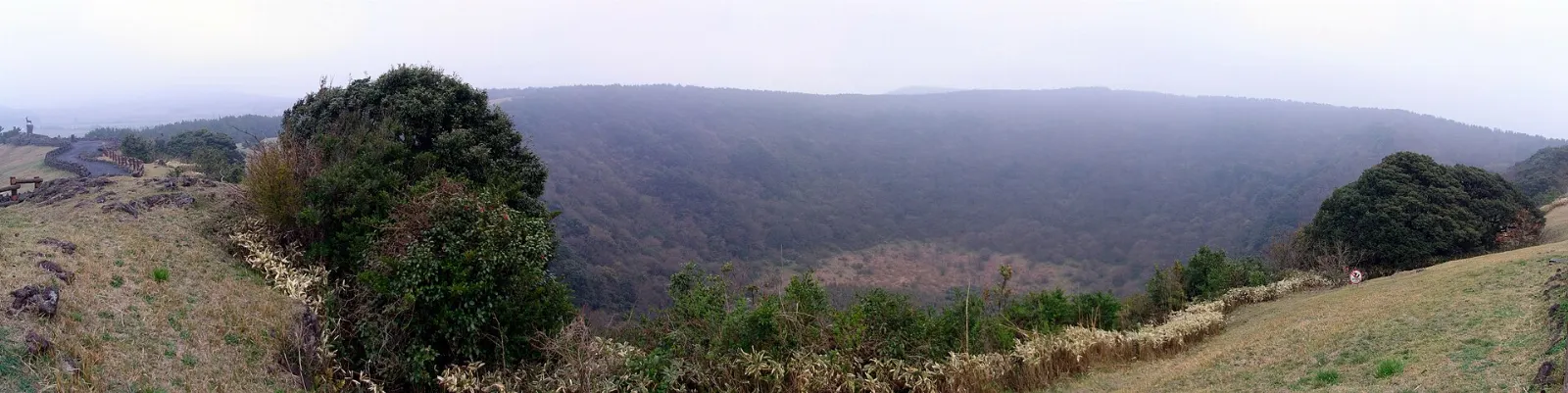
The wide, tree-filled crater of Sangumburi with silver grass on its rim, Jeju Island, South Korea

Sangumburi

Nearby, Sangumburi is a large, bowl-shaped crater whose walls shelter a mix of warm and cool climate plants, and whose rim turns silver with pampas grass in autumn. Allow about an hour for the loop path around the rim.

Sangumburi is a large crater in Jeju's eastern uplands, lined with grasses and forest. Photo: Naturehead, Wikimedia Commons, CC BY-SA 3.0

Hallasan and the island's interior

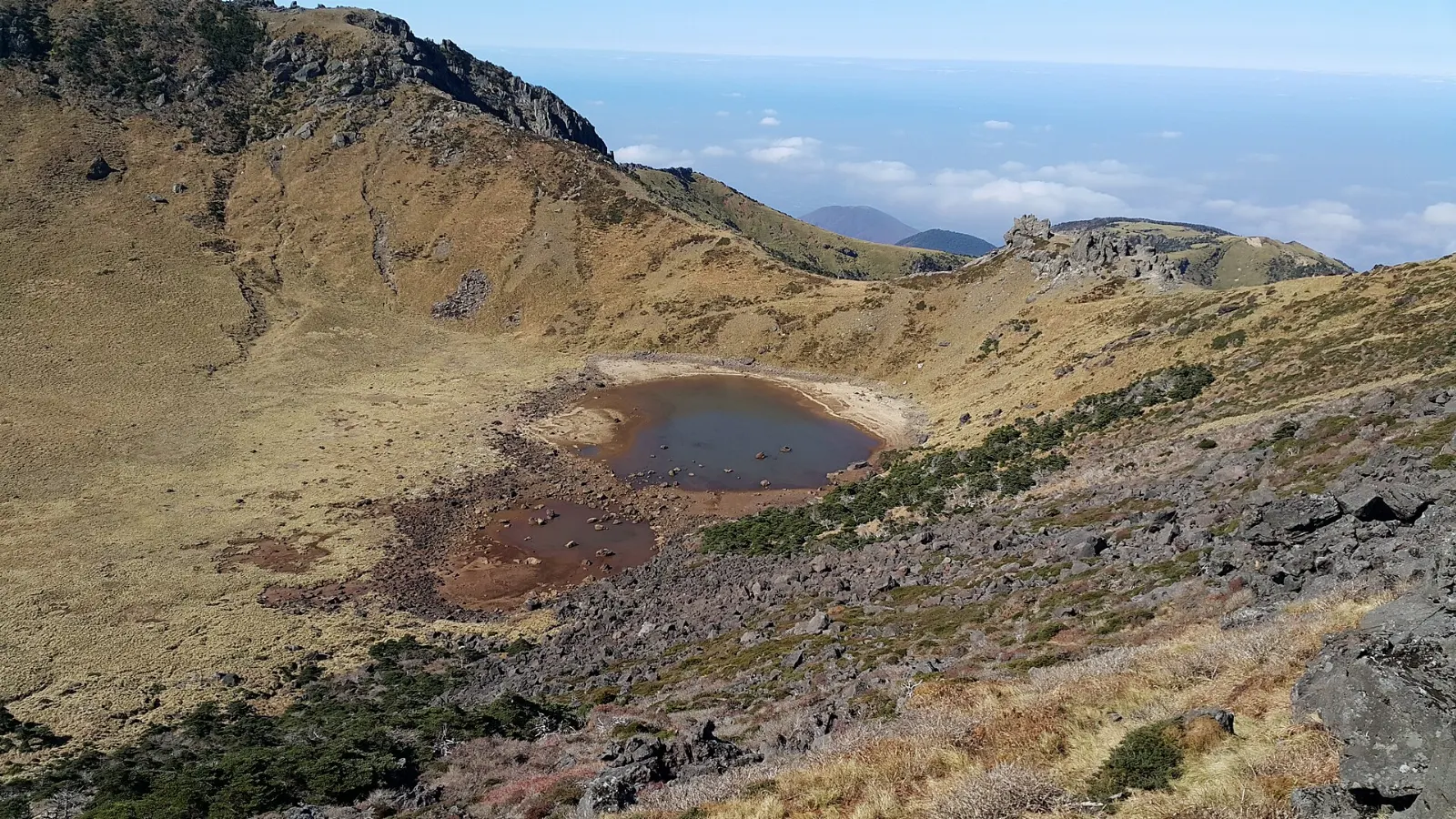
The crater lake of Baengnokdam on the summit of Hallasan surrounded by rocky slopes, Jeju Island, South Korea

Hallasan National Park

Hallasan, at 1,947 meters, is the highest mountain in South Korea, and its summit crater, Baengnokdam, holds a small lake after rain. Only two trails reach the summit: Seongpanak, the longer but gentler route, and Gwaneumsa, which is steeper and more scenic.

Whichever route you choose, start early, carry plenty of water, food and warm layers, and check the weather, since conditions at the top can be very different from the coast. In winter, crampons are essential on snowy trails.

Baengnokdam is the crater at the summit of Hallasan, the highest mountain in South Korea. Photo: Joshua0608, Wikimedia Commons, CC BY-SA 4.0

Osulloc Tea Museum and the green tea fields

In the southwest, the Osulloc Tea Museum sits beside rows of green tea bushes and introduces Korean tea culture, with a cafe serving green tea desserts. Allow an hour or two.

Seogwipo, the south coast and the west

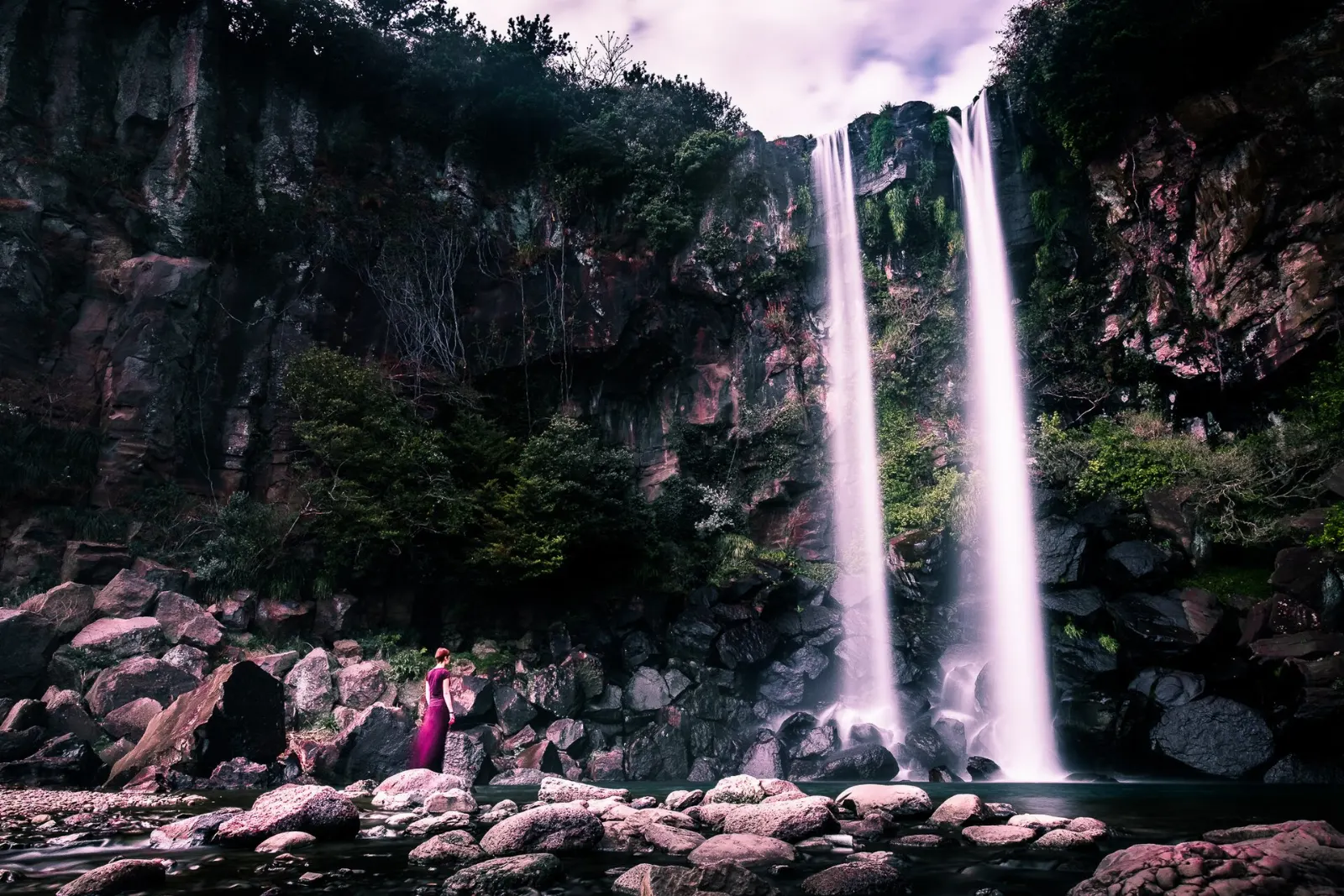
Jeongbang Falls dropping over a cliff directly onto a rocky shoreline by the sea, Jeju Island, South Korea

Jeongbang Falls

In Seogwipo, the island's southern city, Jeongbang Falls drops over a cliff onto a rocky shoreline right beside the sea, a rare sight in Asia. Steps lead down to the boulders at its base.

Jeongbang Falls in Seogwipo is known for falling directly toward the sea. Photo: Giuseppe Milo, Wikimedia Commons, CC BY 3.0

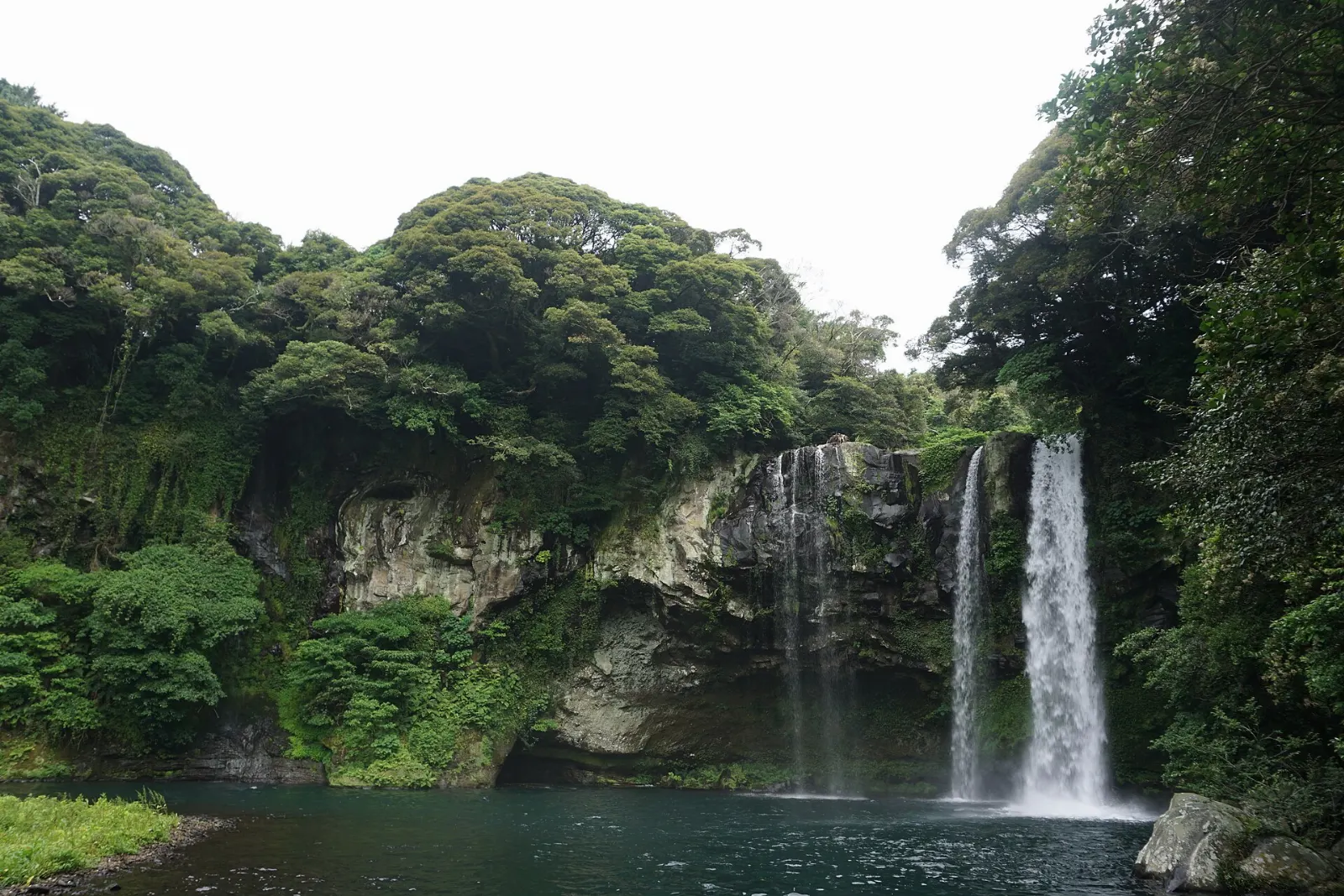
Cheonjiyeon Falls pouring into a dark green pool surrounded by subtropical trees, Jeju Island, South Korea

Cheonjiyeon Falls

A short walk from Seogwipo harbor, Cheonjiyeon Falls drops into a deep pool at the end of a wooded gorge, reached by an easy, flat path. Allow forty-five minutes.

Cheonjiyeon Falls lies in a wooded gorge a short walk from Seogwipo harbor. Photo: Yhnn0065  This photo was taken with Sony ILCE-6000, Wikimedia Commons, CC BY-SA 3.0

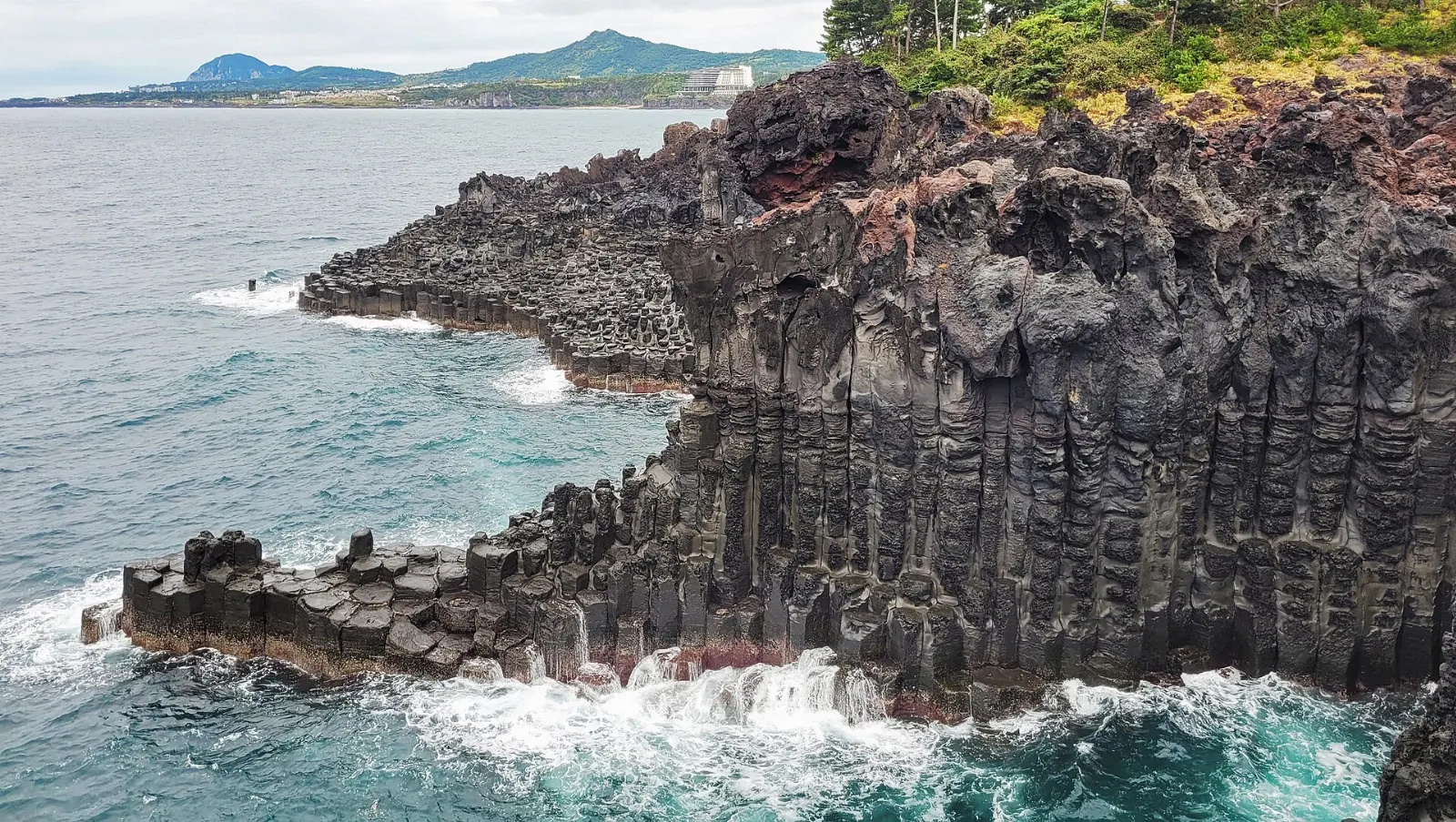
Hexagonal basalt columns of the Jusangjeolli cliff with waves breaking against them, Jeju Island, South Korea

Jusangjeolli Cliff

On the Jungmun coast, Jusangjeolli is a stretch of basalt columns formed when lava cooled and cracked into regular, mostly hexagonal shapes. Waves crash against the columns, especially on windy days.

The Jusangjeolli columns formed as lava cooled and cracked into regular shapes on the Jungmun coast. Photo: Bernard Gagnon, Wikimedia Commons, CC0

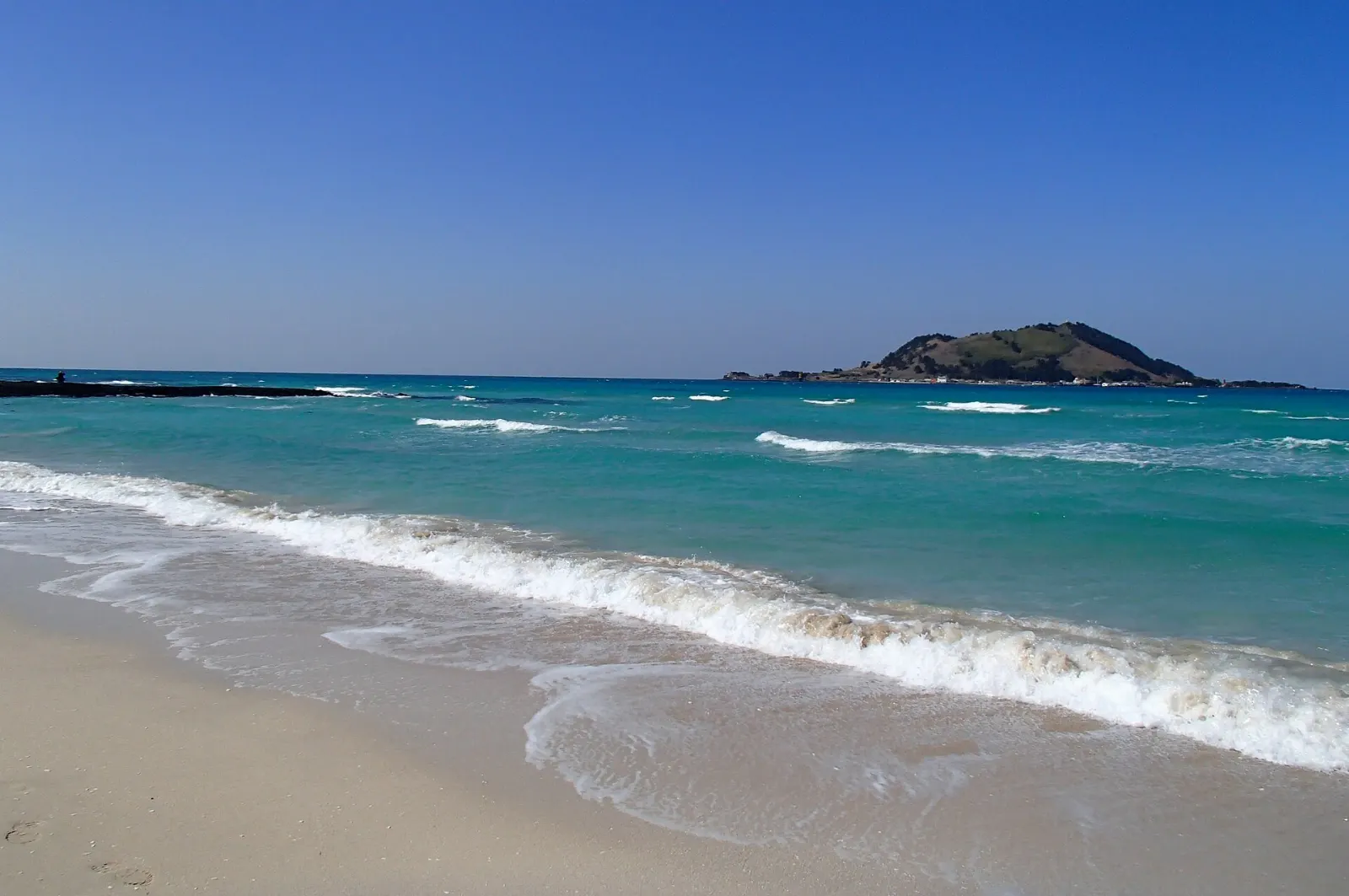
Shallow turquoise water and white sand at Hyeopjae Beach with Biyangdo island offshore, Jeju Island, South Korea

Hyeopjae Beach

On the west coast, Hyeopjae Beach has shallow, clear turquoise water and white sand, with the small island of Biyangdo floating offshore. It is a favorite with families and at sunset.

Hyeopjae Beach on Jeju's west coast looks out to the small island of Biyangdo. Photo: Lcarrion88, Wikimedia Commons, CC BY-SA 4.0
The Jeju Olle Trail

The Jeju Olle Trail is a network of marked walking routes that circle the island along coastal paths, village lanes and oreum.

Food and local flavors

Jeju has its own food traditions.

Seafood fresh from the haenyeo, such as sea urchin, conch and abalone, is sold at stalls near the shore, especially around Seongsan and other fishing villages.

For markets, Dongmun Market in Jeju City is the largest traditional market on the island and has a night market with street food stalls, while Seogwipo Maeil Olle Market is good for snacks, fresh fruit and seafood.

Popular dishes to try in Jeju Island

Black pork in Jeju Island, South Korea
Black pork Its most famous dish is black pork, a local breed of pig grilled thick at the table and dipped in salted anchovy sauce.Photo: Andy Li, Wikimedia Commons, CC0
Hallabong in Jeju Island, South Korea
Hallabong Citrus is everywhere: hallabong, a large, sweet mandarin with a bump on top, is the island's signature fruit, and you will find it fresh, in juice, chocolates and desserts.Photo: Matt Kieffer, Wikimedia Commons, CC BY-SA 2.0
Haenyeo in Jeju Island, South Korea
Haenyeo Seafood fresh from the haenyeo, such as sea urchin, conch and abalone, is sold at stalls near the shore, especially around Seongsan and other fishing villages.Photo: by karendotcom127, Wikimedia Commons, CC BY 2.0

Where to stay

Jeju City, on the north coast near the airport, is a practical base with the widest choice of accommodation, restaurants and bus connections. It suits short stays, budget travelers and anyone without a car.

Seogwipo, on the south coast, is closer to the waterfalls, Olle Trail sections and the warm southern coastline, and has a more relaxed, small-city feel.

On the east, Seongsan is ideal for an early climb of Sunrise Peak and a trip to Udo, with guesthouses and small hotels near the port.

Where to stay in Jeju Island

Seogwipo, Jeju Island, South Korea
Seogwipo Seogwipo, on the south coast, is closer to the waterfalls, Olle Trail sections and the warm southern coastline, and has a more relaxed, small-city feel.Photo: Sharon Hahn Darlin, Wikimedia Commons, CC BY 2.0
Udo, Jeju Island, South Korea
Udo On the east, Seongsan is ideal for an early climb of Sunrise Peak and a trip to Udo, with guesthouses and small hotels near the port.Photo: Yaoshiiscool, Wikimedia Commons, CC BY-SA 4.0
Aewol, Jeju Island, South Korea
Aewol The west coast around Aewol, Hallim and Hyeopjae suits couples and travelers looking for seaside cafes and sunsets.Photo: Jeong seolah, Wikimedia Commons, CC0
Hyeopjae, Jeju Island, South Korea
Hyeopjae The west coast around Aewol, Hallim and Hyeopjae suits couples and travelers looking for seaside cafes and sunsets.Photo: Republic of Korea from Seoul, Republic of Korea, Wikimedia Commons, CC BY-SA 2.0

Best time to visit

Spring is the most colorful season.

Summer, from July to August, is beach season and the busiest time for domestic travelers. It is hot and humid, and the rainy season usually runs from late June into July.

Autumn, from late September to November, is the favorite season for hikers: skies are clearer, the oreum turn silver with pampas grass and tangerines ripen in the orchards.

Getting there and getting around

Jeju International Airport is one of the busiest in Korea, with very frequent domestic flights from Seoul Gimpo, Busan and other cities, as well as international routes.

Renting a car is the most flexible way to explore.

Without a car, the island's bus network, including express buses between Jeju City, the airport and Seogwipo, reaches most major sights, and a T-money card works on buses.

A suggested itinerary

First day

Arrive in Jeju City, eat at Dongmun Market, then drive east to Bijarim Forest and Manjanggul.

Second day

Climb Seongsan Ilchulbong at sunrise, then take the ferry to Udo for the morning.

Third day

Hike Hallasan from Seongpanak with an advance reservation, or take the shorter Yeongsil trail if you prefer a gentler walk.

Fourth day

Visit Jeongbang Falls and Cheonjiyeon Falls in the morning, walk a section of the Olle Trail, then see Jusangjeolli.

Practical tips

  • Reserve your Hallasan summit hike in advance through the national park's official website.
  • Carry an International Driving Permit if you plan to rent a car, along with your home license.
  • Check ferry schedules for Udo and other islands, as sailings stop in strong wind.
  • Use Naver Map or KakaoMap for directions, since other map apps give limited routes in Korea.
  • Pack a windproof jacket; Jeju is often breezy, and the weather changes quickly on the mountain.
  • Respect the haenyeo and fishing villages: ask before taking close-up photos and never take shellfish from the shore.
  • Carry a little cash for markets and small shops, though cards are widely accepted.
Jeju IslandWISERMAP PLACEJeju Island: photos, reviews & things to doSee traveler photos and reviews, or share your own →

More places to visit

All travel guides →