This guide walks you through the places that matter most: the great white tent of Faisal Mosque, the viewpoints along the Margalla ridge, the museums of Shakarparian, the old village of Saidpur and the lakes and shrines on the city's edges.
At a glance Islamabad
Best timeOctober to November and March to April, when days are mild and the hills are clear.
How longThree full days covers the city; add a day for Taxila or Rawalpindi's bazaars.
Getting thereFly into Islamabad International Airport, about a forty-minute drive west of the city center.
Ad
Why visit Islamabad
Most visitors expect a quiet government town and find something more layered. The capital was designed by the Greek planner Constantinos Doxiadis, and his scheme of self-contained sectors, each with its own market, mosque and green belt, still shapes daily life.
Islamabad also works as a calmer, more orderly base for exploring the Potohar Plateau. Rawalpindi, its older and far busier twin, lies a short drive south, and the Gandhara-era ruins of Taxila, a UNESCO World Heritage Site, are within easy reach for a day trip.
Monuments, mosques and Shakarparian
Faisal Mosque
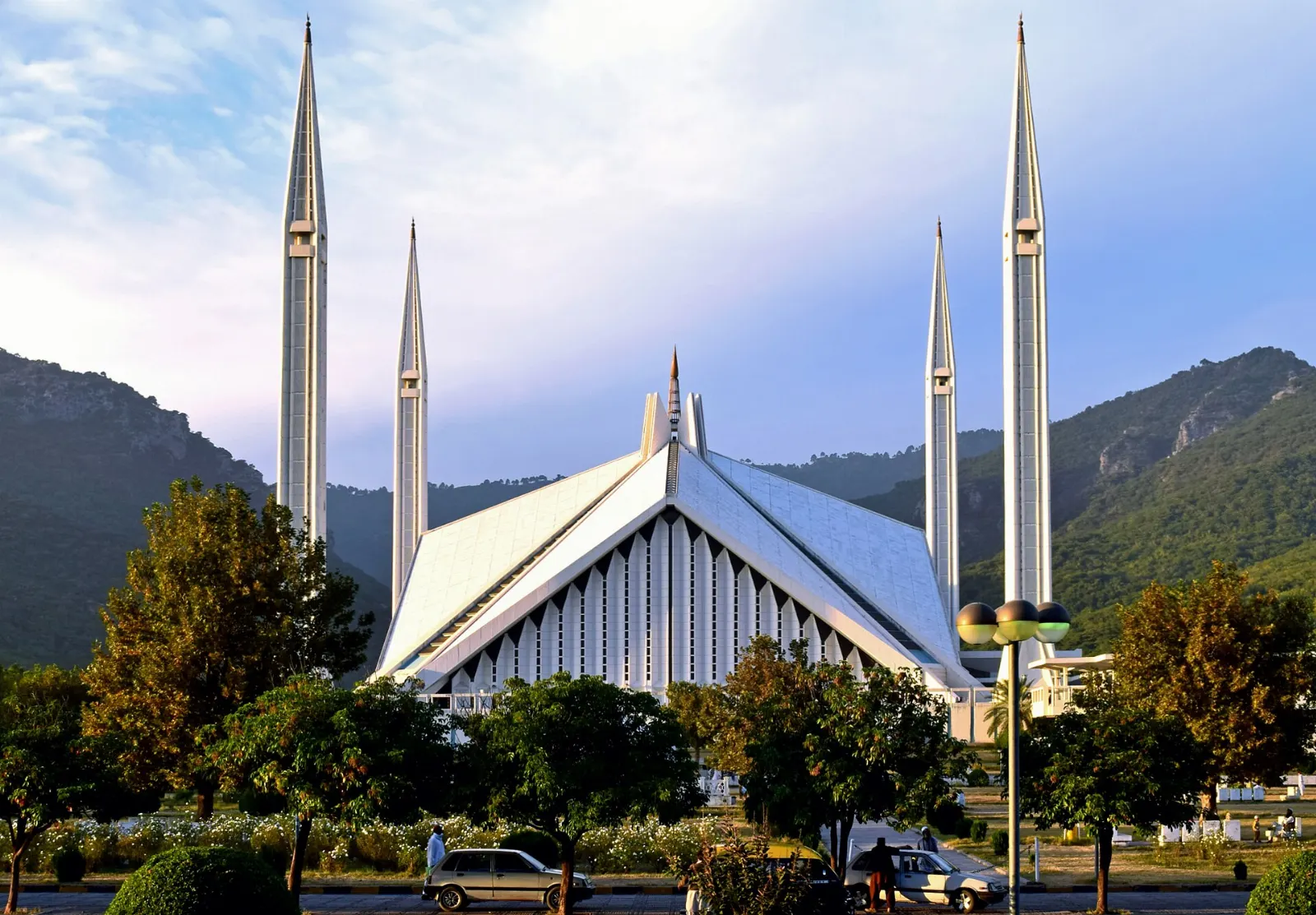
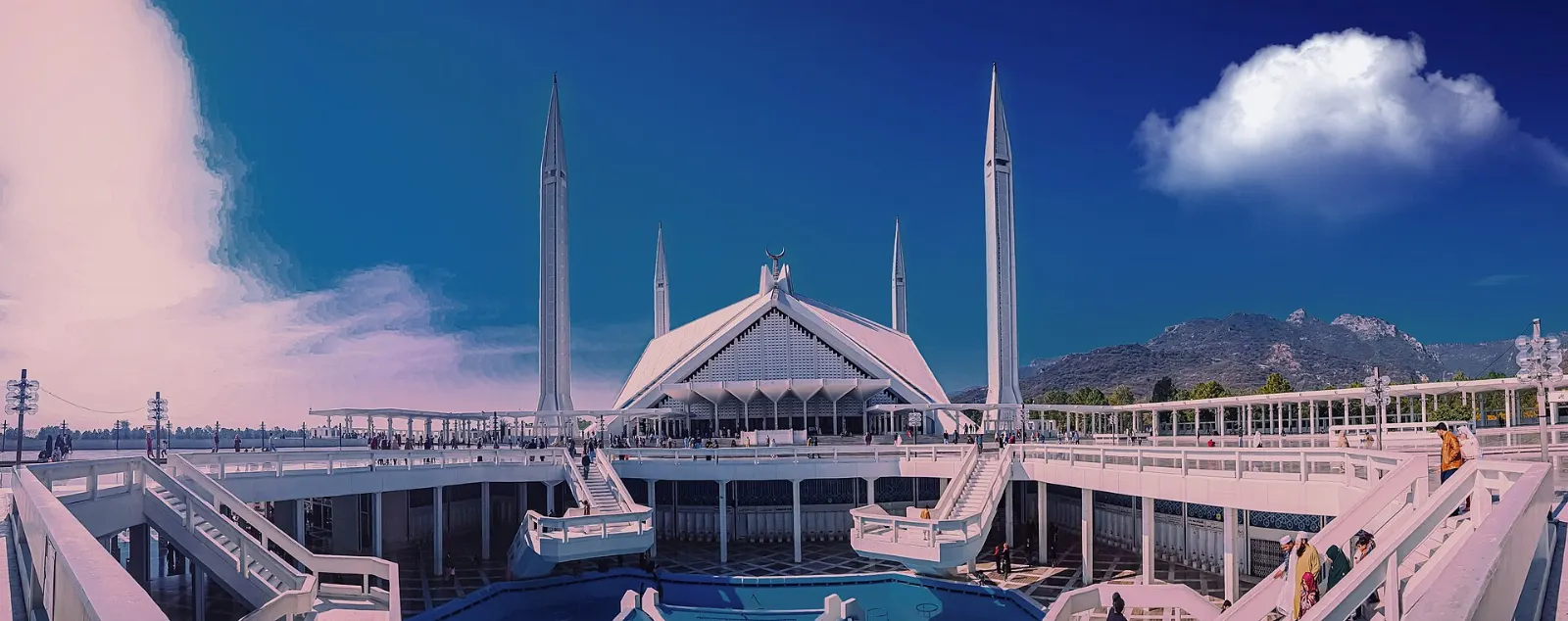
Completed in 1986 and designed by Turkish architect Vedat Dalokay, Faisal Mosque is the city's signature landmark.
Allow an hour to an hour and a half. Non-Muslim visitors are generally welcome outside prayer times, but you should dress modestly: long sleeves and long trousers or skirts for everyone, and a head covering for women.
The prayer hall of Faisal Mosque uses an eight-sided concrete shell in place of a traditional dome. Photo: Shahzaib Damn Cruze, Wikimedia Commons, CC BY-SA 4.0
Pakistan Monument
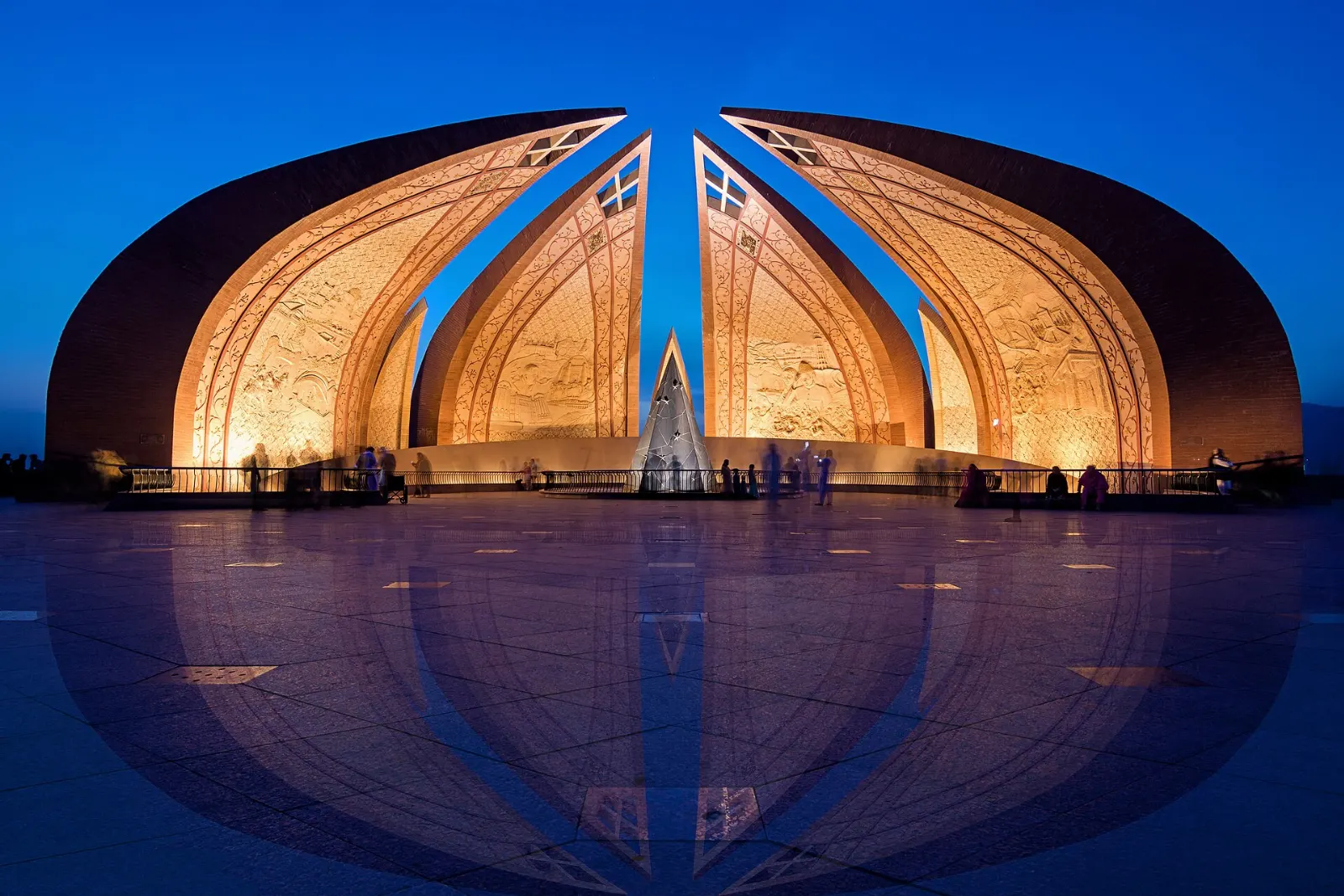
On the Shakarparian hills to the west of the city center, the Pakistan Monument opened in 2007 and takes the shape of four large granite petals with three smaller ones between them, representing the country's provinces and territories.
Allow about an hour for the monument and the adjoining Pakistan Monument Museum, which traces the independence movement. Sunset is popular with families, so come in the late afternoon on a weekday if you want quieter photographs.
The Pakistan Monument on the Shakarparian hills opened in 2007. Photo: Muhammad Ashar, Wikimedia Commons, CC BY-SA 4.0
Lok Virsa Heritage Museum
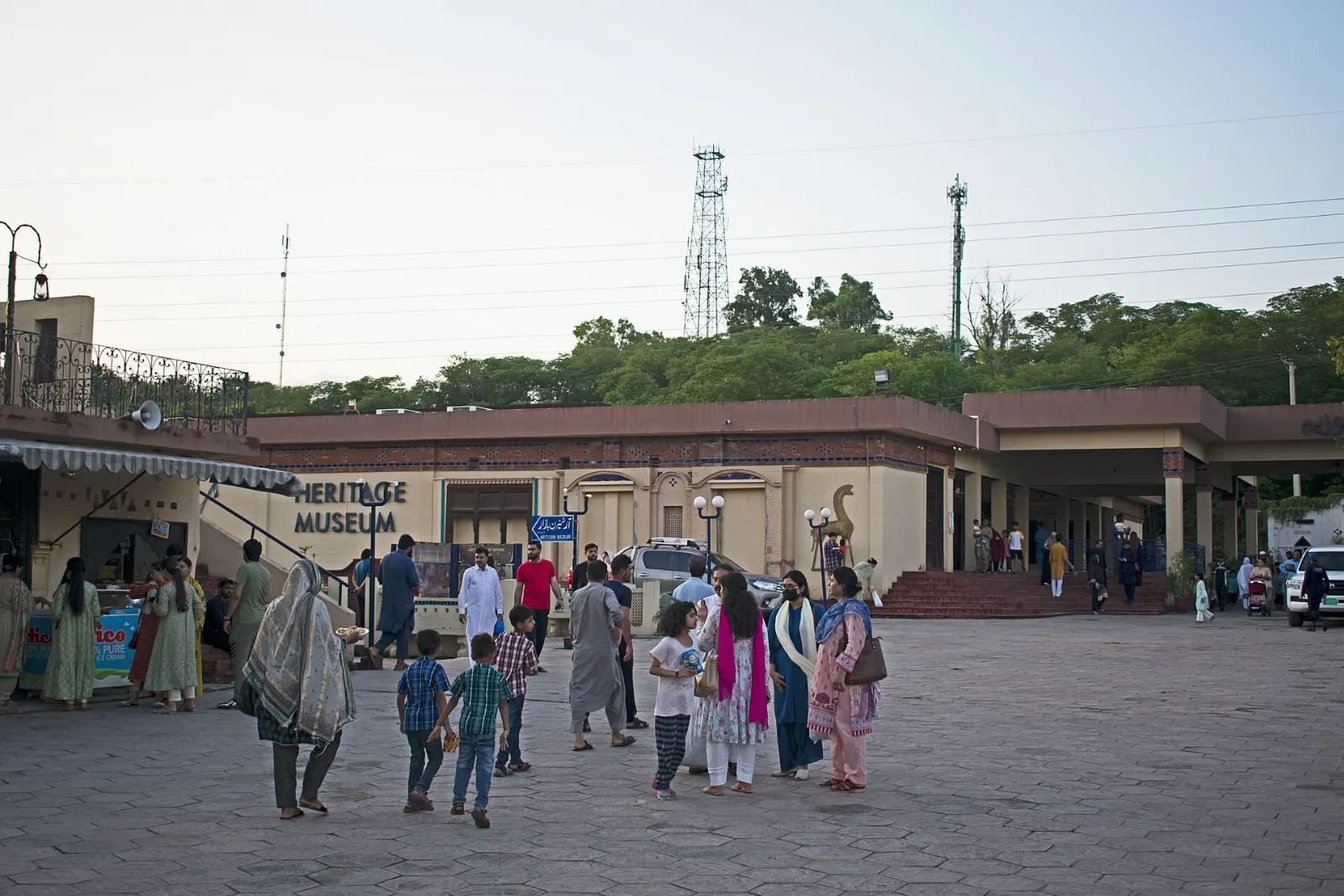
Also on the Shakarparian hills, the Lok Virsa Heritage Museum is the best single place in Pakistan to understand the variety of its regional cultures.
The Lok Virsa Heritage Museum presents the folk cultures of Pakistan's regions. Photo: Ymblanter, Wikimedia Commons, CC BY-SA 4.0
Ad
The Margalla Hills and northern edge
Daman-e-Koh
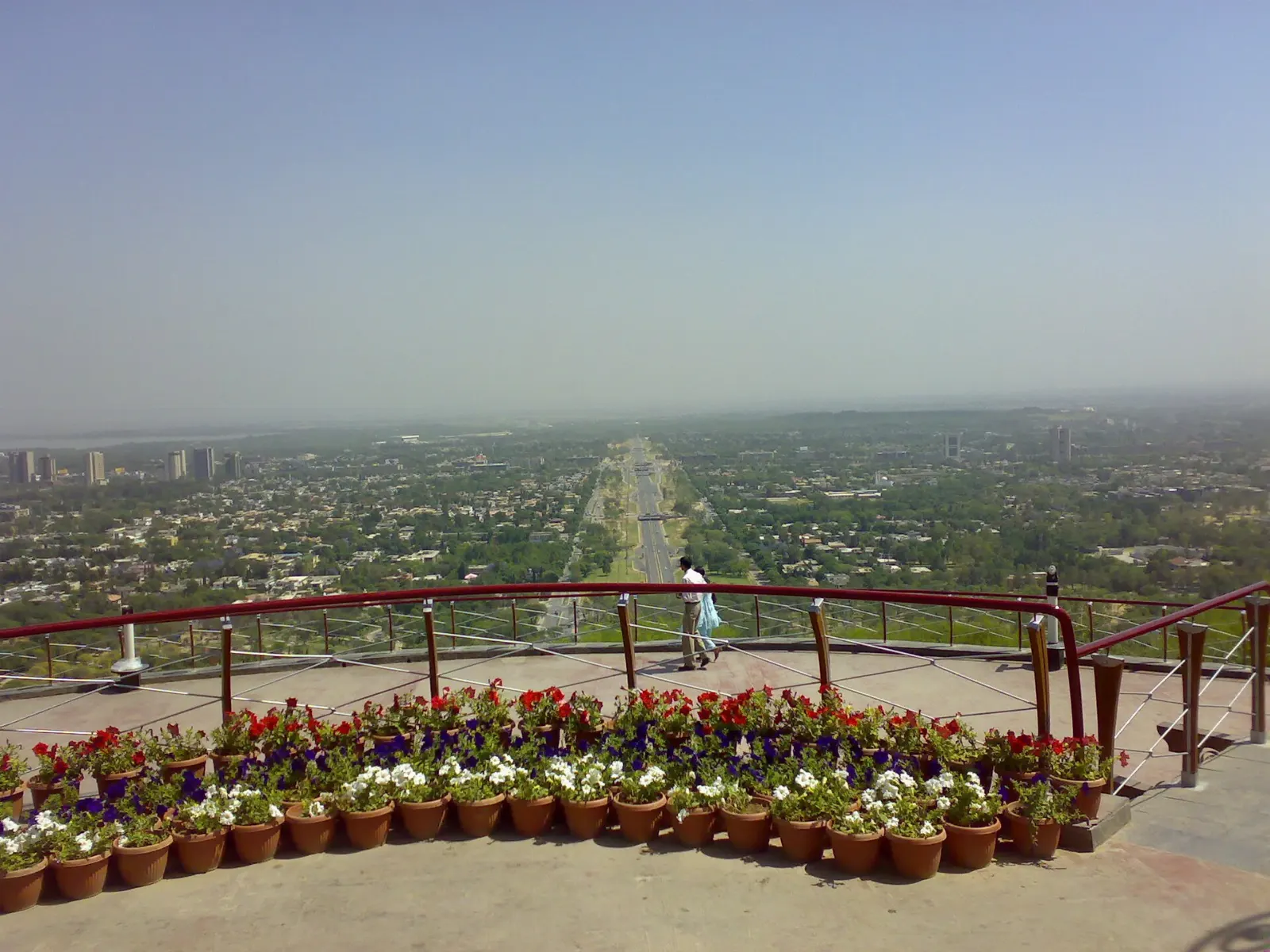
Halfway up the Margalla Hills, the terraced gardens of Daman-e-Koh look straight down Faisal Avenue to the mosque and across the planned sectors toward Rawalpindi.
Daman-e-Koh looks down Faisal Avenue across the planned sectors of Islamabad. Photo: Azam Ishaque, Wikimedia Commons, CC BY-SA 3.0
Margalla Hills hiking trails
The numbered trails that climb from the northern sectors are the city's favorite form of exercise. Trail 3, which begins near Sector F-6, is the classic choice: a steady climb with stepped sections that leads to a viewpoint and continues on toward the Pir Sohawa road.
Start early, carry water, and finish well before dark. Stay on marked trails, and hike with company rather than alone.
Saidpur Village
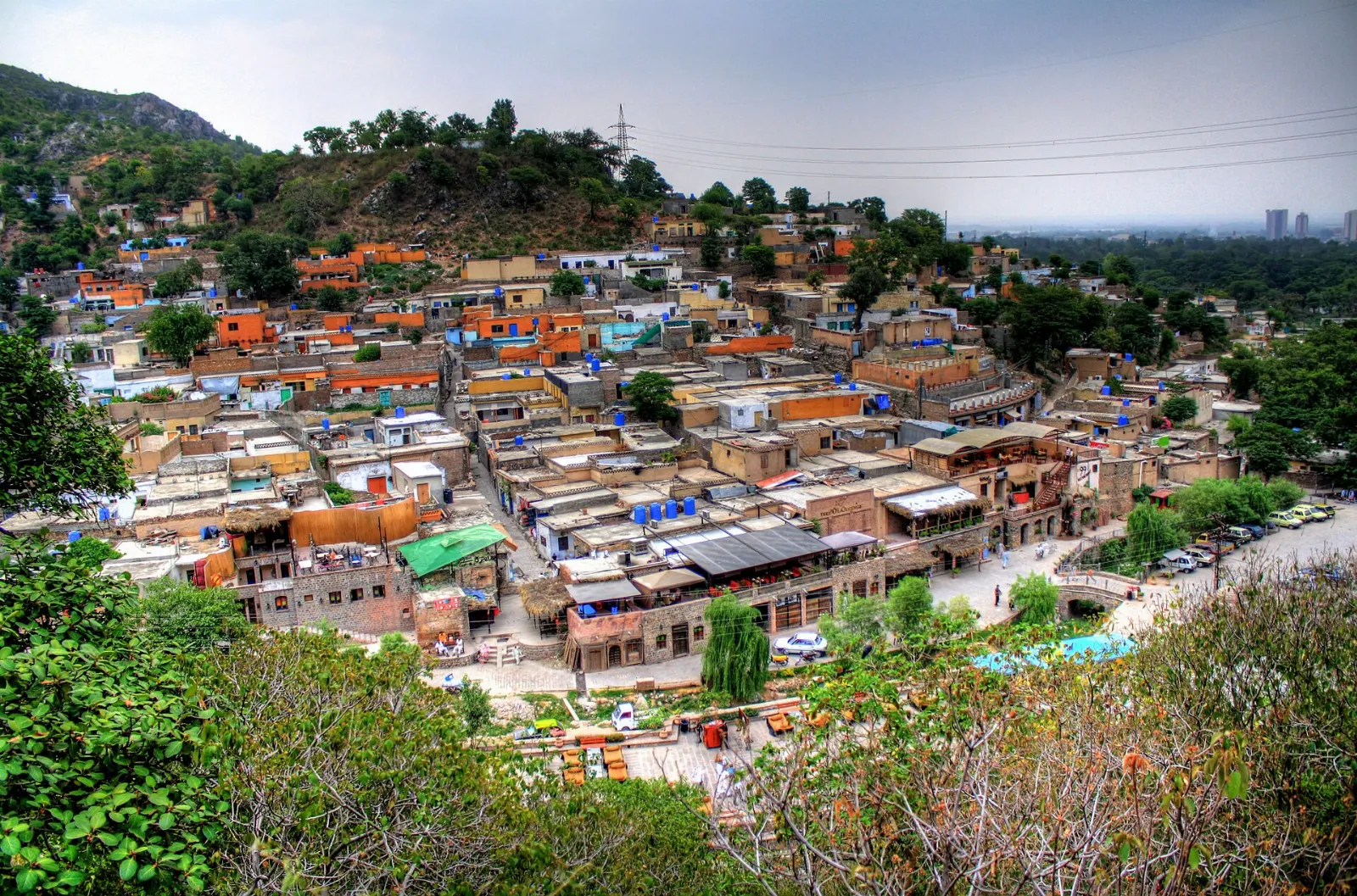
Tucked into a fold of the hills near Sector E-7, Saidpur is a centuries-old village that has been restored as a heritage and dining area. Its lanes hold a restored Hindu temple and other old stone buildings that reflect the mixed communities who lived here before 1947.
Saidpur Village preserves historic religious buildings from its mixed past. Photo: a8junea, Wikimedia Commons, CC BY-SA 3.0
Shah Allah Ditta caves
West along the Margalla foothills, near the village of Shah Allah Ditta, a cluster of rock-cut caves and an ancient banyan tree are linked by local tradition to Buddhist monks and later Sufi ascetics.
Lakes, shrines and day trips
Rawal Lake and Lake View Park
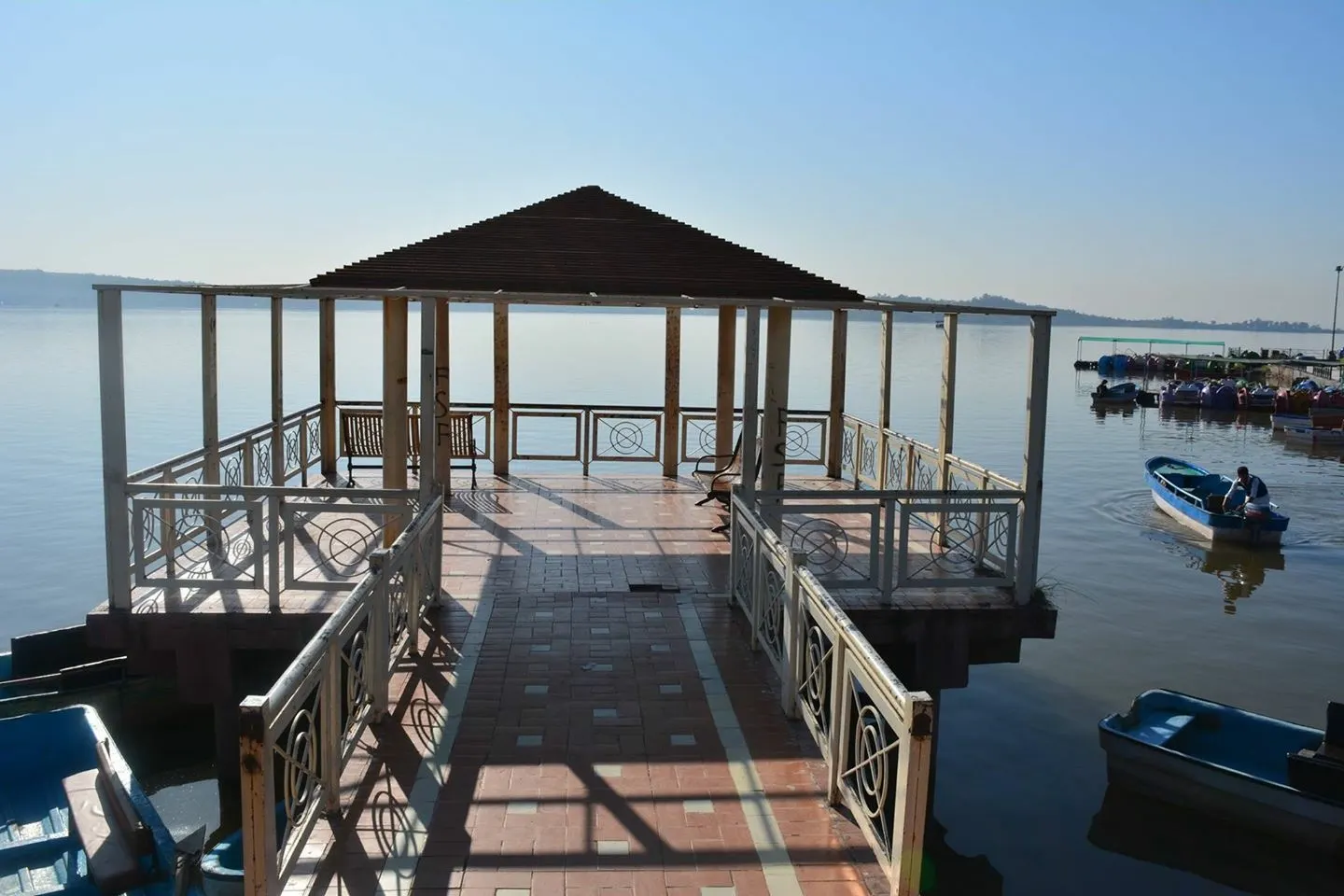
The reservoir of Rawal Lake supplies water to Rawalpindi and forms a broad sheet of water on the city's eastern side. Lake View Park along its shore has walking paths, picnic lawns, an aviary and boating.
Rawal Lake is a reservoir on the eastern side of Islamabad. Photo: Mahi619, Wikimedia Commons, CC BY-SA 4.0
Golra Sharif
West of the city, the shrine of the Sufi saint Pir Meher Ali Shah at Golra Sharif draws a steady stream of devotees, especially on Thursday evenings. Dress conservatively, remove shoes where required and be discreet with photography.
Golra Sharif railway station hosts a museum of historic railway equipment. Photo: Ali Mujtaba, Wikimedia Commons, CC BY-SA 4.0
Taxila
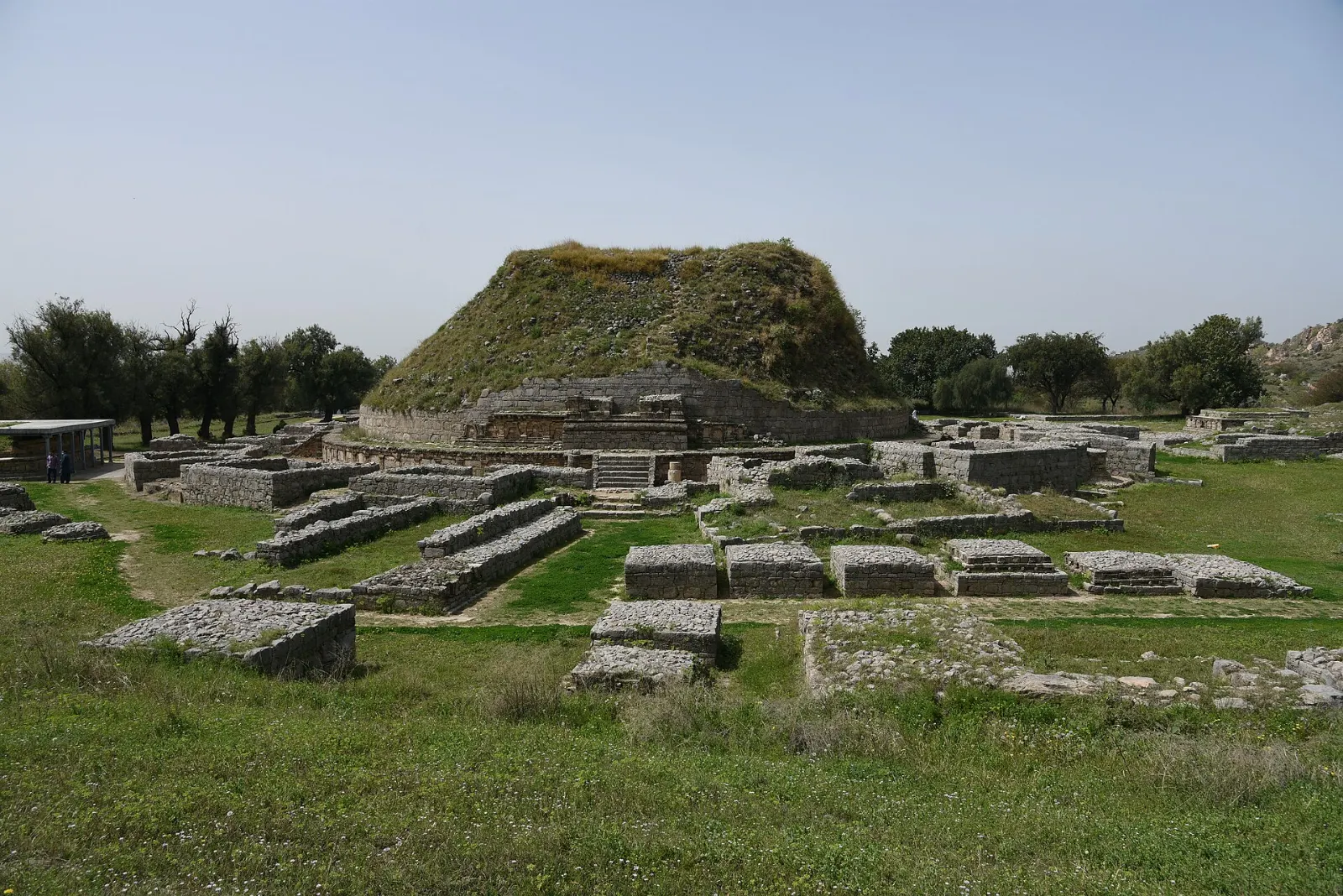
Around forty-five minutes to an hour's drive northwest of Islamabad in Punjab, Taxila was a great center of the Gandhara civilization and is inscribed by UNESCO for its layers of settlement and Buddhist monasteries. The Taxila Museum displays some of the finest Gandhara sculpture anywhere, and nearby sites such as the Dharmarajika stupa and the Jaulian monastery show the remains of the stupas and cells where monks lived and studied.
The Dharmarajika stupa at Taxila is one of the Buddhist sites in this UNESCO World Heritage area. Photo: Mhtoori, Wikimedia Commons, CC BY-SA 4.0
Ad
Food and local flavors
Islamabad eats well, drawing on Punjabi, Pashtun and Mughlai traditions. Look for chapli kebab, a flat, spiced minced-meat patty fried crisp; karahi, chicken or mutton cooked fast in a wok-shaped pan with tomatoes, green chilies and ginger; and nihari, a slow-cooked beef stew traditionally eaten for breakfast with naan.
Each sector has its own market, known locally as a markaz or Super. Jinnah Super in F-7 and Super Market in F-6 have bakeries, cafes, juice shops and bookshops, while Kohsar Market in F-6/3 has a more upscale cafe scene.
Popular dishes to try in Islamabad
Chapli kebab Look for chapli kebab, a flat, spiced minced-meat patty fried crisp; karahi, chicken or mutton cooked fast in a wok-shaped pan with tomatoes, green chilies and ginger; and…Photo: Miansari66, Wikimedia Commons, Public domainKarahi Look for chapli kebab, a flat, spiced minced-meat patty fried crisp; karahi, chicken or mutton cooked fast in a wok-shaped pan with tomatoes, green chilies and ginger; and…Photo: Pankajrawat3, Wikimedia Commons, CC BY-SA 4.0Nihari Look for chapli kebab, a flat, spiced minced-meat patty fried crisp; karahi, chicken or mutton cooked fast in a wok-shaped pan with tomatoes, green chilies and ginger; and…Photo: রিজওয়ান আহমেদ, Wikimedia Commons, CC0
Where to stay
Islamabad's sectors are labeled by letter and number, and the location you choose shapes your trip. The F-6 and F-7 sectors are the most convenient for first-time visitors, with easy access to the Margalla trails, Jinnah Super and Kohsar Market, and plenty of guesthouses.
Many hotels in central Islamabad have airport-style security screening at the entrance. That is normal here, and it is worth choosing a property with a secure perimeter and reliable reviews from foreign travelers.
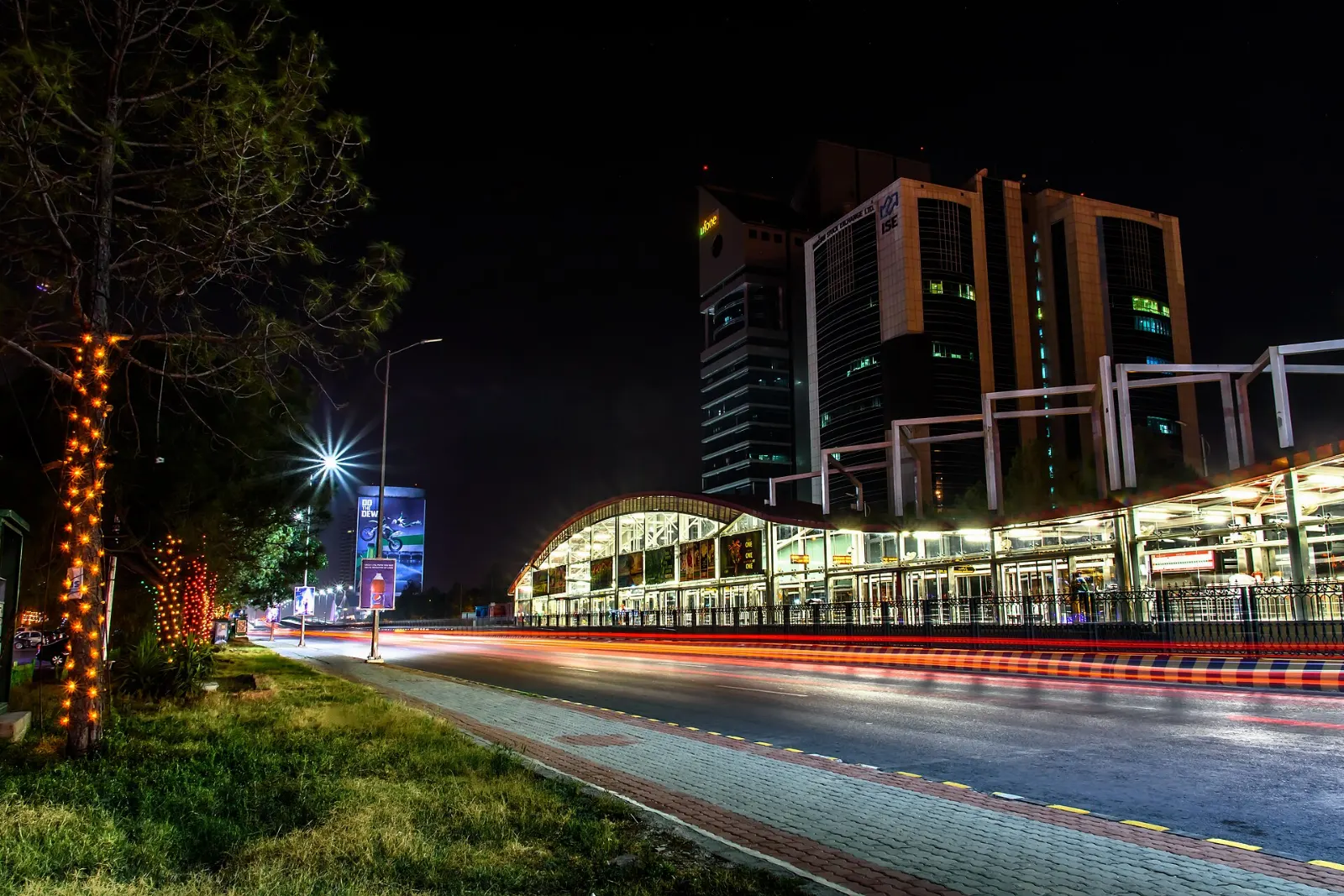
Jinnah Avenue forms the central commercial spine of Islamabad.Photo: Hassan Ejaz, Wikimedia Commons, CC BY-SA 4.0
Where to stay in Islamabad
Margalla The F-6 and F-7 sectors are the most convenient for first-time visitors, with easy access to the Margalla trails, Jinnah Super and Kohsar Market, and plenty of guesthouses.Photo: Zain.3nov, Wikimedia Commons, CC BY-SA 4.0Jinnah Avenue Blue Area and F-5, along the central commercial spine of Jinnah Avenue, suit business travelers and those who want to be close to the main international hotels and offices.Photo: Hassan Ejaz, Wikimedia Commons, CC BY-SA 4.0Saidpur E-7 is a leafy, upscale residential area near Saidpur and the hills.Photo: a8junea, Wikimedia Commons, CC BY-SA 3.0
Islamabad has a humid subtropical climate with distinct seasons. Autumn, from October into November, is the favorite: clear skies after the monsoon, warm days and cool evenings, and excellent hiking.
Islamic holidays such as Eid al-Fitr and Eid al-Adha shift each year with the lunar calendar; offices close and many residents travel, so roads are quieter but some services pause.
Getting there, getting around and safety
Arriving: Islamabad International Airport, which opened in 2018, lies west of the city near Fateh Jang, and is served by Pakistani and Gulf carriers with many connections through Doha, Dubai, Abu Dhabi and Istanbul.
Getting around: Ride-hailing apps are the simplest and most transparent way to move between sectors.
Visas and registration: Most foreign visitors need a visa arranged in advance; Pakistan's official online visa portal handles tourist e-visa applications for many nationalities.
Safety: As of mid-2026, the U.S. State Department rates Pakistan at Level 3, Reconsider Travel, citing terrorism, armed conflict, crime and kidnapping, and advises against all travel to Balochistan, Khyber Pakhtunkhwa including the former tribal areas, and the vicinity of the Line of Control.
Ad
A suggested itinerary
First day
Start with an early hike on Trail 3 or Trail 5 while the air is cool. After lunch in F-6 or F-7, visit Faisal Mosque in the afternoon, then drive up to Daman-e-Koh for the view as the light softens.
Second day
Spend the morning at the Lok Virsa Heritage Museum, then cross to the Pakistan Monument and its museum.
Third day
Leave early for Taxila with a driver and guide, spending the morning at the museum and the Dharmarajika and Jaulian sites.
Practical tips
Read your government's current travel advisory before booking and again before departure, and enroll in your embassy's alert program.
Carry your passport and visa copy at all times; police checkpoints are routine and polite cooperation keeps things quick.
Dress modestly throughout the city, and carry a scarf for mosque and shrine visits.
Ask before photographing people, and never photograph military sites, checkpoints or government buildings.
Use ride-hailing apps or hotel transport, especially after dark, and share your trip details with someone you trust.
Check local news before hiking, as trails and parks can close at short notice during security events.
Carry some cash for small vendors, but expect cards to work in larger hotels, malls and chain restaurants.