WiserMap — Choose wisely. Connect locally.Choose wisely. Connect locally.Add your business
Salzburg, Austria · Travel guide

Salzburg Austria Mozart Old Town and Hohensalzburg Fortress

Salzburg is a city of domes, bells and music squeezed between two hills on the banks of the Salzach River.

By WiserMap TravelUpdated October 2026 9 places9 min read
FacebookXLinkedIn

It is also the birthplace of Wolfgang Amadeus Mozart, home of one of the world's great music festivals and the setting of The Sound of Music. This guide shows you the best places to visit, where to eat and stay, and how to time your trip.

At a glance Salzburg
  1. Best timeMay, June, September and the Advent season; late July and August for the festival.
  2. How longTwo to three days for the old town, fortress and Hellbrunn; add a day for mountains or lakes.
  3. Getting thereFly into Salzburg Airport, or take a train from Munich in about an hour and a half or from Vienna.

Why visit Salzburg

Salzburg packs an extraordinary amount into a walkable center. Within a few minutes you can pass from a Romanesque abbey to a Baroque cathedral, through a cliffside cemetery, and up to a fortress with views across the Alps.

Music is everywhere. Mozart's homes are museums, concerts fill churches and palace halls through the year, and the Salzburg Festival, founded in 1920, draws performers and audiences from around the world each summer.

The old town: fortress, cathedral and squares

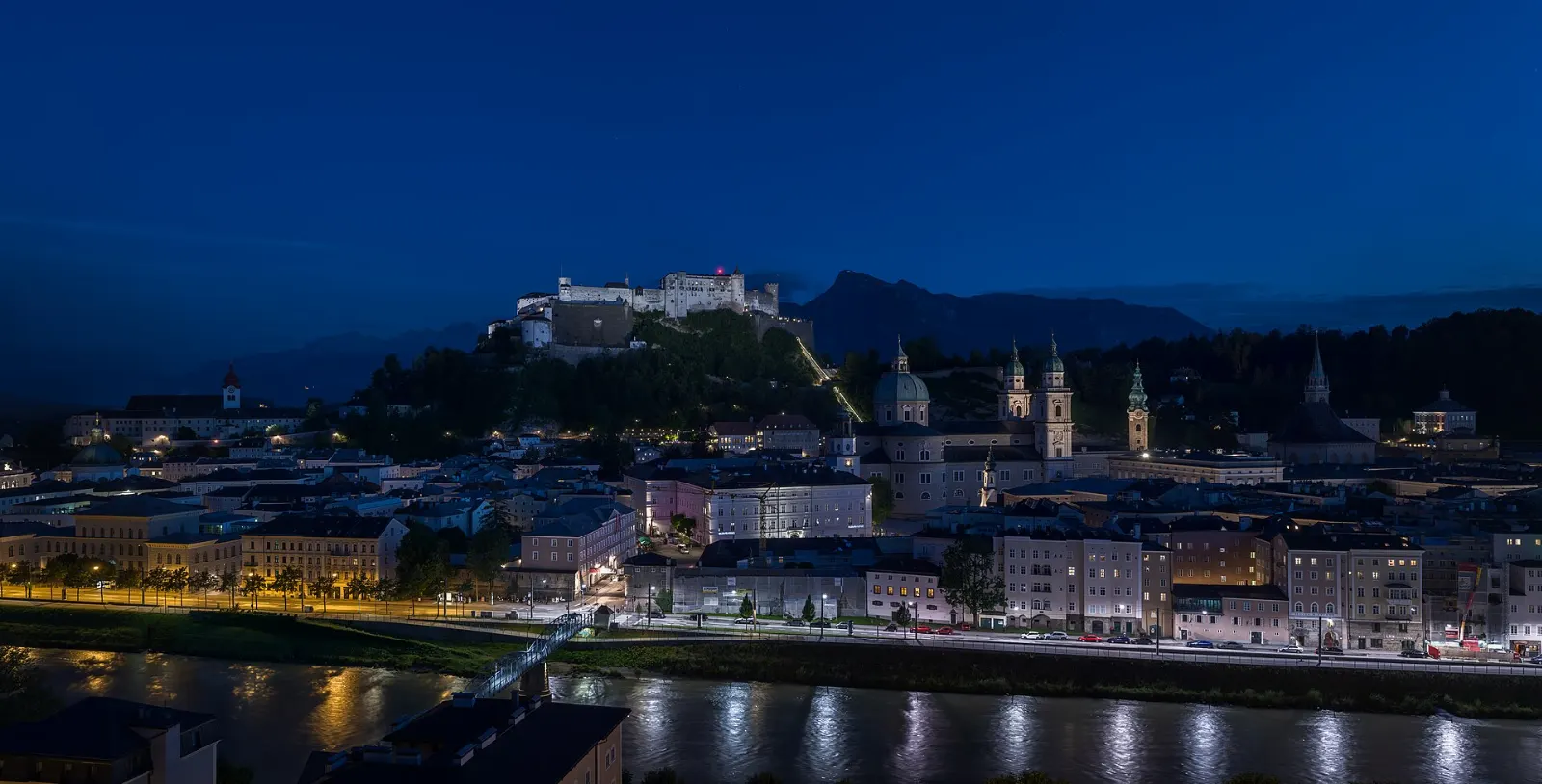
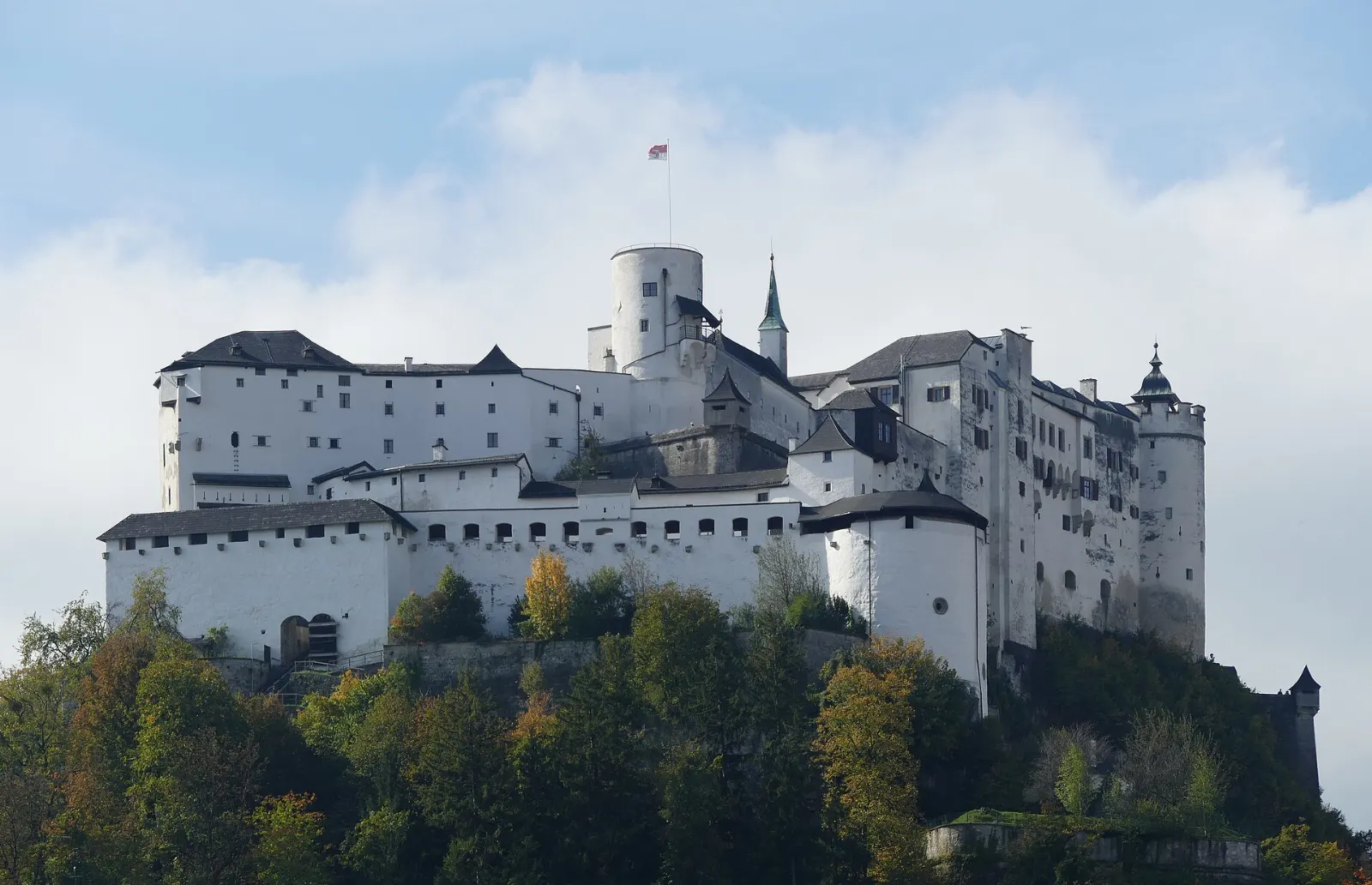
A massive white fortress with towers and ramparts on a forested hill, Salzburg, Austria

Hohensalzburg Fortress

Begun in 1077 and expanded over the following centuries, Hohensalzburg is one of the largest medieval castles in Central Europe. Inside you can tour the princely state rooms, a fortress museum and a marionette exhibit, and walk the ramparts for views over the old town and toward the mountains.

Begun in 1077, Hohensalzburg is one of the largest medieval castles in Central Europe. Photo: Andreas Stiasny, Wikimedia Commons, CC BY-SA 4.0
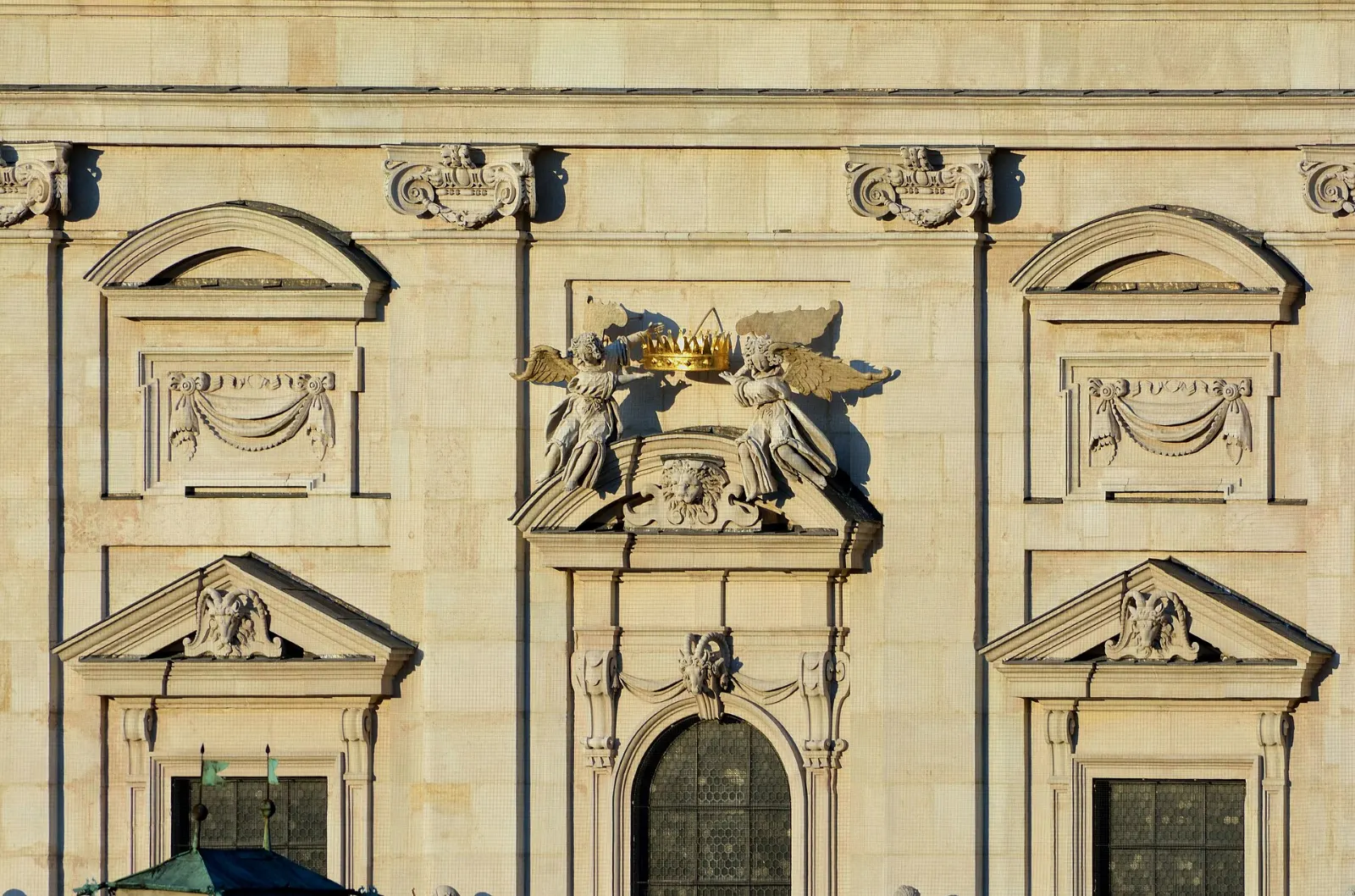
A Baroque cathedral facade of pale marble with twin towers and a green dome, Salzburg, Austria

Salzburg Cathedral and Domplatz

The cathedral was rebuilt in the early Baroque style and consecrated in 1628, with a pale marble facade, three bronze doors and a bright interior under a soaring dome. Mozart was baptized here and later served as an organist.

Salzburg Cathedral, rebuilt in Baroque style in the 17th century, is where Mozart was baptized. Photo: P e z i, Wikimedia Commons, CC BY-SA 3.0 at

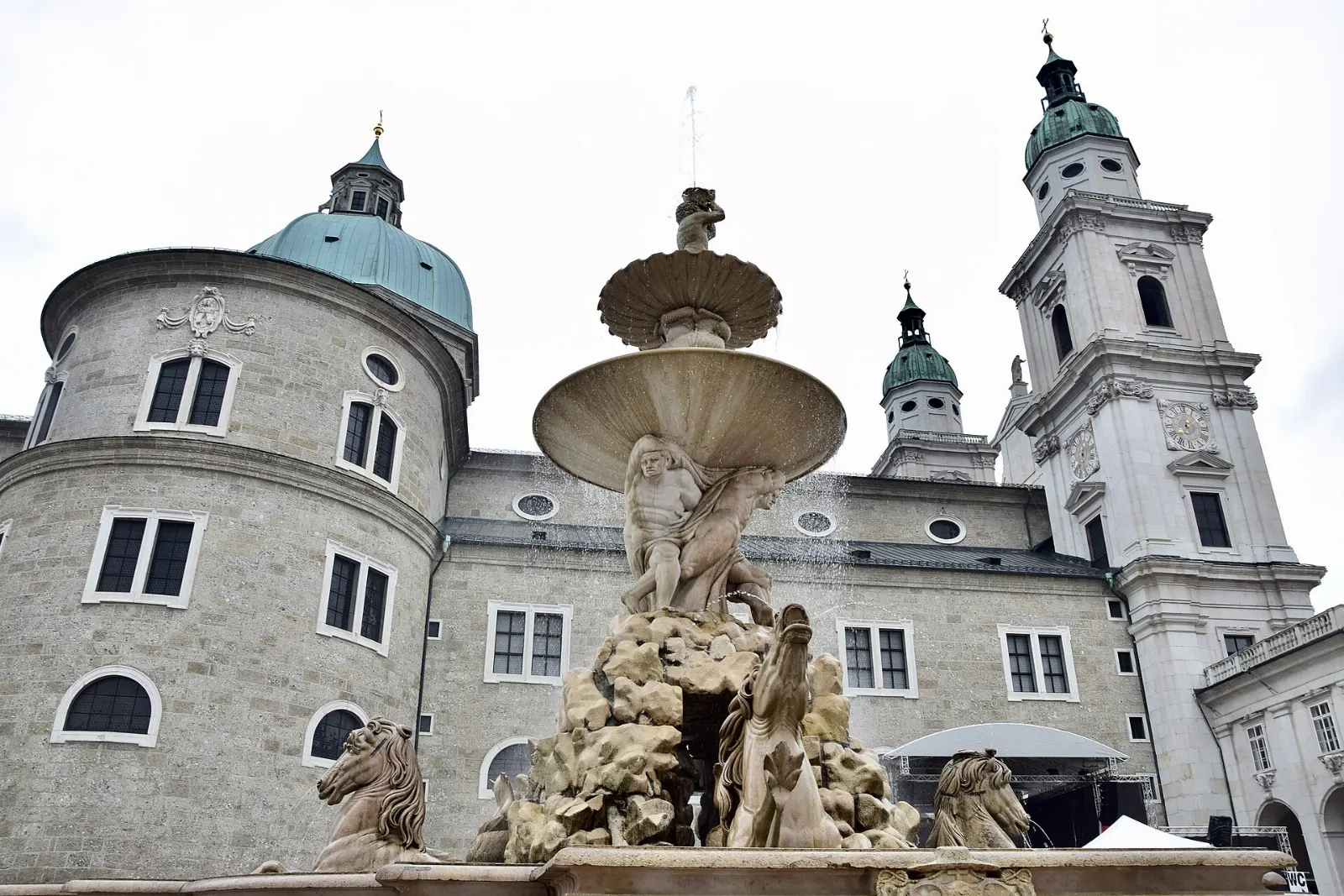
A large Baroque fountain with horses and figures in a wide square beside palace buildings, Salzburg, Austria

Residenzplatz and the DomQuartier

Residenzplatz, with its large Baroque fountain, is flanked by the Residenz, where the prince-archbishops lived and received guests. The DomQuartier route links the palace state rooms, the Residenzgalerie with European paintings, the cathedral organ gallery and the museum of St. Peter's Abbey in one continuous walk.

The Residenz Fountain stands at the center of Residenzplatz, beside the archbishops' palace. Photo: Ank Kumar, Wikimedia Commons, CC BY-SA 4.0

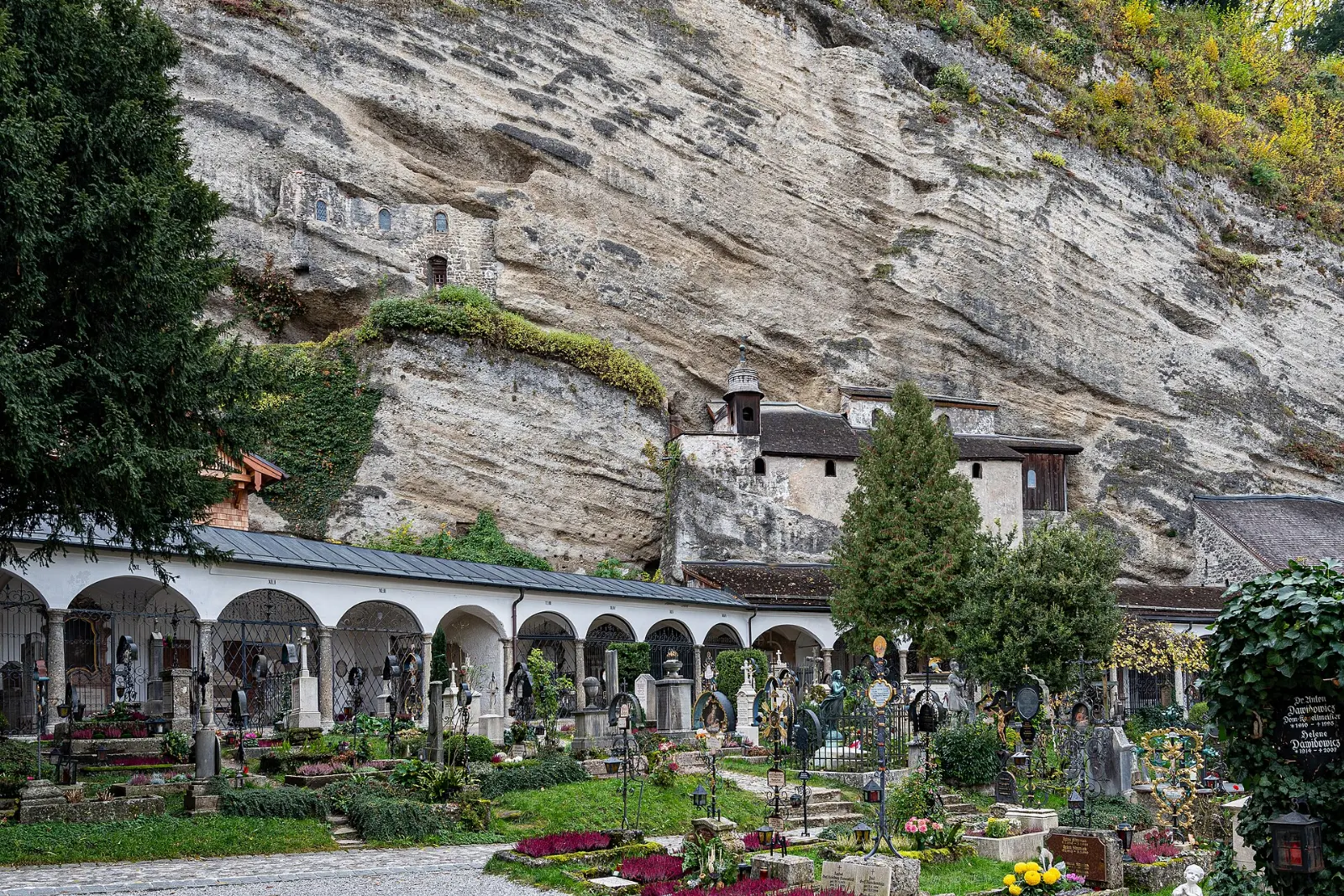
Ornate wrought iron grave markers and arcades beneath a cliff with cave openings, Salzburg, Austria

St. Peter's Abbey, cemetery and catacombs

Founded around 700 by Saint Rupert, St. Peter's is among the oldest monasteries in the German-speaking world.

St. Peter's Cemetery lies at the foot of the Monchsberg cliff, where catacombs are carved into the rock. Photo: Isiwal, Wikimedia Commons, CC BY-SA 4.0

Nonnberg Abbey

Also founded by Saint Rupert, Nonnberg is described as the oldest continuously operating women's convent in the German-speaking world. It sits on a terrace below the fortress, and its church holds Romanesque frescoes.

Mozart's Salzburg and the right bank

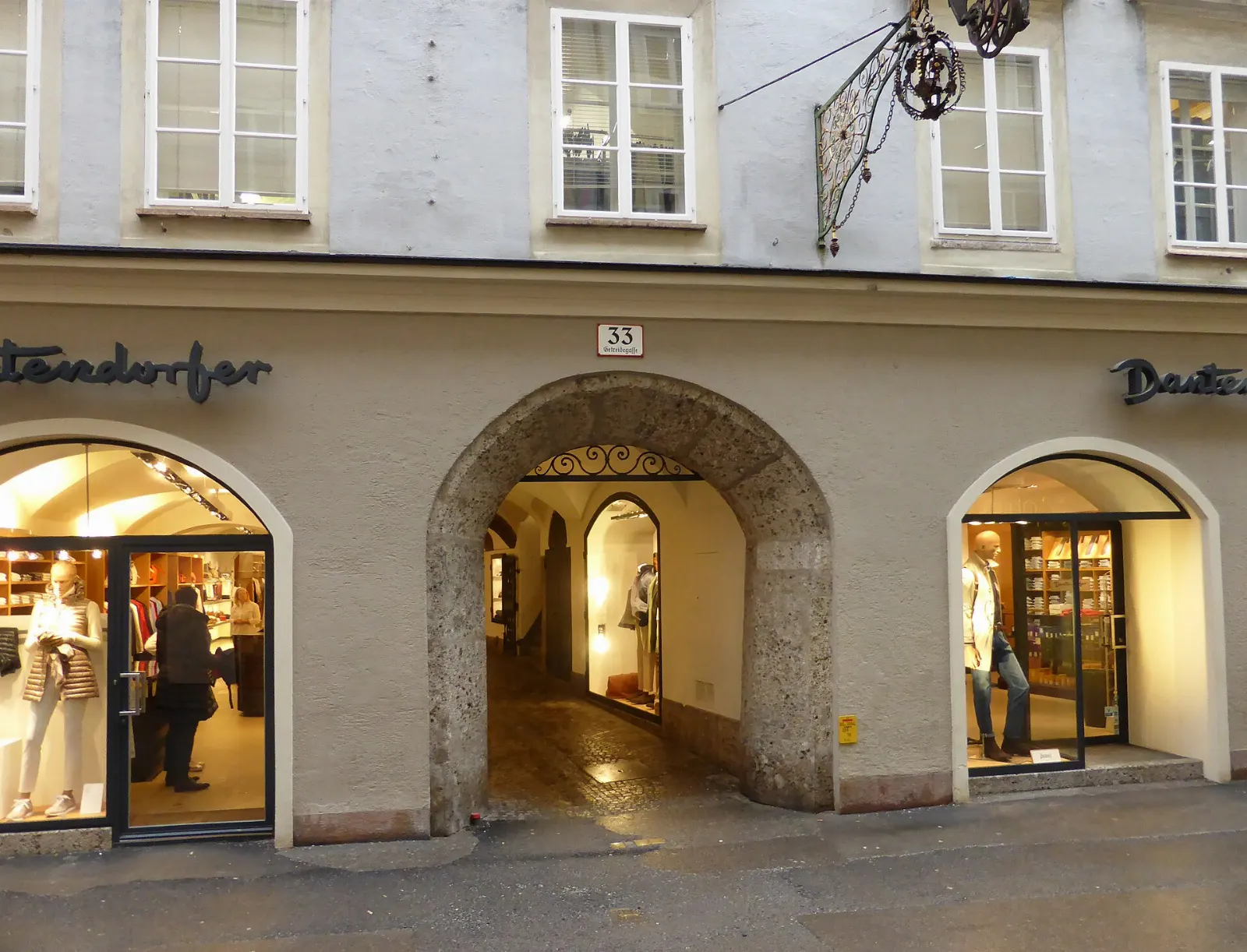
A narrow street lined with tall old houses and decorative wrought iron shop signs, Salzburg, Austria

Getreidegasse

This narrow street is the old town's main shopping lane, lined with tall merchant houses, hidden passages and wrought iron guild signs, many now advertising modern brands in traditional style. Allow an hour to wander and explore the courtyards that link it with the riverfront.

Getreidegasse is known for its tall townhouses and wrought iron guild signs. Photo: © 1971markus, Wikimedia Commons, CC BY-SA 4.0

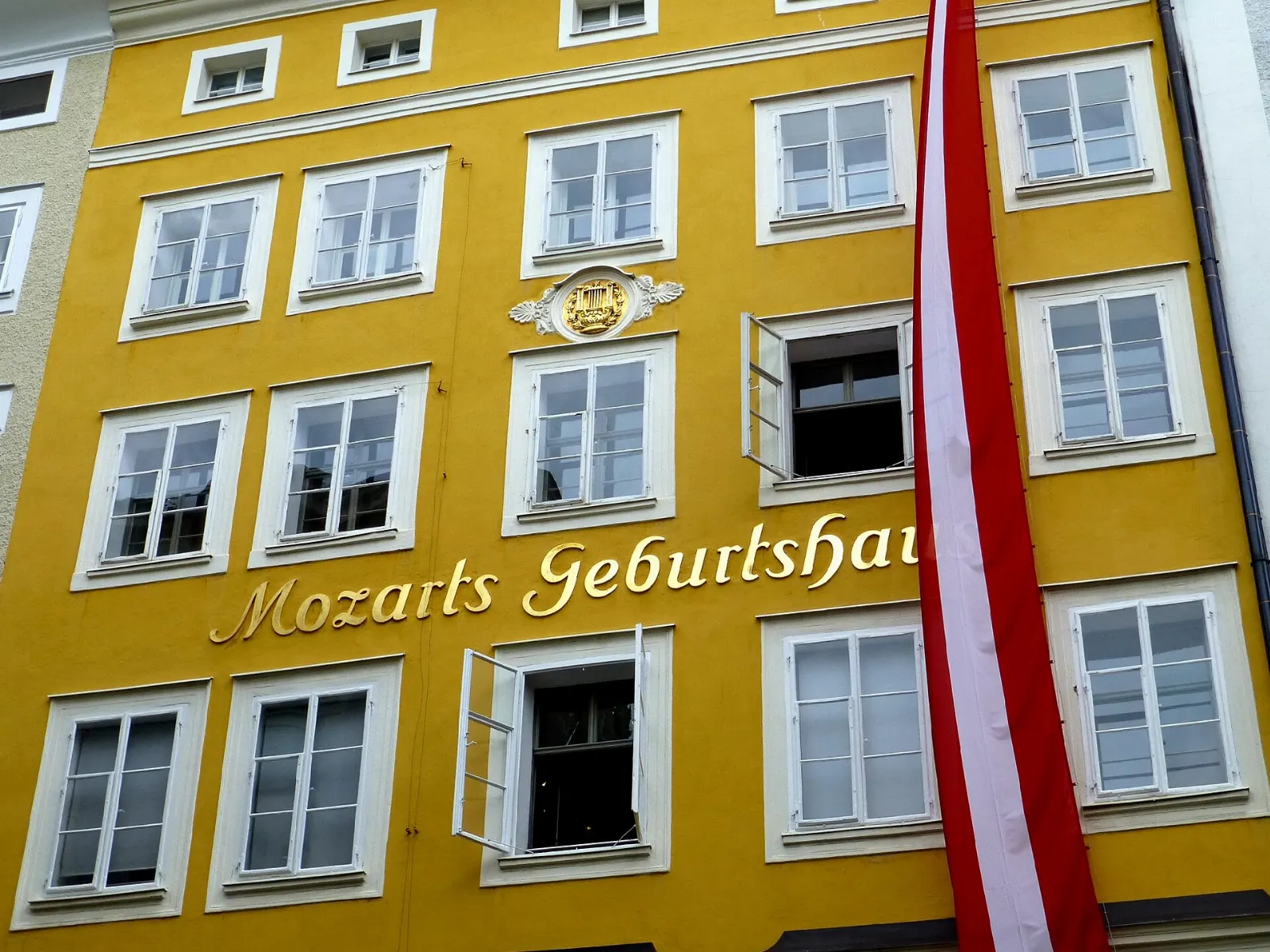
A tall yellow townhouse with the words Mozarts Geburtshaus painted on its facade, Salzburg, Austria

Mozart's Birthplace

Mozart was born on 27 January 1756 in the third-floor apartment at Getreidegasse 9, where the family lived until 1773. The museum displays his childhood violin, portraits, letters and family belongings.

Mozart was born in this house at Getreidegasse 9 on 27 January 1756. Photo: Hiroki Ogawa, Wikimedia Commons, CC BY 3.0

Mozart Residence

On Makartplatz, the Mozart family's larger later home was badly damaged in the Second World War and rebuilt as a museum. It focuses on Mozart's years as a young court musician, his family life and his travels across Europe, with original instruments, documents and portraits.

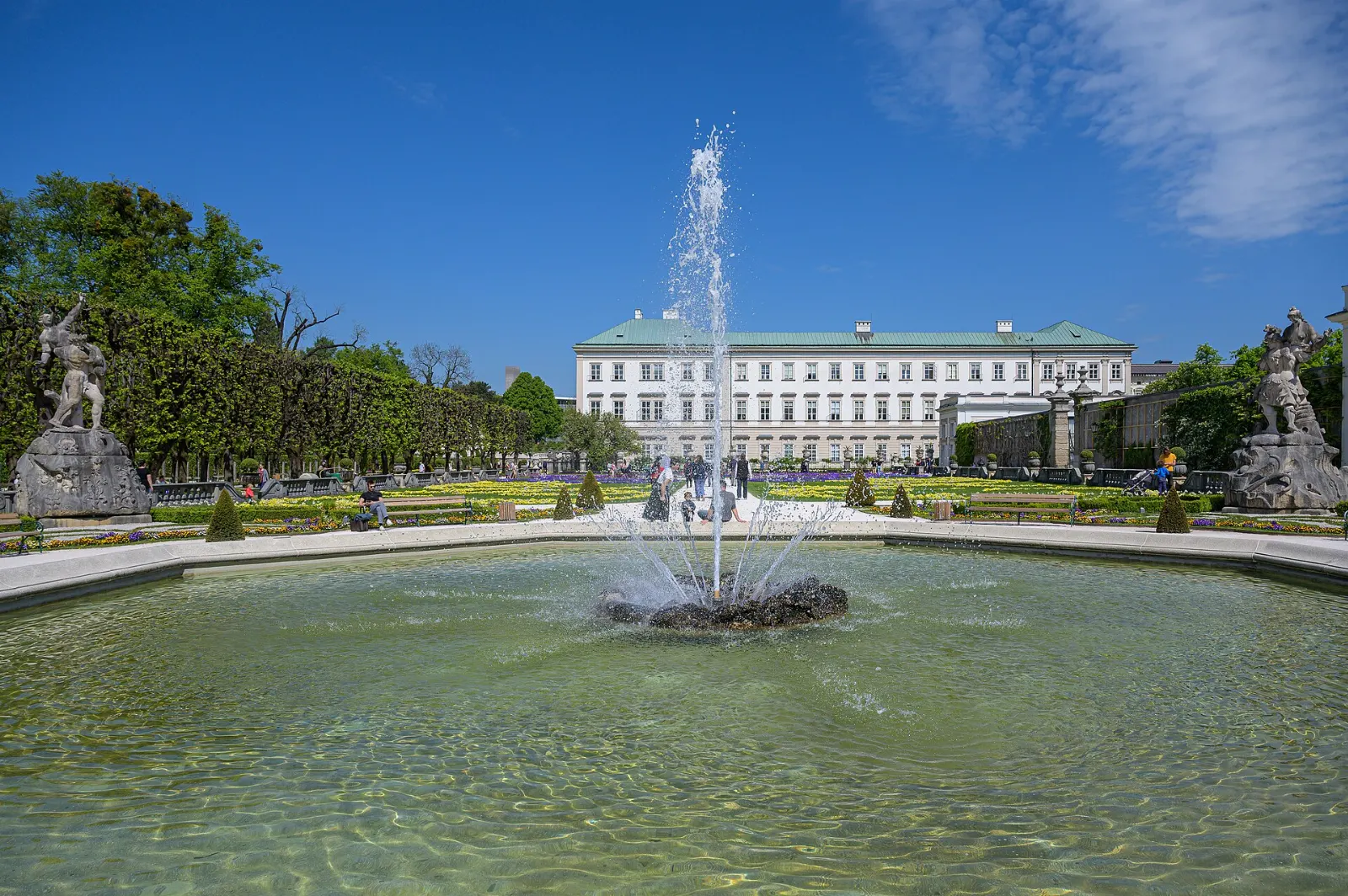
Geometric flower beds and fountains in a formal garden with a fortress on a hill beyond, Salzburg, Austria

Mirabell Palace and Gardens

Prince-Archbishop Wolf Dietrich built the original palace in 1606 for Salome Alt, the mother of his children. Its Marble Hall is a popular wedding and concert venue, and the formal gardens, with fountains, hedges, mythological statues and a dwarf garden, frame a famous view of the cathedral and fortress.

The formal Mirabell Gardens frame a classic view of the old town and Hohensalzburg. Photo: Isiwal, Wikimedia Commons, CC BY-SA 4.0

Kapuzinerberg and Mönchsberg

Two forested hills hem in the old town. From Linzergasse, steps climb the Kapuzinerberg past a Capuchin monastery to viewpoints over the rooftops.

Beyond the center: palaces and peaks

A grotto with water jets spraying around a stone table in a palace garden, Salzburg, Austria

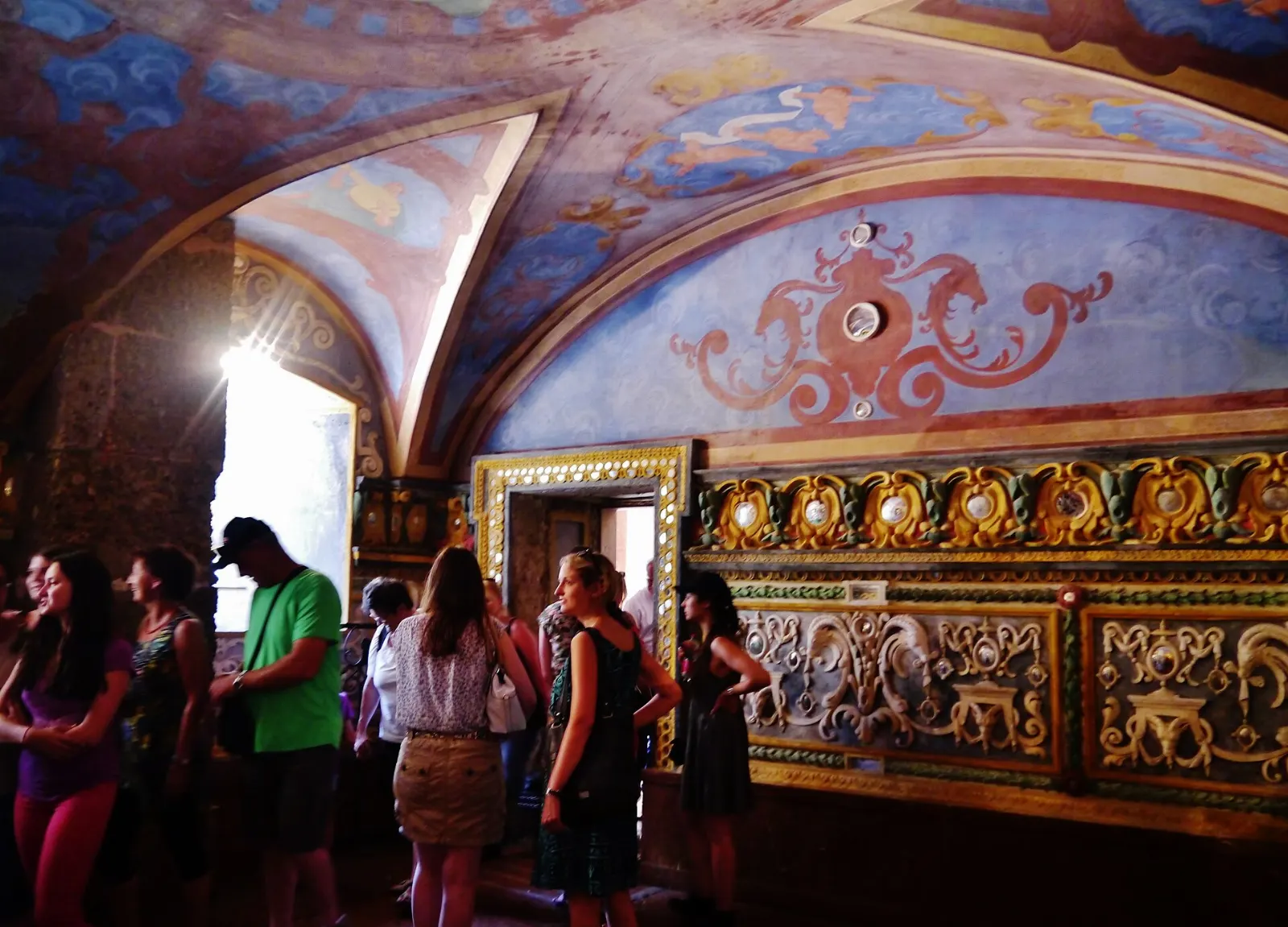
Hellbrunn Palace and the trick fountains

South of the center, Hellbrunn was built from 1612 for Prince-Archbishop Markus Sittikus as a pleasure palace. Its famous trick fountains, hidden in grottoes, stone seats and a mechanical theater, still soak unsuspecting guests on guided tours.

The trick fountains of Hellbrunn Palace were created for Prince-Archbishop Markus Sittikus in the early 17th century. Photo: Zairon, Wikimedia Commons, CC BY-SA 4.0

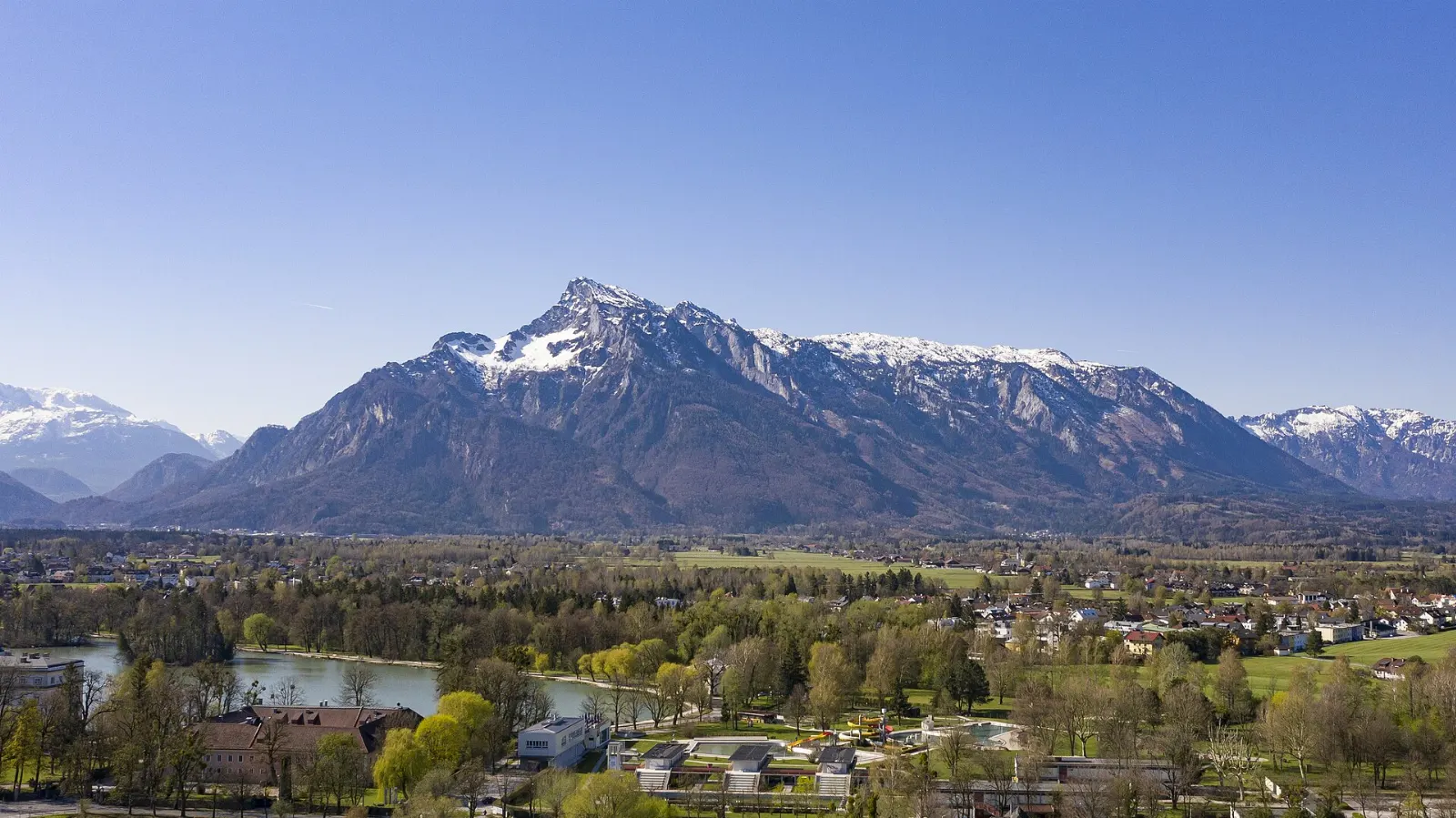
A rocky mountain summit above clouds with a cable car station, Salzburg, Austria

Untersberg

The Untersberg cable car carries visitors from St. Leonhard to the Geiereck summit at 1,776 meters, with views over Salzburg, the Bavarian Alps and the lakes. Short trails and a hut await at the top.

The Untersberg cable car climbs to the Geiereck summit at 1,776 meters, south of the city. Photo: Arne Müseler, Wikimedia Commons, CC BY-SA 3.0 de

Hallein salt mine

About half an hour south, the salt mine at Bad Dürrnberg above Hallein offers guided tours with a mine train, wooden miners' slides and a raft crossing of an underground salt lake, along with insights into the Celtic miners who worked here. Allow half a day including travel.

Food and local flavors

Salzburg's signature dessert is the Salzburger Nockerl, a golden baked souffle shaped into three peaks said to represent the city's hills, made to order and large enough to share.

For hearty food, try Wiener schnitzel, Kasnocken cheese dumplings, Tafelspitz boiled beef and Kaiserschmarrn.

Popular dishes to try in Salzburg

Salzburger Nockerl in Salzburg, Austria
Salzburger Nockerl Food and local flavorsSalzburg's signature dessert is the Salzburger Nockerl, a golden baked souffle shaped into three peaks said to represent the city's hills, made to order…Photo: Tourismus Salzburg - original uploader was Salzburg at de.wikipedia, Wikimedia Commons, CC BY-SA 3.0
Mozartkugel in Salzburg, Austria
Mozartkugel The Mozartkugel, a ball of pistachio marzipan and nougat coated in chocolate, was created by confectioner Paul Fürst in 1890, and the family shop still makes them by hand in…Photo: Unknown authorUnknown author, Wikimedia Commons, Public domain
Wiener schnitzel in Salzburg, Austria
Wiener schnitzel For hearty food, try Wiener schnitzel, Kasnocken cheese dumplings, Tafelspitz boiled beef and Kaiserschmarrn.Photo: Dale Cruse, Wikimedia Commons, CC BY 2.0
Kaiserschmarrn in Salzburg, Austria
Kaiserschmarrn For hearty food, try Wiener schnitzel, Kasnocken cheese dumplings, Tafelspitz boiled beef and Kaiserschmarrn.Photo: Ich, Wikimedia Commons, CC BY-SA 4.0

Where to stay

Altstadt (left bank). The old town puts the cathedral, fortress and Getreidegasse at your door.

Near the main station. The Hauptbahnhof area is practical for rail travelers and day trips, with frequent buses to the center about 15 minutes' walk away.

Nonntal and Parsch. These quieter residential districts below the fortress and toward the Gaisberg suit families and longer stays, with easy access by bus or bike.

Where to stay in Salzburg

Getreidegasse, Salzburg, Austria
Getreidegasse The old town puts the cathedral, fortress and Getreidegasse at your door.Photo: Snotty (talk), Wikimedia Commons, CC BY 3.0
Mirabell, Salzburg, Austria
Mirabell Across the river, around Mirabell, Linzergasse and Steingasse, you will find a mix of historic guesthouses and modern hotels within a short walk of the sights.Photo: Clemens Stockner, Wikimedia Commons, CC BY-SA 4.0
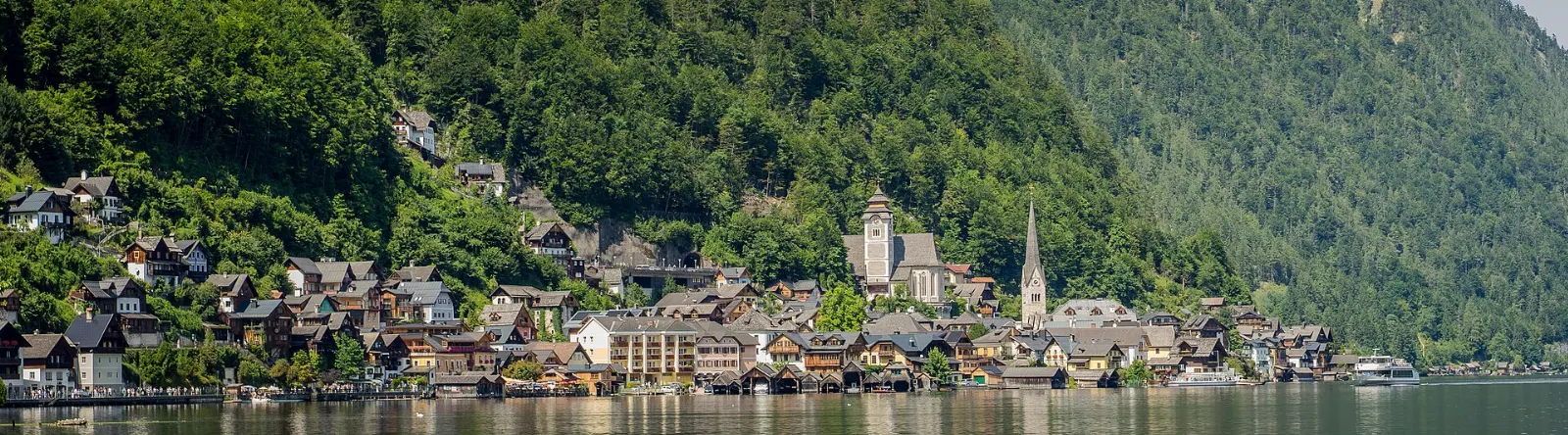
Steingasse, Salzburg, Austria
Steingasse Across the river, around Mirabell, Linzergasse and Steingasse, you will find a mix of historic guesthouses and modern hotels within a short walk of the sights.Photo: Peter g at szg (talk), Wikimedia Commons, CC BY-SA 3.0 at

Best time to visit

Late spring and early autumn are ideal, with mild weather, blooming or golden gardens and moderate crowds.

Winter has its own appeal.

Getting there and getting around

By air. Salzburg W. A. Mozart Airport lies about 20 minutes from the center by trolleybus.

By train. The Hauptbahnhof has frequent services to Vienna, Linz, Innsbruck and Munich, plus night trains from several European cities.

By car. The A1 and A8 motorways reach the city; Austrian motorways require a vignette.

Getting around. The old town is compact and best explored on foot.

A suggested itinerary

First day

Start early at Mirabell Gardens, cross the river to Mozart's Birthplace and Getreidegasse, then visit the cathedral and St. Peter's Cemetery.

Second day

Walk the DomQuartier, then take the Mönchsberg lift for the ridge walk and museum.

Third day

Ride the Untersberg cable car on a clear morning, or tour the Hallein salt mine.

Practical tips

  • Book accommodation and tickets months ahead for the festival season and Advent weekends.
  • Consider the Salzburg Card if you plan to visit several museums and use public transport.
  • Visit popular sights early or late in the day, as tour groups peak around midday.
  • Carry an umbrella; rain can arrive quickly from the mountains.
  • Dress modestly and keep quiet in churches, especially during services.
SalzburgWISERMAP PLACESalzburg: photos, reviews & things to doSee traveler photos and reviews, or share your own →

More places to visit

All travel guides →