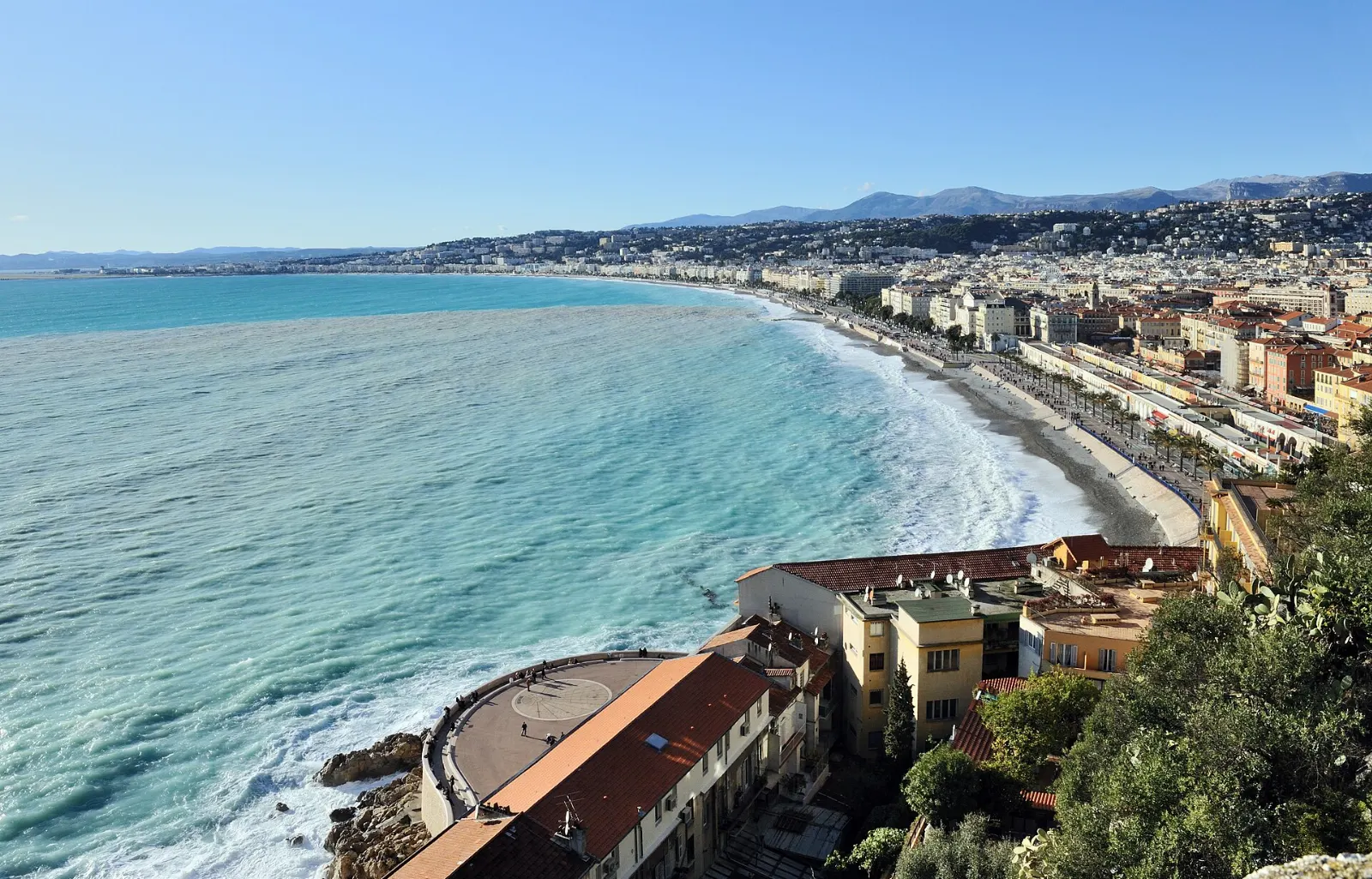
The French Riviera, or Cote d'Azur, runs along the Mediterranean from Cannes to the Italian border, with the Maritime Alps rising steeply behind it.
AT A GLANCE
Best time
May, June and September for warm seas and fewer crowds; February for carnival and the lemon festival.
How long
Five to seven days to see Nice and the main towns along the coast.
Getting there
Fly into Nice Cote d'Azur Airport, linked to the city center by tram.
Why visit Nice and the French Riviera
The Riviera combines a mild climate, sparkling sea and mountain scenery with a remarkable cultural heritage. Matisse, Chagall, Picasso, Renoir and Cocteau all lived and worked here, and their museums are some of the finest in France.
Nice itself only became French in 1860, after centuries under the House of Savoy, and its Italian influence is still visible in the food, architecture and local dialect.
Nice: the old town, the seafront and the museums
Promenade des Anglais
The Promenade des Anglais follows the Baie des Anges for several kilometers, lined with palm trees, blue chairs and Belle Epoque facades.
Russian Orthodox Cathedral of Saint Nicholas
West of the train station, this cathedral with its colorful onion domes recalls the Russian aristocrats who wintered in Nice in the nineteenth century. Its interior is rich with icons and carved wood.
Vieux Nice and the Cours Saleya
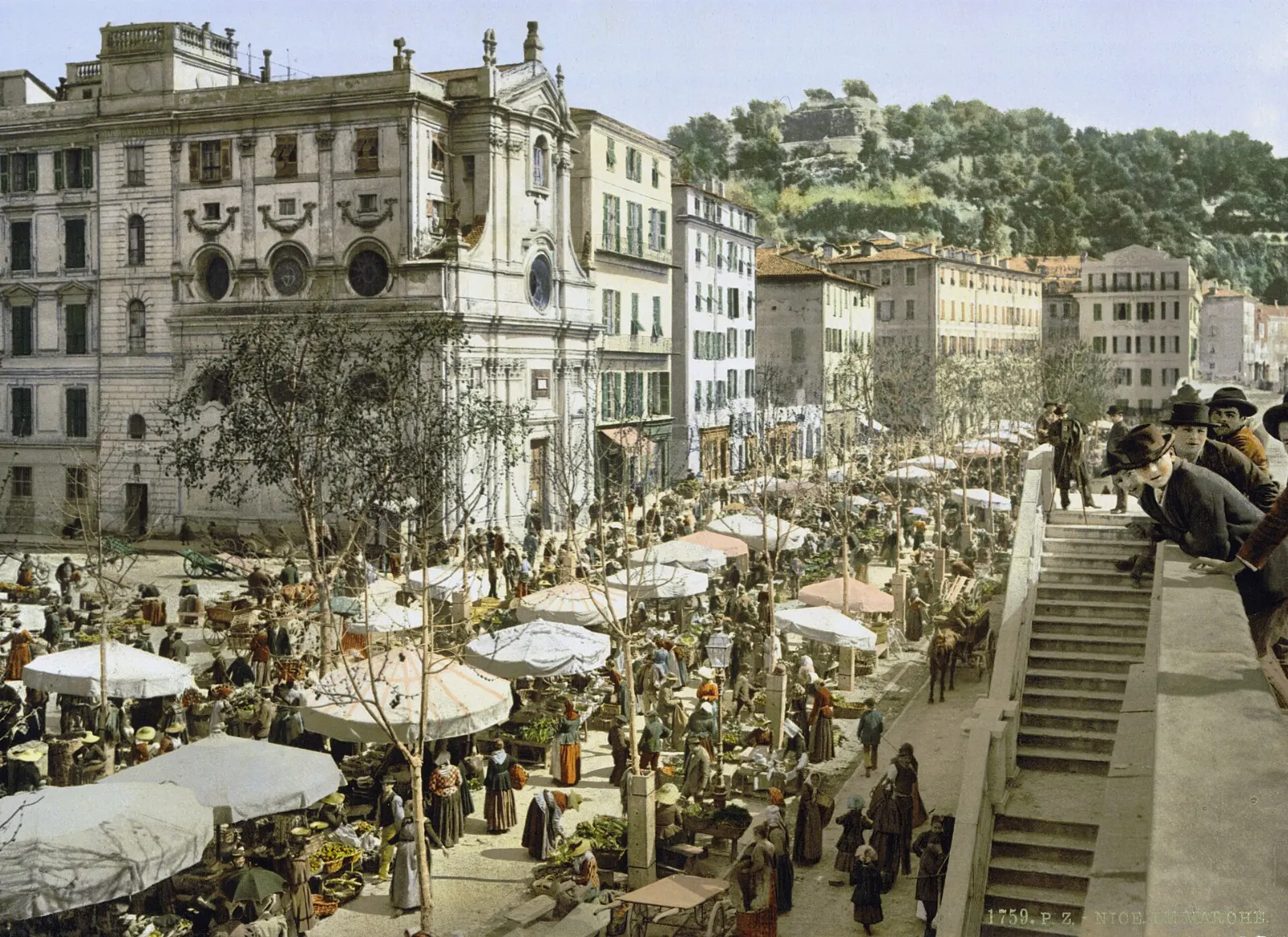
The old town is a maze of narrow lanes painted in ochre and red, with Baroque churches, small squares and food shops. The Cours Saleya is its heart, hosting a colorful flower and produce market most mornings and an antiques market on Mondays.
Castle Hill
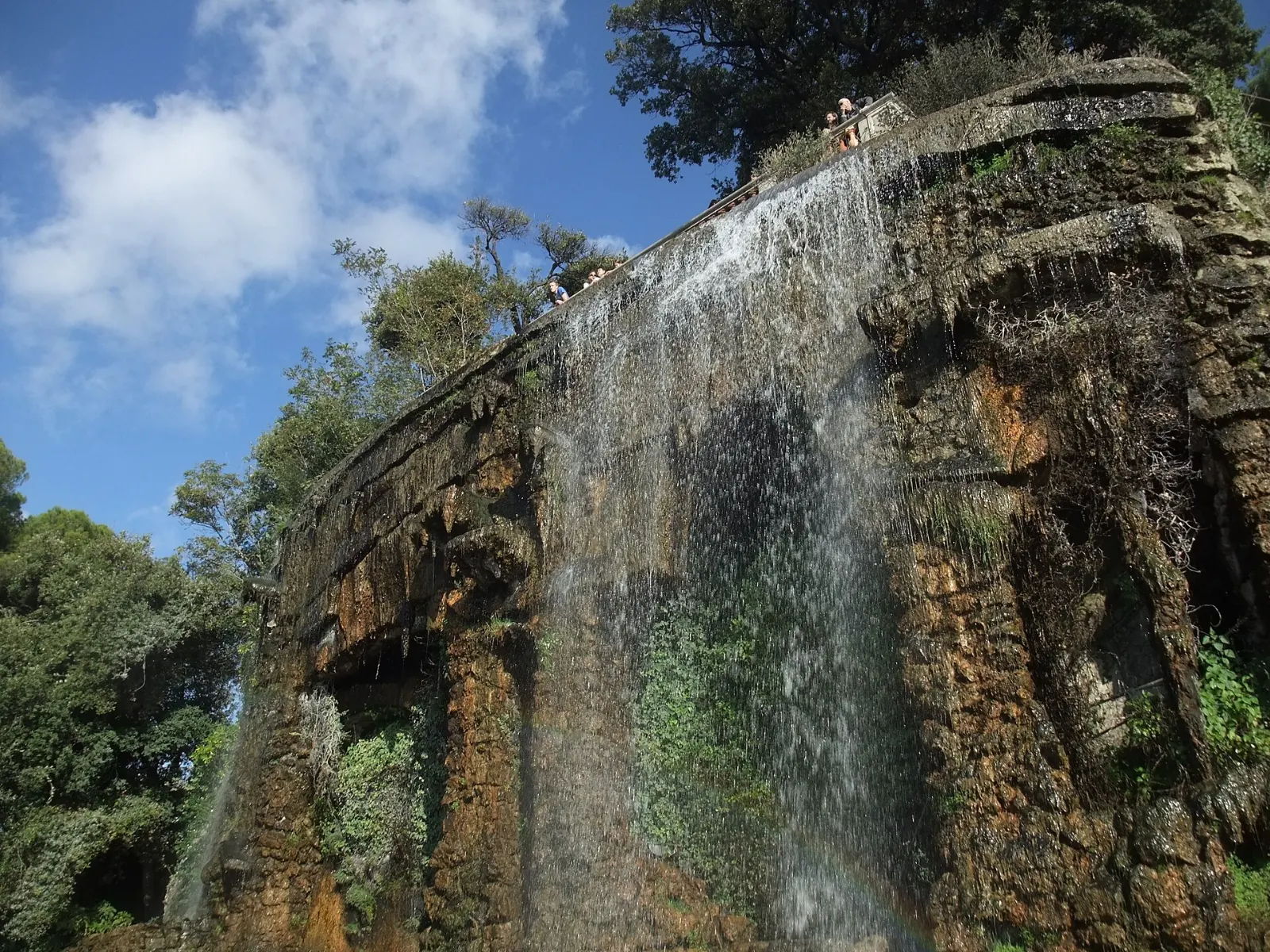
Rising between the old town and the port, Castle Hill, or Colline du Chateau, is a park on the site of a long-vanished fortress. Paths and stairs lead to viewpoints over the Baie des Anges and the harbor, and an artificial waterfall tumbles down the slope.
Cimiez and the art museums
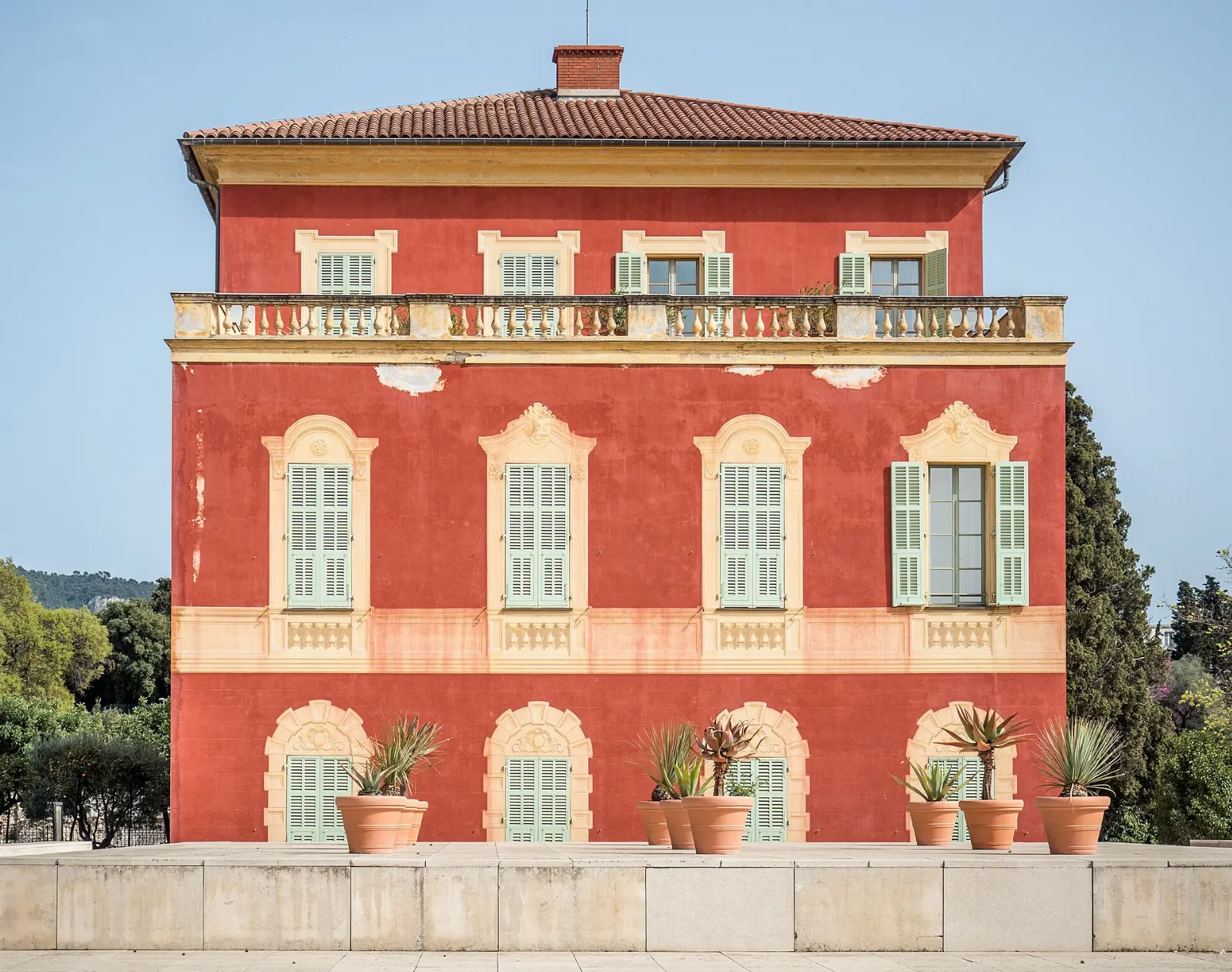
In the hilly Cimiez district, the Matisse Museum occupies a red Genoese villa among olive groves and holds works spanning the artist's career; Matisse is buried in the nearby monastery cemetery.
East of Nice: Villefranche, Cap Ferrat, Eze, Monaco and Menton
Villefranche-sur-Mer
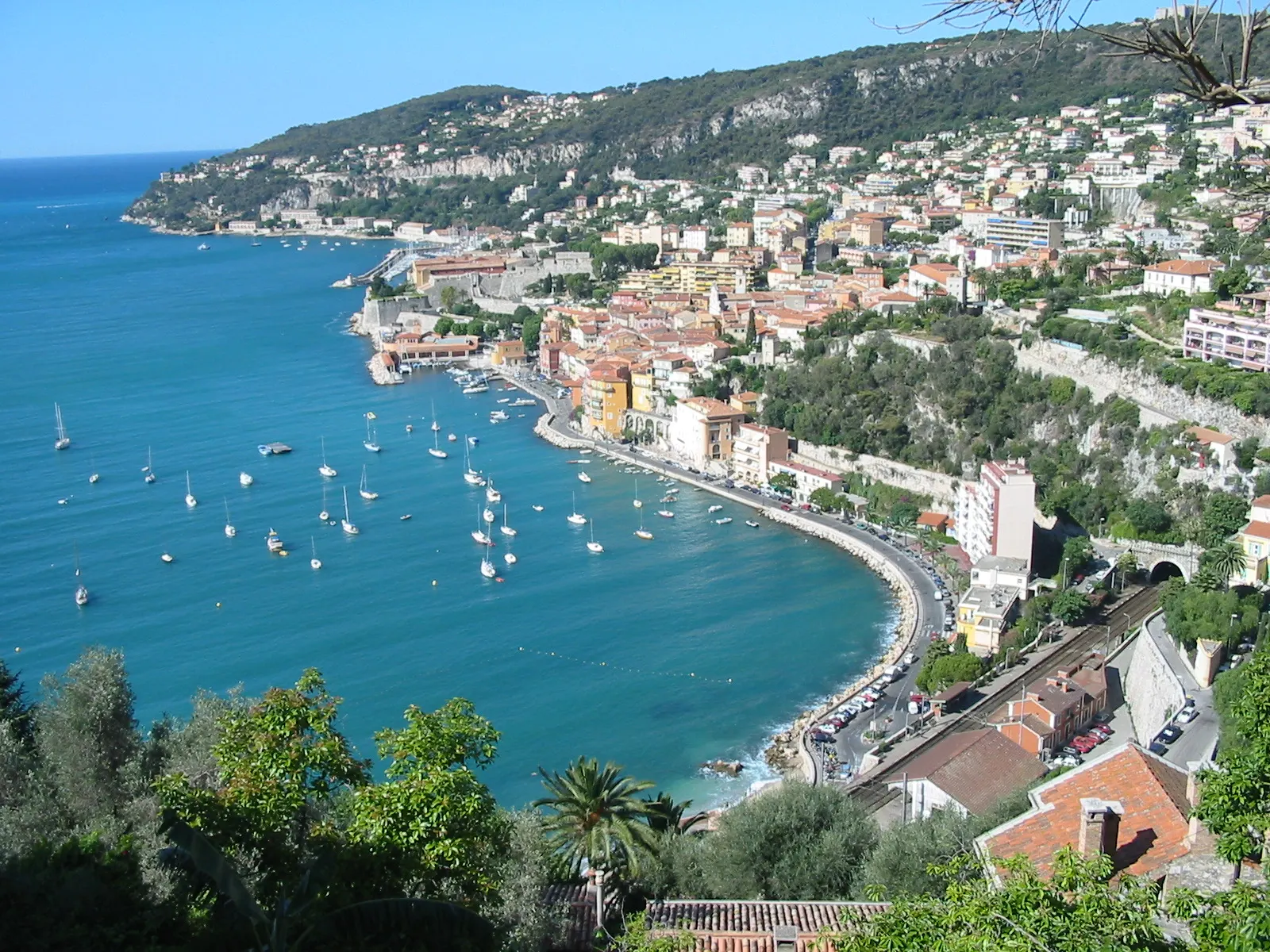
Just east of Nice, Villefranche is a small town of pastel houses wrapped around a deep, sheltered bay. Walk the vaulted Rue Obscure, visit the sixteenth-century citadel and see the fishermen's chapel decorated by Jean Cocteau.
Saint-Jean-Cap-Ferrat and Villa Ephrussi de Rothschild
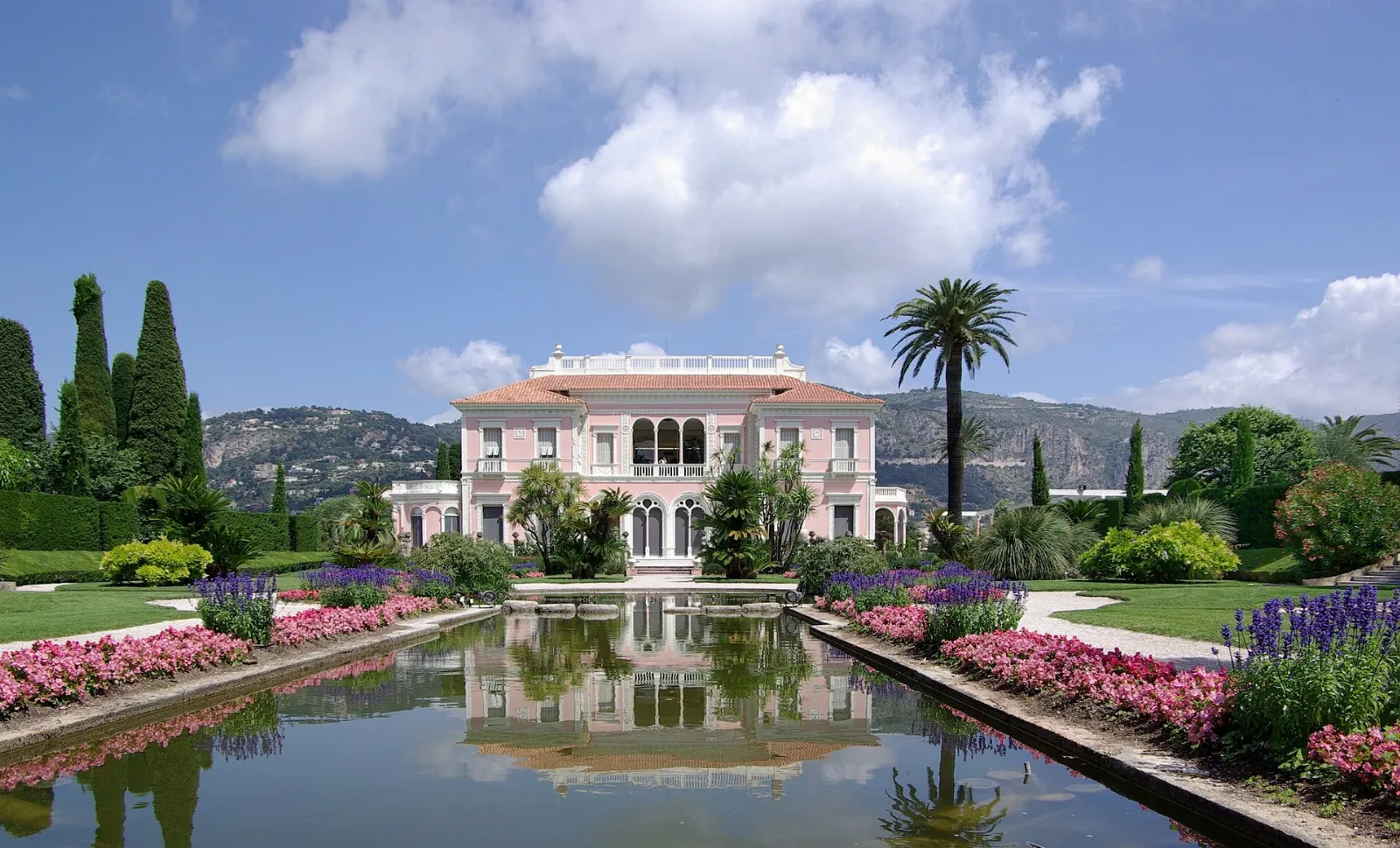
The Cap Ferrat peninsula is lined with grand estates and circled by coastal footpaths. Its highlight is Villa Ephrussi de Rothschild, a pink Belle Epoque mansion surrounded by themed gardens and musical fountains with views on both sides of the cape.
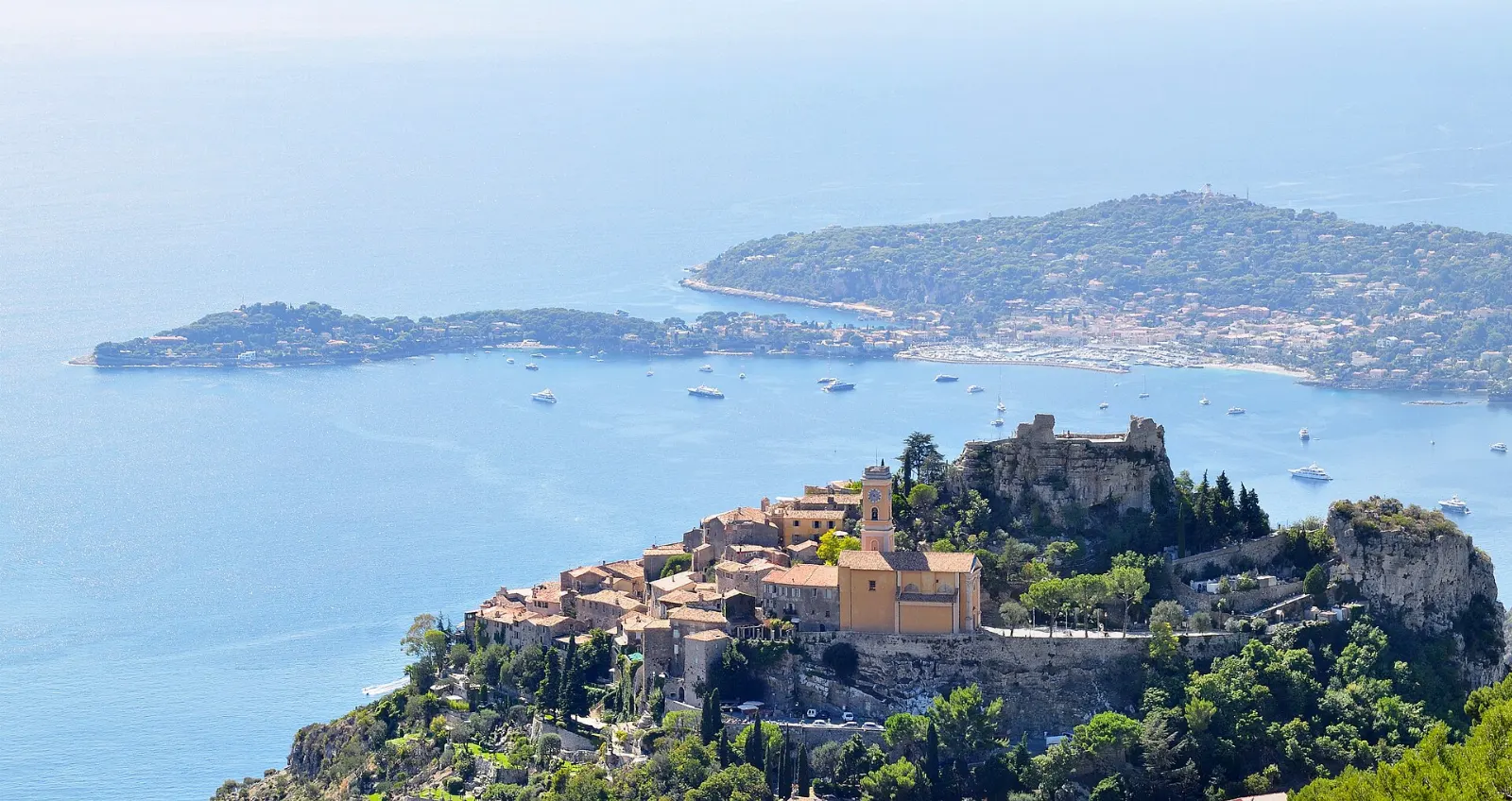
Eze
Eze is a medieval village perched on a rocky peak more than four hundred meters above the sea.
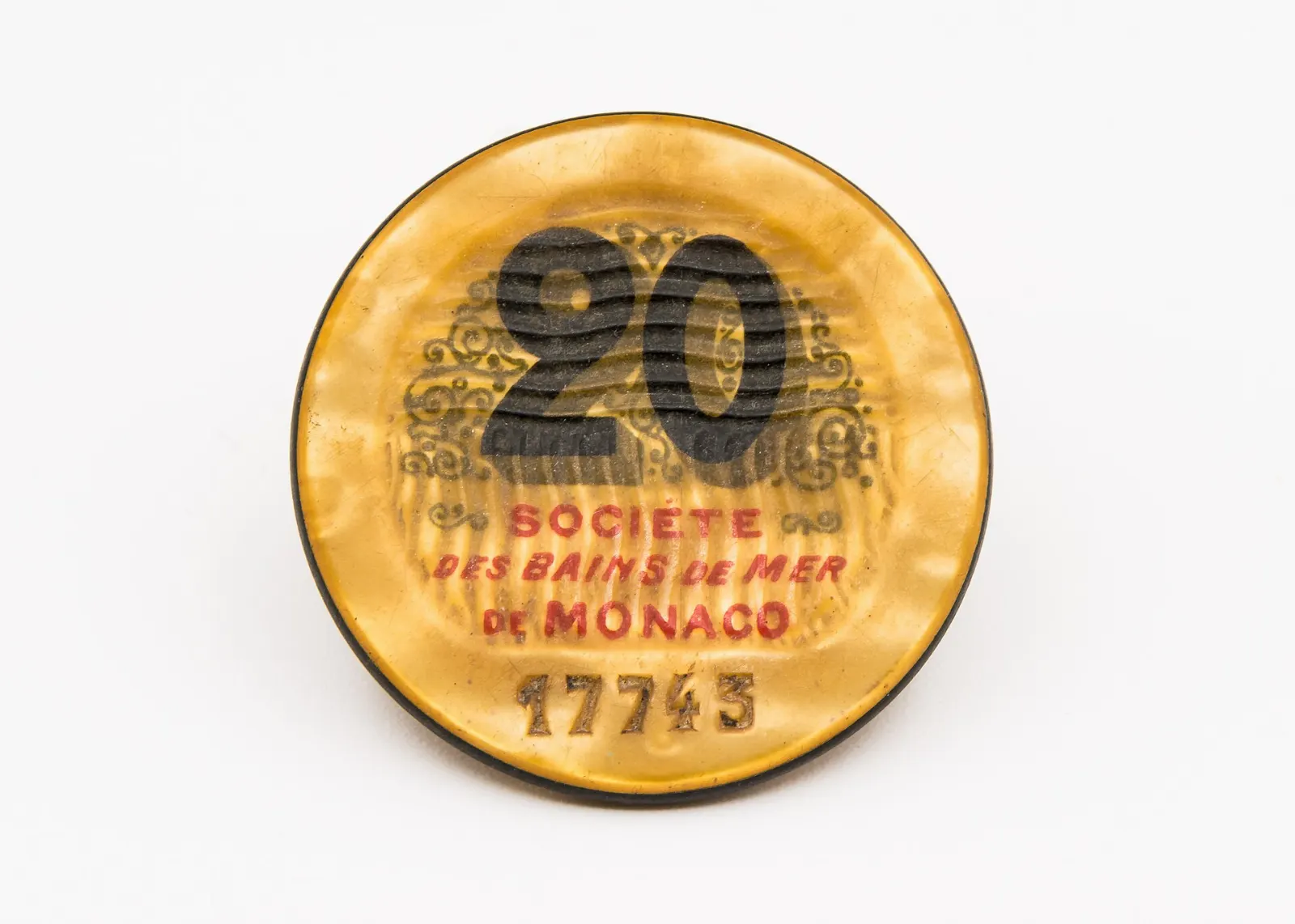
Monaco
The tiny principality of Monaco is packed with sights. In Monaco-Ville, on the Rock, you can visit the Prince's Palace, watch the late-morning changing of the guard, and explore the Oceanographic Museum perched on a cliff above the sea.
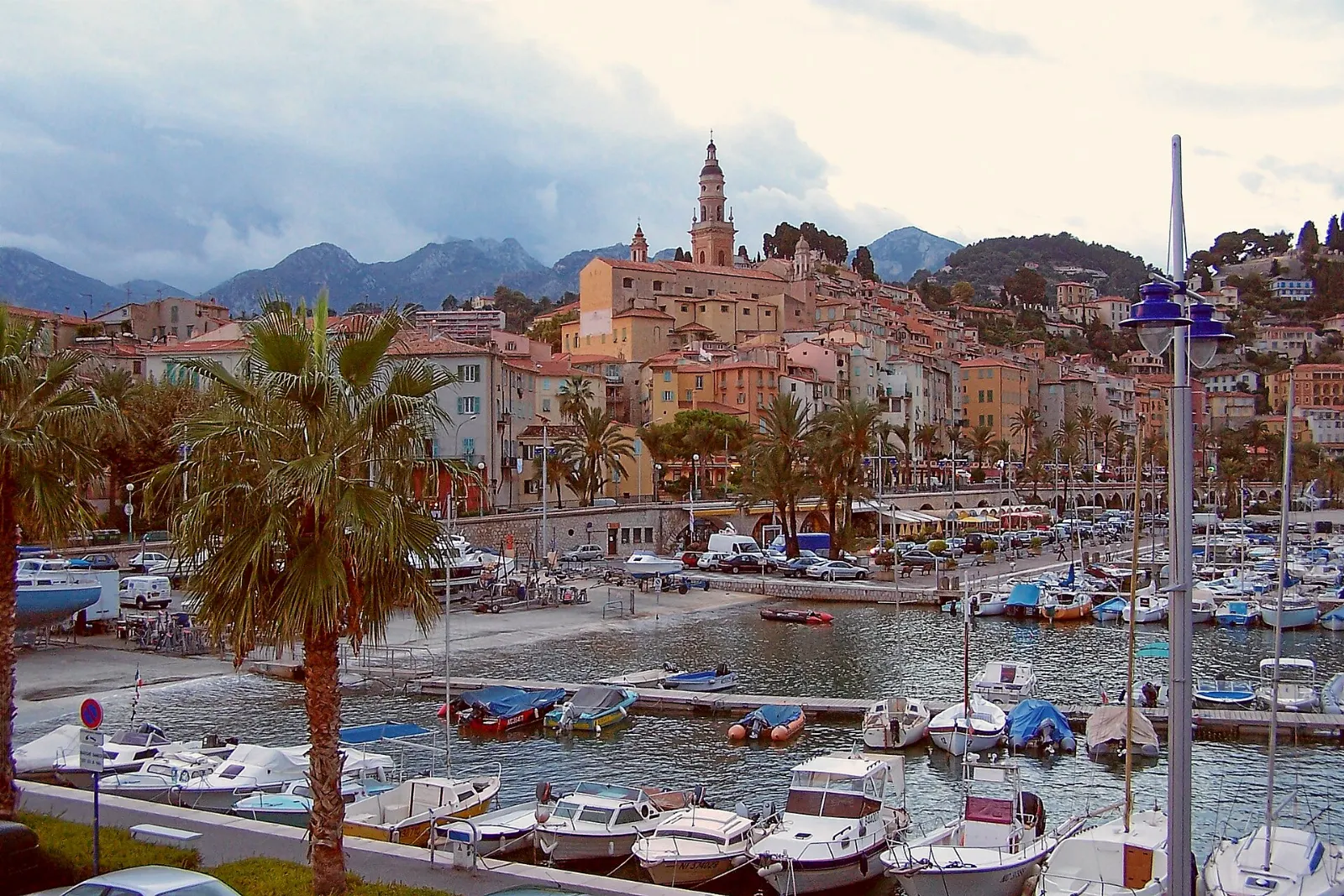
Menton
Close to the Italian border, Menton has the mildest climate on the coast and is known for its lemons and gardens. The colorful old town climbs to the Baroque Basilica of Saint-Michel, and the Jean Cocteau museum faces the sea.
 Planning a trip to Nice and the French Riviera?Compare hotels, flights and vacation rentals for Nice and the French Riviera on Expedia.Book now
West of Nice: Antibes, Cannes and the hill villages
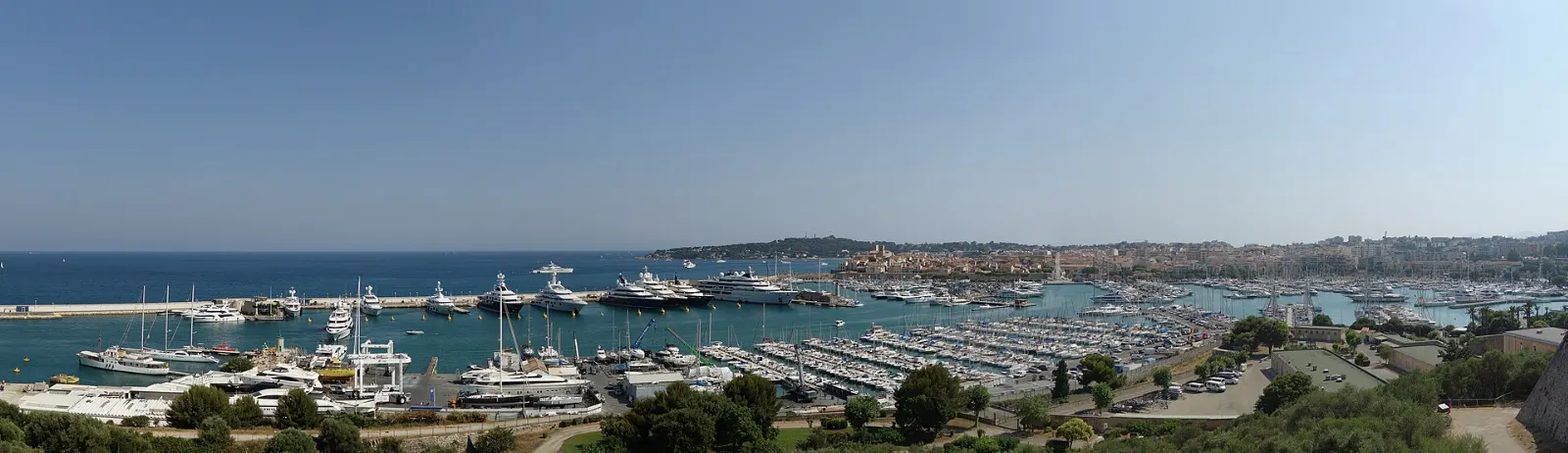
Antibes
Antibes combines ramparts, an old town and a yacht-filled marina. The Picasso Museum occupies the Chateau Grimaldi, where the artist worked in 1946, and the Provencal market sells local produce each morning.
Cannes and the Lerins Islands
Cannes is famous for its film festival in May and its seafront boulevard, La Croisette. Climb to Le Suquet, the old quarter, for views over the bay.
Saint-Paul-de-Vence
Inland, Saint-Paul-de-Vence is a walled hilltop village of art galleries and stone lanes. Chagall is buried in its cemetery, and just outside the walls the Fondation Maeght holds one of Europe's leading collections of modern art in a building surrounded by sculpture gardens.
Grasse
In the hills above Cannes, Grasse has been the center of French perfume making for centuries, and the know-how of its perfumers is recognized by UNESCO as intangible cultural heritage.
Inland villages such as Vence, Tourrettes-sur-Loup and Gourdon also reward a slow drive, with stone lanes, craft workshops and wide views back toward the coast.
Food and local flavors
Nicoise cooking has its own identity, shaped by Italy and the sea.
The Cours Saleya and the Liberation market are the best places for fresh produce, and the old town has small counters selling socca. Nice even has its own wine appellation, Bellet, grown in the hills above the city.
Popular dishes to try in Nice and the French Riviera


Where to stay
Vieux Nice suits travelers who want atmosphere and are fine with noise and stairs. The area around Place Massena and the Promenade is central, well connected and close to the beach. The port district is a little quieter, with good restaurants.
Where to stay in Nice and the French Riviera


Best time to visit
May, June and September offer warm weather, swimmable seas and lighter crowds. July and August are hot and busy, with beaches crowded and prices high, but evenings are lively with festivals.
Getting there and getting around
Nice Cote d'Azur Airport is the main gateway, with flights across Europe and beyond.
Regional TER trains run frequently along the coast between Cannes, Antibes, Nice, Villefranche, Monaco and Menton, making a car unnecessary for most trips.
A suggested itinerary
First day
Explore Vieux Nice and the Cours Saleya market, climb Castle Hill for the view, and stroll the Promenade des Anglais at sunset.
Second day
Visit the Matisse and Chagall museums in Cimiez in the morning, then take the train to Villefranche for a swim and dinner by the harbor.
Third day
Visit Villa Ephrussi on Cap Ferrat, then take the bus to Eze and walk down the Nietzsche path.
Fourth day
Spend the day in Monaco, then continue to Menton for the evening.
Fifth day
Take the train west to Antibes for the Picasso Museum and the old town, then end the day in Cannes.
Sixth day
Take a boat to the Lerins Islands, or head inland to Saint-Paul-de-Vence and the Fondation Maeght.
Practical tips
- Use the coastal train rather than driving; it is fast, frequent and scenic.
- Book accommodation early for the Cannes Film Festival, the Monaco Grand Prix and the summer months.
- Many museums close one day a week; check the official websites for current hours and fees.
- Bring water shoes for pebble beaches.
- Cover your shoulders and avoid swimwear away from the beach, especially in churches and in Monaco.
- Watch for pickpockets on crowded trains, buses and markets.