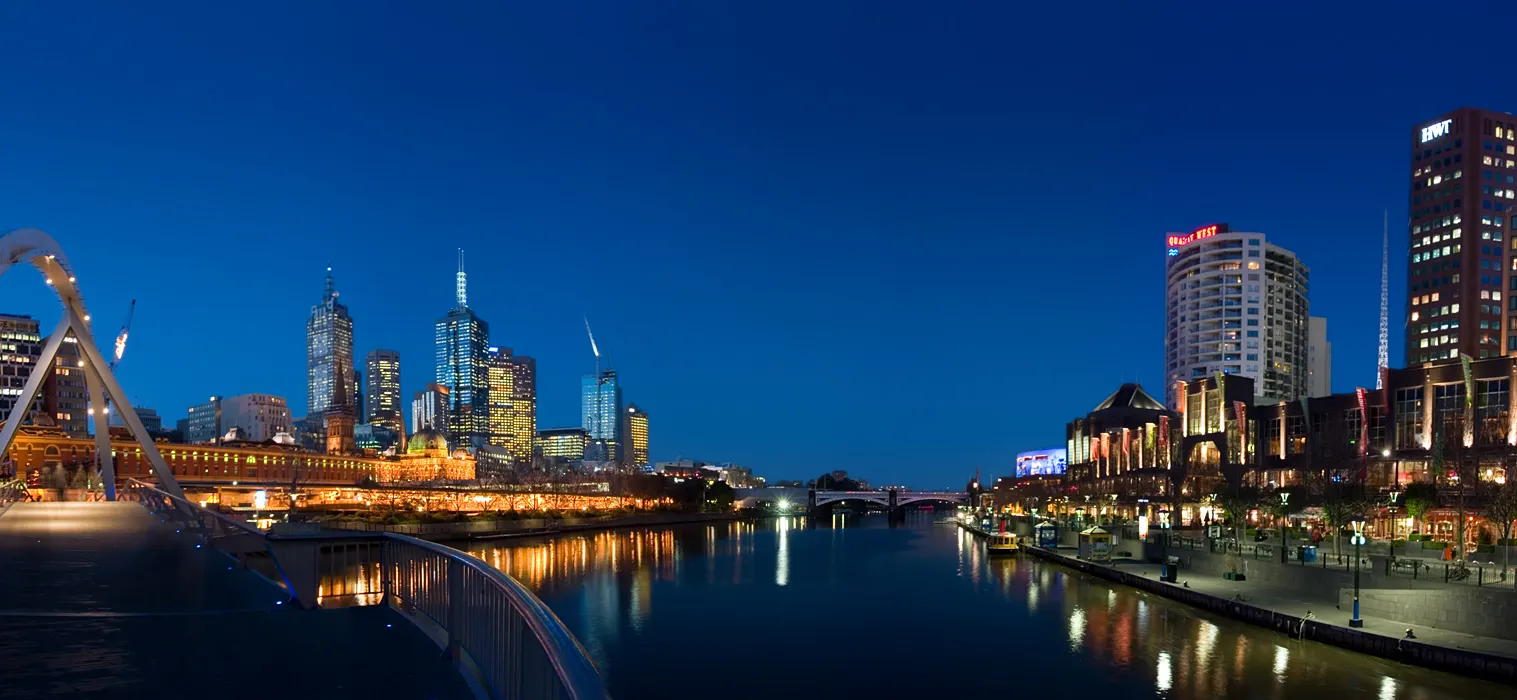
Melbourne rewards curiosity more than checklists.
AT A GLANCE
Best time
March to May and September to November, when days are mild and festivals fill the calendar.
How long
Four to five days for the city, plus a day or two for the Great Ocean Road or Phillip Island.
Getting there
Fly into Melbourne Airport at Tullamarine, then take the SkyBus to Southern Cross Station.
Why visit Melbourne
Melbourne was laid out in 1837 on land of the Wurundjeri and other Kulin nations, whose name for the area is Naarm. The gold rush of the 1850s turned a small settlement into one of the richest cities in the world within a few decades, and the money went into ornate banks, arcades, churches and civic buildings that still frame the streets.
What makes Melbourne special today is the way that grand framework is filled with everyday life. The central grid is threaded with narrow lanes and arcades packed with cafes, bars and small shops. Huge parks wrap the city on almost every side.
The city centre, laneways and arcades
The Hoddle Grid, the rectangle of wide streets between Flinders Street and La Trobe Street, holds most of Melbourne's classic sights. It is compact and flat, and trams within the Free Tram Zone make hopping between corners simple.
Federation Square and Flinders Street Station
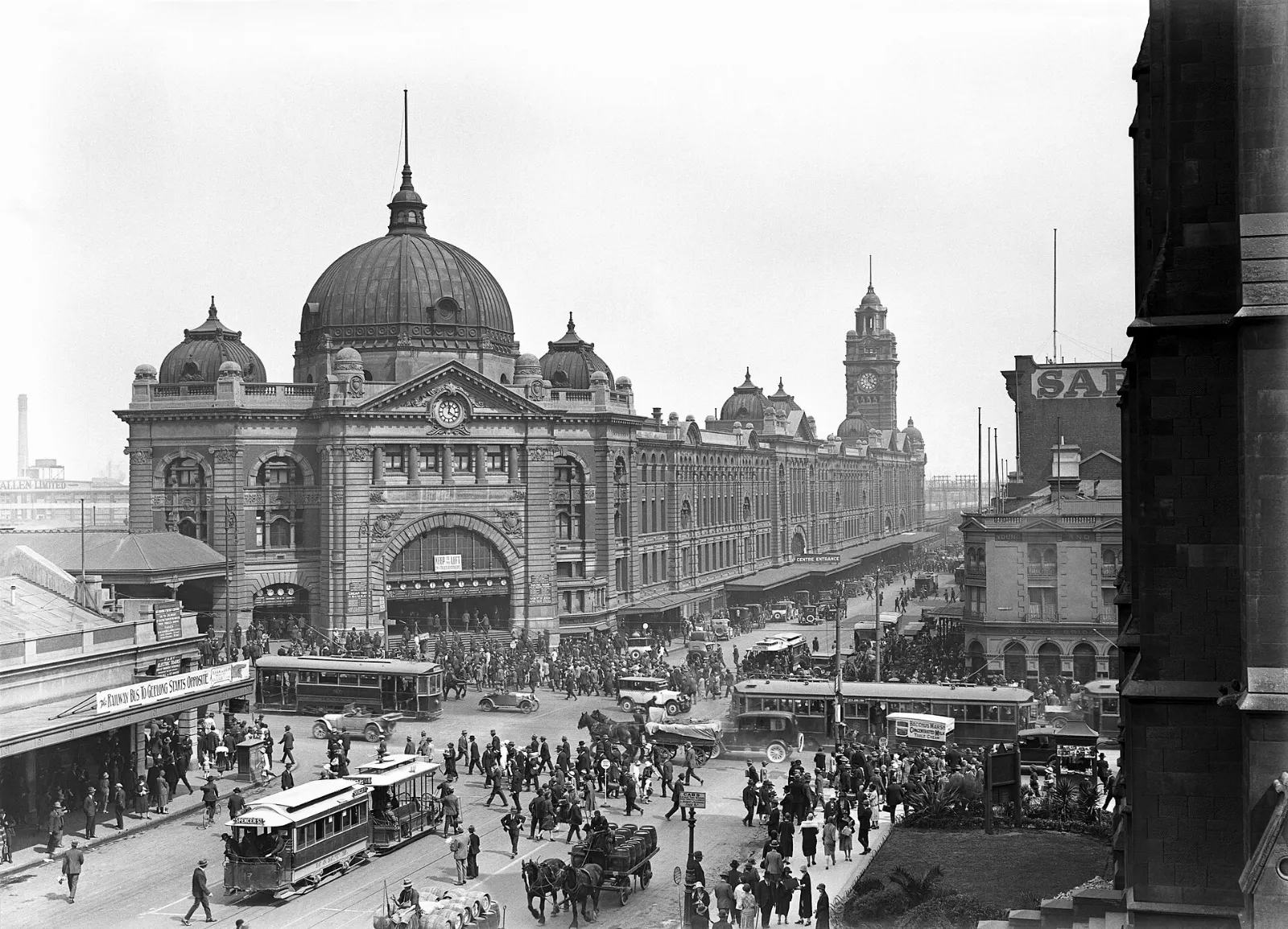
Start where most Melburnians agree to meet: under the clocks at Flinders Street Station. The yellow station building with its green copper dome has been a city symbol since 1910.
Hosier Lane and the laneway network
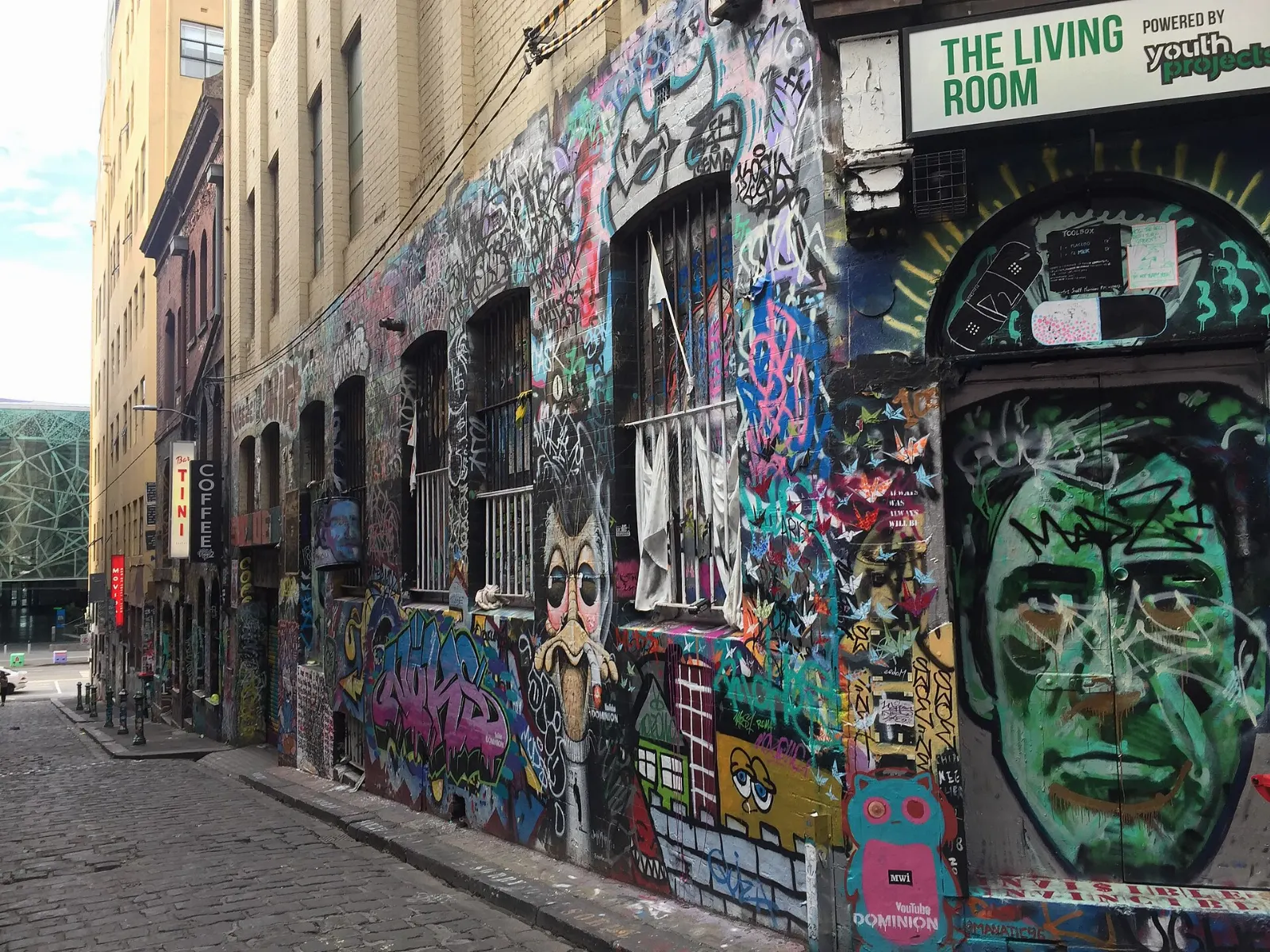
Directly opposite Federation Square, Hosier Lane is the most photographed strip of street art in the city, its walls repainted so often that no two visits look the same. From there, thread north through the lanes.
Royal Arcade and Block Arcade
Melbourne's Victorian arcades are best experienced on a weekday morning before the crowds. The Royal Arcade, opened in 1870, is the oldest in the city and is guarded by the carved figures of Gog and Magog beside a large clock.
State Library Victoria
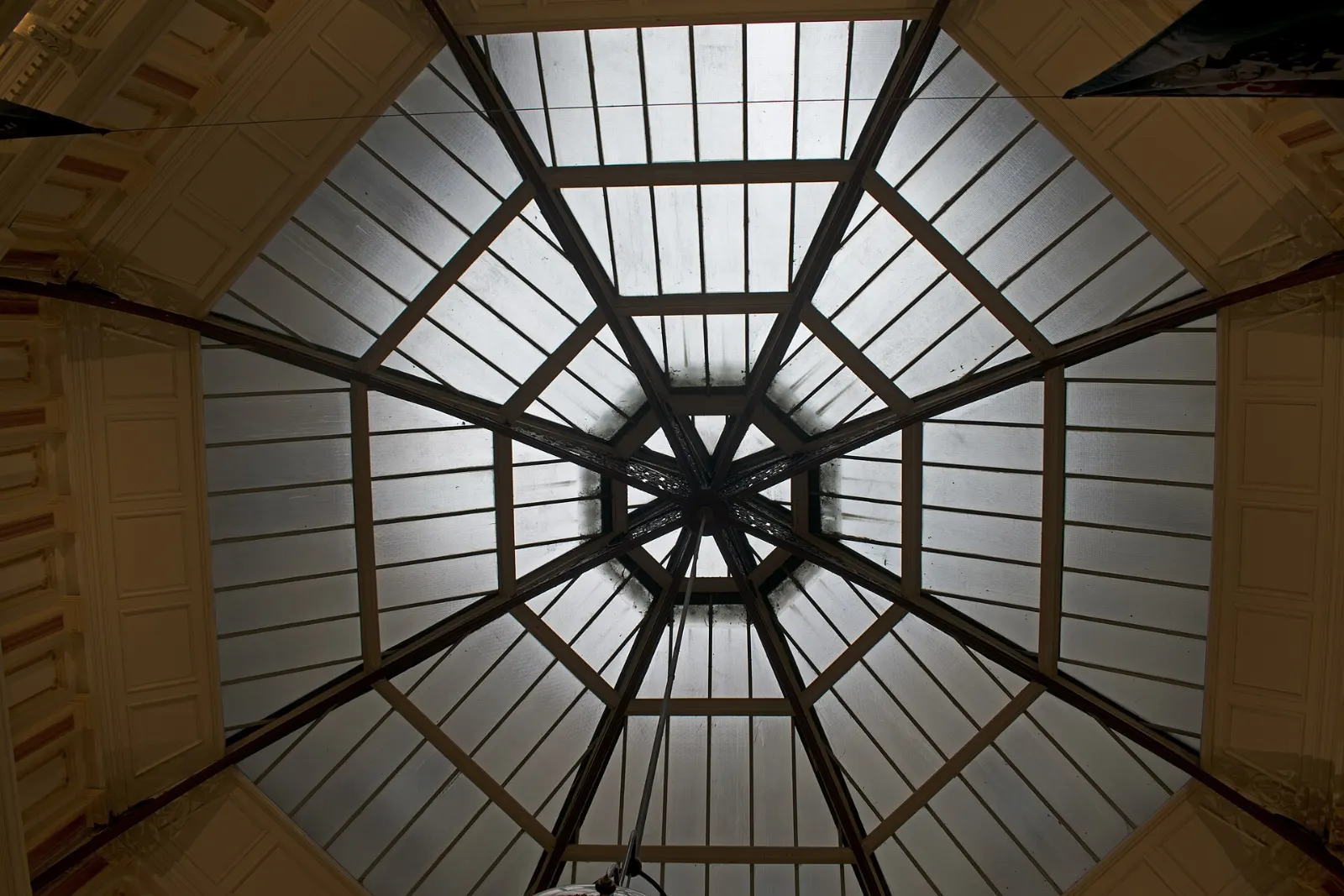
On Swanston Street, State Library Victoria is one of the most rewarding free stops in the city. Head upstairs to the La Trobe Reading Room, an octagonal hall topped by a great dome, and look down from the upper galleries for the best view of the desks radiating from the centre.
Queen Victoria Market
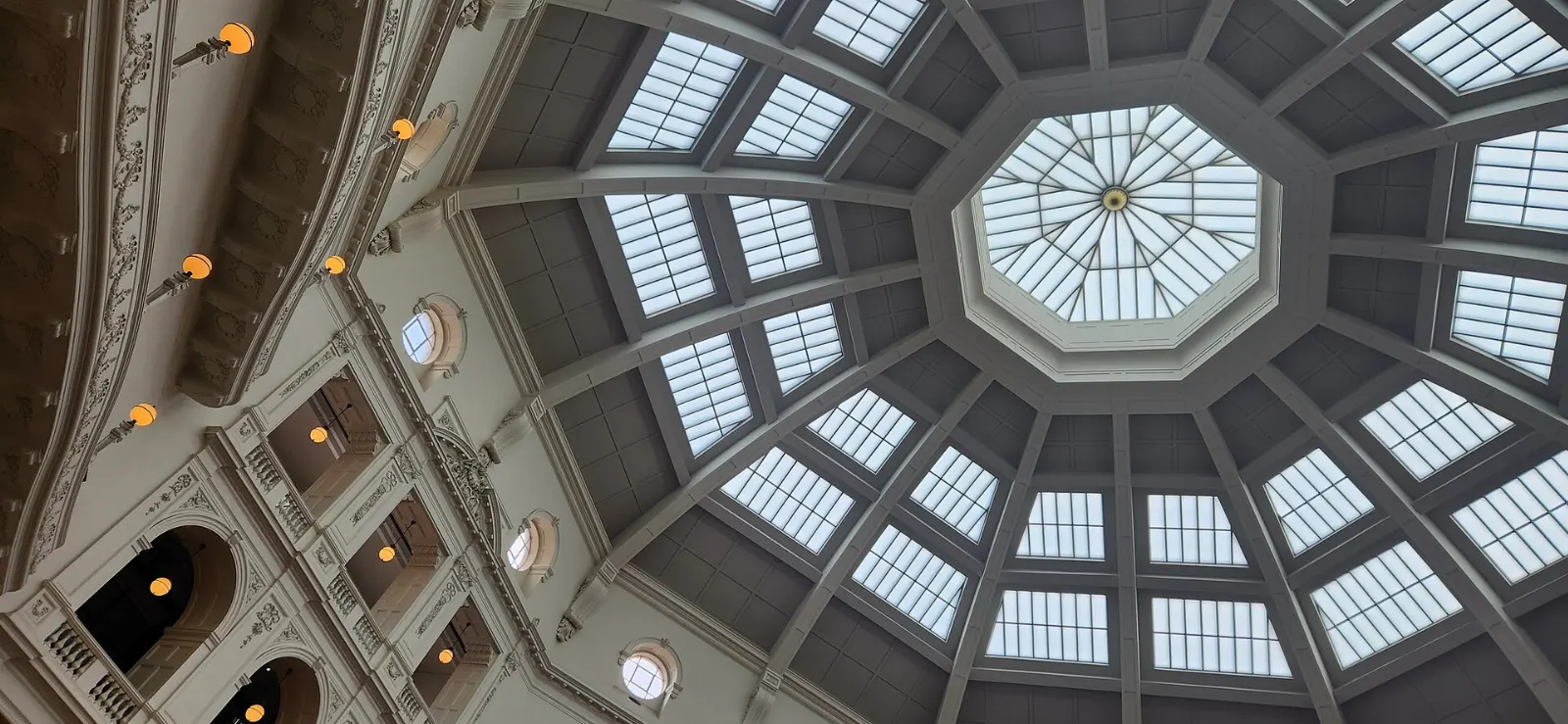
At the northern edge of the grid, Queen Victoria Market has traded on its site since 1878 and remains the largest open-air market in the southern hemisphere. Wander the meat and fish hall, the deli hall with its cheeses and smallgoods, and the long sheds of fruit, vegetables and general goods.
Gardens, galleries and the sporting precinct
Some of Melbourne's most memorable places sit just beyond the grid, in the green belt of gardens to the north and south-east and along the river.
Royal Exhibition Building and Melbourne Museum
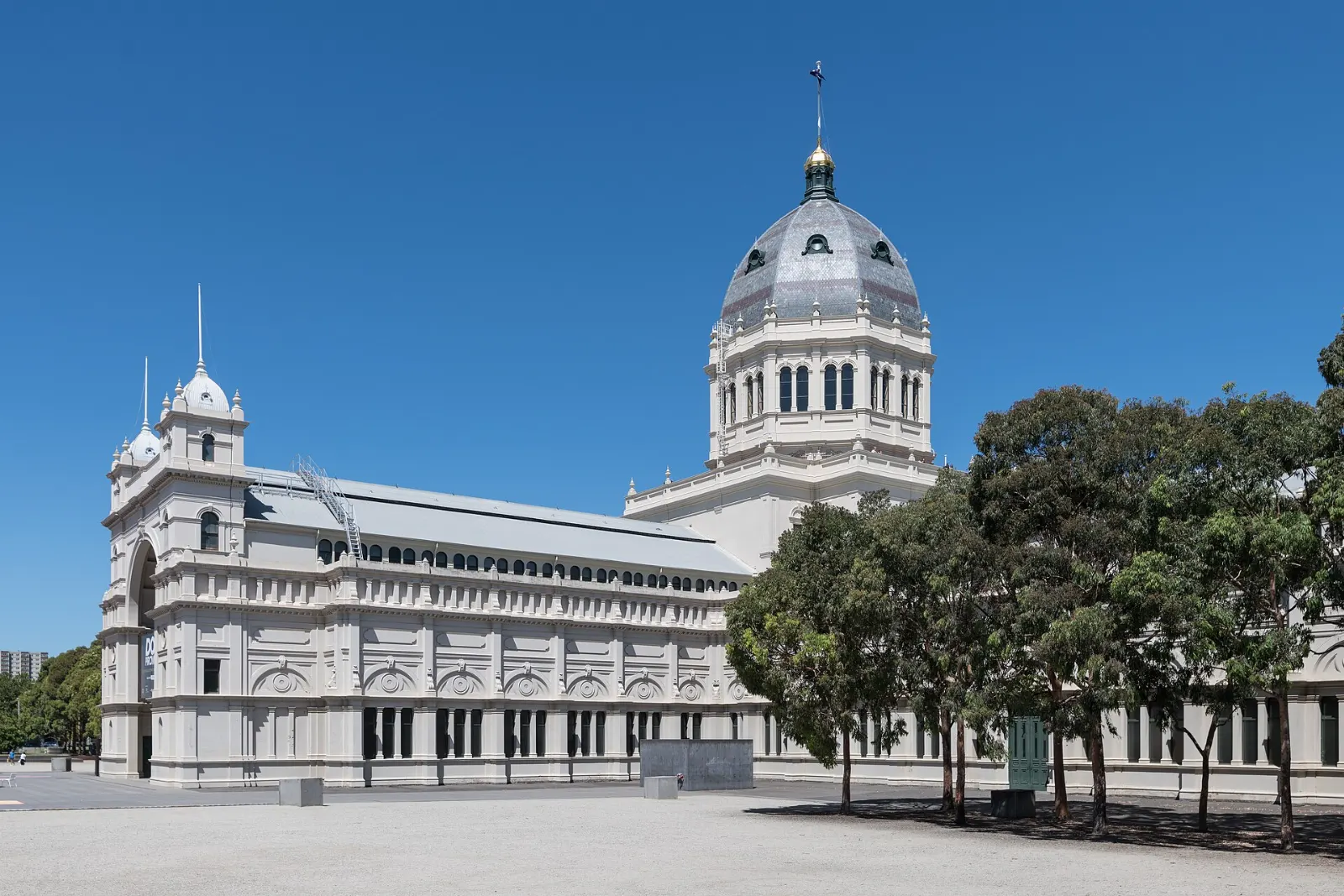
In Carlton Gardens, the Royal Exhibition Building was completed in 1880 for an international exhibition and later hosted the opening of the first federal parliament in 1901. Together with its gardens it became Australia's first built UNESCO World Heritage Site in 2004.
National Gallery of Victoria
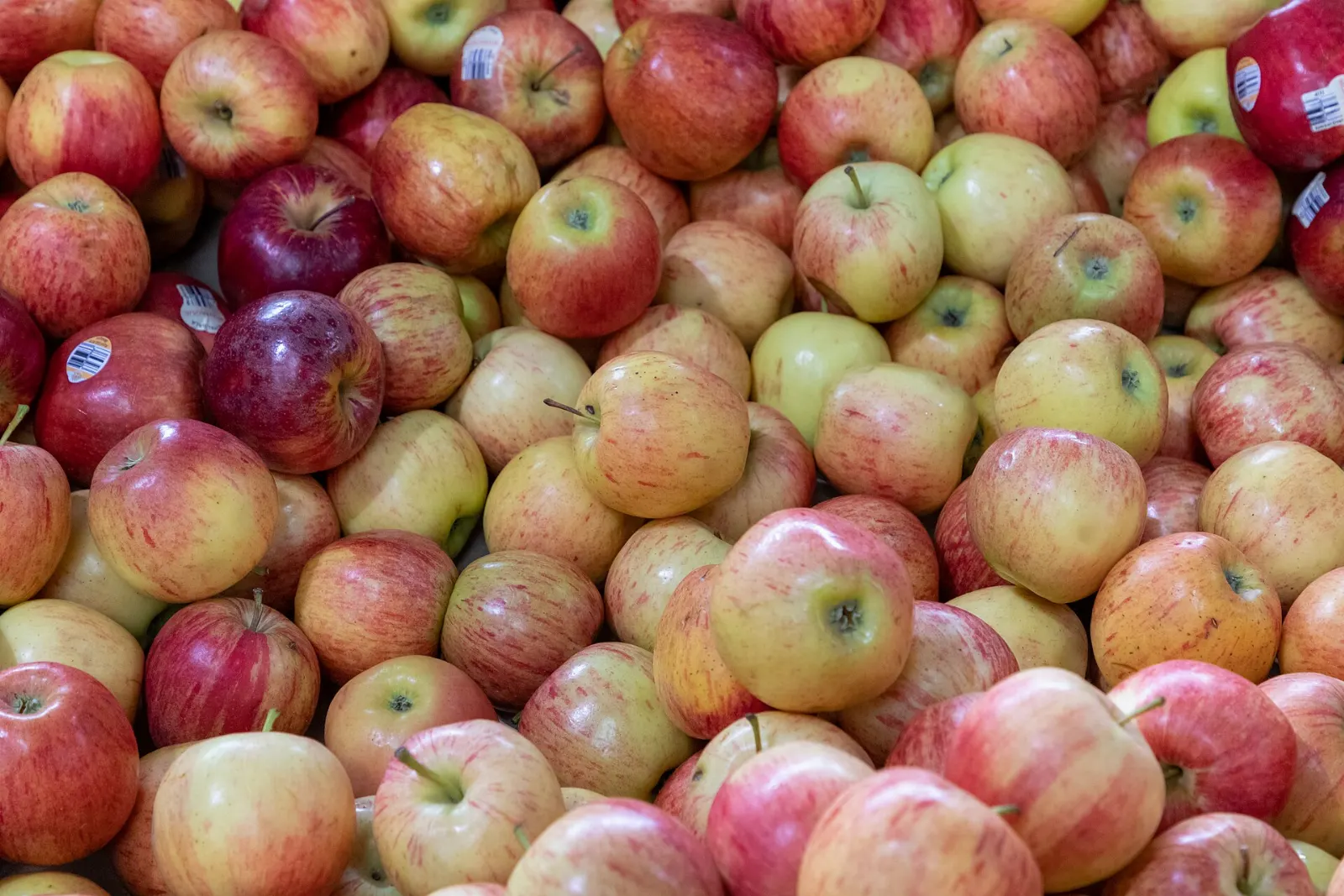
South of the river on St Kilda Road, NGV International holds the gallery's international collection behind a bluestone facade and a wall of running water that children love to touch. Inside, look up at the vast stained-glass ceiling of the Great Hall, where visitors often lie on the floor to take it in.
Royal Botanic Gardens and the Shrine of Remembrance
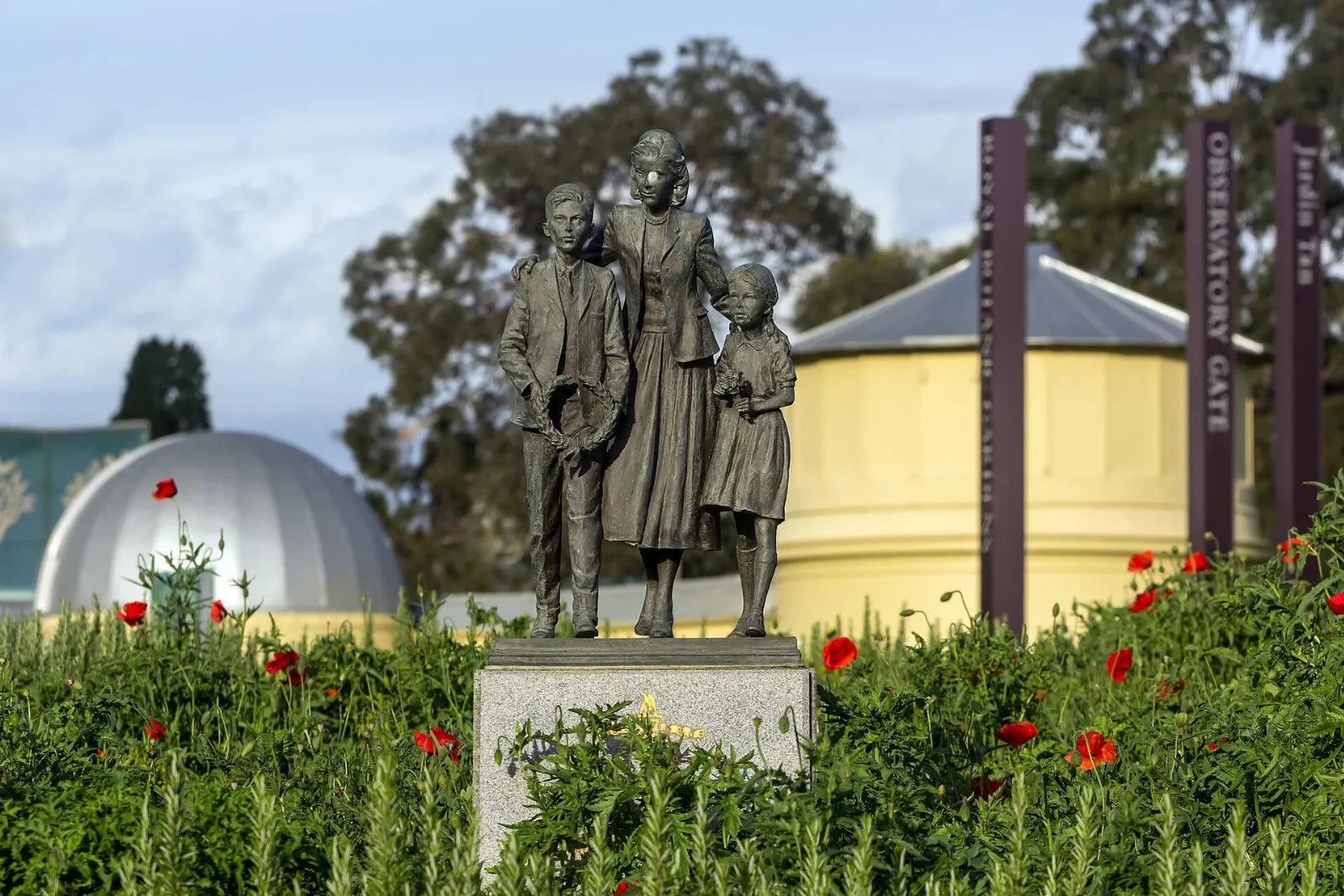
The Royal Botanic Gardens Victoria spread across rolling lawns, lakes and plant collections close to the city centre. The adjoining Kings Domain holds the Shrine of Remembrance, Victoria's main war memorial, where a balcony offers a fine view straight up St Kilda Road to the skyline, and a beam of sunlight falls on the Stone of Remembrance at eleven o'clock on Remembrance Day.
Melbourne Cricket Ground
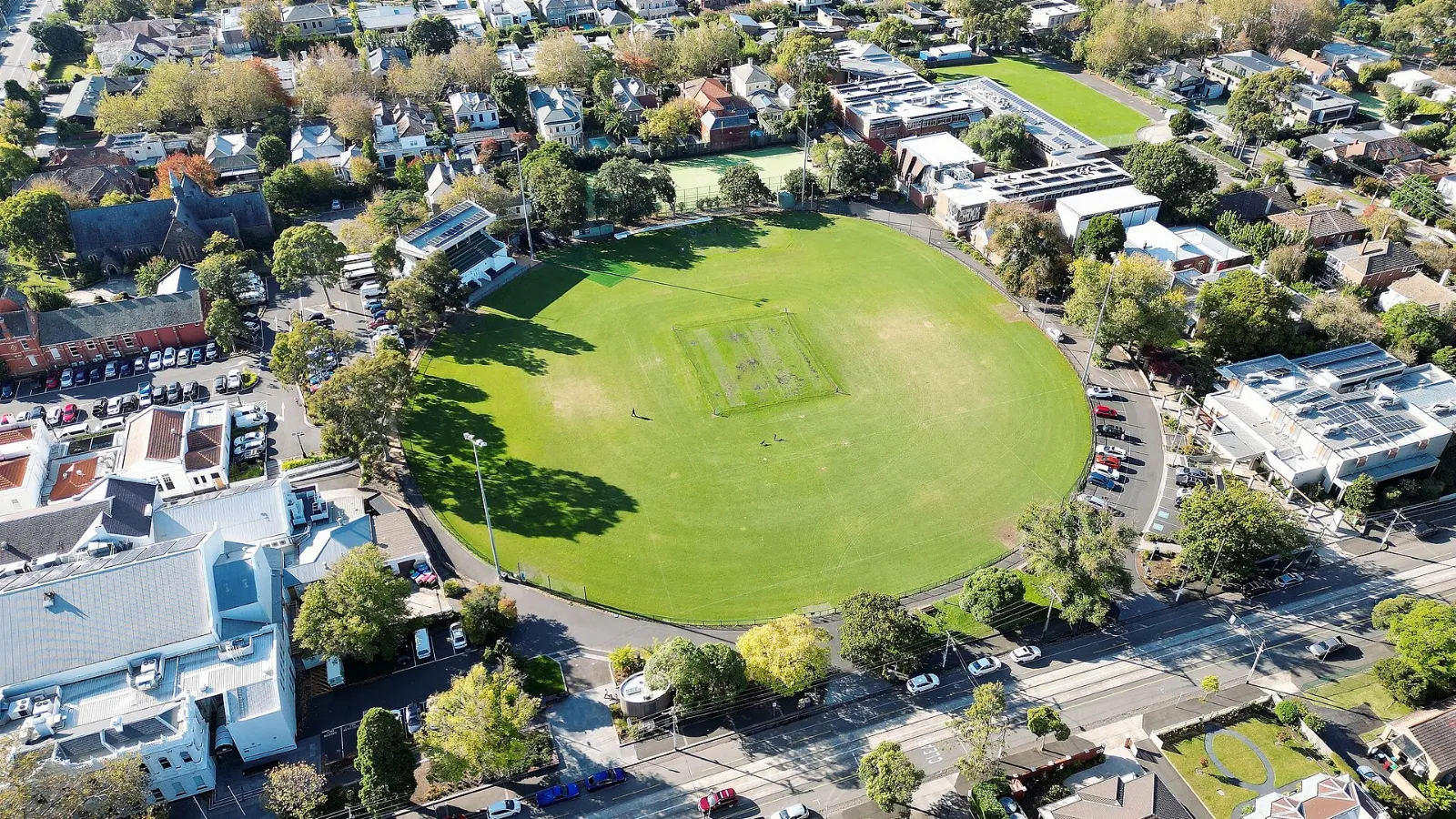
The MCG in Yarra Park is the largest stadium in Australia and the emotional heart of the city's sporting life. Seeing an AFL match here during the winter season, or Test cricket in summer, is the best way to understand Melbourne.
 Planning a trip to Melbourne?Compare hotels, flights and vacation rentals for Melbourne on Expedia.Book now
Inner suburbs, the bay and day trips
Fitzroy and Collingwood
Just north-east of the centre, Fitzroy and neighbouring Collingwood are where Melbourne's creative streak lives. Brunswick Street and Gertrude Street are lined with independent bookshops, vintage stores, galleries, cafes and live music pubs, and the side streets are full of street art.
St Kilda
A short tram ride south, St Kilda has been Melbourne's seaside playground since the 1800s. Walk the foreshore and the long pier, look up at the grinning face of Luna Park, and browse Acland Street for its old-fashioned cake shops.
Brighton Beach
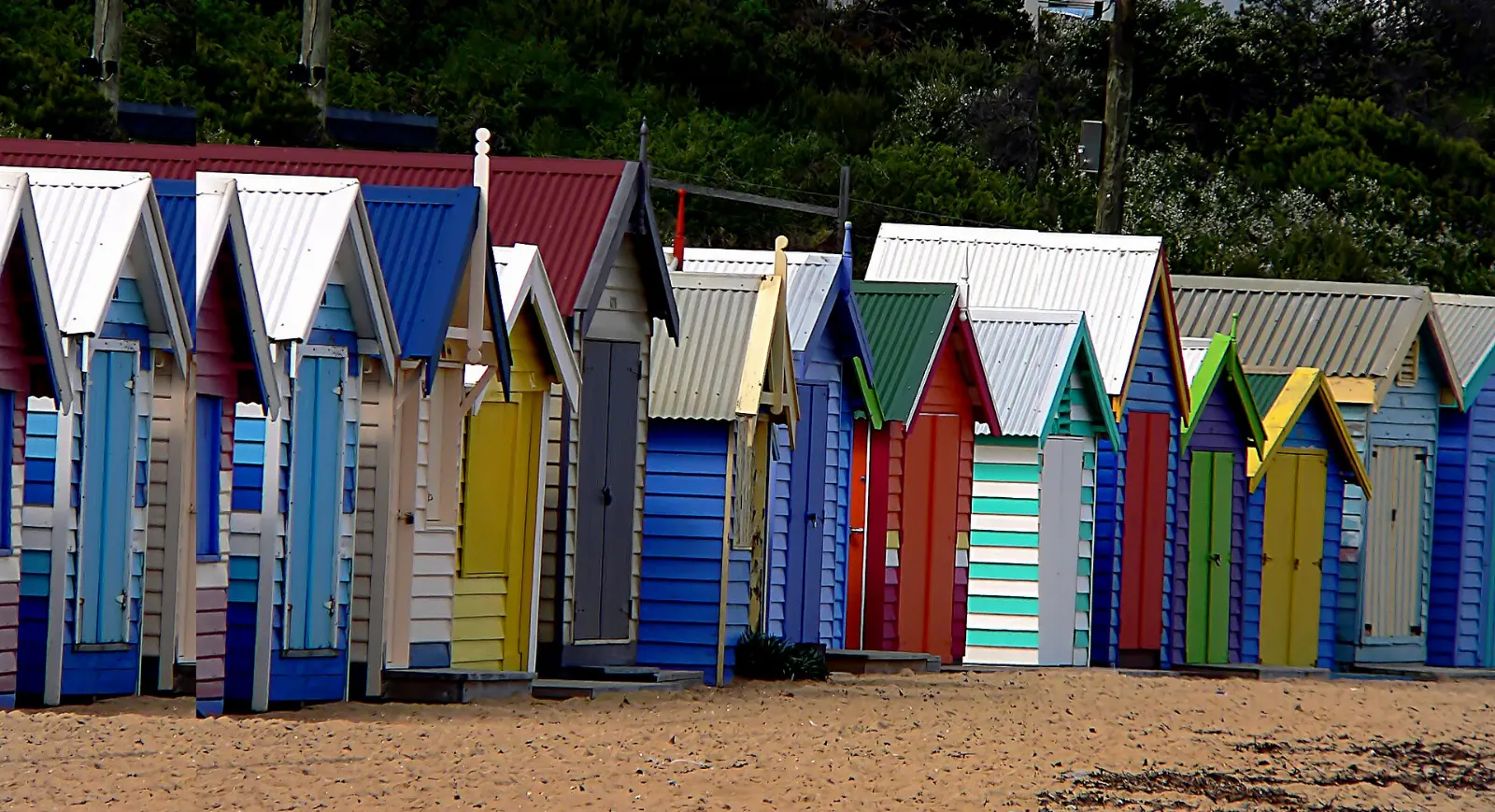
Further down the bay, the painted bathing boxes of Brighton's Dendy Street Beach are one of Melbourne's most cheerful sights, with the city skyline across the water behind them. Allow an hour or two.
Great Ocean Road and Phillip Island
Two classic day trips leave from Melbourne. The Great Ocean Road follows the south-west coast past surf beaches and rainforest to the limestone stacks of the Twelve Apostles in Port Campbell National Park; it is a very long day, so consider an overnight stop.
Food and local flavors
Coffee is the place to start. Melbourne takes its espresso seriously, and the flat white, long black and piccolo are ordered with the confidence of a local ritual.
Migration has shaped the rest of the menu.
Look out for local favourites too: the dim sim, a hefty Melbourne take on a Chinese dumpling, is a fixture at South Melbourne Market, and the chicken parma, a crumbed schnitzel topped with tomato sauce and cheese, is pub comfort food across the city.
Popular dishes to try in Melbourne


Where to stay
The central business district suits first-time visitors and short stays. You are walking distance from the laneways, arcades and galleries, and inside the Free Tram Zone. Southbank, across the river, is close to the arts precinct and the riverside promenade, with high-rise apartments and river views.
Where to stay in Melbourne


Best time to visit
Melbourne's weather is famous for changing quickly, and locals joke about four seasons in one day.
Summer, from December to February, is generally warm and dry, but heatwaves can push temperatures very high. January brings the Australian Open and summer crowds, and the Boxing Day Test is a fixture at the MCG.
Getting there and getting around
Melbourne Airport at Tullamarine, about twenty-two kilometres north-west of the centre, handles international and domestic flights. There is no train link yet, so most visitors take the SkyBus express coach to Southern Cross Station, a taxi or a rideshare. Avalon Airport, between Melbourne and Geelong, has a small number of domestic flights.
Getting around is easy without a car. Melbourne has one of the world's largest tram networks, plus suburban trains and buses, all run under Public Transport Victoria.
A suggested itinerary
First day
Begin with coffee in Degraves Street, then cross to Federation Square and Hosier Lane.
Second day
Spend the morning at Queen Victoria Market, then walk or tram to Carlton Gardens for the Royal Exhibition Building and Melbourne Museum.
Third day
Cross the river to NGV International, then stroll through the Royal Botanic Gardens to the Shrine of Remembrance.
Fourth day
Head to Fitzroy for brunch and browsing, then take the tram to St Kilda for the foreshore, Acland Street cakes and the penguins at dusk.
Fifth day
Choose a day trip: the Great Ocean Road for coastal scenery, Phillip Island for wildlife, or the Yarra Valley for wineries.
Practical tips
- Dress in layers and carry a compact umbrella; the weather can shift several times in a single afternoon.
- Use the Free Tram Zone for short hops in the centre, but tap on with a valid ticket as soon as you leave it, as inspectors issue fines.
- Book major events such as AFL finals, the Australian Open and the Penguin Parade well ahead.
- The Australian sun is strong even on cool days, so wear sunscreen and a hat in spring and summer.
- Check the official website for current hours and fees at museums, markets and tours, as trading days vary.
- Tipping is not expected in Australia, though rounding up for good service in restaurants is appreciated.