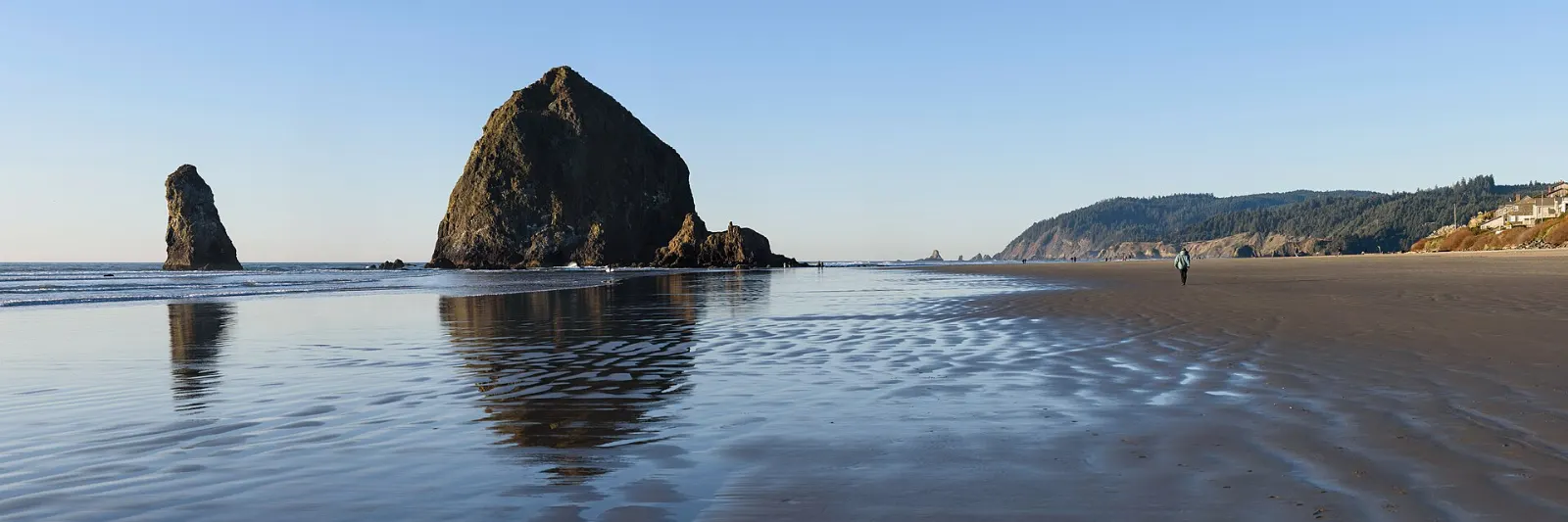
Cannon Beach is a small town on Oregon's north coast with a long, flat beach, a walkable village of shingled galleries and cafes, and one of the most recognizable landmarks on the Pacific coast: Haystack Rock.
AT A GLANCE
Best time
June to September for weather and puffins; winter for storm watching.
How long
Two to three days, timed around low tides.
Getting there
Drive about an hour and a half from Portland on US 26.
Why visit Cannon Beach
The town takes its name from a cannon that washed ashore near Arch Cape in 1846 after the US Navy schooner Shark wrecked at the mouth of the Columbia River.
What makes Cannon Beach special is how much of its scenery is protected and easy to reach. Haystack Rock and its tide pools sit right in town, Ecola State Park guards the headland to the north, and a string of state recreation sites to the south gives you coves, caves and creeks to explore at low tide.
Haystack Rock and the village
Downtown Cannon Beach
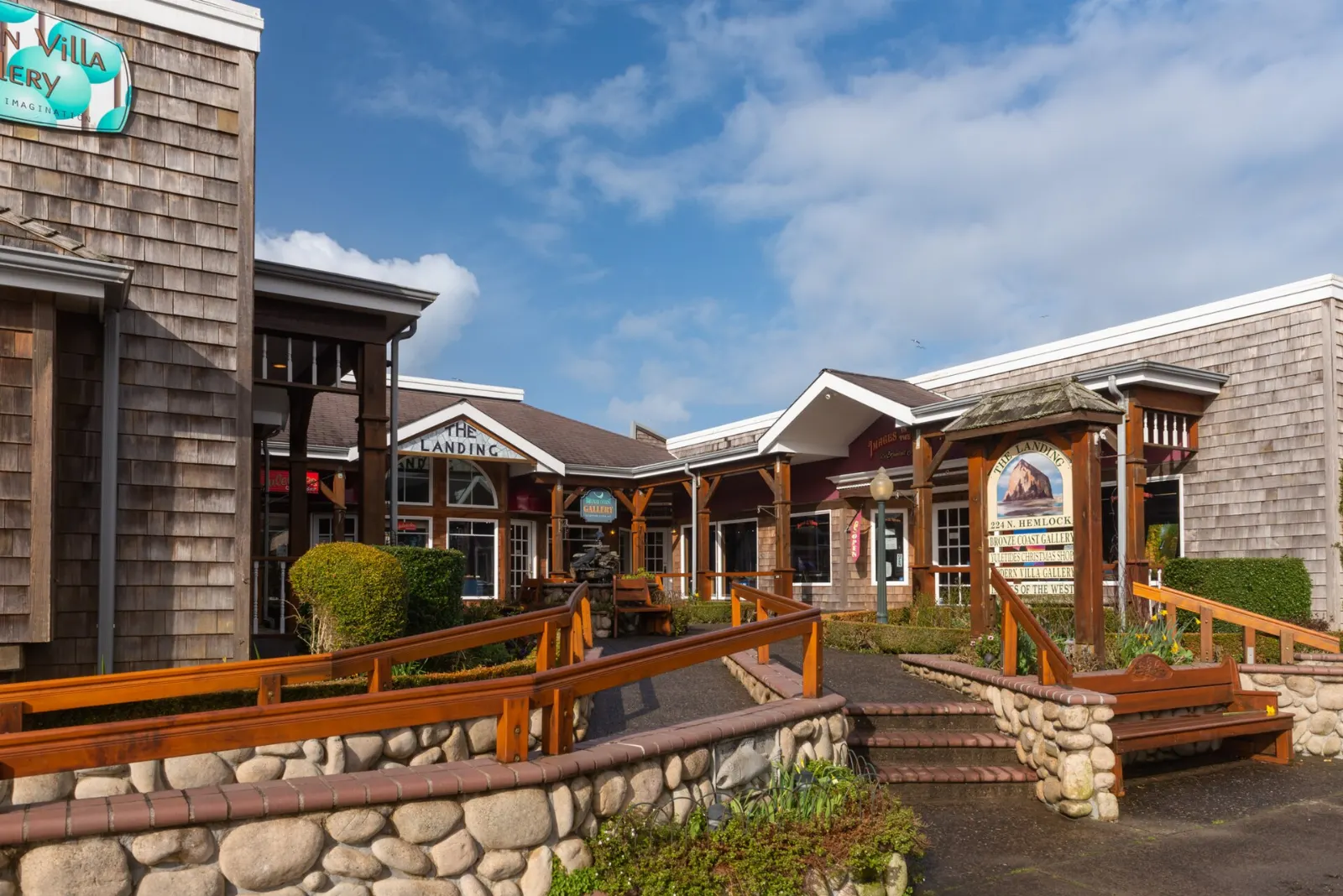
The village center along Hemlock Street is compact and pleasant to walk, with cedar-shingled buildings, gardens and a high number of art galleries for a town this size, many showing coastal painting, glass, photography and sculpture. You will also find bookshops, candy and kite stores, bakeries and coffee houses.
Haystack Rock
Haystack Rock is a basalt sea stack roughly 235 feet tall, formed from lava flows millions of years ago and left standing as the coast eroded around it. It is part of the Oregon Islands National Wildlife Refuge, and the rock itself is off limits to climbing to protect nesting seabirds.
Tide pools and the Haystack Rock Awareness Program
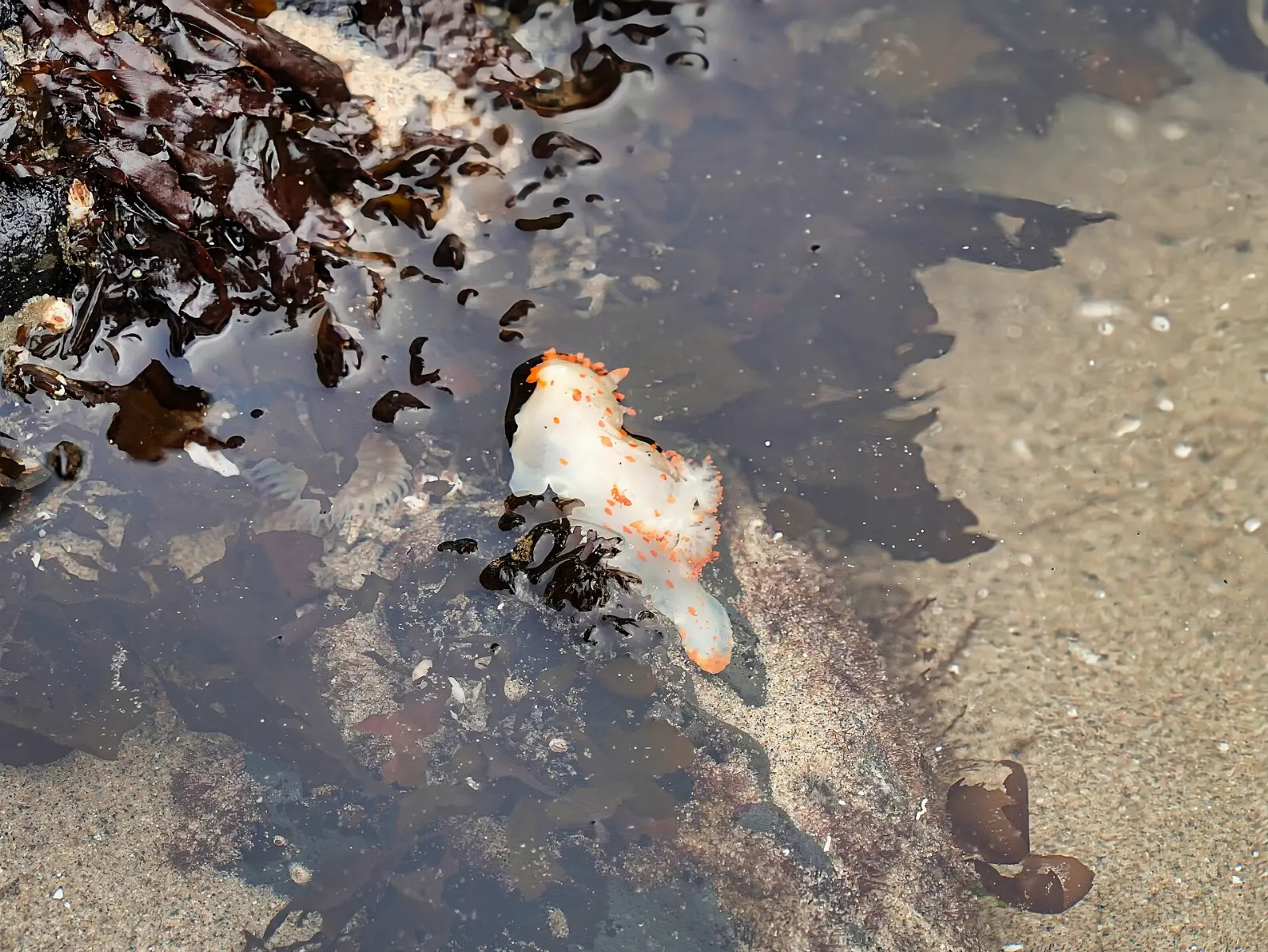
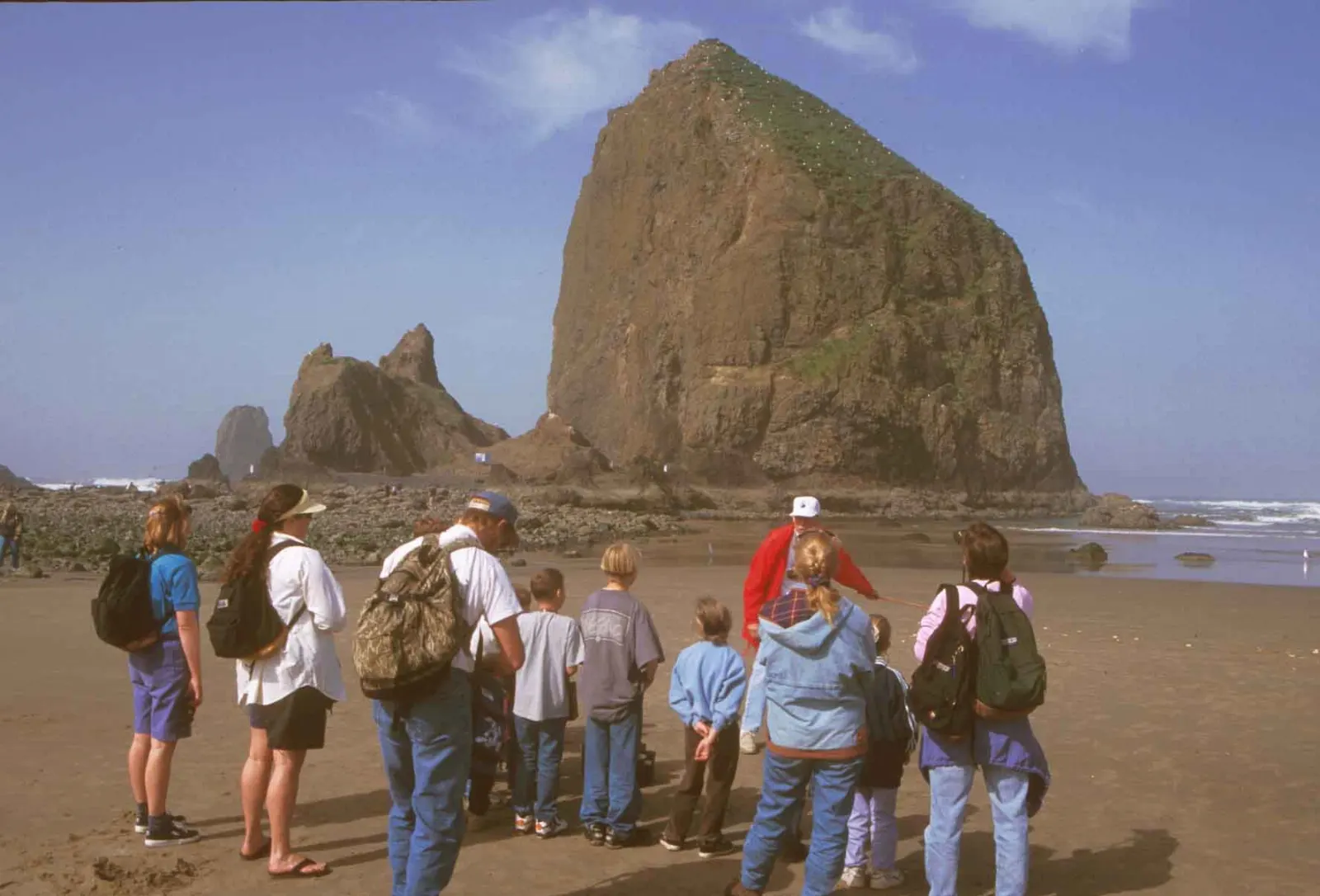
The tide pools around Haystack Rock hold ochre sea stars, giant green anemones, mussels, chitons, crabs and sculpins. During much of the year, volunteers and staff from the city's Haystack Rock Awareness Program set up on the beach at low tide with spotting scopes and explain what you are seeing.
Tufted puffins
Haystack Rock is one of the most accessible places on the Oregon coast to see tufted puffins, which nest in burrows on its grassy upper slopes in spring and summer, roughly from April into August.
Ecola State Park and Tillamook Head
Ecola Point
Just north of town, Ecola State Park covers the forested slopes of Tillamook Head. A winding road through Sitka spruce forest leads to Ecola Point, where short paths reach viewpoints looking south along the coast to Cannon Beach and Haystack Rock, and out to sea stacks where sea lions often haul out.
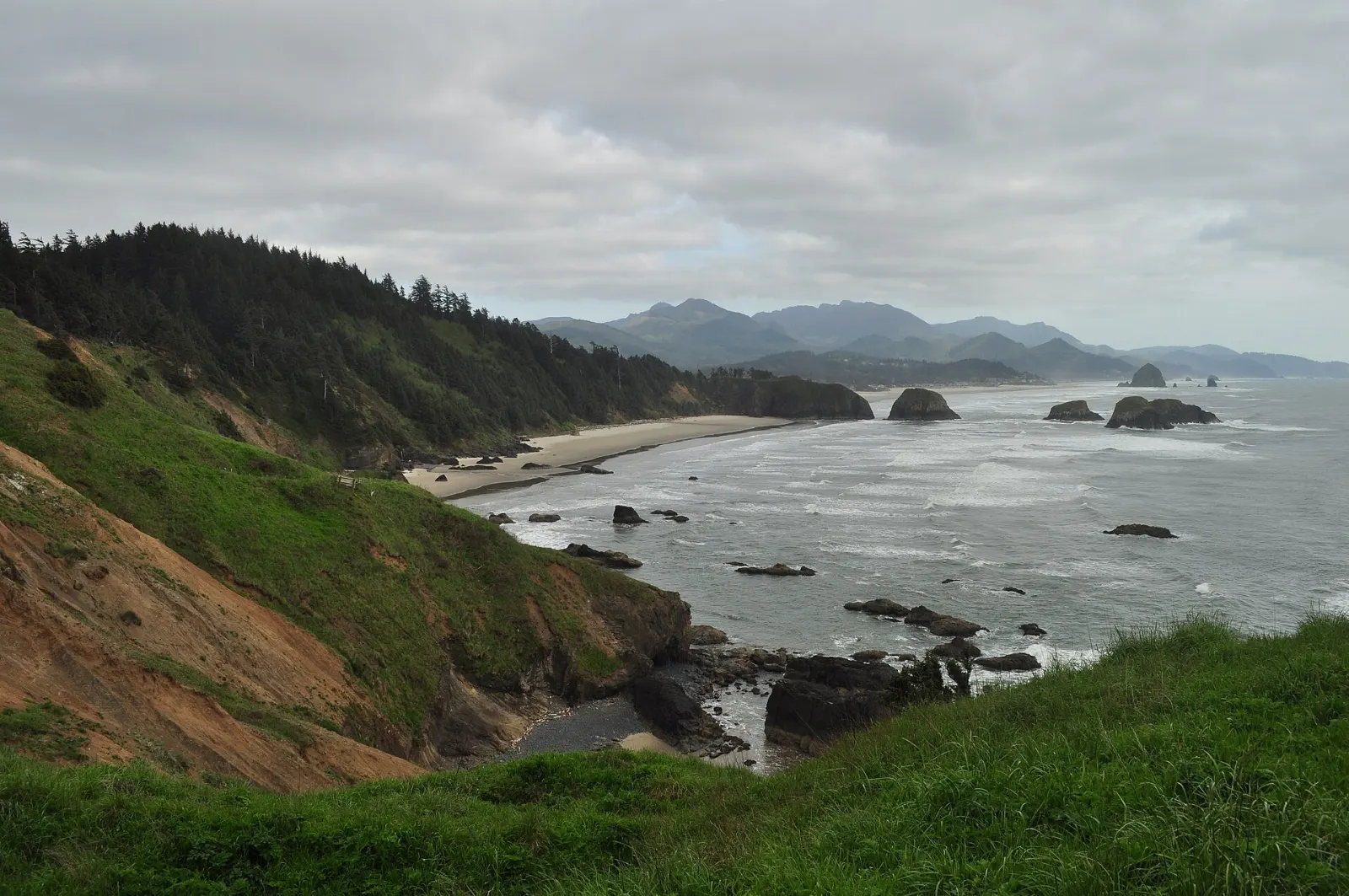
Indian Beach and the Clatsop Loop Trail
Further along the park road, Indian Beach is a cove popular with surfers and tide poolers, framed by rocky points and forest. From here, the Clatsop Loop Trail climbs through old forest along part of the route Lewis and Clark used, reaching a hikers' camp and a viewpoint toward Tillamook Rock Lighthouse, a decommissioned light on a sea rock about a mile offshore, first lit in 1881.
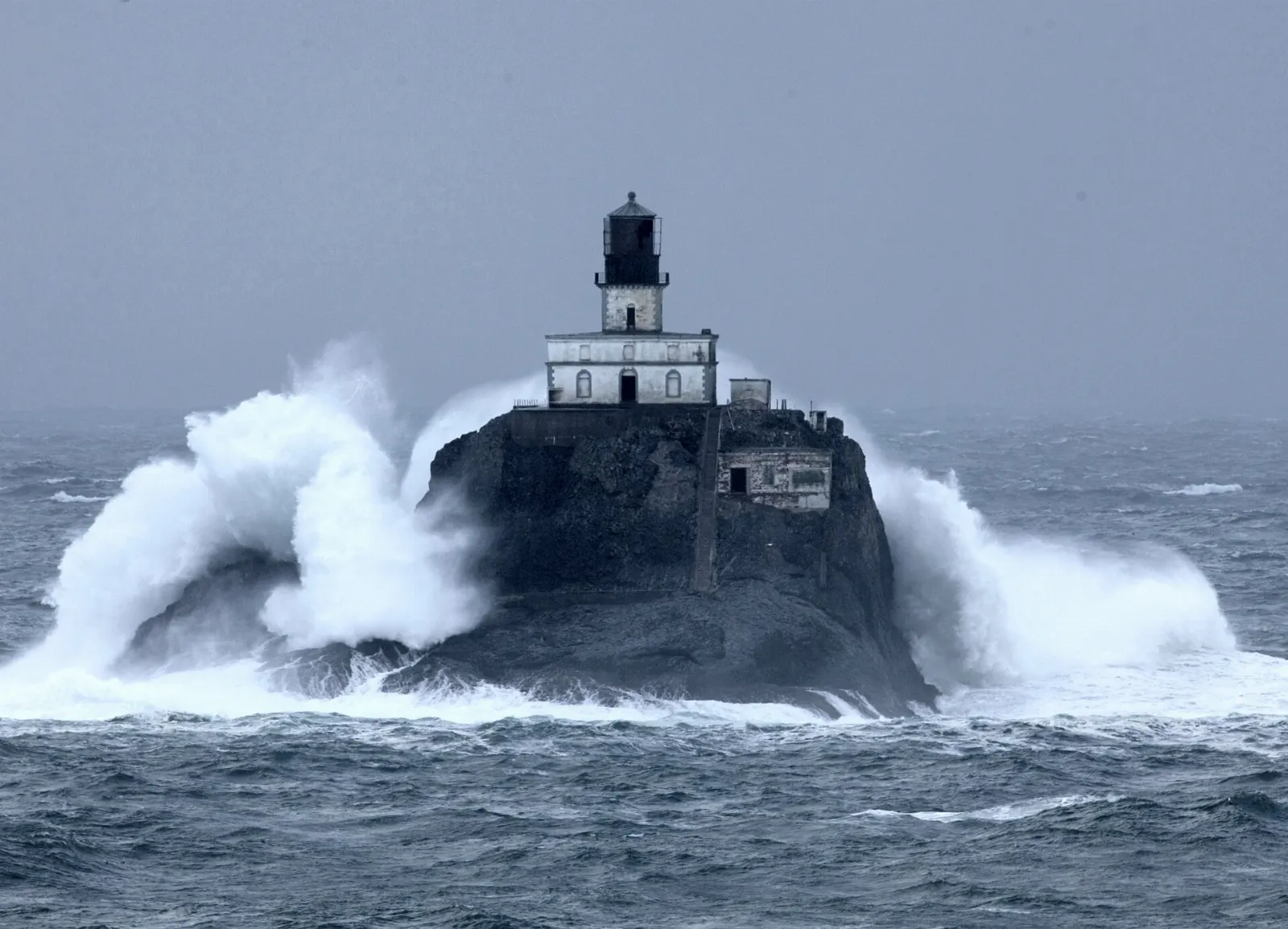
South along the coast
Tolovana Beach
At the south end of town, Tolovana Beach State Recreation Site has a parking lot, restrooms and easy beach access.
Arcadia Beach
A few minutes south, Arcadia Beach State Recreation Site is a small, quiet access point with a short path down to the sand. Offshore rocks and the cliffs to the south make it scenic, and at low tide you can walk south toward Hug Point.
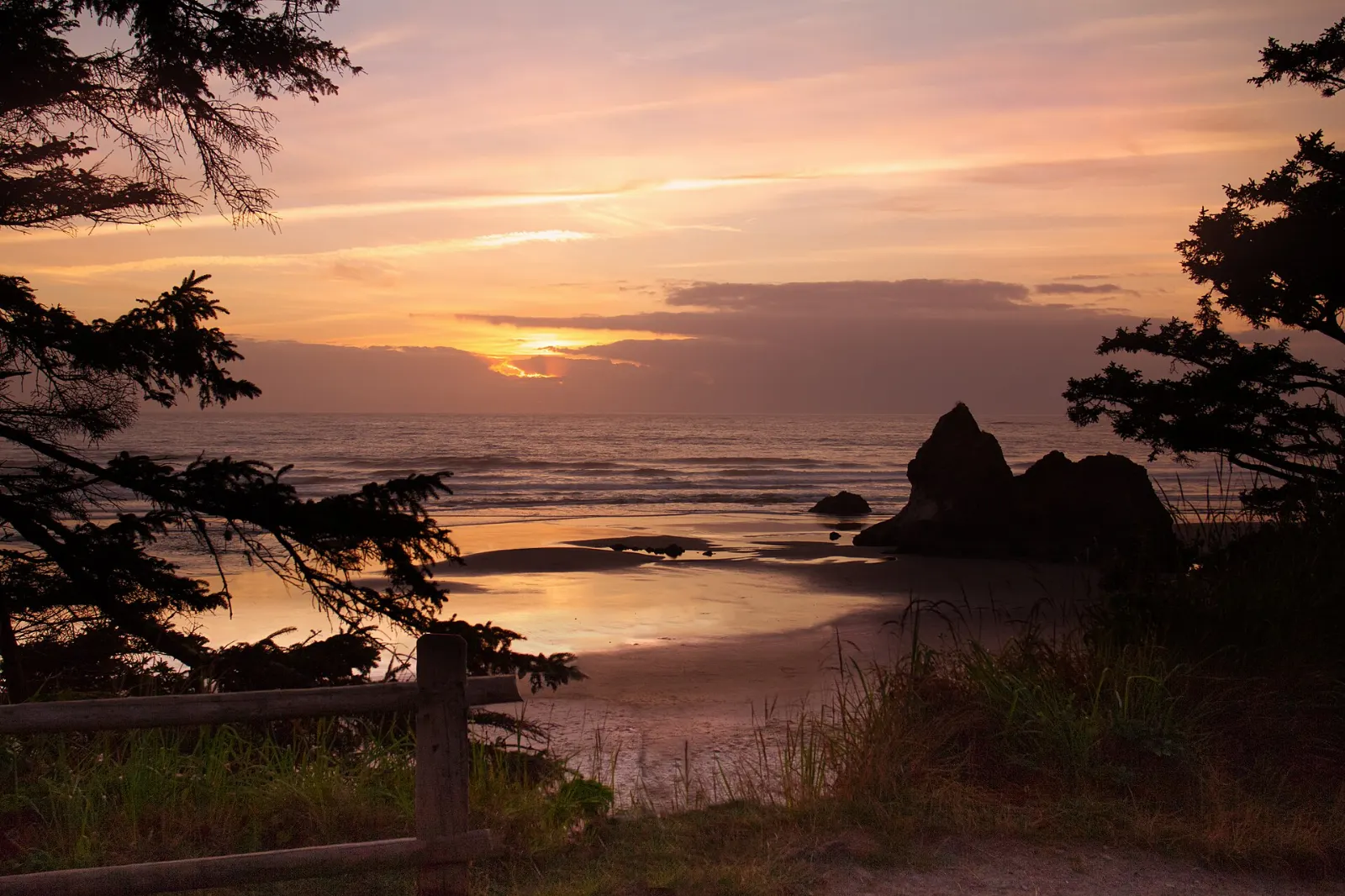
Hug Point State Recreation Site
Hug Point is named for the way stagecoaches and early travelers had to hug the rocky point to pass along the beach before the coast highway existed. You can still see the old roadway cut into the sandstone.
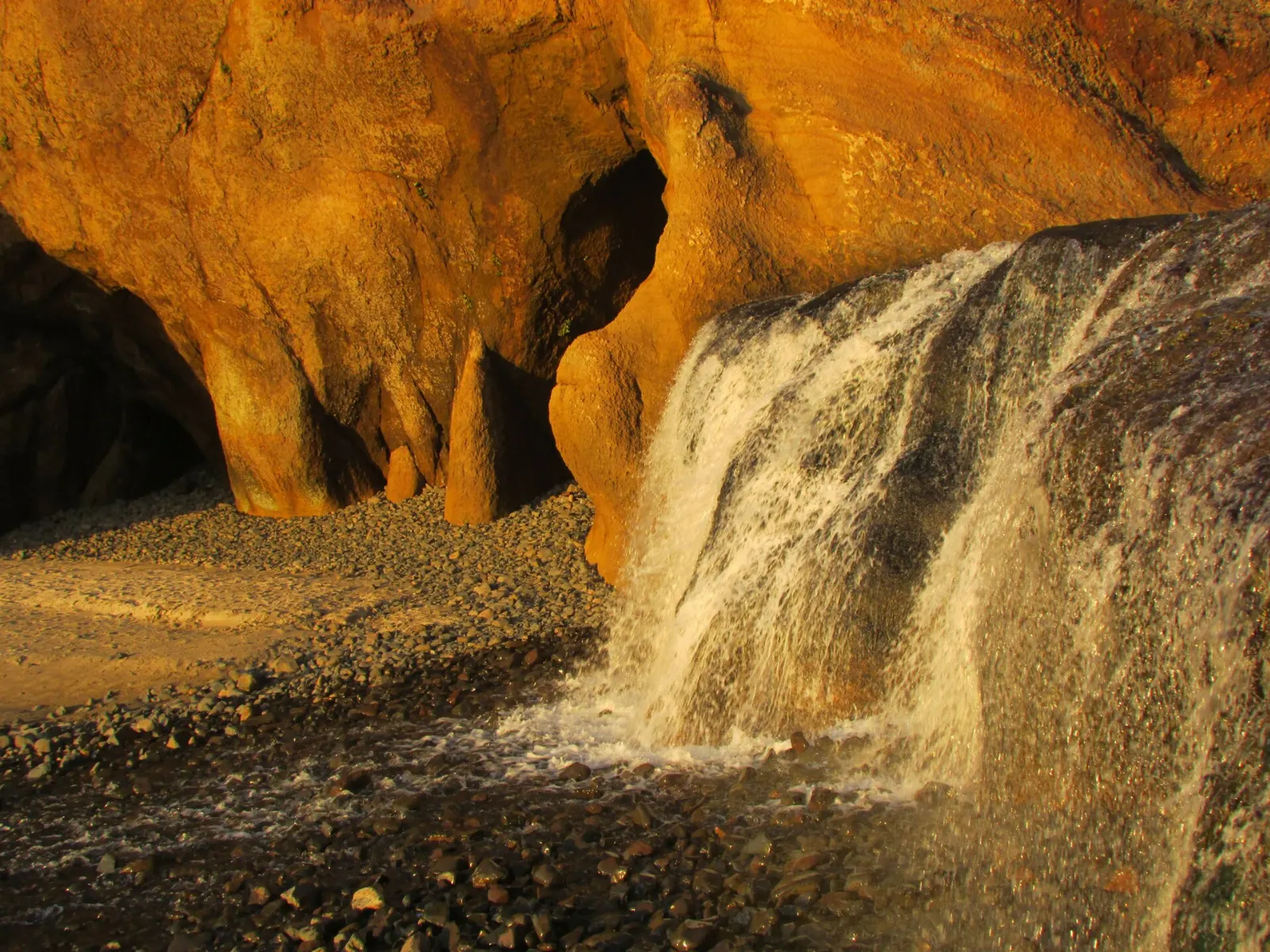
Oswald West State Park
About ten miles south of town, Oswald West State Park protects a stretch of rainforest and headland.
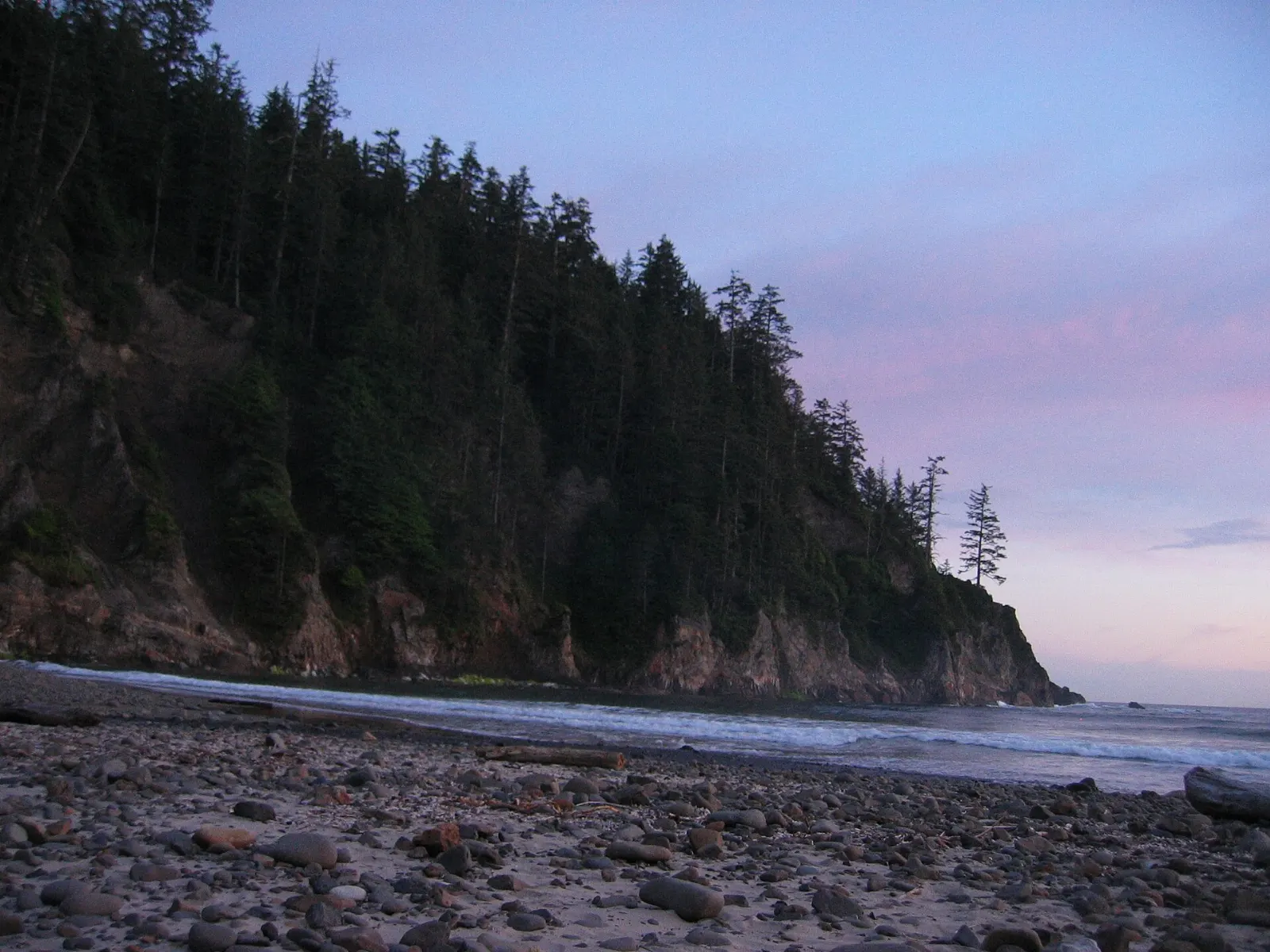
The Neahkahnie Mountain trail is steep, with switchbacks through forest and meadow, but the view from the top is the widest on this part of the coast. On a clear day you can look north to Cannon Beach and south over Manzanita and Nehalem Bay.

 Planning a trip to Cannon Beach?Compare hotels, flights and vacation rentals for Cannon Beach on Expedia.Book now
Food and local flavors
Seafood leads the menu on the north Oregon coast.
Tillamook County, less than an hour south, is dairy country, and its cheese and ice cream are found in shops all along the coast. Marionberries, a blackberry developed in Oregon, turn up in pies, jams and pastries in late summer.
Popular dishes to try in Cannon Beach


Where to stay
Midtown and downtown, near Hemlock Street, puts you within walking distance of galleries, restaurants and Haystack Rock.
Tolovana Park, at the south end of town, is quieter with beachfront options and vacation rentals.
North Cannon Beach, near Ecola and Chapman Point, is mostly residential and calm, good for longer stays and early-morning walks.
Seaside and Manzanita are alternatives.
Where to stay in Cannon Beach


Best time to visit
Summer, from July through September, has the driest and most settled weather, though mornings are often foggy and temperatures rarely feel hot on the beach.
September and early October are often the sunniest, calmest weeks of the year on the Oregon coast, with fewer visitors once school starts.
Getting there and getting around
Portland International Airport is the nearest major airport, about a two-hour drive away.
Once there, the town is easy to walk, and the beach itself is a car-free route between neighborhoods at low tide. Sunset Empire Transportation District buses link Cannon Beach with Seaside and Astoria.
A suggested itinerary
First day
Check the tide table, then time your walk to Haystack Rock around low tide to explore the tide pools and look for puffins. Spend the afternoon browsing galleries and shops downtown, visit the History Center, and return to the beach for sunset behind the sea stacks.
Second day
Drive into Ecola State Park early, before parking fills. Take in the view from Ecola Point, then hike the Clatsop Loop from Indian Beach.
Third day
Head south at low tide to Arcadia Beach and Hug Point to see the waterfall and old roadway.
Practical tips
- Plan your days around the tide table; Haystack Rock tide pools and Hug Point are best and safest at low tide.
- Never turn your back on the ocean: sneaker waves can surge far up the beach without warning.
- Stay off large drift logs near the water, which can roll when a wave lifts them.
- Do not climb Haystack Rock or disturb nesting birds; the rock is a protected wildlife refuge.
- Pack layers and a rain jacket in every season; coastal weather changes fast.
- Book summer and holiday weekend lodging well ahead, as the town has limited rooms.
Find local businesses in Cannon Beach on WiserMap
Need a cafe for a foggy morning, a seafood spot after the tide pools or a shop for beach gear and rain layers?