WiserMap — Choose wisely. Connect locally.Choose wisely. Connect locally.Add your business
Yogyakarta, Indonesia · Travel guide

Yogyakarta Indonesia Borobudur Prambanan and the Kraton

Yogyakarta, which almost everyone in Indonesia simply calls Jogja, is the city where Java keeps its traditions closest to the surface.

By WiserMap TravelUpdated October 2026 8 places11 min read
FacebookXLinkedIn

This guide walks you through the places that deserve your time, grouped so you can plan sensible days, along with what to eat, where to base yourself, when to come and how to get around a region where distances look short on a map but traffic can stretch them.

At a glance Yogyakarta
  1. Best timeThe dry season, roughly May to September, brings clearer skies for temple sunrises and volcano views.
  2. How longThree to four days covers the temples, the palace quarter and Merapi without rushing.
  3. Getting thereFly into Yogyakarta International Airport or arrive by train from Jakarta, Bandung or Surabaya.

Why visit Yogyakarta

Yogyakarta is one of the few places in Indonesia where royal rule survived into the modern republic.

The second reason is the temples. Borobudur, the vast ninth-century Buddhist monument in neighboring Central Java, and Prambanan, the soaring Hindu complex on the eastern edge of the city, are both UNESCO World Heritage Sites and both easy day trips.

Finally, Jogja is a student city, home to Universitas Gadjah Mada and many art schools, so it has a youthful energy, an active contemporary art scene, inexpensive street food and a relaxed pace that makes it one of the friendliest bases in the country.

The great temples beyond the city

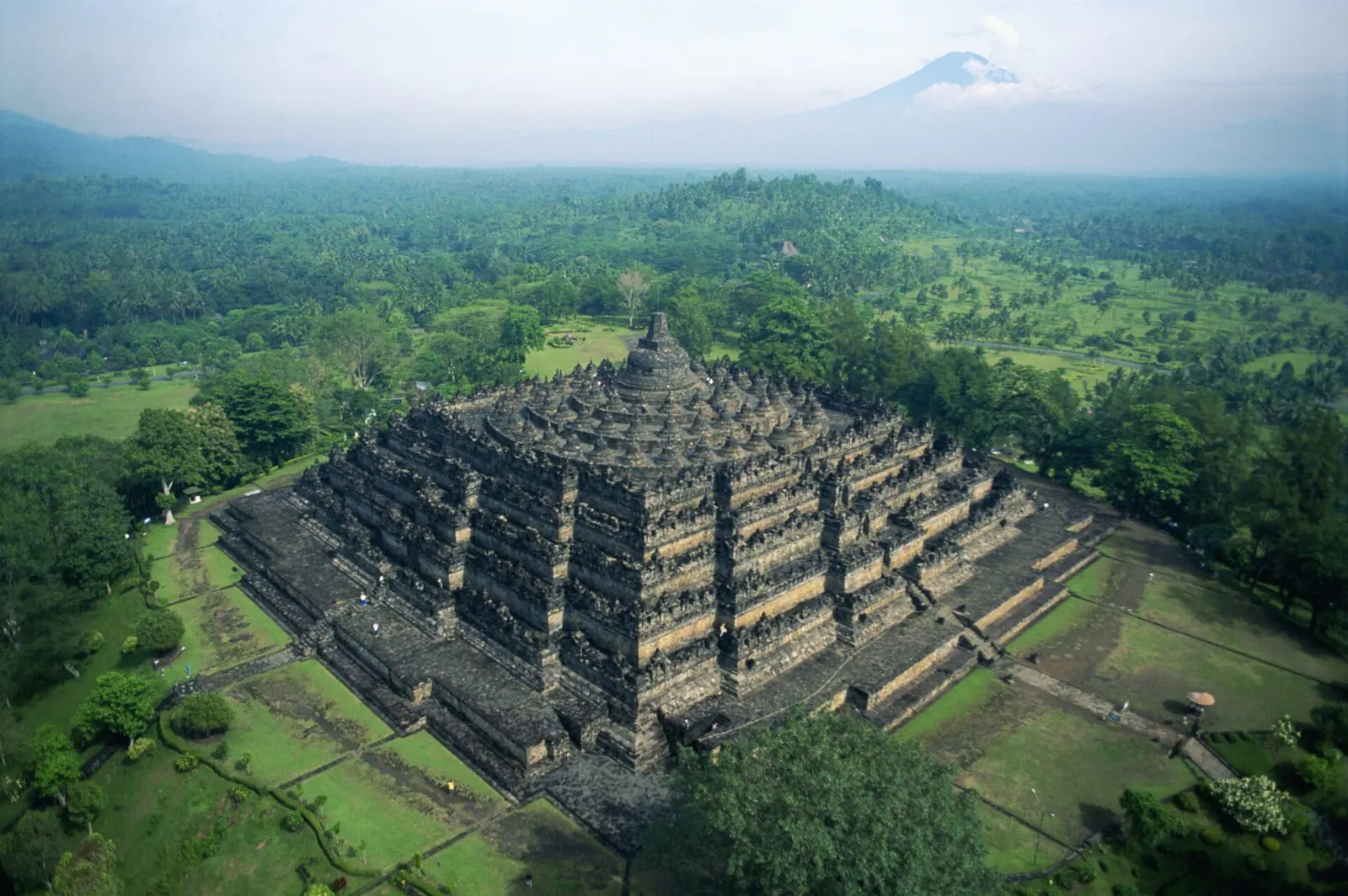
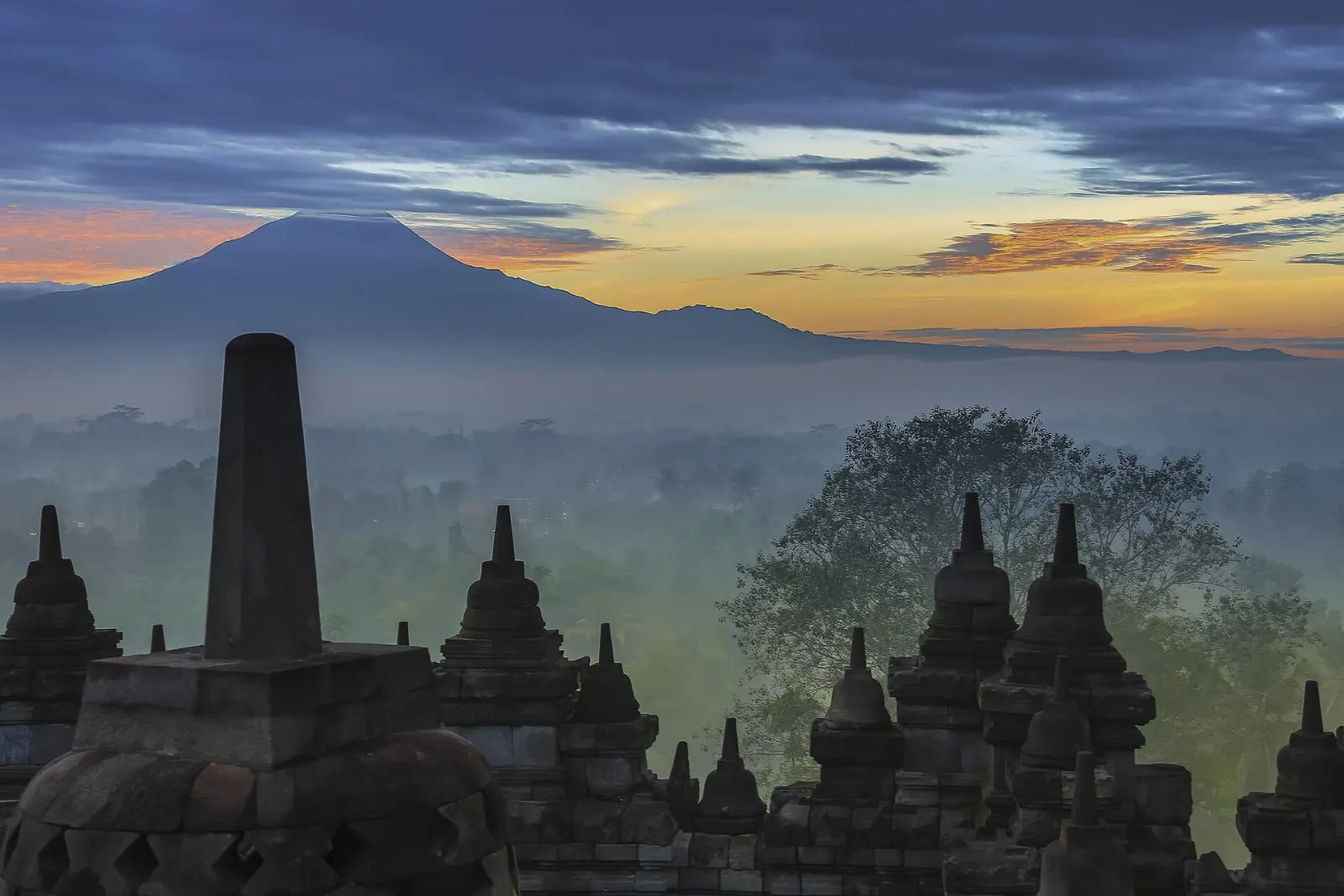
Perforated bell-shaped stupas on Borobudur's upper terraces with volcanoes on the horizon, Yogyakarta, Indonesia

Borobudur

Borobudur sits in the Kedu Plain northwest of Yogyakarta, in Magelang Regency, and the drive usually takes around an hour and a half depending on traffic. The monument is built as a stepped pyramid of terraces.

Access to the upper structure is now controlled to protect the stone. A climbing ticket includes a guide and the woven upanat sandals that visitors must wear on the monument, and a small sunrise allocation is offered separately.

Tip: combine Borobudur with Mendut temple and Pawon temple, two small shrines a short drive east that sit on the same ancient alignment. Mendut holds a beautiful seated Buddha flanked by two bodhisattvas, and it is usually quiet.

The upper circular terraces of Borobudur hold 72 perforated stupas, each originally sheltering a seated Buddha statue. Photo: CEphoto, Uwe Aranas, Wikimedia Commons, CC BY-SA 3.0
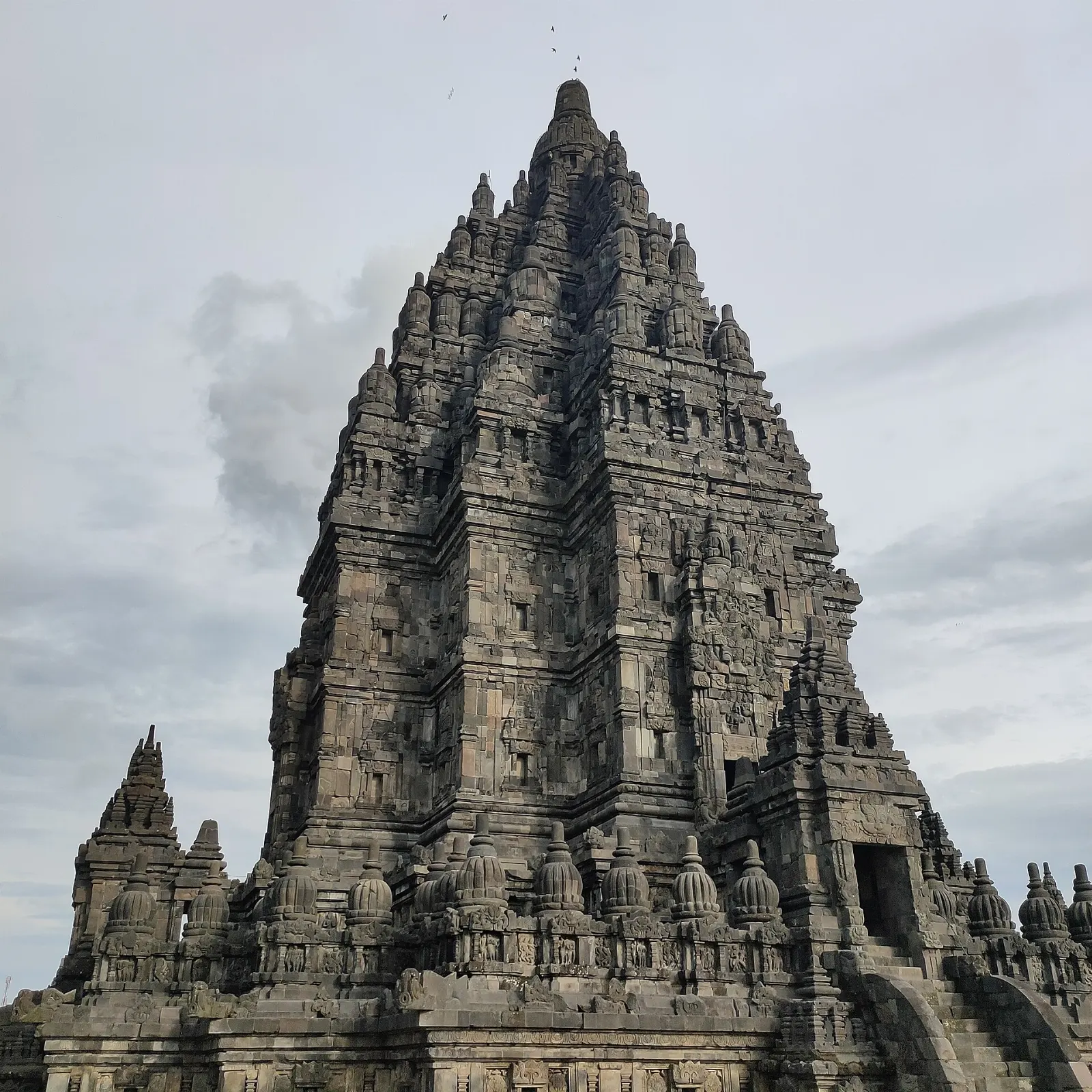
The tall, pointed Hindu shrines of Prambanan rising above a grassy courtyard, Yogyakarta, Indonesia

Prambanan

Prambanan lies about 17 kilometers east of central Yogyakarta, right on the border with Central Java.

Plan two to three hours for the main compound and Sewu. Late afternoon is pleasant, with softer light and cooler air.

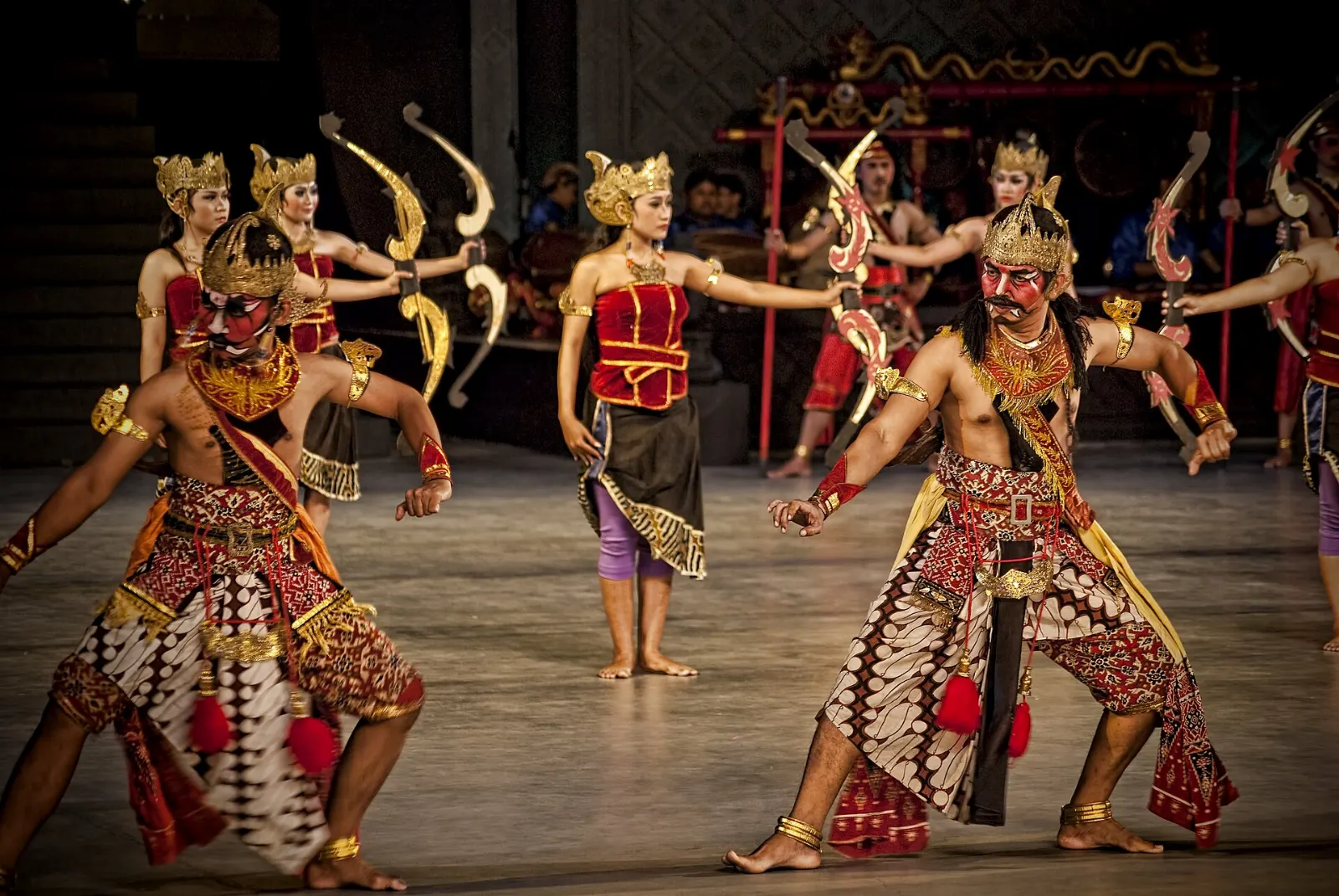
If your schedule allows, stay for the Ramayana Ballet, a long-running dance drama performed on an open-air stage with the illuminated temples behind it during the dry season and indoors during the rains.

Prambanan is a ninth-century Hindu temple compound whose central shrine is dedicated to Shiva. Photo: Afrogindahood, Wikimedia Commons, CC BY-SA 4.0

Dancers in elaborate Javanese costumes performing the Ramayana in front of a temple, Yogyakarta, Indonesia
The Ramayana Ballet is staged with Prambanan's temples as a backdrop.Photo: Philip Nalangan, Wikimedia Commons, CC BY-SA 4.0
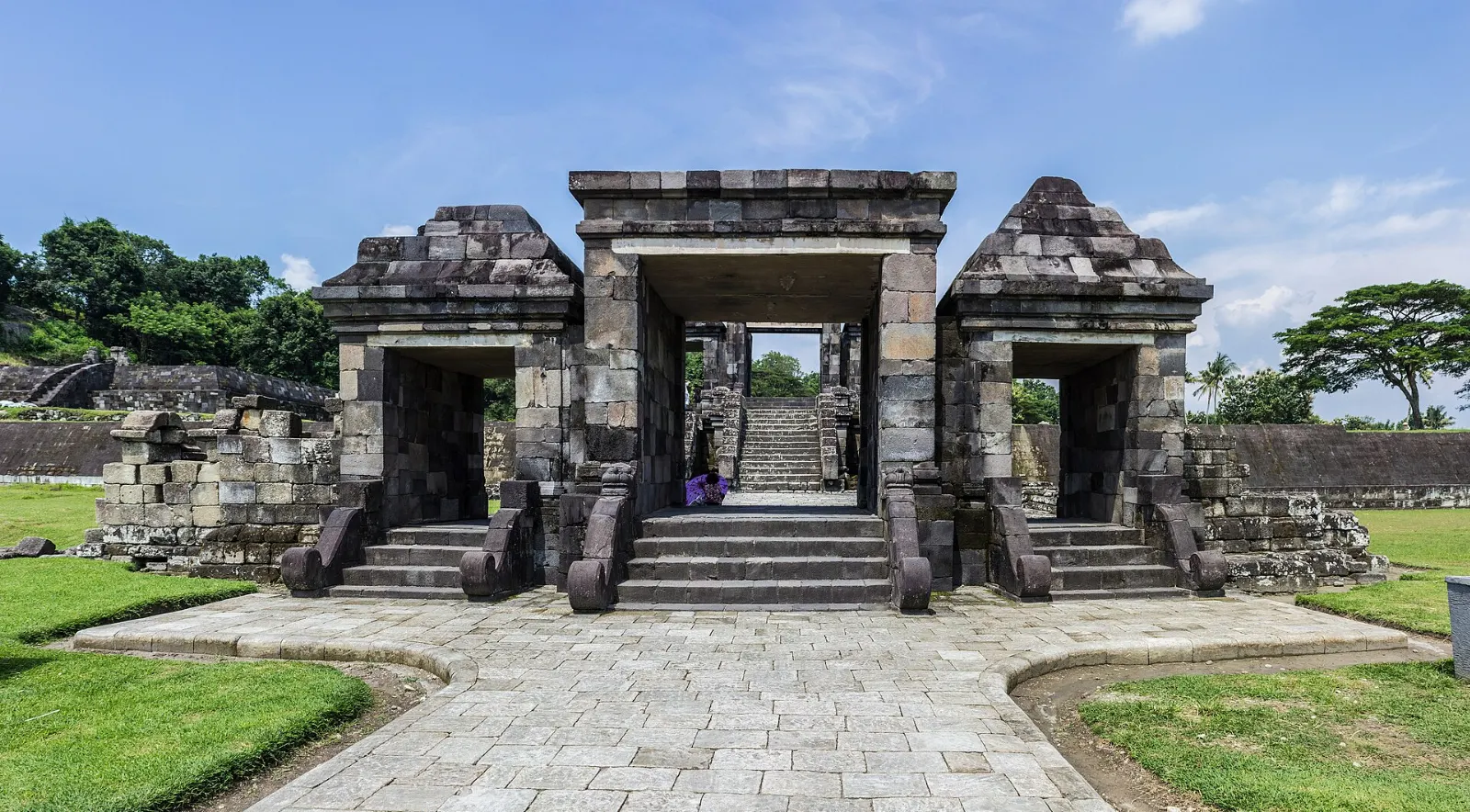
The stone gateway of the Ratu Boko archaeological site on a hilltop near Prambanan, Yogyakarta, Indonesia

Ratu Boko

A few kilometers south of Prambanan, Ratu Boko is a hilltop archaeological site whose purpose is still debated: it may have been a palace, a monastery or a fortified retreat.

Ratu Boko is a hilltop archaeological site south of Prambanan, known for its restored stone gateway. Photo: Crisco 1492, Wikimedia Commons, CC BY-SA 3.0

The palace quarter and old city

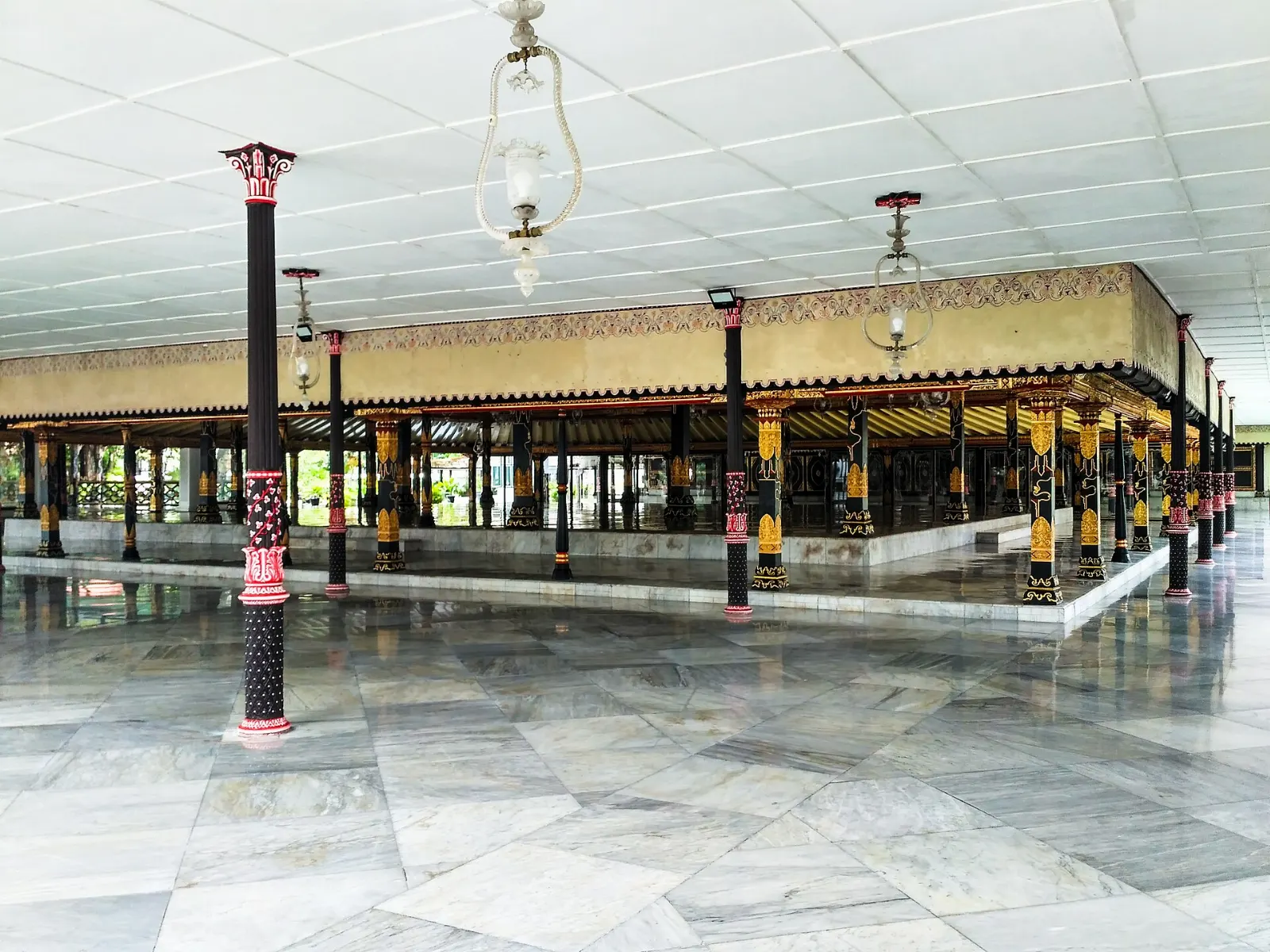
An open Javanese pavilion with carved, painted columns inside the Yogyakarta Sultan's Palace, Indonesia

Kraton Ngayogyakarta Hadiningrat

The Kraton, the Sultan's Palace, was laid out in the mid-eighteenth century when the sultanate was founded, and it is still the royal residence.

Give the Kraton about two hours. It opens in the morning and is generally closed on Mondays, so check the official website for current hours and fees before you go.

The Kraton remains the residence of the Sultan of Yogyakarta and a center of Javanese court culture. Photo: Yudirahmat12, Wikimedia Commons, CC BY-SA 4.0

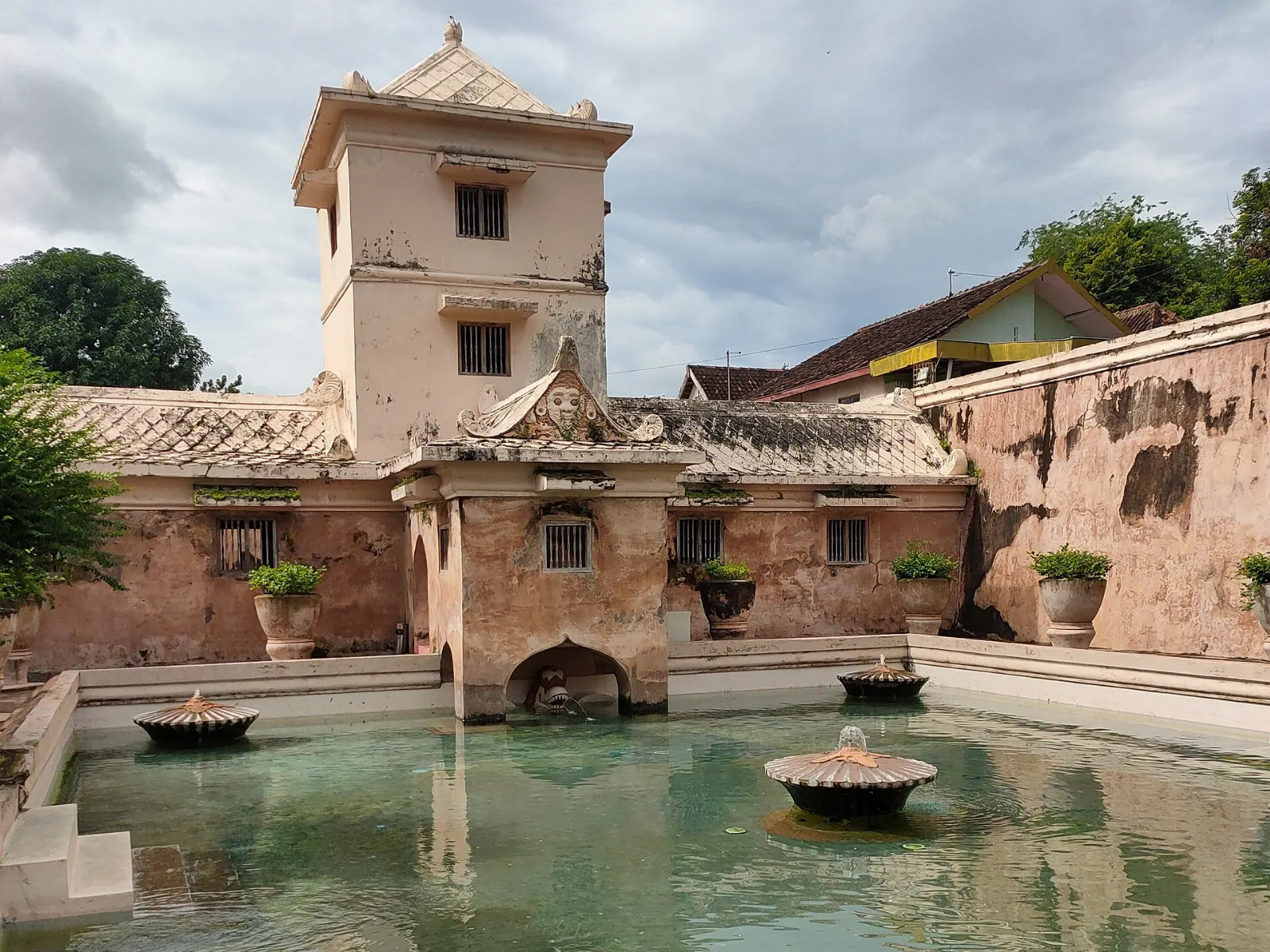
Turquoise bathing pools framed by cream-colored walls and towers at Taman Sari, Yogyakarta, Indonesia

Taman Sari

A short walk southwest of the Kraton, Taman Sari was built as a royal pleasure garden with bathing pools, pavilions and underground passages.

Allow one and a half to two hours. A local guide at the entrance can lead you through the maze of lanes, which are full of small batik and painting studios.

Taman Sari, the former royal garden of the Yogyakarta sultanate, was built in the mid-eighteenth century. Photo: Afrogindahood, Wikimedia Commons, CC BY-SA 4.0

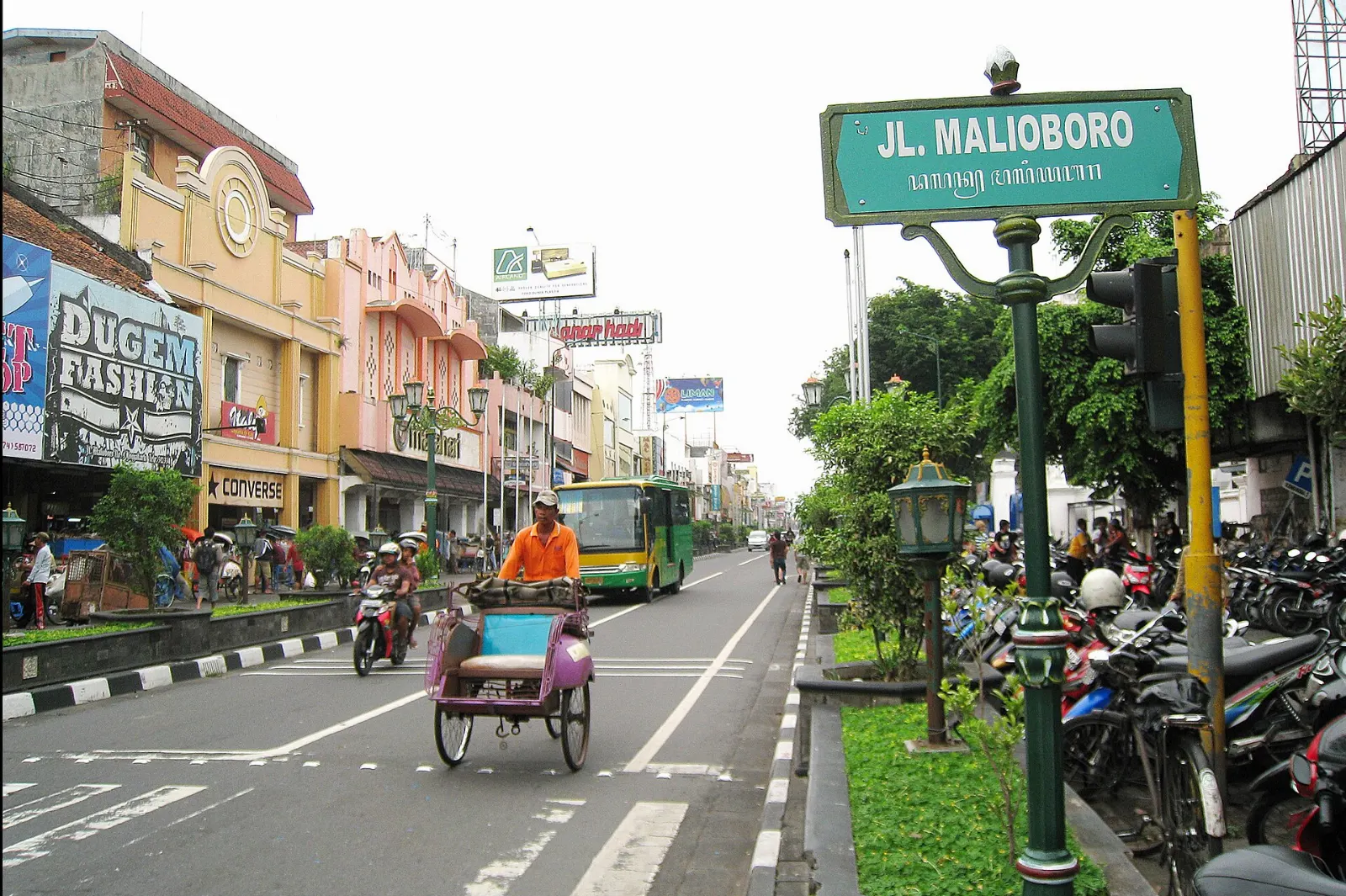
Pedestrians, becak cycle rickshaws and shops along Malioboro Street in Yogyakarta, Indonesia

Malioboro Street and Beringharjo Market

Malioboro is the city's main commercial street, running north from the palace district toward the railway station.

At the southern end, Beringharjo Market is the city's historic market, with floors of batik fabric, spices, herbal jamu ingredients and snacks. Bargain politely and compare prices before buying.

Malioboro Street is Yogyakarta's busiest shopping street, running north from the palace district. Photo: Gunawan Kartapranata, Wikimedia Commons, CC BY-SA 3.0

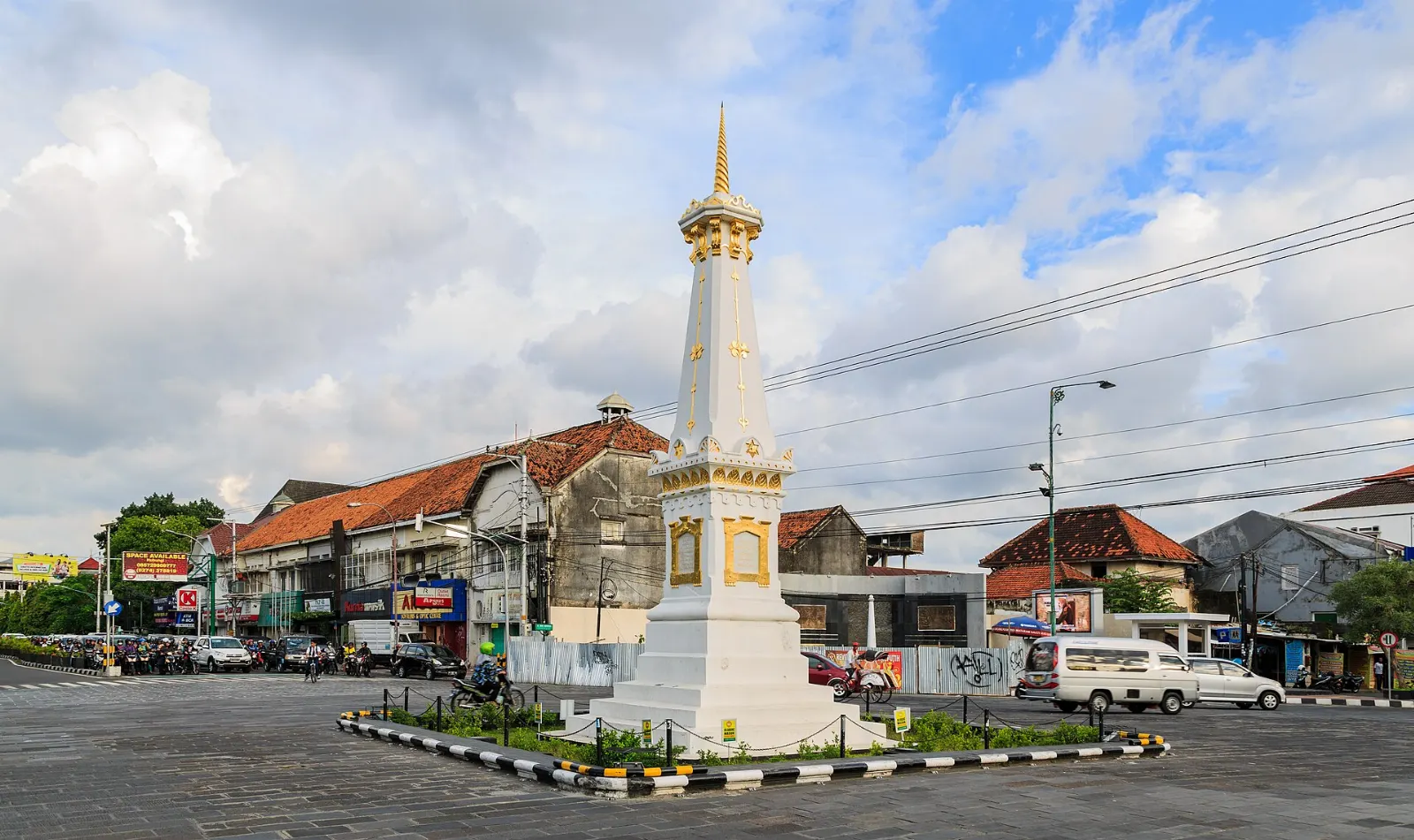
The white and gold Tugu monument at a busy Yogyakarta intersection, Indonesia

Tugu Yogyakarta

The Tugu monument stands at a busy crossroads north of Malioboro and marks the northern point of the city's philosophical axis, an imaginary line running from Mount Merapi through the Tugu and the Kraton to the Indian Ocean.

Tugu Yogyakarta marks the northern point of the city's symbolic axis linking Mount Merapi, the Kraton and the sea. Photo: CEphoto, Uwe Aranas, Wikimedia Commons, CC BY-SA 3.0
Kotagede

Southeast of the center, Kotagede was the capital of the Mataram Sultanate before Yogyakarta existed. Its narrow lanes are lined with traditional Javanese houses, and the old royal mosque and the cemetery of Mataram's founding rulers survive here.

Volcanoes, caves and the coast

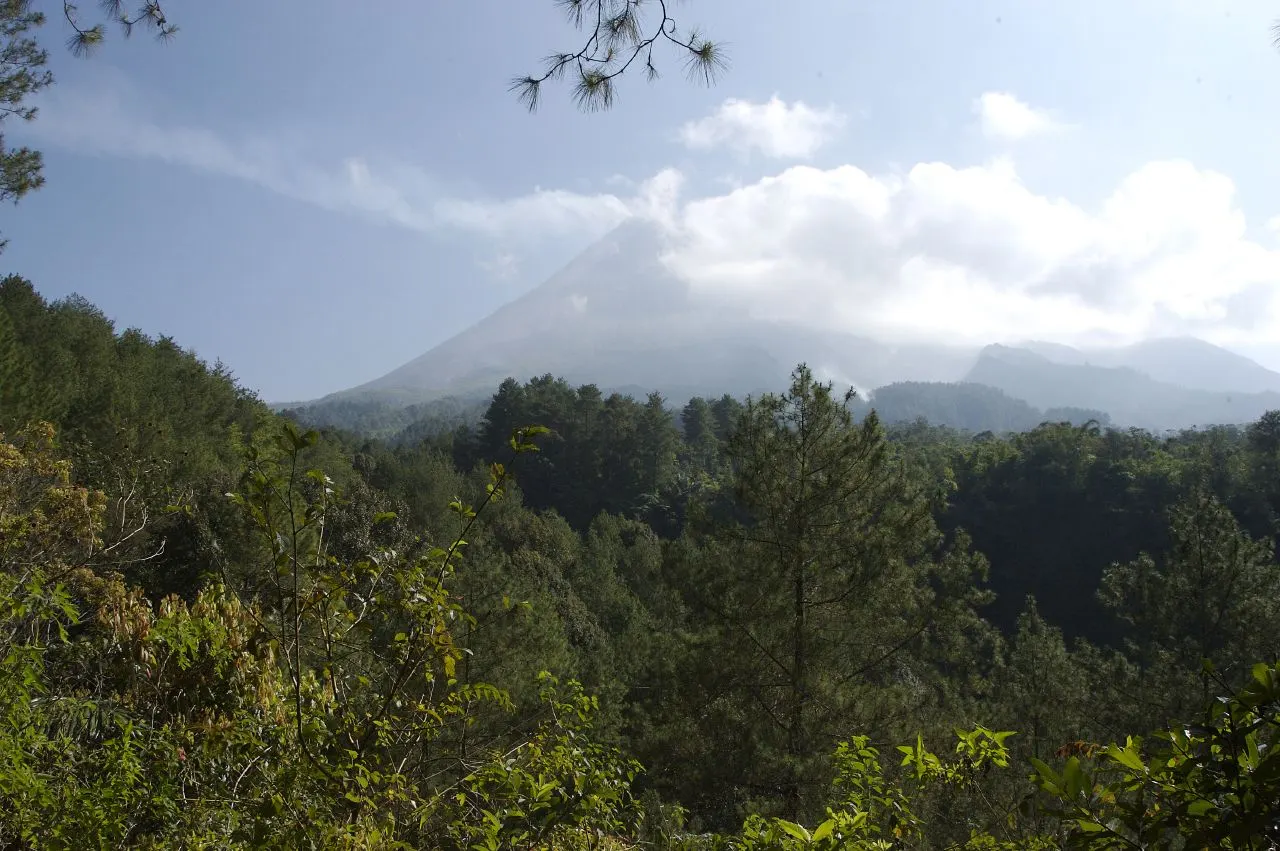
The smoking cone of Mount Merapi seen above forested slopes, Yogyakarta, Indonesia

Mount Merapi

Mount Merapi rises north of the city and is one of Indonesia's most active volcanoes.

Plan around three to four hours for a jeep tour. Climbing to the summit is regularly prohibited depending on the alert level, so follow official guidance and never go beyond restricted zones.

Mount Merapi, north of Yogyakarta, is one of Indonesia's most active volcanoes. Photo: Lip Kee from Singapore, Republic of Singapore, Wikimedia Commons, CC BY-SA 2.0

Jomblang Cave

In Gunungkidul Regency, southeast of Yogyakarta, Jomblang Cave is a vertical sinkhole that you descend by rope with a trained team. At the bottom, a passage leads to a chamber where, around midday, a shaft of sunlight pours through an opening in the roof.

The south coast beaches

The Indian Ocean coast south of Yogyakarta is wild and scenic but not made for casual swimming, as currents are strong. Parangtritis is the best known beach, with dunes nearby at Parangkusumo.

Food and local flavors

Yogyakarta's signature dish is gudeg, young jackfruit slow-cooked for hours in coconut milk and palm sugar until it turns sweet and deep brown.

Look out for bakpia, small flaky pastries filled with mung bean paste, which are sold all over the Pathuk area and make good gifts.

In the evenings, small sidewalk stalls called angkringan sell nasi kucing, tiny parcels of rice with a bite of sambal and fish, alongside skewers of satay and fried snacks you warm over charcoal.

Popular dishes to try in Yogyakarta

Gudeg in Yogyakarta, Indonesia
Gudeg Wijilan Street, near the Kraton, is lined with gudeg vendors, and many families eat it for breakfast.Photo: SATELITBM, Wikimedia Commons, CC BY-SA 4.0
Bakpia in Yogyakarta, Indonesia
Bakpia Look out for bakpia, small flaky pastries filled with mung bean paste, which are sold all over the Pathuk area and make good gifts.Photo: Jmarlon, Wikimedia Commons, CC BY-SA 4.0
Sate klathak in Yogyakarta, Indonesia
Sate klathak Sate klathak, goat satay grilled on iron bicycle spokes and seasoned mostly with salt, comes from the Imogiri area south of the city.Photo: Danangtrihartanto, Wikimedia Commons, CC BY-SA 4.0
Kopi joss in Yogyakarta, Indonesia
Kopi joss Many serve kopi joss, coffee with a glowing piece of charcoal dropped into the glass, a habit associated with the stalls near Tugu station.Photo: Ivan Lanin from Jakarta, Indonesia, Wikimedia Commons, CC BY-SA 2.0

Where to stay

Staying near Malioboro puts you close to the railway station, shops and nightlife, which suits first-time visitors and anyone arriving by train.

The Prawirotaman area, south of the Kraton, has long been the traveler district, with guesthouses, cafes and galleries on calmer streets.

If temples are your priority, consider spending a night near Borobudur in Magelang, where rural lodgings let you reach the monument early and enjoy the countryside of rice fields and villages.

Where to stay in Yogyakarta

Malioboro, Yogyakarta, Indonesia
Malioboro Where to stayStaying near Malioboro puts you close to the railway station, shops and nightlife, which suits first-time visitors and anyone arriving by train.Photo: Gunawan Kartapranata, Wikimedia Commons, CC BY-SA 3.0
Kraton, Yogyakarta, Indonesia
Kraton The Prawirotaman area, south of the Kraton, has long been the traveler district, with guesthouses, cafes and galleries on calmer streets.Photo: CEphoto, Uwe Aranas, Wikimedia Commons, CC BY-SA 3.0
Taman Sari, Yogyakarta, Indonesia
Taman Sari It suits independent travelers who like a neighborhood feel and want to walk to the palace and Taman Sari.Photo: Crisco 1492, Wikimedia Commons, CC BY-SA 3.0
Borobudur, Yogyakarta, Indonesia
Borobudur If temples are your priority, consider spending a night near Borobudur in Magelang, where rural lodgings let you reach the monument early and enjoy the countryside of rice…Photo: Chainwit., Wikimedia Commons, CC BY 4.0

Best time to visit

Yogyakarta is warm year round. The dry season, roughly May to September, has the most reliable sunshine and the best chance of clear volcano views at dawn.

Crowds peak during Indonesian school holidays around late June and July, at the end of the year and around Eid al-Fitr, when domestic travelers fill trains and hotels.

Getting there and getting around

Yogyakarta International Airport is in Kulon Progo, west of the city, with domestic flights and some international routes. An airport rail link connects it with Yogyakarta's main Tugu station, which is the easiest way into town.

Trains are one of the best ways to arrive.

Within the city, ride-hailing apps for cars and motorbike taxis are widely used and inexpensive. The Trans Jogja bus network covers main routes.

A suggested itinerary

First day

Start at the Kraton in the morning to catch a performance, then walk to Taman Sari and lose yourself in the surrounding lanes.

Second day

Leave very early for Borobudur, ideally with a driver.

Third day

Take an early jeep tour on Merapi's slopes from Kaliurang, then head east in the afternoon to Prambanan and Sewu.

Fourth day

Choose adventure or culture: descend into Jomblang Cave and finish on the Gunungkidul coast, or explore Kotagede's silver workshops and old mosque before taking a short train ride to Solo.

Practical tips

  • Book Borobudur climbing tickets online in advance, and check the official website for current hours, fees and access rules.
  • Cover shoulders and knees at the Kraton, mosques and temples, and remove shoes where signs ask you to.
  • Carry small notes of rupiah for markets, becak and angkringan, as many small vendors do not take cards.
  • Download a ride-hailing app before you arrive; it avoids negotiation and is the easiest way to get around the city.
  • Start temple visits early to avoid midday heat and tour-bus crowds, and bring a hat, sunscreen and water.
  • Check the volcano alert level before any Merapi trip and follow official exclusion zones.
YogyakartaWISERMAP PLACEYogyakarta: photos, reviews & things to doSee traveler photos and reviews, or share your own →

More places to visit

All travel guides →