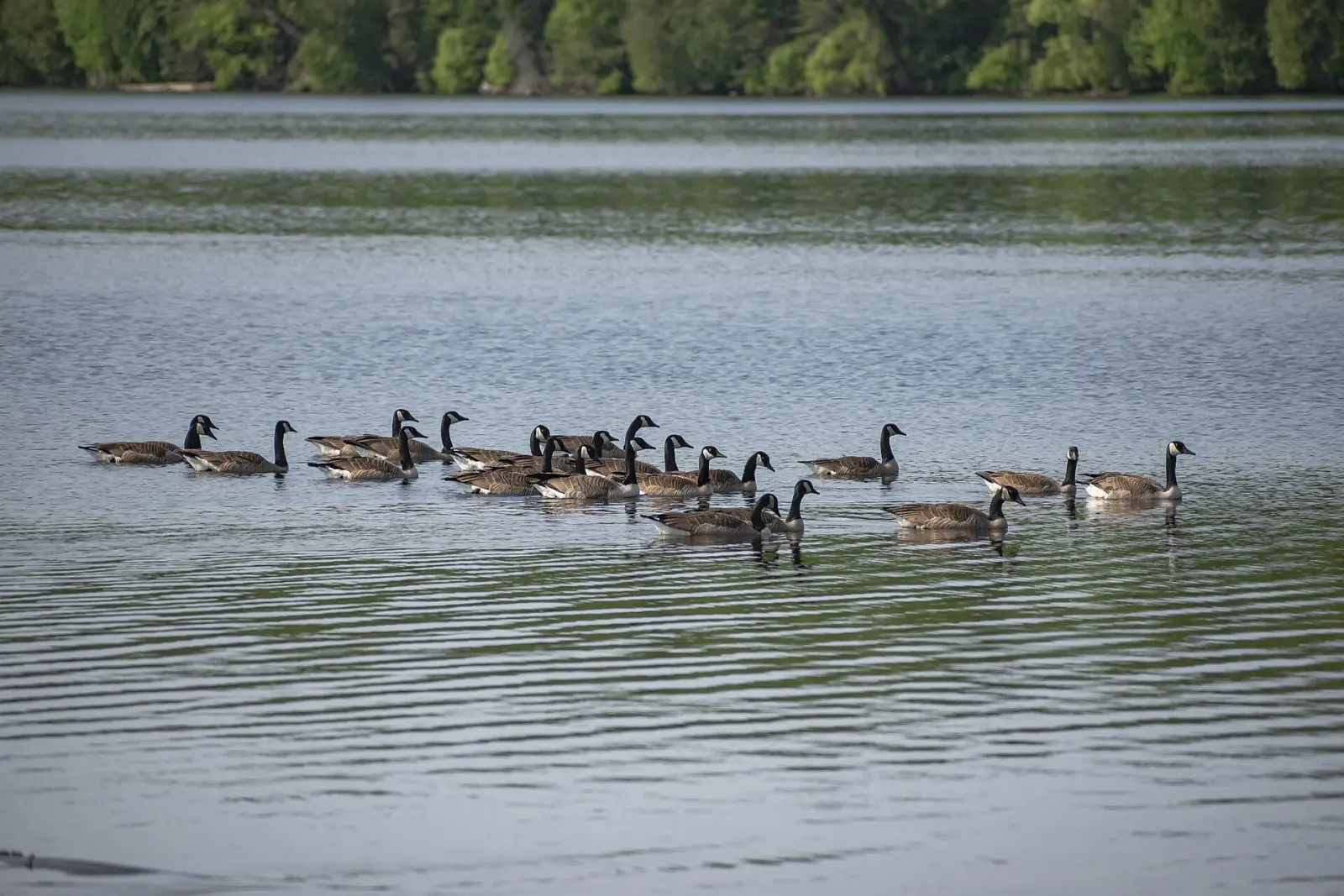
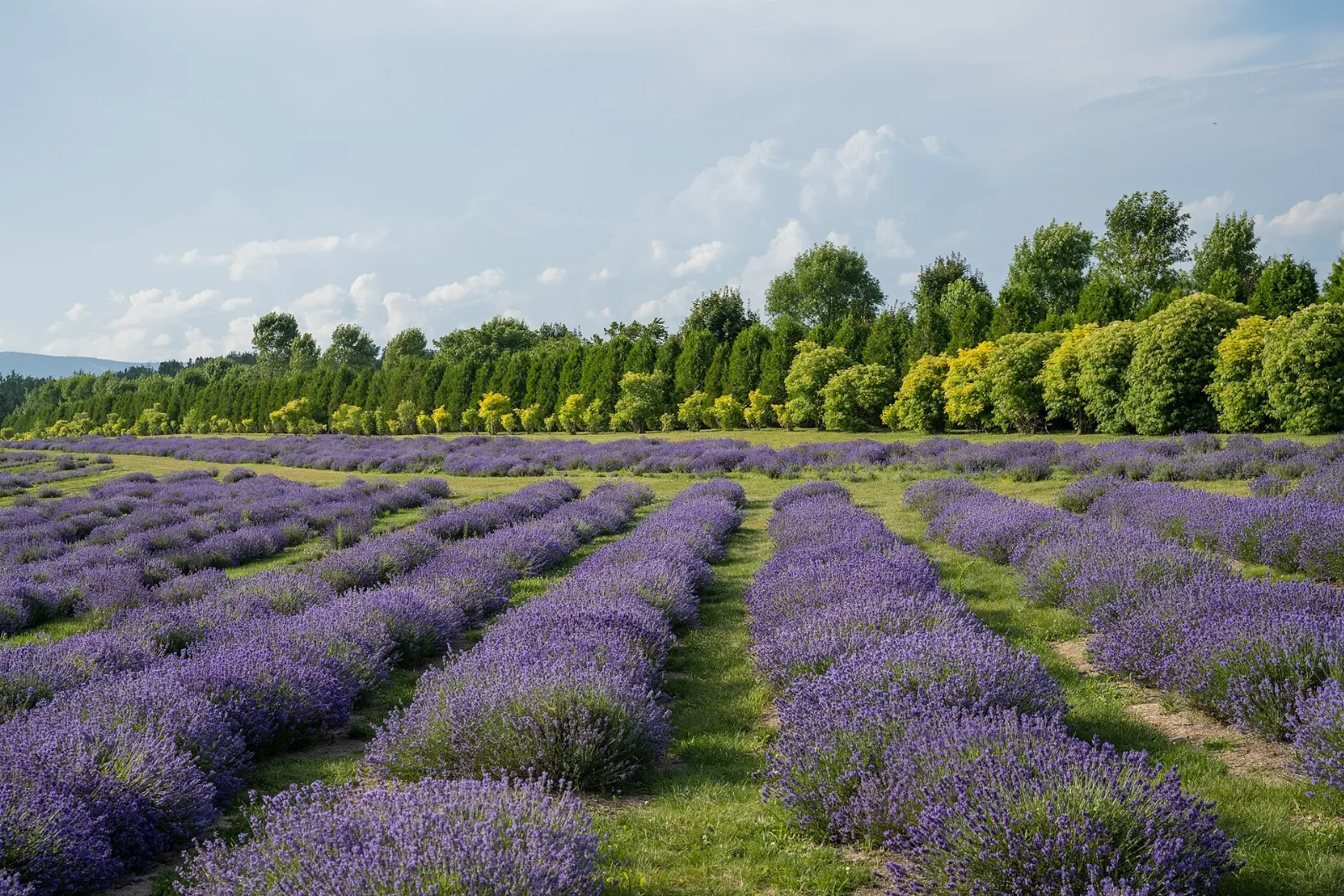
Moose Jaw Saskatchewan Tunnel Tours Spa and Murals
Moose Jaw is a small prairie city on the Trans-Canada Highway, about an hour west of Regina, and it packs a surprising amount into a walkable downtown. Prohibition-era tunnel tours, a geothermal mineral spa, dozens of murals and a historic main street sit beside a river valley park, a national air force base and a handful of quirky roadside attractions.
By WiserMap TravelUpdated October 20268 places9 min read
Best timeSummer, from late May to early September, when most attractions are open.
How longAllow two days for downtown, the spa and the sights south of the city.
Getting thereDrive the Trans-Canada Highway, 45 minutes west of Regina.
Ad
Why visit Moose Jaw
Moose Jaw grew around the Canadian Pacific Railway, which chose the junction of the Moose Jaw River and Thunder Creek as a division point in 1881.
Today it is an easy and relaxed stop for road-trippers, with a heritage downtown, a spa, river trails and museums that suit families, couples and history lovers. It also holds a quirky charm, from a ten-metre concrete moose to the roar of the Snowbirds overhead.
The best places to visit downtown and along the river
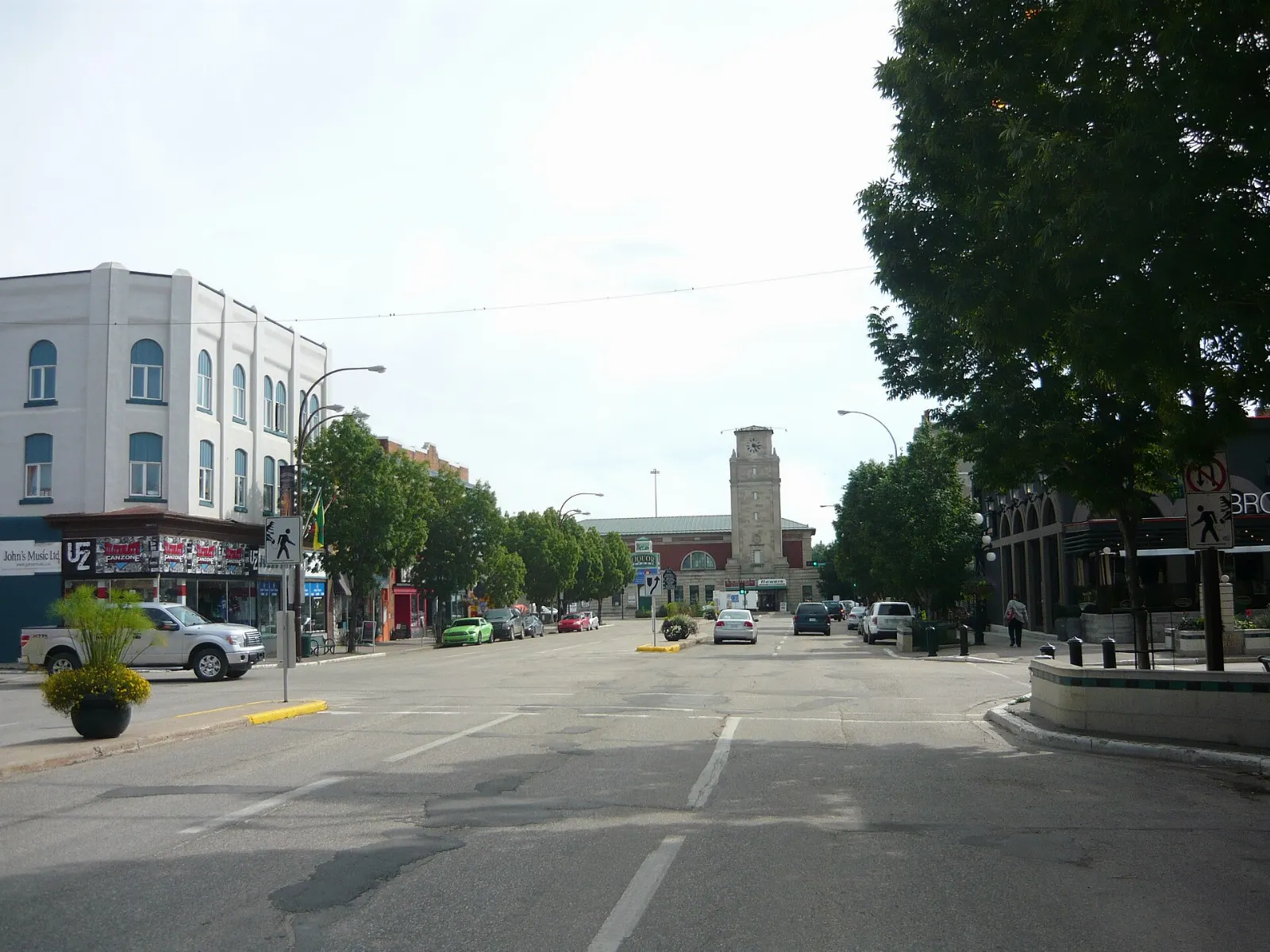
Most of the city's best-known sights are within a few blocks of Main Street, so you can park once and walk.
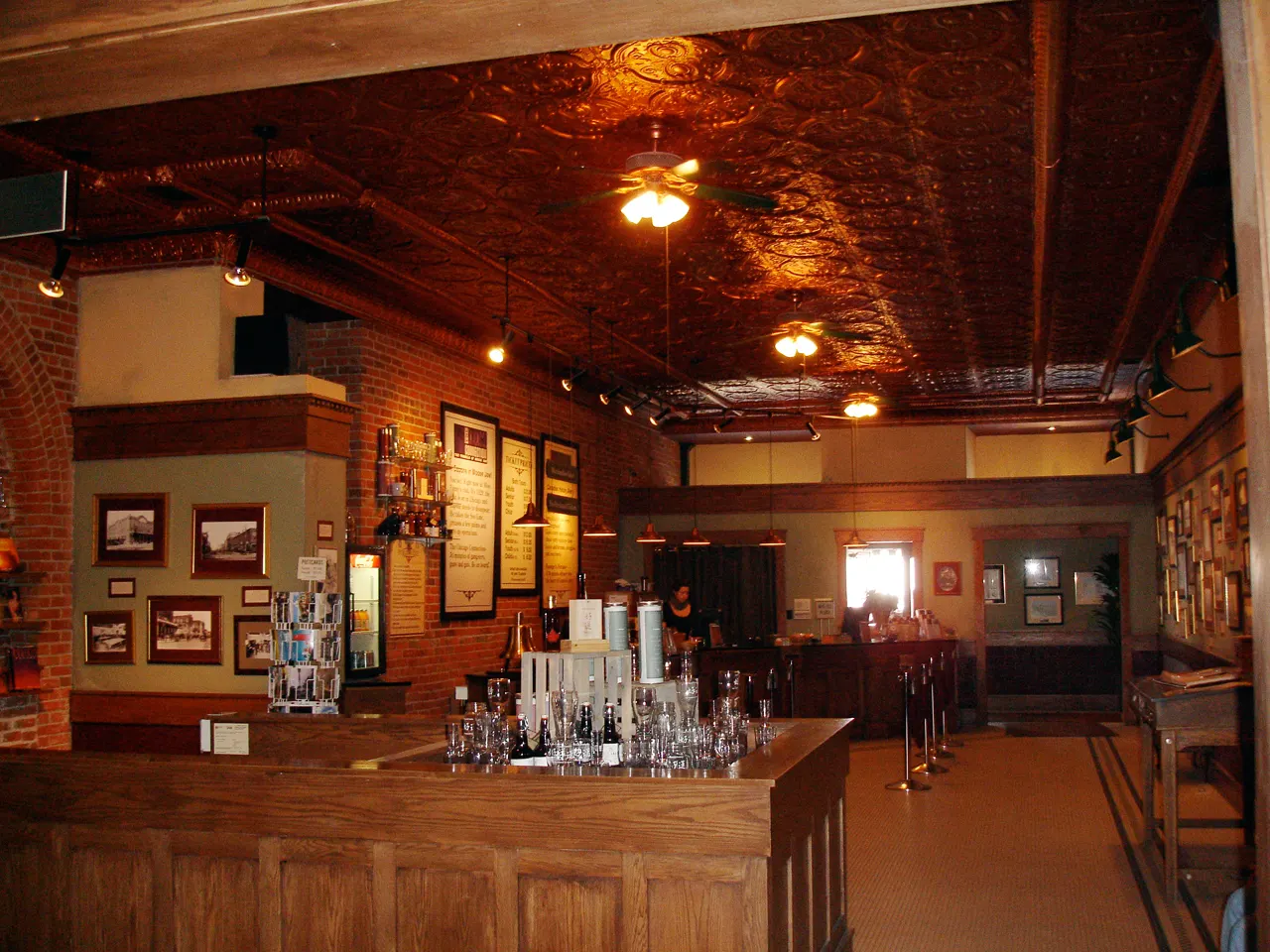
Tunnels of Moose Jaw
Guided tours of the tunnels beneath downtown run about two hours and are staged as interactive theatre with actors. The Chicago Connection covers the era of bootlegging, and Passage to Fortune explores the story of Chinese immigrants and the head tax.
The city's geothermal mineral spa is one of its signature attractions, with warm mineral pools that feel especially good on a cold day. It stands next to the casino, across from Crescent Park.
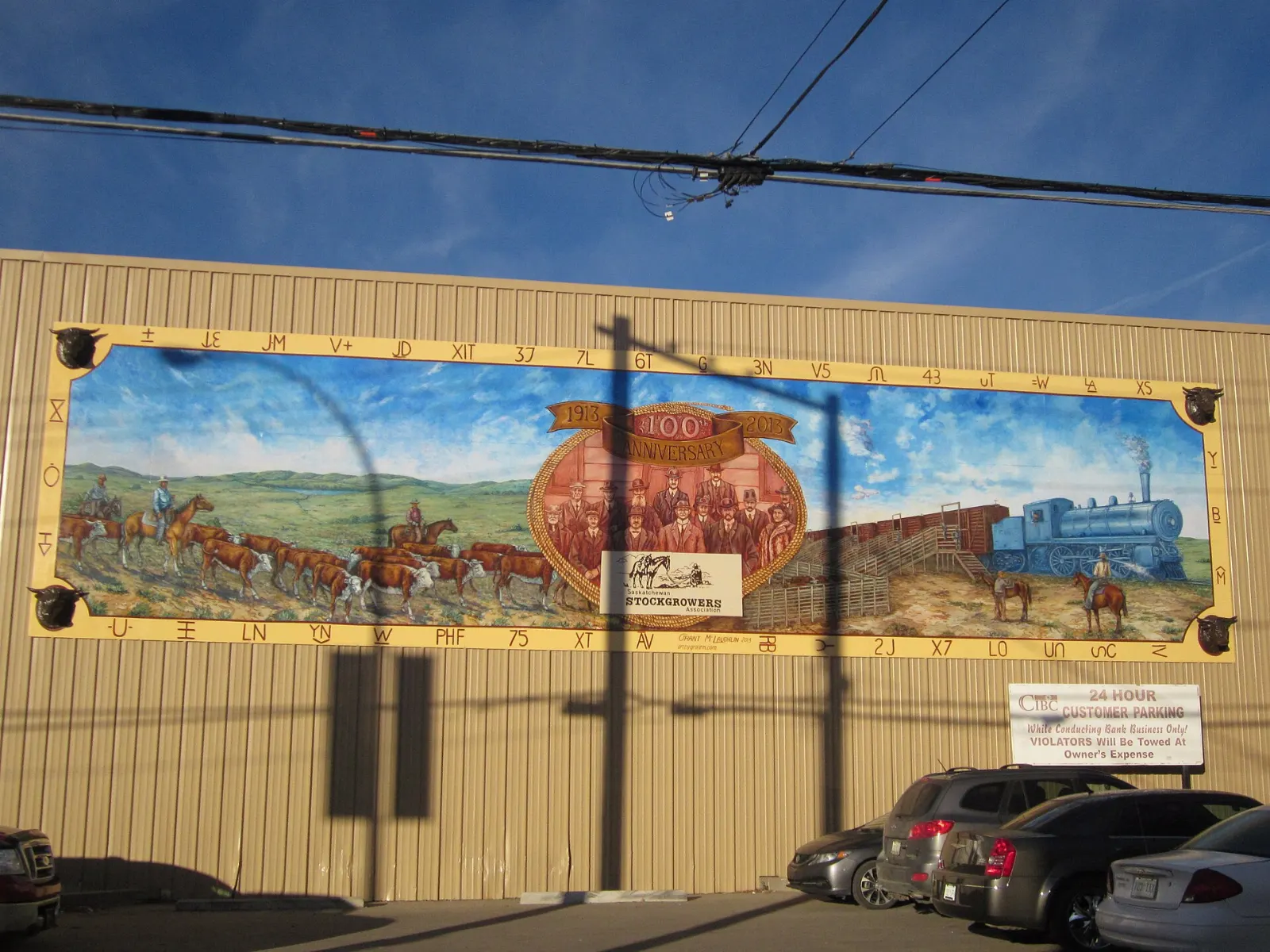
Moose Jaw is famous for murals that show the city's history on the walls of downtown buildings. Walk Main Street and the lanes around it, or ride the trolley tour, which covers the murals and heritage buildings.
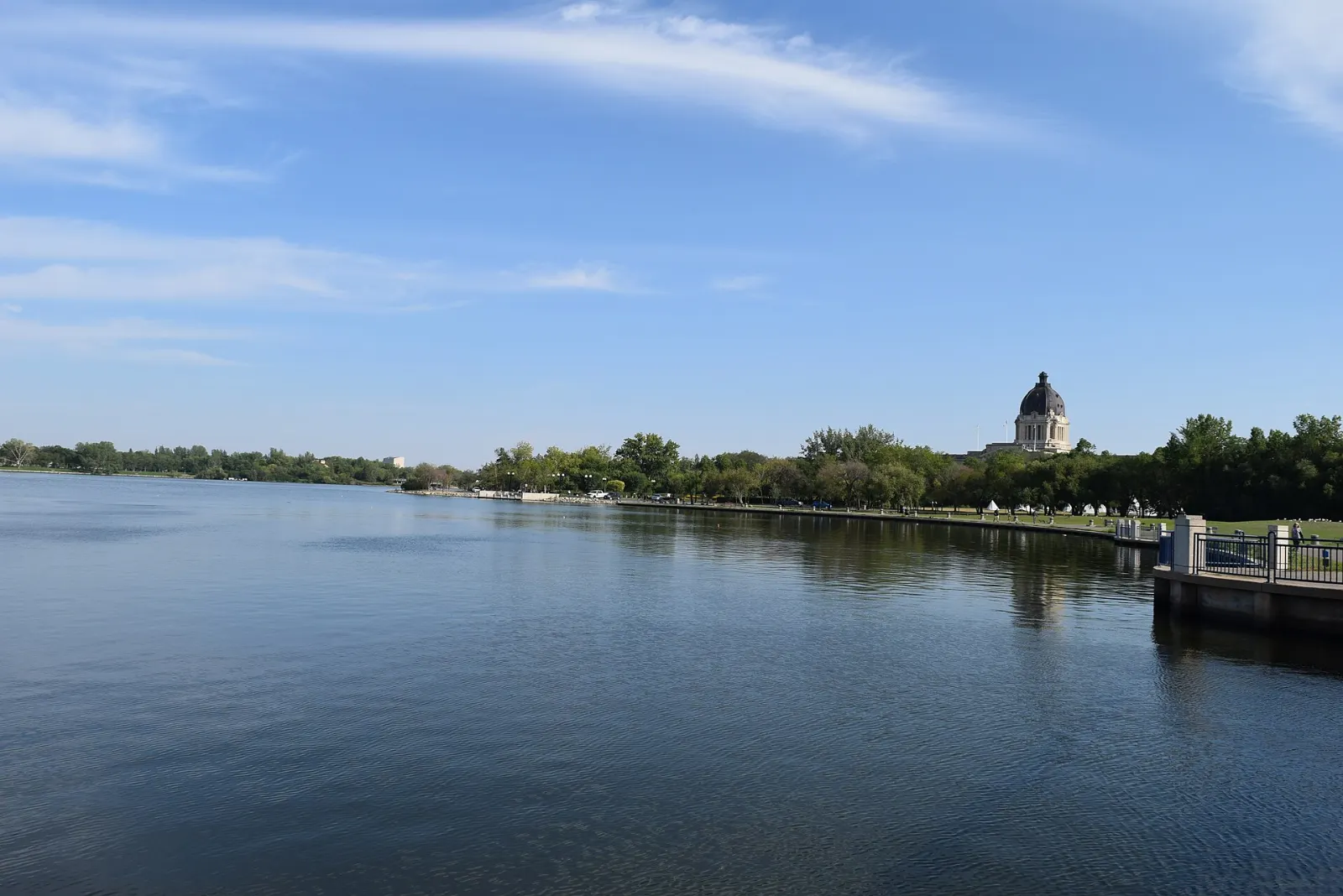
Crescent Park is the green heart of downtown, with a creek, a playground, a water park, an outdoor pool and a lawn bowling green.
Crescent Park is the downtown green space with a creek, a library and the museum and art gallery. Photo: L. Rice, Wikimedia Commons, Public domain
Wakamow Valley
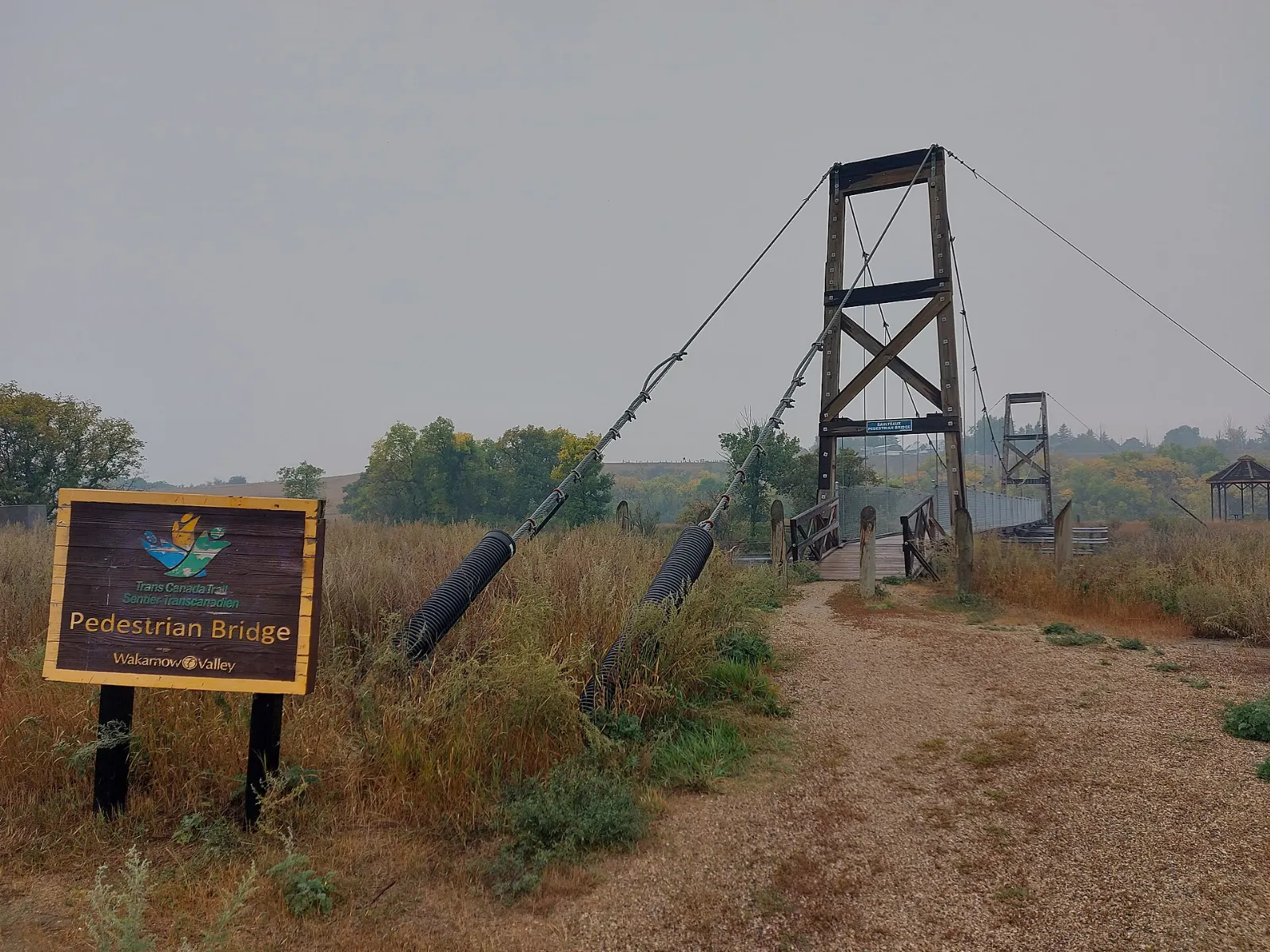
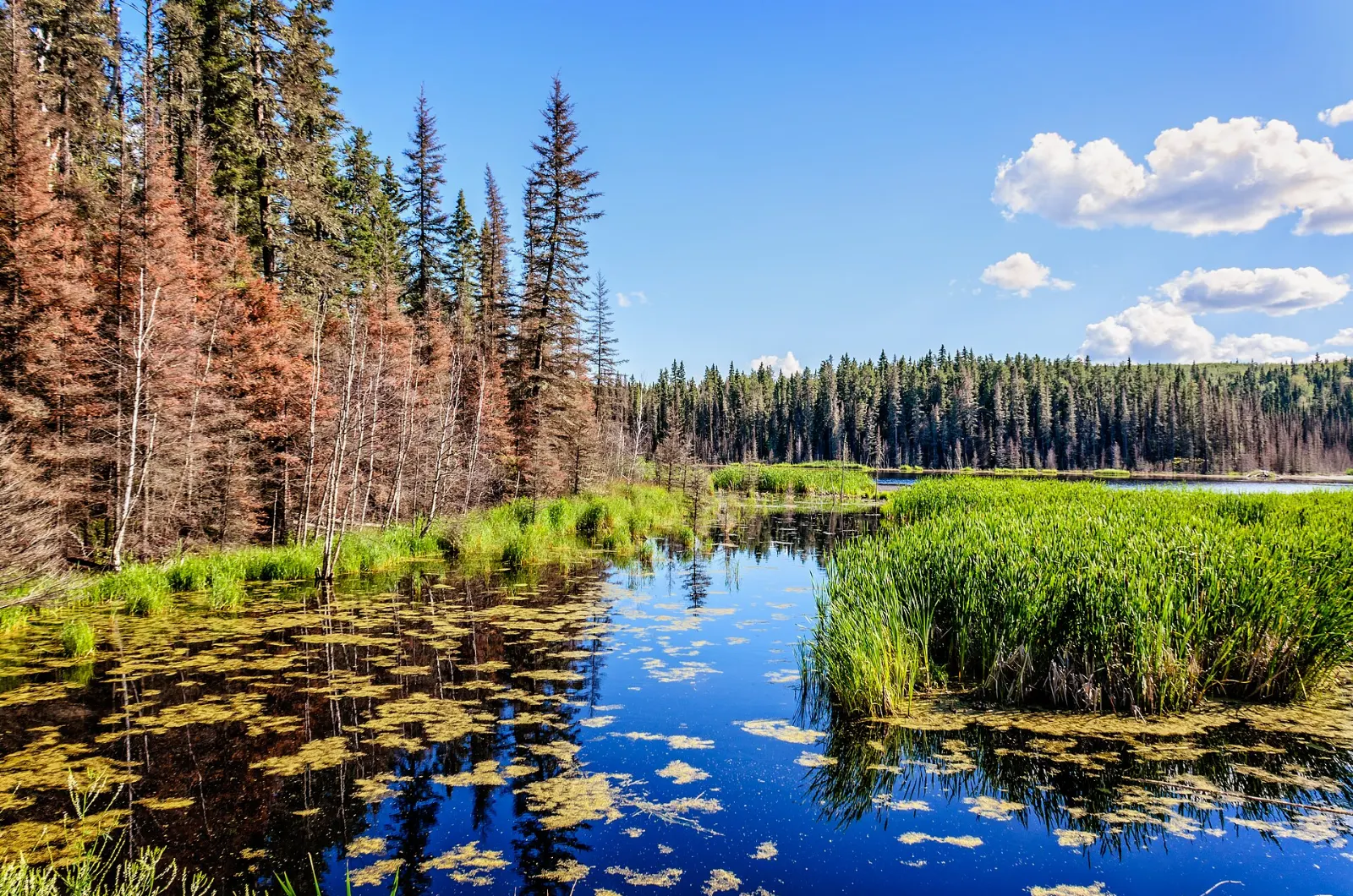
Wakamow Valley follows the Moose Jaw River, with natural and landscaped areas, trails for walking and cycling, picnic tables and playgrounds. A campground there is among the longest-running in North America.
Wakamow Valley follows the Moose Jaw River with trails for walking and cycling. Photo: Masterhatch, Wikimedia Commons, CC BY-SA 4.0
Ad
The best places to visit around the city
A short drive south or north of town adds heritage, wildlife and air force history.
Mac the Moose and the trolley
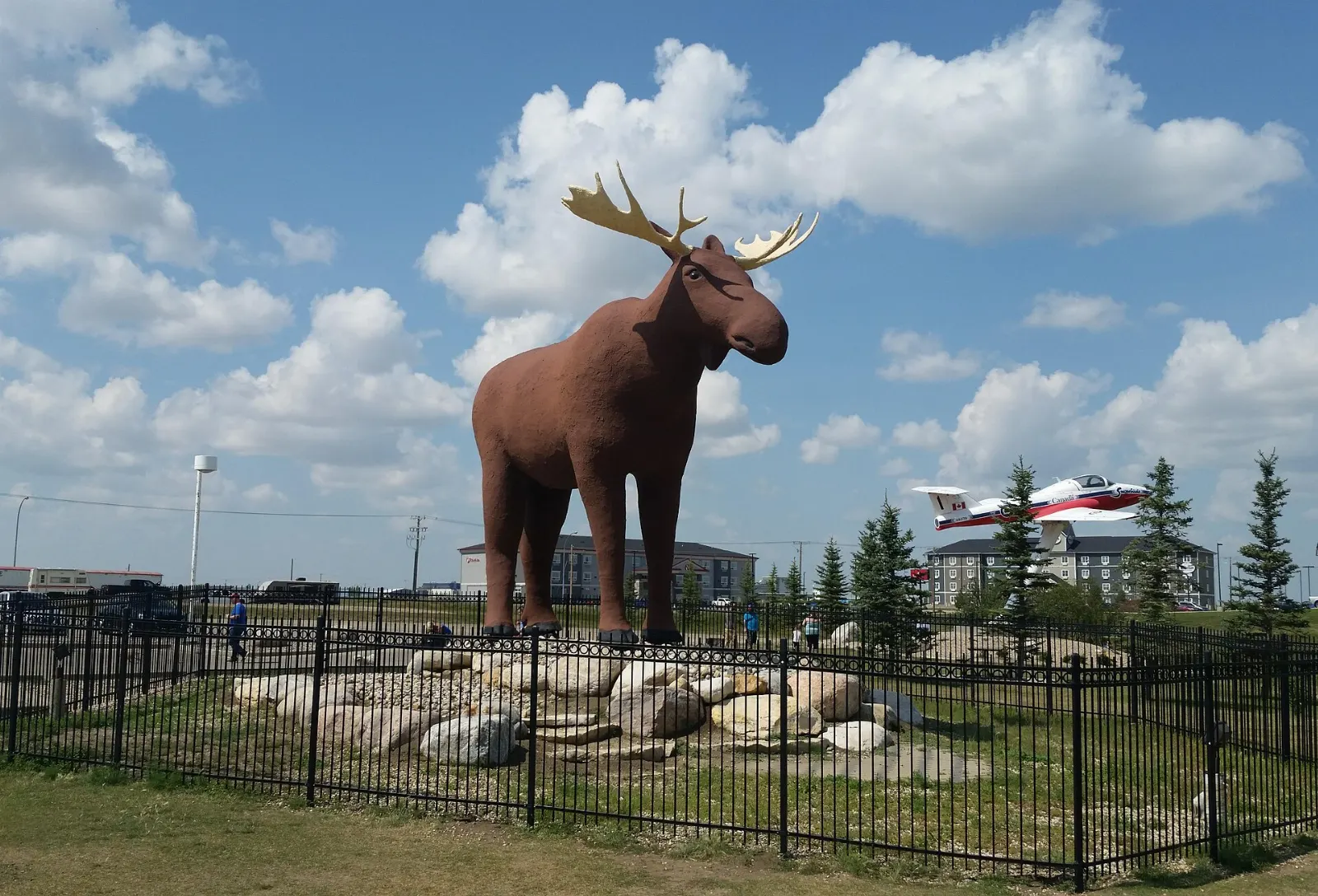
Mac the Moose is a ten-metre cement moose beside the visitor information centre on the Trans-Canada Highway, and it is the classic roadside photo.
Mac the Moose is a ten-metre-tall statue beside the visitor information centre. Photo: Johnnyw3, Wikimedia Commons, CC BY-SA 4.0
Western Development Museum
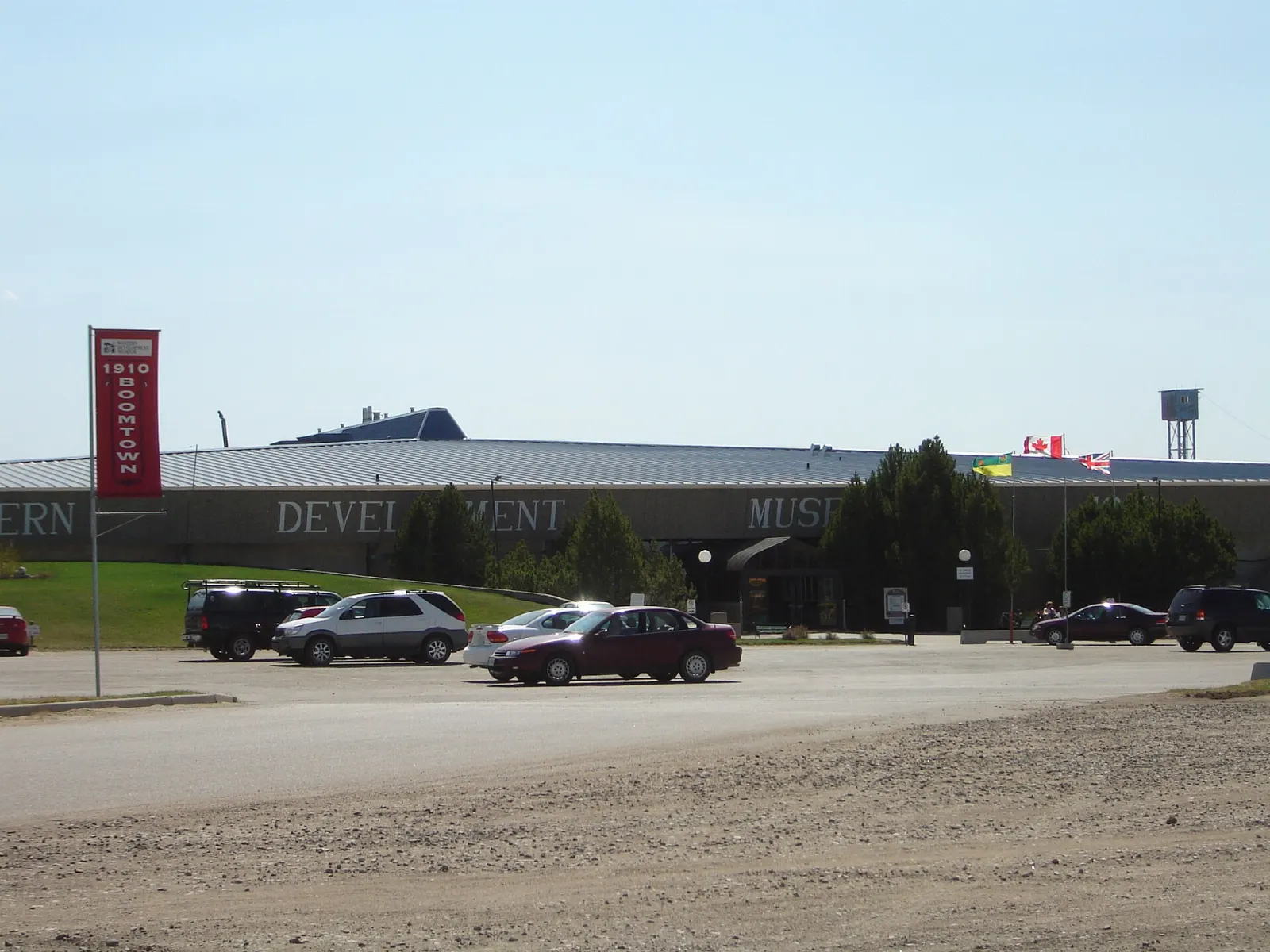
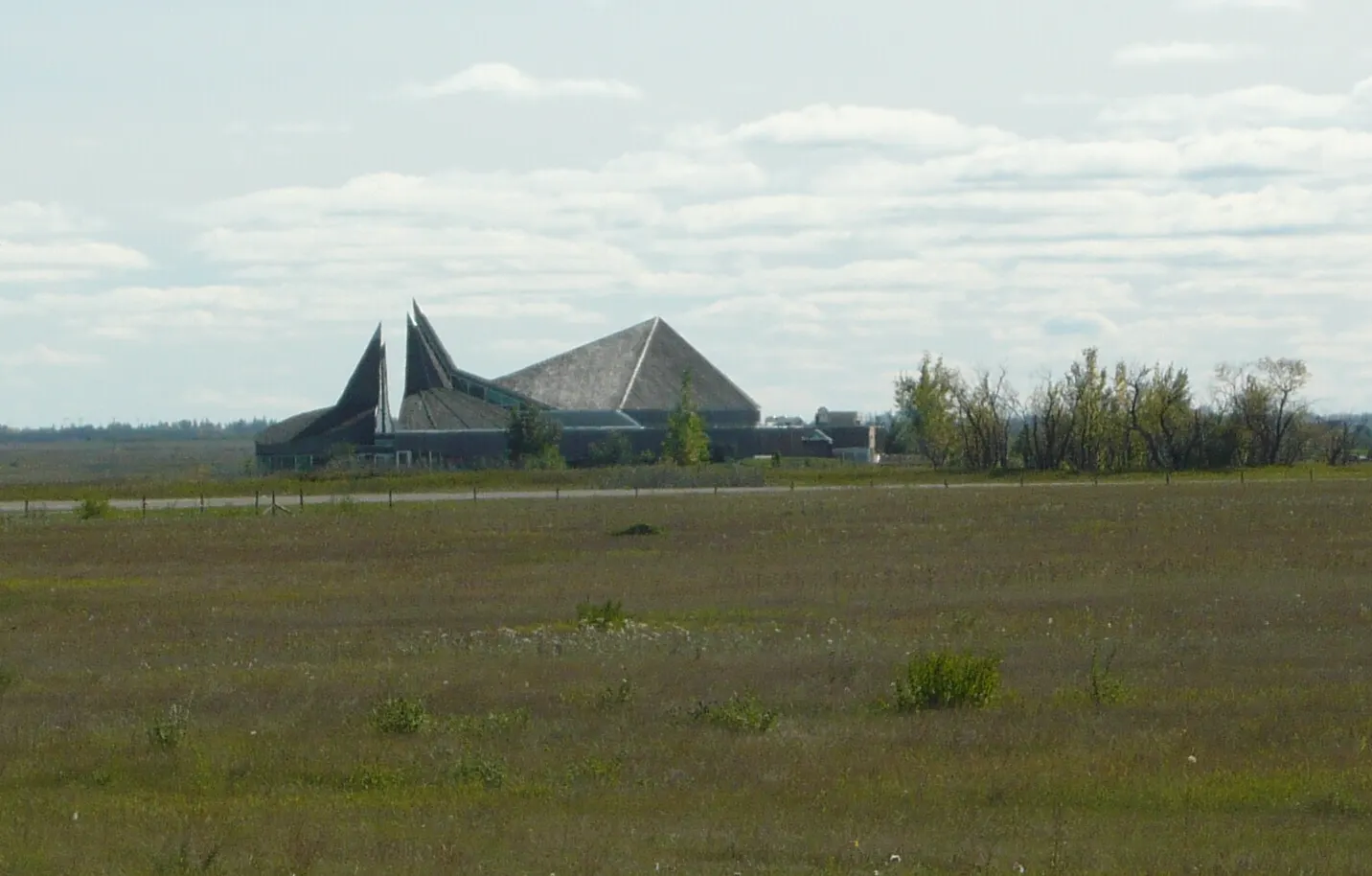
The Moose Jaw branch of the Western Development Museum specializes in the history of transportation and has a gallery on the Snowbirds. It is an easy family stop on Diefenbaker Drive near the highway.
The Moose Jaw branch of the Western Development Museum focuses on the history of transportation. Photo: SriMesh, Wikimedia Commons, CC BY-SA 3.0
Sukanen Ship Pioneer Village and Museum
About thirteen kilometres south of the city on Highway 2, this museum tells the story of Tom Sukanen, a Finnish-born sailor and homesteader who built a ship to sail home.
CFB Moose Jaw and the Snowbirds
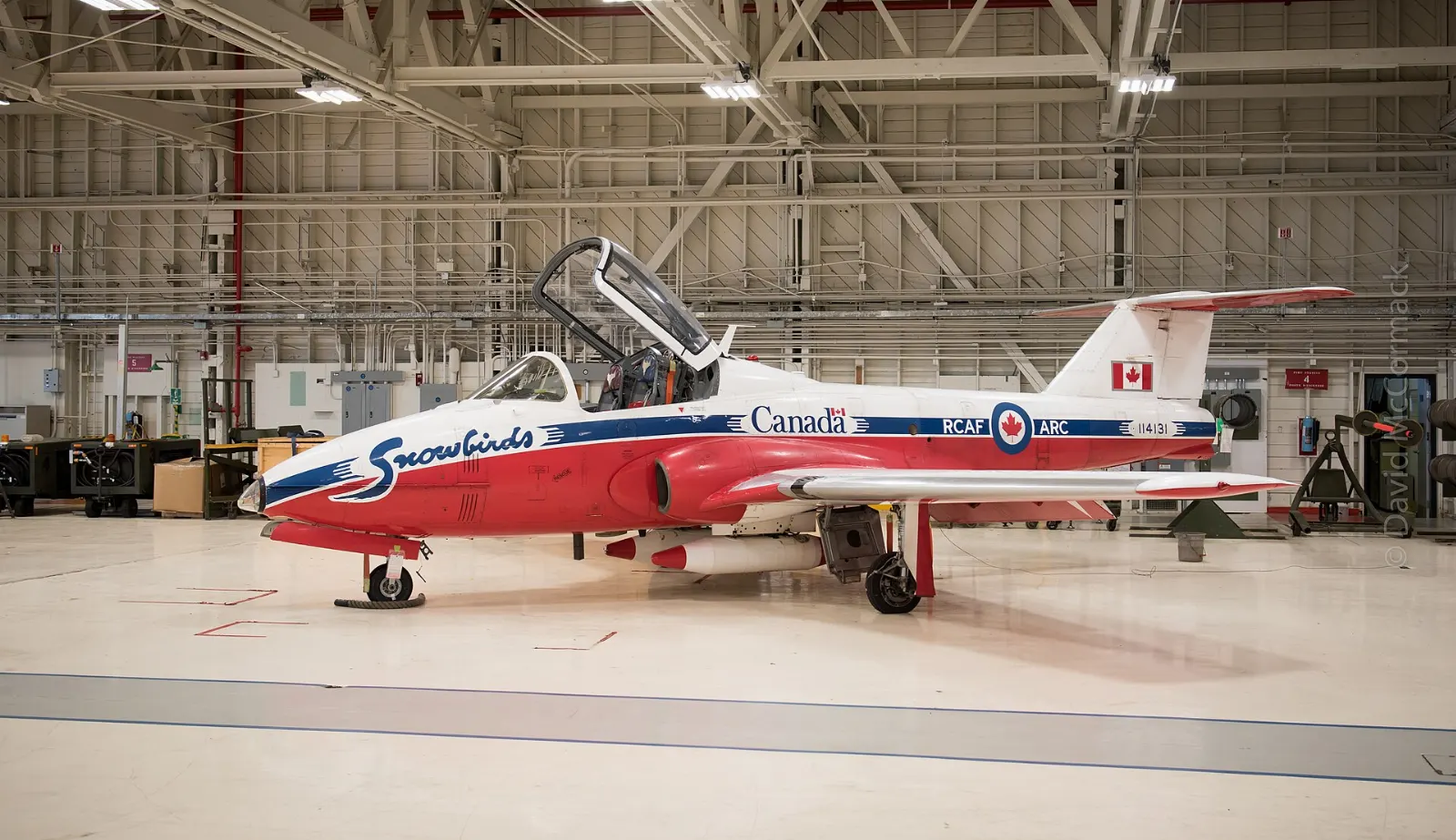
The air force base south of the city trains military pilots and is home to the Snowbirds, Canada's aerobatic demonstration team. An air show headlined by the team has been held in July in past years.
The Snowbirds air demonstration team is based at CFB Moose Jaw. Photo: David McCormack, Wikimedia Commons, CC BY-SA 2.0
Burrowing Owl Interpretive Centre
On Thatcher Drive East, this small centre is dedicated to conserving burrowing owls and their prairie home. It runs in the warmer months only, from late May to early September, so plan accordingly.
Buffalo Pound Provincial Park
About thirty kilometres north of the city, the park centres on Buffalo Pound Lake and offers swimming, hiking, camping and a captive bison herd, along with Nicolle Flats Marsh for birding.
Food and local flavors
Moose Jaw's restaurants follow Prairie traditions. Look for perogies, the filled dumplings that are a staple across the Prairies, and for pan-fried pickerel, the local name for walleye, on menus that favour freshwater fish.
Downtown has cafés, pubs and family restaurants, including a craft beer and cocktail lounge. For a quick meal, walk along Main Street and High Street, where casual spots serve hearty portions after a day of sightseeing.
Popular dishes to try in Moose Jaw
Saskatoon berry pie Saskatoon berry pie, made from a native prairie berry, is the classic dessert, and bison steak is a regional main course worth looking for.Photo: Jonathan Schilling, Wikimedia Commons, CC BY-SA 4.0Perogies Look for perogies, the filled dumplings that are a staple across the Prairies, and for pan-fried pickerel, the local name for walleye, on menus that favour freshwater fish.Photo: Jen Arrr, Wikimedia Commons, CC BY-SA 2.0Bison steak Saskatoon berry pie, made from a native prairie berry, is the classic dessert, and bison steak is a regional main course worth looking for.Photo: Missvain, Wikimedia Commons, CC BY 4.0
Ad
Where to stay
Downtown is the best base for first-time visitors. It puts you within walking distance of the tunnels, the spa, the murals and Crescent Park, and the area includes a historic hotel and a resort hotel with a spa.
Thatcher Drive and Diefenbaker Drive run along the highway side of the city and have a mix of motels, chain hotels and a campground, with easy parking and quick highway access.
Wakamow Valley offers riverside camping and bed and breakfasts in historic houses nearby, which suits cyclists, campers and travellers who prefer a quieter setting. Book early for summer weekends and for festival dates.
Where to stay in Moose Jaw
Downtown Where to stayDowntown is the best base for first-time visitors.Photo: Mkwanster, Wikimedia Commons, CC BY-SA 4.0Thatcher Drive Thatcher Drive and Diefenbaker Drive run along the highway side of the city and have a mix of motels, chain hotels and a campground, with easy parking and quick highway access.Photo: David Smith, Wikimedia Commons, CC BY-SA 2.0Diefenbaker Drive Thatcher Drive and Diefenbaker Drive run along the highway side of the city and have a mix of motels, chain hotels and a campground, with easy parking and quick highway access.Photo: Jeangagnon, Wikimedia Commons, CC BY-SA 4.0
Best time to visit
Summer is the best season, when the trolley, museums, owl centre and Sukanen village are open and the days are warm. July is the warmest month, with a mean temperature near 19 degrees, and it is also the wettest.
Winters are long, cold and dry, with January averaging about minus 12, so many seasonal attractions close, though the spa and the tunnels stay appealing.
Ad
Getting there and getting around
Moose Jaw lies on the Trans-Canada Highway, about 45 minutes west of Regina, and Highway 2 links it with Saskatoon and Prince Albert to the north and the United States to the south. The nearest commercial airport is Regina International, which has flights to major Canadian cities.
McEwen Airport at CFB Moose Jaw is a military airfield and needs prior authorization, and the civilian municipal airport has no commercial service. Downtown is compact and best explored on foot.
A suggested itinerary
First day
Begin at the visitor centre with Mac the Moose, then take the trolley or walk the downtown murals.
Second day
Spend the morning in Wakamow Valley or Crescent Park, then visit the Western Development Museum. In the afternoon drive south to the Sukanen Ship, or north to Buffalo Pound Provincial Park.
Ad
Practical tips
Book tunnel tours and spa visits ahead in summer and on weekends.
Check seasonal opening dates for the owl centre, Sukanen village and the trolley.
Wear comfortable shoes for the tunnel tour and the downtown mural walk.
Bring layers, because prairie weather changes quickly.
Allow extra time for the Trans-Canada Highway in winter storms.