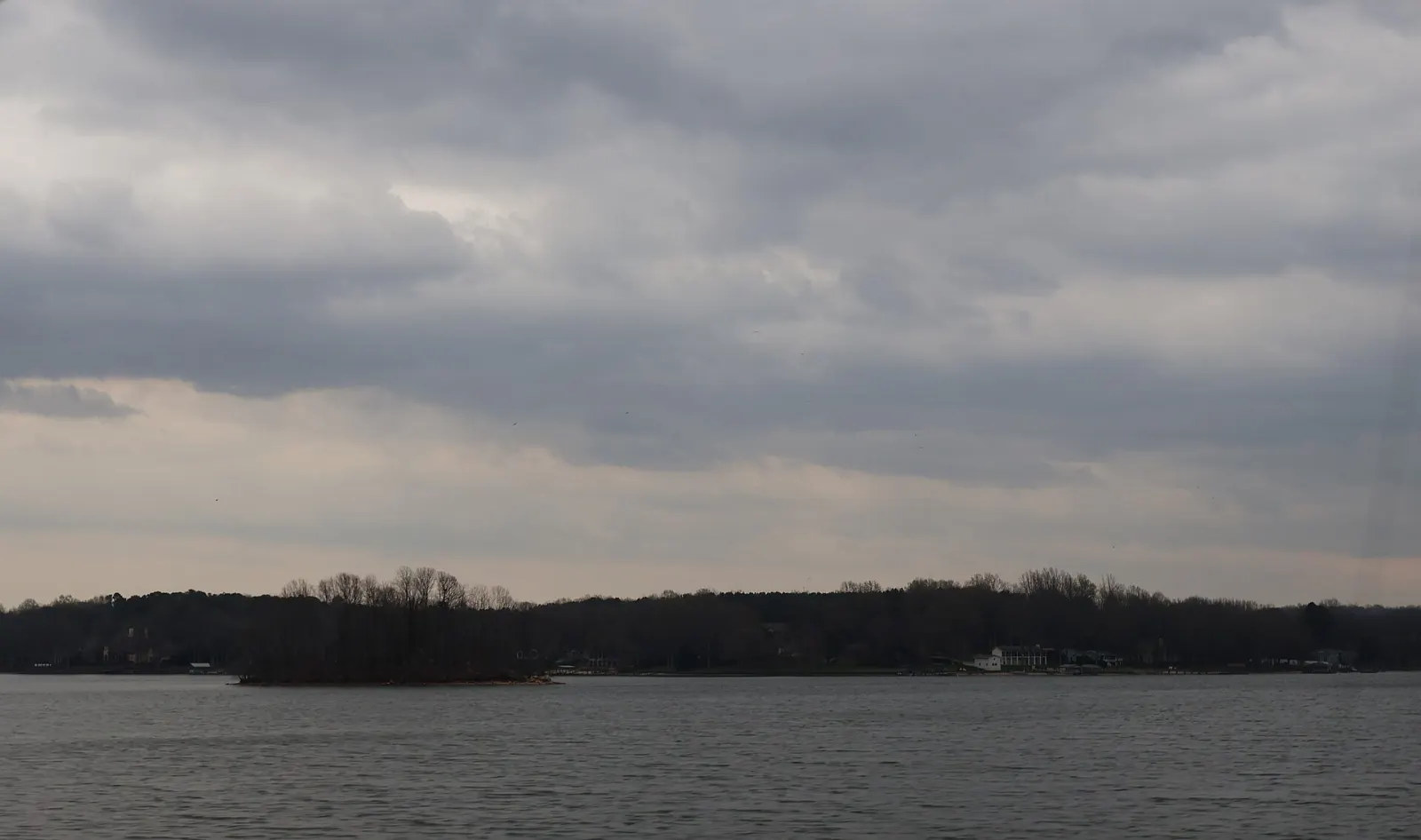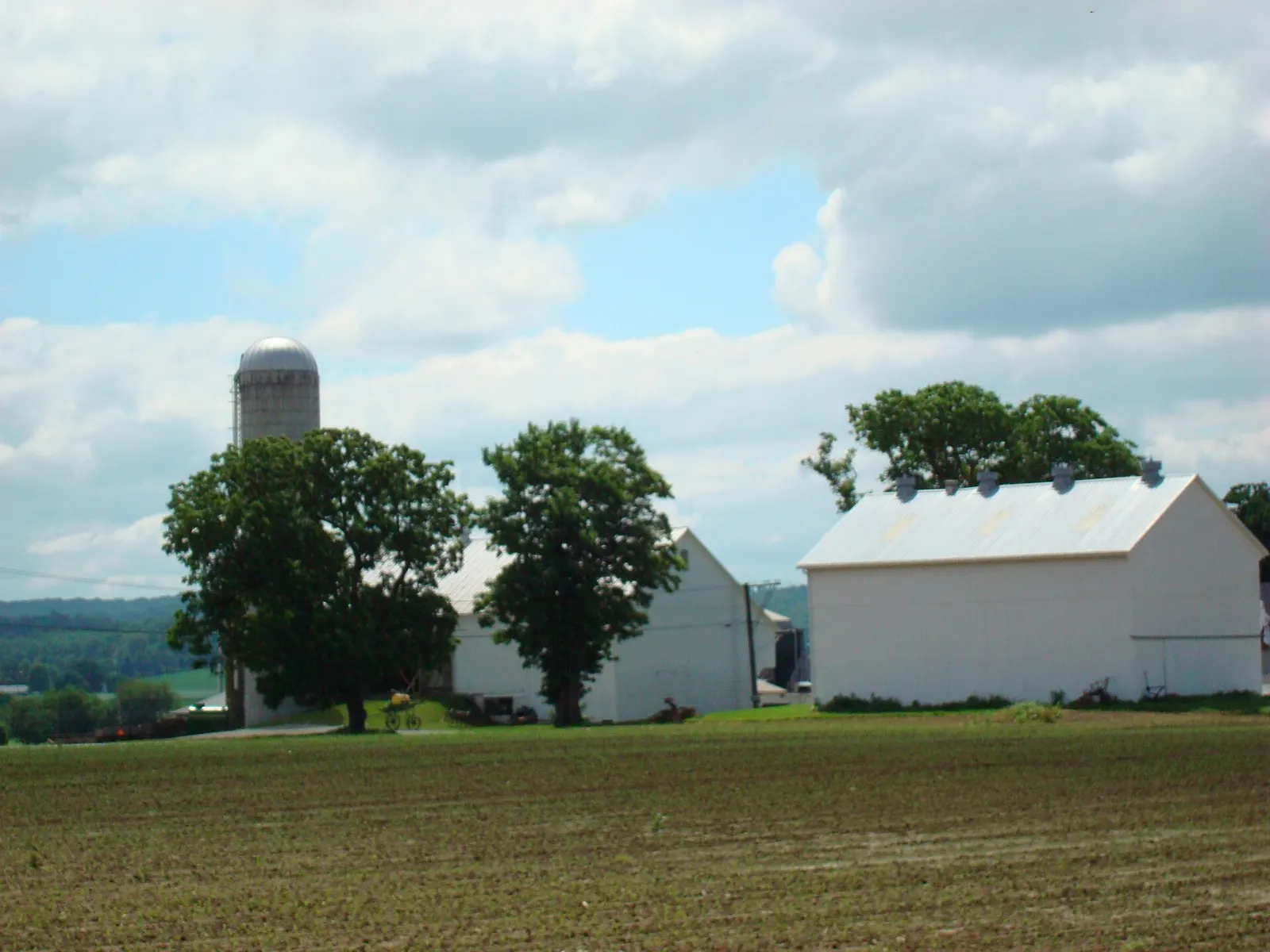
Lancaster County sits in the rolling southeastern corner of Pennsylvania, a patchwork of tidy farms, stone barns, market towns and one of the oldest small cities in the country.
AT A GLANCE
Best time
Late spring for green fields and mud sales; September and October for harvest color and festivals.
How long
Three days covers the city, Amish country and Strasburg; add a fourth for Lititz, Ephrata and the river.
Getting there
Amtrak Keystone trains reach Lancaster from Philadelphia and Harrisburg; a car is best for the countryside.
Why visit Lancaster County
Few places in the eastern United States hold onto rural traditions as visibly as Lancaster County. The Amish and Old Order Mennonite communities descend from Anabaptists who came from Switzerland and Germany after William Penn welcomed religious minorities to his colony.
That living heritage sits alongside a much broader story. Lancaster city was briefly the national capital for a single day in 1777, when the Continental Congress fled Philadelphia, and its downtown is full of brick row houses, galleries and restaurants.
Lancaster city and its historic core
The county seat is a compact, walkable city laid out around Penn Square. Start here to get your bearings before heading into the countryside.
Central Market
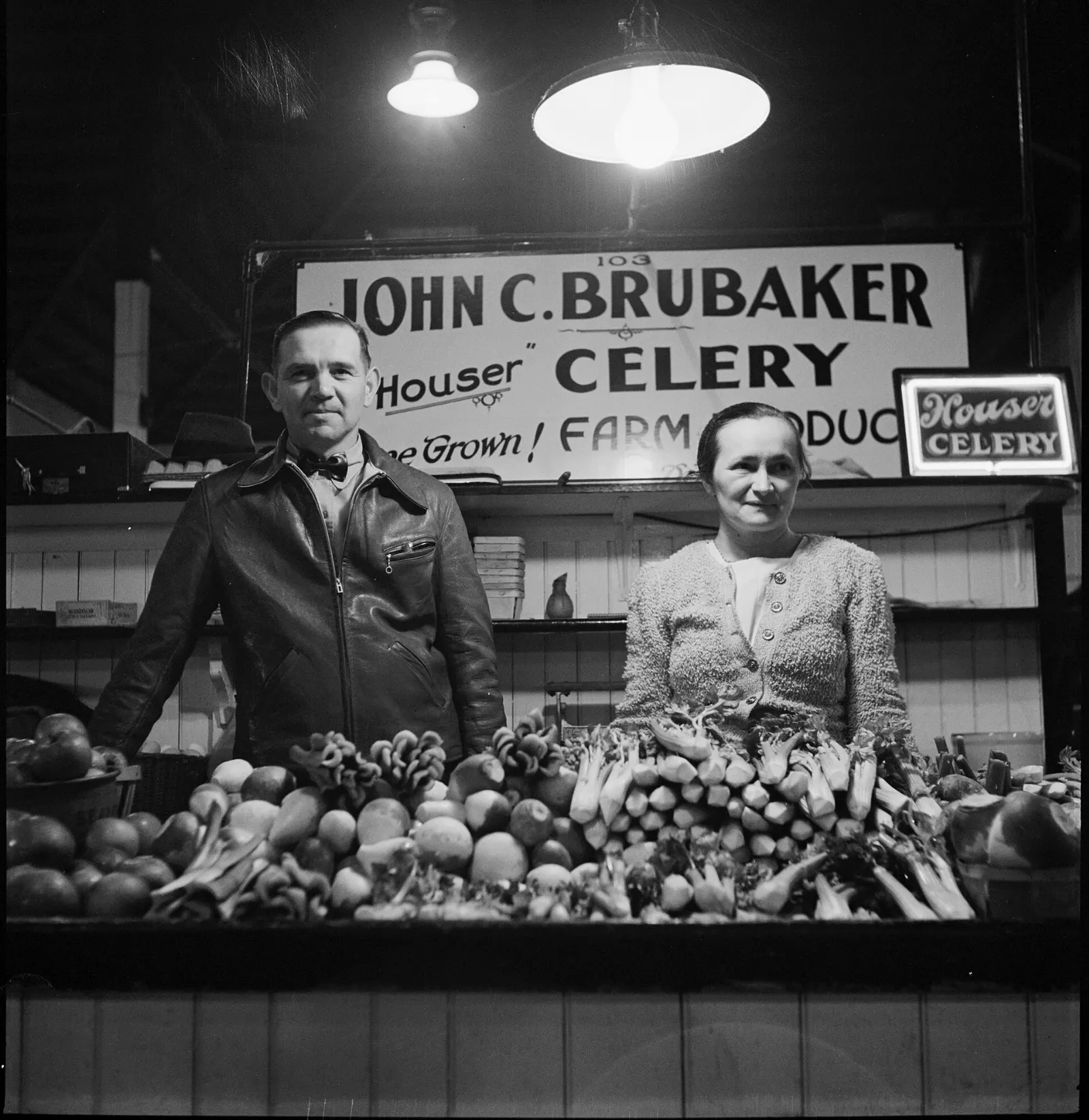
Central Market occupies part of a public marketplace deeded in 1730, and the current Romanesque Revival hall stands on Penn Square in the middle of downtown. Around sixty stands sell produce, meats, cheeses, baked goods, flowers and prepared foods, with Amish and Mennonite vendors alongside stalls with Greek, Caribbean and Middle Eastern cooking.
Gallery Row and downtown streets
North of Penn Square, Prince Street and the surrounding blocks hold a cluster of art galleries, studios and independent shops, with the historic Fulton Theatre a few steps away. The monthly First Friday evenings bring extra openings and street life.
Wheatland
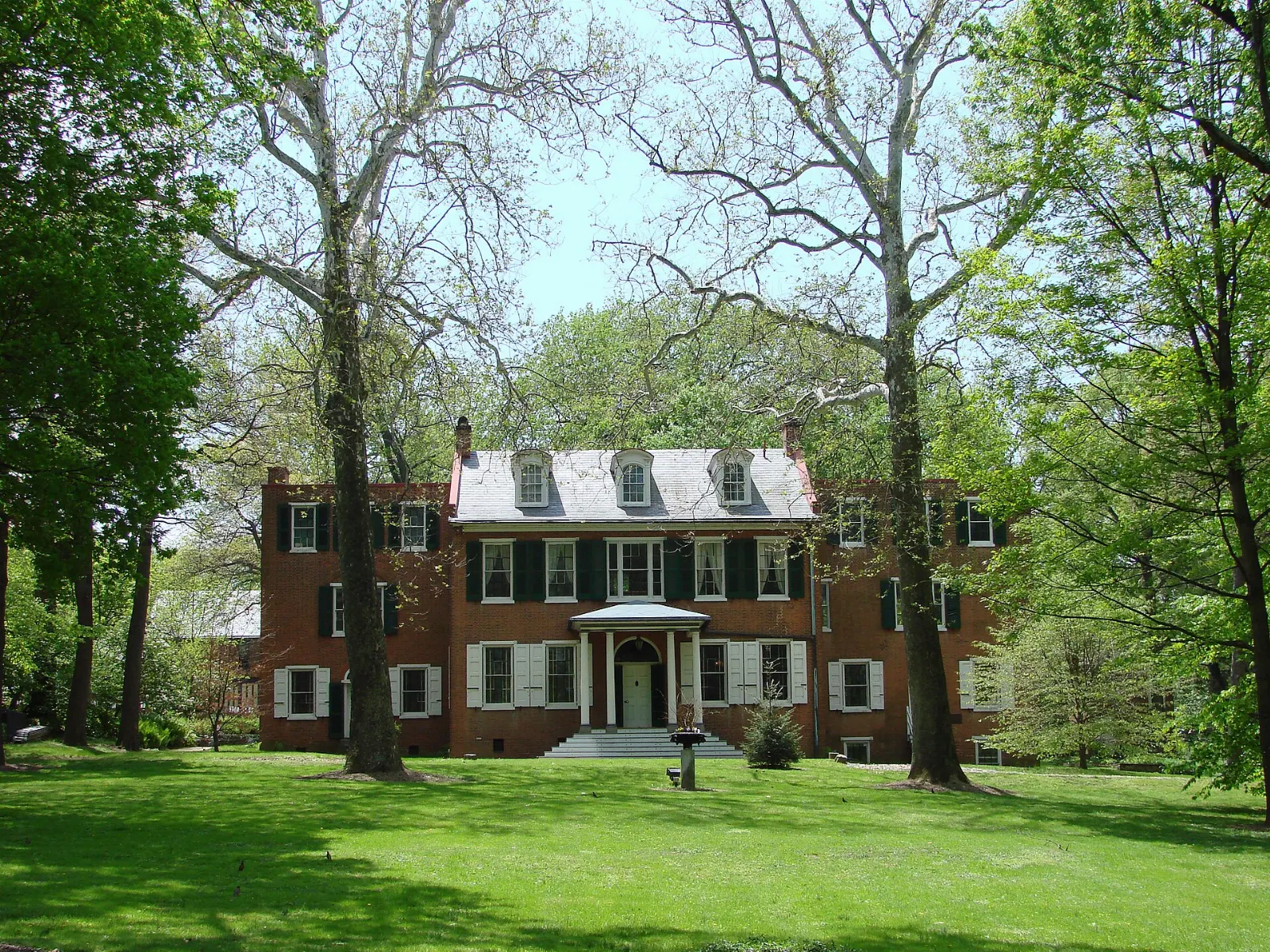
Just west of downtown, Wheatland is the brick Federal style home where James Buchanan, the fifteenth president, lived for two decades and plotted his 1856 campaign.
Landis Valley Village and Farm Museum
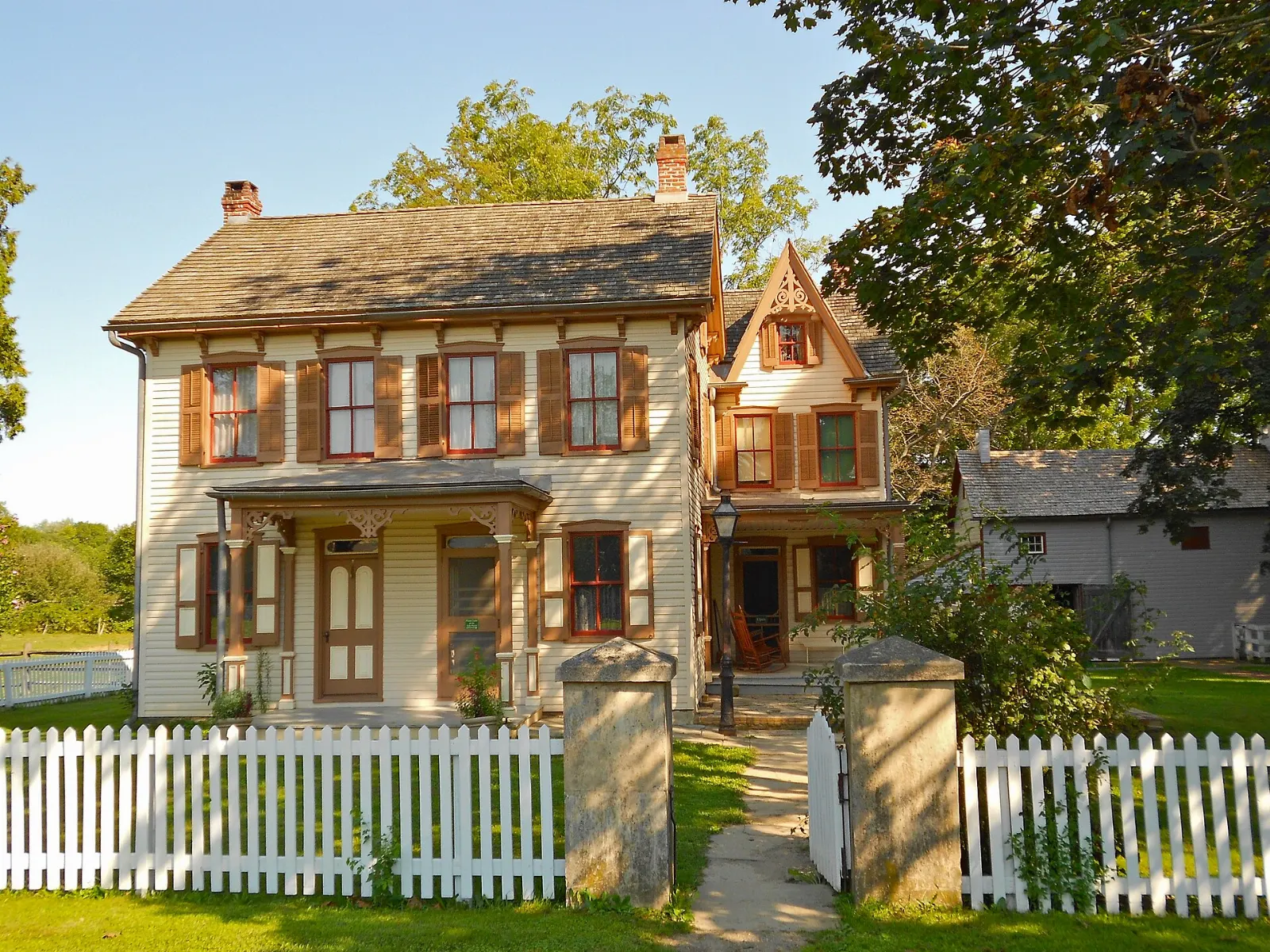
On the northern edge of the city, Landis Valley is a hundred-acre living history museum on the site of an old crossroads village.
Strasburg and the Amish farmland
East of the city, the landscape opens into the farmland most people picture when they think of Lancaster County. Route 340 runs through Bird-in-Hand and Intercourse, while Route 896 heads south toward Strasburg past farms, schoolhouses and roadside stands.
Strasburg Rail Road
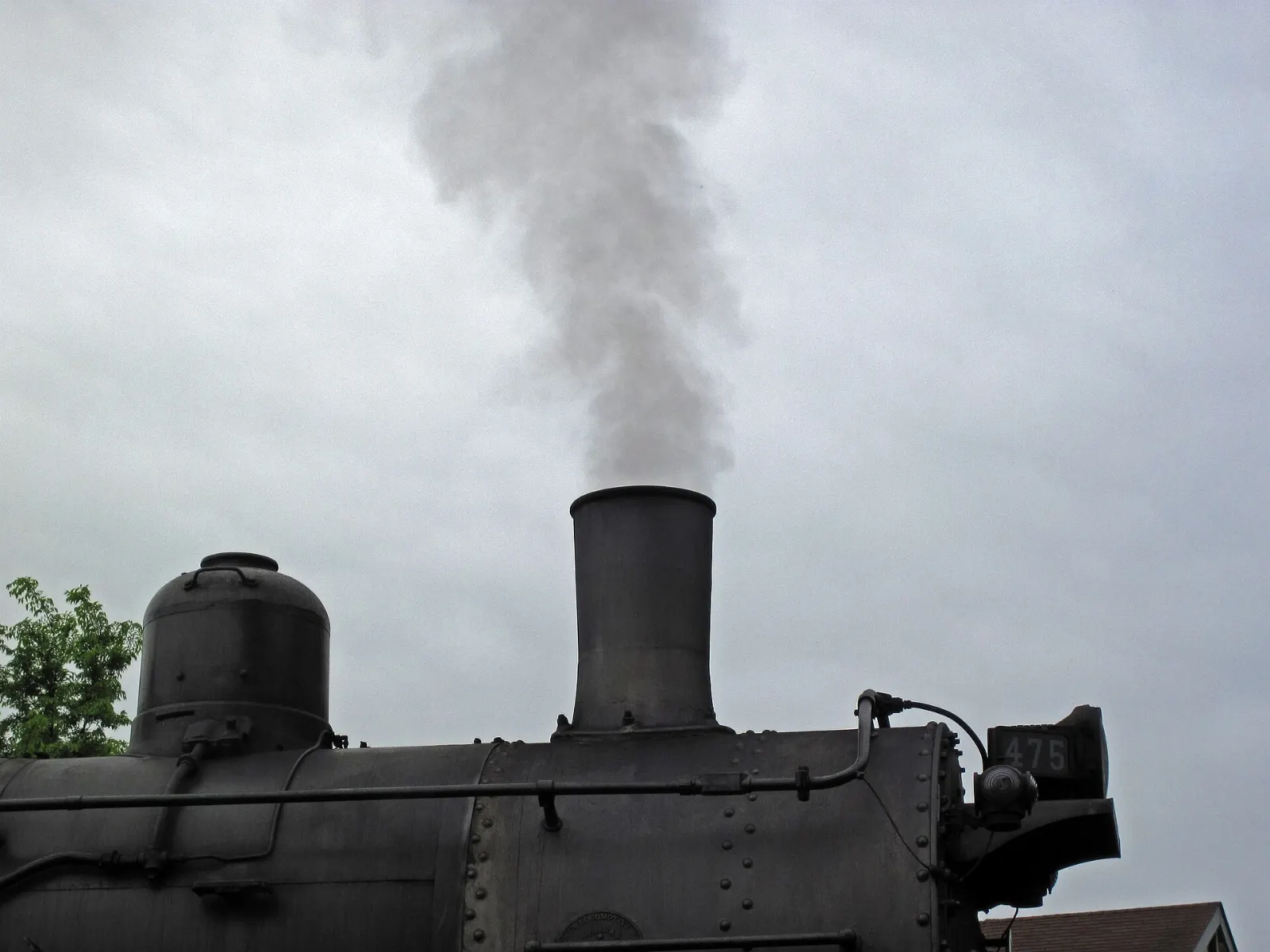
Chartered in 1832, the Strasburg Rail Road is the oldest continuously operating standard-gauge railroad in the western hemisphere. Today its steam locomotives pull restored wooden coaches on a round trip of about forty-five minutes through Amish farmland toward Leaman Place junction.
Railroad Museum of Pennsylvania
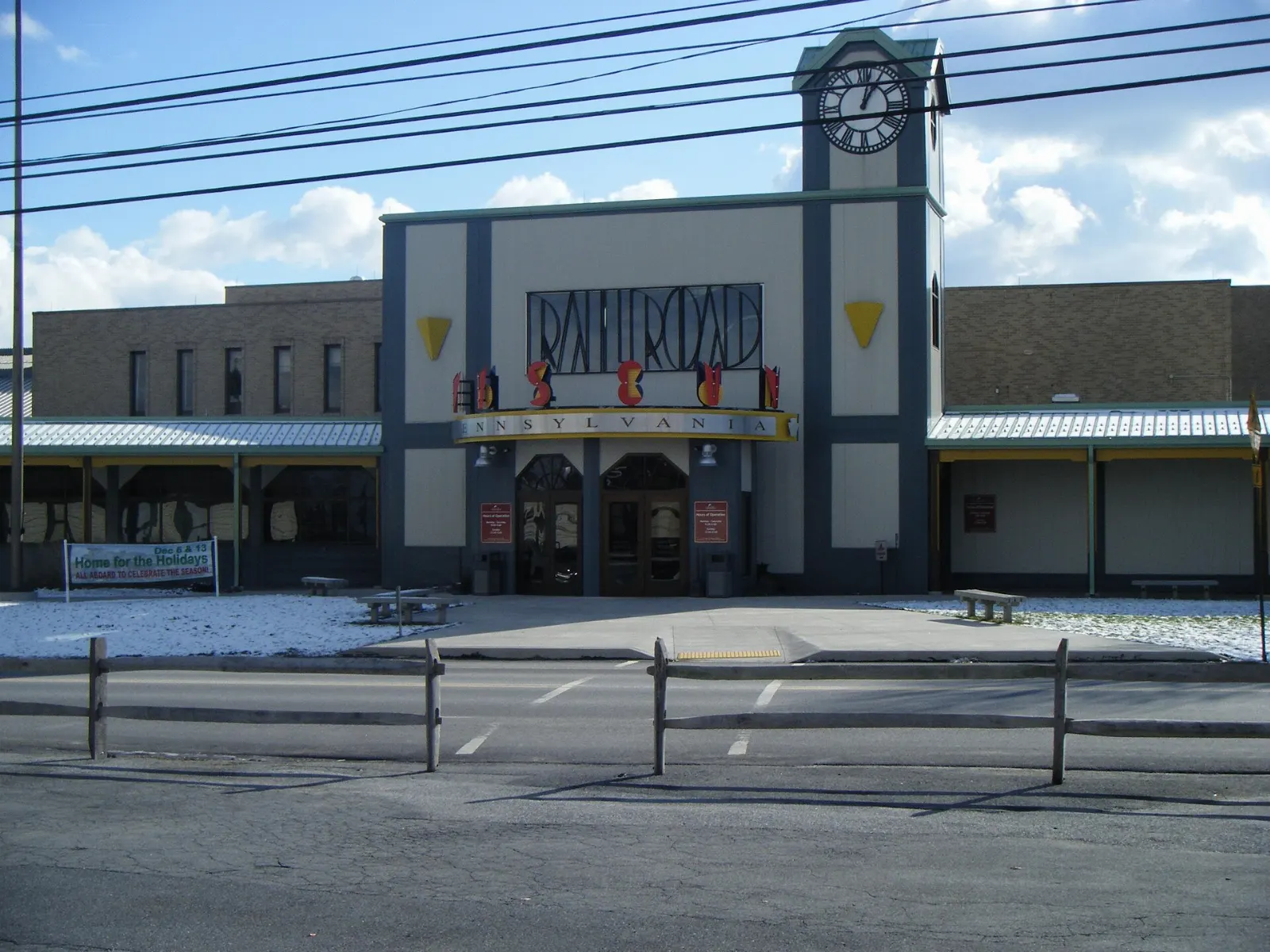
Directly across Route 741 from the Strasburg station, the state railroad museum holds more than one hundred historic locomotives and cars in a vast hall and outdoor yard. You can climb into cabs and passenger cars, walk beneath a locomotive in a service pit and watch restoration work.
Intercourse and Bird-in-Hand
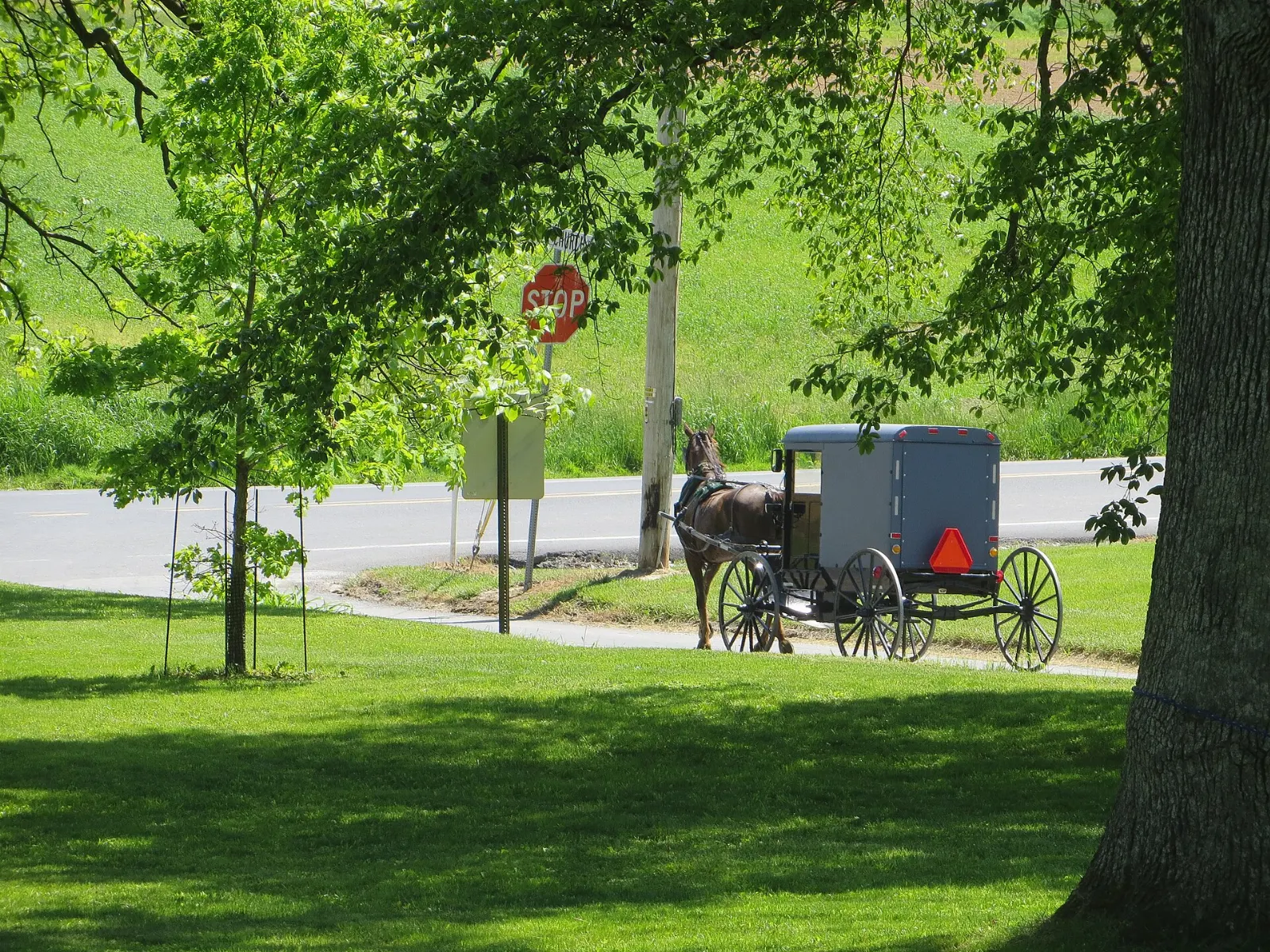
These two villages on Route 340 are the commercial center of Amish country, with quilt shops, furniture showrooms, bakeries and Kitchen Kettle Village, a collection of shops known for jams, relishes and fudge. Allow half a day to browse and drive the side roads.
Covered bridges of the Conestoga
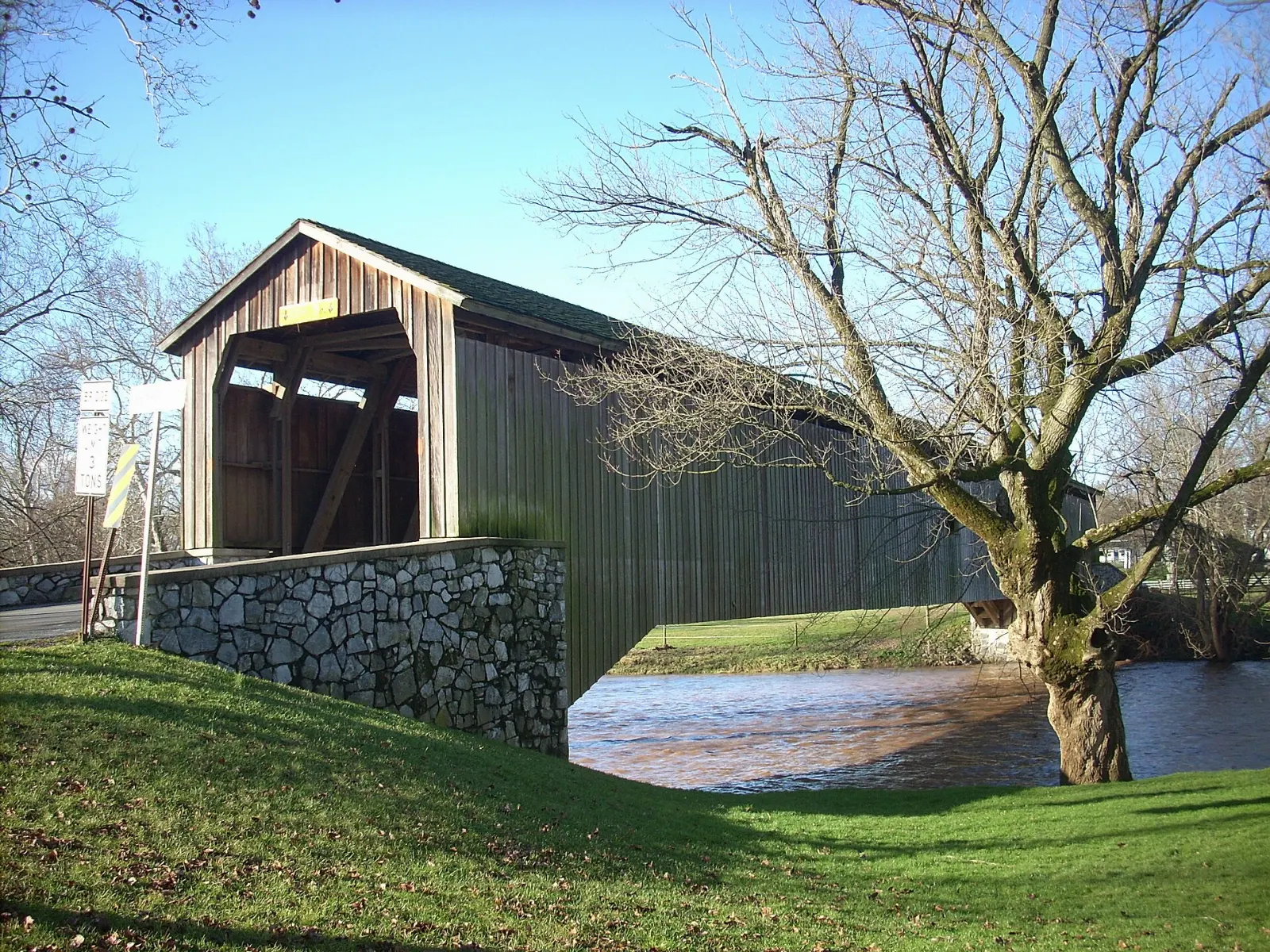
Lancaster County has dozens of covered bridges, many of them still carrying traffic.
Lititz, Ephrata and the Susquehanna
The northern towns are quieter and less commercial than the Route 340 corridor, with Moravian and German Pietist roots that set them apart.
Ephrata Cloister
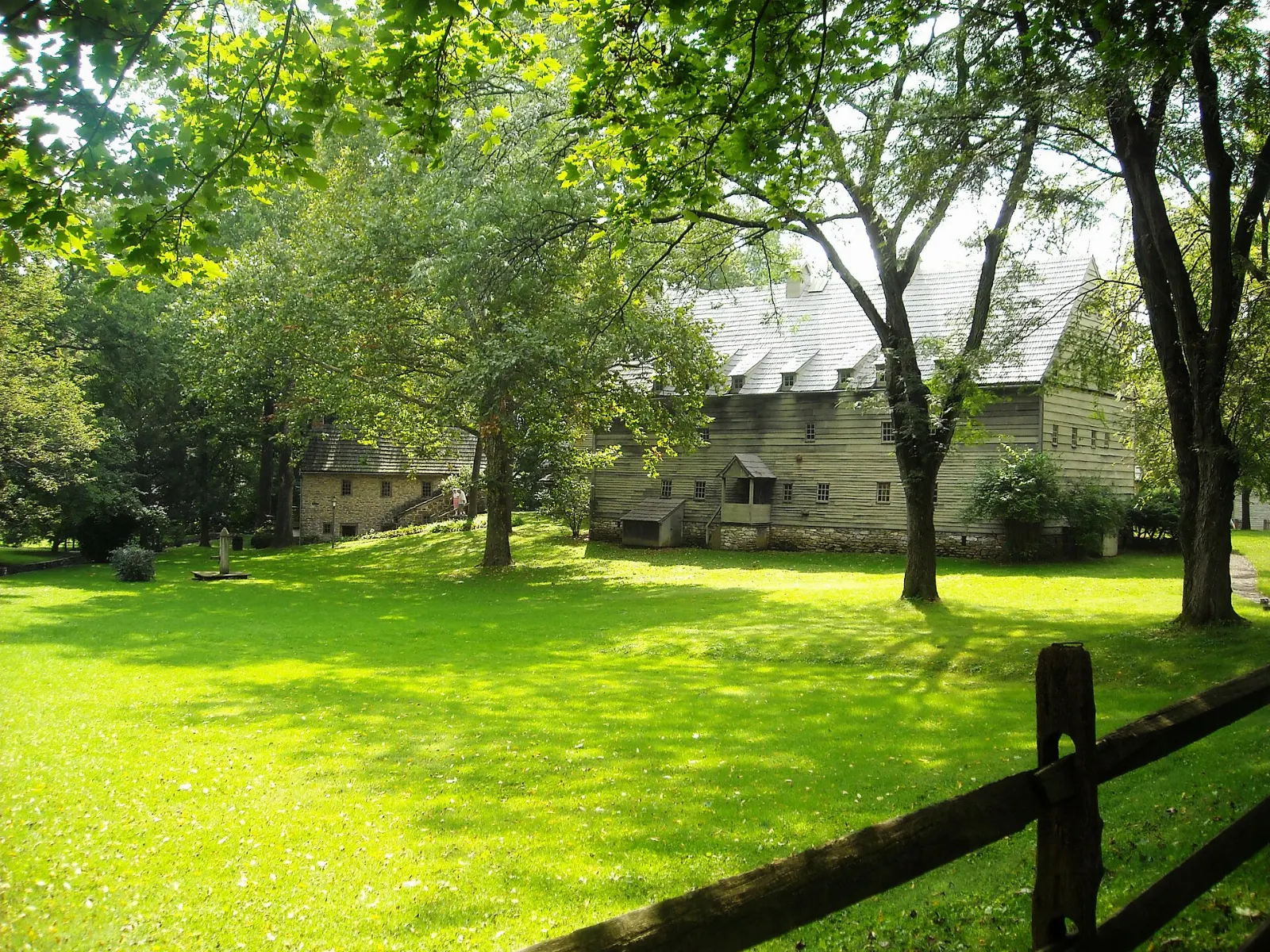
In 1732 Johann Conrad Beissel founded a religious community at Ephrata whose celibate brothers and sisters lived in austere wooden buildings, observed the seventh-day Sabbath and became known for hymn writing, ornate calligraphy called Frakturschrift and an early printing press.
Lititz and the Sturgis Pretzel Bakery
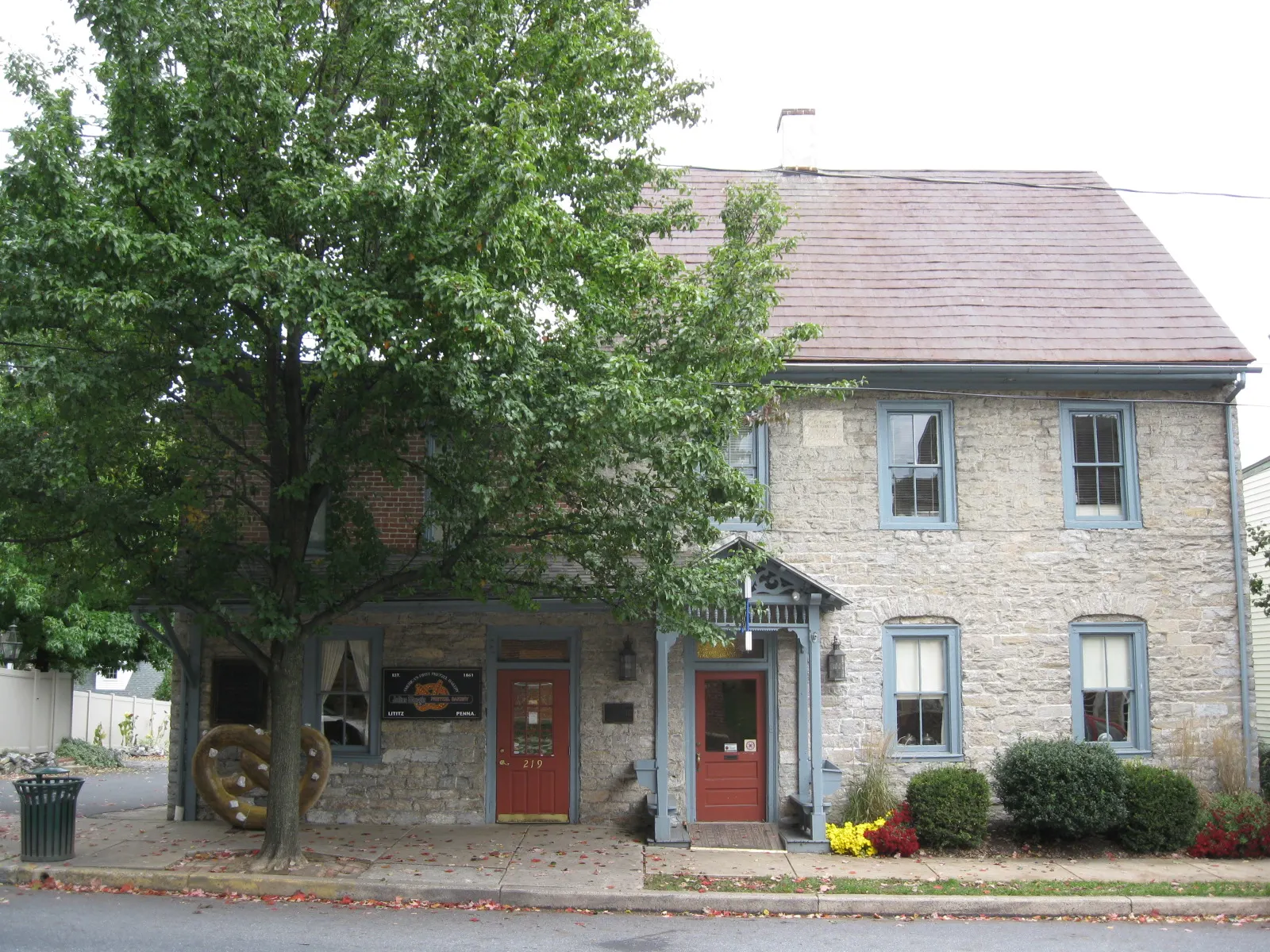
Founded by Moravians in the eighteenth century, Lititz has a charming Main Street lined with boutiques, cafes and historic brick buildings. The Julius Sturgis Pretzel Bakery, opened in 1861, is considered the oldest commercial pretzel bakery in the United States, and short tours let you try twisting your own dough.
Columbia and the river towns
On the western edge of the county, the Susquehanna River forms a broad, island-studded boundary with York County. In Columbia, the graceful concrete arches of the Veterans Memorial Bridge, opened in 1930 and still known locally as the Columbia–Wrightsville Bridge, carry the old Lincoln Highway across the water.
 Planning a trip to Lancaster County?Compare hotels, flights and vacation rentals for Lancaster County on Expedia.Book now
Food and local flavors
Pennsylvania Dutch cooking is hearty farm food, built around what grows and keeps well.
Family-style restaurants and smorgasbords serve these dishes in generous portions at long shared tables, and they are especially popular with groups. Beyond them, Central Market and the stands at roadside farms are the best places to buy fresh produce, baked goods, jams and soft pretzels.
Popular dishes to try in Lancaster County


Where to stay
Downtown Lancaster suits travelers who want restaurants, galleries and nightlife within walking distance, plus easy access to the Amtrak station.
Strasburg is a quiet historic village that works well for rail fans and anyone wanting a peaceful base on the southern farm roads.
Lititz and Ephrata in the north appeal to couples looking for small-town charm, bed and breakfasts and walkable main streets.
Where to stay in Lancaster County


Best time to visit
Lancaster County has four distinct seasons.
Autumn is many visitors' favorite season, with harvest activity, corn mazes, apple butter boiling and crisp weather that is ideal for driving the back roads and cycling.
Getting there and getting around
Lancaster lies on Amtrak's Keystone Corridor, with frequent trains from Philadelphia and Harrisburg and through service to New York on many departures.
A car is close to essential for exploring the countryside, since attractions are spread across many small towns. Local buses operated by the regional transit authority serve the city and some suburbs, but not most rural sights.
A suggested itinerary
First day
Begin with breakfast and browsing at Central Market, then walk the historic streets around Penn Square and the galleries on Prince Street.
Second day
Head east into farm country.
Third day
Go north to Ephrata Cloister for a morning tour, then continue to Lititz for lunch, a pretzel-twisting lesson and a stroll through Lititz Springs Park.
Fourth day
If you have more time, spend the morning at Landis Valley, then drive west to Columbia for a walk or bike ride on the river trail and sunset views from Chickies Rock.
Practical tips
- Do not photograph Amish people, especially their faces; many consider posed photographs a form of pride. Landscapes and buggies from a respectful distance are generally fine.
- Stay on public roads and never walk onto farm lanes or fields without an invitation.
- Many Amish-run shops and farm stands close on Sundays and some accept cash only, so carry some with you.
- Drive slowly on rural roads, watch for buggies at dusk and use your turn signal when passing.
- Reserve Strasburg Rail Road tickets and themed events in advance, particularly on summer and holiday weekends.
- Check Central Market's operating days before you go, since it is not open every day.
Find local businesses in Lancaster on WiserMap
Looking for a place to eat, a farm stand, a repair shop or a local service during your trip?