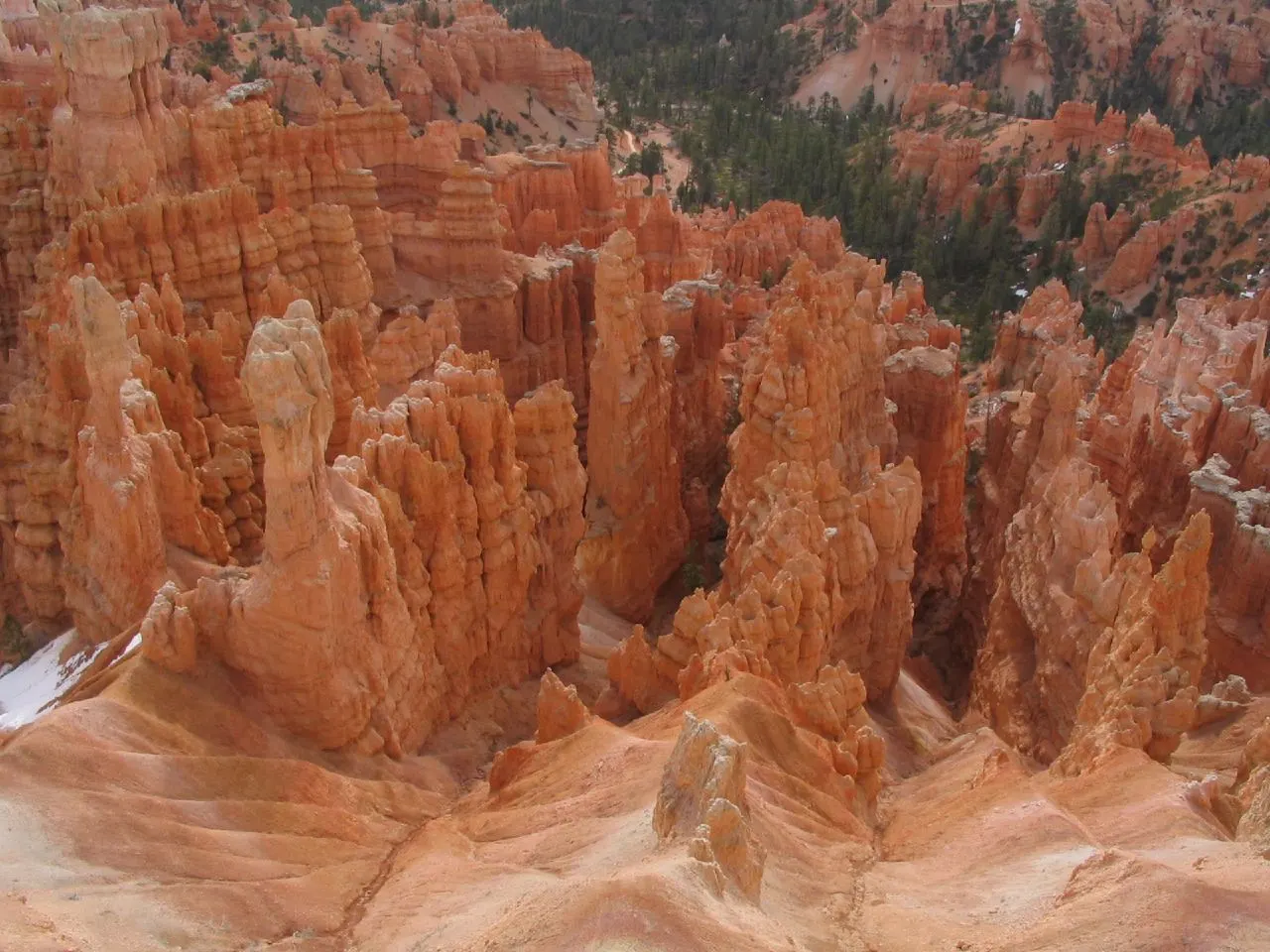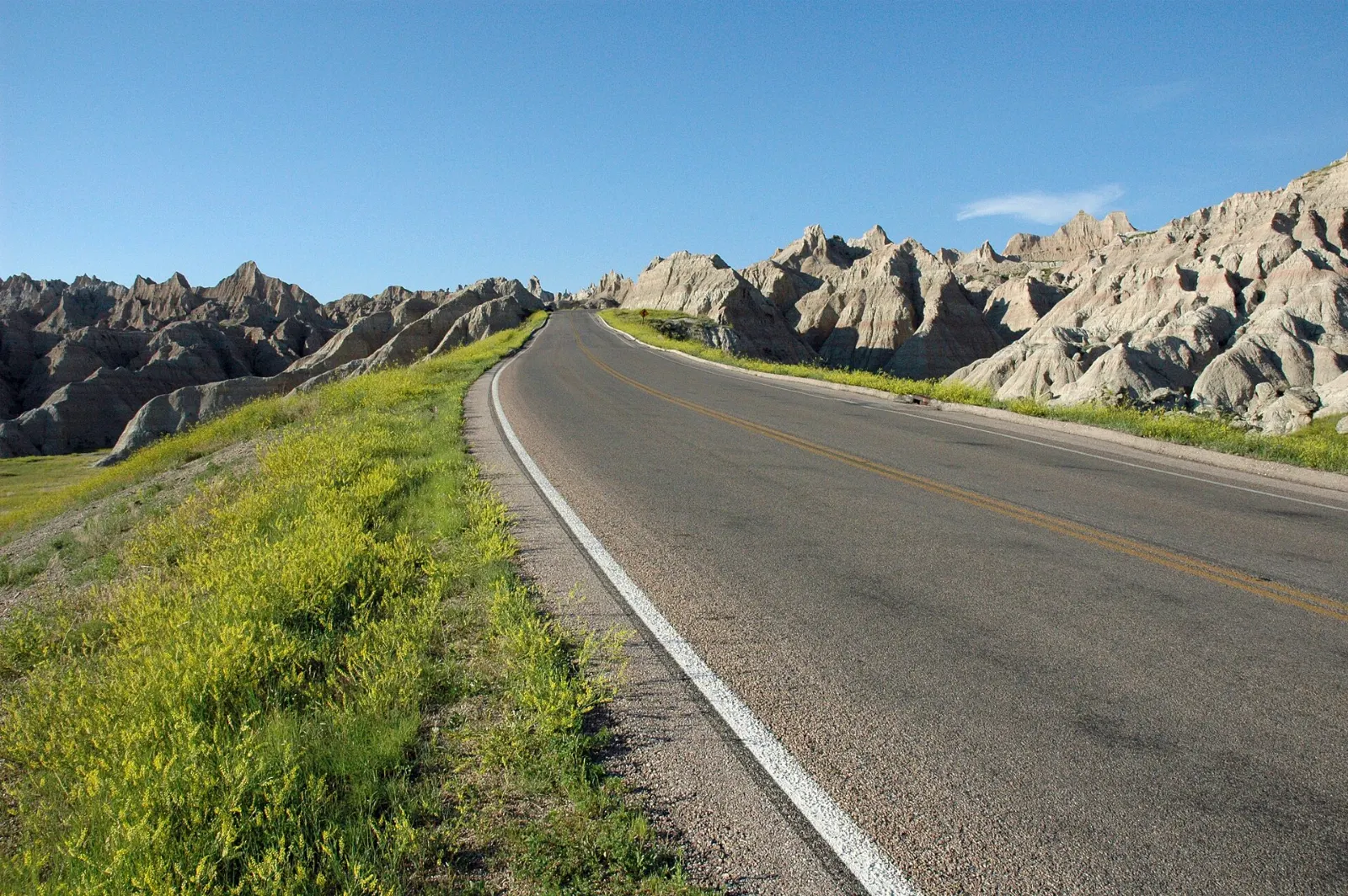
Badlands National Park covers about 244,000 acres of eroded buttes, pinnacles, spires and mixed-grass prairie in southwestern South Dakota. The bands of rust, cream, gray and gold that streak the formations are layers of ancient sediment and volcanic ash, now wearing away at a startling rate.
AT A GLANCE
Best time
Late May to June and September to early October for mild temperatures and green or golden prairie.
How long
One full day covers the Loop Road and short trails; two days lets you add sunrise, Sage Creek and the missile sites.
Getting there
Drive Interstate 90 to Wall or Cactus Flat. Rapid City Regional Airport is the nearest major airport.
Why visit Badlands National Park
The Badlands look like nowhere else in the United States. Driving across the prairie, you suddenly reach the edge of the Badlands Wall, a long escarpment where the grassland gives way to a vast maze of ridges and canyons.
The park is also unusually open to exploration. Beyond the marked trails, Badlands allows off-trail hiking across much of its landscape, so you can wander among the formations at your own pace.
Cedar Pass and the eastern trails
The eastern end of the Badlands Loop Road, near the Northeast Entrance and Cedar Pass, holds most of the park's short trails. Arrive early in summer to find parking and avoid midday heat.
Door Trail and Window Trail
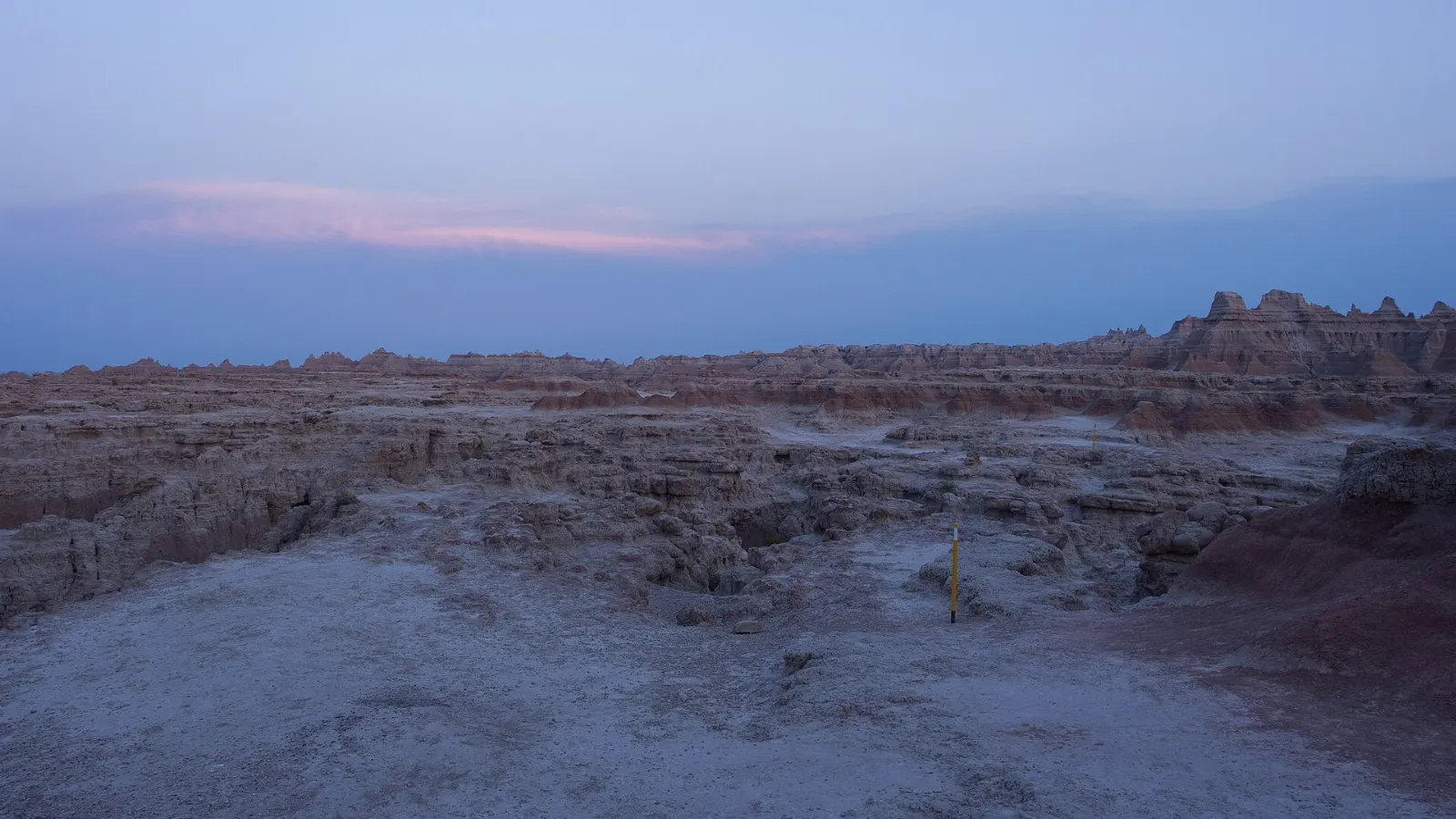
Both trails start from the same parking area. The Door Trail begins with an accessible boardwalk through a break in the Badlands Wall, then continues on a route marked by numbered posts across a rugged landscape of eroded mounds.
Notch Trail
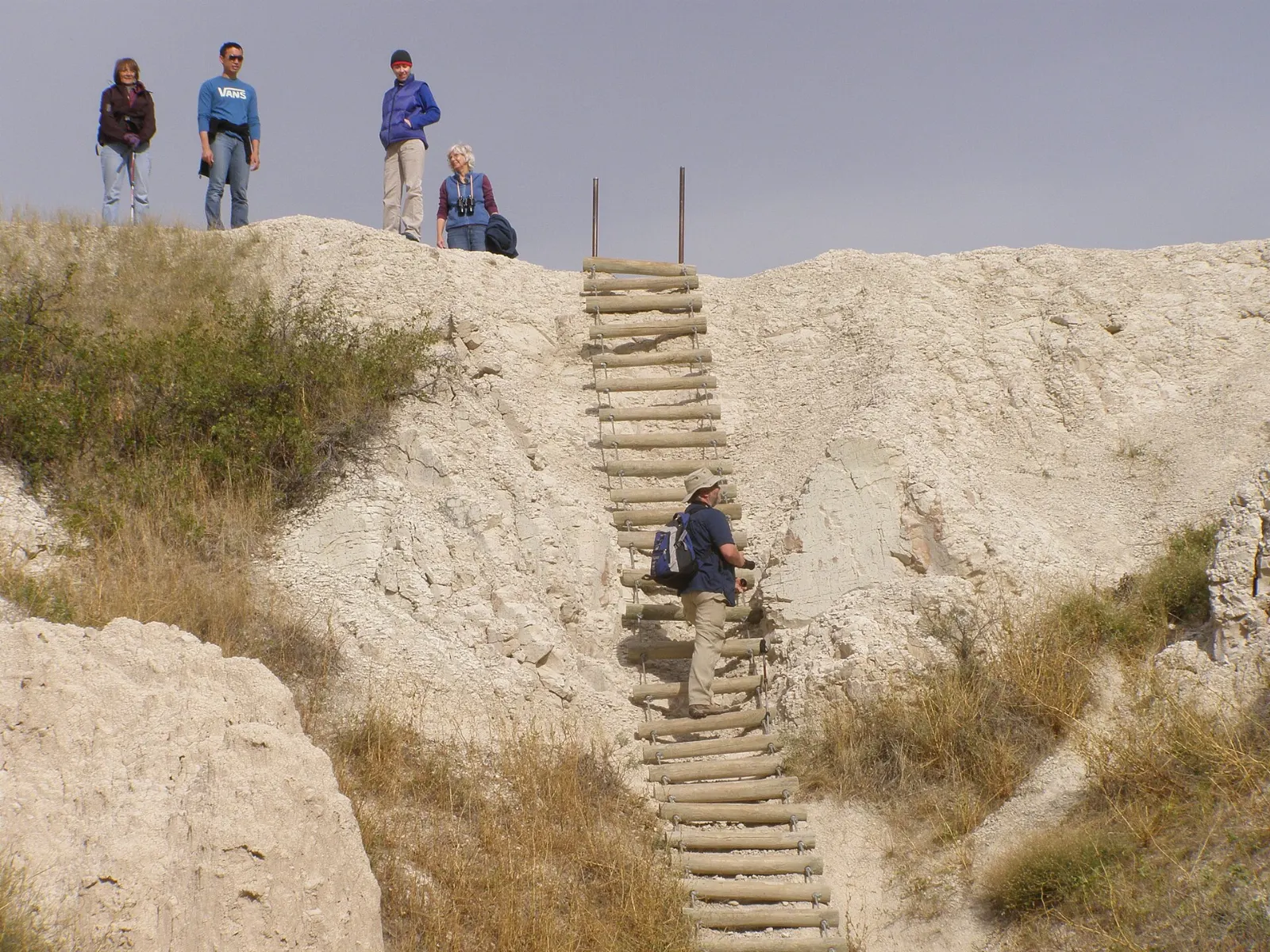
The Notch Trail is the park's most exciting short hike.
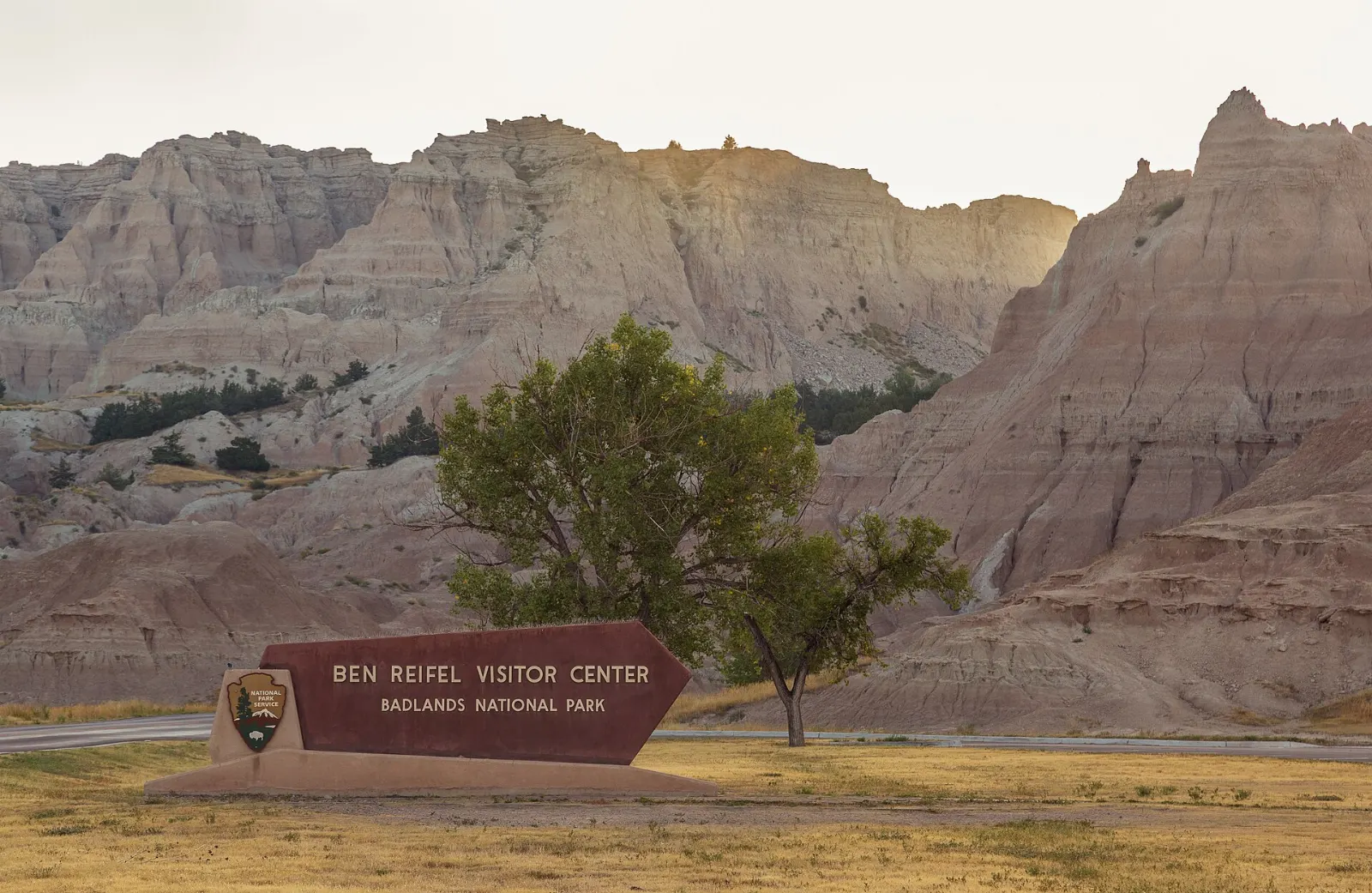
Ben Reifel Visitor Center
The park's main visitor center, at Cedar Pass, has exhibits on geology, fossils, wildlife and Lakota culture, a park film and rangers who can advise on trail conditions.
Cliff Shelf Nature Trail
Just west of the visitor center, this short boardwalk and stair trail climbs through a juniper-shaded slump block where the wall has slid downhill. It is a good place to look for birds and occasionally bighorn sheep.
The Badlands Loop Road and its overlooks
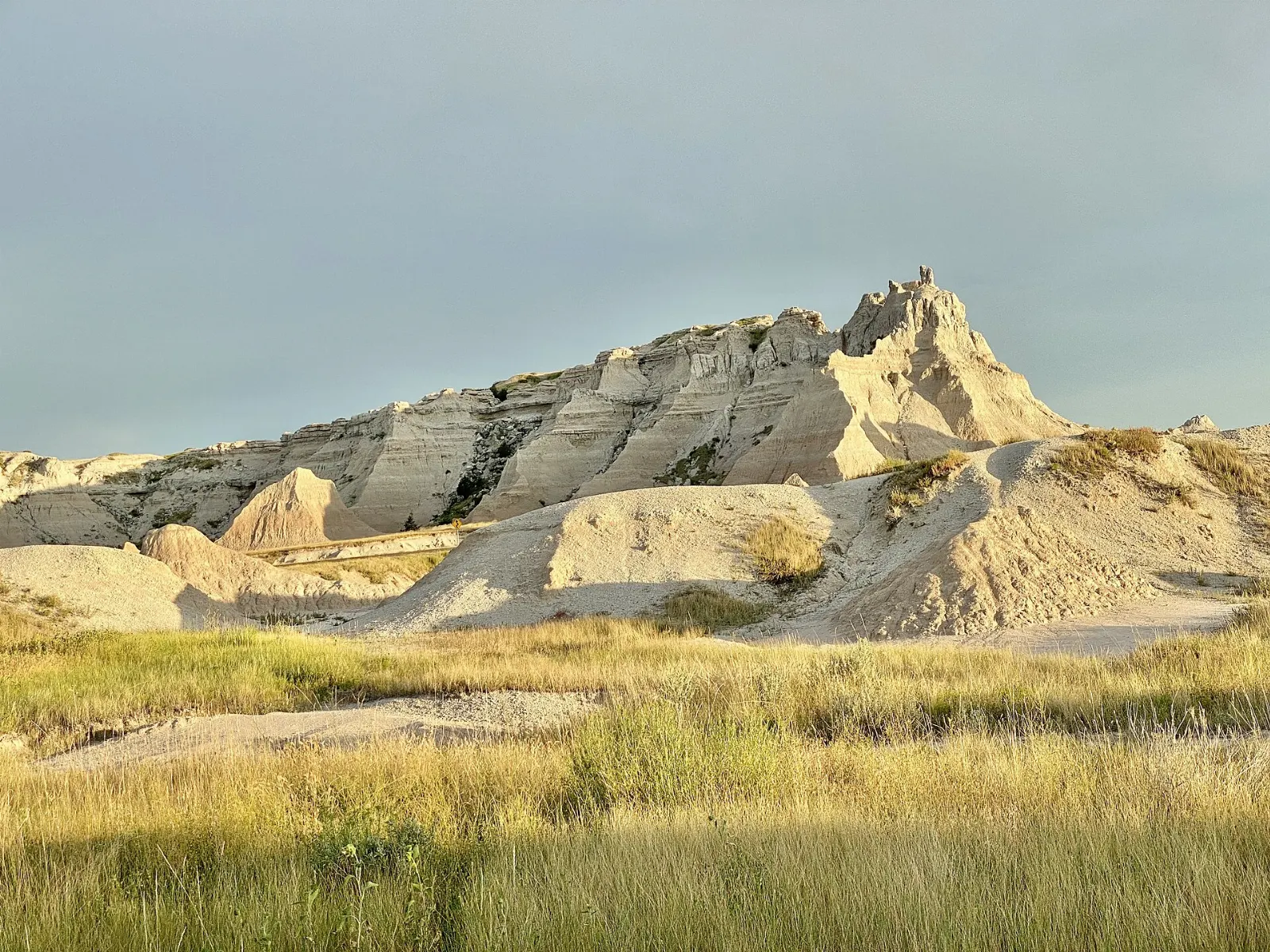
The Badlands Loop Road, Highway 240, runs through the North Unit between Interstate 90 exits at Cactus Flat and Wall. It is lined with overlooks, and many visitors spend most of their day driving it slowly.
Fossil Exhibit Trail
This fully accessible boardwalk loop features fossil replicas and exhibits explaining the creatures that lived here when the region was a warm, wet floodplain.
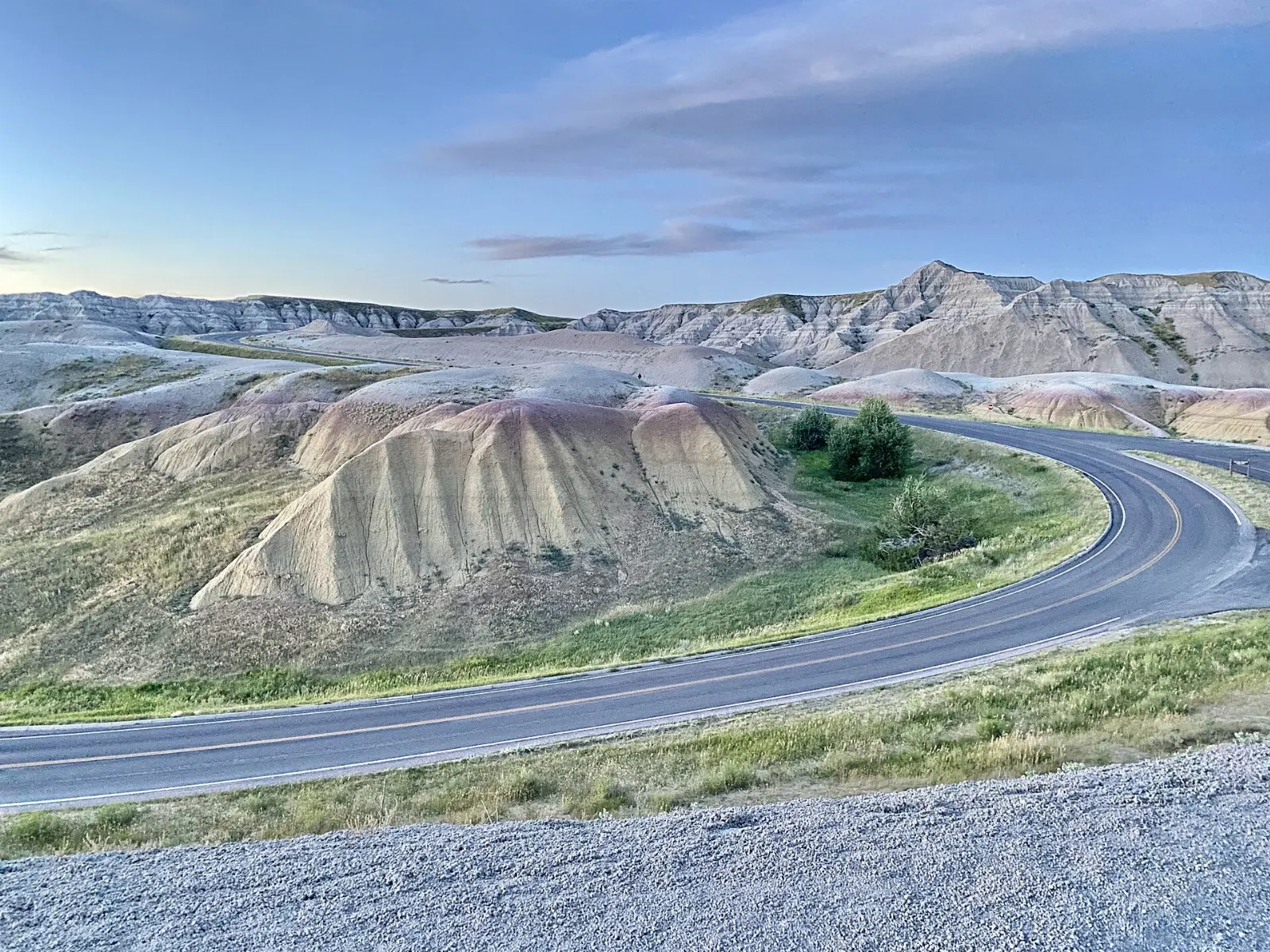
Yellow Mounds Overlook
At Yellow Mounds, rounded hills glow in shades of yellow, red and purple.
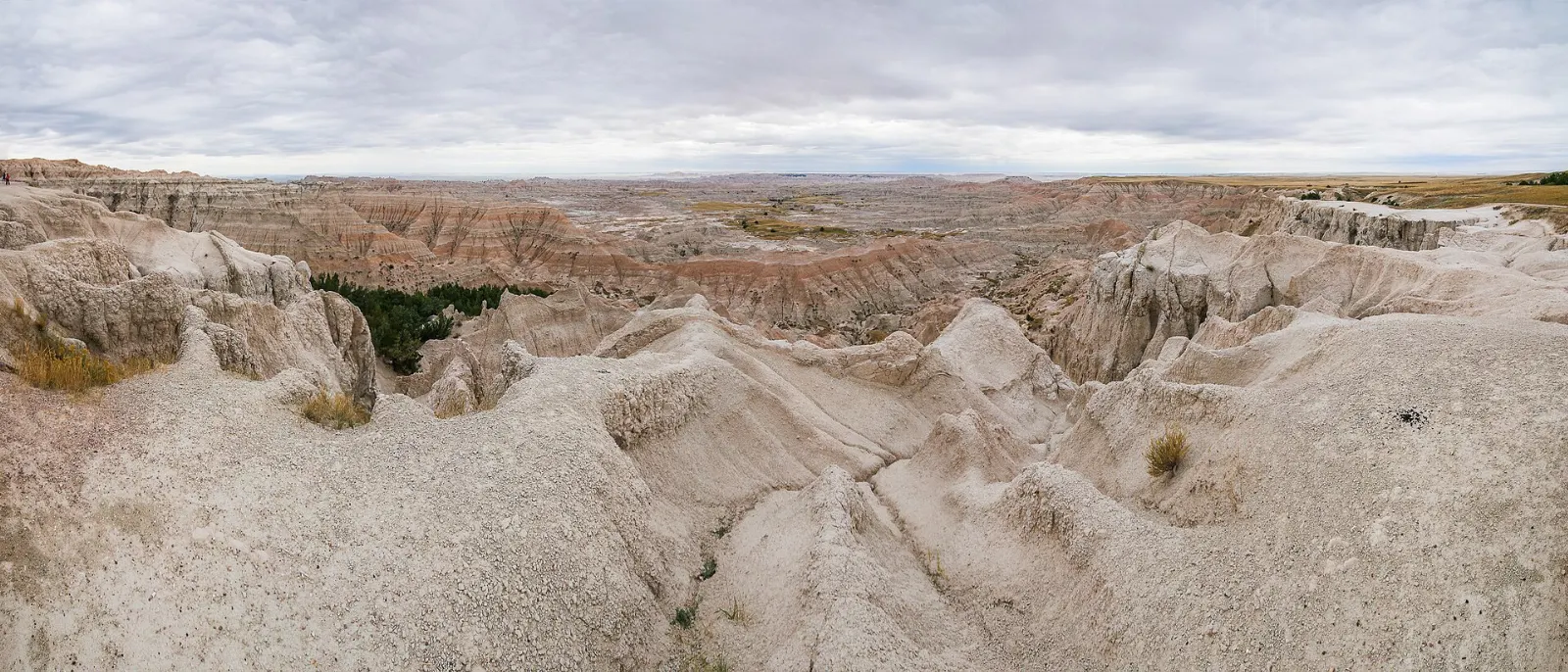
Pinnacles Overlook and Panorama Point
Near the northwest end of the road, Pinnacles Overlook looks across a broad basin of jagged peaks and is one of the most popular sunset spots in the park. Bighorn sheep are often seen grazing on nearby slopes.
Sage Creek, wildlife and nearby history
Sage Creek Rim Road and Roberts Prairie Dog Town
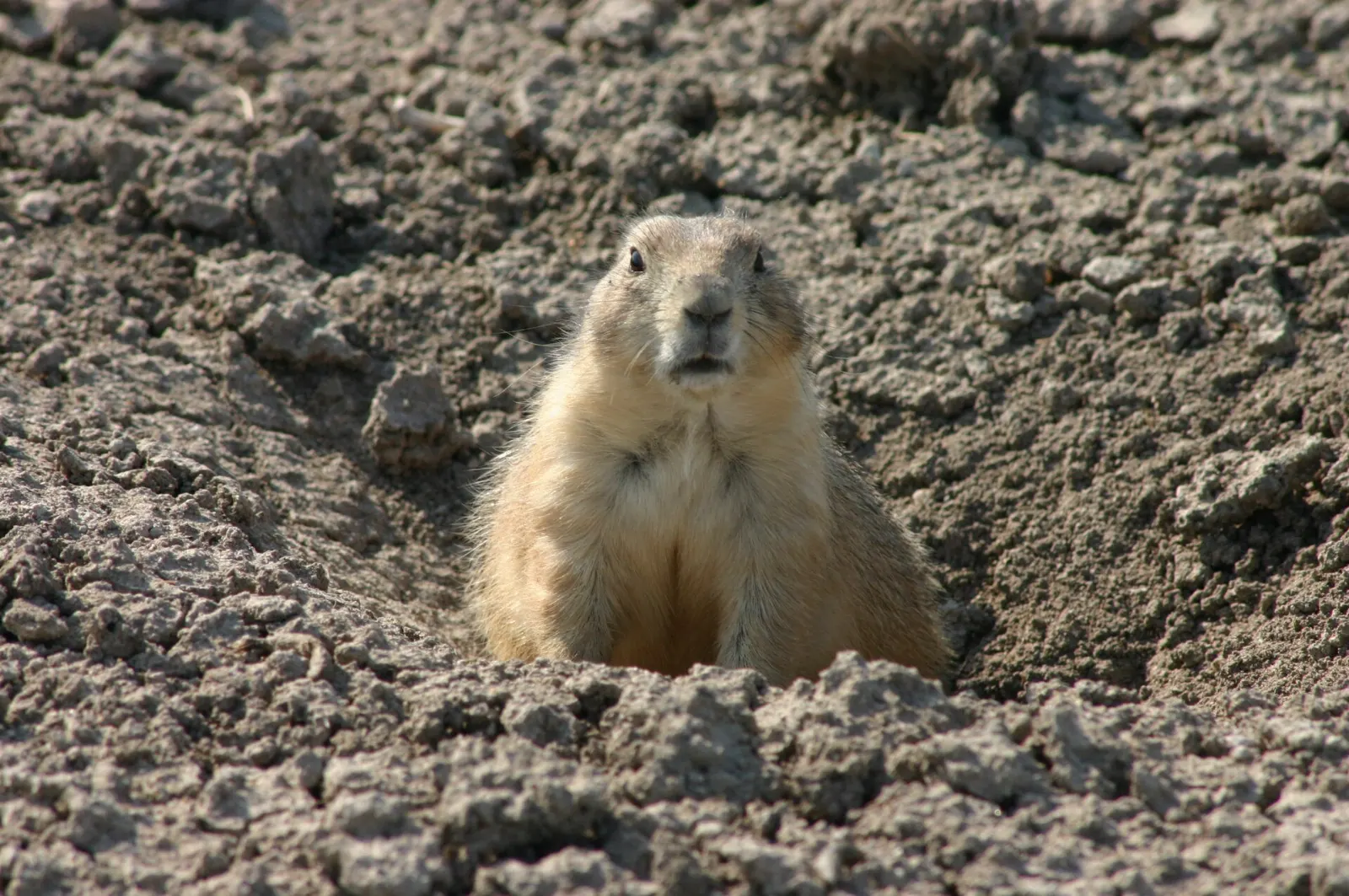
West of the Pinnacles Entrance, the gravel Sage Creek Rim Road runs along the edge of the Badlands Wilderness. Along the way you will pass Roberts Prairie Dog Town, where hundreds of black-tailed prairie dogs pop up from their burrows and call warnings to each other.
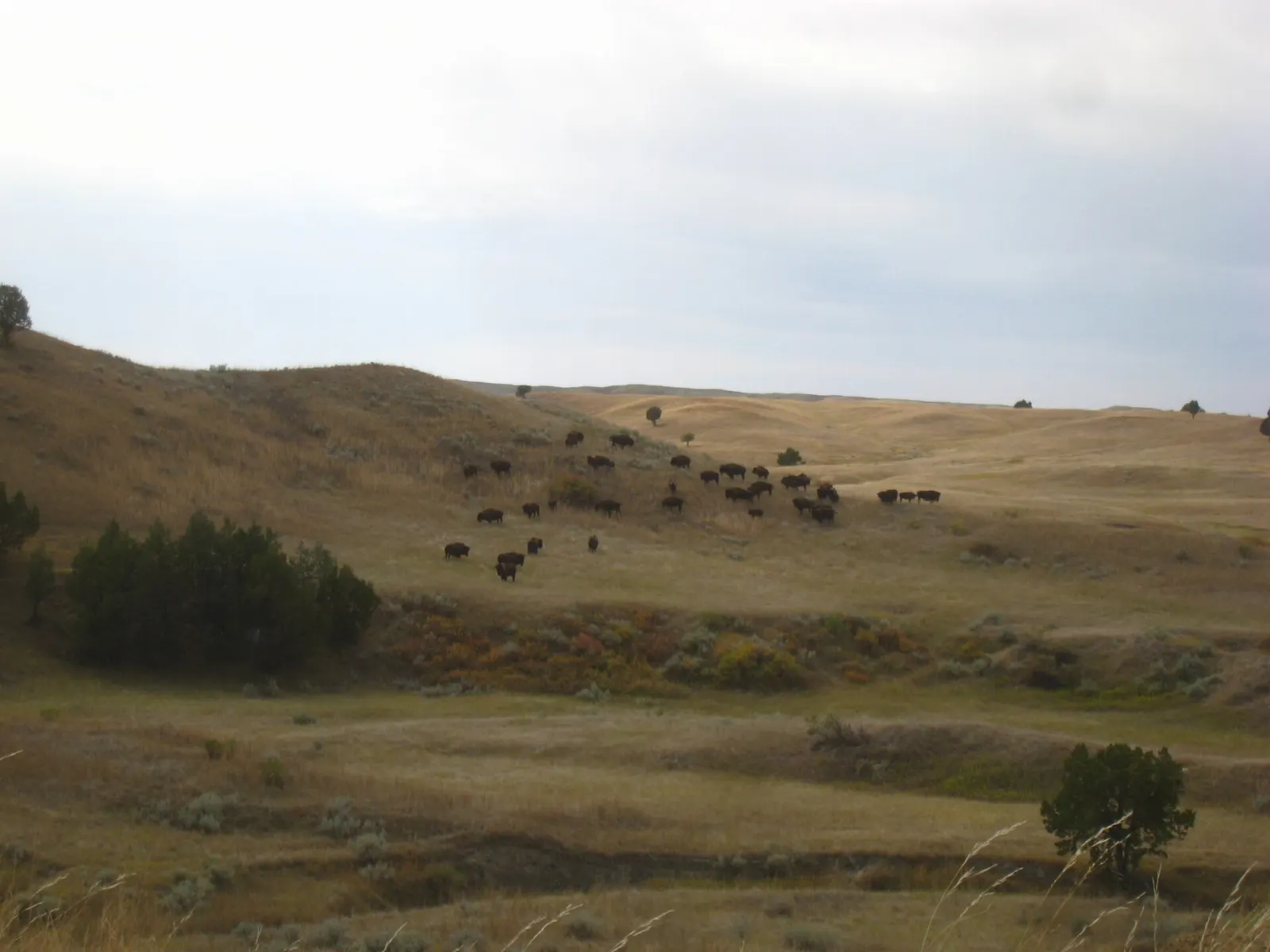
Bison in the Sage Creek Wilderness
Bison were reintroduced to Badlands in the 1960s, and today they roam the western part of the park, often near Sage Creek Rim Road and the primitive Sage Creek Campground. They are massive, fast and unpredictable.
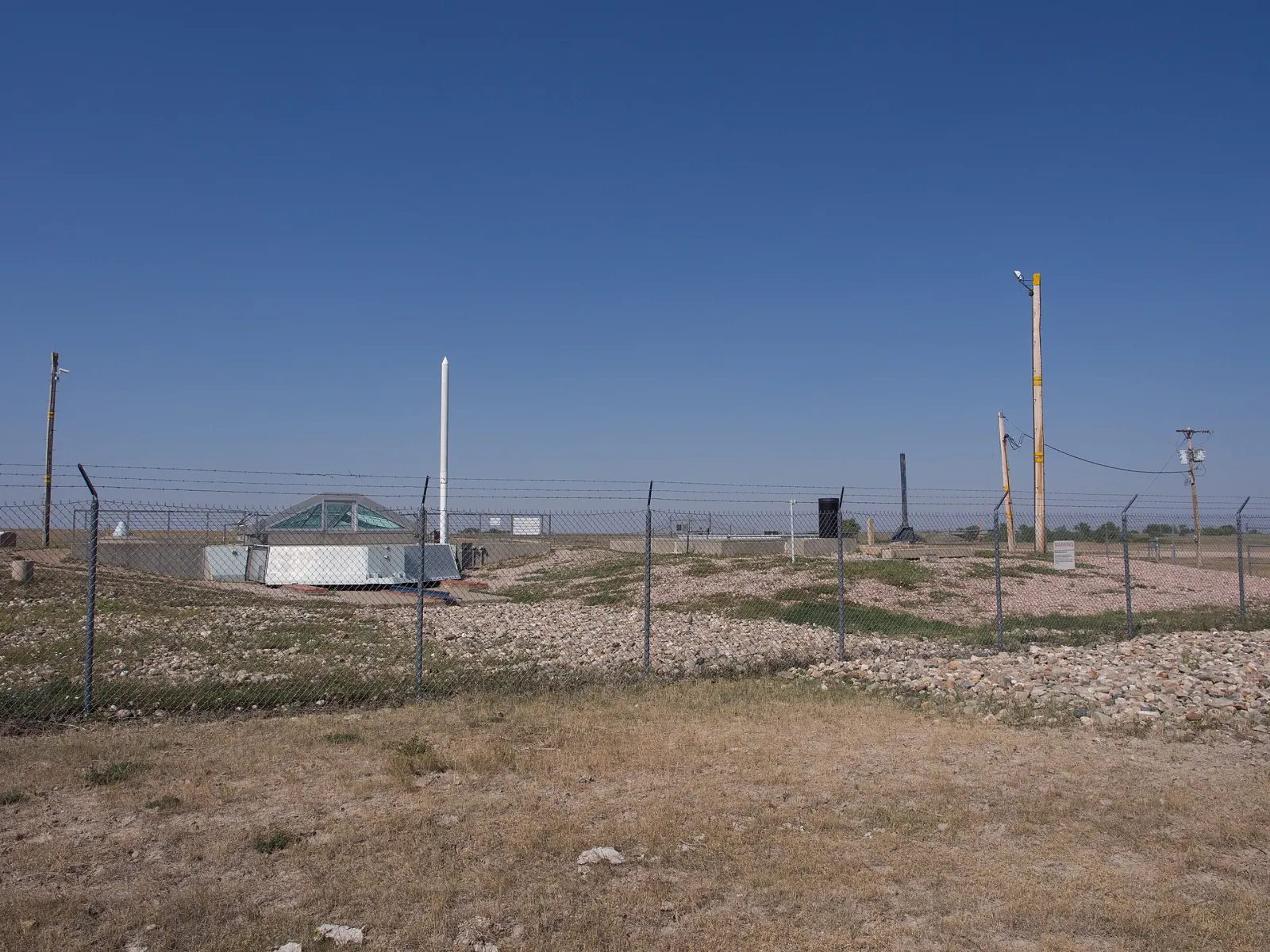
Minuteman Missile National Historic Site
Just north of the park along Interstate 90, this site tells the story of the Cold War missile fields that once covered western South Dakota.
The town of Wall
The small town of Wall, at the park's northwest edge, is the main gateway community. It is best known for Wall Drug, a sprawling roadside store that grew famous by offering free ice water to travelers during the Depression and promoting itself on billboards for hundreds of miles.
 Planning a trip to Badlands National Park?Compare hotels, flights and vacation rentals for Badlands National Park on Expedia.Book now
Food and local flavors
Food choices inside the park are limited, so plan ahead.
Beyond the park, look for chislic, cubes of grilled or fried meat on skewers that South Dakota has adopted as a state specialty, and kuchen, a custard-filled German pastry that is the official state dessert.
Popular dishes to try in Badlands National Park


Where to stay
Inside the park, the Cedar Pass area has cabins and a developed campground, ideal for sunrise and stargazing.
Wall suits most visitors, with motels, campgrounds and restaurants close to the Pinnacles Entrance.
Rapid City suits travelers combining the Badlands with Mount Rushmore, Custer State Park and the Black Hills, though it means a longer morning drive.
Where to stay in Badlands National Park


Best time to visit
Summer is the busiest season.
Late spring and early autumn offer the best balance of mild weather, fewer crowds and good wildlife viewing; the prairie is green in early summer and golden in September.
Getting there and getting around
Badlands National Park lies just south of Interstate 90.
A car is essential, as there is no public transit in the park. No timed entry or reservations are required to enter, but an entrance fee applies; check the official website for current fees and conditions.
A suggested itinerary
First day
Watch sunrise at Big Badlands Overlook or Panorama Point, then hike the Notch, Door and Window trails before the heat builds.
Second day
Drive Sage Creek Rim Road early to look for bison, bighorn sheep and the prairie dogs at Roberts Prairie Dog Town. In the afternoon, visit Wall and the Minuteman Missile sites.
Practical tips
- Carry at least a gallon of water per person per day in summer, and hike early or late.
- Watch for prairie rattlesnakes, especially on warm days; look where you put your hands and feet.
- Keep a safe distance from bison and all wildlife, and never feed prairie dogs.
- Avoid trails during storms; the clay becomes extremely slippery and lightning is a serious risk on open ground.
- Leave fossils and rocks where you find them and report notable finds to a ranger.
- Download offline maps, as cell service is unreliable in much of the park.
Find local businesses in Wall on WiserMap
Need a meal, fuel or supplies before heading into the park?