WiserMap — Choose wisely. Connect locally.Choose wisely. Connect locally.Add your business
Wood Buffalo National Park, Alberta · Travel guide

Wood Buffalo National Park Alberta Bison and Salt Plains

Wood Buffalo National Park is a vast, quiet wilderness straddling northern Alberta and the southern Northwest Territories. It is bigger than Switzerland, and most of it is boreal forest, wetlands and river delta that you reach by a single paved road, a small plane or a boat. Visitors come for wood bison, salt flats, sinkhole lakes, whooping cranes and some of the darkest night skies in the country.

By WiserMap TravelUpdated October 2026 9 places8 min read
FacebookXLinkedIn
At a glance Wood Buffalo National Park
  1. Best timeSummer for hiking, paddling and tours, and winter for northern lights under dark skies.
  2. How longAllow two to four days, since distances are long and services are limited.
  3. Getting thereDrive from Hay River to Fort Smith on Highway 5, or fly into Fort Smith from Edmonton.

Why visit Wood Buffalo National Park

This is Canada's largest national park, covering more than 44,000 square kilometres, and the second largest in the world. It was established in 1922 to protect the world's largest free-roaming herd of wood bison, and UNESCO listed it as a World Heritage Site in 1983 for its bison and the Peace-Athabasca Delta.

It is not a park for crowds or quick stops. You come for space, silence and wildlife, and for the feeling of being far from everything.

The story of the bison is part of the draw. Between 1925 and 1928, thousands of plains bison were brought to the park and mixed with the local wood bison, which also brought disease into the herd.

Inside the park by road

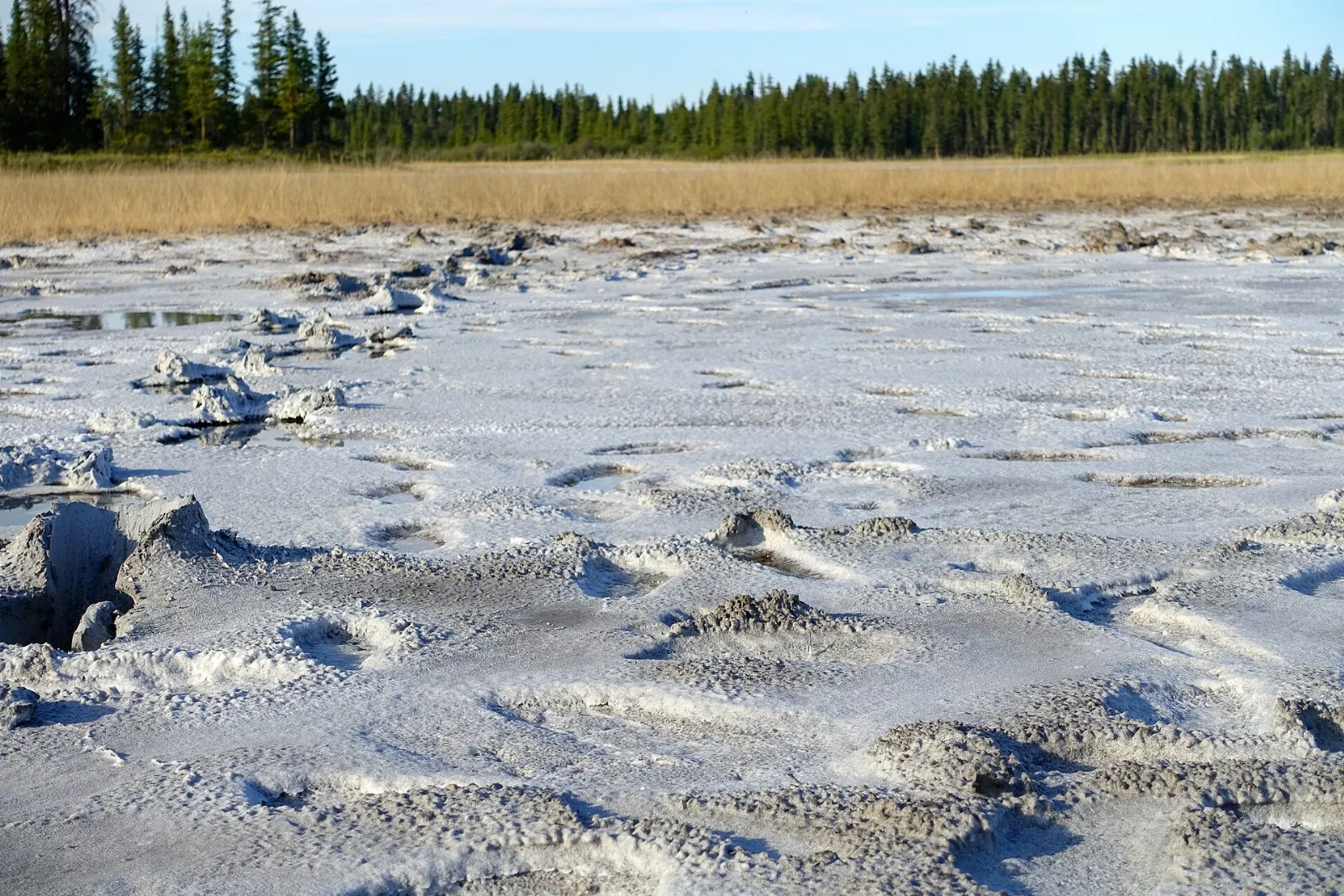
White salt flats stretching across the Salt Plains in Wood Buffalo National Park, Alberta

Salt Plains

The Salt Plains Viewpoint and Day-use Area is reached from Highway 5 and gives you a broad look at the white, salt-encrusted flats.

The Salt Plains are reached from Highway 5 inside the park. Photo: Melinaguene, Wikimedia Commons, CC BY-SA 4.0
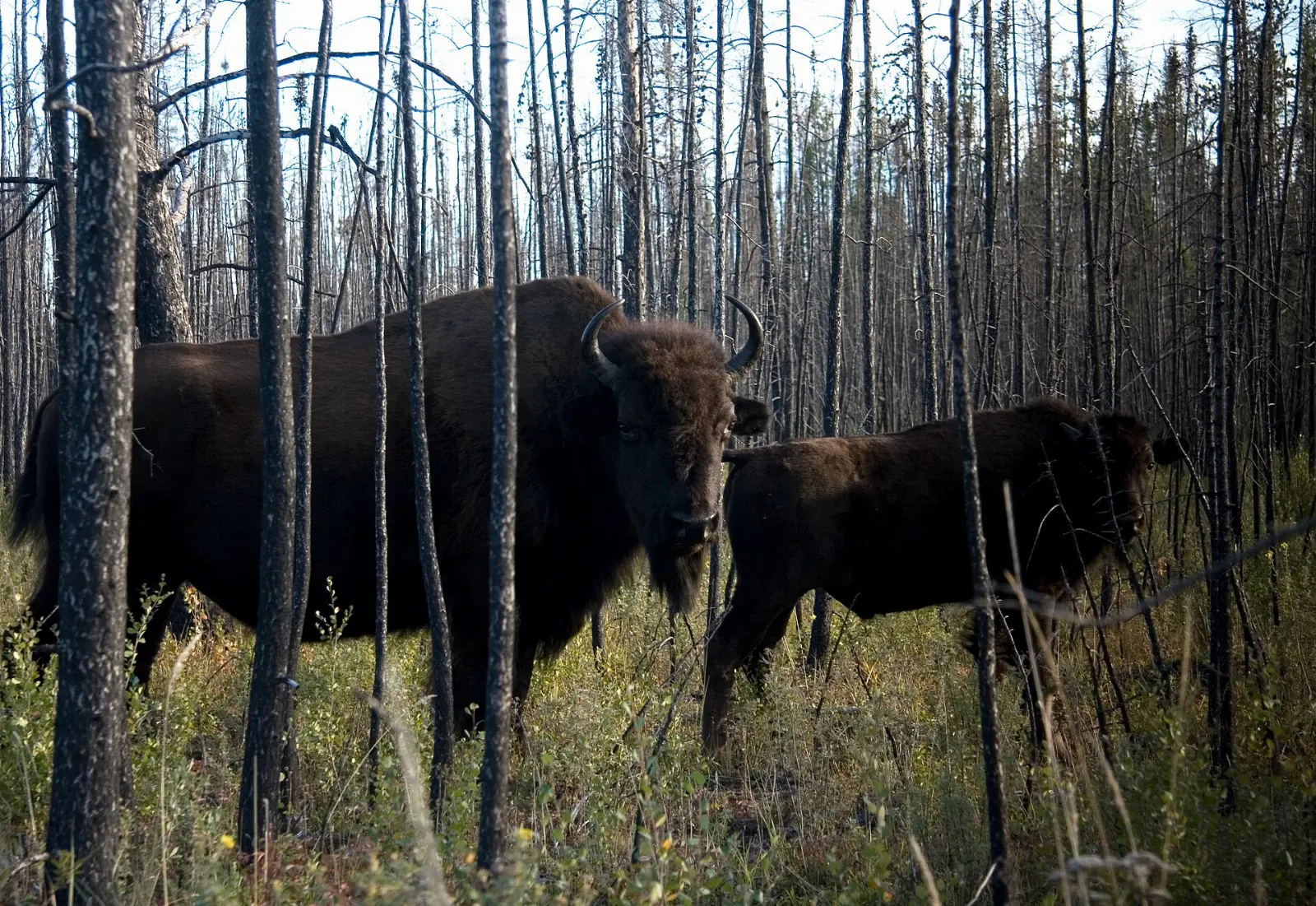
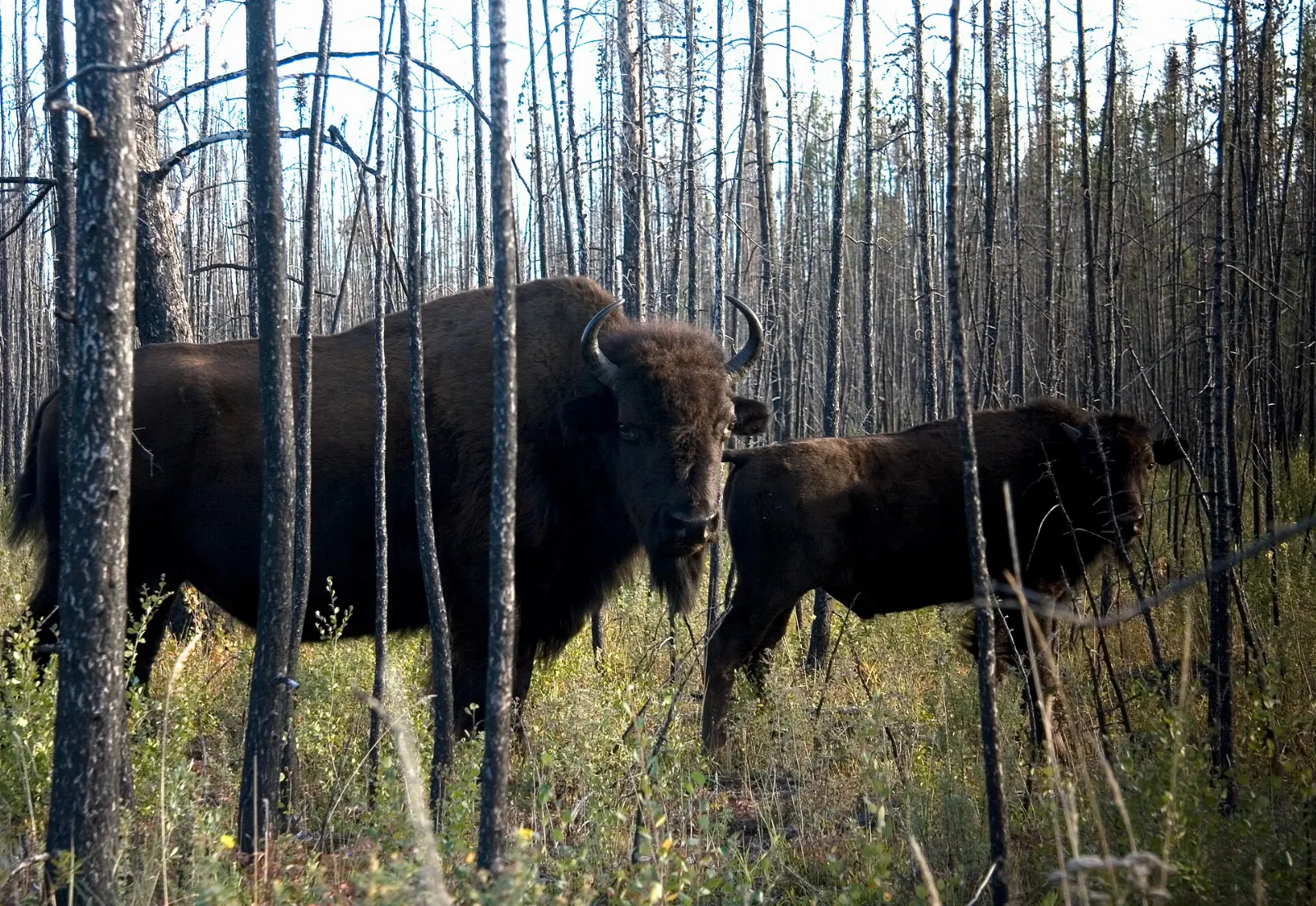
A wood bison grazing near a road in Wood Buffalo National Park, Alberta

Wood bison along the highway

The bison roam freely, so you may see them beside the road, on meadows or crossing the pavement. Slow down, keep your distance and never leave your vehicle for a closer photo.

The park was created in 1922 to protect the wood bison. Photo: Naturedata, Wikimedia Commons, CC0

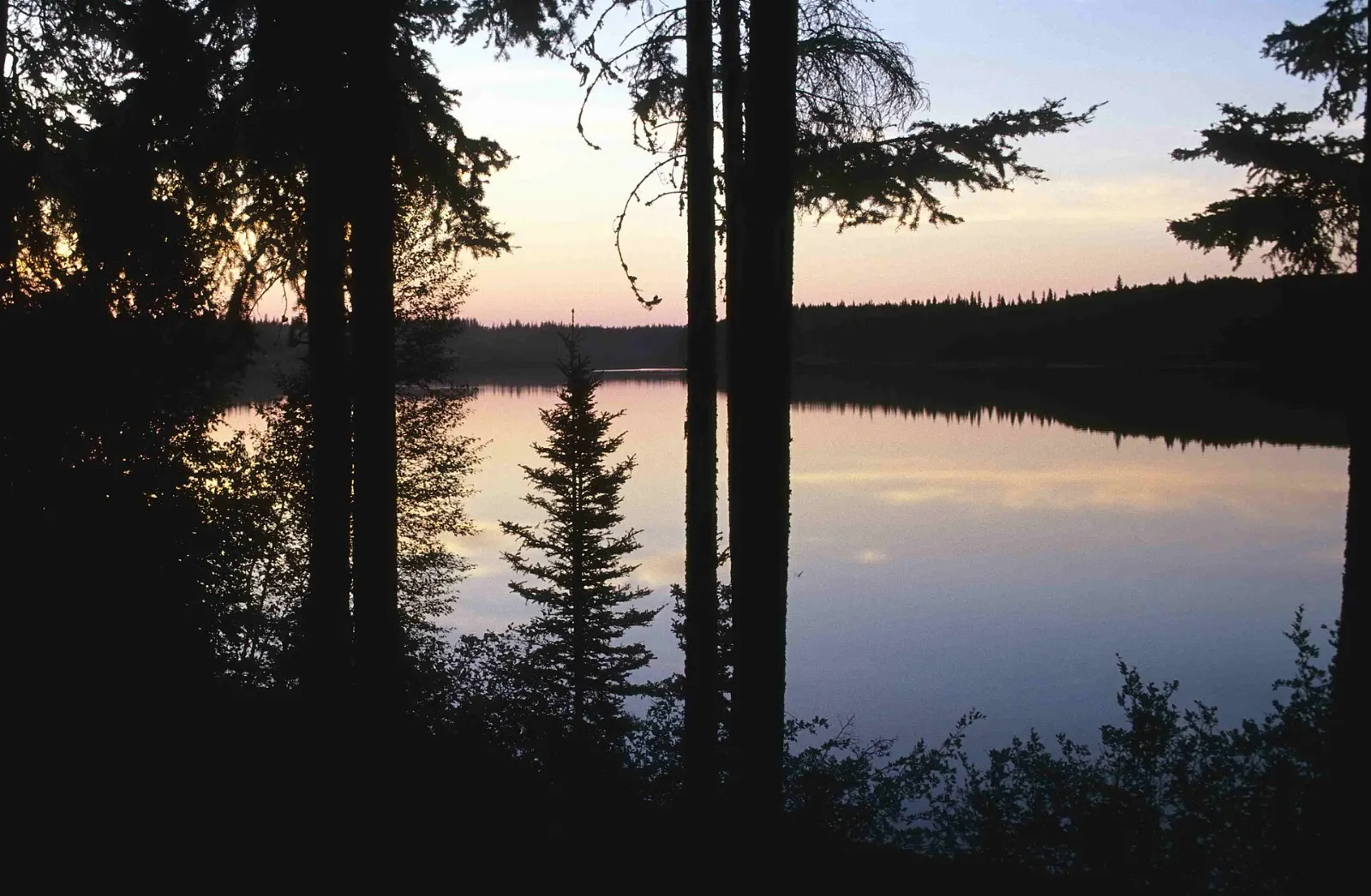
Pine Lake with forested shoreline in Wood Buffalo National Park, Alberta

Pine Lake

Pine Lake is about 60 kilometres south of Fort Smith on Pine Lake Road and has a campground and day-use area. The lake is a base for canoe trips, swimming and picnics, and guided canoe tours run on summer Saturdays.

Pine Lake is the main campground and canoe area inside the park. Photo: Ansgar Walk, Wikimedia Commons, CC BY-SA 2.5

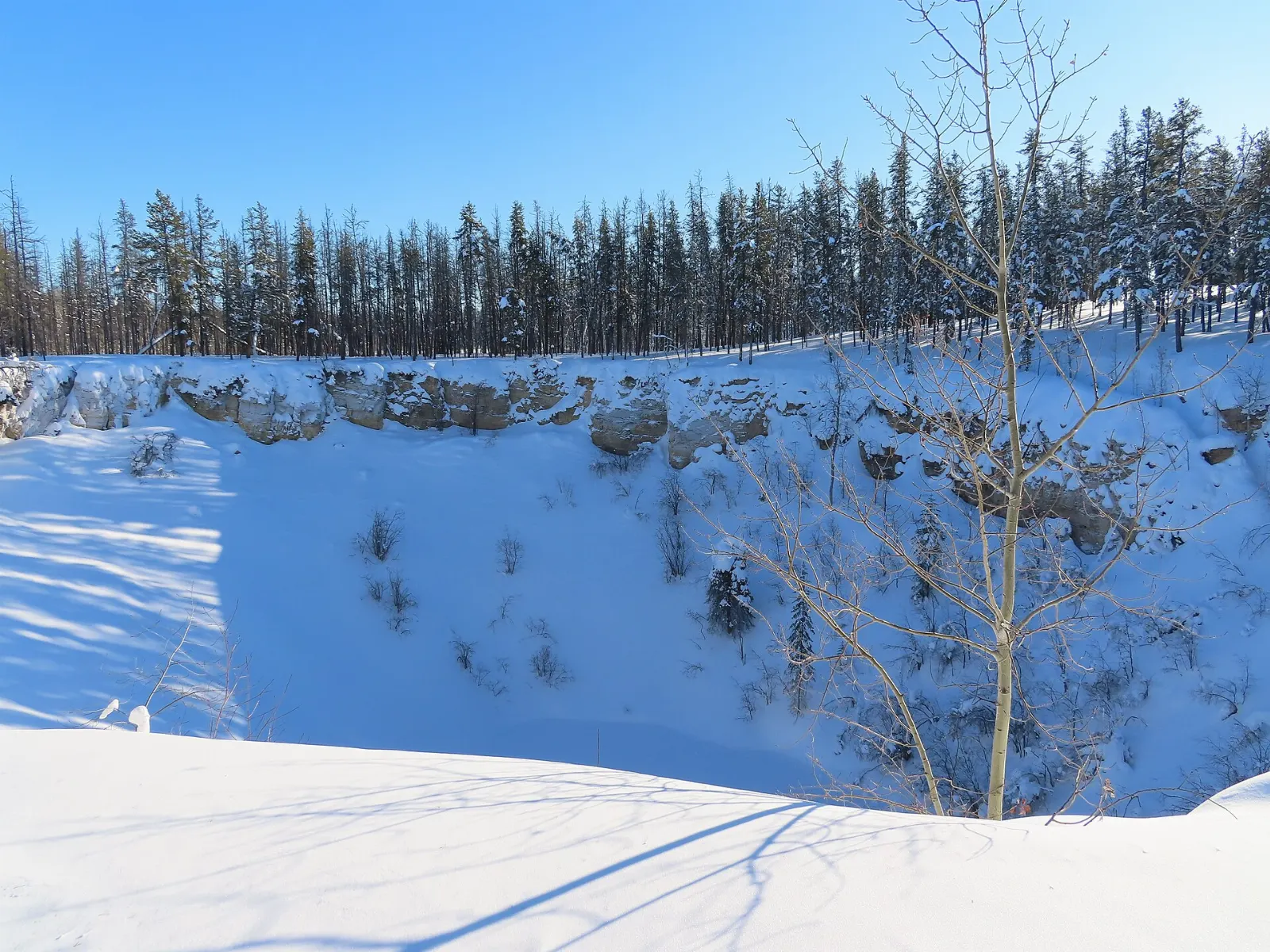
A round sinkhole lake surrounded by trees in Wood Buffalo National Park, Alberta

Sinkholes and Rainbow Lakes

The north-eastern part of the park is known for its karst sinkholes, round lakes formed when the ground dissolves and collapses.

Karst sinkholes are a feature of the north-eastern part of the park. Photo: awmcphee, Wikimedia Commons, CC BY-SA 4.0

Angus Fire Tower

Near the park entrance off Highway 5, the Angus Fire Tower and Day-use Area is a simple picnic stop that makes a gentle introduction before you go deeper.

Wildlife, waters and skies

Channels and wetlands of the Peace-Athabasca Delta seen from above, Wood Buffalo National Park, Alberta

Peace-Athabasca Delta

One of the largest inland freshwater deltas on Earth, it forms where the Peace, Athabasca and Birch rivers meet.

The delta is one of the largest inland freshwater deltas in the world. Photo: awmcphee, Wikimedia Commons, CC0

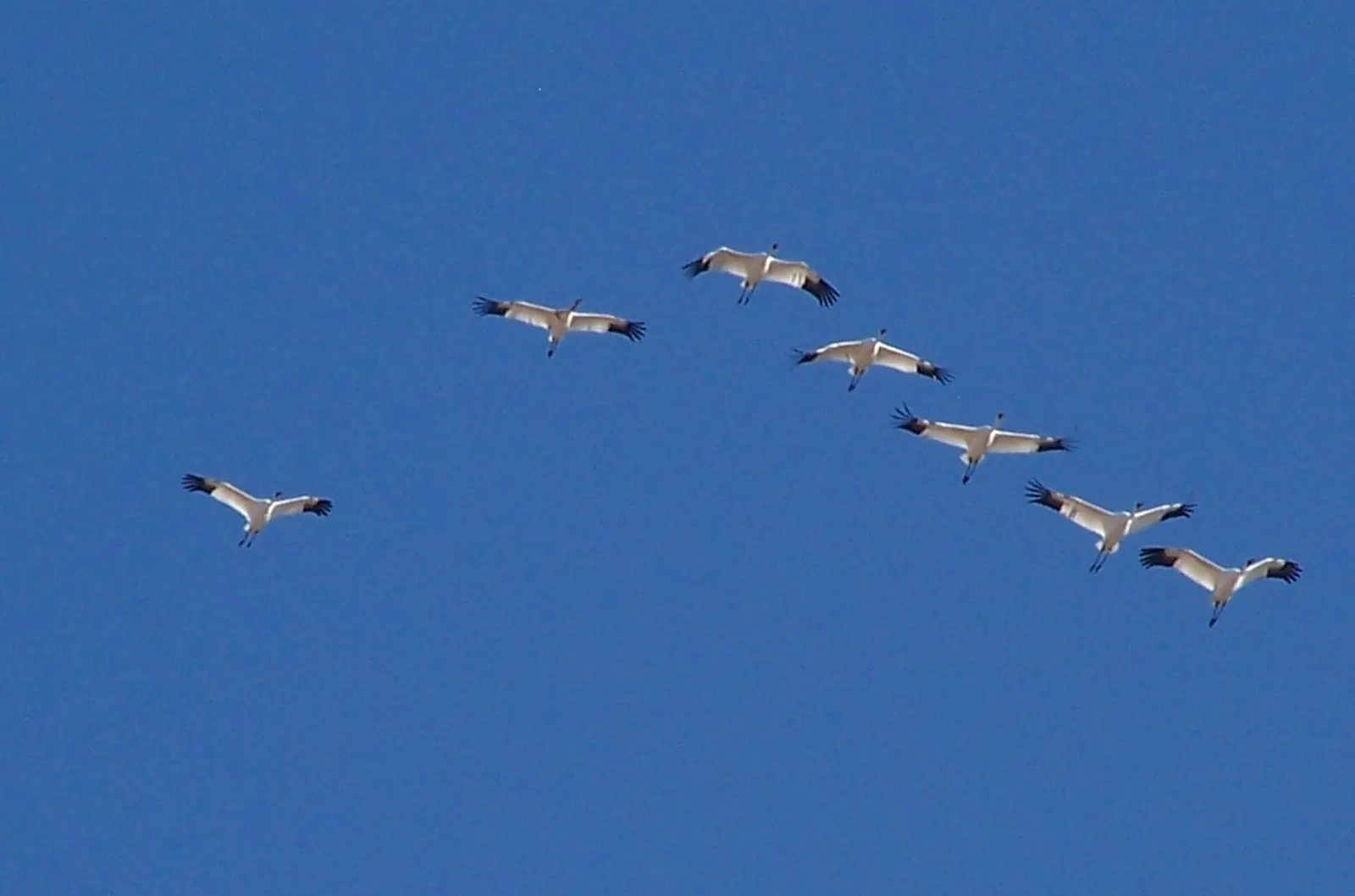
A whooping crane standing in shallow water, Wood Buffalo National Park, Alberta

Whooping Crane Summer Range

Wood Buffalo is the only natural nesting habitat of the endangered whooping crane, and the range is a Ramsar wetland. Ground access to nesting areas is prohibited, so viewing happens by air charter.

Wood Buffalo holds the only natural nesting habitat of the whooping crane. Photo: USFWS Mountain-Prairie, Wikimedia Commons, Public domain

Dark sky viewing

In 2013 the park was designated the world's largest dark sky preserve. On clear winter nights the northern lights can fill the sky, and summer nights bring stars with few lights nearby.

Gateway communities

Rapids on the Slave River near Fort Smith in the Northwest Territories, Wood Buffalo National Park, Alberta

Fort Smith

Fort Smith, just across the Northwest Territories border, is the park's main base and has restaurants, a few guest houses, a hotel and a visitor centre.

Pelicans nest on the Slave River rapids near Fort Smith in summer. Photo: Jackson, Wikimedia Commons, Public domain

The Northern Life Museum building in Fort Smith, Wood Buffalo National Park, Alberta

Northern Life Museum

Fort Smith's museum is the best place to learn about fur-trade routes, Indigenous cultures and the portage around the Slave River rapids.

The Northern Life Museum in Fort Smith documents the history of the region. Photo: Bell Helicopter Textron Inc, Wikimedia Commons, CC0

Shoreline of Lake Athabasca at Fort Chipewyan in northern Alberta, Wood Buffalo National Park, Alberta

Fort Chipewyan

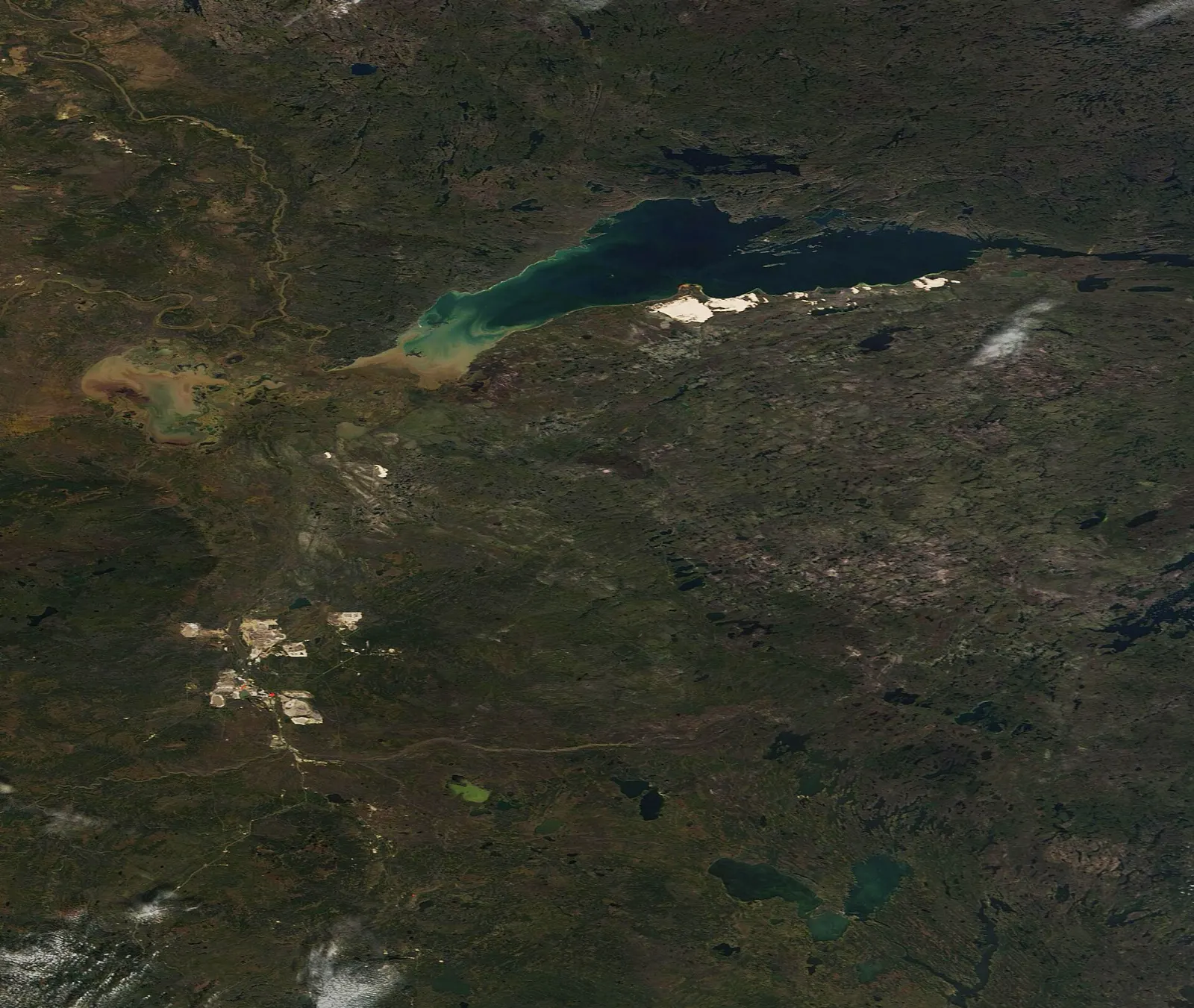
On the northwest shore of Lake Athabasca, Fort Chipewyan is one of the oldest European settlements in Alberta and a hamlet with a long fur-trade history.

Fort Chipewyan sits on the northwest shore of Lake Athabasca. Photo: MODIS Land Rapid Response Team, NASA GSFC, Wikimedia Commons, Public domain

Food and local flavors

Food here is simple and hearty, shaped by northern Indigenous and settler traditions. Look for bannock, a pan-fried bread served with jam or stew, and bison stew, a warming dish made with local-style red meat. Saskatoon berry pie is a prairie and northern favorite made with a native purple berry. Fort Smith has restaurants and a Northern Store for groceries.

Popular dishes to try in Wood Buffalo National Park

Bannock in Wood Buffalo National Park, Alberta
Bannock Look for bannock, a pan-fried bread served with jam or stew, and bison stew, a warming dish made with local-style red meat.Photo: Skorp, Wikimedia Commons, CC0
Saskatoon berry pie in Wood Buffalo National Park, Alberta
Saskatoon berry pie Saskatoon berry pie is a prairie and northern favorite made with a native purple berry.Photo: Jonathan Schilling, Wikimedia Commons, CC BY-SA 4.0

Where to stay

There are no towns inside Wood Buffalo National Park, so plan your base carefully. Fort Smith has a hotel, a few guest houses and the main visitor services, and suits first-time visitors and anyone arriving by plane or on the road from Hay River.

Pine Lake offers primitive campsites and cabins at a lakeside campground, ideal for campers and canoeists who want to wake up inside the park.

Where to stay in Wood Buffalo National Park

Fort Smith, Wood Buffalo National Park, Alberta
Fort Smith Fort Smith has a hotel, a few guest houses and the main visitor services, and suits first-time visitors and anyone arriving by plane or on the road from Hay River.Photo: Ansgar Walk, Wikimedia Commons, CC BY-SA 2.5
Pine Lake, Wood Buffalo National Park, Alberta
Pine Lake Pine Lake offers primitive campsites and cabins at a lakeside campground, ideal for campers and canoeists who want to wake up inside the park.Photo: Ansgar Walk, Wikimedia Commons, CC BY-SA 2.5
Fort Chipewyan, Wood Buffalo National Park, Alberta
Fort Chipewyan Fort Chipewyan is a quieter option on Lake Athabasca for travelers interested in northern culture and the delta, though it takes more planning to reach.Photo: MODIS Land Rapid Response Team, NASA GSFC, Wikimedia Commons, Public domain
Wood Buffalo National Park old town, Wood Buffalo National Park, Alberta
Wood Buffalo National Park old town One of the best areas to base yourself in Wood Buffalo National Park.Photo: Ken Lund from Reno, Nevada, USA, Wikimedia Commons, CC BY-SA 2.0

Best time to visit

Summer, especially July and August, is the easiest time. Temperatures average around 17 degrees Celsius in the day, tours run from mid-June to the end of August, and roads and trails are open.

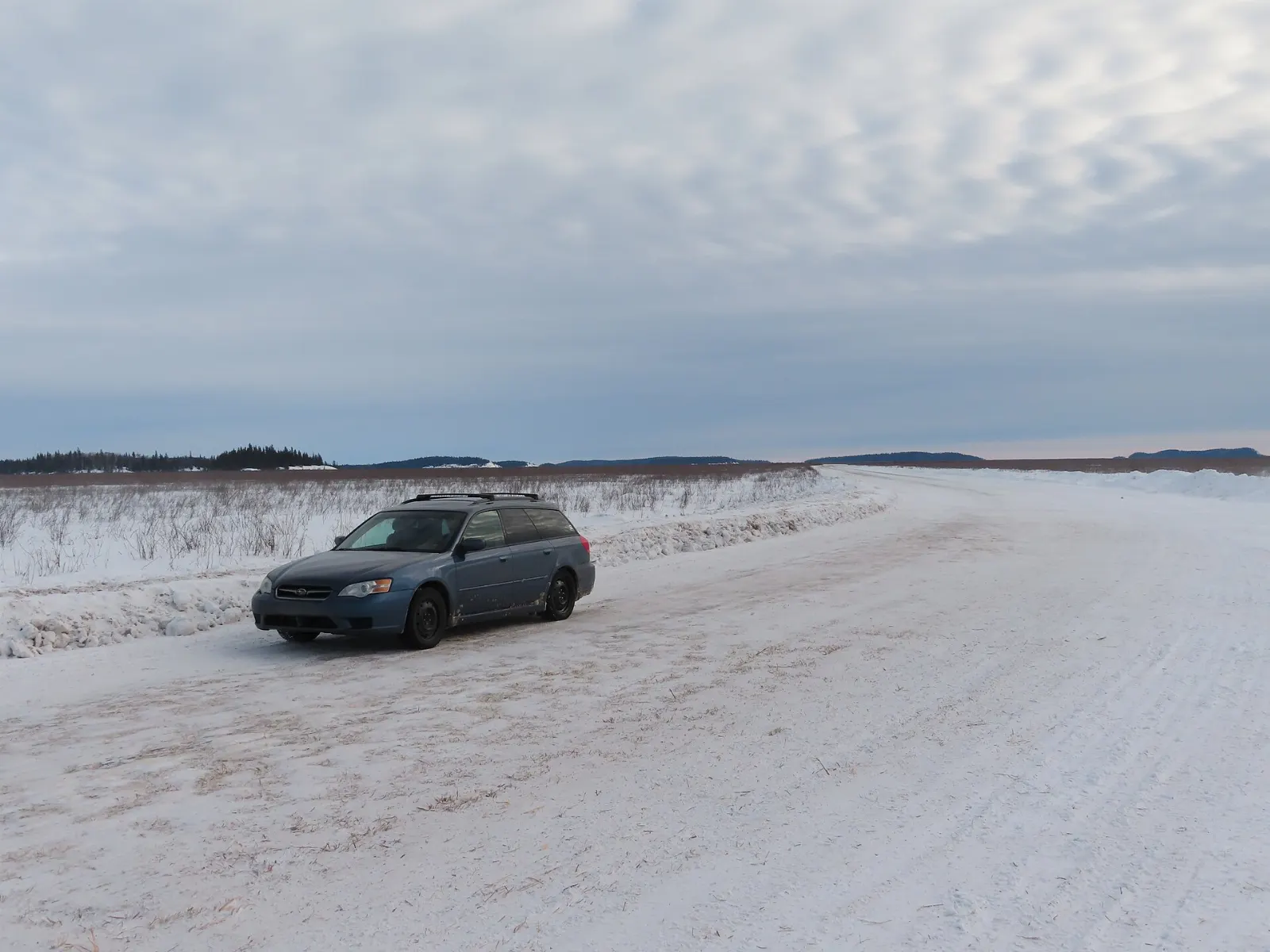
Winter is cold, with temperatures that can fall to minus 50, but it offers aurora viewing and a winter road to Fort Chipewyan.

Getting there and getting around

A paved road leads from Hay River through the park to Fort Smith, a journey of about three and a half hours. Northwestern Air flies from Edmonton to Fort Smith, and Fort Smith Airport also has links to Fort Chipewyan, Hay River, High Level and Yellowknife.

A car is the best way to get around the road network. Fuel is available in Fort Smith, so fill up often because distances are long.

A suggested itinerary

First day

Visit the Fort Smith visitor centre, then explore the Northern Life Museum and the river rapids.

Second day

Head to Pine Lake for a canoe trip or a walk to the sinkholes, and stay at the campground.

Third day

Fly or boat to Fort Chipewyan and the Peace-Athabasca Delta if the schedule allows, or spend the day on a guided tour.

Practical tips

  • Pack strong insect repellent and a head net for summer visits.
  • Bring all food and drinking water, and boil any stream water.
  • Keep your fuel tank full whenever you pass a station.
  • Stay in your vehicle near bison and keep a wide distance from all wildlife.
  • Check the Parks Canada website for fees, permits and current road conditions.
  • Book flights, tours and campsites well in advance for summer.
Wood Buffalo National ParkWISERMAP PLACEWood Buffalo National Park: photos, reviews & things to doSee traveler photos and reviews, or share your own →

More places to visit

All travel guides →